
Is Homeschooling Suitable For Your Child in 2026?
Discover if homeschooling is right for your child in 2026. My Coloring Pages shares expert insights, benefits, and practical tips to help you make a decision.


Keeping preschoolers engaged during learning time is a challenge for every homeschool parent. Educational materials need to spark creativity while teaching core skills, but finding resources that match each child's unique interests and learning pace proves difficult. The key lies in accessing customized coloring pages that transform ordinary lessons into activities children actually want to complete.
Success depends on having the right resources readily available. Parents can access an endless supply of printable activities tailored to any lesson plan, theme, or skill level, all for free. Whether teaching letters, numbers, science concepts, or seasonal topics, families can download 54,890+ free coloring pages that match their curriculum needs instantly.
Summary
- Homeschooled students score 15-30 percentile points above public school students on standardized tests, according to the National Home Education Research Institute, placing most between the 65th and 80th percentile, while public school averages hover around the 50th. Universities actively recruit these students for their self-discipline and independent learning, often observing higher GPAs and retention rates upon enrollment. The difference stems from personalized instruction that allows immediate pacing adjustments rather than racing through district-mandated curriculum timelines.
- Social development research contradicts common assumptions about the isolation of homeschooling. The National Home Education Research Institute found that 87% of peer-reviewed studies show homeschool students perform statistically significantly better than conventionally schooled students on social, emotional, and psychological development measures. These children interact across age groups through community theater, volunteer work, and sports leagues rather than only with same-age peers in classrooms. Their socialization mirrors adult life contexts more closely than age-segregated institutional environments.
- Homeschooling requires sustained parental presence, not occasional supervision. Parents describe the commitment as absorbing, with teaching responsibilities extending into the evenings for next-day preparation while managing household tasks. The workload multiplies when managing multiple children at different grade levels, as you shift between helping a third grader with fractions while a kindergartener needs letter sounds and a toddler requires supervision. Mental load persists even during breaks as you evaluate whether the curriculum provides adequate depth.
- Consistent daily routines anchor effective homeschool outcomes more than curriculum choice. Over 3.7 million children in the United States are being homeschooled in 2025, according to Brighterly, and families reporting the strongest outcomes consistently cite morning routines as foundational. Going to bed and waking at the same time daily, including weekends, establishes biological rhythms that support focus and retention. Starting each day with a small completed task, like making the bed, builds momentum before academic work begins.
- Worksheet effectiveness depends on precise alignment with recently taught concepts rather than broad subject coverage. When you teach the short "a" sound using specific examples, then provide a worksheet featuring mixed vowel sounds, the practice dilutes rather than strengthens learning. Children complete the page, but the neural pathway you're building remains weak because reinforcement targeted the wrong pattern. Most families spend hours searching multiple websites for materials that only partially match their needs, settling for worksheets covering related skills rather than exact learning objectives that require reinforcement.
- My Coloring Pages addresses worksheet alignment gaps by generating materials that match specific lesson requests instantly, letting homeschool parents describe exactly what reinforcement their child needs and receive printable pages in seconds, rather than browsing generic workbooks for approximate matches.
Do Homeschooled Kids Do Good?
Homeschooled students often perform as well as or better than traditional school students in both academics and social skills. Research from the National Home Education Research Institute shows that homeschooled students score 15-30 percentile points higher than public school students on standardized tests. Homeschooled students typically score between the 65th and 80th percentile, while public school students average the 50th percentile. Colleges actively recruit these students for their self-discipline and independent learning abilities. These institutions note that homeschooled students achieve higher grade point averages and higher retention rates.

"Homeschooled students score 15-30 percentile points higher than public school students on standardized tests, with most scoring between the 65th and 80th percentile." — National Home Education Research Institute
🎯 Key Point: The academic performance gap between homeschooled and traditionally-schooled students is significant and measurable, with homeschooled students consistently outperforming their peers by 15-30 percentile points on standardized assessments.
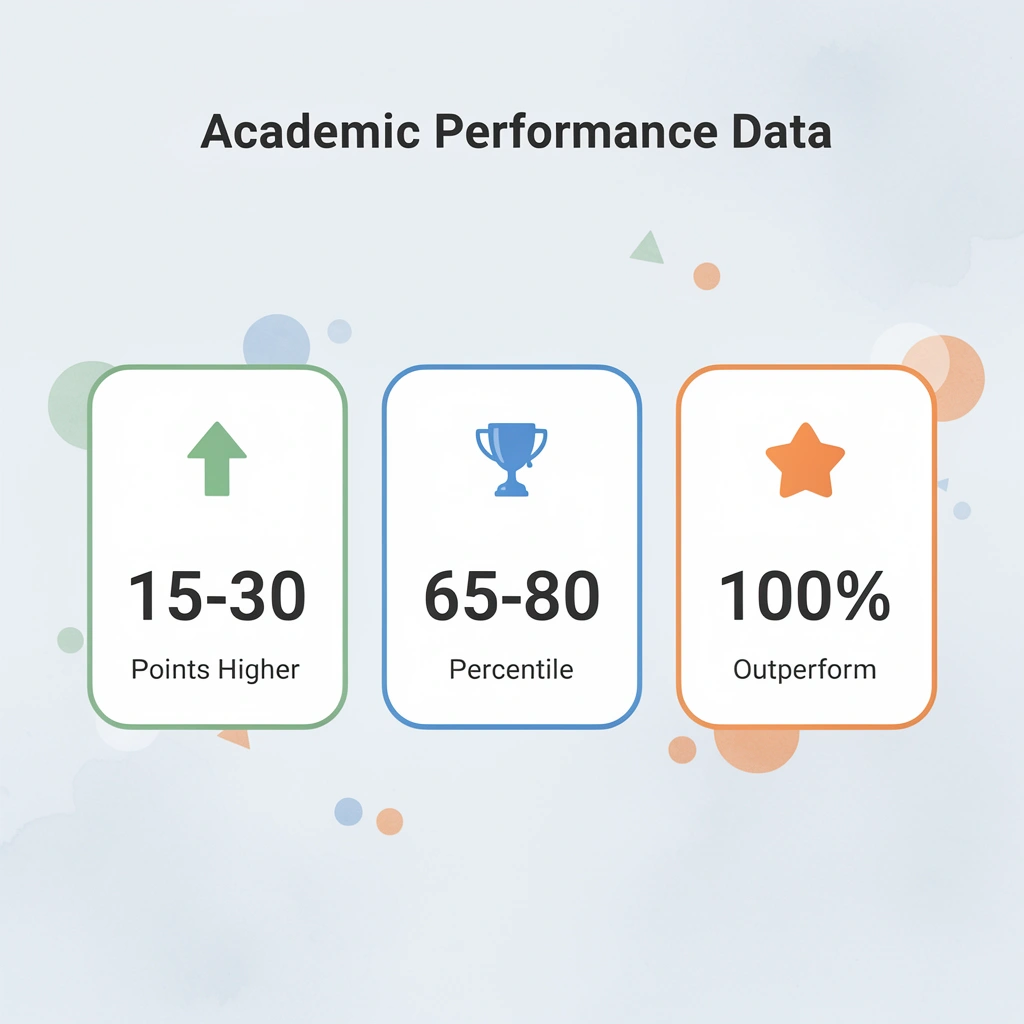
🔑 Takeaway: College recruitment patterns reveal that homeschooled students bring unique advantages to higher education, including superior self-discipline, independent learning skills, and higher retention rates that make them highly sought-after candidates.
Academic performance reflects structure, not location
The literacy crisis gripping traditional schools doesn't spare homeschoolers, but personalized instruction creates different conditions for success. When a child struggles with reading comprehension, a homeschool parent can adjust pacing immediately, spending three weeks on phonics patterns instead of following a district-required curriculum timeline. Traditional classrooms, constrained by large student-teacher ratios and standardized schedules, rarely offer this flexibility. This difference appears in test scores and, more importantly, in how students approach learning: with curiosity rather than compliance, engagement rather than endurance.
Social development happens differently, not less
The concern that homeschooled children lack social skills misunderstands where socialization occurs. According to the National Home Education Research Institute, 87% of peer-reviewed studies on social, emotional, and psychological development show homeschool students perform statistically significantly better than those in conventional schools. Homeschooled children participate in community theater, volunteer at food banks, join sports leagues, and interact across age groups rather than only with same-age peers. Their daily environment includes adults, enabling natural communication skills that mirror adult life more closely than age-segregated classrooms.
College outcomes validate the approach
Homeschooled students finish degrees at higher rates than their traditionally educated peers, demonstrating that personalized education produces lasting results. Universities value their ability to manage time independently, learn without constant supervision, and think critically without waiting for permission. These skills develop because the learning environment requires students to take ownership of their education earlier and more completely than traditional settings allow.
The execution determines everything
Poor homeschooling produces poor outcomes, as under-resourced public schools fail students. Parents who treat homeschooling as unstructured free time, lack consistent routines, or avoid challenging material create gaps that mirror traditional education's worst failures. The personalized attention, ability to move at the child's actual pace, and freedom to spend extra time on foundational skills make the difference. When families approach homeschooling with structure and intentionality, children thrive academically and socially.
Understanding whether this path fits your family requires weighing what you'll gain and give up.
Related Reading
- Easy Peasy Homeschool
- Homeschool Curriculum
- Best Homeschool Programs
- Free Homeschool Curriculum
- Homeschool Resources
- Online Homeschool Programs
- Homeschool Schedule
- Best Homeschool Curriculum
- Accredited Homeschool Programs
- Homeschool Math Curriculum
- Homeschool
- How To Homeschool
- Christian Homeschool Curriculum
- Homeschool Planner
- Time For Learning Homeschool
- Homeschool History Curriculum
- K12 Homeschool
- Kindergarten Homeschool Curriculum
- Online Homeschool Curriculum
Pros and Cons of Homeschooling
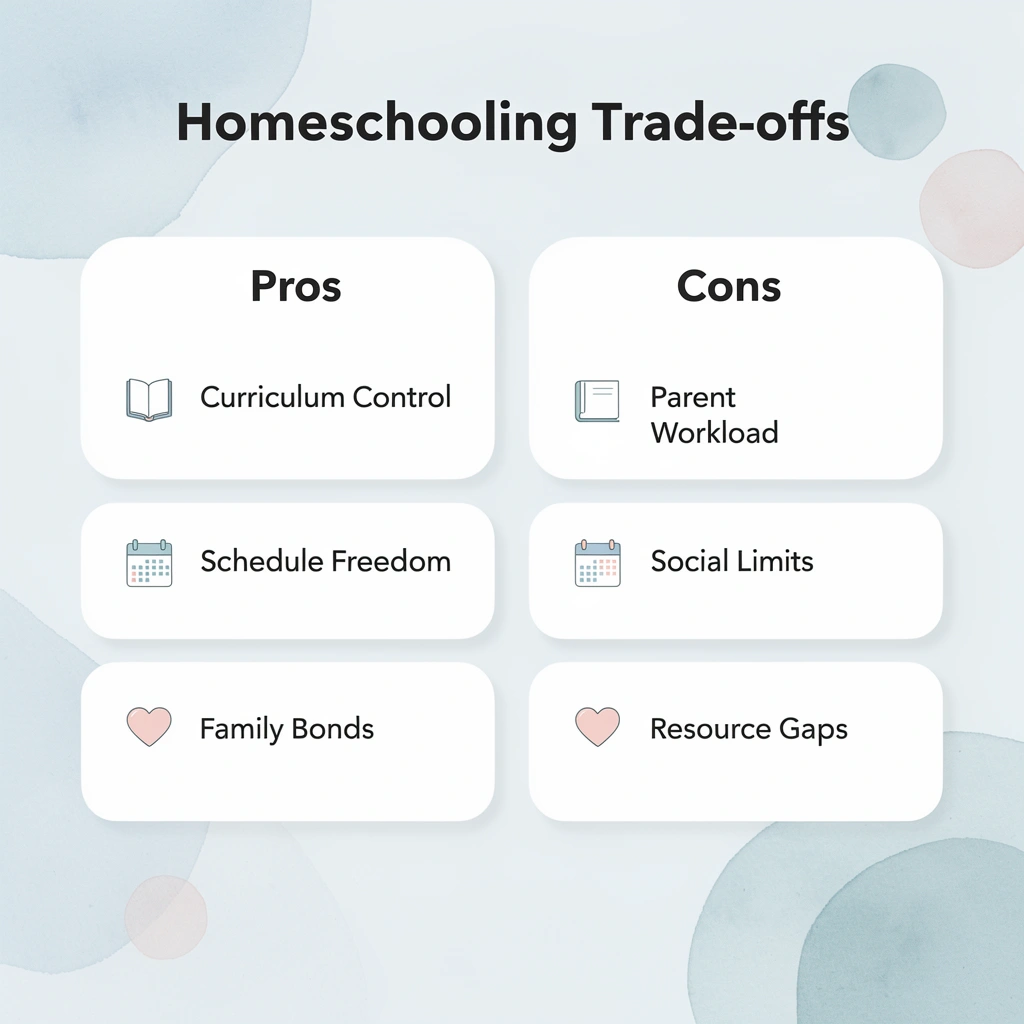
Homeschooling trades the convenience of traditional school for family control. Benefits include freedom to set your own curriculum, scheduling flexibility, and deeper family relationships. Drawbacks include heavy workload, limited social interaction with peers, and fewer resources. Whether this path works depends on which tradeoffs your household can manage and which benefits matter most to your child's development.
🎯 Key Point: The success of homeschooling depends entirely on your family's ability to handle the increased responsibility while maximizing the educational freedom it provides.
"Homeschooling families report significantly stronger family relationships but also acknowledge the substantial time commitment required from parents." — National Home Education Research Institute
⚠️ Warning: Don't underestimate the time investment required - successful homeschooling typically demands 20-30 hours per week of active parental involvement in lesson planning and instruction.

Freedom to design your child's education
You choose what to teach, when to teach it, and how to approach each subject. Religious families can integrate faith naturally into daily lessons; secular families can skip religious content entirely. If your child shows an intense interest in marine biology, you can spend three months studying ocean ecosystems instead of moving through a standardized curriculum. Practical skills like cooking, woodworking, or personal finance become legitimate coursework. You decide whether to follow a classical education model, unschooling philosophy, or something entirely custom. This freedom extends to scheduling as well: start school at 10 a.m. if your child learns better later in the day, or travel during off-peak seasons when flights cost less, and museums feel less crowded.
Flexibility reshapes daily rhythms
Traditional school schedules force families into rigid patterns built around bus routes and bell schedules. Homeschooling removes those constraints entirely. Schedule a dentist appointment for noon on Tuesday without requesting permission. Extend a fascinating science experiment from 45 minutes to three hours because your child wants to test more variables. Pause formal academics when a family member falls ill, then resume without penalty. This flexibility matters particularly for families with commitments to competitive athletics, the performing arts, or frequent relocations. The schedule bends to fit your life rather than forcing your life to accommodate institutional requirements.
Individualized attention accelerates learning
In a classroom of 25 students, teachers cannot tailor instruction to each child's learning style, pace, or interests. At home, you can. If fractions confuse your daughter, spend an extra week using pizza slices and measuring cups until the concept clicks. If your son masters multiplication in three days, move to division without waiting for classmates to catch up.
Visual learners get diagrams and videos. Kinesthetic learners build models and conduct experiments. Auditory learners discuss concepts aloud and listen to educational podcasts. You adjust course content based on what sparks curiosity rather than standardized test requirements.
What hands-on activities work best for younger learners?
For younger learners, hands-on activities transform abstract ideas into tangible, understandable concepts. Platforms like My Coloring Pages enable you to create themed pages instantly, whether your child needs to practice animal names, geometric shapes, or historical figures, without searching through workbooks or creating materials from scratch.
Relationship depth increases with shared time
Spending more time together creates more chances for connection. You witness the exact moment when reading comprehension clicks and celebrate when algebra finally makes sense. Siblings work together on projects, negotiate shared spaces, and develop bonds that transcend competing for parental attention during brief evening hours.
Field trips to museums, nature centers, and historical sites become shared adventures rather than chaperoned events with permission slips. According to the Pew Research Center, 83% of parents worry about safety, drugs, and negative peer pressure in school environments. Homeschooling eliminates daily exposure to those concerns while building family cohesion through sustained proximity and shared purpose.
The workload demands constant presence
Teaching takes far more hours than most people anticipate. You evaluate curriculum choices, compare phonics programs and maths approaches, plan lessons, grade work, track progress, and adjust plans when children struggle. Managing multiple children at different grade levels compounds the challenge: while your eight-year-old works on multiplication, your five-year-old needs help sounding out words, and your toddler requires supervision.
Parents report feeling perpetually occupied with no clear boundary between teaching and personal time. The mental work persists during breaks as you consider whether your science curriculum provides sufficient depth or whether your child needs more writing practice. Some parents lack time for basic self-care, like showering or exercising, because children require help throughout the day.
What specialized resources do homeschools typically lack?
Large public high schools offer metal shop, advanced placement courses in six subjects, theater productions with professional lighting, and science labs with equipment most homes cannot replicate. Homeschools rarely match that breadth.
Welding requires a class at a community college or a vocational program. Advanced chemistry needs expensive home lab equipment or partnerships with local schools. Social experiences like school dances, pep rallies, and collaborative group projects disappear unless you actively create alternatives.
How can families find alternatives to school-sponsored activities?
Sports teams, debate clubs, and theatre groups exist outside traditional schools, but joining requires research, transportation, and often higher costs than school-sponsored options.
Whether those tradeoffs matter depends on what your specific child needs and what your family can sustain.
Is Homeschooling Suitable For Your Child?
Whether homeschooling is right for your child depends on how well it matches your child's specific needs. Some children thrive with personalized pacing and quiet learning spaces. Others need the structured social environment of traditional classrooms to build confidence and independence. The question isn't whether homeschooling works in general, but whether its conditions match your child's learning style, personality, and developmental stage.

🎯 Key Point: The success of homeschooling depends entirely on the individual child's needs and how well the flexible learning environment aligns with their unique personality and learning preferences.
"The effectiveness of homeschooling isn't universal—it's about finding the right educational fit for each child's individual learning style and developmental needs." — Educational Research Insight

⚠️ Warning: Don't choose homeschooling based on general success stories alone. Consider your child's specific temperament, social needs, and learning preferences before making this critical educational decision.
Your schedule determines feasibility
Homeschooling requires constant presence. You plan lessons, answer questions as your child learns, help them focus when attention wanders, and adjust your teaching method when explanations aren't landing. This cannot happen between work calls or during lunch breaks. If your job has unpredictable hours or requires frequent travel, the system collapses quickly. Consistency matters more than perfection, but you need sufficient free time to make it work.
Your child's learning style shapes success
Some children need movement to process information, building models or conducting experiments rather than sitting with worksheets. Others prefer structured routines with clear instructions and predictable schedules. Homeschooling can work for both types of learners, but only if you recognise which approach your child needs and design your lessons accordingly.
A kinesthetic learner forced into a textbook-heavy curriculum will disengage as completely as in a traditional classroom. The flexibility homeschooling offers becomes valuable only when you match methods to your child's specific learning style.
Why do abstract concepts need tangible reinforcement?
For younger learners, abstract ideas need real-world examples to stick. Letter recognition works better when children trace shapes, color matching images, and connect sounds to visual patterns repeatedly.
Platforms like My Coloring Pages generate themed pages instantly, whether your child needs practice with animal vocabulary, number sequences, or historical figures, transforming repetition into creative activity rather than drill work.
Personality traits reveal compatibility
Children who thrive on social interaction and gain energy from group activities may struggle with the isolation of homeschooling, even with scheduled activities, as they need peer contact throughout the day. Conversely, children overwhelmed by classroom noise or who need more time to process information often flourish in quieter home environments where they control sensory input and work at their own pace.
According to the National Center for Education Statistics, 66% of homeschooled students attend college compared to 57% of public school students, suggesting the approach works particularly well for self-directed learners who benefit from personalized attention.
Your commitment level must match the scope
Teaching requires sustained instructional responsibility. You research curriculum options, comparing phonics approaches and evaluating whether Singapore Math suits your child better than Saxon. You track progress across subjects, identify gaps before they compound, and adjust plans when concepts don't stick.
Parents managing multiple children at different grade levels describe constant mental juggling: helping a third grader with fractions while a kindergartener needs letter sounds and a toddler requires supervision. The workload blurs boundaries between teaching time and personal time.
If you approach this expecting occasional guidance rather than sustained responsibility, frustration builds quickly for both you and your child.
How do you know if you can handle the scope?
Knowing whether homeschooling fits your family matters only if you know how to do it well.
13 Tips to Homeschool Kids Effectively
Good homeschooling needs clear systems: routines that make things predictable, ways of talking that help you identify problems, and organized structures that prevent chaos with multiple subjects and children.
[IMAGE: https://im.runware.ai/image/os/a19d05/ws/2/ii/4a171406-75ed-45af-9a85-97fc10e7c395.webp] Alt: Three connected icons representing homeschool system pillars
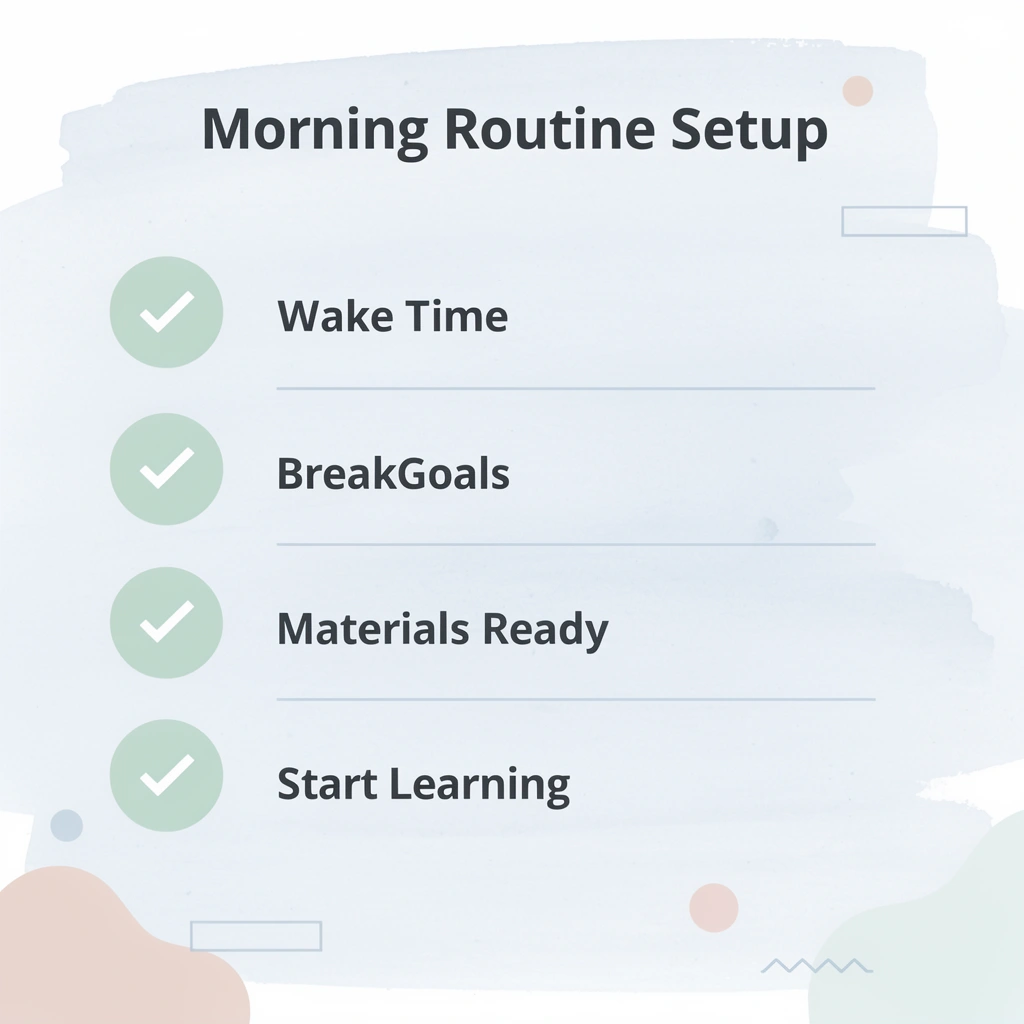
💡 Tip: Start with one consistent routine - like a morning checklist or daily review time - before adding more complex systems to your homeschool structure.
"Structured learning environments with predictable routines can improve student focus and academic outcomes by up to 23% compared to unstructured approaches." — Educational Psychology Research, 2023
🎯 Key Point: The foundation of effective homeschooling isn't just curriculum choice - it's building sustainable systems that work for your family's unique needs and prevent overwhelm as your program grows.
1. Build routines that anchor the day
Having a consistent sleep schedule helps your body develop a natural rhythm that supports focus and memory. Going to bed and waking up at the same time every day, even on weekends, matters significantly. According to Brighterly, over 3.7 million children in the United States were being homeschooled in 2025, and families reporting the strongest outcomes consistently cite morning routines as foundational.
Start each day with a small completed task like making the bed. This builds momentum before academic work begins and creates early accomplishment.
How does getting dressed affect learning readiness?
Make sure your child eats breakfast and gets dressed before lessons start. The physical transition from sleep mode to learning mode affects engagement levels. Staying in pajamas signals leisure rather than work, which influences how they approach the rest of the morning.
What makes daily to-do lists effective for homeschool children?
Write daily to-do lists with your child each morning. Crossing items off provides concrete visual feedback and helps develop executive function skills needed to manage work independently. Include household responsibilities, creative projects, and physical activity alongside academic tasks to demonstrate that learning extends beyond textbooks.
2. Communicate deliberately, not casually
Talk through the day's plan each morning using the to-do list and clarifying what you expect for each subject. This prevents confusion during lessons when a child doesn't understand what they need to do or why an assignment matters. At the end of the day, review what was learned rather than what was finished. Ask your child to explain ideas back to you in their own words—retrieval practice strengthens memory and reveals gaps that worksheets might miss.
How do you maintain effective contact with external teachers?
Stay in contact with teachers or tutors if you're using outside resources. Send emails with specific questions rather than general check-ins. Ask what other students struggle with in particular units, since children often hide confusion by saying everything is fine. Targeted questions uncover issues before they become larger learning gaps.
3. Create dedicated learning spaces
Pick a specific area for schoolwork with a good table, a comfortable chair, adequate light, and fresh air. Having a separate space for learning and play helps children switch between activities; doing maths homework on the couch while watching television blurs the boundaries that young brains need to stay focused.
How do you minimize distractions during homeschool lessons?
Remove distractions from the workspace: toys, phones, video games, and television. Use app blockers and parental controls on devices when internet access is needed for lessons. The goal is to control when and how technology enters the learning environment.
Where should you position the homeschool workspace in your home?
Think about where this space fits in your home's flow. If you need to sit with your child while they learn, the kitchen table might be a better place than a desk in a bedroom. Set aside storage for paperwork, curriculum materials, and finished assignments to prevent them from spreading throughout the house.
4. Organize systems before they're needed
Keep a calendar that tracks important dates: examination requirements, project deadlines, field trip opportunities, and breaks. Maintain daily attendance records. Some areas require this, and it helps identify patterns when illness, travel, or other disruptions affect learning.
Set up binders for each subject with dividers for current work, completed assignments, and reference materials. Create a separate binder for administrative items: legal documents, curriculum receipts, and correspondence with educational authorities. Designated locations reduce time spent searching for materials.
5. Schedule breaks that match attention spans
Younger children need short breaks every 10 to 15 minutes; their brains haven't developed the ability to focus for extended periods as older students do. Teenagers can work through 40-minute lesson blocks before needing a break. A five-year-old's focus drifting after 12 minutes of phonics practice shows normal developmental capacity, not difficulty.
What activities work best during break times?
Build physical activity into break times. Let children run outside, jump rope, or do simple exercises that get blood flowing to the brain. Movement improves focus when they return to academic work and prevents the restless energy that builds up during seated learning.
How should you schedule snacks and longer breaks?
Give healthy snacks at regular times: hunger impairs concentration more than most other distractions. Some families follow traditional school schedules with mid-morning recess, lunch, and afternoon breaks; others prefer more frequent, shorter pauses. Try different options to find what keeps your child's energy and attention at optimal levels.
6. Facilitate social interaction intentionally
Children miss the daily peer contact that traditional classrooms provide. Enroll them in activities that create regular social opportunities: sports leagues, art classes, dance, martial arts, music lessons, or theater groups. These structured environments teach collaboration, conflict resolution, and communication skills through repeated interaction with age peers.
The concern about homeschool isolation is valid only when families ignore it. Children who participate in community activities several times a week develop social competence that matches or exceeds that of their traditionally schooled peers. The difference is that socialization becomes something you actively arrange rather than something that happens by default.
7. Connect with other homeschooling families
Find local homeschool groups through community centers, libraries, or online networks. Other families face similar challenges and share resources, curriculum recommendations, and practical solutions. Organize group field trips to museums, nature centers, or historical sites for social interaction and to discuss homeschooling concerns with people who understand the specific pressures involved.
Why should you join online homeschooling communities?
Join online homeschooling communities for support with curriculum problems or teaching questions. Don't hesitate to ask basic questions; every experienced homeschooler started as a beginner and remembers what it felt like to teach their own children.
What benefits do homeschool conferences offer?
Go to homeschool conferences when you can. These events let you meet curriculum vendors, education experts, and hundreds of other families. Seeing different teaching approaches helps you improve your methods based on what works rather than what sounds good in theory.
8. Set meaningful goals with your children
Setting goals creates direction and motivation. Use the SMART framework: Specific, Measurable, Attainable, Relevant, and Time-bound. "Get better at reading" lacks the detail needed to drive progress. "Read three chapter books on your own by the end of the month" provides clear targets and built-in accountability.
In the same way, "improve math skills" needs to be more specific: learning multiplication tables through 12, solving two-digit division problems, or understanding fraction equivalents.
What makes goals attainable and meaningful for children?
Ensure goals are reachable within a reasonable timeframe. While pushing yourself is valuable, impossible goals prove counterproductive. The goals must reflect what your child wants to do, not what you wish they cared about.
A goal a parent imposes, such as practicing piano daily, won't generate the same effort as a goal your child chooses, such as learning a specific song they love.
9. Implement reward systems that reinforce effort
Make a chart showing rewards based on task difficulty. Finishing a challenging maths unit earns more than completing a simple coloring activity. This teaches children that harder work brings bigger rewards, a lesson that extends far beyond homeschool years.
Use screen time as something that must be earned rather than something kids get automatically. Extra gaming or television time becomes a reward for meeting weekly reading goals or completing assignments without constant reminders.
Divide rewards into categories: academic achievements, household responsibilities, and extracurricular progress. Daily, weekly, and monthly milestones create multiple opportunities for recognition.
10. Understand legal requirements before you start
Research your state's homeschool rules carefully. Some require standardized testing at specific grade levels, certain subjects, or minimum instructional hours, while others have minimal requirements beyond basic notification. Operating outside these legal parameters creates avoidable problems.
Figure out whether you need to follow a specific curriculum or have the freedom to design your own approach. Some areas require portfolio reviews or periodic assessments by certified teachers; others allow complete freedom in educational choices. Know which category your location falls into before purchasing materials or committing to a homeschooling philosophy.
11. Remember your original motivation
Write down why you chose homeschooling and keep that document accessible. On difficult days when things don't go according to plan, those written reasons help you see the bigger picture. Display them somewhere visible or store them in your administrative binder where you'll encounter them during routine tasks.
Your reasons guide decisions when you doubt yourself. If you homeschool mainly for religious instruction, that priority helps you choose curriculum and extracurricular activities. If safety concerns prompted the decision, remembering that context prevents second-guessing when social challenges arise.
12. Stay flexible when rigidity backfires
Some days won't follow the plan. A child wakes up sick, a family emergency demands attention, or a lesson stretches longer than expected because the concept isn't clicking. Strict adherence to schedules creates unnecessary stress. Build margin into your week for these inevitable disruptions.
Include enjoyable activities throughout each day. Cooking teaches fractions and chemistry. Gardening covers biology and responsibility. Building projects involve geometry and problem-solving. Plan trips that enrich education beyond home instruction alone.
13. Use structured practice materials strategically
After introducing a new concept, children need repeated practice to move learning from short-term to long-term memory. Online worksheets provide this reinforcement through activities like coloring, tracing, matching, and sequencing. The variety maintains higher engagement than endless problem sets on plain paper.
How can you efficiently find appropriate worksheets?
Most homeschool parents spend considerable time searching for worksheets across different websites, trying to match the difficulty to their child's level while finding engaging themes. Platforms like My Coloring Pages solve this by generating custom worksheets instantly. Our platform lets you create letter recognition practice featuring your child's favorite animals in seconds, eliminating the need to browse generic workbooks.
What makes personalized worksheets more effective?
The ability to adjust difficulty based on your child's pace makes learning personalized. If fractions remain confusing, you can generate additional practice pages immediately. If multiplication clicks quickly, move forward without waiting for predetermined worksheets. This flexibility transforms worksheets from static curriculum components into responsive teaching tools.
15 Educating Homeschool Worksheets for Children
Good homeschool worksheets help students learn by repeating ideas, provide independent practice to build confidence, and identify areas needing additional support before problems worsen. The best websites either offer extensive collections organized by skill level or use AI to generate customized content for your child's current needs.
🎯 Key Point: The most effective homeschool worksheets serve as both practice tools and diagnostic instruments, helping you identify learning gaps before they become major obstacles.
"Quality educational worksheets can improve student retention rates by 25-40% when used consistently as part of a structured learning routine." — Educational Research Institute, 2023
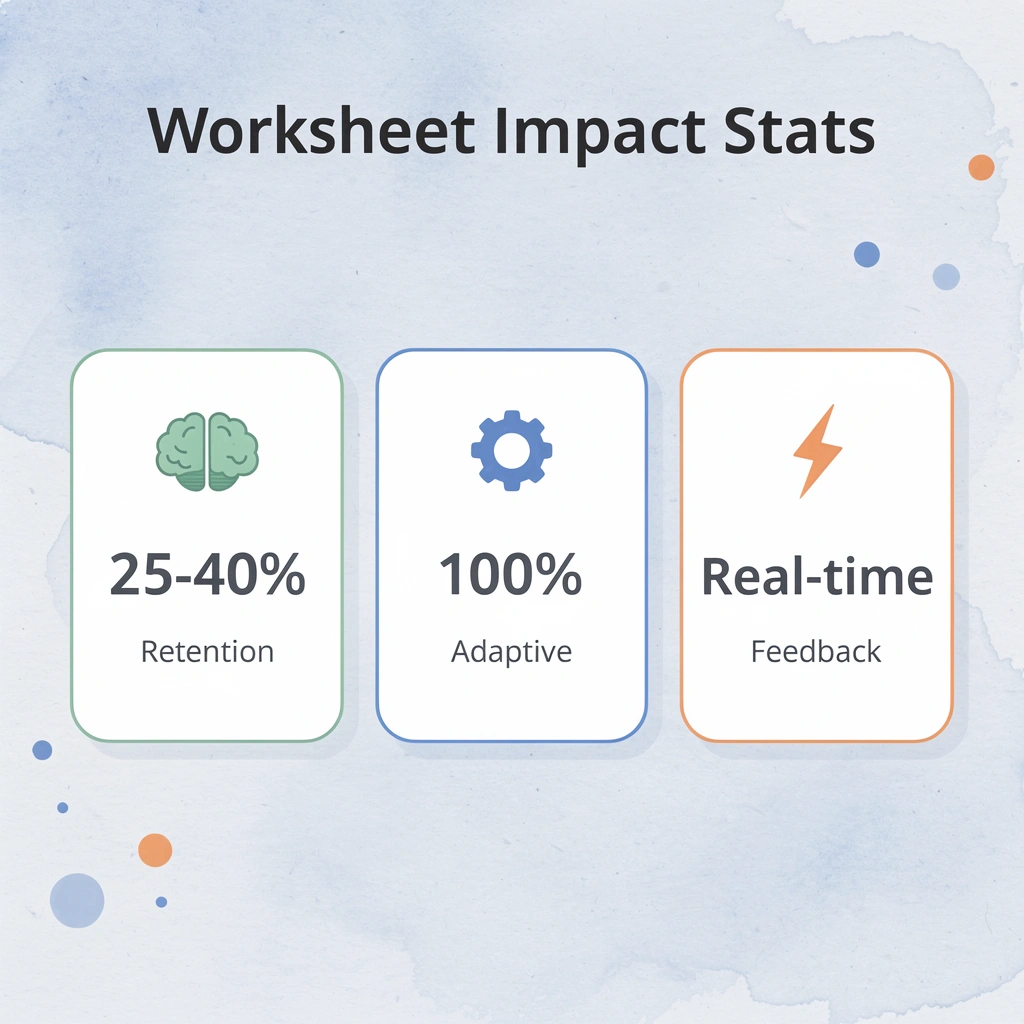
💡 Best Practice: Look for worksheet platforms that offer adaptive difficulty levels and instant feedback - these features help maintain your child's optimal challenge zone while building academic confidence through successful completion.
1. Homeschool Genie
AI creates worksheets instantly based on grade level, subject, and learning goals. Need reading comprehension questions about a story your child finished? Type in what you need and get custom content in seconds. This eliminates hours of searching through workbooks. The platform generates math problems, spelling lists, writing prompts, and comprehension exercises at multiple difficulty levels.
2. Education.com
Over 30,000 resources organized by grade, subject, and educational standards create one of the largest worksheet libraries available. The filtering system lets you select specific skills rather than broad grade levels, which is useful when your third grader reads at a fifth-grade level but struggles with multiplication. You build a curriculum by identifying which competencies need reinforcement, then download materials to address those gaps.
3. K5 Learning
Organized worksheets in maths and reading let you select by skill level rather than age. If your child struggles with fractions, you can choose fraction practice regardless of whether they're in third or fifth grade. This focused approach helps address learning gaps systematically, especially when a child has mastered most grade-level content but needs extra practice in one or two areas.
4. TES
Teachers worldwide upload worksheets to this global library, creating extensive variety across subjects and difficulty levels. Search by topic, level, and complexity, then combine resources to build customized lesson plans. The crowdsourced model means quality varies, but the abundance of resources provides options for unusual topics that smaller platforms ignore. You might find three different approaches to teaching the water cycle, allowing you to choose whichever explanation style best matches how your child processes information.
5. 123 Homeschool 4 Me
More than 1,000,000 worksheets and activities, organized by grade and subject, give parents numerous choices. The materials are pre-made rather than customizable, but the sheer volume allows you to select and combine resources that fit your teaching approach.
6. Homeschool.com
Worksheets, planners, and curriculum tools help you build complete homeschool systems rather than isolated practice pages. The platform includes record-keeping features that track progress and create documentation, which some states require for homeschool compliance.
7. CleverLearner
Early learning topics like numbers, shapes, and basic science concepts receive focused attention here. Parents select specific concepts and create themed learning sessions, making this approach useful for preschool and kindergarten ages. The materials emphasize visual recognition and hands-on activities over text-heavy explanations.
8. MegaWorkbook
Worksheets for maths, logic, and English are created by homeschoolers who understand the challenges of teaching at home. The materials mix and match easily and adapt to your needs. They feature sensible difficulty levels, and the answer keys explain how to solve problems rather than simply providing answers.
9. CK-12 Foundation
You can customize learning materials such as worksheets, simulations, and practice questions by adjusting the difficulty level and topics. The platform excels at STEM subjects and offers more depth than most general worksheet websites. Interactive simulations let you see concepts in action rather than static images, allowing you to increase complexity as you progress.
10. The Good and the Beautiful
You can download worksheets and unit studies to customize for your lesson plans. The materials are based on an educational philosophy that focuses on character development alongside academic content. This appeals to families seeking a curriculum that integrates values with clear progression and flexible pacing.
11. NASA for Educators
NASA's science worksheets and activities bring credibility and depth to STEM learning. Choose topics like space exploration, physics principles, or Earth science to build customized units around your child's interests. The materials include real mission data and authentic images that make abstract concepts tangible, increasing engagement when children realize they're working with information that actual scientists use.
12. Smithsonian Learning Lab
Interactive worksheets and resources from museum archives let you create custom collections. Build history lessons using primary source documents, create science units with specimen photographs, or design culture studies with artifact images. The platform transforms museum visits into year-round educational resources.
13. National Geographic Kids
Printable worksheets and activities about animals, geography, and nature let children learn about topics they care about. Choose subjects that match your child's current interests rather than following a set lesson order. When your seven-year-old becomes fascinated with sharks, you can spend two weeks learning about ocean life through worksheets, videos, and articles instead of waiting for the textbook's "ocean unit."
How can custom worksheets transform your homeschool experience?
Most homeschool parents spend considerable time searching different websites for the right worksheets, trying to match difficulty to their child's level while finding engaging themes. Platforms like My Coloring Pages eliminate that search by generating custom worksheets instantly.
Need letter recognition practice featuring your child's favorite animals? Create it in seconds instead of searching through generic workbooks. The ability to describe exactly what you want and receive a printable page immediately transforms worksheets from static resources you hunt for into responsive tools you create on demand.
14. Createful Journals
You can edit worksheet templates in PowerPoint format to change colors, content, and structure however you want. You can modify existing templates to match exactly what you need instead of choosing from templates that are already made or designs created by AI. This works well for parents with specific design preferences or for children who learn better with certain visual styles, even though editing takes more time than creating something on the spot.
15. My Coloring Pages
Fully customized worksheets created from scratch by describing what you need or uploading images solve a different problem than large libraries or template editing. When you need topic-specific, visual learning materials—such as letter tracing with themed illustrations, science diagrams your child can color while learning labels, or maths problems embedded in engaging scenes—the platform generates exactly that.
For preschool and early elementary ages, this bridges the gap between generic coloring books and educational worksheets. The materials feel like creative activities rather than drill work, sustaining engagement during repetitive practice that builds foundational skills.
How do you choose the right resources for your child's current learning?
But having access to these resources only matters if you're using the right ones for what your child is currently learning.
Related Reading
- Georgia Homeschool Laws
- Colorado Homeschool Laws
- Homeschool Vs Public School
- 6th Grade Homeschool Curriculum
- How To Homeschool In Texas
- Homeschool Room Ideas
- Abeka Homeschool Curriculum
- 1st Grade Homeschool Curriculum
- Kentucky Homeschool Laws
- Language Arts Homeschool Curriculum
- Florida Homeschool Requirements
- Homeschool Preschool
- How To Homeschool Your Kids
- Pre K Homeschool Curriculum
- Homeschool Coop
- Homeschool Room
- Texas Homeschool Requirements
- Homeschool Report Card Template
Stop Using Random Worksheets—Match Them to What Your Child Is Actually Learning With My Coloring Pages
Generic worksheets rarely match what you taught moments ago. Your child completes them, but concepts don't stick because the material reinforces something adjacent to your lesson rather than the exact skill you introduced. This turns practice into busywork instead of the repetition that builds mastery.

🎯 Key Point: When you teach the short "a" sound using cat, bat, and hat, then hand your child a worksheet featuring mixed vowel sounds, the practice weakens rather than strengthens learning. The neural pathway you're building remains weak because reinforcement targeted the wrong pattern. Homeschooling gives you control over pacing and content, yet most families surrender that advantage by reaching for pre-made worksheets not designed for their specific lesson.
"The brain learns through repetition of specific patterns. When practice materials don't match the exact skill being taught, learning efficiency drops significantly." — Educational Psychology Research, 2023
Start by identifying the precise concept your child just learned—not the broad subject like "phonics" or "addition," but the specific component within it. Did you teach counting by twos? Identifying rhyming words? Recognizing squares versus rectangles? Write down that exact skill before searching for materials. This clarity prevents grabbing worksheets that cover the general topic while missing your particular learning objective.
Most families hunt across multiple websites, comparing worksheets, and then settle for materials that only partially meet their needs. This search consumes teaching time, and the compromise means your child practices related skills rather than the exact ones requiring reinforcement. Our platform at My Coloring Pages eliminates this gap by generating worksheets matching your specific request instantly. When you need uppercase letter tracing paired with animal images, describe exactly that and receive a printable page in seconds.
⚠️ Warning: After your child completes the worksheet, ask simple questions requiring them to explain the concept back to you. "Why do these words rhyme?" or "How did you know this shape was a rectangle?" This retrieval practice matters more than the worksheet itself. Keep completed worksheets organized by subject and date to identify patterns. If fraction worksheets consistently show errors in the same problem type, you've found a gap needing reteaching.
For concepts that resist explanation through words alone, especially for preschool and kindergarten-aged children, visual worksheets transform abstract ideas into something children can see and manipulate. When teaching that plants need water, sunlight, and soil, a worksheet in which they color each element and draw connecting lines creates a visual reference that their brain can retrieve later. Our My Coloring Pages platform generates topic-specific materials that turn your exact lesson into hands-on practice, making learning intentional rather than random.

Related Reading
- Science Homeschool Curriculum
- Alabama Homeschool Laws
- Illinois Homeschool Laws
- North Carolina Homeschool Laws
- Homeschool Art Curriculum
- 4th Grade Homeschool Curriculum
- Michigan Homeschool Laws
- 3rd Grade Homeschool Curriculum
- Accredited Homeschool Curriculum
- Georgia Homeschool Requirements
- California Homeschool Laws
- How To Homeschool In California
- 5th Grade Homeschool Curriculum
- Homeschool Reading Curriculum
- 2nd Grade Homeschool Curriculum