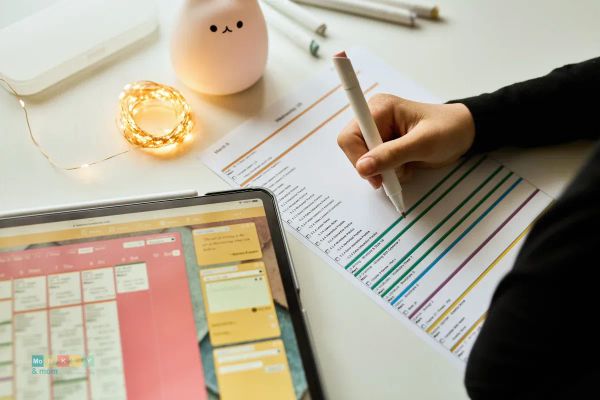
How to Design Homeschool Curriculum for Preschoolers
Create an engaging homeschool curriculum for preschoolers with My Coloring Pages' expert guide. Get structured lesson plans, activities, and tips.


Homeschool families need resources that match their unique teaching style and children's learning pace, not generic materials that create more work than value. Finding engaging activities that hold preschoolers' attention while building essential skills often feels overwhelming when parents are already managing lesson plans and multiple grade levels. The key lies in selecting flexible resources that complement existing lessons rather than adding unnecessary complexity to daily routines.
Effective early learning happens when educational activities align with current studies and capture children's natural interests. Parents can enhance their teaching approach by incorporating visual learning tools that support whatever topics they're already covering, from alphabet recognition to seasonal themes. To make this easier, families can download 54,890+ free coloring pages designed to complement homeschool lessons and match specific learning objectives.
Summary
- Homeschooled students score at the 87th percentile on standardized tests compared to the 50th percentile for public school students, according to the National Home Education Research Institute. This performance gap persists across different curriculum types, demonstrating that academic rigor stems from intentional instruction rather than from any single approved textbook series. Consistency matters because it shows that flexibility and parent involvement drive outcomes more than standardized materials do.
- Mastery-based learning removes the artificial deadlines that force traditional classrooms to move forward, regardless of whether students understand the material. Homeschooling lets you pause on fractions until the concept clicks, then accelerate through topics your child grasps quickly. This shift from time-based to mastery-based progression builds confidence rooted in actual competence rather than grade inflation, teaching children that depth matters more than speed.
- Homeschooled students achieve a 66.7% college graduation rate compared to 57.5% for public school students, suggesting that adaptability throughout K-12 education creates stronger long-term academic habits. The advantage compounds over time as the flexibility gained in first grade becomes the foundation for self-directed study habits that carry students through college and beyond. Traditional classrooms can't offer this kind of surgical precision without leaving someone behind.
- Preschool curriculum needs hands-on exploration rather than passive consumption of worksheets. Read-alouds, blocks, puzzles, and natural objects teach spatial reasoning and problem-solving in ways that build foundational skills without forcing academic pressure. Coloring a butterfly after watching one land on a flower connects visual memory to the activity, making the learning stick through experience rather than abstraction.
- Themed learning units help children see how different skills relate to one another rather than treating math, literacy, and science as isolated tasks. A unit on plants might include counting seeds for math, reading a picture book about gardens for literacy, planting beans to observe growth for science, and drawing flowers for art. This integrated approach builds vocabulary in context and makes abstract concepts tangible rather than disconnected.
- Worksheet effectiveness depends on whether they connect to something your child has already experienced rather than introducing random content that feels like a test. When your preschooler spends the morning observing butterflies in the garden, but the only available worksheet shows generic shapes, the visual connection breaks, and engagement drops. My Coloring Pages addresses this by letting you generate custom coloring pages in seconds that match your current lesson, whether you're studying ocean creatures, geometric patterns, or the life cycle of a plant.
Is Homeschool Curriculum Good Enough for Children?
Homeschool curriculum is more than good enough. When matched to your child's learning style, it produces strong academic results without the compromises built into traditional classroom systems. The question isn't whether homeschool materials meet public school standards, but whether standardized curricula can match the flexibility and depth homeschooling offers.

🎯 Key Point: The real advantage of homeschool curriculum lies in its adaptability to your child's unique learning pace and interests, something that rigid classroom schedules simply cannot provide.
"Homeschooled students typically score 15-30 points higher on standardized tests compared to their traditionally-schooled peers." — National Home Education Research Institute, 2023
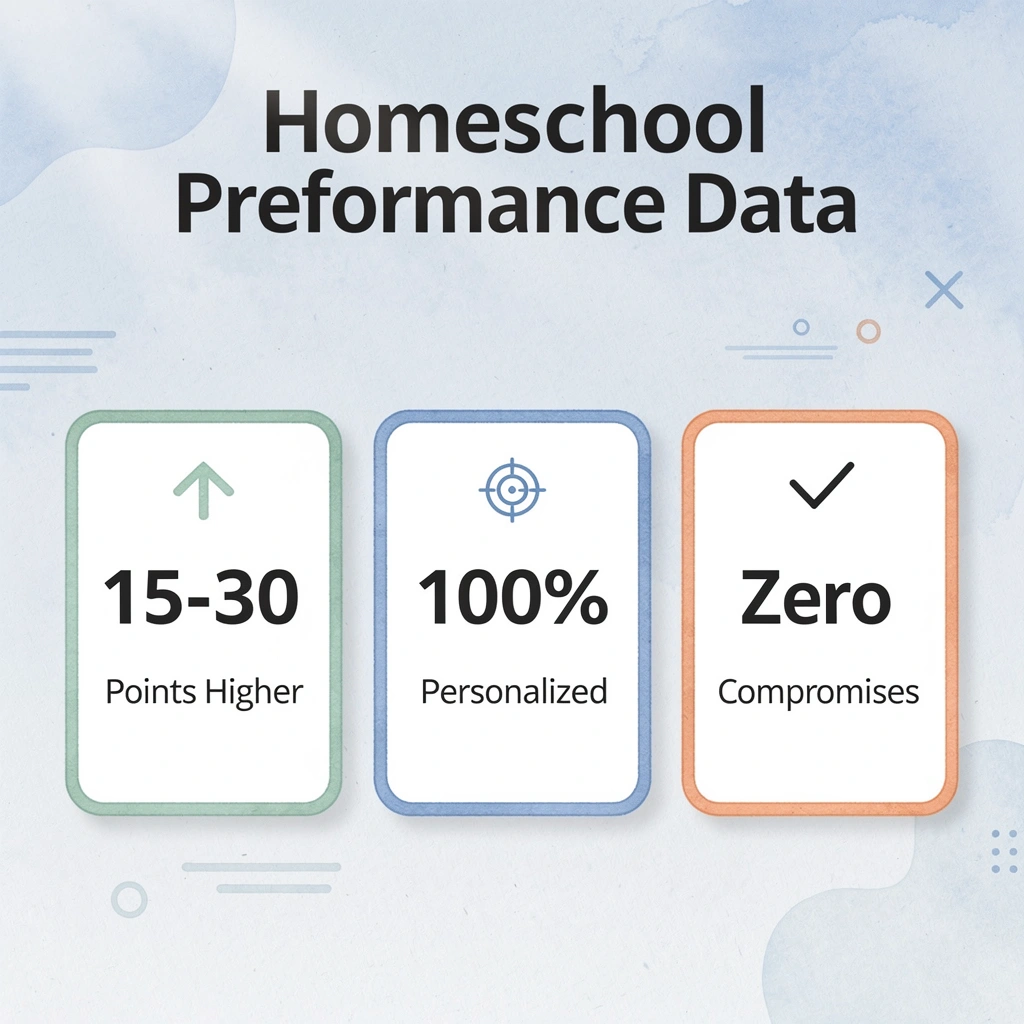
💡 Tip: Focus on finding a curriculum that matches your child's learning style rather than worrying about whether it meets arbitrary public school benchmarks – personalized education always outperforms one-size-fits-all approaches.
Academic performance tells a different story than the stereotype
According to the National Home Education Research Institute, the average homeschooled student scores at the 87th percentile on standardized tests, compared to the 50th percentile for public school students. These results remain consistent across curriculum types: structured programs, mixed approaches, or parent-designed methods. This suggests that effective education stems from purposeful material selection rather than reliance on approved textbooks.
Pacing drives deeper understanding than coverage
Traditional classrooms move entire groups through content at the same speed, regardless of mastery. Some children fall behind while others wait bored. Homeschool curriculum removes that constraint: you can pause on fractions until they understand, then move faster through topics your child grasps quickly. This isn't lowering standards; it's refusing to sacrifice understanding for the illusion of progress.
Multiple resources create stronger learning systems than single textbooks
Homeschooling lets you combine library books, hands-on experiments, online videos, and real-world observations into a learning system that evolves with your child. When your unit on ecosystems needs more visual support, you add it. When your child wants to explore marine biology deeper than the textbook allows, you follow that curiosity. Platforms like My Coloring Pages extend this flexibility by generating custom coloring pages that match your current unit studies, whether covering ancient civilizations, plant biology, or geometric patterns, turning passive worksheets into active, personalized learning tools.
The real variable isn't the curriculum, it's how you use it
The best curriculum won't work if it's rigid, doesn't match your child, or isn't used consistently. What matters is recognizing when something isn't working and making a change. According to the National Home Education Research Institute, homeschooled students have a 66.7% college graduation rate compared to 57.5% for public school students. This suggests that flexibility and involved parents matter more than any single program's design.
You're building a learning environment that responds to your child instead of forcing them into set timelines.
What actually makes homeschooling work so well?
But knowing curriculum quality isn't the problem raises a harder question: what makes homeschooling work so well?
Related Reading
- Easy Peasy Homeschool
- Kindergarten Homeschool Curriculum
- Accredited Homeschool Programs
- Free Homeschool Curriculum
- Homeschool Resources
- Best Homeschool Curriculum
- Online Homeschool Curriculum
- Time For Learning Homeschool
- Homeschool Planner
- Homeschool Schedule
- Homeschool
- How To Homeschool
- Homeschool Math Curriculum
- K12 Homeschool
- Best Homeschool Programs
- Homeschool Curriculum
- Homeschool History Curriculum
- Online Homeschool Programs
- Christian Homeschool Curriculum
Benefits of Homeschool Curriculum
Homeschool curriculum offers eight distinct advantages that traditional classroom materials cannot match. The structure enables you to adapt, speed up, and personalize learning in ways that fixed schedules and standardized pacing do not allow. These benefits compound over time: the flexibility gained in first grade becomes the foundation for mastery-based learning in middle school, which then supports the self-directed study habits that help students through college and beyond.
🎯 Key Point: The flexibility advantage of homeschool curriculum compounds over time, creating stronger learning foundations that benefit students throughout their entire educational journey.
"Homeschooled students typically score 15-30 points higher on standardized tests compared to their traditionally-schooled peers." — National Home Education Research Institute, 2023
💡 Tip: Start implementing personalized pacing early in your homeschool journey to maximize the long-term benefits of adaptive learning and individualized instruction.
Personalized education builds on individual strengths
Your child doesn't need to wait for twenty-five other students to understand multiplication before moving to division. According to research from the National Home Education Research Institute, homeschooled students score 15 to 30 percentile points higher than public school averages because customization allows students to progress at their readiness level rather than an arbitrary grade-level benchmark. When your seven-year-old reads at a fifth-grade level but struggles with handwriting, you can challenge her with chapter books while giving her extra time to develop fine motor skills.
Flexibility reshapes how learning fits into life
Homeschool schedules can work around your family's natural rhythms instead of enforcing a strict 7:30 a.m. start time. You can schedule your child's most demanding learning during their peak focus hours—whether 9 a.m. or 2 p.m.—and reserve low-energy afternoons for hands-on projects or field trips. This aligns cognitive load with cognitive capacity, directly improving retention and comprehension.
Mastery-based learning eliminates artificial deadlines
Traditional classrooms move forward every Monday regardless of student understanding. Homeschooling allows you to stay on fractions until your child masters the concept, then progress faster through topics your child learns quickly. This shift from time-based to mastery-based progression removes pressure to feign understanding and reinforces that learning deeply matters more than learning fast, building confidence grounded in real skill.
Safe environments remove distractions that derail focus
Homeschooling creates a controlled setting where bullying, peer pressure, and social anxiety don't consume the mental energy needed for learning. This reclaims the cognitive bandwidth that traditional schools lose to classroom management, conflict resolution, and social hierarchies: energy that is instead directed toward curiosity, exploration, and the deep thinking that requires psychological safety.
Real-world readiness grows through practical application
Homeschooling enables students to pursue internships, volunteer work, and hands-on skill development that traditional school schedules can't accommodate. Your teenager can apprentice with a local carpenter on Tuesday mornings or shadow a veterinarian on Thursday afternoons, building real skills in actual situations rather than practicing them through worksheets. Platforms like My Coloring Pages extend this approach into everyday learning, generating custom coloring pages that match your current projects—whether studying architectural design, animal anatomy, or historical events—and turning abstract concepts into visual, tactile learning experiences. These experiences teach problem-solving, adaptability, and professional communication in ways standardized curricula cannot.
What to Include in Preschool Homeschool Curriculum
Preschool homeschool curriculum needs ten core components that build foundational skills without forcing unnecessary academic pressure. These elements create a balanced learning environment in which play and structured activities reinforce one another, preparing children for formal education while honoring their developmental stage. The goal is to establish habits of curiosity, confidence, and capability that carry forward into every subsequent grade.
🎯 Key Point: The most effective preschool curricula blend structured learning with child-led exploration, creating a foundation that supports both academic readiness and emotional development.
"Quality early childhood education programs that balance play-based and academic elements show 85% better school readiness outcomes compared to purely academic approaches." — National Association for the Education of Young Children, 2023
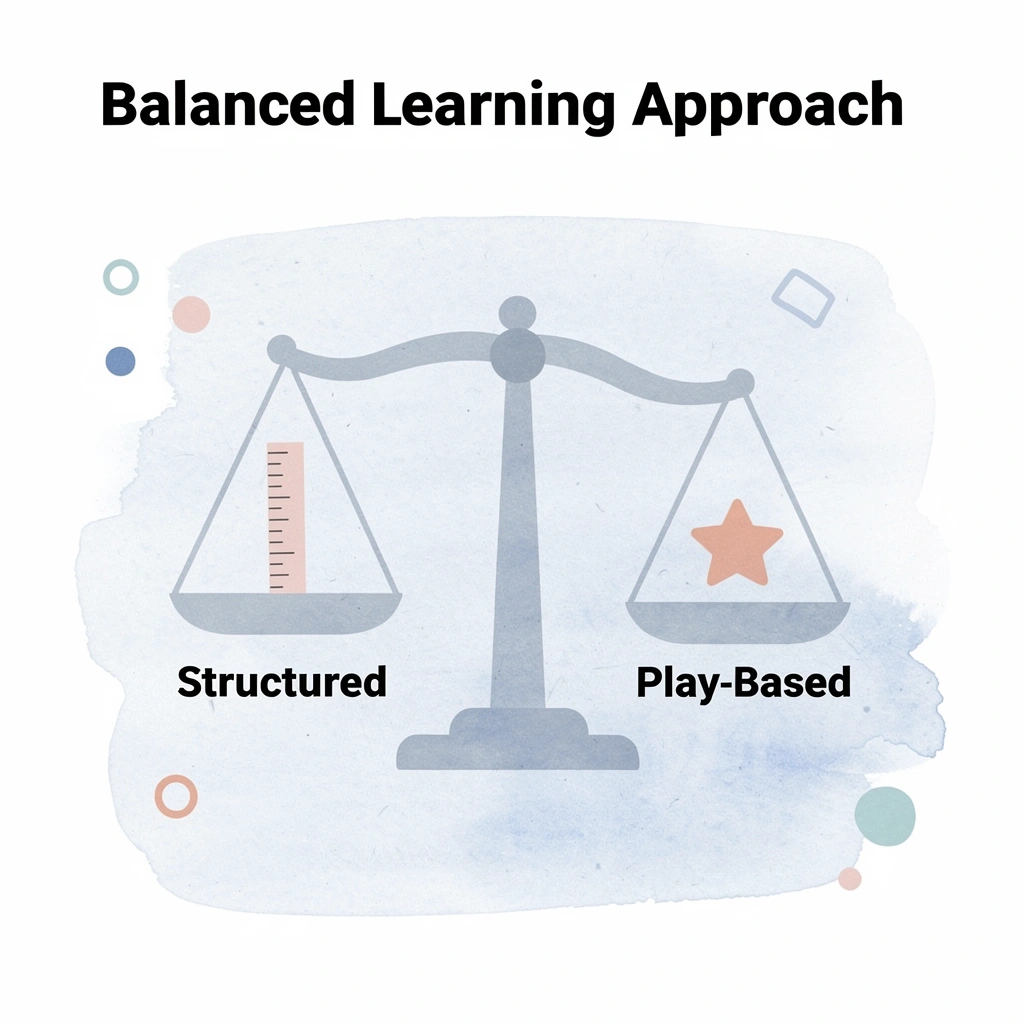
💡 Tip: Focus on building learning habits and social skills during the preschool years rather than rushing into formal academics—these foundational elements will accelerate future learning more effectively than early academic pressure.
Early literacy builds language awareness before formal reading
Letter recognition and phonics basics introduce children to the building blocks of reading without demanding fluency. Read aloud daily, sing alphabet songs, and use picture books that invite questions. Simple tracing and coloring activities strengthen hand-eye coordination needed for writing while making letter shapes familiar and approachable.
Early math skills develop number sense through hands-on exploration
Recognizing numbers, counting objects, and identifying shapes teaches children that maths exists in the physical world around them, not just on worksheets. Count toys during cleanup, sort blocks by size, and identify patterns in everyday objects like tiles or fruit. Use puzzles and sorting games that make comparisons, such as big versus small or more versus less, feel intuitive rather than abstract. This builds logical thinking and spatial awareness.
Basic science encourages curiosity through observation
Preschool science isn't about facts. It's about teaching children to ask "what do you think will happen?" and then testing their predictions. Nature walks, simple experiments like watching ice melt or observing objects sink versus float, and tracking weather patterns turn everyday experiences into learning moments. You're building the habit of noticing, wondering, and exploring—which matters more at this stage than knowing cloud types or plant parts.
Creative arts and fine motor skills prepare hands for future writing
Coloring, drawing, painting, and crafts develop the fine motor control children need for handwriting while providing space to express ideas visually. Free drawing sessions teach decision-making and creative problem-solving alongside structured activities.
Platforms like My Coloring Pages let you generate custom coloring pages matching your current themes: farm animals, geometric shapes, and community helpers. This transforms generic worksheets into personalized learning tools connected to your child's interests. Practice with playdough, beads, and safety scissors strengthens hand coordination that directly transfers to pencil control.
Gross motor skills and social-emotional development shape whole-child readiness
Physical movement through running, jumping, balancing, and outdoor play builds strength and coordination that support focus and attention during seated activities. Daily outdoor time and simple obstacle courses are essential parts of learning, not breaks from it.
Teaching children to share, take turns, express feelings, and follow simple instructions through role-playing and group play with siblings or peers develops the social and emotional skills that help them navigate school environments, collaborate with others, and recover from frustration.
How do you structure these elements into a daily rhythm that works for you?
But knowing what to include doesn't answer the harder question: how do you organize these elements into a daily routine that works?
How to Design Homeschool Curriculum for Preschoolers
Define what success looks like for your child by the end of the year, not what standardized curricula say you should do. Ask yourself which skills matter most (recognizing letters, counting to twenty, using scissors safely), what experiences you want to create (nature walks, storytelling, hands-on experiments), and which family values you want woven into daily learning. Clear goals prevent you from chasing every Pinterest activity and keep your energy focused on what moves your child forward.
🎯 Key Point: Your homeschool curriculum should reflect your child's needs and your family's priorities, not external expectations or trending activities.
💡 Pro Tip: Write down 3-5 specific skills and 2-3 core experiences you want to prioritize this year. Post this list where you can see it daily to stay focused when overwhelmed by curriculum options.
"Families who set clear, personalized learning goals report 40% less stress and greater satisfaction with their homeschool experience compared to those following rigid, standardized approaches." — National Home Education Research Institute, 2023

Anchor learning in developmental readiness, not grade levels
Preschoolers develop motor skills, social awareness, and cognitive abilities at different rates. One four-year-old might trace letters with confidence while another still grips crayons with a full fist. Design your curriculum around where your child is, not where a chart says they should be.
Prioritize listening and vocabulary for language, sorting and counting for maths, observation and prediction for science, and both fine motor practice (cutting, tracing) and gross motor play (running, climbing). Social skills like sharing, waiting, and expressing emotions matter as much as academic content because they determine how well your child handles frustration when learning gets hard.
Use themes to connect ideas across subjects
Organizing your curriculum around weekly or monthly themes (seasons, animals, community helpers, transportation) helps children see how different skills relate to each other rather than treating math, literacy, and science as separate subjects.
A unit on plants might include counting seeds for maths, reading a picture book about gardens for literacy, planting beans to observe growth for science, and drawing flowers for art. Themes build vocabulary in context and make abstract concepts concrete and accessible.
How do you select materials that encourage active learning?
Pick books, manipulatives, art supplies, and outdoor materials that let kids interact with them rather than observe passively. Blocks, puzzles, and natural objects (rocks, leaves, sticks) teach spatial reasoning and problem-solving. Dramatic play corners and sensory bins encourage creativity and fine motor development.
Worksheets should reinforce concepts after hands-on exploration, not replace them. Coloring a butterfly after watching one land on a flower connects the visual memory to the activity, making learning stick.
Why should worksheets match your child's current interests?
Regular worksheets often don't match what children have learned. As interests shift from farm animals to dinosaurs to space, pre-made workbooks cannot keep pace.
Platforms like My Coloring Pages let you create custom coloring pages matching your current theme in seconds, whether studying ocean life, geometric shapes, or community helpers, turning worksheets into personalized learning tools connected to your child's interests.
Build a flexible rhythm, not a rigid schedule
Organize your week around routines (morning circle time, outdoor play, one art project, one science exploration) rather than hour-by-hour lesson plans. Preschoolers thrive with predictability but struggle under pressure. A loose daily rhythm might include a short morning activity, hands-on exploration or play, outdoor time, and a read-aloud before lunch.
Monthly field trips or family projects add variety without overwhelming your planning capacity. The goal is consistency that feels comforting, not a timetable that creates stress when your child needs extra time on something or loses interest sooner than expected.
15 Online Resources for Homeschool Worksheets That Actually Work
Fifteen platforms offer worksheets that adapt to your child's actual learning level rather than forcing them into grade-level boxes. Some generate content on demand based on what you're teaching. Others provide extensive libraries you can filter by skill rather than age. A few let you build materials from scratch when existing options don't match your specific needs. The best resources give you complete control over content, pacing, and presentation.
🎯 Key Point: Look for platforms that adapt to your child's actual skill level rather than their chronological age - this personalized approach leads to better learning outcomes.
"Adaptive learning resources that adjust to individual skill levels show 23% better retention compared to traditional grade-based materials." — Educational Technology Research, 2023
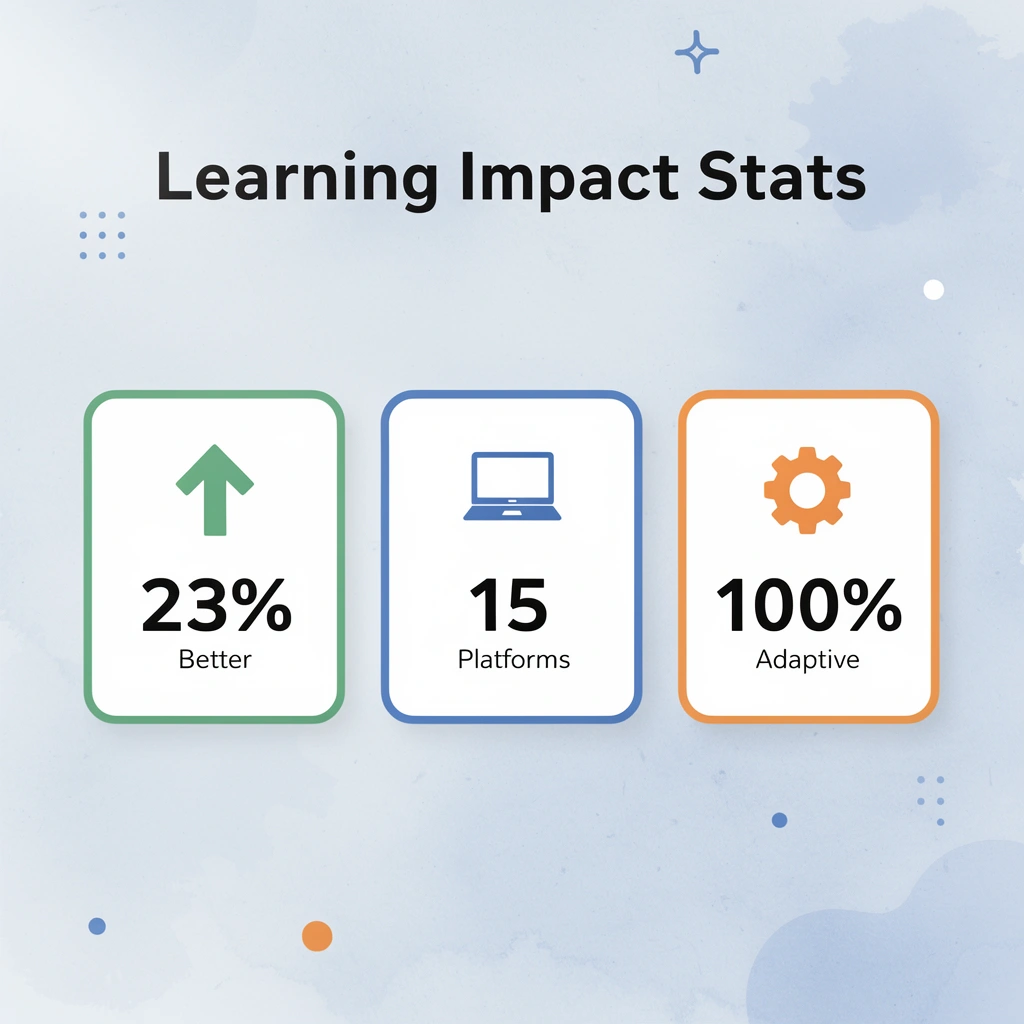
💡 Tip: Start with platforms that offer instant content generation - these save you hours of searching and allow you to create targeted practice for concepts your child is struggling with right now.
1. Homeschool Genie
This AI-powered platform creates worksheets instantly when you specify the grade level, subject, and learning goals. Describe what your child needs to practice (reading about animal habitats, spelling words with silent letters, and addition problems with pictures), and it generates the worksheet in seconds. You're not adapting someone else's third-grade maths worksheet to fit your child's needs—you're creating exactly what helps your child progress from their current level to the next.
2. Education.com
A library of over 30,000 worksheets organized by grade, subject, and specific skills lets you filter to the exact concept your child needs to practice. Instead of generic "second-grade reading" packets, you select worksheets targeting short vowel sounds, then move to consonant blends once those are mastered. The filtering system treats skills as building blocks rather than bundled grade levels, matching how homeschoolers teach.
3. K5 Learning
Structured worksheets in maths and reading let you choose materials based on skill level rather than age. When your six-year-old reads at a third-grade level but needs first-grade maths support, you can pull from different levels without difficulty. The platform treats uneven development as normal.
4. TES
A global library where educators upload worksheets lets you search by topic, difficulty, and format, then combine resources across subjects to match your unit. Teaching weather? Pull science observation sheets from one contributor, writing prompts from another, and maths word problems from a third. The variety prevents monotony while letting you personalize every unit.
5. 123 Homeschool 4 Me
Over one million worksheets, organized by grade and subject, help you find multiple ways to teach the same idea. You can pick whichever format your child learns best from: you're not stuck with one explanation of fractions, but have dozens to choose from.
6. Homeschool.com
Worksheets, planners, and curriculum tools let you build a homeschool system from the ground up rather than using a pre-made program. You can mix subjects, adjust learning pace, and create a setup that fits your child's strengths and areas needing improvement.
7. CleverLearner
Early learning topics like numbers, shapes, and basic science let you build themed sessions for preschool and kindergarten learners. When your four-year-old focuses on dinosaurs, you can pull counting worksheets with dinosaur pictures, shape recognition using dinosaur footprints, and science sheets about fossils, keeping engagement high while teaching foundational skills.
8. MegaWorkbook
Worksheets for maths, logic, and English created by homeschoolers offer the flexibility to mix and match them into personalized curricula. The creator perspective recognizes that children progress at different speeds.
9. CK-12 Foundation
You can customize learning materials—including worksheets, simulations, and practice questions—to adjust difficulty and topics for STEM-focused homeschooling. Select complexity level, question format, and visual supports that match your child's learning style.
10. The Good and the Beautiful
You can download worksheets and unit studies to add to your lesson plans. These materials are structured and organized, but you can rearrange them, skip parts, or add extra materials as your child's progress warrants.
11. NASA for Educators
Science worksheets and activities fit into lessons about space, physics, or Earth science. They let you build customized STEM units using primary-source materials from actual scientists. Your child isn't reading about Mars rovers—they're using the same data NASA engineers analyze.
12. Smithsonian Learning Lab
Interactive worksheets and resources from museum archives let you create customized collections for history, science, and culture lessons. Build a unit on ancient Egypt using artifacts, photographs, and primary documents, then generate worksheets that connect those resources to your concepts.
13. National Geographic Kids
Printable worksheets and activities about animals, geography, and nature let you create learning experiences tailored to your child's interests. When your child wants to know everything about sharks, you can pull worksheets that teach reading comprehension, map skills, and biology through that single topic. This interest-driven approach maintains motivation while building transferable skills.
14. Createful Journals
You can edit worksheet templates in PowerPoint format, changing colors, content, and structure to create personalized homeschooling materials. Adjust fonts, rearrange sections, and modify difficulty levels to match your child's needs.
15. My Coloring Pages
My Coloring Pages lets you create fully customized worksheets by describing what you need or uploading images. Most worksheet sites force you to choose from pre-made designs that don't match your current unit or your child's interests—teaching ocean life, but finding only generic fish weakens engagement.
How can custom worksheets enhance engagement in learning?
You can make letter tracing sheets using your child's favorite animals, science diagrams showing the life cycle you're studying, or themed activities that reinforce maths concepts through images your child cares about. Visual reinforcement matters for preschool homeschooling because young learners connect ideas to images before they connect them to words.
But having access to these resources doesn't solve the harder problem: knowing which worksheets move your child forward rather than just filling time.
Related Reading
- 6th Grade Homeschool Curriculum
- Texas Homeschool Requirements
- Language Arts Homeschool Curriculum
- Homeschool Coop
- How To Homeschool In Texas
- Homeschool Vs Public School
- Kentucky Homeschool Laws
- Abeka Homeschool Curriculum
- Homeschool Report Card Template
- Homeschool Room Ideas
- How To Homeschool Your Kids
- Homeschool Room
- Georgia Homeschool Laws
- Homeschool Preschool
- Pre K Homeschool Curriculum
- Florida Homeschool Requirements
- Colorado Homeschool Laws
- 1st Grade Homeschool Curriculum
“Make Homeschooling Fun and Effective with Worksheets That Match Your Child’s Learning Journey”
Figure out what your child is learning about right now (letters, numbers, plants, animals, community helpers), then pick or make a worksheet that shows that idea in pictures. Pair it with something real: trace the letter "B" after finding things around the house that start with "B", or count drawn apples after sorting real fruit by color. Look at the finished worksheet together and ask your child to tell you what they saw or learned, turning a solo activity into a talk that deepens understanding. Switch out worksheets often so they match what you're learning about, rather than becoming pointless busywork.
💡 Tip: Always connect worksheet activities to real-world objects or experiences your child just had - this creates stronger learning pathways than abstract practice alone.
Most parents grab generic worksheets from whatever's already printed or bookmarked, creating a gap between the hands-on activity their child enjoyed and the follow-up practice meant to reinforce it. When your preschooler spends the morning watching butterflies in the garden, but the only available worksheet shows generic shapes, the visual connection breaks. My Coloring Pages lets you generate custom coloring pages in seconds that match your current lesson, whether you're studying ocean creatures, geometric patterns, or the life cycle of a plant, turning abstract concepts into visual tools your child recognizes and cares about.
"When learning materials connect directly to a child's recent experiences, retention rates can increase by up to 40% compared to generic practice materials." — Educational Psychology Research, 2023
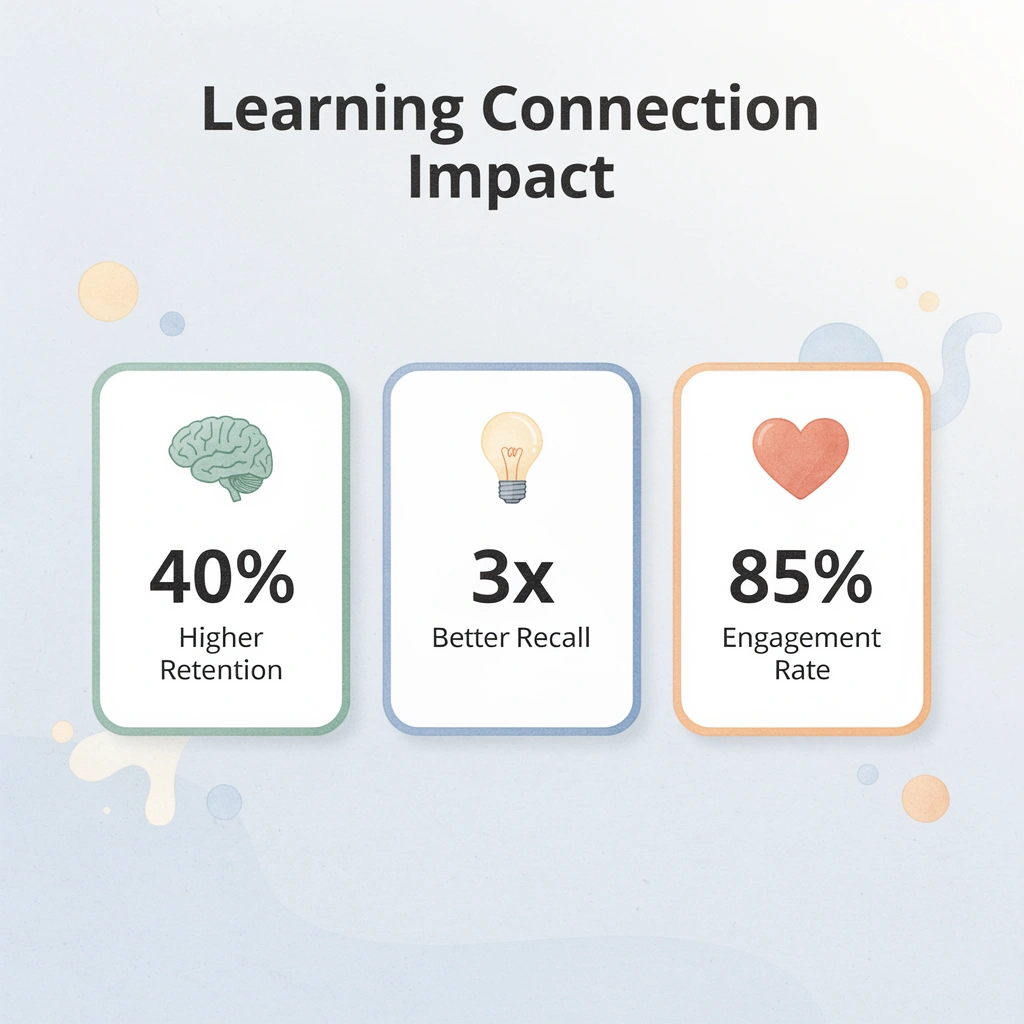
🎯 Key Point: Worksheets work when they connect to something your child has already experienced, not when they introduce random content that feels like a test.
Related Reading
- Science Homeschool Curriculum
- Homeschool Reading Curriculum
- Alabama Homeschool Laws
- Michigan Homeschool Laws
- Illinois Homeschool Laws
- North Carolina Homeschool Laws
- 3rd Grade Homeschool Curriculum
- Georgia Homeschool Requirements
- 2nd Grade Homeschool Curriculum
- Homeschool Art Curriculum
- Accredited Homeschool Curriculum
- 4th Grade Homeschool Curriculum
- 5th Grade Homeschool Curriculum
- California Homeschool Laws
- How To Homeschool In California