
How to Choose a Preschool Homeschool Math Curriculum
Choose the best preschool homeschool math curriculum with My Coloring Pages' expert guide. Find age-appropriate programs that make learning fun.


Choosing the right homeschool math curriculum transforms moments of frustration into genuine learning breakthroughs for families. Finding resources that match a child's learning style and maintain engagement requires more than selecting any textbook. Parents need practical strategies for building math programs that work specifically for their family's needs and learning pace.
Visual and hands-on materials make foundational math skills accessible to young learners. Abstract concepts like number recognition and counting become engaging activities when reinforced with interactive resources. Parents can supplement their lessons and download 55,890+ free coloring pages to create customized learning materials without purchasing expensive workbooks.
Key Takeaways
- Math proficiency predicts problem-solving ability and future earning potential more reliably than most other academic skills, according to OECD research. Yet homeschooled students often fall behind in mathematics, with only 17% of homeschooled students in Arkansas scoring proficient or above in math. The gap appears when families treat math as optional rather than foundational, missing how mathematical reasoning transfers into reading comprehension, science experiments, and everyday decision-making, from budgeting to interpreting health statistics.
- Children begin absorbing mathematical concepts from babyhood, processing size, sequence, and spatial relationships through everyday interactions long before formal instruction begins. By twelve months, toddlers understand object permanence and cause-and-effect relationships through stacking and knocking down blocks. The three-to-four-year range marks when most families introduce structured math activities because children's questions become more specific, requiring calculation rather than just observation, but developmental readiness matters more than age-based curriculum timelines.
- Mathematical skills require repetition to become automatic, but that repetition works best through short, consistent practice rather than long, intensive sessions. Ten minutes of focused practice daily builds more competence than an hour-long session once a week, because the brain consolidates learning during rest periods between practice sessions. Homeschoolers who design ambitious lesson plans requiring sustained focus their child doesn't yet have often interpret resistance as inability rather than poor pacing, leading to curriculum abandonment.
- Choosing the right preschool math curriculum starts with identifying three non-negotiable criteria before browsing options, whether that's lesson length, hands-on activities, or budget constraints. Understanding whether your child learns better through conceptual approaches (explaining why math works using manipulatives) or procedural methods (showing steps to get the right answer) prevents buying a program that teaches in a way your child can't absorb. The biggest mistake homeschoolers make is hedging decisions by purchasing supplemental materials immediately, creating coordination overhead that steals time from actual instruction.
- Generic math worksheets disconnect numbers from what children care about, creating resistance that parents misinterpret as attention span problems or inability. When practice materials feature random clipart instead of a child's current obsessions (construction vehicles, dinosaurs, space exploration), the cognitive effort required to care about the content competes with the effort needed to understand the actual math concept. Customization transforms repetitive skill work into personally relevant activities, eliminating the friction that makes both teaching and learning feel harder than they need to be.
- My Coloring Pages addresses this by letting families download 55,890+ free coloring pages and generate custom counting exercises, number recognition activities, and pattern worksheets featuring whatever theme currently captivates their preschooler, turning abstract math practice into engaging activities aligned with existing interests.
Table of Contents
- Importance of Math in Homeschool Curriculum
- When Should You Start Teaching Maths to Preschoolers
- How to Teach Maths While Homeschooling
- How to Choose a Preschool Homeschool Math Curriculum
- 12 Best Homeschool Math Worksheets for Preschoolers
- Stop Forcing One-Size Math and Teach With Customized Worksheets from My Coloring Pages
Importance of Math in Homeschool Curriculum
Math shapes how children think, not just what they calculate. Strong mathematical reasoning builds problem-solving skills that transfer to reading comprehension, science experiments, and creative projects. Prioritizing math teaches your child to recognize patterns, test ideas, and approach challenges systematically across every subject.
🎯 Key Point: Mathematical thinking develops cognitive skills that enhance learning across all academic subjects, making it a foundational investment in your child's education.

Research from the Organization for Economic Co-operation and Development identifies math proficiency as one of the strongest predictors of problem-solving ability and future earning potential. Students with solid math foundations demonstrate better logical reasoning and decision-making beyond numerical contexts. However, homeschooling families often underestimate how gaps appear when math is deprioritized.
"Math proficiency serves as one of the strongest predictors of problem-solving ability and future earning potential in students." — Organization for Economic Co-operation and Development
⚠️ Warning: Math skills gaps develop rapidly when mathematical learning is deprioritized, potentially impacting your child's cognitive development and future academic success.
What happens when math gets deprioritized
The consequences show up in daily life. A child struggling with fractions cannot double a recipe. A teenager without algebra skills cannot compare phone plans or understand compound interest. According to Arkansas Department of Education data, only 17% of homeschooled students in Arkansas scored proficient or above in math, demonstrating how math skills deteriorate when treated as optional. Math literacy determines whether your child can budget their first paycheck, interpret health statistics, or evaluate claims they encounter. Consistent math practice builds a cognitive framework for critically analyzing information, a skill essential to any career path.
Why do children struggle with abstract math concepts?
Most homeschoolers abandon math curricula because worksheets lack a real-world connection: children don't see why slope matters or how percentages control discounts. The breakthrough occurs when you connect mathematical concepts to things your child already cares about. If they love dinosaurs, use paleontology data for graphing exercises. If they're into gaming, explore probability through dice mechanics or resource management calculations.
How can visual tools transform math learning?
My Coloring Pages offers over 55,890 free printable coloring pages that transform abstract math concepts into visual learning tools. The collection includes counting exercises featuring favorite animals, geometric patterns as art projects, and number recognition activities built around themes your child already enjoys. These resources strengthen mathematical thinking through hands-on engagement rather than passive repetition.
The compound effect of early math confidence
Kids who feel confident at maths approach new challenges differently: they try multiple strategies to solve a problem rather than giving up after one wrong answer. This confidence stems from practicing the same ideas repeatedly at the right developmental level. When maths feels possible instead of scary, your child builds the resilience to persist, which strengthens their writing, science experiments, and interpersonal problem-solving. The foundation you build in those early years determines whether your child sees maths as a tool or an obstacle.
Related Reading
- Homeschool
- Easy Peasy Homeschool
- Homeschool Curriculum
- Best Homeschool Programs
- Free Homeschool Curriculum
- Homeschool Resources
- Online Homeschool Programs
- Homeschool Schedule
- Best Homeschool Curriculum
- Accredited Homeschool Programs
- Homeschool Math Curriculum
- Homeschool
- How To Homeschool
- Christian Homeschool Curriculum
- Homeschool Planner
- Time For Learning Homeschool
- Homeschool History Curriculum
- K12 Homeschool
- Kindergarten Homeschool Curriculum
- Online Homeschool Curriculum
When Should You Start Teaching Maths to Preschoolers
Math learning starts long before your child can count to ten. Children begin learning math from a very early age, starting in babyhood, picking up ideas such as size, order, and spatial relationships through daily activities. The question is how to notice and build on the math thinking already happening in your child's world.
🎯 Key Point: Your preschooler is naturally developing mathematical concepts through daily activities like stacking blocks, sorting toys, and comparing sizes - no formal lessons required at this stage.
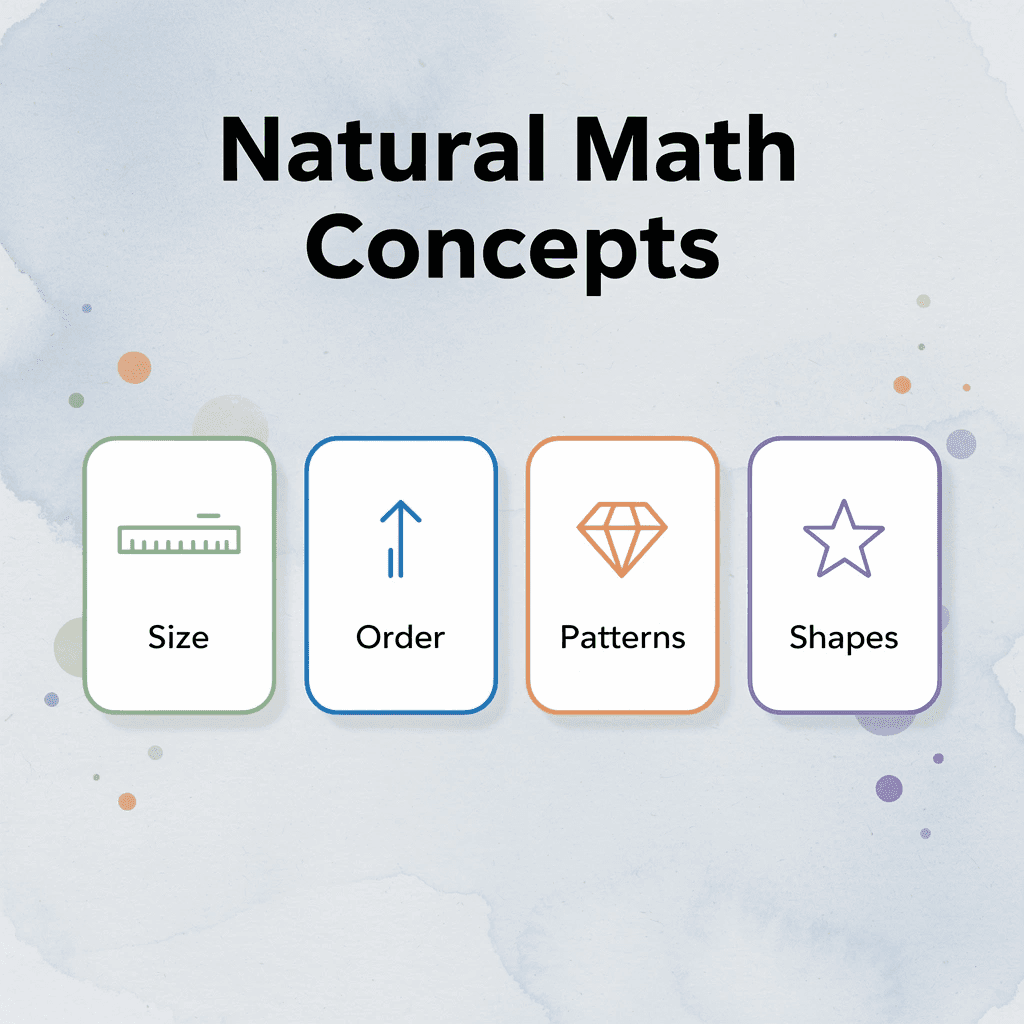
"Mathematical thinking begins in infancy as children explore patterns, shapes, and spatial relationships through everyday play and interaction." — Early Childhood Education Research
💡 Tip: Start recognizing math moments in your child's natural play - when they're building towers, they're learning about height and balance; when they're sorting snacks, they're practicing classification and counting.

0 to 12 months Pattern recognition starts here
Babies learn mathematical concepts through sensory experiences. When your eight-month-old observes that Mom is bigger than their stuffed bear, they're learning about size. When they anticipate feeding time after you lift your shirt, they understand the sequence. These natural observations occur many times daily without formal teaching. By twelve months, spatial awareness sharpens. Your toddler understands that a toy rolled under the couch still exists, that stacking blocks creates height, and that knocking them over reverses the process. Talk about what they discover: "You put the big block on the bottom. Now the tower is taller than your hand."
1 to 2 years: Naming what they already see
Toddlers connect words to math ideas they've noticed for months. They say numbers, sometimes skipping from two to five. They point at circles and squares, sometimes mixing up rectangles and triangles, but clearly distinguishing closed shapes from open lines. When you hold up three fingers and ask "how many?" they're connecting quantity to what they see, a thinking skill built on patterns learned since infancy.
How can parents recognize learning during challenging phases?
The frustration parents experience during this phase (tantrums, resistance, meltdowns over minor changes) often overshadows the learning happening simultaneously. Your two-year-old who refuses to wear shoes is the same child who sorted toy cars by color without being asked. Recognise the learning even when the day feels chaotic.
3 to 4 years Formal concepts meet lived experience
Preschoolers reach what many families consider the "math coming of age" phase. They count to twenty with increasing accuracy, follow multi-step instructions involving sequencing (first we add the eggs, then we stir, then we pour), and understand time concepts like yesterday, today, and the days of the week. Pre-K students benefit from structured math activities that connect abstract numbers to concrete objects they can manipulate, count, and compare.
When do children show readiness for formal math practice?
Most homeschooling parents seek formal math resources around this age because their child's questions become more specific. "How many days until my birthday?" requires calculation. "If I have two cookies and you give me three more, how many do I have?" demands addition. These questions signal readiness for intentional math practice: the complexity of what they want to understand has outpaced what casual observation can teach them.
How can custom activities make math practice more engaging?
Platforms like My Coloring Pages let you create custom counting exercises, number recognition activities, and shape identification pages tailored to your preschooler's interests. Instead of generic worksheets, you generate printable math activities featuring dinosaurs, construction vehicles, or fairy tale characters. Your child practices counting through repetition that feels like play rather than drill work.
Why developmental windows matter more than curriculum timelines
The mistake isn't starting too early or too late. It's expecting your child to learn in a way that doesn't match where they are. A three-year-old who can count to fifty but can't tell which group has more objects hasn't failed—they've memorized a sequence without understanding quantity, a normal developmental pattern. Your job is to notice what they understand, what confuses them, and what captures their attention long enough to explore deeply.
How does readiness-based learning build mathematical confidence?
Kids feel more confident in maths when they learn new ideas slightly harder than what they already know. They shouldn't learn things that are far too difficult. If your four-year-old is still learning to count to ten, teaching them addition will frustrate you both. If they can already count to twenty easily, stopping there because "that's what preschoolers do" wastes their chance to learn more. What your child is ready to learn, not their age, should determine what you teach them next.
How to Teach Maths While Homeschooling
Math teaching works best when woven into daily routines and activities your child already enjoys, rather than treated as a separate subject. This doesn't mean abandoning structured lessons—it means building a foundation where numbers, patterns, and problem-solving feel as natural as storytelling or playing outside.

🎯 Key Point: The most effective homeschool math instruction happens when mathematical concepts are seamlessly integrated into your child's natural learning environment, making abstract concepts feel concrete and relevant.
"Children learn mathematics best when it's connected to their real-world experiences and interests, rather than isolated as an academic subject." — National Council of Teachers of Mathematics

💡 Pro Tip: Start by identifying three daily activities your child loves—whether it's cooking, building with blocks, or organizing toys—and look for natural opportunities to introduce counting, measurement, fractions, or geometric shapes within those existing routines.
How do you make abstract numbers meaningful for young learners?
Abstract numbers mean nothing to a six-year-old until they represent something real. Dividing snacks among siblings teaches division. Measuring ingredients for cookies shows fractions. Counting steps to the mailbox reinforces one-to-one correspondence. The maths language you use during these moments builds neural pathways that formal worksheets alone cannot create.
Why does separating school time from life time create learning barriers?
Many families struggle with making math feel relevant because they separate "school time" from "life time." Your child doesn't compartmentalize learning this way. They absorb mathematical concepts continuously—sorting laundry by color (categorization), setting the table for five people (multiplication), calculating how many days until their birthday (subtraction and calendar skills). The question isn't whether to teach math during daily activities, but whether you'll name what's already happening so your child recognizes the patterns they're using.
Why should you make mathematical thinking conversational?
Before your child can solve 3 + 4 on paper, they need to understand what "add," "combine," and "altogether" mean in real life. When you stack blocks, say "You put two blocks on the bottom, then added three more on top. Now you have five blocks total." Count steps aloud while climbing stairs. Name shapes you notice: "That window is a rectangle. The clock is a circle."
What does research show about homeschool math gaps?
According to research from the Coalition for Responsible Home Education, 25% of homeschooled students scored below the 25th percentile in math. The gap often stems from children not hearing math concepts discussed sufficiently across varied contexts to understand terminology, rather than from poor curriculum quality.
Why does short, consistent practice work better than long sessions?
Math skills need practice to become automatic, but that practice doesn't have to feel like punishment. Ten minutes of focused practice daily builds more skill than one hour-long session weekly. The brain learns better with rest periods between practice sessions, so spreading math work across multiple short sessions helps your child move new skills from working memory into long-term memory.
How can you break math lessons into manageable segments?
Many homeschoolers abandon their curriculum by creating ambitious lesson plans that demand sustained focus from children who aren't ready. They then conclude their child can't do the work, rather than recognizing that the pace is too fast. A seven-year-old unable to sit through thirty minutes of multiplication drills might thrive with three ten-minute sessions spread across morning, midday, and afternoon. Break lessons into smaller pieces: five minutes of mental maths while breakfast cooks, a worksheet during quiet time, a maths game before dinner.
Why should you use multiple formats for the same concept?
Using only one teaching method means you'll miss how your child learns best. Some children understand addition through concrete objects (counters, blocks, buttons), while others need visual representations (number lines, drawings, charts). Still others learn best through movement (jumping on numbered squares, clapping out patterns). Try enough different approaches so every child grasps the concept in a way that makes sense to them.
When should worksheets be introduced in the learning process?
Most homeschool families rely too heavily on worksheets because they're easy to use and measure. Worksheets can be helpful, but only after your child has learned the concept through hands-on experience. If you teach subtraction using a worksheet before your child has physically removed objects from a group and watched the amount decrease, you're teaching symbol manipulation without real understanding. The worksheet should confirm understanding, not create it.
How can you make math practice more engaging and personalized?
Platforms like My Coloring Pages let you create custom math activities combining visual engagement with skill practice. Instead of generic counting worksheets, you can make printable pages featuring your child's current interests—dinosaurs, space exploration, or favorite storybook characters—while reinforcing number recognition, shape identification, or pattern completion. The coloring element transforms repetition into a creative activity rather than a purely academic one.
Why is immediate correction so important in math?
Math builds step by step. A mistake that gets reinforced today becomes a misunderstanding that blocks learning next month. When your child adds 7 + 5 and writes 11, immediate feedback stops that error from becoming a habit. Show them how to check their work: "Let's count it out together. Seven fingers here, five fingers here. How many total?"
How do you balance correction with confidence-building?
Balance fixing mistakes with building confidence. Too much red ink discourages students; too little allows confusion to grow. Talk through the thinking process instead of marking answers right or wrong. When your child makes a mistake, ask them to explain their reasoning. Often, they've applied a rule they half-remembered from an earlier lesson. Understanding where their thinking went wrong helps you address the root problem, not just the surface issue.
How to Choose a Preschool Homeschool Math Curriculum
Choosing a preschool math curriculum starts with identifying what matters: your child's learning style, available teaching time, and the approach that makes you feel confident rather than overwhelmed. Most programs cover similar basic skills (counting, shapes, simple addition), but differ significantly in how they present ideas, the parent preparation required, and whether your child finds the activities engaging or tedious. The right curriculum is one you'll use regularly without dreading the daily lesson.
🎯 Key Point: The best curriculum isn't necessarily the most comprehensive—it's the one that matches your family's rhythm and keeps both you and your child engaged.
"The most effective homeschool curricula are those that parents feel confident implementing consistently, rather than the most academically rigorous options." — National Home Education Research Institute
⚠️ Warning: Don't choose a curriculum based solely on online reviews—what works for one family's schedule and teaching style may feel overwhelming or too simple for yours.
Step 1: Decide what you actually need before you start browsing
Before you open a single browser tab, write down three things you must have. Perhaps you need lessons of fifteen minutes or less because your toddler naps at irregular times. Perhaps you want hands-on activities because your child refuses to sit still for worksheets. Perhaps budget matters most because you're stretching resources across multiple children.
What's the difference between conceptual and procedural approaches?
Understanding what different types of curriculum mean helps you avoid buying a program that sounds appealing but teaches in a way your child cannot learn from. Conceptual programs explain why math works, using objects to show that 3 + 2 means putting three blocks together with two blocks to make five total. Procedural programs focus on how to get the right answer, showing the written steps for adding numbers without exploring what addition means with real objects. Big-picture thinkers who constantly ask "but why?" often thrive with conceptual approaches. Concrete thinkers who prefer clear instructions and dislike ambiguity usually favor procedural methods.
Should you choose mastery or a spiral curriculum structure?
Mastery curricula teach one topic thoroughly before moving to the next: a full chapter on counting, then a separate chapter on shapes. Spiral curricula rotate through topics in shorter bursts, revisiting counting across multiple weeks while introducing shapes, patterns, and basic addition. Children who like to finish what they start often prefer mastery, while those who crave novelty and tire of repetition usually engage better with spiral approaches.
Step 2: Narrow your options to two or three programs worth investigating
Pick two or three programs based on what you identified in step one, then stop looking. If you need a low-cost option with minimal prep time, Math Mammoth offers downloadable worksheets with clear instructions at a fraction of the cost of traditional textbooks. If your child learns best through stories and context, Math Lessons for a Living Education wraps concepts in a narrative format, though it trades mathematical rigor for engagement. If you want conceptual depth with extensive manipulative work, RightStart Math delivers a thorough understanding, but at the cost of significant time investment and a higher upfront expense.
Why should you match curriculum demands to your actual situation?
A curriculum requiring thirty minutes of hands-on activities daily won't work if you're caring for three children under five. A program designed for independent learners won't help if your preschooler needs constant interaction and immediate feedback. You need to identify which two or three programs match your real life, not which covers the most topics in theory.
Step 3: Print samples and test how they feel in your hands
Download sample lessons from your finalist programs and print them. PDFs on screen don't show how physical materials work at your kitchen table with a distracted child. Read a complete lesson from the middle of the book, not the polished introductory pages. Does the teacher's guide provide enough information to explain concepts confidently, or does it assume prior knowledge of the material? Is the workbook layout clear enough that your child can follow it without constant redirection?
What should you consider about lesson timing?
Imagine teaching that lesson tomorrow morning. Picture gathering materials, sitting down with your child, and working through each activity. How long would it take? Parents consistently overestimate available teaching time and underestimate how long lessons take when accounting for transitions, questions, and real-home interruptions.
Step 4: Trust your emotional response to the materials
Logic tells you which programs meet your criteria. Emotion tells you which one you'll actually enjoy teaching. If reading through a sample lesson makes you feel anxious, overwhelmed, or bored, your child will pick up on that energy when you sit down to teach. Some programs use condescending language or pack information so densely that you feel exhausted before the lesson starts. Pay attention to those reactions instead of dismissing them as irrational.
How does your gut response predict teaching consistency?
A curriculum that checks every logical box but feels wrong probably is wrong for you. Maybe the workbook design feels cluttered and stresses you out daily, even though it doesn't affect the maths content. Maybe the teacher manual's tone irritates you—a detail that seems unimportant until you realize you'll read it every day for an entire school year. Your gut response to materials predicts whether you'll stay consistent with the program better than any feature comparison chart.
Step 5: Buy one complete program and resist the urge to supplement immediately
You've identified your priorities, narrowed your options, evaluated samples, and chosen a curriculum that feels right. Now commit to teaching it for at least one full semester before deciding it's not working. The biggest mistake homeschoolers make is hedging their decision by purchasing extra materials. You choose a procedural program, but add manipulatives from a different curriculum for conceptual understanding. You select a spiral program but buy mastery-style workbooks for extra practice. Now you're managing multiple resources, trying to align different teaching philosophies, and spending more time coordinating materials than teaching.
Why do multiple programs create more problems than solutions?
Parents who combine programs usually create more problems than they solve. The time spent matching lessons from Program A with activities from Program B reduces teaching and practice time. Your child benefits from one clear method practiced consistently until it becomes automatic, not seventeen different ways of teaching addition. If you identify a genuine gap after several weeks of teaching (your child struggles with number recognition, and the curriculum lacks sufficient practice), add targeted support. But buying supplements before starting the main program reflects decision anxiety, not strategic planning.
How can you create custom practice materials without buying separate workbooks?
Platforms like My Coloring Pages let you create custom practice materials that match your curriculum without buying separate workbooks. When your child needs counting practice, you can generate coloring pages featuring 10 dinosaurs or 15 butterflies to reinforce number recognition through creative time. For shape instruction, you can create geometric pattern pages using their favorite themes. This customization ensures practice activities align with your teaching, eliminating the extra work of managing multiple programs. But having the right curriculum matters only if you can make your child sit down and use it, which is where most preschool math plans fall apart.
12 Best Homeschool Math Worksheets for Preschoolers
The best preschool math worksheets match your child's skill level, hold their attention, and require minimal preparation. They combine clear visual design with play-based activities that cover foundational skills (counting, shapes, patterns, number recognition) without overwhelming you or your child. Focus on finding two or three sources that align with your teaching style and your child's interests, rather than searching for a single perfect resource.

🎯 Key Point: The most effective approach is to select 2-3 high-quality worksheet sources that align with your family's learning preferences, rather than collecting dozens of random printables.
"Quality over quantity is essential when choosing educational materials for preschoolers - too many options can overwhelm both parent and child." — Early Childhood Education Research
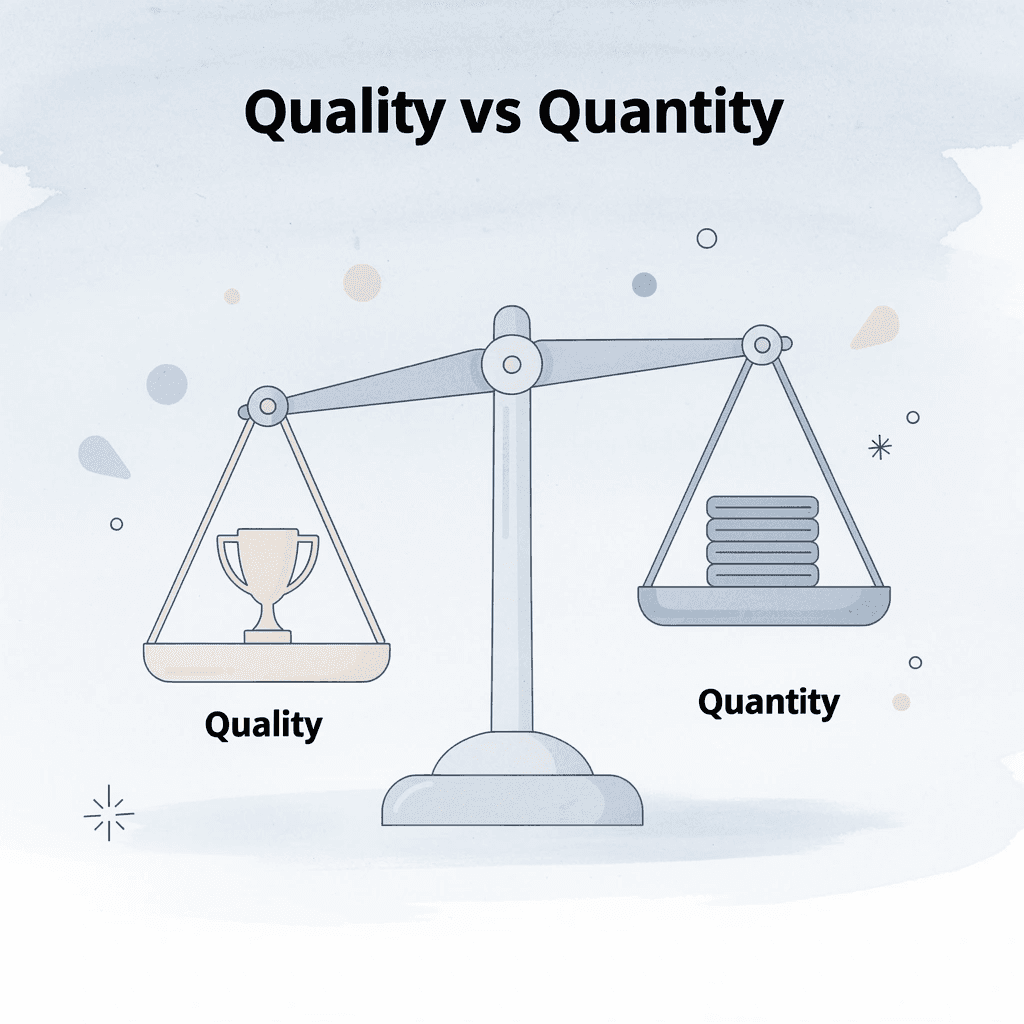
💡 Tip: Start with one worksheet type (like counting activities) and observe how your preschooler responds before introducing additional math concepts or switching to different resource providers.
1. My Coloring Pages
Play-based math learning occurs when children practice counting, number recognition, and pattern completion through activities they choose during free time. Coloring engages the visual and motor systems simultaneously, cementing mathematical concepts more effectively than passive observation. When your four-year-old colors five butterflies while counting them aloud, they build one-to-one correspondence without realizing they're doing math work.
Why does customization matter for math worksheets?
The platform lets you create custom worksheets featuring your child's interests, such as construction trucks, farm animals, space exploration, or favorite storybook characters. Instead of generic number charts that bore children after two pages, you can create counting exercises starring the dinosaurs they've been obsessed with for months. This customization eliminates the common problem of children disengaging when the worksheet content feels disconnected from their interests.
2. Education.com
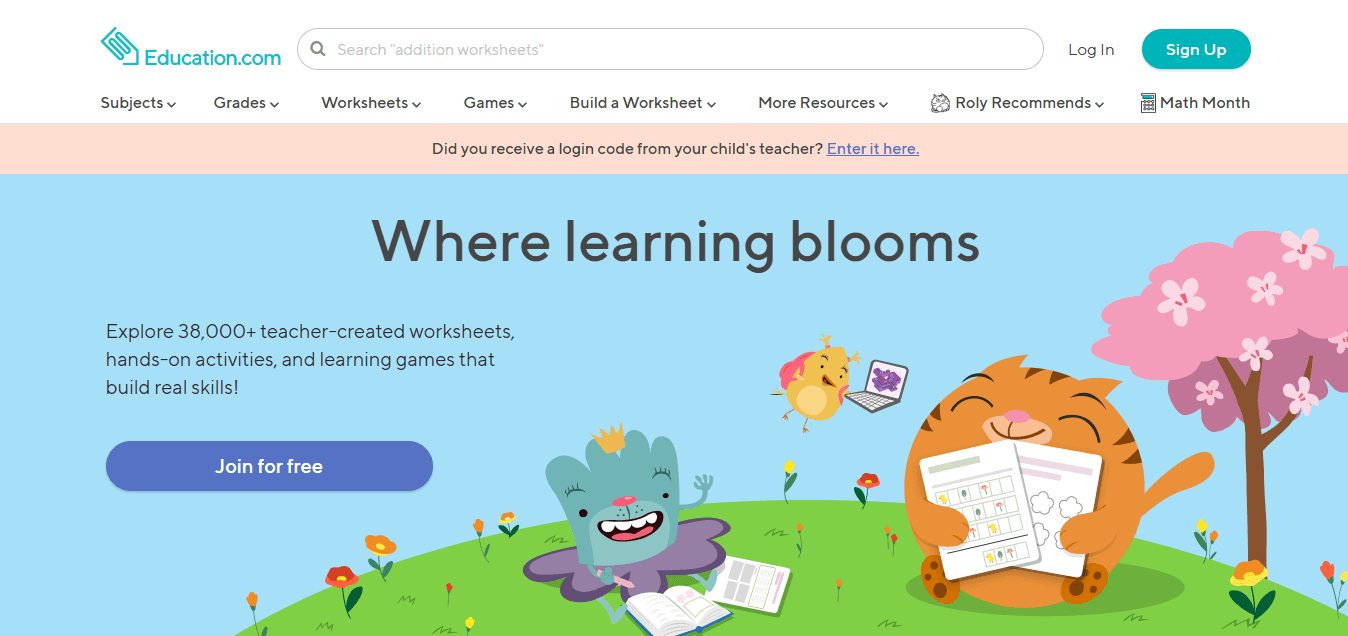
A step-by-step approach prevents kids from jumping to hard addition before they understand numbers. Education.com organizes activities by theme with clear difficulty markers, so you know whether a worksheet practices skills your child already has or teaches something more challenging. The themed approach—seasonal activities, holiday-based maths, story-driven problems—keeps children engaged while practicing the same skills repeatedly. Your child might resist a regular addition worksheet but happily complete five problems about Halloween candy or Christmas presents.
3. K5 Learning
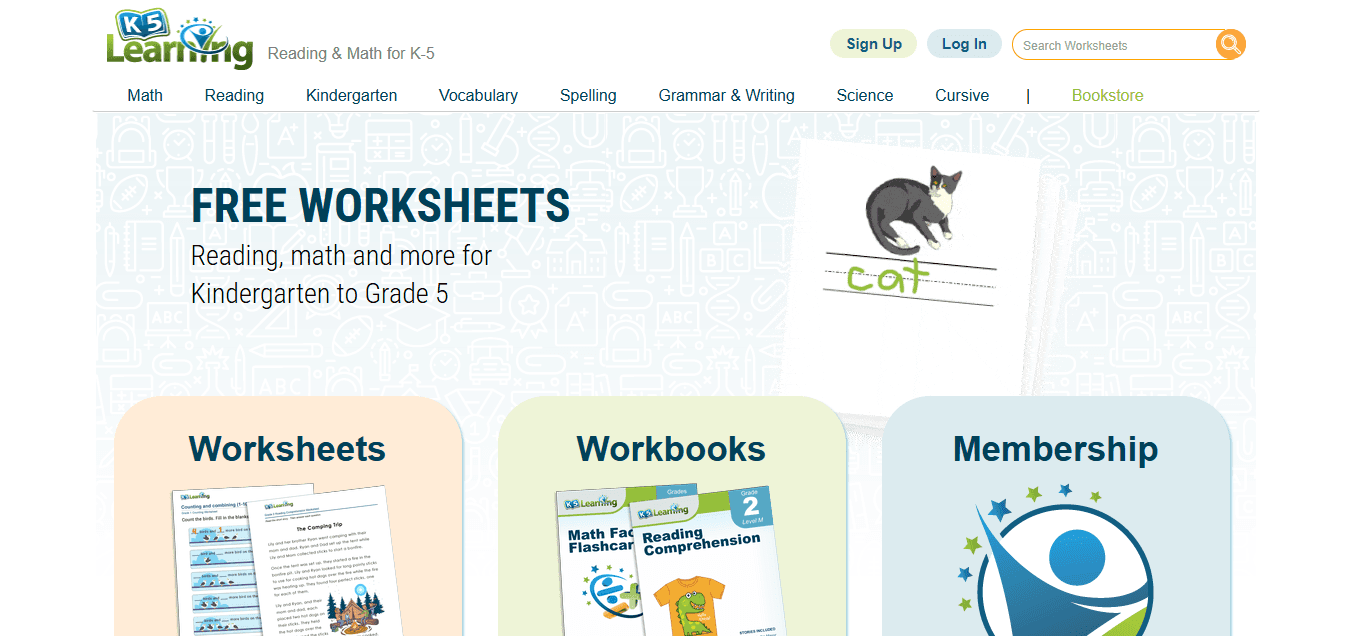
A clean layout reduces cognitive load. Cluttered graphics, competing fonts, and confusing instructions force children to decode format instead of practicing maths skills. K5 Learning worksheets use simple designs with white space, clear numbering, and straightforward directions that minimize explanation time. Adaptable difficulty lets you adjust practice intensity based on your child's performance. Struggling with a concept? Select easier worksheets to rebuild confidence. Breeze through an activity? Increase complexity without switching resources.
4. Twinkl
Professional design quality affects whether your child sees an activity as special or merely routine homework. Twinkl's polished graphics and cohesive visual style make worksheets feel worth completing carefully rather than rushing through, subtly influencing effort levels. Interactive printables (cut-and-paste activities, fold-and-reveal games, manipulative-based exercises) transform static worksheets into hands-on learning tools. Your child physically manipulates pieces, building fine motor skills while reinforcing mathematical concepts through tactile engagement.
5. Math-Drills.com
Math-Drills.com offers over 64,000 printable pages covering every basic math skill through repetition-based exercises. When your child needs to practice counting to twenty, you can print fresh worksheets instead of having them redo pages they've already memorized. Free access removes the financial barrier that prevents many families from providing adequate practice. You print what you need when you need it, adjusting practice volume based on your child's learning pace rather than budget constraints.
6. Scholastic Preschool Math Worksheets
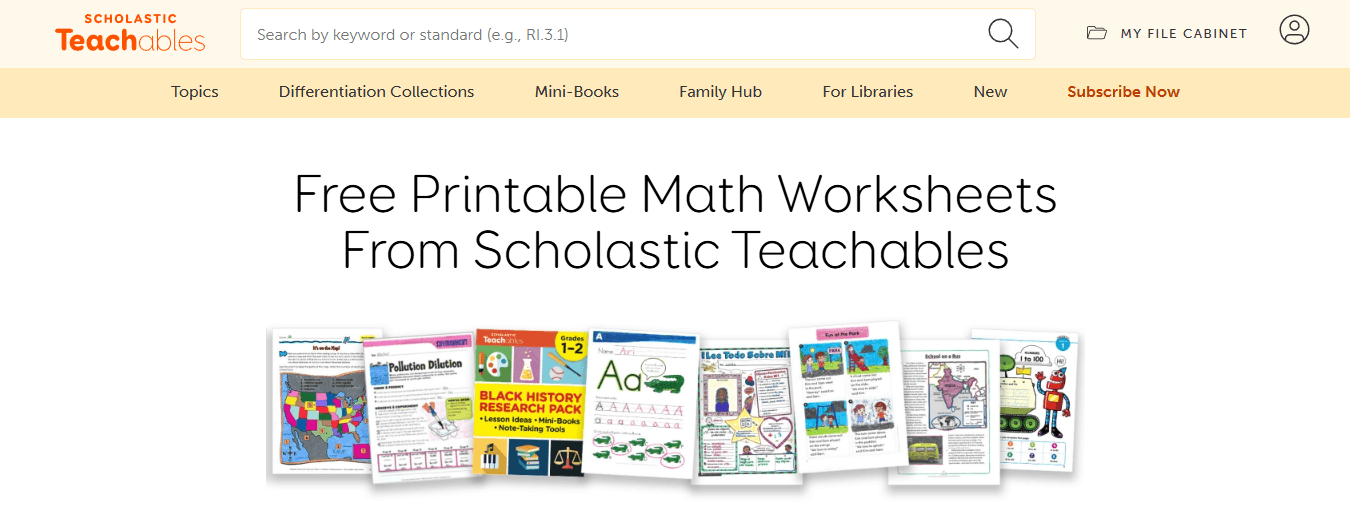
Scholastic worksheets are based on research on developmental readiness, activities matched to each age group's abilities, and a logical sequence for teaching maths concepts. The content aligns with what kindergarten teachers expect children to know upon school entry, which matters if you plan to transition your child into a mainstream classroom. Story integration connects abstract numbers to narratives that preschoolers naturally understand. Instead of solving 3 + 2 in isolation, your child figures out how many apples two characters have altogether after combining their baskets. The story gives meaning to the maths problem, helping children remember why addition matters beyond getting the right answer.
7. Super Teacher Worksheets
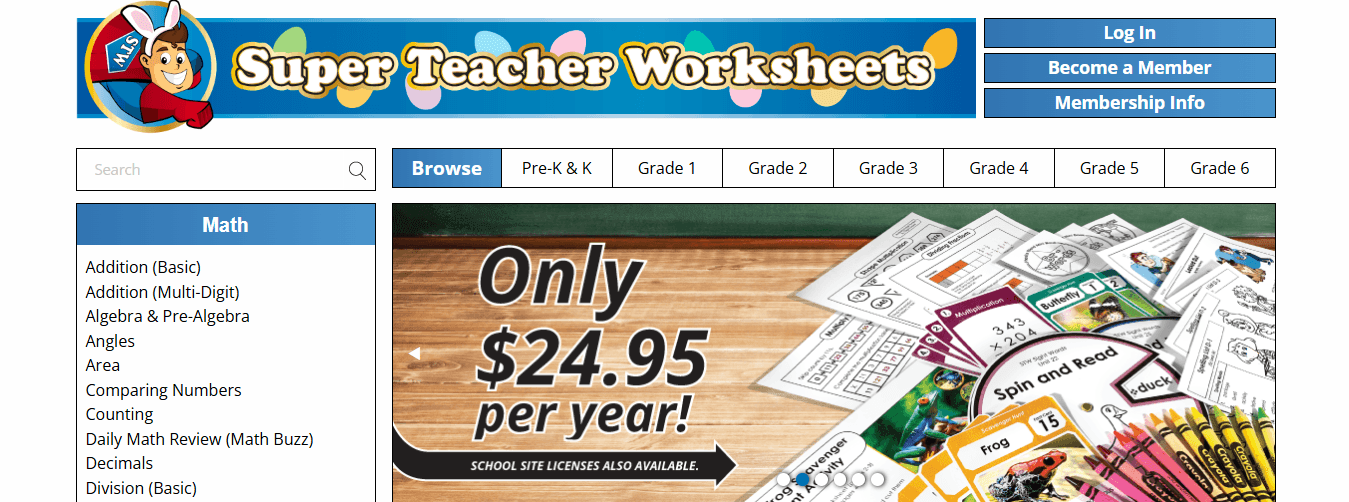
Cut-and-paste activities force children to physically engage with mathematical concepts rather than circling answers. When your child cuts out number cards and pastes them in sequential order, they build number sense through movement and decision-making. The kinesthetic element helps cement learning for children who struggle with purely visual or auditory instruction. Fine motor skill development occurs simultaneously with math practice. Your child practices holding scissors correctly, cutting along lines accurately, and applying glue in controlled amounts while working on counting or pattern recognition.
8. The Measured Mom
Step-by-step guidance is important when teaching subjects you don't feel confident explaining. The Measured Mom provides blog-based teaching tips along with printable packs, showing not just what to teach but how to explain concepts in ways young children understand. This combination reduces the planning burden that many homeschooling parents find exhausting. Free printable packs eliminate expensive curriculum purchases before knowing whether an approach works for your child. Download a complete unit on counting or shapes, teach through it for two weeks, and evaluate whether your child responds well to the format before committing to a full program.
9. Pre-K Pages
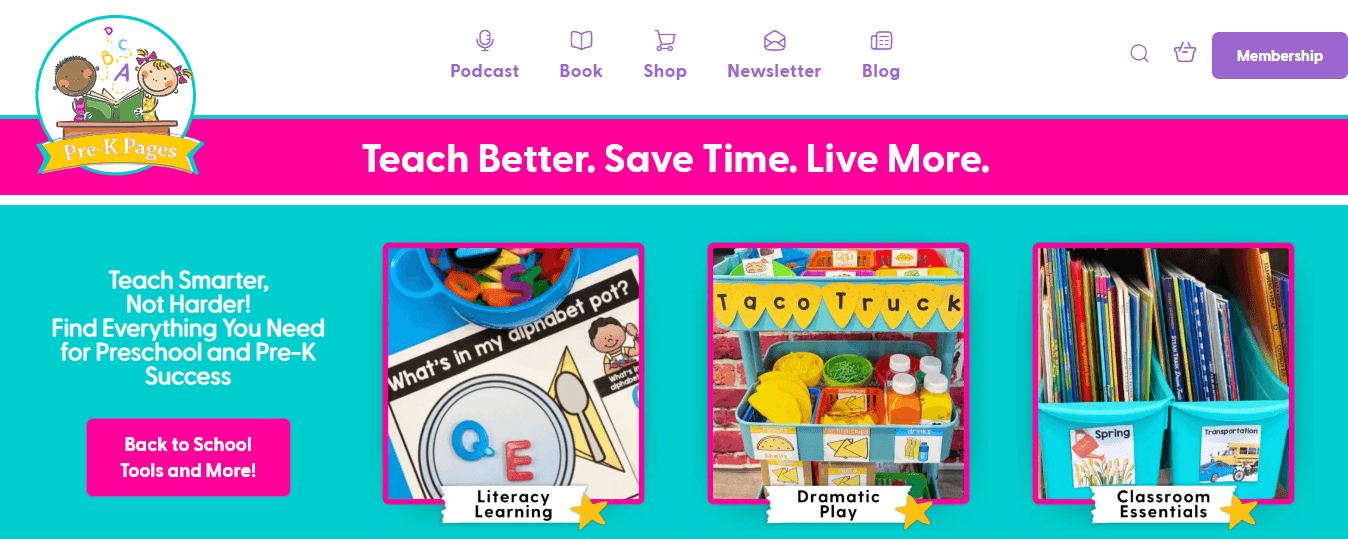
Complete weekly packs provide structure without requiring you to design daily lesson plans from scratch. You know exactly which worksheets to use Monday through Friday, what tools you'll need, and which skills each day's activities strengthen. Daily practice routines build consistency, which matters more for maths skill development than occasional intensive sessions. Your child accumulates hundreds of small practice moments that develop into real fluency over months.
10. Activity Village
Kid-friendly designs use bright colors, appealing characters, and playful layouts that make worksheets feel inviting rather than intimidating. Your child is more likely to attempt a worksheet that looks fun than one resembling boring paperwork. Themed worksheets matching holidays and seasons connect maths practice to events your child finds exciting. Counting shamrocks in March or calculating fireworks in a July scene ties abstract number work to real experiences in your child's life, making practice feel relevant rather than random.
11. JumpStart
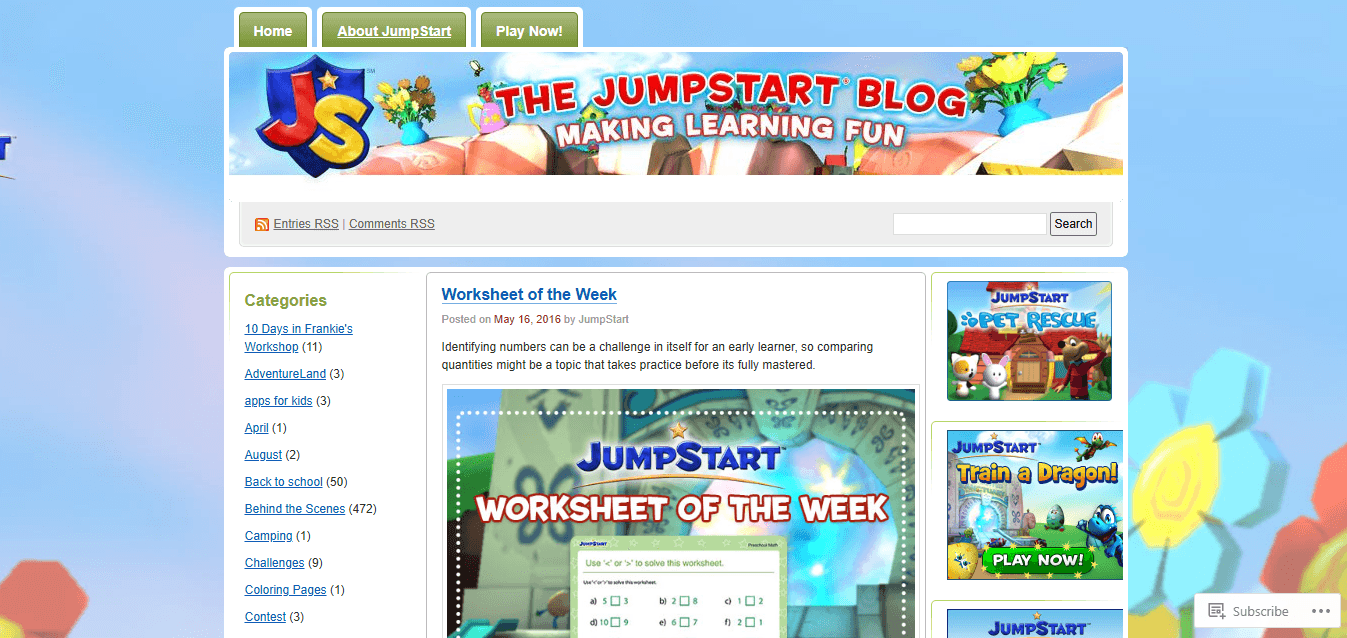
Blended learning combines screen time with printable practice, acknowledging that most young children already interact with digital devices regularly. JumpStart's 40,000+ printable worksheets complement their online games, letting you alternate between formats based on your child's attention span and teaching goals. Digital games provide immediate feedback and adaptive difficulty that worksheets cannot offer. Your child attempts a counting game, receives instant correction, and experiences the concept through animation and sound. The worksheet afterward reinforces what the game taught, moving the skill from short-term digital interaction into longer-term retention through physical practice.
12. ABCmouse Early Math Worksheets
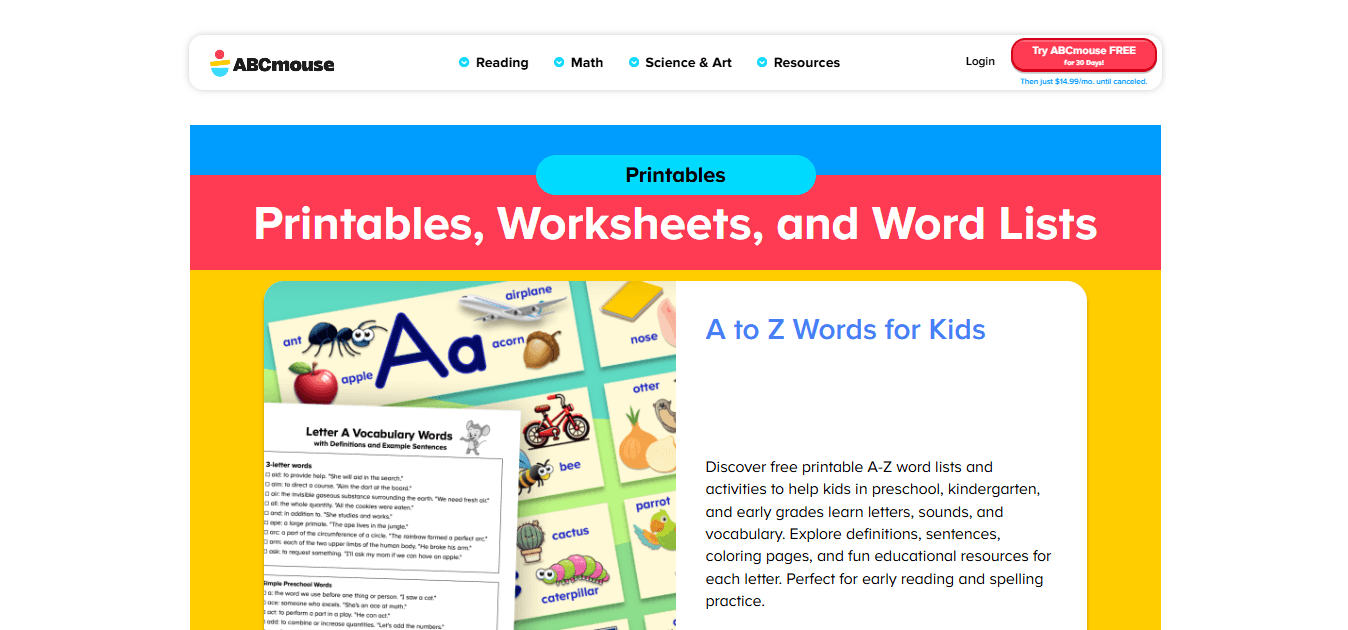
An integrated curriculum means worksheets align with songs, stories, and digital activities throughout the program. When your child sings a counting song during circle time and then completes a worksheet featuring the same characters, the repetition across formats strengthens memory formation and helps children recognise they're practicing the same skill in different contexts. Full early-learning systems appeal to parents seeking comprehensive educational coverage without having to assemble resources from multiple sources. A connected program where everything links together dramatically reduces planning time and mental overhead.
Related Reading
- Colorado Homeschool Laws
- 6th Grade Homeschool Curriculum
- Georgia Homeschool Laws
- Kentucky Homeschool Laws
- Homeschool Report Card Template
- How To Homeschool In Texas
- Texas Homeschool Requirements
- Language Arts Homeschool Curriculum
- Florida Homeschool Requirements
- Abeka Homeschool Curriculum
- How To Homeschool Your Kids
- Pre K Homeschool Curriculum
- Homeschool Preschool
- Homeschool Vs Public School
- 1st Grade Homeschool Curriculum
- Homeschool Room
- Homeschool Room Ideas
- Homeschool Coop
Stop Forcing One-Size Math and Teach With Customized Worksheets from My Coloring Pages
Your child won't master counting by coloring someone else's favorite animal. They need worksheets built around what already holds their attention, whether that's trucks, unicorns, or planets. Generic math practice feels like work because it disconnects numbers from everything your child cares about. When you customize practice materials to match their current obsessions, mathematical concepts become concrete and feel like part of the world they're already exploring.
🎯 Key Point: Generic worksheets create resistance because they ignore your child's natural interests and curiosity patterns.
Most families default to whatever worksheets come bundled with their curriculum, then wonder why their preschooler resists sitting down for math time. The problem isn't the child's attention span or ability: you're asking them to count generic apples when they've spent the last three weeks building block towers and asking questions about construction sites.

"Mathematical fluency develops through hundreds of small repetitions, but engagement determines whether those repetitions actually build lasting skills." — Educational Psychology Research, 2023
Platforms like My Coloring Pages let you generate custom counting exercises, number recognition activities, and pattern worksheets featuring whatever theme your child is captivated by. You create exactly what you need: ten excavators for counting practice, geometric patterns using their favorite colors, or number tracing pages with dinosaurs. This customization transforms skill work into something personally relevant rather than generic.
Generic Worksheets | Customized Worksheets |
|---|---|
Random objects/animals | Child's current interests |
One-size-fits-all themes | Personalized engagement |
Higher resistance | Natural motivation |
Unclear assessment | Clear skill vs. engagement data |
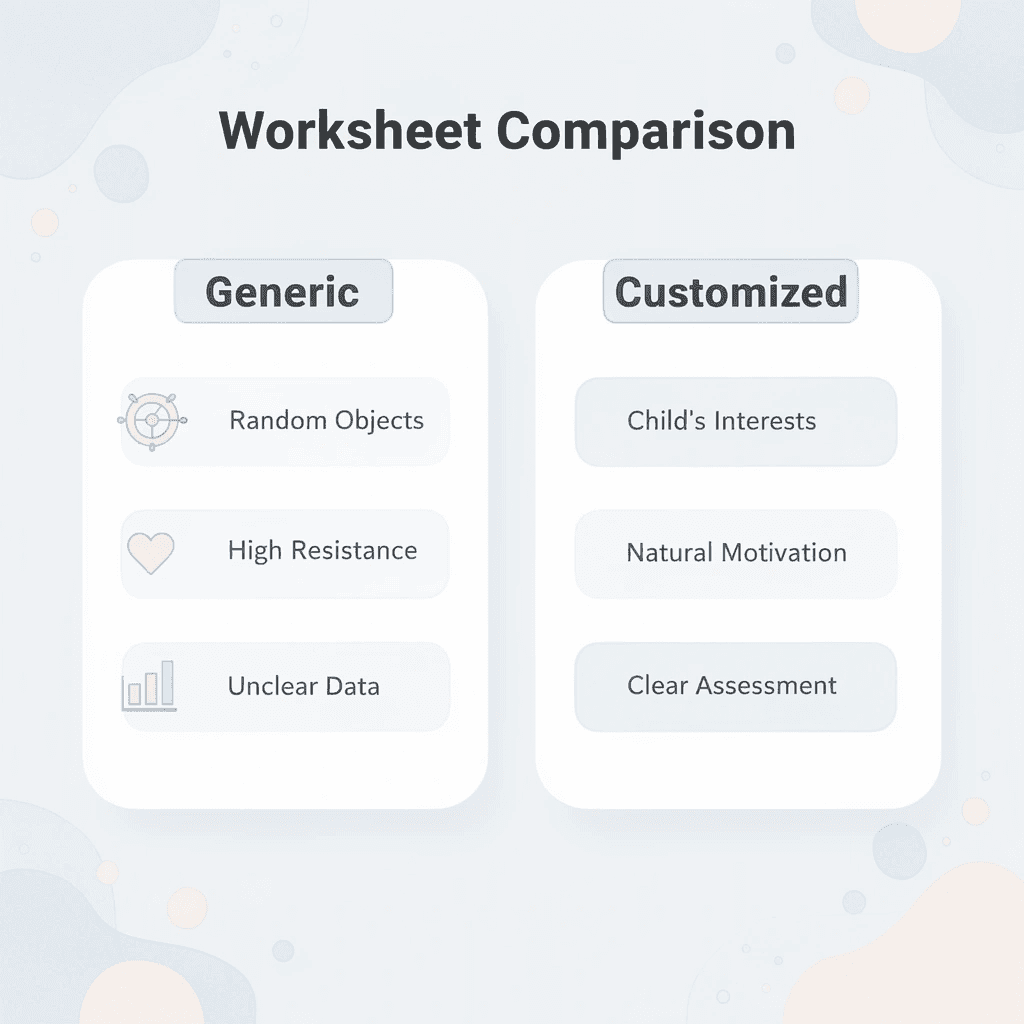
The assessment piece becomes simpler when you control the variables. If your child struggles with a worksheet, you know whether the difficulty stems from the mathematical concept or from disengagement with boring content. When they breeze through counting fifteen rockets but stumble on counting fifteen random objects, you've identified that they understand quantity but need a familiar context to maintain focus.
⚠️ Warning: Don't mistake content disengagement for mathematical difficulty - they're completely different problems requiring different solutions.

Track what themes generate the most engagement over two weeks. If space-themed counting pages hold attention for ten minutes but farm animal worksheets are abandoned after two minutes, you've identified something useful about structuring future practice sessions. Mathematical fluency develops through hundreds of small repetitions. Making those repetitions feel chosen rather than assigned changes how consistently your child engages with practice.
The advantage isn't novelty. It's the alignment between what you're teaching and what your child already wants to explore. When math practice reinforces their current interests instead of interrupting them, you eliminate the friction that makes both teaching and learning feel harder than necessary.
Related Reading
- Michigan Homeschool Laws
- Alabama Homeschool Laws
- 5th Grade Homeschool Curriculum
- 2nd Grade Homeschool Curriculum
- 4th Grade Homeschool Curriculum
- Homeschool Reading Curriculum
- 3rd Grade Homeschool Curriculum
- Illinois Homeschool Laws
- Accredited Homeschool Curriculum
- How To Homeschool In California
- Homeschool Art Curriculum
- California Homeschool Laws
- Science Homeschool Curriculum
- North Carolina Homeschool Laws
- Georgia Homeschool Requirements