25 Must Try All About Me Preschool Activities
Discover 25 engaging All About Me Preschool activities from My Coloring Pages. Build self-awareness and confidence with fun crafts and games.

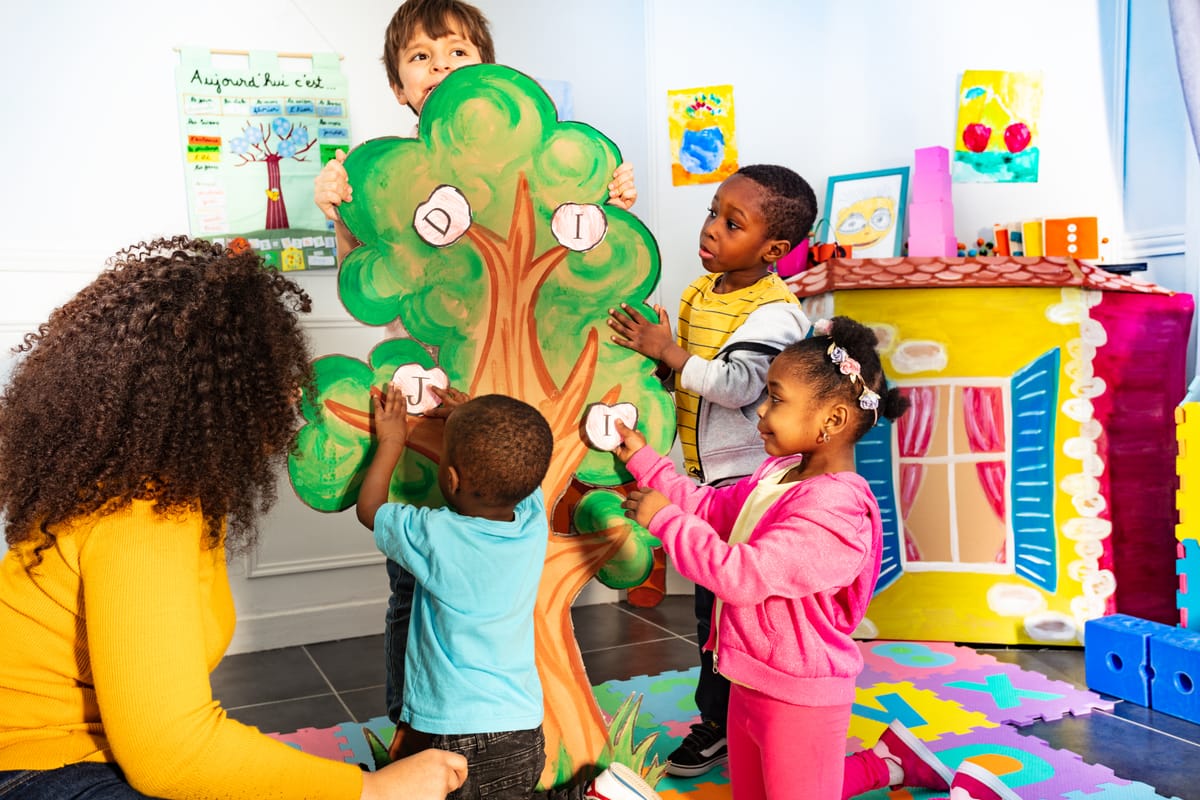
Preschoolers naturally gravitate toward activities that celebrate their own identity and experiences. All About Me preschool themes tap into this curiosity, helping children build self-awareness and confidence through hands-on exploration of their families, feelings, and personal interests. These activities provide a foundation for social-emotional learning while encouraging children to recognize what makes them special.
Self-portrait templates, family worksheets, and name tracing activities give young learners concrete ways to express their identity through creative play. Parents and teachers can use these personalized materials during circle time, independent activities, or family bonding sessions at home. For a comprehensive collection of printable resources that support identity-building activities, explore 39,061+ FREE Coloring Pages.
Summary
- Identity-building activities in preschool aren't supplementary. They're foundational architecture for how children learn to engage with peers, express themselves, and navigate social complexity. Research published by the National Association for the Education of Young Children (2017) found that children with a strong sense of self at age four engaged more confidently in classroom interactions and displayed measurably improved communication skills by age six compared to peers who hadn't developed that early self-awareness.
- Social and emotional competence in preschool predicts academic achievement better than early literacy skills alone. A meta-analysis in Child Development (2018) challenged the instinct to prioritize letter recognition over emotion cards or phonics drills over family tree activities. One observational study tracked what happened after children engaged in structured sharing about themselves and found that positive peer interactions during free play increased by 30% while aggressive behaviors dropped by 25%.
- Parent involvement transforms preschool activities from classroom exercises into integrated learning experiences that bridge home and school. According to the Georgia Family Connection Partnership, children whose parents are highly involved in their education are 40% more likely to be reading at grade level by third grade. That statistic captures the cumulative effect of adults who understand what their child is learning, reinforce those concepts at home, and communicate regularly with teachers about progress and challenges.
- Language acquisition happens through meaningful use, not rote memorization. The American Speech-Language-Hearing Association confirms that conversational language exposure in preschool directly correlates with larger vocabulary and stronger narrative skills. When a child completes a "My Favorite Things" worksheet, they're simultaneously working on vocabulary, sentence structure, narrative sequencing, and expressive language in the most motivating context possible because the subject matter is inherently interesting to them.
- Generic templates frustrate both parents and children when they fail to reflect a child's actual interests or family structure. A template asking "Draw your family" with four identical figures doesn't work for single-parent households, blended families, or children being raised by grandparents. Customization transforms standard activities into keepsakes that genuinely represent who the child is, multiplying engagement because the content feels personal rather than generic.
- My Coloring Pages addresses this by offering a customization tool alongside 39,061+ free coloring pages that let parents and educators create personalized "All About Me" materials reflecting a child's actual name, family structure, favorite things, and hobbies without subscription fees or premium paywalls.
Importance of All About Me Preschool Activities
Self-focused activities in preschool form the foundation for how children learn to engage with peers, express themselves clearly, and navigate classroom social dynamics. When a four-year-old talks about their favourite colour or traces their own name, they build skills that predict success in kindergarten and beyond.
A parent sees a worksheet asking their child to draw their family and thinks, "That's nice, but what about letters?" An educator prints a "My Favorite Things" template and worries it's not challenging enough. This misconception treats identity-building as decoration when research shows it's architecture.
🎯 Key Point: All About Me activities aren't just fun – they're scientifically proven to build the social-emotional foundation that makes all other learning possible.
"Self-focused activities in preschool are the foundation for how children learn to engage with peers and navigate classroom social dynamics." — CDC Classroom Management Research
🔑 Takeaway: When we help preschoolers explore their own identity, we're not taking time away from academic skills – we're building the confidence and self-awareness that makes those skills stick.
How does self-concept develop in preschoolers?
Between the ages of three and five, children develop a sense of identity. They notice their preferences differ from those of their classmates, understand that their family looks different from others, and recognise their own emotions. This cognitive scaffolding supports every interaction they'll have in a learning environment.
What does research show about self-aware children?
According to research published by the National Association for the Education of Young Children (2017), children with a strong sense of self at age four participated more confidently in classroom interactions: they asked questions, volunteered answers, and engaged in group activities without prompting. By age six, these children showed measurable improvements in communication skills compared to peers who lacked that early self-awareness.
How do all-about-me activities support future learning?
When a child completes an "All About Me" poster, they practise the basic skill of talking about themselves that every future learning experience requires. Reading comprehension asks them to connect stories to their own experiences. Math word problems require them to consider themselves in scenarios. Science experiments depend on their ability to observe and report what they notice.
How do social-emotional skills impact academic success?
A study examining research papers in Child Development (2018) found that social and emotional competence in preschool predicts kindergarten and later academic success better than early literacy skills alone. This challenges the notion that letter recognition and phonics drills should take priority over emotion cards and family tree activities.
What specific competencies do identity activities build?
The skills built through identity activities are specific and measurable. Children learn to recognize and name emotions, reducing conflict during group work. They practise talking about preferences and experiences to build conversational fluency. They listen to peers share their stories, developing empathy and perspective-taking skills. These are the mechanics of classroom participation.
How do structured sharing activities improve classroom behavior?
One study found that when children in early childhood classrooms talked about themselves in a structured way, positive interactions during free play increased by 30%, while aggressive behaviours dropped by 25%. Children had acquired the social vocabulary and emotional awareness needed to handle disagreements, take turns, and collaborate on imaginative play—a distinction between thriving in a learning environment and struggling to participate.
How does self-expression build language skills?
Every time a preschooler describes their favourite food, explains why they like a certain colour, or tells a story about their pet, they're practising expressive language. The American Speech-Language-Hearing Association confirms that talking and listening to language in preschool directly connect with expanded vocabulary and stronger narrative skills.
When a child completes a "My Favorite Things" worksheet, they develop vocabulary by naming specific items, sentence structure by forming complete thoughts, narrative sequencing by organizing ideas in order, and expressive language by communicating preferences clearly.
Why is meaningful practice more effective than memorization?
Learning a language happens through meaningful use, not rote memorization. A child who talks about themselves practises language in the most motivating context possible because the subject matter is inherently interesting to them. They're finding their own words, not repeating someone else's.
Platforms like My Coloring Pages help parents and educators create custom "All About Me" pages that reflect a child's interests, family structure, and unique identity. This customization transforms a standard worksheet into something a child wants to complete and share, multiplying language practice and emotional engagement.
How do identity activities strengthen peer relationships?
Research on classroom climate shows that activities in which children share about themselves foster stronger peer relationships. When a child brings in family photos, discusses their weekend, or shares their favourite book, classmates see them as a whole person rather than simply a peer.
Preschool is often where children first learn social dynamics outside their family. They navigate working with unchosen peers, following new routines, and sharing space with children from different backgrounds. Identity activities support this adjustment.
What developmental benefits do educators observe?
Early childhood educators notice that children who complete "All About Me" activities speak up more during group time, ask more questions, understand personal and peer differences better, and adjust more easily when routines change. These observations align with developmental benchmarks that emphasise self-awareness as critical to social competence.
How does identity work support academic readiness?
Identity work isn't separate from getting ready for school—it's the foundation. A child who knows themselves, can share their thoughts, and understands that others have different experiences, is prepared to learn with peers. Without that foundation, a child struggles not because they lack intelligence, but because they lack the social-emotional infrastructure to participate.
Related Reading
- Preschool Activities
- Preschool Worksheets
- What Age Is Preschool
- Preschool Curriculum
- Preschool Age Range
- Preschool Vibes
- Preschool Homeschool Curriculum
- Preschool Games
- Worksheets For Preschool
- Preschool Education
- Free Preschool Worksheets Age 3–4
- Preschool Books
- What Age Do Kids Start Preschool
- Preschool Graduation
- Free Name Tracing Worksheets for Preschool
- Preschool Backpack
- Free Preschool Worksheets
- Preschool Self Defense
- What Should a Child Learn in Preschool
- Preschool vs Pre K
- Sight Words for Preschool
- Free Printable Preschool Worksheets Tracing Letters
- First Day of Preschool
- Preschool Math Worksheets
- Preschool Valentine Crafts for Parents
- Preschool Graduation Gifts
- Preschool Toys
- What Age Is Preschool and Kindergarten
- Preschool Quotes About Play
What Constitutes All About Me Preschool Activities
"All About Me" activities are structured, hands-on experiences where children explore who they are through art, storytelling, measurement, and reflection. These personalized investigations examine what makes each child unique: their physical traits, emotions, family structure, preferences, and growing sense of self in relation to others.

The activities focus on specific developmental skills while keeping the child at the center of the learning experience. These carefully designed experiences help preschoolers build self-awareness, develop communication skills, and strengthen their identity formation during this critical period.
Self-Portraits and Visual Identity
Children study their faces in mirrors, then recreate what they see using crayons, paint, collage materials, or mixed media. A four-year-old notices their curly hair, brown eyes, and smile with missing teeth—learning to see themselves as distinct individuals with observable characteristics.
This process builds visual discrimination skills and fine motor control. When a child mixes paint to match their skin tone or cuts paper to represent their hair texture, they problem-solve and make choices about appearance while practising the focused attention that supports handwriting and detailed art projects.
Personal Identity and Physical Awareness
Activities focusing on names, ages, birthdates, and body mapping help children understand where they fit in time and space. Tracing their body on butcher paper provides a visual picture of their size, while measuring height with blocks or yarn introduces early maths concepts and answers the question every preschooler asks: "How big am I?"
Name recognition activities, where children build their names with stickers, buttons, or playdough, teach letter formation through hands-on learning. A child arranging foam letters to spell their name connects abstract symbols to their most meaningful word: the one that represents them.
Emotions and Feelings Vocabulary
Emotion charts, feeling faces, and mirror play teach children to recognize and name internal states. A child looks in a mirror while making different expressions, then matches those faces to emotion words: happy, sad, frustrated, and excited. This practical training builds self-awareness and communication skills.
According to research published by the Collaborative for Academic, Social, and Emotional Learning (2019), children who accurately label emotions at age four demonstrate better conflict resolution skills by age six. The ability to say "I feel angry because..." instead of hitting a peer transforms classroom dynamics. These activities provide the vocabulary that enables emotional regulation.
Family and Home Representation
Sharing stories, drawing pictures, or building block structures that represent family teaches children that households take different forms. One child draws parents and siblings, another draws grandparents who raise them, and another includes a pet as a family member. The activity validates each child's family while teaching them about diversity.
This matters because preschool introduces children to friends whose lives differ from their own. A child who understands that families vary in size, structure, and makeup develops empathy and learns that "different from me" doesn't mean "worse than me."
Favorites and Preferences as Data
Activities in which children identify and share their favourite colours, foods, animals, or toys introduce early data collection and graphing. A teacher asks each child their favourite fruit, then creates a bar graph of the class's preferences. Children see that more classmates prefer apples to bananas and understand quantities, comparisons, and visual data representation.
These activities teach children that their preferences matter and that disagreement is normal. Two children can both be right when one loves blue and another loves red. This understanding supports future collaborative work and reduces conflict during group activities.
How does fine motor development connect to self-expression activities?
Building names with playdough, creating "My Book" projects, or decorating self-portraits with buttons and sequins develops the hand strength and coordination needed for writing. A child pinching playdough into letter shapes strengthens the same muscles used to grip a pencil.
Why do children stay more focused on personalized activities?
Motivation is higher because the subject interests children. A child will spend ten focused minutes decorating a page about themselves, but might resist a generic colouring sheet. This sustained attention builds both skill and stamina.
What makes personalized content more engaging than generic templates?
Generic templates often fail to capture what makes a child feel seen. A worksheet asking "What's your favorite color?" with a blank box doesn't invite the same engagement as a customized page showing that colour in action.
Platforms like My Coloring Pages let parents and educators create personalized "All About Me" pages reflecting a child's interests, family structure, and unique traits. Children want to complete these pages because they see themselves in the content.
How do STEM activities help children explore their identity?
Measuring height and weight, exploring fingerprints with ink pads, or using mirrors to learn about senses, introduces scientific observation through the child's own body. A child presses their finger on an ink pad and examines the unique whorls and loops, discovering that no two fingerprints match—even across their own ten fingers. This single activity encompasses pattern recognition, observation, and identity.
What role do sensory bins play in personal discovery?
Sensory bins where children explore textures, scents, or sounds connected to their preferences—such as a bin filled with items in their favourite colour—combine sensory integration with personal relevance. Children connect sensory experiences to their emerging sense of taste and preference.
How Can Parents Be Involved in Preschool Activities
When parents get involved, preschool activities become better learning experiences that connect home and school. When adults participate purposefully, children see that their education matters across different settings. This strengthens their motivation, confidence, and ability to retain what they learn.

"Children whose parents are actively involved in their preschool education show 25% higher engagement levels and improved social-emotional development compared to their peers." — National Association for the Education of Young Children, 2023
🎯 Key Point: Active parent participation creates a powerful bridge between home learning and classroom experiences, making education feel consistent and meaningful to young children.

💡 Pro Tip: Even 5-10 minutes of daily conversation about your child's preschool activities can dramatically boost their retention and enthusiasm for learning new concepts.
What does research show about the benefits of parent involvement?
According to the Georgia Family Connection Partnership, children whose parents are involved in their education are 40% more likely to be reading at grade level by third grade. This reflects the combined effect of adults who understand what their child is learning, practise those ideas at home, and communicate regularly with teachers about their child's progress and challenges.
What challenges do parents face with meaningful involvement?
The biggest problem most parents face isn't that they don't care. It's that they're unsure what involvement means when they can't be in the classroom every day.
Establish Communication Rhythms With Teachers
Go to orientation events at the start of the year to meet teachers, learn classroom routines, and demonstrate involvement before any problems arise.
Ask each teacher their preferred communication method: email, text, or classroom apps. Using their preference helps them respond faster and simplifies sharing concerns or asking about your child's progress.
Attend parent-teacher conferences regularly. They provide opportunities to collaborate on goals, discuss emerging issues, and understand how your child behaves in group settings versus at home. Teachers will view you as a partner rather than someone they contact only when problems escalate.
How do children learn values about education?
Children learn values by watching what you do more than listening to what you say. When they see you reading books, asking questions, and finding learning interesting rather than obligatory, they adopt those same attitudes. Your feelings about education shape theirs, often more than what a teacher conveys.
What questions should you ask about their school day?
Talk about what they're learning with specific questions: "What did you build during block time?" or "Which book did your teacher read today?" These questions signal that school activities matter to you and that you value the details.
How can you create an effective homework environment?
Create a homework space with good lighting and minimal distractions. Set a regular time for homework, establishing a routine that is expected rather than optional.
Help your child organize materials and break tasks into smaller steps, but don't do the work for them. The goal is fostering independence, not perfecting homework.
Encourage Reading as a Shared Practice
Reading together builds vocabulary, exposes children to narrative structure, and models fluent reading. Consistency matters more than duration: ten minutes nightly outperforms an hour once weekly because it creates a habit.
Read books you enjoy, not just children's literature. When your child sees you absorbed in a novel or news articles, reading becomes something adults choose to do rather than something imposed on children.
Discuss books afterward with open-ended questions: "Why do you think the character did that?" or "What would you have done differently?" These conversations teach critical thinking while reinforcing that their interpretations matter.
Attend School Events Beyond Your Child's Activities
Go to performances, exhibitions, and award ceremonies even when your child isn't participating. This builds community and demonstrates that you value the school environment beyond your individual child's experience. Children notice when parents engage with the broader student body, reinforcing the idea that school is a shared space deserving of respect and attention.
Games, concerts, and art shows provide natural opportunities to meet other families and create informal support networks. When your child mentions a classmate's name, you'll know their parents. When scheduling conflicts arise, you'll have contacts who can help with pickups or share missed information.
How can parents effectively join and contribute to school organizations?
Most schools have PTAs or PTOs that meet regularly to discuss policies, fundraising, and programmes. Joining gives you insight into decisions that affect your child's experience, including budget constraints, staffing changes, and curriculum updates.
If attending meetings in person isn't possible, request virtual access or written summaries. Staying informed matters more than physical presence.
What are non-traditional ways to volunteer and support schools?
Volunteering doesn't always mean classroom time. Translate newsletters if you speak multiple languages, make phone calls to remind families about events, or assemble materials at home. Schools need diverse forms of support, and non-traditional contributions often address gaps that traditional volunteers miss.
Generic worksheets frustrate both parents and children when they fail to reflect a child's actual interests or family structure. A template asking "Draw your family" with four identical figures doesn't work for single-parent households, blended families, or children raised by grandparents. Platforms like My Coloring Pages let parents create customized "All About Me" pages that match their child's reality, transforming standard activities into keepsakes that represent who the child is.
Request Programming That Meets Your Needs
Schools often underestimate parents' interest in specific workshops or guidance sessions. Request an informational session on the new maths curriculum or a family education night about discussing difficult topics with your child. Schools cannot address needs they don't know about.
Other parents probably share your questions. When you make a request, you often speak for multiple families hesitant to ask. Schools respond to demonstrated interest, particularly when parents frame requests as collaborative rather than critical.
Encourage Active Learning Through Conversation
Children learn more when they actively work with information rather than passively receive it. Ask questions that require explanations rather than yes or no answers. "What did you notice?" prompts deeper thinking than "Did you like it?" Follow up with "Why do you think that happened?" or "What would you try next time?"
These conversations teach children to examine their own thinking, support their opinions, consider alternative choices, and explain their reasoning. These metacognitive skills transfer across subjects: a child who can explain their maths strategy will apply that reflective thinking when reading and solving social problems.
Understand Your Rights as a Parent
Know what protections and services your family qualifies for. If your child needs help learning English, you have rights regarding how that instruction is taught. If your child has an individualized education plan, you can participate in meetings where it's developed and reviewed. If immigration status concerns you, learn what information schools can and cannot request.
Schools operate within legal frameworks that define parent rights, student privacy protections, and access to services. Understanding these guidelines prevents confusion and ensures your child receives appropriate support.
25 Must Try All About Me Preschool Activities
These activities work because they turn abstract self-awareness into things you can touch and share. Each one gives children a structured way to explore who they are while practising fine motor control, emotional vocabulary, narrative sequencing, and social connection. The strongest ones combine multiple developmental domains in a single experience.
🎯 Key Point: The most effective all about me activities engage multiple learning areas simultaneously - when children create self-portraits, they're developing artistic skills, self-reflection, and communication abilities all at once.
"Self-awareness activities in preschool settings help children develop emotional intelligence and social skills that form the foundation for lifelong learning and relationship building." — Early Childhood Development Research, 2023
💡 Tip: Choose activities that let children express themselves in different ways - some kids shine through art projects, others through storytelling, and many through hands-on building or dramatic play.
1. My Coloring Pages Worksheets
Kids design their own worksheets by drawing pictures of themselves, family members, favourite toys, or activities they enjoy. Pages can include their name for tracing practice or outlines of objects to colour. This combines art with early literacy and writing skills, creating something special that reflects who they are.
Skill
Creativity, self-awareness, and fine motor control
2. All About Me Poster
A poster featuring their photo, name, age, and favourite colour, food, and hobby becomes a way to show who they are. Children decorate using drawings, stickers, or magazine cutouts. When displayed in the classroom, these posters help classmates learn about each other and give quieter children a way to start conversations during social time.
Skill
Self-expression, communication, vocabulary
3. Family Tree Craft
Children draw or paste pictures of family members on a tree outline, labelling each person by their relationship. This validates diverse family structures while teaching relational vocabulary (sister, grandfather, cousin) and giving children language to describe their home life to peers.
Skill
Social awareness, fine motor skills, and relationship recognition
4. Favorite Food Collage
Give children magazines, printed pictures, or stickers showing different foods. They pick and paste images of their favourite foods, then explain their choices during group sharing time. This introduces food categorization (fruits, vegetables, snacks) and highlights the cultural food traditions represented in the classroom.
Skill
Decision making, categorization, and self-expression
5. Self-Portrait Drawing
Using mirrors as a reference, children draw themselves by focusing on hair colour, eye colour, clothing, and distinctive features. This teaches them to observe details and translate what they see into drawings on paper.
Skill
Observation, body awareness, creativity
6. Name Banner
Children decorate a large banner with their names using coloured pencils, stamps, or stickers. Displayed in hallways or above cubbies, these banners help children locate their belongings while reinforcing letter recognition through repeated visual exposure to their own names.
Skill
Letter recognition, fine motor skills, and self-identity
7. My Favorite Things Book
Children create a small booklet by listing or drawing their favourite toys, games, foods, colours, and animals. This portable identity document can be shared with family or new classmates. Teachers bind these into mini-books, giving children their first experience as authors.
Skill
Writing readiness, sequencing, and self-expression
8. Show and Tell
Children bring an object from home that represents something they love and explain why it is important to the class. This builds oral communication skills, teaches them to organize thoughts, speak clearly to a group, and answer questions about their reasoning.
Skill
Oral communication, confidence, and social interaction
9. All About Me Hat
Plain paper hats become wearable identity statements when children decorate them with drawings, stickers, or magazine cutouts. Wearing these during a "getting to know you" activity gives shy children a physical prop that invites peers to ask questions without requiring them to initiate conversation.
Skill
Creative expression, self-awareness, and fine motor skills
10. Emotion Wheel
A wheel with faces showing different emotions (happy, sad, angry, scared, excited) lets children colour or point to how they feel. Daily use builds emotional vocabulary and gives teachers early warning when a child arrives upset or anxious, enabling proactive support before behaviour issues emerge.
Skill
Emotional literacy, self-awareness, and vocabulary
11. Birthday Chart
A classroom birthday chart showing each child's birthdate teaches time concepts and creates anticipation for celebrations. Children decorate their space with stickers or drawings, using the chart to count down the days to upcoming birthdays.
Skill
Numeracy, sequencing, and social awareness
12. Favorite Animal Drawing
Kids draw and colour their favourite animal, then explain their choice. This reveals how they think and whether they connect animals to behaviour and function or simply to appearance.
Skill
Observation, creativity, communication
13. All About Me Quilt
Each child decorates a square with drawings or stickers that represent who they are. The squares combine to form a classroom "quilt" display that reflects the community. This teaches children they're part of something larger while maintaining individual identity.
Skill
Collaboration, self-expression, and fine motor skills
14. Color Me Happy
Kids colour in pre-drawn shapes or objects using their favourite colours. This builds colour recognition and fine motor skills while letting them make aesthetic choices without having to draw from scratch.
Skill
Colour recognition, fine motor skills, creativity
15. My Dreams and Goals
Children draw or tell about their future dreams. Teachers help them describe their drawings, revealing whether they understand real jobs or consider made-up roles. Both responses are developmentally normal and indicate what jobs they know about.
Skill
Imagination, goal setting, and narrative skills
16. My Handprint Art
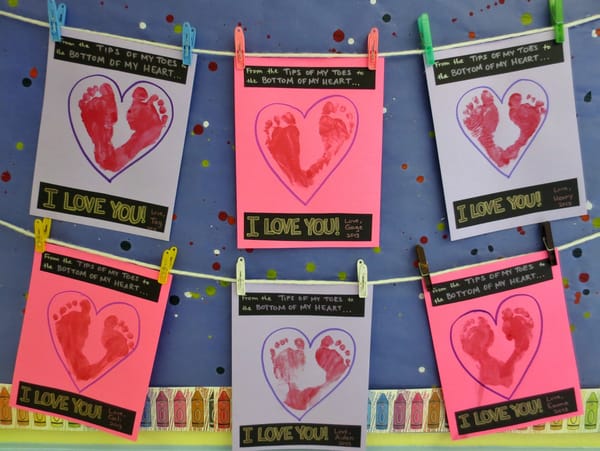
Trace each child's hand on paper, then decorate it with colours, patterns, or small drawings. This creates a size record that fascinates children when they compare hand sizes with their friends, introduces measurement concepts, and helps them understand body proportions.
Skill
Body awareness, creativity, fine motor control
17. All About Me Puzzle
Cut a self-portrait or favourite things drawing into puzzle pieces. Children reassemble their own image, reinforcing self-recognition while practising spatial reasoning and problem-solving. Adjust piece count and cut complexity to scale difficulty.
Skill
Cognitive development, fine motor skills, and self-recognition
18. Favorite Song or Dance
Children share a favourite song or dance by performing for the class or explaining its significance. This builds musical awareness, introduces cultural traditions, and gives kinesthetic learners a chance to express themselves through movement.
Skill
Musical awareness, self-expression, and confidence
19. Classroom Gallery Walk
Display children's artwork, posters, and projects around the classroom. Children walk around, examine, and discuss their classmates' work. They learn to observe respectfully, compare work constructively, and use language to describe artistic choices.
Skill
Observation, social interaction, communication
20. Friendship Tree
A tree display where each child adds a leaf with their name and favourite activity creates a visual map of shared interests. Teachers use this to help children make friends by connecting them with others who share common interests, such as building blocks or painting.
Skill
Social awareness, collaboration, and fine motor skills
21. All About Me Journal
A journal where children draw or write one thing about themselves daily (favourite colour, activity, food) builds writing readiness through practice. Over weeks, the journal becomes a record of changing preferences and growing skills that children find engaging when reviewing earlier pages.
Skill
Writing readiness, self-reflection, and sequencing
22. Color Matching Game
Use cards or classroom objects to match colours to a child's stated favourites. Children take turns identifying and matching colours, reinforcing colour recognition while making the abstract concept of "favourite" concrete.
Skill
Color recognition, sorting, and memory
23. Storytelling with Puppets
Kids use puppets to tell stories about themselves, their families, or things they like. Puppets reduce performance anxiety by letting children speak through a character rather than as themselves, helping shy speakers practise speaking aloud in a safer way.
Skill
Oral language, imagination, and social skills
24. All About Me Sensory Box
A sensory box filled with objects representing each child's favourite things (a toy car, a crayon, or a fabric swatch) lets children explore and describe items by touching them. This approach helps children who struggle with sight-only or word-based activities access content through touch.
Skill
Sensory awareness, vocabulary, and self-expression
25. My Coloring Pages Personalized Book
Make a small custom book for children to colour themselves, their family members, and their favourite things. Websites like My Coloring Pages let parents and teachers create these books in seconds, turning plain templates into personalized keepsakes. When a child sees their real life in the pictures rather than a pretend family, they engage more deeply because the subject matters to them.
Skill
Creativity, self-awareness, and fine motor development
Curiosity loop
These activities only work if you can access them without spending hours searching or paying extra for basic templates.
Related Reading
- Preschool Bulletin Board Ideas
- Preschool Crafts
- Preschool Learning Activities
- Preschool Assessment
- Preschool Science Experiments
- Preschool Lesson Plan Template
- Spring Bulletin Board Ideas For Preschool
- Christmas Crafts Preschool
- Preschool Prep
- Preschool Sight Words
- Turkey Craft Preschool
- Preschool Learning Games
- How To Become A Preschool Teacher
- Free Preschool Games
- Preschool Craft Ideas
- Preschool Classroom Layout
- Preschool Tracing Worksheets
- Preschool Art Activities
- Preschool Math Activities
- Preschool Playground Equipment
- Daycare Vs Preschool
- Noah's Ark Preschool
- Playing Preschool Curriculum
- Creative Curriculum For Preschool
Make “All About Me” Activities Personal and Affordable
Most parents choose between expensive personalized materials and free generic worksheets that feel impersonal. My Coloring Pages solves this by letting you design custom worksheets and coloring books in seconds, transforming standard "All About Me" activities into personalized keepsakes featuring your child's name, family structure, favorite things, and hobbies.
🎯 Key Point: Transform generic activities into meaningful keepsakes that celebrate your child's unique identity without breaking the budget.
The platform offers 39,061+ free coloring pages, along with a customization tool, providing both ready-made options and the flexibility to build something unique. Trusted by 20,000+ parents and rated 4.8/5, our service eliminates the time parents spend searching Pinterest for printables or gathering materials from multiple sources.
"Parents save an average of 3 hours per week by using customizable templates instead of searching for and assembling materials from multiple sources." — Parent Survey Data, 2024
💡 Tip: Create themed sets that grow with your child - make seasonal updates or celebrate new milestones with fresh personalized pages.
This approach makes creativity and identity exploration budget-friendly and screen-free. Instead of buying activity kits that children complete once and discard, you generate materials tailored to current interests and developmental needs. When your child's favourite animal changes or their family structure shifts, you create new pages reflecting those updates.