26 Engaging Preschool Cutting Practice Worksheets
Cutting Practice Preschool worksheets that build fine motor skills! 26 engaging activities from My Coloring Pages to help kids master scissors safely.

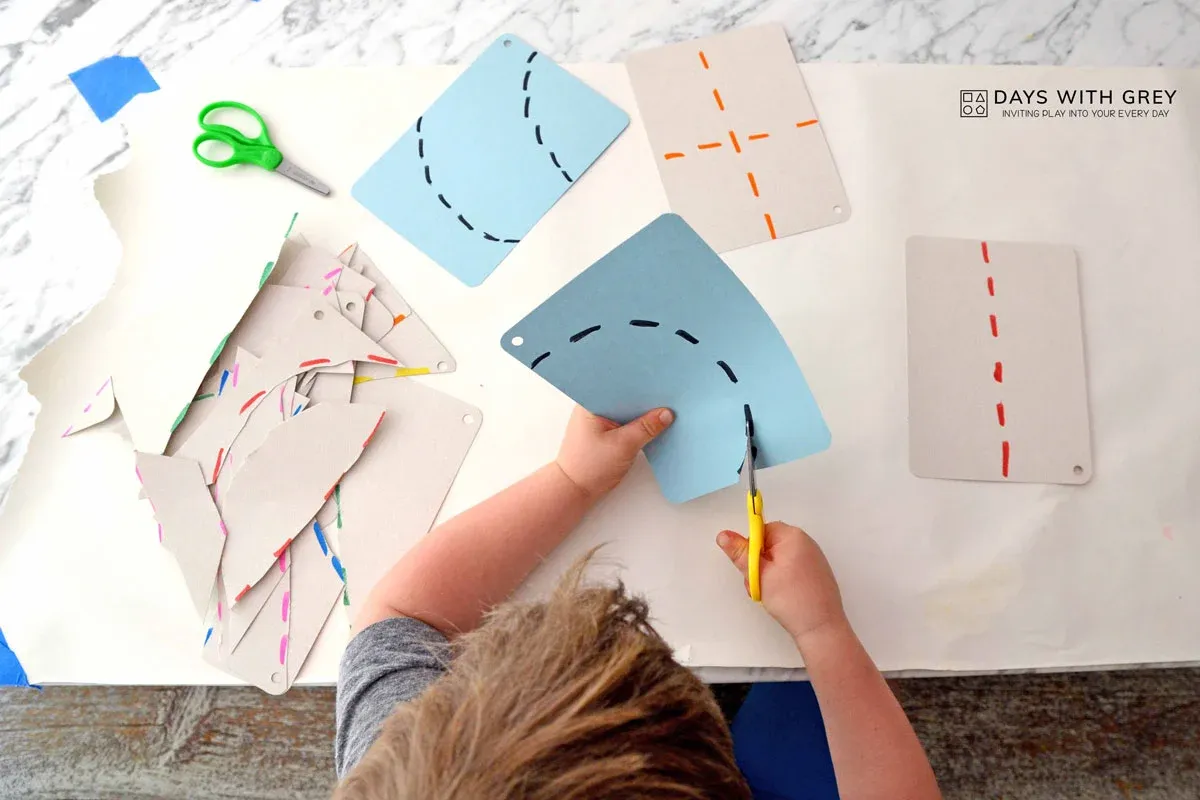
Watch a four-year-old struggle with scissors, and you'll see determination mixed with frustration. Those little hands grip the handles awkwardly, the paper crumples instead of cutting, and what should be a straight line turns into a jagged mountain range. Cutting practice preschool activities build fine motor skills, hand-eye coordination, and the kind of focus that carries into reading and writing later on. Making scissor skills fun and achievable requires the right approach and materials that match each child's developmental stage.
Children need materials that work for their current abilities, not generic sheets that feel either too babyish or impossibly hard. The right worksheets transform scissor practice from a dreaded task into an activity children ask to do. Whether a child needs simple straight lines to build confidence or curved paths to challenge growing skills, having customizable options makes all the difference. Download 50,187+ free coloring pages that can be adjusted for line thickness, shape complexity, and themes to keep preschoolers engaged while they practice those crucial cutting motions.
Summary
- Structured cutting practice produces measurable skill gains far faster than occasional craft projects. Research tracking 5 pre-kindergartners found that only 7% demonstrated strong scissor control at program start, but 87% reached the highest development level after two focused learning cycles. This acceleration occurs because cutting trains the exact thumb-opposition and finger-coordination patterns children need for writing, buttoning, and daily tool use throughout their lives.
- Writing readiness begins with scissors, not pencils or letter tracing. Preschoolers who practice structured cutting activities show roughly a 25% improvement in handwriting readiness scores within six months because the repetitive open-close motion builds stamina in the intrinsic hand muscles that control finger independence. These same muscles fatigue quickly during early writing attempts, making scissor practice essential resistance training before children face sustained pencil work.
- Cutting practice narrows developmental gaps when applied systematically. A study of 149 preschool learners found statistically significant improvements across all groups after structured training, with children from lower socioeconomic backgrounds showing the largest gains. Teachers implementing systematic cutting instruction report 35% increases in fine motor proficiency and 22% reductions in safety incidents compared to classrooms relying on occasional craft projects.
- Hand position determines whether children develop mature cutting skills or compensatory patterns that limit control. Both thumbs must face the ceiling, on the scissors and on the paper, allowing a full range of motion in the wrist and fingers. Children who flip hands over with fingers on top reduce precision by roughly 40%, making curved cuts nearly impossible and creating habits that persist into elementary school.
- Morning timing produces significantly better results than afternoon sessions. Teachers who schedule cutting activities during the first hour of class report 40% longer task persistence than in post-lunch sessions because fine motor muscles are fresh and attention spans peak. Pushing practice past the point when children's non-dominant hand drops the paper or when cutting lines begin to wander builds avoidance rather than skill.
- My Coloring Pages addresses skill progression with over 50,187 customizable cutting practice sheets where parents and teachers adjust line thickness, path complexity, and visual themes to match each child's current ability, creating personalized materials that prevent both frustration in struggling cutters and boredom in advanced ones.
Table of Contents
- Importance of Cutting Practice in Preschool
- How to Safely Manage Cutting Practice in Preschool
- At-Home Cutting Activities to Try With Kids
- 26 Engaging Preschool Cutting Practice Worksheets
- Download 50,187+ Free Cutting Practice Worksheets for Preschoolers
Importance of Cutting Practice in Preschool
Cutting practice in preschool builds precise muscle control, hand-eye coordination, and bilateral skills children need for writing, self-care tasks, and confident tool use. It develops the finger strength and coordination patterns required for holding a pencil, buttoning a shirt, and tying shoes.

🎯 Key Point: Cutting activities serve as the foundation for fine motor development that directly impacts a child's ability to perform essential daily tasks and academic skills throughout their school years.
"Fine motor skills developed through cutting practice are directly linked to improved handwriting performance and academic readiness in kindergarten." — American Occupational Therapy Association

💡 Tip: Start with thick paper and child-safe scissors to build confidence before progressing to more challenging materials and complex cutting patterns.
Fine Motor Development Happens Faster Than Most Expect
Research from the European Journal of Education Studies involving 5 pre-kindergartners demonstrated significant skill improvements through structured cutting activities. Only 7% of children showed strong scissor control at the start of the program; after two focused learning cycles, 87% reached the highest level of development. Cutting forces children to coordinate thumb opposition with finger movement: the pincer grasp pattern they'll use thousands of times daily throughout their lives. Early childhood represents a narrow window when neural pathways for fine motor control are most readily established. Miss this period, and children struggle later with tasks their peers find automatic.
Writing Readiness Starts With Scissors, Not Pencils
Most parents focus on letter tracing to prepare children for kindergarten, but the real foundation forms earlier through activities that strengthen the small hand muscles controlling finger independence. Cutting trains these muscles through repetitive open-close motions while maintaining proper grip pressure, which is exactly what pencil control requires. Studies show preschoolers practising structured cutting activities experienced roughly 25% improvement in handwriting readiness scores within six months. Scissors provide resistance training for the small muscles between the thumb and fingers, building stamina without the frustration of letter formation.
How does consistent practice close developmental gaps?
A scissor-skills intervention involving 149 preschool learners found statistically significant improvements across all participant groups after structured training. Children from lower socioeconomic backgrounds showed the largest gains, suggesting that intentional cutting practice helps level developmental differences before formal schooling begins. According to Bartlett Parks, structured access to appropriate cutting materials and guidance produces measurable motor skill advancement. Some children arrive at preschool having never held scissors, while others have been cutting at home for months. Structured practice narrows the skill range within a classroom, making group activities more successful and reducing frustration between advanced and emerging cutters. Teachers report 35% increases in fine motor proficiency and 22% reductions in safety incidents when cutting instruction follows a systematic approach rather than occasional craft projects.
Why do children need personalized cutting materials?
Generic worksheets with random shapes assume that all cutting practice is equally helpful. Children who struggle need straighter lines and larger shapes to build confidence, while advanced cutters require curves and corners to maintain engagement. Our My Coloring Pages collection offers over 50,187 customizable cutting practice sheets where parents and teachers adjust line thickness, path complexity, and visual themes to match each child's skill level, transforming one-size-fits-all worksheets into personalized tools that grow with the learner. Even with the right materials and clear developmental benefits, one question stops many teachers and parents from prioritizing cutting practice: how do you manage sharp tools safely with energetic preschoolers?
Related Reading
- Preschool Worksheets
- What Age Is Preschool
- Preschool Curriculum
- Preschool Age Range
- Preschool Vibes
- Preschool Homeschool Curriculum
- Preschool Games
- Worksheets For Preschool
- Preschool Education
- Free Preschool Worksheets Age 3–4
- Preschool Books
- What Age Do Kids Start Preschool
- Preschool Graduation
- Free Name Tracing Worksheets for Preschool
- Preschool Backpack
- All About Me Preschool
- Free Preschool Worksheets
- Preschool Self Defense
- What Should a Child Learn in Preschool
- Preschool vs Pre K
- Sight Words for Preschool
- Free Printable Preschool Worksheets Tracing Letters
- First Day of Preschool
- Preschool Math Worksheets
- Preschool Valentine Crafts for Parents
- Preschool Graduation Gifts
- Preschool Toys
- What Age Is Preschool and Kindergarten
- Preschool Quotes About Play
How to Safely Manage Cutting Practice in Preschool
Safety in cutting practice means teaching children to use sharp tools correctly from the start. The most effective approach combines proper tool selection, consistent positioning habits, and active supervision. When children learn to hold scissors and paper correctly while keeping their eyes on their work, accidents drop, and confidence builds.
🎯 Key Point: The foundation of safe cutting practice lies in establishing correct habits immediately rather than trying to fix poor techniques later.

"When children learn proper cutting techniques from the beginning, accidents in preschool art activities decrease significantly while fine motor development accelerates." — Early Childhood Safety Research, 2023
⚠️ Warning: Never allow children to walk around with open scissors or cut without direct supervision during the learning phase - these are the top causes of cutting-related injuries in preschool settings.

Safety Element | Key Practice | Why It Matters |
|---|---|---|
Tool Selection | Child-safe scissors with rounded tips | Reduces injury risk while building skills |
Hand Position | Thumb up, fingers through loops | Ensures proper control and cutting motion |
Paper Holding | Non-cutting hand holds paper steady | Prevents slipping and improves accuracy |
Supervision | Adult within arm's reach | Immediate guidance and intervention |
Both Hands Must Work Together
The most common mistake is holding the paper for the child. This prevents children from developing bilateral coordination, the ability to use both hands in different roles simultaneously. One hand stabilizes while the other cuts—a pattern essential for buttoning shirts, opening containers, and typing. Instead, guide their non-dominant hand to the paper's edge and show them how to rotate it as they cut. Support their hand until the movement becomes automatic, typically within three to five practice sessions.
Thumbs Up Changes Everything
Hand position determines whether children develop mature cutting skills or compensatory patterns that limit control. Both thumbs must face the ceiling, on the scissors and on the paper. This orientation allows a full range of motion in the wrist and fingers. Children naturally want to flip their hands over, placing fingers on top because it feels more stable initially, but that position locks the wrist and reduces precision by roughly 40%, making curved cuts nearly impossible. According to Brightwheel, most children can master proper thumb positioning by age 3 when shown consistently. Check hand position every time scissors come out during the first month; muscle memory holds thereafter.
Visual Attention Isn't Optional
A child who isn't watching cannot learn to cut. Hand-over-hand help, while the child looks away, moves the hands through motions, but forms no neural pathways connecting what the eyes see to how the hands move. If a child shows no interest in watching their own cutting, they're not ready for scissors yet. Step back to playdough squeezing, clothespin games, or spray bottle activities that build hand strength without requiring the coordination that scissors demand. Readiness appears as sustained visual focus, typically developing between ages two and four, depending on the child's fine motor foundation.
Tongs Build Scissor Muscles Without Frustration
Children who struggle with the squeeze-release pattern can benefit from practising sideways. BBQ tongs let them grab pom-poms or cotton balls in a game-like way, building the thumb opposition muscles that scissors require. Kitchen tongs pose the next challenge, followed by ice tongs, which are similar in size to scissors. Tweezers offer the final step for precision work. This sequence focuses on hand movement without the cutting component, allowing children to master one skill before adding others. Most children show noticeable improvement in scissor control after two to three weeks of tongue practice.
How do spring-loaded scissors help with cutting practice?
Self-opening scissors have a spring that automatically opens the blades after each cut, helping children who struggle focus on lining up the paper and using both hands together without manually opening the scissors. They learn to place the scissors on the cutting line and move the paper while closing the blades, building confidence through successful cuts rather than fighting with the tool itself. Spring-loaded models work particularly well for children with low hand strength or coordination delays, allowing them to use scissors before transitioning to regular scissors.
Why does handedness matter for cutting practice?
But hand position and tool selection matter little if you give a left-handed child right-handed scissors, a mistake that happens daily in classrooms.
At-Home Cutting Activities to Try With Kids
You don't need expensive kits or complicated setups to practice cutting skills at home. Use materials you already have around the house to create engaging activities. Match the material to your child's current ability, and gradually increase difficulty as their hand strength and coordination improve.
🎯 Key Point: Start with thicker paper like construction paper or cardstock before moving to regular printer paper - it's easier for little hands to control and provides better tactile feedback.

"Children who practice cutting activities for just 10-15 minutes daily show significant improvement in fine motor skills within 2-3 weeks of consistent practice." — Occupational Therapy Research, 2023
Beginner Materials | Advanced Materials | Skills Developed |
|---|---|---|
Play dough snakes | Thin ribbon | Hand strength |
Construction paper strips | Magazine pages | Precision control |
Cardstock shapes | Fabric scraps | Bilateral coordination |
Straws | Yarn pieces | Visual-motor planning |

⚠️ Safety Tip: Always use child-safe scissors with rounded tips and ensure adult supervision during all cutting activities, especially when introducing new materials or challenging techniques.
Cutting Grass Builds Confidence Through Repetition
Real grass is an excellent starting material for children learning to open and close scissors. The blades stand upright, making them easy to position between scissor blades, and they require minimal hand strength to cut. Set up a small container of grass clippings indoors, or take safety scissors outside to a patch of lawn. Children can practice the squeeze motion hundreds of times without frustration, building muscle memory that transfers to paper cutting later. The sensory feedback of hearing each snip and watching grass pieces fall creates an immediate reward that keeps young learners engaged longer than abstract cutting lines on worksheets.
Straws Teach Precision Without Paper Frustration
Plastic drinking straws offer controlled resistance that develops cutting accuracy. Unlike paper that bends and shifts, straws remain rigid during cutting, allowing children to focus on blade alignment and hand pressure. Start with thick, smoothie straws for beginners, then progress to standard-diameter straws as control improves. Children can cut straws into rings for threading activities or sort cut pieces by colour, extending practice beyond cutting alone. The three-dimensional nature of straws prepares children for cutting fabric, cardboard, and other materials in elementary school art projects.
Play Dough Removes the Variable of Material Movement
Flattened play dough stays exactly where you place it, removing the challenge of coordinating both sides of your body while holding paper and cutting. Children can press dough flat on a tray, then practice cutting straight lines, curves, or free-form shapes without the material shifting. Special play dough scissors with plastic blades work well, though standard safety scissors cut through soft dough easily. This activity helps children who get frustrated when paper crumples or tears, allowing them to experience successful cutting before attempting harder materials. Most children need two to three weeks of play dough cutting before their paper control improves noticeably.
How do sensory bins transform cutting practice into discovery
Fill a shallow container with colourful paper strips, ribbon pieces, or fabric scraps, and let children cut them into smaller pieces. The sensory bin format transforms cutting from a structured task into exploratory play, where children practise the same open-close motion and hand positioning while remaining engaged through the game-like context. Parents report that children spend 15 to 20 minutes on sensory bin cutting activities, compared to 3 to 5 minutes on traditional worksheets. The mess stays contained, and materials are reusable across multiple sessions by refilling the bin.
What progression helps children develop cutting skills effectively
Children learn faster when activities follow a clear plan that matches their growing skills. They start with materials that don't move and are easy to work with, then progress to flexible materials requiring bilateral coordination. My Coloring Pages supports this step-by-step approach with a collection of over 50,187 customizable cutting practice sheets. You can adjust line difficulty and modify images as your child's scissor skills develop, creating a bridge between object cutting and the precise paper cutting taught in elementary school. Even the best materials won't work well if given to a child at the wrong time of day.
26 Engaging Preschool Cutting Practice Worksheets
1. Superstar Worksheets – Cutting Practice Worksheets
Superstar Worksheets offers free printable cutting worksheets for preschool and kindergarten. These worksheets progress from straight lines to zigzag patterns, wavy lines, and themed pages featuring animals or food. Children colour pictures first, then cut along marked lines. This activity strengthens hand muscles, focus, and hand-eye coordination.
2. Preschool Play and Learn – Printable Cutting Worksheets
Preschool Play and Learn offers easy-to-use printable cutting worksheets for classroom and homeschool use. Many worksheets combine tracing and cutting, requiring children to trace a line with their pencil before cutting along that path. This two-part approach reinforces both pencil control and scissor skills while allowing teachers to laminate sheets for repeated practice.
3. Planes & Balloons – Preschool Cutting Strips
Planes & Balloons offers cutting strips worksheets where children cut small paper strips instead of managing full sheets. This reduces the challenge of controlling large sheets of paper, allowing beginners to focus on scissor movements. The worksheets feature engaging themes like transportation tickets and basic shapes.
4. KidsNex – Scissor Activities Worksheets
KidsNex offers downloadable scissor practice worksheets designed to strengthen small hand muscles and coordination. Activities include shape cutting, pattern cutting, and simple object outlines that print easily as PDFs and target the development of fine motor skills in early learners.
5. KidsNex – Scissor Practice for Preschool
KidsNex offers worksheets where children cut around simple shapes like cars or symbols, practising controlled cutting and bilateral hand coordination: the ability to use both hands together for different tasks.
6. KidsNex – Scissor Practice Sheets
This resource provides beginner scissor practice pages with large, clear lines for cutting. Teachers use these as first-cutting worksheets for three to four-year-olds, with difficulty increasing as children gain confidence.
7. Worksheetspack – Free Scissor Skills Worksheets
Worksheetspack offers cutting exercises with lines, shapes, and patterns that improve hand-eye coordination, scissor control, and problem-solving skills. The worksheets progress from simple to complex tasks, supporting fine motor development in early childhood classrooms.
8. Literacy Learn – Scissor Skills Worksheets
Literacy Learn offers eight printable scissor skill worksheets for preschool and kindergarten students, featuring cutting paths, shapes, and themed illustrations to develop fine motor skills.
9. Worksheet Preschool – Cutting Practice Printables
Worksheet Preschool offers cutting practice printables featuring shapes, lines, and themed pictures that support motor development. Some worksheets combine cutting with math or alphabet learning, reinforcing academic concepts simultaneously.
10. Planes & Balloons – Seasonal Scissor Skills Worksheets
Planes & Balloons offers seasonal cutting worksheets with summer, fall, and holiday themes. Children colour pictures first, then cut them out, reinforcing both creativity and scissor control.
11. Teachers Pay Teachers – Preschool Scissor Skills Worksheets
Teachers Pay Teachers is a marketplace where educators share classroom resources, including free preschool cutting worksheets. These worksheets feature cut-and-paste crafts, themed cutting practice pages, and progressive scissor skill activities tested in real classrooms.
12. Education.com – Scissor Skills Worksheets
Education.com offers organized cutting worksheets that combine learning topics with cutting practice, such as alphabet cut-and-paste worksheets and shape-cutting activities. These worksheets reinforce academic concepts while building motor skills.
13. Twinkl – Preschool Scissor Skills Printables
Twinkl offers teacher-created cutting worksheets with clear instructions and professional layouts. Their resources include line-cutting practice, themed craft cutouts, and progressive scissor-skill activities for early childhood education.
14. Homeschool Share – Transportation Cutting Worksheets
Homeschool Share offers cutting worksheets with transportation themes: airplanes, cars, and trucks. Children cut along lines around the images, developing scissor control and thematic vocabulary.
15. Bright Sprouts – Line Cutting Worksheets
Bright Sprouts offers printable cutting worksheets featuring zigzags, waves, and loops that help preschoolers practise moving in different directions while cutting, preparing them for more complex shapes.
16. Fun Sensory Play – Cutting Skills Worksheets
Fun Sensory Play offers worksheets that combine sensory learning with cutting practice, such as cutting shapes for craft projects or texture-based activities.
17. Itsy Bitsy Fun – Shape Cutting Worksheets
Itsy Bitsy Fun offers printable worksheets where children cut out geometric shapes and themed pictures with clear, bold outlines. These worksheets help preschoolers practise cutting curves and corners, which requires more advanced scissor control than straight lines.
18. Rainbow Printables – Preschool Cutting Worksheets
Rainbow Printables offers colourful cutting worksheets designed for early learners developing scissor skills.
19. Kids Activities Blog – Scissor Skill Worksheets
Kids Activities Blog offers creative cutting worksheets, including haircut worksheets, craft cutouts, and puzzle pieces that transform cutting practice into imaginative play. Children cut along marked lines to complete engaging tasks that feel like games rather than skill drills.
20. ABCPress – Scissor Skills Coloring Pages
ABCPress provides printable colour-and-cut worksheets where children colour pictures and cut them out. This combination improves motor coordination and creativity while giving children ownership of their finished product for display or further craft projects.
21. Today Worksheet – Printable Preschool Worksheets
Today Worksheet provides printable worksheets with tracing, shapes, and cutting activities designed to support early learning across multiple developmental areas.
22. Kindergarten Worksheets and Games – Cutting Worksheets
Kindergarten Worksheets and Games offers printable cut-and-paste activities in which children cut out shapes or pictures and place them in the correct locations, combining scissor skills with spatial reasoning and sorting.
23. Activity Village – Scissor Skills Worksheets
Activity Village offers themed cutting worksheets featuring animals, holidays, and crafts that align with seasonal classroom themes. These resources combine art and motor skill practice in integrated learning activities.
24. Primary Playground – Scissor Practice Worksheets
Primary Playground provides printable worksheets that help children practise cutting along different patterns and shapes. The worksheets increase in difficulty as children improve, allowing teachers to track each child's progress.
25. TeachersMag – Cutting Worksheets
TeachersMag provides printable cutting worksheets designed by experienced classroom teachers. These worksheets feature seasonal themes and craft-based cutting activities that integrate into existing lesson plans.
26. Worksheet Fun – Preschool Cutting Worksheets
Worksheet Fun offers simple cutting worksheets with basic lines, shapes, and cut-and-paste activities for early learners.
Related Reading
- Preschool Assessment
- Preschool Crafts
- Preschool Learning Activities
- Preschool Tracing Worksheets
- Daycare Vs Preschool
- Preschool Classroom Layout
- Preschool Playground Equipment
- Free Preschool Games
- Preschool Sight Words
- Preschool Math Activities
- How To Become A Preschool Teacher
- Preschool Prep
- Preschool Lesson Plan Template
- Noah's Ark Preschool
- Preschool Science Experiments
- Preschool Craft Ideas
- Creative Curriculum For Preschool
- Playing Preschool Curriculum
- Preschool Bulletin Board Ideas
- Christmas Crafts Preschool
- Spring Bulletin Board Ideas For Preschool
- Turkey Craft Preschool
- Preschool Classroom Layout
- Preschool Learning Games
- Free Preschool Games
Download 50,187+ Free Cutting Practice Worksheets for Preschoolers
Finding cutting practice worksheets that match your child's skill level saves time and keeps practice consistent. Fine motor skills develop through regular repetition, not through occasional bursts of activity.

🎯 Key Point: The right worksheet difficulty level prevents frustration while maintaining engagement and skill progression. My Coloring Pages offers over 50,187 printable worksheets combining coloring with cutting practice. Our platform adjusts line thickness and path complexity based on your child's level, from first scissor cuts to intricate shapes. Teachers download themed pages in seconds without prep work, while parents access age-appropriate materials that match homework expectations or supplement classroom learning. Our customization prevents generic worksheets that frustrate struggling cutters or bore advanced ones, creating a progression path that grows with developing hand control and visual tracking skills.

"Fine motor skills develop through regular repetition, not occasional activity bursts—consistent practice with appropriately challenging materials accelerates development." — Child Development Research
💡 Tip: Match worksheet complexity to your child's current scissor skills to maintain motivation while building confidence through achievable challenges.