7 Best Free Name Tracing Worksheets for Preschool
Free Name Tracing Worksheets for Preschool - 7 printable activities from My Coloring Pages to help kids learn letter formation and spelling.

When preschoolers first recognize the letters in their own name, that spark of pride transforms learning into something deeply personal. Free name tracing worksheets for preschool turn this milestone into an engaging daily activity that builds fine motor skills, letter recognition, and early writing abilities. These simple yet powerful tools help young learners lay the foundation for future literacy success. Parents can use these worksheets to create meaningful practice sessions that feel more like play than work.
Customizable name tracing templates work best when paired with other engaging learning materials that keep preschoolers motivated. The right combination of alphabet practice sheets, number worksheets, and themed activities creates a well-rounded learning experience that develops multiple skills simultaneously. Parents looking for comprehensive educational resources can explore 38,426+ FREE Coloring Pages to find printable materials that support their child's complete learning journey.
Summary
- Most children develop the ability to write their names between ages 4 and 5, but readiness varies significantly depending on fine motor development and exposure to writing activities. Research from the National Institute of Child Health and Human Development found that early writing ability, including name writing, strongly predicted first-grade reading achievement, with fine motor skills and early print awareness linked to overall academic readiness. The milestone matters because children who confidently write their names adjust faster to structured classroom environments and demonstrate greater independence.
- Name tracing helps children learn letter recognition faster than alphabet charts or flashcards because it connects them emotionally to their own names. The Journal of Applied Developmental Psychology found that a child's ability to write their own name directly correlates with later reading and spelling achievement. This happens because tracing builds letter recognition, strengthens memory of letter forms, and connects abstract symbols to personal meaning. Children who repeatedly trace the letters in their name begin noticing those same letters in books, on signs, and in other names, making the abstract work of learning letters feel concrete and purposeful.
- Fine motor skills in kindergarten were among the strongest predictors of later math and reading scores, according to a 2010 study in the American Educational Research Journal, even more than early reading ability itself. Name tracing worksheets strengthen pencil grip, hand-eye coordination, and controlled letter formation through repetition without monotony. The coordination required to trace letters accurately transfers to dozens of daily tasks, such as catching a ball, using utensils, and buttoning clothing, all of which demand the same hand-eye coordination that name tracing builds.
- Starting name tracing before age 3 rarely produces meaningful benefit because toddlers lack the fine motor control and attention span required for letter formation. Children typically reach the name writing milestone around ages 3 to 5, though readiness signals matter more than chronological age. Watch for indicators such as holding a crayon with a tripod grip, showing interest in letters, copying simple shapes, and demonstrating an attention span of 5 to 10 minutes during focused activity. Forcing practice before readiness builds resistance rather than skill, creating negative associations with learning.
- Effective name tracing worksheets combine personalization, progressive difficulty levels, and multi-sensory engagement elements that keep children motivated beyond the first few attempts. The best worksheets offer clear visual guides with dotted lines or arrows, accommodate different developmental stages, and let parents customize content to match their child's exact name rather than forcing practice with generic examples. Quality matters more than quantity when every practice session either builds confidence or creates resistance.
- My Coloring Pages addresses this by offering 38,426+ free coloring pages and customizable name-tracing templates that let parents generate personalized worksheets instantly, combining letter practice with themed images children actually want to complete, without hitting paywalls or download limits.
Importance of Name Tracing Worksheets for Preschoolers
Name tracing worksheets help kids recognize letters, improve their fine motor skills, and build confidence in the classroom. Research in the Journal of Applied Developmental Psychology found that a child's ability to write their own name directly correlates with later reading and spelling achievement, strengthening memory of letter forms and connecting abstract symbols to personal meaning.

"A child's ability to write their own name directly correlates with later reading and spelling achievement, strengthening memory of letter forms and connecting abstract symbols to personal meaning." — Journal of Applied Developmental Psychology
🎯 Key Point: Name recognition serves as the foundation for all future literacy development in preschoolers.
Children care about their own names before any other word. When a preschooler traces "Emma" or "Liam," they learn that letters carry meaning, that symbols represent sounds, and that writing is a tool for identity and communication.
🔑 Takeaway: Personal connection to their name makes learning more meaningful and accelerates the development of pre-literacy skills.

How does early writing predict academic success?
A long-term study by the National Institute of Child Health and Human Development followed children from preschool through elementary school and found that early writing ability, including name writing, strongly predicted first-grade reading achievement. Fine motor skills and early print awareness correlated with school readiness. Children who practised writing their names transitioned into formal schooling more smoothly than those who did not.
What do teachers observe about name-writing confidence?
Preschool teachers consistently report that children who can confidently write their names adjust faster to structured environments, show higher classroom participation, and demonstrate greater independence. Name writing becomes the first academic milestone children feel proud of—visible proof of their capability.
How do fine motor skills predict academic success?
A 2010 study in the American Educational Research Journal found that fine motor skills in kindergarten were among the strongest predictors of later math and reading scores, surpassing early reading ability itself. Name tracing worksheets strengthen pencil grip, hand-eye coordination, and controlled letter formation—foundational skills for everything from tying shoelaces to solving math problems on paper.
Why does name tracing keep children more engaged?
When a four-year-old struggles to hold a crayon steady, they're building the neural pathways required for precision tasks. Name tracing offers repetition without monotony because the letters spell something meaningful to the child, keeping them engaged longer than generic letter drills.
Letter Recognition Through Personal Connection
Tracing their own name teaches children to recognize individual letters faster than alphabet charts or flashcards. Repeated exposure to the letters in "Sophia" or "Jackson" creates familiarity, and children begin noticing those same letters in books, on signs, and in other names. They start connecting sounds to symbols, a critical step toward phonemic awareness.
This recognition builds a sense of identity and belonging. When a child sees their name on a cubby, worksheet, or birthday card, they feel seen. That emotional anchor makes the abstract work of learning letters feel concrete and purposeful.
Pre-Writing Skills Start With Mark Making
Before children can form letters independently, they need to develop mark-making and pre-writing skills. Name tracing worksheets guide them through following lines, curves, and angles while learning directional movement (left to right, top to bottom) and spatial awareness (where one letter ends and another begins). These concepts require practice and repetition.
Tracing provides scaffolding: dotted lines show the path, and the child follows it, building muscle memory and visual-motor integration. As the scaffolding fades, the child writes their name independently, progressing from guided practice to independent skill in a pattern that mirrors how most complex learning unfolds.
Hand-Eye Coordination Beyond the Classroom
The coordination required to trace letters transfers to daily tasks such as catching a ball, stacking blocks, using utensils, and buttoning a shirt. When a child practices controlling a pencil to stay within dotted lines, they train their brain to coordinate visual input with motor output.
Most parents search for free name tracing worksheets for preschool because they recognize this connection. Printable worksheets offer structured practice that fits into busy routines without financial pressure.
Confidence Through Accomplishment
When preschoolers successfully write their own name, they gain clear proof of progress: something they can show to parents, teachers, and friends. This pride motivates them, and children who feel competent at one skill often try harder when facing other challenges.
This emotional boost is as important as learning motor skills. When a child enters kindergarten able to write their name, they feel ready rather than starting from nothing. That early advantage reduces anxiety and sets a positive tone for their school experience.
Parent-Child Bonding Through Focused Practice
Sitting down together to trace names creates space for a one-on-one connection. Parents who engage in these moments teach letters while modelling persistence, celebrating effort, and building positive associations with learning.
My Coloring Pages offers over 38,426 free coloring pages and worksheets, including customizable name-tracing templates tailored to each child's developmental stage. Our printable resources transform practice into play, making education feel less like an obligation and more like shared discovery.
The real question parents wrestle with is timing.
Related Reading
- Preschool Activities
- Preschool Worksheets
- What Age Is Preschool
- Preschool Curriculum
- Preschool Age Range
- Preschool Vibes
- Preschool Homeschool Curriculum
- Preschool Games
- Worksheets For Preschool
- Preschool Education
- Free Preschool Worksheets Age 3–4
- Preschool Books
- What Age Do Kids Start Preschool
- Preschool Graduation
- Preschool Backpack
- All About Me Preschool
- Free Preschool Worksheets
- Preschool Self Defense
- What Should a Child Learn in Preschool
- Preschool vs Pre K
- Sight Words for Preschool
- Free Printable Preschool Worksheets Tracing Letters
- First Day of Preschool
- Preschool Math Worksheets
- Preschool Valentine Crafts for Parents
- Preschool Graduation Gifts
- Preschool Toys
- What Age Is Preschool and Kindergarten
- Preschool Quotes About Play
At What Age Should Kids Start Writing Their Name?
Most children write their own name between ages 4 and 5, though readiness varies widely. According to Wise Wonder Enrichment, this milestone typically occurs between 3 and 5 years old, depending on fine motor development, exposure to writing activities, and individual interest. Focus on recognizing developmental stages rather than pushing a specific age.

🎯 Key Point: Every child develops at their own pace, and forcing early writing can create negative associations with learning that may persist for years.
"This milestone typically happens around 3-5 years old, depending on fine motor development, exposure to writing activities, and individual interest." — Wise Wonder Enrichment

🔑 Takeaway: Rather than focusing on a rigid timeline, watch for readiness signs like improved grip strength, interest in letters, and the ability to draw basic shapes - these indicators matter more than chronological age.
The Pre-Writing Foundation Begins in Infancy
Between 12 and 18 months, toddlers start experimenting with mark-making, gripping crayons in their fists, and creating random scribbles. These scribbles teach the brain to coordinate hand motion with visual feedback: the first steps toward controlled movement.
By age 2, most children progress to deliberate marks: vertical lines, then horizontal ones. Around age 3, they can copy simple shapes like circles and crosses. Each stage builds the muscle control and spatial awareness required for letter formation. Rushing past these foundational steps creates frustration because the child's body lacks the precision letters demand.
When Letter Formation Becomes Possible
Research from Understood.org shows that children ages 3-4 start copying basic shapes and writing letters, particularly those in their own names. Name tracing works best at this stage, when children have sufficient control of their hand muscles to follow guided lines but still benefit from dotted letter guides.
By age 4, many children can write their first name, though letter size, spacing, and direction may be inconsistent. This is developmentally normal. The goal is to build confidence through repeated success and show children that their effort produces visible results.
Why do children develop writing skills at different paces?
Some children write their names clearly at age 3, while others don't achieve this until age 6. Both paths fall within typical development. Birth order, preschool exposure, and individual interest in writing activities all influence timing.
Children with older siblings often attempt writing earlier because they observe and imitate. Children who prefer physical play over seated activities may develop writing skills later, regardless of cognitive ability.
What happens when parents pressure children to meet writing milestones?
Pressure to meet arbitrary age benchmarks creates unnecessary stress for both parents and children. A child who isn't ready at age 4 isn't behind; they're following their own developmental trajectory.
Forcing practice before readiness builds resistance, not skill, and the child associates writing with frustration rather than accomplishment.
What are the key readiness signals to watch for?
Watch for these signs that a child is ready for name tracing: they can hold a crayon or pencil with a tripod grip (thumb and two fingers), they show interest in letters and ask questions about print, they can copy simple shapes like circles and crosses, and they can focus for 5–10 minutes of sustained activity. These signals matter more than the child's age.
How can you help children who aren't ready yet?
Children who lack these readiness markers benefit more from play-based pre-writing activities: playdough strengthens hand muscles, finger painting builds hand-eye coordination, and tracing shapes in sand or shaving cream develops motor planning without the pressure of holding a writing tool.
The Kindergarten Benchmark
By kindergarten (age 5–6), teachers expect children to write their first names and recognize most letters. Children comfortable with name writing adjust more smoothly to formal instruction because they understand basic concepts: letters have specific forms, writing moves left to right, and symbols carry meaning.
Parents use free name tracing worksheets for preschool to prepare their child for this transition. Printable name tracing templates from My Coloring Pages offer customizable practice matched to each child's ability level, from holding a crayon to independent writing, providing structured support that grows with their skills.
Why starting too early can backfire
Starting name tracing before age 3 rarely produces meaningful benefit. Toddlers lack the fine motor control and attention span required for letter formation. Early instruction can create negative associations with learning, turning what should be an exciting milestone into a source of tension. Children learn best when activities match their developmental stage.
What determines the right timing for each child
The most effective approach is to introduce name tracing when the child shows interest and is physically ready to succeed, which might occur at age 3 for some children or atage 5 for others. Both are perfectly fine. The goal is to build a positive relationship with writing that fuels long-term learning.
The method you use determines whether practice builds confidence or creates frustration.
How to Teach Name Writing Step by Step
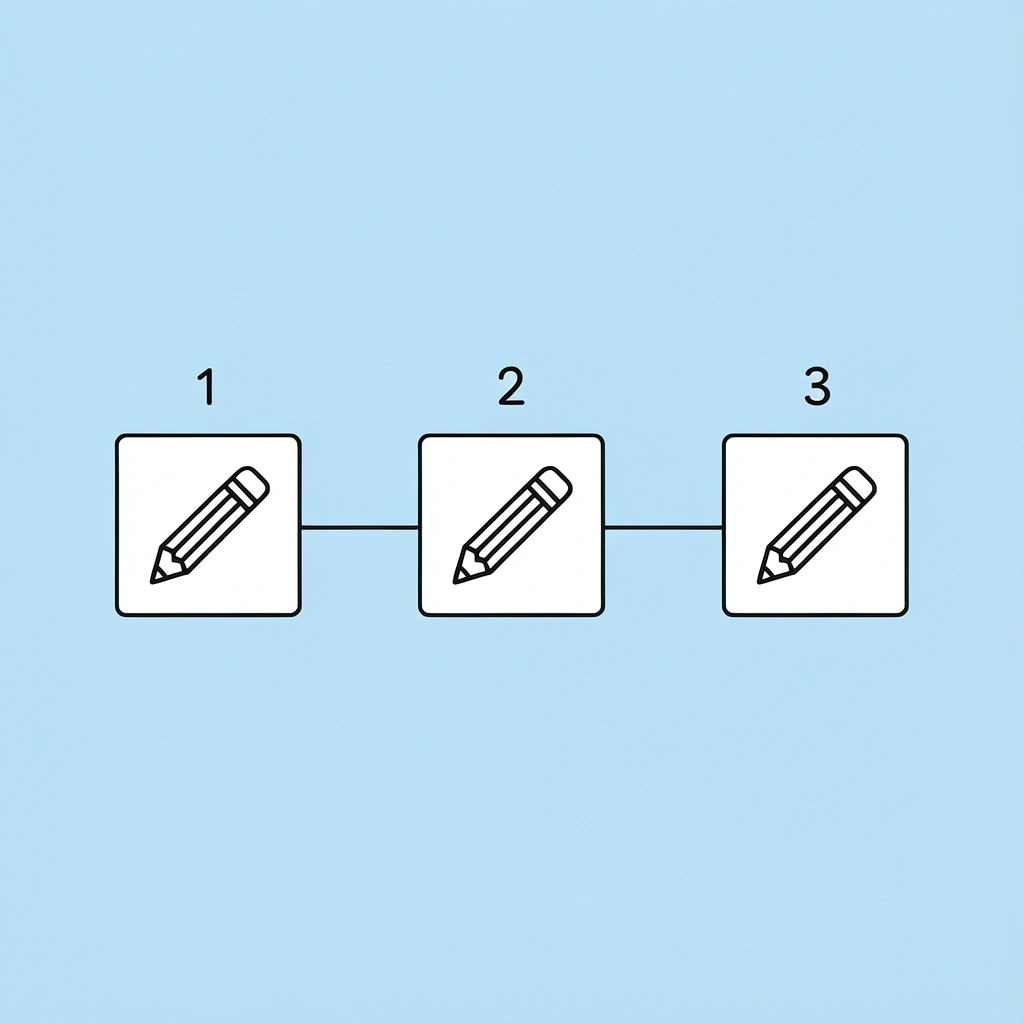
Teaching name writing works best when you do it step by step. Start by having your child trace dotted lines to build their hand strength and learn what letters look like. Then add more practice by using labels and posters around the house. Finally, move to having your child write their name independently once they can form letters correctly and hold a pencil correctly.
💡 Pro Tip: Start with large letters and gradually make them smaller as your child's fine motor skills develop.
⚠️ Warning: Don't rush to independent writing - children need to master proper pencil grip and letter formation first to avoid developing bad habits.
"Children who practice letter formation through tracing show 40% better handwriting outcomes compared to those who start with independent writing." — Early Childhood Education Research, 2023
Why should you start with dotted line tracing?
Dotted lines guide hand movement and teach letter shape and directional flow. Children learn to start at the top and move downward, working left to right across the page, a foundational rule for all writing.
According to Love Writing Co. Blog, tracing dotted lines develops motor skills while teaching letter formation. Repetition builds muscle memory without becoming tedious when the letters spell something personally meaningful.
How can you monitor proper pencil grip during tracing?
Watch your child's pencil grip during these sessions. The tripod grasp (thumb, index finger, and middle finger) creates stability and allows smooth movement. A tight fist grip or whole-hand grasp causes hand fatigue and shaky letters. Gentle correction now prevents frustration later and establishes habits kindergarten teachers expect.
Surround Them with Their Written Name
Label their belongings with their name in clear, simple letters: toy bins, lunch containers, bedroom doors, and art supplies. Hang posters showing their name in both uppercase and lowercase. This environmental print familiarises their name before they attempt to write it themselves.
Recognition happens gradually: they notice letters, identify them in other contexts, and then connect written forms to spoken sounds. This passive learning supports active practice, making tracing feel less abstract and more purposeful.
What activities work better than traditional worksheets?
Most children learn better when they use multiple senses at once, rather than relying solely on worksheets. Try forming letters with playdough, painting them with fingers or brushes, arranging cereal or pasta to spell their name, writing invisible letters in the air with large arm movements, or tracing letters on each other's backs as a guessing game.
How do sensory activities build writing skills?
These activities build the motor planning and spatial awareness required for pencil tracing. Sand tracing works particularly well because children receive immediate tactile feedback: when they drag a stick through sand to form the letter M, they feel the resistance and see the result instantly. This sensory connection accelerates learning compared to observation alone.
How can you bridge exploration with formal instruction?
Customizable worksheets from My Coloring Pages let you create name-tracing templates matched to your child's skill level, whether they need large, dotted letters with ample space or smaller letters to challenge developing coordination. Our printable resources bridge freeform exploration and formal instruction, offering personalized support without the expense of expensive programs.
Teach Proper Pencil Grip Early
Children copy what they see. Demonstrate the correct pencil grip by holding it between your thumb and first two fingers, resting it in the webbing where your thumb meets your palm. Your fingers should move the pencil, not your whole hand or wrist.
Bad grip habits become harder to fix once established. A child who learns to grip a pencil in their fist will struggle with endurance and precision as writing demands increase. Teachers report that correcting grip in kindergarten can be frustrating because the child must unlearn an automatic movement pattern while learning letter formation.
Celebrate Every Attempt
Hang early writing attempts on the refrigerator or wall. Frame the first time they write their whole name independently. Celebrate progress, not perfection. When children see their work displayed prominently, they feel proud of their effort—an emotional reward that motivates continued practice more effectively than outside pressure or criticism.
Avoid pointing out mistakes during early attempts. If letters are backwards or wildly different sizes, acknowledge the effort instead. "You worked so hard on those letters" builds confidence, while "Your E is backwards" creates self-consciousness. There's time for refinement once the child feels capable and willing.
Build Letter Recognition Through Name Puzzles
Before children can write their name, they need to identify each letter and understand the correct order. Create a simple name puzzle by writing each letter on a separate index card, then have your child arrange them in the correct order. Use magnetic letters on the refrigerator, alphabet blocks, or letter stamps to repeatedly spell their name.
This activity separates letter recognition from the motor challenge of writing. Some children can identify and sequence letters months before developing the fine motor control to form them. Succeeding at the thinking task builds confidence while their physical skills develop.
Start with Uppercase, Then Introduce Lowercase
Uppercase letters use simpler shapes with straight lines and wide curves that are easier for young children to control than the precise loops and tails of lowercase letters. Most preschoolers learn to write their names in capitals first, then gradually move to proper capitalization.
Don't rush the change. If your child can write in capitals with confidence but struggles with lowercase letters, stay with capitals until fine motor skills develop further. Forcing lowercase before your child is ready creates frustration that undermines her pride in her current ability.
How should you provide verbal guidance when demonstrating letter formation?
Talk through letter formation as you model it. "I start at the top. I draw a straight line down. Now I go back to the top and make a curve." Use descriptive words like big, small, straight, curvy, tall, and short. For the letter O, say, "I start at the top and make a big circle." For the letter L, explain "I draw a straight line down, then a small line across the bottom."
Why does verbal narration help children learn letter formation faster?
This verbal narration helps children understand the sequence of movements required for each letter. They're learning a process: a series of deliberate actions that produce a predictable result, rather than copying a shape. This understanding transfers to independent writing more quickly than through silent observation.
Finding worksheets that match your child's developmental stage makes the difference between productive practice and pointless repetition.
7 Best Free Name Tracing Worksheets for Preschool
The best free name tracing worksheets combine personalization, progressive difficulty levels, and multi-sensory engagement. Effective worksheets offer clear visual guides (dotted lines, arrows, or numbered strokes), accommodate different developmental stages, and let you customize content to match your child's exact name rather than generic examples. Quality matters more than quantity: every practice session either builds confidence or creates resistance.

🎯 Key Point: Personalized worksheets with your child's actual name are significantly more effective than generic letter practice sheets because children are naturally motivated to learn their own identity.
💡 Tip: Look for worksheets that include directional arrows and numbered stroke sequences—these visual guides help children develop proper letter formation habits from the very beginning.

1. My Coloring Pages Custom Name Tracing Worksheets
My Coloring Pages creates personalized name tracing sheets instantly. Type your child's name, select from tracing styles (dotted lines, hollow letters, or shaded guides), and download a printable worksheet. Our platform offers unlimited free community pages with no download limits.
How can you customize worksheets beyond basic tracing?
Customization goes beyond basic tracing. Add your child's photo to the header, include theme icons they love (dinosaurs, unicorns, trucks), or add matching colouring sections that turn practice into creative play. When a four-year-old sees their name surrounded by images they chose, the worksheet feels like theirs, not homework.
What progression should you follow for skill development?
Start with large, hollow letters your child can colour before tracing. Progress to dotted guidelines with directional arrows showing where to start each stroke, then move to lightly shaded letters that provide minimal guidance, preparing them for independent writing. According to CreatePrintables, their generator supports over 5,000 popular first names with instant customization, demonstrating how accessible personalized learning tools have become for parents without design skills.
2. Printable Dotted Tracing Letters (Education.com)
Education.com has simple alphabet worksheets with dotted uppercase letters that show where to start. For "Marcus," download only the M, A, R, C, U, and S worksheets. This focused approach keeps practice sessions short and useful.
How does the layout support the development of motor skills?
The layout uses ample space and bold dotted lines to accommodate shaky pencil control. Each letter sits on a baseline with a midline guide, teaching proper letter height and positioning from the start.
Print multiple copies of challenging letters, particularly those with diagonal lines (K, X, Z) or multiple directional changes (S, G), to prevent frustration.
When should you introduce lowercase letters?
Once your child masters capital letters, pair uppercase tracing with lowercase practice. Introducing them sequentially respects how the brain learns while building toward proper capitalization conventions.
3. Name Tracing with Visual Cues (123 Homeschool 4 Me)
These worksheets pair each letter with a matching picture: A with an apple, B with a ball, C with a cat. Visual associations strengthen memory retention, particularly for children who struggle with abstract symbol recognition. Fill in your child's name before printing to create a personalized sheet that combines letter tracing with vocabulary building.
How do visual cues keep children engaged longer?
The dual focus keeps attention longer than plain letters. After tracing, ask your child to identify each image and repeat its beginning sound. This phonemic awareness practice occurs naturally when pictures provide conversation starters.
What makes multi-purpose worksheets more effective?
Most parents seeking free name tracing worksheets for preschool want materials that address multiple learning goals simultaneously. Platforms like My Coloring Pages let you create custom sheets combining tracing with colouring, visual cues, and personalised themes, transforming simple practice into multisensory learning experiences.
4. Rainbow Writing Name Tracing (Mommy Poppins)
Rainbow tracing worksheets turn repetition into art. Write your child's name in large letters, then have them trace each letter multiple times using different colours: red for the first pass, orange for the second, yellow for the third, continuing through the spectrum. The layered colours create a rainbow effect that transforms repeated tracing into creative expression rather than drill work.
How does color variation solve the boredom problem?
This technique solves the boredom problem that impedes practice. A child who refuses to trace their name five times with a pencil will happily trace it seven times if each repetition adds a new colour. The motor practice remains constant, but the emotional experience shifts from tedious to playful, determining whether they ask to practice again tomorrow or hide the worksheets under the couch.
How can you use colors to target specific skills?
Assign specific colors to specific practice goals: "Trace slowly and carefully with red. Trace faster with orange. Stay perfectly inside the lines with yellow." This variation prevents mindless repetition and keeps their attention engaged with each pass.
5. Fine Motor Name Tracing Mats (Twinkl Free Samples)
Twinkl offers large-format tracing mats that focus on motor control before letter precision. Children trace simple shapes (circles, zigzags, waves) that build the hand movements needed for letter formation. These preparatory exercises work particularly well for younger preschoolers (age 3) who lack the coordination for accurate letter tracing.
How do thick lines and exaggerated shapes build motor control?
The mats use thick lines and exaggerated shapes that accommodate wide, sweeping arm movements. As control improves, you can progress to smaller shapes and tighter curves. This builds confidence by providing achievable challenges.
Why should you combine tracing with coloring activities?
Combine these mats with colouring activities. After tracing shapes, let your child colour the surrounding space. This dual activity strengthens the same muscles from different angles, accelerating fine motor development.
6. Handwriting Without Tears Name Sheets (Free Templates)
These worksheets break letter formation into sequential steps using simple verbal cues. The letter E becomes "big line down, three little lines across." The letter B translates to "big line down, bump, bump." This approach teaches letter construction as a process, not a shape to copy.
Why start with manipulatives before tracing worksheets?
The research-based format progresses step by step: children build letters with wooden pieces or tools before tracing them on paper. This hands-on stage helps children understand letter structure, so when they trace on worksheets, they practise what they already know rather than copying something unfamiliar.
How often should children practice name tracing?
Practice every day in short bursts. Five focused minutes outperform twenty distracted minutes because consistent short practice builds automaticity faster than occasional long sessions.
7. Editable Name Tracing (Free Worksheet Generator Sites)
Several free generators let you type any text and instantly create printable tracing worksheets. You can adjust font size, line thickness, and tracing style (solid, dotted, or dashed) to match your child's skill level.
How do you create progressive difficulty levels?
Make multiple versions of the same name at different difficulty levels. Start with large letters (2 inches tall) using thick dotted lines. As control improves, reduce letter size and use thinner lines. Eventually, create worksheets with faint grey letters that provide minimal guidance.
The instant generation capability means you never run out of fresh practice materials, allowing you to print new sheets as needed without worrying about costs or rationing resources.
What keeps children engaged during practice sessions?
But having the right worksheets solves only half the challenge. The real test comes when your child sits down to practice, and you need strategies to keep them engaged beyond the first two minutes.
Related Reading
- Preschool Assessment
- Preschool Tracing Worksheets
- Preschool Crafts
- Playing Preschool Curriculum
- Preschool Sight Words
- Free Preschool Games
- Christmas Crafts Preschool
- Preschool Craft Ideas
- How To Become A Preschool Teacher
- Spring Bulletin Board Ideas For Preschool
- Preschool Prep
- Preschool Bulletin Board Ideas
- Turkey Craft Preschool
- Preschool Playground Equipment
- Preschool Learning Games
- Preschool Classroom Layout
- Preschool Math Activities
- Noah's Ark Preschool
- Preschool Art Activities
- Preschool Lesson Plan Template
- Daycare Vs Preschool
- Preschool Science Experiments
- Preschool Learning Activities
- Creative Curriculum For Preschool
Make Name Tracing Fun and Personalized
With My Coloring Pages, you can generate custom name tracing sheets that combine letter practice with coloring activities. Our personalized worksheets transform repetitive drills into screen-free play, building fine motor skills and early literacy while keeping preschoolers engaged long enough for practice to take effect.
💡 Tip: The key to successful name tracing is making it feel like play, not work. When children see their favorite themes incorporated into learning activities, they naturally spend more time practicing.
"Personal connection changes the worksheet into something they feel ownership over, making them more likely to ask for another round instead of avoiding the activity." — My Coloring Pages User Research, 2024
Our 38,426+ free coloring pages let you create fresh variations whenever your child loses interest. Add their favorite animals, vehicles, or characters around the tracing lines. This personal connection transforms the worksheet into something they feel ownership over, making them more likely to ask for another round rather than avoid the activity.
🎯 Key Point: Variety is essential for maintaining engagement. With thousands of themes available, you can match worksheets to your child's current interests and keep name tracing practice exciting week after week.