45 Fun and Engaging Halloween Crafts for Preschool
Halloween crafts, preschool activities that spark creativity! My Coloring Pages brings you 45 easy, fun projects perfect for little hands this spooky season.

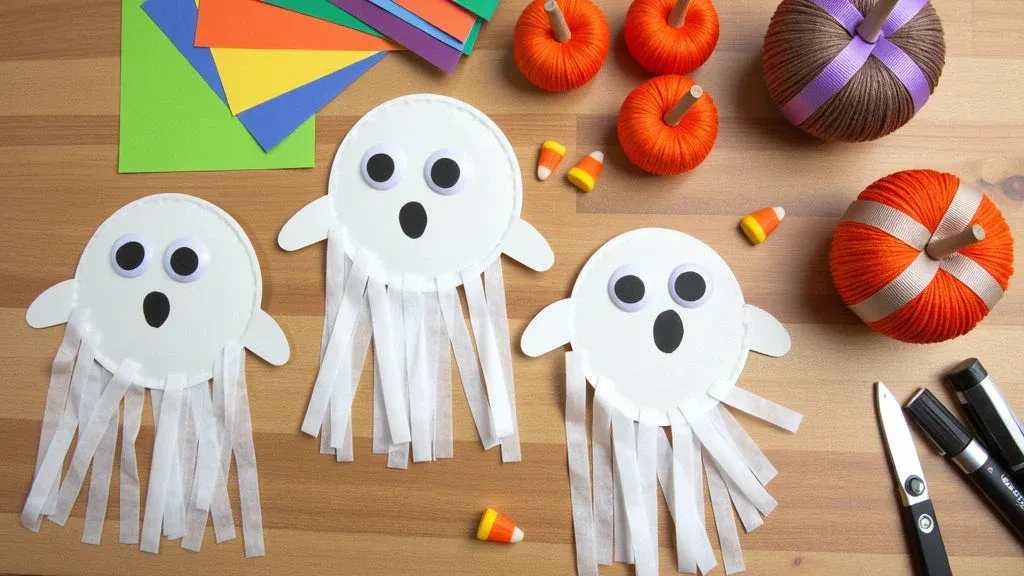
Picture excited preschoolers with tiny hands covered in glitter and paint, transforming simple materials into spooky pumpkins, friendly ghosts, and silly monsters. Halloween crafts, preschool activities, build fine motor skills, spark creativity, and teach young children to follow directions while having fun. These seasonal projects bring magic into classrooms and homes through easy, engaging craft ideas.
Finding the right materials for Halloween-themed activities doesn't require hours of searching or expensive purchases. Ready-to-use templates for cutting practice, jack-o'-lantern outlines for painting projects, and witch hat patterns for tracing activities provide the foundation children need for successful craft experiences. These resources save preparation time while ensuring engaging seasonal fun. Download 51,780+ free coloring pages to access customized worksheets and printables perfect for your Halloween craft sessions.
Summary
- Halloween crafts build fine motor precision that directly supports writing readiness, with activities like cutting, gluing, and coloring strengthening the same hand muscles children need for pencil grip and letter formation. According to the U.S. Census Bureau, 41 million potential trick-or-treaters ages 5 to 14 participate in Halloween activities annually, creating a shared cultural experience that preschoolers naturally want to engage with through creative projects. When teachers design themed craft activities around pumpkins, bats, and ghosts, they're building neural pathways that support literacy, motor control, and social skills simultaneously.
- Pattern recognition develops naturally when children sort orange and black construction paper, arrange triangle teeth inside pumpkin mouths, or sequence the steps to build a paper plate witch. These aren't random art projects but cognitive exercises disguised as play, teaching spatial relationships and categorization skills that form the foundation for math and reading comprehension. The emotional investment children bring to Halloween themes increases retention rates compared to generic worksheets, a principle that early childhood educators have consistently observed across diverse classroom settings.
- Preschoolers sustain focus for roughly 15 minutes on seated tasks before needing movement breaks or activity changes, making craft timing critical to successful completion. Activities that finish within this window or break naturally into distinct phases prevent frustration and teach children that some projects require patience between steps. When teachers pair crafts that share common materials but produce different results, like paper plate pumpkins, monsters, and spiders, they reduce storage needs and simplify cleanup while helping children benefit from material familiarity.
- Indoor trick-or-treating creates a controlled social rehearsal in which children practice polite requests, expressions of gratitude, and turn-taking within five-minute sequences. When children knock, wait for doors to open, say "trick or treat," accept treats, and say "thank you" before moving to the next station, they're building the same social competence that helps them join playground games or introduce themselves to new classmates. This repetition builds confidence through practice rather than facing social scripts once in an overwhelming neighborhood setting.
- Most Halloween craft plans fail not because the ideas lack merit, but because execution requires more preparation time than busy teachers and parents have available. The familiar approach involves spending Sunday evenings cutting shapes, organizing supplies into individual baggies, and hoping children follow instructions precisely enough to produce recognizable results. Platforms that provide downloadable Halloween templates (witches, pumpkins, haunted houses, friendly monsters) eliminate the need for tracing and cutting prep work, letting teachers print exactly the quantity needed and hand them out during transition times as focused activities.
- My Coloring Pages addresses this preparation challenge by offering 51,780+ free coloring pages that teachers can customize to different skill levels, print in minutes, and use as standalone activities or templates for construction paper cutouts in multi-step Halloween craft projects.
Importance of Celebrating Halloween for Preschoolers
Halloween celebrations in preschool classrooms create structured opportunities for developmental growth beyond costume parades and candy counting. Themed craft activities around pumpkins, bats, and ghosts build neural pathways supporting literacy, motor control, and social skills. The challenge lies in maximizing learning potential while keeping the experience joyful.
🎯 Key Point: Halloween activities serve as powerful learning tools that engage multiple developmental domains simultaneously, making education feel like natural play rather than structured lessons.

"Themed learning experiences during holidays can increase student engagement by up to 40% while reinforcing critical developmental milestones." — Early Childhood Education Research, 2023
💡 Tip: Transform simple Halloween crafts into multi-sensory learning experiences by incorporating counting, color recognition, fine motor practice, and storytelling into each seasonal activity.

How do Halloween crafts develop fine motor skills?
Cutting, gluing, and colouring develop fine motor precision that transfers directly to pencil grip and letter formation. When a four-year-old carefully cuts around a jack-o-lantern template, she strengthens the hand muscles needed to write her name six months later.
According to the U.S. Census Bureau, 41 million children ages 5 to 14 participate in Halloween activities annually. Themed activities transform this seasonal enthusiasm into focused learning time.
What cognitive skills do pattern-based Halloween activities build?
Pattern recognition happens naturally when children sort orange and black construction paper, arrange triangle teeth inside pumpkin mouths, or sequence steps to build a paper plate witch. These cognitive exercises teach spatial relationships and categorization skills that form the foundation for math and reading comprehension.
The emotional investment children bring to Halloween themes increases their retention compared to generic worksheets.
How does Halloween build social confidence in children?
Halloween celebrations teach children to move through social spaces with confidence. Walking door-to-door requires reading social cues, making polite requests, saying thank-you, and handling uncertainty. These interactions build social competence that helps children join playground games, ask teachers for help, or introduce themselves to new classmates.
Why does costume creation boost creative confidence?
Making a costume offers a rare chance to be completely creative and make your own choices. A child who assembles a skeleton costume with a homemade pumpkin mask, a witch hat, and dollar-store gloves isn't confused—he's experimenting with different ideas and learning that imagination matters more than store-bought options. This free form of self-expression builds creative confidence that helps him solve problems across school subjects.
How does trick-or-treating strengthen community connections?
Neighbourhood trick-or-treating breaks down social barriers that keep families apart. Parents start conversations naturally when their costumed children stand on porches together. These interactions create community bonds that make neighbourhoods safer and more connected, with benefits extending to children who grow up knowing the adults around them.
But knowing why Halloween matters doesn't solve the practical challenge teachers face every October.
Related Reading
- Preschool Worksheets
- What Age Is Preschool
- Preschool Curriculum
- Preschool Age Range
- Preschool Vibes
- Preschool Homeschool Curriculum
- Preschool Games
- Worksheets For Preschool
- Preschool Education
- Free Preschool Worksheets Age 3–4
- Preschool Books
- What Age Do Kids Start Preschool
- Preschool Graduation
- Free Name Tracing Worksheets for Preschool
- Preschool Backpack
- All About Me Preschool
- Free Preschool Worksheets
- Preschool Self Defense
- What Should a Child Learn in Preschool
- Preschool vs Pre K
- Sight Words for Preschool
- Free Printable Preschool Worksheets Tracing Letters
- First Day of Preschool
- Preschool Math Worksheets
- Preschool Valentine Crafts for Parents
- Preschool Graduation Gifts
- Preschool Toys
- What Age Is Preschool and Kindergarten
- Preschool Quotes About Play
How to Celebrate Halloween at Preschool
Celebrating Halloween at preschool means planning activities that balance fun with structure, where costumes, crafts, and treats become learning opportunities. According to AP-NORC, two-thirds of families plan to celebrate Halloween this year, so classroom activities can channel the excitement children already feel at home. This builds fine motor skills, social confidence, and creative thinking while keeping every child engaged and safe.
🎯 Key Point: Halloween celebrations work best when they combine educational value with seasonal excitement, turning costume parades and pumpkin activities into learning opportunities.
⚠️ Warning: Check for costume safety hazards like long capes or masks that obstruct vision before allowing children to participate in Halloween activities.
"Two-thirds of families plan to celebrate Halloween this year, creating natural excitement that educators can channel into meaningful learning experiences." — AP-NORC, 2024

How does food-based learning engage preschoolers' natural curiosity?
Preschoolers approach food with their whole bodies, touching, examining, and rearranging before eating. Peanut butter and jelly sandwiches become geometry lessons when you provide bat, ghost, and pumpkin cookie cutters, letting children transform familiar lunches into themed shapes. The cutting motion strengthens hand muscles needed for pencil control, while choosing which shape to make next exercises decision-making skills.
What makes cupcakes perfect for preschool Halloween activities?
Cupcakes solve the portion-control problem that most preschoolers face when faced with a towering cake slice. Smaller sizes mean children can hold, frost, and decorate without the structure collapsing. Orange icing, candy corn, and chocolate chips teach colour sorting, counting, and cause-and-effect relationships between decoration placement and final appearance. A four-year-old arranging five candy corns around a cupcake edge practises spatial reasoning and quantity recognition without realizing maths is happening.
How can digital resources extend hands-on Halloween learning?
Platforms like My Coloring Pages extend hands-on learning beyond edible crafts. Teachers download Halloween-themed coloring pages featuring pumpkins, witches, and friendly ghosts to use as placemats during snack time or quiet activity stations. Children colour while waiting for face painting, channelling potential restlessness into focused creativity. Customization options match difficulty levels to individual skill ranges, offering advanced students intricate designs and simpler outlines for children still mastering crayon grip.
Why do competitive games confuse preschoolers?
Competitive games can confuse preschoolers who barely understand what winning is and can feel genuine distress when they don't receive the same prize as their classmates. Plan activities so every child gets recognized—such as finishing a balloon toss, crossing a finish line in a costume parade, or sitting still for face paint. The goal isn't to make things easier, but to recognize that at age four, participation itself is an achievement worth celebrating.
How can you make physical activities inclusive for everyone?
Foot races work when you abandon the winner-loser framework. Line children up, count down from three, and cheer as they run to a marked spot. Every child who reaches it gets a small prize, sticker, or high-five. The race becomes about moving your body with purpose, following directions, and experiencing physical joy rather than being faster than the child beside you.
Balloon tosses teach hand-eye coordination and gentle touch when you frame success as keeping the balloon aloft rather than outlasting opponents.
What skills does face painting help develop?
Face painting transforms waiting time into an activity. Children watch classmates receive designs, request specific images, and practise sitting still while an adult works near their faces. This builds impulse control, trust in adult guidance, and patience for multi-step processes.
When a child sits motionless for two minutes while you paint a spider web on her cheek, she practises the same self-control needed during circle time or story reading.
What makes Halloween crafts engaging yet not overwhelming for preschoolers?
Simple craft activities keep preschoolers engaged when the difficulty matches their abilities. Cardboard Jack-o'-Lanterns made from recycled boxes, orange paint, and black construction paper triangles teach shape recognition and glue application without requiring scissors, which most four-year-olds lack. Children paint boxes orange, wait for them to dry (which teaches patience), then arrange pre-cut triangles into faces, trying different expressions by moving pieces before gluing them in place.
How do paper plate pumpkin masks combine multiple learning skills?
Paper plate pumpkin masks combine multiple skill areas into one project. Children paint plates orange, developing brush control and awareness of colour coverage. After drying, adults help cut eye and nose holes, demonstrating how tools change materials. Children add construction paper stems and yarn hair, deciding on placement and quantity. The finished mask serves as both a costume piece and a take-home reminder of their creative choices, building pride in work they genuinely created rather than merely coloured within adult-drawn lines.
But planning these activities is only half the challenge teachers face each October.
7 Halloween Celebration Activities for Preschool
These seven Halloween activities create learning moments that look like pure play, developing skills while children have fun. Each activity balances excitement with structure, ensuring every child participates successfully regardless of developmental stage or temperament while building specific abilities.
🎯 Key Point: The most effective preschool Halloween activities disguise learning as fun, enabling children to develop skills naturally through structured play experiences.
"Play is essential to development because it contributes to the cognitive, physical, social, and emotional well-being of children." — American Academy of Pediatrics, 2018
💡 Tip: Choose activities that can be easily adapted for different skill levels, allowing all children to experience success while being appropriately challenged.

1. Pumpkin Painting Stations
Pumpkin carving requires knife skills that four-year-olds lack. Painting transforms the seasonal tradition into a creative activity where children control every choice. Set up a protected workspace with plastic sheeting, then give each child a small pumpkin, washable autumn-coloured paints, and appropriately sized brushes.
What educational challenges can you add to pumpkin painting?
Add educational challenges: ask children to paint faces with two eyes, one nose, and a mouth for counting practice and facial recognition. Request orange and black to reinforce colour identification. Challenge older preschoolers to paint patterns such as stripes or polka dots to introduce geometry concepts. Children who finish quickly can paint leaves, stems, or vines to extend engagement without teacher intervention.
How should you display finished pumpkin artwork?
Display finished pumpkins around the classroom or send them home as evidence of independent creation. Parents see proof of skill development, and the pride children feel carrying their work translates into confidence for future challenges.
2. Indoor Trick-or-Treating Routes
Regular neighbourhood trick-or-treating takes place at night and involves traffic, strangers' homes, and unpredictable elements that can stress many preschoolers. Create a safer version within your facility so children can experience this fun tradition without worry. Decorate each classroom door with Halloween themes and station a teacher or staff member behind each door with a bowl of age-appropriate treats.
How does indoor trick-or-treating build social skills?
Give children small buckets or bags, then guide them through the route in small groups. They knock, wait for the door to open, say "trick or treat," accept one piece of candy, and say "thank you" before moving to the next station. This sequence teaches patience, polite requests, gratitude, and turn-taking within five minutes. Children practice the same social script repeatedly, building confidence through repetition.
What outdoor alternatives work for preschool Halloween activities?
If the weather is good, set up outdoor stations in your play yard using decorated tables or pop-up tents. The different spaces keep children engaged longer than a hallway loop, and being outside delivers the Halloween experience kids expect. Either approach creates authentic trick-or-treating without the safety concerns that worry parents.
3. Costume Fashion Shows
Preschoolers invest significant emotional energy into choosing their costumes, often planning weeks in advance. Create a special moment where every child receives focused attention and enthusiastic recognition. Line children up at one end of your largest open space, then call them forward one at a time to walk a designated path, with classmates and teachers cheering.
Why should you eliminate competition from costume events?
Get rid of competition completely. Every child receives the same enthusiastic response, whether wearing a fancy store-bought costume or a homemade cape made from a pillowcase. Teachers should wear costumes too, demonstrating that dressing up is fun participation rather than a contest. When adults join in as equals rather than as judges, children feel more comfortable and enjoy themselves more.
How can you extend the positive experience for families?
Take a photo of each child during their walk and share the images with families the same day. Parents who couldn't attend get to see their child's moment of recognition, and children can revisit the experience through photos. These images become part of family Halloween traditions, extending the positive feelings beyond the event.
4. Halloween Baking Sessions
Baking teaches measurement, sequencing, cause-and-effect relationships, and delayed gratification through an activity children perceive as making treats rather than doing schoolwork. Choose simple recipes with few steps and short baking times. Orange-coloured Rice Krispies treats shaped as pumpkins work well because children can help with melting, stirring, shaping, and decorating without using the oven or managing complicated timing.
How can older preschoolers participate in Halloween baking?
Older preschoolers can help measure ingredients, pour pre-measured cups of cereal, and count marshmallows into the pot. They stir mixtures, watching solid ingredients transform into cohesive masses through heat and motion. They press orange-tinted treats into pumpkin shapes using cookie cutters, then add chocolate chip stems and green frosting vines. Each step requires following specific instructions in order, building executive function skills that transfer directly to academic tasks.
What Halloween baking activities work best for younger children?
Younger children can decorate finished products. Set out ghost-shaped sugar cookies with white frosting and chocolate chips for eyes and mouths. Children practise fine motor control by placing small pieces in the right spots, making choices about what faces look appealing, and feeling satisfied completing work that looks polished.
5. Craft Stations With Clear Outcomes
Generic craft time often produces unidentifiable results that fail to excite children. Plan activities around specific finished products that children can use or display immediately. Paper plate masks work well because children understand what they're making from the start, and the finished mask has a clear purpose for costume play.
How do pre-prepared materials enhance the crafting experience?
Give kids pre-painted orange paper plates, pre-cut black triangles for eyes and noses, construction paper strips for hair, and yarn pieces for decoration. Children arrange the pieces, experimenting with different configurations before gluing them down. This process of making choices teaches planning and revision—skills that apply to writing, problem-solving, and any task requiring forethought.
What digital tools can expand craft options without extra preparation?
Websites like My Coloring Pages offer craft choices without requiring extensive materials. The platform lets teachers download Halloween-themed templates featuring witches, bats, haunted houses, or friendly monsters, then print them as coloring pages or tracing templates for construction-paper cutouts.
Customization options let you match difficulty to each student's skill level: advanced students receive detailed designs while those still developing scissor control get simpler outlines. Children colour pages during transitions, creating personalized decorations that transform classroom walls into student-curated Halloween galleries.
6. Active Halloween Games
Preschoolers need to move around during seated activities, but competitive games create winners and losers, which can confuse children who barely understand competition. Design games in which participation itself is success. Monster Monster works because every child gets to be both the monster and the person being chased during one game, and getting caught means joining the monster side instead of sitting out.
How do you play Monster Monster with preschoolers?
Start at one end of your play space while children line up opposite you. They call out, "Monster, monster, are you hungry?" You respond, "Not really, come closer," and they step forward. Repeat several times to build anticipation, then shout "Yes!" and chase them back to their starting line. Children you tag join you as additional monsters for the next round. The game continues until everyone becomes a monster, then resets and plays again.
What skills does Monster Monster develop in children?
The activity teaches listening comprehension (children must hear your response to know when to run), impulse control (they cannot run until you say "yes"), and spatial awareness (they must judge distance and speed to reach safety). Physical exertion burns energy that might otherwise emerge as disruptive behaviour during quieter activities, and the laughter generated creates positive emotional associations with structured group games.
7. Spooky Music and Movement
Music activities develop listening skills, rhythm recognition, and physical coordination. Create a playlist of age-appropriate Halloween songs and check the lyrics beforehand. "Monster Mash," "Ghostbusters," and "The Addams Family Theme" work well because children recognise them without finding them scary.
How does freeze dance help preschoolers develop self-control?
Play music while children dance freely. Pause it unexpectedly and have everyone freeze in place. This teaches impulse control and body awareness while allowing creative expression. Vary the challenge by asking for specific movements: hop like a frog, fly like a bat, or tiptoe like a sneaky cat.
Children practice following verbal directions while moving, building dual-processing skills needed for activities like playing sports or navigating crowded spaces safely.
What makes shadow play activities educational for older preschoolers?
For older preschoolers, dim the lights and use flashlights to create shadow effects on walls while music plays. Children watch their shadows grow and shrink as they move closer to or farther from light sources, discovering cause-and-effect relationships through experimentation.
The combination of music, movement, and visual discovery creates multisensory learning that engages children who might disengage during single-mode activities.
Executing these activities successfully requires more than good ideas and enthusiasm.
45 Fun and Engaging Halloween Crafts for Preschool
Halloween crafts for preschoolers work best when they use simple materials, have clear goals, and give kids multiple chances to be creative. Each craft helps children develop important skills while making something they feel proud to display or take home.
🎯 Key Point: The best Halloween crafts combine skill development with creative expression, ensuring preschoolers stay engaged for the full activity duration.
"Hands-on creative activities like Halloween crafts help preschoolers develop fine motor skills and cognitive abilities while building confidence through completed projects." — Early Childhood Education Research, 2023
💡 Tip: Choose crafts that can be completed in 15-20 minutes to match preschoolers' natural attention spans and ensure successful outcomes every time.
1. Handprint Spider Craft
Cover a child's hand in black washable paint and press it onto white paper, creating the spider's body from the palm and legs from the fingers. Once dry, use a black marker to add more legs until there are eight total. Glue googly eyes near the top of the palm and draw a simple web in one corner using a ruler.
Checking that the spider has exactly eight legs practices one-to-one correspondence and number recognition. The hand-pressing motion builds bilateral coordination as children learn to keep fingers spread evenly and apply consistent pressure.
2. Cotton Ball Ghosts
Cut ghost shapes from black construction paper using a template, ensuring they are roughly the same size. Give children white cotton balls and school glue, and show them how to pull the cotton balls apart before gluing them on for a fuller appearance. Children work step by step from one edge to the other across the entire ghost shape.
Add googly eyes after the glue dries, or let children draw facial features with white crayons before adding cotton for contrast. Ask each child to describe their ghost's personality (friendly, sleepy, surprised) to build emotional vocabulary and narrative thinking. This texture-based activity engages tactile learners who struggle with flat coloring tasks.
3. Q-Tip Skeleton Art
Print or draw a simple skull outline on black cardstock, large enough for children to work comfortably. Provide white Q-tips and demonstrate how to arrange them to form a ribcage, spine, and limb bones. Children glue Q-tips in place, learning basic skeletal structure while making individual placement decisions.
The activity teaches skeletal structure in an age-appropriate way without memorization. Children discover that bodies have internal frameworks, a concept revisited in elementary science. Placing small Q-tips precisely strengthens fine motor control and spatial planning.
4. Paper Plate Pumpkin
Give each child an orange-painted paper plate (made during an earlier lesson to allow drying time) and pre-cut black construction paper triangles in two sizes. Show how placing triangles in different spots creates different faces. Children arrange triangles for eyes, nose, and mouth, then glue them down once satisfied with their jack-o'-lantern face.
Add a green construction paper stem at the top and an optional curly vine made from a green pipe cleaner wrapped around a pencil, then released. This reinforces geometry concepts and shape recognition for kindergarten readiness, while different facial expressions show that small changes in feature placement can convey different emotions.
5. Toilet Roll Bat
Paint empty toilet paper rolls black and let them dry completely. Fold the top edges inward to create pointed ears, then cut bat wing shapes from black construction paper using a template and glue them to both sides of the roll.
Attach googly eyes near the top and draw a small mouth with white paint or marker. Punch a hole in the top and thread black yarn through it for hanging. This recycling project demonstrates how everyday objects can become art materials with a little imagination.
6. Yarn Pumpkins
Wrap orange yarn around three fingers about 50 times to create a thick bundle. Tie another piece of yarn tightly around the middle, then slide it off your fingers and cut through the loops on both ends. Fluff the cut yarn outward to form a round pumpkin shape, adjusting individual strands until it looks full and even.
What developmental benefits do yarn pumpkins provide?
Insert a small green pipe cleaner through the center tie to create a stem, bending it slightly for a natural appearance. This craft builds the hand strength needed for a pencil grip while demonstrating how repeated simple actions create complex finished products. The three-dimensional result helps children understand that art exists in multiple forms.
7. Fingerprint Spiders
Pour black washable paint into shallow containers and demonstrate the finger-dipping technique. Press one finger onto white paper to create the spider's body, then use a thin black marker to draw eight legs radiating from the print. Add two small dots for eyes using the marker or a white paint pen for contrast.
Create multiple spiders across the page in patterns: three in a row, circle formation, or scattered randomly. This activity improves fine motor precision as children control the amount and placement of paint, while pattern creation introduces early maths concepts.
8. Masking Tape Mummy
Draw a simple mummy outline on white paper. Cut masking tape into 4-inch strips and place them along the edge of a table for easy access. Show how to overlap tape across the mummy's body in different directions to create the wrapped effect.
Leave space for eyes, then add googly eyes once tape placement is complete. The sticky texture of tape provides sensory input distinct from glue or paint, while layering demonstrates how building up materials creates visual depth and texture.
9. Cupcake Liner Bats
Flatten black cupcake liners completely, then cut them in half to create two wing shapes from each liner. Glue the flat liner halves onto construction paper with pointed edges facing outward to suggest bat wings. Add a small black circle between the wings for the body, then attach googly eyes and draw a tiny mouth.
What learning concepts does this craft teach?
Make multiple bats across a single page to create a night sky scene. Add a yellow-circle moon and white-star stickers for context. This craft teaches symmetry as children notice that bat wings mirror each other, a geometry concept that appears throughout nature and design. Using baking supplies as art materials shows children that creativity means recognising potential in ordinary objects.
10. Popsicle Stick Pumpkin
Line up six popsicle sticks side by side on a protected surface, and glue where they touch to create a connected panel. Once set, paint the entire surface orange and let it dry completely. Add a green construction-paper stem at the top, and use a black marker to draw triangular eyes and a jagged mouth.
Children can add details such as vertical lines for pumpkin segments or small dots for texture. The construction element teaches that individual pieces combine to form larger structures, a foundational concept in engineering. Painting on wood rather than paper introduces how different surfaces absorb paint differently.
11. Paper Plate Monster
Give children paper plates and let them choose a colour to paint their monster. Once the paint dries, set out pre-cut construction paper shapes (circles, triangles, rectangles) in different colours for eyes, teeth, and horns. Children select and arrange the shapes on their plate to create unique monster faces before gluing them down.
How does this craft support learning and development?
Ask each child to name their monster and describe one thing it likes to do. This builds storytelling skills and imaginative thinking. Because the craft is open-ended, no two monsters look the same. This teaches children that creativity values originality. When children place facial features, they learn about spatial relationships and symmetry. Facial feature placement reinforces spatial relationships and concepts of symmetry.
12. Witch Hat Craft
Cut black construction paper into large triangles for the hat cone and circles for the brim. Help children roll the triangle into a cone shape and secure it with tape or glue, then attach it to the centre of the circular brim. Provide stickers, glitter glue, and small cut-out shapes for decoration.
What finishing touches make witch hats special?
Add a construction-paper buckle to the hat band, or wrap a ribbon around the base for extra detail. Children can wear finished hats during costume activities or take them home as wearable art. The three-dimensional construction teaches how flat materials transform into objects that exist in space, supporting later understanding of geometry and engineering.
13. Vampire Spoon Puppet
Paint wooden spoons with skin-toned or light colours, then let them dry completely. Use black markers to draw hair, eyes, and fangs, keeping features simple enough for children to copy. Attach a fabric scrap or a felt piece to the back of the spoon as a cape, securing it with glue.
Children move finished puppets to create stories and act out scenarios, building language skills through dramatic play. The spoon's handle fits small hands easily, and its familiar shape demonstrates how everyday objects become toys with minor modifications.
14. Ghost Handprint Art
Paint a child's entire hand white with washable paint, then press it firmly onto black or dark blue construction paper, creating a ghost shape from the palm with flowing edges from the fingers. Once dry, add two black circles for eyes and a small oval for a surprised mouth using markers or construction paper. Draw a simple background with white crayon or chalk to suggest a nighttime setting.
What makes ghost handprint art special for children?
The contrast between white paint and dark paper makes the ghost stand out dramatically, teaching children how colour choices affect visual impact. This keepsake craft creates a permanent record of the child's hand size at a specific age, making it meaningful for families beyond its Halloween theme. The pressing motion builds body awareness as children learn to control pressure and finger positioning.
15. Black Cat Handprint Craft
Trace a child's hand on black construction paper with fingers spread wide, then help them cut along the traced line. Position the cutout with fingers pointing downward to represent legs, add a tail and ears using paper scraps or markers, and glue the completed cat onto contrasting background paper.
What finishing touches make the handprint cat special?
Add whiskers with a white crayon or thin strips of white paper, and create eyes with yellow or green paper circles with black pupils. Transforming a handprint into a recognisable cat teaches symbolic thinking and creative problem-solving, while cutting practice builds scissor skills needed for precise hand control.
16. Candy Corn Paper Craft
Cut large triangle shapes from white cardstock, then divide each triangle into three horizontal sections with a pencil. Children paint the bottom section yellow, the middle section orange, and the top section white, staying within boundaries. Let each section dry before starting the next to prevent colour mixing.
Once complete, punch a hole in the top corner and thread yarn through to create hanging decorations. The colour sequencing reinforces pattern recognition and order concepts, while children practise brush control as they navigate the triangle's narrowing shape.
17. Candy Corn Wreath
Cut 15-20 candy corn shapes from construction paper and arrange them in a circular pattern on a paper plate with the centre removed. Children glue each piece around the circle, then add a ribbon bow at the top.
The repetitive gluing builds fine motor stamina, while the circular arrangement teaches spatial planning and even distribution. This works well as a group project where children each contribute pieces to a classroom wreath, fostering collaboration and shared ownership.
18. Pumpkin Stamping
Cut apples in half horizontally to reveal the star pattern inside, creating natural stamps that resemble pumpkins when dipped in orange paint. Demonstrate the proper stamping technique: press down firmly and lift straight up without sliding for clear impressions. Children stamp multiple pumpkins across large paper, then add green painted stems and optional black details for faces.
What learning benefits does Apple stamping provide?
The natural differences in stamp sizes and shapes teach children that imperfection creates visual interest. This printing technique introduces a basic art method used across cultures and time periods, connecting preschool craft time to broader artistic traditions. Discovering the apple's internal pattern builds curiosity about how other objects look inside.
19. Paper Bag Treat Monster
Give children brown or white paper lunch bags and show them how to draw monster faces on the front while the bags are flat. They can add construction paper teeth, googly eyes, and paper horns or antennae to create their own designs. Once decorated, the bags serve as treat containers for classroom parties or candy to take home.
This activity serves two purposes: it teaches children that handmade items have practical uses beyond aesthetics, and it encourages risk-taking and creative confidence by having them make monsters with no right answer. The bag's three-dimensional shape, when opened, introduces the concept of how flat objects become containers.
20. Cookie Decorating (Halloween Theme)
Provide plain sugar cookies in Halloween shapes (pumpkins, ghosts, bats) and set out orange, white, and black frosting in squeeze bottles or small containers with spreading knives. Let children decorate their cookies with minimal help, adding small candies like chocolate chips or candy eyes for detail.
What makes cookie decorating so effective for learning?
The edible nature of this craft provides immediate positive reinforcement when children eat their finished work. Fine motor skills develop naturally as children control the flow of frosting and place small decorations precisely. Eating together afterward builds community around the creative process.
How can teachers simplify the preparation for Halloween crafts?
Many teachers avoid craft activities that require extensive materials because the preparation and cleanup consume valuable teaching time. The conventional approach involves cutting shapes, organizing supplies, and hoping students produce recognizable results. As class sizes grow and planning time shrinks, detailed crafts become impractical.
Platforms like My Coloring Pages eliminate the need for cutting and tracing prep work by providing downloadable Halloween-themed templates (witches, pumpkins, haunted houses, friendly monsters) tailored to different skill levels. Teachers print the exact quantity needed for their class size. Children color pages during transitions or use them as templates for construction paper cutouts, transforming simple printables into multi-step projects with minimal prep beyond printing.
21. Spider Web Yarn Craft
Draw a simple web pattern on black construction paper using white chalk or crayon, with straight lines radiating from a centre point and curved connecting lines. Give children white yarn cut into manageable lengths and show them how to apply glue along the drawn lines, then press the yarn into the glue to follow the pattern. Add a small paper spider (pre-cut or child-made from a previous activity) at the web's centre.
What skills does this yarn craft develop?
Following a line with yarn helps children build observation and hand-eye coordination skills by matching yarn placement to drawn guides. The three-dimensional texture of raised yarn adds tactile interest that flat drawings lack. This craft introduces geometry concepts by demonstrating mathematical patterns found in natural structures.
22. Bat Silhouette Painting
Cut bat shapes from cardstock and place them on white paper, securing edges with removable tape. Children sponge-paint or brush-paint over the entire surface using purple, orange, or dark blue paint. Once dry, carefully remove the bat shapes to reveal white silhouettes against the coloured background.
What artistic concepts does this activity teach?
This introduces the concept of negative space, where the absence of paint creates the image—an artistic technique children will encounter throughout their education. The reveal moment when shapes are removed creates genuine excitement and surprise, building positive associations with art processes that require patience. Background colour choices let children make aesthetic decisions that affect the final mood.
23. Mini Pumpkin Spider
Give children small craft pumpkins (real or foam) and black paint so they can cover the whole surface. Once dry, attach eight black pipe cleaner legs by pushing them into the pumpkin's sides or securing them with glue. Add googly eyes near the top, positioning them close together for a surprised expression or far apart for a silly one.
The three-dimensional aspect engages children who prefer construction to drawing. Pipe cleaner manipulation builds finger strength and dexterity as children bend and shape the legs into realistic positions. The finished spider serves as a lasting take-home decoration beyond Halloween.
24. Ghost Piñata Cup
Decorate paper or plastic cups by gluing white tissue paper pieces to the outside to create a ghost body. Add black construction paper circles for eyes and a mouth. Fill with small treats (stickers, erasers, wrapped candy) and seal the top with tissue paper secured by a rubber band.
Children shake their cups to hear contents rattling inside, building anticipation. This craft combines creation with reward, demonstrating that handmade items can contain surprises and serve multiple purposes.
25. Tea Light Witch Craft
Use battery-operated tea lights as the base (never real flames in preschool settings), and create witch hats from black felt or construction-paper cones. Attach the hat to the top of the tea light and add small felt details for a face, keeping decorations simple so the light still functions. Turn on the light to create a glowing witch decoration.
The functional aspect (actual light emission) makes this craft feel more advanced than purely decorative projects, while battery operation introduces basic technology concepts in an age-appropriate way.
26. Halloween Scene Craft
Start with Halloween-themed coloring pages featuring pumpkins, ghosts, bats, and witches. Print them from customizable templates. Children colour each part using crayons or markers, cut them out with safety scissors, then arrange and glue the pieces onto a large background sheet to create a spooky scene.
Encourage storytelling by asking what's happening in their picture: Is the ghost visiting the pumpkin? Are the bats flying to the witch's house? This multi-step process builds executive function skills as children plan, execute, and complete a project with multiple parts. The storytelling component teaches that individual pieces combine to create meaning.
27. Paper Plate Spider
Cover paper plates completely with black paint and set aside to dry. Once dry, attach four black pipe cleaners to each side of the plate by poking them through or securing with strong glue, then bend them slightly to create realistic leg shapes. Add large googly eyes or draw eyes with white paint to give the spider personality.
Count legs together to verify eight appear, reinforcing number recognition and one-to-one correspondence. Draw a web background on a large sheet of paper and attach the spider to it. The plate's circular shape provides a ready-made spider body, eliminating the need for complex cutting or shaping.
28. Pumpkin Bead Craft
Give orange pony beads and green pipe cleaners, cut to about six inches long. Thread beads onto the pipe cleaner, bend it into a circle, and twist the ends together. Add a small green section at the top (beads or a small piece of pipe cleaner) to represent the stem.
Children practice pattern-making by alternating bead sizes or adding black beads for variety. Threading builds hand-eye coordination and the pincer grasp needed for writing. Finished pumpkins can hang as decorations or attach to backpacks as seasonal accessories.
29. Footprint Pumpkin Art
Use washable orange paint to cover a child's foot, then help them step firmly onto white paper. Once dry, draw vertical lines for pumpkin segments and add a green stem at the top. Children can add facial features for a jack-o'-lantern or leave it as a simple pumpkin shape.
This body-based art creates a permanent record of size that families treasure as children grow. Full-foot involvement provides sensory input for regulation and focus, while transforming a footprint into a recognizable object teaches symbolic thinking and creative interpretation.
30. Monster Collage Craft
Set out materials (coloured paper, fabric scraps, googly eyes, buttons, pipe cleaners, stickers) and let children pick pieces to build unique monsters. Provide glue and a sturdy base (cardboard or heavy paper) where children arrange and attach their choices. Encourage unusual combinations and celebrate weird designs over realistic representations.
Ask each child to name their monster and describe its favourite food, building language and imaginative skills. Material selection and arrangement develop decision-making and aesthetic judgment while reinforcing that creative values individuality.
31. Halloween Banner Craft
Cut large letters spelling "BOO" or "HALLOWEEN" from cardstock and give each child one or two letters to decorate with markers, stickers, glitter, and small craft items. Punch holes in the top corners and thread them onto ribbon or yarn to create a banner. Hang it across the classroom or send it home for family display.
The activity supports early literacy through letter recognition while feeling creative. Collaborative banner creation shows children how individual contributions combine to achieve larger group goals, and the finished product demonstrates that their work has real decorative value.
32. Paper Witch Broom Craft
Give children brown construction paper strips for the broomstick and yellow or orange paper for bristles. Show them how to cut small vertical slits into one end of the bristle paper to create a fringed effect, then roll and glue it around the brown stick. Add decorative elements such as a ribbon bow or small star stickers.
The cutting practice builds scissor control, and rolling strengthens hand muscles used for writing. Children learn that everyday objects can be recreated using basic materials. Finished brooms work as props for pretend play or classroom decorations.
33. Halloween Rock Painting
Give smooth, clean rocks and washable paints in Halloween colours (orange, black, white, purple). Children paint simple designs such as pumpkin faces, ghosts, or abstract patterns directly onto rock surfaces, then add details with fine-tip markers once dry.
Rocks' irregular shapes teach children to adapt designs to available space rather than work within predetermined boundaries. Painted rocks create lasting keepsakes that withstand handling better than paper crafts, demonstrating how natural objects become art materials through imagination and paint.
34. Spider Headband Craft
Cut construction paper strips to fit around children's heads and secure them with tape or staples. Create small paper spiders with eight legs and glue them to the front of each headband. Children can decorate their spiders using markers or googly eyes.
Children wear the finished headbands during Halloween activities as a wearable costume element, and pretend play with headbands builds imaginative thinking and role-playing skills.
35. Paper Ghost Garland
Cut multiple ghost shapes from white paper and have children decorate each with different facial expressions: happy, scared, silly, and surprised. Attach the ghosts to a long string using tape or glue, spacing them evenly, then hang them across a wall or window.
This activity teaches emotional recognition and feeling vocabulary while introducing pattern concepts and spatial planning through sequencing. Collaborative creation demonstrates how individual work combines into impressive group displays.
36. Yarn Mummy Wrap Craft
Draw simple mummy outlines on cardboard or sturdy paper and provide white yarn cut into manageable pieces. Show children how to wrap yarn around the mummy shape, layering pieces to create the wrapped effect. Leave small spaces for googly eyes or markers.
The wrapping motion builds hand coordination and teaches children to work in an organized way. Overlapping yarn creates texture and depth that flat coloring cannot achieve, introducing textile arts in an accessible way for preschoolers.
37. Halloween Mask Craft
Give children pre-cut mask templates or let them design their own on sturdy paper plates. Set out markers, feathers, sequins, and stickers for decoration. Cut eye holes carefully and attach an elastic string or craft sticks to secure the mask.
Children use finished masks for pretend play, creating stories and characters that build narrative skills. Mask-making connects to cultural traditions across history and geography, introducing children to how people worldwide use disguise and transformation in celebrations.
38. Paper Plate Witch Face
Give paper plates and green paint for witch skin tones. Once dry, add construction paper cut-outs for a long nose, eyes, a mouth with visible teeth, and a black witch hat on top.
Encourage children to create different expressions (mean, friendly, surprised) by changing mouth and eyebrow placement. This shows how small feature changes can convey different emotions. The plate's circular shape provides a ready-made face outline, eliminating the need for complex drawing.
39. Clothespin Bat Craft
Paint wooden clothespins black and let them dry completely. Attach black construction paper wings to both sides using glue, then add googly eyes or draw a face on top.
Finished bats clip onto strings, papers, or decorations. The pinching motion builds hand strength needed for writing and fine motor tasks while demonstrating how everyday objects become art materials through simple changes.
40. Monster Hand Cutout Craft
Trace each child's hand on coloured construction paper and help them cut along the traced line. Children decorate the hand shape with googly eyes, construction paper teeth, and drawn patterns to create a monster. Encourage unusual designs such as multiple eyes or zigzag mouths.
Create a "monster family" by making several hand-cutouts in different colours. The hand-tracing element provides a size record that families value as keepsakes, while open-ended monster design builds confidence in personal artistic choices.
41. Pumpkin Mosaic Art
Draw a large pumpkin outline on paper and provide small orange construction paper squares (pre-cut or child-cut, depending on skill level). Children glue squares inside the outline to create a mosaic effect, filling all spaces. Add a green stem and optional facial features once complete.
The repetitive gluing builds stamina for sustained fine motor work and teaches systematic rather than random placement. Mosaic technique introduces an ancient art form in an accessible way, creating a visual impact that simple colouring cannot achieve.
42. Ghost Sticker Scene
Give children Halloween-themed stickers (ghosts, pumpkins, bats, witches) and blank paper to create spooky scenes. Encourage them to draw additional elements, such as trees, moons, or houses, to build an environmental context. Ask children to explain what's happening in their scene.
The narrative element transforms sticker placement into a storytelling practice, building language skills and imaginative thinking. Sticker manipulation develops fine motor precision as children peel and place small items with accuracy. The combination of provided elements (stickers) and original additions (drawings) demonstrates how creativity blends given materials with personal contributions.
43. Halloween Sensory Collage
Give kids different textured materials (cotton balls, sandpaper, aluminium foil, yarn, fabric scraps, corrugated cardboard) and let them glue them onto paper to create textured Halloween designs. Encourage them to touch and describe each material before using it. They can create ghosts, pumpkins, or abstract spooky art.
Touching different textures supports sensory development and builds descriptive vocabulary as children learn words like rough, smooth, soft, and bumpy. A variety of materials keeps children engaged and helps those who need sensory input to focus and stay calm.
44. Spooky Tree Craft
Draw or print a bare tree outline with branches extending upward and outward. Children paint the tree black or dark brown, then glue small paper elements (bats, ghosts, pumpkins, owls) around the branches. Encourage adding a nighttime setting with a moon or stars in the background.
This craft teaches how Halloween imagery combines within specific settings to create atmosphere, introduces natural patterns and growth through tree structure, and develops spatial relationships and depth through layered construction: background, tree, and decorative elements.
45. Halloween Diorama Box
Use shoebox bases to create three-dimensional Halloween scenes. Children add paper characters (ghosts, pumpkins, witches) and decorate backgrounds with paint or construction paper, then tell stories based on their completed scenes.
The three-dimensional aspect teaches spatial awareness and depth concepts that flat crafts cannot. Diorama creation combines multiple skills—painting, cutting, gluing, and arranging—while storytelling based on the finished scene builds narrative skills and imaginative thinking, connecting visual art and language arts naturally.
Having 45 craft ideas means nothing without organizing them into coherent lesson plans that fit your schedule and skill levels.
Related Reading
- Preschool Assessment
- Preschool Crafts
- Preschool Learning Activities
- Preschool Tracing Worksheets
- Daycare Vs Preschool
- Preschool Classroom Layout
- Preschool Playground Equipment
- Free Preschool Games
- Preschool Sight Words
- Preschool Math Activities
- How To Become A Preschool Teacher
- Preschool Prep
- Preschool Lesson Plan Template
- Noah's Ark Preschool
- Preschool Science Experiments
- Preschool Craft Ideas
- Creative Curriculum For Preschool
- Playing Preschool Curriculum
- Preschool Bulletin Board Ideas
- Christmas Crafts Preschool
- Spring Bulletin Board Ideas For Preschool
- Turkey Craft Preschool
- Preschool Learning Games
Turn Halloween Crafts Into Structured Learning (Without the Mess & Guesswork)
The challenge isn't finding Halloween craft ideas—it's turning them into activities preschoolers can complete without frustration, material waste, or losing focus halfway through. Even with 45 options, execution requires tracing templates, cutting shapes, organizing supplies, and managing multi-step instructions. Most craft plans fail from preparation gaps that consume more time than busy teachers and parents have available.

🎯 Key Point: The real challenge isn't creativity—it's creating structured, manageable activities that preschoolers can actually complete successfully without overwhelming adults with the time required for preparation.
"Most craft activities fail not from poor ideas, but from preparation gaps that require more time than busy educators have available." — Early Childhood Education Research, 2023

💡 Best Practice: Focus on simple preparation steps and age-appropriate execution rather than complex designs that look impressive but create frustration and material waste.

Starting With Structure, Not Supplies
Pick two or three crafts that use the same materials but create different results. Paper plate pumpkins, paper plate monsters, and paper plate spiders all share the same base material but feature different decorative elements. This approach lets you buy materials once and complete multiple activities without separate shopping trips, reduces storage needs, and simplifies cleanup. Children also benefit from using familiar materials: when they've painted paper plates before, they understand how much paint gives good coverage and how long it takes to dry, letting them focus on creative choices rather than learning basic techniques each time.
Match crafts with printables that eliminate tracing and cutting prep work. Download coloring pages featuring pumpkins, ghosts, or bats that children can color first, then cut out and add to larger projects, such as Halloween scenes or diorama boxes. This sequence builds skills progressively: contained colouring warms up fine motor control, cutting practice follows with clear boundaries, and combining elements into original compositions comes last. The printable provides structure that prevents the "I don't know what to make" paralysis that stops many children before they start.
Timing Activities to Attention Spans
Preschoolers can focus for about 15 minutes on seated tasks before needing to move or switch activities. Plan craft activities that finish within this timeframe or break them into separate parts with clear stopping points. A paper plate pumpkin requiring painting, drying, and decorating works across two sessions: one for painting and one for adding details after the paint dries. This separation prevents frustration from gluing onto wet paint and teaches children that some projects require time between steps.
Platforms like My Coloring Pages offer ready-to-use Halloween worksheets (pumpkins, ghosts, bats, monsters) that children can color, cut, and transform into finished crafts in under 20 minutes. Teachers download templates matching current skill levels, print the exact number needed, and distribute them during transition times or as focused activities between higher-energy games. This eliminates scattered Sunday evening prep sessions spent cutting shapes and organizing materials, replacing them with two-minute downloads that provide organized starting points children can complete independently.
Building Completion Into the Design
Start with activities in which every child produces a recognizable finished product, regardless of skill level. Handprint spiders work because the hand shape automatically forms the body, and adding legs simply extends what's already there. Cotton ball ghosts succeed because covering the shape with cotton creates visual impact even with uneven placement. These designs build confidence because completion feels achievable and doesn't require advanced fine motor control that many preschoolers haven't yet developed.
Create a simple three-craft Halloween plan by pairing one coloring activity, one construction project, and one sensory craft. Our collection of pumpkin coloring pages can be downloaded and printed for the first session. Use those coloured pumpkins as elements in a larger Halloween scene during the second session, where children cut them out and arrange them on background paper with other decorations. Complete the sequence with a tactile project, such as yarn pumpkins or cotton-ball ghosts. This rotation keeps activities fresh while building skills cumulatively, and the finished pieces combine to form a complete Halloween display that shows progression.
Related Reading
- Preschool Mothers Day Crafts
- Preschool Spring Crafts
- Preschool Snack Ideas
- Preschool vs Daycare
- Preschool Thanksgiving Crafts
- Fathers Day Crafts Preschool
- Preschool Movement Songs
- Preschool Science Activities
- Play Based Preschool
- How Much Is Preschool
- Letter A Worksheets Preschool
- All About Me Preschool Activities
- Tracing Worksheets Preschool
- Good Morning Songs for Preschool
- Fall Preschool Crafts
- Preschool Art
- Preschool Classroom Themes
- January Preschool Themes
- Fall Coloring Pages Preschool
- Part Time Preschool
- Letter B Worksheets Preschool