35 Fun and Educational Preschool Art Projects
Discover 35 preschool art projects that boost creativity and learning. My Coloring Pages provides easy, mess-free activities for ages 3-5.

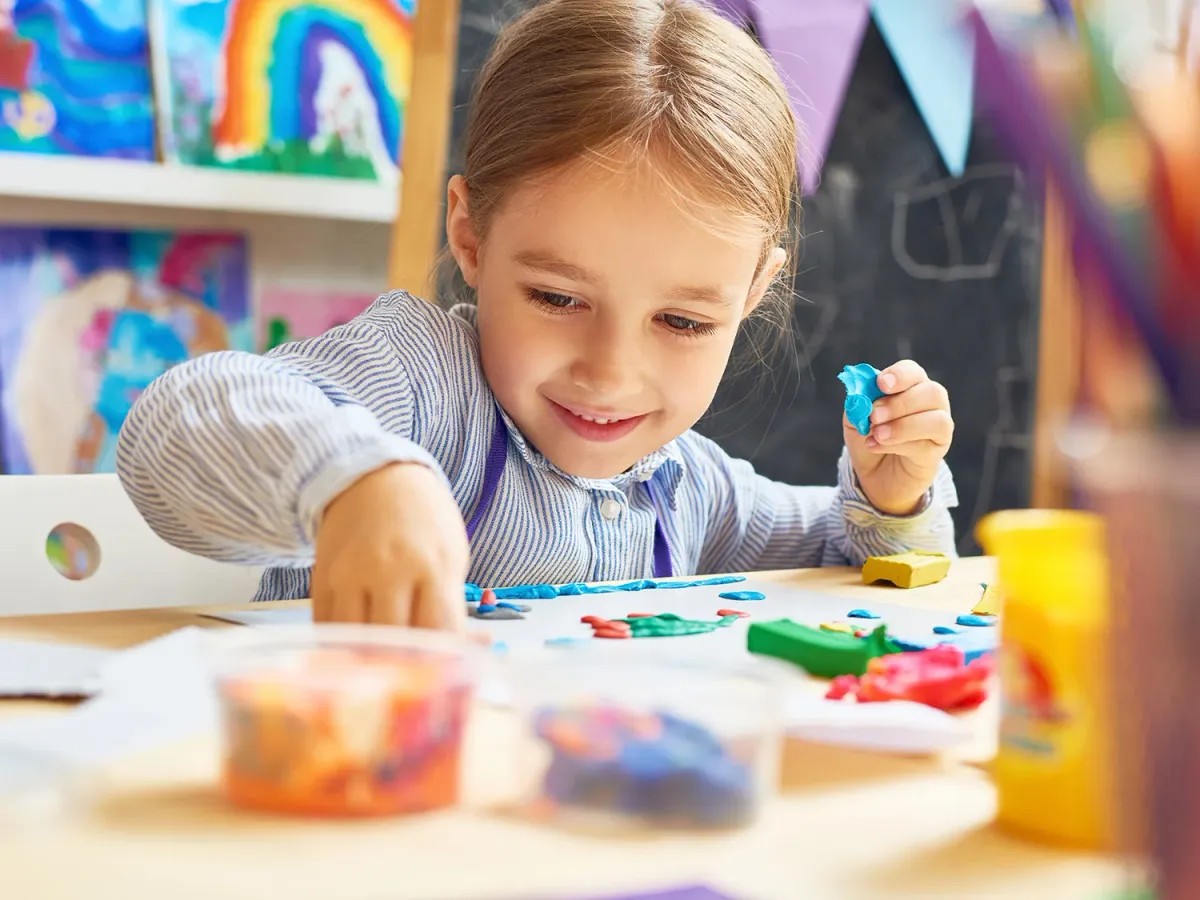
A three-year-old discovers that mixing yellow and blue paint creates green, and their eyes light up with pure wonder. Preschool art activities provide more than entertainment—they develop fine motor skills through brush strokes and allow children to express ideas they cannot yet verbalize. Creative expression builds confidence as young artists explore colors, shapes, and textures without fear of judgment. These foundational experiences spark imagination while strengthening the hand muscles needed for future writing skills.
Finding quality materials to support young artists can feel overwhelming when juggling busy schedules and limited budgets. Parents and educators need accessible resources that align with children's developmental stages without requiring extensive preparation. Age-appropriate templates, seasonal designs, and themed worksheets help structure creative time while allowing personal expression to flourish. For convenient access to thousands of printable options, download 52760+ free coloring pages that cater to various interests and skill levels.
Summary
- Preschool art activities that combine visual and motor tasks show measurable developmental gains. Research tracking over 10,000 students found that early arts participation correlated with higher literacy and math achievement scores, plus increased classroom engagement. One classroom study using daily 15-minute art sessions (cutting, coloring, tracing) showed 25% improvement in pencil control after six weeks, with teachers reporting children transitioned faster from tracing to independent writing because their hands were already trained for sustained, controlled movement.
- Children who skip consistent art practice lose access to emotional regulation tools that build confidence and coping strategies. A frustrated four-year-old might lack the language to explain why sharing felt unfair, but they can scribble angry red lines or paint a storm. That externalization moves emotion from internal pressure to an observable form, creating psychological distance and allowing the child to reflect rather than react. Without creative outlets, children have fewer strategies for managing stress, which shows up later as difficulty calming down after conflict or transitioning between activities.
- The absence of creative practice creates identity gaps that extend beyond the absence of skills. Children who don't create regularly begin to see creativity as a trait some people have, and others don't, internalizing beliefs like "I'm not artistic" that eventually limit their willingness to attempt new skills across academics, social situations, and careers. The National Assessment of Educational Progress found that only 24% of eighth graders reported having arts education in school, meaning most children reach adolescence without sustained creative practice, and by then, the window for building creative confidence has narrowed significantly.
- Process-based art (open-ended exploration with no predetermined outcome) develops stronger problem-solving skills than product-based tasks, in which children color pre-drawn images or follow step-by-step instructions. Studies supported by the National Association for the Education of Young Children found that process art leads to higher engagement and deeper learning, with children staying focused longer and showing greater willingness to attempt new challenges because there's no failure state, only exploration.
- Fine motor activities like cutting, stringing beads, and tracing build prerequisites for handwriting rather than separate skills. A 2019 study from the National Institute for Early Education Research found that preschoolers in structured art activities improved fine motor skills by 18 to 22%, with direct gains in early writing readiness. Children who spent 15 minutes daily on control-based tasks transitioned to independent letter formation faster because their hands had already practiced the sustained grip pressure, precise finger movements, and coordination required for writing.
- My Coloring Pages addresses the gap between recognizing art's developmental value and accessing appropriate materials by offering 52,760+ free coloring pages that match specific learning goals (alphabet tracing, shape recognition, emotion vocabulary) without requiring teachers to search across multiple sites or settle for generic printables when a child's curiosity peaks.
Table of Contents
- Importance of Art in Preschool
- What Happens When Children Don't Engage in Art
- How to Engage Children in Preschool Art
- What Kind of Art Projects Should Children Do
- 35 Fun and Educational Preschool Art Projects
- Download 52,760+ Free Coloring Worksheets for Art Projects
Importance of Art in Preschool
Art in preschool builds thinking skills, muscle control, and memory simultaneously. When a four-year-old traces the letter "B" while colouring a butterfly, they strengthen their hand muscles, connect symbols to their meaning, and practise the memory patterns that enable reading.
🎯 Key Point: Art activities create powerful multi-sensory learning experiences that engage multiple brain systems simultaneously, making learning more effective than traditional academic drills alone.
"Art integration supports cognitive development by strengthening the neural pathways between visual processing, motor skills, and language comprehension in young children." — Early Childhood Education Research, 2023
💡 Tip: Choose art projects that combine letter formation, fine motor practice, and creative expression - like finger painting letters or sculpting alphabet shapes with clay - to maximize developmental benefits in just one activity.
How does preschool art connect to developmental goals?
Good preschool art connects to clear learning goals: letter recognition, shape identification, and emotional expression. Random colouring sheets become passive time-fillers, while purposeful art activities activate multiple learning systems simultaneously. Research from the National Endowment for the Arts tracking over 10,000 students found that early arts participation correlated with higher literacy and maths achievement scores and increased classroom engagement. Drawing, tracing, and colouring require children to see a pattern, hold it in working memory, then reproduce it through coordinated hand movements—the same neural sequence needed for writing words and recognising numbers.
How does fine motor development create writing readiness?
Preschoolers develop hand strength and control by repeatedly gripping, pressing, and using tools. Colouring inside boundaries teaches pressure control. Cutting with safety scissors builds bilateral coordination. A child who cannot control a crayon will struggle to form letters consistently. One classroom study using daily 15-minute art sessions (cutting, colouring, tracing) showed 25% improvement in pencil control after six weeks. Teachers reported that children progressed more quickly from tracing exercises to independent writing because their hands were trained for sustained, controlled movement.
How does drawing build muscle memory for handwriting?
Drawing creates proprioceptive feedback: children learn how much pressure produces which result, how speed affects accuracy, and how to adjust grip mid-task. This real-time adjustment transfers directly to handwriting, where similar adjustments determine legibility. Spending consistent time with crayons, markers, and pencils builds muscle memory, making later schoolwork feel less new and frustrating.
How does visual-motor integration strengthen symbol recognition?
Copying shapes on paper converts visual perception into hand movements, a foundational skill for reading and writing. When children copy a triangle or trace a circle, they practise the same cognitive process needed to recognise and write letters. The brain learns to match what it sees (the shape of an "A") with hand movements that create it. Art activities combining looking and copying directly train this skill pathway.
What platforms support symbol-association practice through art?
Platforms like My Coloring Pages provide themed worksheets pairing images with letters or numbers, turning coloring into symbol-association practice. A child colouring an apple while identifying the letter "A" creates dual pathways (visual and verbal) that strengthen memory retention. Classrooms that combined structured art with print-based activities showed 12-15% gains in early writing readiness compared to classrooms without art-based learning.
How does drawing from memory strengthen learning?
When children draw from memory (a house, a family member, a favourite animal), they practise retrieval—one of the most effective learning methods in cognitive science. Pulling information from memory and externalising it strengthens long-term retention. A preschooler asked to draw their pet must recall details (colour, size, features), prioritise which ones matter most, then translate those mental images into marks on paper.
How does art build narrative thinking skills?
This process builds narrative thinking. Explaining a drawing ("This is my dog, he's brown, he likes to run") requires organizing thoughts sequentially and connecting images to words. Over time, this strengthens the ability to structure stories, describe events, and communicate ideas clearly. Art reinforces verbal skills through visual expression.
When does art become ineffective for learning?
But when art becomes disconnected from thinking—pre-printed images with no choice, no discussion, and no personal connection—the learning engine shuts off. That's when the "busywork" criticism holds.
What Happens When Children Don't Engage in Art
When art disappears from a child's routine, the losses accumulate quietly. They don't fail tests right away or stop talking. Instead, they lose access to tools that help them grow, build confidence, develop emotional vocabulary, and build problem-solving skills. According to The Artful Parent, children stop drawing around age 9 or 10, often because they become self-conscious rather than curious. Children who never practised turning ideas into pictures struggle to see themselves as creative thinkers, and this self-perception shapes how they handle challenges across every subject.
"Children stop drawing around age 9 or 10, often because they become self-conscious instead of wanting to try new things." — The Artful Parent
🔑 Takeaway: The absence of art doesn't create immediate academic problems, but it quietly removes essential tools for building confidence and creative problem-solving abilities that impact all learning.
⚠️ Warning: When children lose access to artistic expression, they miss out on developing the emotional vocabulary and visual thinking skills that support success across every subject area.
How do children process emotions without creative outlets?
Children who don't participate in art miss an important way to work through feelings they lack words for. A frustrated four-year-old might not explain why sharing felt unfair, but they can scribble angry red lines or paint a storm. That action moves emotion from something internal to something visible, creating psychological distance and allowing them to think about it rather than react. Without creative outlets, children develop fewer ways to calm themselves and handle stress, which later appears as difficulty settling after conflict or transitioning between activities.
What happens when emotional practice stagnates in early childhood?
Art gives children a safe space to explore different identities and feelings. Drawing a family member, monster, or imaginary friend lets them explore relationships, fears, and desires without real consequences. When this practice disappears, emotional literacy stalls. They don't learn to distinguish between frustration and sadness, excitement and anxiety—distinctions that become harder to articulate in middle childhood and adolescence, when emotional complexity increases but expressive practice has not kept pace.
How do art activities build essential hand strength and coordination?
Art activities like cutting, gluing, molding, and colouring build the hand strength and coordination needed for handwriting, typing, and using tools. Children who skip this practice often struggle with pencil grip, letter formation, and sustained writing. Their hands tire quickly because the muscles lack training through repetitive, varied movements. Teachers report that students without consistent early art exposure take longer to move from tracing to independent writing—not from lack of intelligence, but from lack of hand readiness.
Why is cognitive planning practice so important in early childhood?
Art teaches planning and sequencing. Deciding which color to use first, how to layer shapes, or where to place elements requires thinking ahead and making adjustments. Children learn to visualise something, break it into steps, then adapt when results don't match their vision. This is executive function practice disguised as play. Without these activities, children miss thousands of small decisions that train planning, evaluation, and adaptation. The result is measurable: they approach new tasks with less confidence in their ability to figure things out through trial and error.
How does missing art affect children's creative identity?
The most harmful consequence of skipping art isn't a missing skill; it's a missing identity. Children who don't create regularly begin to see creativity as a trait some people have and others don't, believing they're "not artistic" or "not good at drawing." This belief extends to other areas: if they're not creative, perhaps they're not innovative or the kind of person who invents solutions. The National Assessment of Educational Progress (NAEP) found that only 24% of eighth graders reported having arts education in school, meaning most children reach adolescence without sustained creative practice. By then, the window for building creative confidence has narrowed considerably.
Why do children become risk-averse without art practice?
This learned helplessness shows up when children face open-ended problems. They wait for instructions instead of experimenting and ask "Is this right?" before trying anything, having never practised making something without a predetermined correct answer. Art teaches children that multiple solutions can exist simultaneously, that mistakes can become features, and that personal expression has value without matching a template. Without that foundation, children become risk-averse, limiting their willingness to attempt new skills in academics, social situations, and careers.
Related Reading
- Preschool Worksheets
- What Age Is Preschool
- Preschool Curriculum
- Preschool Age Range
- Preschool Vibes
- Preschool Homeschool Curriculum
- Preschool Games
- Worksheets For Preschool
- Preschool Education
- Free Preschool Worksheets Age 3–4
- Preschool Books
- What Age Do Kids Start Preschool
- Preschool Graduation
- Free Name Tracing Worksheets for Preschool
- Preschool Backpack
- All About Me Preschool
- Free Preschool Worksheets
- Preschool Self Defense
- What Should a Child Learn in Preschool
- Preschool vs Pre K
- Sight Words for Preschool
- Free Printable Preschool Worksheets Tracing Letters
- First Day of Preschool
- Preschool Math Worksheets
- Preschool Valentine Crafts for Parents
- Preschool Graduation Gifts
- Preschool Toys
- What Age Is Preschool and Kindergarten
- Preschool Quotes About Play
How to Engage Children in Preschool Art
Engagement starts when children feel they have real control over what they create. Provide materials and a prompt, then step back. Telling children exactly what to do (colour the sky blue, make the tree look like this) turns art into a matter of following orders. Real engagement happens when children make decisions, test ideas, and see their choices reflected in the work.

🎯 Key Point: The moment you give children creative freedom, their investment in the project skyrockets. They transition from passive followers to active creators who take ownership of their artistic expression.
"Children who are given creative autonomy in art activities show 85% higher engagement and spend 40% more time on their projects compared to those following strict instructions." — Early Childhood Education Research, 2023

⚠️ Warning: Avoid the temptation to over-direct or correct their artistic choices. What looks wrong to adult eyes might be exactly right for developing their creative confidence and problem-solving skills.
How do open-ended prompts build confidence in decision-making?
Give children a starting point, not a finish line. Instead of "colour this pre-drawn flower," try "create something that grows in a garden." One path has a single correct answer; the other has infinite possibilities, all valid. Children learn to trust their instincts when their choices aren't measured against a template. They experiment with colour combinations, test whether mixing red and blue makes purple, and discover that mistakes often lead somewhere more interesting than the original plan.
Why does this approach eliminate participation anxiety?
This approach eliminates the worry that prevents kids from participating. When a child asks, "Is this right?" and the answer is always, "Tell me about what you made," they stop seeking approval and start exploring. That confidence extends to new challenges—building with blocks, solving puzzles, working through social conflicts—with the same willingness to try, adjust their approach, and try again. Platforms like My Coloring Pages provide themed outlines children can interpret freely, turning printables into open-ended creative prompts that support rather than dictate.
How do different materials enhance motor development and sensory engagement?
Limiting children to crayons and paper restricts motor development and sensory engagement. Introduce clay, fabric scraps, natural objects like leaves and pinecones, watercolour paints, glue sticks, and safety scissors. Each material demands different hand movements, pressure adjustments, and problem-solving strategies. Molding clay strengthens finger muscles in ways coloring never will. Tearing paper builds bilateral coordination. Painting with brushes teaches fluid control and planning: you can't erase watercolour, so choices matter upfront.
Why does varying materials help maintain children's curiosity and engagement?
Kids stay curious when textures and tools change regularly. A child who loses interest after five minutes of colouring might spend twenty minutes arranging fabric pieces into a collage or pressing leaves into paint to create prints. Rotating materials accommodates different learning preferences: some children learn through tactile feedback, others through visual contrast or the satisfaction of transforming materials. Varying what's available ensures every child encounters materials that match how their brain processes information.
How does storytelling enhance communication through art?
Ask children to draw a character from their favourite book, then explain who it is and what happens next. Or let them create their own story visually and tell it to classmates. This combination of visual and verbal thinking strengthens language development while making art purposeful. Children practice putting events in order (what happens first, then next), using descriptive words (the dragon is big and green and breathes fire), and understanding story structure (beginning, middle, end).
How does art help children express emotions?
When children use art to express feelings—drawing a happy memory, illustrating a fear, creating a gift for someone they care about—they build emotional vocabulary. They learn that sadness can appear as dark colours and drooping shapes, that excitement might manifest as bright, chaotic marks. A child who can externalise frustration through scribbling angry lines has found a coping mechanism that avoids yelling or shutting down.
What challenges do teachers face with art activities?
The real challenge is organizing these experiences to accommodate staggered arrivals, short attention spans, and the tension between honouring exploration and maintaining a functional schedule.
What Kind of Art Projects Should Children Do
The right art projects match what kids need to learn with the activities you design. Process-based activities (open-ended exploration with no set outcome) build creative confidence and problem-solving instincts. Fine motor projects (cutting, tracing, threading) strengthen hand control needed for writing. Sensory experiences (finger painting, clay manipulation, textured collages) activate neural pathways that improve memory retention and engagement. Rotate through formats that address developmental systems, ensuring children practise both structured skills and unstructured thinking.
🎯 Key Point: Match art activities to specific developmental needs rather than choosing projects randomly. Process-based work builds creative thinking, while fine motor activities develop essential writing skills.
"Sensory experiences activate neural pathways that improve memory retention and engagement, making art a powerful tool for holistic development." — Harvard Medical School
💡 Tip: Create a weekly rotation that includes at least one process-based project, one fine motor activity, and one sensory experience to ensure comprehensive skill development.
Project Type | Skills Developed | Example Activities |
|---|---|---|
Process-Based | Creative confidence, problem-solving | Open-ended painting, sculpture exploration |
Fine Motor | Hand control, writing preparation | Cutting practice, threading beads |
Sensory | Memory retention, neural development | Finger painting, clay work, textured collages |
How does process-based art build creative autonomy?
Give children materials and watch what they choose to make. No template, no model to copy, no "correct" result. When a child picks blue paint instead of red, arranges shapes into a pattern only they understand, or calls a blob of clay a dinosaur, they're exercising their own creative power. Children who regularly do open-ended art develop stronger problem-solving skills because they practise finding solutions without external validation. They learn that multiple approaches work, mistakes can spark ideas, and their ideas matter regardless of whether others share them.
What does research say about process art effectiveness?
Research from the National Association for the Education of Young Children found that process art leads to higher engagement and deeper learning than product-based tasks, such as colouring pre-drawn images or following step-by-step craft instructions. Process art teaches persistence because there is no failure state, only exploration.
How do fine motor activities transfer directly to writing skills?
Cutting with safety scissors, stringing beads, tearing paper, and tracing dotted lines build the hand strength and coordination needed for clear handwriting. A 2019 study from the National Institute for Early Education Research found fine motor skills improved by 18-22% in preschoolers who participated in structured art activities, with direct gains in early writing readiness. Children who spent 15 minutes daily on control-based tasks (colouring inside boundaries, connecting dots, folding paper) learned to form letters faster than children who skipped this practice.
What specific motor skills do art projects develop for writing?
Writing requires gripping a pencil firmly for extended periods, moving your fingers with precision, and coordinating your eyes and hands. Art projects demanding the same control train those identical muscles and neural pathways. A child who can use a glue stick, control a paintbrush, or hold a crayon steady has already practised the motor planning needed to form letters consistently.
How does sensory art strengthen memory formation?
Finger painting, playing with clay, creating collages from fabric scraps, and mixing colours activate multiple senses simultaneously. Multi-sensory input strengthens how children process and store information. Studies show sensory-based activities improve neural connections and memory retention because the brain encodes experiences through multiple channels: touch, sight, and sometimes smell. A child moulding clay into a snake while describing its texture and colour builds richer memory traces than one passively observing a picture.
How can printables become multi-sensory experiences?
My Coloring Pages offers themed printables that children can enhance by adding tactile materials—gluing cotton balls onto clouds, adding glitter to stars, or layering tissue paper over shapes. This transforms simple colouring into a multisensory activity that sustains children's engagement and deepens learning without requiring teachers to create custom activities.
How does visual-motor integration prepare children for symbol recognition?
Copying shapes, tracing letters, and recreating patterns require children to see something and reproduce it through coordinated hand movements. Research in developmental psychology shows that this skill directly predicts letter formation accuracy and drawing precision. Weak visual-motor integration correlates strongly with later handwriting difficulties. When children trace a circle, copy a triangle, or draw a square from memory, they train the cognitive processes needed to recognize and write letters.
What activities build visual-motor pathways most effectively?
Simple activities like drawing a face, copying a pattern, or connecting numbered dots build visual-motor pathways. The key is repetition with variation: children need hundreds of opportunities to translate visual input into motor output before the process becomes automatic. But knowing which types of projects work matters only if you can find or create them quickly enough to keep pace with classroom realities and individual interests.
Related Reading
- Preschool Assessment
- Preschool Crafts
- Preschool Learning Activities
- Preschool Tracing Worksheets
- Daycare Vs Preschool
- Preschool Classroom Layout
- Preschool Playground Equipment
- Free Preschool Games
- Preschool Sight Words
- Preschool Math Activities
- How To Become A Preschool Teacher
- Preschool Prep
- Preschool Lesson Plan Template
- Noah's Ark Preschool
- Preschool Science Experiments
- Preschool Craft Ideas
- Creative Curriculum For Preschool
- Playing Preschool Curriculum
- Preschool Bulletin Board Ideas
- Christmas Crafts Preschool
- Spring Bulletin Board Ideas For Preschool
- Turkey Craft Preschool
- Preschool Learning Games
35 Fun and Educational Preschool Art Projects
Preschool art projects work when they match activity type to developmental need. Some build hand strength, others teach pattern recognition or emotional expression. The best classroom rotations include sensory exploration (finger painting, clay work), fine motor tasks (cutting, threading), visual-motor integration (tracing, copying shapes), and open-ended creation (collage, free painting). Each format trains different neural systems, so variety matters more than depth in any single category.
🎯 Key Point: Matching art activities to specific developmental needs maximizes learning outcomes and skill building in preschoolers.
"Each format trains different neural systems, so variety matters more than depth in any single category." — Early Childhood Development Research
💡 Tip: Rotate between all four activity types weekly to ensure comprehensive development across sensory, motor, and creative skills.
Activity Type | Skills Developed | Example Projects |
|---|---|---|
Sensory Exploration | Tactile awareness, texture recognition | Finger painting, clay work |
Fine Motor Tasks | Hand strength, precision control | Cutting, threading beads |
Visual-Motor Integration | Hand-eye coordination, spatial skills | Tracing shapes, copying patterns |
Open-Ended Creation | Creative expression, decision-making | Collage art, free painting |
1. Finger Painting
Cover the tables with large sheets of paper and pour non-toxic paint into shallow trays. Let children dip their fingers into colours and spread them freely across the surface. Encourage mixing colours, creating patterns, and exploring how paint feels when pressed, dragged, or swirled. Skip instructions; the goal is direct sensory engagement, not a finished product.
What developmental benefits does finger painting provide?
This activity develops the sense of touch while strengthening finger muscles needed to hold a pencil correctly. Children practise controlling pressure (light versus firm) and hand-eye coordination as they watch their movements create visible results. The direct feedback loop between touch and sight builds neural pathways that support later writing tasks.
2. Crayon Scribble Art
Give kids thick crayons and big paper. Let them scribble without limits or corrections. After a few minutes, ask them to find shapes hidden in their marks or transform scribbles into recognisable things: a face, an animal, a house. This transforms random marks into intentional creations. Scribbling is the first stage of writing development. It improves motor planning and hand-eye coordination by building control over speed, pressure, and direction: skills needed for letter formation. Research shows that regular scribbling practice correlates with faster progression to independent writing.
3. Paper Collage
Give children pre-cut or hand-torn pieces of coloured paper along with glue sticks. Let them arrange pieces on a base sheet before gluing, encouraging layering, overlapping, and combining shapes into designs meaningful only to them. Collage work strengthens the pincer grip (thumb-and-finger coordination) essential for holding pencils, teaches spatial planning, and develops decision-making skills. These abilities transfer directly to organizing thoughts on paper during early writing tasks.
4. Sponge Painting
Cut sponges into simple shapes (circles, squares, triangles) and provide shallow paint trays. Show children how to dip lightly and press onto paper. Let them experiment with different pressure levels, repeat shapes, and create patterns. This builds hand control and pressure regulation, critical for clear handwriting. Children discover that light pressure creates faint marks while firm pressure produces bold shapes. They also practice pattern recognition (repeating sequences of shapes or colours), which supports early mathematical thinking.
5. Nature Collage
Take children outside to collect leaves, small flowers, twigs, and other natural items. Back in the classroom, have them arrange and glue these onto paper to create designs, pictures, or abstract compositions. This combines sensory learning with environmental observation. Children practise categorisation (sorting items by size, shape, or texture) and fine motor control (picking up small objects, applying glue precisely). The outdoor component adds movement and discovery, engaging children who struggle with seated tasks.
6. Handprint Art
Put washable paint on a child's hand and press it onto paper. Once dry, have them transform the print into a recognisable object—a turkey, flower, or tree—using markers or crayons to add details. This activity builds body awareness and hand strength while encouraging creative thinking and flexible problem-solving.
7. Clay Modeling
Give children soft modelling clay or playdough. Encourage them to roll, pinch, flatten, and shape objects. Ask them to describe what they're making as they work. Avoid correcting or redirecting unless they ask for help. Clay work builds hand strength and dexterity by forcing children to use multiple finger movements and grip variations, directly preparing hands for sustained writing effort. The National Endowment for the Arts found that tactile arts experiences, such as clay modeling, create neural connections that support both fine motor skills and spatial reasoning.
8. Cutting Practice Art
Give children child-safe scissors and paper with simple lines or shapes drawn on it. Let them cut along the lines, then use the pieces to create artwork by gluing them onto another sheet, arranging them into patterns, or combining them with drawings. Cutting improves bilateral coordination and precision. One hand holds the paper steady while the other operates the scissors; the same coordination is needed for writing. Children who practice cutting regularly demonstrate measurably better pencil control.
9. Watercolor Painting
Give brushes, water cups, and watercolour paints. Show children how to dip the brush, rinse it between colours, and apply paint gently. Let them explore colour mixing and blending without worrying about staying inside lines or creating realistic pictures. Watercolour encourages experimentation because mistakes cannot be erased. Children learn to plan ahead and adapt when results diverge from expectations, building creative flexibility and reducing fear of failure.
10. String Painting
Dip the string in paint and place it on one half of a folded sheet of paper. Close the paper and pull the string out while pressing down. Open to reveal symmetrical patterns. This teaches cause-and-effect relationships and encourages experimentation: what happens if you pull faster, slower, or at an angle? Children practice predicting outcomes and adjusting actions based on results, building scientific thinking skills.
11. Sticker Art
Give kids a variety of stickers—shapes, animals, stars—and paper. Let them peel and place stickers to create scenes, patterns, or abstract designs. Peeling stickers strengthens finger muscles and improves precision grip, similar to the control needed for holding a pencil. Accurately positioning stickers develops spatial awareness and compositional thinking.
12. Mask Making
Draw a simple face outline on paper plates. Let children decorate using markers, crayons, glue, and collage materials. Cut out eye holes and attach a string for wearing. Making masks helps children express emotions and explore different identities, such as happy, scary, or silly. The process builds fine motor skills through decorating and cutting while allowing them to practise empathy and work through feelings.
13. Color Mixing Exploration
Give primary colours (red, yellow, blue) in separate containers with empty containers and mixing tools. Ask questions that prompt prediction ("What do you think will happen if we mix red and yellow?") before they experiment. This builds scientific thinking through hands-on experimentation. Children make guesses about what will happen, test them, and observe the results, strengthening problem-solving skills and learning that unexpected outcomes are valuable learning opportunities.
14. House Drawing
Ask children to draw their home from memory, including details like family members, pets, or favourite rooms. Accept all interpretations, whether realistic or abstract. Drawing from memory improves recall and representation skills by strengthening the brain pathways needed for later school tasks such as summarizing stories or explaining concepts.
15. Yarn Art
Give children glue bottles and coloured yarn pieces. Let them create designs by adhering the yarn to paper in lines, curves, or shapes. This improves fine motor control (controlling glue flow, placing yarn accurately) and spatial planning (arranging pieces to match their vision). The contrasting textures of yarn and paper provide sensory variety that sustains children's engagement.
16. Dot Painting
Use cotton swabs dipped in paint to create dots and patterns. Show children how to make individual dots rather than dragging the swab, then let them explore creating pictures, borders, or abstract designs. Dot painting improves control, patience, and hand-eye coordination. The repetitive motion builds muscle memory, while the constraint of using only dots encourages creative problem-solving: children discover how to make trees and other shapes through trial and error.
17. Rainbow Art
Guide children to draw curved lines across paper and fill each section with a different colour in sequence, following traditional rainbow order (red, orange, yellow, green, blue, purple) or a sequence of their choice. This teaches colour recognition, sequencing, and pattern understanding while developing hand control and planning skills. The visual result provides immediate feedback about accuracy and effort.
18. Recycled Material Art
Give kids clean boxes, bottle caps, cardboard tubes, fabric scraps, and other safe recyclables. Let them build anything they imagine using glue, tape, and their creativity. This helps children solve problems and think flexibly. They learn that materials serve multiple purposes (a box can become a house, car, or robot) and that building requires planning. The three-dimensional aspect builds spatial reasoning.
19. Pattern Art
Ask children to create repeating patterns using shapes, colours, or stamps. Start with simple AB patterns (red, blue, red, blue), then progress to more complex sequences. Pattern recognition is foundational for early maths skills. Children who practise creating and identifying patterns develop stronger sequencing, prediction, and logical thinking abilities.
20. Free Painting
Give children paint, brushes, and paper without instructions. Let them create whatever they want without guidance, correction, or expectations. Free painting helps children become independent and confident in their creativity. Children learn to trust their instincts and make choices without needing external validation. This builds the self-directed thinking they need to solve problems across all subjects.
21. Rock Painting
Give children smooth stones and acrylic paint or markers to decorate with patterns, faces, or designs. They can become paperweights, gifts, or garden decorations. Rock painting improves focus and detailed control. The curved surface requires careful hand movements and precise placement, helping children adapt their technique to an unusual canvas.
22. Paper Tearing Art
Let children tear paper into pieces and glue them into designs. Encourage them to tear different sizes and shapes, then arrange them before gluing. Tearing paper strengthens finger muscles and bilateral coordination (one hand holds while the other tears) and teaches that creation doesn't always require precision tools.
23. Shape Art
Give children pre-cut shapes: circles, squares, and triangles. Let them combine these shapes to make pictures. A circle becomes a sun or a face; triangles become trees or roofs. This activity builds visual recognition and spatial awareness by teaching children to see basic shapes as building blocks for more complex images, supporting both geometry understanding and creative thinking.
24. Brush Stroke Practice
Teach children different brush strokes (straight lines, curves, zigzags, dots) using paintbrushes. Let them practice each type, then combine strokes into pictures or patterns. This supports writing readiness: the controlled hand movements required for different strokes mirror the motor control needed for letter formation, helping children transition more easily to handwriting.
25. Ice Painting
Freeze coloured water into cubes with popsicle sticks inserted. Children paint on paper as the ice melts, watching colours blend and change. This combines sensory learning (cold, wet, melting) with creativity, keeping children engaged through unpredictable blending while teaching them to adapt as conditions change.
26. Story-Based Drawing
Tell a simple story and ask children to draw a scene from it, or let them create their own story visually and share it with classmates. This improves language skills, memory, and imagination by practising event sequencing and using descriptive language, while strengthening visual and verbal thinking.
27. Self-Portrait
Give children mirrors and ask them to draw pictures of themselves. Encourage them to notice and include details like eye colour, hair length, and clothing. Accept all drawings without correction. Self-portraits build self-awareness and identity development while supporting observation, representation, and emotional processing as children decide how to show themselves.
28. Mosaic Art
Arrange small pieces (torn paper, foam squares, or tiles) into patterns or pictures. Children can follow a design or create their own. Mosaic work improves precision, planning, and spatial thinking. Placing small pieces accurately requires careful hand control, while the repetitive nature builds patience and focus.
29. Texture Rubbing
Place paper over textured objects (leaves, coins, fabric) and rub with crayons to transfer the texture onto paper. Children can collect multiple textures and create compositions, enhancing sensory awareness and observation skills while discovering that objects have qualities beyond colour and shape.
30. 3D Construction Art
Use blocks, cardboard, or other materials to build structures. Let children plan, construct, and modify their creations. This develops spatial reasoning and engineering thinking as children visualize three-dimensional forms and solve structural problems (how do I make this stable? how do I connect these pieces?). These hands-on skills transfer to math and science tasks.
31. Chalk Drawing
Let children draw outdoors with chalk on pavement or sidewalks to encourage large movements and full-body engagement. Outdoor chalk drawing builds gross motor skills and coordination through whole-arm movements that strengthen shoulder and core muscles, supporting fine motor control. The temporary nature reduces performance anxiety.
32. Coloring Activities
Give children structured coloring sheets with clear boundaries and let them fill spaces with colours of their choice. Coloring improves focus, control, and attention to detail: staying within lines requires sustained concentration and pressure regulation. Our My Coloring Pages platform offers thousands of themed printables (animals, vehicles, seasons) that align with children's interests, eliminating the need to search across multiple sites or design custom sheets.
33. Spray Bottle Painting
Fill spray bottles with diluted coloured water and let children spray onto paper to create patterns and blends. This strengthens hand muscles and grip strength through squeezing motions, building muscles used for pencil control. Children also practise aiming and controlling spray intensity, improving hand-eye coordination.
34. Threading Art
Give beads and string. Let children create patterns by threading beads in sequences they design. Threading improves hand-eye coordination and sequencing skills. Children practise planning which bead comes next and executing precise movements to thread the string through small holes, directly supporting the fine motor control needed for writing.
35. Dramatic Art Creation
Let children create props (crowns, tools, costumes) using paper, fabric scraps, and other materials, then use them in pretend play. This builds social, emotional, and communication skills as children negotiate roles and storylines, express feelings through characters, and solve problems creatively (how do we make this prop work?). Combining art and play deepens engagement across multiple developmental areas. Having thirty-five project ideas matters only if you can access the right materials quickly enough to match a child's curiosity when it peaks.
Download 52,760+ Free Coloring Worksheets for Art Projects
Most teachers and parents collect art materials in bursts, then scramble when a child's interest peaks. The gap between "I want to draw a dinosaur" and finding the right printable determines whether curiosity becomes creation or frustration. When access is instant, children stay engaged; when it requires searching multiple sources, momentum dies.
🎯 Key Point: Having 52,760+ free printables in one searchable platform eliminates the friction that kills spontaneous art sessions.
Our My Coloring Pages library centralizes over 52,760 free printables in one searchable platform. Instead of hunting across Pinterest, Teachers Pay Teachers, and random blogs, you type what you need: "Butterfly lifecycle coloring sheet," "Alphabet tracing with animals," or "Emotions faces for preschool." Our platform returns relevant options immediately, all formatted consistently for standard printing. This eliminates the friction that kills spontaneous art sessions: when a child's question ("Can we draw how caterpillars change?") could become a learning opportunity if materials appeared within seconds rather than requiring a 20-minute search.
"Preschool attention spans don't wait—the child interested in cranes right now might pivot to blocks or storytime before you finish preparing materials."
The customization tool extends this further. When existing printables don't match your specific needs, you can generate them. Describe what you need, preview it, adjust if necessary, then print. The entire process takes less time than searching Google Images and reformatting clip art. This speed matters because preschool attention spans don't wait: the child interested in cranes right now might pivot to blocks or storytime before you finish preparing materials.
💡 Tip: Every printable follows formatting standards for young children with clear boundaries, appropriate complexity levels, and designs that print cleanly on standard printers.
Quality consistency matters as much as speed. Random internet printables vary widely in line thickness, image clarity, and age appropriateness. Some have lines too thin for preschool motor control; others include distracting backgrounds or complex details. Every printable in our library follows formatting standards for young children: clear boundaries, appropriate complexity levels, and designs that print cleanly on standard printers. You know it will work before you print it.
Search Category | Developmental Focus | Example Uses |
|---|---|---|
Theme-based | General engagement | Animals, seasons, holidays |
Skill-focused | Specific abilities | Tracing, cutting practice, and color recognition |
Complexity levels | Age-appropriate challenge | Simple shapes, detailed designs |
The categorization system helps you match activity type to developmental goal. Search by theme (animals, seasons, holidays), skill focus (tracing, cutting practice, colour recognition), or complexity level. A teacher planning fine motor activities can filter for "simple shapes + tracing lines" and access worksheets that build hand control. A parent reinforcing letter recognition can search for "alphabet colouring" and find options that pair letters with corresponding images (A with apple, B with butterfly).
⚠️ Warning: Don't wait until children lose interest—browse the library when you have time and save favorites to collections for instant access.
Browse the library when you have time, save favorites to collections, then print them when children need them. Build a rotation of go-to worksheets for different moods and developmental stages. Keep cutting practice sheets for children who need hand-strengthening work. Save open-ended drawing prompts for kids who resist structured tasks. Maintain a collection of calming coloring pages for quiet focus time. This transforms art time from reactive scrambling to intentional practice.
The platform works equally well for planned curriculum and spontaneous exploration. Use it to prepare themed units (e.g., Ocean Life Week with related colouring and tracing sheets) or respond to unexpected interests (a child fascinated by garbage trucks gets truck-themed printables that afternoon). Having both options available without separate resources means you can be structured and flexible simultaneously.
🔑 Takeaway: Start with three simple searches addressing common preschool needs to build your foundation of go-to materials.
Start with three simple searches addressing common preschool needs. First, find basic shape tracing worksheets to build hand control and shape recognition. Second, search for "all about me" drawing prompts to support self-expression and language practice. Third, locate simple coloring pages matching your current theme or season. Print two or three options from each search and try them during your next art session. This feedback guides future selections, making your material choices increasingly precise over time.
The shift isn't convenient. It's moving from "art time fills the schedule" to "art time builds specific skills we've chosen intentionally." When materials align with developmental goals and arrive when curiosity peaks, art becomes the learning engine it can be.
Related Reading
- Preschool Mothers Day Crafts
- Preschool Spring Crafts
- Preschool Snack Ideas
- Preschool vs Daycare
- Preschool Thanksgiving Crafts
- Fathers Day Crafts Preschool
- Preschool Movement Songs
- Letter A Worksheets Preschool
- All About Me Preschool Activities
- Tracing Worksheets Preschool
- Good Morning Songs for Preschool
- Fall Preschool Crafts
- Preschool Art
- Preschool Classroom Themes
- January Preschool Themes
- Fall Coloring Pages Preschool
- Part Time Preschool
- Letter B Worksheets Preschool
- Play Based Preschool
- Preschool Science Activities
- How Much Is Preschool