30 Fun and Easy Preschool Art Activities
Discover 30 preschool art activities that spark creativity and learning. My Coloring Pages brings you simple projects kids love to make.

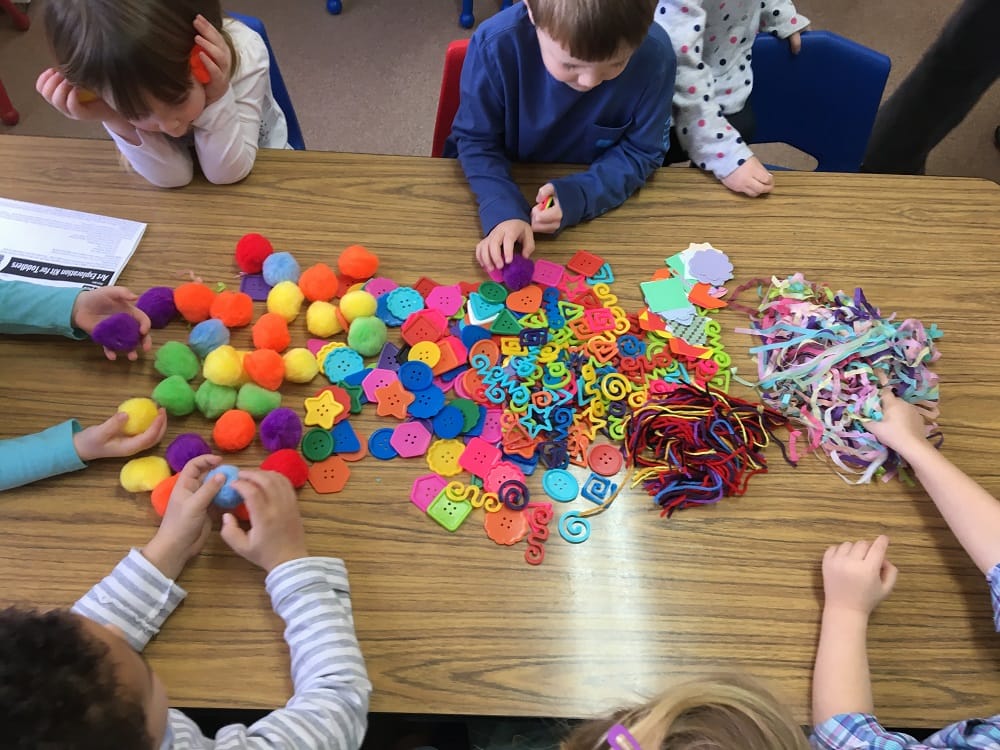
Preschoolers thrive when their small hands stay busy creating, exploring textures, and experimenting with colors. These preschool activities build fine motor skills essential for writing while encouraging creative expression and emotional development. Simple painting projects, craft activities, and drawing exercises provide children with opportunities to practice hand-eye coordination and build confidence in their abilities.
Planning engaging preschool art activities becomes easier with ready-to-use resources that match different skill levels and interests. Age-appropriate designs keep young learners focused while building the foundation skills they need for future academic success. Download 50,978+ free coloring pages to access printable activities that support your preschooler's artistic development.
Summary
- Art activities give preschoolers a structured way to process emotions, develop essential motor skills, and build cognitive foundations that support learning across every subject area. According to the National Endowment for the Arts, 30% of children ages 3-5 participated in arts education activities, yet many families still underestimate how these simple movements translate into independence. The child who can confidently manipulate art supplies today becomes the kindergartener who dresses themselves and writes their name without frustration tomorrow.
- Fine motor skill development happens every time a preschooler holds a glue stick, cuts with safety scissors, or peels a sticker from its backing. These activities strengthen the small muscles in the hands and fingers, which form the foundation for writing letters, buttoning shirts, and eventually typing or playing instruments. Thick crayons and triangular shapes fit small hands better than round ones because they naturally guide fingers into a proper grip that transfers directly to pencil holding later.
- Open-ended creation builds imagination while teaching children to trust their own ideas rather than waiting for adult direction. When preschoolers focus on exploration rather than perfection, they build persistence and problem-solving abilities that extend far beyond art time. The child who draws freely today becomes the adult who approaches problems with originality rather than fear, learning that blank space holds possibility, not pressure.
- Process-focused art activities help toddlers and preschoolers develop creativity without the pressure of matching predetermined outcomes. When children work through mistakes in real time, deciding whether to start over, add to the error, or ask for help, they build critical thinking patterns that transfer directly to academic challenges years later. The patience required to work within the limits of their supplies becomes the patience needed to work through difficult math problems or navigate team conflicts.
- Keeping art supplies on low shelves or in accessible bins transforms children from permission-seekers into self-directed creators. When materials are accessible to children independently, preschoolers learn to recognize their own creative impulses and act on them without waiting for adult preparation. The child who confidently retrieves scissors to cut shapes becomes the kindergartener who grabs a book when they want to learn something new.
- My Coloring Pages addresses this by offering instant access to over 50,978 free festive coloring pages that can be customized for different skill levels, letting families generate fresh, personalized images the moment inspiration strikes rather than losing creative momentum during setup delays.
Importance of Art in Preschool
Art activities give preschoolers a structured way to process emotions, develop essential motor skills, and build cognitive foundations that support learning across every subject area. When a three-year-old grips a crayon to draw wobbly circles or a four-year-old carefully places stickers in a pattern, they're developing the precise hand-eye coordination needed for writing, the spatial reasoning required for math, and the emotional regulation needed to navigate social situations.
🎯 Key Point: Art activities serve as multifunctional learning tools that simultaneously develop motor skills, cognitive abilities, and emotional intelligence in young children.
"Art activities provide preschoolers with essential foundations for academic success by developing the fine motor control, spatial awareness, and emotional regulation needed across all subject areas."
💡 Tip: Observe how your preschooler holds art materials and approaches creative tasks - these seemingly simple activities are building critical neural pathways for future academic achievement.
An Outlet for Big Feelings
A frustrated preschooler without words for their feelings can quickly turn to tantrums. Art projects provide a constructive outlet for these feelings: the child channels that energy into creating something tangible instead of crying or acting out. They might scribble angry red lines or paint calm blue waves, learning that emotions can be expressed in ways other than tears. This sense of control over their feelings, combined with pride in their creation, builds emotional intelligence that benefits every interaction.
Building the Muscles That Matter
Every time a preschooler holds a glue stick, cuts with safety scissors, or peels a sticker from its backing, they strengthen the small muscles in their hands and fingers. These fine motor skills form the foundation for writing letters, buttoning shirts, and eventually typing or playing instruments. According to the National Endowment for the Arts, 30% of children ages 3–5 participated in arts education activities. The child who confidently manipulates art supplies today becomes the kindergartener who dresses themselves and writes their name without frustration tomorrow.
Language Grows Through Creation
When you ask a preschooler about their drawing, you're giving them vocabulary practice wrapped in excitement. They'll describe the purple dinosaur or the house with too many windows, stretching their ability to describe, explain, and tell stories. They learn color names, shape words, and action verbs naturally because they're discussing something they care about. Some children will ask you to write words on their artwork, turning art time into spontaneous reading and writing practice. Those early scribbles that resemble cursive are the bridge between drawing and writing, a developmental step that predicts future writing capability.
Thinking Through Problems
Making art forces preschoolers to plan within limits. They decide what to draw before the marker hits paper, knowing they cannot erase mistakes. They learn that watercolours blend in unexpected ways and glitter doesn't stick to everything.
When they draw outside the lines or run out of space, they solve problems immediately: Should they start over? Add to the mistake? Ask for help? These choices build critical thinking patterns that transfer to schoolwork and workplace situations. The patience required to work within supply limits becomes the patience needed for challenging maths problems or team conflicts.
Tips for Doing Art Activities with Preschoolers
Keep safe materials where children can reach them so they can start their own creative projects. Let them decide what they want to make, rather than following templates or copying examples. This freedom to explore without predetermined outcomes builds confidence and problem-solving skills that structured crafts cannot match.
🎯 Key Point: Child-led art activities develop critical thinking and creative confidence more effectively than adult-directed projects.
"Freedom to explore without predetermined outcomes builds confidence and problem-solving skills that structured crafts can't match."

💡 Tip: Create accessible art stations with washable materials like crayons, safety scissors, and construction paper at child height for independent exploration.
Make Materials Part of the Environment
Keep watercolor paints, finger paints, tempera paint, paint daubers, playdough, clay, colored pencils, paper, child-safe scissors, glue, and markers on low shelves or in easy-to-reach bins. When art supplies are accessible, preschoolers learn to notice their own creative ideas and act on them. They stop asking "Can I paint?" and start thinking "I want to paint that tree I saw this morning." This shift from seeking permission to self-directed creation transforms how they solve problems across all areas of learning.
Show, Don't Just Tell
Show children how to use materials while encouraging them to watch their peers work. An adult might demonstrate putting a wet painting on the drying rack or holding scissors with the blade pointing down, but the real learning happens when a three-year-old watches another child figure out how to dip a brush without dripping everywhere. Visual schedules posted near activity areas—such as handwashing steps beside the sink or instructions for putting on a paint shirt in the art corner—reduce interruptions and build independence that carries into every routine throughout their day.
Build in Time and Repetition
Parents often feel guilty when an independent toddler spends extended periods alone while a younger sibling demands constant attention. Art centres that stay open throughout the day create predictable engagement opportunities without elaborate setup. Children need multiple chances with the same materials to progress from experimentation into skill development.
The first time they use watercolours, they're learning how much water makes colours blend. By the tenth time, they're intentionally creating gradients and mixing custom shades. Our My Coloring Pages platform extends this principle by letting families generate fresh, personalised coloring pages instantly, so children can practise fine motor control and colour recognition with images that genuinely interest them rather than generic templates.
Expand Outdoors for Messier Projects
Take spray bottles, large paint rollers, and splatter paint activities outside where cleanup is easy, and you can work on a larger scale. A child-size picnic table, sidewalk, or driveway becomes a studio where preschoolers can engage their whole bodies instead of staying carefully contained. Physical engagement strengthens gross motor skills, while creative decisions build the same cognitive pathways as smaller projects.
Turn Creation into Conversation
Watch while children work and ask specific questions about what they're making. When a child says "It's me," follow with "What are you doing?" or "Where are you in the picture?" rather than generic praise. These questions support language development more than compliments because they require children to think about their choices and explain their reasoning. Let them decide what to do with the finished artwork—hang it in the classroom, give it to a friend, or take it home. Those decisions teach that creative work has value and that they control how their efforts get shared.
Related Reading
- Preschool Worksheets
- What Age Is Preschool
- Preschool Curriculum
- Preschool Age Range
- Preschool Vibes
- Preschool Homeschool Curriculum
- Preschool Games
- Worksheets For Preschool
- Preschool Education
- Free Preschool Worksheets Age 3–4
- Preschool Books
- What Age Do Kids Start Preschool
- Preschool Graduation
- Free Name Tracing Worksheets for Preschool
- Preschool Backpack
- All About Me Preschool
- Free Preschool Worksheets
- Preschool Self Defense
- What Should a Child Learn in Preschool
- Preschool vs Pre K
- Sight Words for Preschool
- Free Printable Preschool Worksheets Tracing Letters
- First Day of Preschool
- Preschool Math Worksheets
- Preschool Valentine Crafts for Parents
- Preschool Graduation Gifts
- Preschool Toys
- What Age Is Preschool and Kindergarten
- Preschool Quotes About Play
What Art Supplies Do Preschoolers Need
Preschoolers need materials for mark-making, cutting, gluing, painting, and three-dimensional building: each develops different motor skills and thinking abilities. Stock drawing tools, various paper types, paints with brushes, child-safe scissors, adhesives, collage items, modeling materials, natural objects, protective gear, and cleaning supplies. Prioritize independent access and repeated use without constant adult intervention.

🎯 Key Point: The most important factor is ensuring preschoolers can access and use materials independently—this builds confidence and encourages natural creative exploration.
"Art supplies for young children should support independent exploration and repeated experimentation to maximize developmental benefits." — Early Childhood Education Research, 2023
💡 Tip: Rotate art supplies every 2-3 weeks to maintain fresh interest while keeping core materials like crayons and paper consistently available for daily creative work.
Drawing Tools That Build Writing Foundations
Thick crayons, washable markers, coloured pencils, chalk, and regular pencils give preschoolers their first experience controlling a tool to make intentional marks. Triangular crayons fit small hands better than round ones because they naturally guide fingers into a proper grip that transfers directly to pencil holding later. According to research from Montessori Art (2024), drawing materials strengthen the precise hand-eye coordination needed before children can consistently form letters. Choose non-toxic, washable versions since preschoolers will mark tables, clothes, and occasionally their own faces while learning where marks should go.
Paper Surfaces for Different Projects
Construction paper, plain drawing paper, cardstock, tissue paper, watercolor paper, and kraft paper each serve purposes that generic printer paper cannot match. Construction paper's thickness resists tearing during cutting practice, while watercolor paper absorbs paint without buckling. Keep multiple sizes available: a child drawing their whole family needs different dimensions than a sketcher drawing a single flower. Tissue paper teaches cause and effect through its delicate nature—it tears easily but creates beautiful layered effects in collage work.
What types of paint work best for preschool art activities?
Tempera paint, watercolours, and finger paints offer different sensory experiences and technical challenges. Tempera covers surfaces with bold, opaque colour on dark paper. Watercolours blend unpredictably, teaching children that creative outcomes emerge through experimentation rather than control.
How do different painting tools develop problem-solving skills?
Give kids thick and thin brushes, sponges, and rollers. Different tools create different textures and build problem-solving skills. Large brushes suit preschoolers better than detail brushes because children master broad strokes before fine lines.
Why does personalization matter in preschool art activities?
Platforms like My Coloring Pages create custom coloring pages in seconds. This lets children color subjects they care about instead of generic templates, maintaining interest across sessions—essential since skill development requires repetition.
Cutting Tools and Construction Materials
Child-safe scissors with rounded tips, hole punchers, staplers (with supervision), tape dispensers, and craft knives (teacher use only) let preschoolers transform materials into new shapes. Cutting strengthens hand muscles while teaching spatial concepts like straight lines, curves, and corners. Glue sticks, masking tape, double-sided tape, and washi tape adhere differently, giving children hands-on experience with how adhesives work and helping them plan future projects.
Collage and Sculpting Materials
Pom-poms, googly eyes, buttons, sequins, stickers, feathers, ribbon, yarn, fabric scraps, playdough, modelling clay, air-dry clay, craft sticks, pipe cleaners, and foam shapes transform flat surfaces into textured compositions or standalone sculptures. These materials encourage creative reuse and environmental awareness, especially when combined with natural items like pinecones, leaves, and twigs, or recycled objects such as cardboard boxes, paper rolls, and bottle caps. Store everything in clear containers at child height so preschoolers can select materials independently.
Related Reading
- Preschool Assessment
- Preschool Crafts
- Preschool Learning Activities
- Preschool Tracing Worksheets
- Daycare Vs Preschool
- Preschool Classroom Layout
- Preschool Playground Equipment
- Free Preschool Games
- Preschool Sight Words
- Preschool Math Activities
- How To Become A Preschool Teacher
- Preschool Prep
- Preschool Lesson Plan Template
- Noah's Ark Preschool
- Preschool Science Experiments
- Preschool Craft Ideas
- Creative Curriculum For Preschool
- Playing Preschool Curriculum
- Preschool Bulletin Board Ideas
- Christmas Crafts Preschool
- Spring Bulletin Board Ideas For Preschool
- Turkey Craft Preschool
- Preschool Classroom Layout
- Preschool Learning Games
- Free Preschool Games
30 Fun and Easy Preschool Art Activities
Preschoolers need activities that let them try different materials, make purposeful choices, and see results immediately. The best art projects provide structure with freedom, offering clear starting points while letting children decide outcomes. These thirty activities develop diverse skills, from finger strength to pattern recognition, while engaging children through varied textures and creative expression.
🎯 Key Point: The most effective preschool art activities balance guided instruction with open-ended exploration, allowing children to develop both technical skills and creative confidence.
"Art activities that combine structure with freedom help preschoolers develop fine motor skills while fostering creative thinking and decision-making abilities." — Early Childhood Education Research

💡 Tip: Choose activities that offer multiple entry points - simple enough for hesitant artists but with enough depth to challenge confident creators.
1. Finger Painting
Pour non-toxic finger paints directly onto large sheets of paper and let children spread colour with their hands, fingers, or palms. They'll mix shades, create handprints, and draw shapes through touch. This direct contact builds sensory awareness and strengthens the hand muscles needed for a pencil grip. The tactile feedback teaches how pressure changes mark intensity, a concept that transfers directly to writing control.
2. Marble Rolling Painting
Place paper inside a shallow box, drop paint spots onto the surface, add marbles, and let children tilt the container to roll them around. The marbles create unpredictable line patterns that teach cause and effect through movement and spatial reasoning. Children discover how different tilt angles produce different results while improving hand-eye coordination as they track marble movement and adjust their actions.
3. Nature Collage
Take children outside to collect leaves, flowers, twigs, and small stones, then provide glue and paper for arranging these items into compositions. Natural materials connect children to their environment while offering a variety of textures that manufactured supplies cannot match. They discover that some leaves tear easily while others stay intact, and that twigs can become tree trunks or fence posts depending on placement, building flexible thinking about how objects serve multiple purposes based on context.
4. Paper Tearing Art
Give children coloured paper to tear into small pieces, then glue the fragments onto larger sheets to form shapes like flowers, houses, or animals. Tearing paper strengthens hand muscles needed for buttoning clothes and manipulating zippers. Children discover that some tears create straight edges while others curve, teaching them to work with material properties. The irregular shapes encourage creative problem-solving by determining how jagged pieces can represent recognizable objects.
5. Leaf Printing
Paint one side of a leaf and press it onto paper to transfer the vein pattern. When children lift the leaf, they see details they missed during outdoor collection, connecting observation to representation. This activity teaches that nature follows patterns, a foundational concept for both science and maths.
Children experiment with paint thickness, discovering that too much creates blobs while too little produces faint prints, and building calibration skills through trial and error.
According to Hands On As We Grow, process-focused art activities help toddlers and preschoolers develop creativity without pressure for predetermined outcomes. When children focus on exploring rather than perfection, they build persistence and problem-solving abilities that extend beyond art time.
6. Alphabet Coloring Art
Provide alphabet colouring pages with pictures that start with each letter, allowing children to colour while learning letter recognition. This combines fine motor practice with early literacy: children who colour an apple while learning "A" create stronger mental connections than those who simply see the letter on a flashcard. Our My Coloring Pages platform generates custom alphabet pages with subjects children care about, whether dinosaurs for "D" or their favourite cartoon character for "C," building both coloring skill and phonemic awareness.
7. Free Drawing Time
Put out paper and crayons without telling children what to draw. Let them create whatever they want. Open-ended creation builds imagination and teaches children to trust their own ideas instead of waiting for adult direction. They learn that blank space holds possibility, not pressure: a mindset that supports creative confidence throughout their lives.
8. Mirror Drawing
Fold paper in half, have children draw on one side, then fold it to create a mirrored image. This introduces symmetry through hands-on discovery rather than abstract explanation. Children observe that some shapes mirror perfectly while others create interesting distortions, building pattern recognition and spatial reasoning. The surprise of unfolding the paper creates emotional engagement, making the mathematical concept memorable.
9. Color Collage
Give children magazines to cut or tear pictures of one specific colour, then glue the pieces into a colour-themed composition. This activity sharpens colour discrimination and builds categorical thinking by showing how colours connect unrelated objects—fire trucks, apples, and stop signs all share red. This conceptual leap supports artistic understanding and early classification skills needed for science and maths.
10. Playdough Sculpting
Give children playdough with tools like cookie cutters and rolling pins so they can create three-dimensional objects. Playdough requires more hand strength than paper activities, building muscle while teaching children that objects have volume and depth rather than existing as flat surfaces. They learn that squeezing creates different shapes than rolling, and assembling small pieces into larger structures develops both physical strength and engineering intuition.
11. Sticker Story Art
Provide children with a sheet of stickers and a blank piece of paper. Ask them to place the stickers wherever they want, then draw the rest of the scene around them. A single dinosaur sticker might become part of a jungle adventure, while a car sticker could inspire a busy city street. This activity encourages storytelling, imagination, and scene-building while improving fine motor control through precise placement of stickers.
12. Sponge Painting
Cut sponges into simple shapes, such as circles, squares, or stars. Dip them into washable paint and press them onto paper to create repeated patterns. Sponge painting helps preschoolers understand the pressure of stamping and the repetition of patterns. Children quickly notice how pressing lightly creates soft prints while pressing firmly produces bold shapes, reinforcing cause-and-effect learning.
13. Bubble Wrap Printing
Tape bubble wrap to a small cardboard square, apply paint to the raised bubbles, and press it onto paper. The result creates dotted textures that children can use to represent scales, clouds, or abstract patterns. This activity introduces texture as an artistic element and shows how unusual materials can produce interesting visual effects.
14. Straw Blow Painting
Drop small amounts of watery paint onto paper and give children straws to blow the paint in different directions. The paint spreads into branching shapes that resemble trees, fireworks, or rivers. This teaches children about airflow and direction while strengthening oral motor skills that also support speech development.
15. Cotton Ball Painting
Use clothespins to hold cotton balls and dip them into paint. Children dab the cotton balls onto paper to create soft, textured shapes. This technique works well for painting clouds, snow, or fluffy animals. Holding the clothespin improves pincer grip, a skill essential for holding pencils and scissors.
16. Tape Resist Art
Place strips of painter’s tape on paper to form shapes or patterns. Let children paint over the entire page. When the paint dries, and the tape is removed, clean white lines appear underneath. This introduces the idea of negative space and layering, showing children how planning shapes the final outcome.
17. Ice Cube Painting
Freeze coloured water in ice cube trays with craft sticks inserted as handles. Children use the melting cubes like paintbrushes, watching colours spread as the ice melts across the paper. The slow transformation teaches patience while demonstrating how temperature and time affect materials.
18. Salt and Watercolor Art
After painting a section with watercolor, sprinkle salt onto the wet paint. As the paint dries, the salt absorbs pigment, creating star-like patterns. Children learn that materials interact in surprising ways, turning a simple painting into a mini science experiment.
19. Handprint Animals
Have children press-painted hands onto paper to create handprints that can transform into animals like turkeys, fish, or birds. After the paint dries, they can add eyes, legs, or wings using markers or crayons. This helps children recognize shapes within shapes and encourages imaginative interpretation.
20. Fork Painting
Dip plastic forks into paint and drag them across paper to create textured lines. These lines can represent grass, animal fur, or ocean waves. The unusual tool encourages experimentation with line direction and spacing while strengthening hand coordination.
21. Chalk and Water Art
Let children draw with sidewalk chalk on black construction paper, then lightly brush water over parts of the drawing with a paintbrush. The chalk blends into soft, painterly effects. This introduces children to colour blending and shows how adding water changes the properties of artistic materials.
22. Coffee Filter Tie-Dye Art
Flatten coffee filters and let children colour them with washable markers. Spray lightly with water and watch the colours spread and blend together. Once dry, the filters can take on the form of butterflies, flowers, or decorative shapes. This activity introduces colour mixing and diffusion in a visually exciting way.
23. Stamp Art with Household Objects
Use everyday items like bottle caps, cardboard tubes, or toy blocks as stamps. Dip them in paint and press them onto paper to build patterns or images. Children learn that almost any object can become an art tool, encouraging creative thinking about materials.
24. Paper Plate Masks
Give children paper plates, crayons, markers, and craft materials to create animal or character masks. They can cut eye holes and add yarn, feathers, or coloured paper. This activity blends art with imaginative play, allowing children to transform their creations into costumes.
25. Rainbow Watercolor Wash
Provide large brushes and watercolor paints so children can paint sweeping rainbow arcs across the page. This activity encourages broad-arm movements rather than small-finger motions, developing shoulder and arm control important for writing stamina.
26. Shadow Tracing Art
Place small toys on paper near a window or a lamp, then trace the shadows they cast. Children discover how light creates outlines and shapes. After tracing, they can colour the silhouettes to create creative characters or scenes.
27. Shape Stencil Art
Provide simple shape stencils, such as circles, triangles, and squares. Children trace them to build pictures such as houses, robots, or rockets. This reinforces shape recognition while helping children understand how complex images can be built from simple forms.
28. Yarn Painting
Dip pieces of yarn into paint and drag them across paper. The string creates flowing, unpredictable lines that resemble rivers or vines. Children enjoy watching how flexible materials move differently from brushes, expanding their understanding of artistic tools.
29. Foil Painting
Paint directly onto aluminum foil with cotton swabs or brushes. The shiny surface causes paint to move and mix differently than paper. Children observe how smooth surfaces change how paint behaves, reinforcing experimentation.
30. Cardboard Sculpture Building
Provide small cardboard pieces, tubes, and boxes along with tape or glue. Children can stack and connect them to build towers, robots, or abstract structures. This activity introduces three-dimensional design and spatial reasoning while encouraging engineering-style thinking.
These thirty preschool art activities combine exploration, skill-building, and creativity. By offering different materials and approaches—from painting and collage to sculpture and storytelling—children gain confidence experimenting with ideas while strengthening the fine motor skills and creative thinking that support learning across subjects.
Make Art Time Even More Fun for Preschoolers!
The next step after building routines around accessible materials and open-ended projects is making art time something children actively choose. That shift happens when you remove friction between inspiration and creation: when children can grab exactly what they need the moment an idea arrives, and materials invite exploration rather than require instruction.
Most families keep art supplies in closets or high cabinets to contain mess, then wonder why children never start creative projects on their own. A child who wants to draw the butterfly they saw outside loses that impulse by the time an adult retrieves the supplies, sets up the table, and explains cleanup rules. Solutions like My Coloring Pages address this by letting families generate fresh coloring pages featuring subjects children care about right now, such as the butterfly, their favourite storybook character, or the truck parked down the street. That immediacy keeps creative momentum alive instead of letting it fade during setup delays.
💡 Tip: Rotate materials weekly so children encounter new textures and tools without overwhelming them with too many choices at the same time. One week might feature chalk and dark paper, the next week watercolors and salt for texture experiments. This curated variety maintains novelty while giving children enough time to develop competence with each medium. They learn that mastery requires repetition, building patience that transfers to every learning challenge they'll face.

"That reflective practice builds critical thinking about when work feels complete versus when it needs revision—a metacognitive skill that supports academic growth across every subject area." — Life Sciences Education, 2021
🎯 Key Point: Create dedicated spaces where artwork can dry, get displayed, or stay in progress across multiple days. A shelf for unfinished projects tells children that their ideas have value beyond a single session. They return to yesterday's painting with fresh perspective, adding details they didn't notice before or deciding the piece needs nothing more. That reflective practice builds critical thinking about when work feels complete versus when it needs revision—a metacognitive skill that supports academic growth across every subject area.