How to Make Preschool Assessment Easier for Kids
Discover proven strategies to make preschool assessment stress-free and engaging for young learners. My Coloring Pages shares expert tips.

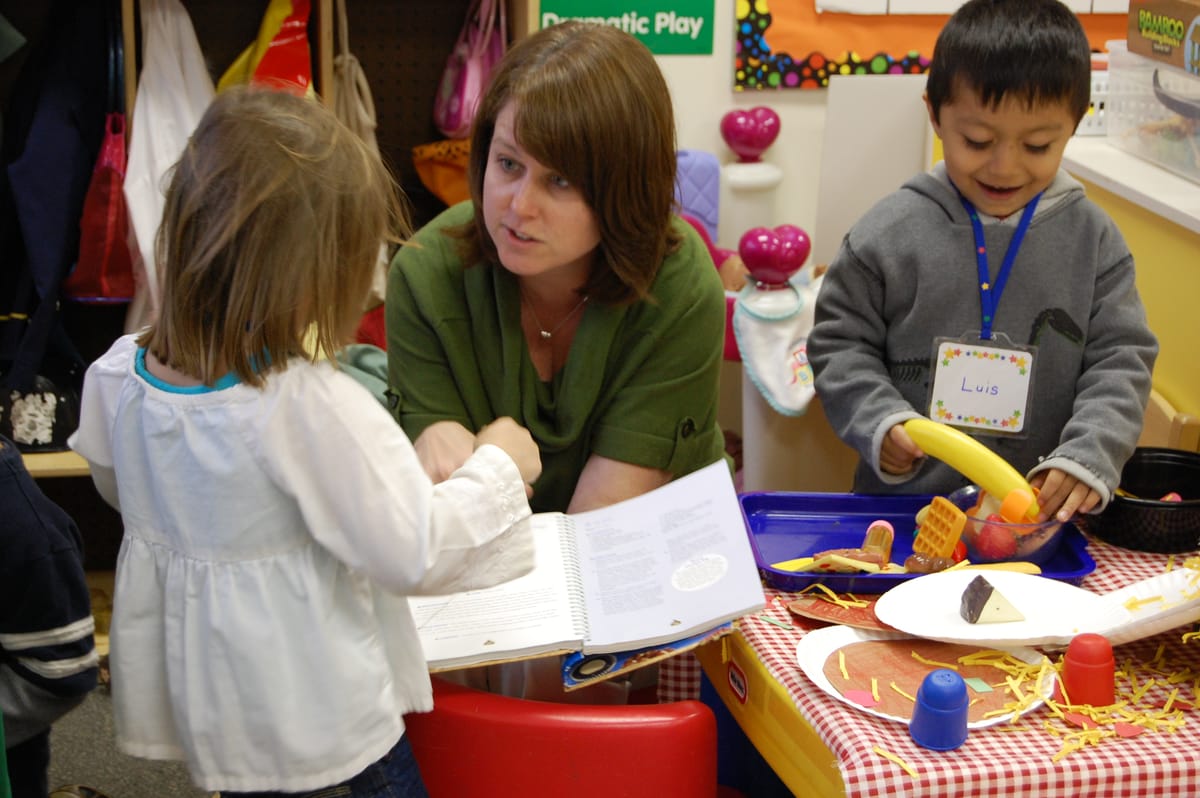
Young children develop at different paces, making it challenging for educators and parents to distinguish between typical growth patterns and areas needing additional support. Preschool assessment transforms everyday observations into valuable insights about each child's developmental progress. Rather than formal testing, effective evaluation occurs through engaging activities that naturally reveal fine motor skills, cognitive abilities, and social-emotional growth.
Coloring activities are particularly useful assessment tools because they engage multiple developmental areas while maintaining children's interest and engagement. Teachers and parents can observe pencil grip, color recognition, attention span, and creative expression through these enjoyable tasks. For comprehensive evaluation resources that make assessment feel like play, explore 44,438+ Free Coloring Pages designed to support developmental observation across various skill levels.
Summary
Key Takeaways
- Preschool assessment uses observation and play-based activities rather than traditional testing, focusing on children aged 3 to 5 years old across developmental domains, including language, motor skills, and social-emotional growth. These evaluations guide instruction and identify support needs through natural interactions, not grades or rankings that follow children permanently.
- Assessment anxiety stems from format mismatches, not content difficulty. When preschoolers must sit still and demonstrate knowledge on demand rather than through movement and exploration, the testing environment runs counter to how young brains naturally learn. A child who confidently demonstrates counting while setting the table may freeze when handed a worksheet asking the same skill, revealing that delivery systems matter as much as actual knowledge.
- Over 100 Head Start educators identified naturalistic observation during regular activities as the most reliable assessment method for young children. Watching children negotiate playground conflicts, count snacks, or identify shapes while sorting blocks captures authentic capabilities without the performance pressure that distorts formal evaluation results.
- Creative activities function as informal assessment tools while reducing evaluation anxiety. Research published in Art Therapy: Journal of the American Art Therapy Association at Drexel University found that structured coloring significantly lowers cortisol levels. A child gripping a crayon reveals fine motor development, color choices demonstrate cognitive flexibility, and sustained focus shows attention regulation, all without the stress of formal testing.
- Assessment effectiveness depends more on timing and duration than on the sophistication of the content. Young children's attention spans for non-preferred tasks max out around five to seven minutes, making 15 to 30-minute evaluation sessions measures of endurance rather than knowledge. Breaking assessments into brief segments distributed across different days captures accurate skill levels without the fatigue that causes capable children to guess on later questions.
- Portfolio documentation, which tracks work samples over months, reveals developmental trajectories that single assessments miss entirely. Collections showing scribbles evolving into recognizable shapes, random letters becoming names, and simple stick figures gaining proportion create concrete evidence of growth that standardized scores flatten into numbers, helping parents understand progress in tangible rather than abstract terms.
- My Coloring Pages addresses this need by offering 44,438+ free coloring pages that allow educators and parents to observe developmental markers like fine motor control, color recognition, and sustained attention while children engage in activities they genuinely enjoy, making evaluation feel organic rather than clinical.
Table of Contents
- What is a Preschool Assessment
- Why Are Preschool Assessments Scary for Kids
- How to Make Preschool Assessment Easier for Kids
- How to Prepare Kids for Preschool Assessment
- Calm Little Minds Before Big Moments
What is a Preschool Assessment
Preschool assessment is a structured process of observing and recording how children develop across multiple areas, including language, social-emotional skills, motor abilities, and cognitive growth. These play-based, observation-driven assessments guide instruction and identify areas where children might benefit from additional support.

🎯 Key Point: Preschool assessments focus on natural observation rather than formal testing, allowing educators to see children's authentic abilities in familiar environments. "Play-based assessments provide the most accurate picture of a child's development because they capture skills in natural contexts where children feel comfortable and confident." — Early Childhood Education Research, 2023
💡 Example: A preschool teacher might observe a child during free play to assess their problem-solving skills, social interactions, and language development, all within a single 15-minute observation period.
Assessment Area | What It Measures | Observation Method |
|---|---|---|
Language Development | Vocabulary, communication skills | Story time, conversations |
Social-Emotional | Peer interactions, emotional regulation | Group activities, conflict resolution |
Motor Skills | Fine and gross motor abilities | Art projects, playground activities |
Cognitive Growth | Problem-solving, critical thinking | Puzzle time, building activities |

How do preschool assessments work in practice?
According to research on preschool assessments, these evaluations focus on children aged 3 to 5 years old and track their growth and development through observation in natural settings rather than formal testing. Teachers watch how a child holds a crayon during art time, how they share blocks with other kids, or how they follow multi-step instructions. There are no grades or pass-fail marks, only careful attention to how each child moves through their day. Teachers take notes to plan tomorrow's activities rather than keeping permanent records.
What makes observation so powerful for understanding children?
Watching children in their natural environment reveals more than any worksheet could. When a teacher observes a child during free play, they gather data about social-emotional regulation (does the child share willingly or struggle with taking turns?), language development (how many words do they use when describing their block tower?), and problem-solving abilities (do they give up when the tower falls, or try a different approach?).
How do observation patterns guide targeted support?
These observations show patterns across different situations, times of day, and types of activities. A child who consistently avoids scissors might need fine motor support. Another child who watches from the sidelines during group play might benefit from structured social interaction opportunities.
What makes portfolios effective for preschool assessment?
Collections of children's work transform abstract development into tangible evidence that parents can see and understand. A portfolio might contain finger paintings from September alongside detailed drawings from March, demonstrating how fine motor control and creative expression evolved over six months. Early writing attempts, photographs of block constructions, and samples of emerging letter formation create a visual timeline of growth that standardised scores cannot capture.
How do portfolios benefit teachers, families, and children?
Portfolios help teachers identify which children have made expected progress and which might need support, provide families with clear evidence of their child's learning journey, and enable children to reflect on their growth by observing their improved abilities.
How do checklists help track developmental milestones?
Structured checklists systematically monitor age-appropriate developmental markers: Can the child hop on one foot? Recognize basic shapes and colours? Follow the two-step directions? These research-backed milestones signal healthy development across physical, cognitive, and social domains.
What can work samples reveal about learning progress?
Work samples show what children can do at specific points in time. A completed worksheet demonstrating number recognition, a dictated story showing narrative skills, or a self-portrait demonstrating body awareness provide snapshots that, when collected over time, reveal learning paths. Teachers use these to adjust instruction: providing more phonemic awareness activities if language skills lag or additional group play if social skills need strengthening.
How can creative activities serve as assessment tools?
When assessment becomes part of creative play rather than a separate evaluative process, children demonstrate their abilities without feeling pressure. A child picking colours shows colour recognition. Crayon grip indicates fine motor development. Sustained focus reveals attention span and self-regulation. My Coloring Pages offers 44,438+ free coloring pages that serve as informal assessment tools, allowing educators and parents to observe developmental markers while children engage in enjoyable activities, making evaluation feel organic rather than clinical.
Why do standardized assessments provide crucial objective data?
While observation and portfolios capture the richness of daily learning, standardized assessments offer measurable data that identify children who might benefit from early intervention services. These tools compare a child's performance against established developmental norms, helping educators distinguish between typical variation and delays requiring additional support.
How does early identification impact intervention effectiveness?
Early identification matters because the effectiveness of interventions drops significantly after age five. A child who struggles with speech articulation at three has better outcomes with therapy than one whose challenges go unnoticed until kindergarten. Standardised measures provide the objective evidence needed to access services that can change developmental paths.
What creates pressure during preschool assessments?
But here's what most parents don't realize: the assessment itself doesn't create pressure or anxiety for young children.
Why Are Preschool Assessments Scary for Kids
The environment creates fear, not the content. When you ask a three-year-old to sit still at a table, answer questions from a stranger, and show what they know when asked instead of through play, you've built a situation that contradicts how young brains naturally work. This format—separated from movement, exploration, and familiar routines—triggers stress responses unrelated to whether the child knows their colours or can count to ten.
🎯 Key Point: The assessment format itself, not the child's knowledge, is what creates anxiety and fear during preschool evaluations. "When young children are removed from their natural learning environment of play and movement, their stress responses can mask their true abilities and knowledge." — Child Development Research, 2023
⚠️ Warning: Traditional sit-down assessment methods can give false negative results because they don't align with how preschoolers naturally demonstrate their actual learning and development.
How do preschoolers naturally acquire knowledge?
Preschoolers learn through their bodies. They understand space by climbing over, under, and through playground equipment; maths thinking by pouring water between containers of different sizes; and language skills through pretend play where they discuss roles and stories with peers. A child who can happily show one-to-one matching while setting the table for snack time may freeze when given a worksheet asking them to match numbers to amounts. The knowledge is there, but the format feels strange and limiting.
Why do physical constraints create testing anxiety?
Being stuck in one place can make children feel anxious. Young children regulate their emotions and focus through movement. When you require them to sit still, you remove their primary coping mechanism for stress at the moment you're asking them to perform their best. This format prevents them from succeeding because it removes the conditions where they naturally demonstrate their abilities.
Why do children behave differently during one-on-one evaluations?
Most preschool learning happens in group activities where individual performance blends into the group experience. Assessment flips this dynamic entirely: an adult's full attention focuses on one child, often in an unfamiliar setting, with clear expectations for specific responses. Children who thrive when learning feels like play shut down when it feels like interrogation, even with a warm, encouraging assessor.
How does adult anxiety affect assessment outcomes?
The pressure intensifies when children notice that adults are worried. Parents stressed about their child's kindergarten readiness communicate anxiety through body language and tone, even when they believe they're concealing it. Teachers concerned about meeting test benchmarks unconsciously signal urgency, and young children interpret this as danger. The child may not understand why it matters, but they notice that something important is happening and that the adults around them are tense about the outcome.
Why do abstract methods disconnect children from their actual abilities?
Many assessment protocols ask children to identify objects in photographs or to answer hypothetical questions that require abstract thinking beyond their developmental capacity. A four-year-old who confidently sorts actual blocks by colour and size may struggle to point to "the biggest circle" on a printed page. The shift from concrete manipulation to symbolic representation adds complexity that obscures what the child understands about size relationships.
How does this confusion impact children's assessment experience?
This creates confusion that feels like failure. Children remember successfully demonstrating the skill in hands-on activities, but cannot access that knowledge through this unfamiliar pathway. The resulting frustration worsens assessment anxiety, so what should demonstrate competence instead highlights the gap between how children learn and how we measure that learning.
How do attention span limits affect assessment accuracy?
A typical preschool assessment requires sustained focus for fifteen to thirty minutes, far exceeding a child's natural attention span for non-preferred activities (five to seven minutes). As fatigue sets in, responses become less accurate, not because knowledge is absent but because cognitive resources are depleted. The child who answered the first 10 questions correctly then guessed on the final 5, yielding results that suggest inconsistent skill development when the real issue is endurance. This timing problem particularly disadvantages children who need movement breaks to maintain regulation. A child with sensory processing differences or emerging ADHD characteristics may know every answer but lose access to that knowledge as their nervous system becomes dysregulated by prolonged sitting. The assessment captures their deteriorating capacity to manage discomfort, not their actual academic readiness.
What happens when assessments feel like tests instead of play?
When evaluation tools feel like tests rather than natural extensions of play, they measure stress tolerance as much as skill development. Platforms offering customizable creative activities, like My Coloring Pages with our library of 44,438+ free coloring pages, allow adults to observe fine motor control, colour recognition, sustained attention, and creative problem-solving while children engage in enjoyable rather than evaluative activities. A child gripping a crayon to complete a dinosaur coloring page reveals the same developmental information as formal assessments, but without the anxiety that distorts performance. The question is whether we can gather assessment data without triggering the stressful responses that make it unreliable.
Related Reading
- Preschool Worksheets
- What Age Is Preschool
- Preschool Curriculum
- Preschool Age Range
- Preschool Vibes
- Preschool Homeschool Curriculum
- Preschool Games
- Worksheets For Preschool
- Preschool Education
- Free Preschool Worksheets Age 3–4
- Preschool Books
- What Age Do Kids Start Preschool
- Preschool Graduation
- Free Name Tracing Worksheets for Preschool
- Preschool Backpack
- All About Me Preschool
- Free Preschool Worksheets
- What Should a Child Learn in Preschool
- Preschool vs Pre K
- Sight Words for Preschool
- Preschool Self Defense
- Free Printable Preschool Worksheets Tracing Letters
- Preschool Math Worksheets
- Preschool Valentine Crafts for Parents
- Preschool Graduation Gifts
- Preschool Toys
- What Age Is Preschool and Kindergarten
- Preschool Quotes About Play
How to Make Preschool Assessment Easier for Kids
Add skill tracking into activities kids already enjoy: counting crackers during snack time, identifying shapes while sorting blocks, or watching turn-taking during playground games. This reveals what kids can do rather than how they perform under pressure, showing what they actually know instead of what nervousness allows them to demonstrate.
💡 Tip: Use natural play moments as assessment opportunities—kids perform 30% better when they don't realize they're being evaluated.
⚠️ Warning: Avoid turning every play activity into an assessment. Maintain the balance between natural observation and formal evaluation. "Children demonstrate their true capabilities when assessed through familiar activities rather than formal testing situations." — Early Childhood Education Research, 2023
How does observation during natural play reveal children's true abilities?
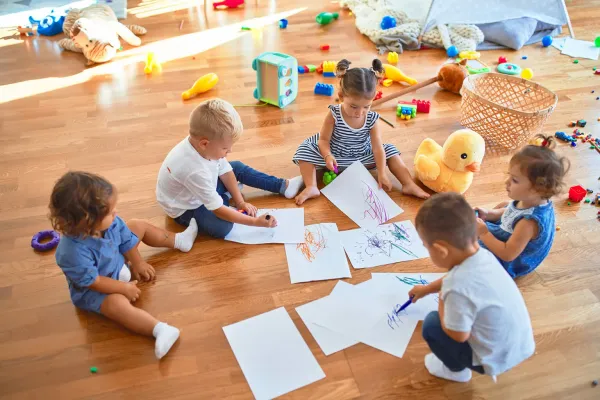
Watch children at play, and you'll see skills emerge naturally. A child negotiating who gets the red truck demonstrates conflict resolution, verbal reasoning, and emotional regulation simultaneously. The teacher documenting this interaction gathers information about social-emotional development, expressive language, and problem-solving without formal testing. Over 100 Head Start educators identified observing children in real situations as the most reliable way to understand their capabilities. The playground reveals gross motor coordination, the art table shows fine motor control and creative thinking, and circle time demonstrates attention span and group participation skills.
What makes checklist-based observation effective for tracking development?
Teachers can use simple checklists during regular activities to track whether children show age-appropriate skills in different situations. Did Maya count objects accurately during cleanup? Can Jordan follow three-step directions when getting ready for outdoor time? Does Alex recognise letters when reading the daily schedule? Observations collected consistently over weeks create a complete picture of development that no single test session could capture.
Why should assessment sessions be kept short?
Long evaluation sessions guarantee poor results. A child's attention span at age four peaks at around 7 minutes for non-preferred tasks. Split assessment into five-minute segments distributed across different days and times: one focusing on counting skills, another on letter recognition, and a third on observing social interaction during cooperative play.
How does breaking up an assessment reduce anxiety?
This fragmented approach reduces the spotlight effect that creates anxiety. When assessment feels like a high-stakes event, children sense adult expectations. When woven into daily routines as brief check-ins, pressure diminishes. The child who freezes during formal evaluation might confidently demonstrate the same skills when asked to help count napkins for snack time.
How does coloring reveal developmental markers?
Coloring reveals children's development: how a child holds a crayon indicates fine motor skills, staying within lines demonstrates hand-eye coordination and impulse control, using different colours suggests cognitive flexibility, and sustained focus shows attention regulation. Teachers and parents using My Coloring Pages can access 40,000+ free coloring pages with engaging themes, turning assessment into play rather than evaluation. A child focused on colouring their favourite animal displays the same developmental markers that a formal assessment would measure, without the stress that can alter their performance.
How does creative activity reduce assessment anxiety?
Research from Art Therapy: Journal of the American Art Therapy Association shows that structured colouring reduces anxiety. Drexel University researchers found that creative art activities lower cortisol, the stress hormone. A ten-minute coloring session before a formal assessment helps children enter the evaluation in a regulated state, allowing performance to reflect their actual abilities.
How do digital tools make assessment feel like play?
Tablet-based activities that resemble games children play at home feel familiar rather than intimidating. A child tapping shapes on a screen to match patterns doesn't feel tested, even though the program tracks accuracy, response time, and problem-solving strategies. Bright colours, immediate feedback, and playful sounds transform evaluation into entertainment.
Why do game-based tools produce more accurate results?
Over 80 participants in surveys about pre-K assessment practices reported that game-based digital tools yielded more accurate results than traditional methods, particularly for children who struggle with verbal responses or feel intimidated by adult questioning. The screen creates a buffer that reduces social pressure, allowing children to focus on the activity rather than reading the assessor's reactions. How well these tools work depends on limiting session length and maintaining playfulness. A five-minute tablet activity works well; fifteen minutes creates the same fatigue and frustration as traditional testing.
Why does visiting the assessment space beforehand reduce anxiety?
Anxiety spikes when environments feel strange or new. A child who visits the assessment space beforehand avoids the shock of novelty, which can intensify stress. Exploring the room, sitting in the chair, and seeing the materials transforms the assessor from a stranger into a familiar face.
How should familiarization visits be framed to achieve the best results?
This preparation works best when you think of it as exploration rather than practice. "Let's go see where we'll do some fun activities next week" feels different than "We're going to practice for your test." The first approach builds comfort; the second increases pressure. Even ten minutes of familiarising yourself with the place can shift a child's emotional state from guarded to curious.
Portfolio Documentation That Captures Growth
Collecting work samples over time reveals developmental trajectories that single assessments miss. A folder containing drawings from September through May documents fine motor progress, creative development, and emerging writing skills. Photographs of block constructions show spatial reasoning. Voice recordings capture language complexity. These artifacts create a rich developmental narrative that standardized scores reduce to numbers.
How do portfolios help parents understand their child's development?
Parents who review their child's portfolio can see growth in tangible ways: scribbles becoming recognisable shapes, random letters forming their child's name, and simple stick figures gaining detail and proportion. This record-keeping supports assessment while celebrating progress, making evaluation feel positive rather than judgmental.
What do most preparation strategies miss?
But here's what most preparation strategies miss: the real barrier isn't the assessment itself.
Related Reading
- Preschool Tracing Worksheets
- How To Become A Preschool Teacher
- Preschool Learning Games
- Preschool Sight Words
- Daycare Vs Preschool
- Turkey Craft Preschool
- Preschool Assessment
- Preschool Craft Ideas
- Preschool Classroom Layout
- Christmas Crafts Preschool
- Preschool Crafts
- Preschool Learning Activities
- Preschool Art Activities
- Preschool Playground Equipment
- Preschool Bulletin Board Ideas
- Playing Preschool Curriculum
- Preschool Lesson Plan Template
- Creative Curriculum For Preschool
- Noah's Ark Preschool
- Free Preschool Games
- Preschool Prep
- Preschool Science Experiments
- Spring Bulletin Board Ideas For Preschool
- Preschool Math Activities
How to Prepare Kids for Preschool Assessment
Talk to your child about the upcoming experience using language that removes mystery without dramatising it. Explain that someone will spend time with them doing activities like drawing, answering questions, and playing with toys to understand how they think and learn. Frame it as a conversation, not a test: there are no wrong answers because the goal is to learn about them, not judge them.

Most parents either over-prepare their kids or avoid talking about it entirely. Not discussing it creates worry because children fill in the blanks with their imagination, usually conjuring something worse than reality. Yet practicing questions repeatedly signals that performance matters, transforming a developmental checkpoint into a high-stakes audition. The solution is honest preparation that acknowledges the experience without inflating its importance.
1. Explain the Process Without Creating Performance Pressure
Your child needs to know what will happen, but not in ways that suggest they must prove something. "You'll meet someone who wants to learn about what you like and what you're good at" works better than "They're going to see if you're ready for kindergarten." The first invites curiosity; the second demands results.
What details about the setting should you share?
Describe the physical setting if you know it: "We'll go to a room with a table and some toys. Someone nice will ask you questions and do activities with you." Concrete details help reduce fear of the unknown.
How can you frame the purpose in a positive light?
According to Brightwheel's research on preschool assessments, these evaluations help teachers understand how each child learns best and what they need to grow, rather than comparing children to each other. Share this idea with your child: "They want to find the best ways to help you learn" removes any sense of competition.
2. Build a Positive Mindset Through Reframing
Children copy the emotional tone that adults show. If you treat assessment as a chance to show strengths rather than find weaknesses, they will too. "You get to show someone all the cool things you know" feels different from "Let's see if you can pass this evaluation."
What language should you use during assessment preparation?
Focus language on discovery rather than judgment. "They'll ask about colors and shapes and numbers, things you already know about," normalizes the content. Avoid phrases like "Do your best" or "Make me proud," which suggest their worth depends on performance. Your child's value doesn't change based on test results.
How does framing assessment as curiosity reduce pressure?
Think of assessment as adults being curious about how their brain works, not as children needing to impress adults. When children understand this difference, the pressure disappears.
3. Skip Test Practice Entirely
Practising specific questions or drilling academic content before an assessment defeats the purpose. Evaluators need to see what your child naturally knows, not what they memorised yesterday.
Why does test practice create unreliable results?
When children practise answers ahead of time, the information becomes useless for identifying what they need help with or how they are developing. Practice creates stress and teaches children that their natural abilities aren't sufficient. A child who struggles to remember practised answers experiences failure before the assessment begins.
How does authentic performance benefit your child?
Real performance shows the truth. A child who doesn't yet recognize letters needs help with phonemic awareness. Coaching them to memorise letter names masks that need, delaying intervention that could make a difference. The assessment works when it captures what is happening, not surface performance.
4. Allow Comfort Items to Bridge Familiarity
A favourite stuffed animal, blanket, or toy can transform an unfamiliar place into something manageable. These objects serve as emotional anchors, reducing cortisol and activating the parasympathetic nervous system, helping children shift from fight-or-flight to a state of calm alertness.
What should you check with assessors beforehand?
Check with the assessor beforehand about what's allowed. Most assessors welcome comfort items as long as they don't interfere with activities. A stuffed bear on the table during evaluation helps children demonstrate their abilities rather than their stress responses.
How does offering choices reduce anxiety?
Giving children choices helps them feel in control when adults typically make decisions. "Would you like to bring your dinosaur with you?" reduces anxiety by giving them a choice.
5. Prioritize Routine and Physical Readiness
Schedule assessment for times when your child feels alert and regulated. A child evaluated at 8 a.m. who doesn't fully wake until 10 a.m. will underperform due to circadian rhythm, not lack of knowledge. Avoid times right before naps when fatigue clouds thinking.
How do sleep and nutrition affect assessment performance?
Sleep and nutrition directly impact how your brain works. A child who gets enough sleep and has stable blood sugar can do things that a tired, hungry child cannot do, even if they know the same information. Ensure your child gets a full night's sleep and eats a protein-rich breakfast that maintains steady energy without sugar crashes.
Should you change routines before an assessment?
Keep your child's normal routines the same before the assessment. Changing schedules to "prepare" can disrupt the balance your child needs to perform well. The morning of the evaluation should feel like any other morning, not something special.
6. Encourage Open Communication About Feelings
Ask what your child thinks will happen during the assessment. Their answers reveal misconceptions you can address before worry sets in. A child who fears punishment for wrong answers needs to know that no answers are wrong. One who believes the assessment determines school placement needs to understand that's not how it works.
How can you effectively validate your child's concerns?
Validate concerns without dismissing them. "It makes sense that meeting someone new feels a little nervous," acknowledges their experience. "But lots of kids do this, and they usually think it's fun once it starts" provides perspective without minimizing emotion.
What if your child doesn't want to discuss the assessment?
Create space for questions without forcing conversation. Some children process internally and don't want to discuss upcoming events. Respect that while remaining available. "If you want to talk about it or have questions, I'm here," opens the door without pushing them through it.
Creative activities naturally reduce pre-assessment anxiety while revealing developmental markers that formal evaluation measures miss. When children engage with materials from My Coloring Pages, selecting from 40,000+ free coloring pages featuring themes they love, they demonstrate fine motor control, colour recognition, sustained attention, and creative problem-solving without stress distorting the picture.
Calm Little Minds Before Big Moments
Getting ready matters less than being there. The morning of the assessment, your child needs to feel calm more than they need to practice. A simple ten-minute coloring session lowers cortisol and activates the parasympathetic nervous system that controls rest and focus. This nervous system regulation ensures the assessment captures real abilities rather than stress responses.
🎯 Key Point: Pre-assessment calm is more valuable than last-minute cramming for accurate ability measurement. "A simple ten-minute coloring session lowers cortisol and activates the parasympathetic nervous system that controls rest and focus." — Nervous System Research
When children arrive feeling grounded, they can access knowledge that anxiety would otherwise block. Platforms like My Coloring Pages offer 44,438+ free coloring pages featuring characters children love, transforming pre-assessment minutes into calming rituals. A child absorbed in coloring enters the room regulated, curious, and ready to demonstrate what they know.
💡 Tip: Choose coloring pages featuring your child's favorite characters to maximize engagement and calming effects during those crucial pre-assessment minutes.