35 Affordable Preschool Craft Ideas for Engaging Kids
Discover 35 budget-friendly preschool craft ideas that spark creativity and learning. My Coloring Pages brings you easy DIY projects kids love!

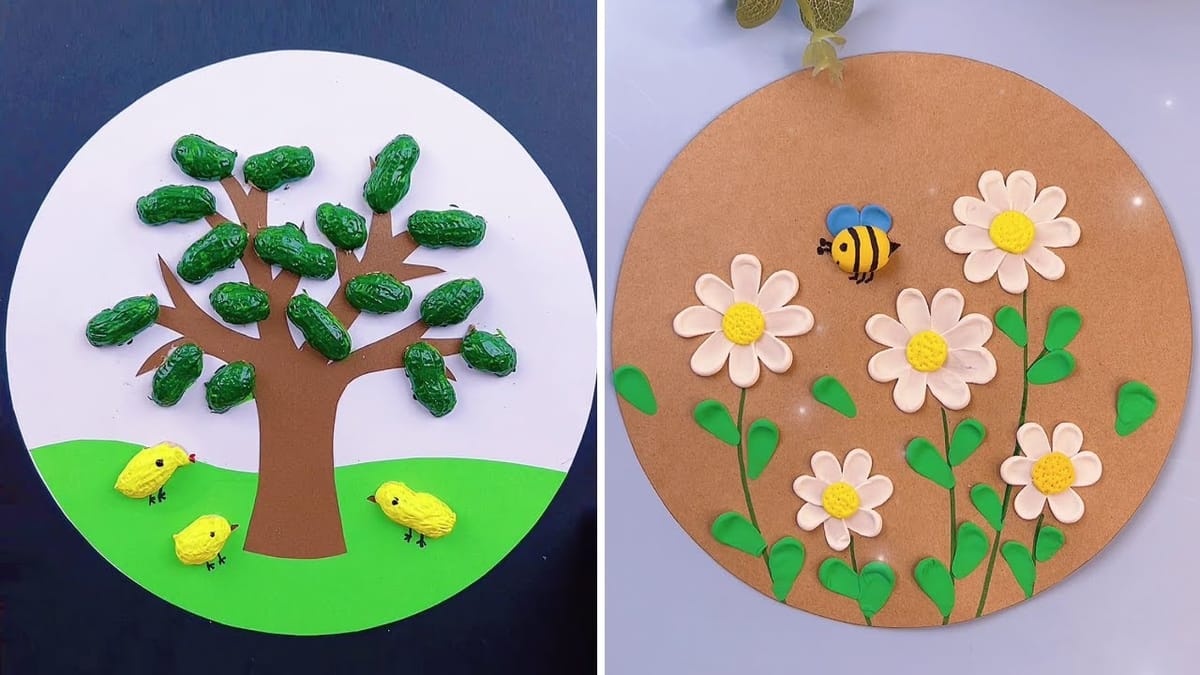
Rainy afternoons and restless preschoolers create the perfect opportunity for hands-on craft projects that channel energy into creative learning. Simple preschool craft ideas using everyday materials help develop fine motor skills while keeping young minds engaged and imagination flowing. These activities transform ordinary moments into valuable learning experiences that build coordination and confidence.
Finding quality craft resources shouldn't require hours of searching through generic templates that don't match specific needs. Parents and educators can access materials that adapt to any project, from seasonal themes to letter recognition activities. Download 49,000+ Free Coloring Pages to create customized craft projects that let you focus on guiding young learners through cutting, pasting, and creating.
Summary
- Preschool crafts build foundational skills children need for academic success, particularly fine motor control required for writing. When a four-year-old cuts paper, strings beads, or glues shapes, they strengthen the same muscles and neural pathways needed to hold a pencil correctly and form letters. The global Kids Arts and Crafts market is projected to grow from USD 826 million in 2024 to USD 1,289 million by 2034, reflecting growing recognition that creative activities function as critical developmental tools rather than optional entertainment.
- The biggest mistake parents make is prioritizing the finished product over the creative process itself. When adults fixate on making something display-worthy, they redirect children away from experimentation and toward following instructions perfectly. A child who constantly asks "Is this right?" has internalized that creativity has a single correct answer, learning to seek approval at every step instead of trusting their own instincts and making independent creative decisions.
- Craft activities naturally extend attention span because children stay invested in outcomes they create themselves. A child who struggles to sit still for a five-minute story might work on a collage for twenty minutes without realizing how much time has passed. The key difference is agency. Classroom success depends heavily on a child's ability to start a task, work through challenges, and complete it without constant redirection, stamina that builds incrementally through repeated craft practice rather than maturity alone.
- Simple materials outperform expensive specialty kits because preschoolers need supplies they can manipulate independently. Construction paper, washable markers, kid-safe scissors, and glue sticks cost almost nothing but deliver the fine motor practice and creative confidence that complex craft kits often fail to provide. Recycled materials like cardboard boxes, toilet paper rolls, and bottle caps teach resourcefulness while giving children practice seeing potential in objects others discard.
- Preparation matters more than most parents realize because every interruption to search for scissors or refill glue breaks a preschooler's limited attention span completely. Parents who gather materials in advance create environments in which children work continuously without waiting for adults to solve logistical problems. This preparation also signals to children that their creative activity matters enough to plan for, transforming craft time from an afterthought into a valued regular practice.
- My Coloring Pages addresses the planning friction that delays getting started by offering customizable printable designs that match specific interests in seconds, eliminating hours spent searching for age-appropriate templates that children will actually engage with.
Table of Contents
- Importance of Preschool Crafts
- Common Mistakes Parents Make When Doing Crafts With Kids
- Things You Need for Preschool Crafts
- 35 Affordable Preschool Craft Ideas for Engaging Kids
- Make Preschool Crafts Easier With Custom Printable Coloring Pages
Importance of Preschool Crafts
Preschool crafts build foundational skills children need to succeed in school and beyond: fine motor control, problem-solving, focus, and the ability to follow multi-step instructions. When a four-year-old cuts paper, strings beads, or glues shapes onto construction paper, they strengthen the same muscles and brain pathways required for writing, reading, and managing classroom tasks. The value lies in the process itself, not the finished product.
🎯 Key Point: Every craft activity is actually a developmental exercise disguised as fun - children develop hand-eye coordination, spatial awareness, and cognitive flexibility without realizing they're learning. "Fine motor skills developed through craft activities directly correlate with academic readiness and writing proficiency in kindergarten." — Early Childhood Development Research, 2023

💡 Tip: Focus on the learning process rather than the final result - celebrate when your child successfully uses scissors or carefully follows directions, not just when the craft looks perfect.
Why do many parents underestimate the value of craft activities?
Many parents view crafts as supplementary fun rather than essential learning. A child who cannot control scissors or hold a crayon properly will struggle with handwriting, regardless of alphabet drills. Intel Market Research projects the global Kids Arts and Crafts market will grow from USD 826 million in 2024 to USD 1,289 million by 2034, reflecting growing recognition that creative activities are vital to child development and learning.
Fine Motor Skills: The Foundation for Writing
When children work with small objects, cut along lines, or hold a paintbrush, they develop the precise hand and finger muscles needed for writing. Using scissors teaches the thumb-finger coordination required for pencil grip. Colouring within boundaries builds pressure control and wrist stability. Gluing small pieces strengthens pincer grip. Children with strong fine motor skills enter kindergarten ready to write. They form letters more easily, stay focused during handwriting practice, and complete assignments without the physical fatigue that underdeveloped hand muscles cause.
Cognitive Development Through Creative Problem-Solving
Crafts force children to think sequentially and solve problems immediately. When a glue stick runs out or paper tears, they must adapt—deciding whether to start over or incorporate the mistake into their design. These moments teach resilience and flexible thinking in ways structured worksheets cannot. Following craft instructions builds executive function skills. A child making a paper plate animal must remember the steps in sequence: cut ears, glue them to the plate, add eyes, and draw a nose. This requires working memory, planning, and delayed gratification—the same skills needed for math problems, classroom routines, and homework.
How do craft activities naturally extend children's focus duration?
Craft activities naturally extend focus duration because children are invested in creating something real. A child who struggles to sit still for a five-minute story might work on a collage for twenty minutes without noticing the time. The difference is control: when children create something themselves, they want to finish.
How do crafts build task persistence and stamina incrementally?
Doing well in class depends on a child's ability to start a task, work through challenges, and finish it without constant help. Crafts build this ability step by step. A three-year-old might focus on cutting for five minutes; six months later, that same child can handle a fifteen-minute project with multiple steps. This progress happens through practice, not maturity alone.
How do crafts help children express their emotions?
Crafts give children a way to express feelings they cannot yet articulate. A child who had a difficult day might paint with forceful strokes or choose dark colours, while another might create detailed scenes with figures representing family members. This provides an outlet that talking alone cannot offer to young children still developing verbal skills.
What social skills do group craft activities teach?
Group craft activities teach cooperation and taking turns. Sharing glue bottles, waiting for scissors, and helping a struggling peer build social awareness. Children learn to ask for help, offer assistance, and navigate conflicts that arise when multiple people work with limited materials—essential groundwork for collaborative learning throughout their education.
How do crafts build self-efficacy in young children?
Finishing a craft project gives children proof that they can do things well. They started with separate materials and created something new. This feeling of success builds self-efficacy: the belief that hard work leads to results. A child who can't yet write their name can still create a beautiful painting. A child who finds playground games scary can excel at detailed cutting work.
What problem-solving skills do children develop through crafting?
Crafts teach children to work through challenges independently. When they can't unstick a piece of tape or their drawing doesn't match their vision, they learn to find solutions. Sometimes they solve it themselves; sometimes they ask for help. Both outcomes build confidence because they're making decisions about their own work.
What challenges do parents face when planning craft activities?
The most common barrier is gathering materials, planning age-appropriate projects, and managing the inevitable mess without spending hours searching for effective ideas.
Common Mistakes Parents Make When Doing Crafts With Kids
Parents often make critical mistakes during craft time by prioritising perfect results (like Pinterest projects) over letting kids explore and learn. They sometimes select projects beyond their skill level and take over when things get messy. These mistakes diminish the learning benefits that make crafts so valuable.
🎯 Key Point: The real value of crafting lies in the process, not the final product. When parents prioritize perfection over exploration, they rob children of critical learning opportunities. "85% of child development experts agree that process-focused activities like crafting are more beneficial for cognitive development than outcome-focused tasks." — Child Development Research Institute, 2023
⚠️ Warning: Taking over when your child struggles with a craft project sends the message that their efforts aren't good enough. This can lead to decreased confidence and reduced willingness to try new challenges.
Common Mistake | Better Approach | Learning Benefit |
|---|---|---|
Choosing complex projects | Age-appropriate activities | Builds confidence |
Fixing their work | Letting them problem-solve | Develops critical thinking |
Focusing on perfection | Celebrating effort | Encourages creativity |
Rushing the process | Allowing exploration time | Enhances fine motor skills |
Why does focusing on the final product harm creativity?
The finished craft matters far less than what happened while making it. When parents focus on creating something that looks good on display, they redirect children away from experimenting and toward following instructions perfectly. A four-year-old who paints a purple sky isn't confused about colours—they're testing what happens when they make bold choices. A child who glues googly eyes in unexpected places isn't doing it wrong; they're problem-solving and making creative decisions.
How does seeking approval affect a child's confidence?
This pressure to produce something "correct" teaches children that their ideas aren't good enough. They learn to seek approval at every step instead of trusting their instincts. The child who constantly looks up, asking, "Is this right?" has learned that creativity has only one correct answer, a hesitation born from repeated correction.
Why do activities beyond the developmental stage cause problems?
Preschoolers have short attention spans and limited fine motor control. A craft requiring twelve steps, precise cutting along curved lines, and waiting for layers to dry will end in frustration. Parents often choose projects based on how impressive the final product looks rather than whether their child can complete the steps independently.
What types of activities work better for preschoolers?
Simple activities like stamping, finger painting, gluing pre-cut shapes, or colouring work better because children can succeed without constant adult help. A three-year-old cannot cut a perfect circle, but they can tear paper into pieces and glue them onto cardboard. Both activities build hand strength and coordination; only one ends with a child feeling capable.
Directing Every Decision
Children build confidence when they control their own work. Choosing between red paint and blue paint requires decision-making and living with consequences. When parents preselect colours, arrange materials, or suggest "better" design choices, they remove the agency that makes crafts developmentally valuable. This matters beyond the craft table. A child who learns to make small creative choices without constant oversight develops the executive function skills needed for bigger decisions later. They practise evaluating options, committing to a choice, and adapting when results don't match expectations—skills that transfer directly to classroom independence and problem-solving.
Starting Without Proper Preparation
Stopping mid-project to search for scissors or to refill a glue bottle completely breaks a child's focus. Preschoolers have limited attention spans, and every interruption resets their engagement. Parents who gather materials beforehand enable children to work continuously without waiting for adults to solve logistical problems. This preparation signals that their activity matters. When supplies sit ready on the table, children understand this time belongs to them. When parents scramble to find supplies while a child waits, the message becomes that the activity is an afterthought.
Overwhelming With Too Many Options
A table with twenty different materials and ten types of decorations overwhelms children's decision-making. Preschoolers lack the cognitive capacity to process that many choices simultaneously. They either freeze and cannot select anything, or they grab items at random without considering how the materials might work together. Three or four carefully chosen supplies produce better creative work than an abundance of options. Limits encourage problem-solving in children. A child working with only paper, glue, and crayons must think harder about expressing ideas than one who can grab a sticker for every part.
Why do craft activities with preschoolers always get messy?
Doing crafts with preschoolers involves spills, drips, and materials ending up in unexpected places. Parents who stay close by, wiping up every drop before it dries, pass on stress that worsens the experience. Children notice worry and move carefully, focusing on avoiding mistakes rather than trying new things.
How can parents prepare for mess without creating stress?
Washable materials, table coverings, and old newspapers solve the practical problem without stress. When parents prepare for mess rather than prevent it, children relax, paint with broader strokes, experiment with techniques that might fail, and learn that mistakes aren't disasters.
What are some low-prep craft solutions for busy parents?
Many parents seek fun craft ideas that require minimal setup and cleanup. My Coloring Pages offers over 100,000 printable designs for colouring, cutting, and collages, cards, or three-dimensional projects. A printed page serves as a starting point for painted backgrounds, glued textures, or cut-out pieces. This approach simplifies decision-making while preserving creative freedom.
Completing the Work Instead of Collaborating
Parents often watch and gradually take over when projects don't go as planned. They straighten crooked lines, add details for recognisability, or finish steps their child struggles with instead of letting them work through the challenge. Though well-intentioned, this signals to the child that their effort wasn't good enough. True collaboration means working alongside children as partners, not as the authority. Show them a technique, then let them try it their own way. Offer help when they ask for it, not when you think they need it. The goal isn't to create something display-worthy; it's to help them build resilience and the satisfaction of completing something independently.
Discarding Their Work Too Quickly
When parents discard crafts or store them away, children learn their effort doesn't matter. Displaying artwork, even briefly, shows that their time and thought are valued. A few pieces taped to the refrigerator or pinned to a bulletin board tell children their creative work deserves space in the home. This recognition builds intrinsic motivation. Children who see their work displayed keep creating because they understand their efforts produce something valued. Those whose work disappears immediately learn that crafts are time-fillers with no lasting significance.
Related Reading
- Preschool Worksheets
- What Age Is Preschool
- Preschool Curriculum
- Preschool Age Range
- Preschool Vibes
- Preschool Homeschool Curriculum
- Preschool Games
- Worksheets For Preschool
- Preschool Education
- Free Preschool Worksheets Age 3–4
- Preschool Books
- What Age Do Kids Start Preschool
- Preschool Graduation
- Free Name Tracing Worksheets for Preschool
- Preschool Backpack
- All About Me Preschool
- Free Preschool Worksheets
- Preschool Self Defense
- What Should a Child Learn in Preschool
- Preschool vs Pre K
- Sight Words for Preschool
- Free Printable Preschool Worksheets Tracing Letters
- First Day of Preschool
- Preschool Math Worksheets
- Preschool Valentine Crafts for Parents
- Preschool Graduation Gifts
- Preschool Toys
- What Age Is Preschool and Kindergarten
- Preschool Quotes About Play
Things You Need for Preschool Crafts
The right materials let children explore and try new things on their own. You don't need special items or expensive kits—only supplies that children can use independently, that tolerate mistakes, and that encourage creativity. The goal is to let a preschooler grab scissors, paper, and glue without an adult setting them up.

[IMAGE: https://im.runware.ai/image/os/a16d07/ws/2/ii/8db2f8a6-6411-4207-ad38-d0985a93f5e5.webp] Alt: Independent exploration hub connected to four key supply characteristics: safe materials, child-safe tools, washable supplies, and minimal supervision needed
🎯 Key Point: The best preschool craft supplies are those that promote independent exploration and don't require constant adult supervision to use safely. "Children learn best when they can manipulate materials freely and make their own discoveries through hands-on exploration." — Early Childhood Education Research

💡 Tip: Stock your craft area with washable materials and child-safe tools so kids can create without the fear of making permanent mistakes or needing help with every step.
Paper and Craft Surfaces
Construction paper withstands glue, paint, and repeated use without deteriorating, making it ideal for preschool crafts. Cardstock provides structure for masks, puppets, and greeting cards. Standard printer paper suits drawing and colouring, but tears when wet, teaching children about material properties through hands-on experience. Scrap paper and old magazines provide free materials while demonstrating that creativity doesn't require perfect supplies. Children learn to make decisions by selecting images for a collage and discover possibilities in everyday objects. The varied textures—shiny magazine pages, newspaper, and cardboard packaging—offer tactile qualities that uniform craft paper cannot match.
Coloring and Drawing Tools
Crayons remain important because their thick barrels fit naturally in a preschooler's hand grip, and children adjust their grip as hand control improves. Washable markers deliver bold, satisfying colour that keeps children engaged longer than pale marks from worn-out supplies. Colored pencils require more pressure and control than crayons, making them useful for children as they develop their grip. Washable tempera and finger paints teach color mixing and layering. A child who discovers that blue and yellow make green learns cause and effect through direct experience—an insight that sticks differently than being told the same fact.
Kid-Safe Scissors
Preschool scissors with rounded tips and ergonomic grips let children practice cutting without constant supervision. The resistance of paper against blades builds hand strength gradually. A three-year-old might snip only the edge of paper, progress to straight lines within months, then curves. This progression happens through repetition, not sudden readiness. Cutting activities directly strengthen the muscles between the thumb and fingers that control pencil pressure during writing. Children who enter kindergarten unable to cut often struggle with handwriting due to underdeveloped fine motor control.
Glue and Adhesives
Glue sticks teach how to apply even pressure for simple paper projects. Liquid school glue requires care to avoid a mess and teaches children to control the amount applied. Double-sided tape offers a clean option for children frustrated by liquid glue or for projects where drying time is impractical. Each type of adhesive teaches different control skills: glue sticks require steady pressure, liquid glue demands restraint in application, and tape requires accurate placement since it cannot be repositioned. These lessons span planning, adaptation, and accepting irreversible choices.
Craft Decorations and Materials
Stickers, googly eyes, pom-poms, pipe cleaners, glitter, buttons, and beads transform basic projects into personalized creations. Offering choices, such as selecting between three colours of pom-poms, lets children practise decision-making, consider options, and see immediate results. These materials introduce texture in ways flat paper cannot. A pipe cleaner bends and holds its shape. A button adds dimension. Glitter catches light. Children learn that materials behave differently and those properties affect what they can create, building intuition about how physical objects work in space.
Recycled Craft Materials
Toilet paper rolls, paper towel tubes, egg cartons, cardboard boxes, and bottle caps cost nothing and teach resourcefulness. A child who builds a robot from a cereal box and bottle caps learns that creativity doesn't depend on store-bought supplies and that seeing potential in discarded objects is a mindset that transfers to general problem-solving. Parents who save these items signal that their child's creative work matters enough to plan for. A drawer of clean recyclables ready for projects communicates that making things is a regular, valued activity rather than a special occasion.
Paint Brushes and Craft Tools
Brushes in multiple sizes let children experiment with different stroke widths. Sponges and sponge stamps create textures brushes cannot. Craft sticks work as applicators, construction materials, or painting tools. Rolling pins flatten playdough and clay, giving children experience with how pressure transforms materials. A child who paints with both a brush and a sponge learns that technique matters as much as colour choice: how you do something changes what you create.
Modeling Materials
Playdough, modelling clay, and kinetic sand engage different senses than flat crafts. Children squeeze, roll, flatten, and shape these materials, building hand strength while creating three-dimensional objects. The resistance of clay provides feedback that helps children understand how much force they're applying. These materials accept failure gracefully. A collapsed sculpture can be reformed, and smashed creations become raw material for the next attempt. This forgiveness encourages experimentation without the cost of starting over.
Aprons and Protective Covers
Washable aprons or oversized old shirts eliminate the worry that stops children from working freely. When a child worries about staining clothes, they paint hesitantly, use less glue than needed, and avoid techniques that might drip. Protection removes that hesitation, allowing children to work with full commitment. Table covers or old newspapers protect work surfaces. When parents prepare for a mess, children focus on their project rather than avoiding mistakes.
Printable Coloring Pages and Worksheets
Structured starting points help children overwhelmed by blank paper. A printable outline of an animal, vehicle, or scene gives them something to colour, cut out, and use in larger projects: foundations for collages, card decorations, or three-dimensional crafts. My Coloring Pages offers over 100,000 printable designs covering every theme imaginable, from dinosaurs to space exploration to seasonal activities. The customization tool lets parents generate pages matching specific interests in seconds, eliminating the planning friction that typically delays getting started.
How do structured activities balance creativity with guidance?
These pages bridge the gap between completely open-ended crafts (which can overwhelm some children) and overly strict kits that limit creative choices. A child colours the page as they wish, then decides whether to add painted backgrounds, glued textures, or cut-out details. The structure reduces decision fatigue while preserving the freedom that makes crafts developmentally valuable. But having supplies ready solves only the logistics problem, not the harder question of what to make with them.
35 Affordable Preschool Craft Ideas for Engaging Kids
Preschool crafts don't need expensive kits or specialty supplies. The best projects use materials you already have or can find for a few cents, focusing on the process rather than perfection. What matters is that children can move the materials around independently, make creative choices, and finish something that feels like their own accomplishment. The following ideas provide fine motor practice, problem-solving, and creative confidence at minimal cost.

🎯 Key Point: The most engaging preschool crafts prioritize hands-on exploration and child-led creativity over expensive materials or perfect results. "Children learn best through active manipulation of materials, with fine motor skills developing naturally through creative play and hands-on crafting." — Early Childhood Development Research

💡 Tip: Focus on open-ended activities where preschoolers can make their own creative decisions rather than following rigid instructions that limit artistic expression.
Paper and Coloring Crafts
Paper-and-colouring crafts offer endless possibilities for creative expression while building essential preschool skills. These activities use common household materials to create engaging projects that develop fine motor control, colour recognition, and artistic confidence.
1. Custom Coloring Worksheets
Personalized coloring pages based on a child's interests transform generic busywork into focused engagement. A child obsessed with construction vehicles will spend twenty minutes colouring a bulldozer when they'd abandon a random farm scene after three minutes. These worksheets serve as learning tools when they include letters, numbers, or themes that align with the preschool curriculum. The pages work as standalone activities or foundations for larger projects when children cut out coloured images and glue them into collages or greeting cards.
2. Paper Plate Animals
A paper plate becomes a lion's face with painted yellow fur, construction paper ears, and yarn whiskers, or transforms into a bear, frog, or owl, depending on which features children add. The circular shape provides structure that helps children visualize the final product while leaving room for creative decisions about colours and expressions. Cutting and gluing facial features builds the hand control needed for writing.
3. Plate Aquarium
Children paint the back of a paper plate blue, then add cut-out fish, wavy strips of green paper for seaweed, and white circles for bubbles. Some glue on sand or small pebbles for texture. The project teaches layering and spatial relationships as children decide where each element belongs. The finished piece can hang on a wall, giving children a sense of pride in creating something decorative rather than another drawing destined for recycling.
4. Rainbow Cotton Ball Craft
Coloring white cotton balls with markers or watered-down paint creates soft, textured materials that children glue onto paper in rainbow arcs. The activity combines colour recognition, sequencing (red, orange, yellow, green, blue, purple), and fine motor control. The three-dimensional quality makes their rainbow feel more substantial than crayon drawings.
5. Sticker Name Art
Children trace or copy their name, then cover the letters with colorful stickers. The activity builds letter recognition and name spelling while feeling like play rather than handwriting practice. Children who resist traditional writing often engage enthusiastically with stickers as the medium. The finished product looks impressive enough to display, reinforcing that their effort produced something worth keeping.
6. Paper Cup Flowers
Cutting slits around a paper cup's rim and folding the sections outward creates petals. Children paint the cups, add pipe cleaner stems, and glue on paper leaves. The project requires planning multiple steps and teaches that three-dimensional objects need structural support. A child who makes five flowers can arrange them in a vase, creating a complete decorative piece rather than an isolated craft.
7. Floral Garland Craft
Children cut flower shapes from coloured paper, decorate them with markers or paint, then string them together with yarn or ribbon. Repetitive cutting builds stamina and precision, while threading flowers onto a string develops hand-eye coordination and patience. The finished garland can decorate their bedroom or a party space, demonstrating that crafts serve functional purposes beyond refrigerator art.
8. DIY Paper Mosaic
Tearing or cutting coloured paper and magazine pages into small pieces, then gluing them onto paper to form pictures or patterns, teaches children that complex images are built from simple components. They practise colour sorting, spatial planning, and fine motor control with tiny pieces. Torn edges create interesting textures that smooth-cut shapes cannot replicate, introducing how material choices affect final appearance.
9. Printable Castle Craft
A printed castle template gives children something to color, cut out, fold, and assemble into a three-dimensional structure. The project combines multiple skills: colouring within boundaries, cutting along lines, following assembly instructions, and using tape or glue to construct something that stands upright. The finished castle becomes a prop for imaginative play, extending the craft's value beyond construction.
10. Mail-a-Hug Craft
Children trace their hands on paper, cut them out, and attach them to a folded card so the hands wrap around when the card is opened. They decorate the card and write or dictate a message for grandparents or friends. The project teaches that crafts communicate emotions and maintain relationships across distances.
Painting and Printing Crafts
Painting and printing activities give preschoolers hands-on experiences with colour, texture, and pattern creation, developing fine motor skills while encouraging creative expression.
11. Potato Stamp Art
Cutting a potato in half and carving simple shapes into it creates reusable stamps. Children dip the potato in paint and press it onto paper to create repeating patterns. Rotating the stamp or overlapping prints demonstrates how small technique changes produce different results while building hand strength.
12. DIY Sponge Stamps
Cutting kitchen sponges into stars, hearts, or animals creates stamps with different textures than brushes or potatoes. The sponge soaks up paint, so children must control how much paint they apply: too little produces faint prints, too much creates blobs. This trial-and-error builds judgment in controlling pressure and material amounts in future tasks.
13. Homemade Finger Painting
Mixing flour, water, salt, and food colouring creates safe, washable finger paints. Spreading paint with bare hands engages sensory processing differently than brush painting. Children who hesitate with structured art tools often relax with finger painting because there's no wrong technique. Colour mixing occurs through direct experimentation, as fingers blend different paints on paper.
14. Leaf Print Art
Collecting leaves during a walk, painting one side, then pressing them onto paper, captures natural patterns that drawing cannot replicate. Children notice the veins and uneven edges that make each leaf unique. The activity connects outdoor exploration with indoor creativity and introduces basic classification skills through comparing prints from different leaf types.
15. Bubble Wrap Printing
Painting bubble wrap and pressing it onto paper creates textured backgrounds. Children can print the entire sheet or cut it into shapes for more controlled designs. This demonstrates that any object with an interesting surface can become a printing tool, encouraging children to see everyday items as potential art materials.
16. Handprint Art Projects
Painted handprints transform into animals, trees, flowers, or seasonal decorations based on what children add around them. A brown handprint becomes a tree trunk with green fingerprint leaves; five handprints in a circle create a flower. Using their own hands makes these projects special and meaningful, and parents often keep handprint art to show how their children have grown.
Recycled Material Crafts
17. Cardboard Robot Craft
Small boxes, bottle caps, aluminium foil, and buttons combine into robot creations limited only by imagination. Children practise problem-solving as they figure out how to attach pieces and make their robot stand upright. The lack of a correct final product removes performance pressure, and every robot looks different: that variety becomes the point.
18. Toilet Paper Roll Binoculars
Tape two empty rolls together and decorate them with paint, stickers, or markers to make pretend binoculars for outdoor exploration. Punch holes and add a yarn strap to make them wearable. The project takes less than fifteen minutes and produces a toy that children will use afterward.
19. Cardboard Tube Telescope
Paint a paper towel roll and add decorative details to create a pretend telescope for stargazing or pirate play. Children practise following simple instructions while making creative choices about colours and decorations, extending the activity into imaginative play.
20. Recycled Guitar Craft
You can make a stringed instrument by stretching rubber bands across an empty tissue box or a small cardboard box. Children can decorate the box, then experiment with how tightness and thickness affect the sounds different rubber bands produce. The project combines art with basic physics exploration.
21. Pool Noodle Village
Cutting foam pool noodles into different lengths creates building blocks for houses, bridges, and towers. The soft material forgives mistakes and won't hurt if structures fall down. Children practise spatial reasoning as they figure out how to stack pieces so they stay up. The temporary nature lets children build, destroy, and rebuild repeatedly without wasting materials.
22. Egg Carton Animals
Cutting individual cups from egg cartons and painting them creates bodies for bugs, caterpillars, or small creatures. Children add pipe cleaner legs, googly eyes, and paper wings. The pre-formed shape provides structure while allowing creative interpretation. A dozen egg cups become twelve different insects, each with unique features, that children design themselves.
Clay and Sensory Crafts
23. Homemade Clay Sculpting
When you mix flour, salt, water, and oil together, you get a clay that you can shape. This clay dries in the air and becomes hard and permanent. Children can shape it into animals, food items, or abstract forms, then paint their creations once they dry. Because the final product lasts forever, children think more carefully about their designs than they do with regular playdough, which gets squashed back into a ball.
24. Modeling Clay Creatures
Store-bought modelling clay in multiple colours lets children create detailed figures without the mess of homemade versions. They practise pinching, rolling, and flattening techniques that build hand strength. Children who struggle with two-dimensional art often excel at sculpture because they can view and adjust their work from multiple angles.
25. Nature Imprint Clay Art
You can press leaves, shells, flowers, or textured objects into clay to capture their patterns as permanent impressions. Children can collect natural materials during outdoor time and use them as art tools indoors. The finished clay pieces become decorative tiles or ornaments.
26. Sand Art Bottles
Layering coloured sand in clear plastic bottles or jars creates striped patterns that children design themselves. The activity requires steady hands and patience as they carefully pour each colour without disturbing existing layers. The sealed bottle preserves its design, unlike sand play, which gets swept away.
Fine Motor Skill Crafts
27. Mitten Lacing Craft
Punching holes around a mitten-shaped paper cutout and lacing yarn through them builds the pincer grip and hand-eye coordination needed for tying shoes. Children choose yarn colours and create patterns with their lacing, combining creative choice with skill practice.
28. Straw Bead Necklace
Cutting plastic straws into short segments creates colorful beads that children can thread onto a string. This activity requires precise hand control to hold the string steady and aim the straw opening correctly. Children practise patterning by alternating colours or lengths and receive a finished wearable necklace as a reward.
29. Button Fish Craft
Gluing buttons onto a fish-shaped paper cutout creates colourful scales while building fine motor control. Children pick up individual buttons, apply glue, and press them onto paper in organized rows, making design choices about placement based on button size and colour.
30. Bead Bracelet Craft
Threading large plastic beads onto an elastic string teaches children to work with materials that move and shift. They practise creating patterns and counting beads to ensure proper fit. Tying the elastic ends requires adult help, but gives children experience watching how knots secure their work.
STEM and Creative Play Crafts
31. Moving Paper Toy
Connecting paper cutouts with split pins creates simple puppets or animals with movable parts. Children cut out body parts, decorate them, and watch their creations come to life with articulated movement. The project introduces basic mechanics concepts while encouraging experimentation with variations.
32. Water Microscope Craft
You can place plastic wrap over a cup of water and secure it with a rubber band to create a simple magnifying lens. Children can place small objects underneath and observe how water bends light to magnify the image. This project teaches children that they can build functional learning tools rather than decorations.
33. Craft Stick Barn
Gluing popsicle sticks together in a square frame with a triangular roof creates a miniature barn for toy animals. Children practise measuring and alignment while learning basic engineering concepts through hands-on construction.
34. Water Boat Craft
Building small boats from sponges, paper cups, or aluminium foil with toothpick masts and paper sails lets children test their designs in water. They discover which materials float, how weight distribution affects stability, and that making something is only the first step before testing and improving it.
35. Pompom Ice Pops Craft
Gluing colourful pompoms onto craft sticks in layers creates pretend frozen treats. Children practise colour selection and pattern creation while building confidence through successful completion, even at age three. Most parents spend more time searching for the right projects than doing them with their children. Platforms like My Coloring Pages solve this problem by offering over 100,000 printable designs that work as standalone activities or foundations for craft ideas. A printed dinosaur becomes the centrepiece of a diorama. A vehicle page transforms into a mobile when hung from a string. The customization tool generates age-appropriate images in seconds, eliminating planning paralysis. But the best craft ideas fail if children cannot access them independently when inspiration strikes.
Related Reading
- Preschool Assessment
- Preschool Crafts
- Preschool Learning Activities
- Preschool Tracing Worksheets
- Daycare Vs Preschool
- Preschool Classroom Layout
- Preschool Playground Equipment
- Preschool Art Activities
- Christmas Crafts Preschool
- Spring Bulletin Board Ideas For Preschool
- Turkey Craft Preschool
- Preschool Sight Words
- Preschool Math Activities
- How To Become A Preschool Teacher
- Preschool Prep
- Preschool Lesson Plan Template
- Noah's Ark Preschool
- Preschool Classroom Layout
- Preschool Science Experiments
- Preschool Craft Ideas
- Preschool Learning Games
- Free Preschool Games
- Creative Curriculum For Preschool
- Playing Preschool Curriculum
- Preschool Bulletin Board Ideas
Make Preschool Crafts Easier With Custom Printable Coloring Pages
Keeping craft time fresh without spending hours searching for templates is where most parents get stuck. My Coloring Pages lets you generate custom printable pages in seconds, tailored to your child's interests. Instead of digging through generic templates or buying expensive activity books, you create exactly what you need when you need it.

🎯 Key Point: Custom content beats generic templates every time - a child obsessed with dump trucks gets dump truck pages, not farm animals they'll ignore. A preschooler learning about ocean life gets sharks, octopuses, and coral reefs without twenty minutes of searching. You can also browse over 100,000 community-created designs for quick inspiration. These pages serve as coloring activities on their own or as building blocks for cutting, gluing, painting, and assembling into larger projects—a printed butterfly becomes part of a garden collage, and a vehicle page transforms into a ceiling mobile. The structure reduces creative paralysis while preserving the choices that make crafts developmentally valuable.
💡 Tip: Parents who keep crayons, scissors, glue, and printable pages ready can turn any afternoon into a productive, creative time. The difference between "we should do a craft" and actually doing one often comes down to whether you can begin immediately or need to plan first.