55 Engaging Preschool Learning Activities
Discover 55 preschool learning activities that boost development through play. My Coloring Pages provides fun, educational ideas for home and the classroom.

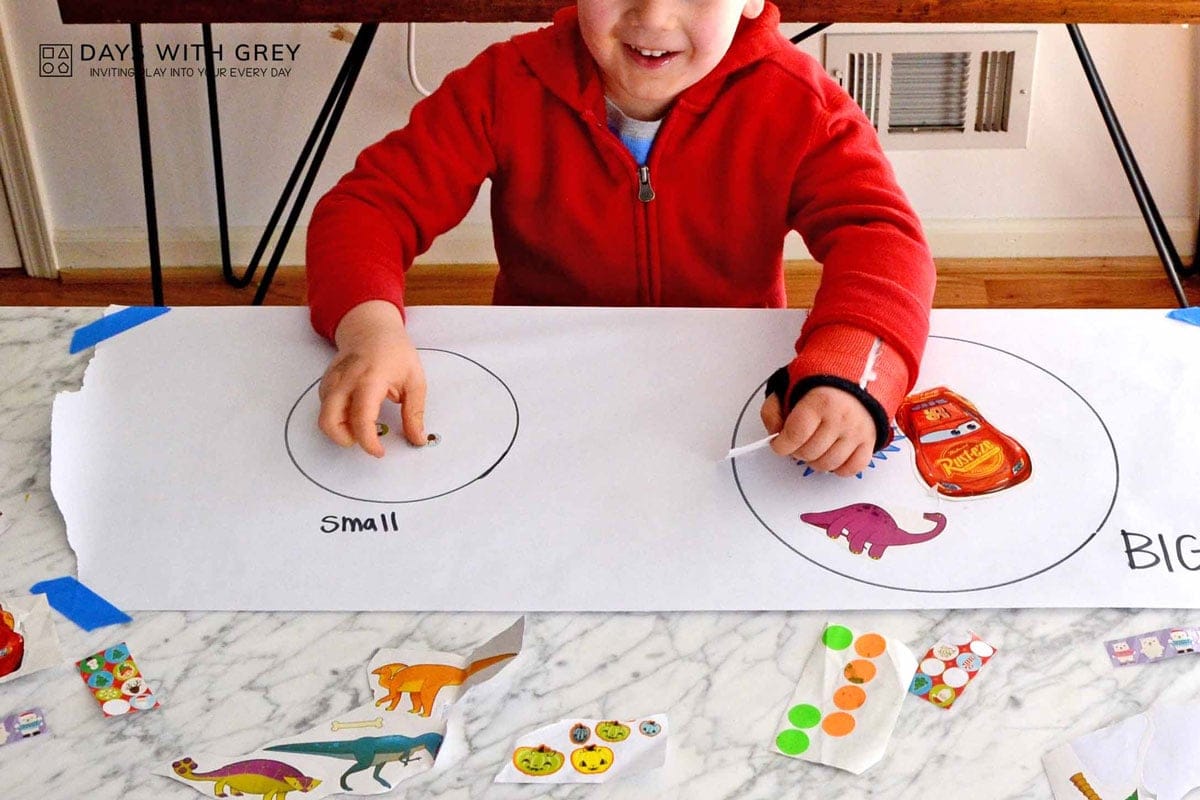
Every parent recognizes those magical moments when their child discovers something new, whether matching shapes, recognizing colors, or forming their first letters. These experiences matter because preschool learning activities build the foundation for reading, writing, math, and problem-solving skills children use throughout their lives. Finding the right balance of fun and educational content can feel overwhelming when trying to keep young minds engaged while supporting their development. Parents need resources that offer both entertainment and meaningful learning opportunities.
Quality educational materials make all the difference in daily routines with preschoolers. Rather than searching endlessly or purchasing expensive workbooks that only partially meet specific needs, parents can access personalized learning resources that adapt to their child's interests and abilities. These customizable materials range from alphabet practice sheets to number recognition worksheets, seasonal themes to shape activities. Parents looking for comprehensive educational resources can explore 44,438+ Free Coloring Pages designed to support their preschooler's learning journey.
Summary
- Ninety percent of brain development occurs before age five, making preschool activities during this period neurologically critical rather than preparatory. Children who regularly engage in structured play activities at age four score 0.4 to 0.6 standard deviations higher in first-grade math than peers without these experiences, and that advantage compounds over time because early pattern recognition and spatial awareness translate directly into abstract mathematical thinking.
- Children exposed to daily literacy-focused play score 15 to 20% higher on reading readiness tests than peers with minimal structured activities. This gap exists because language development requires more than passive exposure to words. It demands active engagement, in which children use new vocabulary in meaningful contexts, receive feedback, and experiment with language structure through conversations during shared activities such as craft projects and story time.
- High-quality preschool programs increase kindergarten readiness scores by 20 to 25% compared to informal play-only settings, and children who attend these programs are 24% more likely to graduate from high school. Much of this advantage stems from social-emotional skills developed in early childhood, particularly the ability to regulate emotions, resolve conflicts, and cooperate toward shared goals through structured group activities.
- Just 15 to 20 minutes of structured learning activities daily produces measurable gains in literacy and numeracy within weeks. The difference isn't the amount of time invested but the intentionality behind the activities and the consistency of engagement. Programs targeting executive function during preschool produce improvements of 0.35 to 0.5 standard deviations in classroom attention and learning adaptability.
- Fine motor control developed through drawing, cutting, and manipulating small objects directly determines handwriting capability, but these physical skills don't emerge automatically. They require repetition through activities that feel like play, building the hand-eye coordination, finger strength, and controlled movement patterns required for writing, buttoning clothes, and eventually typing.
- My Coloring Pages addresses this by providing access to 44,438+ Free Coloring Pages that transform into educational resources matching your child's current developmental stage and interests, eliminating the friction between recognizing a learning opportunity and having appropriate materials ready.
Table of Contents
- Importance of Preschool Learning
- Key Aspects of Preschool Learning
- How Can Parents Help Preschoolers Learn Better
- 55 Engaging Preschool Learning Activities
- Make Preschool Learning Fun, Mess-Free, and Custom
Importance of Preschool Learning
Preschool learning activities are education during the most neurologically active period of human development. According to Wee Wons Daycare, 90% of a child's brain develops by age 5. Every block tower, counting game, and attempt to color inside the lines strengthens neural pathways that formal schooling will depend on.
🔑 Key Point: The first 5 years represent a critical window when brain architecture forms the foundation for all future learning and development. "90% of a child's brain develops by age 5, making preschool activities essential for building neural pathways that formal education depends on." — Wee Wons Daycare, 2025

Parents juggle household responsibilities while preschoolers demand constant attention, making it tempting to view structured activities as optional. When managing laundry and dishes while a child repeatedly builds the same block tower, that repetition builds spatial reasoning and problem-solving skills.
💡 Tip: What looks like simple play to adults is skill-building work for preschoolers. Every repeated activity strengthens cognitive development and readiness to learn.
How do math activities build cognitive foundations?
Counting objects, sorting shapes by colour, and stacking blocks in patterns develop number sense, pattern recognition, and spatial awareness that connect directly to mathematical thinking. Children who engage in these activities at age four score 0.4 to 0.6 standard deviations higher on first-grade maths than peers without structured play experiences. This advantage compounds: the child who understands that three blocks plus two blocks equals five blocks grasps abstract mathematical concepts faster because they've internalized the physical reality.
Why does fine motor practice matter for development?
Fine motor control takes practice and repetition through play-based activities. When a three-year-old grips a crayon and traces a letter, they develop the hand-eye coordination, finger strength, and controlled movement patterns needed for writing, cutting with scissors, buttoning clothes, and typing.
How does vocabulary grow through meaningful interaction?
Your vocabulary grows when you actively use words in real situations, not by hearing them alone. When you do a craft project together—naming colours, discussing textures, explaining steps—you teach children to tell stories and express themselves with words. Children who engage in literacy activities daily score 15 to 20% higher on reading readiness tests than those without structured activities. Language development occurs through using words, experimenting with them, and receiving immediate feedback.
What skills does storytime develop in preschoolers?
Storytime teaches vocabulary, listening comprehension, and narrative structure. When you ask your child to predict what happens next or explain why a character made a choice, you're teaching inference and critical thinking. These skills develop during every conversation and shared story.
How do children develop social skills through structured interaction?
Learning to wait your turn, share materials, and work together toward a common goal requires practice in structured settings where adults can guide, model, and reinforce appropriate responses. Research cited by The Annie E. Casey Foundation shows that children who attend high-quality preschool programs are 24% more likely to graduate from high school, with much of that advantage stemming from social-emotional skills developed during early childhood.
Why are group activities effective for teaching conflict resolution?
Group activities teach conflict resolution in real time. When two children both want the red crayon, they face a genuine social problem requiring negotiation, compromise, or adult guidance. These moments build emotional regulation and interpersonal skills that predict success in kindergarten and beyond. Children who participate in social play activities demonstrate better conflict resolution and teamwork abilities by age six, having practised those skills hundreds of times in low-stakes situations.
How do early activities build executive function skills?
Puzzles, sequencing games, and guided craft projects develop working memory, cognitive flexibility, and self-control. When a four-year-old follows multi-step instructions to complete a craft, they practise the same executive function skills needed for homework and classroom responsibilities years later. These abilities develop through repeated practice in activities that require planning, focus, and task completion.
What research shows about preschool executive function development?
A child who can sit through a 15-minute structured activity, follow directions, and persist when something doesn't work the first time has learned self-regulation. Programs targeting executive function during preschool create improvements of 0.35 to 0.5 standard deviations in classroom attention and learning adaptability, according to research published in Psychological Science. My Coloring Pages offers an easier path to personalized learning materials. With our 44,438+ free coloring pages, you can generate alphabet practice sheets, number recognition worksheets, seasonal themes, and shape activities tailored to your child's needs. Rather than generic materials, you create resources that grow with your child's interests and developmental stage, combining fine motor practice with cognitive skill-building in a format that feels like play rather than work.
How does brain development shape preschool learning potential?
Brain development during the preschool years occurs at an unmatched pace. Neural connections form and strengthen through repeated experiences, shaping the brainis wiring. Symbolic thought—the ability to mentally represent objects and actions—develops through pretend play, drawing, and verbal representation. These cognitive milestones enable abstract thinking, problem-solving, and creativity throughout life.
What measurable impact do structured activities have on readiness?
Fifteen to 20 minutes of structured learning activities daily produces measurable gains in literacy and numeracy within weeks. Play-based, activity-focused preschools increase kindergarten readiness scores by 20 to 25% compared to informal play-only settings. The difference lies in intentional, consistent engagement. But what specific skills should you focus on, and how do they develop?
Related Reading
- Preschool Worksheets
- What Age Is Preschool
- Preschool Curriculum
- Preschool Age Range
- Preschool Vibes
- Preschool Homeschool Curriculum
- Preschool Games
- Worksheets For Preschool
- Preschool Education
- Free Preschool Worksheets Age 3–4
- Preschool Books
- What Age Do Kids Start Preschool
- Preschool Graduation
- Free Name Tracing Worksheets for Preschool
- Preschool Backpack
- All About Me Preschool
- Free Preschool Worksheets
- Preschool Self Defense
- What Should a Child Learn in Preschool
- Preschool vs Pre K
- Sight Words for Preschool
- Free Printable Preschool Worksheets Tracing Letters
- First Day of Preschool
- Preschool Math Worksheets
- Preschool Valentine Crafts for Parents
- Preschool Graduation Gifts
- Preschool Toys
- What Age Is Preschool and Kindergarten
- Preschool Quotes About Play
Key Aspects of Preschool Learning
Preschool learning includes seven connected areas: motor skill development, social-emotional competence, communication abilities, problem-solving capacity, creative play, teamwork fundamentals, and independence building. Each area strengthens the others, creating a developmental framework that prepares children for formal schooling.
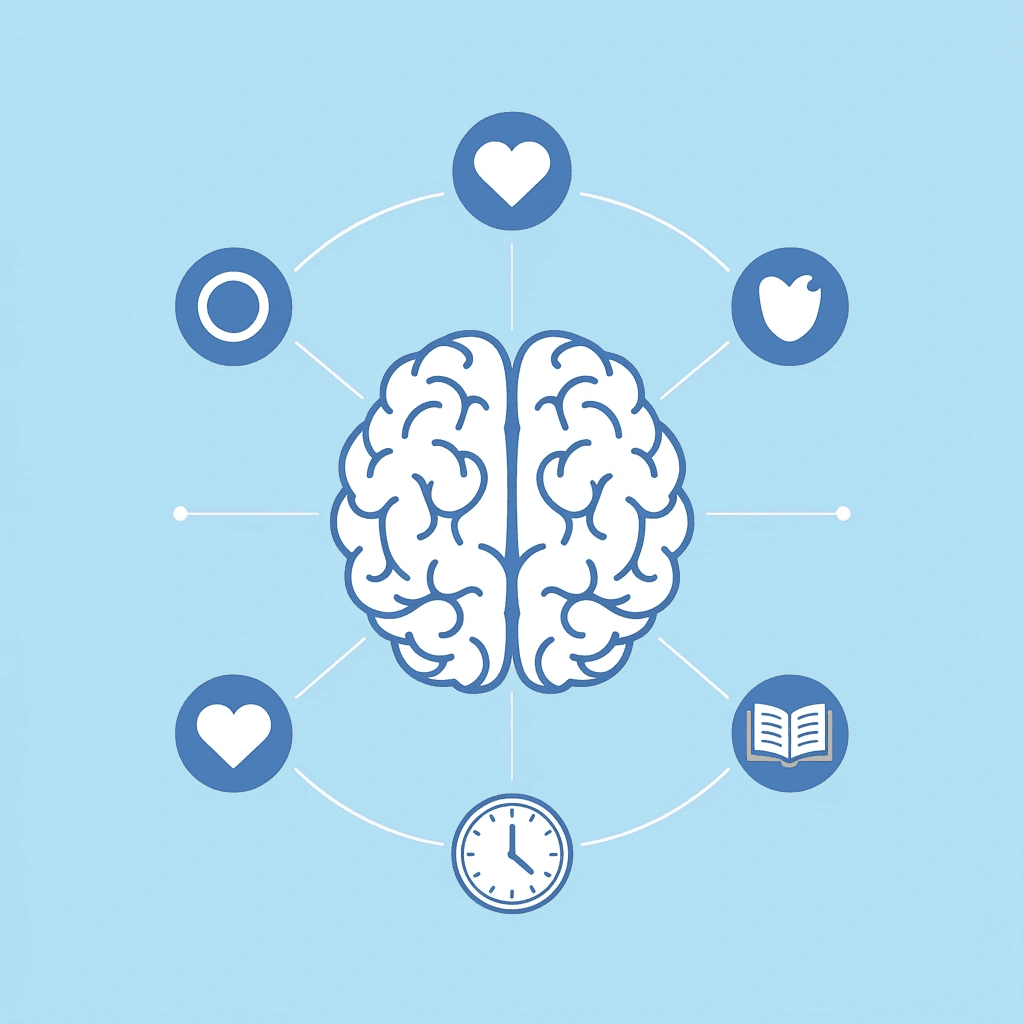
🎯 Key Point: These seven learning areas work together as an integrated system - when children develop motor skills through play, they're simultaneously building social connections and problem-solving abilities. "The interconnected nature of early childhood development means that growth in one area directly supports advancement in others, creating a multiplier effect for learning readiness." — Early Childhood Development Research
⚠️ Warning: Focusing on only one or two areas while neglecting others can create developmental gaps that may impact a child's school readiness and overall learning potential.
Learning Area | Key Benefits | School Readiness Impact |
|---|---|---|
Motor Skills | Physical coordination, fine motor control | Writing, sports participation |
Social-Emotional | Self-regulation, empathy | Classroom behavior, peer relationships |
Communication | Language expression, listening | Reading comprehension, following directions |
Problem-Solving | Critical thinking, logic | Math concepts, analytical skills |
Creative Play | Imagination, innovation | Art, creative writing |
Teamwork | Collaboration, sharing | Group projects, social integration |
Independence | Self-care, decision-making | Personal responsibility, confidence |

How do fine motor skills develop through preschool activities?
Fine motor skills develop through precision activities like drawing, cutting with safety scissors, gluing shapes, and manipulating small objects. These strengthen the hand muscles and coordination patterns required for writing. When a four-year-old grips a crayon to trace letters, they build finger strength and control for eventual sentence writing. These movements require repetition, feedback, and appropriately challenging activities.
Why are gross motor skills important for physical confidence?
Gross motor skills develop through physical movement involving large muscle groups, such as running, jumping, skipping, kicking a ball, and climbing. These activities build coordination, balance, and spatial awareness while developing body awareness and physical confidence. Children who regularly engage in structured physical play show improved attention spans during academic tasks because they learn to control their energy and understand their bodies' capabilities.
Why do four-year-olds struggle with social interactions?
Four-year-olds don't naturally understand taking turns, sharing, or playing together. These behaviours must be taught directly and practised repeatedly in settings where adults can model appropriate conduct and intervene during disagreements. When two children reach for the same toy, they face a genuine problem. Without help, the moment becomes a fight over possession. With an adult's guidance, it becomes a chance to learn about compromise, patience, and empathy.
How do structured activities accelerate social development?
Parents often worry that their children are not learning the right social skills, especially when they compare their child to peers who seem better at collaborating. Social competence develops at different rates, and structured activities give kids the practice they need to grow faster, no matter where they start. Preschool environments create hundreds of small interactions daily: sharing art supplies, waiting for turns on playground equipment, and joining group activities. Children who participate in structured social play develop stronger conflict-resolution skills by kindergarten because they've practised those abilities in low-stakes situations.
How does vocabulary growth happen through active engagement?
Your vocabulary grows when you use new words in real situations, receive feedback, and practise language. When you talk about what you're doing—naming things, describing what's happening, and asking questions—you teach how stories are organized and how to express ideas simultaneously. A child who can describe what they're building, explain colour choices, or tell a story about their drawing has developed communication skills that extend far beyond basic vocabulary.
Why do multi-step activities strengthen executive function?
Listening comprehension grows when children engage in multi-step activities. When a teacher explains a three-step craft project, children practise retaining information in their working memory as they execute tasks sequentially. This strengthens their attention and processing skills, which are essential for school success. This ability to manage tasks matters more than most academic content at this age.
How does story time develop critical thinking skills?
Telling stories builds the ability to understand events and think critically. When you ask a preschooler to guess what happens next or explain why a character acted a certain way, you teach them to think and analyse, not just understand words. These conversations develop reading comprehension skills years before children can read independently.
Problem-Solving Starts With Manageable Challenges
Puzzles, building toys, and guided craft projects create solvable problems. When a four-year-old fits puzzle pieces together, they develop spatial reasoning, pattern recognition, and persistence. Frustration becomes an opportunity to learn new strategies and build resilience, fostering confidence in independent problem-solving. Teachers help with problem-solving through treasure hunts, open-ended questions, and creative challenges. When children face unsolvable problems, they learn to pause, consider alternatives, and seek help. This metacognitive awareness—understanding when you need help—predicts academic success more reliably than early academic skills.
How does creative play develop symbolic thinking in preschoolers?
Play is the main way young children explore ideas, test their thoughts, and learn about themselves. When preschoolers engage in pretend play, they develop symbolic thinking—the ability to mentally represent objects and actions. This builds abstract reasoning skills essential for maths, reading comprehension, and scientific thinking.
Why is unstructured play important for learning?
Unstructured play lets children make choices, direct their own activities, and experience natural consequences. The child who builds a block tower that falls down learns about balance and stability through direct experience, creating mental models that formal instruction can later build upon.
How can customizable materials enhance preschool learning activities?
Creating educational materials that match your child's current interests used to require extensive searching or expensive purchases. My Coloring Pages eliminates that friction by providing access to over 40,000 customizable coloring pages. Generate alphabet practice sheets featuring your child's favourite animals, create number recognition activities themed around their interests, or design shape-sorting exercises that feel like creative projects rather than drills. Customization allows activities to grow with your child's developmental stage, keeping them engaged while building fine motor control and cognitive skills.
Teamwork Foundations Form Through Group Activities
Preschoolers learn to work together through activities that require cooperation toward shared goals, such as building group art projects, playing cooperative games, or cleaning up materials together. These experiences teach children that their individual actions contribute to group results and that others have perspectives, needs, and feelings that matter as much as their own. Sharing materials and taking turns creates friction that becomes a teaching opportunity. Limited resources force children to negotiate, compromise, and accept unfavourable outcomes. These frustrating moments build the emotional control and social awareness required for successful group participation throughout life.
How does separation from parents build self-reliance?
Preschool is often children's first extended time away from their parents. This provides opportunities to practise self-care in safe environments. When children ask teachers for help, they learn confidence in expressing their needs. Learning to dress, eat, and use the bathroom independently builds essential life skills and fosters self-reliance.
Why are early observations crucial for development?
Teachers observe how children respond to tasks and challenges without parental support, providing important information about their development and potential learning differences. Early identification of processing problems or learning challenges enables timely intervention. According to Early Childhood Education Research, 90% of brain development happens before age 5. These early observations are valuable because they ensure children receive appropriate support during peak brain growth.
How can parents facilitate development practically?
But understanding what children should learn doesn't solve the practical challenge most parents face: how do you help this development happen while managing everything else?
How Can Parents Help Preschoolers Learn Better
Parents can help preschool kids learn faster by replacing fear with curiosity, normalizing struggle as part of growth, and staying present during frustration. The most effective approaches require consistency, emotional availability, and viewing mistakes as progress rather than problems.

🎯 Key Point: The foundation of accelerated learning in preschoolers isn't about pushing harder—it's about creating an emotionally safe environment where natural curiosity can flourish without the weight of performance anxiety. "Children learn best when they feel emotionally secure and supported, with 85% of brain development occurring before age 5." — Harvard Center on the Developing Child, 2023

Traditional Approach | Growth-Focused Approach |
|---|---|
"Don't make mistakes." | "Mistakes help us learn." |
"You're so smart." | "You worked really hard." |
"That's wrong." | "Let's try a different way." |
Rushing through tasks | Taking time to explore |
⚠️ Warning: Avoid turning every moment into a teaching opportunity—preschoolers need unstructured play time where they can explore freely without constant adult direction or evaluation.
Why does fear prevent effective preschool learning activities?
Fear stops learning faster than any developmental delay. When children connect education with shame, humiliation, or punishment, they develop protective mechanisms that persist for years. The child who learns to avoid mistakes rather than learn from them enters kindergarten already convinced that struggling means failing.
How can you replace fear with supportive preschool learning activities?
Replace fear-based responses with structure, humour, and acknowledgment. When your four-year-old struggles with a puzzle, your response matters more than the solution. Saying "You're not trying hard enough" teaches avoidance. Saying "This piece is tricky, let's look at the colours together" teaches persistence. This cognitive modelling demonstrates how to approach difficulty without panic.
Why should we celebrate questions over answers?
Kids who ask questions freely develop stronger critical thinking skills than those who wait for information to be given to them. A child asking "Why is the sky blue?" practises intellectual curiosity and learns that wondering about the world produces valuable responses rather than irritation or dismissal.
How can we make it feel safe for children to question?
Make asking questions feel safe by treating every question as real and important, even when the timing feels bad. Saying "That's a great question, let me think about how to explain that" teaches children that hard ideas need time to consider and that adults don't know everything immediately. This honesty builds trust and models intellectual humility that children internalize as they develop their own learning approaches.
Why do children need continuous reassurance during learning?
Learning creates mental struggle. New skills require hard work, repeated attempts after failure, and tolerance for discomfort—capacities young children haven't yet developed. Children need emotional support throughout the learning process, not only upon completion.
How does frequent praise support preschool learning activities?
Frequent praise works like oil in an engine: it keeps the system from getting stuck under pressure. When your preschooler practices writing letters and makes wobbly, barely recognizable shapes, praising the effort rather than waiting for perfect execution keeps them interested. The child who hears "You're working so hard on that letter" continues practising. The child who hears nothing learns that effort without immediate success doesn't matter.
What's the difference between praise and false evaluation?
Parents worry that constant praise creates entitled children. That concern confuses praise with evaluation. Acknowledging effort ("You concentrated on that puzzle for ten minutes") differs fundamentally from false evaluation ("That's the best puzzle solution I've ever seen"). Children distinguish between the two. Without adult modeling, they don't learn that sustained effort itself deserves recognition regardless of outcome.
Talk About Learning Explicitly
Kids don't automatically understand why learning matters or how it connects to their future. Asking "What did you learn today?" signals that learning is valuable enough to discuss and celebrate, making education feel like an ongoing process rather than something confined to school. Explaining why skills matter increases children's interest. Telling a four-year-old, "We're practising counting so you can figure out how many cookies everyone gets," connects abstract ideas to real outcomes they care about. A child who understands that reading unlocks stories develops different motivation than one who sees it as random adult demands.
Read Aloud Consistently
Reading aloud helps children develop imagination in ways that watching videos or films does not. When you read "The dragon swooped down from the mountain," your child creates their own picture of the dragon and mountain, and interprets "swooped." This mental work builds skills in visualisation and story comprehension that passive video watching does not demand. Books let children hear sentence patterns, vocabulary, and storytelling techniques absent from everyday conversation. Children who listen to stories absorb how language creates meaning, building mental frameworks that help them read faster and understand better once they begin learning to read.
Why is normalizing failure important for preschool learning?
Every new skill requires a period of incompetence. Children who fear failure avoid new challenges, limiting their growth to areas where they already feel confident. When your preschooler cuts paper with safety scissors and produces jagged edges, their emotional response determines whether they continue practising. If failure feels safe, they persist. If it feels shameful, they stop.
How can parents reframe mistakes as learning opportunities?
Clearly say that mistakes are expected and necessary. When your child struggles with a task, saying "Learning new things always feels hard at first; that frustration means your brain is working" shifts how they perceive discomfort. Instead of concluding they're not good enough, they recognise it as progress. This mindset helps them navigate challenges more effectively in all future learning.
Why should you stay present when children struggle with preschool learning activities?
When children say "I'm dumb" while doing homework or pound their heads in frustration, they're experiencing real cognitive overload. Walking away teaches them that they should handle their own struggles. Staying present teaches them that difficulty is manageable with support and that asking for help shows wisdom rather than weakness.
How does your presence help children regulate emotions during difficult tasks?
Being present when your child feels frustrated helps them calm down when they cannot do it alone. Saying "I see this is hard right now; let's take a breath and try a different approach" demonstrates how to solve problems and manage feelings simultaneously. Your child learns that frustration need not lead to giving up or self-criticism, but rather to pausing, calming down, and trying a new way.
Why do structured creative activities work better than drills?
Structured activities combining creativity with skill development keep children engaged longer than simple drills. When children colour letters of the alphabet depicting their favourite animals, they practise letter recognition and fine motor control while enjoying themselves. Preschoolers don't distinguish between learning and entertainment as adults do, so enjoyable activities help them retain skills better than those that feel like work.
How can you customize learning materials without a major time investment?
Making learning materials that match children's interests used to require significant time or expense. My Coloring Pages provides access to over 44,438 printable coloring pages that can be converted into educational resources in seconds. You can create number recognition worksheets with dinosaur themes, make shape-sorting activities with favourite cartoon characters, or design alphabet practice sheets that feel like creative projects rather than schoolwork. Customization allows activities to evolve with your child's interests, maintaining engagement while building thinking and motor skills.
Add Music to the Environment
Background music changes how brains process information. Studies suggest classical music improves focus and information retention during learning activities. Many educators incorporate music into classroom environments. Playing Mozart or Bach softly during puzzle time or craft projects creates a supportive environment for concentration. Children who connect learning activities with pleasant background music may develop stronger positive feelings about education.
Related Reading
- Preschool Assessment
- Preschool Crafts
- Daycare Vs Preschool
- Preschool Tracing Worksheets
- Preschool Classroom Layout
- Preschool Sight Words
- Preschool Playground Equipment
- How To Become A Preschool Teacher
- Preschool Lesson Plan Template
- Playing Preschool Curriculum
- Preschool Science Experiments
- Spring Bulletin Board Ideas For Preschool
- Preschool Prep
- Preschool Math Activities
- Free Preschool Games
- Noah's Ark Preschool
- Preschool Craft Ideas
- Creative Curriculum For Preschool
- Preschool Art Activities
- Christmas Crafts Preschool
- Spring Bulletin Board Ideas For Preschool
- Turkey Craft Preschool
- Preschool Bulletin Board Ideas
55 Engaging Preschool Learning Activities
The activities below turn developmental goals into concrete actions you can use today. Each targets specific thinking, physical, or social-emotional skills while keeping things fun and playful. They're practical, tested approaches that work in homes, classrooms, and childcare settings. They require minimal preparation and use materials you likely already have.
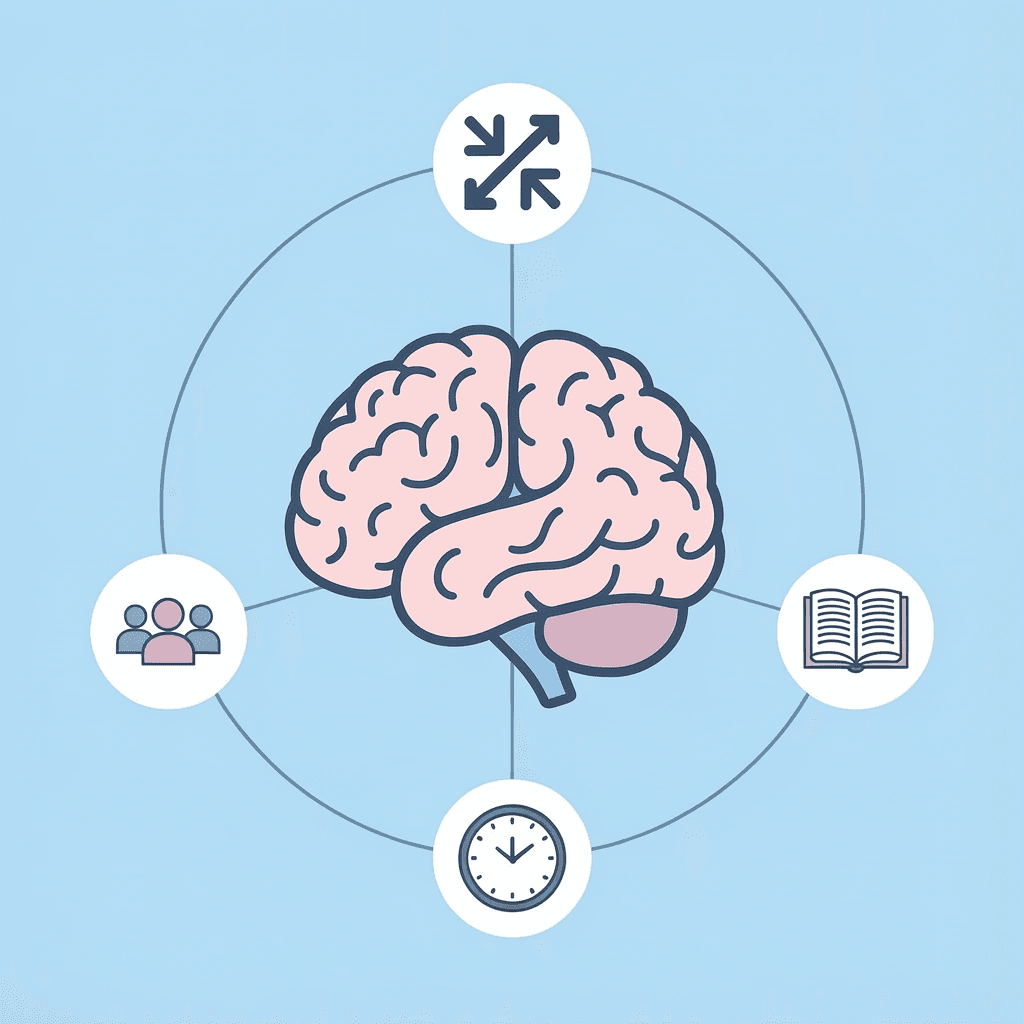
🎯 Key Point: These 55 activities are designed to be immediately actionable with minimal setup time - perfect for busy parents and educators who want maximum learning impact with everyday materials. "Play-based learning activities can improve preschoolers' cognitive development by up to 40% while building essential social skills through hands-on engagement." — Early Childhood Education Research, 2023

⚠️ Important: The most effective preschool activities combine multiple skill areas simultaneously - so don't be surprised when a simple sorting game also builds fine motor skills, language development, and problem-solving abilities all at once.
Literacy & Language Skills (1-10)
1. Custom Story Coloring Pages
Print worksheets featuring letters, words, or story scenes. Children color images associated with vocabulary words such as "apple," "house," or "friend" while saying each word aloud. This builds letter recognition and narrative skills simultaneously, linking visual representation with verbal expression while strengthening fine motor control and phonemic awareness.
2. Alphabet Treasure Hunt
Hide alphabet cards throughout a room. Children search for letters, identify each one, and practise the corresponding sound. This combines gross motor activity with letter recognition, making abstract symbols concrete through physical discovery and sustaining engagement longer than seated activities.
3. Rhyming Basket
Fill a basket with small objects or picture cards that rhyme. Children match pairs like cat and hat, sun and fun, demonstrating phonemic awareness through tactile sorting. This helps children understand that different words can share similar endings, a critical pre-reading skill.
4. Read-Act-Retell
Read a simple picture book together, act out the story using movements or props, then ask your child to retell it in their own words. This three-step process develops comprehension, memory, and understanding of narrative structure. Children who can retell stories demonstrate deeper understanding than those who simply answer yes/no questions about plot points.
5. Name Puzzle Match
Print your child's name in large letters, cut it into individual letter pieces, and have them reassemble it. This makes letter learning personal, transforming abstract symbols into something meaningful by directly connecting them to their identity. Name recognition typically develops before alphabet mastery because emotional investment helps children pay attention and retain information.
6. Sound Sorting Boxes
Label boxes with starting sounds (B, M, S) and provide pictures of objects that start with each sound. Children sort images into the correct boxes, building phonics skills and sound discrimination through physical categorization with immediate feedback.
7. Magnetic Letter Board Words
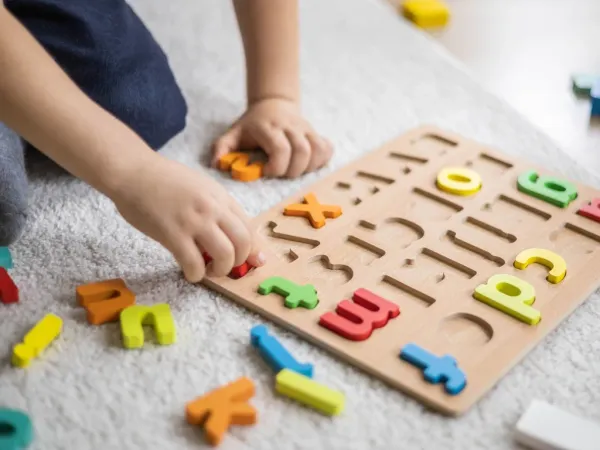
Use magnetic letters to form simple three-letter words on a board or refrigerator. Children move letters around to create words like "cat," "dog," or "sun," building word formation skills and spelling recognition. The magnetic format enables easy experimentation without the frustration of handwriting.
8. Word Wall Word Building
Create a word wall using index cards with common sight words. Point to words during daily routines, use them in sentences, and encourage your child to identify them in books. This repeated exposure builds automatic word recognition that accelerates reading fluency.
9. Nursery Rhyme Puppetry
Use simple puppets to perform familiar nursery rhymes. Children learn rhythm, rhyme recognition, and expressive language through pretend play. The performance aspect strengthens memory formation through emotional investment.
10. Story Sequence Cards
Create or print cards showing the beginning, middle, and end of a familiar story. Children arrange them in correct order, building narrative sequencing and comprehension while making story structure visible and helping them understand that stories follow logical progressions.
Math & Logic Skills (11-20)
11. Counting with Nature Objects
Collect sticks, stones, or leaves during outdoor time. Children count objects one by one, developing one-to-one correspondence and number sense through hands-on manipulation. Natural materials sustain children's interest longer than plastic counters while building the same mathematical foundations.
12. Shape Hunt Walk
Take a walk to find shapes in the environment. Point out circular wheels, rectangular doors, and triangular roofs. Children record discoveries by drawing shapes on paper, connecting abstract geometric concepts to real-world objects, and making shape recognition meaningful.
13. Sorting Buttons by Size & Color
Provide a collection of buttons in various sizes and colours. Children sort them into groups based on attributes they choose, building classification and pattern-recognition skills. The open-ended nature allows children to demonstrate understanding at their current developmental level without performance anxiety.
14. Number Line Hop
Create a number line on the floor using tape or chalk. Children hop from number to number in sequence, combining physical movement with number order recognition. This hands-on approach engages different neural pathways for children who struggle with seated number activities.
15. Roll & Count Dice Game
Roll a die and count out the corresponding number of objects. This builds subitizing (recognizing quantities without counting) and early probability concepts. The game format maintains attention through multiple repetitions, building fluency through enjoyable practice.
16. Pattern Bead Strings
Provide beads in different colours and a string. Create simple patterns (red-blue-red-blue) for children to copy and extend. Pattern recognition forms the foundation for algebraic thinking, teaching children that sequences follow predictable rules.
17. Calendar Counting Routine
Use a calendar chart during your morning routine to count days, identify the date, and track special events. This builds time awareness, counting practice, and calendar literacy simultaneously. Daily repetition creates automaticity while changing dates maintains novelty.
18. Measuring with Blocks
Use blocks as non-standard measurement units. Children measure objects around the room, discovering that the table is "eight blocks long" or the book is "three blocks wide." This introduces measurement concepts before standard units, making length quantifiable and concrete.
19. Shape Sorting Tray
Create a tray with sections labelled by shape. Children sort geometric shapes into correct sections, building shape identification and fine motor skills. The self-correcting nature enables independent practice.
20. Group & Count Bears
Use counting bears or small counters for grouping activities. Children create groups of specific sizes, combine groups to practise early addition, or separate groups for subtraction concepts. The manipulative format makes abstract mathematical operations visible and reversible.
Creativity & Arts Integration (21-30)
21. Story Illustration Drawing
After reading a story, children draw their favourite scene or create an alternate ending. This combines narrative comprehension with creative expression, allowing children to demonstrate understanding through visual rather than verbal means.
22. Symmetry Painting
Fold the paper in half, paint one side, then press the halves together to create symmetrical designs. This introduces early geometry concepts and awareness of symmetry through playful experimentation, with the surprise element sustaining engagement across multiple repetitions.
23. Texture Rubbing Pages
Place paper over textured surfaces (tree bark, coins, fabric) and rub with crayons to transfer patterns. This develops sensory awareness and observation skills while revealing hidden patterns in everyday objects.
24. Musical Color Walk
Assign colours to different musical instruments or sounds. When children hear a specific sound, they step on the matching coloured paper, building colour recognition, listening skills, and gross motor coordination through multi-sensory integration.
25. Nature Collage Poster
Collect leaves, flowers, and small natural objects during outdoor time. Children arrange and glue items onto paper, developing fine motor skills and categorization abilities while connecting art-making to environmental observation.
26. Shape Robots Craft
Provide pre-cut squares, circles, and triangles in various sizes. Children arrange shapes to create robot designs, demonstrating that complex images are made of simple geometric components: a foundational concept for both art and mathematics.
27. Printable Sticker Scenes
Use pre-printed scene backgrounds with themed stickers. Children place stickers to complete scenes, building visual discrimination and language skills. The low-pressure format makes creative expression accessible to all skill levels.
28. Spin Art Board
Create a simple spinner using cardboard and place paper on top. Children drip paint onto the spinning paper, creating abstract designs that teach cause and effect while exploring colour mixing through kinetic art-making.
29. Salt Line Painting
Draw designs with glue, sprinkle salt over wet glue, then touch watercolour paint to the salt lines. Paint diffuses along salt crystals, creating unique effects through a multi-step process that develops sequential thinking and produces visually striking results.
30. Junk Sculptures
Provide recycled boxes, tubes, and containers with tape and glue. Children design three-dimensional sculptures, developing problem-solving and spatial reasoning. The open-ended nature reduces performance anxiety while building design thinking through hands-on construction.
Science & Discovery Activities (31-40)
31. Sink or Float Experiment
Fill a water tub and gather various objects. Children predict whether each item will sink or float, then test their predictions. This activity introduces scientific prediction and observation while teaching that materials have properties that determine their behaviour.
32. Plant Seeds and Watch Growth
Plant seeds in clear containers so children can observe root development. Daily observation teaches life cycles and responsibility while building patience, demonstrating that growth happens gradually through consistent care.
33. Shadow Tracing Outdoor Play
Use chalk to trace shadows at different times of day. Children discover how shadows change size and position as the sun moves, building light awareness and spatial reasoning skills.
34. Magnet Play Stations
Provide magnets and various objects (metal, plastic, wood). Children test which materials magnets attract to investigate magnetic force through hands-on experimentation. The binary nature of results—attracts or doesn't—makes outcomes clear and testable.
35. Weather Chart Tracker
Create a daily weather chart with picture cards (sunny, rainy, cloudy, windy). Children observe the weather each morning and record it on the chart, building data-collection skills. Over time, patterns emerge that introduce basic meteorology concepts.
36. Color Mixing in Cups
Fill clear cups with water and add food colouring. Children mix colours to create new shades, exploring scientific prediction as they hypothesize what colours will result.
37. Feather Drop Race
Drop feathers and paper clips simultaneously. Children observe that objects fall at different speeds, learning about gravity and comparison. The surprising result sparks curiosity and encourages repeated testing.
38. Bug Observation Garden
Collect insects in clear jars with air holes and magnifying glasses. Children observe how they move, examine their body parts, and study their behaviour. This builds curiosity and teaches science vocabulary. Releasing the insects afterwards teaches children environmental stewardship.
39. Recycling Sorting Station
Set up bins labelled for paper, plastic, and metal. Children sort household trash, learning to organize items into groups and understand why environmental protection matters. This connects abstract concepts to their daily actions.
40. Ice Melting Race
Place ice cubes in different spots: sunlight, shade, covered with salt, and plain. Children observe which melts fastest, learning cause and effect and how substances change form. The race maintains engagement while they wait for the ice to melt.
Social-Emotional & Cooperative Play (41-50)
41. Emotion Card Match
Create cards showing different emotional faces. Children identify emotions, discuss situations that trigger each feeling, and match facial expressions to emotional states. This builds emotional vocabulary and empathy by making internal states visible and discussable.
42. Sharing Toy Train
Set up a toy train activity where children take turns adding cars or controlling the track. The visible nature of turns makes abstract fairness concepts concrete and builds cooperation skills in low-stakes situations.
43. Feelings Puppet Play
Use puppets to act out scenarios involving emotional challenges, such as feeling left out, frustration, and disappointment. Children discuss how puppets might feel and suggest solutions, developing perspective-taking and problem-solving skills. The puppet format creates emotional distance, making difficult topics safer to explore.
44. Compliment Circle
Sit in a circle and have each child say something kind about the person next to them. This structured format ensures everyone receives recognition, building positive social interaction skills and group cohesion.
45. Friendship Bracelets
Provide beads and string for making simple bracelets. Children create bracelets for friends or family members, developing fine motor skills and cooperative play as they help each other. The gift-giving aspect teaches that creating something for others builds positive social connections.
46. Role-Play Dress-Up Box
Fill a box with costumes, hats, and props representing different professions or characters. Children engage in pretend play, exploring social roles and processing social experiences while practicing behaviours they observe in adults.
47. Group Mural Painting
Provide a large sheet of paper and paint for collaborative artwork. Children negotiate space, share materials, and create cohesive designs together, building collaboration and shared planning skills.
48. Cooperative Obstacle Course
Create an obstacle course requiring teamwork: one child holds a hoop while another crawls through, or partners carry objects together. This transforms abstract cooperation into a concrete physical challenge while building coordination and group focus.
49. Compliment Cards Exchange
Children draw pictures or write simple words on index cards to give to classmates or family members, building kindness habits and language expression while creating tangible artifacts of positive social interaction.
50. Follow the Leader Game
One child leads while others copy their movements. As children rotate through the leader role, they build attention, group focus, and leadership skills in a playful format.
Practical Life & Everyday Learning (51-55)
51. Laundry Sorting Game
Give children clean laundry and bins. They sort items by type (shirts, pants, socks) or by owner, learning organisation, and self-care skills.
52. Simple Kitchen Math
Let children help measure ingredients using cups and spoons. This teaches measurement and counting in a practical context. When they eat what they've made, it reinforces positive associations with maths.
53. Button & Zipper Practice Board
Create a fabric board with different fasteners (buttons, zippers, snaps, buckles) for children to practise self-care skills and fine motor control through repetitive practice, without the stress of getting dressed for school.
54. Grocery List Memory Game
Show children pictures of items needed from the store. At home, ask them to recall what was on the list to build memory and vocabulary.
55. Nature Walk Scavenger List
Create printable lists with pictures of items to find outdoors: red leaf, smooth stone, yellow flower. Children mark off items as they find them, building observation skills and early reading abilities. My Coloring Pages provides access to over 44,438 free customizable coloring pages that serve as educational resources tailored to your child's current needs. Our collection lets you generate alphabet practice sheets featuring favourite characters, create number recognition activities themed around your child's current interests, or design shape-sorting exercises that feel like creative projects rather than drills. The customization ensures activities evolve with your child's interests while building fine motor control and cognitive skills through formats that feel like play. But having a list of activities doesn't solve the harder question: how do you make these engaging enough that children want to participate repeatedly?
Make Preschool Learning Fun, Mess-Free, and Custom
The question isn't whether you have time for structured learning activities, but whether you're willing to eliminate the friction that makes them feel overwhelming. Most preschool learning materials require physical storage, cleanup routines, and preparation time that compete with other household demands. When engagement depends on resources that create additional work, participation drops regardless of educational value.
🎯 Key Point: Printable activities solve the setup problem by removing physical inventory from the equation. You generate exactly what you need when you need it, eliminating the gap between recognizing a learning opportunity and acting on it. Preschool interests shift rapidly—the child obsessed with dinosaurs this week may fixate on construction vehicles next week—and generic materials can't keep pace.

"When alphabet practice features characters your child already loves, letter recognition becomes a game rather than a task." — Educational Psychology Research
Customization transforms compliance into enthusiasm. When alphabet practice features characters your child loves, letter recognition becomes a game rather than a task. When counting exercises incorporate current obsessions, number concepts feel relevant instead of arbitrary. Children practice longer, resist less, and retain more when activities connect to their interests rather than competing with them.

💡 Tip: The mess factor stops many parents from attempting hands-on learning regularly. Painting requires setup, supervision, and cleanup, which can consume 30 minutes for 10 minutes of actual activity. Coloring pages require only crayons and a flat surface, producing zero cleanup beyond recycling the finished product. That simplicity removes the decision fatigue that prevents daily engagement.
Traditional Approach | Printable Solution |
|---|---|
15 minutes searching + multiple prints | 30 seconds instant generation |
Generic content | Custom themed pages |
Physical storage needed | Digital library access |
Limited variety | 44,438+ free pages |

Most parents spend 15 minutes searching for worksheets that partially match their needs, then print multiple pages, hoping one will engage their child. Platforms like My Coloring Pages centralize that search process, providing instant access to themed pages across every preschool learning domain. Our collection of 44,438+ free coloring pages helps you generate letter tracing sheets featuring favourite animals, number recognition pages with seasonal themes, or shape sorting activities that feel like coloring projects rather than educational drills.
⚠️ Warning: Screen time concerns dominate parenting discussions, but the alternative isn't eliminating technology—it's using it strategically to create offline engagement. Generating printable activities takes 30 seconds of screen interaction that produces 20 minutes of hands-on, screen-free learning. You're using digital tools to facilitate physical skill development through formats that build fine motor control, visual discrimination, and sustained attention without requiring constant parental supervision once the activity begins.