15 Fun and Engaging Preschool Learning Games
Discover 15 preschool learning games that boost development through play. My Coloring Pages shares proven activities to engage young minds at home.

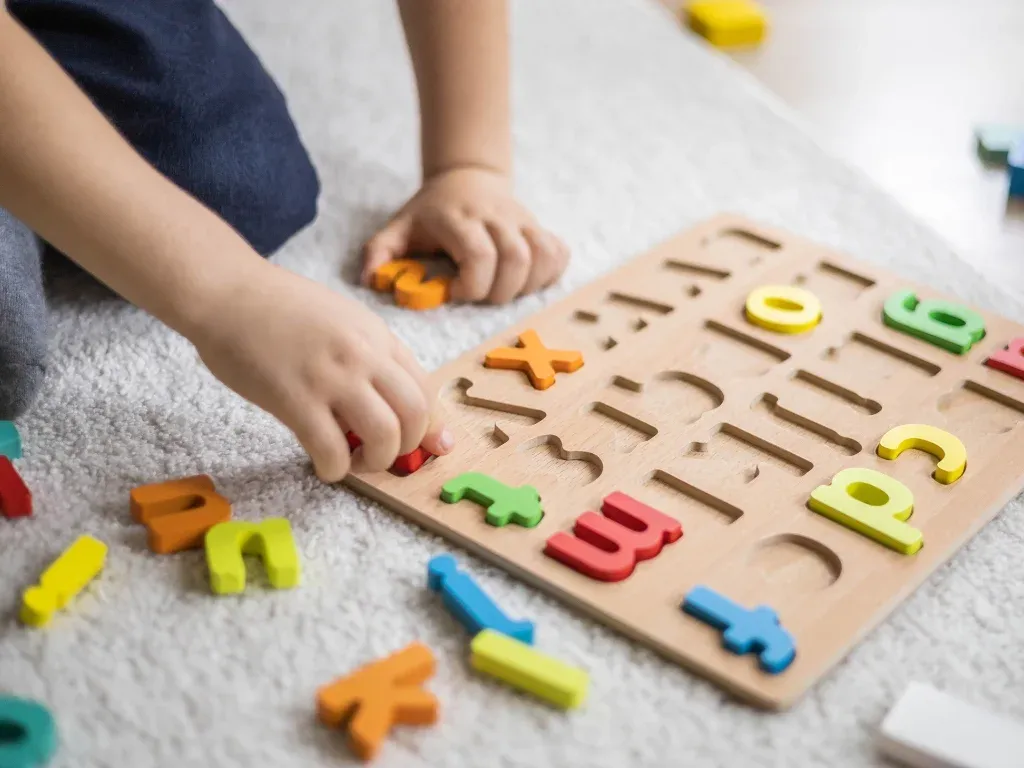
Keeping preschoolers engaged while building essential skills such as letter recognition, number sense, and fine motor control is a challenge for every parent and educator. Preschool learning games that blend education with play transform restless energy into focused learning opportunities. The key lies in finding activities that capture attention while reinforcing developmental concepts through hands-on exploration.
The right resources make planning effective educational activities much simpler. Printable materials, such as coloring pages, support alphabet practice, shape recognition, and counting exercises while allowing customization based on each child's interests. Download 50,187+ free coloring pages to access instant materials that complement learning games and provide engaging activities for skill development.
Summary
- Games function as the primary learning mechanism for preschoolers rather than a supplement to traditional instruction. A meta-analysis of 15 studies on game-based learning in early childhood education found that play-based approaches produce moderate-to-large positive effects on problem-solving, memory, attention, and motivation. This matters because 75% of brain development occurs before age 5, making the methods used during this window more impactful than most adults realize.
- Preschoolers need approximately 90 minutes of playtime daily for optimal development, with cooperative activities accounting for a significant portion of children's time from ages four through seven. This structured play time builds cognitive skills such as pattern recognition and spatial awareness while also teaching social dynamics that direct instruction cannot replicate. The game format doesn't dilute educational content; it amplifies absorption by matching how young brains actually process new information through active exploration and immediate feedback.
- Customization determines whether educational materials hold a child's attention or get abandoned after 30 seconds. A preschooler obsessed with dinosaurs will spend twenty focused minutes on a T-rex counting page, but resist the same exercise featuring generic shapes. Personalization extends attention spans by eliminating the friction between learning objectives and existing interests, letting educational goals slip in without resistance when worksheets feature subjects children already care about.
- Physical and cognitive development intertwine during preschool play in ways that seated instruction cannot replicate. Hand-eye coordination develops when children catch balls or manipulate cards during Go Fish, while gross motor skills strengthen through beanbag tosses and tag. These physical capabilities aren't separate from cognitive growth; they're interconnected as the child's brain maps movement to intention, building neural pathways that support later academic skills.
- Onlooker play appears passive but functions as active learning when preschoolers watch peers without joining activities. The observing child absorbs social rules, problem-solving strategies, and group dynamics before committing to participation, making this watching phase a necessary developmental stage rather than a concern. This pattern teaches children to assess situations and prepare mentally before engaging, a skill that transfers to unfamiliar contexts throughout life.
- My Coloring Pages addresses the time wasted hunting across multiple platforms by offering over 50,187+ customized coloring pages for instant download, along with themed resources (alphabet practice, counting exercises, pattern completion) that pair with preschool learning games, without search fatigue or mismatched content.
Table of Contents
- Importance of Games in Preschool
- Types of Play-Based Learning for Children
- 8 Tips for Educating Preschoolers While Playing
- 15 Fun and Engaging Preschool Learning Games
- Download Free 50,187+ Customised Coloring Pages for Learning
Importance of Games in Preschool
Games are the learning itself in preschool, not a break from it. When a four-year-old plays a matching game or races with a beanbag balanced on their head, they're building neural pathways that formal instruction cannot replicate at this age. According to KLA Schools, 75% of brain development happens before age 5, making the methods we use during this time critical. "75% of brain development happens before age 5, making the methods we use during this time critical." — KLA Schools
🎯 Key Point: At the preschool level, play-based learning is the primary vehicle for critical brain development during the most formative years.
🔑 Takeaway: The overwhelming majority of neural development occurs in these early years, so game-based activities are essential educational tools that align with natural brain development patterns.
Why do preschoolers learn differently through games?
Preschoolers learn differently from older children. Their brains require hands-on exploration, quick feedback, and emotional engagement. A meta-analysis of game-based learning in early childhood education, examining 15 studies, found that play-based approaches produce moderate-to-large positive effects on problem-solving, memory, attention, and motivation. The game format strengthens rather than weakens learning.
Cognitive Growth Through Play
Every game challenges a child's brain. Memory games force recall under pressure. Card games like Spot It! require visual discrimination and rapid pattern recognition. Duck, Duck, Goose involves strategic thinking and spatial awareness. Children practice attention, concentration, and forward planning while their prefrontal cortex forms the structures that will support these skills for life.
Social Skills That Can't Be Taught Directly
You can't teach a preschooler about taking turns or working together through conversation alone. Put them in a circle game where everyone must follow rules to have fun, and they learn quickly. Research on cooperative and competitive board games shows that preschoolers who play regularly improve their prosocial behavior. They practice sharing, encouraging others, listening when it's not their turn, and dealing with disappointment. The game space becomes a safe place to develop social skills they'll use throughout their lives.
What resources effectively support preschool learning games?
Most parents and teachers search multiple websites for printables matching each child's interests. My Coloring Pages offers over 50,187 customised coloring pages available for immediate download, paired with preschool learning games that reinforce counting, letter recognition, and pattern completion through activities tailored to what excites your child most.
The Motor Skills No One Talks About
Hand-eye coordination develops when a child catches a ball, stacks blocks in Jenga, or manipulates cards during Go Fish. Fine motor control improves through games requiring precision. Gross motor skills strengthen during three-legged races and beanbag tosses. Spatial awareness sharpens when children identify hiding spots during Hide-and-Seek or navigate around peers during tag. These physical abilities aren't separate from thinking and learning; they work together, with each supporting the other as the child's brain connects movement to intention.
Why does understanding developmental impact matter?
Not all play helps children learn equally. Developmental impact varies by game type. Knowing which games build which skills helps you plan more effective days for preschoolers.
Related Reading
- Preschool Worksheets
- What Age Is Preschool
- Preschool Curriculum
- Preschool Age Range
- Preschool Vibes
- Preschool Homeschool Curriculum
- Preschool Games
- Worksheets For Preschool
- Preschool Education
- Free Preschool Worksheets Age 3–4
- Preschool Books
- What Age Do Kids Start Preschool
- Preschool Graduation
- Free Name Tracing Worksheets for Preschool
- Preschool Backpack
- All About Me Preschool
- Free Preschool Worksheets
- Preschool Self Defense
- What Should a Child Learn in Preschool
- Preschool vs Pre K
- Sight Words for Preschool
- Free Printable Preschool Worksheets Tracing Letters
- First Day of Preschool
- Preschool Math Worksheets
- Preschool Valentine Crafts for Parents
- Preschool Graduation Gifts
- Preschool Toys
- What Age Is Preschool and Kindergarten
- Preschool Quotes About Play
Types of Play-Based Learning for Children
Play-based learning shifts the dynamic from adult lecture to child exploration. The adult structures the environment, sets developmental goals, and guides discovery rather than teaching directly. Every activity targets specific thinking, social, or physical milestones, with the adult acting as architect rather than instructor: designing experiences where learning happens through action.
🎯 Key Point: In play-based learning, adults become facilitators rather than traditional teachers, creating structured environments where children naturally discover concepts through hands-on exploration.
"Play-based learning transforms the traditional classroom dynamic, with adults serving as architects of discovery rather than direct instructors." — Child Development Research, 2023
Nine distinct types of play-based learning exist, each serving different developmental needs. Understanding these categories helps match activities to a child's current stage. Each type targets specific developmental milestones and offers benefits for cognitive, social, and physical growth.
💡 Tip: Match the type of play to your child's developmental stage and current learning needs—sensory play for toddlers, cooperative play for preschoolers, and constructive play for school-age children.
Sensory Play
Touch, smell, sight, sound, and taste become learning tools when children interact with materials designed to engage multiple senses simultaneously. A sensory bin filled with rice, small toys, and scoops teaches texture discrimination, volume concepts, and fine motor control. Water tables let preschoolers experiment with flow, containment, and cause-and-effect while processing the physical properties of liquids. Playdough molding strengthens finger muscles needed for pencil grip while children create shapes that teach spatial reasoning.
Parallel and Onlooker Play
Two children sitting side by side, each building their own block tower without speaking, are engaging in parallel play: a stage where proximity matters more than conversation. This fosters independence while teaching children to observe and learn from one another. Onlooker play extends this further: when a child watches others without participating, they actively absorb social rules, problem-solving strategies, and group dynamics before deciding to join. Encourage their interest with phrases like "Look at what they're building!" without pressuring them to participate. Model the activity yourself, then step back and allow the child space to join when ready.
Cooperative and Dramatic Play
According to Education Week, children benefit from approximately 90 minutes of playtime daily, with group activities comprising a significant portion of that time for ages 4 through 7. Board games, group-building projects, and collaborative storytelling teach turn-taking, negotiation, and the achievement of shared goals.
What skills does dramatic play develop in preschoolers?
Dramatic play adds role-based scenarios where children act out real-world situations: playing "doctor" teaches empathy, "teacher" reinforces language skills and authority dynamics, and "house" lets them process family relationships through safe practice. My Coloring Pages offers over 50,187 customized coloring pages available for instant download, including themed resources that pair with dramatic play scenarios (doctor's office charts, grocery store signs, restaurant menus) and cooperative games (matching activities, pattern completion, counting exercises) tailored to your child's interests.
Physical, Constructive, and Rule-Based Play
Physical play builds gross motor skills through running, climbing, dancing, and hop-jump sequences that require coordination and body awareness. Origami workshops develop fine motor precision and concentration. Constructive play, through block towers, puzzles, or papier-mache projects, teaches problem-solving and spatial reasoning. Rule-based play introduces structure through games like Simon Says or card games, where following guidelines becomes the point. This type becomes more prominent as children age and develop the cognitive ability to remember multi-step rules and delay gratification when it's not their turn.
Narrative Play
Children who invent stories using toys or perform puppet shows structure narratives, practise language sequencing, and learn how stories work: beginning, middle, end, conflict, and resolution. Collaborative storytelling adds negotiation as children debate plot points and character motivations, making story structure tangible and interactive rather than abstract, directly supporting literacy development.
8 Tips for Educating Preschoolers While Playing
Turning playtime into purposeful learning requires strategic approaches that respect how preschoolers absorb information. The following approaches translate developmental research into concrete methods for classrooms and home settings.
1. Use Hands-On Exploration Activities
Sensory play forms the foundation of preschool learning. Create texture bins with rice, beans, or sand where children can trace letter shapes. Set up water tables with measuring cups to introduce basic maths concepts like volume and counting. These activities engage multiple senses simultaneously, helping information stick better than traditional teaching methods.
2. Incorporate Music and Movement
Songs and physical movement create powerful memory anchors for young learners. Teach the alphabet through action songs, with each letter corresponding to a specific movement. Use counting rhymes during jumping or clapping games to reinforce number recognition. This approach leverages the connection between rhythm, movement, and memory formation. "Children who engage in music-based learning activities show 25% better retention of academic concepts compared to traditional instruction methods." — Early Childhood Education Research, 2023
3. Create Story-Based Learning Adventures
Storytelling transforms abstract concepts into memorable experiences. Develop character-driven narratives that introduce problem-solving scenarios tailored to preschool-age groups. Use props and costumes to make stories interactive, allowing children to become active participants rather than passive listeners. This method builds language skills, critical thinking, and emotional intelligence simultaneously.
🎯 Key Point: The most effective preschool learning happens when children don't realize they're being taught—smooth integration of education and play creates the strongest foundation for lifelong learning.
4. Design Building and Construction Challenges
Block play and construction activities develop essential STEM skills while feeling like pure fun. Set up engineering challenges using blocks, magnetic tiles, or recycled materials. Ask children to build bridges for toy cars or create towers that can hold specific weights. These activities teach spatial reasoning, cause and effect, and basic physics principles.
5. Implement Cooking and Kitchen Science
Cooking projects offer natural opportunities for math, science, and following directions. Measure ingredients to practise counting and fractions. Observe how heat changes the state of food as it bakes. Create simple recipes with picture instructions to develop reading readiness and sequencing skills. The tangible results provide immediate positive reinforcement.
Activity Type | Skills Developed | Time Required |
|---|---|---|
Sensory Bins | Letter recognition, fine motor skills | 15-20 minutes |
Music & Movement | Memory, rhythm, and number concepts | 10-15 minutes |
Story Adventures | Language, critical thinking, creativity | 20-30 minutes |
Building Challenges | STEM skills, spatial reasoning | 25-35 minutes |
Cooking Projects | Math, science, and following directions | 30-45 minutes |
6. Set Up Dramatic Play Learning Centers
Role-playing activities allow children to practice real-world skills in safe environments. Create a pretend grocery store where children practice money concepts and social interactions, or set up a doctor's office to explore body parts and health concepts. These scenarios build vocabulary, social skills, and practical knowledge through natural play.
7. Use Technology as a Learning Tool
Educational apps and interactive games can supplement hands-on learning when used strategically. Choose programs that require active participation rather than passive consumption. Limit screen time to 15-20 minute focused sessions that reinforce concepts learned through physical activities. Technology should enhance, not replace, real-world exploration.
⚠️ Warning: Avoid turning every play moment into a formal lesson—children need unstructured play time to process and integrate new information naturally.
8. Create Nature-Based Discovery Opportunities
Outdoor exploration provides endless learning possibilities that connect children with their natural environment. Collect leaves to practise sorting and classification skills. Use sidewalk chalk to create number lines and letter practice areas. Plant seeds to observe growth cycles and learn about responsibility. Nature-based activities develop observation skills, scientific thinking, and environmental awareness.
Design Group Activities That Require Collaboration
Board games and team challenges teach collaboration skills that direct instruction cannot. When children play cooperative games, such as building a block tower together or racing in pairs, they negotiate roles, share resources, and adjust their behaviour in real time based on peer feedback. Natural consequences (the tower falls, the team loses) reinforce turn-taking and patience without lectures. Choose activities where success depends on multiple children coordinating efforts: relay races, group puzzles, and partner matching games all require communication, listening, and compromise because the fun stops when someone refuses to cooperate.
Embed Music and Movement Into Daily Routines
Rhythm activates different parts of the brain than speech alone. Dance parties, sing-alongs, and clapping games improve motor coordination while teaching pattern recognition and sequencing. A child learning to clap on every other beat practices mathematical intervals without counting. Freeze dance builds impulse control as children must stop movement instantly when the music ends. Action songs like "Head, Shoulders, Knees, and Toes" connect vocabulary to physical movement, strengthening memory through embodied learning. The emotional lift from music sustains attention longer than static activities, extending learning time without resistance.
How do natural materials enhance sensory learning experiences?
Leaves, twigs, sand, and water introduce scientific concepts through direct manipulation. A sensory table with dried beans and measuring cups teaches volume, texture discrimination, and cause-and-effect as children pour, scoop, and observe material behaviour. Nature crafts like leaf rubbings or twig sculptures combine art with biology, prompting questions about leaf veins and tree growth. These materials provide immediate feedback loops that worksheets cannot replicate, while tactile engagement calms restless children and facilitates layering in vocabulary or counting exercises.
What resources support hands-on nature activities?
Teachers often spend hours searching across Pinterest, Teachers Pay Teachers, and generic activity sites for printables that match their students' interests. My Coloring Pages offers over 50,187 customized coloring pages available immediately, with themed resources (nature identification sheets, counting exercises with animals, alphabet practice featuring each child's favourite characters) that integrate with hands-on activities without search fatigue or mismatched content.
Create Choice Boards That Let Children Direct Their Learning
Giving people choices increases engagement more reliably than rewards. A choice board with options (science experiment, painting station, building blocks, dress-up corner) lets preschoolers choose what interests them that day, boosting their engagement in the activity. You still design options to target specific skills, but the child feels they have a say in choosing between them. Change what you offer weekly to keep things fresh while ensuring each choice addresses developmental goals like fine motor practice, creative expression, or early literacy. When children pick their own path, they stay focused longer and resist less when you introduce learning objectives within that chosen activity.
Celebrate Cultural Diversity Through Stories and Sharing
Ask children to bring objects from their cultural backgrounds (a family recipe, a traditional game, or a story from their heritage) and share them with classmates. Read folktales from different countries and discuss how they differ from familiar stories. This broadens children's worldview, builds pride in each child's identity, and teaches that differences aren't problems—a lesson that shapes how children approach new situations throughout life. The key is to make this a regular part of class rather than something special, weaving diverse voices into weekly activities rather than reserving them for special occasions.
15 Fun and Engaging Preschool Learning Games
Choosing the right games means matching activity to what your child is learning. A color hunt builds visual discrimination differently than a memory card game strengthens recall. The games below target specific skills while keeping preschoolers engaged through movement, surprise, and immediate feedback. Each delivers measurable progress in counting, letter recognition, spatial reasoning, and social cooperation.

🎯 Key Point: The most effective preschool games combine learning objectives with natural play patterns - when children don't realize they're practicing academic skills, they stay engaged longer and retain more information.
"Games that incorporate movement and hands-on activities can improve preschool learning retention by up to 75% compared to traditional seated instruction." — Early Childhood Education Research, 2023

💡 Tip: Rotate between different game types throughout the day - use high-energy movement games when children need to burn energy, and quiet concentration games during calm-down periods for maximum learning impact.
1. Color Hunt Game
Say a color out loud and watch kids run around the room to find matching things. Ask follow-up questions like "What else could be red?" or "Can you find something that's mostly blue with a little yellow?" This helps children learn colour words beyond basic names, including shades, patterns, and descriptive language. The physical movement maintains energy levels while the search encourages critical thinking as kids scan the room and decide what qualifies as a match.
2. Number Hop Game
Write numbers on paper or foam mats and place them on the floor. Call out a number, and children jump to it, or challenge them to hop from one to three while counting aloud. This connects abstract numerals to physical movement, making number recognition more effective than flashcards alone. Vary the game by asking them to hop backward from five to one, introducing early subtraction concepts. The gross motor component helps restless children channel energy productively while learning.
3. Shape Sorting Challenge
Give children mixed paper shapes or blocks with labeled containers for circles, squares, and triangles. Children sort items into the correct bins, building classification and shape-recognition skills. Increase difficulty by introducing similar shapes (rectangles versus squares, ovals versus circles) and asking children to explain their sorting choices. This strengthens geometric understanding and descriptive language while handling shapes improves fine motor control.
4. Memory Matching Game
Create pairs of picture cards or flashcards placed face down. Children flip two at a time, searching for matches and keeping pairs they find. This builds working memory and concentration as children must remember card locations across turns.
What skills does memory matching develop?
Start with six pairs for younger preschoolers, then increase to twelve as recall improves. The game teaches patience and turn-taking since rushing leads to missed matches, providing immediate feedback on impulse control. My Coloring Pages offers over 50,187 customized coloring pages available for instant download, including themed resources such as alphabet practice with favourite animals, counting exercises with seasonal objects, and shape identification worksheets. These pairs smoothly with educational games, eliminating the need to search Pinterest and activity blogs.
5. Alphabet Treasure Hunt
Hide letter cards around the room, and ask children to find specific letters, then say the sound or name something that starts with that letter. A child who finds B might say "Ball" or "Butterfly," connecting the symbol to phonics and vocabulary simultaneously. This active retrieval strengthens memory formation and helps kinesthetic learners anchor abstract concepts through movement.
6. Story Building Circle
Children sit in a circle. One child starts a story with a simple sentence like "A little bird flew over the trees." The next child continues the story around the circle, adding another sentence. This builds imagination, sequencing skills, and collaborative creativity while teaching story structure (beginning, middle, end) through direct experience. When a child adds a sentence that doesn't fit, peers often notice and gently redirect, creating peer-based learning moments that feel less intimidating than adult correction.
7. Animal Movement Game
Call out an animal and have children move like it. They might hop like a frog, waddle like a duck, or crawl like a bear. This playful activity improves listening skills and body coordination. It also builds vocabulary as children learn the names of different animals and how they move. Adding questions such as “Where does this animal live?” or “What does it eat?” encourages curiosity and simple science learning.
8. Rhyming Word Game
Say a simple word like “cat,” and ask children to think of words that rhyme with it, such as “hat,” “bat,” or “mat.” This activity strengthens phonemic awareness, which is an important early reading skill. Younger children can start by simply identifying rhyming words, while older preschoolers can try creating short rhyming phrases or silly sentences.
9. Build-a-Tower Challenge
Give children blocks, cups, or stacking toys and ask them to build the tallest tower they can. Once the tower is complete, discuss what made it stable or why it fell down. This activity encourages problem-solving, patience, and basic engineering thinking. It also strengthens fine motor skills as children carefully place each piece.
10. Simon Says
One child or the teacher gives instructions starting with “Simon says.” Children follow the action only when the phrase is included. For example, “Simon says touch your nose.” If the command is given without “Simon says,” children must stay still. This game improves listening skills, self-control, and the ability to follow instructions.
11. Counting Object Game
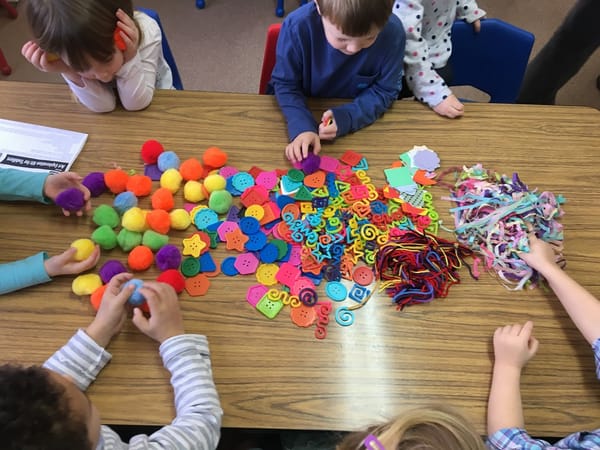
Place small objects, such as buttons, toy animals, or blocks, on the table. Ask children to count them aloud or group them into sets. This hands-on approach helps children connect numbers with actual quantities. You can also ask simple questions like “Which group has more?” or “Can you add one more?” to introduce basic math thinking.
12. Pattern Building Game
Create simple patterns using colored blocks or beads, such as red-blue-red-blue. Ask children to continue the pattern or create their own. Recognizing patterns helps develop early math and logical thinking skills. It also strengthens observation and attention to detail.
13. Mystery Bag Game
Place several small objects inside a bag. Children reach inside without looking and try to guess what they are touching. They describe the object using words like “smooth,” “round,” or “soft.” This sensory game builds descriptive language and strengthens tactile awareness.
14. Puzzle Time
Provide age-appropriate puzzles with large pieces. Children work alone or with a partner to complete the picture. Puzzle solving improves spatial reasoning, patience, and problem-solving skills. It also encourages teamwork when children collaborate to finish the puzzle.
15. Freeze Dance
Play music and let children dance freely. When the music stops, they must freeze in place like a statue. This game builds listening skills, rhythm awareness, and body control. It also provides a fun outlet for energy while teaching children to respond quickly to cues.
Related Reading
- Preschool Assessment
- Preschool Crafts
- Preschool Learning Activities
- Preschool Tracing Worksheets
- Daycare Vs Preschool
- Preschool Classroom Layout
- Preschool Playground Equipment
- Free Preschool Games
- Preschool Sight Words
- Preschool Math Activities
- How To Become A Preschool Teacher
- Preschool Prep
- Preschool Lesson Plan Template
- Noah's Ark Preschool
- Preschool Science Experiments
- Preschool Craft Ideas
- Creative Curriculum For Preschool
- Playing Preschool Curriculum
- Preschool Bulletin Board Ideas
- Christmas Crafts Preschool
- Spring Bulletin Board Ideas For Preschool
- Turkey Craft Preschool
- Preschool Classroom Layout
- Preschool Learning Games
- Free Preschool Games
Download Free 50,187+ Customised Coloring Pages for Learning
Printable coloring worksheets become learning tools when you layer intentional games onto them. A simple animal page transforms into a counting challenge when you ask children to find and circle five birds, or becomes a letter hunt when they search for objects starting with B. Colour-by-number pages teach numeral recognition and fine motor precision simultaneously. Pattern completion exercises (e.g., finish the sequence red, blue, red, blue) introduce early math concepts while children stay engaged with crayons in hand.
💡 Tip: Turn any coloring page into a multi-skill activity by adding simple challenges like "find three triangles" or "colour all the vowels blue" to maximise learning value.
Most educators waste hours searching Pinterest, Teachers Pay Teachers, and generic activity sites for printables aligned with their current themes or each child's interests. My Coloring Pages solves this by letting you customize pages based on learning goals—whether teaching seasons, animals, letters, or holidays. You can generate worksheets featuring a child's favourite characters practising the exact skill they need most, then print them immediately.
🎯 Key Point: Customized coloring pages eliminate time-consuming searches for relevant materials while ensuring every worksheet matches your current curriculum and student interests. "A child obsessed with dinosaurs will spend twenty focused minutes on a T-rex counting page but resist the same exercise featuring generic shapes." — Educational Psychology Research
Personalization extends attention spans and reduces friction between "time to learn" and "I don't want to." When the worksheet features something they already care about, the educational objective slips in without resistance. This targeted approach transforms reluctant learners into engaged participants who don't realize they're practicing essential skills.

These pages also support play-based learning without requiring you to create materials from scratch. Need cards for a memory-matching game? Print pairs of themed images. Running an alphabet treasure hunt? Generate letter pages featuring objects children recognize. Planning a story-building circle? Use character sheets that prompt narrative ideas. The pages become flexible resources that adapt to whatever developmental goal you're targeting.
Activity Type | Coloring Page Application | Skills Developed |
|---|---|---|
Memory Games | Print matching pairs | Visual recognition, concentration |
Treasure Hunts | Letter/number themed pages | Letter recognition, problem solving |
Story Building | Character illustrations | Language development, creativity |
Pattern Work | Sequence completion sheets | Math concepts, logical thinking |