10 Best Preschool Lesson Plan Templates for Teachers
Discover 10 preschool lesson plan templates from My Coloring Pages. Free, printable resources to streamline your teaching and engage young learners.


Planning engaging preschool activities often feels overwhelming when teachers struggle to organize curriculum themes, learning objectives, and hands-on experiences. A well-designed preschool lesson plan template transforms scattered ideas into structured daily schedules that keep children excited about learning. These templates help educators meet developmental milestones while ensuring every activity serves a clear educational purpose.
Effective lesson planning requires ready-to-use materials that complement weekly curriculum goals without demanding extensive preparation time. Teachers need printable resources that align with their teaching objectives, whether they're exploring science experiments, nature themes, or alphabet recognition. For comprehensive classroom materials that support any lesson plan, educators can access 49,000+ Free Coloring Pages designed to enhance meaningful learning experiences.
Summary
- Structured lesson planning directly impacts early childhood development outcomes. Research shows that 90% of brain development occurs before age 5, making these preschool years critical for building foundational skills. When teachers plan with clear learning objectives and sequential activities, children experience connected learning rather than disconnected moments, which strengthens neural pathways and concept retention across days and weeks.
- Play-based learning yields stronger developmental outcomes than direct-instruction models. A 2019 study in Child Development found that preschoolers in play-based programs demonstrated superior executive function skills and self-regulation compared to peers in direct-instruction classrooms, with effects persisting into elementary school. Hands-on exploration through sensory bins, dramatic play, and building activities teaches problem-solving and social skills more effectively than worksheet-based tasks.
- Research-backed curricula with specific learning objectives produce measurable academic gains. A 2021 study in Early Childhood Research Quarterly found that classrooms using structured goals (such as "use one-to-one correspondence to count up to five items" rather than vague aims like "explore numbers") showed 34% higher gains in early literacy and numeracy skills. Observable, specific objectives help teachers track progress and adjust instruction based on what children actually demonstrate, not what curriculum guides assume they should know.
- Lesson plan templates reduce teacher cognitive load while improving instructional consistency. Templates eliminate the blank-page problem by providing reusable structures that prompt educators to connect activities across developmental domains, prepare materials in advance, and anticipate transitions. This structure protects planning time, allowing teachers to focus on responsive instruction rather than administrative logistics, which matters especially for educators managing multiple grade levels with limited preparation periods.
- Thematic planning fosters compound learning by reinforcing the same concept across varied modalities. When Monday's ocean animal story connects to Tuesday's fish-counting activity and Thursday's water experiment, children develop a deeper understanding than when each day introduces unrelated content. Platforms that provide thousands of themed printables let teachers adapt quickly to student interests (such as shifting from general ocean animals to specifically sharks) without requiring hours of material preparation or curriculum redesign.
- My Coloring Pages addresses this need by offering 49,000+ FREE Coloring Pages that integrate into lesson plans across any theme, allowing teachers to pull relevant worksheets in seconds when student curiosity shifts or when activities need quick reinforcement materials that match specific learning objectives.
Table of Contents
- Importance of Preschool Lesson Plans
- What to Include in a Lesson Plan
- How to Make Preschool Lesson Plans
- 10 Best Preschool Lesson Plan Templates for Teachers
- Download 49,000+ FREE Customizable Preschool Lesson Plan Templates for Teachers
Importance of Preschool Lesson Plans
Preschool lesson planning creates intentional space where learning happens naturally: a simple coloring activity connects to color recognition, fine motor development, and emotional expression simultaneously.
🎯 Key Point: Every structured activity in preschool serves multiple developmental purposes simultaneously, maximizing learning opportunities through intentional design. "Well-planned preschool activities engage children across multiple developmental domains, creating rich learning experiences that support cognitive, physical, and social-emotional growth simultaneously." — Early Childhood Education Research
⚠️ Warning: Without proper lesson planning, even the best activities become missed opportunities for developmental growth and skill building.
What's the difference between chaotic and thriving classrooms?
The difference between a chaotic classroom and one where children thrive often comes down to whether the teacher has a clear sense of what today's activities are building toward.
Why does purposeful planning matter for brain development?
According to research from Wee Wons Daycare, 90% of a child's brain develops before age 5. Every circle time discussion, art project, and outdoor exploration either strengthens developmental milestones or becomes a missed opportunity. When educators plan with purpose, simple activities matter. A story about ocean animals on Monday becomes the foundation for counting fish on Tuesday, which leads to a water experiment on Thursday. Without that connection, children experience fragments instead of understanding.
What happens when teachers wing their lesson planning?
Many teachers managing twelve different lesson preparations across grade levels face overwhelming workloads that leave no time for thoughtful planning. When juggling cafeteria supervision, recess monitoring, and relief coverage, it's tempting to rely on whatever worked last year. That approach keeps you afloat but costs you the ability to build learning sequentially.
Why do children need connected learning experiences?
Children don't learn concepts in isolation. They need to practice, try different approaches, and make connections across days. When Monday's activity doesn't connect to Tuesday's, and Wednesday introduces something new without context, young minds struggle to build the neural pathways that make learning stick. Pattern recognition—understanding that "ocean" connects to "fish" connects to "water"—requires careful planning.
How do lesson plan templates protect creativity?
Lesson plan templates provide a reusable structure, eliminating the need to start from scratch each morning. Teachers fill in sections for weekly themes, circle time activities, learning centres, and outdoor play. The template prompts essential questions: What developmental goal does this serve? What materials do I need? How does today connect to yesterday? Intentional design doesn't stifle creativity; it protects it by handling the details so you can focus on moments that matter.
How does predictable structure support preschooler development?
Preschoolers feel safe when they know what's coming next. That predictability gives young children the emotional stability they need to take risks, ask questions, and explore without worry. A well-designed lesson plan builds rhythm into the day: morning circle, activity time, snack, outdoor play, story time. The structure becomes invisible scaffolding that enables learning.
Why does planning ahead make spontaneous teaching easier?
A solid plan gives you the confidence to shift direction when a child notices a bird outside the window, and everyone wants to discuss nests. You can pivot the afternoon story to a bird-themed book, pull out nest-building materials, or grab printable bird coloring pages that reinforce their curiosity. Platforms like My Coloring Pages offer thousands of themed printables that fit smoothly into teachable moments, turning unexpected interest into structured exploration without scrambling for resources.
How can you measure learning without losing the magic?
Clear learning objectives help you notice when a child who struggled with scissors now cuts confidently along a curved line, or when a student who rarely spoke during circle time volunteers answers during story discussions. Assessment in early childhood relies on observation, pattern recognition, and adjusting your approach when something isn't connecting, rather than grades.
Why does structured planning create better feedback loops?
When your lesson plan includes space for notes and observations, you create a feedback loop. You try an activity, watch how children respond, and improve it for next time. Perhaps the counting game worked better with physical objects than pictures. These insights emerge only when you plan purposefully and track what happens. Structured planning stops the chaos that disrupts early childhood classrooms: disorderly transitions, activities that fail due to missing materials, and disengagement from days that jump between disconnected tasks rather than flowing with purpose.
Related Reading
- Preschool Worksheets
- What Age Is Preschool
- Preschool Curriculum
- Preschool Age Range
- Preschool Vibes
- Preschool Homeschool Curriculum
- Preschool Games
- Worksheets For Preschool
- Preschool Education
- Free Preschool Worksheets Age 3–4
- Preschool Books
- What Age Do Kids Start Preschool
- Preschool Graduation
- Free Name Tracing Worksheets for Preschool
- Preschool Backpack
- All About Me Preschool
- Free Preschool Worksheets
- Preschool Self Defense
- What Should a Child Learn in Preschool
- Preschool vs Pre K
- Sight Words for Preschool
- Free Printable Preschool Worksheets Tracing Letters
- First Day of Preschool
- Preschool Math Worksheets
- Preschool Valentine Crafts for Parents
- Preschool Graduation Gifts
- Preschool Toys
- What Age Is Preschool and Kindergarten
- Preschool Quotes About Play
What to Include in a Lesson Plan
A preschool lesson plan needs enough structure to guide your day without turning every moment into a checklist. Include sections that clarify what you're teaching, how children will engage with it, what materials are needed, and how you'll assess learning. The best templates work like recipe cards: specific enough to repeat success, flexible enough to adjust for the children in front of you.
🎯 Key Point: Your lesson plan should serve as a flexible guide that balances structure with adaptability to meet individual children's needs in the moment. "The most effective lesson plans provide clear direction while maintaining the flexibility to respond to children's interests and developmental needs." — Early Childhood Education Research
💡 Tip: Think of your lesson plan as a roadmap rather than a rigid script. It should guide your teaching while allowing for meaningful detours when learning opportunities arise.
1. Developmental Alignment and Age Appropriateness
Every activity should match where children are, not where you wish they were. A three-year-old learning to hold scissors needs different support than a five-year-old ready for complex cutting patterns. Research from the National Association for the Education of Young Children (NAEYC, 2020) emphasizes that developmentally appropriate practice requires understanding both typical age ranges and individual variation.
How do you identify developmental domains in your lesson plan?
Your lesson plan should name the specific age group you're teaching and identify which developmental domains each activity addresses: cognitive, physical, social-emotional, or language. Asking three-year-olds to sit quietly for a 20-minute story will fail because their attention spans and impulse control haven't yet developed to that level. When your plan notes "ages 3-4, focus on gross motor coordination," you're building activities around jumping, climbing, and balance rather than fine motor tasks like beading or tracing. That specificity prevents the frustration of planning something your students aren't developmentally ready to enjoy.
2. Research-Based Learning Goals
Strong lesson plans specify what children should be able to do by the end of the activity. Rather than vague hopes like "explore colors," they include specific, observable outcomes: "identify and name primary colours when shown objects" or "use one-to-one correspondence to count up to five items." According to a 2021 study published in Early Childhood Research Quarterly, classrooms using research-backed curricula with clear learning objectives showed 34% higher gains in early literacy and numeracy skills than classrooms without structured goals.
Why does evidence-based planning matter for preschoolers?
Research-based planning matters because early childhood education includes many well-meaning activities that don't actually build skills. A craft project where the teacher does most of the work while children watch fails to develop fine motor skills or creative thinking. Evidence-based planning asks: What does research say about how four-year-olds learn patterns? What conditions help them transfer knowledge from one situation to another? Those answers shape how you structure the activity, not just what materials you use.
3. Flexibility for Individual Needs and Interests
Templates should include space for changes and additions. Some children need pictures or diagrams to help them learn, others need to take breaks and move around, and some will finish an activity quickly and need something harder. Your plan might list a main activity (sorting shapes by colour) alongside easier and harder versions: matching shapes that are the same for students starting out, and sorting by two different features for advanced students.
What tools make differentiation easier for busy teachers?
Platforms like My Coloring Pages enable differentiation. When teaching ocean animals, one student might focus on dolphins while another prefers jellyfish. The 49,000+ free coloring pages let you pull themed options so each child explores their interest while meeting the same learning goal: identifying sea creatures and their characteristics. Customization takes seconds, eliminating extra prep work.
How can lesson plans balance structure with spontaneous learning?
Flexibility also means leaving room for incidental learning. Your plan should have structure, but you don't need to plan every minute. When a child notices frost on the window in January, the best lesson plan lets you shift that afternoon's science activity to focus on ice and temperature without disrupting the entire week.
4. Play-Based Learning Opportunities
Young children learn by doing, touching, building, pretending, and experimenting. Your lesson plan should prioritise hands-on exploration: sensory bins, dramatic play, building blocks, and outdoor discovery. A 2022 report from the American Academy of Pediatrics found that play-based learning correlates with stronger executive function skills, better emotional regulation, and higher engagement than direct instruction models.
How do you structure intentional play activities?
Play-based learning has intentional structure. If your weekly theme is community helpers, your dramatic play area might become a post office with stamps, envelopes, and a mailbox. Children's mailings of letters build literacy awareness, social skills, and understanding of community roles. Document the materials you'll provide, how you'll introduce the scenario, and what skills you'll observe.
5. Red Flags: What Doesn't Belong
Some lesson plan templates focus on the wrong things. If a curriculum feels strict, with scripted language you must read word-for-word and no flexibility when children seem confused or disengaged, that's a warning sign. Preschoolers need responsive teaching, not performance of a predetermined script. Similarly, if the plan emphasizes testing or formal assessments over observation and interaction, it treats young children like older students.
Why do some templates miss the mark on child development?
Lack of evidence is another problem. Plans that don't mention research or explain why activities are set up a certain way often depend on how things have always been done rather than what actually works. Too much focus on worksheets or tasks that the teacher directs signals a misunderstanding of how young brains develop. If the plan leaves no time for free play, creative exploration, or self-initiated learning, it's missing what makes preschool education work well. The structure you choose shapes what becomes possible in your classroom, but only if the plan reflects how children actually learn.
How to Make Preschool Lesson Plans
Building a preschool lesson plan starts with choosing a template that includes clear sections for learning objectives, materials, activities, and assessment notes. The template serves as your thinking framework, prompting you to connect activities across the week rather than treating each day as a standalone event.
🎯 Key Point: A well-structured template is your foundation for consistent, connected learning experiences throughout the week. The difference between a plan that works and one that frustrates you by Wednesday comes down to whether you've thought ahead about transitions, prepared materials in advance, and left room for the unexpected moments when a child's question shifts the entire afternoon. You're creating conditions where learning can happen without scrambling.
⚠️ Warning: The biggest mistake new preschool teachers make is over-planning rigid activities without building in flexibility for teachable moments and natural transitions. "Effective preschool lesson planning requires 80% structure and 20% flexibility to accommodate the natural curiosity and energy of young learners." — Early Childhood Education Research, 2023
Essential Template Sections | Purpose |
|---|---|
Learning Objectives | Define what children will accomplish |
Materials List | Ensure everything is prepared in advance |
Activity Sequence | Plan smooth transitions between tasks |
Assessment Notes | Track individual progress and engagement |
1. Start With a Lesson Plan Template
A template eliminates the need for a blank page. Instead of staring at an empty document, you answer specific prompts: What's the weekly theme? Which developmental domains does this activity address? What materials do I need to gather before Monday morning? The structure reduces decision fatigue, which matters when managing a classroom of energetic four-year-olds while tracking attendance, communicating with parents, and supervising assistant teachers.
What essential elements should your template include?
Your template should include a title, date, and age group for future reference, since lessons for three-year-olds require adjustment for five-year-olds. Learning objectives should appear at the top, stated clearly enough that an observer could recognise what skills you're building. A materials section prevents the 9 AM realisation that you planned a painting activity but forgot to order tempera paint.
How does a daily schedule section create classroom structure?
The daily schedule section breaks your day into blocks: circle time, centre rotations, outdoor play, snack, and story time. This gives children the predictable rhythm that helps them feel secure while providing you with a roadmap to prevent transitions from descending into chaos.
2. Define Learning Objectives for the Lesson
Strong objectives name what children should be able to do, not what they should experience. "Explore shapes" is too vague. "Identify and name circle, square, and triangle when shown objects" gives you something you can see and measure. You'll know the lesson worked when a child points to a clock and says "circle" or notices the square window during outdoor time.
How do you align objectives with curriculum standards?
Objectives should connect to your curriculum standards while remaining appropriate for each child's age and stage. If your state's early learning guidelines require four-year-olds to demonstrate one-to-one correspondence when counting, your math activity might involve placing one sticker on each drawn flower while counting aloud. The objective is "use one-to-one correspondence to count up to ten items accurately."
Why does specificity matter in lesson planning?
This specificity protects you from planning activities that feel educational but don't build skills. A Pinterest-perfect craft where you do most of the work while children watch doesn't meet an objective. An art project where children practice cutting, gluing, and following multi-step instructions.
3. Center Around Children's Interests and Themes
Themes tie your week together, so learning builds up rather than breaks apart. If Monday introduces ocean animals through a story, Tuesday can explore counting fish; Wednesday can investigate what animals eat; Thursday can involve a water table experiment; and Friday can reinforce vocabulary with ocean-themed colouring pages.
Should themes come from children's interests or curriculum catalogs?
The theme shouldn't come from a curriculum catalog if it doesn't match what your students care about. When children keep bringing up construction trucks during outdoor play, build a week around vehicles: read books about how trucks work, set up a block area with ramps and construction toys, teach positional words (over, under, beside) using toy trucks, and create sorting activities with different vehicle types.
How can you adapt themes when children's interests shift mid-week?
Platforms like My Coloring Pages enable flexible planning. When a child's interest shifts during the week from ocean animals to sharks, the 49,000+ free coloring pages let you access themed pages in seconds, helping them explore that interest while developing fine motor skills and learning about colours.
4. Plan Circle Time and Daily Transitions
Circle time anchors your day through short, interactive 10–15-minute sessions. Use this time to introduce the day's theme via a song, brief story, or open-ended questions that engage children.
How do you accommodate different learning styles during circle time?
Not every child will sit cross-legged and stay still. Some need to stand or hold a small object to focus better. The goal is to engage kids, not enforce rules. If a child participates from the edge of the circle or moves while listening, that's acceptable as long as they don't disturb others.
What strategies help smooth transitions between activities?
Moving from one activity to another causes more behaviour problems than the activities themselves. Singing a five-minute warning song before cleanup gives children time to prepare mentally. A consistent "cleanup song" becomes a familiar signal that reduces resistance. Simple countdowns ("We're going outside in five minutes... now three minutes... now it's time") work better than sudden announcements.
5. Include Hands-On and Interactive Activities
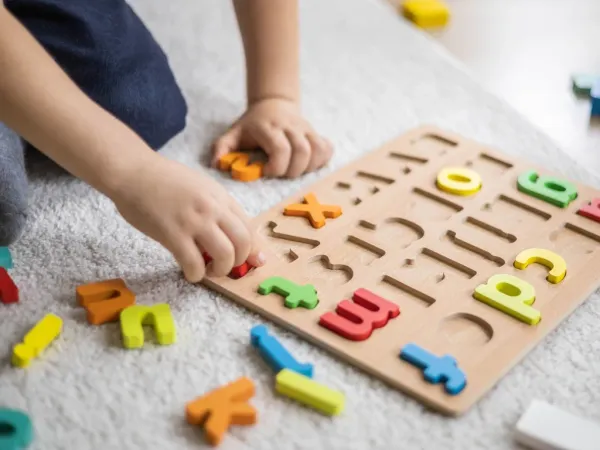
Preschoolers learn through physical engagement, not by sitting still. Your plan should include ample time for hands-on activities where children manipulate objects, explore cause and effect, and solve problems through experimentation. Sensory bins filled with rice and hidden objects teach sorting and grouping. Building blocks develop spatial reasoning and early engineering concepts. Dramatic play areas where children pretend to run a grocery store or veterinary clinic build language, social skills, and symbolic thinking.
What does research say about hands-on learning?
A 2019 study in Child Development found that children in play-based preschool programs exhibited stronger executive function skills and self-regulation than peers in direct-instruction classrooms, with effects lasting into elementary school.
How can art projects encourage creativity?
Art projects work when children make real choices about colour, composition, and materials. If every finished product looks identical, the activity is focused on following directions, not creative expression. Provide materials and a loose prompt ("create something that reminds you of fall") rather than a model to copy.
6. Build in Adaptability and Flexibility
Your plan needs structure, but shouldn't become a script you perform regardless of circumstances. If children seem restless during a planned activity, adapt it—perhaps the story is too long for their current energy level. Read half, then move to a movement activity, then return to the story later if interest returns. Flexibility means preparing for the child who finishes in three minutes and the one who needs fifteen. Include extension ideas for fast finishers and modifications for children needing support. This prevents the boredom and frustration that lead to behavioural challenges.
How do you plan for unexpected disruptions in your preschool day?
Weather changes plans. Sickness changes plans. A fire drill changes plans. Build extra time into your schedule so unexpected disruptions don't derail the day. If an activity takes forty minutes instead of thirty because children are deeply engaged, that's ideal.
10 Best Preschool Lesson Plan Templates for Teachers
The right template reduces mental load, creates consistency children can rely on, and provides a reusable structure that improves with use. What separates a genuinely helpful template from one that collects digital dust is whether it matches how you teach, not how curriculum designers think you should teach.
🎯 Key Point: The most effective preschool lesson plan templates are those that align with your natural teaching style and classroom flow, rather than forcing you to adapt to rigid structures. "Teachers who use personalized lesson plan templates report 40% less preparation time and higher student engagement compared to generic formats." — Early Childhood Education Research, 2023

💡 Tip: Look for templates that offer flexibility in timing, adaptable activity sections, and space for real-time adjustments based on your students' energy levels and learning pace.
1. Scholastic Teachables
Scholastic Teachables offers over 500 preschool lesson plans backed by decades of classroom research. Each includes complete lesson structures, including learning goals, step-by-step instructions, and printable worksheets, covering literacy, maths, science, and social-emotional learning. Materials align with early learning standards and provide administrators with the required documentation.
What themed resources does Scholastic provide?
The platform includes 30,000+ worksheets organized by theme: animals, seasons, community helpers, early numeracy, and letter recognition. Teaching a farm animals unit? You'll find coordinated reading passages, counting exercises, and vocabulary builders designed to work together, saving hours over assembling resources from scattered sources.
Who benefits most from Scholastic's structured approach?
This works best for teachers who want lesson plans matching their classroom instruction without significant modification. If your school must demonstrate how lessons meet certain standards, Scholastic's structure provides that documentation without extra work. The trade-off is reduced freedom: you adjust their framework rather than building from scratch.
2. Teachers Pay Teachers
Teachers Pay Teachers is a marketplace where educators share lesson plans that have been tested in real classrooms. You'll find daily templates, weekly planners, and thematic units (some free, others a few dollars) with variety to match your teaching style and classroom needs. The advantage is that these materials are authentic. They're not corporate curriculum packages but tools built by teachers who manage the same student numbers, prep time, and the need for engaging activities. Reviews from other teachers show what worked, what didn't, and what changes helped.
What should you watch out for when browsing?
The challenge is inconsistency. Quality varies because anyone can upload materials, so you'll need to determine whether a template fits your needs. When you find creators whose approach matches yours, their entire catalog often becomes a reliable resource you return to repeatedly.
3. Pre-K Pages
Pre-K Pages provides editable lesson plan templates built around play-based learning and early childhood development research. Templates include sections for learning centers, whole-group activities, small-group instruction, and outdoor exploration, with prompts to identify which developmental domain each activity addresses and how it supports specific early learning standards.
How do the planning calendars help structure learning?
Planning calendars and curriculum examples shows how to organize weeks and months so learning builds progressively. If you're teaching patterns in maths, the template helps you plan how that concept appears during circle time, reappears in a sorting activity at the maths centre, and gets reinforced through a pattern-based art project later in the week.
Who benefits most from this structured approach?
This template works well for teachers who want structure without strict rules. It provides a framework that ensures you've considered how activities connect, what materials you need, and how you'll measure children's progress. The editable format lets you adapt sections to match your classroom's rhythm.
4. Stay At Home Educator
Stay At Home Educator offers a free weekly lesson-planning template organized around literacy activities, math concepts, sensory play, fine motor tasks, and gross motor development. Each section includes activity suggestions tied to specific learning goals, clarifying why each activity belongs in your plan.
How does the weekly breakdown help you maintain balance?
The weekly breakdown lets you see the balance at a glance. If you've planned three literacy activities but only one maths experience, you can adjust before the week starts rather than discovering mid-week that you've neglected numeracy. The format works for both classroom teachers and homeschool educators because it focuses on developmental domains rather than institutional requirements.
How does this template provide educators with flexibility?
This template provides guidance without prescribing exact steps. It suggests activities but doesn't require you to follow them precisely. If a recommended activity doesn't suit your students' interests, swap it for something else that meets the same goal. The structure keeps you organized while respecting your professional judgment about your students' needs.
5. Kidz Exec Excellence
The Teacher's Toolkit from Kidz Exec Excellence provides free templates with clear planning sections that support whole-child development. A single block-building activity develops spatial reasoning (thinking skills), hand-eye coordination (physical skills), turn-taking (social-emotional skills), and positional vocabulary (language skills). The templates use straightforward outlines that work well for newer teachers. Sections specify where information belongs: learning objective, materials needed, activity steps, assessment notes, and differentiation strategies. This simplicity reduces cognitive load in a busy preschool classroom, allowing you to focus on teaching rather than on decoding planning formats.
6. PicMonkey
PicMonkey provides ready-made lesson plan templates you can customise to your needs. Its drag-and-drop design tools simplify creation, allowing you to build colour-coded schedules, add images to demonstrate activities, and design layouts that match your thinking style. This visual approach reduces friction between planning and implementation, especially if you process information more quickly through visuals than through text-heavy documents.
How does the visual layout help with weekly planning?
Weekly and subject-based layouts let you see everything at once without scrolling through pages. Create a one-page overview showing Monday through Friday with activity blocks colour-coded by developmental domain. This visual clarity helps you spot gaps or redundancies before the week begins.
Who benefits most from this template approach?
This template suits teachers who think in pictures and want planning tools that feel like design projects rather than paperwork. The customization lets you build a template that fits your workflow, rather than forcing you into someone else's system.
7. Lessonspace
Lessonspace offers digital lesson plan templates for interactive whiteboards and online teaching environments. Collaborative planning tools let you build lessons using editable sticky notes, embed resources directly, and share templates with co-teachers in real time. The platform connects planning to delivery for hybrid or digitally equipped classrooms.
How does real-time collaboration benefit teaching teams?
Real-time collaboration ensures assistant teachers and specialists understand the day's plan without lengthy explanations. Everyone sees the same schedule, can add notes or questions, and stays aligned when schedules change.
When does this digital approach work best?
This works best for teachers comfortable with technology in settings where digital tools are already standard. If your classroom relies primarily on physical materials and traditional methods, the focus on digital tools may add unnecessary complexity.
8. Pre-K Printable Fun
Pre-K Printable Fun provides thematic lesson plans built around play-based learning and hands-on exploration. Each theme (ocean animals, space, seasons, community helpers) includes coordinated activities across learning centres, art projects, sensory experiences, and outdoor play, with printable materials supporting the week's focus.
How do the learning center ideas reinforce weekly concepts?
The learning center ideas show how to set up dramatic play areas, sensory bins, and manipulative activities that reinforce the weekly concept. For a construction theme, the dramatic play area becomes a building site with toy tools, the sensory bin holds sand and small vehicles, and the math center features measuring activities with blocks and rulers. This template works well for teachers who organize curriculum around themes and want interconnected activities. The printables save prep time, but the real value lies in seeing how different activity types reinforce the same concept through varied modalities.
9. Wayzata Bay Center Resources
Wayzata Bay Center Resources offers free printable lesson plan templates in multiple formats: daily schedules, weekly overviews, and monthly planning calendars. The simple structure captures essential information (time blocks, activity names, materials needed, learning objectives) without unnecessary formatting.
When do printable formats work best for teachers?
The printable format works when you prefer physical planning documents, you can reference throughout the day without opening a device. You can post the daily schedule where assistant teachers and specialists can see it, make handwritten notes during activities, and file completed plans for documentation without managing digital files. These templates work best when you need quick, useful planning tools without learning new software or navigating complex layouts.
10. My Coloring Pages (Best for Activity Integration)
My Coloring Pages offers over 49,000 customizable coloring pages and worksheets you can integrate directly into your lesson plans for any topic or learning goal. When teaching about animal habitats, you can quickly print pages depicting rainforests, oceans, deserts, and arctic environments. When your class becomes interested in dinosaurs mid-week, you can explore that interest immediately without waiting for next year's curriculum.
How does customization reinforce specific learning concepts?
Customization means that activities reinforce specific concepts rather than serving as generic time-fillers. A science lesson on plant growth pairs with coloring pages that show seed-to-flower sequences. An alphabet lesson on the letter B includes printable pages featuring bears, boats, and butterflies. A shapes unit provides coloring activities where children identify and colour circles, squares, and triangles embedded in pictures.
What makes lesson planning faster and more responsive?
The platform removes the barrier between planning and execution. You won't spend evenings searching for materials that match tomorrow's lesson. Identify the concept, pull relevant pages, and have printable activities ready before children arrive. That speed matters when adapting to student interests or filling unexpected gaps in your schedule. The advantage arises when themes shift in response to children's interests. Traditional curriculum packages lock you into predetermined sequences. When your students want to learn about weather after a thunderstorm, My Coloring Pages lets you build an entire weather unit in minutes: cloud types, rain cycles, seasonal changes, and weather safety.
How do you choose the best lesson plan template for your teaching style?
The best template depends on how you teach. For organized, standards-aligned plans with built-in assessments, try Scholastic Teachables or Pre-K Pages. For creative, classroom-tested ideas from other educators, Teachers Pay Teachers offers variety and authenticity. For simple, printable formats that don't require digital fluency, Stay At Home Educator or Wayzata Bay Center Resources reduce complexity.
What makes a template work for theme-based teaching?
For teachers who organize around themes and need flexible activities that adapt to student interests, customizable printables integrate smoothly into any planning system without dictating your approach. The template should make planning faster and teaching more responsive, not add administrative work that pulls you away from your students. Having the right template is only half the equation when you need materials that work.
Related Reading
- Preschool Assessment
- Preschool Crafts
- Preschool Learning Activities
- Preschool Tracing Worksheets
- Daycare Vs Preschool
- Preschool Classroom Layout
- Preschool Playground Equipment
- Preschool Art Activities
- Christmas Crafts Preschool
- Spring Bulletin Board Ideas For Preschool
- Turkey Craft Preschool
- Preschool Sight Words
- Preschool Math Activities
- How To Become A Preschool Teacher
- Preschool Prep
- Preschool Lesson Plan Template
- Noah's Ark Preschool
- Preschool Classroom Layout
- Preschool Science Experiments
- Christmas Crafts Preschool
- Preschool Learning Games
- Free Preschool Games
- Creative Curriculum For Preschool
- Playing Preschool Curriculum
- Preschool Art Activities
- Turkey Craft Preschool
- Preschool Bulletin Board Ideas
Download 49,000+ FREE Customizable Preschool Lesson Plan Templates for Teachers
Materials matter as much as structure. A thoughtful weekly plan aligned with developmental standards won't engage children if activities don't connect to their current interests. Having instant access to thousands of themed printables transforms what's possible in your classroom without adding hours to prep time.
🎯 Key Point: The best lesson plans combine solid structure with flexible, interest-driven materials that adapt to children's curiosity in real-time.
With 49,000+ free coloring pages and worksheets at My Coloring Pages, you can turn any lesson theme into a hands-on activity in seconds. Our collection helps you teach about animals by offering printable pages showing farm animals, jungle creatures, or ocean life that reinforce vocabulary while building fine motor skills. Exploring seasons? Our themed pages feature autumn leaves, winter snowflakes, spring flowers, or summer beach scenes for discussion. Focusing on alphabet recognition? Our letter-specific worksheets help children identify and color objects starting with B, trace the letter shape, and practice writing it independently. "Having instant access to thousands of themed printables changes what's possible in your classroom without adding hours to prep time." — Educational Resource Planning, 2024
Theme Category | Available Resources | Skills Developed |
|---|---|---|
Animals | Farm, jungle, ocean life pages | Vocabulary, fine motor skills |
Seasons | Leaves, snowflakes, flowers, beach scenes | Observation, discussion skills |
Alphabet | Letter-specific worksheets | Recognition, tracing, writing |
Preschoolers' interests shift faster than traditional curriculum packages can accommodate. When a child notices a butterfly during outdoor time, and everyone wants to talk about insects, you don't wait until spring's unit. You search "butterfly," download pages showing different species and life cycles, and have an activity ready before circle time ends. That responsiveness turns spontaneous questions into extended learning opportunities.
💡 Tip: Keep a running list of children's questions and interests throughout the week, then use your free resource library to build next week's activities around their natural curiosity.
Choose a worksheet matching your weekly topic, include it in your lesson plan template under the appropriate time block, and let students color, observe, and discuss. The coloring isn't the lesson—it's the vehicle that keeps hands busy while minds process new concepts, practise following instructions, and build hand strength that supports writing.
⚠️ Warning: Coloring activities work best when paired with meaningful discussion and vocabulary building. The real learning happens through conversation, not the physical activity alone.