55 Best Preschool Math Activity Ideas for Hands-on Learning
Discover 55 preschool math activity ideas that make learning fun! My Coloring Pages shares hands-on games and exercises to boost early math skills.

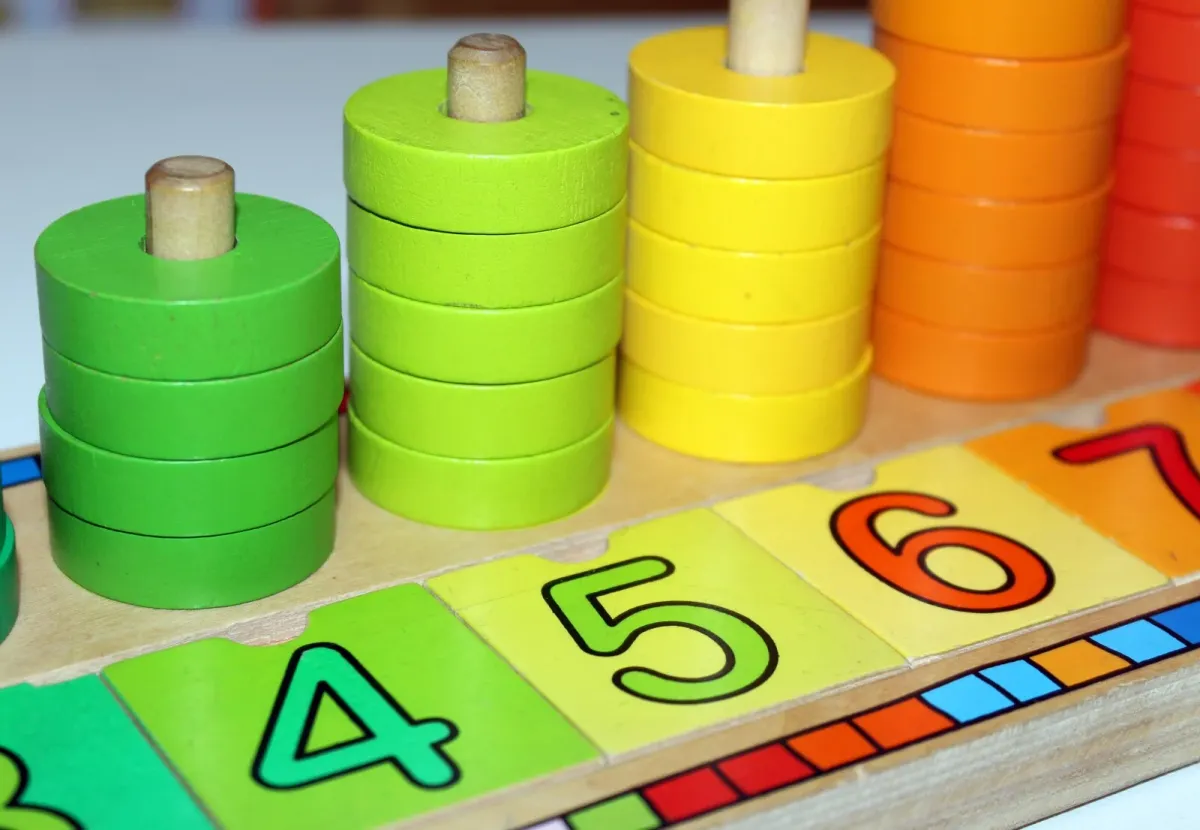
Preschoolers naturally engage with math concepts when they count crackers at snack time, stack blocks by size, and sort toys into organized piles. These everyday moments reveal how young children instinctively understand numbers, patterns, and problem-solving through play. Building on these natural curiosities through intentional preschool activities transforms simple interactions into powerful learning experiences that prepare children for success in kindergarten.
Creating these meaningful learning moments requires the right resources that make abstract concepts tangible and engaging. Quality materials help turn counting, shapes, and number recognition into hands-on experiences that capture young learners' attention and enthusiasm. Parents and educators can download 49,790+ free coloring pages that transform math learning into colorful, interactive activities preschoolers genuinely enjoy completing.
Summary
- Early math skills predict later academic achievement more strongly than early reading skills, according to the Learning Policy Institute. A 1 standard deviation increase in preschool mathematics achievement correlates with a 0.31 standard deviation increase in mathematics achievement by 5th grade (Child Development journal). This connection persists because mathematical thinking builds cognitive architecture for logical reasoning and spatial awareness that transfers across all subjects.
- Typical preschools dedicate just 58 seconds out of six hours per day to math learning. This gap exists because adults miss the mathematical potential in activities children already love, instead of searching for worksheets, and instead of recognizing that sorting toys, counting snacks, and comparing tower heights all qualify as legitimate forms of mathematical education. The learning happens in two-minute bursts throughout the day rather than formal thirty-minute sessions.
- Mathematical activities during ages three to five create neural pathways that make problem-solving feel natural rather than threatening when formal academics arrive. When a four-year-old figures out that three blocks won't fit in a space designed for two, they're practicing the same cycle (observe, predict, test, revise) that underlies scientific thinking and appears in every domain requiring critical reasoning.
- Early mathematical vocabulary enhances communication precision beyond everyday language. Words like "triangle," "fewer," "between," and "next" give children tools to describe spatial relationships, quantities, and sequences that would otherwise remain vague. This specialized language doesn't replace conversation but expands it, teaching turn-taking and the idea that language serves functional purposes beyond expressing needs or emotions.
- Activities that combine movement, sensory input, and real-world context produce stronger retention than screen-based or worksheet approaches. Children remember what they touch, build, and manipulate because preschoolers learn through experimentation rather than instruction. The strongest activities disguise learning so thoroughly that children request repetition without realizing they're practicing counting, sorting, or measurement.
- My Coloring Pages addresses the friction between recognizing that children need math practice and getting them to engage with it by offering 49,790+ free coloring pages that transform counting, patterns, and shapes into creative projects children choose to finish rather than resist.
Table of Contents
- When Should Preschoolers Learn Maths
- Importance of Learning Maths for Preschoolers
- How to Make Maths Fun for Preschoolers
- 55 Best Preschool Math Activity Ideas
- Download 49,790+ Free Math Worksheets for Preschoolers
When Should Preschoolers Learn Maths
Math learning starts around age three and remains important through age five, when children's brains rapidly absorb logic, patterns, and spatial relationships. Introducing math thinking through play and everyday experiences builds the foundation that makes formal schooling feel natural rather than overwhelming.
🎯 Key Point: The preschool years between ages 3-5 represent a critical window when children's developing brains are most receptive to mathematical concepts and logical thinking patterns.
"Children's brains develop spatial reasoning and pattern recognition most rapidly during the preschool years, making this the optimal time for foundational math learning." — Early Childhood Development Research, 2023
💡 Tip: Start with simple counting games and shape recognition during daily activities like cooking, sorting toys, or walking outside - this makes math learning feel like natural play rather than formal instruction.
Why do myths about early math learning persist?
The idea that preschoolers are too young for maths stems from conflating "maths" with worksheets and timed tests. Early maths actually looks like counting crackers at snack time, comparing tower heights, or noticing that red blocks make a square. According to the National Association for the Education of Young Children, children between the ages of three and five naturally explore mathematical concepts through play. They're building cognitive pathways for problem-solving, and missing this window means playing catch-up later when abstract concepts arrive without that experiential foundation.
Mathematical Learning Begins in Infancy
Babies understand more about quantity and sequence than most people realize. Between zero and twelve months, infants grasp concepts like size comparison and sequencing—understanding that lifting a shirt means feeding comes next. By their first birthday, babies begin to understand spatial separation and object permanence, both of which require basic logical thinking. This foundational stage matters because it establishes pattern recognition before language fully develops. When a seven-month-old learns that dropping a spoon produces a sound and reaction, they're experimenting with cause and effect: the same logical structure underlying addition and subtraction years later.
The Toddler Years Build Number Awareness
Between ages one and two, children shift from recognizing patterns to actively working with numbers and shapes. Toddlers begin saying basic numbers (often one through three) without connecting those words to exact amounts. They start naming shapes, though accuracy varies: everything round might be a "ball" for months. Some can show early one-to-one correspondence, correctly answering "how many?" when shown two fingers. Toddlers learn through repetition and error, not instruction, requiring dozens of exposures for a concept to solidify. Repeating "triangle" for the hundredth time is what this developmental stage requires.
Ages Three to Four: The Math Coming-of-Age Phase
Preschoolers between the ages of 3 and 4 experience what many educators call the "math coming-of-age" period. Cognitive abilities suddenly connect: children begin counting to twenty with reasonable accuracy, understand days of the week as sequential units, and can follow multi-step directions. These connected capabilities signal readiness for more complex mathematical thinking.
Why does play-based learning work better than worksheets?
Research from the National Institute for Early Education Research shows that children who learn math through play-based activities develop stronger number sense than those taught through worksheets and drills. Counting toys during cleanup, comparing cup sizes, or building block towers and discussing height differences all constitute genuine mathematical education.
How can everyday activities become math lessons?
Mathematical learning at this age happens in two-minute bursts throughout the day, not in thirty-minute formal sessions. The parent who asks their four-year-old to set the table for "three people" teaches one-to-one correspondence. The caregiver who lets their preschooler pour water between containers during bath time demonstrates volume and comparison. Platforms like My Coloring Pages recognize that preschool math education works best when it feels like play rather than pressure. Our 49,790+ free coloring pages reinforce counting, shape recognition, and pattern identification through activities children enjoy. A coloring page featuring numbered objects transforms rote counting into a creative project, building fine motor skills alongside mathematical thinking.
When Formal Pressure Arrives Too Early
Kindergarten expectations have changed significantly. What used to begin in first or second grade now appears in the kindergarten curriculum. Parents report shock when their five-year-old faces timed maths exercises and age-inappropriate homework. Teachers say administrators have pressured them to abandon play-based learning centres in favour of constant academic rigour and testing, even for children who started school weeks earlier.
What happens when academic pressure does not match young children's developmental needs?
This compression creates a mismatch between what young brains need and what institutional systems demand. The preschooler who would thrive exploring math through building blocks and counting games instead faces worksheets and performance anxiety. Research consistently shows that early academic pressure without sufficient play produces children who connect learning with stress rather than curiosity, not better long-term outcomes.
How can everyday activities naturally build mathematical thinking?
The answer isn't to wait before teaching maths. Instead, we should see ages three to five as a special time to help young children develop mathematical thinking through enjoyable experiences that match how they naturally learn. A parent who lets their three-year-old sort laundry by colour teaches sorting and grouping. A caregiver who lets their four-year-old help cook and measure ingredients demonstrates fractions and amounts. These moments require no special training or credentials: everyday life already contains mathematical ideas waiting to be noticed. Understanding why this early foundation matters changes how we think about those first learning experiences.
Related Reading
- Preschool Worksheets
- What Age Is Preschool
- Preschool Curriculum
- Preschool Age Range
- Preschool Vibes
- Preschool Homeschool Curriculum
- Preschool Games
- Worksheets For Preschool
- Preschool Education
- Free Preschool Worksheets Age 3–4
- Preschool Books
- What Age Do Kids Start Preschool
- Preschool Graduation
- Free Name Tracing Worksheets for Preschool
- Preschool Backpack
- All About Me Preschool
- Free Preschool Worksheets
- Preschool Self Defense
- What Should a Child Learn in Preschool
- Preschool vs Pre K
- Sight Words for Preschool
- Free Printable Preschool Worksheets Tracing Letters
- First Day of Preschool
- Preschool Math Worksheets
- Preschool Valentine Crafts for Parents
- Preschool Graduation Gifts
- Preschool Toys
- What Age Is Preschool and Kindergarten
- Preschool Quotes About Play
Importance of Learning Maths for Preschoolers
Early math thinking shapes how children approach problems for the rest of their lives. Research from the Learning Policy Institute confirms that early math skills are the strongest predictor of later academic achievement, more so than early reading skills. It's about building the thinking skills that support logical reasoning, spatial awareness, and the confidence to tackle challenges systematically rather than emotionally.
🔑 Key Takeaway: Early math education isn't about numbers—it's about developing critical thinking patterns that children will use across all subjects and life situations. "Early math skills are the strongest predictor of later academic achievement, more so than early reading skills." — Learning Policy Institute Research
Math activities during the preschool years change how young brains process information, solve problems, and understand the physical world around them.
💡 Research Insight: Preschool math exposure rewires developing neural pathways, creating stronger connections for problem-solving and logical reasoning that persist throughout childhood and beyond.
Problem-Solving Becomes Second Nature
When a four-year-old figures out that three blocks won't fit in a space designed for two, they're identifying a constraint, testing a hypothesis, and adjusting their approach based on evidence. This cycle—observe, predict, test, revise—forms the foundation of scientific thinking and appears in every domain requiring critical reasoning. Math activities create safe spaces for experimentation. Sorting toys by size teaches classification. Counting steps while climbing stairs introduces sequence and prediction. Arranging crackers into groups demonstrates division and fair distribution. Each interaction builds neural pathways that make problem-solving feel natural rather than threatening when formal academics arrive.
Cognitive Skills Develop Through Pattern Recognition
Kids improve their focus and memory by working with mathematical concepts. Sorting objects by colour or shape requires sustained attention and holding multiple categories in mind simultaneously. These skills help children follow multi-step directions, remember routines, and persist through challenging activities. A Child Development journal study by Watts et al. found that a 1 standard deviation increase in preschool mathematics achievement was associated with a 0.31 standard deviation increase in 5th grade mathematics achievement. The thinking habits formed during early mathematical play persist because they become automatic.
Language Expands Beyond Everyday Vocabulary
Math helps people communicate with precision. Words like "triangle," "fewer," "between," and "next" give children tools to describe what they see with specificity that everyday language cannot provide. This mathematical vocabulary improves conversation, enabling children to express where things are, how many there are, and what order they're in—details that would otherwise be difficult to explain. Talking about math concepts builds listening skills. When a caregiver asks, "Which tower is taller?" the child must understand the question, compare objects, and explain their thinking. These conversations teach children to take turns and demonstrate that language serves purposes beyond expressing needs or feelings.
Independence Grows Through Practical Application
Understanding basic amounts and measurements gives preschoolers control over their daily routines. The child who knows they need two shoes, one for each foot, or that snack time requires four cups for four people, gains confidence completing tasks without constant adult help. This practical mathematics reduces frustration and builds self-reliance. Time concepts work similarly. When children understand that "five more minutes" comes before cleanup, or that bedtime follows bath time, they develop internal frameworks for managing transitions and controlling their behaviour.
Social Skills Develop During Collaborative Activities
Math games and group activities create natural opportunities for collaboration. Building block structures together require discussion about placement. Board games teach turn-taking and rule-following. Sharing tools during sorting activities develops resource management and patience. These interactions matter because they happen around concrete goals rather than abstract social rules. A child who struggles with "be nice" often understands "we each get five blocks" perfectly well. Mathematical structures provide clear, fair frameworks that make social cooperation feel logical rather than arbitrary.
How does hands-on math strengthen fine motor control?
Tracing numbers, arranging small counting objects, or stacking blocks by size require precise hand movements and eye-hand coordination. These activities strengthen the muscle control and dexterity needed for writing, buttoning clothes, and using utensils. Preschoolers develop thinking and motor skills simultaneously during hands-on math play.
Where can parents find free printable math activities?
Parents often feel overwhelmed by the abundance of age-appropriate materials available online, most of which require purchase or a subscription. Platforms like My Coloring Pages offer thousands of free coloring pages centred on counting, shapes, and patterns. Our collection provides parents with printable activities that combine fine motor practice with mathematical thinking through creative projects children want to complete.
Sequence and Time Concepts Create Order
Understanding that events happen in a predictable order helps preschoolers make sense of their world. Learning days of the week, recognizing that breakfast comes before lunch, or following recipe steps in sequence all rely on mathematical thinking about order and progression. These concepts reduce anxiety by making the world feel understandable rather than random. Sequencing supports memory development. When children organize information in time order, they remember details more effectively than when events feel scattered. This skill transfers directly to storytelling, following directions, and understanding cause-and-effect relationships.
How does curiosity transform into a mathematical learning tool?
Math exploration turns everyday objects into puzzles worth investigating. How many leaves fell from that tree? Which container holds more sand? What happens if we arrange these toys from smallest to largest? Once children develop the habit of looking for patterns and relationships in their environment, these questions emerge naturally.
Why does this investigative mindset persist beyond preschool?
This investigative mindset continues past preschool. Children who learn to ask "how many?" and "what if?" approach new situations with engagement rather than passivity. They expect the world to make sense and feel confident in their ability to figure things out through observation and experimentation. The challenge is making these concepts feel like a discovery rather than an obligation.
How to Make Maths Fun for Preschoolers
According to research on preschool math instruction, preschools spend only 58 seconds out of six hours each day on math learning. Adults miss the math learning embedded in activities children already enjoy because we expect worksheets rather than recognizing the interesting math happening around us.

🎯 Key Point: The biggest opportunity for math learning isn't in formal lessons—it's in the everyday activities your preschooler already loves doing. "Preschools spend only 58 seconds out of six hours each day on math learning, yet math concepts are embedded in activities children naturally enjoy." — Lillio Research on Early Math Skills

⚠️ Warning: Don't fall into the worksheet trap! Real math learning for preschoolers happens through play, exploration, and hands-on activities that feel like fun, not work.
How can you spot math learning in everyday play?
Making maths fun means viewing everyday moments through a mathematical lens. When a three-year-old sorts toy cars by colour, they're organizing things into groups. When they build a tower and knock it down repeatedly, they're testing balance and height. Your role is to notice these moments and occasionally add a question or challenge that deepens their thinking without diminishing the fun.
How can board games become math learning opportunities?
Board games made for preschoolers embed mathematical concepts you can help children notice. Dice teach counting and demonstrate chance; spinners introduce probability. Moving pieces across spaces helps children practise counting sequentially and understand spatial relationships. Take time to let children count aloud, compare numbers, and predict outcomes.
Why do card games make math more engaging?
Card games work the same way. Go Fish requires matching and memory. War teaches comparison (which number is bigger?). Children tolerate repetition in games that would bore them in worksheet form because games have stakes, tension, and social interaction. They care about winning, which means they care about getting the maths right.
How do puzzles build mathematical thinking skills?
Puzzles combine spatial reasoning with problem-solving in satisfying ways. Jigsaw puzzles teach shape recognition and rotation. Tangrams introduce geometry through hands-on manipulation. Sudoku-style puzzles adapted for preschoolers (using shapes or colours instead of numbers) build logical thinking without requiring number fluency. Completion provides immediate feedback.
How can everyday activities become math learning opportunities?
Snack time becomes a counting exercise when you ask, "How many crackers do you have?" Cleanup transforms into sorting practice when you suggest grouping blocks by colour or size. Getting dressed introduces sequencing (first socks, then shoes) and pairing (two shoes, one for each foot). These moments build mathematical vocabulary and thinking patterns through constant exposure.
Why does cooking provide such rich mathematical learning?
Cooking offers numerous math learning opportunities. Measuring cups teach volume and fractions. Timers demonstrate duration and sequencing. Following recipe steps shows that order matters and tasks must occur in the correct sequence. A four-year-old who measures flour and counts eggs sees math as a tool that produces something real and delicious. That connection between abstract ideas and tangible results is more important than most curriculum designers recognize.
What makes coloring pages effective for preschool math activities?
Most families search across multiple websites for printable activities, buy workbooks children won't use, or pay for platforms that promise engagement but deliver only digital worksheets. My Coloring Pages solves this by offering 49,790+ free coloring pages centred on counting, shapes, and patterns. Rather than fighting with a preschooler over math worksheets, parents can access printable activities that combine fine motor skill development with math concepts through creative projects children want to complete. A coloring page with numbered objects or geometric patterns feels like art, not homework.
What makes educational technology effective for preschoolers?
Educational apps work well because they provide immediate feedback and automatically adjust difficulty—something paper worksheets cannot do. A good app detects when a child struggles to count past 10 and provides additional practice at that level before advancing. It celebrates small wins with animations or sounds that feel rewarding without being excessive. Preschoolers learn through trial and error, and digital tools can respond to thousands of attempts without frustration or fatigue.
How do you choose quality math apps over flashy games?
Most maths apps for young children are either too simple (fancy flashcards) or too focused on games (rewards over learning). Look for apps that present real maths challenges through play: building virtual structures that require spatial planning, sorting objects that respond to touch and movement, or solving puzzles that demand logical thinking rather than random tapping. The best apps feel like toys that happen to teach, not lessons disguised as games.
How do group activities transform math learning?
Group activities transform maths from an isolated struggle into a collaborative problem-solving process. When two preschoolers build a block tower together, they discuss how high it should be, how to balance it, and what's fair. When three children sort toys, they create groups, compare quantities, and explain their sorting logic. The social element provides motivation that solitary work lacks: children want to help, impress their peers, and support their team.
What's the best way to structure collaborative challenges?
Set up these collaborations loosely. Give a goal (build the tallest tower using twenty blocks, sort these objects into three groups, create a pattern using these shapes), but let children figure out how to do it. Don't correct them immediately when they struggle. Talking it through, trying different approaches, and eventually succeeding or learning from failure all develop mathematical thinking. Your job is to set up the conditions, then step back.
How can silly scenarios make math memorable?
Silly scenarios make maths concepts stick in memory. Ask funny questions that require real maths to answer: "If a dinosaur ate three cookies and then two more, how many cookies did the dinosaur eat?" The silliness helps children remember the addition problem. Deliberately count wrong—"one, two, five, seventeen"—and let children correct you. They enjoy catching adult mistakes, and correcting you reinforces their counting skills.
Why do math jokes work for preschoolers?
Math jokes work for older preschoolers who understand wordplay. "Why was six afraid of seven? Because seven ate nine!" The joke makes numbers feel fun rather than serious. Funny videos featuring counting or shapes provide breaks without interrupting the math lesson. Humor demonstrates that this subject needn't cause worry or stress.
How should we balance fun and learning expectations?
The mistake most adults make is treating fun and learning as separate things. Preschoolers don't experience that division: play is learning. The challenge is maintaining that unity as academic expectations and pressure grow. When you prioritize engagement over assessment and curiosity over completion, you're not lowering standards. You're honouring how young brains build mathematical understanding.
Related Reading
- Preschool Assessment
- Preschool Crafts
- Preschool Learning Activities
- Preschool Tracing Worksheets
- Daycare Vs Preschool
- Preschool Classroom Layout
- Preschool Playground Equipment
- Preschool Art Activities
- Christmas Crafts Preschool
- Spring Bulletin Board Ideas For Preschool
- Turkey Craft Preschool
- Preschool Sight Words
- Preschool Math Activities
- How To Become A Preschool Teacher
- Preschool Prep
- Preschool Lesson Plan Template
- Noah's Ark Preschool
- Preschool Classroom Layout
- Preschool Science Experiments
- Preschool Craft Ideas
- Preschool Learning Games
- Free Preschool Games
- Creative Curriculum For Preschool
- Playing Preschool Curriculum
- Preschool Bulletin Board Ideas
55 Best Preschool Math Activity Ideas
The best activities combine movement, sensory input, and real-world context. Children remember what they touch, build, and manipulate longer than what they see on a screen or worksheet. Strong math activities disguise learning as play so thoroughly that children ask to repeat them without realizing they're practicing counting, sorting, or measurement.

🎯 Key Point: The most effective preschool math activities feel like play while building essential mathematical foundations through hands-on exploration. What follows is a collection of specific, tested activities organized by mathematical concept. Some take thirty seconds during cleanup; others require ten minutes of setup. All build mathematical thinking through engaging experiences for children.
"Children learn math concepts 65% more effectively through hands-on manipulation activities compared to traditional worksheet-based instruction." — National Association for the Education of Young Children, 2023
💡 Tip: Look for activities that can be adapted to different skill levels - the same counting game can challenge both beginners and advanced learners by simply adjusting the numbers or complexity.
Counting Activities
1. Count toys while cleaning up. Number each item aloud as it returns to its bin. This builds one-to-one correspondence without feeling like a lesson.
2. Count steps while climbing stairs. Children say each step's number aloud, combining gross motor movement with number sequencing.
3. Snack counting. Distribute crackers, grapes, or cereal pieces one at a time while counting together. This reinforces numbers and introduces concepts of fair sharing.
4. Counting blocks while stacking towers. Say each block's number aloud as you add it to the tower, improving hand control and number sequencing simultaneously.
5. Counting beads on a string. Thread beads while saying their number. This builds hand control and number sequencing through tactile engagement.
6. Count stickers on paper. Children place stickers one at a time while counting, practising one-to-one correspondence through a fun, creative activity.
7. Count cars during a walk. Watch cars pass and track how many you see by colour or type. This teaches careful observation and basic data collection.
8. Number hopscotch. Draw numbers outside with chalk. Children hop to each number in sequence, connecting physical movement with learning number symbols.
9. Count claps or jumps. Add rhythm and movement to counting exercises to improve physical coordination while building number fluency.
10. Number treasure hunt. Hide objects labelled with numerals around a room. Children find them in order and count aloud, teaching recognition and sequencing through discovery.
Sorting and Grouping Activities
11. Sort toys by color. Grouping similar-colored items together develops categorization skills and colour recognition.
12. Sort buttons by size. Separate small, medium, and large buttons into distinct piles to teach size comparison through tactile feedback.
13. Sort leaves collected outside. Organize by shape, size, or colour to connect nature exploration with mathematical classification.
14. Sort socks during laundry. Match pairs and organize by size or colour to encourage pattern recognition through everyday household tasks.
15. Sort fruits by type. Use pretend or real produce to practise classification and reinforce category thinking with counting.
16. Sorting kitchen utensils. Match spoons with spoons and forks with forks to develop organization and functional thinking.
17. Toy animal sorting game. Group plastic animals by species, size, or habitat to strengthen categorization skills and introduce logical thinking about attributes.
18. Sort blocks by shape. Identify and group squares, circles, and triangles separately to promote shape recognition.
19. Sort crayons into cups. Organizing crayons by colour into separate containers improves fine motor control and organisational thinking.
20. Sorting candies by color. Sort small candies into colour groups to help children learn to identify colours. This activity combines learning with a tasty reward.
Shape Recognition Activities
21. Shape scavenger hunt. Children search their environment for circles, squares, and triangles, promoting real-world geometry recognition beyond worksheets.
22. Build shapes with popsicle sticks. Construct triangles, squares, and rectangles using craft sticks, combining geometry learning with hands-on creativity.
23. Draw shapes in sand. Use sand trays or outdoor sandboxes to practise tracing shapes, developing sensory learning,g and fine motor control.
24. Shape matching card game. Flip cards to find matching geometric shapes, building visual memory and spatial awareness.
25. Shape stamping activity. Use foam stamps to print different shapes on paper, teaching shape recognition while producing creative results.
26. Make shapes using playdough. Mold circles, squares, and triangles from modelling clay to strengthen hand muscles and geometric understanding through hands-on creation.
27. Find shapes in buildings outside. Identify rectangles in windows, triangles in roofs, and circles in signs during walks to encourage applied geometry learning in real situations.
28. Shape puzzle games. Complete puzzles featuring geometric shapes in various arrangements to improve problem-solving and spatial reasoning skills.
Measurement and Comparison
29. Compare which tower is taller. Build competing block structures and discuss height differences to teach measurement concepts through direct comparison.
30. Measure objects using blocks. Line up blocks alongside toys or books to determine length. This introduces non-standard measurement before introducing rulers.
31. Measure height using a string. Mark children's height on walls with string or tape to introduce measurement recording and tracking over time.
32. Water pouring activity. Move water between containers of different sizes to teach volume, capacity, and estimation through hands-on sensory play.
33. Compare which container holds more. Fill different containers with sand, rice, or water to explore capacity and encourage volume estimation through experimentation.
34. Compare heavy versus light objects. Use household items to explore differences in weight and introduce the concept of mass through hands-on experience.
35. Compare which container holds more. Fill different vessels with sand, rice, or water to explore capacity. Encourages volume estimation through experimentation.
Pattern Activities
36. Bead pattern making. Create repeating colour or size sequences with beads to build sequencing skills and early algebraic thinking.
37. Color pattern games with blocks. Arrange blocks in predictable colour sequences to enhance pattern recognition and prediction abilities.
38. Sticker pattern strips. Place stickers in repeating orders on paper strips to teach visual patterning and sequencing.
39. Clap-tap rhythm patterns. Create sound patterns by combining claps and taps, which engages auditory processing and mathematical pattern thinking.
40. Pattern building with Legos. Build structures by following colour or size patterns to develop planning and logical thinking skills.
41. Pattern drawing with crayons. Draw lines or shapes in repeating sequences to strengthen visual pattern recognition and improve drawing skills.
Early Problem-Solving Games
42. Puzzle solving. Complete simple shape or number puzzles to develop critical thinking and spatial reasoning through trial and error.
43. Build bridges using blocks. Challenge children to create structures that span gaps to encourage engineering thinking, measurement, and problem-solving.
44. Matching number cards to objects. Connect numeral cards to matching amounts of items to strengthen counting and quantity recognition.
45. Number memory card games. Flip cards to match identical numerals to build memory and number recognition skills.
46. Simple board games with dice. Play age-appropriate games that require counting moves to teach turn-taking, counting, and basic strategy.
47. Counting and moving toy cars. Children move vehicles according to numbers drawn from a pile, combining physical movement with number understanding.
Real-Life Math Activities
48. Pretend grocery store counting game. Use play food to "shop" and count items at checkout, teaching basic addition and social math applications.
49. Cooking ingredient measuring. Measure ingredients for simple recipes together to develop understanding of fractions, volume concepts, and sequencing skills.
50. Counting coins in a jar. Sort and count pennies, nickels, and dimes to introduce money concepts and number values.
51. Calendar counting days. Mark off days on a calendar each morning to teach number order and time concepts.
52. Counting flowers during a walk. Track flowers or trees on neighbourhood walks to combine nature observation with counting practice.
53. Packing toys and counting them. Count items as they are organized into containers to develop organizational skills and number practice.
Creative Math Activities
54. Custom math colouring worksheets. Create personalised pages with numbers, shapes, or counting objects using My Coloring Pages. Children colour while practising number recognition and patterns, combining fine motor development with math concepts. Instead of searching multiple websites for printables or buying unused workbooks, our My Coloring Pages platform offers thousands of free coloring pages designed around counting, shapes, and patterns, turning math learning into creative projects children want to complete.
Outdoor Math Games
55. Jump counting game. Draw numbers outside with chalk. Children jump to each number while counting aloud, combining gross motor skills with maths learning.
Why do hands-on math activities work better than formal instruction?
According to Days With Grey's collection of hands-on activities, these activities work because they meet children where they naturally play rather than demand formal instruction. The difference between an activity children tolerate and one they repeatedly request hinges on whether it feels like play or an obligation.
How should you approach using these activity ideas?
Don't feel pressured to complete all fifty-five activities in order or master each one before moving forward. These aren't curriculum units—they're options. Some will connect with your child's interests and temperament; others won't. The goal is to find five to ten activities that fit naturally into your routines and rotate through them until they no longer feel new. But a list of activities means nothing if you can't access the materials when you need them.
Download 49,790+ Free Math Worksheets for Preschoolers
Making math feel like play requires materials that children want to complete. Most families struggle not to find resources, but to find ones that fit naturally into daily routines and reinforce mathematical thinking without feeling like traditional school work.
🎯 Key Point: Transform learning anxiety into creative excitement with disguised math practice. My Coloring Pages offers over 49,790 free downloadable coloring pages designed to transform counting, patterns, and shapes into creative projects. Instead of hunting across multiple websites for age-appropriate worksheets or purchasing expensive workbooks that sit unused, our library gives you access to resources built by parents who understand that preschool math works best when it disguises learning as art. A coloring page featuring numbered objects or geometric patterns doesn't trigger the anxiety of a traditional worksheet—it feels worth doing rather than required.
💡 Tip: Choose themes matching your child's current obsessions for maximum engagement and completion rates. The platform eliminates the friction between recognizing your child's need for math practice and getting them to actually engage with it. You can customize pages based on your child's interests (dinosaurs, trucks, animals) while embedding the mathematical concepts they need to practice. This combination of personalization and accessibility means materials are used rather than ignored, and learning happens through activities that build fine motor skills and mathematical thinking at the same time.