7 Best Online Preschool Math Worksheets
Discover 7 best preschool math worksheets from My Coloring Pages. Free printable activities to teach counting, shapes, and numbers at home.

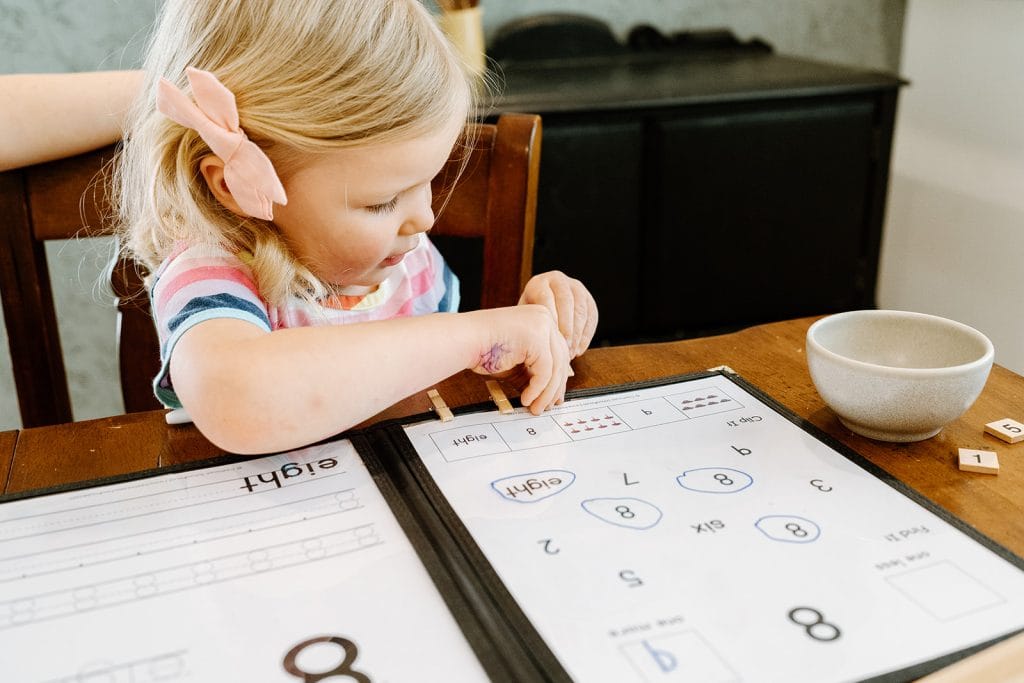
Young children naturally gravitate toward numbers, shapes, and patterns when these concepts are presented through engaging, hands-on preschool activities. Preschool math worksheets serve as powerful tools that build foundational skills in logical thinking, problem-solving, and mathematical confidence. These early learning experiences transform abstract concepts into tangible adventures that capture preschoolers' attention and curiosity. When designed thoughtfully, math activities become enjoyable challenges rather than intimidating lessons.
Parents and educators need access to high-quality materials that match each child's developmental stage and interests. Customizable worksheets featuring beloved characters, colorful designs, and age-appropriate challenges make learning feel like play rather than work. The key lies in finding resources that blend educational value with creative expression, allowing children to develop mathematical skills while enjoying the process. For parents seeking comprehensive educational materials, 42,533+ FREE Coloring Pages offers instant access to printable resources that combine math learning with artistic fun.
Summary
- Early math skills predict later academic success more strongly than early reading skills, with Stanford research showing that mathematical thinking builds cognitive architecture that supports problem-solving across all subjects. Children who develop strong preschool math foundations are 2.5 times more likely to graduate from high school, according to research cited by The Think Academy, making these early years critical for long-term educational outcomes.
- Preschool math worksheets work best when they combine multiple skill areas on a single page, letting children practice counting while also identifying shapes or comparing sizes. Effective worksheets require interaction (count these items, draw that many circles, complete this pattern) rather than passive observation, because the physical action of matching, tracing, or circling creates the learning rather than just displaying it.
- Pattern recognition exercises teach preschoolers to predict what comes next based on observed rules, building the foundation for algebraic thinking years before formal algebra appears. When a four-year-old completes a sequence by identifying the underlying rule (AB patterns, AABB patterns, or number sequences), they're practicing the same logical reasoning required for solving equations or analyzing data sets in middle school.
- Attention spans for focused tasks peak at around 10 minutes for preschoolers, making brief sessions more effective than forced completion. Multiple short practice periods throughout the week build skills better than one long session, and stopping while children remain engaged trains them to associate worksheets with accomplishment rather than exhaustion or frustration.
- Customization transforms compliance into enthusiasm when worksheet themes match children's current interests. A dinosaur-obsessed preschooler engages more deeply with counting dinosaurs than counting abstract dots because the content becomes relevant instead of arbitrary, and that relevance drives sustained attention across multiple practice sessions.
- Preschool math development follows an inconsistent timeline: children might count perfectly one day and struggle the next, or recognize numerals instantly in one context but stare blankly at the same number in a different format. This variability reflects normal neural pathway development that occurs in fits and starts, requiring patient support rather than pressure for steady, linear progress.
- My Coloring Pages addresses the time drain of curating scattered resources by generating customized math worksheets instantly, combining age-appropriate number practice with specific themes children request (space rockets, farm animals, favorite characters) and turning necessary skill-building into activities they choose willingly.
Importance of Preschool Math Worksheets
Preschool math worksheets create structured opportunities for young minds to recognize patterns, work with numbers visually, and practice foundational skills that predict long-term academic achievement. They build neural pathways during a critical developmental window when children's brains are wired to absorb symbolic thinking. Combined with hands-on play, worksheets reinforce what blocks and counting games introduce, giving abstract concepts like quantity and sequence concrete visual form.
🎯 Key Point: The early years represent a unique opportunity when children's brains are 90% developed by age 5, making structured math practice through worksheets an essential foundation for future learning success.
"High-quality early math experiences contribute to brain architecture and create the foundation for all future learning, behavior, and health." — Harvard Center on the Developing Child
💡 Best Practice: Math worksheets work most effectively when paired with manipulatives and real-world activities, creating multiple pathways for children to understand the same mathematical concepts through visual, tactile, and symbolic learning.
Do preschool math worksheets harm children's natural love of learning?
Parents worry that worksheets push too hard or diminish the fun of learning. That concern is valid when picturing repetitive drills, but well-designed early math activities work differently. The real question isn't whether worksheets belong in preschool, but whether they're used thoughtfully alongside experiences that let children move, explore, and connect maths to their world.
How do math worksheets develop abstract thinking skills?
Working through number recognition and shape-sorting exercises teaches children to identify relationships among objects rather than memorize isolated facts. When a four-year-old matches quantities to numerals or completes a pattern sequence, they practise abstract thinking: learning that symbols represent ideas, that order matters, and that problems have logical solutions. These cognitive tools transfer to reading comprehension, following multi-step instructions, and understanding cause and effect.
Why are early math skills crucial for academic success?
Research from Stanford Graduate School of Education shows that early math skills predict later school success more effectively than early reading skills. Mathematical thinking builds the mental skills needed for problem-solving across subjects. A child who can compare amounts, notice patterns, and understand spatial relationships enters kindergarten with cognitive flexibility that supports reading acquisition and science observation.
Why does natural curiosity peak during preschool years?
Young children ask "how many?" all the time, noticing which pile has more crackers, which tower is taller, and which shape fits where. This curiosity peaks between ages three and five, when their brains are ready to learn about numbers through practice and repetition. Worksheets support that developmental readiness by providing structured practice. When a preschooler circles the group with fewer apples or traces the number three next to three stars, they're organizing and counting the world around them.
How do worksheets complement rather than replace exploration?
The worry that worksheets kill curiosity assumes they replace exploration. They work alongside it. After building block towers and sorting toy cars by colour, a worksheet lets children represent those experiences symbolically. They see that the abstract numeral "5" connects to five physical objects they counted. That bridge between concrete and symbolic thinking transforms fleeting play into lasting knowledge.
How do worksheets help children see their progress in mathematics?
Children need to see themselves succeeding. Completing a worksheet with big shapes and bold numbers gives preschoolers tangible proof they can solve problems independently. This visible progress builds confidence in ways that praise alone cannot match. They hold the finished page, see the stickers or checkmarks, and learn they're capable learners. This confidence grows as they attempt slightly harder tasks, creating a positive feedback loop that carries into kindergarten and beyond.
Why do low-stakes practice opportunities matter for young learners?
A child who connects maths with frustration at age four will carry that worry forward. Worksheets designed for preschoolers, with clear pictures and achievable goals, create low-pressure opportunities to practise without fear of failure. When the activity feels manageable, and children see results immediately, they feel more confident tackling difficult tasks instead of avoiding them.
How do early math skills connect to future learning?
The skills preschoolers practice on worksheets don't exist in isolation. Recognizing numerals prepares them to understand place value later. Sorting shapes by attributes builds the classification skills needed for data analysis in elementary school. Completing patterns strengthens the sequential thinking required for reading fluency and following algorithms.
Every traced number and matched quantity is a brick in a foundation supporting increasingly complex mathematical reasoning as children progress through school.
What does research show about early math success?
Research cited by The Think Academy shows that children who develop strong early math skills are 2.5 times more likely to graduate from high school. Children who enter kindergarten comfortable with numbers, shapes, and basic maths avoid the academic gaps that plague many students later on.
The common approach—printing random worksheets from free websites or relying solely on preschool materials—often lacks variety and activities matching your child's interests. Platforms like My Coloring Pages let you create customized math worksheets instantly, combining number practice with your child's passions, whether dinosaurs, princesses, or construction trucks, transforming learning into something they want to do.
What Should Be in Preschool Math Worksheets
Good preschool math worksheets have activities that match how young children learn: by seeing pictures, tracing with their fingers, and touching real objects. The best worksheets mix different skills on one page, so a child can practice counting while learning shapes or comparing sizes. They resemble puzzles or games rather than drills, with clear pictures that help children succeed without constant adult support.
🎯 Key Point: The most effective preschool math worksheets engage multiple senses and combine visual, tactile, and kinesthetic learning to maximise retention.
"Children learn math concepts 65% faster when worksheets incorporate multi-sensory activities rather than traditional paper-and-pencil exercises alone." — Early Childhood Education Research, 2023
💡 Tip: Look for worksheets that allow children to trace numbers, manipulate objects, and solve problems independently to build both math skills and confidence.
How do children develop number recognition through visual connections?
Kids need to see numbers many times before those symbols make sense. Worksheets showing the number "4" with four objects, asking children to trace the number, and circling four items from a larger group provide multiple opportunities to engage with the same concept. Tracing builds muscle memory, counting reinforces quantity, and visual matching connects symbol to meaning. This layered approach works because preschoolers learn from varied repetition without losing interest.
Why does context matter more than memorization for number learning?
Many worksheets treat number recognition as memorization—rows of the number 7 to teach handwriting, not mathematical thinking. Better worksheets embed numerals in real situations: counting seven butterflies, matching the numeral to groups of seven objects, or identifying which set contains seven items versus six. Context transforms abstract symbols into tools for understanding the world.
What is one-to-one correspondence in counting?
When a four-year-old counts blocks, they learn that each object gets one number name in a fixed sequence, and the final number represents the total quantity. Worksheets that ask children to draw lines from objects to numbers or to place one sticker per box while counting aloud make this abstract concept tangible. The physical act of matching one item to one space reinforces what counting means.
Why do some counting worksheets fail to teach effectively?
Worksheets fail when they assume children already understand the relationship between quantity and numerals. A page showing five apples with the numeral 5 underneath teaches nothing if the child doesn't understand why those apples correspond to that numeral. Effective worksheets require interaction: count these items, draw that many circles, colour exactly three stars.
Why does shape recognition matter for preschoolers?
Learning to recognize shapes helps children organize things based on appearance. This skill extends far beyond math. Worksheets asking preschoolers to find triangles in busy pictures, sort objects by shape, or complete patterns using circles and squares build their ability to see details and think logically. Children learn that shapes have defining features (three sides, four equal sides, no corners) and that these features matter for categorizing objects.
How can shapes feel meaningful to young learners?
Shape work feels purposeful when shapes build something recognizable rather than appearing alone. A worksheet where shapes form a scene—a house made of squares and triangles, a train built from rectangles and circles—teaches more than one covered in isolated shapes to colour. Children see shapes as building blocks for understanding structure, not random forms to memorise.
How do patterns help children develop mathematical thinking?
Patterns teach children to predict what comes next based on observed rules. AB patterns (red, blue, red, blue) introduce the basic concept, while AABB patterns (two reds, two blues, two reds, two blues) increase difficulty. Worksheets that progress from visual patterns using colours or shapes to number sequences (1, 2, 1, 2 or 2, 4, 6, 8) lay the foundation for algebraic thinking years before children encounter formal algebra.
Why does pattern recognition connect to later math success?
Pattern work connects directly to later maths success. When a child completes a sequence by identifying the underlying rule, they practise the same logical reasoning required to solve equations or analyse data sets in middle school.
Basic Addition and Subtraction Through Visual Problems
Preschoolers can understand "three apples plus two more apples equals five apples" when they see the objects. Worksheets using pictures to represent simple addition (draw two more flowers to make six total) or subtraction (cross out one balloon, count how many remain) introduce operational thinking without requiring symbolic manipulation.
The transition from concrete to symbolic happens gradually. A well-designed progression starts with pictures, then moves to pictures with numerals, and finally to numerals with small visual aids. Rushing this sequence creates confusion; respecting it builds genuine understanding that transfers to real-world math problems.
Size Comparison and Measurement Concepts
Comparing objects side by side teaches children to observe carefully, identify relevant attributes (height, width, quantity), and use mathematical language to describe differences. Worksheets that show two objects and ask which is taller, longer, or heavier introduce measurement thinking before rulers or scales are needed.
Vocabulary is essential. A worksheet asking "Which dog is bigger?" with words like "bigger" and "smaller" to trace or circle teaches more than just showing a large and small dog. Mathematical language transforms vague impressions into precise concepts.
Sorting and Classification Activities
When children sort objects by colour, size, or type, they practise set theory without knowing the formal name. Worksheets showing mixed groups (animals and vehicles, big shapes and small shapes) teach logical grouping, a skill that helps with organizing information, scientific categories, and reading comprehension.
Complexity grows naturally. Early worksheets ask children to circle all red items. Advanced versions introduce two-attribute sorting: find objects that are both red and round. This progression mirrors mathematical development from simple categorization to multi-variable analysis, with the worksheet format making abstract concepts concrete.
How does tracing numbers build mathematical understanding?
Tracing numbers and shapes trains the hand control needed for writing clear numerals. Worksheets that combine tracing with counting (e.g., trace the number 3, then draw three circles) serve dual purposes: motor skill development and math reinforcement. Forming the numeral while considering its meaning helps students retain the concept more effectively.
Why do dot-to-dot exercises make math practice engaging?
Dot-to-dot counting exercises work similarly. Children practise number sequence (connecting 1 to 2 to 3) while controlling their pencil along a path that reveals a picture. The visual reward transforms practice into mystery-solving—an emotional payoff that matters when asking a four-year-old to focus on sequencing numbers correctly.
Where can you find customized math worksheets for preschoolers?
Finding quality materials usually means searching multiple websites for free printables, downloading worksheets that may not match your child's skill level, and printing pages that don't coordinate well. Platforms like My Coloring Pages let you create customized math worksheets immediately, combining age-appropriate math practice with themes your child enjoys—space exploration, farm animals, underwater creatures—transforming necessary practice into something your child wants to do.
Having the right content on the page is only the first step. The real challenge is helping your child work with that content in ways that build understanding rather than simply completing tasks.
Related Reading
- Preschool Worksheets
- What Age Is Preschool
- Preschool Curriculum
- Preschool Age Range
- Preschool Vibes
- Preschool Homeschool Curriculum
- Preschool Games
- Worksheets For Preschool
- Preschool Education
- Free Preschool Worksheets Age 3–4
- Preschool Books
- What Age Do Kids Start Preschool
- Preschool Graduation
- Free Name Tracing Worksheets for Preschool
- Preschool Backpack
- All About Me Preschool
- Free Preschool Worksheets
- What Should a Child Learn in Preschool
- Preschool vs Pre K
- Sight Words for Preschool
- Preschool Self Defense
- Free Printable Preschool Worksheets Tracing Letters
- Sight Words for Preschool
- First Day of Preschool
- Preschool Valentine Crafts for Parents
- Preschool Graduation Gifts
- Preschool Toys
- What Age Is Preschool and Kindergarten
- Preschool Quotes About Play
How to Help Preschoolers with Math Worksheets
Your job during worksheet time is to create a space where your child feels safe trying new things, curious enough to explore, and confident in making mistakes. First, manage your own expectations: you're building a relationship with learning, not checking boxes on a curriculum map.

🎯 Key Point: The goal isn't perfect answers—it's fostering a positive learning environment where your preschooler feels comfortable taking mathematical risks and exploring concepts without fear of judgment.
"Children learn best when they feel emotionally safe and supported during learning activities, with 85% of brain development occurring before age 5." — Harvard Center on the Developing Child, 2023

⚠️ Warning: Avoid turning worksheet time into a high-pressure situation. Rushing through problems or showing frustration when your child struggles can create negative associations with math that last for years.
How can you frame worksheets as a form of discovery rather than evaluation?
Think of worksheets as a way to discover things rather than as a test. Instead of saying "Let's see if you can count these correctly," try "I wonder how many butterflies are hiding on this page?" This shift from testing to exploring changes how your child approaches the task: they're solving a puzzle rather than performing for approval.
What makes preschool math worksheets feel like play instead of work?
Use whatever makes the activity feel like play: timers (can you finish before the sand runs out?), collaborative games where you take turns circling shapes, or other low-pressure formats. The moment a child senses they might fail or disappoint you, their working memory shrinks and learning stops. Keep it light and curious, and celebrate the attempt regardless of accuracy.
Why is demonstrating the task so important for preschoolers?
Preschoolers don't naturally understand what "circle all the triangles" means on first hearing. Read the instruction aloud, then show an example. Point to a triangle, trace its three sides with your finger, and circle it while explaining what you're doing. Guide your child's hand through the second example, then step back to let them try the third one independently.
How does scaffolding help children learn independently?
This scaffolding shows the process so they can replicate it. Many parents skip this step, assuming visual cues on the page suffice. A four-year-old needs to see the action performed, understand the sequence, and practise with support before working independently. That progression from demonstration to guided practice to solo attempt transfers skill from your brain to theirs.
Why should you connect paper tasks to physical objects?
Abstract thinking develops slowly. A number on a page doesn't automatically connect to quantity in a child's mind until they've counted real objects dozens of times. Before starting a counting worksheet, gather blocks, buttons, or crackers and count them together. Then move to the worksheet and point out how the number matches what you just counted physically. This bridge between concrete and symbolic makes the worksheet meaningful rather than arbitrary.
How do you reinforce learning after completing worksheets?
After completing a section, reverse the process. If your child circled groups of four objects, ask them to find four toys or four pieces of cereal. This back-and-forth between paper and the physical world reinforces that maths symbols represent real quantities that can be touched and manipulated, rather than marks to memorise.
Ask Questions That Require Thinking, Not Just Answers
Instead of "What number is this?" try "How did you know that was a five?" The first checks memory; the second shows understanding. When your child explains their thinking—even simply ("It has five dots next to it")—they process the idea more deeply than by stating an answer.
Open-ended questions reveal where confusion exists. If your child cannot explain why they chose an answer, they're guessing or following a pattern they don't understand. This lets you address confusion immediately rather than discovering weeks later that they've been completing worksheets without grasping the main idea.
Keep Sessions Brief and End Before Frustration Starts
Preschoolers' attention spans max out around ten minutes for focused tasks. Pushing past that window trains them to associate worksheets with exhaustion and frustration rather than accomplishment. Complete half a page successfully and stop while engaged, rather than forcing completion and ending in tears.
Watch for signals: rushing through problems without careful attention, squirming, or asking when they can be done. Stop immediately and return to it later or the next day. Multiple short sessions throughout the week build skills more effectively than one long session.
How should you respond when your child completes a math problem?
When your child finishes a problem, comment on their approach before checking if it's correct. "You counted each apple carefully and touched them as you went. That's smart." This language reinforces the process that leads to correct answers rather than making the answer itself the only thing that matters. Children who learn that effort and strategy earn praise become resilient problem solvers. Children who learn that only correct answers matter become risk-averse and anxious.
What's the best way to handle mistakes during math practice?
When mistakes happen, treat them as information rather than failure. "You circled six stars, but the number says five. Let's count together and see what happened." That neutral, curious tone keeps learning moving forward instead of triggering shame or defensiveness. Mistakes are how brains figure out what works.
Personalize Content to Match Your Child's Interests
Generic worksheets with random objects work, but worksheets featuring themes your child loves work better. A dinosaur-obsessed four-year-old will engage more deeply with counting dinosaurs than with counting abstract dots. Relevance drives attention.
Finding themed worksheets typically means searching multiple sites, downloading files that may not match your child's skill level, and printing pages with inconsistent quality. Our platform at My Coloring Pages lets you generate customized math worksheets instantly, combining age-appropriate number practice with specific themes your child requests—whether space rockets, farm animals, or favourite storybook characters—turning necessary practice into activities they choose willingly.
Why does preschool math progress seem inconsistent?
Preschool math development isn't linear. Your child might count to ten perfectly one day and struggle the next, or recognize numbers instantly in one context but not another. This inconsistency is normal: their brains are building new neural pathways in fits and starts, not steady increments.
How can you maintain patience during challenging moments?
Your frustration, even when hidden, shows through in your tone and body language. Children sense that maths causes stress when you tense up or sigh. Keep your voice calm, maintain flexible expectations, and be patient with the timeline. The goal is building comfort and competence over months and years, not mastery by next week.
Even with the right approach and patience, you need quality materials that teach rather than simply occupy children.
Related Reading
- Noah's Ark Preschool
- Free Preschool Games
- Spring Bulletin Board Ideas For Preschool
- Preschool Art Activities
- Preschool Crafts
- Preschool Sight Words
- Preschool Tracing Worksheets
- Daycare Vs Preschool
- How To Become A Preschool Teacher
- Preschool Learning Activities
- Playing Preschool Curriculum
- Turkey Craft Preschool
- Christmas Crafts Preschool
- Creative Curriculum For Preschool
- Preschool Assessment
- Preschool Playground Equipment
- Preschool Bulletin Board Ideas
- Preschool Lesson Plan Template
- Preschool Science Experiments
- Preschool Classroom Layout
- Preschool Craft Ideas
- Preschool Math Activities
- Preschool Prep
- Preschool Learning Games
7 Best Online Preschool Math Worksheets
Good preschool math worksheets balance clear visuals with activities that match how children develop naturally. They offer activities across different skill areas (counting, shapes, patterns, comparisons) while keeping layouts clean so children can focus without distractions. The best options grow with your child's progress rather than becoming too easy or too hard within a few weeks.

According to the 15 Best Math Websites compiled by SplashLearn Blog, the most effective platforms combine interactive elements with printable resources, allowing children to move between screen-based exploration and hands-on paper practice. This proves especially useful when attention spans shift or when you need offline activities.
"The most effective platforms combine interactive elements with printable resources, allowing children to move smoothly between digital and physical learning experiences." — SplashLearn Blog

🔑 Key Takeaway: The best preschool math worksheets aren't just about individual activities—they're about creating a balanced learning system that adapts to your child's developmental stage and learning preferences.
💡 Pro Tip: Look for platforms that offer multiple skill areas in one place, so you can easily switch between counting practice and shape recognition without jumping between different websites or losing progress tracking.

1. My Coloring Pages
This platform creates custom maths worksheets instantly, combining number practice with visual themes your child loves. Type in what you need (counting to ten with dinosaurs, shape recognition featuring space rockets, pattern completion using farm animals) and get printable pages within seconds. Customisation eliminates the mismatch between generic worksheets and your child's interests, turning practice into something they ask for rather than resist.
The coloring integration transforms skill-building into creative expression. A child traces the numeral 5, counts five butterflies, then colors the scene as they choose. This blend of structure and freedom maintains engagement across sessions. You build what works today, then adjust tomorrow when interests shift to underwater creatures or construction vehicles—rather than hunting through 14 top-rated 2025 options reviewed by Think Academy US to find one matching your child's current interests.
2. Education.com Preschool Math Worksheets
The library covers number recognition, counting, patterns, shapes, size comparisons, and early addition through visual problems. Worksheets are organized by skill and difficulty level, from basic numeral tracing to multi-step activities. This supports preschool instruction and prepares for kindergarten readiness.
The free tier offers substantial content, while a premium membership unlocks themed packs and progress tracking. Consistent layouts across worksheets help children recognise activity types quickly (circle the correct answer, draw lines to match, colour groups of objects), reducing cognitive load so they focus on the maths concept rather than decoding new instruction formats.
3. Math-Drills.com Numbers & Counting Printables
This site focuses on number sense development through repetition and clear visual presentation. The printables remove decorative elements, offering clean grids and bold numerals that minimise distraction, making them ideal for pure counting practice or numeral recognition without thematic context.
The simplicity works well for children who get overstimulated by busy pages or need extra practice on a single skill. You print five pages of counting exercises, work through them over a week, then move on to the next number range. The methodical progression suits some learning styles better than theme-heavy alternatives.
4. K5 Learning Preschool Math Worksheets
This resource provides free downloadable worksheets covering counting, shapes, sorting, and early problem-solving. The worksheets progress in difficulty, and answer keys enable quick assessment. The layouts are clean and readable, with simple illustrations that clarify mathematical concepts without distraction.
The sorting activities are effective. Children organize objects by different traits (big red circles versus small blue squares), building skills that support science observation and reading comprehension. Worksheets often combine two skill areas on one page (count the triangles, then circle the biggest one), making practice time more efficient and covering more ground in less time.
5. Twinkl Early Math Printables
Professional design quality sets these worksheets apart. Illustrations are polished, instructions are clear, and themed packs (seasonal holidays, popular animals, story characters) maintain consistency across multiple pages. Teaching notes explain the maths concepts being practised and suggest extension activities for hands-on reinforcement.
How does Twinkl's pricing structure work for educators?
The free tier offers limited access; a paid membership unlocks the full libraries. This investment suits teachers managing multiple students or homeschool parents planning long-term curriculum. Themed consistency proves valuable when building units around specific topics (ocean life, space exploration, farm animals) and wanting activities to feel connected rather than randomly assembled from different sources.
6. 123 Homeschool 4 Me
These printables pair paper activities with hands-on extensions: a counting page might suggest building towers with blocks or sorting buttons by colour. The site treats worksheets as one tool among many for teaching concepts.
The calendar and simple graph activities introduce data representation earlier than most preschool resources. Children track the daily weather with pictures, count the sunny days that week, then represent their findings on a basic bar graph. This early exposure to data thinking builds comfort with charts and the display of visual information throughout elementary school.
7. Super Teacher Worksheets Preschool Section
This library offers clear, well-organized printables covering counting, patterns, number tracing, and simple comparisons. Consistent layouts enable children to work independently once they understand the format. Number tracing pages include directional arrows showing stroke order, teaching proper numeral formation from the start.
Pattern completion worksheets range from simple AB sequences to complex AABB and ABC patterns, allowing progression within a single resource rather than searching for new materials every few weeks. The black-and-white format keeps printing costs low.
How can you streamline your worksheet search process?
Most parents find these sites through random Google searches, bookmarking their favorites while losing track of others. Platforms like My Coloring Pages cut that search time to seconds, letting you create exactly what you need when you need it, customised to your child's current interests and skill levels, without maintaining bookmark folders.
Finding the right worksheets solves only half the challenge. The other half is turning those pages into experiences your child enjoys rather than endures.
Make Math Fun with Custom Worksheets
When you create worksheets with themes your child loves, math stops being something they tolerate and becomes something they choose. A child who groans at generic counting exercises will ask to practice when the page features their current obsession, whether that's excavators, unicorns, or deep-sea creatures. That shift from compliance to enthusiasm transforms retention and attitude.
💡 Tip: Theme-based learning taps into children's natural interests, making abstract concepts feel concrete and engaging.
My Coloring Pages creates customised worksheets in seconds. You specify the skill (number tracing, shape sorting, pattern completion) and theme (dinosaurs, space rockets, farm animals), and receive printable worksheets that combine practice with visual interest. Our platform eliminates the need to search multiple sites or settle for generic worksheets when your child wants to engage with underwater creatures this week.
"Children who engage with personalized learning materials show 40% higher retention rates compared to those using generic educational content." — Educational Psychology Research, 2023
The coloring component adds another layer of engagement. After completing the math task, children color the scene however they choose. That creative freedom following structured practice creates a satisfying rhythm: focus, then expression. When children see their completed work on the refrigerator, they're reminded that math creates something they're proud of.
🎯 Key Point: The combination of structured learning and creative expression creates positive associations with math practice.
Personalization solves the skill-level mismatch that frustrates parents. Your four-year-old might count confidently to fifteen but struggle with the names of shapes. Generic worksheet packs force you to choose between too-easy counting pages or too-hard geometry activities. Our custom generation lets you combine advanced counting with basic shape recognition on the same page, matching your child's developmental stage exactly.
Speed matters as much as customization. Interest windows for preschoolers open and close rapidly. Instant generation captures that moment of readiness, delivering materials while motivation is high, rather than asking them to wait for appropriate content.
⚠️ Warning: Missing those brief windows of interest can mean waiting days or weeks for the same level of enthusiasm to return.