11 Preschool Playground Equipment Ideas for Cooperative Play
Discover 11 preschool playground equipment ideas that boost cooperative play and social skills. My Coloring Pages shares expert tips for educators.

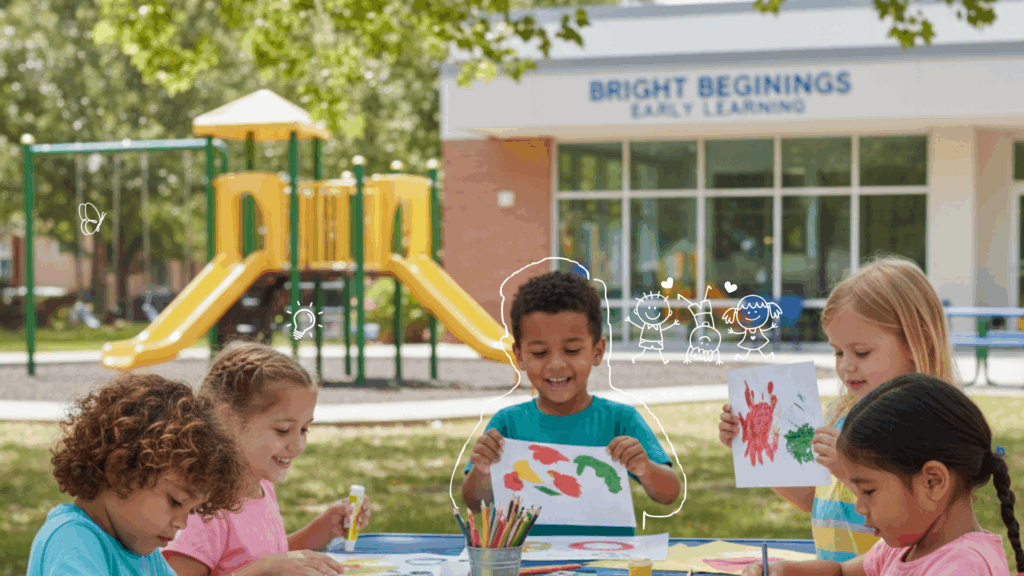
Preschoolers race outside for recess with eyes lighting up at colorful slides, climbing structures, and swings designed for their small hands and growing bodies. Quality preschool activities serve as the foundation for physical development, social skills, and imaginative play, extending into every aspect of learning. Outdoor play experiences naturally connect with indoor activities through creative resources that reinforce lessons children discover through active exploration. Teachers and parents can build on these playground moments by bringing outdoor themes into the classroom and home learning environments.
Playground-themed materials help bridge the gap between energetic outdoor exploration and focused indoor learning activities. Ready-to-use resources featuring playground equipment, outdoor scenes, and physical activity themes let educators turn every swing-set adventure and slide experience into opportunities for creative expression and skill-building. These materials work especially well when children can already connect with the outdoor experiences they love during recess. Download 47,494+ Free Coloring Pages to access a diverse range of playground-themed resources that support this indoor-outdoor learning connection.
Summary
- Preschool playgrounds deliver more than physical exercise. They create environments where children develop social negotiation skills, emotional regulation, and cognitive flexibility through lived experience rather than instruction. According to The International Journal of Behavioral Nutrition and Physical Activity, children need 60 minutes of moderate-to-vigorous physical activity per day, and playgrounds provide one of the most accessible ways to meet that threshold while simultaneously supporting growth across developmental domains.
- Active play directly addresses childhood anxiety and behavioral challenges. Research consistently links outdoor movement to lower stress levels in young children because running, climbing, and swinging provide physical outlets for emotional intensity that feels instinctive rather than prescribed. When a frustrated child releases tension on playground equipment, they return indoors calmer and more capable of focused attention, a pattern teachers observe daily in classroom behavior after recess breaks.
- Only 1 in 3 children is physically active every day, a gap that contributes to rising childhood obesity rates and long-term health risks. Playgrounds close this gap by making movement feel like an adventure rather than an obligation. Children don't experience climbing structures or swings as exercise. They experience capability, strength, and joy, building positive associations with physical activity that carry into adulthood while simultaneously developing cardiovascular health, motor skills, and immune system strength.
- The CDC reports that recess significantly increases children's ability to focus and be creative after time on the playground. Students who get regular outdoor play breaks absorb information more effectively, retain it longer, and return to classroom tasks with renewed attention because unstructured play builds executive function skills like planning, self-control, and decision-making that structured instruction alone cannot replicate.
- According to a University of Michigan national poll, 1 in 10 parents of preschoolers and toddlers say their child plays outside just once a week or less, a gap that compounds over time, leading to missed developmental opportunities. Regular outdoor time builds familiarity with environments, deepening engagement and allowing children to notice seasonal changes, remember favorite spots, and develop a sense of place that transforms outdoor time from an event into a developmental routine.
- The inclusive playground equipment market reached USD 1.2 billion in 2023, reflecting growing recognition that thoughtfully designed equipment serves developmental needs across physical, social, and cognitive domains. Equipment that supports multiple types of play simultaneously, structures that adapt to evolving skills, and installations that invite both solitary exploration and cooperative play create playgrounds where every child can participate regardless of physical ability, ensuring access to the same opportunities for confidence-building, social connection, and physical development.
- My Coloring Pages offers 47,494+ Free Coloring Pages that help teachers bridge outdoor playground experiences and indoor learning by creating custom worksheets featuring the equipment, nature scenes, and activities children just experienced during recess.
Importance of Playground for Preschools
Playgrounds shape how preschoolers learn to move through the world, both physically and emotionally. They're environments where children practice social negotiation, test physical limits, build confidence through small victories, and process the emotional intensity of being three or four years old. According to The International Journal of Behavioral Nutrition and Physical Activity, children need 60 minutes of moderate-to-vigorous physical activity per day. Playgrounds provide one of the most accessible ways to meet that goal while supporting thinking, social, and emotional growth.

"Children need 60 minutes of moderate-to-vigorous physical activity per day, and playgrounds provide one of the most accessible ways to meet that goal while also supporting thinking skills, social skills, and emotional growth." — The International Journal of Behavioral Nutrition and Physical Activity
🎯 Key Point: Playgrounds serve as multifunctional learning environments that simultaneously address physical development, social skills, and emotional regulation in preschoolers.
🔑 Takeaway: The 60-minute daily activity requirement isn't just about physical health – it's a critical foundation for cognitive and social-emotional development that playgrounds uniquely provide.
How do playgrounds teach children to navigate social situations?
Playgrounds teach children to share space, rules, and roles with unfamiliar peers. A child waiting for the swing learns patience. A group inventing a game on the climbing structure practises collaborative decision-making. These experiences build listening, turn-taking, conflict resolution, and inclusion skills.
What language skills do children develop through playground interactions?
When a shy child joins a game of tag, they practise courage. When two children argue over who goes down the slide first, they learn to compromise. Parents and teachers can model the language of negotiation: "Can you ask if she is ready to share?" or "What would feel fair to both of you?" These moments build the social vocabulary children will use for decades.
How does playground diversity naturally build empathy in children?
The playground helps children learn about diversity naturally rather than through lessons. Kids of different ages, backgrounds, and abilities play in the same space, learning to adapt their play, include others, and understand that not everyone moves or communicates the same way. That early experience builds empathy that classroom lessons alone cannot create.
How does playground equipment help children process intense emotions?
Children experience emotions with intense force while still learning what those feelings mean. Active play provides a physical outlet for emotional energy: running, climbing, and swinging help children burn off stress naturally rather than through planned methods.
What research shows about the effects of playground equipment on anxiety?
Research consistently links active play to lower anxiety and behavioural problems in young children. Physical movement helps regulate their nervous system when anxious, and the playground provides a safe outlet for frustration. Children return indoors calmer and more focused.
How do playgrounds build children's confidence and resilience?
Playgrounds let children face and overcome fears in controlled environments. Climbing to the top of a structure tests their courage; succeeding at monkey bars builds self-trust. These small wins strengthen self-belief and confidence that challenges can be handled, carrying over into classrooms, social situations, and moments requiring resilience.
Why does physical activity matter for preschoolers?
Only 1 in 3 children is physically active every day, which contributes to rising childhood obesity rates and long-term health risks. Playgrounds help close that gap by making movement feel like fun rather than something you have to do. Kids experience climbing, running, and swinging as adventure, not exercise.
Only 1 in 3 children is physically active every day, contributing to rising childhood obesity rates and long-term health risks. Playgrounds close that gap by making movement feel like fun rather than an obligation. Kids experience climbing, running, and swinging as adventure, not exercise.
How does playground equipment build strength while children play?
This distinction matters. When physical activity feels joyful, children develop positive associations with movement that carry into adulthood. Slides build core strength, swings improve balance and coordination, and climbing structures develop upper body strength and spatial awareness. Each piece of equipment offers a full-body workout disguised as play.
What are the long-term health benefits of regular playground time?
Playing on the playground regularly strengthens your heart and immune system, improves motor skills, enhances movement, and reduces the risk of long-term health problems like diabetes. Children who move daily sleep better, concentrate more easily, and manage their emotions more effectively. The playground is essential for healthy development.
How does playground equipment promote creativity and imagination?
On playgrounds, children build entire worlds: the climbing dome becomes a spaceship, the slide a mountain escape route, the sandbox an archaeological dig. This imaginary play teaches creative thinking, problem-solving, and storytelling.
Why does creative play matter for child development?
Creativity grows with practice. When children make up games, assign roles, and create stories together, they build thinking skills for solving problems in school, generating ideas at work, and bouncing back from adversity. Pretend play lets them explore social roles—leader, helper, explorer, protector—and test different identities to understand who they are and want to become.
Playground equipment grounds children's imaginary play in physical reality. A balance beam becomes a tightrope over lava; a tunnel becomes a secret passage. These structures make imagined worlds feel more real and engaging.
How does playground equipment build cognitive skills through play?
Play is a form of learning that builds thinking skills that regular teaching cannot replicate. When children use playground equipment, they learn about space and direction. When they create games with rules, they practise logic and order. When they collaborate with peers, they develop essential skills including planning, focus, and self-control.
The CDC reports that recess significantly increases children's ability to focus and be creative. Students who get regular outdoor play breaks learn information better, retain it longer, and return to class with renewed attention. A child sitting still for an hour begins to fidget and lose focus; after 20 minutes of active play, that same child returns ready to participate.
Why is unstructured playground time important for decision-making?
Unstructured playground time teaches decision-making in ways structured activities don't. Children choose what to play, with whom to play, and how to solve problems that arise. These choices build confidence and trust in their own judgment. They learn to assess risk, weigh options, and deal with consequences—critical skills for academic success and life beyond school.
My Coloring Pages offers 47,494+ Free Coloring Pages that extend playground themes into indoor learning activities. Teachers can create custom coloring pages featuring climbing structures, swings, slides, and outdoor scenes that children recognize from their own experiences. These resources bridge outdoor play and classroom creativity, allowing children to reflect on and express what they learned during active play through art and storytelling.
How does playground equipment build confidence in young children?
Every time a child masters a new skill on the playground—crossing the monkey bars without help, inventing a game others want to join—they build evidence of their capability. These moments accumulate into a stronger self-image and belief that they can succeed at hard things.
Why is social play crucial for emotional development?
Social play builds a sense of belonging. When children make friends, include others, and feel included, they develop community connections that support their emotional health. Kids who feel connected to their peers are more resilient, more willing to take academic risks, and less likely to struggle with anxiety or behavioral issues.
How does accessible playground design benefit all children?
Accessible playground designs ensure all children can play regardless of physical ability. Children with disabilities gain opportunities to be active, connect with others, and build confidence. Their peers learn empathy, adaptability, and that play is inclusive.
But here's what most parents and teachers miss: having more equipment doesn't automatically mean better development.
Related Reading
- Preschool Worksheets
- What Age Is Preschool
- Preschool Curriculum
- Preschool Age Range
- Preschool Vibes
- Preschool Homeschool Curriculum
- Preschool Games
- Worksheets For Preschool
- Preschool Education
- Free Preschool Worksheets Age 3–4
- Preschool Books
- What Age Do Kids Start Preschool
- Preschool Graduation
- Free Name Tracing Worksheets for Preschool
- Preschool Backpack
- All About Me Preschool
- Free Preschool Worksheets
- Preschool Self Defense
- What Should a Child Learn in Preschool
- Preschool vs Pre K
- Sight Words for Preschool
- Free Printable Preschool Worksheets Tracing Letters
- First Day of Preschool
- Preschool Math Worksheets
- Preschool Valentine Crafts for Parents
- Preschool Graduation Gifts
- Preschool Toys
- What Age Is Preschool and Kindergarten
- Preschool Quotes About Play
How to Engage Kids in Outdoor Activities in Preschool
Getting children outside requires more permission than planning. Nature already offers what preschoolers need most: sensory input, open-ended materials, and space to move on their own terms. When you facilitate outdoor time rather than fill it, engagement becomes natural.

🎯 Key Point: The most effective outdoor activities happen when adults step back and let children lead their own exploration and discovery.
"Children who spend regular time in unstructured outdoor play show 30% higher creativity scores and improved problem-solving abilities compared to their indoor-focused peers." — Nature Play Research Institute, 2023

💡 Pro Tip: Start with simple materials like buckets, magnifying glasses, and collection containers. These tools amplify natural curiosity without directing specific outcomes or limiting creative exploration.
How does nature become a science partner?
A puddle teaches physics better than most lessons. Kids crouch beside it, drop stones, watch ripples expand, and ask why—testing ideas without formal instruction. Ants crossing the sidewalk become a study in patterns and persistence. A breeze through leaves sparks conversation about movement and sound.
Why do outdoor discoveries stick better?
These moments stick because children discovered them. When a child notices something themselves, explains it in their own words, and connects it to what they already know, learning becomes personal. Outside, the lesson adapts to the child rather than the other way around.
How can you facilitate natural learning?
You don't need special training to do this. Slow down enough to notice what children are noticing. Ask questions that help them think more deeply instead of changing the subject. "What do you think will happen if we add more water?" works better than "Let me show you how water flows." The difference is whether you're teaching or watching what they discover.
How do seasonal changes create natural learning opportunities?
Seasonal changes provide outdoor play with a natural curriculum. Spring invites digging and planting. Summer extends playtime for water experiments and shaded games. Fall fills pockets with acorns and leaves. Winter offers crisp air and different textures under mittens.
This rhythm helps children understand time in a way calendars cannot. A child who plants seeds in April and harvests tomatoes in July learns about growth cycles and feels the passage of time in their hands.
How can playground equipment adapt to different seasons?
Adapting to weather keeps routines interesting without requiring new materials. The same sandbox becomes a construction site in summer and a leaf-sorting station in fall; the climbing structure transforms into a mountain in spring and an igloo in winter.
What materials work best for open-ended outdoor play?
The best outdoor spaces offer materials and let kids decide what happens next. Buckets, sticks, rocks, and fabric scraps become whatever the moment requires: a bucket might carry water, collect treasures, or turn into a drum. A stick might measure depth, draw patterns in dirt, or become a magic wand.
Open-ended materials support problem-solving in ways fixed equipment cannot. When children figure out how to use something, they engage longer, test ideas, adjust strategies, and build confidence in their own thinking. A slide that works only one way cannot offer that.
Why do quiet spaces matter in outdoor play areas?
Quiet spots matter as much as active ones. A shaded corner with stumps to sit on gives children space to observe, rest, and process their experiences. When children shift between running and stillness, outdoor time feels more satisfying and less tiring.
How often should preschoolers play outside?
You don't need a forest to experience nature. A neighbourhood walk, a patch of grass, or a playground works. What matters is doing it regularly, not where you do it. According to a University of Michigan national poll, 1 in 10 parents of preschoolers and toddlers say their child plays outside once a week or less, a gap that compounds over time, leading to missed developmental opportunities.
Why does regular outdoor time build deeper engagement?
Regular outdoor time helps children become familiar with a space, increasing their interest in it. Through repeated visits, they notice details invisible in a single outing—the best digging spot, where ants congregate, which tree drops the finest sticks. This familiarity transforms outdoor time from a special occasion into a regular habit.
Families can help by dressing children in weather-appropriate clothes. Checking the forecast and sending extra layers or rain boots prevents discomfort, allowing kids to stay outside longer and have more fun.
How can you adapt outdoor activities to match what children already enjoy?
If your class loves arts and crafts, bring natural materials into their projects: leaves become collage pieces, twigs turn into paintbrushes, and rocks get sorted by colour or texture. Adapting outdoor time to their existing interests maintains engagement.
How do you maintain structure while following children's interests outdoors?
This doesn't mean abandoning structure: start with what children already care about and extend it outdoors. A child fascinated by vehicles might build roads in the dirt. A child who loves stories might invent narratives about creatures they find. The outdoor space becomes a setting for their existing interests.
How can creative tools help extend outdoor experiences indoors?
My Coloring Pages transforms outdoor fun into creative art. Teachers can create custom coloring pages featuring playground equipment, nature scenes, or seasonal themes that children encounter during playtime. The pages encourage kids to reflect on outdoor observations and translate them into art, reinforcing memories and building vocabulary.
How can children safely explore their limits?
Safety is important, but it shouldn't eliminate all risk. Children need to test their limits, try things that feel scary, and learn what their bodies can do. The goal is to teach them to assess risk themselves, not to remove every opportunity for challenge.
What safety strategies work better than restrictions?
Remind children how to play safely without hovering over them. "Check before you jump" works better than "Don't jump from there." "Make sure your hands are dry before you climb" gives them a strategy instead of a restriction. When children understand the reason behind a safety rule, they're more likely to follow it even when adults aren't watching.
How does respecting nature support safe exploration?
Respecting nature is part of safe exploration. Teach children to watch insects without hurting them, handle plants gently, and leave spaces better than they found them. Washing hands before and after outdoor play becomes a normal habit.
22 Preschool Outdoor Activity Ideas
The best outdoor activities let children use what's already there in surprising ways. A leaf becomes a paintbrush. A stick measures depth. A shadow turns into a drawing prompt. Playground equipment provides structure, but these activities provide purpose: transforming familiar spaces into laboratories for observation, creativity, and problem-solving.
🎯 Key Point: The most effective outdoor learning happens when children discover new purposes for everyday objects they encounter in nature.
"Children who engage in nature-based play show 37% higher creativity scores and improved problem-solving abilities compared to traditional playground activities." — Journal of Environmental Psychology, 2023

💡 Tip: Start with simple transformations—encourage children to find three different ways to use a single natural object like a rock, leaf, or twig before moving to more complex activities.
1. Nature Color Hunt
Give children a list of colors and send them searching. They'll discover that green exists in twenty different shades, that brown appears in bark, dirt, and dried leaves, each with its own texture and smell. Ask them to draw what they find rather than photograph it: drawing forces closer observation and reveals details a quick snapshot would miss.
How can you extend learning after the color hunt?
Collect items during the hunt and examine them again during circle time. Pass around a smooth stone, a rough pinecone, a soft dandelion. Ask children to describe what they feel, what they hear when they shake it, and whether it smells like anything. This vocabulary building, texture recognition, and color matching occur because you slowed down enough to let them engage with their findings multiple times.
2. Nature Memory Game
Print large nature images, label them, and glue them to paper plates. Flip them face down on the grass. Children take turns revealing two plates, searching for matches. This oversized memory game encourages full-body movement between choices rather than hand-only play.
Physical movement between plates keeps energy high while concentration stays sharp. Children who struggle to sit still during indoor games often thrive when the same game requires them to walk, bend, and stand. Nature vocabulary sticks because they say words aloud, check guesses, and celebrate matches. Learning happens in motion.
3. Birdwatching and Nature Observations
Give children binoculars, magnifying glasses, and sketch pads, then step back. Let curiosity lead. Some days they'll watch a bird for ten minutes; other days they'll crouch over an anthill, fascinated by traffic patterns. The goal isn't to complete a checklist; it's to teach children that observation itself is an activity worth doing.
How does sketching enhance nature observations?
Sketching what they find slows them down productively. A child who glances at a butterfly will study it differently when asked to draw its wings, noticing symmetry, colour patterns, and how it folds and unfolds. Those details become part of their mental library, ready to surface in future play, art, or conversation.
4. The Letter and Number Race
Fill two buckets with water, sand, or water beads. Mix foam or laminated letters and numbers into each bucket. Place the buckets at a distance. Children race to retrieve items and sort them into "letters" or "numbers" piles.
The combination works because neither element dominates. Children who love running sprints and those who love organizing. Water or sand provides sensory input that keeps hands engaged after running stops. They practise letter and number recognition without sitting at a table.
5. Sight Word Soccer
Write sight words on index cards and tape each to a small cone. Call out a word and have children kick a soccer ball toward the correct cone, combining phonics practice with physical coordination.
The movement reinforces memory in ways flashcards cannot. A child who kicks the ball to "the" three times associates it with running, aiming, and succeeding. That physical memory makes retrieval faster when they encounter the word in a book later.
6. Nature Patterns
Collect leaves, rocks, and twigs during a walk. Ask children to sort them by size or colour, then create a pattern on the ground: red leaf, gray rock, brown twig, repeated. The pattern becomes visible and concrete, something they can walk around and adjust.
This activity teaches sequencing and prediction. If the pattern is leaf, rock, twig, what comes next? Children begin seeing patterns everywhere: in fence posts, clouds, and shadows, strengthening math, reading, and logical thinking across contexts.
7. Spray the Flower Letters
Draw flowers on the sidewalk with chalk. Write a letter inside each one. Give children spray bottles filled with water. Call out a letter or letter sound, and they find and spray the correct flower. The chalk gradually fades under the water, creating a satisfying visual reward.
The spray bottle strengthens hand muscles that support future writing by building the grip strength children need to hold a pencil with control.
8. Journey Stick
Children collect items during a nature walk: leaves, flowers, feathers, and small twigs. They attach these findings to a stick using string or rubber bands, creating a physical timeline of their journey that becomes a story they can retell.
This hands-on record helps children process their experience. They remember where they found the red leaf, why they picked up that smooth stone, and what the feather felt like. The journey stick transforms a walk into a narrative with a beginning, middle, and end of its own making.
9. Outdoor Dramatic Play
Move costumes and props outside. A picnic blanket becomes a campsite. A cardboard box turns into a ranger station. Children invent scenarios impossible indoors: rescuing animals, exploring forests, and setting up outdoor markets.
The outdoor setting changes the stories children tell. They incorporate elements they see around them: a breeze becomes part of the plot, a bird flying overhead gets written into the scene. This responsive storytelling builds flexibility and improvisation skills that structured indoor play often limits.
How can teachers extend outdoor dramatic play experiences?
Teachers can extend these experiences using My Coloring Pages to create custom worksheets featuring playground equipment, nature scenes, or seasonal themes children recognise from their own play. Our collection of 47,494+ free coloring pages helps children colour or trace what they saw outside, reinforcing vocabulary and memory through creative expression.
10. Leaf Printing
Collect leaves with clear veins. Apply paint to the veined side using a sponge, then press the painted side onto paper to create a print. This reveals the leaf's structure in a way children rarely notice through observation alone.
This activity teaches that leaves have structure: veins carry water and nutrients, creating patterns that serve a purpose. Children start asking why some leaves have thick veins and others have thin ones, why some patterns look like webs and others like ladders—questions that lead to deeper conversations about how plants work.
11. Nature Letters
Ask children to form letters using sticks, rocks, and leaves, or search for objects that naturally resemble letters: a round stone for "O," a curved twig for "C." This transforms letter recognition into a scavenger hunt.
The physical act of building letters reinforces their shapes. A child who struggles to write "A" on paper might understand it better after constructing one from three sticks on the ground, where size and material make abstract shapes concrete.
12. Tree Bark Imprints
Tape paper around a tree trunk and have children colour over it with unwrapped crayons to reveal the bark's pattern. Different trees produce distinct imprints, turning the activity into a comparative study.
This texture exploration builds sensory vocabulary: rough, bumpy, smooth, ridged. It teaches children that bark is a landscape of patterns varying from tree to tree, and this attention to detail transfers to other observation tasks.
13. Color Hop
Draw large circles in different colours on the ground using chalk. Call out a colour and have children hop into the matching circle. This combines colour recognition with movement to keep children energised and focused.
The game scales easily by adding more colours or introducing patterns: hop to red, then blue, then red again. The flexibility keeps the activity challenging without requiring new materials.
14. Alphabet Obstacle Course
Write letters on pool noodle pieces or cards staked into the ground, arranged in alphabetical order. Children race through the course, identifying each letter they pass while competing for both speed and accuracy.
This activity makes alphabetical order feel like a path rather than a list. Children experience the sequence as something they move through, building spatial understanding that helps them navigate alphabets, indexes, and dictionaries later.
15. Chalk Counting Garden
Draw circles with numbers inside them on the sidewalk. Ask children to draw the correct number of flower petals around each circle: number five gets five petals, number eight gets eight. This visual representation makes counting concrete and helps children who struggle with abstract number concepts. Five petals around a circle look visually different from three petals, reinforcing the numerical difference in ways counting aloud cannot.
16. Hopscotch
Draw a hopscotch grid. Children throw a rock into a square and hop through the numbers in order, saying each number aloud as they land on it. Balance, number recognition, and turn-taking develop simultaneously.
The physical challenge keeps children interested longer than number drills would. They're motivated to improve their hopping, which means they practice numbers repeatedly without noticing the repetition.
17. Chalk Painting
Make paint using cornstarch, baking soda, food colouring, water, and vinegar. Fill squirt bottles with the mixture and let children squirt it onto the ground, mixing colours to see what happens. It's chemistry disguised as art.
Color mixing teaches cause and effect: blue and yellow make green, and red and white make pink. Children start predicting outcomes, testing theories, and adjusting their approach based on results—scientific thinking without a lab coat.
18. Maple Seed Dragonflies
Collect maple seeds and twigs. Paint the seeds and glue them onto a twig to resemble dragonfly wings. If maple seeds aren't available, use leaves. The craft helps children connect with nature materials, transforming outdoor finds into art supplies.
This activity teaches that art doesn't require a craft store: materials around you can become something new with a different perspective, demonstrating that creative flexibility matters beyond art class.
19. Acorn Shapes
Draw shapes in the dirt or on pavement. Children place acorns or small stones along the lines to outline the shapes, making geometry hands-on with each acorn representing a point on the edge.
A child who traces a triangle with acorns understands its three sides differently from one who looks at a triangle on paper. The physical act of building the shape deepens understanding.
20. Nature Faces
Draw a circle on the ground for a head. Ask children to use grass, stones, and leaves to create facial features: two stones for eyes, a curved twig for a smile, and grass for hair.
This activity teaches that faces have consistent elements (eyes, nose, mouth) with infinite variations. Children experiment with expression, creating happy, sad, and surprised faces, which supports emotional recognition, social development, and empathy.
21. Coloring Activity
Bringing outdoor play inside helps children reflect on their observations. According to Brightwheel, nature-themed worksheets featuring trees, insects, or flowers allow children to colour or trace what they observed, transforming outdoor observation into creative reflection. With our 47,494+ free colouring pages, teachers can quickly create resources that bridge active play and quiet creativity.
22. Self-Play Equipment
Simple playground additions like balance beams, tunnels, or stepping stones make outdoor time more interesting without prescribing how children should use them. A balance beam becomes a tightrope one day and a river crossing the next. A tunnel transforms into a secret passage or train car depending on the game being invented. The equipment offers possibilities without rules, letting children's creativity shape how play unfolds.
11 Must-Have Preschool Playground Equipment
The equipment that transforms a playground from okay to really great supports many types of play simultaneously, accommodates children as they grow and learn new skills, and enables kids to play alone or together. According to Dataintelo, the inclusive playground equipment market reached USD 1.2 billion in 2023, demonstrating that well-designed equipment helps children develop physical, social, and cognitive skills.

"The inclusive playground equipment market reached USD 1.2 billion in 2023, demonstrating growing recognition of quality playground design." — Dataintelo, 2023
🎯 Key Point: Multi-functional equipment that adapts to different developmental stages provides the best return on investment for preschool playgrounds.

🔑 Takeaway: The billion-dollar playground equipment market reflects a fundamental shift toward understanding that quality play equipment isn't just about fun—it's about supporting comprehensive child development across multiple skill areas simultaneously.
1. Swings and Slides
These staples last because they bring quick happiness while building skills children use for years. Swings teach rhythm and timing as children pump their legs in sync with the arc, strengthening core muscles and improving balance. Slides teach risk assessment in the seconds before descent, when a child decides whether they're ready to let go.
How do swings and slides promote social learning?
Social learning happens while children wait. Children work out whose turn it is, watch other kids show courage, and practice patience. Modern playground designs now include wider slides for two kids to ride together and bucket swings for children who need extra help, ensuring these classic pieces work for every child in the space.
2. Interactive Play Panels
Wall-mounted panels turn vertical surfaces into learning stations. A gear panel teaches cause and effect as children spin one wheel and watch others rotate in response. A tic-tac-toe board becomes a strategy lesson disguised as recess. Musical panels let children experiment with sound without requiring instruments or additional space.
How do interactive panels support different play styles?
These panels work well in smaller playgrounds with limited ground space. They give children a quiet place to focus on activities during breaks from running around outside. The panels also enable parallel play, where two children work side by side without talking or playing together directly. This is an important social skill that children develop before engaging in collaborative play.
3. Musical Equipment
Outdoor instruments let children experiment in ways that indoor music time cannot. Drums set at toddler height let children test volume and try rhythms without disrupting a classroom. Chimes teach that music can be made through gentle interaction, not just forceful striking.
Variety is important: xylophones introduce melody, bongos teach rhythm, and rain wheels show how sound changes with speed. Multiple instruments in the same space encourage children to compose together, with one playing steady beats while another adds melody, building listening skills and turn-taking through spontaneous collaboration.
4. Nature Play Elements
Natural materials help children experience textures and patterns unavailable on manufactured equipment. Log balance beams and boulder climbing teach different skills than plastic versions: natural grain, weathering, and stone variations require unpredictable grip strategies and balance adjustments.
Nature play helps children notice seasonal change through their senses: wooden structures feel warm in the summer sun and cold in the winter frost. Accumulated leaves create opportunities for sweeping, sorting, and imaginative play. These elements require minimal maintenance while providing maximum sensory variety.
5. Role Play Panels
A storefront panel transforms fence space into a bakery, post office, or flower shop. Children practise conversation during transactions, taking orders, and making change with pretend money. They experiment with customer service and learn how tone and word choice affect interpersonal interactions. The panel provides structure for dramatic play without requiring costumes or props that can be lost or damaged outdoors.
These installations work because they suggest scenarios without prescribing exactly what children should do. One day, the bakery sells cupcakes; the next day it's a pizza shop. Children adapt the space to match their story, making the equipment useful across months of play.
6. Play Kitchens and Mud Kitchens
Outdoor and mud kitchens let children cook without the mess restrictions of indoor kitchens. Mud kitchens invite experimentation with texture, water ratios, and natural materials. Children mix dirt and water to create different consistencies, learning about viscosity through hands-on trial and practice, measuring, pouring, and stirring, which develops fine motor skills through play.
Kitchen play teaches social complexity: children assign roles (head chef, order-taker, dishwasher) that shift throughout play, providing practice with leadership, following directions, and collaborative problem-solving.
7. Climbing Frames and Equipment
Multi-level climbing structures challenge children to figure out routes and plan their movements, developing spatial reasoning and confidence through successful ascent. They build upper-body strength, grip endurance, and full-body coordination that transfer to sports and physical activities.
Modern climbing frames incorporate multiple challenge levels into a single structure. Younger children use lower platforms and wider rungs, while older children navigate rope bridges and higher exits. This range keeps equipment useful as abilities grow and enables mixed-age groups to play together.
8. Water and Sand Play
Digging, pouring, and molding teach children about volume, weight, and change. Wet sand holds its shape; dry sand falls apart. Water flows downhill but collects in low spots. Children test ideas, try new approaches, and learn these principles through repeated play.
The open-ended nature of these materials supports long engagement. There's no right way to use sand or water, so children create purposes that match their interests: building rivers one day, making birthday cakes the next. The materials work with imagination rather than limiting it.
How can teachers extend outdoor play experiences indoors?
Teachers can extend outdoor experiences into reflective indoor time using My Coloring Pages to create custom worksheets featuring playground equipment that children used. With 47,494+ free coloring pages, teachers can generate a swing set illustration or climbing frame outline in seconds that children recognize from their own play. They color what they climbed, reinforcing vocabulary and memory through personal art.
9. Play Tunnels
Crawling through tunnels builds significant muscle skills while creating spaces separate from adult supervision. Children emerge pretending they've travelled through time or crossed into a secret world. The enclosed space provides sensory input that calms some children, offering a retreat when outdoor stimulation becomes overwhelming.
Tunnels teach spatial awareness and body control. Children learn to assess whether they can fit through openings, move efficiently in confined spaces, and navigate in darkness or reduced visibility, building confidence in their physical capabilities and environmental navigation.
10. Trim Trails
Obstacle courses built from connected stations teach children to sequence movements and plan ahead. They see the full path before starting, identify challenging sections, and adapt their approach based on what worked at previous stations. This executive function practice—planning, executing, and adapting—supports academic skills like multi-step problem-solving and project completion.
The physical benefits span a range of challenges: balance beams improve stability, rope walls build grip strength, and stepping stones develop coordination. By completing the trail, children engage muscle groups that single-purpose equipment wouldn't target.
11. Spinning Equipment
Merry-go-rounds and spinning discs teach children how their bodies respond to rotation and momentum. They experience dizziness in controlled amounts, learning to recognize when they've had enough and need to stop. This vestibular input supports balance development and helps children understand their physical limits.
Someone has to push while others ride, creating natural turn-taking. Children negotiate speed, learning to communicate comfort levels and respect peers' boundaries. The equipment works best through collaboration rather than competition.
12. Spring Riders
Spring riders provide rhythmic motion that calms children while also delivering sensory input to support self-control. The repeated movement strengthens core muscles and balance in minimal space.
Younger children use spring riders for imaginative solo play, while older children favour them as rest spots between intense activities. This versatility across age groups makes spring riders valuable despite their simplicity.
Equipment alone doesn't guarantee engagement, especially indoors.
Related Reading
- Preschool Assessment
- Preschool Crafts
- Preschool Learning Activities
- Daycare Vs Preschool
- Preschool Tracing Worksheets
- Preschool Classroom Layout
- Preschool Sight Words
- How To Become A Preschool Teacher
- Preschool Lesson Plan Template
- Playing Preschool Curriculum
- Preschool Science Experiments
- Spring Bulletin Board Ideas For Preschool
- Preschool Prep
- Preschool Math Activities
- Free Preschool Games
- Noah's Ark Preschool
- Preschool Craft Ideas
- Creative Curriculum For Preschool
- Preschool Art Activities
- Christmas Crafts Preschool
- Spring Bulletin Board Ideas For Preschool
- Turkey Craft Preschool
- Preschool Bulletin Board Ideas
Keep Kids Engaged Beyond the Playground
Outdoor play creates momentum that shouldn't stop at the door. When children transition from climbing structures to indoor spaces, they carry observations, questions, and energy that need direction. The goal is channeling what they noticed outside into activities that extend learning without feeling like a shift from play to work.
After 30 minutes on the playground, children have collected mental images of textures, movements, and discoveries. A custom coloring page featuring the swing set they used or the tunnel they crawled through transforms that recent memory into creative expression. My Coloring Pages lets teachers create these worksheets in seconds without artistic skill. Children color the balance beam they crossed or trace the insects they found near the sandbox, reinforcing vocabulary and observation through art that feels personal rather than generic. With 47,494+ free coloring pages, our collection turns playground time into a complete learning experience that bridges outdoor exploration and indoor creativity.
💡 Tip: This approach works because it respects what just happened. Children aren't being asked to forget the playground and focus on something unrelated. They're invited to revisit what they experienced, this time with crayons instead of climbing shoes. The coloring page becomes a conversation starter: "What did you see when you were at the top of the slide?" "Which tree did you find the best leaves under?" These questions help children process their outdoor time while building descriptive language and memory retention.
🎯 Key Point: The transition also provides sensory balance. Active play floods children with movement, noise, and visual stimulation. Coloring offers focused, quiet engagement that engages fine motor skills rather than gross motor ones. Children practice grip control, color selection, and pattern completion. The shift feels natural because the content connects to what they just lived, making the indoor activity feel like an extension rather than an interruption of their outdoor experience.