60 Best Educational and Engaging Preschool Toys
Discover 60 best preschool toys that boost learning and development. My Coloring Pages reviews educational toys that your child will love playing with.

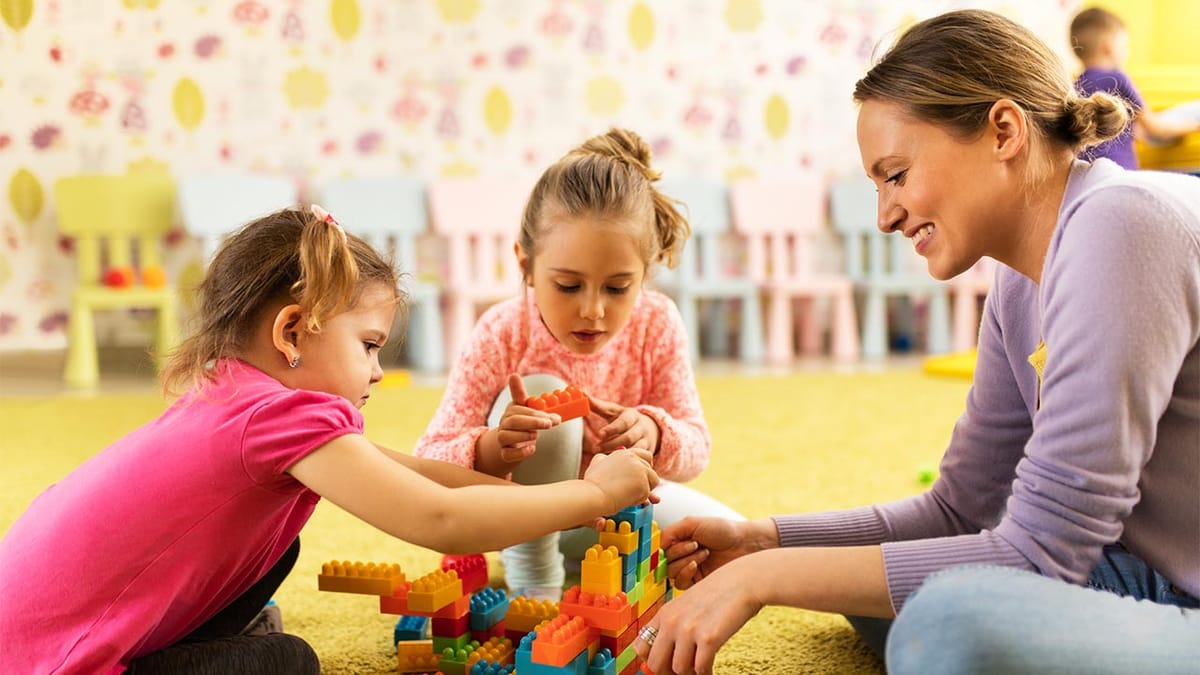
Parents often struggle to find preschool toys that hold their child's attention while supporting genuine learning and development. The key lies in selecting toys that naturally encourage exploration, creativity, and skill-building rather than simply providing a few minutes of entertainment. Quality educational toys like building blocks, puzzles, and art supplies create opportunities for meaningful play that grows with the child.
Pairing these physical toys with complementary learning materials amplifies their educational value and extends engagement. Parents can enhance any play session by incorporating themed worksheets and activities that reinforce the skills children develop through hands-on exploration. For additional learning support, families can access 40,000+ FREE Coloring Pages that complement toy-based learning with printable activities focused on counting, colors, shapes, and fine motor development.
Summary
- Too many toys reduce play quality rather than enhance it. University of Toledo research found that toddlers played twice as long with individual toys when only four were available, compared to when sixteen options were available. Sustained engagement matters because that's when children move from surface-level interaction to creative problem-solving, narrative building, and symbolic thinking. Decision fatigue from too many choices creates a paradox in which children surrounded by toys complain they're bored.
- Electronic toys actively reduce language-rich interaction between parents and children. A study by Northern Arizona University comparing electronic toys, traditional manipulatives, and books found that parents used fewer words per minute and conversational turns dropped significantly when toddlers played with electronic gadgets. The toy does the talking, so parents stop narrating, questioning, and responding. This eliminates the single most powerful driver of language development during preschool years.
- Open-ended toys produce deeper cognitive engagement than single-function gadgets. Blocks, figurines, art supplies, and pretend-play materials score higher on play-quality assessments because they require children to supply meaning. A block becomes a car, then a tower, then a bridge. This symbolic thinking, where objects represent ideas and narratives unfold through play, directly builds executive function and school readiness that predetermined toys cannot replicate.
- The global educational toys market reached $54.00 billion in 2023 and is projected to grow at 12.0% annually through 2030, reflecting growing recognition of how early learning materials shape long-term academic success. Despite this growth, research consistently shows that simple, versatile toys used daily with engaged caregivers outperform expensive electronic learning systems used in isolation. Quality of engagement matters more than the sophistication or price of materials.
- Puzzle completion between ages two and four predicts later STEM achievement independent of verbal ability or socioeconomic factors. University of Chicago spatial learning studies found that children who regularly complete puzzles during preschool score higher on standardized spatial reasoning tests, with gains persisting into middle school. The immediate feedback loop teaches persistence, as pieces either fit or don't without adult judgment required.
- Activities often surpass manufactured toys for building creativity, focus, and problem-solving because they require children to supply structure, invent rules, and solve organically emerging problems. Water play teaches volume and physics through direct experimentation, while play-dough builds hand strength that transfers to pencil control, and role play helps children process emotions they can't yet articulate. This is where My Coloring Pages’ 40,000+ Free Coloring Pages fits in, offering customizable printables that match whatever currently captivates your child, turning coloring from random busy work into focused learning that reinforces natural curiosity without adding physical clutter or requiring storage space for dozens of activity books.
Table of Contents
- How Many Toys to Buy for Preschoolers
- What Kind of Toys to Buy for Preschoolers
- 60 Best Educational and Engaging Preschool Toys
- Engaging Activities for Preschoolers Instead of Toys
- Stop the Toy Overload and Keep Your Preschooler Focused
How Many Toys to Buy for Preschoolers
Your child needs fewer, higher-quality toys and adequate space to play with them. The right number of toys creates an environment where your preschooler can focus, explore deeply, and build sustained attention that matters for learning. Most homes have too many toys competing for attention, making playtime less productive and more chaotic.
🎯 Key Point: Quality over quantity is the golden rule for preschooler toys. A smaller selection of well-chosen toys promotes deeper engagement and better cognitive development than overwhelming your child with options.
"Children with fewer toys in their environment show increased focus and more creative play patterns, leading to enhanced learning outcomes." — Child Development Research, 2023
Toy Count | Benefits | Drawbacks |
5-10 toys | Deep focus, creative play, easy cleanup | May seem limited to parents |
15-20 toys | Good variety, manageable choices | Requires active rotation |
25+ toys | Lots of options | Overwhelm, scattered attention, messy spaces |
⚠️ Warning: Toy overload can actually hinder your preschooler's development. When children have too many choices, they often engage in surface-level play rather than the deep, focused exploration that builds critical thinking skills and sustained attention.
Why does toy abundance hurt meaningful play?
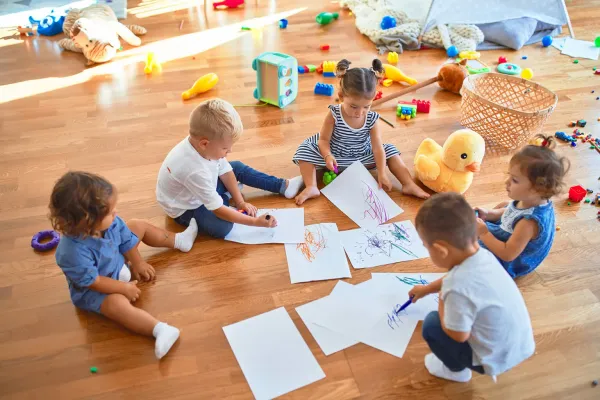
The toy industry wants you to believe that variety drives development: buy the alphabet toy, the counting blocks, the musical instrument, the puzzle set, the building kit. Before long, your living room resembles a clearance aisle, and your child moves from one thing to another without settling into meaningful play. Research from the University of Toledo found that toddlers played twice as long with individual toys when only four were available, compared to when sixteen were available. Sustained engagement is where cognitive work happens: when children stick with one toy long enough to explore its possibilities, they move from surface-level interaction to creative problem-solving, narrative building, and symbolic thinking.
How do too many choices overwhelm preschoolers?
Too many options create decision fatigue. Your preschooler stands before a toy bin overflowing with choices and feels paralysed. They pull out three things, abandon them within minutes, and complain of boredom. Their developing executive function cannot handle filtering through endless possibilities.
Why do electronic toys seem so appealing to parents?
Parents are drawn to electronic toys because they seem educational: they promise early reading skills, number recognition, or language development. Press a button, hear a word. Touch a screen, watch a character dance. Learning appears to happen on its own.
What does research reveal about electronic toys and interaction?
Controlled studies at Northern Arizona University compared parent-child interactions across electronic gadgets, traditional toys such as blocks and shape sorters, and books. Parents used fewer words per minute with electronic toys. Conversational turns—those back-and-forth exchanges that build vocabulary and social cognition—dropped significantly. Children made fewer sounds and ended play sessions faster.
How do electronic toys impact language development quality?
The toy was doing the talking, so the parent stopped. When parents stop talking about what's happening, asking questions, and responding, the child loses the single most powerful way to learn language development: conversation with another person. Electronic toys actively reduce the quality of the interactions that matter most during the preschool years.
Why do open-ended toys create deeper learning experiences?
Open-ended toys create deeper cognitive engagement than single-function gadgets. Blocks, figurines, art supplies, and pretend-play materials score higher on play quality assessments because children must generate their own meaning. A block becomes a car, then a tower, then a bridge. A figurine transforms from a character in a story to a patient at a pretend hospital to a teacher at an imaginary school. This symbolic thinking builds executive function and school readiness. Research in early childhood education shows that open-ended materials support problem-solving, creativity, and social role negotiation in ways that predetermined toys cannot.
What research supports play-based learning environments?
The National Institute for Early Education Research confirms that play-based preschool environments emphasizing interaction and exploration lead to higher early literacy scores, stronger number skills, and better emotional regulation. These gains stem from how well children engage, not from expensive materials or high costs. Wooden blocks used daily with a caring adult outperform a hundred-dollar electronic learning system used alone. Pairing simple, flexible toys with matching resources amplifies their educational value. Animal figurines enable counting practice, storytelling, and fine motor skill development when paired with themed worksheets or colouring pages. My Coloring Pages provides instant access to printable activities that extend learning from toys you already own, transforming a fifteen-minute play session into a richer experience without accumulating more plastic.
How should you start building your toy collection?
Start with four to six main toys representing different types of play: building (blocks or magnetic tiles), pretend play (kitchen set, tool bench, or dollhouse), creative expression (art supplies or playdough), and problem-solving (puzzles or shape sorters). Rotate them every few weeks to maintain interest without overwhelming your child with too many options at once.
Why does specialization matter more than variety?
As your preschooler grows, their interests become clearer. A child who loves dinosaurs doesn't need twenty different dinosaur toys—they need two or three high-quality figures, a few books, and materials to build habitats, create stories, and explore their interest deeply. Specialization beats breadth. Depth of engagement beats variety.
What happens when you embrace boredom instead of buying more?
Try not to buy more toys when your child seems bored. Boredom is where creativity begins. Without immediate access to new toys, children invent games, build stories, and use materials in new ways. That's when learning accelerates. The type of toy matters more than quantity.
What Kind of Toys to Buy for Preschoolers
The toys that matter most fall into five categories, each targeting a different developmental system your preschooler is building: spatial reasoning, fine motor control, social cognition, symbolic thinking, and problem-solving. The right toy creates conditions for your child to practice skills they'll use for decades.
🎯 Key Point: Focus on toys that develop multiple skill areas simultaneously rather than single-purpose entertainment items.
"The most effective preschool toys target specific developmental systems that children are naturally ready to build between ages 3-5." — Child Development Research, 2023
Toy Category | Primary Skills Developed | Examples |
|---|---|---|
Building Toys | Spatial reasoning, problem-solving | Blocks, magnetic tiles, construction sets |
Art Supplies | Fine motor control, creativity | Crayons, playdough, safety scissors |
Pretend Play | Social cognition, symbolic thinking | Dress-up clothes, toy kitchen, dolls |
Puzzles | Problem-solving, spatial reasoning | Jigsaw puzzles, shape sorters |
Active Play | Gross motor skills, coordination | Tricycles, balls, climbing toys |
💡 Tip: Choose toys that can be used in multiple ways and grow with your child's developing abilities rather than toys with single functions.
What makes building blocks so effective for learning?
Blocks look simple. They're not. When your three-year-old stacks, sorts, and balances wooden cubes, they're running experiments in physics, geometry, and language simultaneously. Each tower tests gravity, each bridge explores balance, and each sorting game introduces comparative language: bigger than, shorter than, heavier than.
How does block play predict future math success?
Research from early childhood cognitive labs shows that block play directly predicts later math achievement by building spatial reasoning, not counting skills. Your preschooler learns to mentally rotate objects, estimate distances, and visualise structures before building them. These skills form the foundation for understanding fractions, reading maps, and solving multi-step problems in primary school.
Why does block play boost vocabulary development?
Block play forces vocabulary growth. As your child builds, they need words to describe what they're creating. You provide those words through narration: "You're making the red block balance on top of the blue cylinder. That's a tall tower. What happens if we add one more?" Every session becomes a language lesson built into purposeful action.
Threading Toys and Maze Activities
The pincer grip—thumb-and-forefinger coordination—determines readiness for writing, buttoning shirts, tying shoes, and applying toothpaste. Threading beads and completing mazes strengthen the exact muscle groups and hand-eye coordination required by those tasks. A four-year-old who threads confidently will button their own coat by winter. A child who completes mazes with control will form legible letters by kindergarten. The connection is biomechanical, not metaphorical. Threading teaches sequencing and planning: hold the string steady, aim for the hole, push through, pull tight. When children drop the string or miss the hole, they adjust and try again—executive function development in real time.
How do puzzles develop spatial reasoning skills?
Puzzles work well for babies through preschool children, evolving as your child's spatial understanding develops. A one-year-old places a circle into a matching hole. A four-year-old assembles a twenty-piece picture by matching colours, shapes, and visual patterns. Both children build the same core skill: thinking about how objects move and fit together to solve problems through trial and error.
Why do puzzles build confidence and persistence?
Puzzles give quick feedback: a piece either fits or it doesn't, without needing an adult to judge. This independence builds confidence and persistence. Your preschooler learns that hard work produces results and that wrong attempts provide information rather than signal failure.
What research supports puzzle benefits for STEM learning?
The University of Chicago's spatial learning studies found that children who regularly complete puzzles between ages two and four score higher on standardized spatial reasoning tests at age four and a half. These gains persist: spatial skills at preschool age predict STEM achievement in middle school, independent of verbal ability or socioeconomic factors.
How do board games teach social skills that lectures cannot?
Games teach what lectures cannot: taking turns, following rules, losing gracefully, and working together on strategy. When your preschooler rolls a die, counts spaces, and waits for your turn, they practise impulse control and social reciprocity—behavioural foundations for classroom participation and peer relationships.
What academic concepts do simple games embed in social play?
Simple games like colour-matching or counting exercises embed academic concepts within social rituals. Your child learns that following rules creates fairness, that losing one round doesn't end the game, and how to read emotional cues when celebrating wins or showing resilience after losses.
How do games create structured conversation opportunities?
Games create structured conversation. You're sitting together, focused on a shared task, talking through decisions. That's collaborative problem-solving with built-in language practice, where your preschooler learns to explain their strategy, ask clarifying questions, and work out the outcome.
How does imaginative play help preschoolers process emotions?
Imaginative play is how preschoolers process emotions they cannot yet express in words. A doll becomes a way to explore fear, anger, or confusion. A puppet lets your child voice feelings they aren't ready to claim as their own. Through pretend scenarios, they practice social skills, test boundaries, and build empathy by stepping into another character's perspective. When routines fall apart from a move, a new sibling, or family stress, pretend play becomes a coping mechanism. Your child recreates the disruption in miniature, controlling the story and resolving it on their terms. This is an example of emotional regulation through symbolic thinking.
What caregiving skills do dolls and puppets teach?
Dolls and puppets teach caregiving behaviours. Your preschooler feeds, comforts, and disciplines their toy, practising the empathy they've received and experimenting with authority. These interactions build theory of mind: the ability to understand that others have thoughts, feelings, and needs that are separate from one's own. This thinking skill underlies all successful relationships. Pair these toys with complementary activities to extend their educational value. A set of animal figurines becomes richer when your child colours matching animal scenes, turning hands-on play into visual storytelling. My Coloring Pages provides instant access to themed printables that reinforce whatever your preschooler explores through hands-on play, such as dinosaurs, construction vehicles, or farm animals. The customization tool lets you create exactly what matches their current fascination, turning a simple toy into a multi-layered learning experience.
What should you look for when selecting toys in each category?
Look for durability, open-ended potential, and age-appropriate challenge. Wooden blocks outlast plastic and feel better in small hands. Puzzles with thick pieces and clear images work better than flimsy cardboard with cluttered designs. Dolls with simple features encourage imagination more than highly detailed characters that dictate the narrative.
Why should you avoid overstimulating toys?
Avoid toys that do too much. If it lights up, talks, or moves on its own, your child becomes a passive observer rather than an active creator. The toy performs while your preschooler watches.
How does toy rotation maximize learning potential?
Buy fewer toys in each category and rotate them. Three high-quality puzzles used in rotation teach more than ten mediocre ones available simultaneously. Your child engages for longer, explores more deeply, and retains more when options are carefully curated rather than overwhelming.
Related Reading
- Preschool Worksheets
- What Age Is Preschool
- Preschool Curriculum
- Preschool Age Range
- Preschool Vibes
- Preschool Homeschool Curriculum
- Preschool Games
- Worksheets For Preschool
- Preschool Education
- Free Preschool Worksheets Age 3–4
- Preschool Books
- What Age Do Kids Start Preschool
- Preschool Graduation
- Free Name Tracing Worksheets for Preschool
- Preschool Backpack
- All About Me Preschool
- Free Preschool Worksheets
- What Should a Child Learn in Preschool
- Preschool vs Pre K
- Sight Words for Preschool
- Preschool Self Defense
- Free Printable Preschool Worksheets Tracing Letters
- Preschool Math Worksheets
- Preschool Valentine Crafts for Parents
- Preschool Graduation Gifts
- Preschool Toys
- What Age Is Preschool and Kindergarten
- Preschool Quotes About Play
60 Best Educational and Engaging Preschool Toys
The toys listed below combine durability, developmental impact, and genuine engagement. Each category targets distinct cognitive and physical systems, from spatial reasoning to emotional regulation. They're organized by the developmental work they accomplish, providing a framework for building a rotation that grows with your child's capabilities.
🎯 Key Point: The best preschool toys serve multiple developmental purposes simultaneously, targeting cognitive growth, motor skills, and social-emotional learning in one engaging package.
"High-quality educational toys can improve cognitive development by up to 30% when used consistently in structured play environments." — Early Childhood Education Research, 2023
💡 Tip: Rotate toys every 2-3 weeks to maintain novelty and prevent overstimulation while ensuring your child fully explores each toy's learning potential.
Building & Construction Toys
1. LEGO Duplo Classic Brick Box
Features oversized bricks designed for three-year-old hands to build grip strength and coordination. Colour-coded pieces teach sorting and pattern recognition, while structures test physics principles through trial and error, developing spatial awareness that transfers to math readiness.
2. Magna-Tiles Magnetic Building Tiles
Introduce geometry through play. Magnetic edges click together with tactile feedback when shapes align correctly, allowing children to build three-dimensional structures while learning how flat shapes combine to create solid forms. Transparent colours add visual exploration of light and shadow.
3. Wooden Unit Blocks
Remain the gold standard for open-ended construction. Their uniform proportions teach measurement relationships: two small blocks equal one medium block, four small blocks match one large block. This foundational math develops through hands-on manipulation.
4. Jumbo Brick Block Set
makes construction bigger, allowing kids to use their whole bodies to play. Children work together to build walk-through structures, which teach group planning and improve large-muscle coordination. The lightweight material makes mistakes safe, so kids feel comfortable attempting ambitious designs without fear of injury.
5. Magnetic Rail Racers Expansion Set
Adds movement to building play. Children build ramps and tracks, then observe how gravity and momentum propel vehicles. They adjust angles, test speed, and learn cause and effect through repeated experimentation.
6. Soft Foam Big Building Blocks
Work well for children who need soft materials or who play in shared spaces with younger siblings. The soft texture prevents injuries while enabling kids to build large projects that develop spatial reasoning and planning skills.
7. Magformers Magnetic Construction Set
Uses rods and geometric panels to create skeletal structures. Children learn how triangles create stability while squares flex and collapse, fostering engineering thinking through play.
8. Wooden LEGO-Compatible Blocks
Offer an eco-conscious alternative with natural textures that provide sensory input while maintaining interlocking construction capabilities.
9. K'Nex Preschool Building Kit
Introduces snap-together engineering with large pieces that develop fine motor skills. Rods and connectors teach how joints and connections create structural integrity.
10. Vehicle Building Blocks
Merge construction with narrative play. Children build the truck, then drive it to imaginary emergencies, connecting physical building to storytelling and extending engagement.
Puzzles & Logic Games
11. Wooden Space Blocks Puzzle Adventure
Combines stacking with thematic storytelling. Children arrange blocks to create rocket ships or space stations, mixing spatial reasoning with imaginative narrative.
12. Floor-Size Farm Animal Puzzle
Uses oversized pieces to engage gross motor skills alongside visual discrimination. The large format eases shape recognition for beginners while teaching vocabulary through animal identification.
13. Shape Sorting Puzzle Board
Teaches classification through tactile feedback. The circle fits only in the circular hole; the square requires rotation to align with it. Each successful placement reinforces geometry concepts and hand-eye precision.
14. Geometric Puzzle Pack
Offers multiple difficulty levels in one set. Children start with simple three-piece puzzles and progress to twelve-piece challenges as their spatial reasoning develops, allowing the toy to grow with your child rather than becoming outdated.
15. Tangram Puzzle Set
Introduces ancient pattern-making by showing how basic shapes combine to create complex images. A triangle plus a square becomes a house; two triangles form a diamond.
16. Logic Pattern Blocks
Present sequences that children must complete. Red, blue, red, blue—what comes next? Pattern recognition builds pre-maths skills and teaches prediction through visual logic.
17. Memory Matching Game
Strengthens your child's memory and focus. Children flip cards, remember their locations, and match pairs, building working memory capacity: the cognitive ability to hold and manipulate information simultaneously.
18. The Stacking Ring Puzzle
Teaches sequencing through size relationships. The largest ring goes first, followed by progressively smaller rings stacked on top, practising seriation—a foundational mathematical concept—through hands-on manipulation.
19. 3-in-1 Wooden Logic Board
Combines tangrams, tic-tac-toe, and maze challenges in one compact set. The variety exercises different thinking skills: spatial reasoning, strategic planning, and persistence in problem-solving.
20. Peg Solitaire & Brain Teasers
Introduce planning skills through simple logic puzzles. Children must think several moves ahead to build the executive function that underlies multi-step directions and independent completion of homework.
Pretend Play & Role-Playing
21. Play Kitchen Set
Creates endless opportunities for storytelling and social role practice. Children cook imaginary meals, serve invisible guests, and negotiate roles, developing turn-taking, vocabulary, and symbolic thinking as a plastic banana transforms into real food in their minds.
22. Doctor/Vet Play Kit
Helps children process medical experiences and build empathy. They examine stuffed animals, administer pretend medicine, and practise the gentle caregiving they've received through safe, controlled play.
23. The Tool Bench Set
Let children replicate repair work they observe at home. They hammer, screw, and build, developing fine motor precision while exploring how tools solve problems and how cause-and-effect relationships work.
24. The Animal Figurines Play Set
Helps children learn to sort and organize as they create stories. Children categorize animals by habitat, size, or diet, then invent narratives about their interactions. The six figures enable hundreds of different stories.
25. Dollhouse with Furniture
Teaches children about space and spatial relationships through miniature rooms and buildings. As they arrange rooms and create family stories, children demonstrate their understanding of family roles and daily routines.
26. Dress-Up Costume Kit
Encourages kids to explore who they are and express themselves. Children try on different roles, from firefighter to ballet dancer, building confidence through imaginative play.
27. Surprise Learning Box (Ms. Rachel)
Combines pretend play with fine motor challenges. Children open compartments, discover hidden objects, and practise hand movements needed for zippers, buttons, and latches.
28. The Storytelling Puppet Set
Gives children a way to express feelings they cannot yet say directly. The puppet becomes a tool for expressing fear, anger, or confusion, building emotional vocabulary through safe distance.
29. Toy Grocery Store or Market
Combines math practice with social play. Children count money, weigh produce, and negotiate prices, learning number concepts through purposeful interaction.
30. Play Bus or Train Set
Teaches sequencing and cause-and-effect relationships. Children load passengers, drive routes, and create transportation stories that build understanding of how systems work.
Sensory & Motor Skill Toys
31. Bead Maze
Develops hand-eye coordination through three-dimensional manipulation, building the precise motor control needed for writing and self-care tasks.
32. Sand & Water Fine Motor Set
Strengthens hand muscles through scooping, pouring, and molding, building the grip strength and coordination needed for holding pencils and manipulating small objects.
33. Kinetic Sand Play Kit
Provides sensory input through moldable material that holds shape without drying out. Children sculpt, cut, and reshape, building fine motor control through tactile feedback.
34. Sensory Bin Kit
Combines multiple textures for exploratory play, building tactile discrimination and fine motor precision through digging, sorting, and discovering hidden objects.
35. Stacking Cups or Blocks
teaches size relationships and spatial concepts through nesting, stacking, and balancing.
36. Textured Sensory Balls Set
Stimulates touch receptors with varied surfaces, teaching discrimination and providing calming sensory input for children who need tactile regulation.
37. Balance Beam Toy
Challenges gross motor coordination and body awareness, building the balance and core strength that underlie all physical activity.
38. Hula Hoop
Combines cardiovascular exercise with motor planning, building rhythm and body control through coordinating hip and arm movement.
39. Obstacle Course Set
Creates customizable physical challenges that develop spatial awareness and gross motor confidence through varied movement patterns.
40. Scooter Board
Strengthens core muscles and coordination, building the trunk stability needed for sitting upright during focused tasks.
Creativity, Art & Expression Toys
41. Play-Doh Sets
Build hand strength through squeezing, rolling, and moulding, strengthening the small muscles children need for writing while encouraging creative three-dimensional expression.
42. Finger Paint Pack
Offers sensory-rich art without requiring brush control. Children explore colour mixing and mark-making through direct touch, building creative confidence before fine motor skills develop.
43. Crayon & Marker Kit
Introduces early writing tools with thick barrels to help children develop grips, practise arm movements, and the pressure control needed to form letters.
44. Sticker and Activity Cards
Build fine motor precision through peeling and placing, strengthening pincer grip while creating patterns and completing pictures.
45. Drawing Stencils Set
Helps children create recognizable shapes before their drawing skills match their imagination, building confidence while teaching tool control and consistent pressure.
46. Magnetic Painting Board
Offers mess-free creativity for independent play, letting children draw, erase, and redraw without depleting supplies or creating cleanup work.
47. DIY Craft Kit
Combines multiple materials for open-ended creation, building planning skills, and fine motor coordination through gluing, cutting, and assembling.
48. Bead & Jewelry Maker
Teaches sequencing through pattern creation, building the planning and precision needed for multi-step tasks.
49. Shape & Color Bingo Cards
Merge game structure with visual discrimination practice while teaching game rules and turn-taking.
50. Sticker Sorting Boards
Teach categorization through hands-on manipulation, building the classification skills that underlie all organizational thinking.
How can you maximize educational value from art toys?
Pair these materials with themed activities to multiply their educational value. Construction blocks become richer when your child colours matching building scenes, connecting hands-on play to visual storytelling. My Coloring Pages provides instant access to printable activities that reinforce whatever your preschooler explores through toys, whether vehicles, animals, or geometric shapes.
Language, Numbers & Early Academics
51. Alphabet Puzzle or Train
Teaches letter recognition through tactile, movable pieces that build visual memory for reading and strengthen fine motor skills.
52. The Number Counting Set
Introduces quantity concepts through physical objects. Children count blocks, match numerals to groups, and discover how numbers represent real amounts.
53. Tracing Boards for Letters
Guide early writing attempts with grooved paths that show letter formation and build muscle memory before freehand writing.
54. Interactive World Map
Teaches geography through picture exploration, helping children locate continents, oceans, and animals while building spatial understanding.
55. Interactive Audio Story Player
Helps children improve listening skills without screens, allowing them to follow stories and learn new words by listening carefully.
56. Abacus Counting Toy
Teaches how numbers work together through moving beads, helping children visualise addition and subtraction as concrete movements they can apply to math problems.
57. Phonics Learning Cards
Teach the connection between sounds and letters by pairing pictures with audio. Children learn letters through repeated exposure to both visual and auditory elements.
58. Keyboard & Mouse Toy System
Helps children become familiar with computers before starting school, building letter recognition, and teaching basic technology skills.
59. The Memory Letter Matching Set
Combines alphabet learning with memory practice. Kids flip cards to match letters, strengthening letter recognition and memory skills.
60. Storybook Collection
Remains the single most powerful tool for language development. According to Grand View Research, the global educational toys market was estimated at $54.00 billion in 2023, with growth at a CAGR of 12.0% from 2024 to 2030. Reading regularly builds vocabulary, story comprehension, and print awareness—skills children need before formal reading instruction begins. These sixty toys represent where developmental research and practical durability converge. Buy fewer toys, choose them carefully, and rotate them regularly. Your child needs the right six at any given moment, matched to their developmental stage and interests. But toys alone don't create the rich learning environment your preschooler needs.
Engaging Activities for Preschoolers Instead of Toys
The best learning happens when your child's hands, body, and imagination work together without toys telling them what to do. Activities are better than toys because they ask your preschooler to create the structure, make up the rules, and solve problems that arise naturally. A coloring page becomes a map, a story, or a gift. Play-dough turns into food, animals, and then abstract sculptures. Water in a basin teaches volume, cause and effect, and physics through hands-on experimentation. Activities build creativity, focus, and problem-solving in ways plastic toys cannot.
🎯 Key Point: Open-ended activities encourage independent thinking and creative problem-solving because children must engage actively rather than follow predetermined toy functions. "The best learning happens when your child's hands, body, and imagination work together without toys telling them what to do."
💡 Tip: Choose activities that can be transformed and reimagined. Simple materials like paper, clay, and water offer endless possibilities for creative exploration.
Custom Coloring Pages
Coloring develops the motor control your preschooler needs for writing while building focus and visual planning skills. Unlike passive screen activities, coloring requires your child to make continuous decisions about colour selection, pressure application, and staying within lines. Children strengthen their finger muscles, practise the tripod grip needed for future pencil use, and learn to complete tasks from beginning to end.
How can custom coloring pages enhance learning?
Educational value grows when colouring connects to your child's current interests. A child who loves dinosaurs and colours prehistoric scenes learns new words, understands the relative sizes of different dinosaurs, and creates stories as they decide which dinosaur inhabits which habitat. Generic activity books become outdated as interests shift from construction trucks to ocean animals to space exploration, leaving them unused. Our My Coloring Pages platform lets you create personalised pages in seconds that match your child's interests, turning colouring into focused learning that reinforces natural curiosity without adding clutter or cost.
Water Play
Fill a basin with measuring cups and funnels, and your preschooler enters a physics lab. Pouring water from a large cup to a small cup demonstrates that volume depends on total capacity, not container height. Narrow funnels slow the stream while wide openings create splashes. Every action produces immediate, visible results that teach cause and effect. Water play builds hand-eye coordination through pouring, scooping, and transferring: movements that strengthen muscles needed for self-care tasks like brushing teeth, pouring juice, and washing hands independently. Water's resistance provides sensory feedback that air lacks, making each movement more deliberate and controlled.
Play Dough
Squeezing, rolling, and moulding Play-Doh builds hand strength that transfers directly to pencil control. The resistance trainer trains finger muscles while children practise the same grip and pressure modulation needed to form letters, but with a playful rather than academic feel. Add small objects, and play-dough becomes a fine motor challenge. Pressing beads into the surface requires precision, while threading beads onto dried spaghetti stuck in the dough demands hand-eye coordination and patience. These exercises build the exact skills occupational therapists target for school readiness.
Dress-Up and Role Play
When your four-year-old puts on a lab coat and examines stuffed animals with a toy stethoscope, they're processing medical experiences, practising empathy, and exploring professional identities. Role play helps children make sense of adult behaviours they observe but don't yet understand. Dressing up reinforces self-care skills by turning buttons, zippers, and snaps into puzzles rather than obstacles to independence. Each costume change practises the fine motor sequences your child needs for independent morning routines.
Doll and Character Play
Miniature figures and dolls create social laboratories where your preschooler experiments with relationships, emotions, and conflict resolution. As the doll cycles through anger, sadness, and happiness, your child narrates these feelings, practising emotional vocabulary and building theory of mind—the understanding that others have internal states separate from their own. Social play with characters teaches turn-taking and negotiation when siblings or friends join. Conflicts over which figure to control or competing narratives aren't interruptions; they're where children practice the social skills that determine peer relationships for years to come.
Drawing and Painting
Painting teaches colour theory through hands-on experimentation. Blue and yellow become green. Red and white create pink. Your preschooler discovers these changes by mixing colours rather than memorizing them, building the foundation for scientific thinking. The sensory experience matters as much as the final product. Paint feels different than crayon, and brushes require different pressure than fingers. Each material teaches control, texture, and mark-making. The mess teaches cleanup, responsibility, and that creative work requires managing consequences.
Music, Dancing, and Singing
Rhythm activities build mathematical thinking through pattern recognition. Clap, clap, stomp patterns teach sequences, prediction, and repetition: thinking skills that form the foundation for counting, skip counting, and multiplication. Singing develops phonological awareness and auditory discrimination. Rhyming songs teach children that "cat" and "hat" share ending sounds, building skills essential for reading. Dancing strengthens gross motor coordination and body awareness while teaching intentional, controlled movement.
Imaginative Play
Give your preschooler a cardboard tube, three blocks, and a scrap of fabric, and watch them disappear into a story. The tube becomes a telescope, then a sword, then a microphone. They're practising symbolic thinking: the skill that lets abstract symbols stand for concrete ideas. This is the same mental process that makes letters stand for sounds and numbers stand for quantities. Imaginative play builds the ability to handle boredom. When children can't immediately grab a new toy, they start inventing, creating rules and worlds that exist only in their minds. This develops executive function by teaching children that entertainment comes from within, not from external stimulation.
Running, Jumping, Climbing, Swinging
Physical challenges build confidence through manageable risk. Your preschooler climbs three rungs, then four, then five. Each successful attempt proves they're capable of more than they thought, fostering resilience and the belief that effort produces growth. Gross motor activities strengthen core muscles and coordination that support fine motor control. A child with weak trunk stability struggles to sit upright during focused tasks. Running, jumping, and climbing build the physical foundation necessary for sustained attention during seated activities.
Nature Play
Outdoor exploration accelerates learning by engaging multiple senses simultaneously. Your preschooler touches leaves and discovers their differences, watches insects and questions their behaviour and habitats, and sorts rocks by size, colour, and weight. Each outdoor play session becomes a biology lesson driven by natural curiosity rather than curriculum requirements. Nature play teaches children to respect the environment and understand how systems work. Your child learns that picking flowers kills them, that ants build colonies, that rain makes puddles—discovering cause and effect in complex, living systems that change unpredictably and developing adaptability that toys cannot provide.
Sensory Play
Touching and exploring materials like rice, ice, or water beads engages your preschooler in learning. Your child scoops, pours, and plays with these materials, discovering how different things work: ice melts, rice flows without making a mess, and water beads feel slippery and bounce. These discoveries help your child think like a scientist, teaching them to notice how things look and feel, predict what will happen next, and test their hypotheses. Sensory play helps children calm down through touch. The repetitive scooping and pouring movements create a focused activity that helps overstimulated children relax.
Basic Board Games
Simple games teach rule-following and turn-taking through structured play. Your preschooler learns that everyone gets a turn, that rules apply equally, and that games have defined endpoints: social contracts that form the basis for classroom participation and collaborative work. Games embed academic concepts within enjoyable activities. Colour-matching games teach discrimination, counting games reinforce one-to-one correspondence, and memory games build recall. Your child practises these skills without recognising them as lessons, making learning feel effortless rather than imposed.
Cooking and Pretend Cooking
Cooking engages the senses, requires measurement, and demands sequential thinking. Your preschooler cracks eggs, measures flour, and stirs batter while learning how ingredients transform through specific actions. They practise fractions by halving recipes, sequencing by following steps in order, and safety awareness by discussing hot surfaces. Pretend cooking and restaurant play teach children how to interact with others and think about maths. Your child takes orders, serves food, and handles pretend money, practising addition when totalling bills, subtraction when making change, and social courtesy when asking what customers want.
What makes cardboard boxes so engaging for preschoolers?
An empty box becomes whatever your preschooler imagines: a house requiring cut windows, a car with drawn controls, a rocket ship demanding decoration. Each change teaches engineering thinking as your child plans, builds, and revises their creation. They learn that objects can be changed, problems have multiple solutions, and creativity means seeing potential in ordinary materials.
How do cardboard boxes teach resourcefulness?
The box teaches resourcefulness by showing children that entertainment doesn't require expensive toys, fostering the creative confidence to invent play from whatever's available—a skill that extends far beyond preschool. But even the best activity rotation creates an unexpected problem that most parents don't anticipate until it's already causing trouble in their home.
Related Reading
- How To Become A Preschool Teacher
- Christmas Crafts Preschool
- Preschool Learning Activities
- Daycare Vs Preschool
- Preschool Prep
- Preschool Learning Games
- Preschool Art Activities
- Preschool Math Activities
- Preschool Craft Ideas
- Playing Preschool Curriculum
- Turkey Craft Preschool
- Preschool Classroom Layout
- Preschool Assessment
- Noah's Ark Preschool
- Preschool Crafts
- Preschool Bulletin Board Ideas
- Preschool Tracing Worksheets
- Preschool Lesson Plan Template
- Preschool Sight Words
- Creative Curriculum For Preschool
- Preschool Playground Equipment
- Free Preschool Games
- Preschool Science Experiments
- Spring Bulletin Board Ideas For Preschool
Stop the Toy Overload and Keep Your Preschooler Focused
Fewer toys help kids focus better. When you reduce visual clutter and limit choices, your preschooler's attention becomes deeper rather than scattered. The goal is creating an environment where your child can see what's available, choose intentionally, and engage long enough for real learning to occur.

🎯 Key Point: Too many options create decision fatigue for young minds. When preschoolers face overwhelming choices, they often bounce from toy to toy without developing deep engagement or problem-solving skills.
"Children with fewer toys showed increased creativity and longer attention spans during play sessions." — University of Toledo Study, 2018

⚠️ Warning: The "more is better" mentality actually undermines your child's ability to concentrate and explore deeply. Quality engagement with fewer items beats superficial interaction with dozens of toys.
Start With a Toy Audit
Walk through your home and count every toy your preschooler can access—not the ones you wish they played with, but those within reach. Most parents underestimate the total by half. Stuffed animals piled in corners, puzzle pieces under couches, and art supplies spilling from drawers all compete for attention even when your child isn't playing with them. Remove half the toys from immediate view and box them up in a closet or garage. Your preschooler won't ask for what they can't see. The remaining toys become visible and accessible, more likely to be used fully. Rotate every few weeks, swapping stored toys back in and removing the current set. Your child experiences novelty without having to purchase anything new.
Create Defined Play Zones
Pick specific areas for specific activities: blocks in one corner, art supplies at the table, dress-up clothes in a closet section. When materials have clear homes, your preschooler learns that play has structure and practises executive function by knowing where to find and return items. Contained spaces limit spread. A block corner prevents construction projects from consuming the entire living room; an art table keeps paint and markers off the couch. Physical boundaries teach your child that activities have beginnings, middles, and ends.
Use Clear Storage That Shows Contents
Opaque bins hide contents, forcing preschoolers to dump everything to find one item. Transparent containers or open shelves let children see options without mess, spot what they want, take it out, and leave the rest alone. Label containers with pictures, not just words. Your three-year-old recognises a photo of red and blue cubes but cannot read "blocks." Visual labels teach sorting, support independence, and help children learn that similar items belong together.
Most parents accumulate dozens of activity books and worksheets, then struggle to organize the paper clutter while preschoolers flip through stacks in search of something fun. Platforms like My Coloring Pages eliminate storage problems by letting you print exactly what your child wants: dinosaurs this week, construction vehicles next month. The customization tool creates pages matching their current interests in seconds, keeping play focused without physical clutter.
Limit Daily Toy Access
Give your child three to five toy choices at the start of playtime, rather than letting them choose from everything. This helps their brain focus on playing rather than getting stuck deciding which toy to use. Add more choices as your child gets older: a two-year-old can handle three choices, and a four-year-old can manage five or six. This gradual increase teaches decision-making skills while matching the number of choices to your child's developmental readiness.
Establish Cleanup Routines
End every play session with a cleanup to establish natural endpoints and teach that order makes future play easier. Sing a cleanup song, set a timer, or make it a game: consistency matters more than method. Cleanup reinforces categorization and memory. Where do the blocks go? Which bin holds the animals? Your child practices recall and sorting each time they return materials to designated spots, building organizational thinking that transfers to classroom expectations and homework habits.
Watch for Engagement Signals
Your preschooler shows you what works through their behaviour. They return repeatedly to certain toys while ignoring others, play longer with some materials, and abandon others within minutes. Use this information to decide what stays available and what gets put away or given away. Deep engagement involves sustained attention, narrative building, and creative problem-solving: your child talks to themselves, creates scenarios, and solves challenges as they arise. Shallow engagement shows rapid toy-switching, frustration, or requests for entertainment. Often, the toy isn't the problem; the environment or how well it matches your child's developmental stage is.
Accept That Boredom Drives Creativity
When your preschooler says they're bored, resist the urge to suggest activities or bring out new toys. Boredom is where invention starts. Your child will eventually pick up whatever is nearby and transform it into something new: the cardboard box becomes a spaceship, the blanket becomes a tent, three blocks become a city. That uncomfortable feeling teaches children to be resourceful. Kids who learn to make their own fun develop creative confidence that lasts for years. They create their own entertainment rather than waiting for someone else to provide it.