10 Best Printable Preschool Tracing Worksheets
Get free printable preschool tracing worksheets from My Coloring Pages. 10 engaging activities to boost fine motor skills and writing readiness.

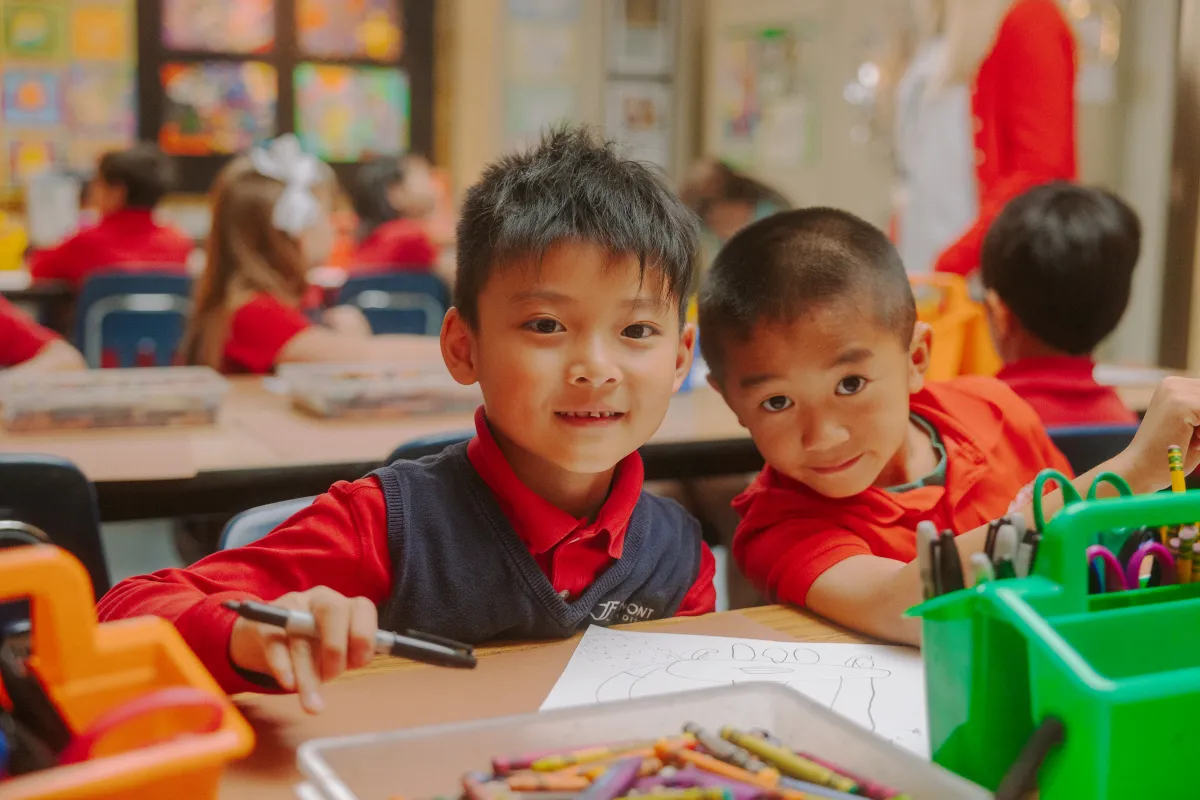
Watch a four-year-old try to write their name for the first time, and the struggle becomes clear. The pencil wobbles, letters slant in different directions, and frustration builds quickly. Preschool tracing worksheets bridge the gap from random scribbles to confident writing, providing structured practice that builds fine motor skills and hand-eye coordination.
Children learn best when activities match their interests and feel like play rather than work. Customized worksheets featuring favorite characters and themes transform repetitive exercises into engaging practice sessions that young learners actually request. Parents and educators can access 46,613+ free coloring pages to create personalized tracing activities that combine letter practice, number recognition, and shape learning with captivating imagery.
Summary
- Tracing builds the physical foundation for writing while strengthening cognitive pathways that support reading, attention, and visual processing. Research from the National Library of Medicine confirms that fine motor skills directly impact early writing success and school readiness, with children who practice tracing regularly developing better pencil control, more consistent letter formation, and faster writing speed when they enter first grade. A study from Indiana University found that children who traced letters recognized them 20 to 30 percent faster than those who only studied them visually, with brain scans showing stronger activation in reading-related regions when physical tracing was involved.
- Visual-motor integration, the coordination between what the eyes see and what the hands do, predicts academic readiness more reliably than many other preschool skills. Early childhood studies show structured tracing tasks improve visual-motor integration scores by up to 25 percent, a key indicator of how well children will handle the cognitive demands of formal schooling. The act of following a line from start to finish builds executive function, teaching children that tasks have structure, that you can't skip steps, and that persistence produces visible results.
- Most children begin tracing between ages 2 and 4, progressing from random scribbles to straight lines, then basic shapes, and finally letters. The timeline varies based on individual motor development and exposure to drawing tools, with some 3-year-olds tracing letters fluently while others still struggle with circles at 4.5. Neither scenario predicts future academic success or failure; what matters more is whether they're progressing and whether the activities feel achievable rather than defeating.
- Standard worksheets often fail because they use thin lines and tiny letters that frustrate more than they teach, creating resistance instead of building confidence. When children repeatedly fail at tracing because the shapes are too small for their current motor control, they learn to dislike the activity rather than develop the skills they need. The problem isn't ability; it's that the design doesn't match the developmental stage.
- Generic letter drills don't spark curiosity because they feel disconnected from what children care about, triggering avoidance rather than engagement. When tracing feels like an obligation imposed from outside rather than an activity connected to their interests, children resist the repetition required for mastery. The solution isn't forcing more practice; it's redesigning what practice looks like so it aligns with what already captures their attention.
- My Coloring Pages addresses this by generating customizable tracing worksheets built around each child's specific interests, from dump trucks to unicorns, with adjustable line thickness and size that match current motor abilities rather than standardized assumptions.
Table of Contents
- When Do Kids Start Tracing
- Importance of Tracing for Kids
- How to Help Kids With Tracing
- 10 Best Printable Preschool Tracing Worksheets
- Download 21,874+ FREE Worksheets and Make Custom Worksheets
When Do Kids Start Tracing
Most children start tracing between ages 2 and 4, though timing varies based on each child's motor development and drawing frequency. Kids learn to trace in a predictable pattern: scribbling, straight lines, basic shapes, then letters. According to North Shore Pediatric Therapy, children between 18 months and 4 years build the basic pre-writing skills that enable tracing.
"Children between 18 months and 4 years build the basic pre-writing skills that make structured tracing possible." — North Shore Pediatric Therapy
🎯 Key Point: Every child develops at their own pace. Don't worry if your 2-year-old isn't ready for tracing while another child the same age is already drawing basic shapes.
🔑 Takeaway: The 18-month to 4-year window is when most children develop the fine motor control and hand-eye coordination necessary for tracing activities.

Age 2 to 2.5 Years The Scribble Stage
At this age, children make random marks on paper with little control. Their grip is often awkward and fist-like, either pressing too hard or barely touching the surface. These scribbles build neural pathways between hand and eye. When asked to follow a straight line, they veer off course within seconds, which is normal. The goal isn't accuracy but holding a crayon long enough to see what happens when it moves across paper.
Age 3 to 3.5 Years Following Simple Shapes
Hand control improves significantly during this time. Children intentionally begin to identify basic shapes such as circles, wavy lines, and zigzags. They can stay within boundaries for short periods, though their lines remain shaky and inconsistent. You'll see them stop often to adjust their grip or look between what they're copying and their own marks. Tracing becomes purposeful copying rather than random movement. They're learning that lines go in certain directions, shapes have rules, and their hand can follow those rules with focus.
How do you find materials that match their abilities?
Finding materials that match their abilities is key. Generic worksheets often feature shapes too small or lines too thin for developing motor skills. My Coloring Pages lets you adjust line thickness and shape size to match your child's developmental stage. You can create tracing exercises with bold, forgiving lines that build confidence rather than highlight mistakes.
What happens when children begin letter tracing at age 4?
By age 4, most children can trace individual letters with reasonable accuracy, understanding that letters have specific starting points and directional strokes. Writing their own name becomes a milestone they pursue with determination, though letters may be oversized or unevenly spaced, but remain recognizable in shape. This is when tracing transitions from a motor skill exercise into a literacy tool: children are encoding meaning, not drawing lines.
Why do children struggle with similar-looking letters?
Letter tracing requires visual discrimination: the ability to distinguish between similar shapes, such as "b" and "d" or "p" and "q." Children who struggle often lack not hand control but the ability to perceive the small differences that distinguish one letter from another. Repetition helps, but only if the practice feels purposeful rather than punitive.
What factors influence each child's rate of development?
Every child moves through these stages at their own pace, influenced by genetics, muscle tone, access to drawing tools, and hand preference. Some 3-year-olds trace letters fluently, while others struggle with circles at 4.5 years old. Neither predicts future academic success. What matters is whether they're progressing and whether activities feel achievable rather than defeating.
Why does pushing too hard create problems?
Pushing too hard, too early creates resistance. A child who associates tracing with frustration will avoid it, delaying the practice they need. The goal is to meet them where they are and provide tools that make the next step feel possible.
What's the bigger picture beyond timing?
But knowing when kids start tracing is only half the story. The bigger question is why it matters.
Related Reading
- Preschool Worksheets
- What Age Is Preschool
- Preschool Curriculum
- Preschool Age Range
- Preschool Vibes
- Preschool Homeschool Curriculum
- Preschool Games
- Worksheets For Preschool
- Preschool Education
- Free Preschool Worksheets Age 3–4
- Preschool Books
- What Age Do Kids Start Preschool
- Preschool Graduation
- Free Name Tracing Worksheets for Preschool
- Preschool Backpack
- All About Me Preschool
- Free Preschool Worksheets
- Preschool Self Defense
- What Should a Child Learn in Preschool
- Preschool vs Pre K
- Sight Words for Preschool
- Free Printable Preschool Worksheets Tracing Letters
- First Day of Preschool
- Preschool Math Worksheets
- Preschool Valentine Crafts for Parents
- Preschool Graduation Gifts
- Preschool Toys
- What Age Is Preschool and Kindergarten
- Preschool Quotes About Play
Importance of Tracing for Kids
Tracing builds the physical foundation for writing while strengthening cognitive pathways that support reading, attention, and visual processing. When children trace shapes, letters, or patterns, they encode information through movement, creating stronger neural connections than passive observation.
🎯 Key Point: Tracing isn't just about motor skills – it's a multi-sensory learning experience that engages visual, tactile, and kinesthetic processing systems simultaneously.
"When children trace shapes, letters, or patterns, they encode information through movement, creating stronger neural connections than passive observation alone."
💡 Tip: The hand-brain connection developed through tracing activities directly translates to improved handwriting fluency, letter recognition, and spatial awareness – all critical building blocks for academic success.
How does fine motor control create writing readiness?
The muscles needed for handwriting are small, precise, and difficult to coordinate. A child who cannot control a pencil will not suddenly gain that ability in kindergarten. Tracing strengthens the small hand muscles responsible for finger isolation and grip stability, which require focused, repetitive motion against resistance.
What does research show about tracing and writing success?
Research from the National Library of Medicine shows that fine motor skills directly affect early writing success. Children who practice tracing regularly develop better pencil control, more consistent letter formation, and faster writing speed in first grade. This translates to quicker assignment completion, more legible writing, and greater mental capacity for composing ideas rather than forming letters.
How does tracing develop proper pressure control?
Tracing trains proprioception, your body's sense of where it is in space. Young children often press too hard or barely touch the paper because they haven't determined how much force to use. Tracing provides hundreds of opportunities to adjust pressure, speed, and direction, creating the feedback loop where motor memory forms.
How does tracing activate different brain regions than visual recognition?
Seeing a letter and tracing a letter activate different parts of the brain. Looking at something is passive; tracing forces the child to break the letter into directional strokes: start at the top, curve down, lift the pencil, and add the cross. A study from Indiana University found that children who traced letters recognized them 20 to 30 percent faster than those who only studied them visually. Brain scans showed stronger activation in reading-related regions when physical tracing was involved.
Why does tracing help with letter confusion better than flashcards?
Early literacy requires distinguishing between similar shapes quickly and accurately. A child who confuses "b" and "d" isn't struggling with memory but with visual discrimination. Tracing forces attention to directional details that flashcards don't provide. The hand must follow the correct path, or the shape comes out wrong. This immediate, tactile feedback corrects errors before they become habits.
How can you create age-appropriate tracing exercises?
Standard worksheets often fail because thin lines and tiny letters frustrate rather than teach. When children repeatedly fail at tracing due to poor motor control, they come to dislike the activity rather than build confidence. My Coloring Pages lets you create tracing exercises scaled to your child's abilities, with bold, forgiving lines that make success achievable. You're not lowering standards; you're removing obstacles unrelated to learning.
How does tracing develop visual-motor integration skills?
Tracing requires sustained attention, pattern recognition, and visual-motor integration: the coordination of what the eyes see with what the hands do. Visual-motor integration predicts academic readiness more reliably than many other preschool skills. Structured tracing tasks improve visual-motor integration scores by up to 25 percent, a key indicator of readiness for formal schooling.
Why does tracing build executive function in preschoolers?
Following a line from start to finish builds executive function. A child must plan the movement, monitor progress, and adjust when drifting off course: the same mental processes required for multi-step problem solving, reading comprehension, and following instructions. Tracing teaches that tasks have structure, steps cannot be skipped, and persistence produces visible results.
How do tracing patterns teach spatial relationships?
When tracing zigzags or spirals, preschoolers learn directionality, sequencing, and spatial relationships. They discover that lines have orientation, shapes have rules, and their hand can obey those rules with concentration. These insights come from deliberate practice with clear boundaries and immediate feedback, not from coloring or random scribbling.
How to Help Kids With Tracing
Start with lines before letters. A child who can't trace a horizontal line smoothly won't suddenly master the letter H. Progress through horizontal strokes, then vertical, then diagonal, then combined shapes like squares and triangles. Each stage builds the muscle memory and visual-motor coordination needed for the next level. Only introduce letters after these patterns feel automatic, starting with letters built from those same familiar strokes.
💡 Pro Tip: Master each stroke type completely before moving to the next - rushing through foundational patterns creates gaps that make letter formation much harder later.
⚠️ Warning: Skipping straight to letters without proper line practice is the #1 reason kids struggle with handwriting and develop poor letter formation habits.
"Visual-motor coordination develops through systematic practice of basic strokes before complex letter patterns, building the foundational skills needed for fluent handwriting." — Occupational Therapy Research, 2023
Progression Stage | Skills Developed | Before Moving On |
|---|---|---|
Horizontal Lines | Left-right control, steady pressure | Smooth, straight lines |
Vertical Lines | Top-bottom control, grip stability | Consistent spacing |
Diagonal Lines | Complex motor planning | Clean angles, no wobbles |
Combined Shapes | Multi-directional control | Accurate squares, triangles |
Letter Introduction | Applied stroke patterns | Automatic shape recognition |

Why should children start with basic lines and shapes?
Horizontal lines teach left-to-right motion, the same directional flow needed for reading and writing. Vertical lines build top-to-bottom control. Diagonal lines are harder because they require coordinating both directions simultaneously, which is why children often struggle with letters like K, X, and Z. Asking a 3-year-old to trace a diagonal without practising straight lines first means asking them to solve two motor problems at once: their hand wobbles, the line goes off course, and they internalise failure instead of progress.
How do shapes prepare children for letter formation?
Shapes add closure: a circle requires returning to the starting point, demanding planning and spatial awareness. A triangle combines three different line orientations in sequence. These are the exact components that letters are made of. The letter A is two diagonals and a horizontal bar. The letter D is a vertical line and a curve. When children trace shapes repeatedly, they build a mental library of movements they'll later combine into letters without conscious effort.
Why is parent demonstration crucial for tracing success?
Parents often give children worksheets without showing them how to do it first, expecting kids to understand independently. Even with directional arrows on the page, young children don't automatically know where to start or which way to move. They need to see the motion, hear the instruction, and try it while you watch and correct them. Showing them how to do it matters more than most people realize.
Why are uppercase letters easier for beginners?
Uppercase letters are mostly made of straight lines and simple curves. Letters like E, F, H, I, L, and T use only horizontal and vertical strokes. A, K, M, N, V, W, X, Y, and Z add diagonal lines but avoid the fine motor skills that curves require. Even O and Q use shapes that children have already practised. Sequencing tasks so each feels achievable builds confidence.
How do lowercase letters increase complexity?
Lowercase letters have ascenders (b, d, h, k, l), descenders (g, j, p, q, y), and letters that sit entirely within the middle space (a, c, e, m, n). Children must track three different height zones simultaneously, requiring greater visual discrimination and hand control. Starting with uppercase removes this complexity, allowing them to focus on forming shapes correctly without worrying about baseline placement.
Why should you start with the letter O?
The letter O deserves special attention because it's often the first shape children draw independently. Circles appear in toddler scribbles long before intentional lines, making O a natural bridge between random mark-making and deliberate letter formation. Starting with a letter children already associate with success builds confidence rather than resistance.
Why do children need to see tracing demonstrated?
Telling children what to do doesn't work. Children need to watch your hand move along the path, see where you pause, and notice how much pressure you apply. Then they attempt it while you narrate: "Start here at the dot. Straight down. Now lift your pencil. Across the top." That real-time feedback loop, where they act and you respond immediately, is how motor patterns solidify.
How can worksheet design impact tracing success?
Most standard worksheets have lines that are too thin and letters that are too small for developing hand muscles to trace accurately. A 4-year-old's fine motor control cannot match the precision required to print a half-inch letter in light gray. They press too hard, drift outside the lines, and conclude they're bad at this. The problem isn't ability; it's design. My Coloring Pages lets you create tracing exercises with bold, forgiving lines scaled to your child's skill level. You adjust thickness, size, and spacing to make success feel possible, removing obstacles unrelated to learning.
Why does multisensory practice improve learning outcomes?
Tracing on paper activates one neural pathway. Sandpaper letters add tactile feedback, play-dough engages proprioception (the sense of force and resistance), and each method strengthens memory of how letters should feel and look. Children who only trace worksheets often struggle to recall letter shapes later because learning remains confined to a single sensory modality.
How does variety prevent boredom during practice?
Variety keeps things interesting. A child who resists worksheets might eagerly trace letters in shaving cream or use a dry-erase marker on laminated cards. This fresh approach enables the hundreds of practice attempts needed for learning through repetition without monotony undermining engagement.
Rewards Sustain Motivation
Young children respond to immediate, visible acknowledgment: a star, smiley face, or sticker signals that effort matters. The reward need not be fancy, only consistent and tied directly to the attempt, not the outcome. You're reinforcing persistence, not perfection. Without reward, a child who completes a tracing page and hands it to you receives no signal of success. That uncertainty erodes motivation faster than difficulty does. Clear, positive feedback—even for imperfect work—builds the emotional resilience required for the repetition that mastery demands.
How much repetition do children need for tracing to become automatic?
Tracing letters takes hundreds of tries before the movements become automatic. This amount of practice only happens if the activity stays enjoyable. Spreading ten pages across two weeks, mixing different letters, and switching between paper and tactile methods builds sustained practice without resistance from children. Children need enough repetition for patterns to stick, but not so much sameness that they disengage.
Why does frequency matter more than duration for tracing practice?
Doing three to five minutes of focused tracing daily works better than one 30-minute weekly session. How often you practice matters more than duration because your brain builds motor memory between sessions, not just during them. You need materials that match what you are teaching, not generic worksheets from the first search result.
10 Best Printable Preschool Tracing Worksheets
The best tracing worksheets share three key characteristics: bold, forgiving lines that accommodate wobbly strokes, clear starting points that eliminate guesswork, and enough white space so a child's eyes can focus on the task rather than scan through clutter. Below are ten sources that consistently deliver materials meeting those standards.

🎯 Key Point: Quality tracing worksheets should prioritize visual clarity and child-friendly design over decorative elements that can distract young learners.
"Clear visual hierarchy and adequate spacing are essential for preschool learning materials to support developing fine motor skills and visual processing." — Early Childhood Education Research, 2023

💡 Tip: Look for worksheets with dotted guidelines and directional arrows to help children understand proper letter formation from the start.
Essential Feature | Why It Matters | What to Look For |
|---|---|---|
Bold Lines | Easier for developing vision to track | 2-3mm thickness minimum |
Clear Start Points | Reduces confusion and frustration | Numbered dots or arrow indicators |
White Space | Prevents visual overwhelm | 1-inch margins around each letter |

1. My Coloring Pages
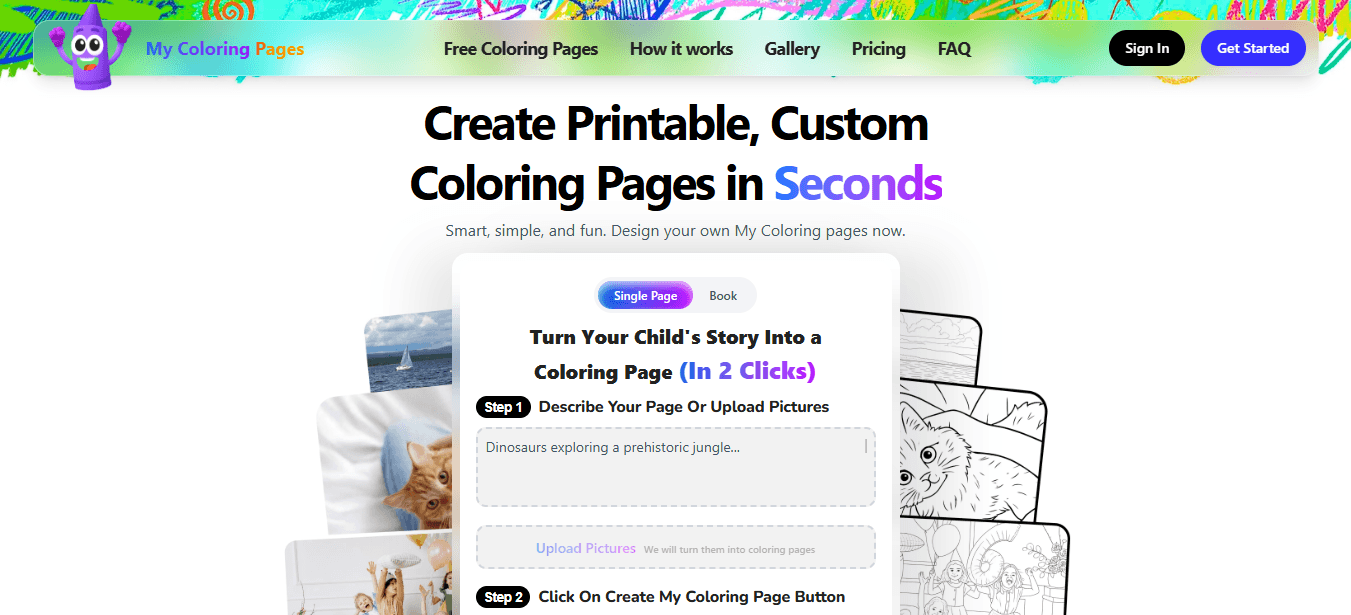
My Coloring Pages creates custom tracing worksheets tailored to your child's skills and interests. Specify what you need—uppercase letters with extra-thick outlines, larger zigzag patterns, or dinosaur and truck shapes—and the tool generates printable pages in seconds. The library includes over 46,613 free coloring pages that double as tracing templates.
How does customization improve tracing practice?
What makes this different is the ability to change line thickness, shape size, and complexity without design software. A child struggling with fine motor control can practise on letters twice the standard size, then gradually work down to smaller forms as their precision improves. You are not locked into one-size-fits-all materials.
Why does personalization boost engagement?
Personalization removes the mismatch between what a worksheet demands and what a child can deliver. When tracing feels achievable, children attempt more repetitions—how motor memory forms. Themed worksheets let a child obsessed with construction vehicles trace letters embedded in bulldozer illustrations, merging skill-building with genuine interest.
2. Planes & Balloons
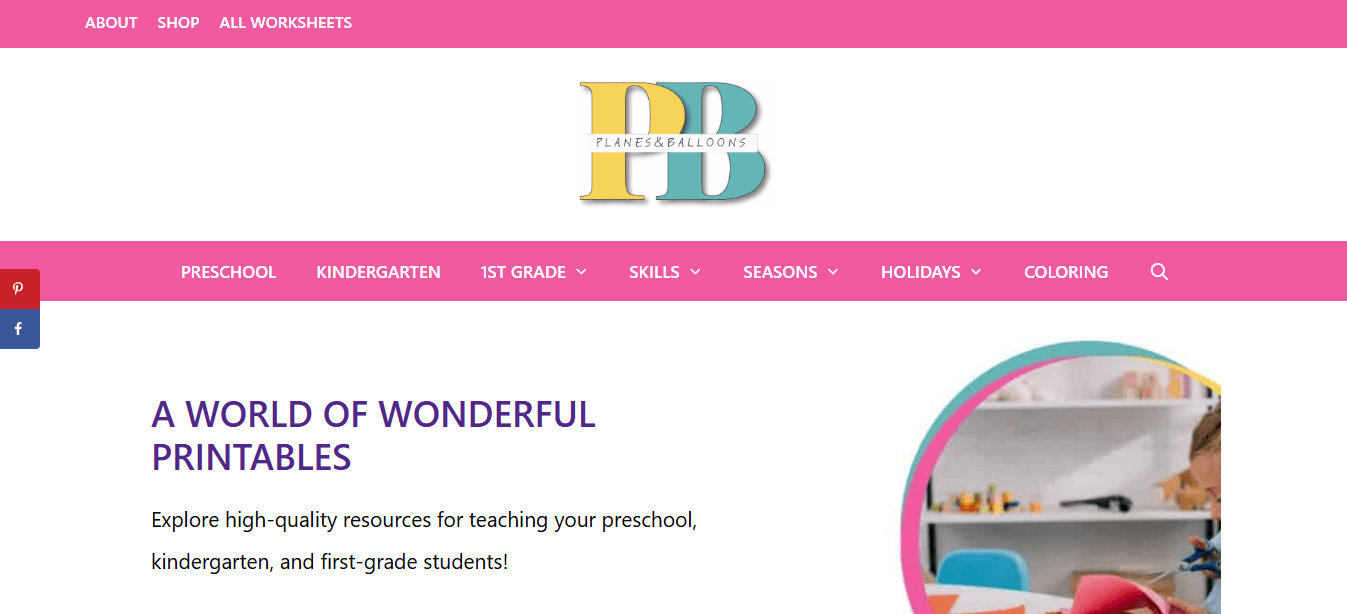
Planes & Balloons offers free printable tracing worksheets for pre-writing skills, including alphabet tracing, number tracing, and pattern exercises such as wavy lines and zigzags. The worksheets use clear directional arrows and starting dots to guide children, with consistent line thickness across pages so parents can track progress without adjusting to different formats. Their pattern tracing sheets focus on specific motor skills. A child who can trace horizontal lines but struggles with curves can practise wave patterns repeatedly until the motion feels automatic. This targeted repetition builds confidence before introducing letters, which combine multiple stroke types in sequence.
3. Active Little Kids
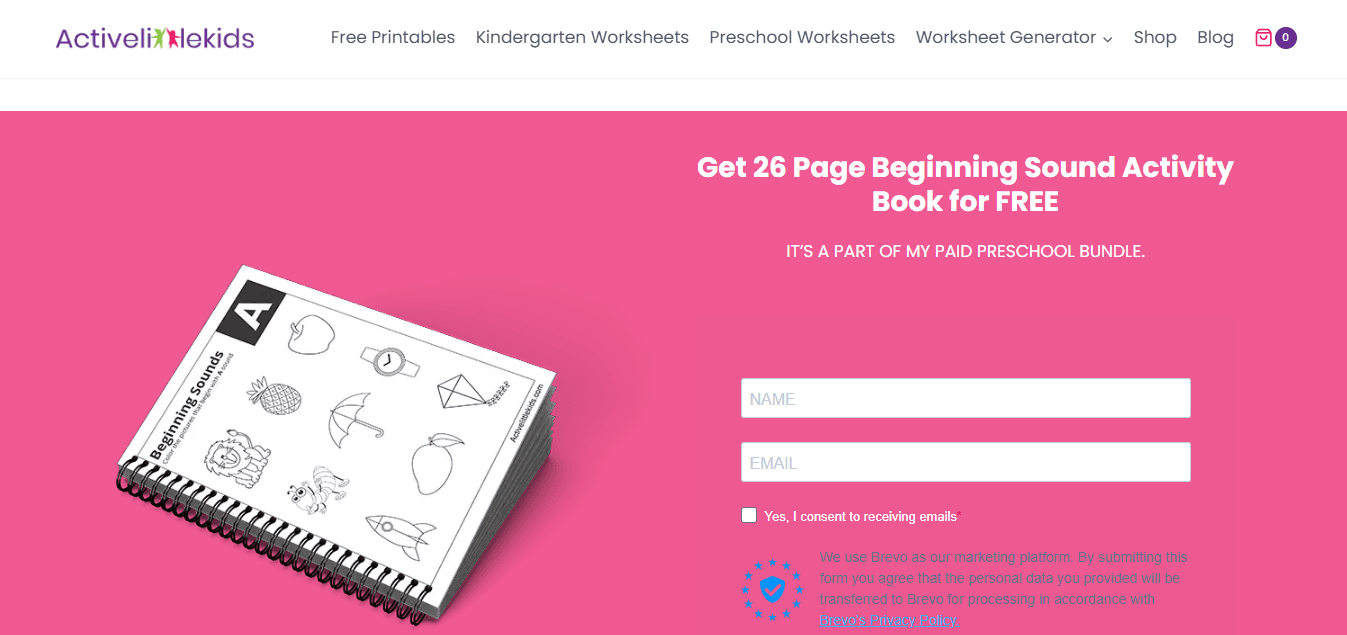
Active Little Kids offers themed tracing worksheets in which children trace objects such as apples, ducks, rainbows, and suns. These worksheets combine tracing practice with vocabulary building, as children learn the shape of the word and the object it represents simultaneously. Simple, uncluttered illustrations keep visual focus on the tracing path rather than distracting decorative elements.
Why do object-based tracing worksheets work better for some children?
The object-based approach works well for children who resist abstract letter drills but engage when tasks feel connected to something concrete. Tracing a duck's outline isn't fundamentally different from tracing the letter D, but the narrative context—"Let's follow the duck's shape"—holds their attention longer than "Trace this letter."
4. SplashLearn

SplashLearn creates interactive printable worksheets covering reading and maths for preschool and kindergarten, including alphabet recognition sheets, number tracing activities, and path-tracing puzzles where children guide characters through mazes by following dotted lines. The worksheets align with early childhood curriculum standards, making them useful for parents supplementing formal instruction or homeschooling families tracking developmental benchmarks. Path-tracing puzzles add problem-solving to motor practice by requiring children to choose a route while maintaining hand control. This engages executive function alongside fine motor skills, a dual focus that mirrors the cognitive demands of writing, where planning and letter formation occur simultaneously.
5. SupplyMe
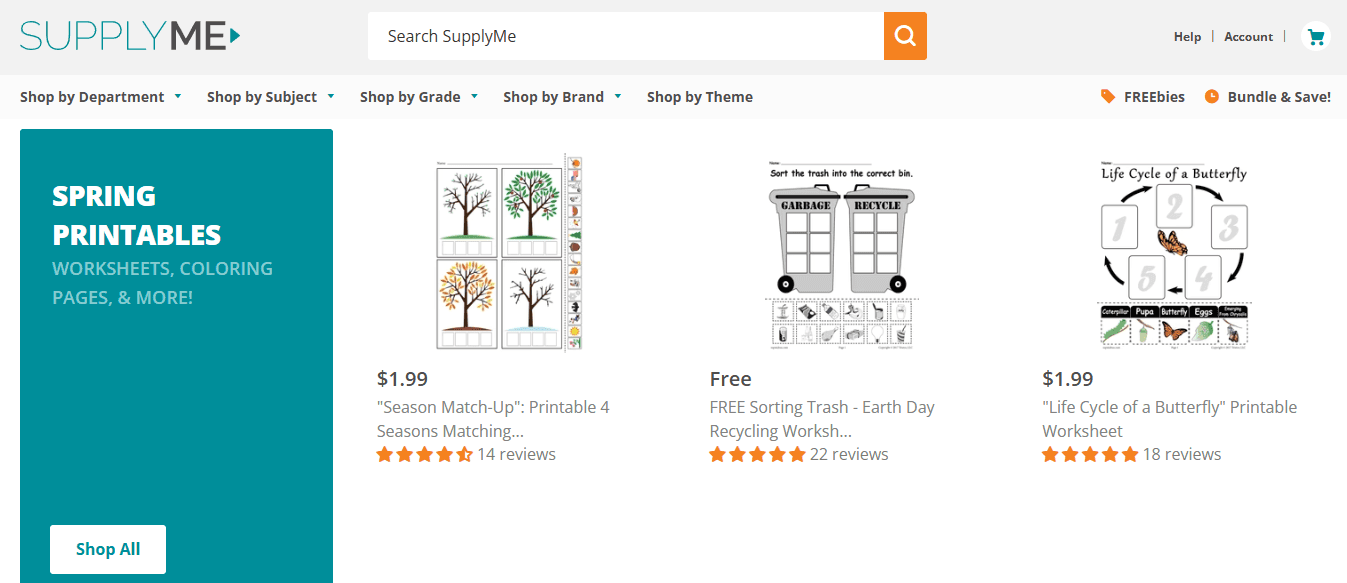
SupplyMe maintains a large library of preschool worksheets, including alphabet tracing pages, number sheets, shape activities, and holiday-themed exercises. The worksheets are designed for bulk printing, making them ideal for teachers managing multiple students and parents printing weekly practice sets. Their holiday-themed tracing sheets add seasonal variety while maintaining focus on skill-building. A child tracing pumpkin outlines in October or snowflakes in December develops the same hand control as tracing circles and stars, but the holiday theme prevents the activity from feeling repetitive.
6. PreschoolPad
PreschoolPad offers free printable worksheets for ages 3–6, covering the alphabet, numbers, line tracing, and colouring. The worksheets use different formats: uppercase A, lowercase a, and A within a word. This approach helps children become familiar with letters through repetition without it becoming monotonous. Line tracing worksheets progress step by step: horizontal lines, then vertical lines, diagonal lines, and combined shapes. This order respects motor skill development rather than jumping to difficult forms. It builds the stroke library children need before tackling letters.
7. PrintWorksheets
PrintWorksheets provides thousands of printable learning sheets across subjects, including alphabet and shape tracing, as well as seasonal activities. Worksheets are organized by skill level (beginner, intermediate, and advanced) and include colour and pattern exercises that develop visual discrimination alongside motor control. The number of available worksheets keeps children interested through new content. A child who completes ten pages of letter B can move on to ten different B-themed worksheets instead of repeating the same page, reinforcing the motor pattern without becoming bored.
8. Coco Island Books

Coco Island Books offers print-friendly PDF worksheets for preschool and early elementary learners, including uppercase and lowercase letter tracing, number tracing (1-9), and curved- and zigzag-line exercises. The high-contrast design keeps tracing paths visible on lower-quality paper and with fading ink. Their curved line worksheets prepare children for letters like C, O, S, and U, which require smooth, continuous motion. Practising curves separately before incorporating them into letters reduces cognitive load, allowing children to focus on motor control without decoding letter shapes simultaneously.
9. Maple Planners
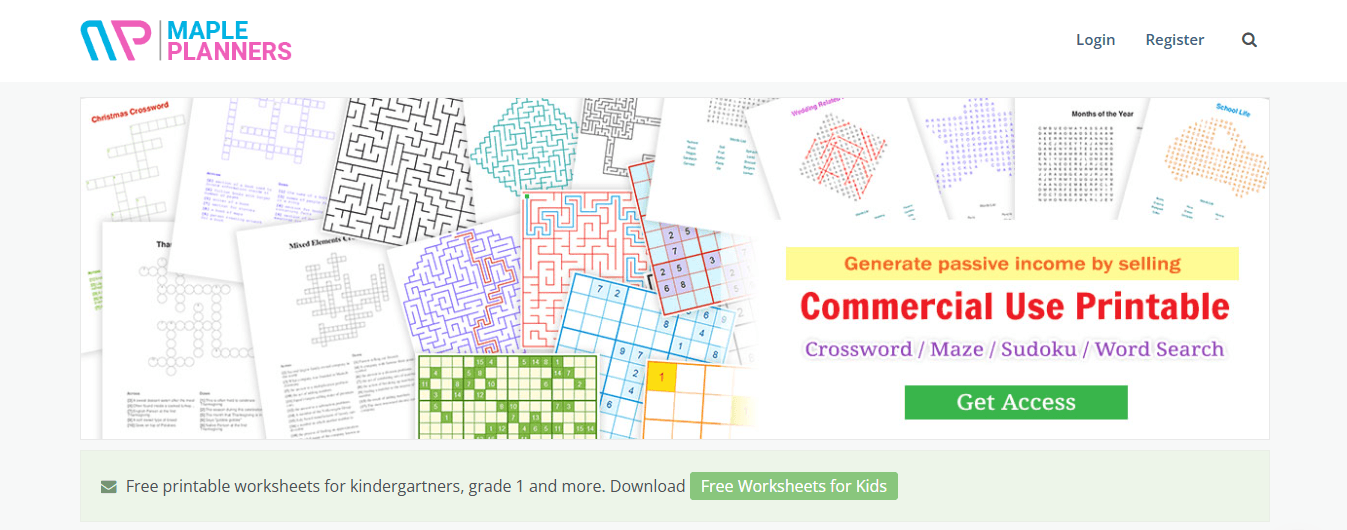
Maple Planners offers free printable preschool worksheets focusing on writing and math skills, including number tracing, alphabet practice, seasonal tracing, and colour-by-number activities. The worksheets use visual cues such as numbered stroke orders for letters, teaching children both what the shapes look like and the correct sequence of movements needed to form them. Color-by-number activities blend skill-building with tangible results that feel more like play than practice. A child traces numbers or letters to discover which sections to color, maintaining motivation through the repetition needed to develop proficiency.
10. The Teaching Aunt
The Teaching Aunt provides teacher-created tracing worksheets for preschool and early learners, including pre-writing line tracing, letter tracing, and pattern activities. The worksheets reflect classroom-tested insights about pacing, difficulty progression, and common error patterns, addressing where children typically struggle. Their pre-writing line-tracing sheets isolate foundational strokes without the pressure to form recognizable letters. Children practice the motions required for writing without worrying whether the result looks correct, building motor confidence before introducing the evaluative component of letter formation. But access to good worksheets doesn't guarantee success if the practice itself feels like punishment.
Related Reading
- Preschool Assessment
- Preschool Crafts
- Preschool Learning Activities
- Daycare Vs Preschool
- Preschool Classroom Layout
- Preschool Sight Words
- Preschool Playground Equipment
- How To Become A Preschool Teacher
- Preschool Lesson Plan Template
- Playing Preschool Curriculum
- Preschool Science Experiments
- Spring Bulletin Board Ideas For Preschool
- Preschool Prep
- Preschool Math Activities
- Free Preschool Games
- Noah's Ark Preschool
- Preschool Craft Ideas
- Creative Curriculum For Preschool
- Preschool Art Activities
- Christmas Crafts Preschool
- Spring Bulletin Board Ideas For Preschool
- Turkey Craft Preschool
- Preschool Bulletin Board Ideas
Download 21,874+ FREE Worksheets and Make Custom Worksheets
When a child resists tracing worksheets, the issue usually isn't defiance or lack of ability. Generic letter drills don't spark curiosity—they trigger avoidance. The solution is to redesign practice to align with what captures their attention.
🎯 Key Point: Most parents default to whatever worksheets appear first in search results: rows of identical letters in thin gray lines. A child who loves trains gets the same alphabet sheet as a child obsessed with butterflies. That mismatch between content and interest creates friction before the pencil even touches paper.

With My Coloring Pages, you generate tracing worksheets built around what your child wants to draw. Describe their current obsession—dump trucks, unicorns, soccer balls, or their own name in dinosaur shapes—and the platform produces printable pages in seconds. Our 46,613+ free coloring pages function as tracing templates, helping children practice hand-eye coordination through content they're excited about. A child who refuses alphabet drills might eagerly trace the outline of a rocket ship, exercising the same hand muscles and visual-motor coordination without triggering resistance.
"Tracing becomes something kids choose rather than endure when it connects to what already matters to them."
💡 Tip: This approach works because it removes the artificial separation between learning and play. Tracing stops being something you do before you're allowed to do what you want. A preschooler practices curves by following a cat's tail, diagonal strokes by tracing a house roof, and circular motions by outlining fire truck wheels. The motor skills transfer identically, but the emotional context shifts from compliance to curiosity.

Traditional Approach | Interest-Based Approach |
|---|---|
Generic letter drills | Custom themed worksheets |
Forced repetition | Natural motivation |
Compliance-based | Curiosity-driven |
One-size-fits-all | Personalized content |
You can combine tracing with storytelling. A child traces the path a bunny takes through a garden, then colors the scene. They trace letters spelling their favorite animal's name, then draw it underneath. That narrative thread sustains attention longer than isolated drills because the task has a beginning, middle, and end.

⚠️ Warning: When tracing becomes something kids choose rather than endure, repetition happens naturally. They return to the activity because it connects to what already matters to them, which is how hundreds of practice attempts accumulate without negotiation or counting.