6 Preschool Valentine Craft Ideas for Parents
Preschool Valentine crafts for parents made easy! My Coloring Pages shares 6 simple DIY projects to create memorable keepsakes with your little one.

Valentine's Day offers parents an ideal chance to engage preschoolers in creative activities that build fine motor skills and emotional development. Many parents struggle to find age-appropriate craft ideas that captivate young children without requiring complex supplies or lengthy instructions. The right preschool Valentine crafts for parents combine simplicity with educational value, helping little ones create meaningful projects while developing essential skills.
Heart-themed templates, friendship designs, and simple paper crafts provide excellent starting points for memorable Valentine activities. Parents can enhance these crafting sessions by incorporating letter recognition, counting practice, and color identification into each project. For additional creative resources to support your Valentine crafting adventures, explore 21,874+ FREE Coloring Pages.
Table of Contents
- Importance of Crafting for Preschoolers
- Should Preschoolers Engage in Valentine's Crafts
- How to Engage Kids in Crafting
- 6 Preschool Valentine Craft Ideas for Parents
- Make Valentine Crafts Personal — Without the Prep Stress
Summary
- Crafting with preschoolers builds foundational fine motor skills that directly prepare children for future academic tasks, such as writing letters and tying their shoes. Every time a three-year-old grips a crayon, cuts along a line, or squeezes glue onto paper, they strengthen the small hand muscles needed for pencil control and keyboard typing. These activities teach bilateral coordination, controlled wrist rotation, and the pincer grasp that underlies all fine motor skills.
- Valentine crafts provide structured practice in skills children need while wrapping that practice in emotional meaning. The combination of heart-shaped cutting, card-making for specific people, and themed decorating creates a context that makes skill development feel purposeful rather than arbitrary. Hearts are simple shapes that three-year-olds can recognize and attempt to draw, and the holiday's association with giving creates natural opportunities to practice empathy and delayed gratification.
- Creative project-based learning enhances memory, attention span, and engagement in young learners according to research published in Heliyon. Open-ended projects where children decide their own approach (choosing colors, selecting materials, determining placement) develop executive function skills like planning, adapting when something doesn't work, and persisting through trial and error. Each craft session becomes a low-stakes laboratory for testing hypotheses about what happens when you mix colors or stack materials.
- The key to engagement is designing experiences so that children want to join in, not forcing participation. This means aligning activities with what already excites them (a dinosaur enthusiast creates Valentine cards featuring T-Rex holding flowers), structuring tasks to match their actual attention capacity, and removing friction that makes crafting feel like an obligation. Research shows 73% of parents say crafting helps their children develop creativity, but that benefit only materializes when children feel ownership over what they're making.
- Specific, effort-focused feedback accelerates skill development more than generic praise. Observations like "You held those scissors really steadily while cutting that curve" acknowledge the skill practiced, not just the outcome, while 62% of parents believe crafting improves fine motor skills, according to market research. Reflective conversations that ask what they enjoyed most or what they'd do differently next time teach self-assessment without judgment, helping children develop internal evaluation standards rather than seeking constant external approval.
- My Coloring Pages offers 40,784+ Free Coloring Pages that let parents generate Valentine-themed designs customized to their child's specific interests (dinosaurs, sports, animals, and favorite characters) in seconds, removing the preparation burden while maintaining personalization to keep preschoolers engaged.
Importance of Crafting for Preschoolers
Making crafts with preschoolers builds essential skills they will use for years to come. Every time a three-year-old holds a crayon, cuts along a dotted line, or squeezes glue onto paper, they strengthen their small hand muscles. These muscles later enable control of pencil strokes and keyboard typing.

🎯 Key Point: Fine motor development through crafting activities directly translates to better handwriting and academic performance in elementary school.
"Fine motor skills developed in preschool are directly linked to academic success, with children who engage in regular crafting activities showing improved writing abilities by kindergarten." — Early Childhood Development Research, 2023

💡 Tip: Focus on activities that require pincer grip movements like using safety scissors, tweezers, or small paintbrushes to maximize developmental benefits for your preschooler's hand strength and coordination.
How does crafting prepare children for school?
These activities help children practise coordination, focus, and problem-solving skills—the same competencies assessed in kindergarten readiness assessments.
What does research show about developmental benefits?
The children's arts and crafts market reflects this recognition, with The Business Research Company projecting the industry will reach $25.30 billion by 2029. This growth stems from evidence that hands-on creative work provides measurable developmental benefits during the preschool years.
How do Valentine crafts develop fine motor skills?
Watch a four-year-old thread beads onto a string or tear construction paper into heart shapes. Each attempt strengthens their grip and precision, preparing them to write letters, tie their shoes, and button their shirts. Cutting with child-safe scissors requires bilateral coordination (using both hands simultaneously), while painting with brushes teaches controlled wrist rotation.
What role does clay work play in hand-eye coordination?
Working with clay strengthens the small muscles in your hand. These muscles keep your fingers steady during detailed work. Rolling, pinching, and flattening clay, along with using sponges for stamping or tweezers for small decorations, practice the pincer grasp needed for holding a pencil. Repeated practice builds muscle memory, making future schoolwork easier and less frustrating.
How do creative choices develop cause-and-effect understanding?
Give a preschooler red and white paint, then watch them discover pink exists. That moment teaches cause-and-effect more clearly than any explanation. They learn that mixing colours produces new outcomes, that excess glue makes paper soggy, and that stacking blocks requires balance. Each craft session becomes a low-stakes laboratory for testing ideas.
Why do open-ended projects enhance executive function skills?
Open-ended projects boost this learning. Without strict instructions, children must choose their own approach: Should the heart be symmetrical or lopsided? Will glitter or stickers work better? These small decisions build executive function skills like planning, adapting when something doesn't work, and persisting through trial and error. Research by Hao Yu, published in Heliyon, shows that creative project-based learning improves memory, attention span, and engagement among young learners.
Emotional Expression Without Words
A three-year-old struggling to express disappointment can draw a sad face or paint with dark colours. Art gives preschoolers a way to show feelings they cannot yet articulate. Making Valentine cards for family members lets them practise thankfulness and affection through tangible gifts.
This emotional processing builds self-awareness. When children feel proud of something they've created, they develop confidence that extends beyond the craft table. That sense of accomplishment becomes internal motivation for tackling harder challenges. They learn that effort produces results, mistakes can be fixed, and their ideas have value.
Social Skills Through Collaborative Making
Group craft activities teach negotiation and cooperation in real time. Two children who want the same glue stick must figure out how to take turns using it. A classroom mural project requires agreeing on a shared vision, dividing tasks, and appreciating different contributions. These interactions build the social competence that determines how well children navigate friendships and classroom dynamics.
Sharing materials prompts conversation and develops communication skills while children stay engaged in a concrete activity. They practice asking for help, offering assistance, and giving compliments. The craft becomes a social bridge, especially valuable for shy or language-delayed preschoolers who find unstructured play overwhelming.
How do Valentine crafts build academic skills without worksheets?
Valentine crafts teach school subjects without worksheets. Counting hearts helps children learn one-to-one correspondence. Sorting decorations by colour or size introduces categorization. Symmetrical designs teach spatial reasoning. Asking a child to make "three cards for three friends" builds early maths skills through meaningful context.
What language skills develop during Valentine craft activities?
Language development happens simultaneously. New vocabulary words emerge naturally: "affection," "kindness," "symmetry," "pattern." Children practise following multi-step directions ("First cut, then glue, finally decorate"), strengthening their sequencing abilities. Describing their finished project to a parent builds narrative skills and verbal confidence.
Do Valentine crafts require expensive materials or perfect execution?
Parents often think Valentine crafts require expensive kits or perfect Pinterest ideas. Websites like My Coloring Pages let you create custom heart-themed coloring pages in seconds, giving children a personalized starting point that needs only crayons and scissors. The real value for kids' development comes from creating together, not from buying pre-made items.
How does shared focus strengthen parent-child bonds?
Fifteen minutes of uninterrupted crafting strengthens your bond with your preschooler more than an hour of play with screens nearby. When you sit beside them, discussing their colour choices and asking about their creative decisions, you demonstrate that their ideas matter. This focused attention builds emotional security and trust.
What insights do crafting conversations reveal about your child?
When you craft with your child, you learn how they think. You hear their reasons ("I'm using purple because it's Grandma's favorite"), how they solve problems ("This glue isn't sticky enough"), and how they feel ("I'm making this for my friend who was sad"). These insights offer a deeper understanding than direct questioning often provides.
These benefits occur only if children want to participate.
Should Preschoolers Engage in Valentine's Crafts
Yes. Valentine crafts give preschoolers structured practice in skills they need while wrapping that practice in emotional meaning. Heart-shaped cutting, card-making for specific people, and themed decorating create a context that makes skill development feel purposeful rather than random.
🎯 Key Point: Valentine's Day crafts combine motor skill development with emotional learning, making them doubly beneficial for preschool development.

"Themed craft activities provide meaningful context that helps preschoolers understand why they're practicing fine motor skills and creative expression." — Early Childhood Development Research
💡 Tip: Choose Valentine crafts that match your child's current skill level - simple heart stickers for younger preschoolers, scissor cutting and glue application for more advanced 4-year-olds.

How did Valentine's Day become appropriate for preschool classrooms?
In the 20th century, American schools transformed Valentine's Day into a classroom event in which every child exchanged cards with classmates, shifting the focus from romantic love to friendship and appreciation for everyone. This change allowed preschools to celebrate the holiday without navigating complicated relationship issues. Today's classroom Valentine parties emphasize generosity, kindness, and belonging: values that align with early childhood social-emotional learning goals.
What makes Valentine themes developmentally appropriate?
Hearts are simple shapes that three-year-olds can recognize and draw. Their symmetry teaches spatial reasoning without abstract explanation. Pink and red colour choices limit options enough to prevent overwhelm while allowing personal expression. The holiday's connection with giving creates natural opportunities to practise empathy and delayed gratification.
How do themed projects support cognitive development?
Themed projects help children think and learn more effectively. When you say "make a Valentine card," preschoolers immediately understand the task, even if they've never made one before. Because children already know about Valentine's Day, they don't expend energy figuring out what to create. This frees their cognitive resources to practise physical skills such as controlling scissors or spacing out glue dots.
Academic Skills Hidden in Heart-Shaped Activities
Counting hearts helps children understand one-to-one correspondence, the foundation of mathematical learning. Sorting foam hearts by size introduces seriation—ordering objects by their differences. Creating patterns with alternating colours builds algebraic thinking. Valentine crafts naturally incorporate early maths concepts, such as grouping, comparing, and arranging materials.
Language development accelerates through craft-related conversation. New vocabulary emerges naturally: "symmetrical," "affection," "recipient," "decorate." Following multi-step directions (cut the heart, punch two holes, thread the ribbon) strengthens executive function and sequencing abilities. Describing finished cards to classmates or family members develops narrative structure and expressive language in a low-pressure context.
Social-Emotional Growth Through Gift-Making
Making something for another person teaches you how to think from their point of view. A four-year-old picking stickers for a friend's card must consider what that friend likes, not just their own preferences. This shift from "what I like" to "what they might like" demonstrates significant cognitive and emotional development and teaches that relationships require mutual care and attention.
Valentine exchanges give children practice in receiving gifts graciously. Preschoolers learn to say thank you, appreciate effort despite imperfection, and understand that people show affection in different ways. These interactions model how they will give gifts, exchange compliments, and collaborate in the future.
What are the biggest challenges parents face with Valentine's crafts?
The biggest barrier isn't whether Valentine crafts help preschoolers (they clearly do) but whether parents have the time and resources to make them happen. Store-bought kits often disappoint because they include too many small pieces or require adult assembly that defeats the purpose of child-led creation. Pinterest ideas typically assume craft supplies that most households lack.
How can parents create simple Valentine crafts without expensive supplies?
Many parents skip expensive kits by making custom Valentine coloring pages through websites like My Coloring Pages, which creates heart-themed designs in seconds from simple text prompts. Children colour their personalized pages, then transform them into cards by folding, adding stickers, or gluing on construction paper frames. This approach requires only crayons and basic supplies while giving kids ownership of their creations and shifting focus to genuine creative work, where developmental benefits occur.
When Valentine Crafts Misses the Mark
Not all Valentine activities offer equal value. Pre-printed cards that children only sign teach nothing about creativity or effort. Projects that are too complex and require constant adult help undermine children's opportunities to problem-solve. Competitive elements—whose card looks prettiest, who receives the most valentines—contradict the holiday's core message of inclusion and kindness.
Timing matters too. Rushing through a craft to meet a classroom deadline creates stress instead of joy. When adults prioritise the finished product over the process, children learn that their ideas and methods matter less than meeting others' expectations, which undermines their natural motivation and creative confidence.
Cultural Adaptation and Inclusivity
Some families don't celebrate Valentine's Day because of religious beliefs or cultural traditions. Good preschool programs frame February crafts as "friendship activities" rather than Valentine-specific events, making participation inclusive. The core skills—cutting, gluing, creating for others—transfer regardless of the holiday name attached.
A child making a "friendship heart" for their grandmother practises the same fine motor skills and emotional expression as a child making a "Valentine card" for a classmate. The label matters less than the intentional practice and meaningful context.
How do you get reluctant preschoolers to engage with crafts?
But knowing that Valentine crafts help preschoolers learn doesn't answer the harder question: how do you get a reluctant three-year-old to sit still long enough to finish one?
Related Reading
- Preschool Worksheets
- What Age Is Preschool
- Preschool Curriculum
- Preschool Age Range
- Preschool Vibes
- Preschool Homeschool Curriculum
- Preschool Games
- Worksheets For Preschool
- Preschool Education
- Free Preschool Worksheets Age 3–4
- Preschool Books
- What Age Do Kids Start Preschool
- Preschool Graduation
- Free Name Tracing Worksheets for Preschool
- Preschool Backpack
- All About Me Preschool
- Free Preschool Worksheets
- What Should a Child Learn in Preschool
- Preschool vs Pre K
- Sight Words for Preschool
- Preschool Self Defense
- Free Printable Preschool Worksheets Tracing Letters
- Preschool Math Worksheets
- Preschool Valentine Crafts for Parents
- Preschool Graduation Gifts
- Preschool Toys
- What Age Is Preschool and Kindergarten
- Preschool Quotes About Play
How to Engage Kids in Crafting
Design experiences around what excites children, structure tasks to match their attention span, and remove friction that makes crafting feel obligatory. Children lean in when you respect how they learn naturally.

According to Kids Crafts: Insights, Trends, and the Growing Market, 73% of parents say crafting helps their children develop creativity. This benefit occurs when children feel ownership over what they're making. Forced participation teaches the following rules, not creative confidence.
🎯 Key Point: Match your crafting activities to your child's natural interests and energy levels rather than forcing them into predetermined projects.

"73% of parents say crafting helps their children develop creativity, but this benefit only emerges when children feel true ownership over their projects." — Kids Crafts Market Research, 2024
⚠️ Warning: Avoid turning craft time into a rigid lesson. When children feel pressured to create perfect results, they lose the joy of experimentation that builds real creative skills.

1. Match Projects to What Already Captures Their Attention
A child who loves dinosaurs won't care about plain heart shapes, but they'll spend twenty focused minutes making Valentine cards with a T-Rex holding flowers. The craft becomes a way to channel their existing passion. Motivation comes from connecting to what matters to each child.
What types of interests work best for Valentine crafts?
Nature lovers appreciate pressed flower cards or leaf-print valentines made from collected outdoor materials. Animal fans enjoy designing cards with their favourite creatures or making simple puppets to act out friendship stories. Sports fans can decorate cards with team colours or create paper medals celebrating their friends' qualities. Story-driven children like to illustrate scenes from their favourite books or design characters for their own stories.
Why does letting children choose their projects matter?
You might find that your child prefers three-dimensional projects to flat cards, or that some preschoolers enjoy repeating the same task (cutting twenty identical hearts feels good), while others need new activities to stay focused. When children choose what they make, they stay interested through difficult moments because the result matters to them personally.
2. Break Complex Tasks Into Achievable Steps
Big projects overwhelm preschoolers because they cannot think through multi-step work the way adults do. Breaking "make a Valentine card" into separate tasks makes it manageable: fold the paper, draw the heart, cut it out, and add decorations.
How do small wins build momentum in preschoolers?
Each completed small task provides a quick win that builds momentum. A four-year-old who successfully tears red construction paper into strips feels capable of attempting the next step. Confidence grows as they learn that persistence produces results when work is divided into portions their developing brain can handle.
Why does breaking tasks into steps improve attention span?
This approach directly builds attention span. When children practice completing one focused task before moving to the next, they train concentration. Completing two steps well over two days teaches more than forcing all six steps into a single frustrating session.
How do timed challenges make crafting more engaging?
Timed challenges turn boring tasks into fun competitions. "Let's see how many hearts you can cut in three minutes" feels different from "cut out these hearts." The child's focus shifts from finding the task boring to beating their own record or racing a sibling.
Why do collaborative challenges work so well?
Collaborative challenges work the same way. Two children create one large card, with each responsible for specific elements: one handles cutting while the other manages glue placement. They practice the same fine motor skills as solo work, but social dynamics add complexity and engagement.
How can reward systems track progress effectively?
Reward systems track progress clearly. A sticker chart marking milestones (design chosen, materials gathered, cutting finished, decorating done, card delivered) gives children visible evidence of forward movement. Small rewards (choosing tomorrow's snack, picking the next project, earning extra story time) recognise accomplishments without fostering expectation of rewards for every task.
4. Prioritize Personal Expression Over Perfect Execution
The moment you impose your aesthetic preferences, the project becomes theirs, not yours. When a preschooler chooses lime green and orange for their Valentine's card, resist the urge to suggest "traditional" colours. Their willingness to experiment with unexpected combinations demonstrates creative confidence you don't want to undermine.
How does color mixing build learning through experience?
Mixing colors teaches cause and effect through direct experience. Handing children red and white paint without pre-mixing pink lets them discover the relationship between primary colours and tints. They control the ratio, observe results, and adjust based on what they see, building understanding that passive instruction can't match.
Texture exploration matters equally. Some children love smooth surfaces, while others prefer rough construction paper or fabric scraps. A child who insists on adding glitter to everything is expressing a legitimate aesthetic preference that deserves respect.
Why does pattern creation without templates develop better thinking skills?
Creating patterns without templates makes children solve real problems. Instead of following dotted lines, they create their own repeating sequences using stickers, stamps, or drawn shapes. They decide what constitutes a pattern, test whether their sequence works, and adjust it when needed—developing mathematical thinking more effectively than copying predetermined designs.
How can you create personalized crafts without expensive kits?
Many parents assume crafting requires expensive pre-made kits. Platforms like My Coloring Pages let you create custom Valentine-themed coloring pages based on your child's interests (dinosaurs, sports, animals, favourite story characters) in seconds. Children colour their personalised design, then transform it into cards by adding their own decorative choices. This shifts resources from buying supplies to supporting genuine creative decisions, where engagement truly happens.
5. Provide Specific, Effort-Focused Feedback
Generic praise ("good job") doesn't teach anything. Specific observations about how they did something show you're paying attention. "You held those scissors steadily while cutting that curve," acknowledges the skill they practised. "You chose three different textures for your card," which recognizes intentional decision-making.
How does feedback accelerate skill development?
Research shows that 62% of parents believe crafting improves fine motor skills, and improvement accelerates when children receive feedback highlighting their progress. Asking "How did you figure out how to make the heart symmetrical?" encourages reflection on problem-solving approaches and builds metacognitive awareness.
Displaying finished work sends a clear message about value. A card taped to the refrigerator or framed on a shelf shows that their effort produced something worth keeping. Children learn that their ideas and execution have real worth.
What makes reflective conversations more effective than praise?
Reflective conversations deepen learning more than immediate praise. Later that day or the next morning, ask what they enjoyed most about the project or what they would do differently next time. These questions teach self-assessment without judgment, helping children evaluate their own work based on their intentions rather than external approval.
6. Create Opportunities for Shared Creative Experiences
Collaborative projects teach negotiation in real time. Two children sharing one glue stick must develop turn-taking strategies without adult intervention. They practice asking permission, offering to share, and managing frustration when someone else controls a desired resource. These micro-interactions build social competence that transfers far beyond craft time.
What makes group projects different from parallel work?
Group murals or collective cards require people to work together on a shared idea. One child draws the border, another adds hearts, a third writes names. They must agree on placement, colours, and task allocation. The finished product demonstrates genuine teamwork rather than individual work at a shared table.
How do craft communities expand creative thinking?
Craft-focused communities (local workshops, library programs, online groups for parents) expose children to diverse approaches and techniques. Watching peers solve the same creative challenge generates new ideas and alleviates worry about "doing it wrong." They learn that multiple valid solutions exist for any creative problem, building flexible thinking.
Related Reading
- Preschool Bulletin Board Ideas
- Preschool Learning Activities
- Preschool Prep
- Christmas Crafts Preschool
- Preschool Art Activities
- Preschool Math Activities
- Daycare Vs Preschool
- Playing Preschool Curriculum
- Preschool Sight Words
- Preschool Assessment
- Spring Bulletin Board Ideas For Preschool
- Preschool Craft Ideas
- Turkey Craft Preschool
- Preschool Learning Games
- Preschool Classroom Layout
- Preschool Tracing Worksheets
- How To Become A Preschool Teacher
- Preschool Lesson Plan Template
- Free Preschool Games
- Preschool Playground Equipment
- Noah's Ark Preschool
- Preschool Crafts
- Creative Curriculum For Preschool
- Preschool Science Experiments
6 Preschool Valentine Craft Ideas for Parents
Start with what your child can actually do right now, not what Pinterest suggests. A three-year-old who struggles with scissors won't enjoy intricate cutting patterns. A four-year-old with strong opinions about colour won't appreciate pre-selected palettes. The best Valentine crafts meet children where they are developmentally, while offering enough challenge to make them proud of what they produce.
💡 Tip: Choose crafts that match your child's current skill level rather than their age - some three-year-olds have advanced fine motor skills, while some five-year-olds still need simpler projects.
These six projects balance simplicity with personalization, teaching specific skills (fine motor control, emotional vocabulary, spatial reasoning) without elaborate prep work or expensive supplies.
"The most successful preschool crafts require minimal adult intervention and allow children to make meaningful creative choices throughout the process." — Early Childhood Development Research, 2023
🎯 Key Point: Each project uses common household items and can be completed in 15 minutes or less, making them perfect for busy parents and short attention spans.
1. All About My Family Valentine Booklet
Give your preschooler three to five simple prompts on separate pages: "My mom is as sweet as ___," "I love when my dad ___," "My favourite thing we do together is ___." Let them say their answers while you write them down, or encourage children who are starting to write to attempt writing letters themselves. They can draw pictures accompanying their answers, depicting family moments or favourite activities.
How does this booklet support child development?
Staple the completed pages into a booklet with construction paper covers that children decorate. This builds pre-writing skills for letter formation and strengthens narrative abilities for children developing verbal expression. The prompts help build emotional vocabulary (sweet, favorite, love) in concrete contexts that children understand.
Why do parents treasure these family booklets?
Parents love these booklets because they capture how children think and show affection at specific moments in their growth. A five-year-old's answer to "My mom is as sweet as ___" (cookies, sunshine, my stuffed bear) documents their understanding of metaphor and comparison, as well as cognitive growth and handwriting development.
2. Handprint and Fingerprint Heart Creations
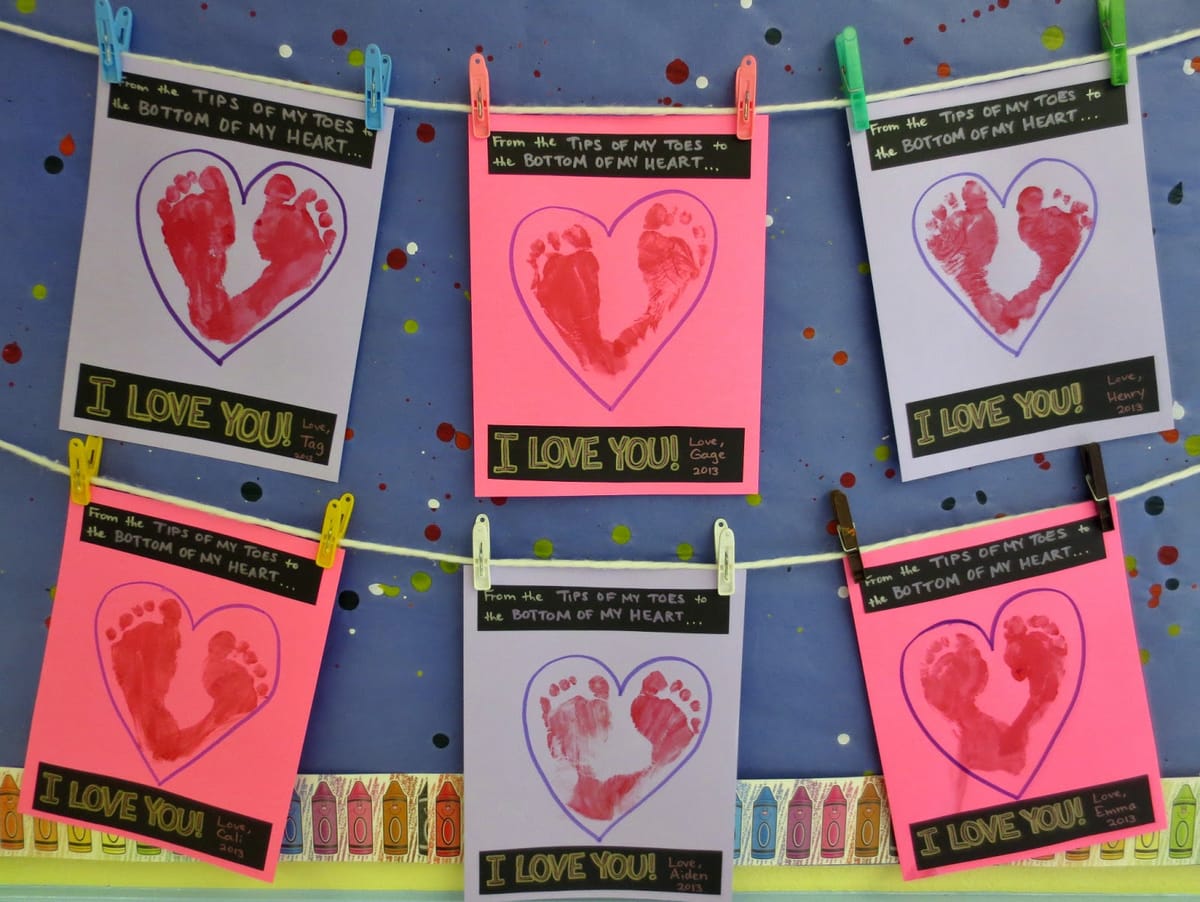
Pour washable paint into shallow dishes. Show your child how pressing their palm creates heart-shaped handprints when fingers point toward each other. Demonstrate how thumbprints arranged in a circle form flowers, or how fingerprints lined up create caterpillars and "love bugs."
What developmental skills do handprint crafts build?
This activity strengthens the pincer grasp—the coordination of thumb and forefinger essential for holding a pencil. Each print requires intentional pressure and placement, teaching children to regulate force and aim. The immediate visual feedback makes the practice engaging rather than tedious.
Why should parents save handprint art over time?
Parents who save handprint art from multiple years can see physical evidence of growth. That three-year-old's tiny palm becomes a four-year-old's larger hand, creating a tangible timeline of childhood that photographs alone cannot capture.
3. Decorated Photo Frame Valentine
Cut a frame shape from cardstock or use pre-cut frames from craft stores. Children can decorate the border with stickers, foam hearts, dot markers, or crayons, then insert a recent photo to create a personalized gift for grandparents, caregivers, or family friends.
How does decorating photo frames develop spatial skills?
The decorating process teaches spatial planning as children decide where to place each element, considering how stickers and foam pieces relate to one another and to the frame's edges. This builds the same visual-spatial skills needed for organizing writing on a page or arranging objects by size.
Frame projects introduce negative space: the difference between the working area (the border) and the protected area (the photo). This builds understanding of boundaries and intentional design choices.
4. "Reasons I Love You" Heart Chain
Cut paper hearts from construction paper (you handle cutting for younger preschoolers, or they can attempt simple shapes if developmentally ready). Write one reason per heart, dictated by your child or collaboratively brainstormed: "You read me stories," "You make funny voices," "You give good hugs." Connect the hearts with tape or staples into a chain.
How does this craft build emotional intelligence?
This craft encourages children to articulate specific things they like about others rather than offer generic praise. Instead of "I love you because you're nice," they can identify real actions: "I love when you let me help cook dinner." That specificity deepens their understanding of emotions and demonstrates how relationships are built from small acts of kindness.
What does the chain format teach children?
The chain format provides a visual representation of accumulated affection. Each heart represents one way they feel cared for, and multiple hearts linked together demonstrate that love comprises many individual moments and actions.
5. Custom Valentine Coloring Pages
Traditional coloring books require buying themed books or printing generic designs that half the class will have identical copies of. Platforms like My Coloring Pages generate Valentine-themed pages customized to your child's specific interests in seconds. Type "Valentine's Day with dinosaurs," or "hearts and soccer balls," or "teddy bears holding flowers," and you get a unique printable design that reflects what your child cares about.
Why do personalized designs keep children more engaged?
Children color their personalized pages, then transform them into cards by folding, adding stickers, or gluing them onto cardstock backings. Because the base design matches their interests—space-themed hearts for the astronomy enthusiast, animal-themed valentines for the future veterinarian—they stay focused through the coloring and assembly process.
How does this approach reduce parent stress?
This approach also reduces parent stress by eliminating emergency runs to the craft store and comparisons to elaborate Pinterest projects. You're enabling genuine creative work without the prep burden that transforms crafting into another chore.
6. Shape-Based Valentine Cards
Give kids pre-cut shapes like hearts, circles, rectangles, and triangles, or let them practice cutting simple shapes themselves. They can arrange and glue the shapes to make cards without drawing. A circle becomes a face, triangles become a bow, and hearts stack into flowers.
What learning benefits do shape crafts provide?
This teaches geometric concepts and spatial reasoning. Children experiment with how shapes combine (two triangles make a rectangle, overlapping circles create new forms) and practise mental rotation (turning shapes to see how they fit differently). They build foundational maths skills while focused on artistic composition.
Why do shapes work better than blank pages?
Using only shapes instead of freeform drawing helps children intimidated by blank pages. The defined elements provide structure that eases the start, while the arrangement possibilities keep the project open-ended for personal expression.
But even the simplest craft ideas fail if you're drowning in preparation tasks before your child touches a single material.
Make Valentine Crafts Personal — Without the Prep Stress
You don't need fancy supplies or extensive preparation time to create Valentine crafts your preschooler will enjoy. Start with basic materials you already have (paper, crayons, glue sticks, scissors), then let your child's interests guide what you create rather than following rigid instructions.
🎯 Key Point: Simple materials you already own are perfectly sufficient for creating meaningful Valentine crafts that build connection and skills simultaneously.
With My Coloring Pages, you can instantly create personalized Valentine worksheets by typing simple prompts like "hearts with trucks" or "Valentine puppies." Print the custom design in seconds, hand your child crayons, and you've created a meaningful activity without trips to the store or Pinterest pressure. Fifteen minutes of focused attention while they color and decorate matter more than perfect execution or matching supplies. You're building connections and skills simultaneously, which is what Valentine crafts should accomplish.
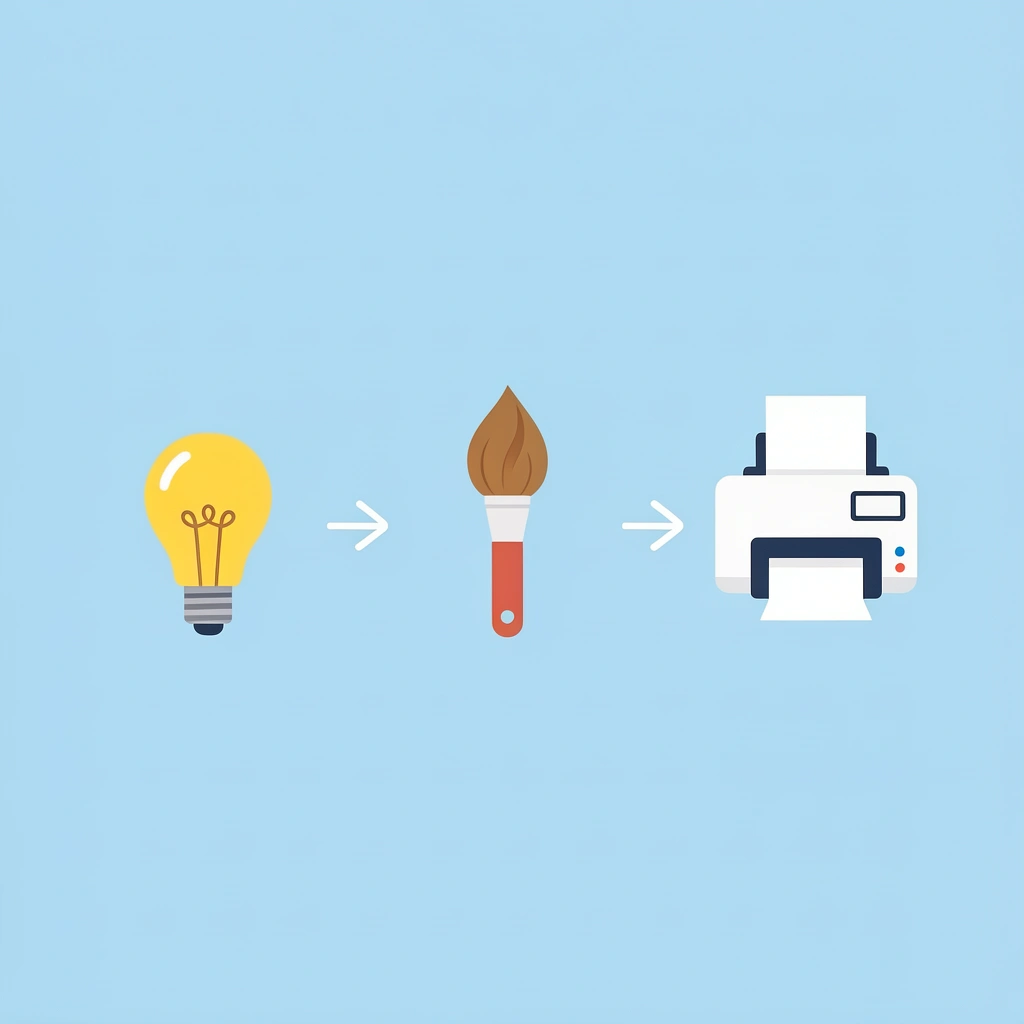
"Fifteen minutes of focused attention while they color and decorate matter more than perfect execution or matching supplies." — Parenting approach that prioritizes connection over perfection
💡 Tip: Let your child's natural interests drive the craft direction rather than forcing them to follow rigid instructions - this creates genuine engagement and pride in their work.