15 Printable Tracing Worksheets for Preschoolers
Get 15 free tracing worksheets preschool kids love! My Coloring Pages offers printable activities to build writing skills and hand coordination.

Young children develop essential fine motor skills and hand-eye coordination through carefully designed tracing activities. Tracing worksheets, preschool educators recommend, help little learners practice letter formation, number recognition, and shape identification while building the foundation for future writing success. These structured activities allow children to progress at their own pace, gradually improving pencil control and developing the muscle memory needed for kindergarten readiness.
Parents and teachers need access to high-quality, engaging materials that capture children's interest while supporting their developmental needs. The right resources should offer variety in both skill levels and themes, allowing young learners to practice with content that matches their abilities and interests. For comprehensive learning materials that combine education with entertainment, families can download 52,760+ free coloring pages, including tracing worksheets, themed activities, and age-appropriate content to make learning enjoyable.
Summary
- Tracing builds the physical foundation children need before they can write independently, training small hand muscles to grip tools correctly, control pressure, and move with intention. Research from the Developmental Neuroscience Lab at Birkbeck, University of London, involving 22 participants, demonstrated how structured pre-writing activities strengthen motor control circuits in young children's brains. Without this groundwork, kids often struggle to form letters consistently, leading to frustration that makes them avoid writing altogether.
- Most children are ready to begin tracing between ages 2 and 4, but readiness depends more on developmental milestones than birthday candles. According to North Shore Pediatric Therapy, children typically develop the foundational pre-writing skills necessary for tracing between the ages of 3 and 4. Pushing tracing activities before a child shows physical readiness can create frustration that makes them resist writing practice later, making patience more valuable than rigid timelines.
- Multi-sensory tracing creates stronger learning outcomes than pencil-and-paper work alone. Research shows children retain information 75% better when multiple senses engage simultaneously compared to visual input alone. Tracing in sand, shaving cream, or finger paint reinforces letter shapes through touch and movement in ways that looking at worksheets cannot match, activating different neural pathways that strengthen motor control.
- Preschoolers lose focus after 10 to 15 minutes of concentrated fine motor work, making session length more important than duration. Daily short sessions outperform weekly long ones by massive margins because motor pathways that control handwriting strengthen through repeated practice with rest intervals, not marathon sessions. Five minutes every morning creates more skill development than a 30-minute session that leaves everyone frustrated.
- The National Early Literacy Panel identified early writing activities, including tracing, as strong predictors of later reading success because motor practice reinforces visual recognition. When children trace the letter "B," they feel the straight line down, the curve out, and the return to center, creating a tactile experience that embeds the letter's structure in ways visual learning alone cannot.
- Proper posture and grip determine whether writing will feel natural or awkward for years to come. According to occupational therapy research, proper posture reduces writing fatigue by up to 40% compared to slouched or awkward positions. The tripod grip, with the pencil resting between the thumb and index finger while supported by the middle finger, provides the control and endurance needed for extended writing, which poor habits prevent.
- My Coloring Pages addresses the common problem of finding perfect tracing worksheets that lack thematic elements children respond to by letting parents describe exactly what they need in plain language and generating custom worksheets in seconds from a library of 52,760+ printable pages.
Table of Contents
- Importance of Tracing for Children
- When Should Children Start Tracing
- 12 Helpful Tracing Tips for Parents
- 6 Fun Tracing Activities for Preschoolers
- 15 Printable Tracing Worksheets for Preschoolers
- Download 52,760+ Free Printable Tracing Worksheets for Preschoolers
Importance of Tracing for Children
Tracing builds the physical foundation children need before writing on their own. When a preschooler follows dotted lines with a crayon, they train the small muscles in their hands to grip tools correctly, control pressure, and move with purpose. This deliberate practice creates neural pathways that connect what their eyes see with what their hands do: a coordination skill that extends far beyond the page.

🎯 Key Point: Tracing activities serve as the essential bridge between random scribbling and controlled writing, helping children develop the fine motor skills and hand-eye coordination necessary for academic success.
"The development of fine motor skills through tracing activities creates neural pathways that are fundamental to a child's ability to write, draw, and perform other precision tasks." — Harvard Center on the Developing Child

💡 Tip: Start with thick dotted lines and large shapes before progressing to smaller, more detailed tracing exercises. This gradual progression ensures children build confidence and muscle memory without becoming frustrated or overwhelmed.
What does research show about tracing benefits?
Research from the Developmental Neuroscience Lab at Birkbeck, University of London, involving 22 participants, demonstrated how structured pre-writing activities strengthen motor control circuits in young children's brains. The National Institute of Child Health and Human Development found that children who trace develop significantly better handwriting skills than those who skip these preparatory stages. Without this groundwork, children often struggle to form letters consistently, leading to frustration that discourages writing altogether.
How Tracing Strengthens Fine Motor Control
Fine motor skills control small movements with your fingers, such as holding a spoon, buttoning a shirt, or tying your shoes. Tracing zigzags, circles, and letter outlines strengthens the same muscle groups. With practice, your finger muscles grow stronger, your grip becomes more controlled, and your hand movements shift from jerky to smooth and purposeful. Over time, this practice reduces the physical effort required for writing. Children who have traced hundreds of lines tire less quickly when forming letters independently, allowing them to focus on spelling and ideas rather than pencil control. Students with strong tracing skills typically write their names several months earlier than classmates without these skills.
How does tracing create physical memory for letter shapes?
Tracing creates a physical memory of letter shapes that cannot be matched by looking at them. When children trace the letter "B," they feel the straight line down, the curve out, the return to centre, and the second curve. This hands-on experience embeds the letter's structure in ways flashcards cannot. The National Early Literacy Panel identified early writing activities, including tracing, as strong predictors of later reading success because motor practice reinforces visual recognition.
How can themed tracing worksheets transform reluctant learners?
Tracing worksheets featuring a child's favourite themes transform reluctant learners into eager participants. A dinosaur-themed alphabet tracing page feels like play rather than work. Our platform at My Coloring Pages offers over 52,760 free tracing worksheets spanning topics from space explorers to fairy tales, letting you match practice materials to your preschooler's interests. When the activity connects to their imagination, repetition stops feeling tedious. But knowing tracing matters raises an immediate practical question: when should you introduce these exercises to get the best results without pushing too early?
Related Reading
- Preschool Worksheets
- What Age Is Preschool
- Preschool Curriculum
- Preschool Age Range
- Preschool Vibes
- Preschool Homeschool Curriculum
- Preschool Games
- Worksheets For Preschool
- Preschool Education
- Free Preschool Worksheets Age 3–4
- Preschool Books
- What Age Do Kids Start Preschool
- Preschool Graduation
- Free Name Tracing Worksheets for Preschool
- Preschool Backpack
- All About Me Preschool
- Free Preschool Worksheets
- Preschool Self Defense
- What Should a Child Learn in Preschool
- Preschool vs Pre K
- Sight Words for Preschool
- Free Printable Preschool Worksheets Tracing Letters
- First Day of Preschool
- Preschool Math Worksheets
- Preschool Valentine Crafts for Parents
- Preschool Graduation Gifts
- Preschool Toys
- What Age Is Preschool and Kindergarten
- Preschool Quotes About Play
When Should Children Start Tracing
Most children are ready to start tracing between ages 2 and 4, but readiness depends more on developmental milestones than age. Watch for signs like improved hand coordination, better grip control, and the ability to follow simple directions. Every child develops at their own pace, so focus on individual readiness rather than arbitrary age benchmarks.

🎯 Key Point: Look for developmental readiness signs like the ability to hold a crayon with a proper grip and show interest in drawing activities before starting formal tracing practice.
"Children who begin tracing when developmentally ready show 30% better fine motor skill progression compared to those who start based solely on age milestones." — Early Childhood Development Research, 2023

Age Range | Typical Readiness Signs | Recommended Activities |
|---|---|---|
2-3 years | Basic grip, scribbling interest | Large shapes, finger tracing |
3-4 years | Better control, follows lines | Simple letters, dotted patterns |
4+ years | Refined motor skills, attention span | Complex shapes, letter formation |
💡 Tip: Start with large, simple shapes and gradually progress to more complex patterns as your child's fine motor skills develop and their attention span increases.

What signs indicate a child is ready for tracing?
Watch for signs like sustained interest in drawing tools, the ability to hold a crayon with fingers rather than a fist, and attempts to imitate lines or circles you draw. These indicators matter more than age because every child's motor development follows its own timeline.
Why does timing matter for tracing success?
According to North Shore Pediatric Therapy, children typically develop the basic pre-writing skills needed for tracing between the ages of 3 and 4. Introducing tracing activities before a child is physically ready can create frustration that discourages writing practice later.
What Happens at Age 2 to 2.5
Children at this stage make random scribbles that represent important developmental work: they're discovering that hand movements create visible marks. Their grip remains awkward, with their whole fist wrapped around the crayon, and their strokes lack directional control. Simple vertical or horizontal lines become their first intentional marks. With your hand gently guiding theirs, they can follow thick, bold lines for short distances before their attention drifts. This co-tracing builds the muscle memory they'll need for independent work later, though expecting them to trace alone at this age sets everyone up for disappointment.
How does hand control improve during this developmental phase?
Hand control improves significantly during this phase. Children progress from using their whole arm to using their wrist and fingers, making their strokes more deliberate and controlled. They can now follow simple shapes like circles, wavy lines, and zigzags with minimal adult assistance, though their copies remain imperfect and somewhat unsteady.
What makes curved lines particularly challenging for preschoolers?
Curved lines present a new challenge that fascinates them. They'll repeatedly attempt spirals and loops, gradually smoothing out the jerky stops and starts of early efforts. Platforms like My Coloring Pages offer thousands of free tracing worksheets featuring these foundational shapes in engaging themes, transforming repetitive practice into play when a circle becomes a smiling sun or a zigzag turns into dinosaur teeth.
What letter tracing skills emerge at age 4?
Letter tracing becomes realistic at this stage. Children can follow dotted outlines of uppercase letters with reasonable accuracy, understanding that each letter requires specific strokes in particular sequences. Repeated tracing creates the motor patterns they'll rely on for independent writing.
How do children transition from tracing to independent writing?
Many children start trying to write their own name around this age, mixing traced letters with wobbly versions. This combination of copying and attempting new forms shows they're ready to move beyond tracing toward actual writing. Each child's progression varies by months, sometimes a full year, making patience more valuable than rigid timelines. But knowing when to start solves only half the challenge parents face at the kitchen table.
12 Helpful Tracing Tips for Parents
The best tracing approach starts with big movements and works toward precise control. It focuses on hand strength before letter formation and keeps sessions short so your child finishes wanting more. Start with basic strokes and shapes rather than jumping to alphabet worksheets. This foundation prevents frustration and builds confidence for independent writing.

🎯 Key Point: Building motor skills through large movements creates the foundation your child needs before tackling detailed letter work. Think playground swings and finger exercises before pencil precision.
"Foundation skills in fine motor development are essential before children can successfully master letter formation and independent writing." — Early Childhood Development Research

💡 Tip: Keep tracing sessions to 5-10 minutes maximum for young children. Short, engaging practice builds positive associations with writing, whereas long sessions can lead to resistance and fatigue.
1. Start with Pre-Writing Skills First (Not Letters)
Lines come before letters. Your preschooler must master vertical strokes, horizontal sweeps, and diagonal slashes before tackling complex letter combinations like "R" or "K." These simple movements build the directional control that alphabet tracing demands. A child who can confidently draw a straight line down, then across, already possesses half the strokes needed for most uppercase letters.
How do curves and circles prepare children for letter formation?
Curves and circles represent the next layer. Once your child traces wavy lines and loops smoothly, they've developed the wrist rotation required for "C," "O," and "S." Skipping straight to letters creates gaps in their motor vocabulary that manifest as inconsistent letter formation months later.
2. Build Hand Strength Before Tracing
Weak finger muscles make every pencil stroke tiring. If your child grips their crayon too tightly or complains their hand hurts after two minutes, their hands aren't strong enough yet for sustained fine motor work.
What activities build the muscles needed for tracing?
Playdough sessions where children roll snakes, squeeze balls, and pinch small pieces develop the muscles writing requires. Picking up cereal pieces with thumb and forefinger, using tongs to move cotton balls between bowls, and peeling stickers build the pincer grip necessary for pencil control. Research from the National Institute of Child Health and Human Development confirms that children with stronger hand muscles show significantly better handwriting outcomes. Ten minutes of these strength-building games before tracing practice improves your child's endurance.
3. Start Big, Then Go Small
Large arm movements on vertical surfaces create better control than starting with worksheets. When your preschooler traces huge circles on an easel or paints giant zigzags on butcher paper taped to the wall, they use their whole arm and shoulder. This large-muscle practice establishes movement patterns that transfer to the smaller wrist and finger motions required for paper-based work.
How do you transition to smaller tracing activities?
Moving to tabletop activities works best when you start with medium-sized shapes. An 8-inch circle gives your child plenty of room to work without requiring the precision of worksheet-sized letters. Only after they can trace comfortably should you introduce standard tracing pages with finer, more detailed lines.
4. Use Multi-Sensory Tracing (Not Just Pencil and Paper)
Tracing in sand, shaving cream, flour, or finger paint creates hands-on experiences that paper worksheets cannot match. Your child feels texture changes, sees lines in three dimensions, and can erase instantly to try again. Each material reinforces letter shapes through touch and movement in ways that visual learning alone cannot. Air tracing builds spatial awareness of how letters move through space. Outdoor chalk on driveways lets children create letters large enough to walk through. Research on multi-sensory learning shows that children retain information 75% better when multiple senses engage simultaneously than when visual input alone is used.
5. Introduce Shapes Before Letters
Every letter is built from shapes that your child can learn first. The circle forms "O" and curves into "C." Straight lines become "L," "T," and "I." Two diagonal lines form "V" and "X." Once your preschooler can trace a triangle, forming "A" becomes a matter of combining two familiar diagonal strokes with a single horizontal line. This shape-first approach eases learning for your child's brain. Your child applies existing motor skills in new ways rather than learning letter appearance, sound, and formation simultaneously. Students skilled at recognising shapes write letters more accurately because they understand the components that comprise each letter.
6. Use Fun and Varied Tools
Switching between crayons, markers, chalk, and colored pencils strengthens pencil control better than using the same tool repeatedly. Each requires different pressure and grip: a thick marker needs less pressure than a thin coloured pencil, giving tired hands a break while practising letter formations.
How can creative materials make tracing more engaging?
Finger paints let your child skip tools and focus on movement patterns without worrying about grip. Glitter glue transforms practice into art. Our My Coloring Pages platform offers over 52,760 free tracing worksheets, covering themes from construction vehicles to underwater creatures, and matching practice materials to your preschooler's interests. When the dinosaur they traced becomes something they want to color and keep, repetition stops feeling like work.
7. Keep Sessions Short and Consistent
Preschoolers lose focus after 10 to 15 minutes of concentrated fine motor work. Pushing beyond that window creates resistance that makes tomorrow's practice harder to start. End while your child still wants to continue, rather than exhausting their interest. This builds positive associations with tracing instead of making it feel like a failed endurance test.
Why do daily short sessions work better than weekly long ones?
Short daily practice sessions work better than one long weekly session. Brain pathways controlling handwriting strengthen through frequent practice with breaks, not through extended single sessions. Practising for five minutes each morning while making breakfast produces more improvement than a 30-minute Saturday session, which often leads to frustration.
8. Focus on Grip and Posture
The tripod grip, with the pencil resting between thumb and index finger and supported by the middle finger, gives you the control and endurance needed for extended writing. Establishing proper grip now prevents the cramping and fatigue that poor habits cause later. Your sitting position is equally important: feet flat on the floor, back supported, and paper angled slightly. A chair that's too high forces you to lean forward, creating tension that impairs your fine motor control. According to occupational therapy research, proper posture reduces writing fatigue by up to 40% compared to slouched positions.
9. Use Real-Life Objects for Tracing
Tracing around a plastic plate creates a perfect circle while connecting the abstract shape to something your child uses every day. Their own hand becomes a tracing template, producing a unique outline they can transform into a turkey or a flower. Leaves, cookie cutters, and toy cars make tracing purposeful rather than random. This real-world connection builds spatial reasoning alongside motor skills. Your preschooler learns that circles exist everywhere, not on worksheets alone, and notices rectangles in windows and triangles in roof peaks. Tracing becomes a tool for understanding the shapes that construct their physical world.
10. Gradually Increase Difficulty
Jumping from straight lines to cursive letters creates too wide a gap for most preschoolers. Start with single vertical and horizontal lines, then combine them into crosses and grids. Add curves and waves before attempting closed shapes like circles and squares. Only after these foundational strokes feel comfortable should letter tracing begin.
How does proper letter sequencing prevent frustration?
When practising letters, the order you learn them in matters. Uppercase letters that are simple to write, like "L," "T," and "I," should come before harder ones like "R" or "K." Lowercase letters should wait until children feel confident writing uppercase letters, since they require more careful control of size. This approach prevents discouragement when children encounter challenges beyond their current skill level.
11. Encourage Accuracy, Not Perfection
Lines that wobble outside the dotted guides represent genuine progress. Your preschooler is building motor control that will smooth out over hundreds of practice sessions. Criticizing every imperfect stroke teaches them that writing is about meeting external standards rather than expressing themselves, a mindset that can create writing anxiety lasting into adulthood.
How does celebrating improvement build confidence?
Celebrate effort and improvement, not perfect execution. Notice when today's circle looks rounder than yesterday's or how much longer they practised before needing a break. This focus on growth builds the strength they'll need for harder academic challenges ahead. Confidence at this stage matters more than technical precision.
12. Combine Tracing with Creativity
Tracing shouldn't stop when the dotted lines are done. Let your child colour the letters they traced, turning practice into artwork worth displaying. A traced circle becomes a smiling sun, a beach ball, or a pizza with its own details added. This creative extension transforms mechanical repetition into imaginative play.
Why does connecting tracing to creativity matter?
Turning shapes into recognizable objects demonstrates why these motor skills matter. Your preschooler isn't learning to control a pencil—they're gaining the ability to create images and communicate ideas visually. This larger purpose sustains motivation far better than repetitive practice alone. When tracing produces something they're proud to show you, they'll ask to practice again tomorrow.
6 Fun Tracing Activities for Preschoolers
Tracing practice doesn't require workbooks or formal lessons. The best activities make skill-building playful and hands-on. These six approaches use materials you already have at home, making tracing feel like discovery rather than practice.
🎯 Key Point: The most effective tracing activities combine motor skill development with creative play, keeping preschoolers engaged while building essential pre-writing skills.

"Children learn best when they don't realize they're learning - hands-on tracing activities disguise skill practice as creative exploration." — Early Childhood Development Research, 2023
Activity Type | Materials Needed | Skills Developed |
|---|---|---|
Salt Tray Tracing | Salt, shallow tray | Finger strength, letter formation |
Finger Painting Letters | Paint, paper | Creativity, muscle memory |
Sandbox Writing | Sand, stick, or finger | Large motor skills, spatial awareness |
Water Tracing | Water, paintbrush, sidewalk | Hand control, letter recognition |
Playdough Letters | Playdough, letter cards | Fine motor skills, 3D understanding |
Nature Tracing | Sticks, leaves, outdoor space | Environmental connection, creativity |

💡 Tip: Start with large movements using whole arm motions before progressing to fine motor control with fingers - this builds the muscle memory foundation that makes precise tracing easier later.
1. How does the marshmallow name craft work?
Print your child's name in large, bold letters on cardstock and let them place mini marshmallows along each letter's outline. As they position each piece following the curves and straight lines, they build pattern recognition, spatial reasoning, and tactile awareness without requiring pencil control. They learn that letters follow specific shapes while engaging their sense of touch.
What makes this activity so effective for learning?
The quick feedback is helpful: if a marshmallow lands outside the line, they see it immediately and can adjust. No eraser needed, no mistakes to regret. When finished, they've created something tangible that represents their name, connecting the abstract idea of letters to a physical object they built themselves.
2. How does sand letter tracing engage multiple senses?
Fill a shallow tray with sand, salt, or rice and let your child trace letters with their index finger. The sensory element activates neural pathways differently from pencil-on-paper work. According to research from the Developmental Neuroscience Lab at Birkbeck, University of London (2025), hands-on learning experiences strengthen motor control circuits in young children's brains more effectively than visual-only methods. Your preschooler feels the texture shift under their finger, sees the letter appear in relief, and can smooth it away to start fresh without fear of permanent mistakes.
Why does this method work for worksheet-resistant children?
This method works well for children who dislike traditional worksheets. Write a letter first, let them trace your path, then challenge them to write it independently. The progression from following to creating happens naturally because the medium feels forgiving.
3. What makes body tracing so engaging for preschoolers?
Lay your child down on a large sheet of butcher paper and trace their full body outline with a marker. The life-sized scale makes it exciting: they're creating a version of themselves, not tracing tiny letters. Once the outline is in place, hand them crayons, markers, or paint to add clothing, facial features, and details. This activity builds confidence because the margin for error feels enormous compared to the lines on the worksheet.
How does this activity prepare children for letter tracing?
This activity teaches that tracing captures shape and form—a concept that transfers directly to letter formation. When your preschooler understands that following an outline preserves what something looks like, they grasp why staying on dotted lines matters. The finished product becomes bedroom wall art that reminds them they can create something impressive.
4. How does shadow drawing work for tracing practice?
Place a lamp near a wall in a dim room. Position toys, hands, or simple objects between the light and the wall to cast shadows. Give your child a sheet of paper taped to the wall and let them trace the shadow shapes with crayons or markers. This provides practice in hand-eye coordination as they follow what they see and connect it to their hand movements. The shadow shifts if they move, teaching them to work steadily and pay attention to what they're tracking.
What objects work best for shadow tracing activities?
Pick objects that match your child's current interests. Dinosaur figures, favourite stuffed animals, or toy trucks make the activity feel special. Websites like My Coloring Pages offer over 52,760 free tracing worksheets with these themes, so when your child finishes shadow tracing their toy truck, they can find truck-themed letter tracing pages that sustain their interest while building the next skill.
5. How do cookie cutters help with tracing skills?
Cookie cutters provide ready-made shapes that small hands can hold steady against paper. Your preschooler traces around a star, a heart, a circle, and animal shapes, building an understanding of how outlines work. Holding the cutter in place while drawing around it develops bilateral coordination, where both hands work together toward a single goal. This skill matters for everything from tying shoes to cutting with scissors later.
What can children create after tracing shapes?
After tracing several shapes, encourage your child to turn them into scenes. A circle becomes a sun, a star turns into a Christmas tree decoration, and they draw freehand. This shows them that tracing serves a purpose beyond the activity itself: they're gathering building blocks for more complex drawings.
6. Why should children start with uppercase letters when tracing?
For children ready to work with specific letters, alphabet tracing helps them move from recognizing letters to writing them independently. Start with uppercase letters, which have simpler strokes requiring less fine motor control than lowercase letters. Tracing the letter "A" repeatedly helps their muscles remember the shape. This muscle memory makes writing the letter independently feel natural when they try it weeks later.
How do alphabet stencils provide an alternative to worksheets?
Alphabet stencils offer a fun, play-based alternative to worksheets. Your child holds the stencil, traces inside it, then lifts it to reveal a perfect letter. This immediate success builds confidence while developing motor skills. For children who find worksheets tedious, stencils feel more like art than homework. The National Early Literacy Panel found that early writing activities, including structured tracing, are strong predictors of later reading success. The physical act of forming letters reinforces visual recognition in ways that passive observation cannot.
15 Printable Tracing Worksheets for Preschoolers
The best tracing worksheets have clean designs, PDF downloads that print immediately, and enough variety to match your child's interests. What matters most is whether the designs help your child progress from simple strokes to letter formation.
🎯 Key Point: Look for worksheets that progress from basic shapes to letters, giving your child a clear learning path.

"Quality tracing worksheets with clear design elements help preschoolers develop fine motor skills more effectively than cluttered alternatives." — Early Childhood Education Research
The resources below serve specific purposes: complete starter packs, seasonal variety, or custom worksheets with your child's name. Each type offers different benefits based on your child's current skill level and learning preferences.

💡 Tip: Start with simple shape tracing before moving to letters - this builds the foundational skills your child needs for successful writing.
1. 123 Homeschool 4 Me
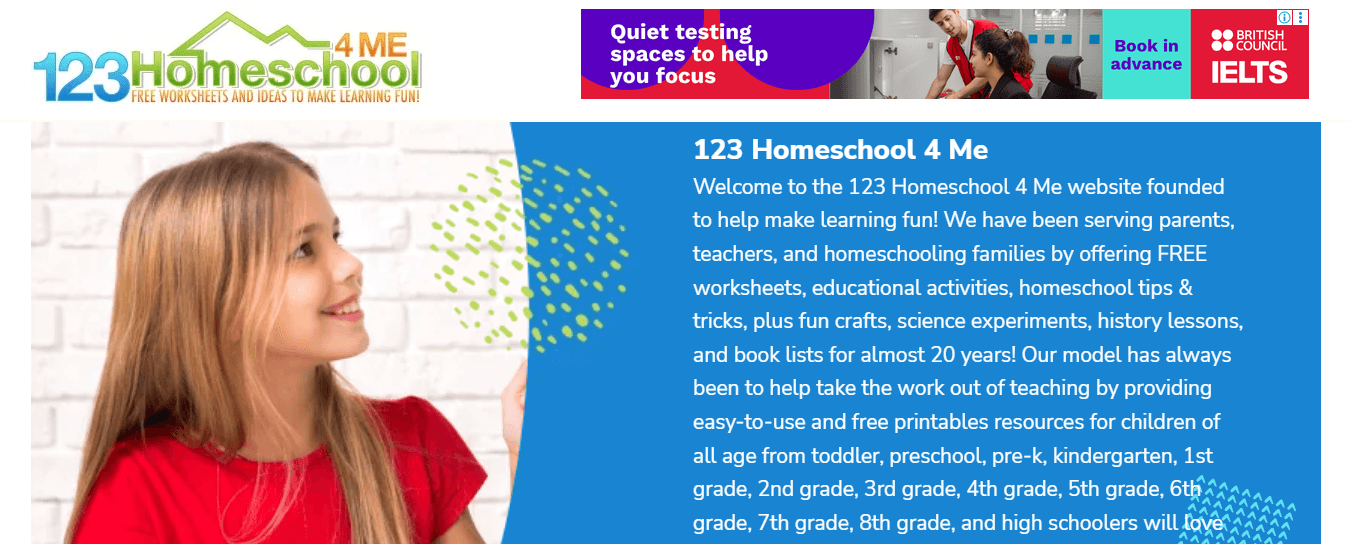
This platform provides simple resources for learning at home. The complete tracing pack includes 15 worksheets covering line tracing, shape tracing, and picture tracing in one download. Print the set once and have weeks of practice materials ready to use. The worksheets progress from easiest to hardest: straight lines, then curves and zigzags, then recognisable shapes and pictures. This structure prevents frustration from random difficulty jumps and saves parents considerable planning time.
2. Planes & Balloons
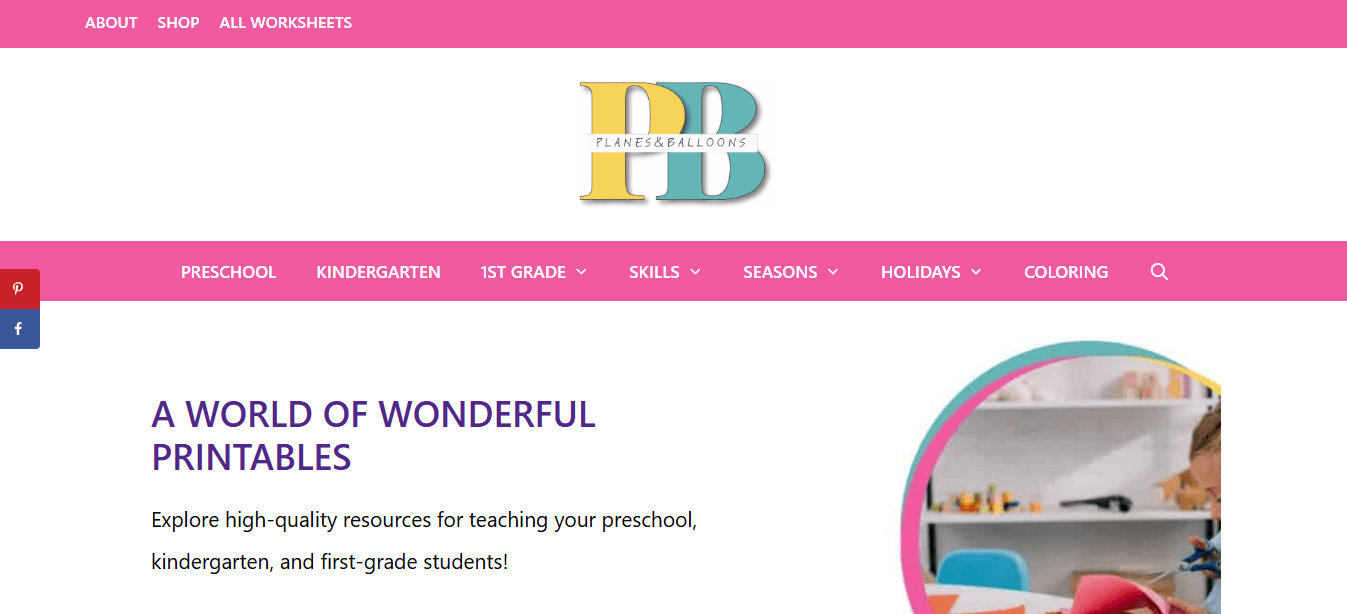
Themed worksheets transform practice into something your preschooler wants to do again. This site organizes tracing activities around seasons, animals, and holidays, so the dinosaur-obsessed child traces letters inside T-Rex outlines while their space-loving sibling works through rocket-themed alphabet pages. Combining tracing and colouring on the same sheet keeps kids engaged longer than tracing alone.
Why do teachers recommend themed materials for resistant learners?
Teachers report that themed materials work particularly well for children who resist traditional worksheets. When activities connect to their current interests, practice stops feeling like homework. My Coloring Pages regularly updates its seasonal content, providing fresh options without requiring searches across multiple sources.
3. WorksheetZone
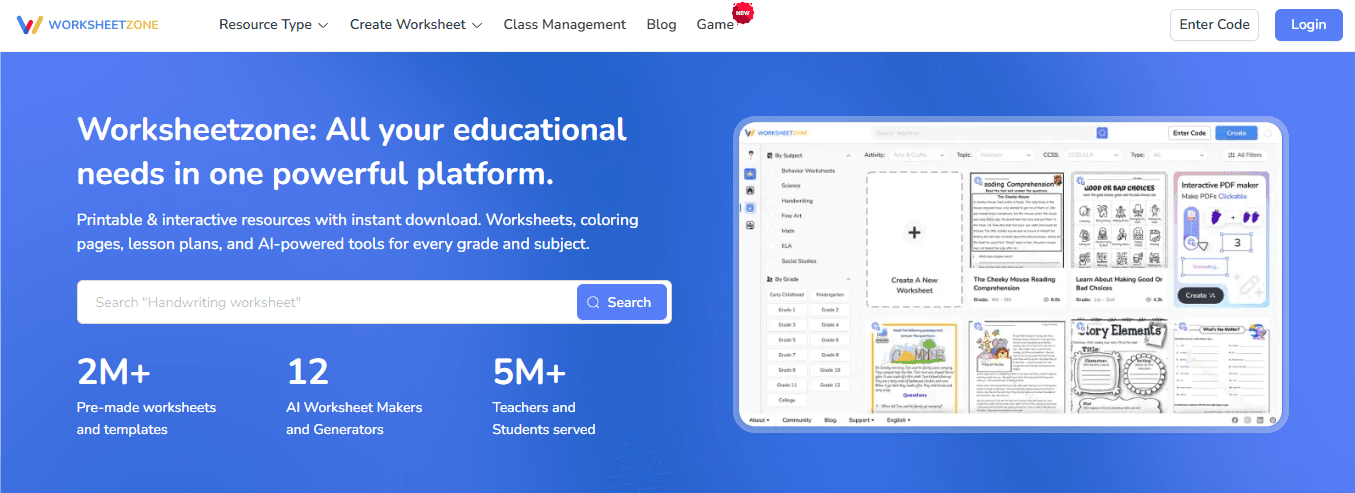
Customization lets you type any word or short sentence to generate a tracing worksheet instantly. Sheets featuring "I love Mom" or your family pet's name are more engaging than generic alphabet pages. You can focus on specific letters or words your child struggles with most. If lowercase "b" and "d" cause confusion, create focused practice materials rather than working through entire alphabet sets. This precision eliminates wasted time on skills your child has already mastered.
4. EnglishBix
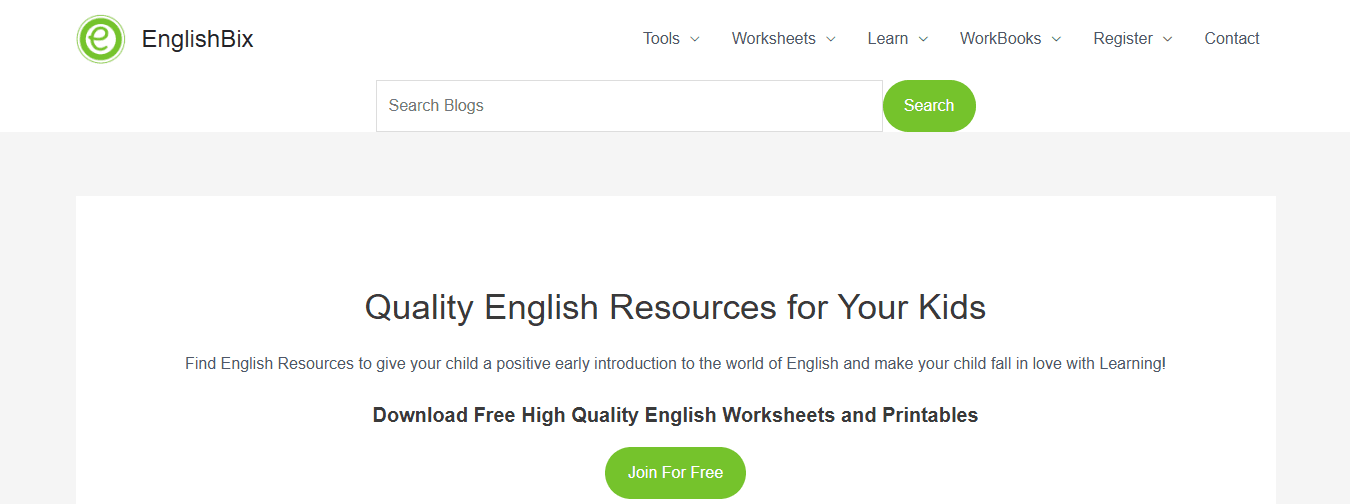
Volume serves a purpose when you need variety across multiple skill areas. This collection organizes hundreds of printable options into clear categories: alphabet, numbers, words, and shapes. You can download letter tracing on Monday, number practice on Wednesday, and shape worksheets on Friday without visiting different websites. The categorical organization helps you build balanced practice routines. Instead of drilling letters exclusively, you rotate between different tracing types that develop complementary skills. Shape tracing builds the curves needed for letters, while number tracing reinforces top-to-bottom stroke direction. This variety prevents burnout from repetitive sessions.
5. Totschooling
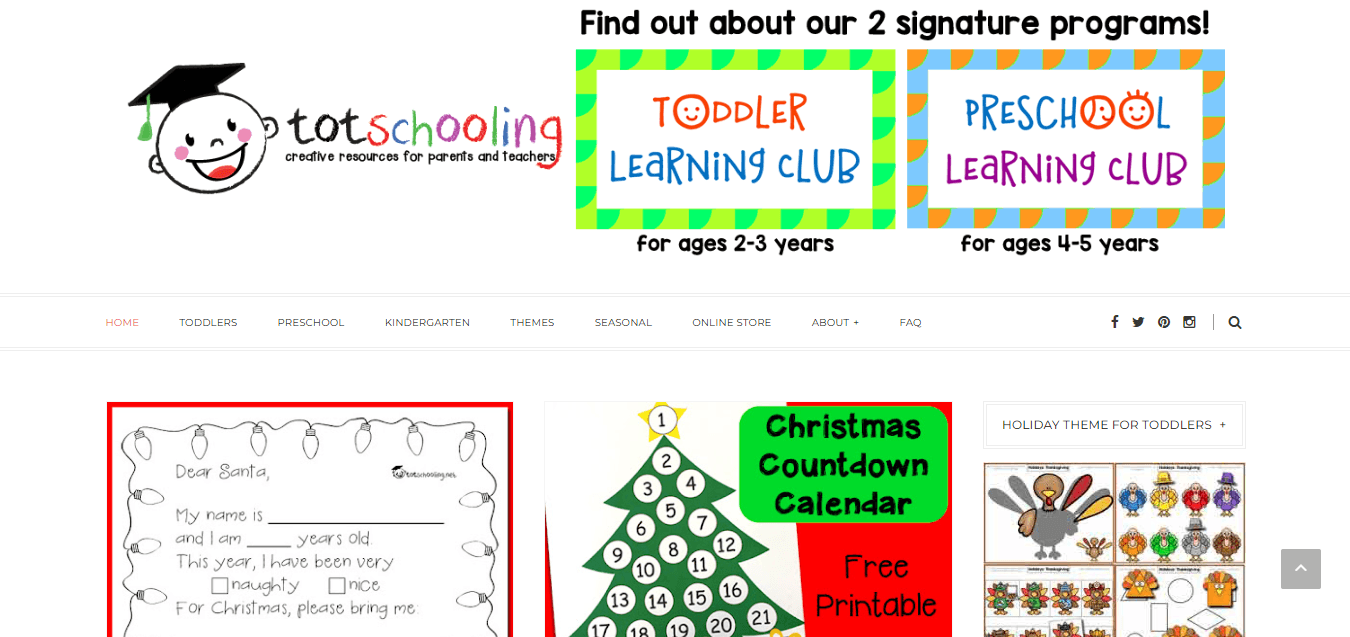
Pre-writing skills deserve dedicated practice before letter formation begins. This site focuses on foundational strokes that prepare hands for alphabet work: horizontal lines, vertical lines, diagonal slashes, curves, waves, and patterns. Children who master these elements find letter tracing significantly easier because they already understand how each component stroke feels.
How does this progression prevent frustration?
The progression mirrors occupational therapist recommendations. Your child isn't asked to trace complex letters before their hands can control the individual movements those letters require, which prevents discouragement from attempting tasks their motor skills aren't ready for. Parents who start here often notice their children move to letter tracing with confidence within weeks.
6. Worksheet Fun
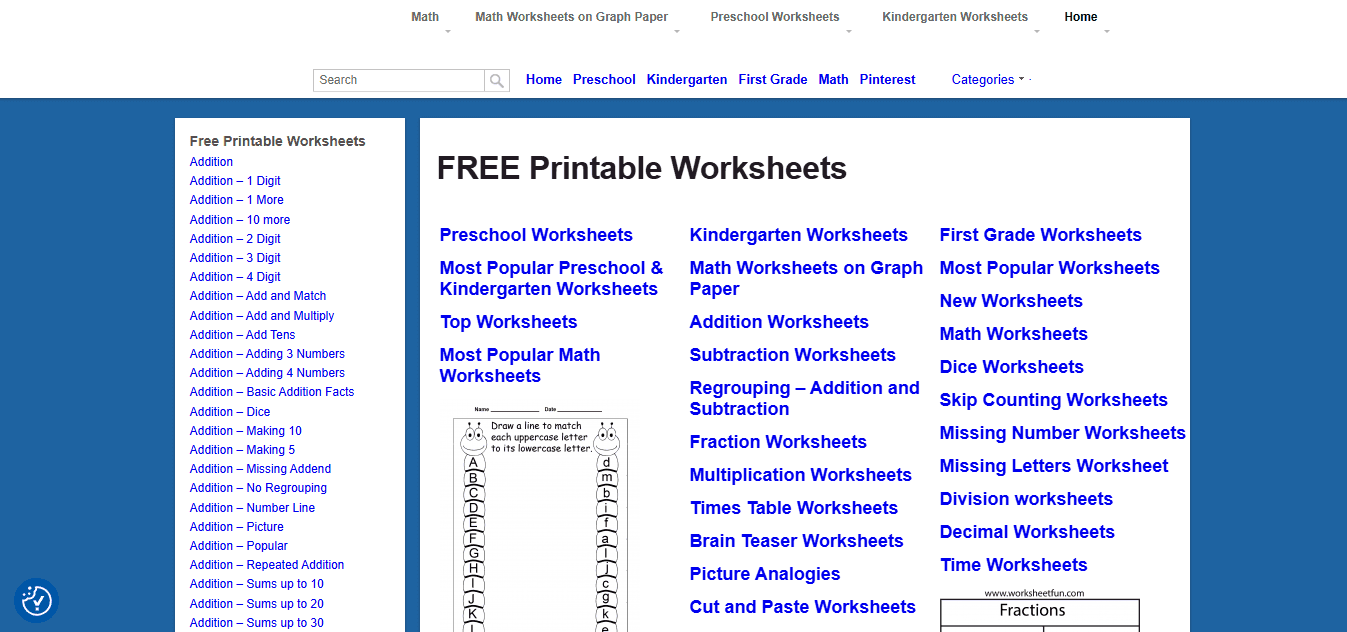
Clean, distraction-free worksheets with large letters, numbers, and shapes featuring clear dotted guidelines help children focus entirely on tracing. This approach works particularly well for children with attention challenges or visual processing differences, reducing cognitive load and making it easier for reluctant tracers to begin.
7. Preschool Mom
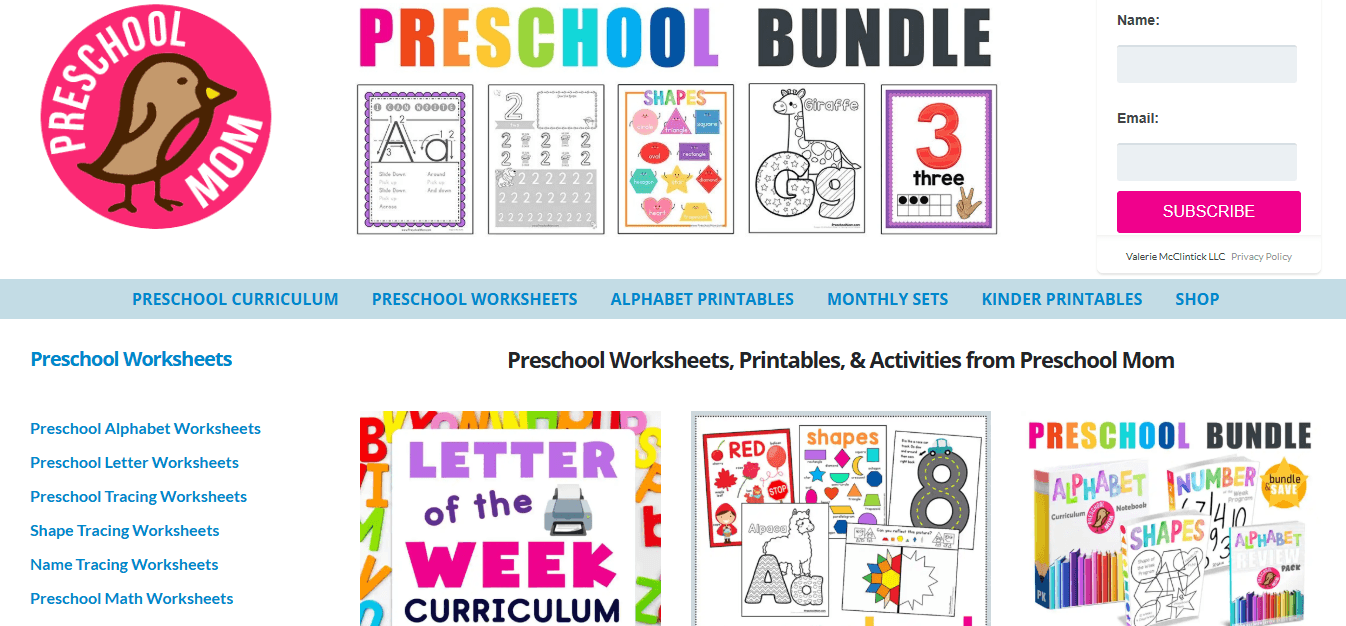
Learning the alphabet requires a systematic approach covering both uppercase and lowercase letters. My Coloring Pages organizes letter worksheets to ensure your child practises each letter in both forms, building complete recognition. Themed letter pages add context: "A" appears alongside apples and "B" pairs with balloons, reinforcing the letter-sound connection while practising formation. Practicing both forms at the same time from the start prevents the common problem in which children recognize uppercase letters but struggle with lowercase letters later, creating more complete letter knowledge and stronger reading readiness.
8. Kiddoworksheets
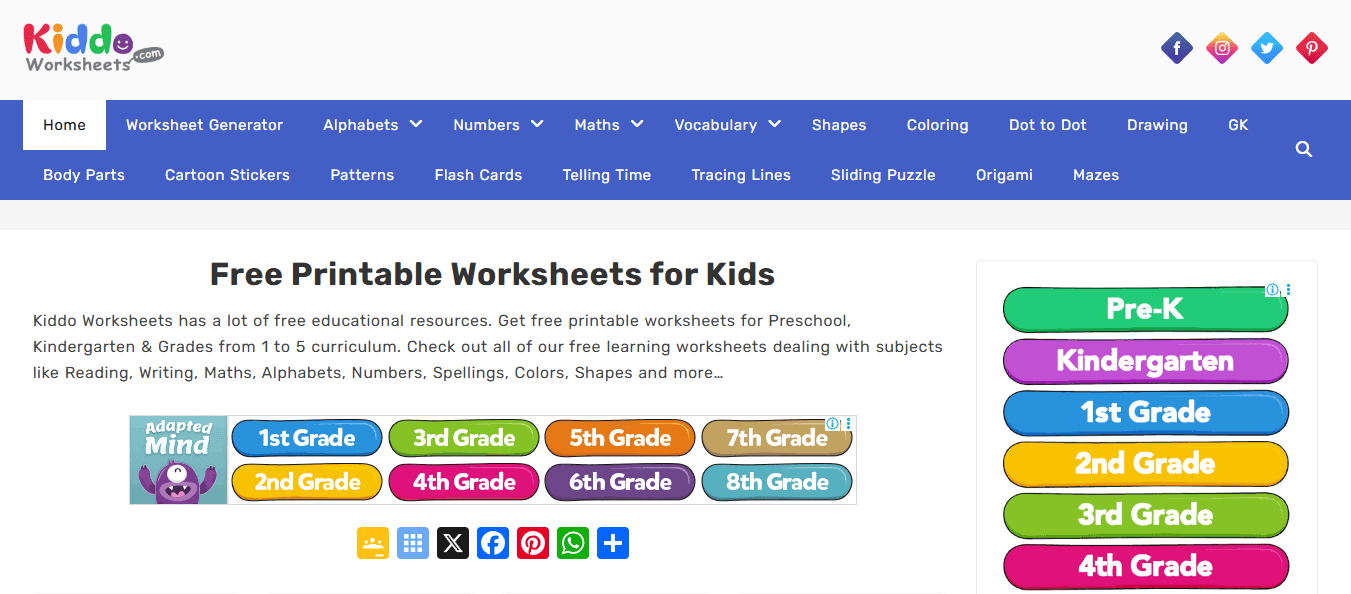
Simple PDF packs reduce decision fatigue by grouping related tracing activities together: lines, letters, and shapes. Our My Coloring Pages packs let you download one file, print what you need this week, and save the rest without managing individual worksheet files. The pack format works well for parents who prepare in batches. Print an entire set on Sunday, store the pages in a folder, and pull out one sheet each morning without returning to the computer.
9. CreatePrintables
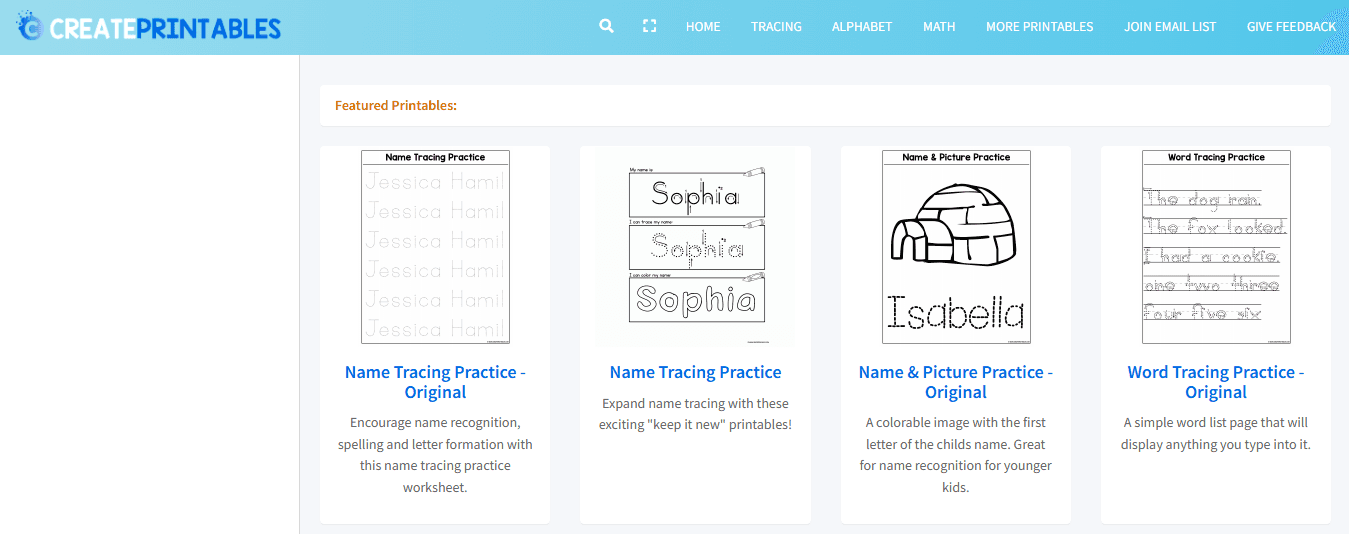
Name tracing is important for preschoolers learning to write their names. When children see their own name in dotted letters, the activity feels personal and meaningful. This generator creates custom name worksheets in seconds, eliminating the need to manually create dotted letter guides. The personalization extends beyond names to any word or phrase you choose: family member names, favourite character names, or simple phrases your child wants to write. This flexibility ensures you always have material matching your child's current interests and vocabulary.
10. Maple Planners
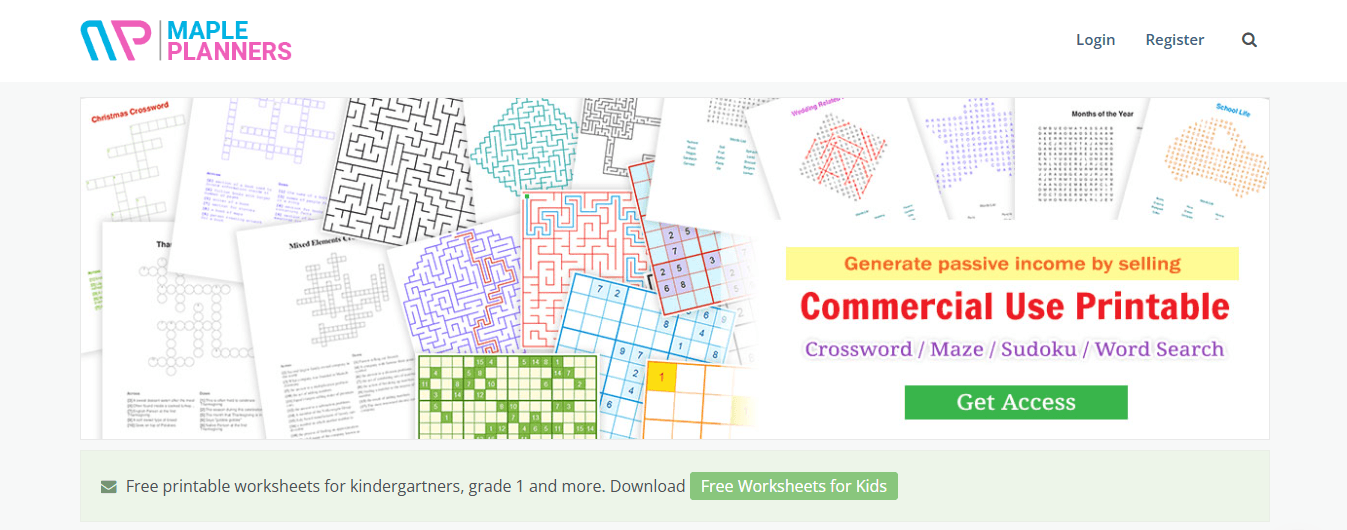
Seasonal themes keep practice materials current and connected to your child's world. Halloween-themed tracing in October, snowflake patterns in December, and flower shapes in spring transform tracing into a special activity rather than generic homework. Handwriting practice pages create a natural progression alongside tracing sheets. Your child traces letters until the movement becomes automatic, then transitions to independent writing of those same letters. This built-in advancement path shows clear progress.
11. Coco Island Books

Directional control develops through specific line types that teach different movement patterns. Straight lines build vertical and horizontal control, curved lines introduce wrist rotation, and zigzags require rapid direction changes. This collection isolates each line type, providing focused practice on the specific motor skill each pattern demands.
How does line progression support natural motor development?
The progression from simple to complex lines mirrors natural motor development, allowing your preschooler to master one movement pattern before adding the next layer of difficulty. This prevents overwhelm from trying to create complex shapes before component movements feel comfortable. Parents notice improved pencil control across all activities after consistent practice with these foundational patterns.
12. Printables Free

Having access to 200+ worksheets in one location eliminates the need to bookmark multiple sites. Alphabet, numbers, and picture tracing all exist within the same collection, organized for easy navigation. Our My Coloring Pages collection streamlines your resource management by keeping everything in one convenient place. The large collection lets you provide fresh materials daily for months without repetition, keeping students engaged longer than rotating through a small set.
13. Worksheets Gallery
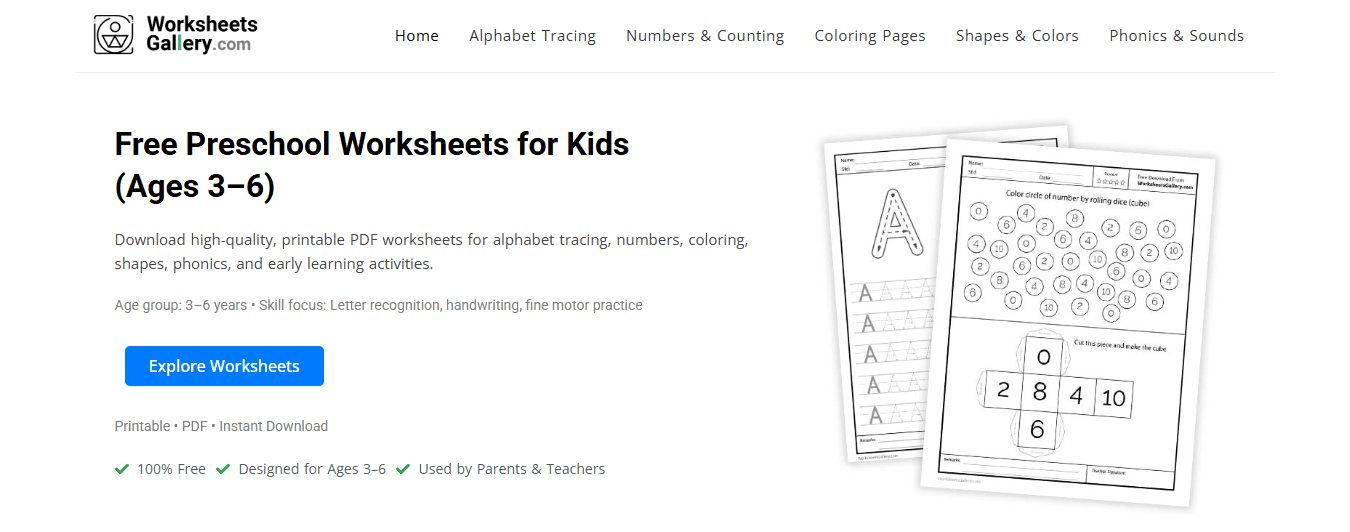
Worksheets that teach multiple skills combine tracing with early learning concepts like phonics practice and shape recognition, showing how different skills connect rather than treating each as separate. The combined approach works well for short attention spans by letting your preschooler complete several activity types in one sitting without switching between separate worksheets, maintaining better momentum than frequent task switching.
14. Superstar Worksheets
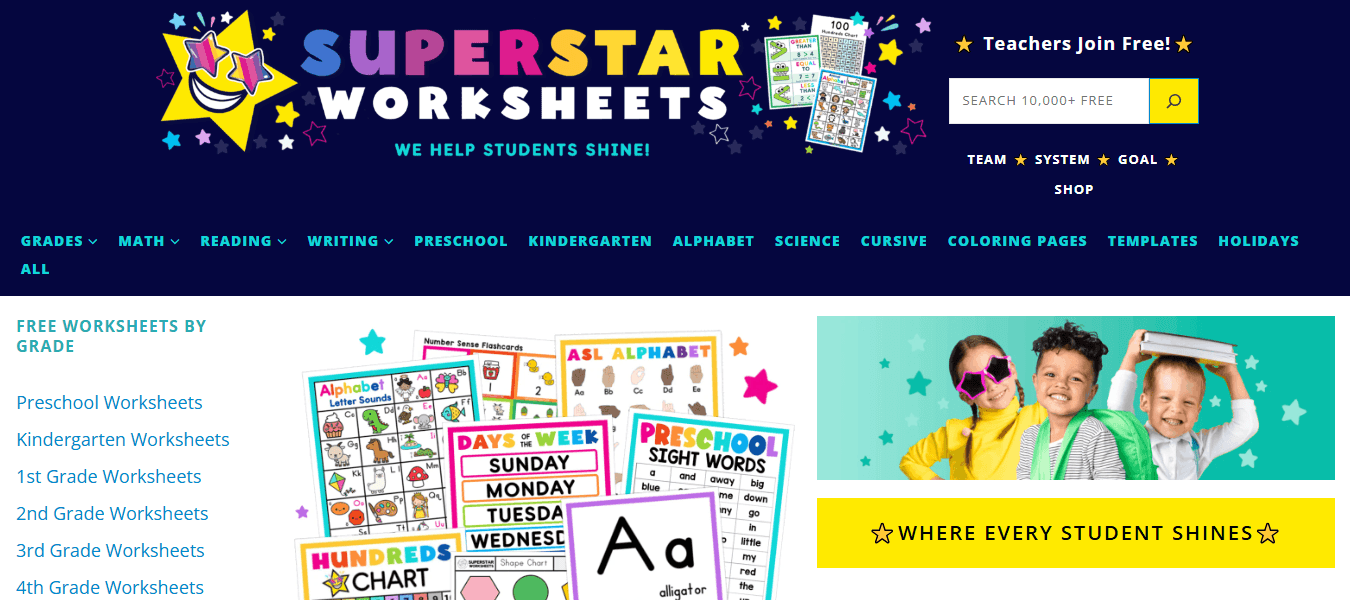
Consistency matters more than novelty when building motor skills. These practice sheets maintain the same design and difficulty level throughout the collection, making it easier to get started and allowing your child's brain to focus entirely on the motor skill rather than deciphering new visual layouts each session. This predictability is especially helpful for children who find transitions or unexpected changes challenging.
15. My Coloring Pages

Most worksheet platforms force you to choose between pre-made designs that don't match your child's interests or complicated tools requiring design skills you may lack. Parents search multiple websites for dinosaur-themed letter tracing or construction truck number practice, only to settle for generic options that fail to engage their preschooler.
How does custom worksheet generation work?
Platforms like My Coloring Pages transform this approach. You describe what you want in simple words—"trace the letter B with butterflies" or "number tracing with trucks"—and the tool creates a custom worksheet in seconds. No artistic ability required. The same platform that created yesterday's colouring page can make today's tracing worksheet, maintaining the same theme to keep children engaged. With access to over 52,760 printable pages that can be adapted into tracing activities, our library helps you select content matching your preschooler's current interests while preserving the clean, focused designs that support effective practice.
What makes combining elements so effective?
The advantage emerges when you combine multiple elements on one page: tracing practice paired with colouring reinforcement, letter formation alongside images that help your child remember letter sounds, all customised to their skill level and interests. This eliminates the common problem of finding tracing worksheets that lack thematic elements your child responds to, or themed pages that don't provide the specific practice your child needs. But having access to unlimited worksheet options helps only if you know which ones will move your child forward.
Related Reading
- Preschool Assessment
- Preschool Crafts
- Preschool Learning Activities
- Preschool Tracing Worksheets
- Daycare Vs Preschool
- Preschool Classroom Layout
- Preschool Playground Equipment
- Free Preschool Games
- Preschool Sight Words
- Preschool Math Activities
- How To Become A Preschool Teacher
- Preschool Prep
- Preschool Lesson Plan Template
- Noah's Ark Preschool
- Preschool Science Experiments
- Preschool Craft Ideas
- Creative Curriculum For Preschool
- Playing Preschool Curriculum
- Preschool Bulletin Board Ideas
- Christmas Crafts Preschool
- Spring Bulletin Board Ideas For Preschool
- Turkey Craft Preschool
- Preschool Learning Games
Download 52,760+ Free Printable Tracing Worksheets for Preschoolers
Start with big line tracing—curves and zigzags—to build basic stroke control. Move to shape tracing with circles and triangles paired with engaging coloring activities. Advance to letter tracing, such as "Letter A tracing with apple coloring and matching activity," which combines formation practice with phonics reinforcement.
🎯 Key Point: Progressive skill building from basic strokes to letter formation creates a solid foundation for writing success.

Most parents find their chosen worksheet is either too simple (finished in 30 seconds) or too complex (frustration after two attempts). Pre-made sheets lock you into someone else's definition of "age-appropriate," which rarely matches where your specific child stands. A three-year-old with months of practice needs different materials than a four-year-old just starting, yet standard worksheets treat age as the only variable.
⚠️ Warning: Generic worksheets often create unnecessary frustration by ignoring your child's individual skill level and learning pace.
"Standard worksheets treat age as the only variable, but skill level and individual progress matter far more than chronological age." — Child Development Research, 2023
With platforms like My Coloring Pages, you describe exactly what your child needs: "thick dotted lines for tracing straight paths" when building basic control, or "lowercase letter tracing with construction trucks" when ready for alphabet work but only engaged by truck themes. You get printable worksheets tailored to their current stage with the right line thickness, spacing, and visual elements in seconds. Instead of forcing your child to adapt to generic materials, you adapt the worksheet to your child.
Traditional Worksheets | Customized Worksheets |
|---|---|
Fixed difficulty level | Adjustable to the child's skill |
Generic themes | Personalized interests |
Standard line thickness | Optimal spacing for motor skills |
One-size-fits-all | Tailored progression |

Related Reading
- Preschool Mothers Day Crafts
- Preschool Spring Crafts
- Preschool Snack Ideas
- Preschool vs Daycare
- Preschool Thanksgiving Crafts
- Fathers Day Crafts Preschool
- Preschool Movement Songs
- Letter A Worksheets Preschool
- All About Me Preschool Activities
- Tracing Worksheets Preschool
- Good Morning Songs for Preschool
- Fall Preschool Crafts
- Preschool Art
- Preschool Classroom Themes
- January Preschool Themes
- Fall Coloring Pages Preschool
- Part Time Preschool
- Letter B Worksheets Preschool
- Play Based Preschool
- Preschool Science Activities
- How Much Is Preschool