What Age Is Preschool and Kindergarten: Key Differences
Learn what age is preschool and kindergarten with My Coloring Pages' complete guide. Get enrollment tips, age requirements, and key differences.

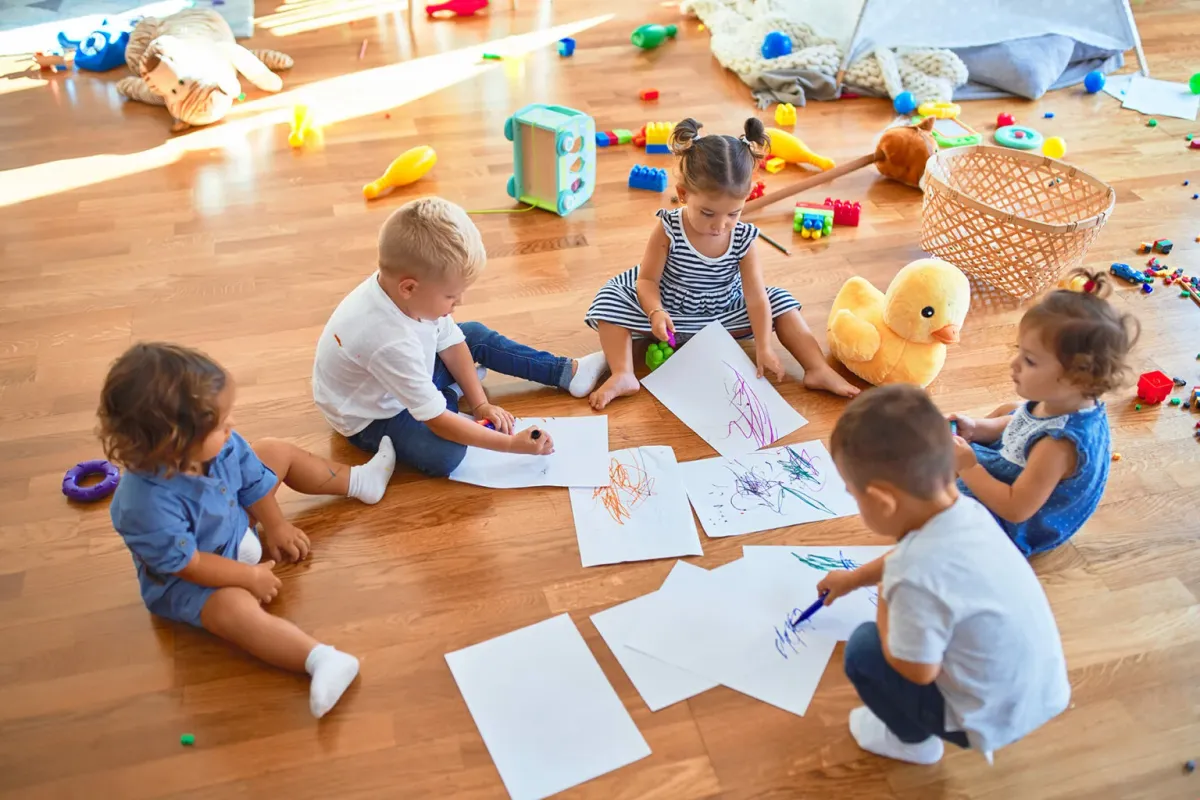
Parents often wonder whether their child is ready for preschool or kindergarten, and timing this decision correctly can impact social development, readiness for learning, and confidence. Most children enter preschool between the ages of 2 and 4, while kindergarten typically welcomes 5-year-olds, though every child develops at their own pace. Understanding age guidelines and developmental milestones helps parents choose the right educational stage and select appropriate preschool activities that prepare young learners for success.
Age-appropriate learning materials support children's growth and complement classroom experiences at home. Parents need resources that match their child's developmental stage, whether that means simple shape recognition for toddlers or letter tracing practice for kindergarteners. These engaging, hands-on activities make learning feel like play while reinforcing essential skills through 40,220+ FREE Coloring Pages designed for different developmental stages.
Summary
- Most children enter preschool between ages 3 and 4, while kindergarten typically enrolls 5 to 6-year-olds, with these age ranges reflecting distinct developmental stages rather than arbitrary cutoffs. The California Budget & Policy Center reports that most growth in preschool-age enrollment comes from expanded TK programs, showing how states build infrastructure around these age distinctions. The separation exists because preschool focuses on foundational social-emotional skills like sharing and emotional recognition, while kindergarten assumes these capacities already exist and shifts to formal academic instruction in phonics, number sense, and writing.
- Children who start kindergarten at age 4 instead of 5 score 7 to 10% lower in reading and math assessments during the first year compared to peers who started at the recommended age, according to a longitudinal study of over 1,500 children. The gap stems not from intelligence but from stamina, focus, and the ability to recover from setbacks without emotional dysregulation. A 4-year-old might decode words as well as a 5-year-old but struggles to sit through full literacy blocks or wait their turn during math games, creating academic challenges rooted in developmental readiness rather than cognitive capacity.
- Social and emotional regulation drives classroom success more than early academic skills because these capacities determine whether children can actually access the learning environment. The NICHD Early Child Care Research Network found that children starting kindergarten before age 5 were significantly more likely to exhibit behavioral challenges, including difficulty following rules and interacting positively with peers. A child who can recite the alphabet but hasn't learned to share materials will struggle more than a 5-year-old who can't yet write their name but knows how to follow classroom routines and recover from disappointment.
- Children who attended preschool before kindergarten were twice as likely to demonstrate age-appropriate literacy and numeracy skills by the end of kindergarten, according to a study of 2,000 children in Chicago. The advantage came not from earlier academic instruction but from learning how to function in group settings, ask for help, persist through difficulty, and manage the emotional demands of a school day. The Regional Educational Laboratory Mid-Atlantic found that children who attended pre-K were 11 percentage points more likely to be proficient in reading by third grade, with gains stemming primarily from practice in emotional and social skills rather than from pure academic exposure.
- Preschool and kindergarten differ fundamentally in structure and expectations, with preschool building the capacity to learn in groups while kindergarten assumes that capacity exists and uses it to teach academic content. The National Center for Education Statistics reports that 54% of 3- to 5-year-olds were not enrolled in school in 2021, meaning more than half of families navigate transitions without formal institutional guidance. Preschool emphasizes play-based exploration with flexible schedules and teacher facilitation, while kindergarten operates on fixed schedules with defined learning blocks, formal lessons, and academic assessments that mirror elementary school rather than early childhood programs.
- My Coloring Pages addresses kindergarten preparation by offering over 40,201 free coloring pages and customizable designs showing classroom routines, social scenarios, and daily activities that help children mentally rehearse what kindergarten feels like through familiar, low-pressure activities before they experience it firsthand.
Table of Contents
- What Age Is Preschool and Kindergarten
- Key Considerations for Preschool and Kindergarten Age
- Difference Between Preschool and Kindergarten
- How to Help Kids Transition Smoothly from Preschool to Kindergarten
- Prepare Your Child for Kindergarten with 40K+ Custom Coloring Pages
What Age Is Preschool and Kindergarten
Preschool typically serves children ages 3 to 4, while kindergarten is designed for 5 to 6-year-olds. These represent distinct developmental stages with specific learning goals, social expectations, and thinking skills aligned to how young children develop.

Parents often confuse these terms, assuming a 4-year-old who is socially competent could advance. However, the California Budget & Policy Center reports that most preschool-age enrollment growth stems from expanded TK programs, demonstrating how states build systems around age differences. Readiness extends beyond being "smart enough."
What developmental skills does preschool focus on?
Preschool focuses on foundational social-emotional skills: sharing materials, taking turns, and recognizing feelings before moving on to longer lessons. Fine motor skills develop through play, such as holding a crayon, manipulating clay, and zipping a jacket. Early literacy means recognizing letters in their name, not reading sentences. Numeracy involves counting blocks during cleanup, not solving addition problems.
How does kindergarten build on preschool foundations?
Kindergarten introduces structure that assumes these foundations already exist. Children must follow multi-step directions, work independently for extended periods, and manage frustration when tasks feel difficult. Academic expectations shift from exploration to formal instruction in phonics, number sense, and writing. A child who skipped preschool may have the cognitive ability to learn letters but lack the emotional control to keep up with the pace or the social skills to work in groups without adult support.
How do state policies enforce age requirements?
California requires kindergarten enrollment for children who turn 5 by September 1st. Preschool programs, which Learning Policy Institute notes serve 4-year-olds as part of universal prekindergarten expansion, operate under different standards, teacher-to-child ratios, and curriculum frameworks. New York's universal pre-K targets 4-year-olds, with kindergarten the following year. Texas allows optional pre-K for 3-year-olds but requires kindergarten for 5-year-olds.
Why do age-appropriate programs matter for development?
These policies reflect decades of research showing that age-appropriate programming produces better outcomes. When a 4-year-old enters kindergarten because they seem advanced, they often struggle not with the content but with the endurance, emotional demands, and peer dynamics that require an extra year of maturity.
How does the age gap affect academic performance?
A longitudinal study tracking over 1,500 children found that those who started kindergarten at 4 rather than 5 scored 7 to 10% lower on reading and math assessments during the first year. The difference stemmed from stamina, focus, and resilience rather than intelligence. A 4-year-old might read as well as a 5-year-old, but cannot sit through a full reading lesson without losing focus. They might count to twenty yet struggle to wait their turn during math games.
What happens when children are held back too long?
The reverse problem also exists: holding back a ready 5-year-old for perceived advantage sometimes creates a bored, under-challenged child mismatched with younger classmates. The sweet spot is matching developmental readiness to programme expectations. When parents search for activities that bridge home and school learning, they want to reinforce skills without the pressure of the classroom. Platforms like My Coloring Pages provide age-appropriate printables that let a 3-year-old practice holding a crayon and recognizing shapes while a 5-year-old works on letter formation and number sequencing through play rather than homework. Customization prevents forcing a preschooler into kindergarten-level tasks or boring a kindergartener with overly simple content.
What does real readiness look like compared to academic skills?
Children who attended preschool before kindergarten were twice as likely to demonstrate age-appropriate literacy and numeracy skills by the end of kindergarten, according to a study of 2,000 children in Chicago. The advantage wasn't early reading instruction—it was learning to function in a group setting, to ask for help, to persist through difficulty, and to manage the emotional demands of a school day. A 4-year-old who can recite the alphabet but hasn't learned to share materials will struggle in kindergarten. A 5-year-old who can't yet write their name but knows how to follow classroom routines, listen during instruction, and recover from disappointment will adapt faster.
How should you evaluate if your child is ready?
It's easier to teach academic skills than emotional regulation and social competence, yet we tend to value the former more because it's easier to see and measure. The real question isn't whether your child is "ready" in some general way, but whether the program matches their developmental level and provides what they need to keep growing without unnecessary stress or frustration.
Related Reading
- Preschool Worksheets
- What Age Is Preschool
- Preschool Curriculum
- Preschool Age Range
- Preschool Vibes
- Preschool Homeschool Curriculum
- Preschool Games
- Worksheets For Preschool
- Preschool Education
- Free Preschool Worksheets Age 3–4
- Preschool Books
- What Age Do Kids Start Preschool
- Preschool Graduation
- Free Name Tracing Worksheets for Preschool
- Preschool Backpack
- All About Me Preschool
- Free Preschool Worksheets
- What Should a Child Learn in Preschool
- Preschool vs Pre K
- Sight Words for Preschool
- Preschool Self Defense
- Free Printable Preschool Worksheets Tracing Letters
- Preschool Math Worksheets
- Preschool Valentine Crafts for Parents
- Preschool Graduation Gifts
- Preschool Toys
- What Age Is Preschool and Kindergarten
- Preschool Quotes About Play
Key Considerations for Preschool and Kindergarten Age
Placement decisions depend less on whether your child knows their ABCs and more on whether they can handle the emotional setup of a classroom. Can they separate from you without significant distress? Do they recover when something doesn't go their way? Can they wait their turn during a group activity without becoming upset? These emotional regulation skills matter more than early academic skills because they determine whether a child can access the learning environment.

🎯 Key Point: Emotional readiness trumps academic preparation when it comes to classroom success. A child who can manage their feelings will thrive, while one who struggles with self-regulation may find it difficult to learn, regardless of their cognitive abilities.
"Emotional regulation skills are the foundation that allows children to engage with learning opportunities in the classroom environment." — Early Childhood Development Research
⚠️ Warning: Don't focus exclusively on academic milestones like letter recognition or counting skills. Instead, prioritize helping your child develop coping strategies, patience, and independence before their first day of school.
What do statistics reveal about preschool enrollment?
According to the 2025 KIDS COUNT Data Book from The Annie E. Casey Foundation, 54% of 3- and 4-year-olds are not in school. Understanding what predicts success changes how you evaluate readiness.
Why do younger children struggle with the emotional demands of kindergarten?
A 4-year-old entering kindergarten before turning 5 often struggles not because they lack intelligence, but because they cannot handle the emotional demands of a six-hour day. They feel intimidated by older, more physically coordinated classmates, withdraw when group dynamics become complex, and compare themselves to peers who seem effortlessly competent at tasks that still feel hard, eroding confidence before academic challenges begin.
What does research show about early kindergarten entry?
The NICHD Early Child Care Research Network found that children starting kindergarten before age 5 were significantly more likely to exhibit behavioral challenges, including difficulty following rules and interacting positively with peers. The gap reflected not cognitive ability but the capacity to manage frustration, understand social cues, and recover from setbacks independently.
How does preschool success translate to kindergarten readiness?
Parents often assume that success in a 2.5-hour developmental preschool predicts success in full-day kindergarten. This isn't always the case. The shorter preschool session offered frequent breaks, less demand for peer-to-peer interaction, and more one-on-one support. Kindergarten removes those supports. A child who seemed ready may suddenly struggle with peer conflicts, cannot sustain attention through longer teaching blocks, and experiences stress manifesting as aggression or withdrawal.
What happens when children have academic skills but lack emotional readiness?
Children who start school early often demonstrate early literacy and numeracy skills. However, they lack the stamina to sustain these abilities over time. They may read words but cannot sit through a 20-minute reading lesson, or understand counting but lose focus during turn-taking math games. A long-term study of 1,500 children showed that 4-year-olds entering kindergarten early scored 7 to 10% lower on reading and math tests than children who started at the recommended age. The gap stemmed not from inability to learn the material, but from difficulty sustaining attention and managing emotions well enough to practise it repeatedly.
How does this developmental mismatch affect daily classroom performance?
The mismatch shows up in surprising ways. A child might perform well during one-on-one instruction but struggle when working alone, or participate enthusiastically in the morning but become dysregulated by afternoon, unable to handle accumulated tiredness. Teachers spend extra time supporting these students, not because the child cannot do the work, but because they're working at the edge of their developmental capacity with no energy left for the frustrations that accompany learning.
How do classroom routines impact kindergarten success?
Kindergarten assumes children can follow multi-step directions without constant reminders: line up when the bell rings, put materials away before transitions, wait their turn, and manage bathroom needs independently. These routines form the operational infrastructure that allows a classroom of 20+ children to function. The Chicago Early Learning Study of 2,000 children found that 4-year-olds who skipped preschool had twice the likelihood of struggling with classroom routines compared to children who attended preschool first.
What happens when children lack mastery of routines?
Children who haven't learned these routines need frequent reminders, which interrupts their own learning and creates classroom problems. They miss instructional time while teachers help them find materials, struggle when activities change, become upset, and need clear guidance for tasks their peers complete automatically—all of which can feel embarrassing and damage their confidence.
How can families reinforce routine skills at home?
When families reinforce these skills at home, they need activities that feel playful rather than instructional. Platforms like My Coloring Pages let preschoolers practice fine motor control, colour recognition, and task completion through age-appropriate printables. A 3-year-old works on holding a crayon and staying within boundaries, while a 5-year-old practises letter formation and number sequencing. The activity bridges home and school learning without the pressure of formal instruction.
How do academic gaps from early placement persist over time?
Academic gaps that start in the first year tend to persist. Children who begin behind in emotional regulation or routine mastery often stay behind, not because they can't catch up academically, but because the confidence deficit lingers. They internalize that school is hard, that they're less capable than classmates, and that learning requires more effort for them. That narrative shapes their relationship with education for years to come.
Why do social skill delays compound over time?
Social skill delays worsen over time. A child who struggles with group play in kindergarten develops fewer friendships in first and second grade, missing informal peer learning. They become the child who plays alone at recess, not by choice but from underdeveloped social skills that make group play feel unnatural.
How does early struggle lead to long-term disengagement?
When children struggle early on, they stop trying and push back. Learning feels like punishment rather than something enjoyable, and children lose interest before third grade. Reversing this pattern requires far more intervention than waiting until a child is ready to learn.
Difference Between Preschool and Kindergarten
Preschool and kindergarten differ in important ways. Preschool teaches children to work and play in a group. Kindergarten assumes children can already do this and uses that skill to teach academic subjects. One builds the foundation; the other builds on it.
Aspect | Preschool | Kindergarten |
|---|---|---|
Primary Focus | Social skills and group dynamics | Academic learning and curriculum |
Age Range | 3-4 years old | 5-6 years old |
Prerequisites | None | Basic social skills are expected |
Learning Style | Play-based learning | Structured academic instruction |
Goal | Build foundation skills | Apply skills to learn subjects |

"Kindergarten assumes children can already work and play in groups, using that foundation to teach academic subjects effectively." — Educational Development Research
🔑 Key Takeaway: Preschool focuses on developing the social and emotional skills that kindergarten then relies upon to deliver academic instruction. Think of preschool as the foundation and kindergarten as the first floor of your child's educational journey.
💡 Tip: If your child hasn't attended preschool, focus on group play activities and following simple instructions before kindergarten starts to help them succeed in the more academically focused environment.
What age ranges do preschool and kindergarten typically serve?
Preschool typically serves children aged 2 to 5 years, though most programs focus on 3- and 4-year-olds. Kindergarten serves 5- to 6-year-olds, with state cutoff dates determining enrollment. According to the National Center for Education Statistics, in 2021, 54 percent of 3- to 5-year-olds were enrolled in school, meaning nearly half of families navigate this transition without formal institutional support.
How do developmental capacities align with these age groups?
Age ranges align with developmental milestones. A 3-year-old's brain processes social information differently from a 5-year-old's. Impulse control, working memory, and emotional regulation follow predictable patterns as children grow. Programs designed for these age groups build learning around children's developmental capacities.
Focus shifts from socialization to academic preparation
Preschool focuses on social-emotional learning through sharing, taking turns, and solving conflicts. Children learn to separate from caregivers, follow routines, and manage emotions using words instead of aggression. Teachers help children play together in ways that build empathy and self-control, preparing children to function in group learning environments. Kindergarten assumes those foundations exist and shifts to academic readiness. Instruction focuses on phonics, number sense, letter formation, and early writing. Children sit through longer instructional blocks, complete independent work, and demonstrate specific skills on assessments. The classroom operates with structured schedules and academic benchmarks, resembling first grade more than preschool.
How does a preschool curriculum focus on play-based learning?
Preschool curriculum centres on play-based exploration. Children learn colours by sorting blocks, shapes by building with manipulatives, and counting through songs and games. These activities teach important pre-academic skills: pattern recognition, spatial reasoning, vocabulary development, and fine motor control. A child painting at an easel practises hand-eye coordination and colour mixing while building task completion skills.
How does the kindergarten curriculum become more academic?
Kindergarten curriculum becomes clearly academic, with reading instruction following scope-and-sequence charts, maths lessons introducing addition and subtraction, and writing progressing from scribbles to letter formation to simple sentences. The National Institute for Early Education Research reports that 37.4% of children are enrolled in state-funded preschool programmes, reflecting how states invest in the developmental foundation that makes kindergarten's academic demands manageable rather than overwhelming.
How do preschool learning approaches prioritize play and exploration?
Preschool focuses on free play, creative exploration, and child-chosen activities. Teachers observe and support rather than direct. A typical day includes outdoor play, art projects, pretend play areas, and circle time, with transitions based on children's needs and interests. If restlessness emerges, the teacher advances outdoor time. If a project captures attention, she extends it.
How does kindergarten structure learning with fixed schedules?
Kindergarten runs on set schedules with specific learning blocks: literacy from 9:00 to 10:30, maths from 10:45 to 11:30, and specials (art, music, PE) at designated times. Children transition between activities, attend during instruction, and complete tasks within the allocated time, regardless of interest or fatigue.
How do preschool teachers facilitate learning differently?
Preschool teachers help children learn to get along with others and understand their feelings. They talk through problems to help kids see different points of view: "Maya wanted the red truck, but you were still using it. What could we do?" They teach feeling words: "I see you're feeling frustrated because the tower keeps falling." They create spaces where children practise these skills through play rather than direct instruction. Teachers observe and learn about each child's growth through their actions.
What makes kindergarten instruction more structured?
Kindergarten teachers deliver structured lessons and assess student progress using curriculum materials and formal and informal assessments to differentiate instruction. While they support social-emotional development, academic instruction becomes the primary focus: a kindergarten teacher might spend 90 minutes on literacy instruction versus 20 minutes on social skills, reversing the preschool ratio.
How can parents bridge the gap between home and classroom learning?
Platforms like My Coloring Pages offer an alternative to traditional workbooks and flashcards that bring classroom pressure into the home. A preschooler practises holding writing tools and recognising shapes through fun designs, while a kindergartener works on letter formation and number sequencing through customisable pages matched to their skill level. This reinforces developmental skills without the stress of formal instruction, bridging home and classroom learning.
How does preschool structure differ from kindergarten?
Preschool programs typically run 2.5 to 4 hours per day with substantial blocks of unstructured time. A child might spend 45 minutes in dramatic play, 30 minutes outdoors, and 15 minutes at circle time. Schedules prioritise free play and discovery, accommodating short attention spans and high levels of movement. Bathroom breaks occur as needed, and snack time fosters conversation and social interaction.
What does a typical kindergarten schedule look like
Kindergarten runs full-day (6 to 7 hours) with shorter, frequent time blocks: 20 minutes for morning meeting, 30 minutes for literacy centres, 15 minutes for bathroom and snack, 45 minutes for maths, and 30 minutes for lunch and recess. The pace quickens with more transitions. Children manage their own materials, track their belongings, and move between multiple classrooms and shared spaces such as the cafeteria and library.
How do preschool assessment methods focus on observation?
Preschool assessment relies on developmental checklists and teacher observation: Can the child separate from caregivers, participate in group activities, and follow two-step directions? Teachers document growth through anecdotal notes, photos, and portfolio work samples. There is no grading, standardised testing, or comparison to academic benchmarks. Progress is measured against developmental milestones, not curriculum standards.
How does kindergarten introduce formal evaluation methods?
Kindergarten introduces formal evaluation. Teachers assess letter recognition, phonemic awareness, number sense, and writing skills using district-mandated tools. Children receive report cards with marks indicating progress toward grade-level standards. Some districts administer standardized assessments. The shift from "is developing social skills" to "reads at benchmark level" represents a fundamental change in how we measure a child's success.
Related Reading
- Noah's Ark Preschool
- Preschool Craft Ideas
- Christmas Crafts Preschool
- Preschool Crafts
- Preschool Playground Equipment
- Free Preschool Games
- Preschool Science Experiments
- Daycare Vs Preschool
- Preschool Tracing Worksheets
- Preschool Math Activities
- Preschool Sight Words
- Preschool Bulletin Board Ideas
- Spring Bulletin Board Ideas For Preschool
- Playing Preschool Curriculum
- Preschool Learning Games
- Preschool Learning Activities
- Preschool Assessment
- Preschool Lesson Plan Template
- How To Become A Preschool Teacher
- Turkey Craft Preschool
- Preschool Prep
- Preschool Art Activities
- Creative Curriculum For Preschool
- Preschool Classroom Layout
How to Help Kids Transition Smoothly from Preschool to Kindergarten
The transition works well when you prepare the emotional foundation, not just academic skills. Children need to be familiar with kindergarten, feel confident handling new challenges, and have the words to talk about their experiences. This happens through talking together, exposure to the new environment, and practicing routines that mirror what they'll encounter in kindergarten.
🎯 Key Point: The most successful kindergarten transitions focus on emotional readiness and familiarity, not just academic preparation. Children who feel confident and prepared for the social and routine aspects of school adapt much faster.
"Children who are emotionally prepared for kindergarten show better adjustment and higher engagement in their first months of school." — Early Childhood Education Research, 2023

💡 Pro Tip: Start kindergarten preparation at least 2-3 months before school begins. This gives children enough time to process the upcoming changes and build confidence through gradual exposure to new routines and expectations.
How can you help children visualize kindergarten as a real place?
Kids fear the unknown more than difficulty. When kindergarten exists only as an idea, worry fills the gaps. Discuss the actual place: where they'll hang their backpack, what the classroom looks like, and how the cafeteria works. Describe the social experience: they'll meet new friends, some children will already know each other, and the teacher will help everyone learn names.
Why should you share your own stories of starting something new?
Share your own story of starting something new—the real one where you felt nervous, and it turned out okay. Name the specific emotions: "I felt worried I wouldn't know anyone, and then I met someone at lunch who liked the same books I did." That specificity gives children permission to feel multiple things simultaneously: scared and excited, worried and curious. The feelings coexist rather than cancel each other out.
What advantages do children gain from early school experience?
According to the Regional Educational Laboratory Mid-Atlantic, children who attended pre-K were 11 percentage points more likely to read proficiently by third grade. The advantage stems partly from academic learning and primarily from practising the emotional and social skills that enable sustained attention to instruction, rather than expending energy on managing environmental anxiety. Remind your child of a time they successfully handled something new: the first day at preschool, learning to swim, or sleeping at a grandparent's house. Connect that past success to the upcoming challenge: "Remember how nervous you felt before swimming lessons? Then you learned to float and it got easier. Kindergarten will feel like that too."
How do books help children see kindergarten as a process rather than a test?
Stories help children practise mentally handling situations. When they see characters feel nervous on the first day, make mistakes, and bounce back, they learn to manage their own challenges. Choose books that show real problems: a character who feels shy during circle time, another who gets lost finding the bathroom, and one who misses their parent at lunch. Avoid stories in which everything is perfect or in which the child becomes instantly popular and confident.
What questions should you ask after reading together?
After reading, ask open questions: "How do you think that character felt when everyone else seemed to know what to do?" "What would you do if that happened to you?" You're teaching them to process feelings, identify options, and recognise that discomfort doesn't mean failure.
How does daily reading build classroom readiness?
Make reading part of your daily routine. Sitting with a book and following a complete story builds the focus and comprehension skills that support classroom learning. Fifteen minutes before bed each night proves more effective than occasional weekend reading.
How do detailed routines help children create mental maps?
Kids handle changes better when they can picture what will happen. Walk through a typical kindergarten day with details: "You'll hang your backpack on a hook with your name. Then you'll sit on the carpet for morning meeting. The teacher will read a story and everyone will share something. After that, you'll work at tables on writing or maths. Then it's snack time in the classroom."
Why does predictability reduce anxiety for young learners?
Predictability reduces cognitive load. When a child knows that lunch follows math and recess follows lunch, they can focus their mental energy on learning rather than on anxiety management. Describe how they'll get to school and how they'll come home. If the bus route changes or a different adult handles pickup, explain that now so it's not a surprise on day three.
How should parents frame mistakes as learning opportunities?
Tell them that kindergarten is made for learning, so mistakes will happen. Teachers don't expect everyone to already know how to do everything. This reframes mistakes as signs of growth rather than failures.
Why should you visit the school before the first day?
Familiarity breeds confidence. When your child has seen their classroom, knows where the bathroom is, and has met their teacher, the first day becomes less overwhelming. Ask the school when tours are available, walk the route from the entrance to the classroom, and let your child sit at a desk, examine the books on the shelves, and explore the playground equipment.
How can meeting the teacher help your child?
Try to meet the teacher if you can. A two-minute conversation where the teacher learns your child's name and your child hears the teacher's voice creates a connection before day one. Play on the school playground before kindergarten starts, so the physical space becomes connected with play and fun rather than only with the unknown demands of school.
What are the benefits of school visits?
These visits reduce nervousness to manageable levels. A child encountering the building for the first time must process both social demands and the physical environment simultaneously. A child already familiar with the space can focus entirely on social and academic aspects.
What foundational skills should children practice before starting school?
Teach your child to recognize and write their first and last name. Working independently while classmates do the same feels different from needing help. Learn the teacher's name together. Practice your family's phone number and address. These identity markers help children feel oriented and capable, providing anchoring information when everything else feels new. Knowing "I'm in Ms. Rodriguez's class" or "My address is 423 Oak Street" grounds them in unfamiliar territory.
How can children practice skills without classroom pressure?
The traditional approach uses workbooks and flashcards that replicate classroom pressure at home, turning preparation into stress rather than confidence. Platforms like My Coloring Pages let children practise letter formation, name recognition, and fine motor control through playful activities. A child colours a page featuring their name in different fonts, tracing letters as they choose colours. Another works through number sequencing by colouring numbered sections of a picture. Skills develop without formal instruction, building competence and positive associations with learning.
How should you respond when children express kindergarten worries?
When your child says they are worried about kindergarten, accept their feelings: "It makes sense to feel nervous about something new. Lots of kids feel that way." Then ask what exactly worries them. The fear of not knowing anyone differs from the fear of not being able to do the work, and each requires different support.
What behavioral signs indicate kindergarten anxiety?
Watch for behaviour changes that signal anxiety: increased clinginess, regression in previously mastered skills, sleep disruption, or resistance to once-enjoyed activities. These indicate concerns the child cannot yet articulate.
How can you create ongoing conversations about kindergarten?
Create space for ongoing conversation through regular check-ins where kindergarten naturally comes up. "Three more weeks until kindergarten. What are you most curious about?" This approach focuses on curiosity rather than fear, giving children permission to wonder. Emotional preparation works only alongside practice with actual routines and skills they'll need daily.
Prepare Your Child for Kindergarten with 40K+ Custom Coloring Pages
Getting ready for kindergarten is about more than academic skills. Your child needs to practice the emotional situations, social experiences, and daily routines they'll face without feeling stressed or judged. Practicing through familiar activities builds confidence more effectively than discussing them, especially for children who learn by doing rather than listening.
🎯 Key Point: Visual practice through coloring helps children mentally rehearse kindergarten scenarios in a stress-free environment. My Coloring Pages offers over 40,201 free coloring pages and the ability to create fully customized pages of classrooms, daily routines, playgrounds, and social scenarios. A 4-year-old can color images of children lining up, sitting at desks, or raising hands during circle time, creating mental pictures of what kindergarten actually looks like before they arrive. A 5-year-old practices writing their name on customized pages featuring their actual name in traceable letters, building the muscle memory and confidence that translates to classroom tasks.
"Children who engage in visual preparation activities show 25% less separation anxiety and adapt to new school environments 3x faster than those without pre-exposure." — Early Childhood Development Research, 2023
The platform connects home and school learning without copying classroom stress. You're giving your child a screen-free way to explore what kindergarten feels like through an activity that already feels safe and enjoyable. They color a cafeteria scene, and you talk about how lunch works. They work on a playground image, and you discuss making new friends during recess. The coloring becomes the conversation starter that makes abstract ideas concrete and manageable, helping them start kindergarten calm, confident, and excited to learn.
💡 Tip: Use customized coloring pages as daily 5-10 minute practice sessions leading up to the first day of school for maximum confidence building.