What Should a Child Learn in Preschool + Best Learning Resources?
What should a child learn in preschool? My Coloring Pages reveals essential skills plus proven resources to boost your child's development.

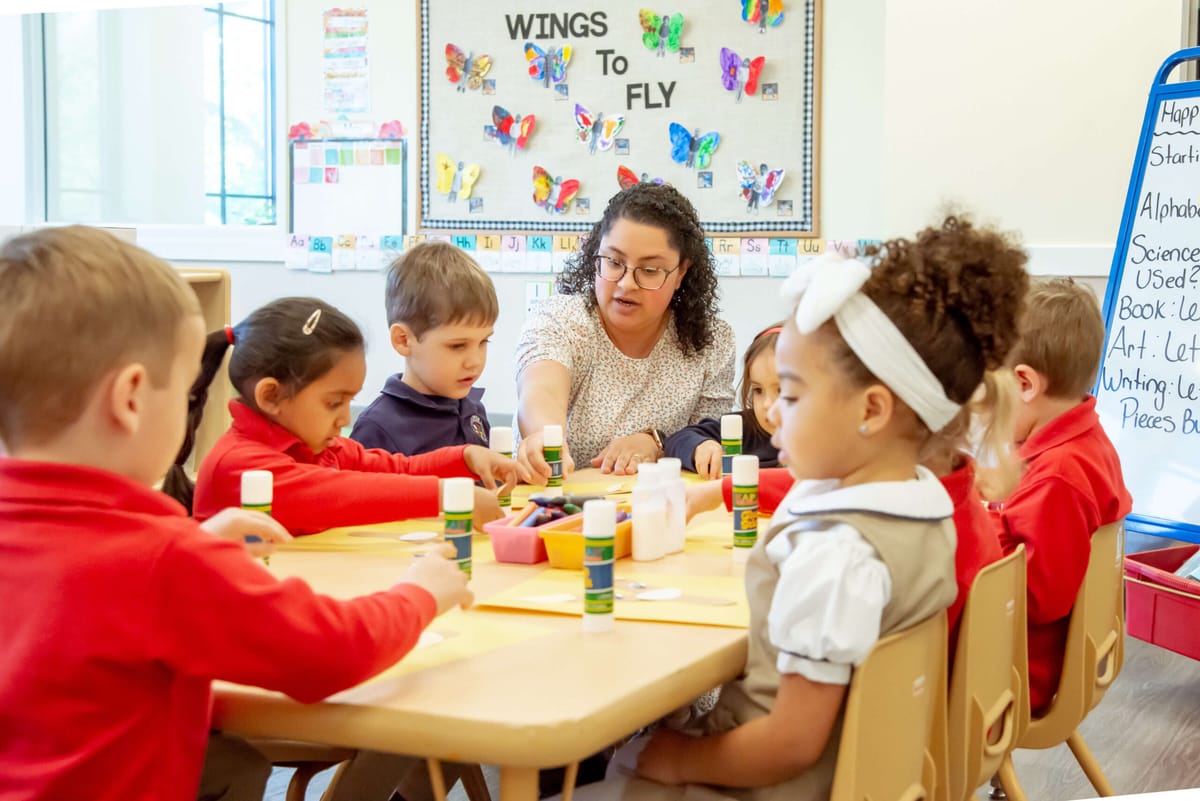
Your child walks into preschool for the first time, backpack bouncing, eyes wide with curiosity. Those early hours shape social skills, emotional growth, cognitive foundations, and physical development through carefully designed learning experiences. Quality early education covers essential areas from alphabet recognition and number sense to sharing toys and expressing feelings. Understanding what a child should learn in preschool helps parents support these developmental milestones at home.
Preschoolers thrive when learning feels like play, especially through hands-on activities that build fine motor skills, color recognition, and vocabulary. Whether children need practice tracing shapes, exploring seasonal themes, or developing pre-writing abilities, engaging materials make all the difference. Parents can extend classroom lessons at home with targeted resources, such as 40,089+ FREE Coloring Pages designed specifically for early learners.
Table of Contents
- Importance of Preschool Education
- Key Learning Areas in Preschool
- What Should a Child Learn in Preschool
- 6 Best Online Preschool Learning Resources for Free
- Stop Lessons From Slipping Through the Cracks — Make Preschool Learning Stick
Summary
- Preschool education capitalizes on the most intensive brain development period children will ever experience, with 90% of brain architecture forming before age five. This window creates neural pathways more efficiently than any later stage, making early exposure to numbers, letters, patterns, and problem-solving not about pushing children too hard but about matching instruction to when their brains are naturally wired to absorb foundational concepts.
- Social competence predicts long-term academic success as reliably as early literacy skills. Research shows that children who attend high-quality preschool programs are 24% more likely to graduate from high school, a correlation that stems from developing persistence, self-control, and interpersonal skills during formative years rather than from alphabet exposure alone. Teachers consistently report that students without preschool experience struggle more with emotional regulation and adapting to structured environments.
- Physical development directly supports cognitive growth in ways that aren't immediately obvious to parents. Tracing shapes develops the pencil control needed for letter formation, building with blocks teaches spatial reasoning essential for geometry, and threading beads builds the finger strength and bilateral coordination required for self-care tasks like tying shoes and buttoning shirts.
- Vocabulary expansion during preschool years follows a predictable trajectory, typically growing from roughly 200 words at age three to over 1,000 words by age five. This explosion happens through exposure to storytelling, songs, conversations, and new experiences that introduce concepts and language structures, directly predicting reading comprehension and expressive communication skills in later grades.
- Retention determines whether preschool learning actually matters, with the gap between exposure and retention explaining why some children enter kindergarten confident in foundational skills while others seem to start from scratch despite attending quality programs. Abstract concepts need concrete anchors, and personalization drives engagement in ways generic materials cannot match, with children practicing skills longer when content connects to their specific interests.
- My Coloring Pages offers 40,089+ free coloring pages that turn these developmental goals into customized practice activities, letting families create worksheets around specific interests like dinosaurs or trucks while targeting skills like letter tracing, number recognition, or safety concepts through formats children experience as creative play rather than homework.
Importance of Preschool Education
Preschool is the most important time for brain development. Between ages three and five, children's thinking, social, and emotional skills, as well as physical abilities, develop simultaneously. What happens during these critical years affects how children learn, build relationships, and handle challenges for years to come.
🎯 Key Point: The early childhood years represent a unique window of opportunity when multiple developmental domains converge to create the foundation for lifelong learning and social success.
"Between ages three and five, children's thinking skills, social skills, emotions, and physical abilities all develop at the same time, creating a critical foundation for lifelong learning."
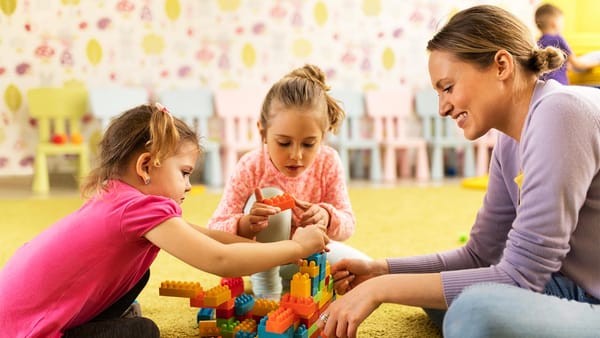
Many people think preschoolers are too young to learn anything. This happens because play looks easy and simple. When a four-year-old builds a block tower, takes turns with friends, or traces shapes, it doesn't resemble real school. Young children learn by exploring, trying things out, and guided discovery, not by listening to lessons and doing worksheets. The thought and purpose behind activities matter more than their organization.
💡 Tip: Don't be fooled by the apparent simplicity of preschool activities - behind every play-based experience lies intentional learning that builds critical cognitive and social foundations.
Why does cognitive development happen so rapidly in the early years?
Ninety percent of brain architecture forms before age five, creating neural pathways that determine how children process information, solve problems, and retain knowledge throughout life. Early exposure to numbers, letters, patterns, and problem-solving capitalises on this critical window when their brains are primed to learn foundational concepts.
How do early math concepts impact later academic success?
Children who learn basic math concepts between the ages of three and five perform significantly better on elementary math tests. This isn't about memorizing multiplication tables—it's about helping them recognise patterns, understand quantity, and build spatial reasoning through play activities like sorting shapes by colour, counting snacks, or ordering toys by size.
What happens when academic exposure is delayed until kindergarten?
Parents who wait until kindergarten to start teaching their children academics often find that their kids need intensive catch-up efforts that could have been prevented. This gap reflects missed opportunities during the period when learning requires minimal effort and produces the most lasting impact.
Why do social skills matter more than academics in early education?
Being academically ready for school matters, but getting along with others often determines whether children thrive or struggle in elementary school. Preschool teaches sharing, collaboration, emotional regulation, and conflict resolution through daily interaction with peers. These skills affect classroom behaviour, friendship formation, and stress management.
How do preschool social skills impact long-term academic success?
According to research cited in The 74 Million, children who attend high-quality preschool programmes are 24% more likely to graduate from high school. This reflects the importance of developing persistence, self-control, and interpersonal skills in early childhood. Children who learn to handle disappointment, wait their turn, and ask for help at age four will draw on those skills throughout their education.
What challenges do children without preschool experience face?
Teachers consistently report that students without preschool experience struggle more with emotional regulation and adapting to structured environments. These children lack the practice in social strategies that their peers developed through daily group interaction. The problem manifests as difficulty handling frustration, sharing materials, or navigating peer conflicts—challenges that distract from learning.
How does physical development support cognitive growth?
Gross and fine motor activities build coordination while strengthening hand-eye coordination and muscle control needed for writing, cutting, and handling learning materials. Running, climbing, beading, and colouring also improve attention span and brain development, creating a foundation that supports schoolwork.
How do movement activities reinforce early learning skills?
Structured movement and art activities reinforce early literacy and numeracy. Tracing shapes develops pencil control for letter formation. Building with blocks teaches spatial reasoning essential for geometry. Threading beads builds finger strength and bilateral coordination, which are needed for tying shoes and buttoning shirts. Each physical activity contributes to cognitive readiness.
What materials help extend physical development activities at home?
Parents who want to continue these activities at home need age-appropriate materials that target specific skills. Websites like My Coloring Pages offer customizable worksheets and coloring pages aligned with what your child is learning. These activities build fine motor skills, pattern recognition, and early reading skills while maintaining children's interest.
How does vocabulary expand during the preschool years?
Between ages three and five, vocabulary typically expands from roughly 200 words to over 1,000 through exposure to storytelling, songs, conversations, and new experiences. Early exposure to rich language environments directly predicts reading comprehension and expressive communication skills in later grades.
What daily opportunities help children practice communication skills?
Preschool gives children daily opportunities to practise listening, speaking, describing, and explaining through circle time discussions, show-and-tell presentations, and group play. These activities help children organise their thoughts, choose appropriate words, and communicate clearly, functioning as skill-building exercises disguised as regular activities.
How does early verbal practice impact future academic success?
Children who practice speaking and sharing ideas in preschool develop confidence in their communication skills and learn that words can solve problems. This linguistic confidence affects every subject they encounter later: reading comprehension, science explanations, and math word problems.
What is symbolic thinking, and why does it matter?
Symbolic thought—the ability to mentally represent concrete objects, actions, and events—is an important aspect of cognitive development during the preschool years. This capacity underlies reading (letters represent sounds), mathematics (numerals represent quantities), and creative expression.
How does pretend play develop symbolic thinking skills?
Pretend play, drawing, and verbal representation all develop symbolic thinking. When a child uses a block as a phone, draws a circle to represent the sun, or describes an imaginary friend, they practise the mental flexibility required for abstract reasoning. These activities prepare children for formal learning.
How can adults support symbolic thinking through guided play?
When adults guide play in learning spaces, children explore, experiment, and discover through hands-on experiences. Adults who understand child development can create appropriately challenging activities that channel natural curiosity into structured learning.
Related Reading
- Preschool Activities
- Preschool Worksheets
- What Age Is Preschool
- Preschool Curriculum
- Preschool Age Range
- Preschool Vibes
- Preschool Homeschool Curriculum
- Preschool Games
- Worksheets For Preschool
- Preschool Education
- Free Preschool Worksheets Age 3–4
- Preschool Books
- What Age Do Kids Start Preschool
- Preschool Graduation
- Free Name Tracing Worksheets for Preschool
- Preschool Backpack
- All About Me Preschool
- Free Preschool Worksheets
- Preschool Self Defense
- Preschool vs Pre K
- Sight Words for Preschool
- Free Printable Preschool Worksheets Tracing Letters
- First Day of Preschool
- Preschool Math Worksheets
- Preschool Valentine Crafts for Parents
- Preschool Graduation Gifts
- Preschool Toys
- What Age Is Preschool and Kindergarten
- Preschool Quotes About Play
Key Learning Areas in Preschool
Preschool learning covers six connected areas: physical development, thinking skills, language learning, social-emotional skills, creative expression, and cultural understanding. These develop simultaneously through purposeful play-based activities, with each area supporting the growth of the others.
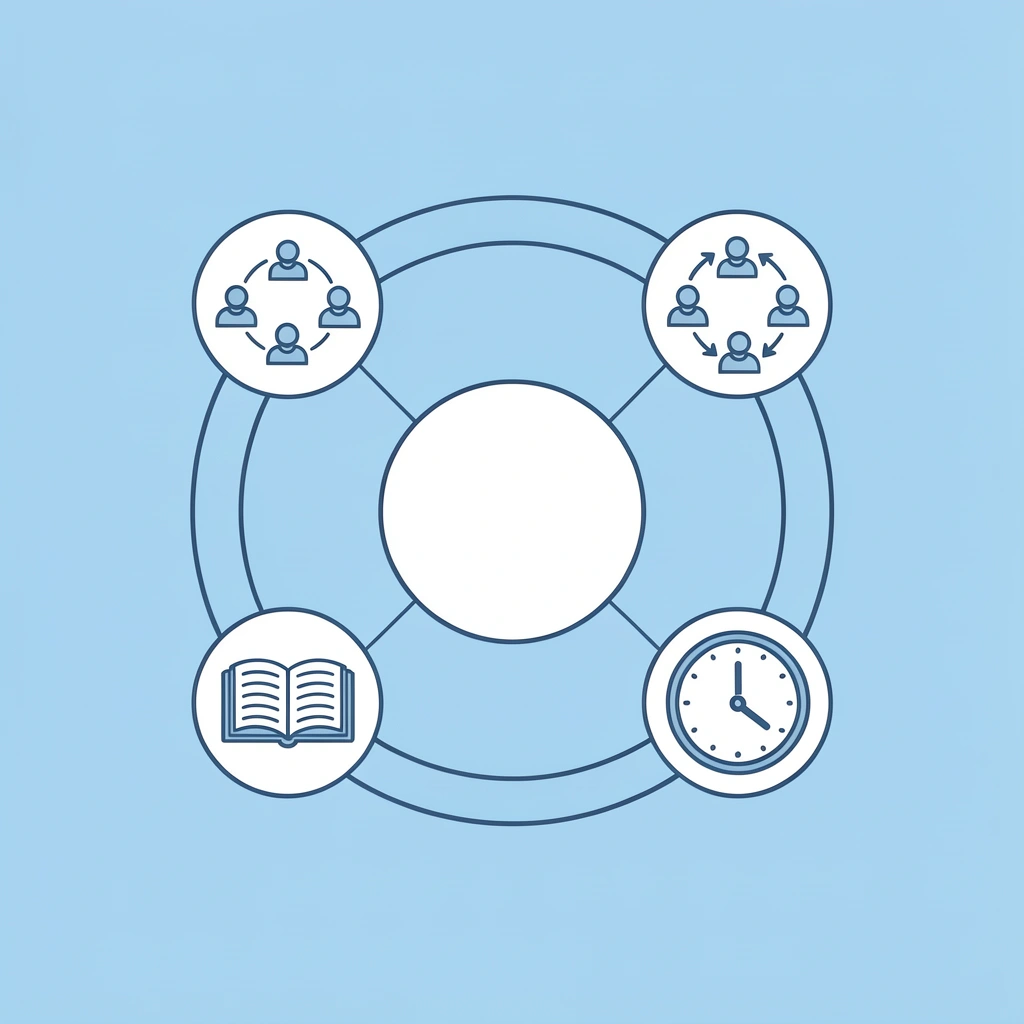
🎯 Key Point: Understanding how developmental areas interconnect helps parents and educators create more effective learning experiences that support the whole child.
The Annie E. Casey Foundation's 2025 KIDS COUNT Data Book tracks how children are doing across money stability, education, health, and family situations, showing how these areas connect. A child who struggles with big muscle coordination often has trouble controlling their behaviour. Limited vocabulary makes it harder to get along with other kids. Physical, thinking, and emotional abilities support each other continuously.

"Physical, cognitive, and emotional development are deeply interconnected during the preschool years, with challenges in one area often impacting progress in others." — Research findings on early childhood development
⚠️ Warning: Focusing on just one developmental area while neglecting others can create gaps that become harder to address as children grow older.

How does gross motor development build confidence beyond physical strength?
Big muscle activities like running, climbing, and balancing build muscle strength, coordination, and spatial awareness. Children who master physical challenges develop confidence in their bodies, making them more willing to take cognitive and social risks. A four-year-old who can navigate playground equipment independently approaches new puzzles and peer interactions with similar confidence.
Why are fine motor skills essential for daily independence?
Fine motor skills use different muscle groups and require equal attention. Drawing, cutting, threading beads, and moving small objects strengthen hand-eye coordination and finger dexterity needed for writing, buttoning, and using tools. These skills determine whether a child can serve themselves a snack, zip their jacket, or do craft activities independently.
How does early health education create lifelong habits?
Health and safety education during preschool years establishes habits that persist for decades. Teaching handwashing, nutrition basics, personal hygiene, street safety, and emergency procedures creates patterns that affect illness rates, dental health, and injury risk throughout childhood.
How does problem-solving develop critical thinking skills?
Problem-solving and critical thinking develop when children face challenges slightly beyond their current abilities. Puzzles requiring spatial reasoning, games with logical rules, and open-ended building activities prompt children to analyse, strategise, and adjust their approaches based on results. This teaches persistence and flexibility and demonstrates that multiple solutions often exist for a single problem.
What mathematical concepts should preschoolers learn?
Early maths instruction focuses on foundational concepts rather than memorization. Counting objects, recognizing patterns, comparing quantities, and identifying shapes build number sense and spatial reasoning. A child who understands that five blocks remain five blocks, whether arranged in a line or scattered across the table, has grasped the conservation of number, a concept underlying all future arithmetic.
How does scientific inquiry benefit young learners?
Scientific inquiry teaches method, not facts. When preschoolers predict whether objects will sink or float, watch plants grow over weeks, or experiment with ramps and rolling objects, they learn to form hypotheses, test them, and draw conclusions from observation.
Why are memory and attention activities important?
Memory and attention activities strengthen executive function skills, which are essential for all learning. Games like "Simon Says," memory matching cards, and following multi-step instructions build working memory capacity and sustained focus. These abilities determine whether children can remember routines, follow directions, and complete tasks without constant redirection.
How does oral language development predict future reading success?
How well children develop oral language skills during the preschool years predicts reading comprehension ability in elementary school better than early letter recognition does. Children need practice listening to complex sentences, answering questions, and organizing their thoughts into clear explanations. Storytelling, conversations, and group discussions build the vocabulary and grammatical structures needed for literacy.
What pre-reading skills should children develop before formal instruction?
Pre-reading skills focus on phonological awareness, letter recognition, and print concepts. Children who identify rhyming words, recognize that spoken words break into individual sounds, and understand that print carries meaning, enter formal reading instruction with essential foundational knowledge. These skills develop through songs, rhyming games, alphabet activities, and shared reading experiences.
Early writing begins with mark-making and scribbling, progressing through recognizable shapes and letters into intentional communication. The physical act of controlling writing tools strengthens fine motor skills, while representing ideas through symbols builds literacy understanding.
How can families support literacy development at home?
Many families want to extend literacy activities beyond preschool hours, but struggle to create materials that target specific skills without forcing academics. Our 40,089+ FREE Coloring Pages on My Coloring Pages offer printable activities designed around developmental goals: letter-tracing pages, phonics-based coloring sheets, and vocabulary-building exercises that children experience as engaging rather than homework.
Vocabulary expands through exposure to new words in meaningful contexts. Children need to hear unfamiliar terms repeatedly, in various situations, with clear connections to concrete experiences. Rich language environments in which adults narrate activities, explain processes, and introduce precise vocabulary measurably accelerate language development.
Social-Emotional Growth Determines School Success
Self-regulation and emotional control develop through practice, not lectures. Children need opportunities to experience frustration, disappointment, and conflict in safe environments where adults guide them toward appropriate responses. A preschooler who learns to wait their turn, handle losing a game, or express anger with words rather than physically acquires skills that affect every future classroom and relationship.
How do you know when emotional challenges need intervention?
Parents dealing with developmental differences often receive dismissive responses from educators who attribute concerning behaviours to typical toddler development. When a child's emotional regulation challenges persist beyond age-appropriate expectations, families must collaborate on solutions focused on specific accommodations and skill-building strategies. The distinction between developmental variation and patterns requiring intervention becomes clear through observation: does the child's self-regulation improve with consistent support, or does it remain significantly behind peers despite scaffolding?
Why are peer relationships essential for development?
Building relationships with peers and adults teaches cooperation, empathy, and communication. Preschool provides daily practice in negotiating shared spaces, resolving conflicts, asking for help, and participating in group activities. These social experiences cannot be replicated through parent-child interaction alone.
Empathy and perspective-taking emerge gradually as children develop the cognitive capacity to understand that others have different thoughts, feelings, and experiences. Activities that encourage children to consider how peers might feel or to consider different viewpoints build this capability.
How does independence build confidence and competence?
When children learn to do things independently, they need less adult help for everyday tasks. Learning to dress themselves, use the bathroom alone, serve their own snacks, and clean up after activities builds capability, teaches responsibility, and develops problem-solving skills.
How do visual arts activities support child development?
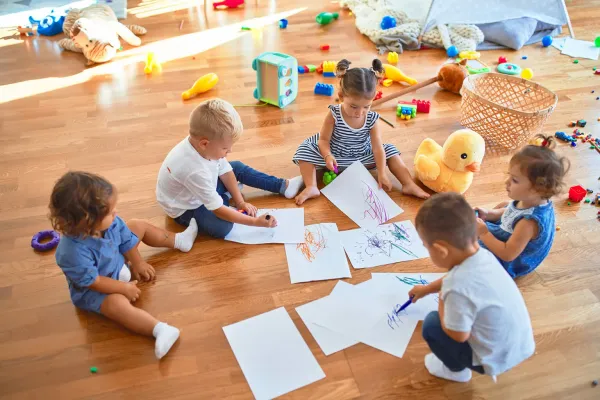
Visual arts activities such as drawing, painting, and crafting let children express ideas, experiment with materials, and develop an artistic sense. A child exploring how different brush strokes create various effects learns through experimentation, builds fine motor control, and develops visual-spatial reasoning simultaneously.
What skills do music and movement activities build?
Music and movement activities teach rhythm, coordination, pattern recognition, and self-expression. Singing songs, playing simple instruments, and moving to music build auditory processing skills, body awareness, confidence in creative expression, language development, and memory.
How does dramatic play enhance learning?
Dramatic play and role-playing let children explore social roles, solve problems, and develop narrative thinking. When preschoolers create imaginary scenarios, assign roles, and negotiate storylines, they build empathy, language skills, and symbolic thinking.
Why are open-ended activities important for creativity?
Creative thinking and imagination grow when kids engage in open-ended activities with multiple possible outcomes. Providing materials and time without prescribing the final result helps children generate ideas, take creative risks, and discover solutions that transfer to other problem-solving areas.
How does understanding community roles build social foundations?
Understanding community and society begins with recognizing roles, rules, and relationships in immediate environments. Preschoolers learn about community helpers, expectations in different settings, and how groups function together, laying the foundation for civic understanding and social responsibility.
Why is early exposure to diversity important for development?
Learning about diversity and inclusion happens when children are exposed to different cultures, abilities, family structures, and perspectives. Children who see diversity as normal develop respect, curiosity, and comfort with difference. This early foundation shapes how they interact with increasingly diverse environments throughout their lives.
How do children develop cultural identity and respect for others?
Children develop cultural identity and learn to respect others when they see their own backgrounds reflected and valued. They also learn by studying others' experiences. Preschools that celebrate different traditions, languages, and family structures help all children build a positive sense of self and develop a genuine interest in how others see the world.
What Should a Child Learn in Preschool
Nine core learning areas form preschool education: early math, literacy, motor development, creative expression, scientific thinking, social studies, emotional regulation, cognitive abilities, and health habits. These develop simultaneously through activities that are purposefully planned and feel like play.
🎯 Key Point: All nine learning areas develop simultaneously through purposeful play-based activities, making preschool education integrated and effective.
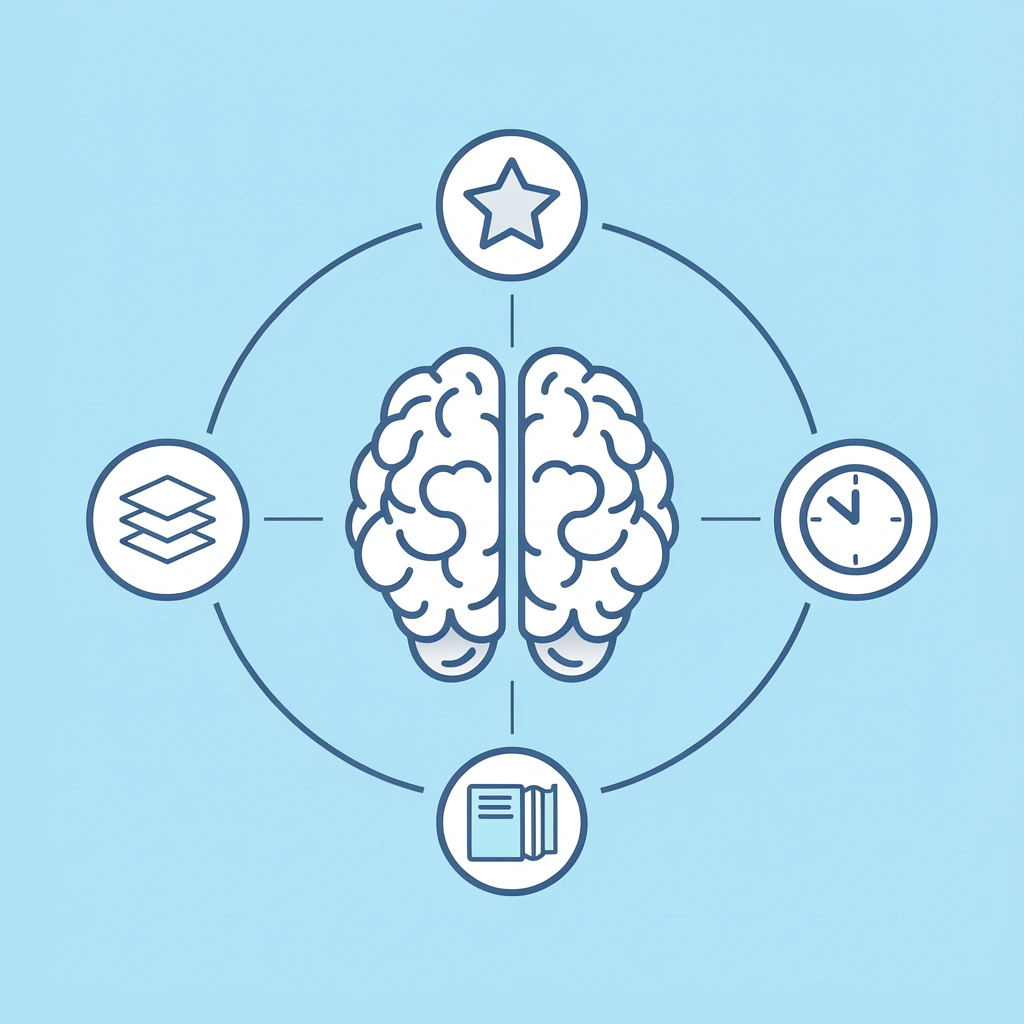
According to Children's Corner Learning Center, 90% of brain development happens by age five. While development continues after preschool, building these foundational skills takes much more work later.
"90% of brain development happens by age five." — Children's Corner Learning Center, 2025
⚠️ Warning: Missing these critical early years means children will need to work significantly harder to develop the same foundational skills later in their educational journey.
🔑 Takeaway: The 90% brain development statistic shows why preschool education is not optional but essential for setting children up for lifelong learning success.
How do children develop number sense and mathematical reasoning?
Number sense develops through real experiences with quantity, not memorizing abstract symbols. When a four-year-old compares groups of blocks to determine which has more, sorts toys by size, or distributes snacks equally to friends, they build foundational math thinking that supports all future arithmetic. These activities teach comparison, one-to-one matching, and conservation of number without requiring children to recognize numerals or perform calculations on paper.
Why is pattern recognition important for future learning?
Pattern recognition forms another critical foundation. Children who can identify, extend, and create patterns with colours, shapes, or sounds develop the logical thinking required for algebra years later. Arranging beads in alternating colours or predicting what comes next in a sequence naturally builds this capability.
How do spatial relationships and measurement concepts develop?
Spatial relationships and measurement concepts emerge from physical exploration. Understanding that objects retain their properties regardless of orientation, recognising shapes in varied contexts, and using comparative language like taller, shorter, heavier, and lighter all support geometric reasoning. A child stacking blocks learns about balance, symmetry, and three-dimensional space through direct experimentation.
How does phonological awareness build reading foundations?
Phonological awareness precedes reading ability and predicts later literacy success more reliably than early letter recognition. Children need extensive practice hearing how words break into smaller sound units, identifying rhyming patterns, and recognising beginning sounds before formal phonics instruction. Songs, rhyming games, and playful sound manipulation build this foundation for auditory processing.
What helps children recognize letters and sounds effectively?
Letter recognition and sound association develop slowly through repeated exposure in meaningful contexts. Children learn letters faster when they see them connected to words they care about: their own names, favourite foods, or interesting objects, rather than through isolated drill.
How can vocabulary expansion support language development?
Your child learns new words when they hear adults use different, exact words in everyday life. A child who hears "enormous" instead of "big," "frustrated" instead of "mad," and "investigate" instead of "look" learns to use words more precisely, thereby strengthening their reading and self-expression skills.
Many families want to practise reading at home but struggle to create materials that target specific skills without becoming tedious. Websites like My Coloring Pages offer printable letter-tracing sheets, phonics activities, and vocabulary colouring pages that children enjoy as creative projects rather than as homework.
How do fine motor skills prepare children for academic success?
Fine motor control helps children use tools, fasten clothing, and write clearly. Activities like threading beads, using scissors, holding crayons properly, and playing with playdough strengthen the small muscles in the hands and improve hand-eye coordination. These skills are essential for self-care and schoolwork. Children develop them through repeated practice and progressively challenging activities.
Why are gross motor activities important for overall development?
Gross motor activities build core strength, balance, and coordination that support all physical activity. Running, jumping, climbing, throwing, and catching develop body awareness and confidence in movement. Children who master these physical challenges approach other learning tasks with a similar willingness to attempt difficult things, creating a confidence transfer that affects cognitive and social risk-taking.
What is bilateral coordination, and how does it develop?
Bilateral coordination—using both sides of your body in a controlled manner—is the foundation for many daily tasks. Cutting paper requires one hand to hold and rotate the paper while the other operates the scissors; writing demands one hand to stabilise the paper while the other moves the pencil. These coordinated movements develop through practice with increasingly complex physical challenges.
How do visual arts activities support child development?
Visual arts activities teach children that materials act in predictable ways and that they can control outcomes through technique. Exploring how paint mixes, how pressure affects crayon marks, or how glue bonds materials builds cause-and-effect understanding while developing fine motor control and aesthetic judgment.
What skills do music and rhythm activities develop?
Music and rhythm activities strengthen hearing skills, pattern recognition, and memory while helping you learn about different cultures and express your feelings. Singing teaches language patterns and new words, while playing simple instruments develops coordination and timing.
Why are open-ended creative activities important for preschoolers?
Open-ended creative activities without predetermined outcomes teach children that multiple solutions exist for single challenges. When given materials and time without specific instructions, children generate original ideas, experiment with approaches, and develop the creative confidence required for innovation.
How does scientific thinking develop through curiosity and observation?
Scientific thinking starts with curiosity and observation, not memorizing facts. When preschoolers predict whether objects will sink or float, watch plants grow from seeds, or explore how shadows change throughout the day, they form hypotheses, test ideas systematically, and draw conclusions from evidence—building the reasoning skills required for all future learning.
Why is sensory exploration important for learning?
Sensory exploration teaches children to gather information through multiple channels. Activities that encourage close observation, careful listening, texture comparison, and scent identification develop the attention to detail and descriptive vocabulary required for scientific observation while building neural connections that support learning across all domains.
How does natural world exploration build environmental awareness?
Exploring the natural world builds environmental awareness and respect for living things. Watching insects, tending classroom plants, studying weather patterns, and learning about animal habitats create foundational ecological understanding. These activities also foster responsibility and empathy toward other living creatures.
How do community helpers shape children's understanding of society?
Understanding community roles and helpers teaches children how societies work. Learning about teachers, firefighters, doctors, farmers, and other workers helps children see that communities depend on people doing different jobs and builds respect for all kinds of work.
Why are time concepts and calendar skills important for preschoolers?
Kids learn about time and calendars through daily routines and seasonal changes. When children notice patterns in days, weeks, months, and seasons, they develop sequence skills, anticipate what comes next, and build temporal thinking skills. These abilities help them follow schedules and understand historical events.
How do cultural traditions build respect for diversity?
Cultural traditions and celebrations help children learn about different cultures and understand their own backgrounds. Preschool environments that recognize different holidays, languages, and family structures teach children that differences are normal and valuable, building a strong foundation for respect and positive interaction with people from different backgrounds.
How do children develop emotional regulation skills?
Emotional regulation skills develop through practice in safe environments where adults guide appropriate responses to frustration, disappointment, and conflict. A child learning to wait their turn, handle losing a game, or express anger with words rather than physically acquires capabilities that affect every future relationship and learning situation. These skills require explicit teaching and repeated practice.
Why has kindergarten academic pressure increased?
The pressure on kindergarteners has intensified. Parents report that their children are doing timed math exercises and spending long periods on schoolwork, with minimal playtime. Teachers say they cannot use songs, calendar time, and play-based activities, despite knowing these methods work better for five-year-olds. This academic focus causes behaviour problems in children not developmentally ready for sustained concentration, transforming joyful learning into compliance training.
How do children develop empathy and perspective-taking?
Empathy and perspective-taking grow as children develop the thinking skills to understand that others have different thoughts, feelings, and experiences. Activities encouraging children to consider how their peers feel, predict others' reactions, or consider different viewpoints build this social-emotional skill essential for successful relationships.
How do problem-solving abilities develop in preschoolers?
Problem-solving skills grow when children face challenges slightly beyond their current abilities. Puzzles requiring spatial reasoning, games with logical rules, and open-ended building activities encourage children to analyse situations, plan approaches, and adjust based on results. This practice builds persistence, flexibility, and the understanding that multiple solutions exist.
Why are multi-step instructions important for cognitive development?
Following multi-step instructions builds working memory and sequential thinking. When children remember and execute directions involving several actions in a specific order, they strengthen the executive function skills required for structured learning and independent task completion.
How does cause-and-effect understanding develop through play?
Understanding cause and effect develops through experimentation and observation. Children who recognize that specific actions produce predictable outcomes develop the logical reasoning required for scientific thinking, mathematical operations, and strategic planning.
How do self-care routines build independence?
Self-care routines like washing your hands, brushing your teeth, and getting dressed build practical skills and personal responsibility. Children who manage basic hygiene and clothing needs develop confidence and require less adult assistance, freeing mental energy for learning.
Why is nutrition awareness important for preschoolers?
Learning about nutrition through simple ideas about healthy foods, balanced meals, and adequate water intake helps create lifelong eating habits. Children who understand that different foods serve different functions in their bodies make smart choices rather than selecting foods based solely on taste.
How does safety instruction develop judgment skills?
Learning about street safety, being aware of strangers, and knowing what to do in emergencies helps build good judgment skills that reduce the risk of injury. These lessons teach children to assess situations, spot danger, and respond appropriately—skills that transfer across many contexts, not just the ones they learn about.
Finding good resources to support these areas of growth is important.
Related Reading
- Preschool Learning Games
- Preschool Lesson Plan Template
- Preschool Playground Equipment
- Preschool Math Activities
- Christmas Crafts Preschool
- Preschool Art Activities
- Preschool Prep
- Turkey Craft Preschool
- Creative Curriculum For Preschool
- Free Preschool Games
- Noah's Ark Preschool
- Preschool Tracing Worksheets
- Preschool Craft Ideas
- Preschool Sight Words
- Preschool Classroom Layout
- Preschool Learning Activities
- Spring Bulletin Board Ideas For Preschool
- How To Become A Preschool Teacher
- Preschool Science Experiments
- Playing Preschool Curriculum
- Preschool Assessment
- Preschool Crafts
- Preschool Bulletin Board Ideas
- Daycare Vs Preschool
6 Best Online Preschool Learning Resources for Free
You can find quality preschool learning materials online for free, without paying subscription fees. These include interactive games, printable worksheets, and customizable activities. These platforms meet different developmental needs and work on both screens and offline.
💡 Tip: Look for platforms offering both digital and printable options to maximize learning flexibility without additional costs.

The real challenge isn't finding free content—it's selecting platforms that match developmental milestones rather than simply keeping children entertained. According to the National Center for Education Statistics, about 54% of 3- to 5-year-old children were enrolled in preschool programs in 2019, yet families need supplemental materials to sustain learning beyond school hours without additional cost.
"About 54% of 3- to 5-year-old children were enrolled in preschool programs in 2019." — National Center for Education Statistics
🔑 Takeaway: With nearly half of preschoolers requiring supplemental learning resources, selecting the right free platforms is crucial for continued educational development.
1. Keiki Preschool Learning Games Online
Keiki offers adaptive online games targeting foundational skills: letter recognition, number sense, logical reasoning, motor coordination, social-emotional awareness, and early reading readiness. The platform adjusts difficulty based on children's responses, creating challenges that stretch abilities without causing frustration. Games build thinking skills through pattern recognition, sequencing, and problem-solving.
The absence of advertisements matters significantly. Young children lack the cognitive skills to distinguish educational content from commercial messaging, making ad-free environments essential for sustained focus. Without pop-ups or promotional interruptions, children develop longer attention spans and stronger habits of task completion.
2. WunderKiddy Free Printable Preschool Worksheets
WunderKiddy offers printable worksheets covering math (shapes, counting, basic operations), logic puzzles, fine motor practice, matching activities, and pattern recognition. These materials work offline after download, making them useful for families without constant internet access or those who prefer screen-free learning.
The different types of activities help children develop in multiple ways simultaneously. A single worksheet might ask children to identify shapes, count objects, and practise pencil control through tracing, building multiple skills within one focused activity.
3. 123 Kids Fun Worksheets and Printables Library
This platform offers colourful printables for alphabet practice, number exercises, matching games, and themed worksheets tied to seasons, holidays, and common preschool topics. Bold colours and clear graphics make instructions obvious for children still developing reading skills.
Themed content helps parents connect learning to current interests or upcoming events. A child excited about an approaching holiday engages more deeply with related worksheets, transforming practice into anticipated activities rather than obligatory tasks.
4. Preschool Play and Learn Free Activities and Crafts
This blog-style resource publishes weekly updates with fresh printables, craft ideas, playdough mats, alphabet tracing sheets, counting activities, and thematic educational projects. The content connects academic concepts to hands-on creation, recognising that preschoolers learn more effectively through physical manipulation than passive observation.
Activities designed for diverse learning styles acknowledge that children process information differently. Some grasp number concepts through physical counting objects, while others understand letter sounds better when tracing shapes while saying phonemes aloud. Providing multiple approaches to the same skill increases the likelihood that each child finds an effective method.
5. Little Owls Resources Free Preschool Games and Printables
Little Owls offers sample printable games and activity packs organized by seasonal themes, puzzle types, logic challenges, and introductory literacy or maths concepts. The print-and-play format lets parents choose specific skills for practice rather than follow a set order.
The range, from animal recognition to seasonal awareness to number operations, allows families to focus on specific learning gaps. A child struggling with shape identification can practise that skill through multiple game formats.
6. My Coloring Pages, Customized Worksheets, and Coloring Learning Tools
Generic worksheets often bore advanced learners or overwhelm struggling ones, forcing parents to find new resources for different skill levels. My Coloring Pages lets parents create custom printable coloring pages and worksheets based on specific descriptions or uploaded images, then access 40,089+ free coloring pages covering diverse learning objectives.
How does customization enhance preschool learning engagement?
Customization lets you design materials matching your child's exact interests while targeting specific developmental goals. A child obsessed with dinosaurs engages more deeply with letter-tracing exercises featuring prehistoric creatures than with generic alphabet sheets. Our coloring pages transform practice into personalized, creative play, reinforcing fine motor skills, pattern recognition, early literacy, and thematic concepts such as self-care routines, community helpers, and safety procedures through formats that children find enjoyable rather than educational.
What criteria help parents filter educational resources effectively?
Websites like Mommy Poppins list 29 educational websites, but abundance creates its own problem. Parents need ways to filter choices based on each child's age and stage. Resources for ages 3–5 should focus on exploration and learning through play rather than practice-and-drill formats designed for older children.
The best free resources focus on specific areas of learning rather than claiming to be "educational." They adapt to each child's pace instead of forcing all children through identical steps. They maintain engagement through design and content aligned with how young children learn: repeating activities with small variations, encountering concrete examples before abstract concepts, and receiving immediate feedback that feels like natural consequences rather than grades.
But having access to good materials doesn't help if children don't remember what they practice or can't apply their skills to new situations.
Stop Lessons From Slipping Through the Cracks — Make Preschool Learning Stick
Retention determines whether preschool learning matters. A child who practices counting on Monday but forgets the concept by Friday hasn't learned; they've temporarily borrowed information that never converted into usable knowledge. This gap explains why some children enter kindergarten confident in foundational skills while others seem to start from scratch despite attending quality preschool programs.
🎯 Key Point: Abstract concepts need concrete anchors. When a four-year-old learns about safety rules through conversation alone, the information floats without connection to their physical experience. But when that child colors a worksheet showing stop signs, crosswalks, and holding hands near streets, the motor activity creates neural pathways linking the concept to muscle memory. The physical act transforms passive listening into active encoding.
"Sustained attention creates more repetitions, which builds stronger neural connections and improves retention."

Personalization drives engagement in ways that generic materials cannot match. A child who loves trucks will practice letter tracing longer when the worksheet features construction vehicles than random objects. That sustained attention creates more repetitions, which builds stronger neural connections and improves retention. Platforms like My Coloring Pages address this by letting families create custom worksheets around specific interests, turning skill practice into anticipated activities rather than obligatory tasks. A dinosaur-obsessed child practicing number recognition with prehistoric creatures experiences the work as play, extending practice time without resistance.
💡 Tip: Transfer happens when children recognize that skills learned in one context apply to others. A preschooler who traced shapes at school should identify those same shapes in their home environment—in signs, toys, and everyday objects. But transfer requires multiple exposures in varied settings. When families extend classroom concepts through home activities that mirror the structure while changing the context, children begin to recognize patterns across situations. Counting practice that started with classroom manipulatives transfers to counting stairs at home, crackers at snack time, and cars passing on the street.
Repetition with variation prevents boredom while strengthening recall. Children need to encounter the same concept multiple times, but identical worksheets lose effectiveness after the second use. Varying the format while maintaining the underlying skill keeps attention active. Letter recognition practised through tracing on Monday, coloring on Wednesday, and matching games on Friday builds the same capability through different neural pathways, creating redundant memory storage that improves long-term retention.

⚠️ Warning: Immediate application matters more than delayed review. When a child learns about community helpers at school, creating a coloring page featuring firefighters, doctors, and teachers that same afternoon reinforces the lesson while it's still fresh. Waiting a week dilutes the connection. Parents who can quickly generate relevant practice materials maintain momentum that scheduled curriculum reviews cannot match.