60 Fantastic Learning Activities for 7-Year-Olds to Boost Learning
This guide to Activities for 7-Year-Olds brings together easy projects, learning-through-play ideas, brain boosters, and independent activities so you can choose options that fit your child and your schedule.


Seven-year-olds brim with energy and curiosity, and finding activities that keep them engaged while teaching fundamental skills often feels like a guessing game. Which arts and crafts, outdoor games, simple STEM projects, or hands-on activities will build fine motor skills, social skills, creativity, and focus?
This guide to Activities for 7-Year-Olds brings together easy projects, learning-through-play ideas, brain boosters, and independent activities so you can choose options that fit your child and your schedule.My Coloring Pages offers 10,000+ free coloring pages that slide right into this mix, providing quick arts-and-crafts options that build fine motor control, spark creative play, and support calm, independent time. Use them as warm-ups for STEM projects, rewards after outdoor games, or quiet moments between active play.
Summary
- The guide compiles 60 distinct activities, making it more straightforward to match options to a child's mood, motor goals, or available time.
- Clear, short instructions matter, so each activity uses simple, one-action steps and recommends saying the steps out loud once before beginning.
- Keeping activities brief supports attention, with many projects designed for about 10–20 minutes of focused play to balance engagement and a seven-year-old’s attention span.
- Low-material formats are standard, with several activities using three or fewer core items; for example, the Magic Memory Cup requires three small cups and one small ball.
- The 60 activities span four main domains: arts and crafts, outdoor games, simple STEM projects, and hands-on play, providing targeted practice in fine motor, social, creative, and cognitive skills.
- Relying on scattered, ad hoc ideas fragments supplies and doubles preparation time, so a curated, ready-to-print menu reduces friction during busy weeks.
- This is where My Coloring Pages' 10,000+ free coloring pages fit in, offering a centralized library of printable, age-appropriate pages that streamline prep and slot into short, skill-targeted activities.
60 Fantastic Learning Activities for 7-Year-Olds
I’ll list all 60 activities for 7-year-olds, each with a bold title, a short description of the learning benefit, a brief materials list, and simple one-action steps so instructions stay clear and screen-free. Follow the materials list before you start and read the steps aloud to your child to keep things smooth and engaging.
Why does clear structure matter?
This age group needs short, predictable directions because unclear steps and missing supplies can turn promising activities into frustration. That pattern appears across home and classroom: when instructions get long or vague, kids lose focus, and parents spend time troubleshooting instead of playing.
How should you prepare efficiently?
Start by gathering materials in a tray and saying the steps out loud once before you begin, so the child knows what comes next. Resources that group many simple ideas in one place make it faster to pick the right activity for mood and space, as illustrated by Oxford Owl for Home, "60 Fantastic Learning Activities". Curated collections like Math Equals Love] and "60 fantastic learning activities" demonstrate the value of a varied menu you can match to energy levels, motor-skill goals, or time available.
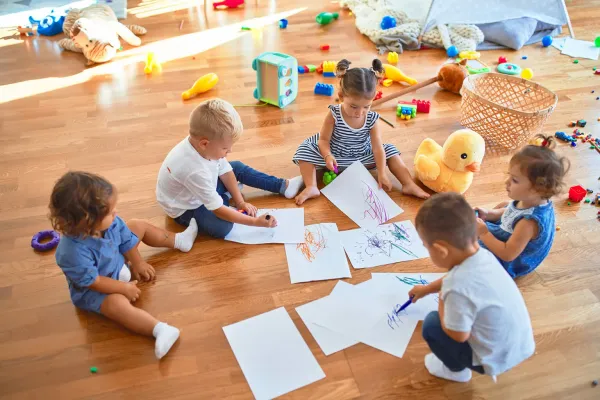
1. Engage in arts and crafts activities
Art activities develop fine motor control, hand-eye coordination, and self-confidence while allowing children to explore texture, color, and pattern.
Materials
- Paper, crayons, paints, glue, scissors, assorted recyclables.
How to do
- Lay out materials in a tray so everything is visible.
- Invite your child to pick a project theme aloud.
- Demonstrate one technique, for example, folding or painting a background.
- Let the child create for 10–20 minutes, then encourage them and ask one question about their work.
Tip: Keep a folder for finished pieces so kids see progress over time.
Note
Make custom coloring pages and coloring books with our app. My Coloring Pages lets you create custom, printable coloring pages in seconds. Simply describe what you want or upload pictures, and our app turns them into ready-to-print coloring pages. You can also browse 10,000+ free coloring pages from our community, or design your own personalized pages and coloring books for kids, adults, classrooms, or stress relief. Trusted by 20,000+ parents and rated 4.8/5, it's the easiest way to spark creativity and keep your kids off screens, whether you're turning your child's story into art or crafting intricate mandalas for yourself.
2. Magic Memory Cup Activity
A tracking game that sharpens short-term memory and concentration by hiding and relocating a small object under cups.
Materials
- Three small cups, one small ball or bead.
How to do
- Place the ball under one cup while your child watches.
- Shuffle the cups slowly at first, then a little faster.
- Ask your child to point to the cup they think holds the ball.
- Lift the chosen cup to reveal whether they guessed correctly.
Tip: Add more cups as they get better.
3. Traffic Rules Activity
Build a mini-road scene to teach road safety, signals, and pedestrian rules while boosting spatial reasoning.
Materials
- Cardboard base, colored paper, toy cars, popsicle sticks, glue, scissors.
How to do
- Draw roads and crosswalks on the cardboard base.
- Cut and glue buildings, trees, and traffic lights into the scene.
- Place toy cars on roads and use popsicle-stick signs for rules.
- Walk through scenarios and ask the child when to stop, look, or wait.
Tip: Have the child serve as the traffic official and call out signals.
4. Skate with Paper Plates Activity
A gentle indoor balance game that encourages coordination and gross motor control.
Materials:
- Two paper plates, smooth floor space.
How to do
- Place a plate under each foot.
- Show your child how to slide one foot forward, then the other.
- Encourage turning by shifting weight and twisting gently.
- Time is short, so rounds to keep it lively.
Tip: Use socks for easier sliding.
5. Make Paper Pinwheel Activity
Crafting a pinwheel teaches cutting, folding, and cause-and-effect as kids watch wind create motion.
Materials
- Colored paper, scissors, push pin, straw or stick, small bead.
How to do
- Cut a square and make diagonal cuts toward the center.
- Fold alternating corners to the middle and secure with a push pin.
- Thread the pin through a bead and into the straw to spin the wheel.
- Test outside in a breeze and adjust tightness for free spinning.
Tip: Tape the pin on the back if the center is sharp.
6. Jump Rope Activity
Skipping builds cardiovascular fitness, rhythm, and bilateral coordination.
Materials
- Jump rope, open flat space.
How to do
- Adjust the rope length so the handles reach the armpits when standing on the center.
- Show a single slow turn and a small jump.
- Have the child practice three jumps in a row, then rest.
- Turn it into a counting game to add a math element.
Tip: Use music to create steady rhythm.
7. Make a Paper Chain
Paper chains teach sequencing, fine motor skills, and pattern recognition while creating decorations.
Materials
- Colored paper, scissors, glue or tape.
How to do
- Cut strips of paper about one inch wide.
- Form the first loop and secure it.
- Thread the next strip through the loop and form a new loop.
- Continue until the chain reaches the desired length.
Tip: Challenge your child to use a repeating color pattern.
8. Make a Flower Bouquet
Paper flower bouquets practice cutting, assembling, and creative arrangement.
Materials
- Colored paper, scissors, glue, green straws or sticks, and a small container.
How to do
- Cut flower shapes and centers from colored paper.
- Glue the centers to the flower tops and attach the stems.
- Add paper leaves and arrange stems in a container.
- Let the child design the bouquet layout.
Tip: Press slightly and hold glued pieces for 10 seconds to secure.
9. Play Football
A team sport that improves coordination, passing, and spatial awareness.
Materials
- Football, an open grassy area, and comfortable shoes.
How to do
- Explain basic dribbling and passing rules.
- Practice simple dribble drills across cones or marked spots.
- Work on short passes between pairs of players.
- Conclude with a short scrimmage to practice skills in play.
Tip: Keep rules simple and rotate positions.
10. Shape Hunt
A home or classroom scavenger activity to reinforce geometry and object recognition.
Materials
- Checklist of shapes, bag or basket.
How to do:
- Give the child a short list of shapes to find.
- Walk through rooms, pointing out candidate items.
- Let the child collect or photograph each example.
- Review the finds and name the shapes together.
Tip: Make it a timed challenge for extra excitement.
11. 5 Senses Walk
A sensory observation exercise that strengthens attention and descriptive language.
Materials
- Notebook, pencil, optional clipboard.
How to do
- Walk outside and ask the child to note what they see, hear, smell, touch, and taste when safe.
- Pause at stops to draw or write a quick observation.
- Compare two different locations and discuss the differences.
- Ask the child to read their notes aloud.
Tip: Use a small checklist with icons for younger writers.
12. Make a Bread Mold Garden
A hands-on science experiment about decay, microbes, and the scientific method.
Materials
- Slices of bread, a clear container or bag, a water dropper, and a marker.
How to do
- Place bread in separate sealed bags with different conditions (moist, dry, with yogurt).
- Label each bag with the date and condition.
- Observe daily and record changes using drawings or notes.
- Discuss the results and why the mold grew more in some samples.
Tip: Use gloves and dispose of samples safely.
13. Make a Paper Quilt
A pattern and symmetry craft that teaches layout planning and cutting skills.
Materials
- Construction paper, scissors, glue, and large backing paper.
How to do
- Cut paper into uniform squares or shapes.
- Plan a repeating pattern on the backing paper.
- Glue pieces one row at a time.
- Discuss color choices and symmetry as you work.
Tip: Use a ruler to keep strips even.
14. Play Madlibs
A playful language game that reinforces parts of speech and creative sentence building.
Materials
- Madlib template or blank paper, pencil.
How to do
- Read a story with blanks labeled for parts of speech.
- Ask the child to supply words without revealing the story.
- Fill in the blanks and read the completed story out loud.
- Laugh and discuss how word choices changed the meaning.
Tip: Create a family Mad Lib book for reuse.
15. Make a Book Poster
An after-reading craft that practices summarizing, persuasion, and design.
Materials
- White paper or poster board, markers, crayons, and a ruler.
How to do
- Ask the child to pick the book’s main idea or favorite scene.
- Have them write a catchy slogan or “buy this book” line.
- Draw characters or scenes that sell the book.
- Present the poster and explain why others should read the book.
Tip: Turn the best posters into bookmarks.
16. Water Drop Race
A surface tension and observation experiment that teaches controlled testing and measurement.
Materials
- Eye dropper, water, spoons or coins to test, and a paper towel.
How to do
- Put a coin or spoon on a table and slowly drop water onto its surface.
- Count the number of drops before the water runs off.
- Try different surfaces and record results.
- Compare findings and discuss why some surfaces held more drops.
Tip: Use a chart to track results visually.
17. Rainbow Soap Foam
A colorful sensory play activity that explores mixing and texture.
Materials
- Dish soap, water, food coloring, bowls, and spoons.
How to do
- Mix soap and water to make foam.
- Add a different food color to each bowl.
- Let the child swirl colors together on a tray.
- Play with foam shapes or use cookie cutters for patterns.
Tip: Use washable food coloring for easy cleanup.
18. Make Cool Bookmarks
A simple craft that fosters creativity and provides practical rewards for reading.
Materials
- Popsicle sticks, paint or markers, stickers, and glue.
How to do
- Paint or color the popsicle stick.
- Add a character or design using markers and stickers.
- Let it dry and laminate with clear tape if desired.
- Use the bookmark and point out how it saves space in reading.
Tip: Make extras as gifts.
19. Scavenger Hunt
A flexible game that builds observation, categorization, and following multi-step directions.
Materials
- List of items, small bags, and a timer (optional).
How to do
- Create a short themed list for the hunt.
- Hand the list and a bag to the child or team.
- Set a time limit and start the hunt.
- Review items and celebrate finding each one.
Tip: Use picture clues for early readers.
20. Make a Felt Flower Bouquet
Cutting and assembling felt flowers builds fine motor skills and pattern design.
Materials
- Felt sheets, scissors, glue, pipe cleaners, or sticks.
How to do
- Cut flower shapes from felt.
- Layer pieces and glue the centers.
- Attach stems using pipe cleaners or sticks.
- Arrange in a small vase or container.
Tip: Mix fabric textures for contrast.
21. Make a Backyard Treasure Hunt
Map-reading and problem-solving come alive when kids use clues to find hidden treasures.
Materials
- Small treasure, paper for a map, a pencil, and an optional small shovel.
How to do
- Hide a small treasure in the yard and draw a simple map.
- Give the child the map and a starting clue.
- Have them follow landmarks to the treasure spot.
- Celebrate the find and ask them to make the following map.
Tip: Use X marks the spot and one-directional clues for beginners.
22. Make Your Own Sidewalk Paint
A washable outdoor painting activity that encourages scale and color mixing.
Materials
- Cornstarch, water, food coloring, bowls, paintbrushes.
How to do
- Mix cornstarch and water to a paint consistency.
- Add a few drops of food coloring.
- Paint on the sidewalk or driveway and watch the designs appear.
- Rinse with a hose when play is over.
Tip: Use jars for different colors and let kids experiment with brushes.
23. Dice Math
A quick mental math game that trains addition, subtraction, and speed.
Materials
- Two dice, paper, and a pencil are optional.
How to do
- Roll two dice and ask the child to add or subtract the numbers.
- Take turns and keep a running score.
- Switch operations between addition and subtraction each round.
- End when someone reaches a target score, like 100.
Tip: Use multiple dice to increase difficulty.
24. Math Bingo
A classroom-style game that reinforces arithmetic recall under light pressure.
Materials
- Bingo cards with answers, a caller’s question list, and markers.
How to do
- Give each player a bingo card with answers.
- Call out math problems and have players mark answers if present.
- The first to complete a line calls out Bingo.
- Check answers and award a small prize.
Tip: Customize problems to fit recent lessons.
25. Crossword Challenge
A vocabulary-building puzzle that improves reading, memory, and clue interpretation.
Materials
- Custom crossword or printable template, pencil.
How to do
- Choose a child-friendly theme and a list of clues.
- Fill in the crossword together, discussing tricky clues.
- Let the child fill in easier words independently.
- Review and explain any unfamiliar words.
Tip: Turn answers into a short story afterward.
26. Verb City
A cut-and-paste activity linking verbs to places, which strengthens grammar and mapping skills.
Materials
- Construction paper, scissors, glue, and a large sheet for layout.
How to do
- Cut buildings and paste them on the large sheet.
- Ask the child to list verbs that happen at each place.
- Write the verbs next to the corresponding building.
- Draw people performing the verbs for context.
Tip: Expand to nouns or adjectives later.
27. Mad Poet
A creative rhyme activity that encourages phonemic awareness and playful language.
Materials
- Small stapled booklet, pen, crayons.
How to do
- Create a simple booklet titled by the child.
- Write short rhymes, leaving the last word blank.
- Have the child fill in the rhyming endings.
- Illustrate each page to match the new rhyme.
Tip: Read the book aloud dramatically.
28. Hopscotch
A classic gross-motor game that reinforces number sequencing and balance.
Materials
Sidewalk chalk or tape, a small marker like a stone.
How to do
- Draw a hopscotch grid with numbers.
- Toss the marker into the first square.
- Hop through the squares on one foot where required.
- Retrieve the marker on the way back without stepping on lines.
Tip: Add math questions at squares for a cognitive twist.
29. Music with Bottles
An acoustic experiment in which tuned bottles teach pitch recognition and pattern recognition.
Materials
- Six identical bottles, water (food coloring optional), and a wooden spoon.
How to do
- Fill bottles with different water levels to create varying pitches.
- Line them up and label each with a number.
- Tap each bottle gently to hear the pitch differences.
- Encourage the child to play simple melodies by tapping in order.
Tip: Color each bottle for visual pitch cues.
30. Ant Hill Observation
A nature study that teaches ecology, patience, and observation skills.
Materials
- Notebook, pencil, camera optional, small magnifying glass.
How to do
- Visit an anthill and sit quietly at a safe distance.
- Observe ant behavior and note what they carry and where they go.
- Record timing for ants to reach food placed at set distances.
- Discuss the ants' roles and how food returns to the hill.
Tip: Use only small, natural food bits and never disturb the colony.
31. Camouflage with Nature
A creative outdoor game that develops color matching and hiding strategies.
Materials
- Paper, crayons, and small natural items found outside.
How to do
- Go for a short walk and notice colors in nature.
- Draw a scene and color in elements that match the outdoor palette.
- Hide the drawings among similar natural items and find them again.
- Discuss why some colors blend, and others stand out.
Tip: Turn it into a timed hide-and-find challenge.
32. Nature Collage
Collecting and assembling natural materials develops classification and composition skills.
Materials
- Leaves, petals, small sticks, glue, paper.
How to do
- Gather an assortment of natural items on a walk.
- Arrange them on paper to create a picture or pattern.
- Glue items down when the child is happy with the design.
- Talk about textures, colors, and where each piece came from.
Tip: Press flat items first to reduce bulk.
33. Sundial
A simple time-telling craft that connects sunlight, shadows, and hourly movement.
Materials
- Paper plate, pencil, straw, and marker.
How to do
- Push the pencil through the center of the plate to stand upright.
- Take the plate outside and mark the shadow location each hour.
- Label each mark with the time of day.
- Compare marks across several days to identify changes.
Tip: Keep the plate in the same spot for consistent readings.
34. Sock Puppets
Puppet play encourages storytelling, voice variety, and emotional expression.
Materials
- Old socks, markers, glue, buttons, and yarn.
How to do
- Decorate a sock with a face and hair using markers and yarn.
- Add button eyes or glued features carefully with supervision.
- Create a short script or scene together.
- Put on a puppet show for family members.
Tip: Record the show for replay and confidence building.
35. Make Your Own Kinetic Sand Slime
A tactile sensory activity that strengthens fine motor skills and experimentation with texture.
Materials
- Play sand, glue, shaving cream, liquid starch, and food coloring.
How to do
- Mix glue and shaving cream, then add sand gradually.
- Add a small amount of liquid starch until it forms a slime-like consistency.
- Knead and play, adjusting the texture with more sand or starch as needed.
- Store in a sealed container when finished.
Tip: Wash hands after play and avoid ingestion.
36. DIY Birthday Card
A thoughtful craft that practices design, penmanship, and empathy.
Materials
- Construction paper, markers, stickers, glue, and scissors.
How to do
- Fold a paper to form a card base.
- Ask who the card is for and brainstorm a message.
- Decorate the front and write a heartfelt note inside.
- Add small decorations and present the card.
Tip: Encourage the child to sign their name in fancy lettering.
37. Popsicle Stick Photo Frames
This project builds assembling skills and creates a personal gift or keepsake.
Materials:
- Popsicle sticks, glue, cardboard, a photo, and paint.
How to do
- Glue sticks into a square or rectangle to form a frame.
- Paint or decorate the frame.
- Cut the cardboard to fit behind the photo and glue it in place.
- Attach the cardboard backing to the frame.
Tip: Add a string loop for hanging.
38. Rock Art
Painting rocks improves hand control and encourages design thinking with 3D surfaces.
Materials
- Smooth rocks, acrylic paint, brushes, sand ealer, optional.
How to do
- Wash and dry rocks before painting.
- Sketch a simple design and paint base colors first.
- Add details after the base dries.
- Seal with clear varnish if placing outside.
Tip: Turn painted rocks into hiding gifts in the neighborhood.
39. Build a Terrarium
A small ecosystem teaches plant care, observation, and responsibility.
Materials
- Clear container, soil, small plants, gravel, and small decorations.
How to do
- Add gravel for drainage, then a layer of soil.
- Plant small, slow-growing plants and press soil around them.
- Add decorative elements and water lightly.
- Place in a bright spot and check moisture weekly.
Tip: Label the terrarium with the planting date.
40. Charades
A nonverbal game that strengthens expressive movement and inference skills.
Materials
- Slips of paper with actions or characters.
How to do
- Have players draw a slip and act out the word silently.
- Set a timer while others guess.
- Rotate turns and keep score for friendly competition.
- Debrief on clues that helped with guessing.
Tip: Use categories to make rounds easier.
41. Pass the Ball
A social game that teaches timing, attention, and cooperative rhythm.
Materials
- Softball or cushion, music player optional.
How to do
- Sit in a circle and play music while passing the ball.
- Stop the music at random; the holder is out or performing a task.
- Continue until one player remains.
- Discuss fair play and passing strategies.
Tip: Change the pass type, such as an overhand or under-leg pass.
42. Spot it!
A quick observation game that increases visual scanning and vocabulary.
Materials
- A room with varied objects, a list of target items.
How to do
- Call out an object, then have the child find and point to it.
- Give hints if they are close.
- Make it competitive by timing how fast items are found.
- Rotate roles so the child calls items to you.
Tip: Use color or texture prompts to control difficulty.
43. Chinese Whispers
A whisper-chain game that demonstrates how messages change and practices listening.
Materials
- None required.
How to do
- Form a line and whisper a short sentence to the first player.
- Each child whispers to the next without repeating.
- The last person says the sentence aloud.
- Compare it to the original and laugh over differences.
Tip: Start with short sentences and increase length over rounds.
44. Simon Says…
An instruction-following game that improves listening, inhibition, and selective attention.
Materials
- Open space.
How to do
- Give commands beginning with “Simon says” and have kids follow only those.
- Occasionally, issue a command without “Simon says” to catch mistakes.
- Keep rounds short and varied.
- Rotate the role of Simon so each child leads once.
Tip: Use silly commands to increase laughter and engagement.
45. Build a Blanket Fort
A collaborative construction that encourages planning, problem-solving, and imaginative play.
Materials
- Blankets, chairs, clothespins, pillows, and string lights are optional.
How to do
- Drape blankets over furniture to form walls and a roof.
- Secure edges with heavy objects or clips.
- Arrange pillows and a light inside for comfort.
- Set a rule for how long the fort stays up and use it for reading or games.
Tip: Give the fort a theme, such as “space station,” to inspire role-play.
46. Bake!
Baking teaches the following sequential steps: measuring and chemistry basics, while delivering a tasty reward.
Materials
- Simple recipe ingredients, mixing bowls, measuring cups, and an oven.
How to do
- Read the recipe together and measure ingredients.
- Mix dry and wet ingredients as directed.
- Bake with adult supervision and time precisely.
- Cool and decorate together.
Tip: Use a kitchen timer and have the child write the steps.
47. Catch the Ball
A fast-reaction game that trains visual tracking and quick decision-making.
Materials
- Softball, open field.
How to do
- Form a circle and toss the ball high.
- Call a child’s name when the ball is at its peak.
- That child runs to catch it before it lands.
- Repeat, rotating who is called.
Tip: Increase distance for added challenge.
48. Nature Scavenger Hunt
A larger outdoor version of a scavenger hunt that builds classification and teamwork.
Materials
- Printed list, bag for finds, pencil.
How to do
- Prepare a list of nature items to find.
- Give teams a set time to collect or photograph items.
- Regroup to compare finds and discuss interesting discoveries.
- Award small prizes for categories like most unusual find.
Tip: Use riddles as clues for older children.
49. Lemon and Spoon Race
A balance and focus game that strengthens patience and steady movement.
Materials
- Spoons, lemons, or eggs, start and finish line.
How to do
- Place the lemon on the spoon and hold it in the mouth or hand if safer.
- Walk from start to finish without dropping the lemon.
- If it falls, return to the start or take a short penalty.
- Time each run for friendly competition.
Tip: Use plastic eggs for less mess.
50. Water Balloon Attack
A teamwork and strategy game that encourages cooperation, aiming, and shelter tactics.
Materials
- Water balloons, buckets, and outdoor space.
How to do
- Fill balloons and divide into teams.
- Set boundaries and safety rules.
- Play rounds where teams try to keep players dry.
- Switch roles so everyone participates in throwing and dodging.
Tip: Provide quick towel stations and limit forceful throws.
51. Chalk Obstacle Course
A creative movement course that blends reading, following directions, and motor planning.
Materials
- Sidewalk chalk, open driveway, small cones optional.
How to do
- Draw a course with actions like hop, skip, spin, and balance.
- Show the child how to move through each section.
- Schedule their run or let them complete it at their convenience.
- Add simple reading prompts at stations for literacy practice.
Tip: Change the course layout weekly to maintain interest.
52. Kitchen Utensil Bubble Wand
An accessible science-and-play activity that teaches surface tension and wind interaction.
Materials
- Dish soap, cornstarch, water, assorted kitchen utensils with holes.
How to do
- Mix dish soap and water with a pinch of cornstarch for a bubble solution.
- Dip a utensil into the solution and wave to create bubbles.
- Try different utensils to see which produces the most enormous bubbles.
- Experiment with wind direction to control bubble travel.
Tip: Use a shallow tray to dip larger tools.
53. Supermarket Search
A real-world scavenger task that builds reading, item recognition, and social skills.
Materials
- Shopping list with simple words or pictures, pen.
How to do
- Give the child a short list of items to find.
- Let them search aisles and check items off their list.
- Reward with a small token for accurate finds.
- Reflect on effective strategies, such as reading labels.
Tip: Use price comparisons to add a math element.
54. Find the Little Hidden Toy
A hide-and-seek variant that practices scanning, prediction, and memory.
Materials
- Small toy, backyard, or indoor hiding spots.
How to do
- Have the child close their eyes and count while you hide the toy.
- Give them clues or let them search independently.
- Encourage reasoning about favorite hiding spots.
- Reveal the hiding spot if needed and talk through search tactics.
Tip: Rotate who hides the toy to build idea variety.
55. Doctor and Goliath Dodgeball
A cooperative dodgeball twist that teaches empathy, second chances, and team roles.
Materials
- Soft balls, open field, and cones for boundaries.
How to do
- Split into two teams and assign a hidden doctor and a Goliath on each side.
- Play dodgeball with standard rules, allowing doctors to “heal” teammates.
- If a Goliath is hit, that team loses the round.
- Rotate roles to let different kids try doctor or Goliath.
Tip: Use frisbees as half-court markers to keep balls within the court.
56. Tell Stories
Oral storytelling sparks imagination, sequencing skills, and narrative structure.
Materials
- Prompt jar with simple ideas, paper optional.
How to do
- Pull a prompt from the jar and set a 3-minute storytelling timer.
- Let the child tell a story from beginning to end.
- Ask two clarifying questions after the story.
- Encourage retelling with new details to practice expansion.
Tip: Record stories to play back and celebrate growth.
57. Shadow Drawings
Tracing object shadows teaches observation, shape conversion, and light properties.
Materials
- 3D objects, paper, sunlit sidewalk or lamp, pencil.
How to do
- Place an object in sunlight or next to a lamp to cast a shadow on paper.
- Trace the shadow outline carefully.
- Turn traced shapes into drawings by adding details.
- Compare how the shadow changes as the light moves.
Tip: Use unusual objects for surprising outlines.
58. Make Snack Art
Playing with edible materials builds design thinking and food literacy while rewarding creativity.
Materials
- Assorted fruits, crackers, spreads, and skewers if needed.
How to do
- Lay out safe, bite-sized food choices.
- Provide the child with a theme, such as animal faces or landscapes.
- Let them assemble the snack art on a plate.
- Eat the creation together and describe flavors.
Tip: Use cookie cutters for shaped fruit pieces.
59. DIY Dress Up
Designing costume pieces fosters imagination, basic sewing or gluing skills, and role play.
Materials
- Cardboard, fabric scraps, glue, markers, and elastic.
How to do
- Pick a character or theme to design for.
- Cut and decorate a crown, jewelry, or shoes from materials.
- Attach fasteners, such as elastic or ribbon, for wearability.
- Hold a dress-up performance to showcase the creations.
Tip: Reuse household items for eco-friendly dress-up.
60. Keep a Journal
Daily journaling promotes writing fluency, reflection, and emotional expression.
Materials
- Notebook or decorated paper stack, pencil, stickers optional.
How to do
- Ask the child to write or draw one short entry each day.
- Prompt with a single question if they are stuck.
- Read entries together periodically and celebrate progress.
- Encourage the use of the journal when bored or upset as a calming tool.
Tip: Establish a habit cue, such as journaling after dinner.
Status quo disruption: most parents patch activities together from scattered lists because it feels quick and familiar, which works for occasional play. As the week fills and kids need predictable, skill-targeted screen-free time, that ad hoc approach fragments supplies and doubles preparation time. Platforms like My Coloring Pages provide a centralized, parent-first library and simple customization tools, so parents can pull a printable, age-appropriate page or themed mini-book in seconds, trimming prep and keeping kids engaged with consistent, measurable benefits.
That simple shift fixes a massive part of the problem, but it is not the whole story — and what comes next reveals the surprising piece most parents miss.
Related Reading
- Activities for Kids
- Hobbies for Kids
- Activities for 5-Year-Olds
- Creative Activities for Kids
- Educational Activities for Kids
- At Home Activities for Kids
Create Custom Printable Coloring Pages and Coloring Books in Seconds
We designed My Coloring Pages for parents who need quick, age-appropriate, screen-free activities. You can customize them in seconds by describing a scene, uploading a photo, or browsing 10,000+ free community pages. Trusted by 20,000+ parents with a 4.8 out of 5 rating, it’s a fast way to spark creative development, strengthen fine motor skills, and foster real family bonding with minimal prep.
Related Reading
- Activities for 6 Year Olds
- Fun Activities for Elementary Students
- Fun Activities for Preschoolers
- Screen-Free Activities for Kids
- Activities for 8-Year-Olds
- Back to School Activities for Elementary Students
- Budget Friendly Family Activities
- Hobbies for Toddlers
- At Home Learning Activities
- How to Encourage Creativity in a Child
- Coloring Skills Development