
What Is the Authoritarian Parenting Style and How Effective Is It?
Authoritarian Parenting Style impacts children's behavior and self-esteem. Get practical discipline tips and free calming activities from My Coloring Pages.


Families value clear guidelines and calm evenings, yet strict enforcement can sometimes shift into overly rigid control. The authoritarian parenting style—characterized by firm demands, rigorous rules, and limited warmth—raises important questions about discipline, self-esteem, and emotional development. Comparing its impact with other approaches reveals insights into behavior, autonomy, and relationship dynamics.
Balanced strategies that blend structure with empathy can lead to more effective discipline and healthier boundaries. Recognizing how strict rules influence a child’s growth encourages more intentional decision-making. My Coloring Pages offers 20,915+ free coloring pages that inspire creative exploration and help facilitate meaningful discussions about feelings.
To put these ideas into practice, our 20,915+ free coloring pages help you get started right away.
Summary
- About 20% of parents in the United States use an authoritarian parenting style, which helps explain why strict, rule-first approaches are a common default when time and emotional bandwidth are limited.
- Authoritarian upbringing is linked to higher long-term mental health risk, with approximately 30% of children raised this way reported to develop anxiety disorders, reflecting how repeated threat-based interactions sensitize stress systems.
- Self-image is measurably affected, with about 40% of children of authoritarian parents reporting lower self-esteem, a pattern that undermines autonomy and increases reliance on external approval.
- By contrast, children with authoritative caregivers are about 30% more likely to perform well academically, showing that combining clear limits with explanation and responsive coaching supports better learning outcomes.
- Small, repeatable habits work in real households, for example, replacing escalation with a two- to five-minute calming exercise or joining a six-week class that meets 90 minutes once a week, since parents typically retain at least one new skill after six weeks.
- Quick punitive reactions have hidden costs; for instance, a ten-minute rant can turn a five-minute problem into thirty minutes of negotiation. Structured 30-day experiments that aim to reduce escalations to fewer than three times per week within four weeks provide clearer, measurable progress.
- This is where 20,915+ free coloring pages fit in, offering short, screen-free activities that parents can use as two- to five-minute pauses to give children micro-choices, label feelings, and practice calm decision-making.
What Is Authoritarian Parenting and What Are Its Key Characteristics?

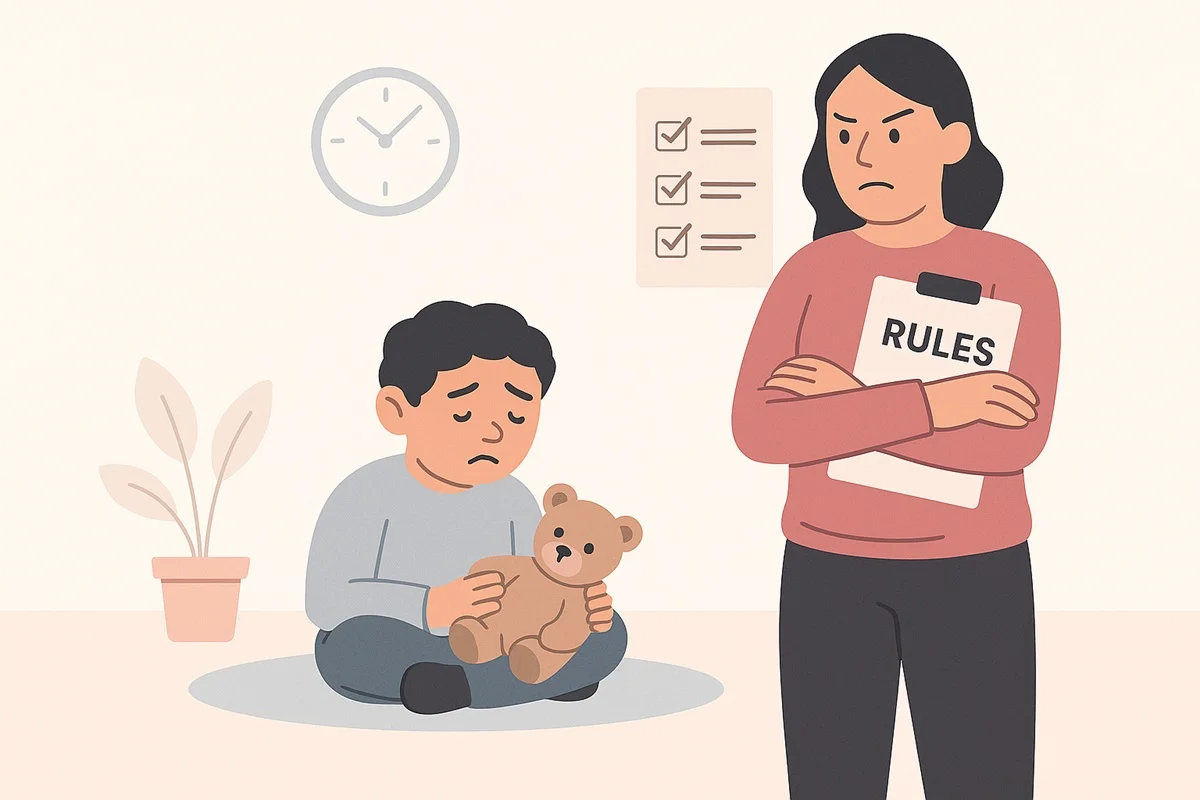
Authoritarian parenting is a style characterized by strict rules, high expectations, and low warmth or flexibility, in which obedience is prioritized over exploration and explanation. Parents who use this style quickly enforce rules and punishments, often without discussing the rationale. They expect their children to follow orders without questioning them.Later sections will examine the effects and practical alternatives; incorporating creative outlets can also be beneficial. Check out our 20,915+ free coloring pages that encourage self-expression and exploration.
Authoritarian versus Authoritative Parenting
The key difference lies in how rules are communicated, not whether they exist. Authoritative parents also set limits, but they build those boundaries around explanation, empathy, and negotiation, which helps children learn self-control. On the other hand, authoritarian parents focus on compliance and control instead of connection, acting more like a drill sergeant than a coach. While this method can create obedience, it often fails to teach judgment or emotional literacy.
What causes the authoritarian parenting style?
Authoritarian approaches rarely arise from beliefs alone; they often stem from what people have been through and the situations they face. Many caregivers use the methods they learned as kids. Additionally, social pressure or concerns about safety can lead families to adopt stricter rules. Personality matters, with research showing that people who are less agreeable and more anxious are more likely to choose harsher disciplinary approaches.
This pattern occurs across cultures and income levels. A 2024 study found that parenting styles experienced in childhood strongly influence parenting, which helps explain why these habits persist from one generation to the next.
What are the key characteristics of authoritarian parenting?
Authoritarian parenting is characterized by being demanding but unresponsive. Parents typically have long lists of rules, both explicit and implicit, that they enforce everywhere, in public and private. Instead of teaching skills, they often control every action.
This parenting style has little warmth or nurturing. Affection is given rarely and only if certain conditions are met, making praise uncommon. The way parents communicate is often corrective, rather than encouraging, which affects how kids view adult intentions.
Punishments are given with little explanation and are usually swift and stern. These consequences often lack age-appropriate reasoning, so children focus more on avoiding punishment than on understanding their choices.
Children have few choices in authoritarian parenting. Decisions are made by the parents, leaving kids with no power over even small matters. This lack of decision-making experience can hinder their ability to develop self-control.
Parents are often impatient with misbehavior. They don't tolerate repeated mistakes well and often fail to acknowledge the child's feelings, which hinders their ability to learn better behaviors.
A common trait in this approach is mistrust. Authority generally replaces trust, with privileges granted by default rather than earned. This parenting approach limits children's opportunities to demonstrate responsibility.
Parents are unwilling to negotiate rules, which are seen as either right or wrong. This creates a situation in which compromise is not demonstrated, and problem-solving is expected only of adults.
Shaming is often used because it helps enforce compliance. These comments are often posed as rhetorical questions, which can undermine confidence rather than guide behavior.
What research shows about authoritarian parenting outcomes?
Research links outcomes to these patterns. According to Verywell Mind, Children raised by authoritarian parents are 30% more likely to experience anxiety. This reported risk does not erase parental intent. Instead, it highlights the emotional cost, making it essential to address these issues with practical tools.
How can strict households create practical bridges?
A practical bridge for strict households relies on direct instruction and quick consequences, as these familiar methods lead to immediate behavior change. While this approach may work at first, it often leaves a child's feelings unaddressed, leading to increased family stress and conflict.Platforms like 20,915+ free coloring pages provide fast, customizable templates that help turn a moment of discipline into a short, structured chance to build skills. This allows caregivers to teach emotional vocabulary, calming routines, and decision-making skills without changing what already works.
How does authoritarian parenting show up in daily routines?
When rules are firm, small interventions should be easy to implement to be effective. Quick, printable activities can fit into timeouts or waiting times and teach coping language, breathing techniques, or decision steps in just two or three minutes.These activities should be presented as tools for parents to use in an authoritative role, not as a way to relinquish control. By doing this, caregivers can broaden their toolkit, enabling firmness and empathy to work together without requiring lengthy counseling sessions or significant changes.
What is a simple image for understanding authoritarian parenting?
A final, simple image: Think of authoritarian parenting like a thermostat set to a fixed temperature. It is predictable and efficient, but it is blind to who is cold or hot in the room. Adding a few small knobs, such as clear explanations, one short emotional activity, and a tiny choice, provides the household with a finer degree of control.
This surface of order hides effects that will make you think differently about discipline and connection.
Related Reading
- Bad Parenting
- Parenting Styles
- Parenting
- Gentle Parenting
- Co-Parenting
- Permissive Parenting
- Parallel Parenting
- Attachment Parenting
- Best Parenting Books
- Parenting Quotes
- Parenting Plan
- Parenting App
- Parenting Advice
How Does the Authoritarian Parenting Style Affect Children?

Children raised with strict, low-warmth control often exhibit rapid shifts in emotion and behavior that differ markedly from what adults expect.If these issues are not addressed, they can turn into longer-term mental health problems, relationship challenges, and issues with self-control. Short-term effects can be seen in how children feel and behave each day, while long-term effects may manifest as ongoing patterns, life choices, and risks to their well-being. If you’re looking for activities that can foster emotional expression, consider exploring our 20,915+ free coloring pages.
Clara sits at the kitchen table, her homework laid out in front of her. Her father walks in, frowns, and says, “Stop wasting time. Finish this now, or no TV tonight.” He doesn’t ask what’s hard or offer to help; there’s only expectation and a consequence.Clara obeys quietly, but she feels tense and unsure, doubting every answer. She’s following the rules yet learning little about how to solve problems independently or share her thoughts.
Now consider a slightly different scene. Clara’s mother sits beside her with the same math assignment.“I see you’re stuck on this problem. Let’s figure it out together; what do you think comes next?” She guides, explains, and provides feedback while still expecting the work to be done. Clara finishes her homework, but this time she feels capable, supported, and confident in her reasoning.
These two snapshots highlight a key difference: authoritarian parenting emphasizes obedience and control, often at the expense of connection. In contrast, authoritative parenting mixes rules with guidance, empathy, and explanations. One style leads to compliance, while the other encourages judgment, emotional literacy, and long-term self-discipline.
What emotional signs show up right away?
In the short term, children may show fear, shame, and heightened worry, which can change how they interact with adults and other children. According to Parenting Science (2023), approximately 30% of children raised by authoritarian parents may develop anxiety disorders. This early worry is not just about specific situations; it can create a pattern of anxiety in many children.
In practice, this manifests as avoiding new challenges, constantly seeking reassurance, or experiencing physical issues such as stomachaches and trouble sleeping when facing rules or evaluations. These reactions are not moral failings; they are signs of stress, showing that the child is choosing safety over exploration.
How do behavior and social interaction change in the short term?
Children may show rule-following that masks their weak skills rather than demonstrating confident independence. Even though they follow rules well in structured situations, they often withdraw from playing together or sharing. This behavior happens because they know that being correct gets them approval more often than being generous.In classrooms and after-school activities, this happens again: a child may follow instructions but struggles to negotiate, understand others, or offer help without clear prompts. Sometimes, following rules can suddenly turn into aggression in response to ongoing pressure, or it may manifest as passive resistance, such as sulking or deliberately moving slowly.
What problems develop over the years and into adolescence or adulthood?
In the long term, the most damaging shifts are internal and relational. Many children carry a chronic internal critic that believes mistakes mean they are no longer loved. This weakens their curiosity, creativity, and willingness to take risks in school and later in the workplace.That fragile self-image leads to real results: Parenting Science (2023), 40% of children with authoritarian parents report lower self-esteem, a pattern that leads to worse social adjustment, higher dropout rates, and less initiative in their careers compared to peers raised with supportive limits.
Over time, a split outcome appears: some adults become hypervigilant rule-keepers, while others may act out with impulsive behavior, substance abuse, or unstable relationships. The common thread is a lack of practice in managing feelings, finding compromise, and making responsible choices.
Why do these effects stick around beyond childhood?
The failure point lies in practice, not intent. When decision-making is taken away and consequences are imposed without explanation, children miss opportunities to test their choices and learn self-control.
This results in an external locus of control, where the child waits for rules rather than learning to set personal standards. From a behavioral perspective, punishment-based systems teach children to avoid problems rather than learn important skills.Socially, the child's emotional vocabulary remains limited, making it difficult for them to name or resolve hurt feelings during peer conflicts. This can hurt friendships and adult relationships later on.
What concrete steps reduce long-term harm without upending discipline?
When time is short, using micro-practices can help build skills in our daily routines. Consider offering a single, limited choice when setting rules, or use a simple three-step breathing technique or a coloring card during a timeout. You can also give quick praise that focuses on effort instead of just obedience.In classrooms, allowing students to take turns on small tasks helps them practice leadership within established rules. These practices work well because they create easy opportunities for autonomy and emotional labeling, don't remove boundaries, and can be used in many situations. For instance, doing 10 two-minute exercises each week helps you learn much more than having one long discussion once a month.
What question should we examine next?
The quiet, avoidant pattern raises an important question: how do different parenting styles compare?
Authoritarian Parenting vs. Other Parenting Styles
Authoritarian, authoritative, permissive, and uninvolved styles differ most in how adults balance limits and connection. These choices affect everyday interactions and long-term outcomes for children. The differences appear in warmth, discipline methods, communication patterns, and how children learn to manage their emotions and make decisions.
How do warmth and discipline play out in real moments?
- Authoritative, in practice: This style combines high warmth with clear, consistent boundaries. Discipline here is about teaching and solving problems instead of just punishing.
- Authoritarian: This style has low warmth and high control. Discipline is strict and punitive, emphasizing obedience over skill development.
- Permissive: This approach is high in warmth but low in structure. Adults often help children too much, limit the consequences, and don’t set strong limits.
How does communication and feedback differ between styles?
Communication and feedback can vary significantly depending on the style. Authoritative adults explain their choices and invite brief input when appropriate. They also express feelings while setting boundaries, which helps develop reasoning and emotional labeling skills. On the other hand, authoritarian communication focuses on commands and quick corrections with little explanation. This approach to communication makes it difficult to understand cause and effect.Permissive communicators frequently validate feelings but typically do not connect them to clear expectations. As a result, children may be left confused about where the limits lie. Uninvolved caregivers provide very little verbal feedback, which leads children to learn to manage themselves without guided skills or consistent empathy.
What do child outcomes look like across styles?
Learning and self-regulation tend to depend on how often children get coached through choices. Research shows a clear gap: CNBC, 2025: 70% of children raised by authoritarian parents are more likely to experience anxiety.This finding indicates a widespread issue of constant worry that can lead to school avoidance, physical complaints, and social anxiety.
Academic and resilience benefits are linked with supportive limits: CNBC, 2025. Children with authoritative parents are 30% more likely to perform well academically. In this context, that percentage highlights measurable gains from routines that combine clear expectations with explanations and emotional support.
Why Thinking in a Spectrum Matters?
Thinking in a spectrum is important. Many parents adopt different styles, influenced by stress levels, culture, or their child's age. A tiring evening can cause a normally balanced caregiver to adopt a more controlling approach. Factors such as travel, lack of sleep, and safety concerns can cause these changes.Interventions should be low-friction and context-aware, without sounding moralistic. It's like a playground fence: if it's too high, it makes learning hard; if it's too low, there’s more risk. The best solution is to make small, careful changes that keep freedom while still reducing real risks.
How do fast corrections affect emotional skills?
Most caregivers use quick corrections because this method is familiar and effective, especially when time or safety is a concern.However, that immediate compliance comes with a hidden cost: frequent, unpracticed corrections can erode emotional skills and fragile confidence over months and years.
Platforms like My Coloring Pages offer a third option: they enable strict yet willing adults to insert one- to three-minute printable activities.These activities teach naming feelings, short breathing exercises, or tiny decision-making practices without adding time or complexity.
Caregivers find that these ready-made, customizable templates transform a sharp correction into a short learning moment while keeping household rules intact.
How do small behaviors tip a parent toward authoritarian habits?
When adults automatically correct children in public, take away their choices, or use demeaning language, these small actions add up and create a culture where following orders is more important than thinking for themselves.
Changing just one habit, such as quickly naming feelings or giving one small, limited choice, can turn a situation into an opportunity for kids to be more independent. This idea is practical, not just a theory; it shows where to begin without requiring a complete change to current values or discipline methods.
My Coloring Pages lets users create custom, printable coloring pages in just a few seconds. You can describe what you want or upload images, and the app will convert them into coloring pages ready to print. Users can also explore 16,280+ free coloring pages created by the community or design personalized pages and coloring books for kids, adults, classrooms, or stress relief. Trusted by 20,000+ parents and rated 4.8/5, it is the easiest way to spark creativity and keep kids engaged without screens.
What hidden choices do parents make?
The simple trade-off between order and empathy masks a choice many parents are unaware of.
Related Reading
- Tiger Parenting
- ADHD Parenting
- Solo Parenting
- PACE Parenting
- Parenting Research News
- Parenting Hell
- Therapeutic Parenting
- Positive Parenting
- Permissive Parenting Style
- Parenting Styles Psychology
- FAFO Parenting
- Uninvolved Parenting
- Indiana Parenting Time Guidelines
- Parenting Classes
- Good Parenting
- Authoritative Parenting Style
- Montessori Parenting
- Snowplow Parenting
- Co-Parenting With a Narcissist
Tips for Balancing Structure with Support

It's possible to move away from strict, command-led parenting while still keeping order. Start with small, simple habits that add clarity, choice, and emotional language to your existing routines. These small changes can accumulate, leading to steadier cooperation and calmer moments.
How can you listen to your children effectively?
Listening to your children is important, but what does good listening look like in a busy home? To make this work well, use a tight, repeatable script so that listening does not turn into another open-ended demand on your time. Try a 30-Second Name-Mirror-Ask routine: name the feeling aloud, mirror the action briefly, and then ask one short question.For example, say, "You sound frustrated. You threw your book. What happened?" This way, you acknowledge the child’s feelings without necessarily agreeing, which helps prevent escalation.
Track the results for two weeks. When you use the script before correcting behavior, you often gain a clearer understanding of the cause and see fewer repeats of the same issue.If you want specific language, print a one-page cue card with the three lines and keep it near the conflict area. This will help ensure that your response becomes automatic rather than reactive.
What are some tips for setting expectations and rules?
How do you make rules that kids will actually follow? Limit yourself to three household rules at a time.State each rule in one sentence, then add a single-line reason and one choice. The formula is: Rule. Why (one sentence). Choice A or Choice B.For example: "Device time ends at 8 p.m. because sleep matters. Do you wrap it up now or in five minutes and then charge it in the basket?"
When should you seek help from external sources?
Knowing when to seek help from outside sources is important. If stress, guilt, or time constraints slow new habits, it’s vital to seek targeted support rather than relying on general therapy claims.Short options can be helpful, such as a two-hour skills workshop, a weekend parent group focused on practical strategies, or a single session with a therapist who specializes in parent coaching.
If the budget is tight, families can trade services for mutual observation sessions or join a teacher-led parent meetup that shows authoritative language in real time.The right external help can offer alternative scripts and give quick feedback, which can lower the anxiety that often causes caregivers to stick to strict methods.
How can you learn about authoritative parenting?
Consider running a four-week trial focused on two main ideas: reduce corrective statements by half and add at least one praise or validation statement each day.
Each week, choose one skill to work on. For example, in week one, focus on giving a bounded choice; in week two, practice the 30-Second Name-Mirror-Ask; in week three, explain briefly why a rule exists; and in week four, focus on praising effort.These small experiments help you keep your current structure while building new behavioral patterns. By analyzing how often conflicts occur on weekdays over the month, you can determine whether these methods are changing behavior or simply creating a better atmosphere. Measure what matters, then make changes.
What hidden costs might strict routines have?
Most caregivers follow strict routines because they work well and require little additional effort, which makes sense when time and safety are real constraints. But this reliability comes with a downside: teaching moments rarely happen, and emotional skills are not practiced.
Platforms like My Coloring Pages help address this issue by enabling caregivers to create single-sheet emotion labels, calm-down prompts, or small decision templates in seconds. Caregivers find that ready-made, customizable printables turn a teaching opportunity into just a minute or two, keeping the structure while adding practice.
How is parenting compared to using a tool belt?
Consider this small analogy: think of parenting like a tool belt. Tighten the belt for safety, and add a few new tools that fit neatly in the pockets. This way, you can resolve the issue more quickly rather than replacing the entire belt.
What can change in your routine?
That next change opens a quiet space in your routine. It might surprise you with how much it can hold.
Related Reading
- Helicopter Parenting
- Toxic Parenting Phrases
- Best Parenting Advice
- Authoritative vs Authoritarian Parenting
- Parenting Styles Chart
- Parenting Therapy
- Lighthouse Parenting
- Parenting Memes
- Parenting With Love and Logic
- Parenting Techniques
- Soft Parenting
- Triple P Parenting
- Parenting Agreement
- Bible Verses About Parenting
- Nacho Parenting
- Styles of Parenting
- Elephant Parenting
- Parenting Hacks
- Horizontal Parenting
- Parenting Resources
Create Calm, Creative Moments at Home, Download Free Coloring Pages
If your household follows strict rules and high-control expectations, as many authoritarian caregivers prefer for quick compliance and safety, it's understandable to want order and predictability. However, when obedience prevents naming feelings or making choices, even small moments of calm and creativity can make a big difference. My Coloring Pages helps parents create screen-free activities that promote focus, self-expression, and connection without pressure or strict rules.
With My Coloring Pages, you can:
- Download 20,915+ free coloring pages for kids of all ages.
- Create custom coloring pages based on your child’s interests or stories.
- Encourage quiet, independent play that supports emotional regulation.
- Use creative time as a low-stress opportunity to connect and relax together.
Trusted by over 20,000 parents and rated 4.8/5, My Coloring Pages makes it easy to add creativity and calm to your daily routine. This approach can help ease transitions, reduce stress, or simply provide quality time together.
Download free coloring pages today and turn everyday moments into opportunities for creativity and connection.