22+ Coloring Pages Websites for Kids for Creative Play at Home
Coloring Pages Websites for Kids offer 22+ curated sites for creative play. My Coloring Pages simplifies your search for safe printables and online coloring.


A rainy afternoon can call for creative, independent play that keeps children both entertained and learning. Online platforms offer printable coloring pages, digital art sheets, and engaging activities that promote fine motor skills and imaginative exploration. These websites provide a safe, accessible environment for children while giving families the freedom to manage their day with less stress.
Resources that combine ease of use with quality content help parents provide a blend of fun and skill development for their children. Thoughtfully designed layouts and age-appropriate content support a smooth transition from play to rest. My Coloring Pages offers 10,000+ free coloring pages to inspire quiet, creative sessions at home.
To put these ideas into practice, our 10,000+ free coloring pages help you get started right away.
Summary
- Coloring strengthens fine motor control and focus, serving as a "gym for little hands" that supports handwriting readiness and calmer transitions. 85% of children show improved focus after coloring activities.
- Structured coloring templates can enhance creative skills; research indicates coloring can boost creativity by up to 60% compared with free-form scribbling.
- Format choices affect outcomes: printable pages favor keepsakes and kinesthetic practice, online tools support iteration and feedback, and some libraries include nearly 5,000 pages plus gallery features to track progress.
- Usability matters under time pressure: during a week-long test, parents abandoned sites that required more than two clicks to reach a themed sheet, underscoring the need for clear filters and printable flags.
- Match features to behavior: since 60% of children prefer interactive coloring tools, and some AI generators offer a 10-page free trial to produce age-appropriate, targeted outlines quickly.
- Parents prioritize purposeful content over novelty, with 75% saying educational value is the most crucial factor when choosing a coloring pages website. Tagging sheets by learning goal helps keep sessions intentional.
- This is where My Coloring Pages fits in, with 10,000+ free coloring pages organized by theme and level to reduce search friction and make printable or digital choices faster and more relevant.
Why Coloring Pages Are Fantastic for Kids’ Development

Coloring works, plain and simple. It keeps kids happily occupied while strengthening fine motor control, hand-eye coordination, focus, creativity, and emotional expression. When coloring becomes a regular, low-pressure part of the day, it leads to calmer playtime, clearer concentration on tasks, and hands-on practice with letters, numbers, and shapes. Plus, our 10,000+ free coloring pages provide endless options to explore these benefits.
Why does coloring actually make a difference in development?
When a child is handed a crayon and a coloring page, they practice controlled pressure, small wrist movements, and deliberate strokes. These are the same micro-skills educators emphasize for handwriting readiness. This simple repetition trains finger muscles and hand-eye coordination, resulting in better pencil control at school.Think of coloring as a gym for little hands, where sets are short, and progress is observable within weeks.
Can coloring improve focus and calmness? Short, focused coloring sessions create a predictable task with clear boundaries. This predictability helps children settle into attention. One study, The Science of Coloring: Research-Backed Benefits for Child Development, reports that 85% of children show improved focus and concentration after coloring.This supports the use of quick, repeatable coloring routines to extend attention spans without pressure. The tactile rhythm of filling shapes also reduces agitation, making transitions such as cleanup or homework smoother for everyone.
How does coloring spark creativity and learning?
Coloring invites choices, and these choices help build creative confidence. Pages that combine familiar objects with open spaces provide kids a safe environment to experiment with color, pattern, and composition. Research shows that coloring can increase children's creativity by up to 60%, according to "The Science of Coloring: Research-Backed Benefits for Child Development,". This finding explains why offering a variety of templates and themed coloring sheets encourages imaginative thinking, often more effectively than free-form scribbling.
What should you pick for different ages and goals?
For toddlers, choose thick-lined, single-shape templates that emphasize bold color choices and large motor strokes.
For preschoolers, select pages that integrate letters, numbers, and simple scene compositions to combine fine motor play with foundational learning. For school-age children, offer detailed illustrations and themed packs that help them practice patience, planning, and color theory.
Rotating formats can also enhance engagement; using single sheets, half-page challenges, and simple mini-books keeps novelty high without adding extra work for you.
How to organize coloring pages effectively?
A small detail that changes outcomes is labeling and organizing printable activities by skill and mood, not just by theme. By tagging pages as "calm down," "letter practice," or "birthday keepsake," you reduce the time spent deciding what fits the moment. This approach makes coloring a predictable tool you can access easily when needed.
What common mistakes should you avoid?
Choosing the wrong sites and pages may seem acceptable at first, but it can slowly erode your time, focus, and happiness in creative practice. It's essential to know how to choose the right options.
What Will Surprise Parents About Coloring Pages?
What most surprises parents is that this knowledge will change how they choose coloring pages forever.
Related Reading
- Fun Websites for Kids
- Free Drawing Websites for Kids
- Coloring Websites for Kids
- Free Coloring Websites for Kids
- Educational Websites for Kids
- Learning Websites for Kids
20+ Coloring Pages Websites for Kids
This curated list features 22 parent-approved coloring sites. Each site includes information on costs, recommended ages, and a brief note on the types of pages they offer and what makes them special. This format helps you quickly choose the right fit. Each entry keeps a similar length and tone, making it easy to scan and compare without feeling overwhelmed.Additionally, it highlights the navigation or content strengths that matter when you need an educational or calming activity quickly. For instance, you can find 10,000+ free coloring pages to spark creativity.
1. My Coloring Pages
Cost: Freemium (large free library, paid customization options)
Recommended age range: 2–12+ years
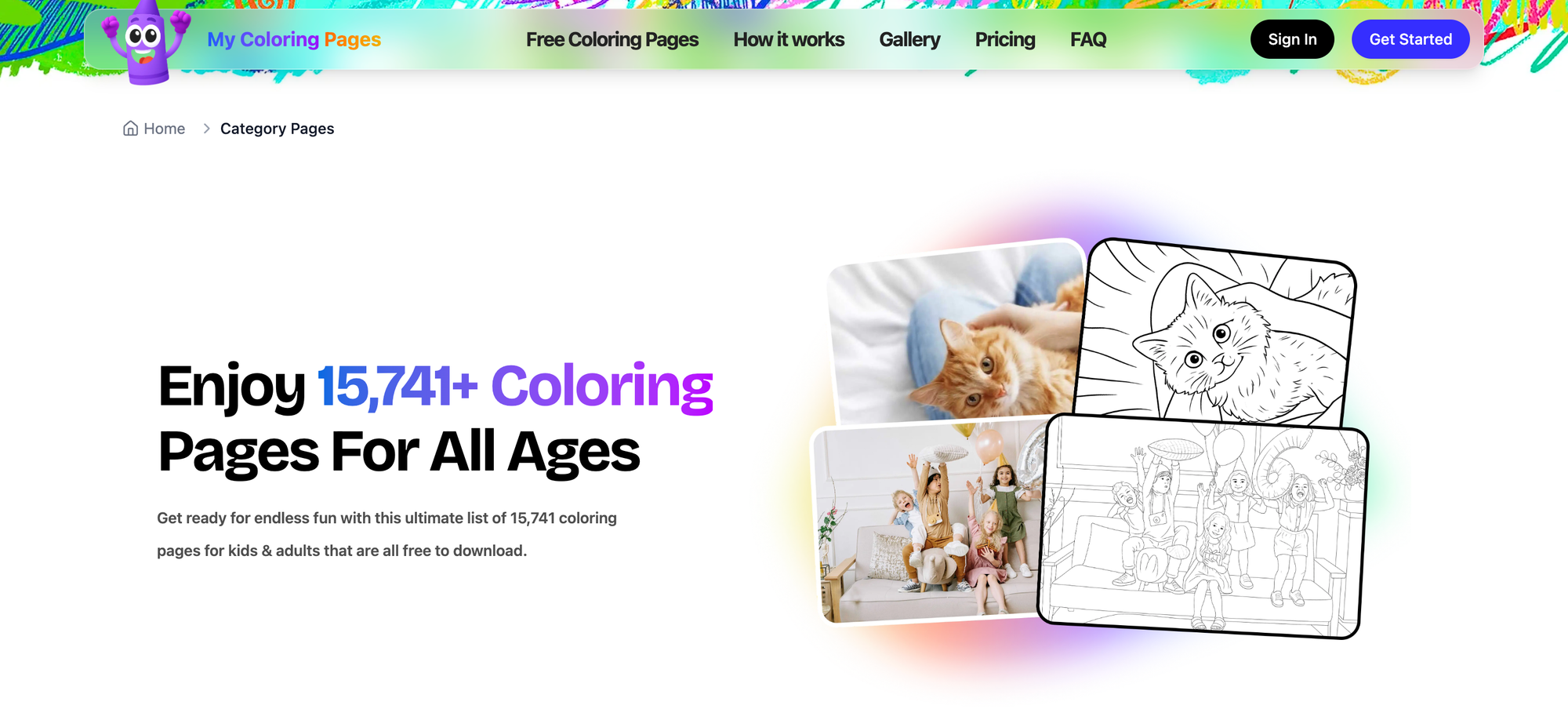
My Coloring Pages centers on personalization and volume, offering 14,568+ ready-to-print community pages plus tools to convert your photos or prompts into custom sheets and booklets. It stands out because parents can build themed packs or keepsake books in minutes, and the interface features simple filters so they can spend time coloring, not hunting. Trusted reviews and easy print/export reduce friction when you need multiple sheets for a party or lesson.
2. Room Recess
Cost: Free
Recommended age range: 3–8 years
Room Recess pairs simple click-to-color pages with a child-first interface, including a color mixer so kids can experiment without mess. The site’s selection favors playful themes such as dinosaurs, pizza, and aliens and integrates learning games, making it useful for short activity bursts that reinforce pattern recognition. Navigation remains clean and predictable, helping younger children find favorites independently.
3. Hello, Kids
Cost: Free (ad-supported)
Recommended age range: 4–12 years
Hello Kids has broad, themed categories including licensed favorites like Disney and Marvel, plus drawing tutorials and craft ideas that extend a coloring session into a mini project. The category structure keeps searches efficient, and the mix of printable and online coloring options lets you switch when you want a low-prep activity. It’s a good choice when a child wants licensed characters, or you want follow-up craft inspiration.
4. Online Coloring
Cost: Free
Recommended age range: 4–10 years
With more than 900 images, Online Coloring offers kids a large yet well-organized selection, from planes and boats to princesses and fairies. Pages can be colored online or printed, and the save/download options make it easy to archive a child’s work for day-to-day progress. The straightforward layout reduces decision-making time, allowing parents to hand over a tablet and step away.
5. Kids Drawing Hub
Cost: Free
Recommended age range: 5–11 years
Kids Drawing Hub focuses on animal and nature sheets with clean outlines that work well with crayons or colored pencils. The site’s guided how-to-draw plus printable coloring pages make it a two-for-one: kids practice drawing, then color their own versions. For animal lovers, the organization by species helps you find themed packs for a lesson or unit study.
6. Kids-n-Fun
Cost: Free
Recommended age range: 3–9 years
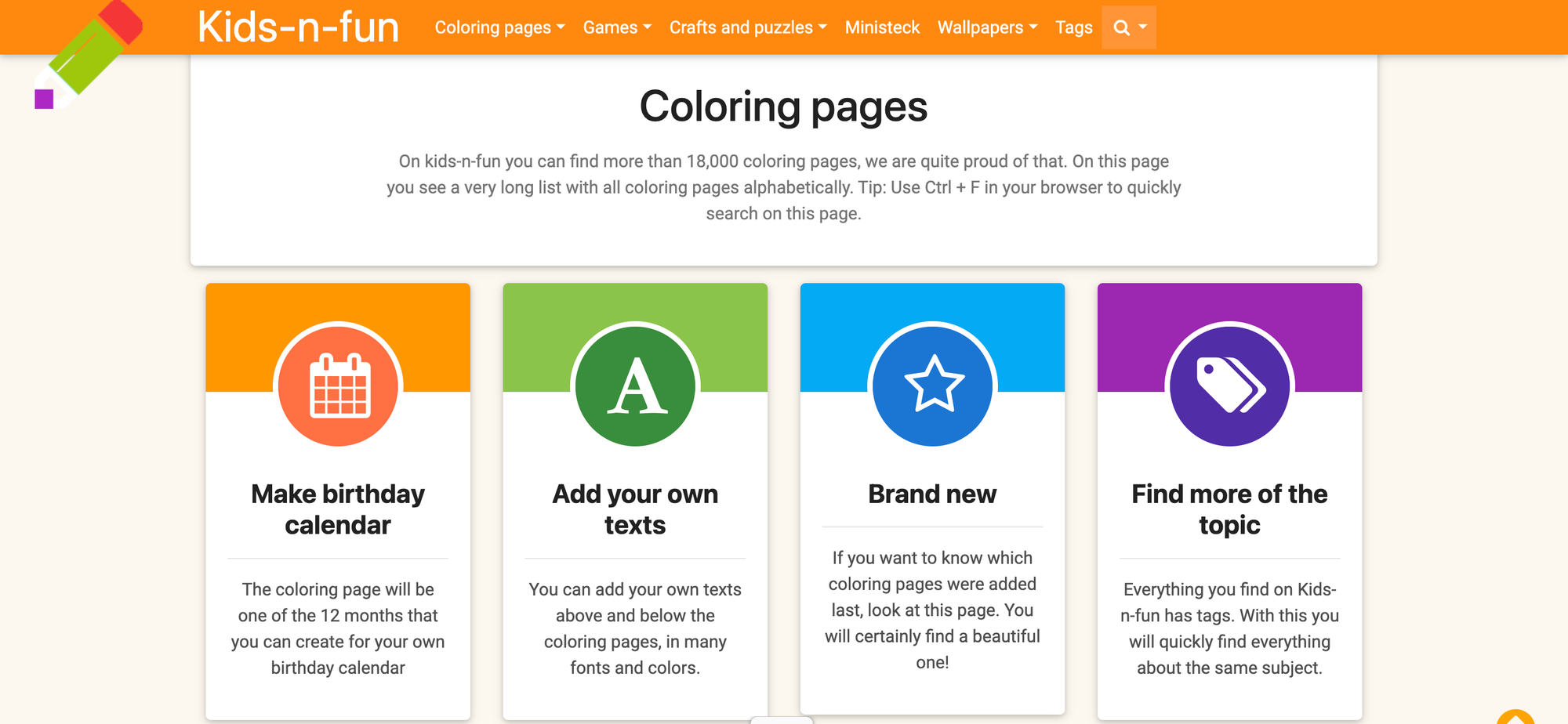
Kids-n-Fun lists pages alphabetically and flags printable versus online options with a brush icon, making format selection transparent and quick. The selection skews toward recognizable character and cartoon themes, and each page’s simplicity is ideal for early scribblers or preschool motor practice. If you want an easy visual way to pick an age-appropriate sheet, this site’s labeling helps.
7. Coloring Pages For Kids
Cost: Free
Recommended age range: 2–7 years
This site focuses on toddler-friendly designs and seasonal categories like Christmas, offering bold outlines and large fill areas that are forgiving for beginners. All pages are printable and organized by theme so you can plan a holiday packet or quiet-time binder in minutes. The straightforward flow keeps prep time minimal, useful when you need a calm transition activity.
8. Color by Numbers
Cost: Free (some advanced packs may cost)
Recommended age range: 4–10 years
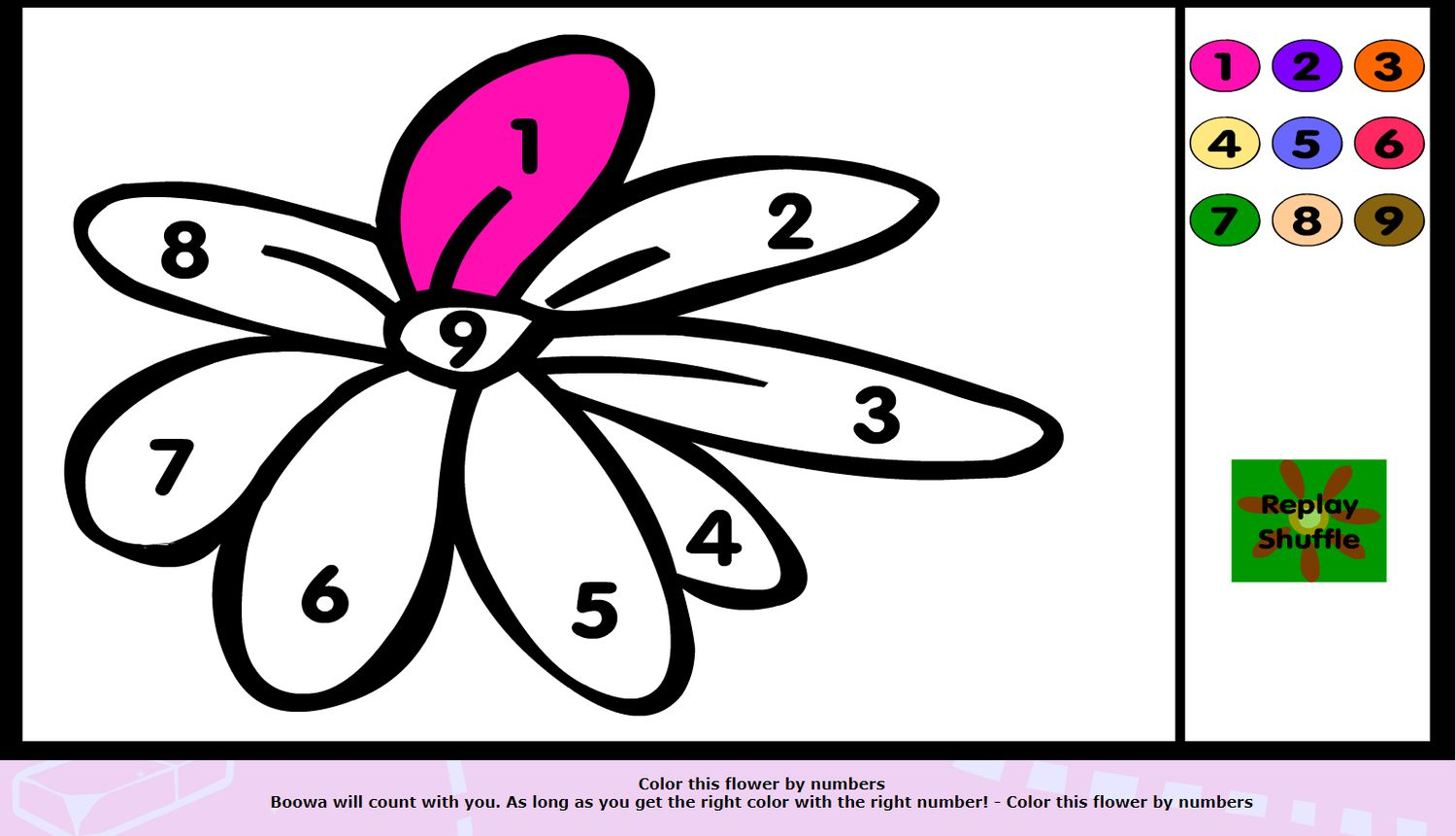
Color-by-number helps children learn color and number matching through guided sections, and the interface nudges them toward correct color choices by highlighting the correct color as a hint. It’s both diagnostic and playful, so kids practice numeracy while they build attention to detail. The ability to remap colors keeps the activity fresh and adjustable by skill level.
9. Happy Clicks
Cost: Free
Recommended age range: 2–6 years
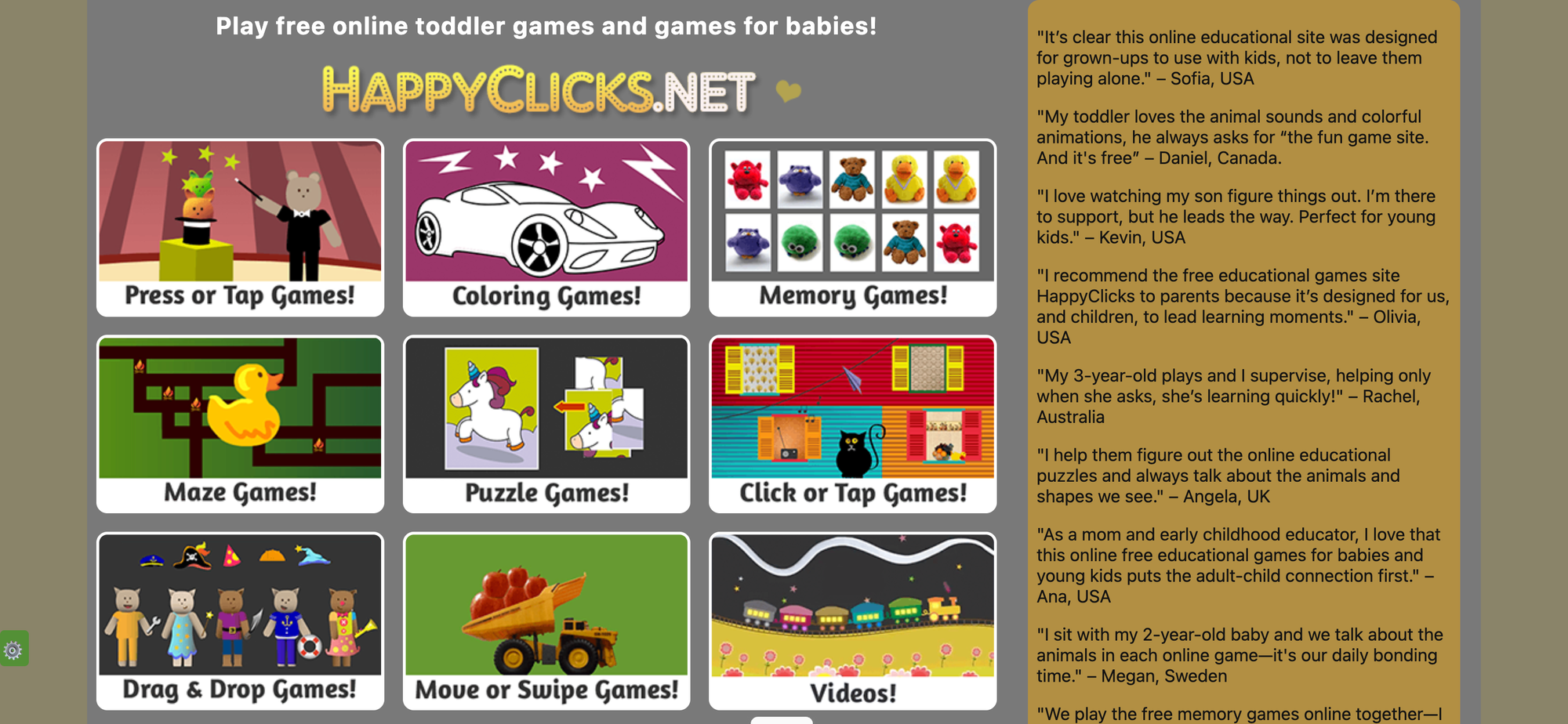
Happy Clicks intentionally keeps its catalog small and manageable, which is ideal for toddlers who are easily distracted by too many options. The images are simple cars, animals, and familiar characters, and the site pairs coloring with a few gentle interactive games. If you want a no-frills starter site for very young children, this is a low-stakes option.
10. The Color
Cost: Free (account optional)
Recommended age range: 3–12 years
The Color offers nearly 5,000 pages spanning baby animals, fairy tales, and landmarks, and you can create a free account to save creations in a personal gallery. It’s useful when you want to collect a portfolio or revisit a child’s progress over time, and the landmark pages double as quick geography lessons. The gallery feature turns single sheets into an ongoing project.
11. Coloring4all
Cost: Free
Recommended age range: 4–10 years
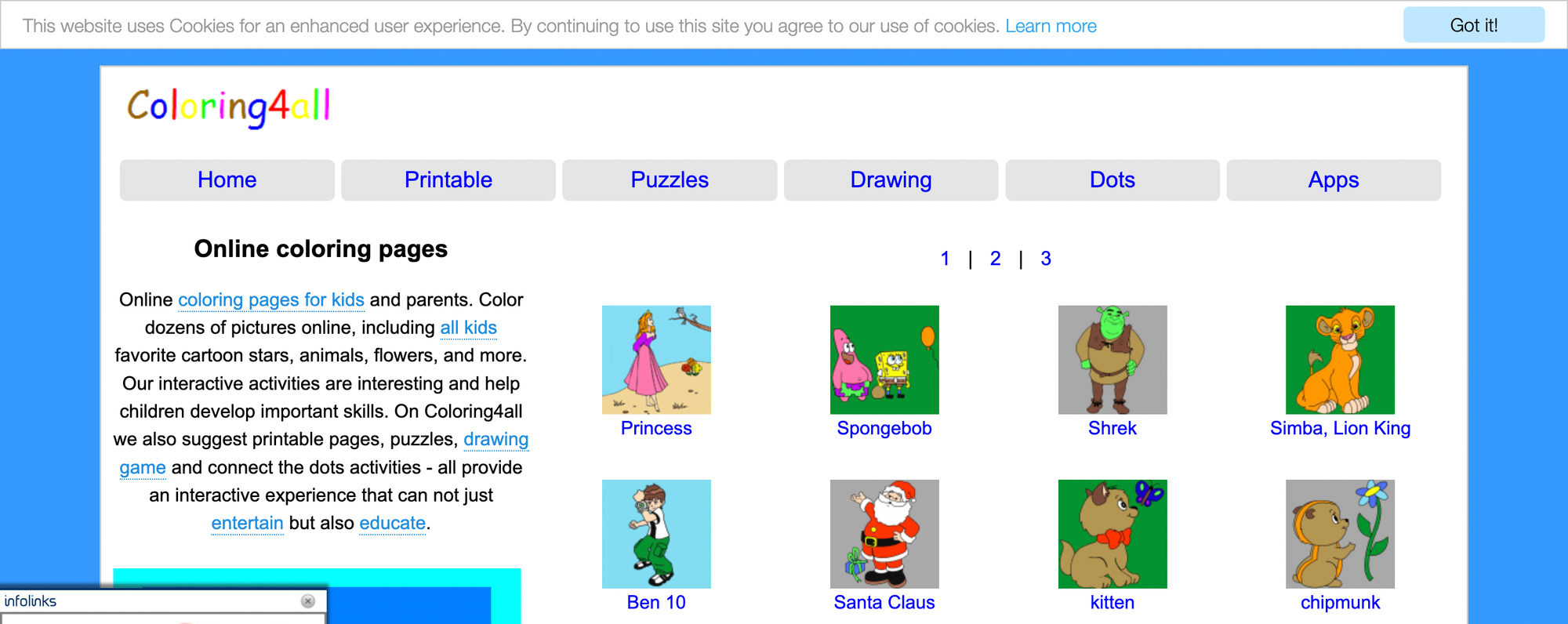
Coloring4all emphasizes familiar TV and movie characters and pairs them with animal and general-interest pages, plus jigsaw puzzles and drawing activities. The variety makes it easy to pivot when attention wanes, and the familiar faces help reluctant colorers engage. The site’s assortment keeps a session flexible without extra searching.
12. ColorPageAI
Cost: Freemium (10 free AI-generated pages; pay for more)
Recommended age range: 3–12+ years
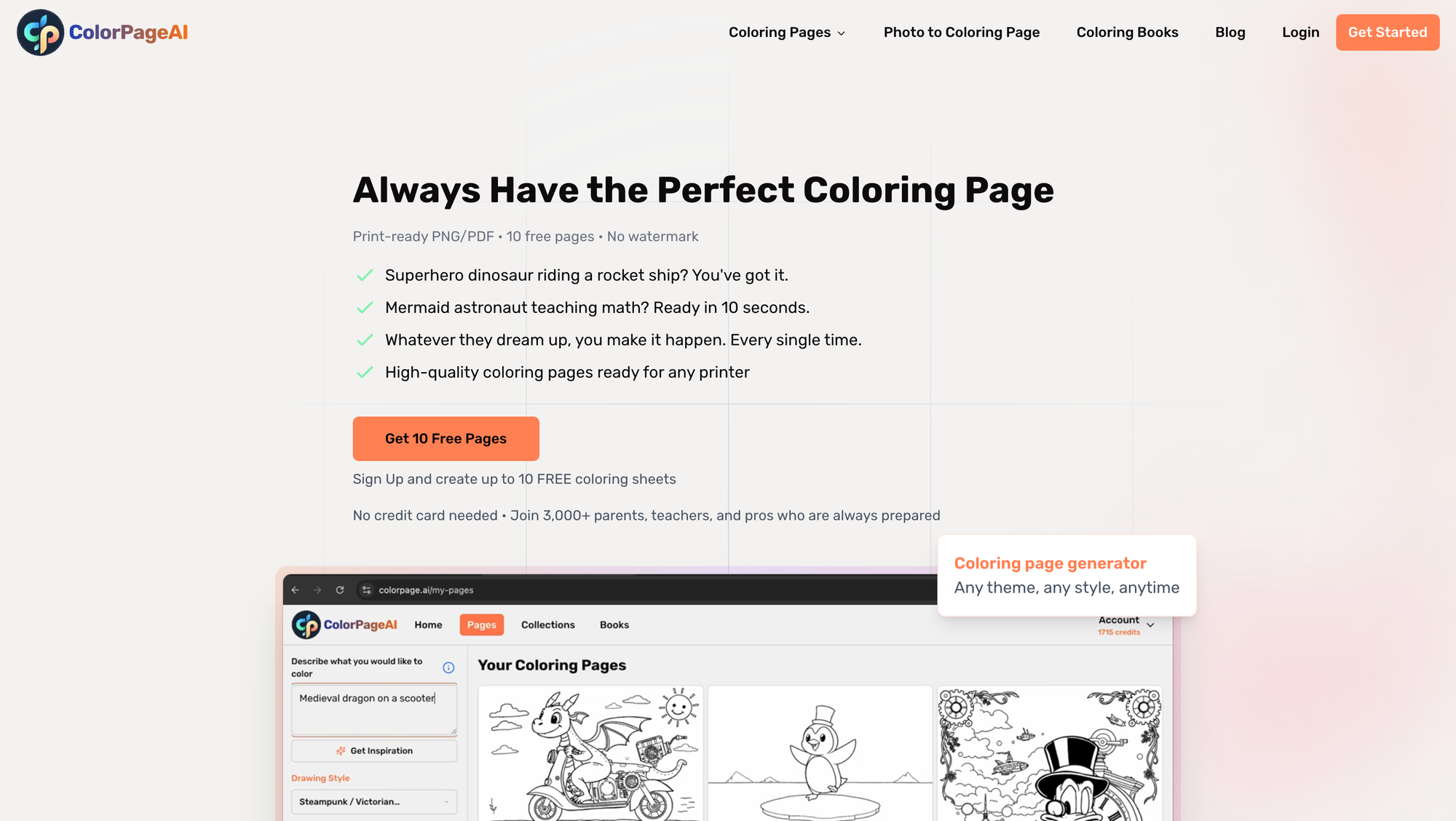
ColorPageAI generates custom educational coloring pages from text prompts and adjusts line complexity to be age-appropriate, making it effective for tailoring content to a lesson or a child’s interests. The three-step flow, type-generate-print, speeds up creation when you need a sheet that matches a unit topic or a child’s favorite hobby. Try the free 10-page trial to see how targeted prompts produce classroom-ready outlines.
13. Superstar Worksheets
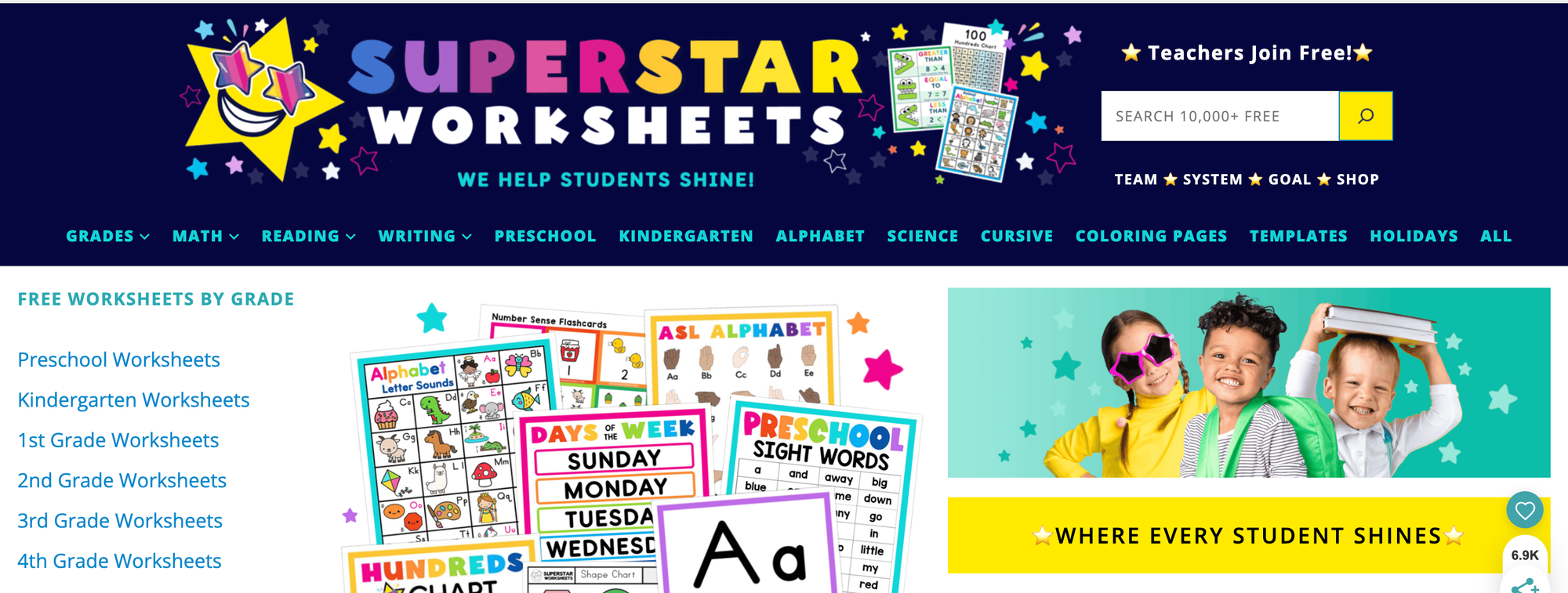
Cost: Free
Recommended age range: 4–11 years
Superstar Worksheets blends curriculum topics with coloring, offering geography, science, and scripture pages without intrusive ads. These sheets are designed to double as classroom supplements, so they often include labels or simple prompts that reinforce learning. For parents seeking a quiet learning activity aligned with school themes, this is a reliable resource.
14. Vibrant Coloring
Cost: Free
Recommended age range: 3–10 years
Vibrant Coloring emphasizes activity-based sheets such as mazes, dot-to-dots, and magic coloring that build problem-solving and fine motor skills alongside color play. The variety of formats allows you to rotate activities and maintain novelty without buying new materials. The interactive options are helpful when you want an activity that stretches attention beyond simple coloring.
15. Magicoloring Pages
Cost: Free
Recommended age range: 3–11 years
Magicoloring Pages offers over 150 educational printables, spanning alphabet basics through history and science themes, helping you scale materials as your child grows. The clean, well-defined outlines print nicely for classroom or home use, and the site’s subject breadth allows you to match pages to current studies. It’s convenient for thematic units that require cohesive visual resources.
16. Coloring Teacher
Cost: Free
Recommended age range: 3–13 years
Coloring Teacher offers a wide range of simple and complex designs, from alphabet sheets for preschoolers to detailed anatomy and map designs for older students. The site’s straightforward navigation and printable quality make it a practical all-purpose library for mixed-age households or multi-classroom use. If you need a single source that can serve year after year, this breadth is an advantage.
17. Tulamama
Cost: Free
Recommended age range: 3–8 years
Tulamama focuses on school-themed pages, such as buses, backpacks, and classroom objects, to help familiarize preschoolers with school routines. The bold, simple illustrations reduce frustration for first-time colorers and ease back-to-school transitions. Use these when you want a quick, contextual activity tied to real-life routines.
18. Tiny Sketcher
Cost: Free
Recommended age range: 3–11 years
Tiny Sketcher provides high-quality educational sheets across science, nature, history, and foundational topics such as numbers and letters, with crisp lines that print well on home printers. The site’s diversity supports cross-topic lessons, and it’s easy to pull a handful of related pages for a single session. For parents who like to pair a short read-aloud with a themed coloring activity, Tiny Sketcher supplies the visuals.
19. Kidipage
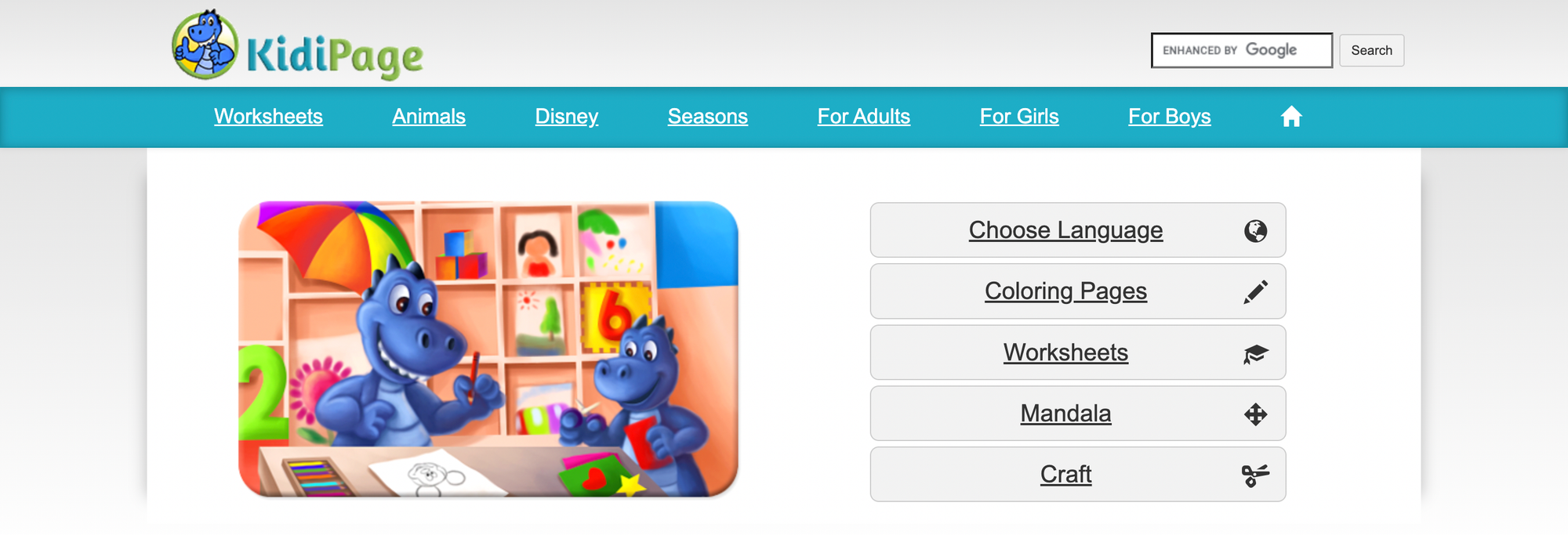
Cost: Free
Recommended age range: 2–12 years
Kidipage serves as a broad index linking to printable pages and crafts across the web, making it useful when you need a niche topic that other sites do not cover. The visual thumbnails and category filters speed discovery, and the crafts and worksheet links extend play into hands-on projects. Think of it as a curated directory that quickly surfaces lesser-known, high-quality pages.
20. Student Handouts
Cost: Free
Recommended age range: 5–13 years
Student Handouts frames coloring within academic tasks, embedding traceable names, vocabulary, or handwriting practice into the illustrations. This creates sheets that double as retention tools, such as a historical figure portrait with traceable text. If you want coloring to carry explicit learning goals, these dual-purpose printables save prep time.
21. GetColorings
Cost: Free
Recommended age range: 3–12 years
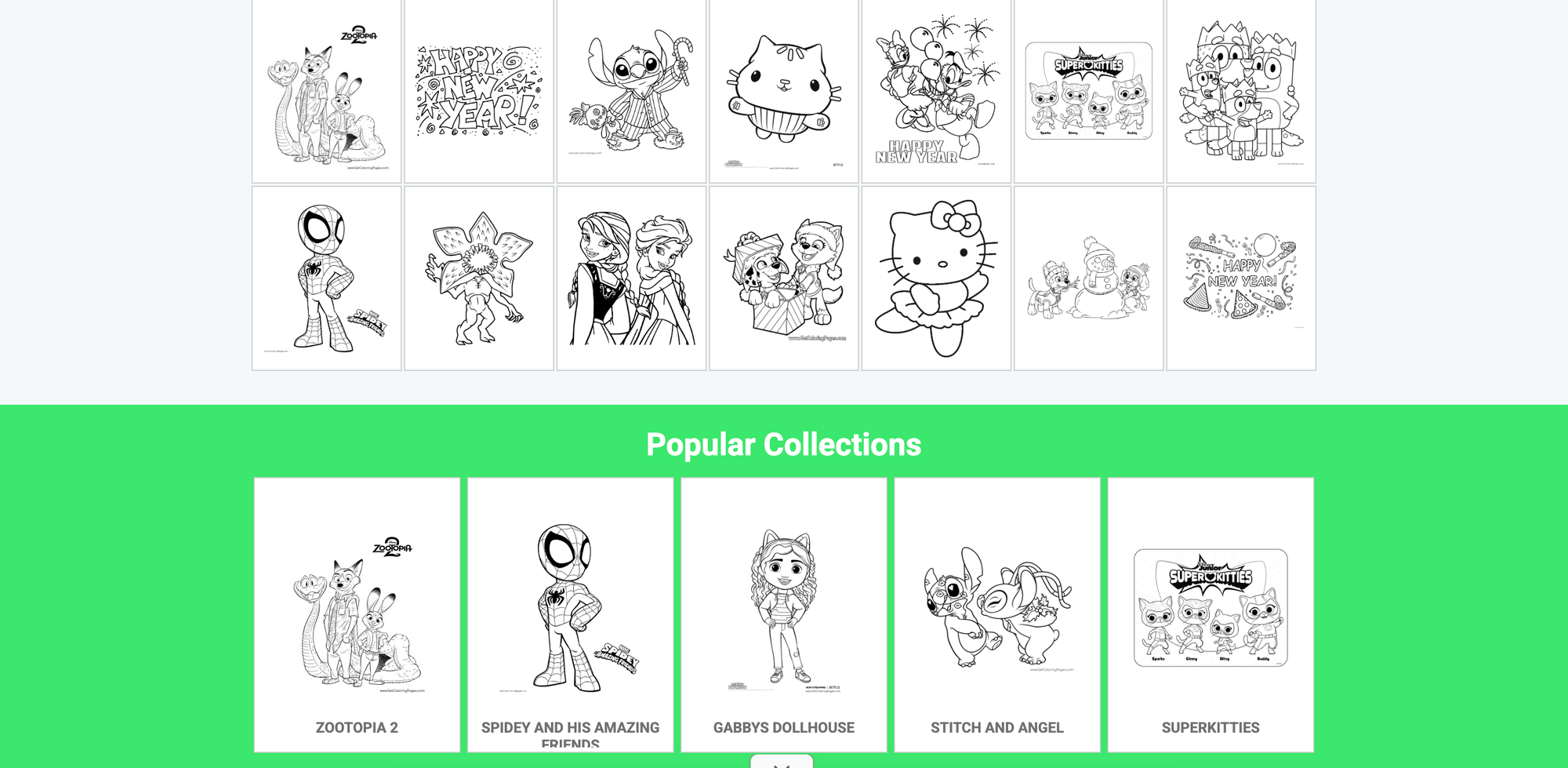
GetColorings offers a community-style library with a wide variety of subject matter and a simple search that quickly finds niche topics. The mix of user-submitted and standard educational pages yields a surprising range, and a built-in online coloring tool makes digital options quick for a tablet session. It’s the go-to when you need an uncommon theme without a complicated search.
22. Just Color
Cost: Free
Recommended age range: 4–14+ years
Just Color offers simple alphabet and number sheets for early learners, along with intricate Zentangle and doodle art for older kids and adults, serving multiple ages in one household. The site also features guided color-by-number activities that reinforce number recognition alongside artistic skill. If you want long-term artistic growth or a variety that supports siblings of different ages, this is a strong choice.
Why is a curated list of coloring sites important?
Most parents first deal with printable coloring by bookmarking a few sites because it feels easy and familiar. However, this habit leads to problems over time. Finding a specific educational theme can be time-consuming and stressful in the morning rush.Platforms like My Coloring Pages offer an alternative by bringing together thousands of pages with fast customization and export options. This helps parents find, customize, and print themed packs in minutes, rather than searching across scattered sites.
A week-long usability check with parents managing preschool routines showed essential insights. Parents left sites that required more than two clicks to reach a themed sheet. They preferred sources that labeled difficulty and format immediately.This behavior demonstrates the importance of neat organization, clear, printable signs, and reliable filters. These features are more important than having many options, especially when time is short.
How can parents choose the right coloring site?
Choosing a site is like organizing a kitchen; the tools we use every day need to be easy to reach.A well-organized, parent-focused platform keeps essential items close at hand, ensuring activities run smoothly and keeping children engaged.
Some sites offer small starter packs you can use right away. For quick, portable pages, check out Easy Coloring Pages for Kids, which offers "4 Free Printable Pages" ideal for travel or when you're waiting in a room.
This simple distinction between clutter and curated access significantly affects how a coloring resource performs in real-world situations. It's essential to find a sheet that fits with a lesson, party theme, or calm-down time.
The following steps are critical, as they determine how to select the right site.
Related Reading
- Drawing Websites for Kids
- Best Educational Websites for Kids
- Art Websites for Kids
- Safe Websites for Kids
- List of Websites to Block for Kids
- Cool Websites for Kids
- Reading Apps for Kids
- Best Learning Apps for Kids
- Best Learning Games for Kids
- Math Apps for Kids
How to Choose the Best Coloring Pages Website for Your Child
Select the site that matches the child in front of you and the moment you need it. Then use simple rules that protect time, attention, and safety. Let the child steer within those boundaries so that choice becomes empowerment, not chaos.
How should a child's preferences influence the decision?
Start by looking at their behavior, not just their age. For example, if your child loves novelty, they may quickly get bored with single-theme packs. On the other hand, if they like mastery, look for options with increasing difficulty and printable sets they can revisit.Many children are drawn to activities they can touch and move, which is why 60% of children prefer websites with interactive coloring tools, according to a Pew Research study. Provide tactile explorers with sites where they can click, undo, and try new things. For patient creators, offer downloadable pages they can improve with pencils. Think of preferences as clues about which formats and features matter, rather than labels that cannot change.
What role does format play, online versus printable?
If you need portability, a quiet transition time, or sharing among multiple children, printable pages help manage logistics and reduce screen time. Online tools work best when you want instant feedback, repeatable color themes, or the ability to pause and resume without creating paper clutter.
Choose printable-first when your goal is kinesthetic practice and saving work to a portfolio. Opt for online-first when the interaction itself teaches cause and effect. This can be seen as a trade-off between permanence and iteration: paper keepsakes endure, while digital formats let you play and evolve.
How should skill-building and fun be balanced?
Parents often want to mix skill-building with fun, and this balance can be achieved through layered content. Focus on delivering educational value in sessions that align with learning goals, while keeping free-play sheets for relaxation or celebrating successes. This method supports the finding that “75% of parents consider educational content as the most important factor when choosing a coloring pages website.” — ColoringBook AI Review: Fun Coloring for Kids in 2025. It shows a clear preference for purposeful activities. To find this balance, follow two simple rules: label sheets by purpose and alternate lesson-focused sessions with pure creative time. This way, coloring stays enjoyable and doesn’t turn into just a task.
How do you quickly check ad safety and content quality?
Scan for three red flags in this order: persistent pop-ups or redirects, requests for personal information, and pages that show inappropriate imagery in thumbnails. Then, look for positive signals such as clear printable flags, a visible privacy policy, and an option to use content without signing up.Run a one-minute test on a new site by opening five pages, trying to print or download one, and noting how many clicks and interruptions happen. If the process takes longer than 60 seconds or asks for personal data, move on.
How can you involve kids without losing control?
Give limited agency, not full autonomy. Offer two or three curated options, set a 90-second selection timer, and let the child pick one.Save favorites as a quick-access shelf to avoid hunting later.
Using a small menu system increases engagement and reduces decision fatigue. When choices are unlimited, sessions tend to lag, and kids often return to the same tired images.Teach a straightforward rule: pick for mood, not for every occasion. Keep a rotating folder of go-to sheets for mornings, quiet time, and parties.
What practical checklist can you use in two minutes?
- Match the format to the goal: print for keepsakes, interact for experimentation.
- Look for three safety signals: no pop-ups, no requests for personal information, and a clear option to print.
- Check the content tags: learning, calming, party, or project.
- Limit the child's choices and save favorites to speed up the process.
- Prefer platforms that offer consistent export options and easy customization, ensuring printing doesn’t become a second job.
What is the significance of the activity shift?
That simple shift from browsing to curating changes coloring into a repeatable family ritual, instead of just a scavenger hunt.This next step shows an interesting fact: you can easily turn a few clicks into a keepsake that you will both want to treasure.
Related Reading
- Fun Websites for Kids
- Free Drawing Websites for Kids
- Coloring Websites for Kids
- Free Coloring Websites for Kids
- Parallel Parenting
- Learning Websites for Kids
- Best Parenting Books
- Authoritarian Parenting
- Educational Websites for Kids
Create Custom Printable Coloring Pages and Coloring Books in Seconds
My Coloring Pages turns a photo or a short description into a ready-to-print coloring page in seconds. With 10,000+ free community sheets, the trust of 20,000+ parents, and a 4.8/5 rating, personalization becomes fast and reliable.
When a quick test is needed, one favorite photo can be converted into a sheet. A small stack can be printed for a party, classroom, or calm-down kit, while the remaining pages are saved into a personalized booklet that can be accessed at any time.
Explore our 10,000+ free coloring pages.