65 Fall Coloring Pages for Preschoolers
Fall coloring pages preschool kids will love! 65 free printable autumn activities from My Coloring Pages. Download pumpkins, leaves & more today.

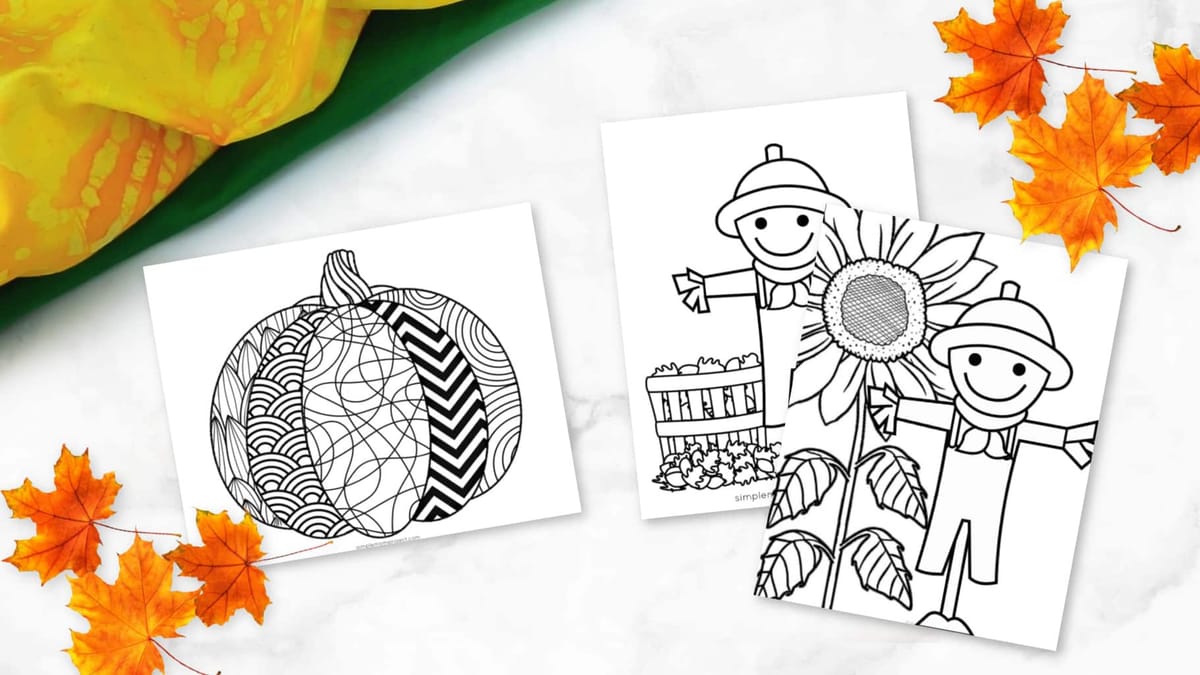
Fall transforms preschool classrooms into hubs of seasonal learning, where autumn-themed activities capture young imaginations. Fall coloring pages, preschool teachers love to provide an ideal blend of skill development and creative expression, helping children strengthen fine motor control while exploring the vibrant colors of the season. These activities offer preschoolers hands-on opportunities to practice color recognition, hand-eye coordination, and focus through engaging autumn imagery.
Quality seasonal resources shouldn't strain classroom budgets or require endless searching. Parents and educators can access professionally designed fall-themed coloring pages featuring pumpkins, leaves, scarecrows, and harvest scenes perfectly sized for small hands. Download 54,758+ free coloring pages to bring instant seasonal learning into any preschool environment.
Table of Contents
- Importance of Fall Crafts and Activities for Preschoolers
- What Does Fall Teach Children
- How to Celebrate Fall in Preschool
- 7 Engaging Fall Preschool Activities
- 65 Fall Coloring Pages for Preschoolers
- Download 54,758+ Fall-Themed Coloring Pages
Summary
- Fall activities build multiple developmental skills simultaneously through hands-on seasonal exploration. When preschoolers paint pumpkins or create leaf rubbings, they develop fine motor control while gripping crayons, build vocabulary while describing colored leaves, and learn early science concepts by noticing textures and seasonal patterns. A simple activity like sorting acorns by size teaches math classification while strengthening the pincer grasp needed for holding pencils later.
- Brain development during the preschool years makes sensory experiences critical for learning. According to the Children's Museum of Sonoma County, 90% of a child's brain develops before age 5, making these early years essential for establishing neural pathways through hands-on exploration. Every time a preschooler squeezes glue, tears paper, or arranges leaves by size, they strengthen connections that support future learning beyond the immediate craft activity.
- Outdoor fall exploration teaches scientific thinking through direct observation rather than abstract explanation. Cooler October temperatures make extended outdoor observation possible, and according to the US Census Bureau, 54.1 million K-12 students return to classrooms each fall, though the most powerful learning often happens outside during nature walks where children collect specimens, notice weather shifts, and ask questions that reveal genuine curiosity about environmental systems.
- Coloring pages function as tools for developing tripod grip, visual discrimination, and sustained attention when structured appropriately. The pages should match developmental stages rather than just seasonal appropriateness. A three-year-old needs large, simple shapes with thick boundaries, while a five-year-old approaching kindergarten needs intricate details and pattern work that challenges sustained focus across multiple sessions.
- Finished coloring pages become starting points for deeper learning when teachers use them strategically. A completed leaf page turns into a science lesson when children compare their illustration with real leaves collected outside, or becomes a math activity when children count the ridges they colored. The page itself matters less than the thinking that follows the coloring activity.
- My Coloring Pages addresses the challenge of finding developmentally appropriate seasonal materials by offering over 54,758 fall-themed designs spanning weather changes to harvest festivals, letting teachers download pages that match exactly what they're teaching rather than forcing lessons to fit whatever happens to be available in pre-printed workbooks.
Importance of Fall Crafts and Activities for Preschoolers
Fall crafts and outdoor activities build essential developmental foundations. When preschoolers paint autumn trees, cut scarecrows, or glue paper leaves, they practice fine motor skills needed for writing while transforming observations about acorns and pumpkins into early science lessons.
🎯 Key Point: Every fall craft activity develops multiple skills simultaneously: hand-eye coordination, fine motor control, and scientific observation.

The process matters more than the finished product. According to the Children's Museum of Sonoma County, 90% of a child's brain develops before age 5. Every time a preschooler squeezes glue, tears paper, or arranges leaves by size, they strengthen neural pathways that support decision-making, problem-solving, and physical coordination.
"90% of a child's brain develops before age 5, making early hands-on activities crucial for cognitive development." — Children's Museum of Sonoma County
🔑 Takeaway: Simple fall activities like leaf sorting and pumpkin decorating are powerful brain-building exercises that create lasting developmental benefits.
Why Fall Activities Build Multiple Skills Simultaneously
When preschoolers paint pumpkins or create leaf rubbings, they develop fine motor control, build vocabulary for colors and textures, and learn early science concepts about seasonal patterns. Sorting acorns by size teaches mathematical classification while strengthening the pincer grasp needed for pencil control. Cooler temperatures enable extended outdoor exploration without the risk of heat exhaustion.
Language development accelerates during fall craft time. When children explain color choices or describe crunching leaves, they build communication skills in meaningful contexts. Working alongside peers teaches sharing materials, following multi-step instructions, and expressing creative ideas.
How does outdoor fall play benefit physical development?
Fall's mild weather is perfect for active outdoor play that builds gross motor skills, strengthens immunity through exposure to fresh air, and provides natural vitamin D. Running through leaf piles, jumping over pumpkins, and carrying buckets of collected acorns develop coordination and muscle strength that indoor activities cannot match.
The sensory experiences of crunching leaves, feeling cool air, and smelling autumn scents reduce stress and create opportunities for emotional regulation for preschoolers.
Why choose customizable fall coloring pages over generic worksheets?
Generic seasonal worksheets offer limited customization for different learning levels. Our My Coloring Pages platform offers over 54,758 fall-themed designs featuring pumpkins, scarecrows, and harvest scenes, all of which you can download and adapt for classroom use.
Instead of one-size-fits-all activities, you get instant access to materials that keep different developmental stages engaged while building foundational skills through personalized seasonal content.
What observation skills do fall activities develop?
The power of fall activities lies in teaching children observation: noticing how the world shifts and changes around them.
Related Reading
- Preschool Worksheets
- What Age Is Preschool
- Preschool Curriculum
- Preschool Age Range
- Preschool Vibes
- Preschool Homeschool Curriculum
- Preschool Games
- Worksheets For Preschool
- Preschool Education
- Free Preschool Worksheets Age 3–4
- Preschool Books
- What Age Do Kids Start Preschool
- Preschool Graduation
- Free Name Tracing Worksheets for Preschool
- Preschool Backpack
- All About Me Preschool
- Free Preschool Worksheets
- Preschool Self Defense
- What Should a Child Learn in Preschool
- Preschool vs Pre K
- Sight Words for Preschool
- Free Printable Preschool Worksheets Tracing Letters
- First Day of Preschool
- Preschool Math Worksheets
- Preschool Valentine Crafts for Parents
- Preschool Graduation Gifts
- Preschool Toys
- What Age Is Preschool and Kindergarten
- Preschool Quotes About Play
What Does Fall Teach Children
Fall teaches children to notice change happening around them and to understand that change follows patterns. When preschoolers watch green leaves turn red and yellow, then fall and break down, they're seeing life cycles that introduce biology, chemistry, and physics through observation. The season becomes a living classroom where concepts like temperature change, decay, and dormancy preparation become tangible experiences children can touch, collect, and explore.
🎯 Key Point: Fall transforms abstract scientific concepts into tangible learning experiences that children can directly observe and interact with.
"Fall becomes a living classroom where ideas like temperature change, decay, and getting ready for dormancy turn into real experiences they can touch, collect, and ask questions about."
🔑 Takeaway: The seasonal changes of fall provide a natural laboratory for children to develop observation skills and understand fundamental scientific principles through hands-on discovery.
How do fall textures support neural development?
The textures of autumn create neural pathways that generic toys cannot replicate. Rough bark, smooth acorns, papery dried leaves, and sticky pumpkin insides each require different grip strengths and hand positions.
When a four-year-old scoops pumpkin seeds, they build finger control needed for buttoning coats and holding pencils while learning about plant anatomy and seed dispersal. Cool autumn air teaches temperature awareness, crunching leaves introduce cause and effect, and earthy decomposition smells build olfactory memory that connects seasons to sensory signatures.
What learning happens in fall sensory bins?
A fall sensory bin with pinecones, mini pumpkins, corn kernels, and acorns transforms objects into scientific specimens. Children sort by size, texture, and weight while practicing mathematical classification.
They describe textures using comparison words (rougher, heavier, pointier) that expand vocabulary and strengthen the muscles needed for writing.
How does outdoor observation build scientific thinking skills?
Cooler October temperatures make it easier to spend time outside without summer heat. According to the US Census Bureau, 54.1 million K-12 students return to classrooms each fall, but significant learning happens outside during nature walks where children collect specimens, notice weather changes, and ask questions that demonstrate curiosity about environmental systems.
Asking "What colours do you see on the leaves?" or "How does the wind feel today?" teaches children that observation precedes understanding and their questions matter.
What scientific concepts do children learn through hands-on fall activities?
Pumpkin patches and leaf piles teach scientific concepts: estimating weight when lifting different-sized pumpkins, observing decomposition as wet leaves smell different from dry ones, and understanding gravity and air resistance as leaves fall at varying speeds.
Questions children ask during these moments—"Why do some leaves fall faster?" "Where do the squirrels go?"—reveals developing critical thinking that formal lessons cannot replicate.
How do arts and crafts build fine motor skills in preschoolers?
Arts and crafts build fine motor skills while engaging children. Leaf rubbings teach texture transfer and pattern recognition while strengthening the tripod pencil grip. Pumpkin painting requires hand-eye coordination and color mixing. Nature collages demand spatial planning and fine motor control. Our My Coloring Pages library provides thousands of fall-themed designs you can download and adapt to different developmental stages, allowing children to practice coloring within boundaries while building the hand strength required for handwriting.
Why does patience in crafting matter for kindergarten readiness?
The patience needed to finish a craft is as important as having good hand skills. Waiting for glue to dry, applying colors in layers, and following multi-step instructions builds the thinking skills and delayed gratification that preschoolers need for kindergarten readiness.
How to Celebrate Fall in Preschool
Celebrating fall in preschool means creating an environment where children experience the season through multiple senses, not worksheets. Build atmosphere through intentional decoration and hands-on activities that develop specific skills, weaving seasonal themes throughout the day: from snack time to story circles. The goal is establishing repeated touchpoints where children connect autumn's textures, colors, and rhythms to their growing understanding of the world.

🎯 Key Point: The most effective fall celebrations engage all five senses and integrate smoothly into your existing daily routine rather than requiring separate holiday lessons.
"Children learn best when seasonal concepts are woven throughout the day rather than confined to a single activity, creating natural learning moments that feel like play." — Early Childhood Education Research, 2023

⚡ Pro Tip: Start with simple sensory bins filled with real autumn materials—dried leaves, pinecones, and small gourds—that children can explore during free play, naturally developing fine motor skills and vocabulary.
How do you create visual immersion for fall learning?
Start with color immersion. Cover your classroom in reds, oranges, yellows, and browns through construction paper leaves, fabric pumpkins, and collected acorns arranged on shelves that children can reach. Hang leaf mobiles at their eye level, not yours.
When a four-year-old walks into a space filled with autumn colors, their brain registers the season before you say a word about it. The visual consistency reinforces vocabulary—crimson, amber, rust—and creates emotional connections between physical spaces and seasonal cycles.
Why do real materials work better than pictures?
Real materials matter more than laminated posters. Pinecones on sensory tables, small gourds children can lift and compare, and branches with changing leaves in clear jars where kids watch them dry and curl, invite touch and investigation in ways flat images cannot.
The child who picks up the same acorn three days in a row, noticing how it feels different as moisture evaporates, learns more about transformation than any circle-time explanation could teach.
How should you plan craft activities for skill development?
Plan crafts that require sequential steps and the use of tools. Leaf stamping teaches pattern recognition and hand pressure control. Pumpkin painting requires grip strength and color-mixing skills. Paper acorn necklaces involve cutting, threading, and spatial planning.
Platforms like My Coloring Pages provide thousands of fall-themed designs featuring scarecrows, harvest scenes, and woodland animals that you can download and adapt to match specific developmental stages, helping children practice coloring within boundaries while building hand strength and visual discrimination skills.
Why does simple execution matter more than elaborate projects?
A focused, simple activity beats a complicated project where adults do most of the work. When a three-year-old tears construction paper into leaf shapes, they build coordination between both sides of their body and learn that irregular shapes can represent real objects.
The patience required to layer glue, wait for it to dry, and add details teaches executive function skills that standardized activities often skip.
How can you manage group activities effectively?
Split children into small groups for crafts and sensory exploration. This reduces chaos, ensures every child receives adult support during challenging steps, and allows supervision of children at different developmental levels. One group paints while another sorts acorns by size, then they switch.
Set clear expectations about tool use, cleanup, and material sharing to prevent meltdowns that disrupt lesson plans. Offer choices for children with sensory sensitivities: soft fabric leaves instead of scratchy dried ones, gluten-free snacks for dietary restrictions, and quieter craft corners for children who are overwhelmed in group settings.
What documentation strategies work best for learning?
Take photos that show what children are doing, not just what they made when finished. A picture of a child focusing while stringing beads is more important than a photo of the finished necklace. These photos help you discuss learning with parents, provide content for bulletin boards that demonstrates real learning, and help children remember what they discovered and tried.
7 Engaging Fall Preschool Activities
Three-year-olds need activities that strengthen their grip and teach colors. Five-year-olds preparing for kindergarten need challenges that develop sequencing, letter formation, and sustained focus. The activities below build different skills for children at different ages in preschool.

🎯 Key Point: Age-appropriate activities are essential for preschool development - what works for a 3-year-old may be too simple for a 5-year-old preparing for kindergarten.
"Developmentally appropriate activities help children build fine motor skills, cognitive abilities, and attention span at their own pace." — Early Childhood Development Research, 2023

💡 Tip: Always consider your child's individual developmental stage when choosing fall activities - some children may be ready for more advanced challenges earlier than others.
Age Group | Key Skills to Develop | Activity Focus |
|---|---|---|
3-Year-Olds | Grip strength, color recognition | Simple crafts, sensory play |
4-Year-Olds | Pre-writing skills, pattern recognition | Tracing activities, sorting games |
5-Year-Olds | Letter formation, sustained attention | Writing practice, complex projects |

1. Leaf Pile Exploration and Classification
Gather large quantities of fallen leaves so children can touch and play with them. Let them jump, burrow, and scatter leaves while you describe what's happening ("You're making the leaves fly high!" or "I hear crunching when you step"). This sensory experience builds vocabulary through lived experience.
What thinking skills do children develop through leaf classification?
After free play, move to structured learning by asking children to sort leaves by color, size, or shape. A child who groups all red leaves together practices the same kind of classification thinking required for later math concepts, such as sorting numbers or identifying patterns.
When a preschooler debates whether a leaf with both yellow and orange belongs in the yellow pile or deserves its own category, they're working through nuance and criteria—essential thinking skills that worksheets can't replicate.
2. Harvest Exploration and Food Origins
Visit farms or pumpkin patches where children see food growing in soil rather than appearing in grocery store bins. The physical experience of pulling a carrot from dirt or choosing a pumpkin from a field teaches origin stories that urban children especially need.
Discuss growth cycles using language children understand ("The seed went into the ground when it was still cold, and the pumpkin grew all summer while you were playing outside"). This connects the passage of time to observable change, fostering early understanding of cause and effect and seasonal rhythms.
What cooking activities reinforce the farm-to-table connection?
Follow outdoor visits with cooking activities where children help prepare what they harvested. Washing apples, stirring batter for pumpkin muffins, or arranging vegetables on plates develops sequencing and fine motor skills.
The farm-to-table connection becomes real when a child eats bread made from wheat they touched growing in a field.
3. Weather Observation and Daily Tracking
Set up a simple weather station with a rain gauge, thermometer, and windsock that children can operate and observe from windows. Assign a child each morning to check the tools and report findings during circle time. This builds responsibility, introduces data collection, and teaches that weather follows observable patterns.
What prediction questions help develop scientific thinking?
Ask prediction questions that require reasoning based on evidence ("The sky looks gray and the wind is blowing. What do you think might happen today?"). When predictions prove wrong, discuss why without judgment. A child who predicts rain from clouds but experiences sunshine learns that multiple factors influence outcomes—a foundational concept for scientific thinking.
4. Seasonal Story Integration and Dramatic Play
Pick books with fall themes, such as leaves changing color, animals preparing for winter, or harvest celebrations. Give children props to act out story ideas through dramatic play: scarves become falling leaves, cardboard boxes turn into pumpkin patches, and stuffed animals gather food for winter. This hands-on dramatization helps children understand stories more deeply than listening alone.
What makes fall coloring pages more effective than generic worksheets
Regular seasonal worksheets often give the same activities for everyone, regardless of the story or skill level. Websites like My Coloring Pages offer thousands of fall-themed pictures with characters and scenes matching the specific books you're reading. You can download pictures of scarecrows, harvest scenes, or autumn landscapes and use them as coloring activities that reinforce story details while building fine motor control and color recognition.
5. Autumn Scavenger Hunts With Purpose
Create scavenger-hunt lists using pictures for non-readers (e.g., a drawing of an acorn, a red leaf, a pinecone). Give each child a small bag and send them searching in controlled outdoor spaces. This activity builds observation skills, item-matching skills, and gross-motor coordination as children bend, reach, and navigate terrain.
Use collected items as conversation starters in the classroom. Ask each child to choose one item and describe where they found it, what it feels like, or why they picked it. This builds public speaking confidence, descriptive language skills, and patience in listening as classmates listen and share.
6. Pumpkin Selection and Creative Decoration
Take children to pumpkin patches where they choose their own pumpkins, experiencing decision-making with physical consequences: a pumpkin too heavy to carry requires help, teaching self-awareness about physical limits. Back in the classroom, offer decoration options matched to different skill levels. Younger preschoolers paint with large brushes to build shoulder and arm strength, while older children use stickers or markers to practice placement precision and pattern creation.
Don't use actual carving with sharp tools. Instead, use decorating methods that let children work independently, ensuring they have creative ownership rather than watching adults make designs.
7. Fall-Themed Outdoor Games and Movement
Design simple games using autumn elements as props. Set up pumpkins in a line for jumping practice, create obstacle courses around hay bales, or play tag where children become falling leaves that must freeze when they hit the ground. These activities build gross motor skills, spatial awareness, and rule-following through play rather than formal instruction.
The cooler weather makes it comfortable to stay outside and be active without overheating. Children can run, climb, and explore for longer periods than summer heat allows, building cardiovascular health and muscle strength that indoor activities can't match.
Related Reading
- Preschool Assessment
- Preschool Crafts
- Preschool Learning Activities
- Preschool Tracing Worksheets
- Daycare Vs Preschool
- Preschool Classroom Layout
- Preschool Playground Equipment
- Free Preschool Games
- Preschool Sight Words
- Preschool Math Activities
- How To Become A Preschool Teacher
- Preschool Prep
- Preschool Lesson Plan Template
- Noah's Ark Preschool
- Preschool Science Experiments
- Preschool Craft Ideas
- Creative Curriculum For Preschool
- Playing Preschool Curriculum
- Preschool Bulletin Board Ideas
- Christmas Crafts Preschool
- Spring Bulletin Board Ideas For Preschool
- Turkey Craft Preschool
- Preschool Learning Games
65 Fall Coloring Pages for Preschoolers
Coloring pages build hand strength, the ability to see small differences, and the ability to focus while teaching color recognition and the tripod grip. The pages below are organized by what three- to five-year-olds need to practice.

🎯 Key Point: Fall coloring pages serve as perfect seasonal tools that combine fine motor development with cognitive skills - making learning both engaging and developmentally appropriate for preschoolers.
"Fine motor skills developed through coloring activities directly correlate with school readiness and academic success in early childhood education." — Early Childhood Development Research, 2023

⚠️ Important: Choose coloring pages with age-appropriate line thickness and simple designs to prevent frustration and encourage completion - overly complex pages can actually hinder rather than help skill development.
Skill Area | Fall Coloring Benefits | Age Focus |
|---|---|---|
Hand Strength | Grip control, muscle development | 3-4 years |
Visual Processing | Pattern recognition, detail focus | 4-5 years |
Color Recognition | Seasonal vocabulary, artistic choice | 3-5 years |
Focus & Attention | Task completion, sustained effort | 4-5 years |

Nature & Seasonal Basics (1-15)
1. Large Maple Leaf
A single oversized maple leaf with bold outlines and simplified vein patterns. Small falling leaves scattered around the edges provide optional coloring areas. Thick lines allow children with developing hand control to color easily, while vein details challenge those ready for more precise work.
2. Oak Leaf & Acorn Pair
One oak leaf positioned next to a smiling acorn introduces how plants relate to each other. The acorn's simple face fosters emotional connection, while the leaf's lobed edges help children navigate curves and points within boundaries.
3. Pile of Leaves
A large mound of mixed leaf shapes with a child silhouette jumping into them. Overlapping leaves create spatial depth while the action pose sparks storytelling. Children practice staying within irregular boundaries that mimic the edges of real leaves.
4. Falling Leaves Scene
Leaves drifting downward with curved motion lines introduce movement on static pages, building visual literacy alongside motor skills.
5. Autumn Tree (Bare + Full)
A split-page design showing one tree covered in leaves and the same tree bare creates opportunities for discussion about seasonal change while offering children contrasting coloring experiences.
6. Windy Fall Day
Leaves swirling in spiral patterns illustrate the force of wind. Curved paths challenge children to follow flowing lines, building the fluid wrist movements needed for cursive writing.
7. Rainy Autumn Scene
Simple clouds, distinct raindrop shapes, and a child holding an umbrella. Repetitive raindrops let children practice consistent coloring strokes, while the umbrella's curved surface introduces shading concepts.
8. Sun + Leaves
A large smiling sun surrounded by falling leaves combines weather and seasonal elements. The sun's rays create straight-line patterns, while scattered leaves offer varied shapes, preventing monotony.
9. Corn Stalk
A tall corn plant with visible kernels and husks. The repetitive kernel pattern builds patience and fine motor control, while the long vertical stalk teaches children to maintain consistent pressure across extended strokes.
10. Apple Tree
A tree filled with apples, several lying on the ground beneath. Circular apples provide simple shapes for younger children, while branches and leaves challenge older preschoolers with complex areas requiring color changes.
11. Pumpkin Patch Wide Scene
Multiple pumpkins of varying sizes connected by curving vines introduce comparison vocabulary while creating flowing lines that unite separate elements into a cohesive landscape.
12. Mushrooms in Forest
Large, simplified mushrooms with spotted caps. Dots on mushroom tops let children practise targeted coloring in small spaces, building the precision needed for letter formation, while stems offer larger areas for arm-strengthening strokes.
13. Autumn Bushes
Rounded bush shapes with leaves falling away teach children that staying "in the lines" doesn't always mean following straight edges, preparing them for real-world drawing.
14. Tree with Swing
A simple tree trunk and branches with a hanging swing and scattered ground leaves. Rope lines require careful coloring along thin paths, while the swing seat provides a larger resting area.
15. Scarecrow in Field
A scarecrow figure with a hat, stitched smile, and straw hands. Clothing sections create natural color-blocking areas while stitched details introduce pattern recognition.
Fall & Halloween Fun (16-30)
16. Happy Pumpkin Face
A large pumpkin with a friendly carved smile and triangle eyes. Its oversized facial features let children experiment with contrasting colors, while vertical ridges introduce shading through alternating tones.
17. Decorating Pumpkins
Simple child figures painting pumpkins with brushes. Multiple pumpkins offer repeated practice with circular forms, building muscle memory.
18. Pumpkin Stack
Three pumpkins, balanced vertically in decreasing sizes, teach spatial relationships and early physics concepts (bigger on the bottom for stability) while providing varied color spaces.
28. Pumpkin House
A pumpkin transformed into a dwelling with windows and a door merges two familiar concepts, teaching children that illustrations can creatively combine ideas while retaining recognizable elements.
19. Haunted House (Cute)
A non-threatening house with rounded shapes and smiling ghost windows. Architectural elements (doors, windows, roof) create geometric sections that help children plan color choices across related areas.
20. Friendly Ghost
A large ghost with a waving hand and cheerful expression. The flowing sheet shape requires navigating curves without sharp corners, which builds the smooth hand movements needed for rounded letters like O, C, and S.
21. Bat with Big Eyes
A cute bat with spread wings and oversized, friendly eyes. The symmetrical wing design introduces bilateral coordination as children color-match sections on both sides, building awareness of balance and mirror patterns.
22. Black Cat Sitting
A round, fluffy cat with large eyes and a curved tail. The soft, flowing outline contrasts with angular designs elsewhere, providing children with practice with organic shapes that require constant adjustments to hand position.
23. Ghost Family
Three ghosts of different sizes holding hands. Linked figures encourage storytelling, while size variation lets children practice pressure control: lighter strokes for smaller ghosts, firmer for larger ones.
24. Trick-or-Treat Basket
A basket filled with different candy shapes keeps crayons in one place while helping kids practice geometry through circles, rectangles, and triangles.
25. Candy Corn Trio
Three smiling candy corns with different coloured sections. Horizontal stripes indicate natural stopping points for color changes, helping children learn to change colors neatly and stay within the lines.
26. Witch Hat Only
A large witch hat with decorative patterns like stars or moons. The pointed shape challenges children to color into narrow apex areas, while the wide brim offers relief space for armresting.
27. Broomstick + Leaves
A flying broom surrounded by swirling leaves introduces diagonal stroke control, preparing children for letters like A, K, and X that require this skill.
29. Spider on Web
A simplified web with geometric sections and a smiling spider teaches children about center points and symmetry through its radiating lines, while repeated triangle sections build pattern recognition.
30. Halloween Night Scene
A moon, flying bats, ground pumpkins, and a small house create a complete environment. Multiple elements teach children to approach complex pages systematically, planning color distribution across diverse objects.
Animals in Fall (31-45)
31. Squirrel with Acorn
An upright squirrel holding a large acorn. The bushy tail invites children to color dense, textured areas, while the acorn's smooth surface provides practice with solid, even coloring.
32. Hedgehog in Leaves
A hedgehog surrounded by a pile of leaves. The spiky back displays pointed, radiating lines that build from a central body, teaching directional coloring that moves outward rather than following enclosed boundaries.
33. Bear Getting Ready for Winter
A bear sleeping or holding food. The rounded body shape provides large areas for coloring for younger children, while facial features and paw details challenge older preschoolers with smaller, more precise zones.
34. Fox in Forest
A simple fox among trees and falling leaves. The distinctive tail and pointed ears create memorable shapes, while the forest background teaches children to layer foreground and background elements through color choices.
35. Owl on Branch
An owl with large eyes perched on a tree branch. The circular eyes demand careful boundary work, while feather patterns introduce texture concepts that children can interpret through variations in color or pattern repetition.
36. Turkey (Simple)
A turkey with a large fan of tail feathers. The radiating feather pattern creates natural sections that children can color in sequence, building the left-to-right or top-to-bottom progression needed for reading and writing.
37. Deer in Woods
A standing deer with leaves falling around it. The deer's legs require children to color long, narrow spaces that build the sustained control needed to form tall letters like l, h, and k.
38. Raccoon Holding Apple
A sitting raccoon with an apple in its paws. The masked face creates distinct color zones, while the apple provides simple circular contrast to the animal's more complex body shape.
39. Bird Flying South
V-shaped bird formations in the sky. Repeated bird silhouettes let children practice the same shape multiple times, building muscle memory, while the V-formation introduces early understanding of patterns and group behavior.
40. Duck in Pond with Leaves
A duck is floating on water with scattered leaves. Water ripples introduce wavy line practice, while the duck's body combines curved and straight elements, requiring constant hand-position adjustments.
41. Snail on Leaf
A snail with a large spiral shell rests on a leaf. The spiral pattern teaches children to follow continuous inward-curving lines, building the rotational wrist control needed for writing circular letters and numbers.
42. Dog Playing in Leaves
A dog jumping into a leaf pile. The action pose creates diagonal body lines, while scattered leaves provide optional coloring areas that let children decide when they've completed enough work, building decision-making skills.
43. Cat Watching Falling Leaves
A sitting cat looking upward at descending leaves creates a vertical composition that draws children's eyes from bottom to top, practicing the directional scanning needed for reading columns of text.
44. Rabbit with Pumpkin
A small bunny positioned next to a pumpkin teaches scale relationships through size contrast, offering children detailed small-space work and broad open-area coloring on the same page.
45. Mouse in Cornfield
A mouse peeking between corn stalks. The vertical stalks create natural dividing lines, while the small mouse requires precision coloring to build the fine motor control needed to manipulate small objects like beads or buttons.
Fall Activities & Daily Life (46-55)
46. Apple Picking Scene
A child reaching toward apples on a tree. The reaching pose introduces diagonal arm lines, while apples scattered at various heights teach children to navigate a page systematically rather than color randomly.
47. Basket of Apples
A large basket overflowing with apples. Overlapping apples create depth perception practice, while the basket's woven pattern introduces repetitive line work that builds patience and sustained focus.
48. Making Pie
A simple kitchen scene with a pie on a counter. The circular pie tin and lattice-top pattern combine geometric shapes with decorative details, showing children that functional objects can incorporate artistic elements.
49. Leaf Raking
A child holding a rake with a leaf pile nearby. The rake's long handle and tines create parallel lines for practice, while gathered leaves demonstrate cause-and-effect visual storytelling.
50. Jumping in Leaves
An action pose with leaves flying around a child. Motion lines and scattered leaves show children how illustrations capture movement through position and surrounding elements.
51. Bonfire Night (Safe + Simple)
A contained fire with children seated at a safe distance introduces upward-pointing triangular flame shapes that contrast with the stable, grounded forms of the seated figures below.
52. Wearing a sweater
A child dressed in a patterned sweater and scarf. Clothing patterns invite children to invent designs within the sweater's outline, building creative decision-making and motor skills.
53. Drinking Hot Cocoa
A large mug with steam rising upward. The curved handle requires careful navigation around its loop, while wavy steam lines introduce flowing, organic movements that contrast with the mug's solid geometric form.
54. Family Picnic in Fall
A simple blanket with food items arranged on it. The overhead view teaches children to recognize objects from different viewpoints, while multiple food items provide varied shapes within a unified setting.
55. Walking in Par
A path with trees and falling leaves creates depth. The path's converging lines introduce early perspective concepts, while trees at varying distances teach size relationships based on spatial position.
Learning + Interactive Pages (56-65)
56. Count the Leaves (1-5)
Large numbered leaves, from one to five, reinforce number recognition, while their seasonal shapes make counting practice feel less academic.
57. Alphabet A-F Fall Theme
Six letters paired with autumn objects (A for Apple, B for Bat, C for Corn, D for Deer, E for acorn—Eichel in German, often used creatively—F for Fox) build phonetic awareness while varied objects prevent visual monotony.
58. Color by Shape (Pumpkin)
A pumpkin divided into sections marked with shapes (circles, squares, triangles). Children color each shape type the same color, building shape recognition and following multi-step instructions that require planning before coloring begins.
59. Trace the Leaf Shapes
Dotted outlines of different leaf types for tracing practice build hand control needed for letter formation. Natural leaf shapes feel less academic than traditional letter-tracing worksheets.
60. Match the Shadows (Simple)
Pumpkin, leaf, and acorn shapes with matching shadows to connect. The matching activity teaches visual discrimination and spatial reasoning, while drawing lines builds straight-line control and planning skills.
61. Pattern Leaves Page
Repeating sequences like leaf, acorn, leaf, acorn that children complete. Pattern recognition forms the foundation for math skills, while coloring disguises the cognitive work as creative play.
62. Big vs Small Pumpkins
Pumpkins of different sizes placed side by side teach measurement words and how to understand sizing when objects share the same shape but vary in size.
63. Same or Different (Leaves)
Two similar leaves with small differences for children to find. Examining these differences trains children to notice details and small changes—a skill that transfers to reading, where distinguishing similar letters like b and d becomes essential.
64. Finish the Drawing (Tree)
A half-completed tree where children draw the missing side teaches bilateral coordination and planning while letting them transition from coloring within boundaries to creating their own lines.
65. Free Draw Fall Scene
A light background with prompts like clouds, ground line, and "Draw your own fall day!" invites children to apply everything they've practiced while building confidence in independent creative choices.
Most teachers print generic designs that don't match their specific classroom themes or current lesson focus. Our platform at My Coloring Pages solves this by providing over 100,000 fall-themed designs you can customize immediately, letting you download pages that align with the exact autumn concepts you're teaching.
But having pages ready matters less than understanding what to do once children finish coloring them.
Download 54,758+ Fall-Themed Coloring Pages
When children finish coloring a pumpkin or autumn tree, display completed pages where children see them daily, fostering pride in their work and motivation to tackle more challenging designs. Use finished pages as conversation starters during circle time, asking children to explain their color choices or describe what they illustrated. Transform coloring pages into crafts by cutting out finished designs and assembling them into mobiles, collages, or seasonal cards that give children's work purpose beyond the initial activity.
💡 Tip: Create a dedicated "Fall Art Gallery" wall where children can showcase their completed coloring pages and track their progress over time.

Most teachers treat coloring as a standalone activity rather than a starting point for deeper learning. A finished leaf page becomes a science lesson when you ask children to compare their illustration with real leaves collected outside. A completed pumpkin design becomes a math activity when children count the ridges they colored or measure the width of the page. The page itself matters less than the thinking you prompt after crayons go back in the box.
"Children retain 65% more information when they engage in hands-on activities that connect art with academic concepts." — Early Childhood Education Research, 2023
Most classrooms rely on coloring pages from purchased workbooks or free printables that don't match specific lesson plans. You end up with generic autumn scenes when teaching about specific harvest vegetables, or simple pumpkin outlines when your class is ready for complex patterns and counting activities. Platforms like My Coloring Pages solve this by offering over 54,758 fall-themed designs spanning every autumn concept from weather changes to harvest festivals, providing materials that align exactly with your curriculum rather than forcing lessons to fit available pages.
🎯 Key Point: Access to thousands of themed designs lets you align coloring activities with your curriculum instead of settling for generic options.

The pages you choose should match children's developmental stage, not just what looks seasonally appropriate. A three-year-old needs large, simple shapes with thick boundaries. A five-year-old approaching kindergarten needs intricate details, pattern work, and designs that challenge sustained focus across multiple coloring sessions. Having instant access to thousands of options means you can differentiate materials for mixed-age classrooms without spending hours searching multiple websites or settling for pages that don't quite fit your needs.
Age Group | Design Complexity | Key Features |
|---|---|---|
3-4 years | Simple shapes | Large areas, thick lines, basic patterns |
4-5 years | Moderate detail | Medium shapes, some patterns, recognizable objects |
5+ years | Complex designs | Fine details, intricate patterns, multi-step coloring |