How Much Is Preschool, Cost, Importance, and At-Home Learning
How much is preschool? My Coloring Pages breaks down costs, benefits, and free at-home learning alternatives to help parents decide.

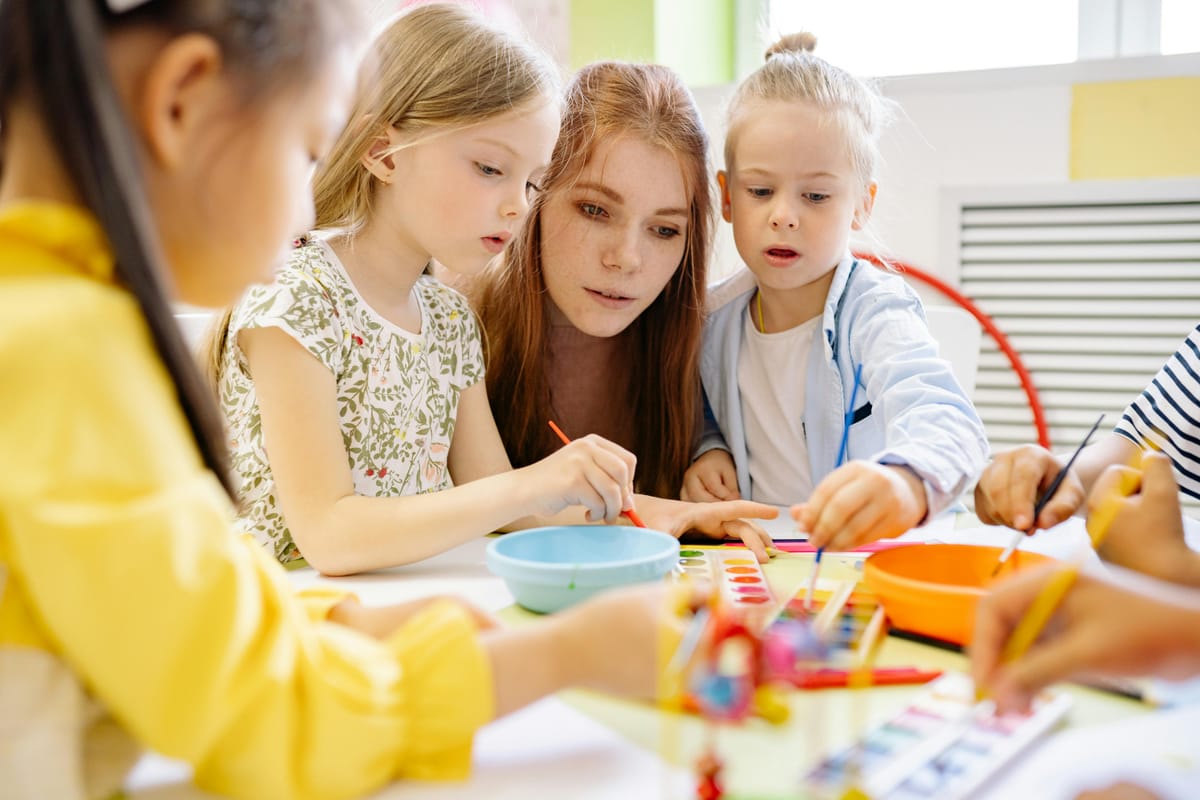
Parents researching preschool costs face a complex web of expenses beyond basic tuition. Registration fees, supply lists, and activity materials can quickly strain budgets while families seek quality early education options. Many parents also want engaging preschool activities at home to supplement classroom learning without adding significant costs.
Smart families find creative solutions to provide enriching educational experiences while managing expenses. Coloring activities offer an excellent way to develop fine motor skills, color recognition, and creativity at home. Parents looking for budget-friendly educational resources can download 54,890+ free coloring pages designed specifically for preschool-aged children.
Summary
- Early exposure to structured group learning significantly shapes how children navigate formal education. Research from the Stanford Institute for Economic Policy Research shows that low-income children with behavioral and developmental conditions benefit substantially from public preschool through early identification and intervention. These early experiences build cognitive flexibility, emotional regulation, and the foundational curiosity that fuels long-term learning success.
- Preschool readiness depends more on developmental milestones than chronological age. While most children enter programs between ages 3 and 5, the Cleveland Clinic notes this window aligns with when kids typically develop the emotional, physical, and behavioral maturity needed for group learning. Research shows that 85% of brain development occurs before age 5, making early social experiences particularly formative during this critical period.
- Preschool costs vary dramatically based on geography and program structure. Pre-K for PA's 2025 report found families pay around $13,000 annually for full-time care nationally, though tuition ranges from $4,800 to $15,600 depending on location and schedule. Metro areas like New York City and San Francisco see costs exceed $18,000 to $22,000 annually, while rural communities frequently offer similar programs under $10,000.
- Quality indicators predict outcomes more reliably than tuition costs. Only 5 states met all 10 of NIEER's recommended benchmarks for preschool quality according to the 2024 State of Preschool Report. Teacher qualifications, class size, and curriculum design matter more than price, with some mid-range community programs outperforming expensive branded centers through responsive teaching and age-appropriate activities.
- Home learning routines reinforce classroom instruction when integrated into daily activities. Everyday moments like folding laundry, cooking, and bath time teach sequencing, measurement, categorization, and vocabulary through natural conversation. Ninety percent of brain development occurs by age 5 according to early childhood education research, making these seemingly simple interactions critical windows for cognitive growth.
- Parents and teachers navigating tight budgets can download 54,890+ free coloring pages that support fine motor development, color recognition, and thematic learning tied to classroom curriculum, offering a cost-effective supplement to formal instruction without the recurring expense of activity books.
Is Preschool Important for Children?
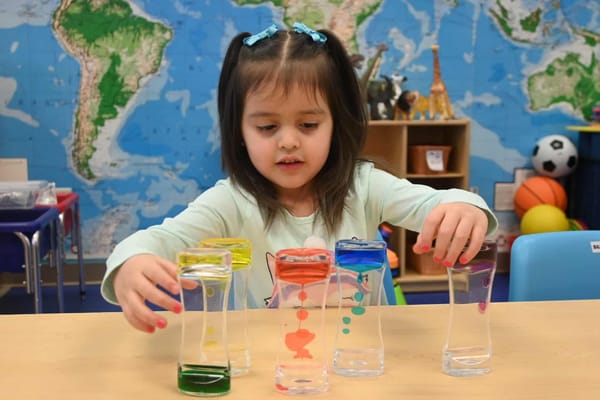
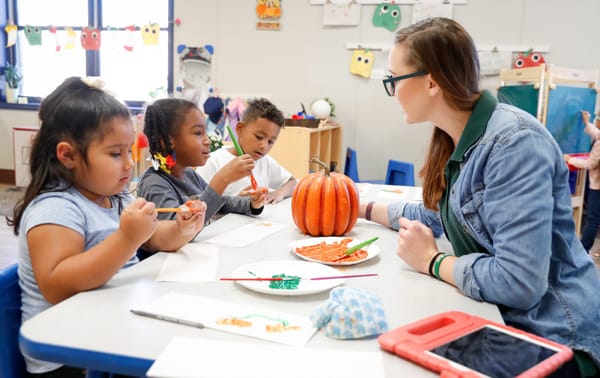
Preschool shapes how children learn to navigate the world beyond their family. It's where they first experience structured group learning, practice taking turns, follow instructions from teachers, and discover how to hold someone's attention in a room full of peers. These foundational skills determine how confidently a child enters kindergarten and how effectively they absorb everything that follows.
🎯 Key Point: The social and emotional skills developed in preschool are just as important as academic readiness for future school success.
"Children who attend high-quality preschool programs show significant improvements in social skills and emotional regulation compared to those who don't." — National Institute for Early Education Research
💡 Tip: Look for preschool programs that emphasize both structured learning activities and free play to give your child the best foundation for kindergarten readiness.
What does research show about preschool benefits?
According to research from the Stanford Institute for Economic Policy Research, low-income children with behavioral and developmental conditions benefit from early exposure to public preschool. Early identification and treatment open pathways that might otherwise remain closed. Consistent time in developmentally appropriate environments builds cognitive flexibility, emotional regulation, and the curiosity that sustains long-term learning.
How does preschool build academic readiness?
Children arrive at kindergarten with patterns of behavior, communication styles, and learning expectations already formed in preschool. Teachers introduce letters and numbers through play, weaving education into games, story time, and daily routines like counting snacks or marking days on a calendar. A child who has spent months sorting blocks by color, counting toys, and listening to stories enters formal schooling with mental frameworks already in place.
Why does emotional foundation matter for learning?
The emotional foundation matters equally. Children need to feel safe and cared for to focus on learning. Preschool teaches kids to trust adults outside their immediate family, build relationships with peers, and resolve conflicts independently. These skills form the foundation of classroom behavior, teamwork, and resilience when challenges arise.
How do fine motor skills develop through structured play?
Fine motor skills develop when children thread beads, grip crayons, cut paper with safety scissors, and play with small objects. These activities strengthen hand-eye coordination and muscle control, which are essential for writing.
Preschools plan activities around what children need to learn at their age, giving them chances to practice in ways that feel like fun rather than work. Parents and teachers can use 54,890+ free coloring pages from My Coloring Pages to develop fine motor skills, color recognition, and creative expression.
How does language development accelerate in preschool settings?
Kids learn language more quickly when exposed to a diverse vocabulary throughout the day. Teachers ask open-ended questions during snack time, introduce new words during circle time, and model clear communication for expressing needs.
When teachers help children ask "why," explore cause and effect, and work through problems, they build thinking patterns that extend far beyond the classroom.
How does preschool quality vary across different programs?
Quality varies dramatically. Only 5 states met all 10 of NIEER's recommended benchmarks for preschool quality according to the National Institute for Early Education Research's 2024 State of Preschool Report.
Teacher qualifications, class size, and curriculum design predict outcomes more reliably than tuition costs. Some mid-range community programs outperform expensive branded centers because they prioritize responsive teachers, age-appropriate activities, and consistent routines that help children feel safe enough to explore.
Related Reading
- Preschool Worksheets
- What Age Is Preschool
- Preschool Curriculum
- Preschool Age Range
- Preschool Vibes
- Preschool Homeschool Curriculum
- Preschool Games
- Worksheets For Preschool
- Preschool Education
- Free Preschool Worksheets Age 3–4
- Preschool Books
- What Age Do Kids Start Preschool
- Preschool Graduation
- Free Name Tracing Worksheets for Preschool
- Preschool Backpack
- All About Me Preschool
- Free Preschool Worksheets
- Preschool Self Defense
- What Should a Child Learn in Preschool
- Preschool vs Pre K
- Sight Words for Preschool
- Free Printable Preschool Worksheets Tracing Letters
- First Day of Preschool
- Preschool Math Worksheets
- Preschool Valentine Crafts for Parents
- Preschool Graduation Gifts
- Preschool Toys
- What Age Is Preschool and Kindergarten
- Preschool Quotes About Play
Which Age is Best for Preschool?
Most children start preschool between the ages of 3 and 5, but readiness matters more than your birthday. According to the Cleveland Clinic, this age range is when most kids develop the emotional, physical, and behavioral maturity needed for structured group learning. Starting within this window gives children at least a year to practice classroom routines before kindergarten begins.

🎯 Key Point: The 3-5 age range represents the optimal developmental window when children have the cognitive capacity and social skills needed for group learning environments.
"This age range is when most kids develop the emotional, physical, and behavioral maturity needed for structured group learning." — Cleveland Clinic
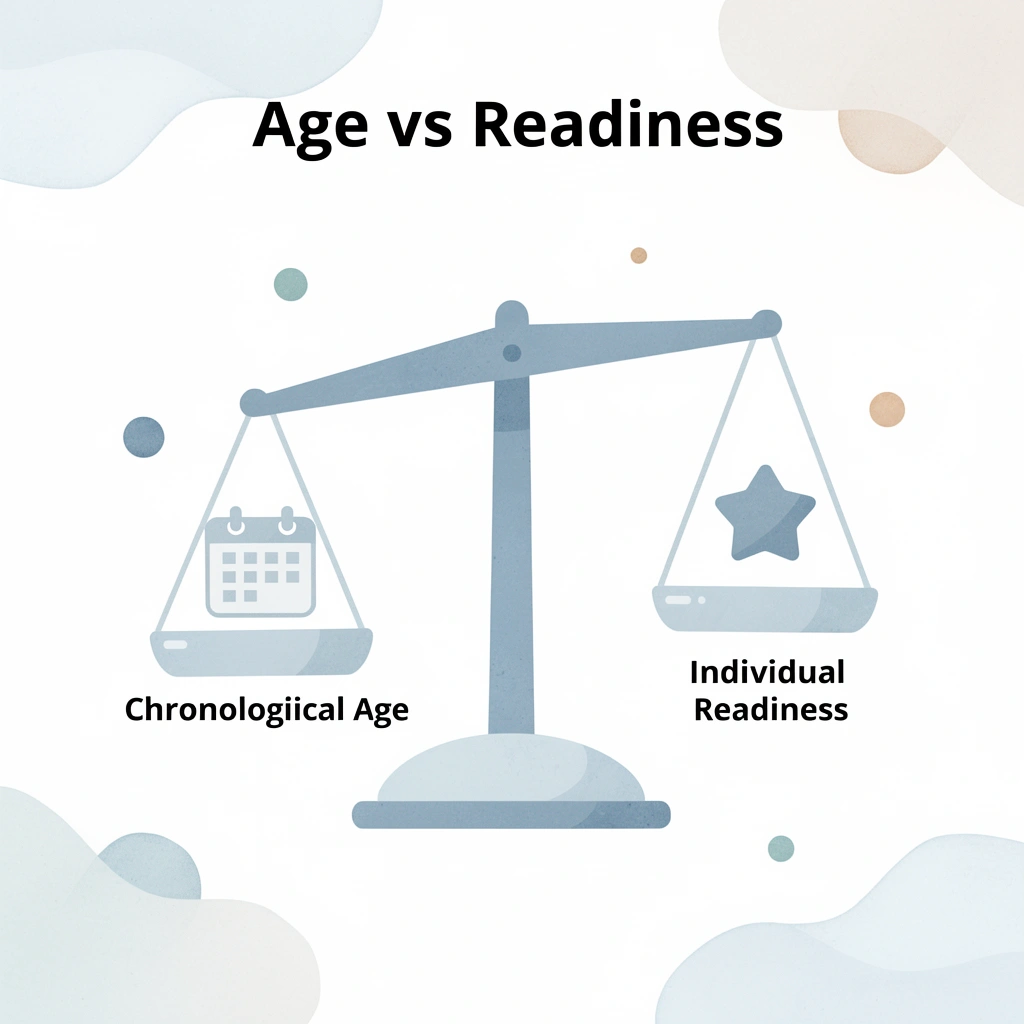
🔑 Takeaway: While chronological age provides a guideline, individual readiness indicators like emotional regulation, communication skills, and independence are the true markers for preschool success.
How do you know if your child is ready for preschool?
Readiness looks different for each child. Pushing a child into preschool before they can handle separation, follow basic directions, or interact with peers creates stress that undermines the experience. Age eligibility opens the door, but developmental milestones determine whether it makes sense to walk through it.
How do you know if your child can handle separation anxiety?
Separation anxiety reveals a child's readiness more than most parents realize. Children who recover quickly after initial crying demonstrate the emotional regulation preschool requires. This doesn't mean your child will skip happily into class every morning; it means they can listen when upset, a teacher's help calms them down, and worry doesn't consume the entire morning. The real question isn't whether your child feels anxious, but whether they feel better within a few minutes instead of staying upset for hours.
What social skills does your child need for preschool?
Social readiness doesn't require perfect sharing or conflict resolution. It shows up when children play near peers, even if not yet playing together. Parallel play counts, as does showing interest in other children, attempting to join games, or asking about classmates. Research shows that 85% of brain development occurs before age 5, making these early social experiences formative. Children learn how relationships work by watching, imitating, and testing boundaries in low-stakes environments.
Can your child follow simple classroom instructions?
Following simple instructions matters because preschool runs on routines. Children who can hang up their coats, sit during circle time, or wash their hands when asked participate more fully in classroom activities. This isn't about obedience; it's about understanding that directions help groups function and that responding to cues unlocks access to what happens next. Kids who struggle with one or two-step directions often spend early preschool months learning this skill instead of engaging with the curriculum, which delays the benefits parents sought from preschool.
How does curiosity signal cognitive readiness?
Children who ask constant questions, explore new environments, or show interest in books and puzzles bring the raw material preschool needs. A child who wonders why leaves change color or how buildings stay standing arrives ready to absorb answers through stories, experiments, and guided play. Parents can support this curiosity at home by accessing our 54,890+ free coloring pages, which let children explore themes from dinosaurs to space exploration and build visual vocabulary and creative practice that extends classroom learning.
Why is bathroom independence so important for preschool?
Being able to use the bathroom independently removes a practical barrier that many programs require. Children who can communicate their needs, manage their clothes, wipe themselves, and wash their hands afterward free up teachers to focus on teaching rather than supervision. Kids who need substantial help with bathroom use often feel embarrassed, which intensifies separation anxiety and makes the preschool experience more stressful.
But knowing your child shows these signs leaves one question unanswered: what will you pay for the experience?
How Much Is Preschool
Preschool tuition varies based on location, program type, and hours attended. Pre-K for PA's 2025 State of Early Care and Education Report found that families pay around $13,000 annually for full-time care, though costs differ significantly by area and program structure. Understanding these cost factors helps you budget effectively and identify which program features justify the expense.

"Families pay around $13,000 annually for full-time preschool care, though costs vary significantly by location and program structure." — Pre-K for PA, 2025
🎯 Key Point: Location and program type are the biggest factors affecting preschool costs - the same quality program can cost thousands more in urban areas compared to rural communities.
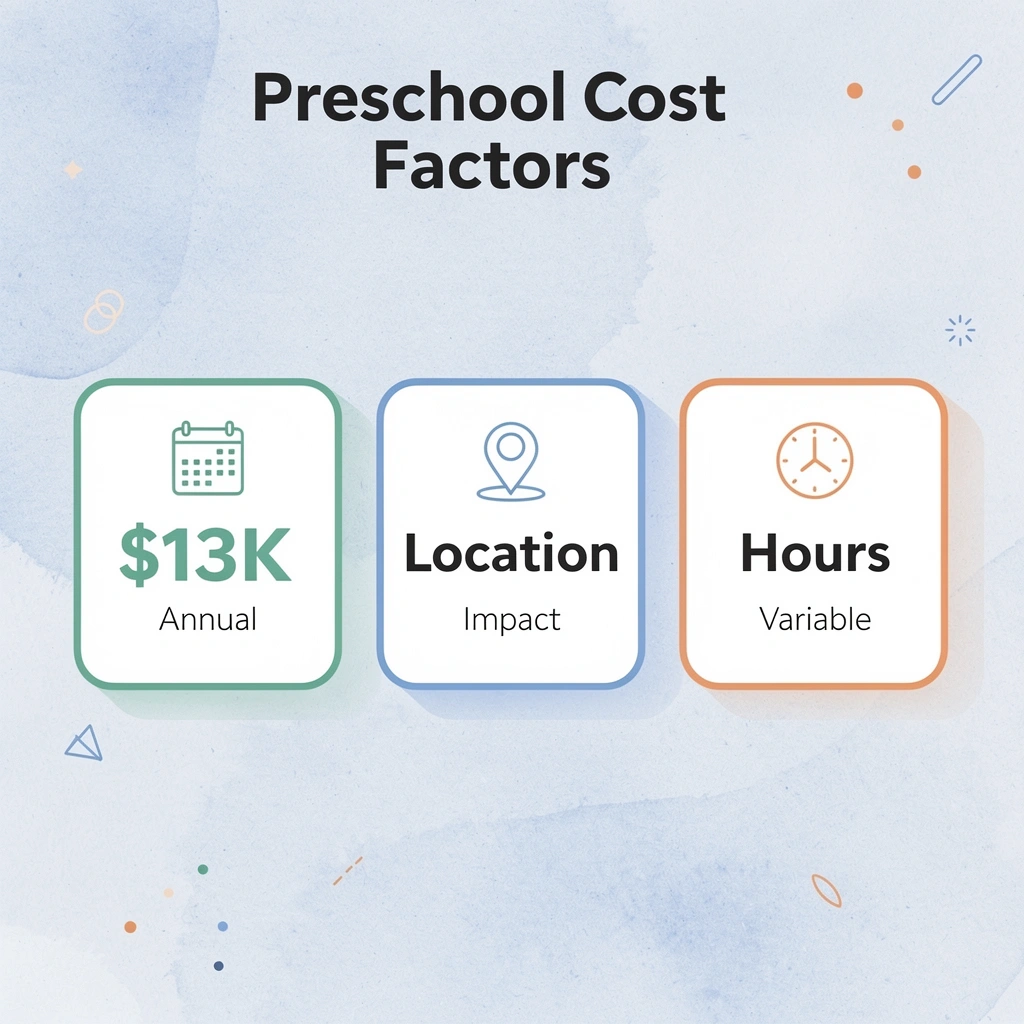
💡 Tip: When comparing preschool costs, always factor in hours of care, teacher-to-child ratios, and additional services like meals or transportation to get the true value of each program.
National averages mask enormous regional differences
Across the United States, preschool tuition typically ranges from $400 to $1,300 per month ($4,800 to $15,600 per year for full-time enrollment), with half-day programs costing $375–$700 per month. These figures mask regional differences: a $900 monthly program in rural Tennessee offers different facilities, teacher credentials, and class sizes than the same price in suburban Boston. Quality correlates more strongly with teacher-to-child ratios, curriculum design, and staff qualifications than with tuition cost.
What are the different types of preschool programs and their costs?
Public preschool programs, where available, eliminate tuition or charge minimal fees. Many school districts now offer Pre-K through public funding, though eligibility requirements and waitlists vary.
Private preschools range from $4,500 to $15,000 per year, depending on schedule and location. Montessori and specialized programs charge premium prices of $8,000 to $20,000 per year due to smaller class sizes and specialized teaching materials.
Parent-run co-ops reduce tuition to $1,000 to $3,000 per year by requiring families to volunteer classroom hours.
How can families supplement preschool learning at home affordably?
Families can extend learning at home cost-effectively by using 54,890+ free coloring pages from My Coloring Pages, which support fine motor development, color recognition, and thematic learning aligned with the classroom curriculum.
Geography and schedule flexibility shift the equation
Big cities like New York City, San Francisco, and Washington D.C. charge $18,000 to $22,000 annually for full-day preschool programs, while suburban and rural communities offer the same hours for under $10,000. Urban programs must compete for qualified teachers in high-cost-of-living areas, driving up teacher salaries and operational expenses. Three-day-per-week programs cost significantly less than five-day programs. Families with flexible work schedules can combine part-time preschool with home-based learning activities to avoid double tuition costs.
What tuition actually covers determines value
Preschool fees typically cover teacher salaries, curriculum materials, facility maintenance, snacks or meals, and enrichment activities such as music or outdoor play.
How can you tell if you're paying for quality or just amenities?
Programs that list costs help parents understand whether they're paying for educational quality or extras that matter less for child development. Some mid-priced community programs outperform expensive branded centers because they focus on what research shows actually works: responsive teachers, age-appropriate materials, and consistent routines that help children feel safe enough to explore.
The Pennsylvania Key's 2025 Child Care Market Rate Survey provides detailed pricing information by region, helping families compare local options against statewide averages and identify which programs offer fair value versus those charging premium prices based on reputation rather than results.
Paying tuition doesn't guarantee your child will learn what preschool promises to teach.
Related Reading
- Preschool Assessment
- Preschool Crafts
- Preschool Learning Activities
- Preschool Tracing Worksheets
- Daycare Vs Preschool
- Preschool Classroom Layout
- Preschool Playground Equipment
- Free Preschool Games
- Preschool Sight Words
- Preschool Math Activities
- How To Become A Preschool Teacher
- Preschool Prep
- Preschool Lesson Plan Template
- Noah's Ark Preschool
- Preschool Science Experiments
- Preschool Craft Ideas
- Creative Curriculum For Preschool
- Playing Preschool Curriculum
- Preschool Bulletin Board Ideas
- Christmas Crafts Preschool
- Spring Bulletin Board Ideas For Preschool
- Turkey Craft Preschool
- Preschool Learning Games
How to Facilitate Education for Preschoolers at Home
Preschool learning continues at home through routines, conversations, and activities that either reinforce classroom instruction or create developmental gaps. Supporting learning at home requires consistency and attention to everyday moments: not expensive materials or formal lesson plans.
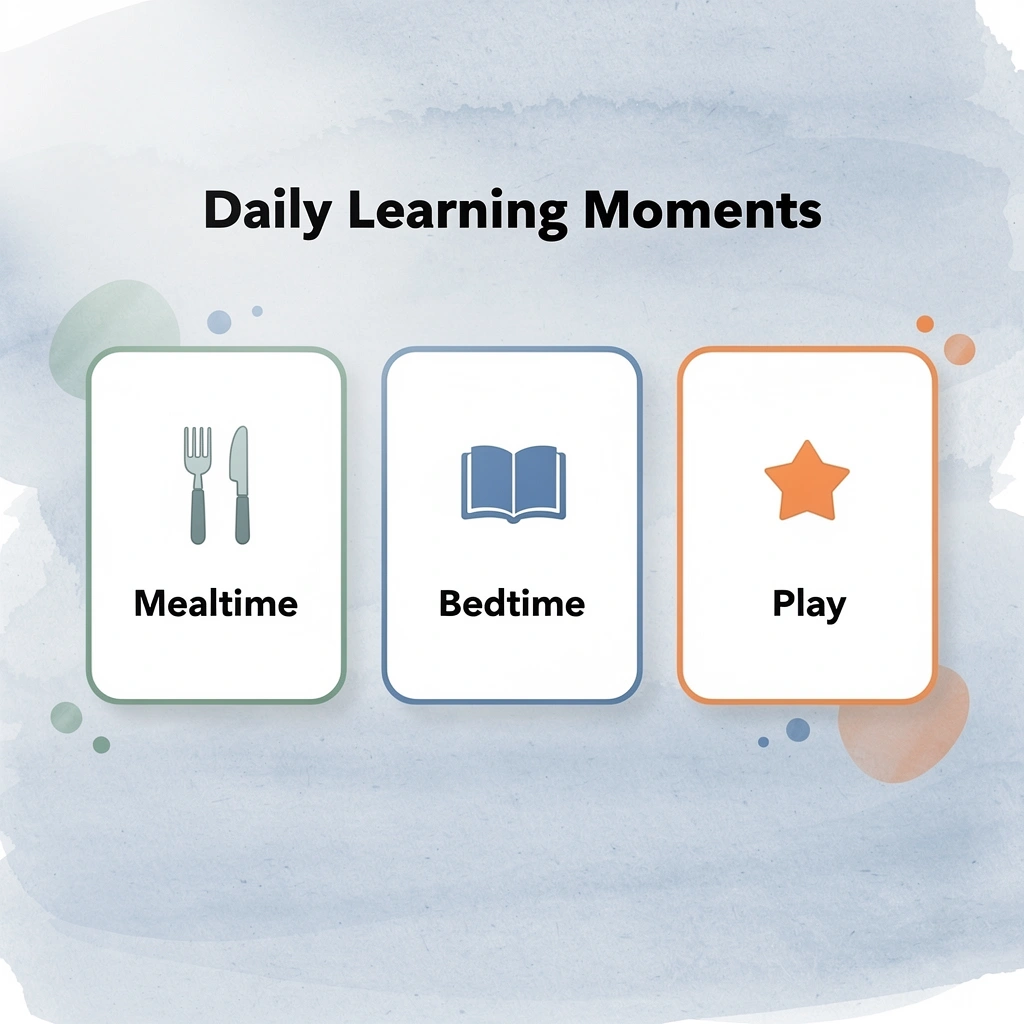
🎯 Key Point: The most effective home education happens during daily routines like mealtime conversations, bedtime stories, and play activities that naturally integrate learning opportunities.
⚠️ Warning: Avoid turning your home into a formal classroom—preschoolers learn best through play-based activities and natural interactions rather than structured lessons.
Structure creates the foundation for everything else
Children need predictability the way adults need coffee before meetings. Consistent daily routines teach sequencing, vocabulary, and independence without flashcards.
How do daily routines become learning opportunities?
Bath time becomes a lesson in order (undress, fill tub, wash, drain, dry, pajamas), introduces concepts like wet, slippery, faucet, and drain, and builds independence when your child retrieves their own towel or puts toys away unprompted. Breakfast routines work similarly: setting the table teaches counting (four plates, four forks), spatial reasoning (the napkin goes to the left of the plate), and responsibility when your child pours their own milk or clears their dishes.
Why does structure reduce resistance and increase engagement?
Structure helps parents complete household tasks while children participate and learn. When children know what comes next, they resist less and engage more, transforming chores into learning opportunities rather than conflicts.
Why should you check in with teachers to maintain continuity?
Your child's preschool teacher sees patterns you might miss because they watch your child work with other children, engage in structured activities, and interact with age-appropriate materials. Quick check-ins through email, phone calls, or pickup conversations provide specific strategies tailored to your child's needs rather than general advice.
How can specialized services extend learning at home?
If your child receives speech therapy, occupational therapy, or other specialized services, talking with providers shows you how to maintain treatment gains at home through simple changes to play and daily routines.
A teacher might suggest breaking multi-step directions into smaller chunks, using visual schedules, or adding sensory breaks between activities. These changes work because they focus on your child's actual behavior rather than theoretical developmental milestones.
How can you talk to your child during everyday activities?
Nearly every moment your child spends awake offers chances to introduce vocabulary, shapes, colors, sizes, and numbers. Folding laundry becomes a lesson in matching (find the other sock), sorting (all the shirts go together), and comparison (this towel is bigger than that washcloth). Cooking introduces measurement (two cups of flour), change (liquid batter becomes solid cake), and sequencing (mix dry ingredients first, then add wet). These back-and-forth interactions build attachment and language skills while teaching your child that communication gets results.
What types of questions encourage deeper thinking?
Asking open-ended questions (" What do you think will happen if we add more water? ") helps children think more deeply than yes-or-no questions (" Is the water cold? "). Building on what your child notices (you saw the bird! That's a cardinal, and it's red like your shirt) teaches new words and connects new information to their existing knowledge.
How do structured projects benefit preschoolers?
Structured projects like coloring, building, sorting, or sensory play give children your full attention, showing that they matter. Commenting on their work (you used three different shades of blue in that drawing) teaches observation skills and vocabulary.
Praising effort rather than outcome (you worked hard figuring out how those blocks balance) builds persistence and willingness to tackle difficult tasks without fear of failure. Parents and teachers can access 54,890+ free coloring pages, organized by theme and complexity, to provide children with age-appropriate activities that develop fine motor control and color recognition.
Why does unstructured play matter equally?
Unstructured play works differently but is equally important. When you give children art materials, building blocks, or imaginative props without instructions, they create their own rules, solve self-generated problems, and try new ideas when one approach stops working.
This freedom builds creativity and confidence that structured activities cannot create, since the child makes every decision rather than following adult-designed steps.
5 At-Home Preschool Educating Activities
Reading, math, science, art, and sensory activities form the foundation of home-based preschool learning. They address different developmental areas that build on each other and create neural connections, preparing children for school. The activities below demonstrate how to transform everyday materials into learning tools without special training or expensive supplies.
1. Reading together builds vocabulary and comprehension
Storytime builds comprehension through discussion. When you pause to ask open-ended questions—"Why do you think the bear feels that way?" rather than "Is the bear hungry?"—you teach struggling readers to process information, make inferences, and explain their thinking instead of simply recalling facts. Discussing characters, predicting outcomes, and connecting stories to your child's experiences develop the comprehension strategies that struggling readers often lack.
What games help with letter recognition?
Letter recognition accelerates through games that feel nothing like worksheets. Hide magnetic letters around your home and turn finding them into a scavenger hunt where locating the letter B unlocks a clue to the next location. This teaches letter shapes, sounds, and names while building excitement about reading rather than treating it as desk work.
2. Counting games make math tangible
Abstract numbers mean little to preschoolers until connected to physical objects. Use toys, snacks, or household items for counting practice throughout the day. Ask your child to count crackers, blocks stacked, or steps to their bedroom. This repetition builds number sense: the foundational understanding that numbers represent quantities rather than arbitrary symbols.
Why does shape sorting develop multiple cognitive skills at once?
Shape sorting teaches children spatial awareness and categorization simultaneously. Cut shapes from cardboard, or use household items such as cans (circles), boxes (rectangles), and tissue boxes (squares). Ask your child to group them by shape, size, or color.
According to early childhood education research, 90% of brain development happens by age 5. These sorting activities represent critical learning windows that don't return later.
3. Nature walks turn observation into science
Nature walks offer chances to explore textures, colors, patterns, and cause-and-effect relationships. Collect leaves, rocks, or flowers, then examine them at home. Ask your child to describe what they notice: rough bark versus smooth stones, pointed leaves versus round ones, heavy rocks versus light twigs. This builds scientific thinking by teaching children to notice details, make comparisons, and explain what makes objects similar or different.
How do simple experiments introduce cause and effect?
Simple experiments teach cause and effect through visible reactions. When you mix baking soda and vinegar, they react to form bubbles and fizz, demonstrating how materials interact. Your child learns that actions produce predictable results, that experimentation builds knowledge, and that asking "what happens if" leads to discovery. These foundational concepts of scientific thinking are expected when children enter kindergarten.
4. Art activities develop fine motor control and creativity
Craft time strengthens the hand muscles children need for writing while building executive function skills. When children choose colors, decide what to draw, and solve problems like attaching pieces together, they develop skills that transfer to academic tasks. Comment on their process rather than the finished product: "You figured out how to make that paper stand up" teaches more than "That's pretty."
What free resources support art development at home?
Parents and teachers can access 54,890+ free coloring pages organized by theme and developmental level. The My Coloring Pages collection supports fine motor development through controlled coloring, introduces thematic vocabulary from dinosaurs to space exploration, and grows with children's abilities at no cost.
How does nature art combine outdoor exploration with creativity?
Nature art connects outdoor exploration to creative expression. After collecting items during walks, create leaf rubbings, flower collages, or texture prints. This teaches children that art materials exist everywhere and that observation skills transfer between science and art.
5. Sensory bins build focus and hand strength
Sensory activities help children explore textures, weights, and materials through touch while developing hand muscles needed for writing and self-care tasks like buttoning shirts. Fill a bin with rice, beans, or water, then add cups, spoons, and small toys for scooping, pouring, and sorting. This open-ended play calms children while strengthening fine motor control through repetitive motions that feel like play rather than practice.
What benefits does playdough offer for motor skill development?
Playdough offers similar benefits with greater creative flexibility. Children who roll, press, and mold shapes build hand strength while practicing the pincer grip needed for pencil control. Add cookie cutters, popsicle sticks, or plastic knives to extend the activity, allowing children to create stories, practice letters, or manipulate materials without predetermined outcomes.
These quiet activities work particularly well for children who struggle with emotional regulation because repetitive motion provides sensory input that helps them manage frustration or anxiety.
Related Reading
- Preschool Mothers Day Crafts
- Preschool Spring Crafts
- Preschool Snack Ideas
- Preschool vs Daycare
- Preschool Thanksgiving Crafts
- Halloween Crafts Preschool
- Preschool Movement Songs
- Fathers Day Crafts Preschool
- Preschool Classroom Themes
- January Preschool Themes
- Fall Coloring Pages Preschool
- Part Time Preschool
- Letter B Worksheets Preschool
- Letter A Worksheets Preschool
- All About Me Preschool Activities
- Tracing Worksheets Preschool
- Good Morning Songs for Preschool
- Fall Preschool Crafts
- Preschool Art
- Preschool Science Activities
- Play Based Preschool
Download 54,780+ Free Preschool Worksheets
Children learn letters, numbers, and early science concepts better when classroom instruction connects to home activities. Most parents lack the time to create materials from scratch or the funds for expensive workbooks used once. Worksheets that match the preschool curriculum—coloring, tracing, matching, sequencing—provide repeated practice with concepts children are already learning, making abstract ideas concrete through hands-on engagement.
🎯 Key Point: The challenge is finding worksheets that match your child's specific developmental stage without paying for entire books when you need just three pages. When worksheets align with classroom themes (farm animals this week, shapes next month), children see learning as continuous. They recognize the letter B they traced at school in the worksheet they color at home, reinforcing the connection between symbol and sound through repetition that feels like play.
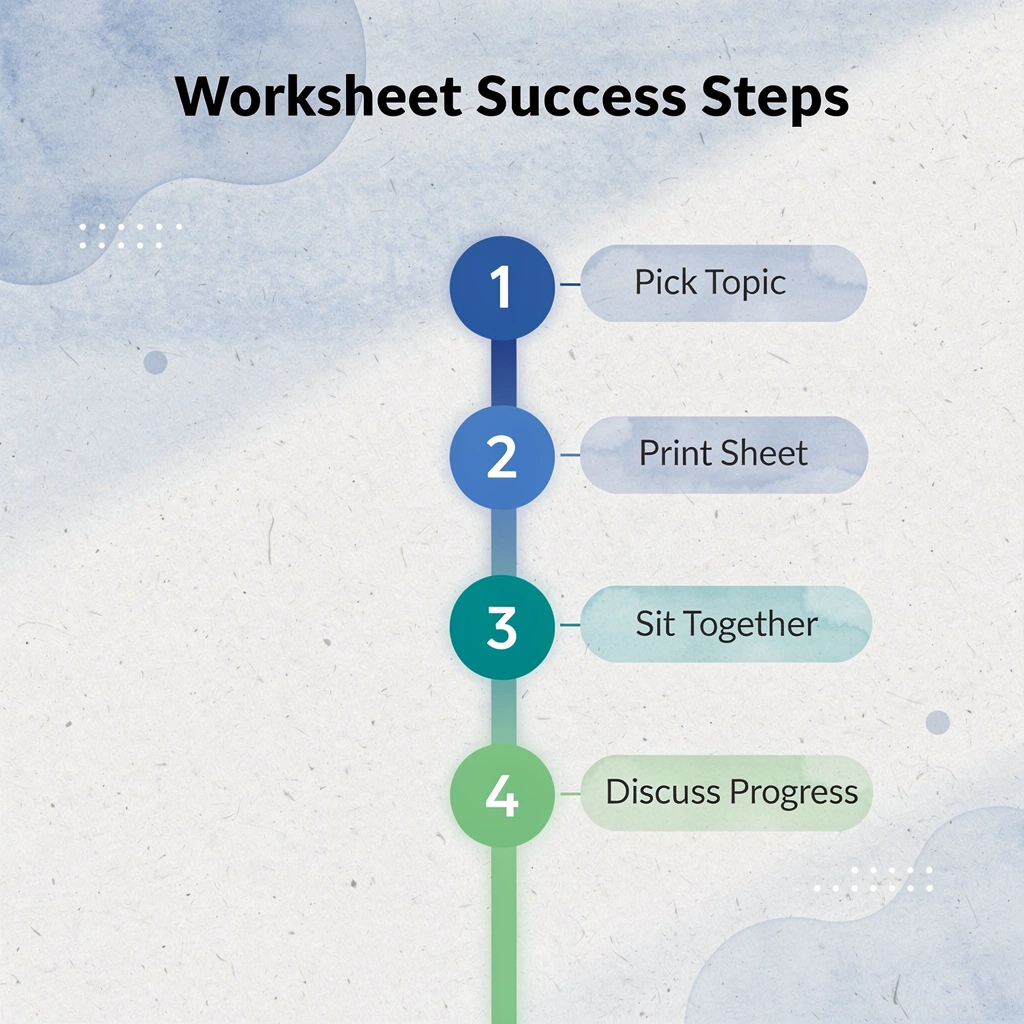
Pick a topic your child is currently learning—counting to ten, identifying colors, or recognizing shapes. Print a relevant worksheet and sit with them while they complete it, not to correct mistakes but to discuss what they notice. Ask why they chose that color, what happens when they connect the dots, or which object looks biggest. These conversations transform a static activity into active learning that builds vocabulary and reasoning skills.
"Visual records of progress build confidence because children can physically see evidence of their mastered skills and developmental growth."
💡 Tip: Keep completed worksheets in a folder so your child can see their progress accumulate over weeks and months. This visual record builds confidence because children can physically flip through evidence of mastered skills—how their ability to stay inside lines improved, how letter formation became more controlled, or how they moved from counting three objects to counting ten.
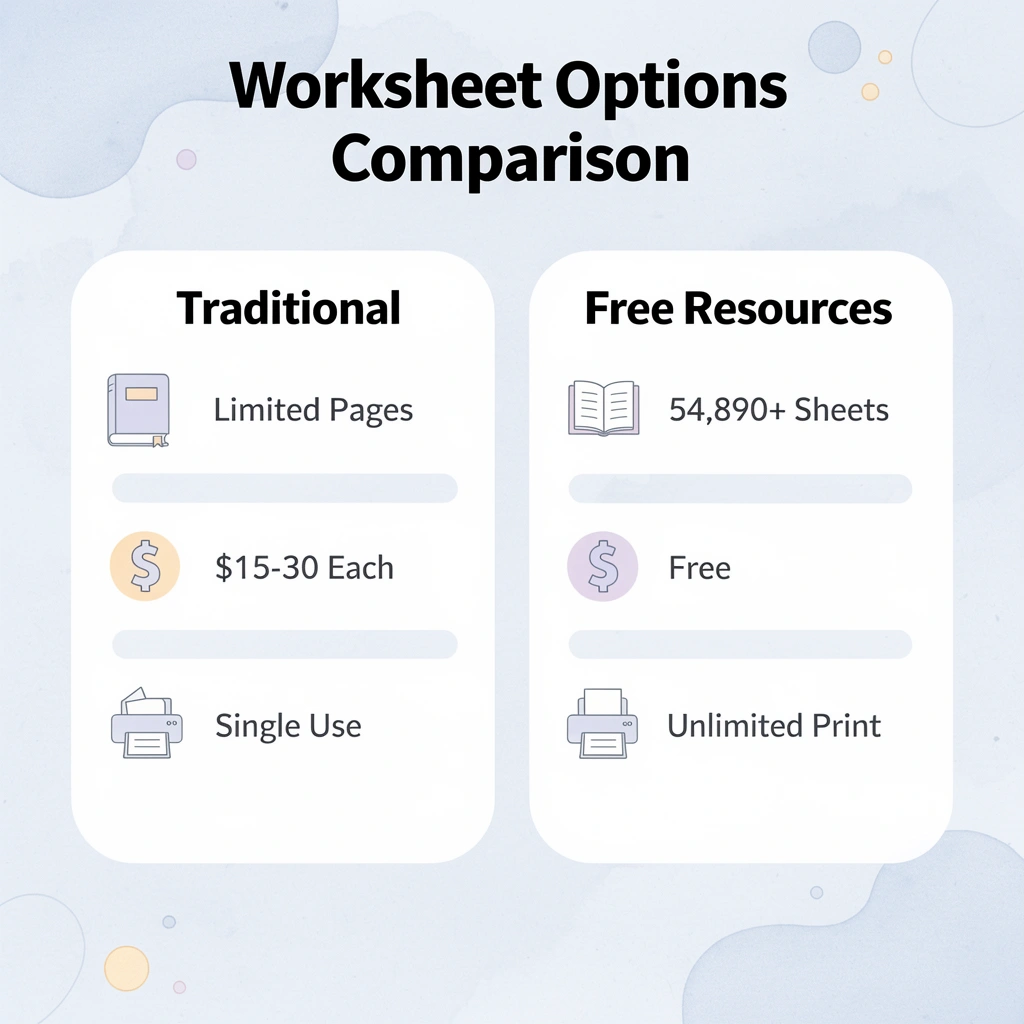
Parents and teachers navigating tight budgets can download 54,890+ free coloring pages organized by educational theme and developmental level. Our printables support fine motor development, introduce vocabulary from dinosaurs to space exploration, and grow with children's abilities without recurring expense. My Coloring Pages removes the financial barrier that prevents families from extending classroom learning into daily routines, offering developmental benefits equivalent to expensive workbooks through accessible technology.
⚠️ Warning: Consistency matters more than perfection. Three worksheets per week, completed with discussion, build more skills than daily packets rushed through without conversation. The goal isn't to complete pages—it's to use them as tools for interaction, repetition, and serve-and-return communication that accelerates language development.