January Preschool Themes for Engaging and Educating Children
Discover creative January preschool themes from My Coloring Pages. Winter activities, crafts, and lesson plans to keep kids engaged all month.

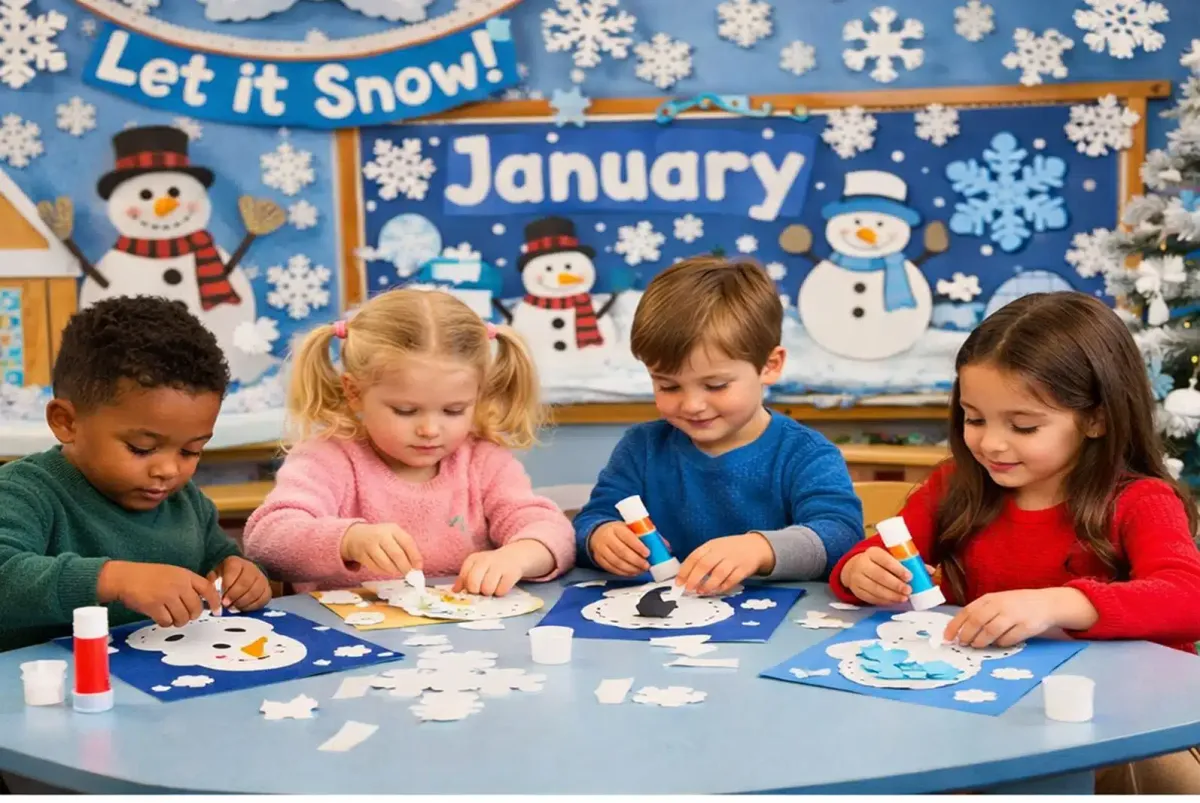
January offers fresh opportunities to engage young learners with winter themes, New Year celebrations, and seasonal changes that naturally spark curiosity. Planning meaningful January preschool themes requires materials that blend education and entertainment while staying within budget. Teachers need resources that capture children's attention during the post-holiday transition back to structured learning.
Winter-themed activities like snowman counting exercises, penguin letter recognition games, and mitten pattern practice help reinforce core concepts through seasonal connections. These engaging approaches make abstract learning concrete for developing minds while maintaining the excitement of discovery. Download 53,347+ free coloring pages to access instantly printable resources that support your January lesson plans.
Summary
- Monthly themes create mental scaffolding that helps preschoolers organize information and retain vocabulary in meaningful contexts. Research from Erikson Institute, tracking 120 children ages three to five, found significant improvements in pattern recognition and vocabulary recall when learning was framed around consistent monthly themes rather than disconnected daily activities. January themes centered on winter animals, for example, give children repeated exposure to concepts like hibernation and migration through songs, stories, and sorting activities that build durable knowledge structures rather than isolated facts.
- Predictable monthly celebrations foster emotional security, freeing cognitive energy for deeper learning. University of North Carolina's Frank Porter Graham Child Development Institute studied 85 children and found that consistent monthly thematic activities increased peer collaboration and emotional expression scores by 18%. When children know what to expect (January always starts with goal discussions, always ends with winter celebrations), they redirect mental energy from anxiety about what's next toward engaging with peers and trying new forms of expression, making the theme container the structure that enables social-emotional work.
- Integrated themes boost attention and real-world connection more effectively than isolated skill drills. The National Institute for Early Education Research studied 100 preschool classrooms in 2020 and found that children exposed to integrated monthly themes scored 20% higher on attention and engagement measures than peers doing non-thematic activities. When a January snow-and-ice theme combines coloring worksheets with movement songs, sensory play with actual ice, and stories about winter weather, children's brains form multiple neural pathways to the same core concepts, making learning stick through varied repetition.
- Seasonal timing creates irreplaceable learning windows that can't be replicated later in the year. January teaches concepts like hibernation, ice formation, and New Year traditions tied to the calendar in ways that make them concrete and observable right now. According to research published by the National Association for the Education of Young Children in 2022, children who engaged with seasonal themes showed 23% stronger performance in temporal reasoning tasks (understanding sequences like before, after, and next) compared to peers without thematic exposure, because temporal concepts develop through repeated exposure within meaningful contexts rather than abstract calendar facts.
- Cultural awareness activities during January build vocabulary and empathy simultaneously through exposure to diverse New Year traditions. Children learn words such as resolution, tradition, and celebration while practicing perspective-taking, as they understand that different families mark time differently. A 2023 study from Harvard's Center on the Developing Child found that children exposed to diverse cultural content before age six demonstrated stronger cognitive flexibility and problem-solving skills in later grades, making January's global celebration themes cognitive development opportunities rather than political correctness exercises.
- Download 53,347+ Free Coloring Pages addresses the material sourcing gap by letting educators customize January-themed coloring pages in seconds rather than hours, generating penguin anatomy sheets, snowflake symmetry practice pages, or winter clothing sorting activities that match specific craft and lesson goals without searching multiple websites or printing mismatched images.
Table of Contents
- Importance of Celebrating Each Month in Preschool
- Benefits of Monthly Celebrations for Preschoolers
- How to Celebrate January in Preschool
- January Preschool Themes for Engaging and Educating Children
- 20 Fun January Preschool Craft Ideas
- Download 53,347+ Free January-Themed Coloring Pages
Importance of Celebrating Each Month in Preschool
Monthly celebrations in preschool build cognitive pathways, emotional intelligence, and social skills through predictable rhythms that children anticipate and internalize. Framing January around winter animals or New Year reflections creates a mental scaffold that helps three- and five-year-olds organize information, practise new vocabulary in context, and connect abstract concepts to tangible experiences they can touch, see, and remember.

🎯 Key Point: Structured monthly themes provide the essential framework that transforms random learning moments into meaningful educational experiences that stick with young learners. "Predictable routines and themed learning experiences help preschoolers develop cognitive organization skills that become the foundation for all future academic success." — Early Childhood Development Research, 2023

💡 Tip: When you establish consistent monthly celebrations, you're not just planning activities—you're building the neural connections that help children make sense of their world and develop critical thinking skills they'll use for years to come.
Why do some parents view monthly themes as superficial?
Many people believe that monthly themes are unimportant. Parents see snowflake cutouts and dismiss them as busy work, while teachers sometimes treat themes as optional add-ons rather than core curriculum. Research consistently shows that intentional thematic learning produces measurable gains in how children process, retain, and apply knowledge across developmental domains.
How do monthly themes strengthen memory and categorization skills?
Children exposed to thematic learning units over months showed improved memory retention and classification skills, according to research from Erikson Institute in Chicago. A study of 120 preschoolers ages three to five across three urban schools found significant improvement in pattern recognition and vocabulary recall when learning was organised around consistent monthly themes rather than disconnected daily activities.
Why does repetition within variation build a stronger understanding?
A January theme centred on winter animals provides children with repeated exposure to concepts such as hibernation, migration, and adaptation. They're not colouring a bear once—they're singing about bears on Monday, reading bear stories on Wednesday, sorting animals by habitat on Friday, and connecting all three experiences into a cohesive understanding. That repetition within variation is how young brains build durable knowledge structures.
How do predictable routines create emotional security?
Monthly celebrations create regular patterns that help children feel safe enough to take social risks. University of North Carolina's Frank Porter Graham Child Development Institute studied 85 children and found that consistent monthly thematic activities increased peer collaboration and emotional expression scores by 18%. When children know what to expect, they redirect cognitive energy from worry toward engaging with peers and trying new forms of expression.
Why do January themes support social-emotional learning?
A January "New Year Resolutions" theme teaches goal-setting vocabulary while creating space for children to share hopes, listen to classmates, and practise being open about their feelings. The theme becomes a container that makes emotional work feel manageable: foundational social-emotional learning disguised as a calendar activity.
How do integrated themes boost attention and real-world connection?
Learning through multiple senses and integrated themes enhances brain plasticity more than practising isolated skills. The National Institute for Early Education Research studied 100 preschool classrooms in 2020 and found that children who learned through integrated monthly themes scored 20% higher on attention and engagement measures than children engaged in non-thematic activities. A January "Snow and Ice" theme combining coloring worksheets with movement songs, sensory play with actual ice, and stories about winter weather creates multiple neural pathways to the same core concepts.
Why do themed months matter when preschool enrollment declines?
The Annie E. Casey Foundation reported in October 2023 that declining preschool enrollment rates threaten student achievement. When fewer children access early education, those enrolled need a curriculum that maximises developmental gains. Monthly themes deliver cognitive, social, and emotional growth simultaneously: an efficient teaching architecture that matters when some children miss preschool entirely.
What transformation happens outside the classroom?
But here's what teachers discover after using themed months regularly: the real change happens in what children notice outside the classroom.
Benefits of Monthly Celebrations for Preschoolers
When children point out icicles, name snowflakes, or ask why their breath makes clouds in cold air, they're demonstrating the power of themed learning. Monthly celebrations provide real-world examples that make abstract ideas concrete, seasonal changes that build vocabulary naturally, and cultural traditions that become tangible rather than theoretical.
🎯 Key Point: Monthly celebrations transform abstract concepts into tangible learning experiences that children can see, touch, and understand through their natural curiosity.
💡 Tip: Use seasonal changes as natural teaching moments—winter breath clouds become science lessons, spring flowers become counting activities, and autumn leaves become colour recognition games. "Themed learning experiences help children connect new concepts to familiar, observable phenomena in their immediate environment." — Early Childhood Education Research, 2023

Why are January learning opportunities time-sensitive?
January teaches concepts you can't copy in April. Winter weather, hibernating animals, ice formation, and New Year traditions are inherently tied to the calendar in ways that make them tangible and visible right now. When children experience snow outside and then explore it through stories, songs, and sensory activities inside, they build brain connections between lived experience and symbolic representation. According to research published by the National Association for the Education of Young Children in 2022, children who engaged with seasonal themes showed 23% stronger performance on temporal reasoning tasks—understanding sequences such as "before," "after," and "next"—compared to peers without thematic exposure.
How do temporal concepts develop through seasonal learning?
Time concepts like months, seasons, and sequencing require repeated exposure in authentic contexts. January follows December, winter follows fall, and New Year's Day marks a fresh start. These frameworks help children organize memory, predict patterns, and understand cause and effect. Skipping January celebrations means losing the support that makes time easy to understand.
How does cultural awareness build vocabulary and empathy simultaneously?
January brings New Year traditions from around the world, offering natural opportunities to introduce diverse customs, foods, and celebrations. Children learn words like "resolution," "tradition," and "celebration" while practising perspective-taking—understanding that different families mark time in different ways. Teachers who weave cultural themes into January activities often notice children asking more questions about differences, showing curiosity rather than confusion when encountering unfamiliar practices.
Why is early childhood the optimal time for cultural exposure?
Early childhood is when children form basic ideas for sorting people, places, and practices. According to a 2023 study from Harvard's Center on the Developing Child, children who viewed diverse cultural content before age six showed greater flexibility in thinking and problem-solving in later grades. Monthly themes like January provide low-pressure, high-repetition opportunities to normalise diversity before bias patterns become fixed.
How does routine predictability free cognitive energy for deeper learning?
When children know that January means winter animals, snow exploration, and goal-setting activities, they stop using mental energy wondering what comes next and start channelling it into engagement. Predictable monthly structures reduce worry and increase bandwidth for collaboration, creativity, and risk-taking. A child uncertain about classroom rhythms spends energy looking for threats. A child who knows the pattern spends energy exploring ideas.
What tools help reduce the time spent on January theme preparation?
My Coloring Pages solves a common problem: teachers spend hours searching for January-specific coloring sheets or resort to generic winter content that misaligns with their lesson goals. Our platform offers customizable, theme-specific resources that let teachers quickly create penguin habitats, New Year's reflection pages, or winter clothing-sorting activities tailored to their curriculum. This cuts prep time from hours to minutes while maintaining thematic consistency. The question is how to bring these ideas to life without overwhelming yourself or losing children's attention.
Related Reading
- Preschool Worksheets
- What Age Is Preschool
- Preschool Curriculum
- Preschool Age Range
- Preschool Vibes
- Preschool Homeschool Curriculum
- Preschool Games
- Worksheets For Preschool
- Preschool Education
- Free Preschool Worksheets Age 3–4
- Preschool Books
- What Age Do Kids Start Preschool
- Preschool Graduation
- Free Name Tracing Worksheets for Preschool
- Preschool Backpack
- All About Me Preschool
- Free Preschool Worksheets
- Preschool Self Defense
- What Should a Child Learn in Preschool
- Preschool vs Pre K
- Sight Words for Preschool
- Free Printable Preschool Worksheets Tracing Letters
- First Day of Preschool
- Preschool Math Worksheets
- Preschool Valentine Crafts for Parents
- Preschool Graduation Gifts
- Preschool Toys
- What Age Is Preschool and Kindergarten
- Preschool Quotes About Play
How to Celebrate January in Preschool
The activities below turn January's natural rhythms into learning moments that stick with kids. Each builds specific skills through movement, sensory exploration, and creative expression, helping preschoolers organize winter concepts, practice vocabulary, and connect abstract ideas to real experiences.

🎯 Key Point: January activities work best when they connect to children's natural curiosity about winter changes and new beginnings. "Preschoolers learn most effectively when abstract concepts are paired with hands-on experiences that engage multiple senses." — Early Childhood Education Research, 2023

💡 Pro Tip: Layer multiple learning objectives into each activity—a snow counting game can teach both number recognition and weather vocabulary simultaneously.
Snowflake Symmetry Art
Give children white paper, scissors, and markers. Show them how to fold paper and cut patterns to make snowflakes, then hang the finished pieces around the room. This activity develops fine motor control through precise cutting motions, introduces symmetry concepts as children notice matching patterns on opposite sides, and reinforces the ability to follow multi-step instructions. The visual display creates environmental print that reinforces winter vocabulary.
Winter Weather Sensory Bin
Fill a bin with cotton balls, blue water beads, scoops, and winter animal figurines like penguins and polar bears. Children learn by touching and exploring different textures (soft cotton versus slippery beads), build vocabulary around sensory experiences (cold, fluffy, smooth), and practise sorting as they organize animals by habitat or characteristics. Open-ended play reduces performance anxiety and allows children to experiment with cause-and-effect relationships at their own pace.
January Calendar Discussion
Create a large wall calendar marking school days, weather changes, and special dates. Reference it daily during circle time, asking children to identify today's date, count days until an event, or notice patterns in the week. This builds sequencing skills, introduces time concepts such as "yesterday" and "tomorrow" in concrete contexts, and helps children internalize the days of the week and months through meaningful routines.
New Year's Resolution Drawing
Ask each child to think of one thing they want to learn or do this year, such as tying their shoes or riding a bike. Let them draw and write a caption for their goal. This teaches goal-setting vocabulary, builds confidence through self-expression, and develops language skills as children discuss their hopes. Children can share their resolutions during group time so peers can listen and offer encouragement.
Winter Story Time Circle
Read winter-themed picture books about snow, animals that hibernate, or cosy indoor routines. Ask open-ended questions like "Why do you think the bear needed to sleep all winter?" or "What would you do if it snowed inside your house?" This strengthens listening skills, builds comprehension as children connect story events to their own experiences, introduces new vocabulary in the context of illustrations and the plot, and encourages children to move beyond passive listening to active thinking and verbal expression.
Snowman Science Exploration
Bring ice cubes into the classroom and let children watch them melt. Discuss what causes ice to change, where the water goes, and why some cubes melt faster than others. This teaches cause-and-effect relationships through direct observation, builds scientific thinking as children make predictions and test them, and introduces basic concepts of temperature and states of matter that three- and five-year-olds can touch and verify.
Cold Weather Clothing Sort
Show pictures or real items like mittens, hats, boots, and shorts. Ask children to sort them into "summer versus winter" groups, then discuss why certain items belong in each category. This develops categorization skills as children identify shared characteristics, builds weather-related vocabulary through exposure to words like "insulated" or "waterproof," and connects abstract concepts (seasons) to concrete objects children recognize from their own closets.
Snowflake Counting Game
Make paper snowflakes with numbers written on them. Have children match the correct number of counters (pom-poms or buttons) to each numbered snowflake. This reinforces counting skills through hands-on practice, strengthens number recognition, and builds one-to-one correspondence—the understanding that each object counted gets one number. The winter theme transforms drill practice into play.
January Movement Song
Make a simple winter movement song with words like "Snowflake, snowflake, fall all day; flap your arms and glide away!" and include actions such as flapping, spinning, or marching. This develops gross motor skills through coordinated movement, introduces rhythm and pattern recognition, and reinforces the ability to follow multi-step directions. Physical activity provides sensory breaks that help children regulate energy and refocus attention during seated learning.
Ask the January Talk Box
Create a box filled with question cards such as "What is your favourite winter activity?" or "If you could build anything with snow, what would it be?" Children draw a question and answer it aloud during circle time. This builds speaking skills, increases confidence through low-stakes public speaking, and strengthens social interaction as classmates listen and respond. The structured format reduces anxiety by providing clear expectations.
Winter Animal Habitats
Show pictures of polar bears, penguins, and snowy owls. Discuss where they live, how they stay warm, and what they eat. Make simple habitat dioramas using cotton for snow and construction paper for backgrounds. This teaches animal characteristics and environmental adaptation, introduces classification as children group animals by habitat or diet, and connects abstract concepts like survival strategies to visual representations that children construct themselves. Mommy Poppins notes that January offers 31 fun holidays to explore, and pairing animal studies with events like National Penguin Awareness Day (January 20) adds cultural context, making learning feel timely and relevant.
January Word Wall
Create a word wall with January-related vocabulary such as cold, snow, winter, resolution, and ice. Have children draw pictures or cut out images from magazines for each word. This builds vocabulary through repeated exposure to words and images, strengthens early reading skills as children connect spoken words to written words, and creates classroom displays that reinforce learning throughout the month.
Warm Versus Cool Color Art
Give kids blue, purple, and white paints (cool colours) along with red, orange, and yellow (warm colours). Ask them to paint winter scenes using mostly cool colours, then discuss why certain colours feel "cold" or "warm." This teaches colour identification and categorization, encourages creative expression, and introduces emotional associations with colour through direct experimentation.
Ice Cube Races
Give each child an ice cube and a tray. How long does it take to melt using different methods: holding it, sprinkling salt on it, or leaving it at room temperature? Have children make predictions before testing. This builds prediction skills, strengthens observation through sustained attention to change over time, and introduces scientific thinking through experimentation and comparison. The competitive element adds engagement without requiring winners or losers.
How does winter journaling support early literacy development?
Provide simple journals in which children draw or dictate their favourite January activities, such as sledding or drinking hot cocoa, with captions or dates for each entry. This develops early writing skills through mark-making and letter formation, supports self-expression as children choose personally meaningful topics, and builds narrative development as children practice sequencing events and describing experiences. The journals create artifacts that families can review together, extending learning beyond the classroom.
What tools help streamline preparation for January activities?
Teachers often spend hours searching for January-specific coloring pages that match lesson goals, printing mismatched images, or using generic winter content that fails to reinforce vocabulary or concepts. Our Download 53,347+ Free Coloring Pages platform lets educators customize coloring sheets around specific themes (penguin habitats, New Year reflections, winter clothing items) in seconds, maintaining thematic coherence across activities while cutting prep time from hours to minutes. The question is how you weave these activities into a cohesive January experience that feels intentional rather than scattered.
January Preschool Themes for Engaging and Educating Children
Twenty different January themes give you complete flexibility without strict lesson plans. Each focuses on different areas of learning (reading and writing, math, science, and social-emotional skills) while connecting to ideas children notice in January: winter weather, cultural changes, and seasonal patterns. You build lessons around what they're ready to explore.
🎯 Key Point: January's natural seasonal changes provide the perfect backdrop for multi-subject learning that feels organic and engaging to preschoolers. "Seasonal themes help children make natural connections between what they observe in their environment and what they learn in the classroom." — Early Childhood Education Research
💡 Tip: Choose 2-3 themes that align with your students' current interests and rotate them throughout the month for maximum engagement.

Welcome to January / New Year's Beginnings
This theme centres on fresh starts and goal-setting language. Children explore what "beginning" means through stories, illustrations, and conversations about trying new things. Create January Goal Wheels where each child draws or dictates something they want to learn this year (tying their shoes, counting to twenty, making a new friend). This supports self-expression, introduces goal-setting vocabulary in concrete terms, and generates artifacts families can reference at home, reinforcing that goals are tools even three-year-olds can use to name their hopes.
Winter Weather Exploration
January weather offers rich opportunities for sensory exploration. Set up sensory bins with real ice, cotton "snow," and winter clothing props. Ask children to describe how ice feels or what they wear in cold weather. This builds descriptive vocabulary (slippery, freezing, fluffy), develops science observation skills through hands-on experience, and connects abstract concepts like temperature to physical sensations children can explore directly.
Snow and Ice Science
Show ice cubes to children and ask them to predict what will happen at room temperature, in sunlight, or when they hold them in their warm hands. Introduce words like melt, freeze, temperature, and liquid through repeated use in context. Create a graph showing how long it takes ice to melt under different conditions and compare the results. This helps children test their ideas, builds their understanding of measurement as they track time, and teaches cause-and-effect relationships they can observe directly. The prediction element keeps children engaged because they care whether their predictions prove correct.
All About Hibernation
January is an ideal time to learn about hibernation. Discuss bears, turtles, bats, and groundhogs, explaining how hibernation enables survival when food is scarce and temperatures drop. Create matching cards pairing animals with their winter behaviours (active versus hibernating). Children learn to organize and classify animals into groups, understand cause-and-effect relationships (e.g., cold weather triggers behavioural changes), and build vocabulary around adaptation and survival. The topic also fosters empathy as children consider how animals meet their needs differently from how humans do.
What adaptations help Arctic animals survive freezing temperatures?
Learn about polar bears, penguins, walruses, and Arctic foxes by exploring how their bodies are built to survive freezing temperatures. These animals have thick fur, blubber layers, and waterproof feathers that provide insulation. Activities include making habitat crafts, sorting animals by habitat (land versus water), and reading age-appropriate science books. You'll learn key science vocabulary, such as insulation, camouflage, and predator, and understand how an animal's environment shapes its physical characteristics. Compare and contrast Arctic animals with those native to your region.
How can teachers quickly create themed Arctic animal coloring pages?
Teachers typically spend hours searching for Arctic animal coloring pages that align with their lesson goals, printing images from multiple sources, or using basic clip art. Platforms like My Coloring Pages generate custom coloring sheets around specific themes (polar bear adaptations, penguin habitats with labels, Arctic food chains) in seconds, keeping everything on topic while cutting prep time from hours to minutes. Customization ensures coloring reinforces the exact content you're teaching rather than serving as busywork.
Five Senses in Winter
Use January's environment to explore sensory awareness. How does snow sound when it crunches underfoot? How does hot chocolate taste on a cold morning? Provide sensory stations with cold objects (ice packs), winter spices (cinnamon, peppermint), and soft materials (fleece, wool). This develops descriptive language as children explain sensory experiences, builds vocabulary around textures and temperatures, and strengthens observation skills while cultivating attention and mindfulness.
Winter Clothing and Dressing Skills
Teach coats, scarves, gloves, hats, and boots through practice zipping, snapping, and buttoning on clothing boards or real garments. Create sorting games where children categorize winter versus summer clothes and explain their reasoning. This builds fine motor skills, teaches the daily living competencies needed for independence, and introduces classification thinking as children identify shared characteristics such as warmth and hand coverage. Mastering morning routines reduces frustration and builds confidence.
January Birthdays and Celebrations
Celebrate January birthdays as a distinct theme. Have children share their own celebration traditions, create birthday charts tracking classmates' special days, and include songs, role-play parties, and card-making crafts. This develops social skills through shared celebration, introduces counting practice (" How old are you?), and builds vocabulary around celebration and gratitude. The inclusive focus ensures children born in January feel recognized rather than overlooked during busy holiday months.
Snowman Fun & Imagination
Build sensory and craft experiences around snowmen, even without snow in your climate. Use cotton balls, paper shapes, buttons, and loose parts to construct snowman figures. Talk about what a snowman might do if it came to life, encouraging creative thinking and narrative development. This supports art expression through open-ended materials, builds spatial awareness as children stack and balance pieces, and introduces imaginative play that extends beyond literal reality.
Winter Solstice / Short Days & Long Nights
Introduce basic calendar science by discussing shorter days and longer nights in January. Use visuals comparing daylight hours across seasons, then ask children to draw scenes showing daytime and nighttime activities. This supports early concepts of time through observable patterns, teaches sequencing as children organize activities by when they happen, and builds observation skills as children notice changes in light outside classroom windows. The topic introduces cause-and-effect thinking (Earth's tilt causes seasonal changes in daylight) in ways that young children can understand through repeated exposure.
Polar Habitat Fun
Take children on an imaginary trip to polar regions using maps, photographs, and animal figures. Discuss the locations of the North and South Poles, compare the landscapes and climates with your local environment, and identify which animals inhabit each region. Activities include sensory bins with ice and penguin figures, building igloos from sugar cubes, and reading stories set in polar habitats. This builds global awareness, develops spatial vocabulary (far away, frozen, continent), and introduces geography concepts through concrete, manipulable materials.
Hot Chocolate and Cozy Comforts
January is perfect for exploring comfort and warmth. Read stories about winter coziness, set up a pretend hot chocolate café where children serve and count "cups," and discuss what makes people feel warm and safe. Include safe taste tests (if dietary restrictions allow) to explore flavours like chocolate, vanilla, or cinnamon. This supports social play through role-playing, teaches sequence language (first we heat the water, then we add cocoa), and builds pretend play skills that strengthen executive function. The sensory focus creates calming moments that help children manage their emotions during long indoor days.
Snowflake Math and Patterns
Use snowflake templates to teach patterns, sorting, and counting. Snowflakes vary by number of points, colours, or sizes, providing multiple comparison opportunities. Children sort snowflakes by characteristics, graph favourite types, and create AB or ABC patterns using snowflake stickers. This supports early maths skills through hands-on work, builds problem-solving abilities as children determine pattern rules, and introduces data visualisation through simple graphing.
New Year's Traditions Around the World
Introduce children to simple traditions from different cultures, such as varied New Year dates (Lunar New Year, Rosh Hashanah), foods (black-eyed peas, grapes, noodles), or songs. Use photographs and stories to show how families mark time and celebrate in different ways. This builds cultural awareness, develops comparative language skills (similar to/different from), and normalises different practices without ranking them as "right" or "wrong." The conversations also create opportunities for children to share their own family traditions, strengthening the classroom community.
20 Fun January Preschool Craft Ideas
Craft activities turn abstract January concepts into physical objects that children create, handle, and take home, extending classroom learning into family conversations and repeated play. Each project below targets specific developmental skills while maintaining the January theme throughout the month. You're building fine motor pathways, reinforcing vocabulary through tactile repetition, and creating artifacts that remind children what they've learned long after the glue dries.

🎯 Key Point: Craft projects serve as powerful learning reinforcement tools that extend education beyond the classroom through hands-on creation and family engagement. "Hands-on learning activities improve retention rates by helping children process information through multiple sensory channels simultaneously." — Early Childhood Education Research, 2023

⚠️ Warning: Always prepare extra materials for January crafts - winter weather can affect attendance patterns, and having backup supplies ensures every child gets to participate when they return.
1. Snowflake Salt Painting
Draw simple snowflake shapes with white glue on thick paper. Sprinkle salt over the glue and shake off the excess. Use droppers and diluted watercolours to touch colour to the salt lines and watch the paint spread. This develops fine motor control as children practise the squeeze-and-release motion needed for precise liquid placement, introduces colour mixing through direct observation (blue plus yellow makes green when colours meet on salt), and builds texture awareness as children feel the difference between smooth paper and gritty salt crystals.
2. Popsicle Stick Snowman
Glue three popsicle sticks vertically, paint them white, and let dry. Add craft foam or paper circles for snowman shapes, buttons, and a scarf. This teaches sequencing (bottom, middle, top), builds spatial awareness through arranging shapes on a vertical structure, and practises colour application with brushes or fingers.
3. Puffy Paint Winter Clouds
Mix shaving cream, white glue, and a few drops of blue paint to create "puffy paint." Spread it on heavy paper to make cloud shapes, then add glitter or cotton for a snow effect. Children learn about textures through the unusual shaving cream, practise creative art by manipulating thick paint with their fingers or tools, and reinforce weather vocabulary (cloud, fluffy, snow) through repetition. The hands-on approach engages children who struggle to sit still for activities.
4. Hibernating Bear Paper Plate Craft
Paint a paper plate to look like a cave and add a bear cutout sleeping inside. Glue cotton around the cave entrance to represent snow or fur. This craft reinforces animal behaviour concepts (hibernation), develops spatial thinking as children position the bear inside the cave opening, and creates storytelling opportunities when children explain their finished work to peers or family members.
5. January Word Wheel Craft-Worksheet Combo
Use a January-themed word wheel worksheet featuring vocabulary such as snow, cold, warm, hat, and ice. Have children colour the wheel, cut out pieces with supervision, and fasten it with a brad so they can spin through words. This supports alphabet recognition, builds thematic vocabulary through repeated exposure, and develops scissor skills as children practise cutting curved lines. The interactive spinning element maintains engagement while children review vocabulary.
6. Ice Cube Painting
Freeze coloured water in small trays with sticks as handles. Children paint on paper with ice cubes before they melt, discovering how paint moves as the ice melts. This teaches cause and effect (ice melts from warmth, creating water that spreads paint), introduces temperature concepts through hands-on experience, and encourages creative expression. The unpredictability removes pressure to create a "correct" result, making each painting unique.
7. Winter Hat Headband Craft
Cut strips of construction paper for headbands. Add decorated winter hat shapes to the front, then glue on pom-poms, sequins, and other personalization elements. Children practice pattern design by arranging decorative elements into repeating sequences, develop sequencing skills through the multi-step assembly process, and express themselves by choosing colours and decorations that reflect their preferences. The wearable nature creates natural opportunities for peer compliments and social interaction.
8. Penguin Footprint Art
Paint a child's hand black and press it onto paper as the penguin's body. Add feet and eyes with paint or paper cutouts, then create background snow or water. This builds body part awareness as children connect their hand shape to the animal form, teaches cause and effect (pressing harder makes darker prints), and reinforces sequential steps. The personal connection—my hand made this penguin—increases emotional investment in the finished product.
9. Snowman Sun Catcher
Cut snowman shapes from clear contact paper. Let children stick white tissue paper inside the shape, then add eyes, buttons, and a scarf with coloured tissue. This develops colour placement skills, strengthens fine motor control through peeling and sticking small tissue squares, and introduces translucency concepts. When hung in windows, the visual transformation—opaque tissue becomes glowing colour in sunlight—creates memorable "wow" moments that children describe to family members.
10. Snow Globe Paper Craft
Cut a large circle from cardstock as the "globe." Let children draw a winter scene inside, add fake snow (sequins or small paper bits), then glue a rectangle as the base. This activity supports scene-building as children decide which elements belong in their winter landscape, develops understanding of environmental context (what makes a scene look like winter?), and creates storytelling opportunities when children explain what's happening on their globe. The contained space helps children who feel overwhelmed by blank paper, providing clear boundaries that reduce anxiety.
11. Bear Mask Craft
Pre-cut bear face templates for children to paint or colour, then attach craft sticks or elastic to wear as masks. This encourages role play and hibernation storytelling, supports identity exploration through character transformation, and develops expressive arts skills during dramatic play. The mask removes self-consciousness, allowing shy children to participate in group activities while hidden behind their bear face.
12. Snowy Q-tip Painting
Use Q-tips dipped in white paint on blue construction paper to create "snowfall." Add glitter or sequins for sparkle. Children develop fine motor control through the pincer grip required to hold Q-tips, practise spatial reasoning by deciding on snowflake placement, and explore different textures compared to those in brush painting. This technique builds confidence in children who struggle with traditional painting tools.
13. Snowflake Garland
Help children cut small snowflakes from white paper and string them onto yarn or ribbon to hang across the room. This activity teaches sequencing by having children thread snowflakes in specific orders or patterns, builds fine motor control through cutting and threading, and introduces pattern recognition with AB or ABC sequences using different snowflake sizes or shapes. Combining everyone's snowflakes into one garland reinforces community and shared accomplishment.
14. Penguin Paper Bag Puppet
Give each child a brown paper bag and construction paper shapes to create a penguin face and body, then add googly eyes and a beak. Children use finished puppets to act out Antarctic adventures, developing narrative skills and dialogue practice. The assembly process teaches sequencing: body first, then face details, then accessories. Puppets become a tool for shy children to express ideas they might not voice directly.
15. Winter Tree Painting with Forks
Paint tree trunks brown. Use plastic forks dipped in white paint to dab "snow" on branches. Children learn how snow sits on tree branches and discover that different tools create different textures: forks produce distinct marks compared to brushes. They practise motor skills through dabbing rather than stroking, and using an unconventional tool makes painting feel fresh and engaging.
How can teachers create custom coloring pages for winter activities?
Teachers often spend hours searching for coloring pages that match their craft lessons and reinforce new vocabulary. They resort to generic images from multiple websites or mismatched clipart that lacks cohesion. Our My Coloring Pages platform enables teachers to create custom coloring sheets aligned with their craft themes in seconds: a penguin labelled with body parts before making penguin puppets, snowflake patterns matching the garland design, or winter trees showing snow placement before fork painting. This maintains visual consistency across activities while reducing prep time from hours to minutes.
16. Cotton Ball Snowman Craft
Draw snowmen outlines. Let children glue cotton balls to fill them in, then add eyes, nose, and scarf details with markers or foam pieces. This encourages hands-on learning through the tactile texture of cotton, teaches shape-filling as children cover outlines without gaps, and builds attention to detail. The three-dimensional quality makes flat drawings feel more substantial.
17. Winter Mittens Matching Craft
Cut out mitten pairs and let children decorate them with stickers or patterns. Kids practise matching skills by identifying which mittens share the same decorations, develop patterning abilities by creating symmetrical designs, and build vocabulary for clothing (mitten, pair, match, left, right). The activity introduces symmetry as children compare their two mittens side by side.
18. Ice Cream Winter Cones (Story & Craft)
Cut cone shapes from white cotton or paper for "snow cream," and let children add sprinkles (stickers) and draw faces. This supports dramatic play as children pretend to serve winter treats, encourages creativity through imagining flavours, and teaches cause and effect (snow is cold like ice cream). The playful flip surprises children and creates cognitive dissonance that strengthens memory.
19. Seasonal Weather Wheel
Give children a blank circle divided into four sections. Children draw winter weather in the January section (snow, clouds, cold sun), then add the other seasons or months. This activity helps children understand time, builds weather vocabulary through drawing and labelling, and teaches sequencing as children learn that seasons follow a predictable order. The wheel becomes a reference tool that children use throughout the year.
20. Melted Crayon Snowman
Draw a snowman shape with the crayon resist technique. Place white or light crayon shavings around it, then use a hair dryer (teacher-operated) to melt them, creating a blended winter background. Children observe how heat changes crayons from solid to liquid, learn cause and effect through temperature changes, and experience the "magic" of unexpected artistic results: a transformation they'll remember and describe long after.
Related Reading
- Preschool Assessment
- Preschool Crafts
- Preschool Learning Activities
- Preschool Tracing Worksheets
- Daycare Vs Preschool
- Preschool Classroom Layout
- Preschool Playground Equipment
- Free Preschool Games
- Preschool Sight Words
- Preschool Math Activities
- How To Become A Preschool Teacher
- Preschool Prep
- Preschool Lesson Plan Template
- Noah's Ark Preschool
- Preschool Science Experiments
- Preschool Craft Ideas
- Creative Curriculum For Preschool
- Playing Preschool Curriculum
- Preschool Bulletin Board Ideas
- Christmas Crafts Preschool
- Spring Bulletin Board Ideas For Preschool
- Turkey Craft Preschool
- Preschool Learning Games
Download 53,347+ Free January-Themed Coloring Pages
January crafts work well when supporting materials arrive fast, match lesson goals, and don't require multiple websites to assemble. The difference between having craft ideas and executing them without weekend prep comes down to creating themed coloring pages, templates, and activity sheets that reinforce the vocabulary and concepts each craft introduces. When penguin puppets need anatomy sheets, snowflake garlands require symmetry practice pages, or hibernation dioramas benefit from labeled animal diagrams, how quickly you can access resources determines whether the craft becomes integrated learning or isolated busy work.
🎯 Key Point: The speed of accessing supporting materials determines whether January crafts become meaningful learning experiences or time-fillers.
My Coloring Pages solves material sourcing by letting you customize January-themed coloring pages in seconds. Need penguin body part labels before making paper bag puppets? Generate it. Want snowflake counting sheets matching your garland patterns? Create it. Require winter clothing sorting pages using exact vocabulary for your dressing skills craft? Build it. Our platform provides 53,347+ free printable coloring pages you can tailor to your classroom's needs, cutting prep time from searching multiple clipart sites to generating cohesive, curriculum-aligned resources. Coloring time becomes vocabulary practice, concept reinforcement, and fine motor development that makes each craft more effective and classroom time more purposeful.
💡 Tip: Generate supporting materials before starting any January craft to transform simple activities into comprehensive learning experiences. "Our platform provides 53,347+ free printable coloring pages you can tailor to your classroom's needs, cutting prep time from searching multiple clipart sites to generating cohesive, curriculum-aligned resources."
Craft Activity | Supporting Material | Learning Benefit |
|---|---|---|
Penguin Puppets | Anatomy sheets | Vocabulary + Science |
Snowflake Garlands | Symmetry practice pages | Math + Fine Motor |
Hibernation Dioramas | Labeled animal diagrams | Science + Reading |