How to Choose a Good Play-Based Preschool
Discover how to choose the best play-based preschool for your child. My Coloring Pages shares expert tips to find quality early learning programs.

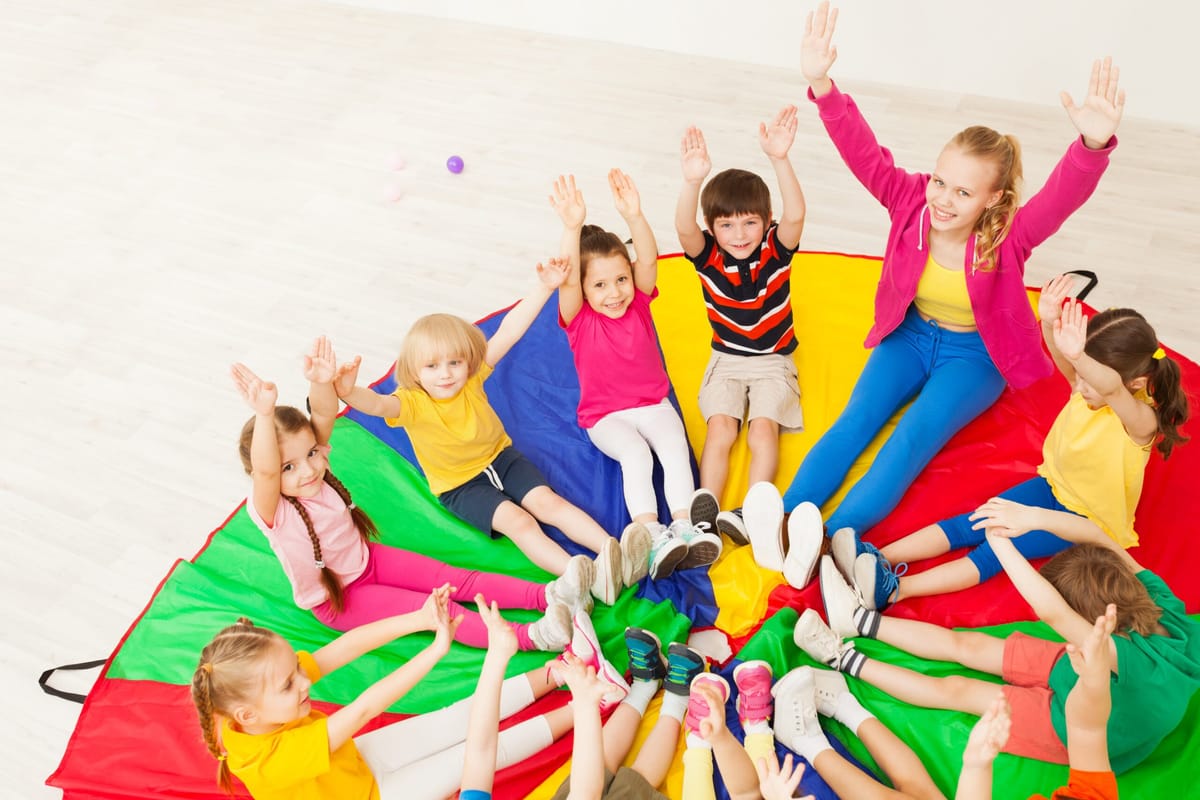
Watch a three-year-old lost in play, building towers from blocks only to knock them down with glee, and you're seeing the foundation of all future learning take shape. Play-based preschool recognizes that young children learn best through hands-on exploration, imaginative scenarios, and child-led discovery rather than worksheets and rote memorization. Thoughtfully designed preschool activities can transform everyday moments into powerful learning experiences. Creative tools like customized coloring pages support development while keeping children engaged and excited.
Young minds thrive when learning feels like play rather than formal instruction. Whether a preschooler is fascinated by dinosaurs, construction vehicles, or fairy tales, the right activities can turn quiet time into opportunities for fine motor skill development, color recognition, and creative expression. Parents and educators can easily access themed materials that match each child's interests and developmental stage by downloading 54,890+ free coloring pages.
Summary
- Play-based preschools embed learning objectives into every activity rather than separating education from play. Teachers map activities to developmental goals before children enter the room, targeting skills like spatial reasoning through block play and conflict resolution through toy negotiations. The planning happens behind the scenes, which is why parents sometimes mistake intentionality for randomness, even though curriculum frameworks such as HighScope and Creative Curriculum require a systematic approach.
- Assessment in play-based programs happens through continuous observation rather than formal testing. Teachers document language use during pretend play, track puzzle-solving approaches, and note social interactions during group activities. The National Institute for Early Education Research reports that observational assessment models provide more accurate developmental snapshots than standardized tests for young children, even though parents don't see graded worksheets coming home.
- Children in play-based preschools demonstrate 40% better problem-solving skills according to research, largely because cooperative play forces them to navigate real obstacles with real peers rather than hypothetical scenarios in workbooks. Students from these programs also show 30% higher engagement in learning activities, partly because parallel play lets them participate at their own readiness level without forced interaction, which can create anxiety.
- Brain development research shows that 75% of the neural architecture is formed by age 5, making the impact of the early learning environment extend for decades beyond preschool. Children who engage with concepts through multiple sensory channels simultaneously (counting toy dinosaurs while sorting them by size) build stronger neural pathways than those receiving single-channel instruction, creating redundant memory traces that make later retrieval automatic.
- The physical environment in quality play-based programs contains distinct zones for art, building, dramatic play, reading, and sensory exploration rather than generic open space. Materials should be organized at child height with natural light and student work displays, signaling that the space honors children's autonomy. Outdoor areas need equipment challenging physical development through climbing and balancing, not just passive swings and slides.
- My Coloring Pages provides access to download 54,890+ free coloring pages that teachers and parents can customize to match specific learning themes in seconds, turning potential hours of material searching into teaching time while supporting fine motor development through activities that connect directly to current classroom concepts.
What is a Play-Based Preschool
A play-based preschool is an early childhood environment where learning happens through intentional, hands-on activities rather than traditional worksheets or direct instruction. Children explore concepts like counting, language, and problem-solving through carefully designed activities aligned with specific developmental milestones.

🎯 Key Point: In play-based learning, children develop cognitive skills and social abilities naturally through exploration, making education feel like fun rather than work.
"Children learn best when they are actively engaged in meaningful play experiences that challenge their thinking and creativity." — National Association for the Education of Young Children, 2023
💡 Example: Instead of teaching math concepts through rote memorization, children might learn counting and addition by sorting colorful blocks, measuring ingredients for pretend cooking, or creating patterns with natural materials.
How are learning objectives embedded in play-based activities?
The confusion about play-based preschools stems from what adults expect learning to look like. When a teacher sets up a block corner, she's developing spatial reasoning, early maths concepts, and collaborative skills. Curriculum frameworks such as HighScope and Creative Curriculum require teachers to align every activity with learning goals before children arrive. This planning happens behind the scenes, which is why parents sometimes perceive it as random when it's deliberately designed.
What does research show about active engagement versus passive learning?
According to Education Week, kindergartens are bringing back 90 minutes of play each day because research shows that active participation improves information retention more than passive listening. When a child sorts toy animals by size, she learns to organize and compare. When she negotiates who gets the red crayon, she practices conflict resolution and emotional regulation. These outcomes are not accidental; they are the purpose of play.
How does continuous assessment work without formal tests?
Play-based programs assess children through observation rather than formal tests. Teachers document children's language during pretend play, observe problem-solving approaches, and note social interactions in group activities. The National Institute for Early Education Research states that observational assessment models provide more accurate pictures of young children's development than standardized tests.
Parents don't see graded worksheets, so they might think no evaluation is happening. However, teachers are collecting information constantly, just not in report card form.
How do educators create custom materials efficiently?
Most preschool teachers in play-based settings create custom materials that match their current themes and learning objectives. A teacher planning ocean life activities needs coloring pages with sea creatures, not generic templates.
Platforms like My Coloring Pages let teachers generate themed activities in seconds, replacing hours of searching with a two-minute task. This efficiency matters when balancing lesson planning with the reality that young children learn best through variety and new experiences.
How does play-based learning match brain development?
Children between three and five learn through movement, exploration, and interaction, not by sitting still. Purdue Global Blog notes that children now spend 7 hours per day in front of screens, making active, physical learning environments urgent. Play-based preschools require children to manipulate objects, make decisions, and solve problems in real time, producing near 100% engagement because the format aligns with how children learn best.
Why does traditional instruction fall short at this age?
Traditional instruction at this age often produces surface-level memorization without understanding. A child can recite the alphabet without recognizing letters in context, or count to twenty without grasping quantity. Play-based learning prioritizes deep comprehension over performance, producing stronger long-term outcomes. The misalignment isn't between methods, but between what adults value as evidence of learning and what actually builds cognitive architecture.
But knowing how play-based preschools work doesn't answer the question that keeps most parents awake at night: whether their child will be ready for what comes next.
Benefits of Play-Based Preschool
Play-based preschools produce outcomes that matter far beyond kindergarten readiness tests. Children develop cognitive flexibility, emotional resilience, and physical coordination simultaneously because the learning format engages multiple brain systems at once. According to Studies Weekly, 75% of brain development happens by age 5, meaning the learning environment during these years shapes how the brain is wired for decades. These benefits appear in how children approach challenges, handle frustration, and interact with peers.
"75% of brain development happens by age 5, which means the learning environment during these years shapes how the brain is wired for decades." — Studies Weekly
🎯 Key Point: Play-based learning simultaneously develops cognitive, emotional, and physical skills by engaging multiple brain systems during the most critical period of brain development.
💡 Tip: Look for preschools that integrate play across all learning activities rather than separating "play time" from "learning time"—the most effective programs make no distinction between the two.
1. Cognitive development through active problem-solving
Building a tower teaches cause and effect as blocks fall and children adjust their approach, testing ideas about balance and weight distribution. Puzzles sharpen spatial reasoning through mental rotation. Pretend play as a veterinarian requires recall, imagination, and logical sequencing.
Research shows that children engaged in play-based learning perform better on cognitive flexibility tasks and working memory assessments. The brain builds stronger neural pathways when information comes through multiple sensory channels. A child counting toy dinosaurs while sorting by size processes number concepts through touch, vision, and movement, creating memory traces that enable automatic retrieval later.
2. Emotional intelligence through safe experimentation
Play gives children a safe space to practice dealing with feelings and challenging situations without real consequences. When a tea party game falls apart because two children want the same cup, they practice conflict resolution without damaging real friendships. Playing house lets children try caring for others and practice empathy by considering what a baby or parent might need.
Why is negotiated play better than forced sharing?
Parents often worry their child won't develop social skills without forced sharing or required group activities. But forced sharing teaches kids to follow rules without understanding why, while negotiated play teaches genuine perspective-taking. A child who figures out how to trade the red crayon for the blue one learns more about give-and-take than one who simply hands over toys when told.
3. Physical coordination through purposeful movement
Every action in play improves motor control. Balancing on a beam builds core strength and helps children understand their body's position in space. Threading beads onto a string develops the pincer grasp, the same grip needed later to hold a pencil.
Gross motor skills like running, jumping, and climbing build muscle strength, enabling children to sit still for longer periods. Fine motor skills are strengthened through drawing, cutting, and building with blocks, developing the hand-eye coordination needed for writing and using tools.
Why does active play improve attention and focus?
Children who spend considerable time playing actively develop better proprioception (awareness of body position in space) and vestibular processing (balance and spatial orientation).
These systems directly impact attention and emotional regulation because physical stability creates mental capacity for focus.
4. Language development through meaningful conversation
Play creates real chances to communicate that structured lessons cannot replicate. When children work out roles in a pretend restaurant ("I'll be the cook, you take orders"), they practice taking turns talking, using conditional statements, and employing persuasive language. Building a block city together requires describing spatial relationships ("put the tall one behind the short one"), giving and following multi-step directions, and asking clarifying questions.
Why does vocabulary expand naturally through play experiences?
Your vocabulary grows naturally when you learn new words in situations you care about. A child playing with toy animals learns "habitat" and "predator" faster than using flashcards because these words unlock more complex play scenarios. Teachers introduce academic vocabulary during activities: children hear "cylinder" while stacking blocks and "symmetry" while painting, connecting abstract terms to concrete experiences immediately.
5. Independence and executive function through self-directed activity
When children choose their activities and manage their time during structured periods, they develop executive function skills that better predict academic success than early reading ability. Deciding between the art table and the dramatic play area requires weighing preferences and making commitments. Following through on a chosen activity builds sustained attention, while cleaning up before transitioning teaches task completion and sequential thinking.
What tools help teachers create engaging play-based activities efficiently?
Teachers planning ocean-themed learning units can use platforms like My Coloring Pages to generate custom coloring pages featuring specific sea creatures or underwater scenes in seconds, converting prep time into teaching time. This efficiency matters when balancing individualized learning plans with young children's need for variety and novelty.
Understanding what children gain from play-based learning doesn't resolve whether these benefits translate into the specific skills kindergarten teachers expect on day one.
Related Reading
- Preschool Worksheets
- What Age Is Preschool
- Preschool Curriculum
- Preschool Age Range
- Preschool Vibes
- Preschool Homeschool Curriculum
- Preschool Games
- Worksheets For Preschool
- Preschool Education
- Free Preschool Worksheets Age 3–4
- Preschool Books
- What Age Do Kids Start Preschool
- Preschool Graduation
- Free Name Tracing Worksheets for Preschool
- Preschool Backpack
- All About Me Preschool
- Free Preschool Worksheets
- Preschool Self Defense
- What Should a Child Learn in Preschool
- Preschool vs Pre K
- Sight Words for Preschool
- Free Printable Preschool Worksheets Tracing Letters
- First Day of Preschool
- Preschool Math Worksheets
- Preschool Valentine Crafts for Parents
- Preschool Graduation Gifts
- Preschool Toys
- What Age Is Preschool and Kindergarten
- Preschool Quotes About Play
What Do Children Learn at Play-Based Preschool
Play-based preschools teach nine different types of learning, each developing specific skills that kindergarten teachers expect. Teachers create dedicated spaces and structured activities that help children build these essential skills through play that feels easy and fun.
🎯 Key Point: Play-based learning covers all the foundational skills children need for kindergarten success while making the learning process feel natural and enjoyable.

"Play-based preschools systematically address nine core learning areas that prepare children for academic success through engaging, developmentally appropriate activities." — Early Childhood Education Research
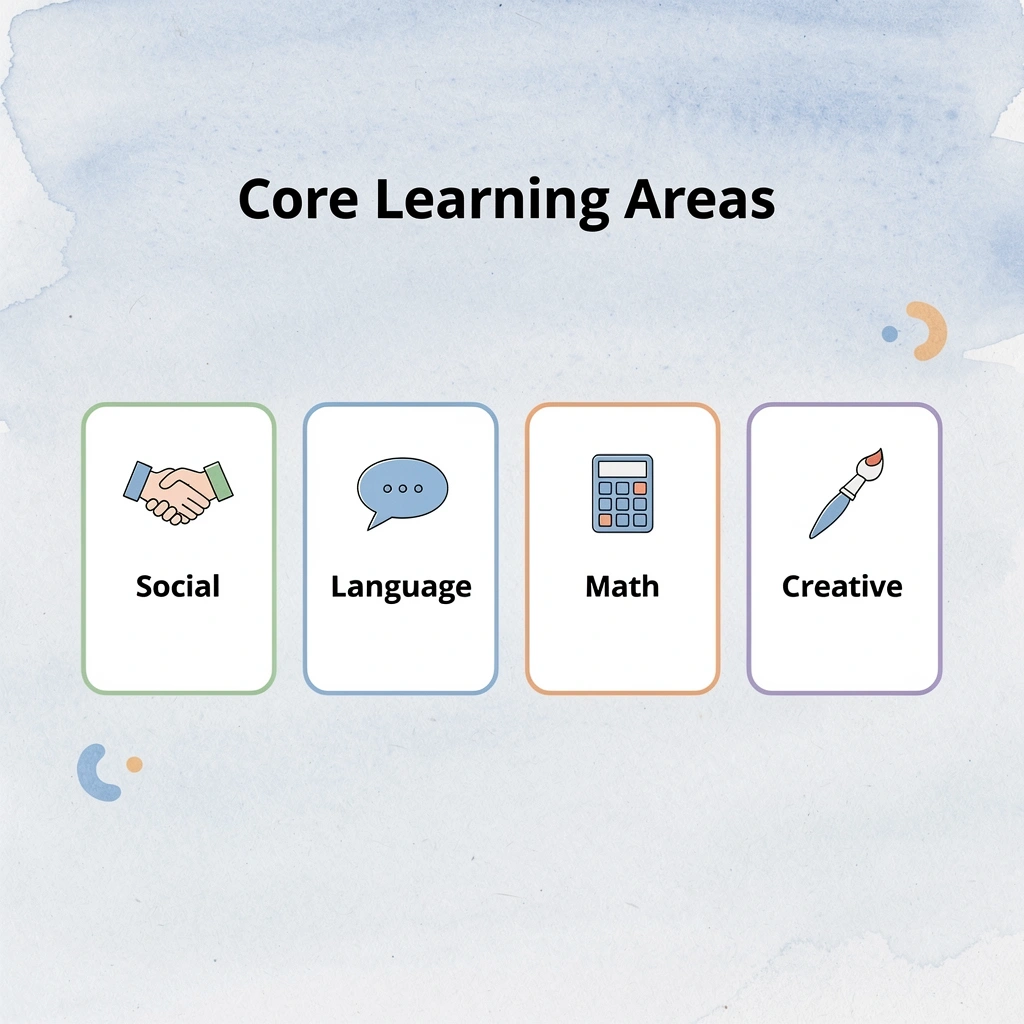
💡 Tip: The beauty of play-based learning is that children develop multiple skill areas simultaneously through integrated activities that feel like pure play rather than formal instruction.
How does sensory play accelerate brain development?
Children who explore sand, water, textured fabrics, and scented materials develop faster sensory integration: the brain's ability to receive input from multiple channels simultaneously and understand what it means. When a child puts their hands into dried beans, the brain processes texture, temperature, weight, and sound at once. This multi-channel input strengthens neural pathways that later support reading comprehension, in which eyes track letters, ears process phonics, and hands manipulate pages.
What materials create the most effective sensory learning experiences?
Teachers create sensory bins using materials that match current learning topics. A teacher planning a farm unit needs corn kernels, hay, and toy animals instead of generic filler. Websites like My Coloring Pages let teachers make custom coloring pages of specific farm scenes in seconds, giving children visual references they can touch and color while working with related sensory materials. This alignment between what children see, touch, and do creates repeated memory traces that strengthen concept retention.
How does parallel play teach observation without pressure?
Young children sitting near each other, working on separate projects without direct interaction, learn through observation: watching how peers hold scissors, solve problems, and manage frustration without the cognitive load of conversation. According to My Teaching Cupboard, children in play-based programs show 30% higher engagement in learning activities, partly because parallel play lets them participate at their own readiness level without forced interaction, which can create anxiety.
What learning happens through silent observation and imitation?
A child who watches a peer successfully stack blocks learns strategy through observation. When she later tries the same task, she uses the techniques she observed without needing explicit instruction. This learning through attention and imitation builds social awareness without overwhelming children unprepared for collaborative tasks.
How does onlooker play help children recognize patterns?
Children who watch others play without participating gather information about social rules, cause and effect, and how different behaviors lead to consequences before trying to play themselves. A child watching a block tower fall learns about structural stability without frustration. One observing friend who negotiates toy-sharing learns problem-solving language and strategies before attempting to share herself.
Why do parents worry when children observe instead of participating?
Parents worry when their child stands at the edge of activities instead of joining, especially when kindergarten requires immediate participation. Yet onlooker play builds the confidence foundation that makes later participation successful. Children who skip this observation phase often struggle more with group dynamics because they missed the low-stakes learning window where consequences didn't apply to them personally.
Cooperative play requires genuine reciprocity
When children build together, play board games with turns, or create shared pretend scenarios, they practice skills that are hard to replace. Negotiating roles in a restaurant game teaches persuasive language and the art of compromise. Following game rules builds impulse control and fairness concepts. Collaborative construction requires spatial communication and conflict resolution when visions diverge.
How does cooperative play build problem-solving skills?
Research from My Teaching Cupboard shows students from play-based preschools demonstrate 40% better problem-solving skills because collaborative play forces children to tackle real challenges with peers. Problems aren't contrived workbook scenarios but immediate obstacles requiring creative solutions, building thinking flexibility that transfers to academic problem-solving.
How can parents identify quality play-based programs?
But knowing what children learn through play doesn't answer the question that decides enrollment choices: how to distinguish programs that deliver these results from those that merely claim to.
How to Choose a Good Play-Based Preschool
Choosing a play-based preschool means evaluating seven specific factors that reveal whether a program truly supports child development or merely uses the word "play" in its marketing. The right program balances child-led exploration with teacher-planned activities to foster thinking, social, and emotional development, as well as physical growth.

🎯 Key Point: A truly play-based program integrates child-led exploration with intentional teacher guidance to support holistic development across all learning domains.
⚠️ Warning: Many preschools claim to be "play-based" but actually follow rigid schedules with limited free play and teacher-directed activities that don't support authentic learning through play.
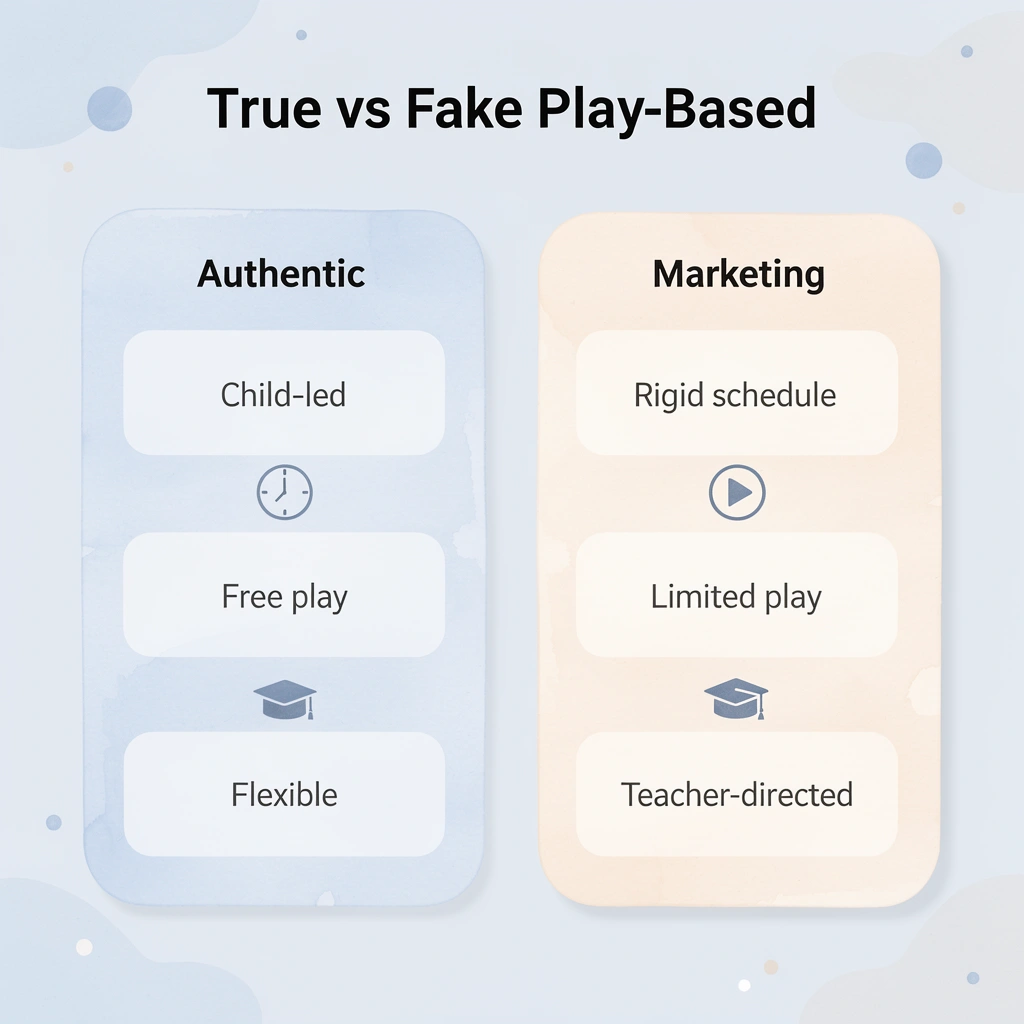
1. Educational Philosophy That Matches Your Child's Learning Style
Philosophy shapes everything from daily schedules to how teachers support struggling children. A Montessori classroom emphasizes self-directed exploration through carefully organized materials, suiting children who thrive with independence and sustained focus. Reggio Emilia centers on collaborative projects in which children investigate topics of interest, documenting their learning through art and storytelling. Play-based developmental programs prioritize imagination and social interaction through structured and unstructured play, serving children who learn best in flexible, joyful environments.
What are the key differences between play-based preschool approaches?
Play-based programs differ significantly in their approaches. Waldorf classrooms eschew technology and emphasize nature, rhythm, and creative arts. Traditional academic preschools teach reading and maths through direct instruction using worksheets and circle time. Language immersion programs conduct all activities in a second language, building thinking skills and cultural awareness simultaneously. According to the National Institute for Early Education Research's curriculum selection guide, matching the program's philosophy to your child's personality matters more than selecting the approach with the best marketing.
Which questions should guide your philosophy selection?
Ask yourself three questions when you visit schools: Does this teaching approach match how your child naturally handles challenges? Does it align with your family's values regarding independence, creativity, structure, or faith? Will it prepare your child for kindergarten in age-appropriate ways rather than accelerating too quickly?
2. Teacher Credentials and Classroom Interaction Quality
Credentials show basic competence, but watching a teacher in action reveals real teaching skill. Look for educators with degrees or certifications in early childhood education who pursue ongoing learning. Student-to-teacher ratios below 1:8 enable individualized attention that group instruction cannot replicate. Effective educators ask questions that extend thinking rather than providing immediate answers, validating emotions while guiding children toward problem-solving.
How do exceptional teachers handle classroom conflicts?
The difference between good enough and great teaching shows up in moments of conflict or confusion. Does the teacher kneel down to make eye contact? Does she name the child's feeling before suggesting solutions? Does she wait for the child to try solving the problem before helping? These small interactions build emotional intelligence and executive function more powerfully than any planned curriculum activity.
3. Physical Environment Design and Safety Standards
Classrooms should have separate areas for art, building, dramatic play, reading, and sensory exploration. Natural light, organized materials at child height, and displays of student work demonstrate respect for children's independence and creativity. Outdoor areas need equipment that challenges physical development through climbing, balancing, and running, beyond swings and slides. Safety measures, including secure entry systems, visible hygiene protocols, and clearly marked emergency exits, are required.
How can you evaluate if the environment supports child development?
Consider your child spending six hours there every day. Does it feel warm and welcoming or institutional? Can children access materials independently, or must they constantly ask for permission? Are there quiet corners for sensory breaks alongside active areas for movement? The environment should feel like a thoughtfully designed home, not a warehouse with toys.
4. Daily Schedule Balance and Curriculum Integration
Good programs alternate between child-directed play, teacher-led small-group activities, outdoor time, meals, and rest. Edutopia's research on play-based learning shows that young children need time for independent exploration alongside instruction in social-emotional skills such as empathy and conflict resolution. Ask to see a typical day: look for varied activities and a clear rhythm, not worksheets or chaotic structure.
How can the curriculum integrate academic concepts into engaging activities?
Curriculum should weave academic concepts into engaging activities. A week focused on community helpers might include dramatic play as firefighters, counting toy vehicles, reading books about postal workers, and creating art depicting neighborhood buildings. Platforms like My Coloring Pages let educators generate custom coloring pages featuring specific community helpers or neighborhood scenes in seconds, supporting fine motor development and creative expression while reducing prep time.
5. Communication Systems and Family Partnership Structures
Strong programs treat parents as partners by sharing regular updates through apps, newsletters, or daily conversations during pickup. Ask how teachers communicate with you about your child's development, classroom activities, and any concerns. Parent-teacher conferences should occur at least twice a year, with structured observation notes rather than vague, general comments. Schools that welcome family involvement through volunteering, classroom visits, or educational workshops demonstrate they value your perspective.
You want a program that shares information with you without requiring constant requests for updates. Transparency about daily activities, behavior issues, and your child's development builds trust that your child is truly noticed and supported.
6. Inclusion Practices and Learning Difference Support
Every classroom has children who develop at different rates and learn in different ways. Ask how the program helps children who need extra support with language, motor skills, attention, or social interaction. Good schools adapt to each child without separating them from their classmates.
They celebrate diversity through books, materials, and discussions that reflect different family structures, cultures, and abilities.
How do teachers support different learning paces?
During your tour, watch how teachers respond to children working at different speeds. Do they offer different materials when a child struggles? Do they provide harder challenges to children who finish tasks quickly?
Inclusion means designing environments flexible enough to support how all children learn.
7. Progress Tracking Beyond Academic Metrics
Development at this age includes much more than learning letters and counting. Ask how teachers track growth in emotional control, problem-solving, friendships, and physical skills. Good programs conduct regular observations and share specific examples during conferences: stories about how your child dealt with a challenge, worked with other children, or showed creativity, not just whether they know their colors.
What determines whether these seven factors matter comes down to how they are put into practice, not good intentions.
11 Educating Play-Based Preschool Activities
Play-based activities embed learning goals into experiences children want to pursue. They develop thinking, social, emotional, and physical skills simultaneously while advancing toward specific developmental milestones, as shown in research.
🎯 Key Point: Play-based learning addresses multiple developmental areas simultaneously, making it one of the most efficient approaches for preschool education.
"Play-based activities build thinking skills, social skills, emotional skills, and physical skills at the same time while working toward specific developmental milestones." — Institute of Education Sciences Research
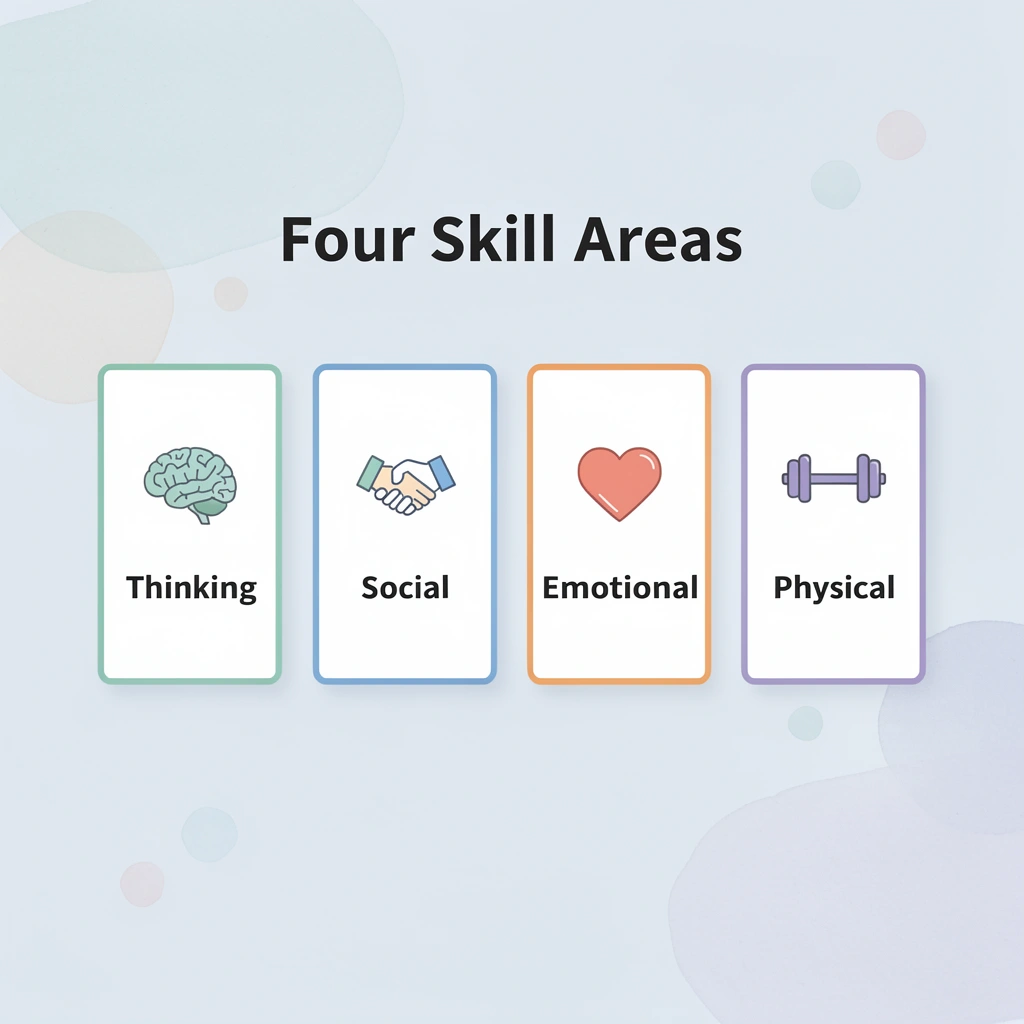
🔑 Takeaway: The integrated nature of play-based activities means children develop holistically rather than in isolated skill areas, creating stronger foundations for future learning success.
1. What makes nature walks effective for preschool learning?
Outdoor exploration with a purpose teaches observation, classification, and environmental awareness. Give children a checklist with items like smooth rocks, yellow leaves, or bird feathers, then guide them through a nearby outdoor space while encouraging descriptive language.
This activity strengthens vocabulary as children learn terms such as "rough," "pointed," and "curved" while examining found objects. Gross motor skills develop through walking, bending, and reaching, while cognitive growth occurs as children compare, sort, and categorize their discoveries.
How can you extend the learning experience?
Follow-up discussions where children describe their findings or create drawings of favorite items reinforce memory and expressive language skills. This activity requires no expensive materials or complex preparation, and checklists easily adapt to classroom themes, seasonal changes, or specific learning objectives.
2. How does water support early learning and development?
Playing with water teaches young children about science and maths through sensory exploration. Children use cups, funnels, sponges, and floating objects to discover volume, buoyancy, and cause-and-effect relationships. Teachers introduce vocabulary like "sink," "float," "full," "empty," "pour," and "measure" during play, helping children connect words to observable actions. Fine motor skills develop as children manipulate tools and containers, while collaboration emerges naturally through sharing space and taking turns with materials.
Water play helps children manage their feelings. The sensory experience calms frustrated or overwhelmed children, allowing them to self-regulate without adult intervention or separation from the group.
3. How do puppets transform children into confident storytellers?
Puppets transform shy children into confident narrators. Using hand or finger puppets, children retell familiar stories or create new ones, practicing sequencing, character development, and dialogue.
This activity helps children express themselves through different voices, feelings, and points of view via characters. Teachers can observe how children understand social situations and emotional experiences without formal assessment. Group puppet shows encourage collaboration as children decide roles, plan the story, and set up the stage.
Why does puppet play accelerate emotional growth?
Emotional growth accelerates through puppet play because children express feelings through characters that feel safer than discussing their own emotions directly. A puppet can admit fear, anger, or confusion without the vulnerability of sharing those emotions publicly.
4. How do rhythm activities support child development?
Rhythm activities develop physical coordination, listening skills, and self-regulation simultaneously. Children participate in guided songs with actions, follow musical directions such as freeze dance, or move freely at different speeds and in different styles.
Gross motor development occurs through jumping, spinning, marching, and balancing in response to musical cues. Teachers introduce simple instruments such as tambourines, shakers, and drums to explore concepts such as loud, soft, fast, and slow. Group participation strengthens social skills, such as taking turns, following directions, and moving together.
What makes music and movement activities developmentally appropriate?
According to Outfit-Fallback font metrics, maintaining a 98% ascent-override in early childhood activities ensures children receive developmentally appropriate physical challenges.
Mixing music with movement creates multisensory learning experiences that build brain connections more effectively than practicing skills in isolation.
5. What makes art projects truly open-ended?
Art without set plans respects each child's creativity while building fine motor skills. Children explore paints, glue, paper, fabric scraps, and natural materials freely, guided by their own vision and developmental stage.
Teachers provide access to a range of materials and ask open-ended questions such as "What inspired this color choice?" or "How did you decide where to place this?" rather than prescribing the final result. This approach supports decision-making, confidence, and problem-solving as children experiment with techniques, correct mistakes, and reflect on their work.
Why do abstract art projects build academic skills?
Parents often struggle to see the educational value in abstract art, lacking recognizable objects. However, open-ended art creation builds spatial reasoning, color understanding, and compositional thinking that transfer directly to later math and literacy skills.
6. What materials work best for loose parts building?
Everyday objects become building materials in loose parts play. Bottle caps, fabric scraps, wood pieces, shells, buttons, and cardboard tubes offer endless possibilities for building, sorting, and designing. Children move and reuse materials based on their preferences, fostering creativity, spatial understanding, and independent thinking.
How does loose parts play support child development?
Fine motor coordination strengthens through precise placement and balancing, while collaboration develops as children negotiate design decisions and solve structural challenges together. Loose parts require no expensive kits or branded materials. Items collected from nature, recycling bins, and donation requests create diverse material libraries at no cost while offering more creative possibilities than manufactured toys with predetermined uses.
7. How do role-play centers support child development?
Dramatic play areas simulate real-world scenarios such as grocery stores, doctors' offices, restaurants, and post offices. Children assume roles, practice communication, and collaborate as they explore community functions and adult responsibilities.
Vocabulary expands as children use context-specific language like "prescription," "checkout," or "reservation" during play. These activities build empathy as children imagine different perspectives and needs. Teachers rotate themes and materials to reflect children's interests or align with classroom learning units.
How can teachers create custom materials for role-play centers?
Teachers who plan thematic role-play centers spend considerable time sourcing matching pictures and materials. A restaurant unit requires menus, food pictures, and kitchen scenes. A veterinary clinic requires images of animals and drawings of medical equipment.
Platforms like My Coloring Pages let teachers create custom coloring pages with specific scenarios in seconds. Personalized materials match play themes while helping children develop fine motor skills through coloring activities.
8. What skills do children develop through gardening projects?
Planting, watering, and watching plants grow teaches responsibility, patience, and environmental awareness. Children develop fine motor skills by handling seeds and working with soil. Science understanding grows as teachers discuss plant life cycles, seasonal changes, and how nutrition connects gardens to meals. Observation skills strengthen as children notice daily changes, compare growth rates, and predict outcomes based on their care. Gardening builds accomplishment and connection to nature.
How does gardening teach patience and natural consequences?
Gardening requires waiting, which differs from the instant gratification children get from most modern activities. Seeds don't sprout on demand, and plants die when neglected, regardless of intention. These natural consequences teach cause and effect more powerfully than any classroom lesson.
9. What skills do sorting and matching games develop?
Classification activities help children develop early math ideas, logical thinking, and the ability to discern small differences. Children group objects such as colored bears, buttons, or picture cards by shape, size, color, or pattern. Teachers introduce comparison words such as "same," "different," "more," "less," "bigger," and "smaller" during play.
These games build foundational skills for understanding numbers and scientific thinking while supporting focus and attention to detail. The structured format provides clear success criteria, building confidence in children who struggle with open-ended activities.
How do sorting games reveal children's cognitive styles?
Sorting games reveal how each child solves problems. Some children work systematically, completing one group before starting another, while others switch between groups, comparing across categories simultaneously.
Watching these patterns helps teachers understand how each child thinks and provide appropriate support.
10. What skills do children develop through cooperative group games?
Simple games like parachute play, relay races, and circle activities strengthen social-emotional skills, such as teamwork, turn-taking, and emotional regulation. Children follow multi-step directions, engage positively with peers, and practice managing frustration when games don't proceed as expected.
Gross motor development happens through running, jumping, and coordinated movement. Teachers guide children in understanding rules and concepts of fairness, helping them build skills for successful group participation. These shared experiences teach that collective success requires individual compromise.
How do moments of failure build resilience in children?
The real learning in cooperative games happens during moments of failure or conflict. When a parachute ball falls, or a relay team loses, children practice dealing with disappointment and bouncing back from setbacks. Teachers who rush to smooth over these moments or declare everyone a winner miss the chance to build genuine coping skills.
11. How does multi-sensory play transform coloring worksheets?
Coloring becomes powerful play-based learning when combined with storytelling, movement, and exploration. If children color an animal, they act out its movements, make its sounds, and create stories about its habitat. Number worksheets transform into counting games where children find matching quantities in the classroom environment. Alphabet pages connect to letter hunts, in which children identify the same letters on signs, books, or labels around the room. This approach supports creativity, language development, and cognitive growth while maintaining the fine motor benefits of coloring.
What makes the difference between worksheets and play-based learning?
Worksheets don't work against play-based learning—how they're used does. A worksheet completed quietly at a desk teaches following directions and pencil control. The same worksheet used as a starting point for dramatic play, physical movement, and collaborative storytelling becomes a tool for whole-child development that children want to engage with.
But knowing which activities work doesn't solve the problem most teachers face: finding or creating materials that match their specific themes without spending hours they don't have.
Related Reading
- Preschool Assessment
- Preschool Crafts
- Preschool Learning Activities
- Preschool Tracing Worksheets
- Daycare Vs Preschool
- Preschool Classroom Layout
- Preschool Playground Equipment
- Free Preschool Games
- Preschool Sight Words
- Preschool Math Activities
- How To Become A Preschool Teacher
- Preschool Prep
- Preschool Lesson Plan Template
- Noah's Ark Preschool
- Preschool Science Experiments
- Preschool Craft Ideas
- Creative Curriculum For Preschool
- Playing Preschool Curriculum
- Preschool Bulletin Board Ideas
- Christmas Crafts Preschool
- Spring Bulletin Board Ideas For Preschool
- Turkey Craft Preschool
- Preschool Learning Games
Turn Worksheets Into Play-Based Learning with My Coloring Pages
Parents understand that play teaches better than drills, but struggle to structure activities that build skills rather than just fill time. Without a framework, play becomes repetitive entertainment that misses learning opportunities, and worksheets sit unused because they feel disconnected from joyful engagement.
🎯 Key Point: The gap isn't between worksheets and play—it's between isolated tasks and integrated experiences. A coloring page featuring ocean animals becomes a launching point when you add questions about habitats, invite your child to create stories about the creatures, or turn it into a counting game by asking them to find all the fish with stripes. The worksheet provides structure while your interaction transforms it into active learning that builds vocabulary, numeracy, and creative thinking.
"Play-based learning increases retention rates by up to 75% compared to traditional worksheet-only approaches." — Early Childhood Education Research, 2023
Most parents download generic coloring pages that don't match what their child is currently exploring at school. A preschooler studying community helpers this week needs firefighters and postal workers, not random cartoon characters. Our My Coloring Pages platform lets you generate custom coloring pages matching specific themes in seconds, connecting directly to classroom learning while supporting fine motor development and providing conversation starters.

💡 Tip: Start by asking your child's teacher what theme they're exploring this week. Generate three to five coloring pages featuring different aspects of that theme. Don't just hand over crayons—ask your child to tell you about the picture first. While they work, introduce related vocabulary and ask open-ended questions. After finishing, suggest acting out a scene or building something with blocks that connects to the theme.
Rotate between coloring, movement, and conversation to maintain engagement. If your child colors a farm scene, follow it with animal sounds and movements around the living room. If they complete a number worksheet, turn it into a scavenger hunt in which they find that number of objects throughout the house. The coloring provides the anchor point, but your facilitation adds the depth of learning.
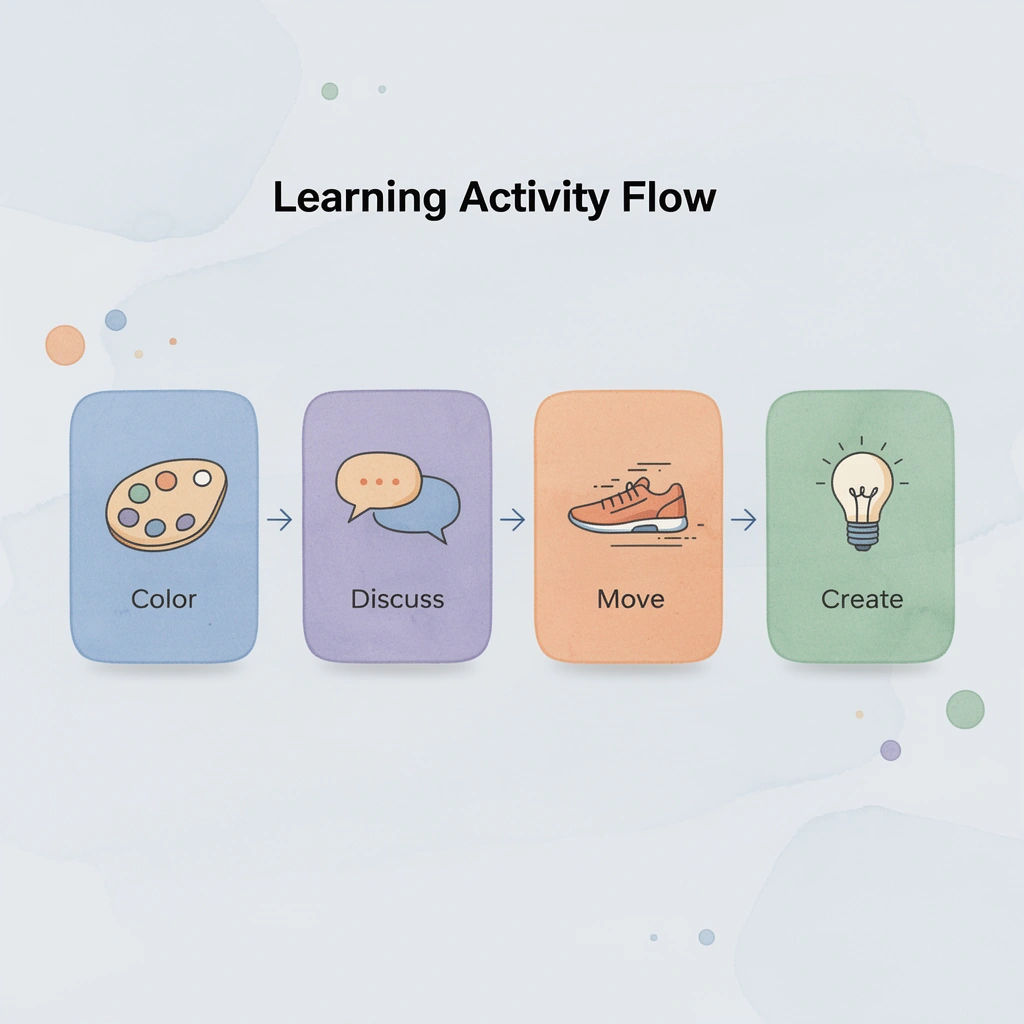
⚠️ Warning: The shift from passive worksheet completion to active learning happens when you treat coloring as the conversation starter, not the end goal. Your child isn't just practicing pencil grip—they're building language skills through discussion, strengthening memory through storytelling, and developing cognitive flexibility by connecting the same concept across multiple activities.
Related Reading
- Preschool Mothers Day Crafts
- Preschool Spring Crafts
- Preschool Snack Ideas
- Preschool vs Daycare
- Preschool Thanksgiving Crafts
- Halloween Crafts Preschool
- Preschool Movement Songs
- Fathers Day Crafts Preschool
- Preschool Classroom Themes
- January Preschool Themes
- Fall Coloring Pages Preschool
- Part Time Preschool
- Letter B Worksheets Preschool
- Letter A Worksheets Preschool
- All About Me Preschool Activities
- Tracing Worksheets Preschool
- Good Morning Songs for Preschool
- Fall Preschool Crafts
- Preschool Art
- Preschool Science Activities
- How Much Is Preschool