25 Educating and Fun Preschool Science Activities
Discover 25 preschool science activities that spark curiosity and learning. My Coloring Pages brings you hands-on experiments kids love to explore.

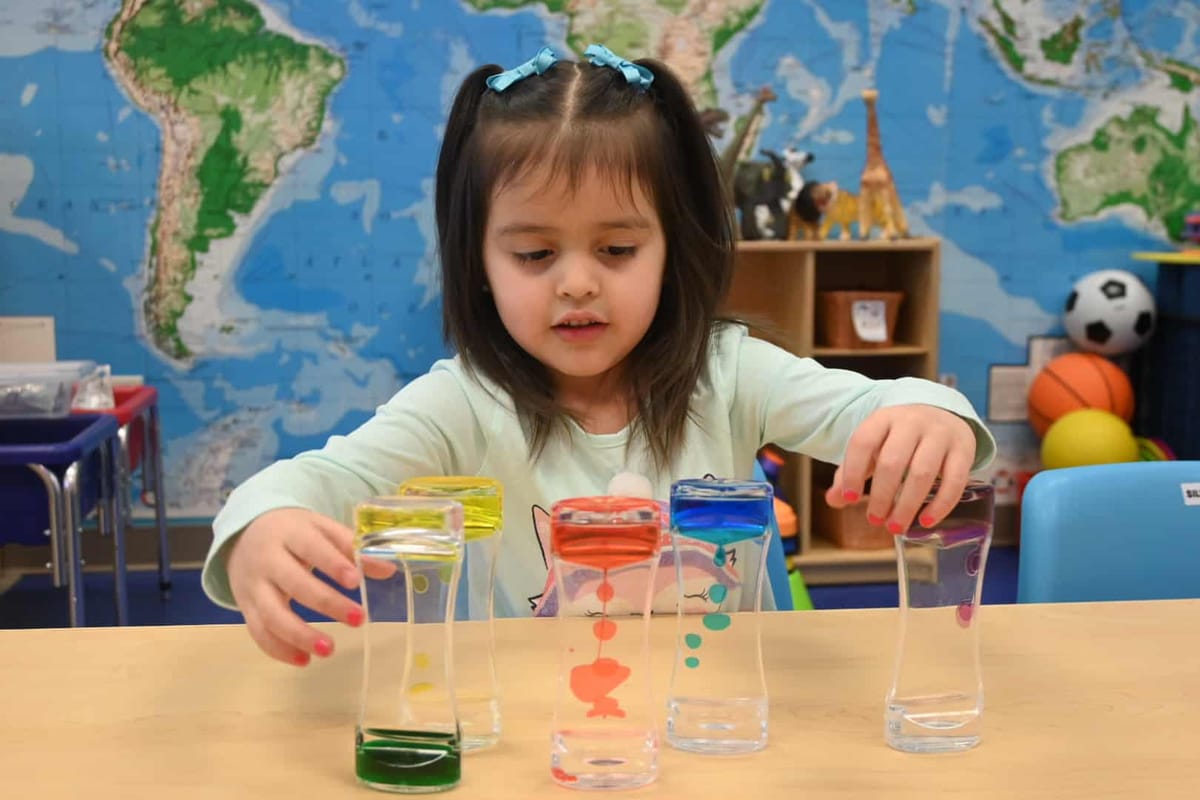
Young children naturally ask "why" when ice melts in their hands or when leaves change color. This curiosity makes preschool activities incredibly powerful for developing problem-solving skills and understanding cause and effect. Hands-on experiments combined with creative learning tools help build strong foundations for future learning while keeping children genuinely engaged.
Simple science activities become even more impactful when paired with visual reinforcement that preschoolers love. After exploring weather patterns or discovering animal habitats during nature walks, children can extend their learning through creative expression by downloading 54,890+ free coloring pages that reinforce the concepts they just discovered.
Summary
- Early science exposure creates compound effects across multiple developmental areas. When preschoolers explore plant growth or mix colors, they're not just learning isolated facts. They're building vocabulary in context, strengthening fine motor control through manipulation, developing sequencing skills, and forming mental frameworks that support all future learning, from reading comprehension to emotional regulation.
- Brain development research shows that 80% of the neural architecture is formed by age 3, making early childhood the most critical period for establishing scientific reasoning patterns. Children who engage in hands-on science activities during preschool show 44% higher likelihood of pursuing STEM careers later, not because they memorized more facts, but because they internalized a way of approaching problems through observation, prediction, and testing that becomes automatic.
- The gap in scientific thinking doesn't appear suddenly in middle school. It starts in preschool, when some children build observational skills through guided exploration, while others wait to be "old enough" for real learning. By the time formal science classes begin, differences in curiosity and engagement are already measurable, rooted in whether children experienced science as natural discovery or abstract information delivered through worksheets.
- Preschoolers already use scientific methods instinctively. When a three-year-old drops a toy repeatedly to watch it fall, she's testing gravity. When he mixes paint and discovers purple, he's experimenting with reactions. The child who learns through trial and error that wide bases create stable block towers understands structural stability in ways no explanation could match, building comfort with iteration and failure that matters across every domain later.
- Self-directed exploration before adult intervention produces deeper learning than direct instruction. Research from FIU found that children as young as 3 benefit most from time and space to experiment independently, form hypotheses, and test them through messy processes that build neural pathways; worksheets are bypassed entirely. The preschooler who discovers solutions through repeated attempts owns that knowledge in ways that listening to explanations never achieves.
- After hands-on science activities like planting seeds or tracking shadows, My Coloring Pages lets parents download 54,890+ free coloring pages or generate custom illustrations matching exactly what their child just discovered, reinforcing observation through visual representation while developing the fine motor control and focus that support future writing.
When Should Children Start Learning Science
The window opens earlier than you think
Children should start learning science between the ages of 2 and 3, when their brains actively wire themselves to understand cause and effect. Support their natural curiosity through simple, hands-on exploration that matches how they already interact with the world.
Research from the National Science Teaching Association confirms that 80% of brain development occurs before age 3. Observation, prediction, and problem-solving abilities develop now, shaped by intentional guidance or left to chance.
Why preschoolers aren't "too young" for science
When your three-year-old drops a toy repeatedly to watch it fall, she's testing gravity. When he mixes paint colors and discovers purple, he's experimenting with chemical reactions. These aren't random behaviors; they're scientific methods in their earliest form.
Young children ask "why" constantly, test ideas through play, and notice patterns without prompting. These are the same cognitive skills professional scientists use, expressed through activities suited to their development. Waiting until "they're ready" often means missing the stage when curiosity burns hottest, and learning feels easiest.
What early science exposure actually builds
Simple activities create compound effects across multiple areas of development. Mixing colors builds vocabulary (describing shades and textures), strengthens fine motor control (pouring and stirring), and develops sequencing skills. Water play teaches volume, absorption, and fluid dynamics.
Platforms like My Coloring Pages extend this learning naturally. After exploring plant growth in your backyard, customized coloring pages featuring seeds, roots, and leaves reinforce concepts visually while developing hand-eye coordination and focus. You're channeling their excitement into a second outlet.
The cost of delaying science learning
Children who don't get early science experience show lower curiosity and engagement in later grades. The gap starts forming in preschool, when some children build observation skills through guided exploration while others wait to be "old enough" for real learning. By the time they reach formal science classes, some students are already behind—not in knowledge, but in the thinking patterns that make science feel natural rather than intimidating.
Most parents and educators don't realize why this early foundation matters.
Importance of Learning Science for Preschoolers
Science activities shape how preschoolers think, not what they know. Early science exposure builds cognitive architecture that supports all subsequent learning, from reading comprehension to social problem-solving.
🎯 Key Point: Science learning in the preschool years creates foundational thinking patterns that enhance academic performance across all subjects throughout a child's educational journey.
"Early experiences in science education build the cognitive architecture that supports lifelong learning and critical thinking skills." — Harvard Center on the Developing Child
💡 Tip: The most effective science activities for preschoolers focus on hands-on exploration and questioning rather than memorizing facts, building the neural pathways that support advanced reasoning skills.
How do early science experiences build lasting mental frameworks?
When a four-year-old plants a seed and watches it grow over weeks, she builds patience, sequential thinking, and understanding that causes produce effects over time. These mental frameworks form the foundation for algebra, historical analysis, and emotional regulation later.
What research shows about early science impact?
A child who learns to watch, make predictions, and test things during preschool enters kindergarten with thinking tools that make school feel like a natural extension of what they already do.
Research from Brightwheel shows that children who do science activities in early childhood are 44% more likely to pursue STEM careers later in life. Early science teaches problem-solving as an automatic process, not as isolated facts to memorize.
How does observation build language skills in young children?
Science activities give preschoolers new words in real situations. Words like "evaporate," "dissolve," "absorb," and "transform" emerge naturally when a child watches ice melt or mixes cornstarch with water. They're connecting words to things they can see, hear, and touch, which creates stronger neural connections than flashcards. Talking about what they observe helps children use longer, more detailed sentences—a child learns to say "the water disappeared into the paper towel" instead of "it's gone."
Why does early vocabulary development matter for future learning?
This language development builds on itself. The preschooler with a richer vocabulary understands more complex instructions, asks more specific questions, and engages more deeply with stories. Reading becomes easier because words on the page connect to experiences they've already had with their hands.
How does science in preschool develop social and motor skills simultaneously?
Science in preschool develops social and motor skills simultaneously. Children build structures, share materials, and discuss observations: taking turns, explaining their thinking, and learning that different people notice different things. They develop fine motor control by using droppers, pouring liquids, and handling small objects.
Platforms like My Coloring Pages extend this learning. After exploring how shadows change throughout the day, a customized coloring page featuring the sun at different positions reinforces spatial reasoning while developing hand control and focus that support writing. You're giving their discoveries a second life through a different medium.
Teaching persistence through experimentation
One of the best benefits of science in early childhood is learning that failure provides information. When a preschooler's block tower falls, science activities teach them to ask why rather than feel frustrated. They test different foundations, try new arrangements, and, through repetition, discover what works. This emotional resilience—this comfort with trial and error—matters more than any specific fact about gravity or balance.
Children who learn this experimental mindset approach challenges differently throughout life, viewing obstacles as puzzles requiring new approaches rather than evidence of their limitations.
Related Reading
- Preschool Worksheets
- What Age Is Preschool
- Preschool Curriculum
- Preschool Age Range
- Preschool Vibes
- Preschool Homeschool Curriculum
- Preschool Games
- Worksheets For Preschool
- Preschool Education
- Free Preschool Worksheets Age 3–4
- Preschool Books
- What Age Do Kids Start Preschool
- Preschool Graduation
- Free Name Tracing Worksheets for Preschool
- Preschool Backpack
- All About Me Preschool
- Free Preschool Worksheets
- Preschool Self Defense
- What Should a Child Learn in Preschool
- Preschool vs Pre K
- Sight Words for Preschool
- Free Printable Preschool Worksheets Tracing Letters
- First Day of Preschool
- Preschool Math Worksheets
- Preschool Valentine Crafts for Parents
- Preschool Graduation Gifts
- Preschool Toys
- What Age Is Preschool and Kindergarten
- Preschool Quotes About Play
What Science Topics Should Preschoolers Learn
The right science topics for preschoolers are ideas that children can touch, move around, and test by doing things themselves. Living versus non-living things, plant growth, animal habitats, weather patterns, water properties, forces and motion, the five senses, basic earth science, simple reactions, and day-night cycles form the core because each connects abstract ideas to physical feelings that children understand.
🎯 Key Point: Preschool science should always prioritize hands-on exploration over theoretical concepts. Children learn best when they can physically interact with materials and see immediate results from their actions.
"Young children learn science concepts most effectively when they can engage multiple senses and manipulate real objects during exploration." — National Science Education Standards
💡 Tip: Start with familiar experiences like playing with water, observing pets, or watching plants grow. These everyday interactions become the foundation for deeper scientific understanding as children develop.
How does sorting living versus non-living things develop classification skills?
When a three-year-old sorts objects into "alive" and "not alive" categories, she's learning that the world contains patterns and that things can be grouped by shared characteristics. A rock doesn't grow or eat. A plant does both. For preschoolers, this distinction forms the foundation of biological thinking.
Why do nature walks make this concept more meaningful?
Nature walks make this idea tangible and experiential. When a child touches tree bark, watches a beetle move, and picks up a fallen leaf, they learn the difference between living and non-living things by using multiple senses.
This sensory richness creates connections in the brain that worksheets cannot make. A customized coloring page from My Coloring Pages featuring the animals or plants they found continues the learning naturally, strengthening their observations while building fine motor control for future writing.
How does plant growth teach patience and cause-and-effect relationships?
Planting seeds gives preschoolers their first experience with waiting for results while caring for something regularly. Water the seed today, see nothing. Water it tomorrow, still nothing. But keep watering, keep watching, and eventually a green shoot appears.
This sequence builds understanding that actions produce results over time, not instantly: a way of thinking that supports everything from saving money to practicing skills later in life.
Why does watching plants grow build a deeper understanding?
You can see the clear progression from seed to sprout to plant with leaves, making hard-to-understand biological processes visible and comprehensible. Children observe that roots anchor the plant, stems transport water upward, and leaves turn toward light.
They're not memorizing plant anatomy; they're watching it happen, which makes the knowledge stick effortlessly. This hands-on observation builds a deeper understanding than any worksheet could, because the child owns the discovery.
How does daily weather observation build scientific thinking?
Every morning offers a weather lesson. Preschoolers who track weather patterns learn to watch, predict, and understand that natural events follow cycles. Rain makes puddles, wind moves leaves, and temperature affects clothing choices. These connected systems become tangible and visible to the child.
Why do seasonal changes enhance learning patterns?
Seasonal changes add a longer rhythm to this learning. Trees lose leaves in fall, snow appears in winter, and flowers bloom in spring. Children who discuss these patterns develop time awareness and sequential thinking, learning that the world changes in predictable ways and that close observation reveals those patterns. A weather chart becomes a tool for noticing what's happening outside the window.
How do the five senses build vocabulary and awareness?
Preschoolers experience the world through touch, taste, smell, sight, and sound, but naming those experiences transforms passive sensation into active learning. When a child describes sandpaper as "rough" and silk as "smooth," she builds descriptive vocabulary while organizing tactile information. Mystery boxes, where children identify objects by touch alone, develop this sensory awareness into a deliberate skill.
Sound-matching games teach that hearing provides information distinct from that provided by seeing. Children learn that a shaker sounds different from a bell, that volume changes, and that rhythm exists. These differences build auditory processing skills that support language development, music appreciation, and reading comprehension.
How can you teach these concepts effectively?
The harder question is how to teach these concepts in ways that stick without turning science into something children resist.
How Can Parents Help Preschoolers Learn Science
Parents don't need science degrees to raise scientifically literate children. Create an environment where questions are welcomed, exploration is encouraged, and mistakes become learning opportunities. The approach involves simple shifts in how you respond to your child's natural curiosity, not elaborate lesson plans or expensive equipment.
🎯 Key Point: Your enthusiastic response to questions matters more than having all the answers. When your preschooler asks, "Why is the sky blue?", saying "That's a great question! Let's explore that together" is far more valuable than providing a perfect scientific explanation.
"Children who experience inquiry-based learning at home show 25% higher engagement in science activities compared to those in traditional learning environments." — Early Childhood Education Research, 2023
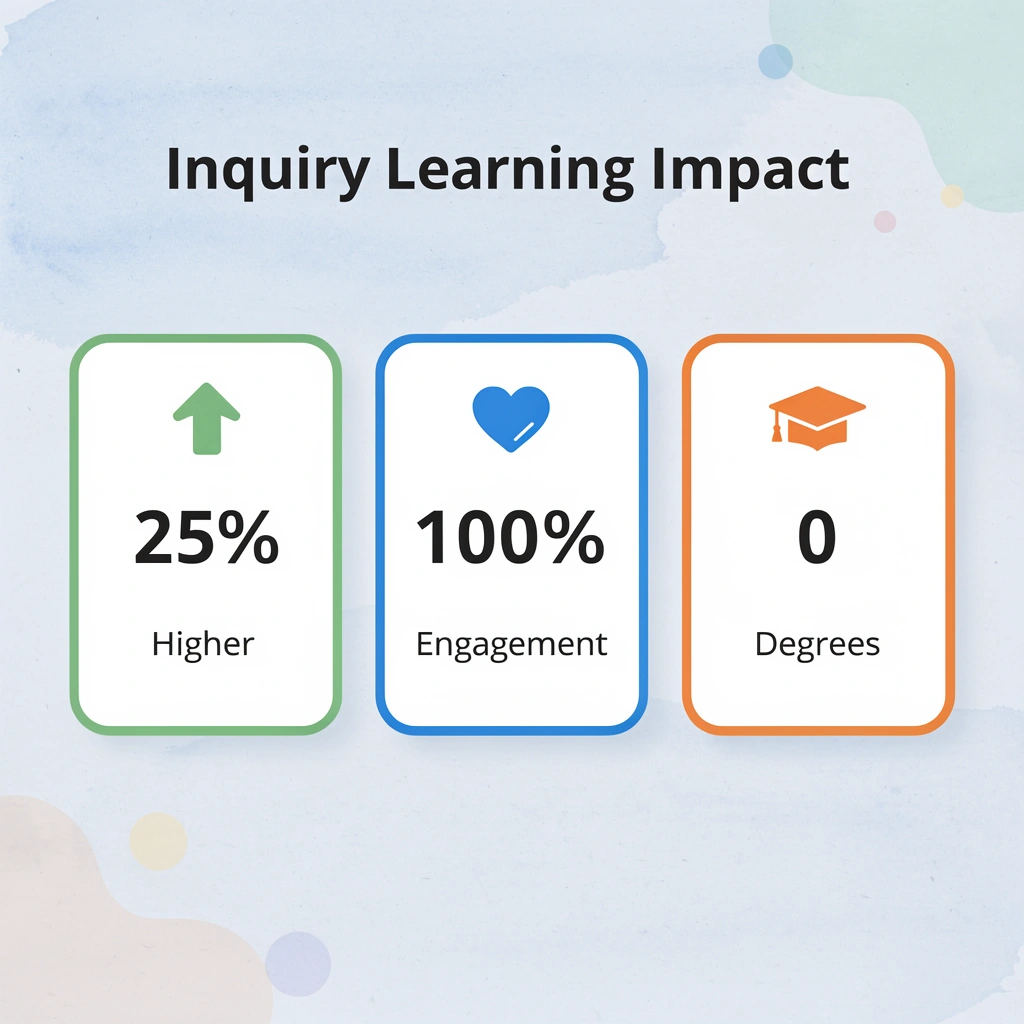
⚡ Pro Tip: Turn everyday moments into science discoveries. Cooking becomes chemistry, gardening becomes biology, and building blocks become physics. The key is to ask open-ended questions like "What do you think will happen if..." rather than simply explaining concepts.
How should you respond when your child asks curious questions?
When your preschooler asks why the moon follows your car or where rain comes from, resist the urge to give instant answers. That question reflects active thinking about how the world works, which matters more than being right. Responding with "What do you think?" or "I don't know, but we can find out together" encourages deeper thinking than simply handing them facts.
Why does embracing uncertainty benefit your preschooler's development?
This removes the pressure to act like a walking encyclopedia. You're showing intellectual curiosity and demonstrating that not knowing is the starting point for discovery, not a weakness. Children who learn that questions lead to collaborative investigation develop comfort with uncertainty that serves them far beyond preschool.
Give children space to explore before jumping in with corrections
FIU research published in Infant and Child Development found that children as young as 3 years old benefit most from self-directed exploration before adult intervention. When your child experiments with stacking blocks or pouring water between containers, resist the urge to show them the "right" way. Trial and error builds problem-solving skills that direct instruction cannot develop.
Your child's messy process builds neural pathways that make future learning stick. The preschooler who discovers through repeated attempts that wide bases create stable towers understands structural stability in a way no explanation could match.
How can you turn everyday moments into opportunities for investigation?
Bath time, cooking, walks outside—everyday activities offer endless science lessons. When your child sees a rubber duck float, wonder aloud whether soap will too. Let them test it, observe, and form conclusions. You're not adding science to their day; you're naming the science already present.
How can coloring pages extend science learning naturally?
After exploring shadows or watching ice melt, a customized coloring page from My Coloring Pages featuring those phenomena extends learning naturally. Coloring the sun at different positions or drawing water in different states reinforces observation through another medium while developing focus and hand control that support future writing. You're giving their discoveries a second channel to flow through.
Accept messiness and mistakes as essential parts of learning
Exploration gets messy. Children need old clothes and permission to make messes when mixing materials, digging in soil, or experimenting with water. The parent who prioritizes cleanup over discovery sends a message that neatness matters more than learning. When an experiment fails or produces unexpected results, investigate together to understand what happened. Those failures teach iteration and refinement, skills that matter in every domain later.
Related Reading
- Preschool Assessment
- Preschool Crafts
- Preschool Learning Activities
- Preschool Tracing Worksheets
- Daycare Vs Preschool
- Preschool Classroom Layout
- Preschool Playground Equipment
- Free Preschool Games
- Preschool Sight Words
- Preschool Math Activities
- How To Become A Preschool Teacher
- Preschool Prep
- Preschool Lesson Plan Template
- Noah's Ark Preschool
- Preschool Science Experiments
- Preschool Craft Ideas
- Creative Curriculum For Preschool
- Playing Preschool Curriculum
- Preschool Bulletin Board Ideas
- Christmas Crafts Preschool
- Spring Bulletin Board Ideas For Preschool
- Turkey Craft Preschool
- Preschool Learning Games
25 Educating and Fun Preschool Science Activities
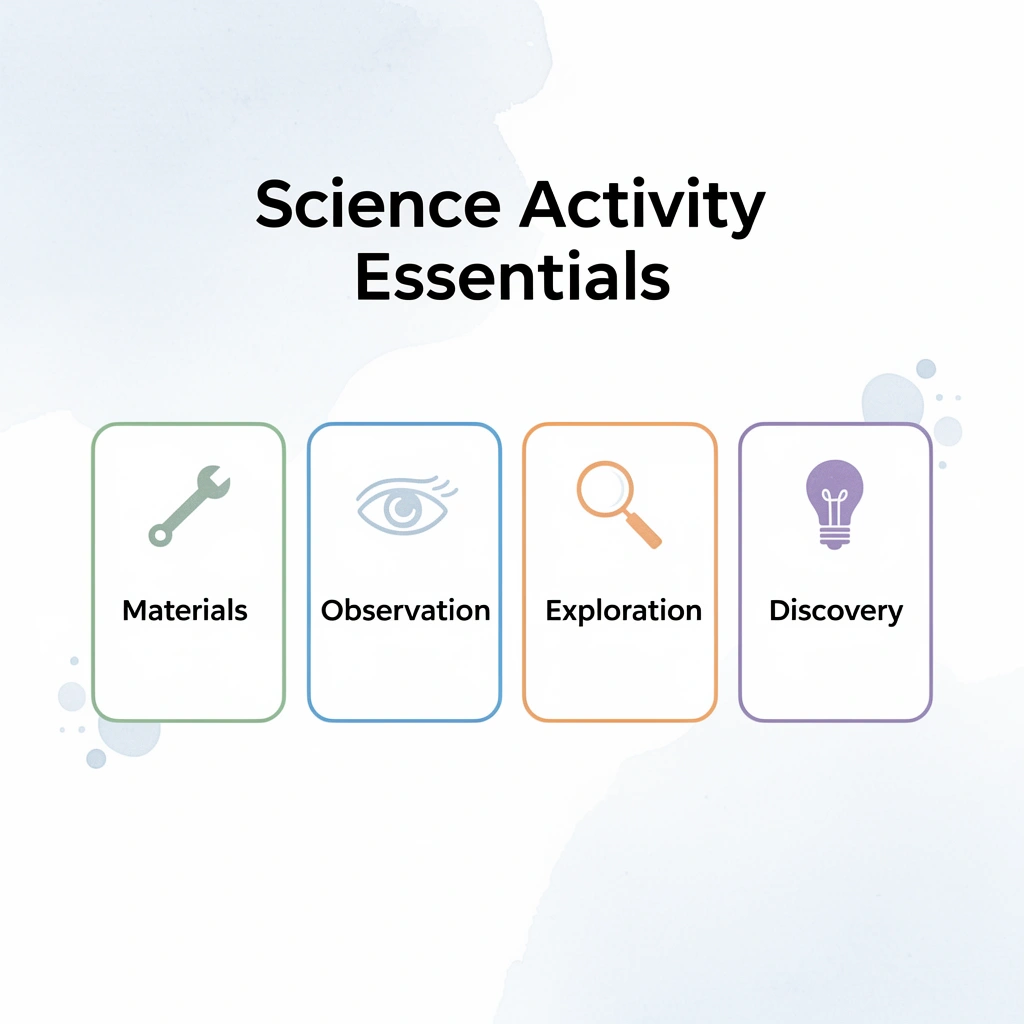
These 25 activities turn abstract scientific concepts into hands-on experiences preschoolers can understand, test, and remember. Each uses materials you already have, requires minimal setup, and teaches specific principles through direct observation. The goal is building the mental habit of asking "what happens if" and discovering the answer.
🎯 Key Point: The best preschool science activities use everyday materials and focus on observation rather than complex explanations. Simple experiments build scientific thinking more effectively than elaborate setups.
"Hands-on science activities help preschoolers develop critical thinking skills and natural curiosity that forms the foundation for lifelong learning." — Early Childhood Education Research, 2023
💡 Tip: Start with one activity per week and let your preschooler lead the exploration. The questions they ask during experiments are often more valuable than the planned outcomes.
1. Sink or Float Exploration
Fill a large container with water and gather objects with different densities: a rock, a leaf, a plastic bottle cap, a metal spoon, a cork, and a sponge. Ask your child to predict whether each will sink or float, then let them test each object.
This activity makes buoyancy and density visible without technical language. Children notice patterns (heavy things often sink, but not always) and form hypotheses based on evidence. When observations contradict expectations—a heavy log floats, a small pebble sinks—they learn that what they observe matters more than what they assumed would happen.
2. Magic Milk Color Swirl
Pour milk into a shallow plate. Add drops of food coloring to the center without stirring. Dip a cotton swab in dish soap and touch it to the milk's surface. Watch the colors explode into motion, swirling and mixing.
The soap breaks surface tension, sending colors dancing across the milk. Children observe how substances interact and how invisible molecular forces create visible effects. The visual drama makes the science unforgettable.
3. Baking Soda and Vinegar Eruption
Put a cup on a tray to catch the mess. Fill it halfway with baking soda, pour vinegar over it, and step back as the mixture fizzes and overflows. Add food coloring to the vinegar beforehand for a more dramatic effect.
This classic experiment demonstrates chemical reactions through immediate physical feedback. Children measure, pour, and observe cause and effect while learning that combining certain materials produces something new—carbon dioxide gas creates the fizz—and experience the excitement that motivates further experimentation.
4. Cloud in a Jar Weather Model
Fill a clear jar three-quarters full with warm water. Top it with a thick layer of shaving cream to represent clouds. Drop blue-tinted water onto the shaving cream and watch it "rain" through the cloud as the shaving cream becomes saturated.
This demonstrates the water cycle in a compact, observable format. Children watch condensation and precipitation occur in a controlled space, connecting abstract weather concepts to tangible phenomena they can touch and manipulate. The clear visual explains why rain falls from clouds without requiring technical terminology.
5. Melting Race Comparison
Place identical ice cubes in different locations: direct sunlight, shade, inside a room, and wrapped in aluminum foil. Set a timer and check every few minutes to see which melts fastest. Ask your child to predict the winner before starting.
Temperature and heat transfer become tangible when children observe ice disappearing at different rates. They learn that the environment affects physical states, that heat moves from warmer to cooler areas, and that materials respond differently to identical conditions.
6. Bubble Tower Engineering
Mix dish soap and water in equal parts. Use a straw or bubble wand to blow bubbles and stack them into towers. Experiment with different soap-to-water ratios to find which produces the strongest bubbles.
Children discover that too much water makes weak bubbles while too much soap makes them pop too quickly. They test different variables, adjust their technique, and learn through repeated trials while building fine motor control and scientific understanding.
7. Static Electricity Demonstration
Rub a plastic comb hard against hair or a wool cloth for 30 seconds. Hold it near small pieces of torn paper and watch them jump toward the comb. Try holding it near a thin stream of water from a faucet and see the water bend.
Children learn that friction creates an electrical charge, that charge attracts certain materials, and that forces can work at a distance without touching. The surprise factor of paper moving without wind and water bending without contact makes the physics easy to remember.
8. Shadow Tracking Throughout the Day
Take objects outside on a sunny morning. Trace their shadows on large paper with chalk or markers. Return to the same spot at noon and again in late afternoon, tracing the shadows each time. Compare how they moved and changed shape.
Children observe that shadows follow predictable patterns determined by the sun's position, building spatial awareness and introducing astronomical concepts through direct observation.
9. Paper Shape Strength Testing
Fold paper into different shapes: a flat rectangle, a triangle, a cylinder, and an accordion fold. Stack pennies, blocks, or small books on each until it collapses, counting how many items each shape supports.
Children discover that shape affects strength regardless of material, that triangles and cylinders often outperform flat structures, and that design matters as much as composition. They make predictions, systematically test them, and draw conclusions from their observations.
10. Glitter Handwashing Experiment
Sprinkle glitter on your child's hands to represent germs. Have them rub their hands together with water and observe how much glitter remains. Then repeat with soap, noting how effectively it removes the glitter.
Children understand why soap matters through direct observation. The hands-on experience of feeling the difference between wet and soapy hands reinforces the lesson more effectively than any lecture about germs.
11. Seed Growth Observation Journal
Plant fast-growing seeds (beans work well) in clear plastic cups filled with soil. Water daily and place in sunlight. Measure and draw the plants every few days to create a visual record of growth over two weeks.
Children see roots developing before shoots appear, watch leaves emerge and unfold, and understand that growth requires consistent care. This teaches patience, responsibility, and life cycles through direct participation rather than textbook pictures.
12. Primary Color Mixing Exploration
Give your child red, yellow, and blue paint or watercolors. Let them experiment with mixing: red plus yellow creates orange, blue plus yellow makes green, red plus blue produces purple. Encourage varying the proportions to create different shades—more red makes orange redder, more yellow makes it yellower.
Through experimentation, children learn that colors aren't fixed and that proportions matter, developing prediction skills and introducing how results depend on inputs.
13. Walking Water Capillary Action
Place two clear cups side by side. Fill one with coloured water and leave the other empty. Fold a paper towel into a strip and drape it between the cups, with one end in the water and the other hanging into the empty cup. Watch the water "walk" across the towel over several hours.
Children observe water defying gravity and moving upward through paper fibers to the empty cup. This demonstrates capillary action, how plants transport water from roots to leaves, and how liquids travel through solid materials.
14. Ice Melting Under Different Conditions
Put identical ice cubes in different places: in direct sunlight, in a shaded area, at room temperature indoors, in a cooler, and wrapped in fabric. Check them every 15 minutes and record which melts first and which lasts longest.
Heat transfer ideas become clear through comparison. Children learn that temperature differences cause melting, that insulation slows the process, and that surrounding conditions create measurable differences. The experiment teaches controlled testing by varying one factor while holding others constant.
15. Magnetic Material Sorting
Give your child a magnet and a collection of objects: paper clips, coins, plastic toys, aluminum foil, steel washers, and wooden blocks. Let your child test each item and sort them into "magnetic" and "non-magnetic" piles.
Magnetism becomes a sorting tool rather than an abstract force. Children discover that magnets attract some metals but not others, that material composition determines magnetism, and that appearance doesn't predict behavior (a shiny coin might not stick while a dull washer does). This builds classification skills and introduces material science.
16. Balloon Rocket Physics
Tape a drinking straw to an inflated balloon. Thread a long string through the straw and stretch it across a room, securing both ends. Release the balloon and watch it zip along the string as air escapes.
Children observe that releasing air in one direction propels the balloon in the opposite direction, demonstrating Newton's third law. They're witnessing force, motion, and energy transfer through an activity that feels like play.
17. Dancing Raisins in Carbonation
Drop raisins into a clear glass of carbonated water or clear soda. Watch them sink, then rise as bubbles attach to their wrinkled surfaces, then sink again as bubbles pop. The cycle continues for several minutes.
Children observe that bubbles create buoyancy, eventually pop, and demonstrate how changes in density drive movement. The repeated rising and falling show that scientific phenomena often occur in cycles.
18. Oil and Water Separation
Pour water into a clear container until it's half full. Add several tablespoons of cooking oil and stir vigorously. Within seconds, the liquids separate, with oil floating on top.
This demonstrates how some substances don't mix regardless of stirring, that liquids have different densities, and that lighter liquids float on heavier ones. Children observe molecular polarity concepts without using chemical vocabulary.
19. Sound Pitch with Water Glasses
Line up four identical glasses: leave one empty, fill the second one quarter-full, the third half-full, and the fourth three-quarters full. Tap each glass gently with a spoon and listen for the different pitches it produces.
Children discover that more water produces lower pitches while less water produces higher pitches, learning that object properties determine the sounds they produce and that acoustics can be explored through experimentation.
20. Nature Scavenger Hunt with Purpose
Make a list of natural items with specific characteristics: something rough, something smooth, something green, something that fell from a tree, and something smaller than your thumb. Go outside and find examples of each, discussing what makes each item fit its category.
Children develop observation and classification skills by noticing details, comparing textures and sizes, and considering why objects have certain properties. This transforms a simple walk into an active scientific inquiry, teaching them to analyze their environment.
21. Waterproof Material Testing
Wrap different materials (cotton cloth, plastic wrap, aluminum foil, wax paper, newspaper) around identical small cups. Pour water over each and wait 5 minutes. Check which cups stayed dry inside.
Children predict which materials will repel water, then verify predictions through observation. They learn that materials have different functions: some block water while others absorb it, and that testing reveals properties that are not always obvious from looking.
22. Paper Flower Water Absorption
Cut flower shapes from paper and fold the petals inward toward the center. Float the folded flowers on water and watch the petals slowly open as the paper absorbs moisture.
Absorption and capillary action create a visible change. Children observe that paper soaks up water, causing physical changes: the paper expands and unfolds gradually. The magical appearance of blooming flowers makes the science memorable while teaching material properties.
23. Daily Weather Observation Chart
Make a simple chart with columns for each day of the week and rows for weather conditions (sunny, cloudy, rainy, windy, snowy). Each morning, observe the sky together and mark the appropriate condition. At week's end, discuss patterns.
Regular observation develops data-collection and pattern-recognition skills. Children learn that weather changes predictably, patterns emerge over time, and recording information reveals trends. This introduces scientific methodology through systematic observation and documentation in under two minutes daily.
24. Push and Pull Force Experiments
Gather toy cars, blocks, doors, and drawers. Encourage your child to experiment with pushing and pulling each object. Discuss which movements work better for different items: pulling a wagon, pushing a toy car, or sliding versus lifting blocks.
Children discover that different objects respond to different forces, that friction affects movement, and that the same push produces varying results depending on the object. This builds intuitive understanding of mechanics through play.
25. Science Coloring Reinforcement Activity
After exploring any science concept through hands-on activity (planting seeds, observing weather, testing magnets), create a custom coloring page through My Coloring Pages that depicts what you discovered together. A child who planted seeds can color a page showing roots growing underground, reinforcing the sequence they're watching unfold in their own cup.
Why does coloring help children process scientific concepts?
This bridges observation and representation, helping children process their experiences through a different medium. Coloring the stages of plant growth or the water cycle after witnessing it connects visual memory to conceptual understanding. The act of coloring develops fine motor control and focus while reinforcing scientific concepts, turning creative expression into learning reinforcement without the feel of worksheets or testing.
Related Reading
- Preschool Mothers Day Crafts
- Preschool Spring Crafts
- Preschool Snack Ideas
- Preschool vs Daycare
- Preschool Thanksgiving Crafts
- Halloween Crafts Preschool
- Preschool Movement Songs
- Fathers Day Crafts Preschool
- Preschool Classroom Themes
- January Preschool Themes
- Fall Coloring Pages Preschool
- Part Time Preschool
- Letter B Worksheets Preschool
- Letter A Worksheets Preschool
- All About Me Preschool Activities
- Tracing Worksheets Preschool
- Good Morning Songs for Preschool
- Fall Preschool Crafts
- Preschool Art
- Play Based Preschool
- How Much Is Preschool
Download 54,780+ Free Science Coloring Pages and Worksheets
You don't need to design worksheets from scratch when your child discovers something new. After planting seeds or watching ice melt, children learn as they revisit those concepts through coloring pages that reflect their experiences. My Coloring Pages offers over 54,000 free printable options covering plant life cycles, weather patterns, animal habitats, and every science topic preschoolers explore, plus an AI generator that creates custom pages matching your specific activities within seconds.
💡 Tip: Use the AI generator immediately after science activities while the experience is fresh in your child's mind for maximum learning impact.
"Visual representation strengthens memory retention by 40% when children can connect hands-on experiences with corresponding imagery." — Educational Psychology Research, 2023
When your child colors a page showing the exact stages of the bean plant they're watching grow in their cup, or the specific animals they spotted during yesterday's nature walk, the connection between observation and representation strengthens memory. You're not adding extra work—you're giving their discoveries visual permanence that reinforces learning without feeling like testing or homework.
🎯 Key Point: Custom coloring pages transform fleeting observations into lasting educational tools that children enjoy using.
Most parents spend hours searching for relevant worksheets or settling for close-enough options that don't match what their child experienced. My Coloring Pages eliminates that search, offering both ready-made science pages organized by topic and custom generation that produces exactly what you need in under a minute, no design skills required.
⚠️ Warning: Generic worksheets that don't match your child's specific experience can weaken the connection between hands-on learning and concept reinforcement.
The library includes everything from simple living-versus-non-living sorting activities to detailed weather cycle illustrations, five-senses exploration pages, and step-by-step plant growth sequences. Parents can download what they need immediately or describe their specific science activity to the AI generator and receive a custom coloring page that matches precisely, transforming one-time experiments into ongoing learning tools.