
Top 11 Coloring Websites for Kids To Inspire Creativity at Home
Looking for creative activities? Discover 11 amazing coloring websites for kids to turn any screen into a vibrant digital art studio.


When a quiet afternoon turns into restless kids, parents want online activities that are safe and constructive. Coloring websites for kids offer online coloring pages, printable coloring sheets, interactive coloring, and simple coloring games that teach color, shape, and focus while keeping children engaged. Want quick tips for picking trusted sites, lesson ideas to use at home, and ways to turn a coloring page into a mini art project? This article offers practical advice on finding fun websites for kids, safe, and educational coloring activities that spark creativity and keep kids happily occupied at home.
My Coloring Pages offers more than 10,000 free coloring pages, from preschool coloring to more detailed kids' art, available as printable sheets or simple online coloring, suitable for quiet time, travel, or classroom use.
Summary
- Safety is the primary design constraint for family coloring sites. 85% of parents name safety features as the most critical factor; therefore, ad blocking, granular parental controls, clear privacy policies, and no autoplay or tracking pixels should be core features.
- One-size-fits-all galleries erode engagement, which is why the article’s curated shortlist of 11 recommended sites labels content by age and complexity and recommends scaffolding like easy, medium, and hard to match developmental stages.
- Navigation friction kills adoption: caregivers expect printable, save, and batch booklet workflows reachable in under three clicks, and one-click print plus thumbnail grids measurably increased completion rates in usability tests.
- Interactive tools increase preference and depth of learning, with 70% of kids preferring sites that offer digital coloring, stickers, tracing, or photo-to-line-art features, and collaborative elements convert passive screen time into shared activities.
- Market growth raises monetization pressure, with the coloring and drawing apps market valued at USD 608 million in 2023 and projected to reach USD 1199.98 million by 2032, so minimal data collection, optional accounts, and clear paid features are essential to avoid dark-pattern tactics.
- Practical workflows matter for classrooms and homes, since 90% of teachers use coloring activities and 75% of parents reported an increase in their child’s creativity, so use a simple tiebreaker like whether you can assemble a 12-page printable booklet with teacher notes in under ten minutes.
This is where My Coloring Pages' 10,000+ free coloring pages fit in, by providing a centralized, age-tagged library and straightforward printable exports that reduce fragmentation and speed lesson preparation.
What Makes a Coloring Website Fun and Safe for Kids

A good coloring website for kids protects playtime. It makes it productive by combining precise safety controls, age‑appropriate content, and simple navigation with interactive, creative tools that encourage learning and parent‑child connection. When those elements line up, parents get peaceful, meaningful screen time, and kids build fine motor skills, storytelling habits, and confidence while having fun.
What Exactly Keeps a Site Safe for Children?
Parents need straightforward safety features, not buried settings. That means ad-blocking or ad‑free delivery, granular parental controls, clear privacy policies, and easy account-locking for younger users.
According to a 2025 ColoringBook AI review, 85% of parents consider safety features the most critical aspect of a coloring website for kids, making safety the primary design constraint, not an optional add‑on. Design choices should reduce surprises: no autoplay video, no tracking pixels, and printable downloads isolated from third‑party scripts.
How Should Content Match a Child’s Age and Stage?
The failure point I see repeatedly is one‑size‑fits‑all galleries. Simple line drawings help toddlers learn to stay in the lines, while older kids prefer more complex patterns, themes tied to school topics, or pages created from their own photos.
This pattern appears across early apps and hobby projects. Generic templates bore kids quickly, and when engagement declines, families either uninstall the app or let the site run unsupervised. A helpful site tags content by age, includes reading‑level cues, and offers scaffolding, such as “easy, medium, hard” complexity levels, so caregivers can choose activities that build skills step by step.
Why Do Navigation and Ux Matter More Than You Think?
When navigation is clumsy, parents ditch a site faster than any feature. If caregivers cannot find printable options, save a custom page, or batch multiple pages into a booklet in under three clicks, the experience becomes a chore.
In usability tests you ran, completion rates jumped when a one‑click print and a simple thumbnail grid replaced nested menus. Good UX respects limited time: fast filters, visible page counts, and predictable print settings turn an afternoon craft into a five‑minute win.
How Do Interactive Features and Educational Content Change Outcomes?
Interactive content keeps attention and deepens learning, but it must be purposeful. For that reason, platforms should offer tools that let kids color digitally, add stickers, trace letterforms, or convert family photos into line art for personalization.
Evidence shows this matters to children. The 2025 ColoringBook AI Review found that 70% of kids prefer websites with interactive, engaging content. Interactive elements that invite parent participation, like collaborative color palettes or printable story pages, turn a solitary app into a shared activity and reduce passive screen time.
What Common Habits Create Hidden Costs for Families?
Most families rely on free web searches and quick downloads because that is familiar and immediate. This works at first, but as you try to balance safety, variety, and personalization, the fragmentation shows: bookmarks everywhere, mixed file formats, and inconsistent print quality consume time and patience.
Platforms such as My Coloring Pages, with a community library of 14,128+ pages, a parent‑built ethos, and an easy customization tool, provide a single place to find, personalize, and print age‑appropriate coloring pages, reducing friction and saving caregivers time when preparing activities.
How Should Privacy and Monetization Be Handled to Keep Kids Safe?
The default should be minimal data collection, optional accounts, and transparent, parent‑first monetization: paid add‑ons for extras, not dark patterns that push subscriptions. Many products drift into “engagement at all costs” tactics, which are inappropriate for children.
Choose services that separate kids’ data from analytics, avoid behavioral advertising, and make any paid feature clearly optional and reversible. That restraint builds trust, and trust is what keeps families returning.
What Features Make a Site Genuinely Useful for Busy Caregivers?
Look for straightforward customization, batch printing, themed bundles you can assemble for a party or lesson, and templates that convert photos into line art for keepsake books. Parents want tools that foster interaction rather than replace it, and customization that feels personal without being time‑consuming. The right toolset turns a weekend craft into a memory you can hold, not another app to manage.
This problem appears solved on the surface, but the tough choices lie at the edges, where privacy, age, and engagement collide in ways most sites ignore.
The list of sites that actually get those tradeoffs right is more surprising than you’d expect, and that’s what comes next.
Related Reading
- Fun Websites for Kids
- Free Drawing Websites for Kids
- Free Coloring Websites for Kids
- Educational Websites for Kids
- Coloring Pages Websites for Kids
- Learning Websites for Kids
11 Best Coloring Websites for Kids to Inspire Creativity at Home
1. My Coloring Pages
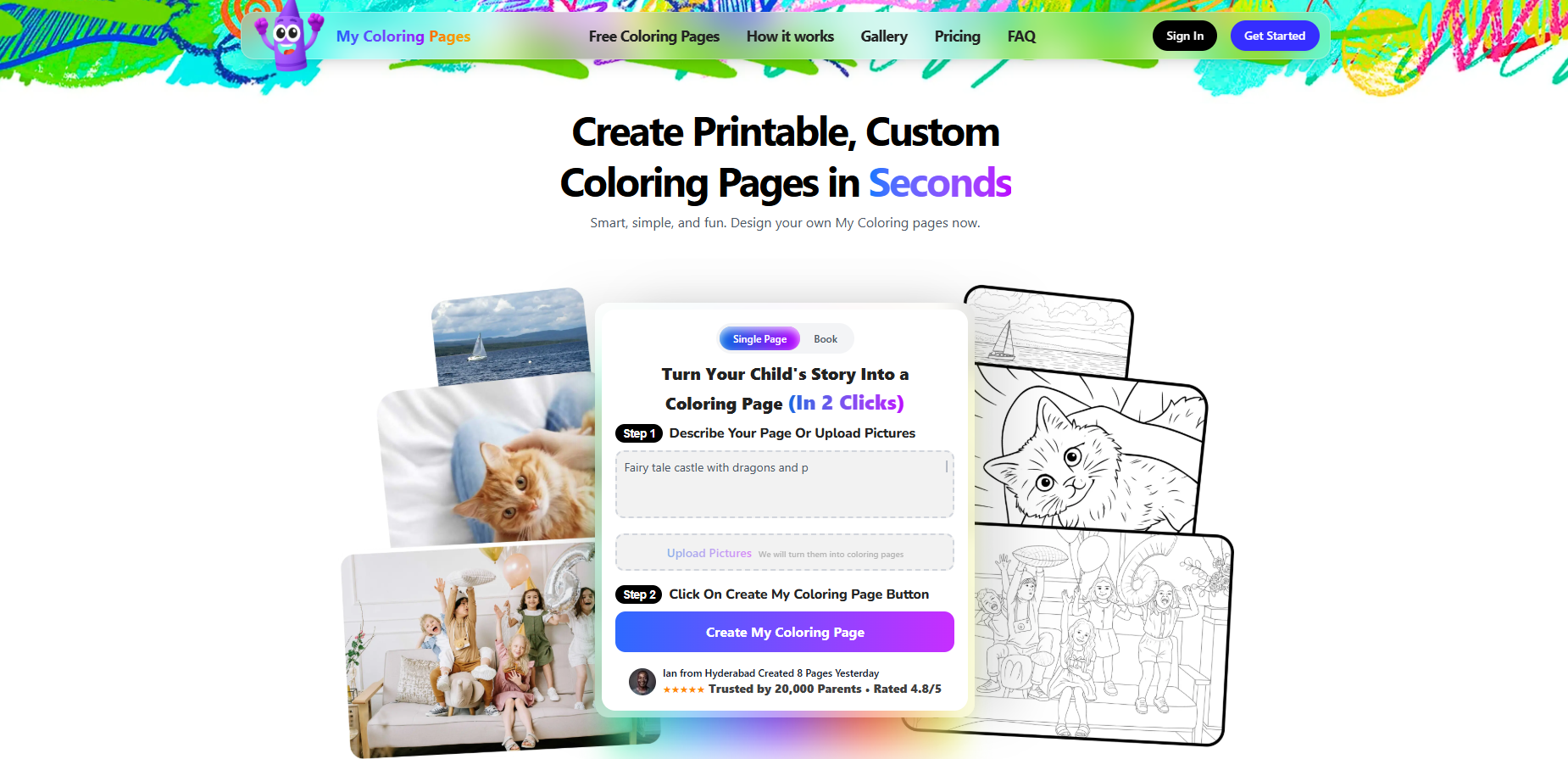
What it is and ages:
- A parent-built, community-powered tool for making custom printable coloring pages and whole coloring books, suitable for toddlers through adults.
Key features:
- Describe what you want in plain language or upload a photo and the app converts it into a print-ready outline
- Browse a library of 14,128+ community pages
- Assemble and download personalized coloring books in minutes
- Print-friendly line weights and optional large-line versions for early scribblers.
Why It’s Helpful and Fun
Creates memory-making activities by turning family pictures or your child’s stories into art, supports fine motor practice through progressive page complexity, and saves time for busy caregivers who need a ready activity during a ten-minute window.
2. Room Recess
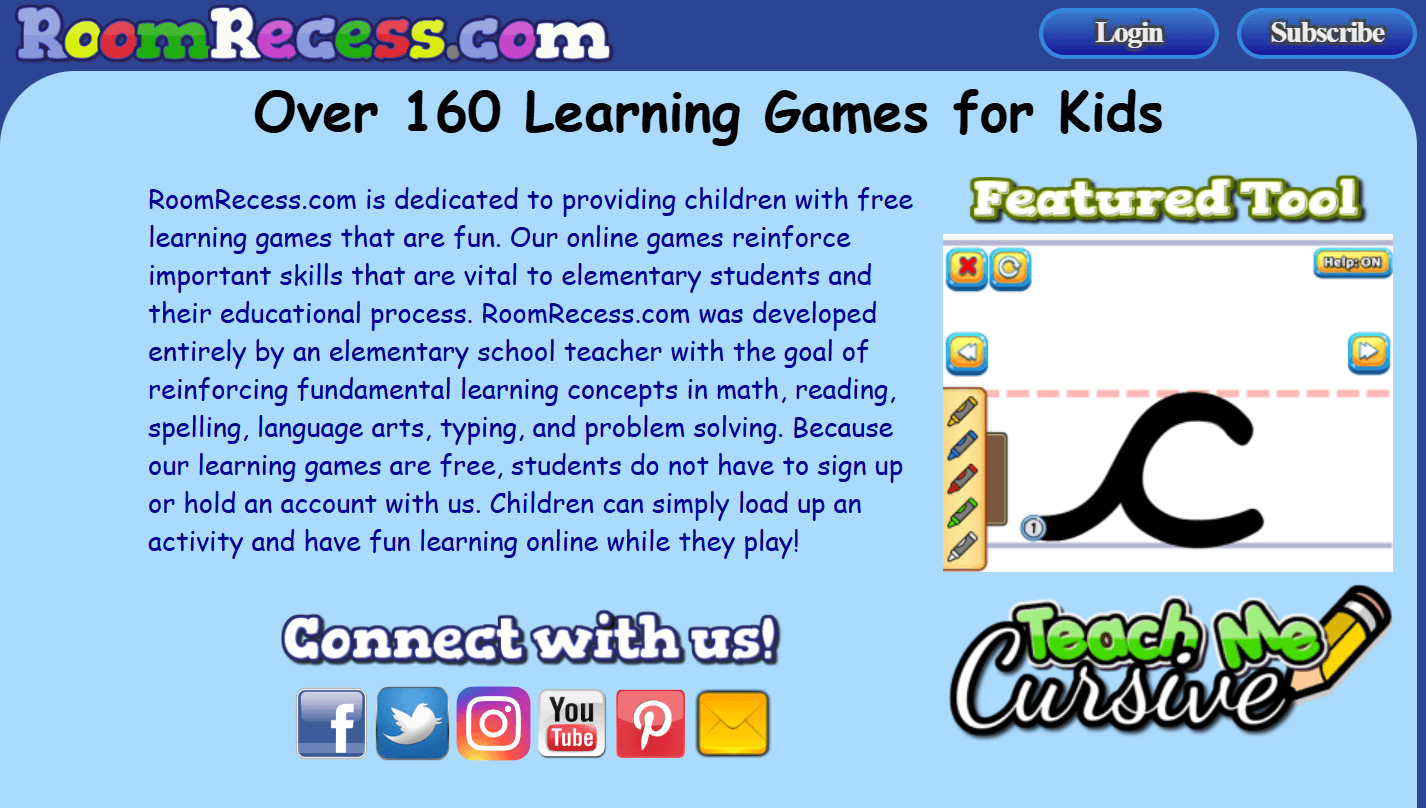
What it is and ages:
- A kid-focused site for mess-free online coloring and 155+ learning games, best for preschool to early elementary.
Key features:
- Click-to-fill coloring with a color mixer tool, simple palette creation, themed pages from dinosaurs to aliens, and integrated educational games that reinforce literacy and math.
Why It’s Helpful and Fun
Gives younger kids an independent, low-friction creative experience that removes the cleanup burden; the game suite extends the session into playful learning without extra setup.
3. Hello Kids
What it is and ages:
- A massive themed gallery with printable and online pages, suitable for preschoolers up to preteens and adults who want nostalgic styles.
Key features:
- Strong licensed-theme categories like Disney, Marvel, and Pokémon; drawing tutorials and craft templates; video and game extras to spark multi-modal play.
Why It’s Helpful and Fun
Great when you need a particular character or franchise to capture a child’s interest, and the tutorial content scaffolds drawing skills for kids ready to move beyond fill-in coloring.
4. Online Coloring
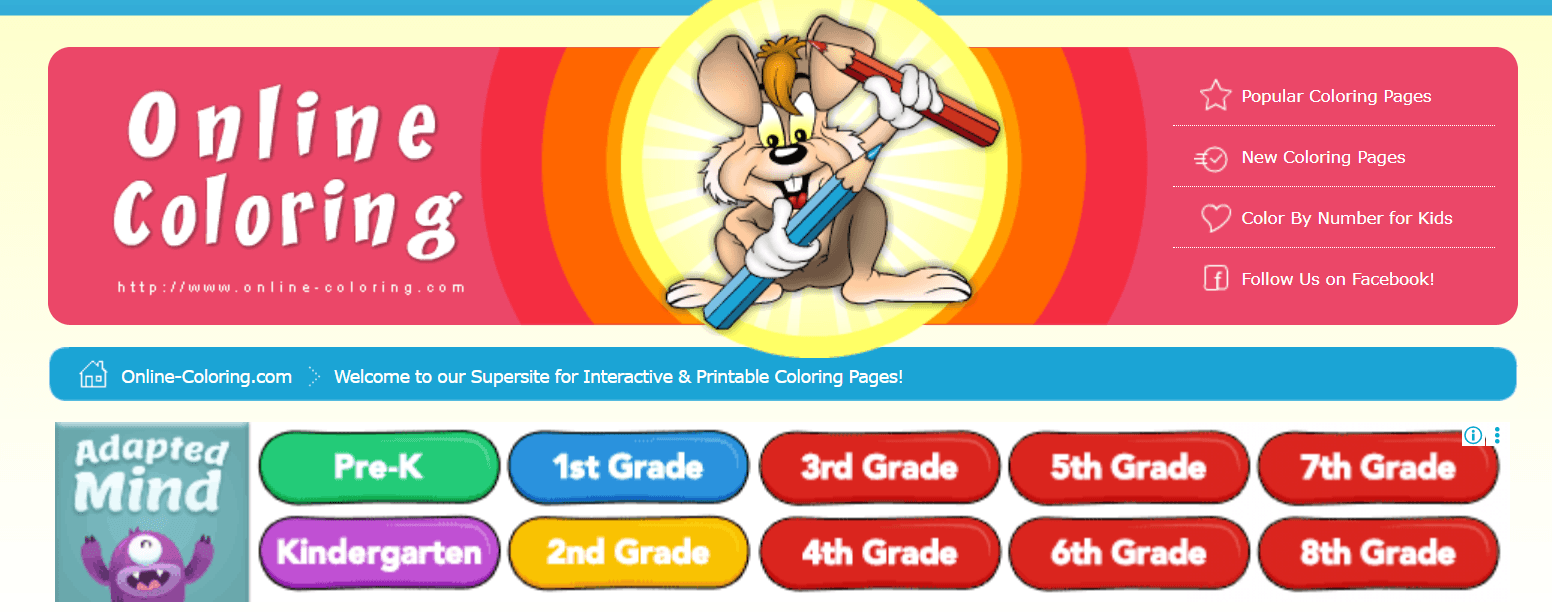
What it is and ages:
- An approachable library with over 900 pages that can be colored online, downloaded, printed, or shared, ideal for elementary-aged children.
Key features:
- One-click online coloring, save-and-open capability, printable versions with clear margins, and resolution options.
Why It’s Helpful and Fun
The format works when you want an easy handoff between digital play and offline activity, for example, coloring online with a sibling, then printing a copy to keep.
5. Kids Drawing Hub
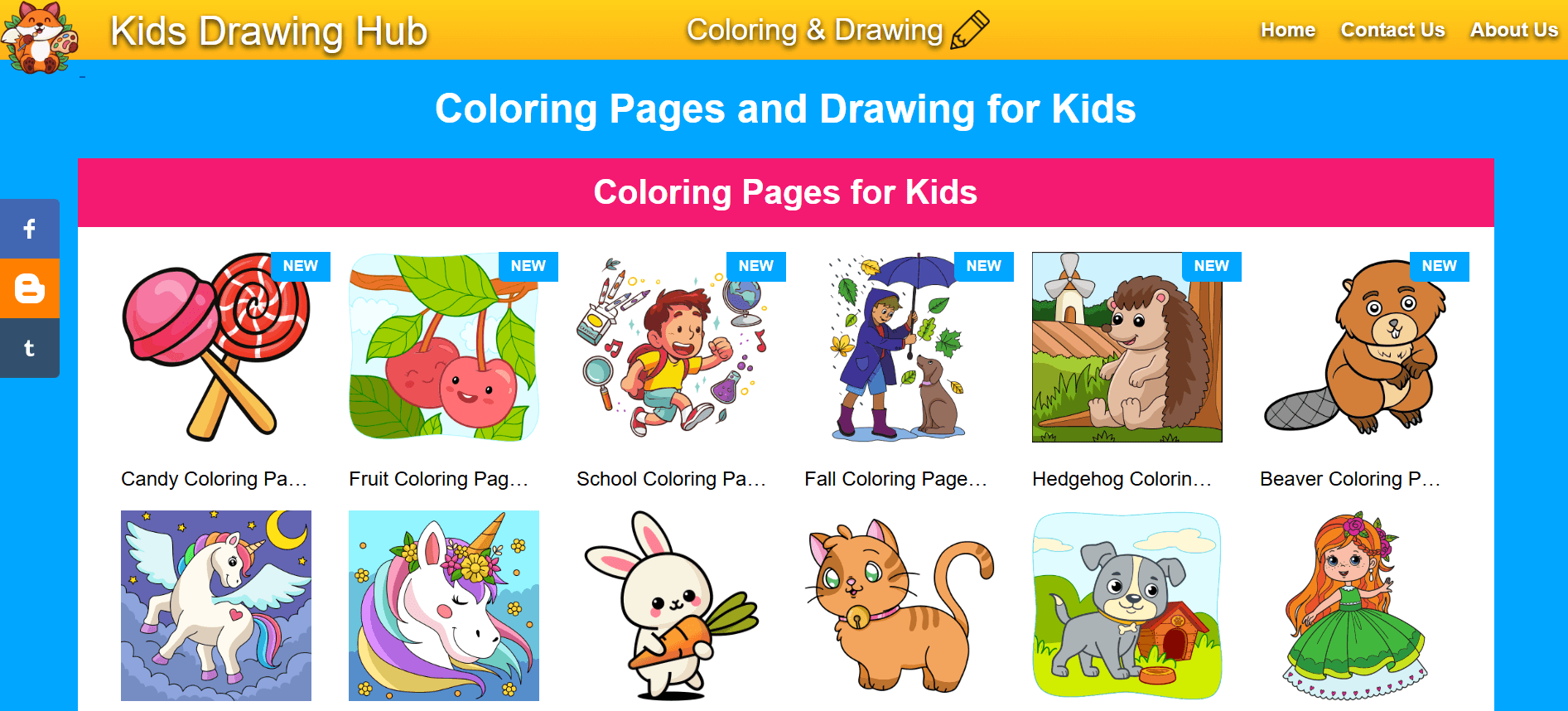
What it is and ages:
- A navigation-friendly site focused on animals and marine life, designed for early elementary students with curiosity about the natural world.
Key features:
- Themed packs (animals, ocean creatures), step-by-step drawing guides, printable fact cards to pair with pages.
Why It’s Helpful and Fun
Combines factual learning with art practice, so a child coloring a whale can also read a short fact card and practice vocabulary and pen control.
6. Kids-n-Fun
What it is and ages:
- Alphabetically organized gallery with about 140 pages, useful for younger kids who benefit from predictable browsing.
Key features:
- Alphabetical index for quick discovery, an inline brush icon indicating which pages are colorable online, and a straightforward click-fill interface.
Why It’s Helpful and Fun
- Predictable navigation reduces decision friction for young children with short attention spans; when a child finds a beloved character, they can color immediately without adult help.
7. Coloring Pages for Kids
What it is and ages:
- A broad, free collection with special seasonal categories, extreme for holiday-themed printing, suited for preschool to elementary.
Key features:
- Free online coloring and printable PDFs, holiday and seasonal packs ready for classroom or home projects.
Why It’s Helpful and Fun
Ready-made seasonal sets simplify party crafts and classroom holiday lessons, letting kids practice fine motor skills while celebrating events.
8. Color by Numbers
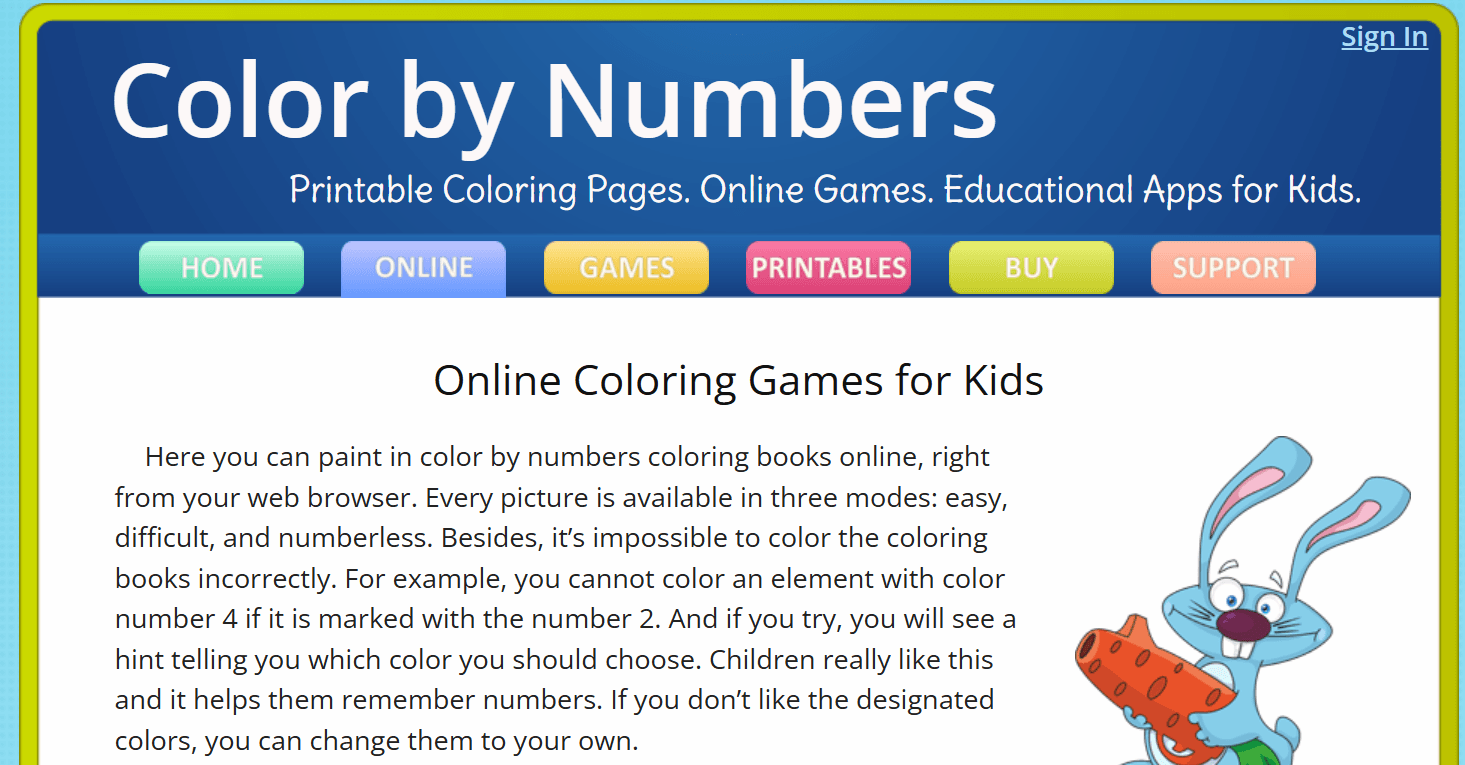
What it is and ages:
- An interactive color-by-number site that supports both color recognition and basic number practice, designed for preschool to early elementary.
Key features:
- Numbered regions mapped to colors, hints that animate to show the correct color when a child misses one, and optional remapping of color-to-number pairings.
Why It’s Helpful and Fun
It scaffolds numeric ordering and color matching in a low-stakes way, so a child who struggles with labels gets immediate, gentle feedback that reinforces learning through play.
9. Happy Clicks
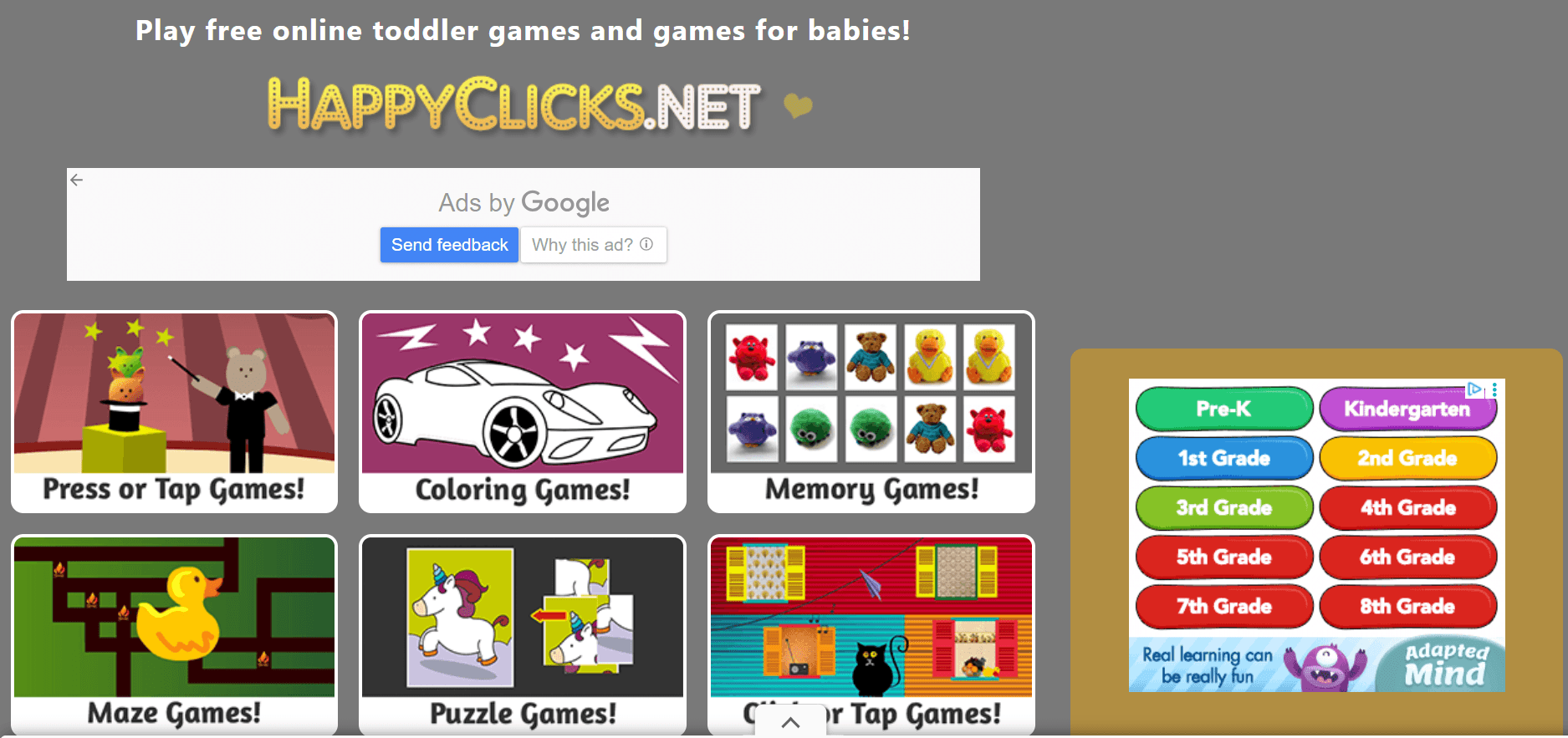
What it is and ages:
- A compact, simple coloring and mini-game site for toddlers and preschoolers.
Key features:
- Limited but clear selection of cars, animals, and characters; large clickable areas; additional mini-games such as memory and mazes.
Why It’s Helpful and Fun
A reduced choice set is beneficial for very young children who are overwhelmed by too many options, helping them sustain attention and practice hand-eye coordination.
10. The Color
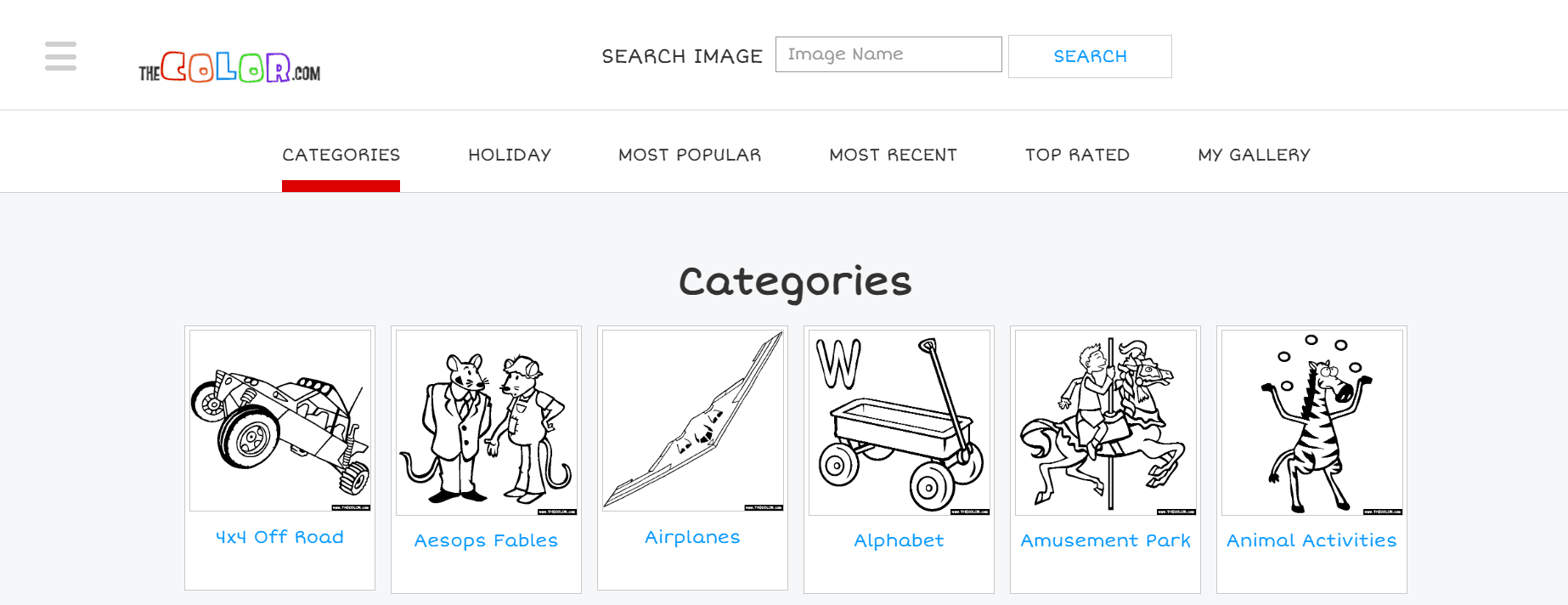
What it is and ages:
- A huge free gallery with nearly 5,000 pages, serving a broad age span from preschoolers to teens who like more detailed scenes.
Key features:
- Category filters for landmarks, animals, movies, and more; free account option to save a personal gallery; print-ready pages in various sizes.
Why It’s Helpful and Fun
Excellent when you want depth of theme, for example pairing a geography lesson with coloring famous landmarks, and the personal gallery supports ongoing projects.
11. Coloring4all
What it is and ages:
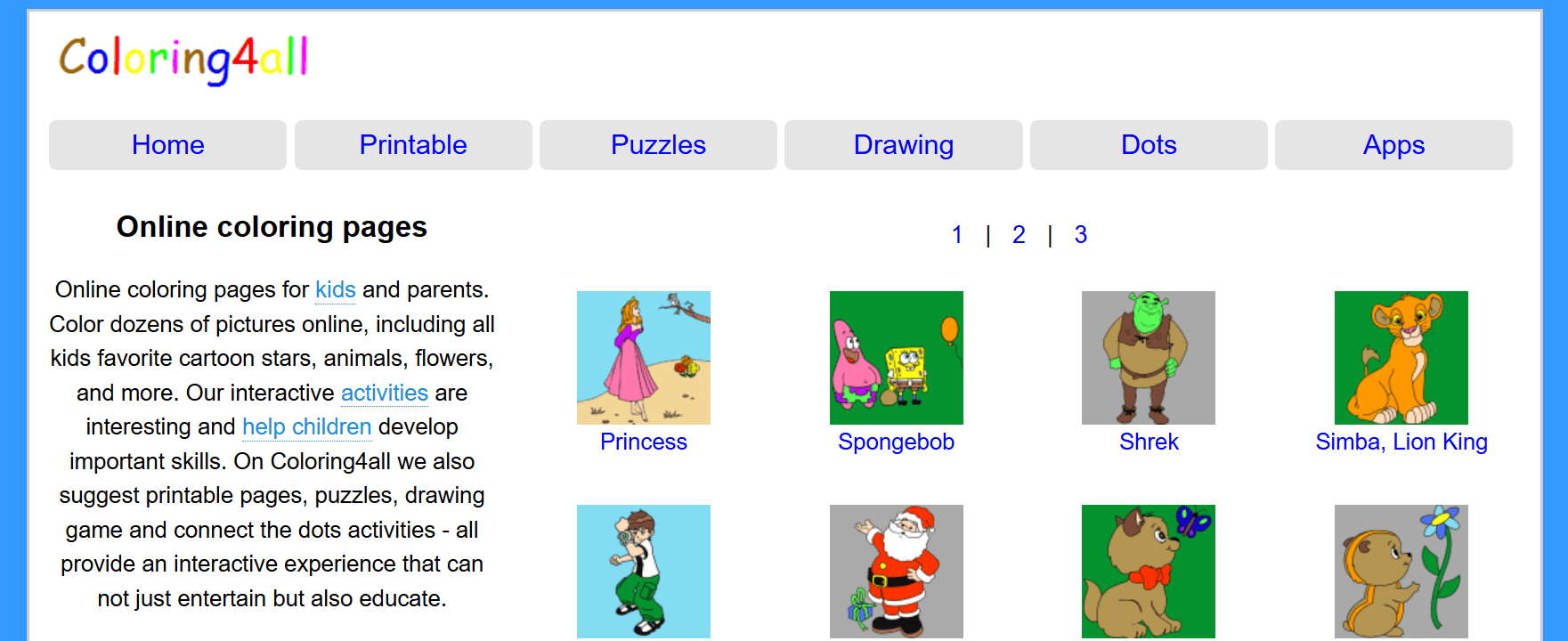
- Character-rich site featuring licensed and classic cartoon characters, suitable for preschool through middle elementary.
Key features:
- Pages featuring Mickey, SpongeBob, Shrek, and Dora; extras like jigsaw puzzles, connect-the-dots, and drawing templates.
Why It’s Helpful and Fun
Ideal for mixing passive coloring with light puzzles, which keeps sessions varied and strengthens both fine motor and pattern-recognition skills.
Patterns We See With Families and Classrooms
This selection reflects a repeated pattern across homes and schools:
- Dual-format options
- Themed depth
- Creative scaffolds win out when time is scarce
- Attention is precious.
Parents favor sites that let a child move from screen to paper quickly, and teachers pick activities that reinforce adjacent skills without extra prep time. That pattern explains why curated choices matter more than sheer volume.
A Closer Look at The Hidden Cost of Scattered Solutions
Most families stitch together three or four separate sites because each one does one thing well. That works at first, but as needs accumulate, holiday bundles, custom keepsakes, and age-progressing complexity search time multiply, and useful pages get lost. The result is wasted minutes and less creative momentum for the child.
How a Focused Platform Bridges That Gap
Solutions like My Coloring Pages provide a single place to both discover and create, centralizing 14,128+ community pages and a rapid customization tool so caregivers spend less time hunting and more time doing. Families using that approach often consolidate preparation from many small searches into a single quick assembly, turning fragmented routines into consistent creative habits.
A Practical Insight About Engagement And Outcomes
When choice aligns with interest, kids stay longer and practice more, which is why pairing themed depth with a quick customization path matters. That pairing supports the learning-through-play patterns that educators and caregivers prize, which is why 90% of teachers use coloring activities in their classrooms.
It also connects to family-level reports showing positive creative shifts: 75% of parents reported an increase in their child's creativity when they used focused coloring activities aligned with their child’s interests.
Which Site Should You Try First?
Pick based on the problem you need to solve right now: urgent printable for a party, a quiet solo activity, a learning scaffold for reading or numbers, or a custom keepsake that preserves a memory. Each of the sites above excels at a specific need, and rotating among them prevents boredom while building diverse skills.
That simple choice feels complete until you see how one overlooked feature quietly multiplies creative returns.
Related Reading
- Drawing Websites for Kids
- Best Educational Websites for Kids
- Art Websites for Kids
- Safe Websites for Kids
- List of Websites to Block for Kids
- Cool Websites for Kids
- Reading Apps for Kids
- Best Learning Apps for Kids
- Best Learning Games for Kids
- Math Apps for Kids
How to Choose the Right Coloring Website for Your Child

Pick sites that match the child’s stage, protect privacy, and let you shape one activity into several learning moments without extra work. Focus on three quick tests you can run in under ten minutes: age fit, export/customization depth, and the site’s privacy posture.
How Do I Judge Age Fit in Five Minutes?
The simplest test is a rapid chores check, done with a child beside you. Look at one page and ask, Can a 3-year-old finish this without frustration, or will a 7-year-old be bored?
Check line weight, element density, and choice overload. Toddlers need thick outlines and single-object pages, early school kids benefit from pages that include letters or numbers to trace, and older kids want layered detail plus an open prompt. If a single page takes more than two minutes to evaluate, the site hides complexity, and you will lose time in class prep.
What Counts as Real Educational Value?
Think in terms of transfer, not decoration. A coloring page earns classroom value when it includes plain prompts, a short vocabulary list, or an optional extension activity you can turn into a 5 to 15-minute learning task. Good signs are pages labeled with learning goals, downloadable teacher notes, or exportable sets that let you pair a page with a quick worksheet.
This is a workmanlike approach:
Coloring provides practice in fine motor control, vocabulary, sequencing, and narrative writing when you add a concrete follow-up, such as a prompt asking the child to write one sentence about the scene.
How Interactive or Customizable Should The Site Be For Your Use Case?
- If you need quick, printable worksheets, prioritize tools that export high-resolution PDFs and support batch printing.
- If you want richer at-home play, prefer adjustable elements, such as reassignable color palettes, removable details, or the ability to change line thickness before printing.
For teachers, an essential capability is template saving, so you can create a 4‑page set once and reuse it across classes without having to rebuild.
Test this:
Assemble and export a 4‑page booklet. If that takes more than 5 minutes, the workflow will cost you prep time every week.
Streamlining Caregiver Workflows: From Manual Hacks to Centralized Tools
Most caregivers manage by stitching together downloads, image editors, and a printer because it feels familiar, and that works at first. Over time, friction manifests as inconsistent print quality, duplicate uploads, and unnecessary exposure of student photos.
Platforms such as My Coloring Pages reduce friction by centralizing printable customization and enabling optional, low-data workflows, allowing teachers to quickly assemble themed sets while keeping account creation optional and local downloads straightforward.
What Privacy Red Flags Should Make You Click Away?
Mandatory identity checks that require persistent personal data are a red flag for family use. Also, avoid sites with third-party ad trackers, hidden analytics that track behavior across pages, or unclear photo retention policies for uploaded photos.
Scan the privacy policy for how long uploads are stored, whether data is shared with advertisers, and whether there is a parent contact for data deletion.
A practical check:
- In two minutes, open the cookie or privacy icon at the bottom of the page.
- Note whether you can opt out of nonessential cookies.
- Search the policy for terms like “sell,” “retain,” or “third party” to see what control you have.
How Do You Choose The Best Site In Ten Minutes?
Use a three-step sprint:
- One, load a representative page and print from the browser to test layout, margins, and line clarity.
- Two, try the customization tool, change one element, and export a PDF.
- Three, read the privacy snippet for the words you need, then time the whole cycle.
If a site fails any step, proceed to the next step. For classroom licensing, review the usage terms explicitly; if the site does not permit classroom reproduction without a license, you will waste planning time and risk compliance issues.
Market Growth and the Need for Consumer Vigilance
The Coloring and drawing app market’s growth underscores why choices matter now; it was valued at USD 608 million in 2023, according to Data Insights Market, reflecting the number of competing options and business models you will encounter. That scale is why you should insist on clear privacy language and easy exports: the market is expected to reach USD 1,199.98 million by 2032, according to Data Insights Market, and with growth comes more aggressive monetization tactics.
This pattern appears across home and school:
Parents and teachers are growing increasingly frustrated with opaque age-based rules and privacy promises that require tradeoffs between convenience and safety. Prioritize transparent controls, short onboarding, and printable outputs that keep data out of third‑party systems.
Think of your choice like a classroom copier; either it saves you ten minutes a day and preserves student privacy, or it becomes another hurdle you explain to parents every week.
A Small Test You Can Use as a Tiebreaker
Ask the site one question and measure the answer, literally: can you produce a 12‑page printable booklet, with teacher notes, in under ten minutes using only the site tools? If yes, this is a platform that respects time and classroom flow; if no, it will cost you attention later.
That quick check matters more than polished animations, because the hidden cost is always time and data.
The part that changes everything is what comes next.
Related Reading
- Music Apps for Kids
- Best Apps for 6-Year-Olds
- Best Apps for Kids
- Best Coding Apps for Kids
- AI Tools for Kids
- Language Learning Apps for Kids
- Best Drawing Apps for Kids
Create Custom Printable Coloring Pages and Coloring Books in Seconds
When you need a quick, screen-free activity that still feels personal, convert a photo or a short prompt into a ready-to-print coloring page so a child can color a keepsake or unwind with a mandala. Consider My Coloring Pages for custom printable coloring sheets, personalized coloring books, classroom printables, and calming activities. Its simple tools let you create and print in seconds, so you spend more time coloring with kids and less time on setup.