35 Fun Websites for Kids That Beat Mindless Screen Time
Find the best fun websites for kids to keep them curious. This list of 35 tools covers math, reading, and science engagingly.


When the TV is off, and the tablet is out, many parents worry that screen time will lead to endless scrolling and low-value content. How do you find fun websites for kids that are safe, child-friendly, and actually help with learning games, reading practice, puzzles, art activities, and simple STEM play? This article points you to trusted educational websites, interactive games, online coloring, and printable activities so you can give kids screen time they genuinely enjoy while knowing it’s fun, safe, and actively helping them learn, create, and think without endless scrolling.
My Coloring Pages offers 14,128+ free coloring pages that fit this plan, including themed printable coloring pages, seasonal packs, and creative prompts to keep kids creating, practicing skills, and thinking while you relax.
Summary
- Kids expect online experiences that are both playful and secure. 70% of children say they want websites to be fun and safe, which favors short, goal-driven interactions, immediate feedback, and printable rewards over endless scrolling.
Interactive content captures attention faster: 75% of kids prefer interactive sites. Prioritize small wins and progressively increase complexity only when the child asks. - Parents broadly trust educational games: over 70% believe they can enhance learning, and more than 50 million children worldwide use educational websites, underscoring the scale and potential impact of curated learning platforms.
- A rapid evaluation prevents bad picks: use a two-minute checklist that asks about sign-in requirements, ads, age labels, sharing controls, and privacy; if two or more answers are no, treat the site as experimental rather than reliable.
- Maintain a rotation of three to five sites and reassess every two to six weeks, as variety prevents burnout while repetition builds mastery. Attention patterns shift on a biweekly to monthly cadence.
- Run short experiments to find fit: try two to three candidate sites, run two 10-minute sessions per site across three days, and log two simple notes each time about mood and outcome to surface valid preferences.
This is where My Coloring Pages's 10,000+ free coloring pages fit in, by supplying printable, single-purpose activities that reduce prep time and let families move quickly from screen exploration to hands-on crafts.
What Makes a Website Fun and Safe for Kids

You want online experiences that feel playful and inviting for kids, without exposing them to ads, unmoderated chats, or confusing navigation. For our purposes:
- “Fun” means clear interactivity, age-appropriate challenge, and visual clarity.
- “Safe” means strict ad control, privacy-by-design, and explicit content boundaries parents can trust.
What Does "Fun" Actually Look Like for Kids Online?
Pattern: kids prefer short, goal-driven interactions with immediate feedback and a clear next step. Design that into a site with simple, progressive challenges, large touch targets, and rewards that are visual or printable rather than social validation. According to Bark, 70% of kids say they want websites to be fun and safe.
This balance is not optional; it is an expectation, and features like interactive coloring tools that let children see a finished page and then print it meet that expectation while keeping the focus on doing, not scrolling.
How Do You Make Safety Real Without Killing the Play?
If a site enables social features, moderation must scale accordingly. Otherwise, bullying and toxic comments leak from school to home.
Parents and teachers repeatedly report frustration that well-intentioned platforms offer few options when a child encounters harmful content. For this reason, prioritize sites with no-tracking defaults, explicit parental controls, and no third-party ad networks, because those design choices remove the common attack vectors that cause the most harm.
What Tradeoffs Will You Face as You Choose Features?
Higher interactivity usually means more data collection, and genuinely free services often rely on ads. Expect tradeoffs between richer experiences and stronger privacy.
The practical choice is to favor curated, print-ready activities that let kids engage deeply without requiring accounts, and to accept simple, sandboxed creativity tools over open chat or unmoderated comment threads. Think of a good kids' site as a supervised art table, not an open market.
Most Parents Start With The Familiar, and That Makes Sense
Most parents find activities through quick searches or popular video platforms because those routes are fast and familiar. That works at first, but fragmented sources scatter content, expose children to ads, and force teachers to spend prep time reconciling quality.
Platforms like My Coloring Pages offer instant customization, a searchable community library of 100,000+ printable pages, and tools that keep activities offline once printed, so parents and educators reclaim time and reduce exposure to the hidden harms associated with ad-driven or social-first sites.
How Should You Evaluate A Site In Under Two Minutes?
Ask these quick, exact questions:
- Does it run without sign-in?
- Are ads present, and if so can they be disabled?
- Is the content labeled by age or skill?
- Can parents control sharing or commenting?
- Is there an obvious, plain-language privacy policy?
If the answer to two or more of these is no, treat the site as experimental, not reliable; that simple checklist prevents most mistakes families later regret.
That sounds reassuring, but the real choice gets sharper when you see which sites actually keep both promises.
Related Reading
- Fun Websites for Kids
- Free Drawing Websites for Kids
- Coloring Websites for Kids
- Free Coloring Websites for Kids
- Educational Websites for Kids
- Coloring Pages Websites for Kids
- Learning Websites for Kids
35 Fun Websites for Kids for Learning, Games, and Creativity
1. My Coloring Pages
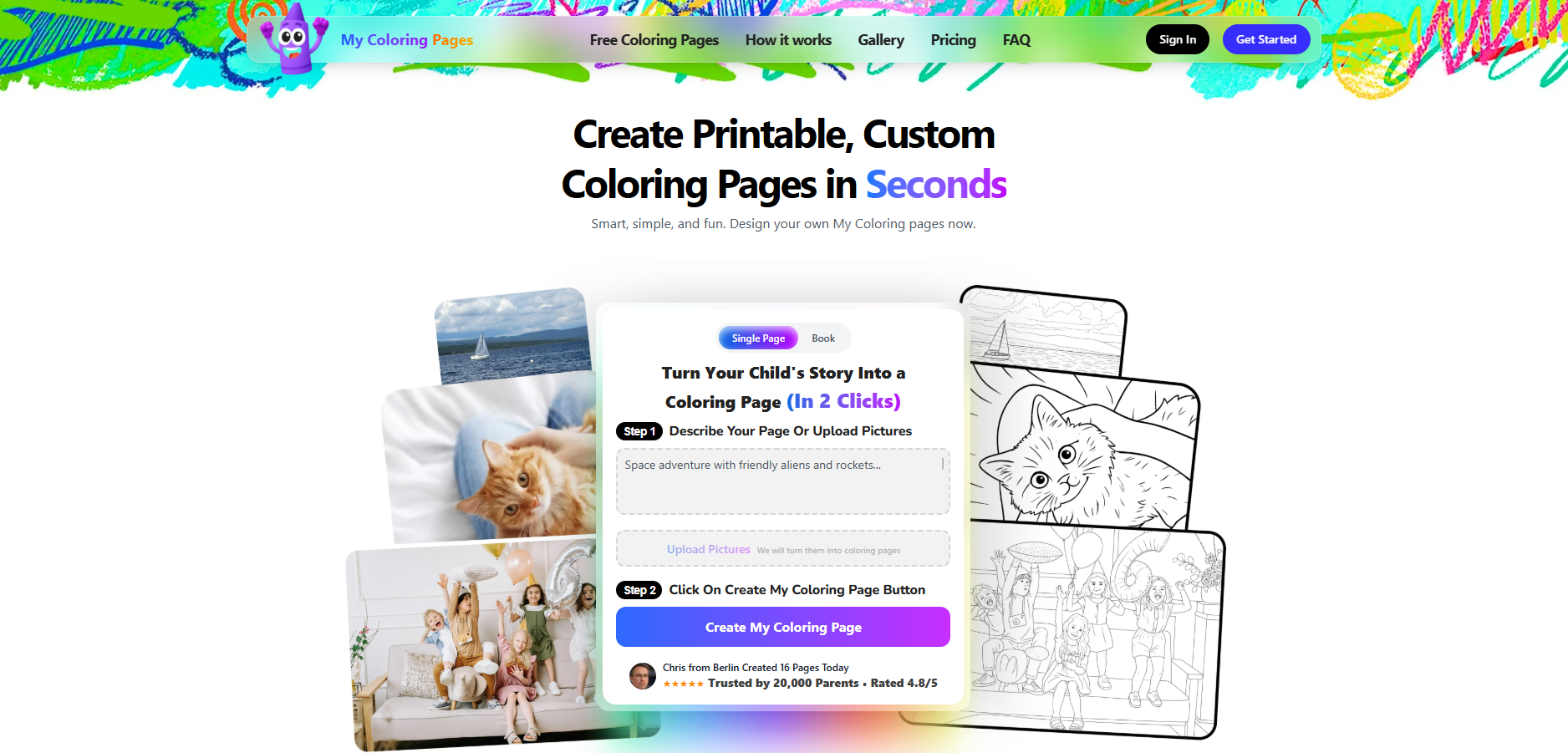
A quick custom-coloring generator for parents, teachers, and hobbyists who need printable activities on demand.
What it offers:
Instant conversion of descriptions or uploads into printable coloring pages, plus a community library of over 100,000 pages and tools to assemble custom coloring books and story-coloring projects.
Why Kids Enjoy It
Immediate personalization, simple prompts, and the pride of printing something they actually made. Best for mixed-age craft time, quiet reading corners, and lesson reinforcement because you can match complexity to the child in seconds.
2. Khan Academy
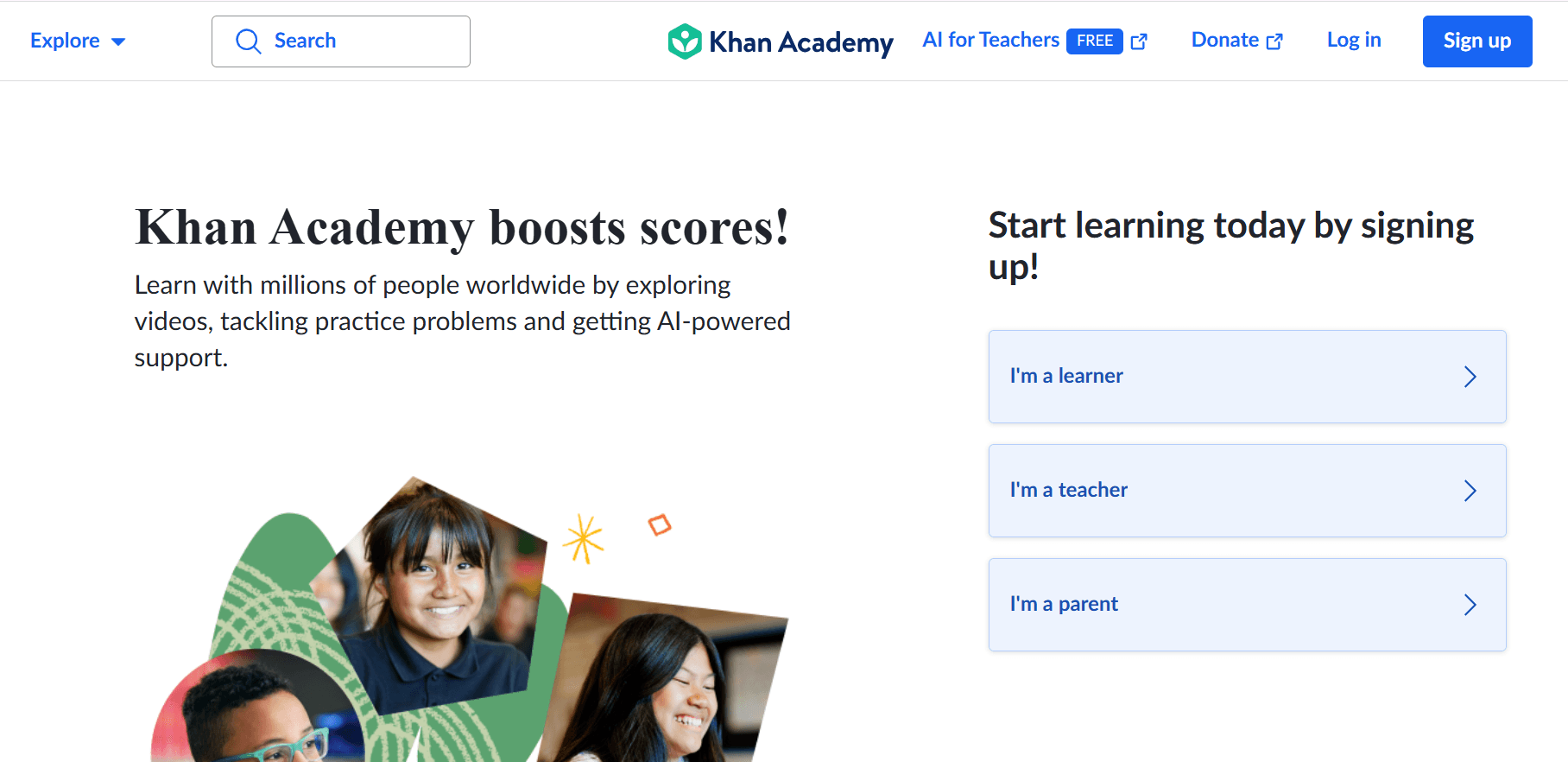
A nonprofit classroom-aligned platform covering pre-K through college topics.
What it offers:
- Video lessons
- Practice problems
- Personalized pacing across:
- Math
- Science
- Humanities
- Computer science
Why Kids Enjoy It
Short, modular videos and a clear progress path make learning feel like leveling up. Best for self-paced school support and motivated learners who like measurable milestones.
3. Starfall Education
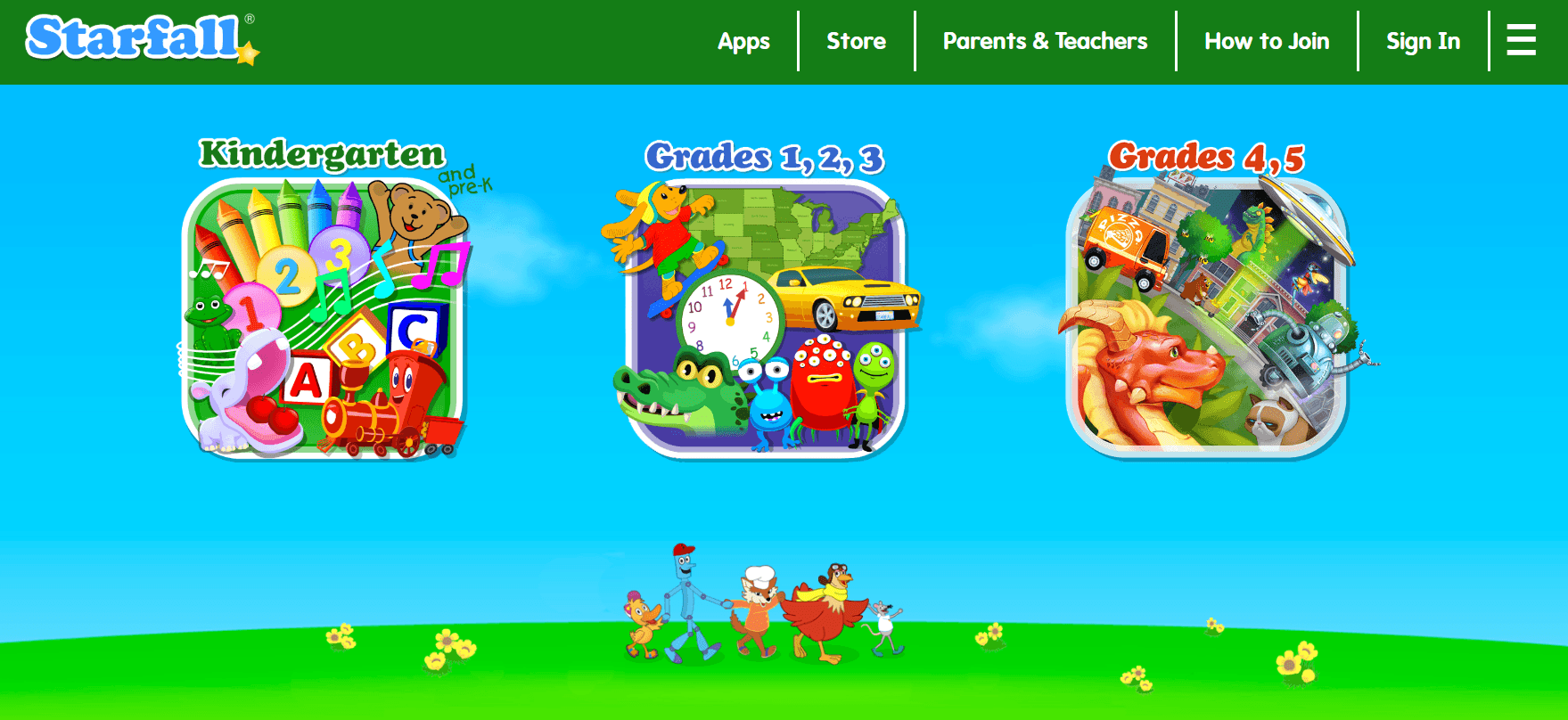
Reading-first, play-based lessons for kindergarten through fifth grade.
What it offers:
- Phonics games
- Interactive stories
- Simple math
- Language activities with teacher resources.
Why Kids Enjoy It
Colorful characters and gentle rewards keep early readers motivated to try new words. Best for emergent readers who need repetitive, game-like practice.
4. PBS Education
Teachers and parents are looking for curriculum-aligned lesson plans for pre-K through high school.
What it offers:
- Standards-linked lessons
- Multimedia activities
- Curated topical collections such as:
- American Sign Language
- Election resources
Why Kids Enjoy It
Familiar PBS characters and professionally produced videos make academic topics feel cinematic and approachable.
5. LogicLike
A logic-and-puzzle platform aimed at K through fifth graders.
What it offers:
- Structured logic puzzles
- Reasoning games
- Progressive challenges are meant to build critical thinking.
Why Kids Enjoy It
The puzzles feel like mysteries to solve, so kids return for the payoff of solving them. Best for boosting pattern recognition and problem-solving stamina.
6. Funbrain
Families with K through eighth graders who want light, curriculum-adjacent games.
What it offers:
- Math and reading games
- Online books
- Printable worksheets
- A virtual playground for younger children
Why Kids Enjoy It
Recognizable characters and short game loops that reward correct answers make practice feel playful rather than punitive.
7. ABCYa! Learning Games and Apps
Hundreds of teacher-and parent-designed games sorted by grade level from pre-K to grade six and up.
What it offers:
- Math
- Pattern recognition
- Typing
- Creative apps
Why Kids Enjoy It
Playful mechanics, such as Create a Car and Donut Drop, turn drills into mini-games. Best when you want categorized games for quick practice.
8. National Geographic Kids

Curious kids from pre-K through about eighth grade who love animals and world cultures.
What it offers:
- Articles
- Interactive maps
- Videos
- Animal profiles
- Plus project ideas and homework help
Why Kids Enjoy It
Striking photography and surprising facts turn research time into an expedition.
9. Sesame Street Pre-School Games
Preschoolers and caregivers focused on early literacy and socio-emotional learning.
What it offers:
- Games
- Podcasts
- Playlists
- Resources on emotional well-being and inclusion.
Why Kids Enjoy It
Beloved characters guide short activities that echo the TV show’s gentle humor and routines.
10. CoolMath4Kids
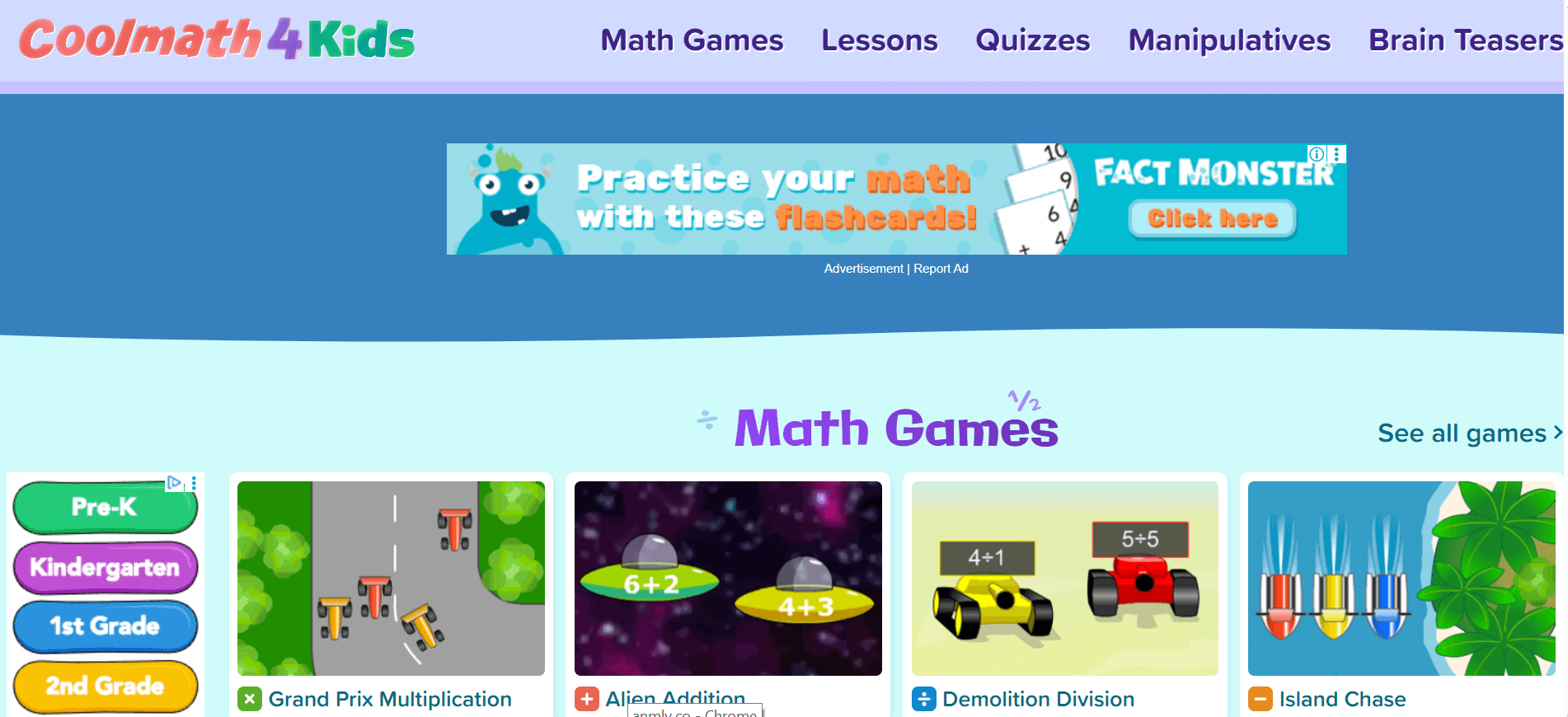
A straightforward site for grades one through twelve that makes math approachable.
What it offers:
- Games
- Brain teasers
- Printable flashcards on arithmetic topics.
Why Kids Enjoy It
Puzzles and challenges that feel like games, not worksheets, so kids engage without pushing back.
11. PBS Kids | Games
Families seeking ad-free, standards-adjacent games from pre-K to grade twelve.
What it offers:
- Searchable games tied to grade and subject, plus printable materials and videos.
Why Kids Enjoy It
Trusted characters and high production value make time on the site feel like guided play.
12. ABCmouse
Early learners in kindergarten to second grade need a structured learning path.
What it offers:
- 10,000 activities across reading, math, science, and art with a leveled progression and incentives.
Why Kids Enjoy It
The reward system and step-by-step path keep less-motivated kids engaged while parents appreciate ad-free content.
13. Mystery Science

Homeschoolers and elementary teachers want hands-on science lessons.
What it offers:
- Standards-aligned units built around investigations, short videos, and printable assessments.
Why Kids Enjoy It
Experiments and real questions make science feel like a detective game, not a textbook.
14. TED Talks for Kids
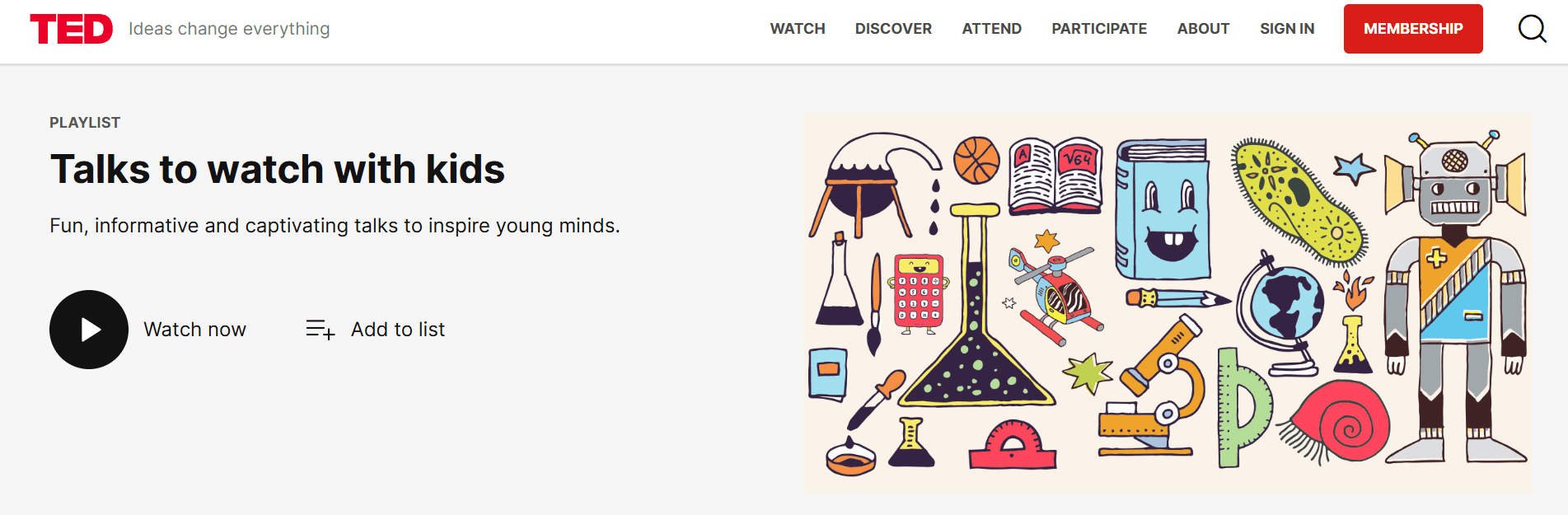
A curated collection of kid-friendly talks that spark curiosity for K through 12.
What it offers:
- Short presentations across science, art, and storytelling that widen interests.
Why Kids Enjoy It
Live energy and surprising demo turn abstract ideas into memorable moments.
15. Art for Kids Hub on YouTube
Children are ready to follow step-by-step art lessons, starting in preschool and continuing through elementary school.
What it offers:
- Approachable drawing videos you can do together, with occasional more complex projects for older kids.
Why Kids Enjoy It
The host’s upbeat style and relatable pacing make complex drawings feel achievable.
16. How Stuff Works
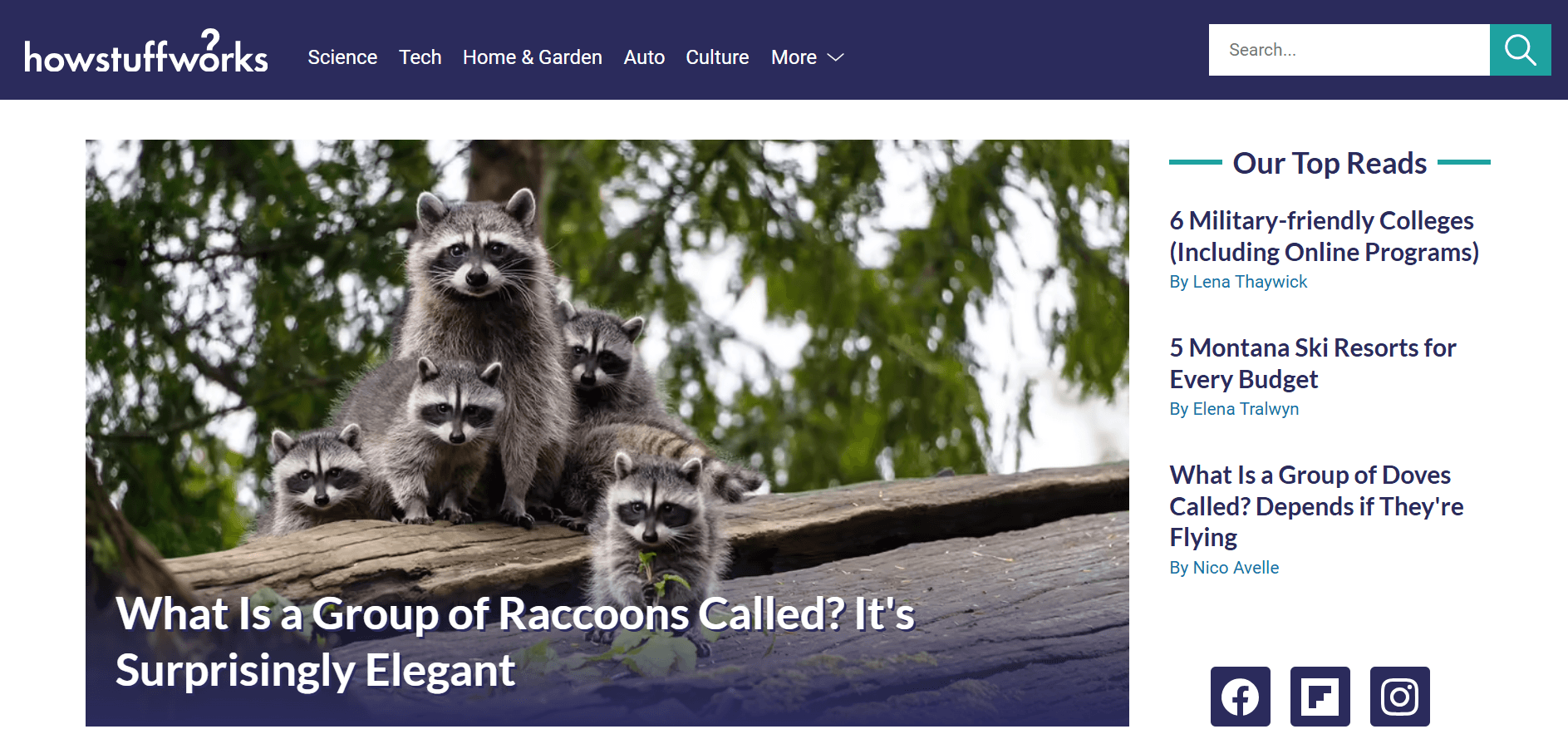
Older kids, typically in grades eight and up, want clear explanations for their questions.
What it offers:
- Deep-dive articles
- Videos
- Crossword
- Quizzes across:
- Science
- History
- Everyday systems
Why Kids Enjoy It
The site answers the “why” behind things in an engaging way that feeds a curious mind.
17. Scholastic
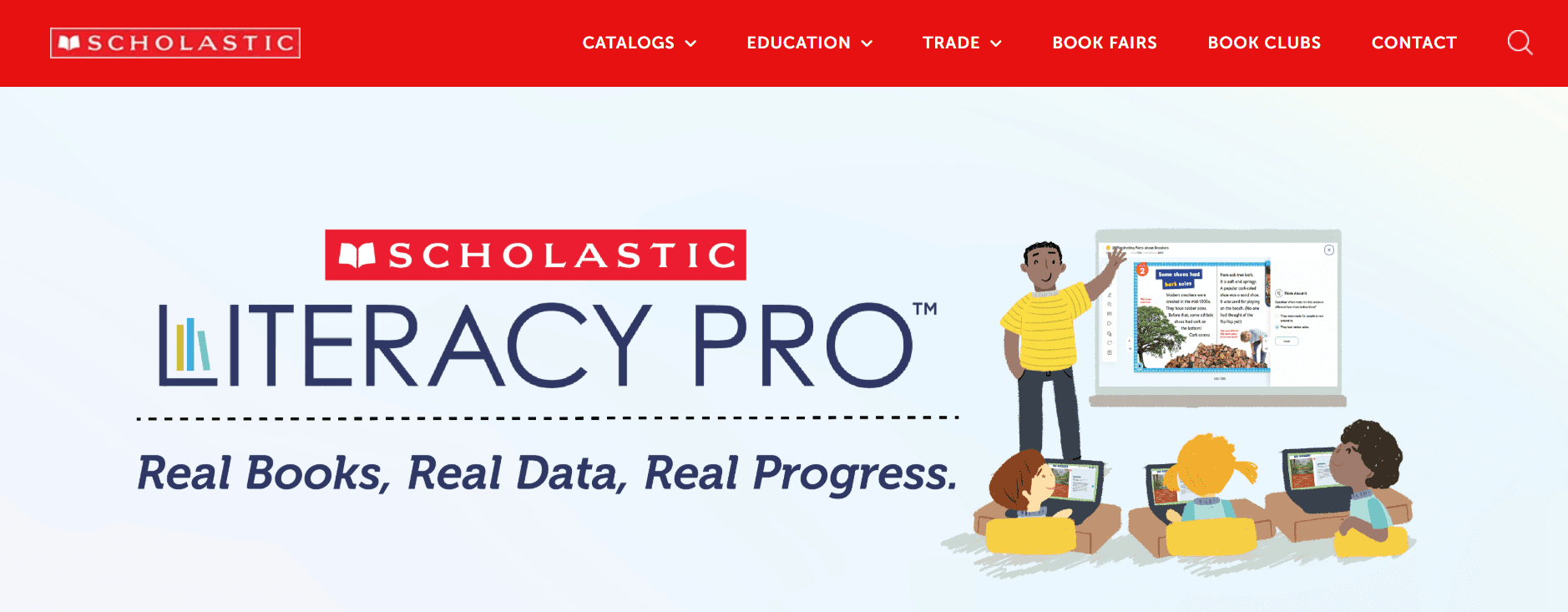
What it offers:
- Home learning resources
- Book activity packs
- Printable worksheets
- Reading lists for pre-K to grade six.
Why Kids Enjoy It
Scholastic’s classroom-tested projects and age-appropriate reading recommendations make independent reading practical and engaging.
Who it’s best for:
- Families preparing for school
- Expanding home libraries
- Running small reading groups
18. Old Farmer’s Almanac for Kids

What it offers:
- Month-by-month natural phenomena guides
- Gardening tips
- Moon phase activities for grades two and up
Why Kids Enjoy It
Hands-on seasonal projects and simple science help kids connect school topics to their backyard.
Who it’s best for:
- Nature-curious kids and families who want project-based learning tied to the real world.
19. Gus on the Go
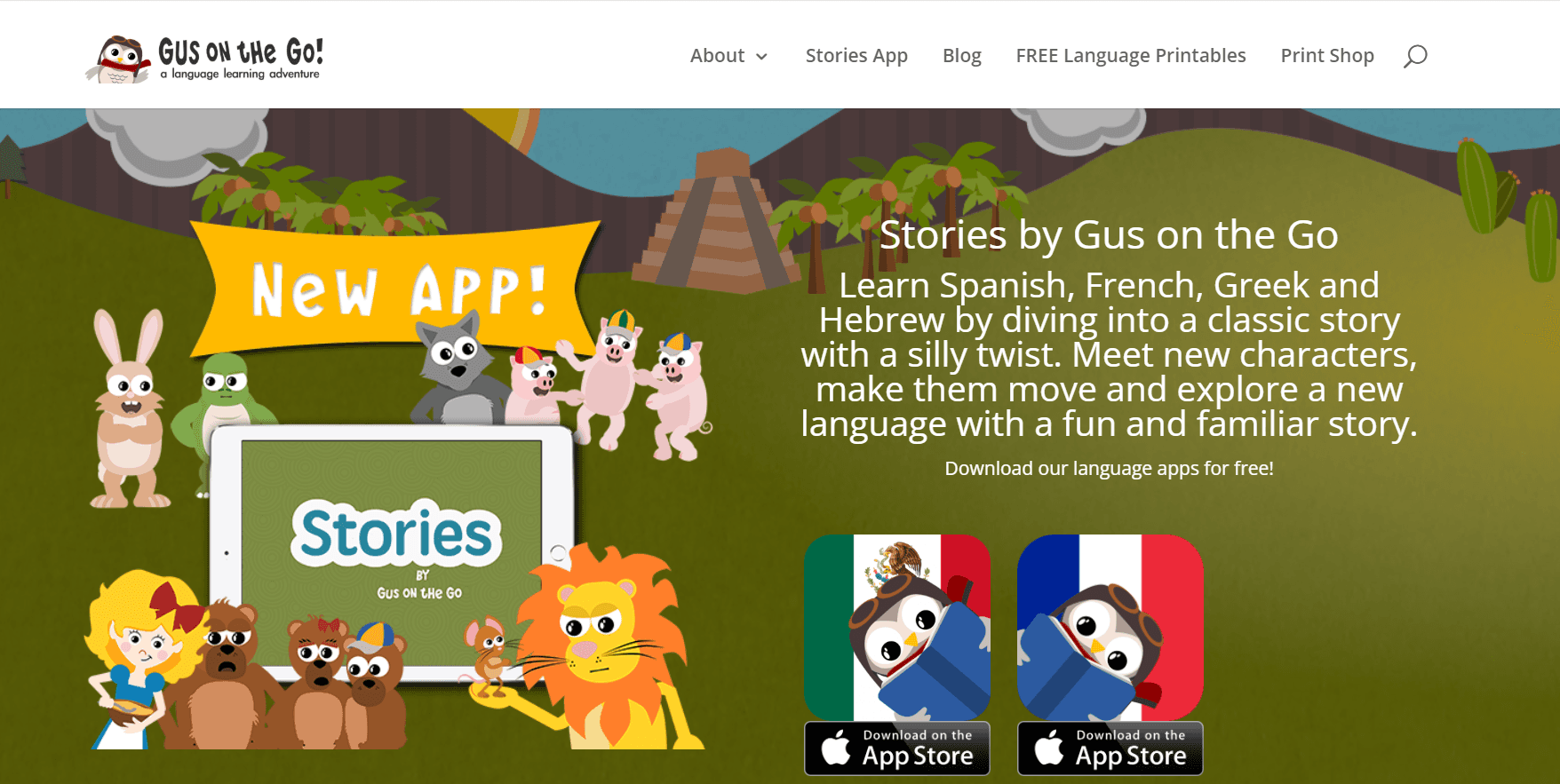
Who it serves:
- Preschool and kindergarten learners exploring basic vocabulary in one of 30 languages.
What it offers:
- Ten interactive lessons per language
- Vocabulary games
- Printable flashcards.
Why Kids Enjoy It
Adventure-themed lessons and friendly animations make language learning feel like play.
20. Daria: World Music for Children

What it offers:
- Explorations of global instruments
- Sample sounds
- DIY instrument crafts for early learners through middle school.
Why Kids Enjoy It
Listening to unusual instruments and building a cardboard didgeridoo yields immediate, noisy fun.
Who it’s best for:
- Young musicians and bilingual children who enjoy music with a cultural context.
21. StoryPlace
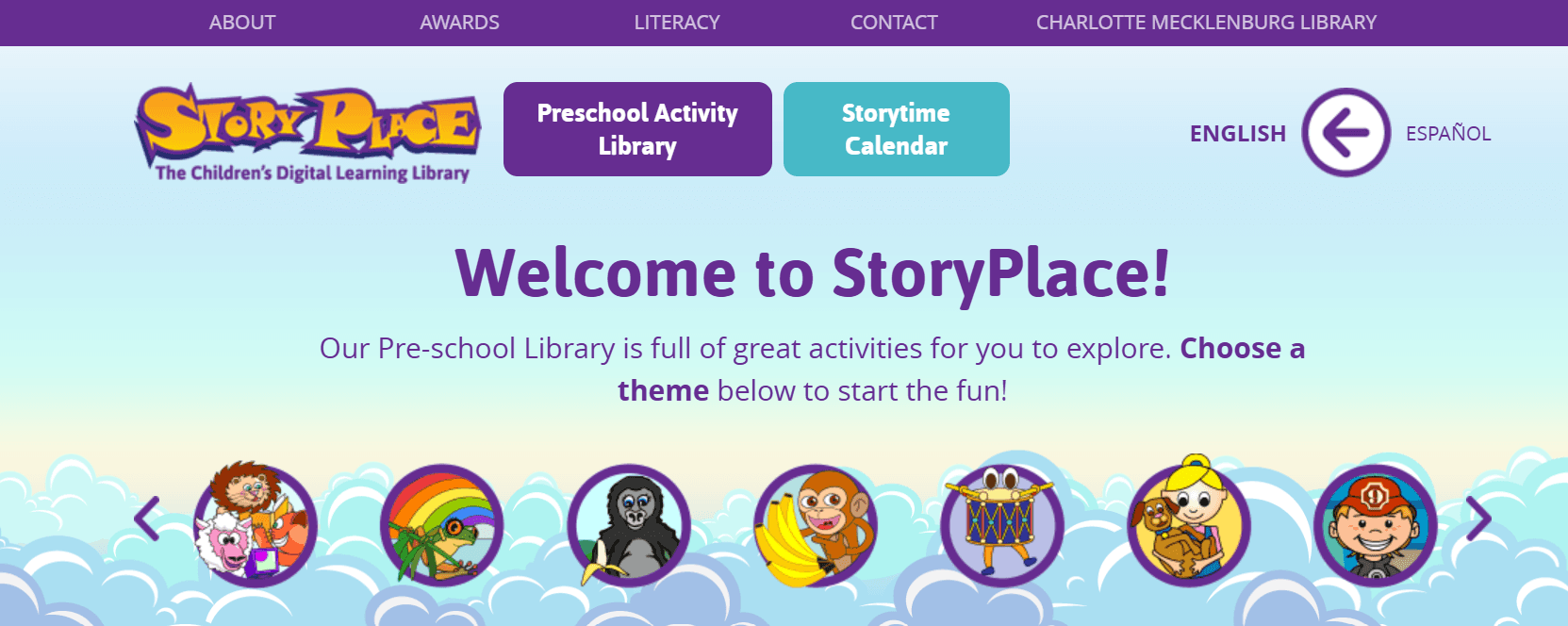
What it offers:
- Themed online stories with related activities and reading lists for preschoolers.
Why Kids Enjoy It
Interactive stories and matching activities make early reading feel like a library visit.
Who it’s best for:
- Caregivers are building foundational literacy routines and story-based play.
22. Exploratorium

What it offers:
- Hands-on science and art activities
- Interactive exhibitions
- Step-by-step experiments for school-age kids.
Why Kids Enjoy It
approachable experiments that let them manipulate variables and see immediate results.
Who it’s best for:
- Families who want museum-caliber activities at home.
23. Discovery Kids

What it offers:
- Games
- Quizzes
- Puzzles about:
- Nature
- Tech
- Engineering
For younger audiences.
Why Kids Enjoy It
Content that frames learning as exploration and includes familiar Discovery show touchpoints.
Who it’s best for:
- Kids who respond to short bursts of challenge rather than long-form instruction.
24. BrainPOP
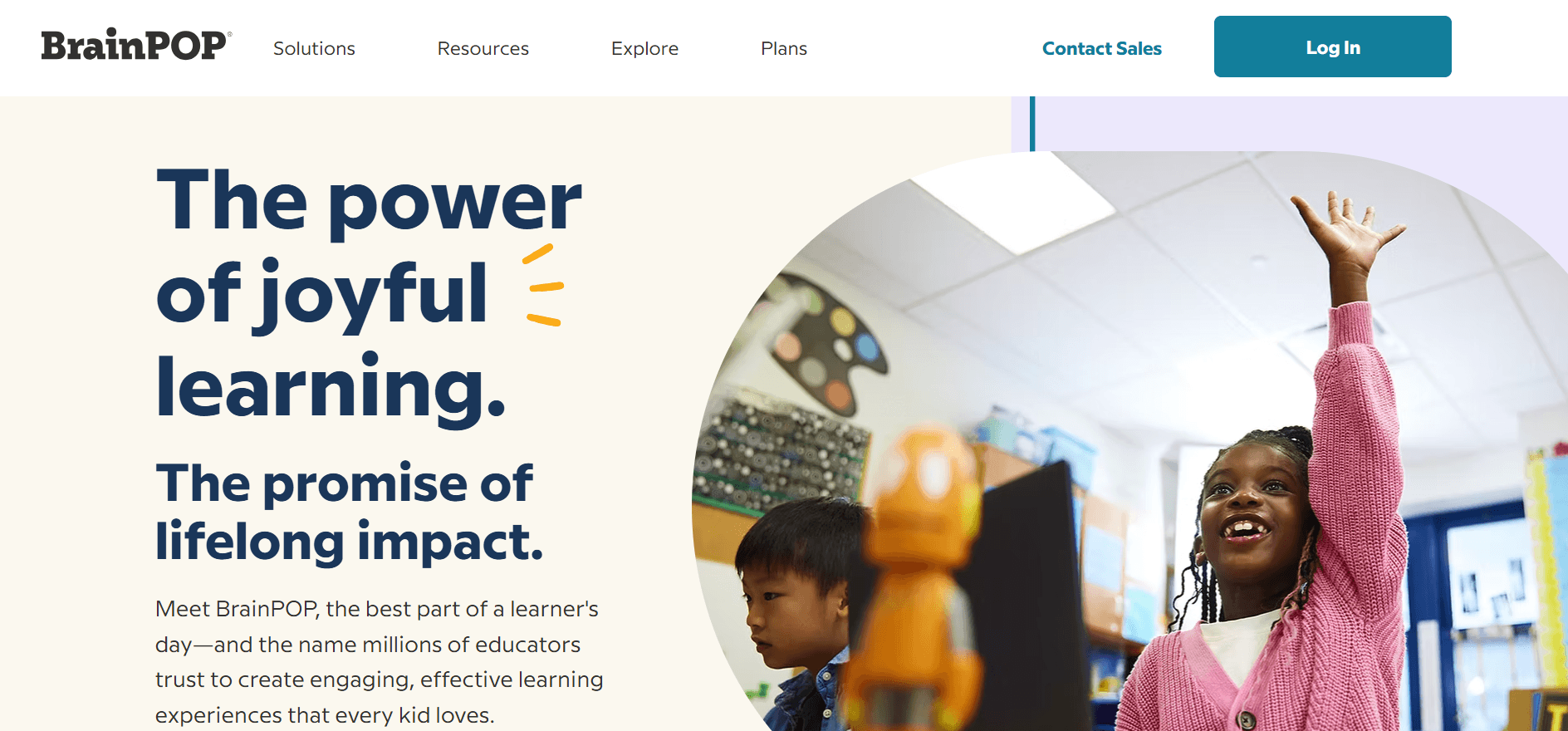
What it is:
- A K through 12 platform of animated, curriculum-aligned videos, quizzes, and interactive features.
What it offers:
- Cross-curricular movies, concept maps, and project ideas that support homeschooling and classroom units.
Why Kids Enjoy It
Quick, humorous animations break down complex topics into memorable kernels of truth.
25. Science Bob
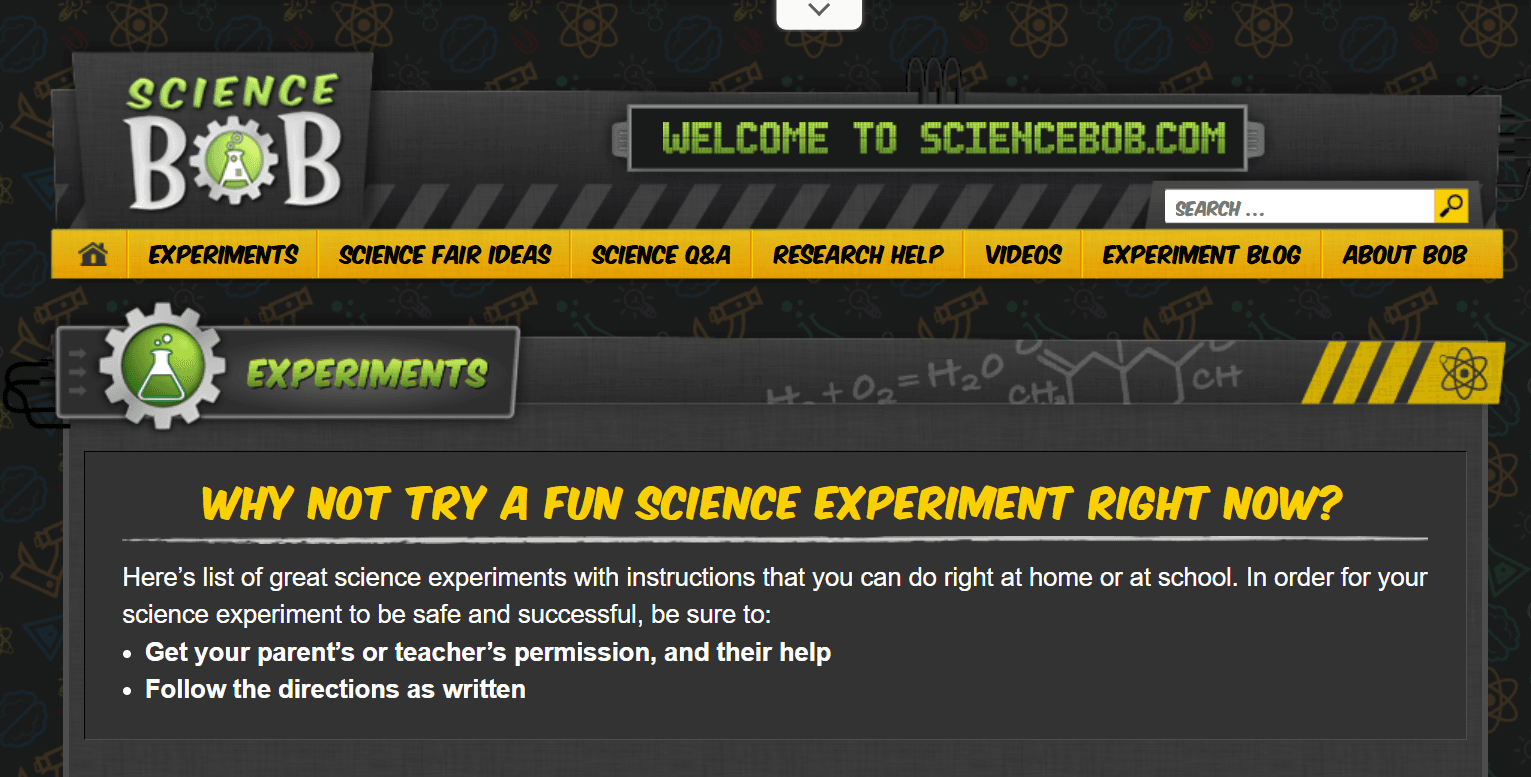
What it offers:
- Experiment ideas
- Science fair project guidance
- Q&A content that mixes fun with rigor for upper-elementary and middle school.
Why Kids Enjoy It
Upbeat demo and clear steps make experiments repeatable and exciting.
Who it’s best for:
- Project-based learners and science fair participants.
26. Kodable
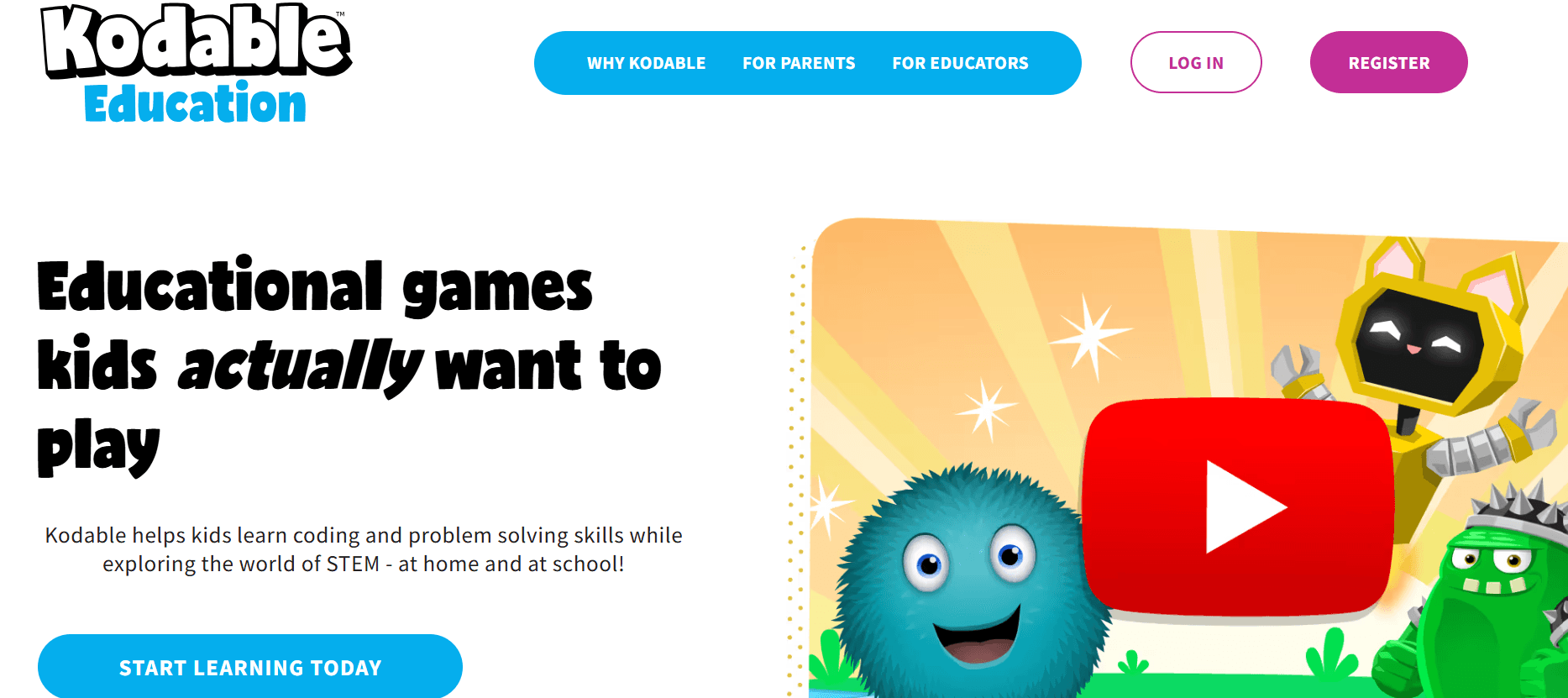
Who it serves:
- Young children learning computational thinking via guided games.
What it offers:
- Drag-and-drop coding puzzles
- Teacher dashboards
- Adaptive lessons for early grades.
Why Kids Enjoy It
The game format masks instruction, making logic and sequencing feel like play. Best as a gentle introduction before text-based languages.
27. Disney Jr
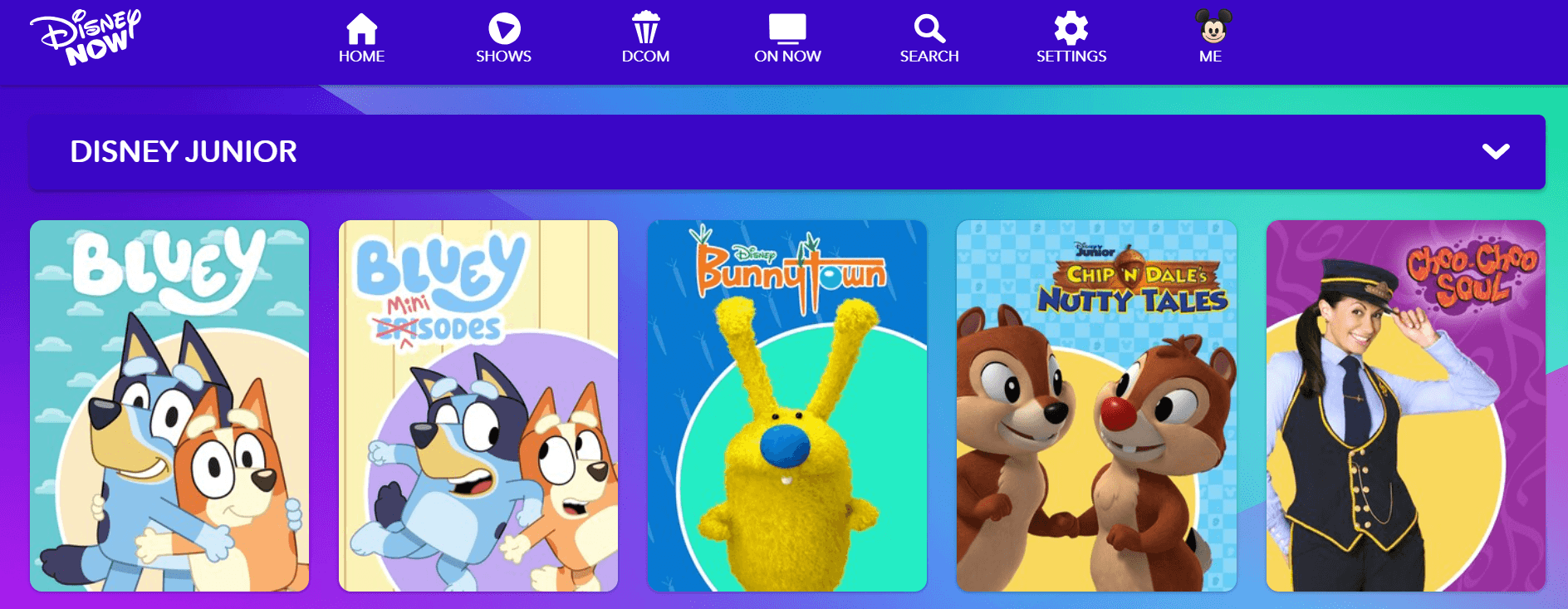
What it offers:
Character-driven games, videos, and coloring activities for preschoolers.
Why Kids Enjoy It
- Familiar faces and gentle
- Story-based activities that reinforce basic motor and memory skills.
Who it’s best for:
Downtime entertainment that still supports hand-eye coordination and color recognition.
28. Duolingo
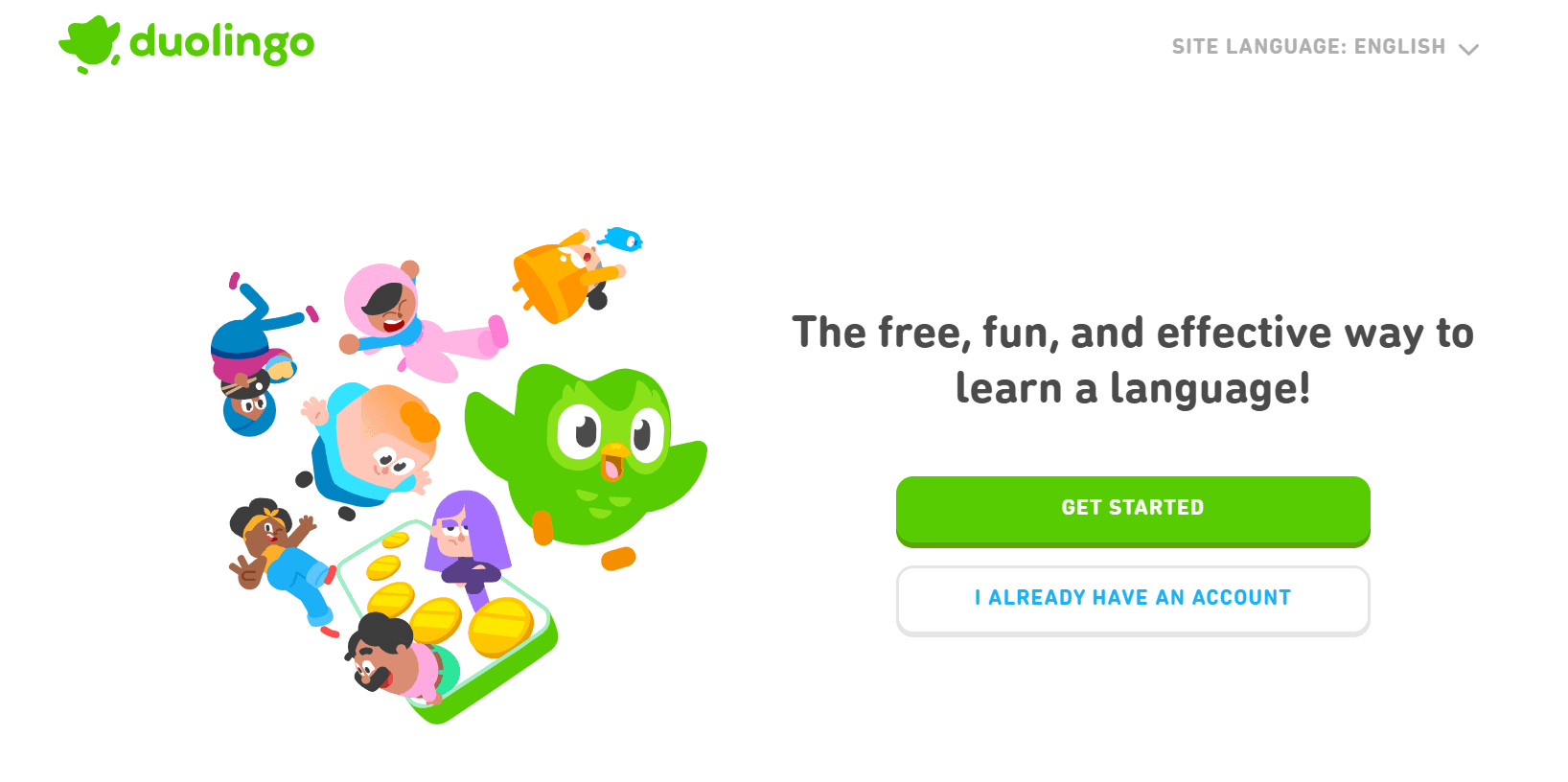
Who it fits:
- Kids and teens who thrive on bite-sized, gamified language practice.
What it offers:
- Short, streak-driven lessons with badges, and supplementary Music and Math courses.
Why Kids Enjoy It
Immediate points and playful animations make daily practice addictive. Best for motivated learners who can self-manage short sessions.
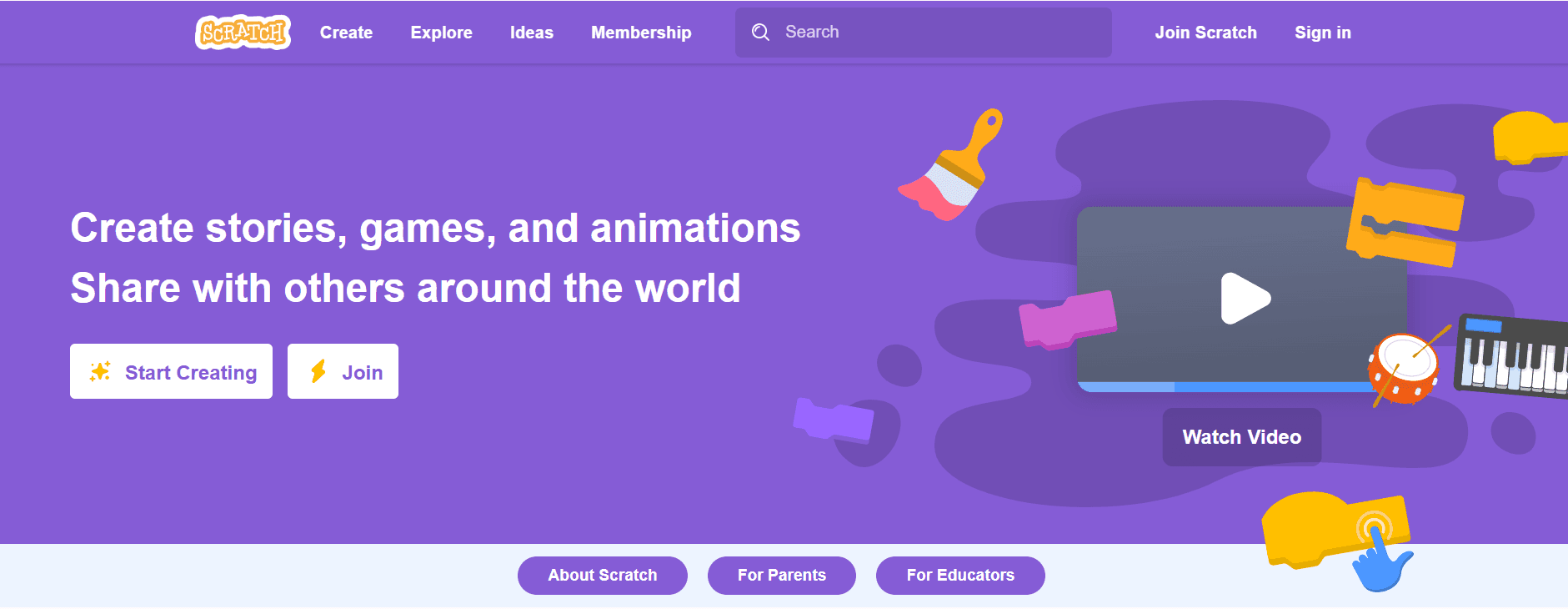
29. Scratch
What it is:
- A free coding community where kids aged roughly 8 to 16 create interactive stories and games.
What it offers:
- Block-based programming
- A shared project gallery
- A remix culture that teaches logic and creativity.
Why Kids Enjoy It
Seeing a game they built run and being able to share or remix peer projects creates a visible, social reward.
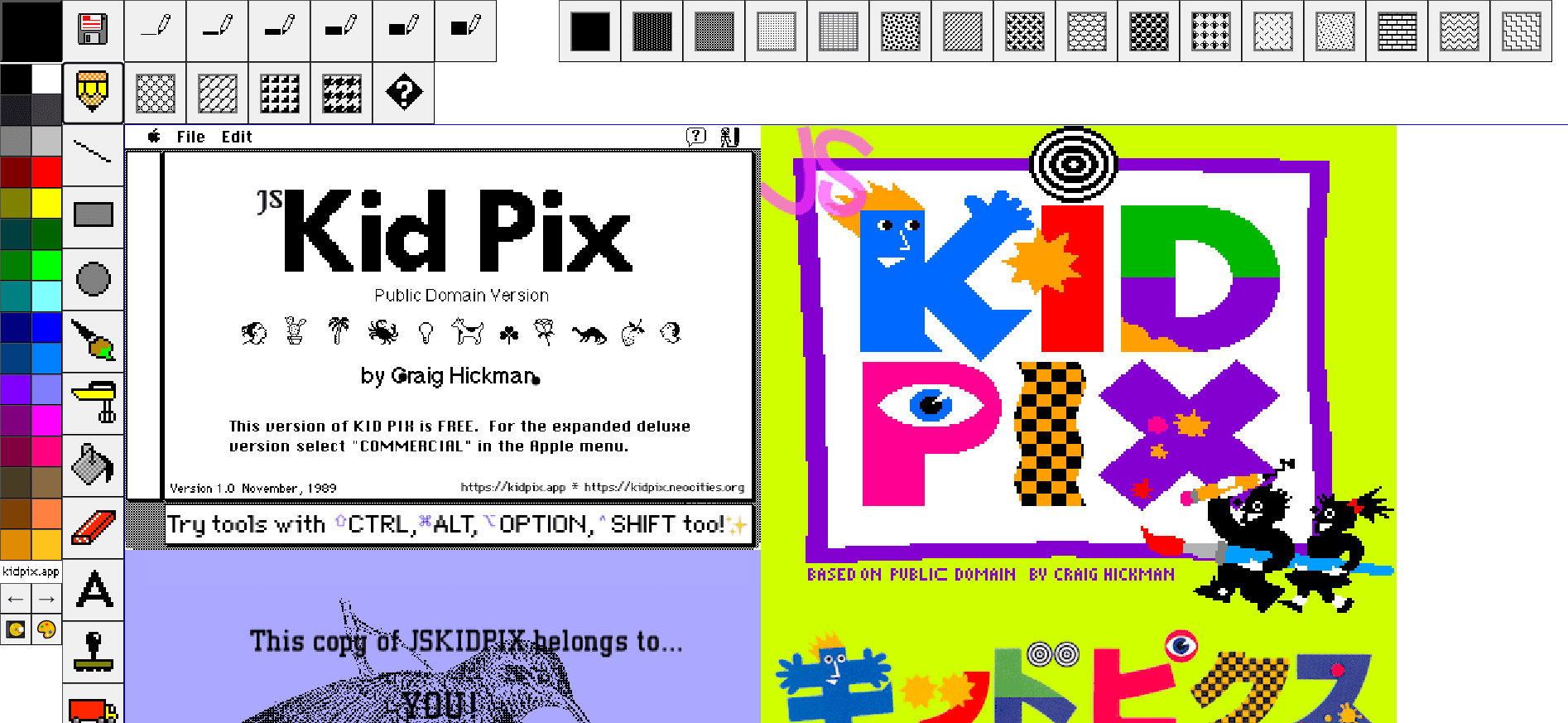
30. KidPix
What it offers:
- A simple digital art program with drawing tools
- Animated stickers
- A forgiving canvas for young artists.
Why Kids Enjoy It
Nostalgia-free for kids: direct, tactile controls let them explore digital drawing without complexity.
Who it’s best for:
Early digital art practice and classroom computer art stations.
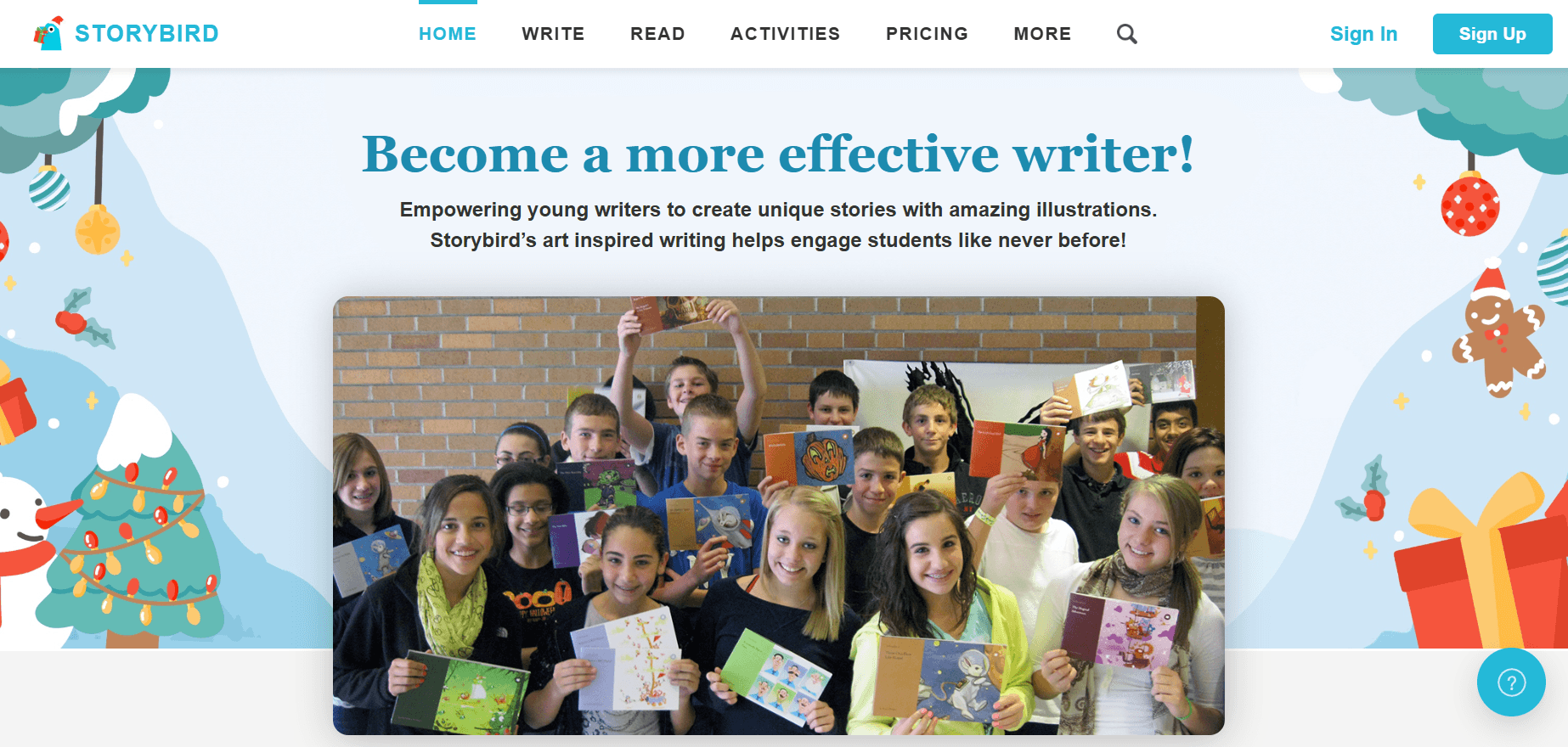
31. Storybird
Who benefits:
- Budding writers in elementary and up who want polished art paired with writing prompts.
What it offers:
- A catalog of professional art to inspire picture books, poems, and longer stories, plus publishing and classroom tools.
Why Kids Enjoy It
Instant visual inspiration removes the fear of a blank page, making creative writing approachable.
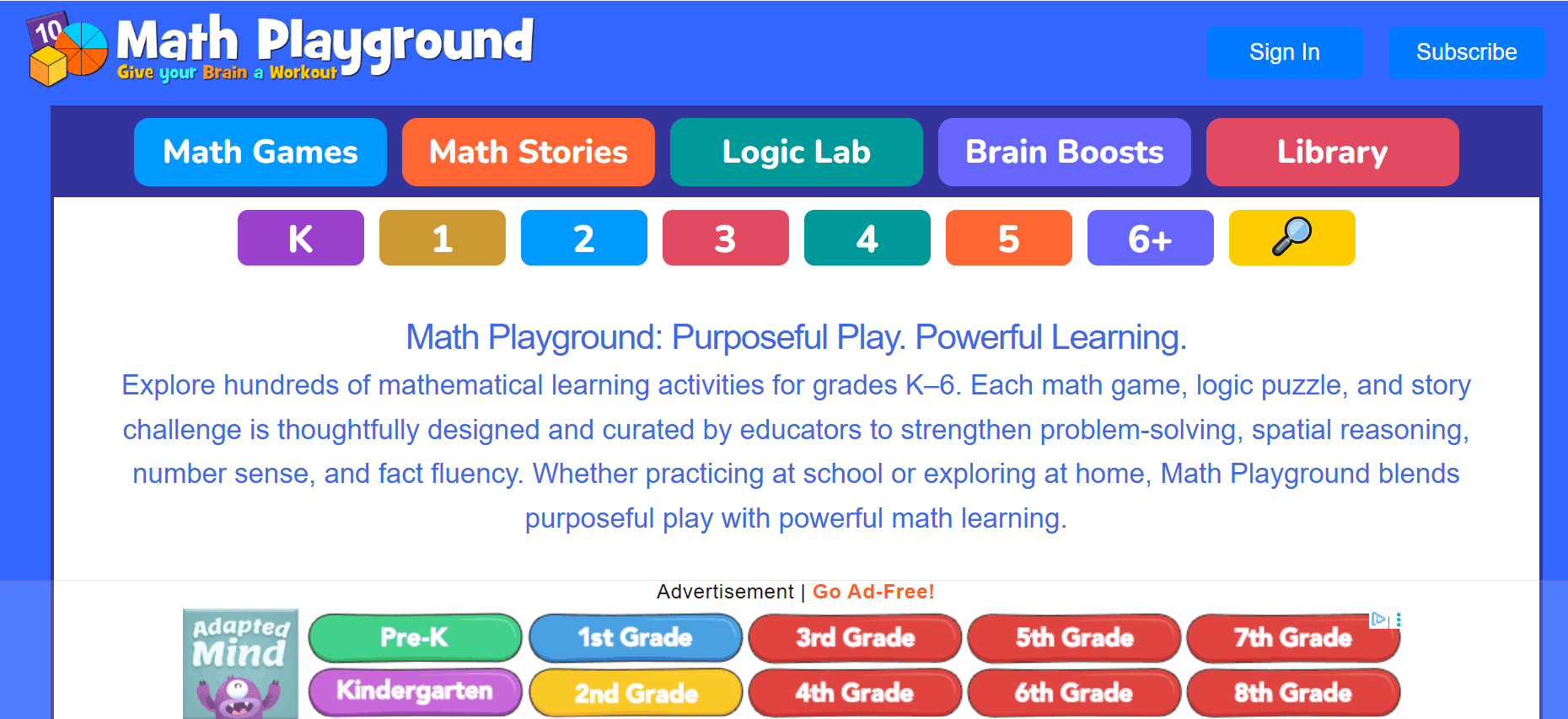
32. Math Playground
What it offers:
- Math games
- Logic puzzles
- Word problems for kindergartners through sixth graders.
Why Kids Enjoy It
Arcade-like challenges make repeated practice feel like a personal quest.
Who it’s best for:
- Families who want standards-aligned practice delivered as short games.
33. Chess Kid
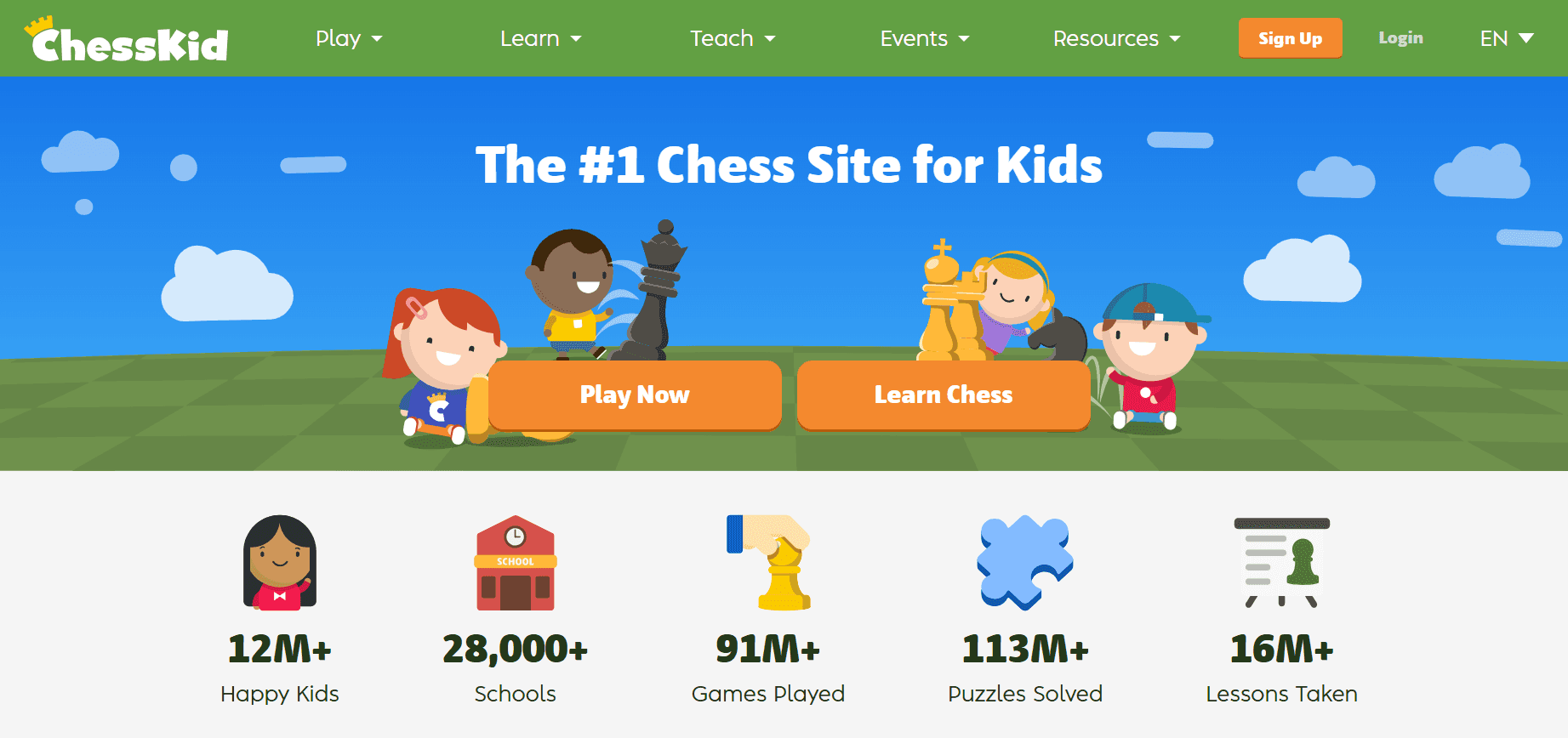
Who it serves:
- Kids learning chess from the ground up through puzzles, tutorials, and live games.
What it offers:
- Step-by-step lessons
- Age-filtered opponents
- A safe environment to play online.
Why Kids Enjoy It
The satisfaction of solving puzzles and the social thrill of matches keep them returning. Best for building concentration and strategic thinking.
34. Smithsonian Institution's Online Events

What it offers:
- Virtual museum tours
- Live talks
- Family-friendly workshops tied to Smithsonian collections.
Why Kids Enjoy
Professional curators and vivid artifacts make history and science feel immediate.
Who it’s best for:
Kids who respond to expert storytelling and authentic artifacts, and parents who want vetted programming.
35. NASA Kids' Club
What it offers:
- Space-themed games
- Facts
- Activities focused on:
- Planets
- Missions
- Climate topics
Who it’s best for:
- Future space enthusiasts and STEM project starters.
Why Kids Enjoy It
Mission stories and astronaut profiles make the cosmos relatable and aspirational.
Streamlining Classroom Resources: Overcoming Setup Fatigue
When we organized classroom resource packs for a district over a semester, a pattern became clear. Parents and teachers wanted single-purpose, printable activities they could adapt quickly; they were exhausted by platforms that required lengthy setup. This common friction is what leads many classrooms to patch together printables from different sites, a slow process that wastes prep time and fragments learning.
The hidden cost is clear:
Parents and teachers trade time for variety, spending minutes per activity that add up to hours each week. Platforms such as My Coloring Pages provide that bridge, enabling educators and families to generate custom, printable pages in seconds while centralizing assets, reducing lesson prep time, and improving consistency.
A Quick Reality Check, If You Need One
According to Who Smarted, over 70% of parents believe educational games can enhance their children's learning experience, and the reach of these platforms is significant: more than 50 million kids worldwide use educational websites for learning.
This set of sites covers a broad range of approaches:
- Game-first practice
- Project-based science
- Art and music
- Language learning
- Coding
Choose based on the rhythm you need, whether that is five-minute practice bursts, printable craft sessions, or multi-week projects, and match the site mechanics to the child’s attention span and motivation.
That finishing detail raises the following question and a bigger one about fit and habit. Once you see what comes next, this section makes much more sense.
Related Reading
- Drawing Websites for Kids
- Best Educational Websites for Kids
- Art Websites for Kids
- Safe Websites for Kids
- List of Websites to Block for Kids
- Cool Websites for Kids
- Reading Apps for Kids
- Best Learning Apps for Kids
- Best Learning Games for Kids
- Math Apps for Kids
How to Choose the Right Websites That Kids Will Actually Enjoy

Start by treating this like a short experiment:
- Pick two or three candidate sites
- Try each for short
- Focused sessions
- Base your choice on how the child behaves, not on a promise you read online.
Focus on what the site makes possible for that child, then rotate and reassess preferences; the best fit six weeks from now may be different from today.
How Should I Match a Site to My Child’s Age and Learning Style?
Match by behavior, not labels.
- If a child prefers hands-on, messy making, favor sites that let them create and export projects.
- If they crave structure, pick sites with clear levels and progress cues.
According to Kaspersky research, 75% of kids prefer websites with interactive content. Interactive features tend to capture attention faster than passive videos, so prioritize small wins early in a session and increase complexity only when participants request it.
What Should I Actually Watch For During A Trial?
Use four quick observables: time on task, repetition without prompting, facial or vocal signs of frustration, and whether they show the result to you proudly. Treat a ten- to fifteen-minute unstructured play window as your baseline, then run a guided activity of the same length and compare the two.
When families pair built-in device controls with ongoing conversations about boundaries and content, they report feeling less anxious and more able to steer their choices. Keep controls set to what you can monitor and talk through what you see, rather than locking everything down.
Efficient Tools for Screen-Free Play
Most parents default to one trusted site because it is faster and familiar. That works until novelty fades and attention drops, costing you time and curiosity.
Solutions like My Coloring Pages let parents assemble short, printable activities and iterate on themes quickly, so testing ideas takes minutes rather than hours. You can remove the device from playtime when you want a screen-free craft.
How Many Sites Should I Keep In Rotation, And How Often Should I Reassess?
- Keep a slight rotation, three to five options depending on age, and reassess every two to six weeks.
- Think of it like a short menu cycle: variety prevents burnout and exposes kids to new skills, while repetition builds mastery.
- Notice which mechanics they repeat on their own, which tasks they abandon midstream, and whether they ask for the same theme again; those are stronger signals than a single positive session.
Practical Quick Plan You Can Use Tomorrow
- Choose three sites representing different mechanics.
- Run two 10-minute sessions per site across three days.
- Log two simple notes after each session, one about mood and one about what the child made or learned.
This lightweight method identifies what holds attention without making discovery another chore for you.
Try small experiments and observe patiently; the right site is the one the child returns to willingly, not the one you think looks best on paper.
That simple decision feels solved, but the trick that makes it effortless is what comes next.
Create Custom Printable Coloring Pages and Coloring Books in Seconds
After running short three-day tests with families, we learned you need quick, low-fuss activities that spark creativity without more screen time, something like a craft drawer you can pull open and print from in minutes.
Platforms like My Coloring Pages turn a sentence or a photo into ready-to-print coloring pages, let you browse 14,128+ community designs and assemble personalized coloring books, and are trusted by more than 20,000 parents with a 4.8 out of 5 rating, so consider it the next simple tool to make craft time intentional instead of another late-night task.
Related Reading
- Music Apps for Kids
- Best Apps for 6-Year-Olds
- Best Apps for Kids
- Best Coding Apps for Kids
- AI Tools for Kids
- Language Learning Apps for Kids
- Best Drawing Apps for Kids