25 Learning Group Activities for Kids with Autism
Group activities for kids with autism that actually work — 25 ideas from My Coloring Pages to build skills and connection.

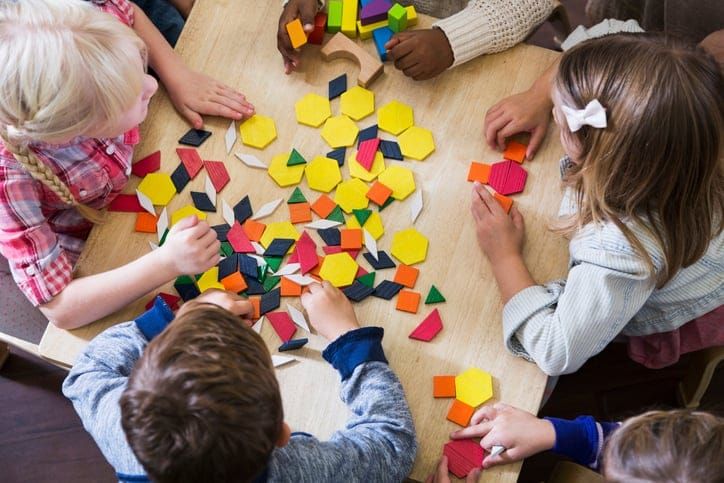
Group activities for kids with autism work best when they account for how each child communicates, processes sensory input, and builds trust with peers. During early childhood development, structured and inclusive play can strengthen social skills, support emotional regulation, and create genuine moments of connection. The right activities do not require elaborate setups, just thoughtful design that meets children where they are.
Having the right materials on hand makes a real difference for parents, teachers, and therapists planning these sessions. Coloring and creative worksheets, for example, offer a low-pressure entry point into cooperative play while also building fine motor skills and focus. To make sourcing those resources easier, educators and caregivers can download 75,000+ free coloring pages from My Coloring Pages and find ready-to-use options that fit a wide range of needs and learning paces.
Table of Contents
- Should Kids With Autism Interact in Groups?
- Importance of Group Interactions for Kids With Autism
- Why Kids With Autism Shouldn't Be Isolated
- How to Engage Kids With Autism in Group Activities in 25 Ways
- 25 Learning Group Activities for Kids with Autism
- How These Activities Solve the Barriers Discussed Earlier
- Turn One Learning Topic Into a Group Activity Every Child Can Access
Summary
- Group-based social skills training produces measurable results for a significant portion of autistic children. According to Woodbury, structured group participation improves social competence for up to 79% of autistic children. The key variable is not whether a group exists, but how it is designed; structure, purpose, and adult support make the difference between meaningful participation and overwhelming exposure.
- Early intervention windows matter more than many families realize. The WHO reports that early childhood interventions can improve communication and social skills in up to 50% of children with ASD. When that window is spent in isolation rather than structured peer interaction, children miss the repeated contact and shared experience that build a sense of belonging over time.
- Self-regulation is often treated as a prerequisite for group participation, but research suggests the relationship runs in both directions. A 2025 study published in the European Journal of Educational Research found that structured programs for children with ASD had both a high impact on social interaction and a moderate impact on self-regulation, as perceived by families. Waiting for a child to be "ready" before offering group experiences can quietly eliminate the practice that readiness actually requires.
- About 40% of children with autism do not use spoken language, according to the Autism Science Foundation, which means group activities built entirely around verbal exchange exclude a large portion of children before the activity even begins. Building communication options directly into the activity structure, through picture cards, pointing, typing, or AAC, shifts the measure of success from "said it the expected way" to "contribution was understood."
- Isolation carries costs that extend beyond missed social practice. Research from the Kennedy Krieger Institute shows that parents of autistic children consistently report social stigma and isolation as major challenges affecting overall family quality of life. When separation becomes the repeated pattern, children can begin to interpret their own exclusion as evidence about who groups are for, rather than evidence that the environment needs adjustment.
- My Coloring Pages's Download 75000+ Free Customized Worksheets addresses the blank-page problem directly by giving educators and caregivers interest-specific visual starting points that anchor group activities around a child's existing knowledge, reduce setup friction, and give every participant a concrete role before the interaction even begins.
Should Kids With Autism Interact in Groups?
Kids with autism should have access to group interaction, but the question is not whether they should participate: it's what conditions make participation genuinely possible. The goal is to design situations where a child can contribute, communicate, and connect in ways that work for them.
💡 Tip: Don't ask if a child with autism should join group settings — ask how the environment needs to change to make that participation meaningful and accessible.

"The goal is not inclusion for its own sake — it's designing situations where every child can genuinely contribute, communicate, and connect." — Core Principle of Accessible Group Design
The critical difference between meaningful group participation and overwhelming exposure comes down to structure, predictability, and purpose. A child who withdraws during a chaotic group activity is not rejecting groups — they're telling you this particular format is not yet accessible. That distinction matters because the response differs entirely.
Child's Behavior | What It Signals | Correct Response |
|---|---|---|
Withdraws from chaotic activity | Format is not yet accessible | Accommodation — redesign the structure |
Avoids all group settings consistently | Deeper barrier present | Gradual, supported exposure |
Engages under structured conditions | Environment is working | Reinforce and expand the format |
⚠️ Warning: Treating withdrawal as rejection of groups entirely is a critical mistake — it leads to avoidance strategies when accommodation is what's actually needed.
🔑 Takeaway: One approach calls for accommodation; the other for avoidance — knowing the difference is everything.
What does the research say about group outcomes for autistic children?
According to Woodbury, group-based social skills training improves social competence in up to 79% of autistic children. However, results depend heavily on group design. Structured, interest-driven, adult-supported activities produce measurably different outcomes than placing a child near peers and hoping for transfer. The mechanism that works is purpose, not proximity. Parents often describe a painful pattern: their child sits alone at recess, and adults interpret that as contentment. Sometimes it is. But sometimes the child wants to join and cannot find the way in. A child who is excluded but appears solitary will not develop social tools by being left alone longer.
How does the activity itself become an entry point for group participation?
This is where the activity itself becomes the entry point. A child who rarely joins generic group games may become fully engaged when the shared activity connects to something they care about. When the content matches the child's world, communication stops being performative and becomes purposeful. My Coloring Pages offers 100,000+ customizable printable coloring pages tailored to a child's specific interests, giving groups a shared, low-pressure starting point that feels personal rather than generic.
According to the Indiana Resource Center for Autism, Peer-Mediated Instruction and Intervention works because peers create authentic reasons for communication, not scripted practice. A child can practice asking for help alone all day, but when another child has the piece needed to finish the project, asking for it becomes meaningful. And that shift, from practice to purpose, is where the most surprising things start to happen.
Related Reading
- Early Childhood Development
- Cognitive Development In Early Childhood
Importance of Group Interactions for Kids With Autism
Group interaction matters for children with autism because participation builds capacity. When a child has a clear role, predictable structure, and a reason to communicate, they gain what isolated practice cannot replicate: the experience of mattering to another person in real time.
"When a child has a clear role, predictable structure, and reason to communicate, they gain what isolated practice cannot replicate: the experience of mattering to another person in real time."
💡 Tip: Structure group activities around defined roles for each child. This removes ambiguity and gives every participant a genuine reason to engage.
🔑 Takeaway: Isolated practice builds skills in theory, but group interaction is where those skills become real—tested, reinforced, and made meaningful through connection with others.
What Happens When Communication Has Stakes
A child can show a skill perfectly in a one-on-one session, then seem to lose it when with a peer. That is not regression—it's a different situation with different demands. Group activities for children with autism work best when they create "communicative necessity," where another child has something you need, or needs something only you can provide. According to the European Journal of Educational Research's 2025 study on ASD program outcomes, programs for children with ASD had high impact on social interaction as perceived by families, suggesting that structured peer experiences translate into changes families notice at home, not improvements on a checklist.
Why Role and Purpose Change Everything
Many classrooms use a familiar approach: they put children near each other and call it inclusion. But proximity is not the same as participation. Outcomes change when you give a child a specific, meaningful role in a shared activity. This could be the child who decides where the animals go in the zoo enclosure, the one who holds the map, or the one whose knowledge of train schedules makes the group's project work. When a child's interest becomes the entry point rather than the obstacle, other children want to work with them.
My Coloring Pages uses this same principle directly. A page about a child's specific interest—deep-sea fish, space stations, or a particular dinosaur species—becomes something other children want to examine, discuss, and color alongside. Our library of 100,000+ customizable printable pages means the activity can be built around the child's world, not asking the child to fit into someone else's.
The 15 Reasons Group Interaction Builds Real Capacity
Group activities create layered learning opportunities that isolated practice cannot. Structured peer interaction builds:
1. A bridge for children who want to join but cannot find the entry point
A structured role—"Would you like to make the dinosaur enclosure?"—replaces the vague instruction of "go play with them."
2. Real reasons for communication to happen
Abstract practice becomes purposeful when another child has the piece you need. Communication through speech, AAC, gesture, or pictures gains meaning when someone else is waiting for the message.
3. Reduced dependence on adults as the only communication partner
When adults constantly translate and negotiate, children have fewer opportunities to discover that peer-to-peer communication is possible.
4. Practice in self-advocacy
Telling someone "it's too loud" or "I need more time" is a social skill. Without peer settings to practice these messages, adults often do all the advocating, removing the child's opportunity to develop it.
5. Exposure to different ideas in manageable doses
Another child's plan introduces uncertainty. Structured group interaction creates supported moments where a child can experience "my plan plus someone else's plan" without becoming overwhelmed.
6. Strategies for navigating unexpected change
When adults immediately resolve every disruption, children lose opportunities to build their own tools for manageable change. Visual schedules, advance warnings, and choice between options support this development.
7. Independent help-seeking from peers
"Can you show me?" asked to another child differs from waiting for an adult to notice a problem.
8. Protection against social invisibility
Sitting at the table differs from having your contributions noticed and acknowledged. Real participation means other children respond to what you say.
9. Peer learning that runs in both directions
Non-autistic children need to learn that communication differs across individuals, that some peers use AAC, and that inclusion requires adapting group dynamics.
10. Shared problem-solving experience
Building something that fails, then determining what to change, requires talking with others, thinking in different ways, and responding to feedback—all of which develop critical thinking skills.
11. A reframe of peers as resources rather than sources of stress
Accessible group activities create a pattern where another person's idea adds value rather than poses a threat.
12. Interest-driven entry points into social connection
A child who cannot find the words for "do you want to play?" may have plenty to say when the activity involves trains, maps, or animals.
13. Practice repairing misunderstandings
When adults always translate, children lose opportunities to say, "No, that's not what I meant," and try again.
14. Confidence built on actual participation
Confidence from "I contributed" or "they understood me" is stronger and lasts longer than being told everything will be okay.
15. Prevention of a quiet slide from needs support to groups aren't for me
When difficulty always ends in removal rather than adaptation, participation opportunities gradually disappear.
Self-Regulation Grows in Context, Not Isolation
A 2025 European Journal of Educational Research study found that programs for children with ASD had a moderate impact on self-regulation as perceived by families. Self-regulation is often treated as a prerequisite for group participation. Evidence suggests the relationship works the other way around: structured group experiences with appropriate support build the self-regulation skills adults expect. Waiting until a child is "ready" to include them in groups may prevent them from getting the practice they need to develop those skills. The real question is not whether group interaction helps autistic children, but what happens to a child's sense of belonging when that interaction is withheld.
Why Kids With Autism Shouldn't Be Isolated
Belonging does not wait for a child to be ready. It gets built through repeated contact, shared experience, and small moments of being understood, or it quietly stops feeling available.
What happens when isolation replaces shared experience?
The risk of isolation goes beyond missing chances to practice social skills. According to the WHO Fact Sheet: Autism Spectrum Disorders, early childhood interventions for autism can improve communication and social skills in up to 50% of children with ASD. The window for building these skills is real, and what happens inside it matters. A child who spends that window working alone, away from peers, may internalize isolation as their fault: not "this environment is hard for me," but "I am the reason groups do not work."
When solitude stops being a choice
The pattern tends to move in one direction. A group activity overwhelms a child, so they are removed. That removal feels kind in the moment, and often is. But if the environment never changes to ask what made participation impossible, the child does not learn that groups can be made accessible. They learn that groups are not for them. Over time, that belief shapes which spaces the child enters, which risks they take, and whether they signal a need or preference to another person. Research from the Kennedy Krieger Institute shows that parents of children with autism report social stigma and isolation as major challenges affecting family quality of life. That cost shows up in how a child carries themselves into a room.
What happens when adults mediate every interaction?
The failure point is usually invisible until it is not. When a parent, teacher, or therapist manages every interaction, a capable child may never discover they can communicate directly with a peer. The adult becomes the translator, the negotiator, the bridge. That feels like support, and in the short term it is. But the long-term cost is that the child never builds the internal experience of saying something to a peer and being understood, of asking for help from someone their own age, of discovering that their knowledge about trains or maps or space interests another child. Those experiences do not happen through adults. They happen through contact.
How do shared group activities shift the cost of keeping kids separate?
As children move into more complex school environments with partner assignments, group projects, and unstructured social time, keeping things separate costs more than it saves. Platforms like My Coloring Pages offer one practical solution: interest-specific coloring pages built around a child's own world—dinosaurs, space, trains—can anchor a shared group activity without requiring social performance beforehand. The content meets the child where they are, making the group experience feel less like exposure and more like an invitation.
What peers never get to see
When an autistic child is regularly separated during group activities, their classmates do not get to know them. Classmates form opinions based on what they see, and if what they see is an empty chair or a child working in another corner, the impression that forms is that the child is not there. That child's sense of humor, specific knowledge, and problem-solving approach remain invisible. Inclusion is not only about teaching autistic children how to participate. It is about giving every child in the room a chance to learn that someone who communicates differently still has something worth paying attention to. Without that contact, unfamiliarity remains unfamiliarity, and that gap becomes harder to close later.
What conditions make participation possible in the first place?
What changes everything is knowing which conditions enable participation.
Related Reading
- Occupational Therapy Group Activities for Kids
- Indoor Group Activities for Kids
- How Do Children Learn
- Early Childhood Learning
How to Engage Kids With Autism in Group Activities in 25 Ways
Knowing which conditions make participation possible is only half the work. The other half is understanding what to do when a child stands at the edge of a group, unsure how to step in. This moment—the hesitation, the hovering—is not a sign of disinterest. It signals that the right bridge hasn't been built yet.
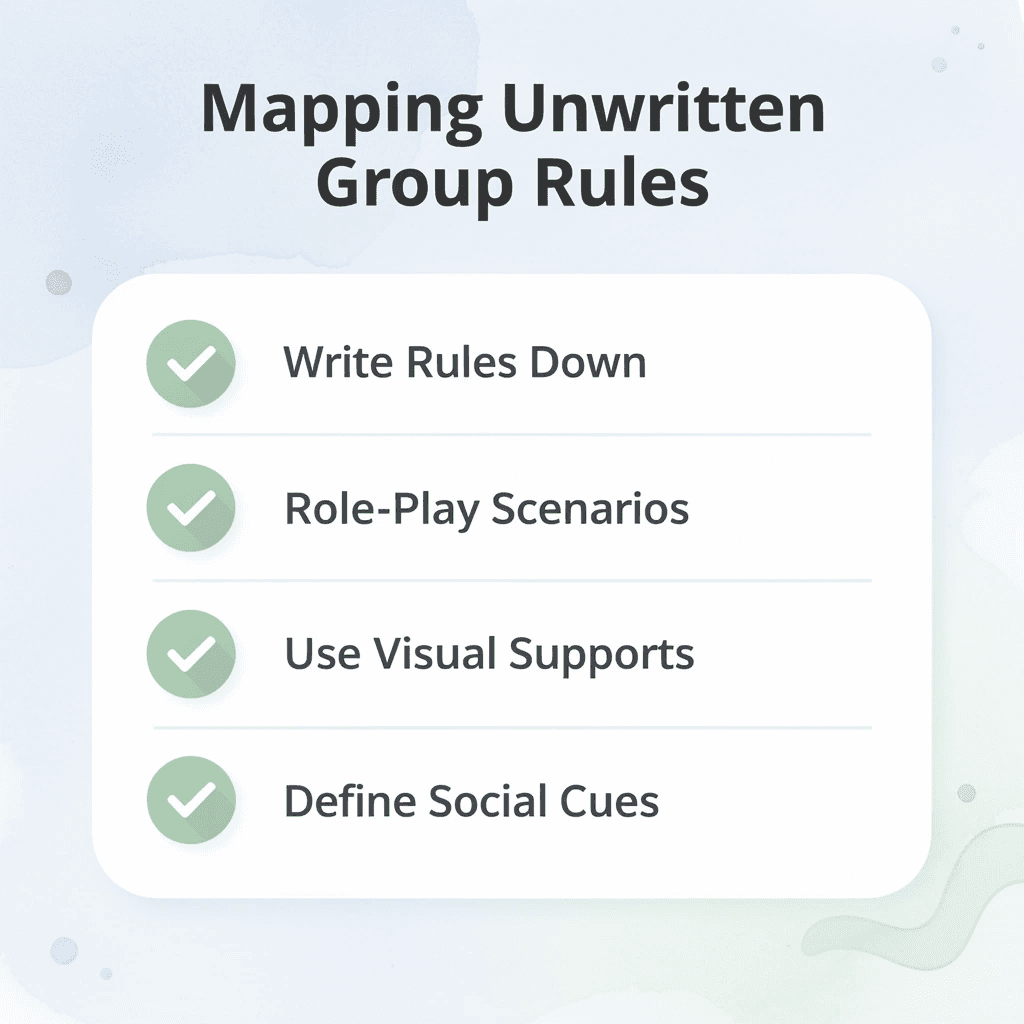
💡 Tip: Before introducing any group activity, map out the unwritten rules explicitly — write them down, role-play them, or use visual supports. What feels obvious to one child may feel completely invisible to another.
Most group activities are not designed with access in mind. They assume children already know unwritten rules: when to speak, how to enter, what to do when plans change. For a child who processes the world differently, those invisible rules become walls — barriers that are real, frustrating, and entirely preventable.
"For a child who processes the world differently, those invisible rules become walls."
Unwritten Rule | What It Assumes | Inclusive Alternative |
|---|---|---|
When to speak | Child knows social cues | Use a visual turn-taking card |
How to enter a group | Child reads body language | Teach a scripted entry phrase |
Handling plan changes | Child tolerates ambiguity | Provide a change warning signal |
Reading the room | Child interprets tone | Use emotion picture cards |
⚠️ Warning: Activities built entirely around verbal exchange are structurally exclusive — not just inconvenient — for a significant portion of children with autism. Redesign the activity before assuming the child is the problem.
According to the Autism Science Foundation, about 40% of children with autism do not speak. Group activities built entirely around verbal exchange exclude nearly half the children who could benefit most from them — a structural flaw, not a minor one.
"About 40% of children with autism do not speak — meaning group activities built entirely around verbal exchange exclude nearly half the children who could benefit most from them." — Autism Science Foundation
🔑 Takeaway: Non-verbal participation options — such as picture boards, gesture-based responses, or movement-based roles — are not accommodations for the few. They are essential design features for any truly inclusive group activity.
1. Find Out Why the Child Is Avoiding the Group
An adult sees a child hanging back and assumes they don't want to participate. What they're seeing is a child who hasn't found a way in yet. Before seeking more participation, watch what happens just before the child pulls away. Is it the noise level? The unpredictable pace of conversation? The lack of clarity about their role? Ask directly: "Is it too loud?" or "Would you rather watch first?" These diagnostic questions identify the barrier before you attempt to change the child's behavior. An unaddressed barrier will keep producing the same result, no matter how many times you invite them to join.
2. Make the Activity Predictable Before It Starts
Not knowing what will happen is exhausting. For autistic children, the mental energy spent wondering what comes next leaves little for actual participation. Tell the child who will be there, what the group will do, how long it will last, and what their specific role is. A simple visual sequence works well: sit with the group, build, take turns, show the finished project, break. When the child no longer has to track the unknown, they can redirect that attention toward communication, cooperation, and the task itself. Predictability is not a crutch—it is the condition under which real participation becomes possible.
3. Start With a Smaller Group
The idea that a child must immediately join a full group is one of the most common pressure points in inclusive settings. A child who participates comfortably one-to-one is not failing at groups; they're showing you where to start. Start with one peer, then two, then a slightly larger group. The skill stays the same; the social and sensory load becomes manageable in steps. This progression builds a track record of successful participation. Each positive experience makes the next one feel less threatening. Overload followed by withdrawal followed by removal teaches the opposite lesson.
4. Give the Child a Clear Role
"Join the others" is not an instruction—it's a hope. A child standing at the edge of a group activity often stays there because they cannot answer the most basic question: why am I here, and what am I supposed to do? Replace vague invitations with specific ones: "Your job is to place the train stations" or "You are checking whether every animal has food and water." A defined role answers the entry question and gives peers a reason to interact with the child directly. The group shifts from a social demand into a structured task with a clear point of entry.
5. Build the Activity Around a Genuine Interest
When a child loves dinosaurs, trains, space, or maps, that interest isn't a distraction from learning social skills—it's the best way to develop them. An activity built around something the child already cares about provides knowledge, motivation, and something worth discussing before the group even begins. Instead of asking a child to be social because it's good for them, give them a reason to join in, a shared task worth helping with, and a natural chance to communicate.
6. Give a Concrete Entry Point Into Ongoing Play
Telling a child to "go ask if they can play" leaves them to solve five separate problems at once: when to approach, what to say, where to stand, what role to take, and what to do if nobody responds right away. A more useful approach is to give the child a specific line and role. "They're building a town. You could ask, 'Can I make the hospital?'" Or tell the group directly: "Ayaan has the pieces for the train station. Where should it go?" The child enters through a purpose, not an empty social space.
7. Make Sure the Group Actually Needs Their Contribution
A child can sit with a group for an entire session while everyone else talks, decides, builds, and finishes. That is proximity, not participation. Plan the activity so the child holds something the group needs. One child has the map, one has the building pieces, one chooses the animals, one checks the rules. Now peers have a reason to turn toward the child and respond. Back-and-forth interaction happens when the task requires it.
8. Use Shared Visual Starting Points to Reduce Setup Friction
Most group activities for children with autism stop working because of blank-page difficulty. An open-ended prompt without visual anchors can feel paralyzing when the group must combine ideas quickly.
How does a shared visual starting point reduce setup friction?
A shared visual prompt solves this without removing agency. Each child contributes one element: one chooses the setting, one chooses the main character, one decides the challenge. Tools like My Coloring Pages, which generate custom printable coloring pages built around a child's specific interests, provide a concrete visual starting point without dictating what children contribute. The page appears, the screen goes away, and the group takes over: coloring, labeling, negotiating, explaining. For an autistic child who finds open-ended group tasks difficult to join, that initial structure often determines whether they participate or watch from the side.
9. Reduce Unnecessary Sensory Load
Background noise, crowded tables, unexpected physical contact, and unpredictable lighting compete for the same mental resources that collaborative play requires. A child cannot practice communication and flexible thinking effectively when most of their energy goes toward managing sensory input. Adjust noise level, seating arrangement, and the number of materials on the table. Offer headphones, a quieter seat, or a movement break when needed. The goal is to remove demands unrelated to the skill being practiced.
10. Allow Different Ways to Communicate
According to research published in PMC's study on children with ASD on the school playground, children with autism spectrum disorder spent about 27% of recess time playing alone. This reflects both preference and accessibility. When group activities require verbal participation to join, many children are excluded before play begins.
How can you build communication options into the activity itself?
Build communication options into the activity's structure itself. A child can point to a choice, select a picture card, type a response, or show the group where a piece should go. Success means "my contribution was understood," not "I said it in the expected way."
11. Give More Processing Time Before Expecting a Response
The failure point is speed. When no immediate answer comes, adults rephrase, repeat, or answer on the child's behalf, causing the child to lose their turn and receive the message that their pace is a problem. Ask the question, then wait. Resist filling the silence. Say, "Take your time," and mean it. This genuine pause can transform a child's experience from constant loss to real contribution.
12. Teach Peers How to Make the Group More Accessible
Putting all responsibility for successful inclusion on the autistic child is unfair and ineffective. Peers can learn to wait for a response, avoid talking over someone, accept different ways of communicating, explain changes before they happen, and invite rather than pressure. These are learnable skills. Real inclusion is something everyone builds together: the child learns skills, peers learn skills, and the environment becomes easier for everyone to navigate, not a one-sided change where the autistic child must fit into everyone else's group.
13. Use Turn Structures When the Group Moves Too Fast
When several children talk at once, the child who needs more time to process what they hear loses every turn. This isn't because they have nothing to say, but because the format doesn't give them space. A talking object, visual turn cards, or a clear one-at-a-time sequence can change that. Try: "Everyone gives one idea before we choose." This predictable structure reduces interruptions, eliminates social guessing, and removes pressure to compete for speaking turns. Some groups eventually need less structure, but initially, structure enables participation.
14. Warn About Changes Instead of Surprising the Child
A changed plan without warning disrupts many autistic children for the rest of the session. The solution is to create a reliable pattern: change arrives with information, information allows processing, processing allows response. Say: "We planned to build the zoo first, but the group wants to do the road first. We're switching in two minutes." Then offer a choice: "Would you like to finish this piece first or save it for later?" This keeps the child engaged rather than derailed.
15. Practice Self-Advocacy Inside the Group
Adults who expect problems and fix them before the child can articulate what is wrong are solving the wrong problem. The skill that matters in the long run is not "someone notices what I need," but rather "I can tell someone what I need, and they will help." Teach and accept phrases like "too loud," "I need more time," "I want to watch first," and "I need a break." Respond meaningfully when the child uses them. If speaking up doesn't lead to change, the lesson is that talking doesn't work. The healthier cycle is: notice the need, communicate it, get a response, repeat.
16. Let the Child Watch Before Joining
Watching is not the same as avoiding. A child may need to see the rules being used, observe how other children move through the activity, and understand what is happening before joining in. Forcing immediate participation can turn hesitation into conflict. Let "you can watch first" be an acceptable way to start. Then offer a low-pressure invitation to join: "Would you like to add one block?" Watching is how children enter an activity, not a sign of disengagement.
17. Do Not Reward Masking as Good Participation
It's easy to measure participation by what it looks like: eye contact, stillness, facial expressions, and the right amount of talking. But a child who is masking—hiding their natural responses to appear neurotypical—uses enormous energy on performance rather than learning. Look instead for meaningful contribution, communication, choice, self-advocacy, and comfort sufficient to participate. The question worth asking is not "did they look socially typical?" but "did the child have a workable way to be part of this?" These questions produce markedly different answers and outcomes.
18. Use Cooperative Tasks Instead of Competitive Ones
When an activity is structured around winning, another child becomes an obstacle. When structured around a shared outcome, that child becomes a collaborator. One shared tower, one puzzle, one story, one map. The goal is held in common. This shift gives peer interaction a practical purpose and reduces the pressure of comparison, a quiet barrier to group participation for children uncertain about their place in the room.
19. Build in a Clear Break Option
Worry about joining a group often stems from fear of being trapped. If a child believes joining means they cannot leave, the choice feels too heavy. Show where the break space is before the activity starts. Explain clearly: "You can take a break and come back." Use a break card or simple phrase if needed. The child now knows joining doesn't mean giving up control, and that knowledge alone can make participation easier.
20. Help the Child Return After a Break
Every break that quietly becomes permanent removal teaches the child that groups are not for them. The return matters as much as the break itself. When the child is ready, give a specific re-entry point. Not "go back and join," but "they're on step three now. Your job is still to choose where the bridge goes." This creates a clear path: regulate, understand where the group is, return through a known role. The message is that needing a break does not end the activity.
21. Do Not Let Adults Solve Every Peer Interaction
Adult support that never goes away can become adult dependence. When a peer says something unclear, instead of translating, try: "You can ask them to say it again." When someone has an item the child needs, instead of getting it, try: "How could you let them know you need it?" The progression is deliberate: adult does it, adult prompts, child communicates with support, child communicates directly. The goal is the smallest useful scaffold, applied for exactly as long as needed.
22. Make Disagreement Manageable, Not Forbidden
Groups involve different ideas, a reality to prepare for, not prevent. A child without language for disagreement faces two options: comply or shut down. Neither builds capacity for real cooperation. Teach simple tools: "I want something different," "Can we do both?" or "Which one should we try first?" The goal is to give children a communication path when differences arise, so the group can move forward instead of stalling in conflict.
23. Use Parallel Participation as a Step Toward Shared Participation
Two children drawing beside each other, building separate sections of the same city, or coloring different pages from the same theme are beginning group work, not failing at it. Constant interaction is not the measure of successful participation, especially early on. Create one small connection point after the parallel work has settled: "Can your road connect to theirs?" or "Which animal should live in both areas?" The progression from comfortable alongside work to a small shared element to more reciprocal interaction represents a legitimate developmental path.
24. End by Asking What Made the Group Easier or Harder
Adults who design supports without learning from the child's experience are guessing. After the activity, ask in whatever format is accessible: "What was easy? What was hard? Was anything too loud? Did you know your job?" The child can answer through speech, pictures, choices, rating scales, or AAC. This question serves two purposes: it provides real information for next time and teaches the child that their experience matters and shapes what happens next—self-advocacy in its most practical form.
25. Measure Success by Participation, Not Duration
A child who spends fifteen meaningful minutes talking, helping out, and asking for a break may learn more than a child sitting without interest for an hour. How long the child stayed tells you nothing about what they did while there. Ask instead: did they share an idea? Respond to someone? Make a choice? Help solve a problem together? Tell someone about a boundary they needed? Come back after a break? These signs show whether the group was set up for everyone to join in.
25 Learning Group Activities for Kids with Autism
1. Picture Sequence Challenge
This Tackles
- Verbal instructions moving too quickly
- Children not knowing what happens next
Give the group picture cards showing the stages of a familiar process, such as:
- Planting a seed
- Making a sandwich
- Getting ready for school
- A caterpillar becoming a butterfly
Give each child one or two cards.
The children need to put themselves or their cards into the correct order.
Use clear prompts such as:
- “Who has what comes before this?”
- “What happens next?”
The learning sequence becomes:
Visual information → individual contribution → compare → sequence together → explain
This reduces dependence on long verbal instructions while still practicing:
- Ordering
- Cause and effect
- Language
- Shared problem-solving
2. Create a Shared Learning Picture With My Coloring Pages
This Tackles
- Blank-page difficulty
- Unclear roles
- One child controlling an entire creative activity
Choose a learning topic such as:
- The ocean
- Dinosaurs
- The solar system
- Community helpers
- Farm animals
- A story being studied
Give every child one contribution.
For a rainforest activity:
- Child 1: Chooses an animal
- Child 2: Chooses a plant
- Child 3: Chooses the weather
- Child 4: Chooses something the animal needs to survive
Combine the children's ideas into a prompt and use My Coloring Pages to create a personalized printable starting outline.
Then put the screen away.
The children can:
- Color different sections
- Add labels
- Draw extra details
- Identify features
- Explain what they contributed
The process becomes:
Each child contributes knowledge → My Coloring Pages removes the blank-page/setup barrier → printable provides predictable visual structure → group adds information → children explain the learning
For example, after creating an ocean habitat, ask:
- “Which animals need water to survive?”
- “What body part helps this animal move?”
- “What would happen if this habitat became very cold?”
My Coloring Pages do not do the learning for the child.
It simply creates the starting scaffold.
The children still make the choices, add the knowledge, and explain their thinking.
3. Split-Piece Puzzle
This Tackles
- Children sitting beside one another without actually needing to interact
Give every child different pieces of the same puzzle.
Nobody has enough pieces to finish it alone.
Children must communicate through whatever method works for them:
- Speech
- AAC
- Gesture
- Pointing
- Showing a piece
They may need to communicate:
- “I need the blue piece.”
- “Does yours fit here?”
Now interaction serves an actual learning goal.
The sequence becomes:
Notice missing information → communicate → peer responds → solve together
Instead of practicing communication simply because an adult requested it, the activity gives communication a practical purpose.
4. Build-a-Habitat Team
This Tackles
- Open-ended group activities becoming too vague
Choose an animal.
Give every child a clearly defined responsibility:
- Food expert
- Water expert
- Shelter expert
- Climate expert
- Space expert
Children can use:
- Blocks
- Paper
- Pictures
- Toy animals
- Craft materials
to build the habitat.
The group cannot finish until every need has been addressed.
That creates:
Clear role → individual knowledge → shared product
It also shows children that different contributions can all be necessary.
5. Visual Treasure Hunt
This Tackles
- Long verbal instructions
- Uncertainty about what to do next
Create visual clue cards.
For example:
- Picture of a book → find reading corner
- Number 5 → find five objects
- Red triangle → locate matching shape
Give different children different clues.
The group needs all of them to finish.
This can practice:
- Visual discrimination
- Numbers
- Letters
- Categories
- Directions
- Teamwork
without requiring children to hold a long chain of spoken instructions in working memory.
6. Pattern Train
This Tackles
- Chaotic turn-taking
- Children not knowing when they are expected to participate
Start a pattern:
Red → blue → red → blue
Each child receives blocks or cards.
Children take predictable turns continuing the pattern.
Gradually increase complexity:
Red → red → yellow → red → red → yellow
or:
Triangle → circle → square
A visual turn marker can show whose turn comes next.
Now the child knows:
What the rule is + when they participate + what the group is trying to create
That combines:
- Pattern recognition
- Attention
- Prediction
- Structured peer participation
7. Group Story With Visual Cards
This Tackles
- Open-ended storytelling becoming too abstract
- One confident child controlling the story
Give children cards showing:
- Character
- Place
- Problem
- Object
- Ending
Each child contributes one component.
For example:
- Child 1: Astronaut
- Child 2: Jungle
- Child 3: Lost backpack
- Child 4: Helicopter
Now the group creates one story containing all four elements.
The visual cards reduce the demand of:
“Just make something up.”
while children still practice:
- Language
- Sequencing
- Flexible thinking
- Incorporating another person's idea
8. Category Detective
This Tackles
- Individual worksheets that practice classification but create no reason for peer interaction
Give every child several objects or picture cards.
Ask:
“Can your team find a way to sort everything?”
Children might choose:
- Animals vs. objects
- Living vs. nonliving
- Land vs. water animals
- Foods vs. nonfoods
- Shapes
- Colors
- Functions
Then challenge them:
“Can you sort the same things another way?”
Now they practice:
Classification → reasoning → explaining → flexible categorization
If children disagree, the adult can ask:
“What rule are each of you using?”
Instead of immediately deciding who is right.
9. Cooperative Science Experiment
This Tackles
- One child doing all the interesting parts while everyone else watches
Try a simple experiment such as:
- Sink or float
- Color mixing
- Plant growth
- Magnet testing
- Melting ice
Give each child one predictable role:
- Predictor
- Materials helper
- Tester
- Recorder
- Results reporter
Before testing an object, everyone makes a prediction.
Then compare:
Prediction → experiment → observation → explanation
Rotating roles gives each child access to different parts of the learning instead of leaving one child permanently watching.
10. Build a Number Shop
This Tackles
- Maths becoming an isolated worksheet skill
Create a pretend shop using toys or classroom objects.
Add simple price labels.
Children can take roles such as:
- Shopkeeper
- Customer
- Money helper
- Item finder
Adapt the maths level.
Younger Children
Younger children can practice:
- Counting
- Matching numbers
Older Children
Older children can practice:
- Addition
- Subtraction
- Making totals
- Change
Now numbers have a social purpose:
“I need to tell another person how many or how much.”
11. Shared Reading Roles
This Tackles
- Group reading moving too fast
- One fluent reader doing everything
Instead of making every child read aloud, give different reading roles.
For example:
- Picture finder: Finds the illustration matching the event
- Character tracker: Identifies who is involved
- Emotion finder: Identifies how a character might feel
- Sequence helper: Identifies what happened first or next
- Word detective: Finds a target word
Children can respond through:
- Speech
- Pointing
- Pictures
- AAC
- Writing
Now reading participation does not depend entirely on:
“Who can read aloud fastest?”
12. Recipe Sequence Activity
This Tackles
- Difficulty following multi-step activities
- Unclear division of responsibility
Choose a simple no-cook recipe.
Create visual steps:
- Get bread
- Add filling
- Add topping
- Close sandwich
Assign one step to each child.
Everyone must complete their part before the group moves on.
This practices:
- Sequencing
- Following instructions
- Functional independence
- Measurement
- Waiting for another person's contribution
13. Build a Group Map
This Tackles
- Children enjoying individual drawing but struggling to combine creative ideas
Ask the group to design:
- A town
- Zoo
- Theme park
- School
- Imaginary planet
Each child owns one section.
For example:
- Hospital
- Park
- Shops
- Roads
- Houses
Then create one requirement:
“Every area must connect.”
Now children cannot simply make four unrelated drawings.
They need to consider:
“How does my part connect with yours?”
That practices:
- Spatial reasoning
- Planning
- Flexibility
- Shared decision-making
14. Interest Expert Circle
This Tackles
- Children feeling like groups only emphasize what they find difficult
Let each child teach the group something about an interest.
It might be:
- Dinosaurs
- Trains
- Animals
- Space
- Flags
- Art
- Games
- Weather
- Another topic
The child can present through:
- Objects
- Pictures
- AAC
- Drawing
- Speech
- Demonstration
Then peers ask one question.
This reverses:
“I am the child who needs help in groups.”
into:
“I also have information the group can learn from.”
Strong interests can become a bridge into shared learning instead of something treated only as a barrier.
15. Which One Doesn't Belong?
This Tackles
- Rigid ideas about there being only one acceptable answer
Show four items.
For example:
- Apple
- Banana
- Strawberry
- Carrot
One answer is:
“Carrot, because it isn't a fruit.”
But another child might say:
“Strawberry, because it has seeds on the outside.”
Ask:
“Can anyone find another answer that also makes sense?”
Now children practice:
Categorization + explaining evidence + accepting multiple valid perspectives
The goal is not forcing flexibility.
It is demonstrating that sometimes:
More than one explanation can work.
16. Collaborative Building Challenge
This Tackles
- Another person's ideas disrupting the child's plan
Give the group:
- Blocks
- Paper cups
- Cardboard
- Craft sticks
Challenge:
“Build a bridge that can hold this toy.”
Before building, have each child contribute one idea.
Then choose a plan.
When it fails, ask:
“What could the group change?”
The learning is not only engineering.
Children practice:
- Planning
- Prediction
- Testing
- Adjusting
- Responding to another person's suggestion
Provide visual steps and clear roles when needed.
17. Partner Information Gap
This Tackles
- Practicing communication without any real reason to communicate
Give two children slightly different pictures.
For example, both have the same bedroom scene, but one has:
- Three books
while the other has:
- Four books
Without showing each other, they need to discover the differences.
They can communicate through whatever method is accessible.
Communication becomes necessary to solve the academic problem.
This can be adapted for:
- Colors
- Numbers
- Shapes
- Vocabulary
- Directions
- Spatial concepts
18. Group Graphing Survey
This Tackles
- Learning data concepts only on paper
Ask a simple question:
“Which animal do you like best?”
Give choices using:
- Pictures
- Written words
- Symbols
Each child responds.
Then build a group graph.
Ask:
- “Which has the most?”
- “Which has the least?”
- “How many more chose cats than fish?”
Now the data represents the children in the group, making mathematical comparison more meaningful.
It also allows participation without requiring extended conversation.
19. Mystery Bag Description Game
This Tackles
- Pressure to answer broad questions such as “Tell us about this.”
Place a familiar object in a bag.
One child feels or looks at it privately and gives clues.
Provide a visual clue board:
- Color
- Shape
- Size
- Use
- Texture
This creates structure for describing.
Peers use the information to guess.
The sequence becomes:
Observe → select relevant information → communicate → peers interpret
This supports vocabulary and communication without relying on completely open-ended language.
20. Side-by-Side-to-Together Art
This Tackles
- Assuming group engagement must begin with constant direct interaction
Give children individual sections of one larger picture.
For example:
Each child decorates one tree
that will later become:
One shared forest
Initially, children can work mostly independently.
Then add a connection task:
“Can we make a river that travels through everyone's section?”
The progression becomes:
Comfortable parallel activity → shared feature → coordination → common product
For a child who finds highly interactive group tasks overwhelming, this can provide a gentler entry point.
21. Shape Construction Team
This Tackles
- Abstract geometry without hands-on application
Give children:
- Sticks
- Straws
- Blocks
- Magnetic tiles
Each child receives a visual target.
For example:
“Our group needs one triangle, one square, and one rectangle.”
Then ask:
“Can we combine them into one building?”
Children practice:
- Shape identification
- Spatial reasoning
- Construction
- Combining separate contributions
22. Follow-the-Route Challenge
This Tackles
- Difficulty understanding directions during fast-moving group activities
Create a simple map or floor route.
Use instructions such as:
- Forward
- Backward
- Left
- Right
- Next to
- Behind
- Under
One child holds the route.
Another moves the figure or follows the path.
A third checks whether the instruction was followed correctly.
Then rotate.
This turns spatial vocabulary into:
Information another person actually needs.
23. Group Memory Board
This Tackles
- Working-memory tasks becoming stressful when children have to compete
Place several picture cards on the table.
Let everyone study them.
Cover them.
Instead of asking:
“Who remembers the most?”
say:
“How many can the TEAM remember?”
Each child contributes whatever they remember.
Now another child's strong memory becomes:
Helpful to the group
rather than:
Evidence that I lost
This reduces unnecessary competition while practicing:
- Attention
- Recall
- Shared information
24. Problem-Solving Mission Cards
This Tackles
- Children knowing academic information but becoming stuck when the answer is not immediately obvious
Give the group challenges such as:
- “How can we move this toy across the table without touching it with our hands?”
- “How can we build something tall using only ten pieces?”
- “How can we carry five objects using one container?”
Give every child a chance to propose one solution before trying any.
The sequence becomes:
Problem → everyone generates idea → group chooses → test → revise
This prevents:
Fastest child answers → everyone else follows
It also creates manageable practice with:
- Uncertainty
- Changing strategies
25. Teach-Back Learning Team
This Tackles
- Group success hiding whether an individual child actually understood anything
After completing any group activity, assign each child one small part to explain.
For example:
- “Show us what you learned about the frog's habitat.”
- “Which step came first?”
- “What did your group change when the bridge fell?”
Children can demonstrate understanding through:
- Speech
- Drawing
- Pointing
- AAC
- Objects
- Showing the action
This prevents:
Group finished successfully → assume everyone learned
Instead:
Group learning → individual expression of understanding
That makes each child's participation visible.
How These Activities Solve Common Learning Barriers
The activities should be chosen according to what is preventing participation, not simply according to what looks entertaining.
Child Does Not Know How to Enter the Group
Use clear roles in:
- Build-a-Habitat
- Number Shop
- Shared Reading
- Group Maps
Open-Ended Activities Feel Overwhelming
Use:
- Picture Sequencing
- Pattern Train
- Visual storytelling
- Structured construction
Long Spoken Instructions Are Hard to Follow
Use:
- Visual clues
- Picture sequences
- Maps
- Step-by-step recipes
Child Wants to Contribute but Cannot Compete With Fast Conversation
Use predictable turns and give everyone time to think before responding.
Speech Is Not the Child's Easiest Communication Method
Allow:
- AAC
- Pointing
- Pictures
- Drawing
- Objects
- Writing
throughout the activity.
The Child Is Physically Present, but the Group Does Not Need Them
Use:
- Split-Piece Puzzles
- Information Gaps
- Treasure Hunts
- Distributed roles where everyone's contribution is necessary
Adult Becomes the Child's Permanent Communication Partner
Structure activities so peers hold information, materials, or roles the child needs to access.
Another Child's Idea Immediately Disrupts the Activity
Use:
- Collaborative building
- Group maps
- Storytelling
- “Which One Doesn't Belong?”
to create manageable opportunities for different ideas.
The Child Feels Little Motivation to Join
Use the Interest Expert Circle or incorporate preferred interests into academic activities.
Blank-Page Creative Tasks Create Too Much Setup Uncertainty
My Coloring Pages provide a visual starting scaffold while leaving decisions and learning with the children.
Highly Interactive Tasks Are Overwhelming
Begin with Side-by-Side-to-Together Art and gradually add one shared component.
Sensory Demands Interfere With Learning
Reduce unnecessary noise, crowding, and materials while keeping the educational goal intact.
One Child Does All the Work
Assign different necessary roles and rotate them.
Group Completes the Task, but Nobody Knows Whether the Autistic Child Learned
End with Teach-Back using the child's preferred way of communicating.
A More Accessible Approach to Group Learning
The activities can help change this pattern:
Put autistic child in group → activity is unclear or overwhelming → other children move faster → adult takes over or child withdraws → group completes the task anyway → “They don't do well in groups.”
Instead, use a more structured approach:
- Identify the barrier
- Choose an accessible activity
- Make the goal predictable
- Give the child a meaningful role
- Allow their preferred communication
- Make sure the group genuinely needs their contribution
- Support participation without taking over
- Let a manageable learning or social challenge appear
- Allow the child to contribute, solve, communicate, or explain
- Make learning visible
That is the stronger solution.
The goal of learning group activities for kids with autism should never simply be:
“They participated with other children.”
A stronger outcome is:
“They understood what was happening, had a role that mattered, communicated in a way that worked for them, contributed something the group needed, and learned something they could demonstrate afterward.”
Because the point is not to teach autistic children how to look more comfortable in a group.
It is to design groups where meaningful learning and participation are actually accessible to them.
Turn One Learning Topic Into a Group Activity Every Child Can Access
Start with what the child already knows. Pick one topic they return to on their own—ocean animals, trains, dinosaurs, or planets—and build the group activity around that existing interest. When the starting point feels familiar, the barrier to entry drops before the activity begins.
💡 Tip: Anchor every group activity to a topic at least one child already loves. Shared enthusiasm is the fastest way to lower participation barriers for the whole group.

If blank pages or open-ended tasks make group learning harder to enter, Download 75000+ Free Customized Worksheets from My Coloring Pages lets you build a personalized visual scaffold around that exact topic, where every child arrives with a clear role and concrete contribution waiting for them. Structure is what makes genuine peer learning possible for children who need predictability to participate.
"Structure is what makes genuine peer learning possible for children who need predictability to participate." — Core principle of inclusive group design
⚠️ Warning: Avoid launching group activities with fully open prompts — children who need visual or structural support may disengage before they ever get started.
Activity Element | Without Structure | With Visual Scaffold |
|---|---|---|
Entry point | Unclear, intimidating | Immediate, familiar |
Child's role | Ambiguous | Clearly defined |
Peer participation | Uneven | Balanced contribution |
Predictability | Low | High |
Measure success by what each child chose, communicated, contributed, and could explain afterward.
🔑 Takeaway: The goal of any group learning activity isn't a finished product but four observable outcomes: choice, communication, contribution, and the ability to explain.

Related Reading
- Strategies For Child Development