55 Occupational Therapy Group Activities for Kids
Occupational therapy group activities for kids, curated by My Coloring Pages — 55 proven ideas to build skills through play.

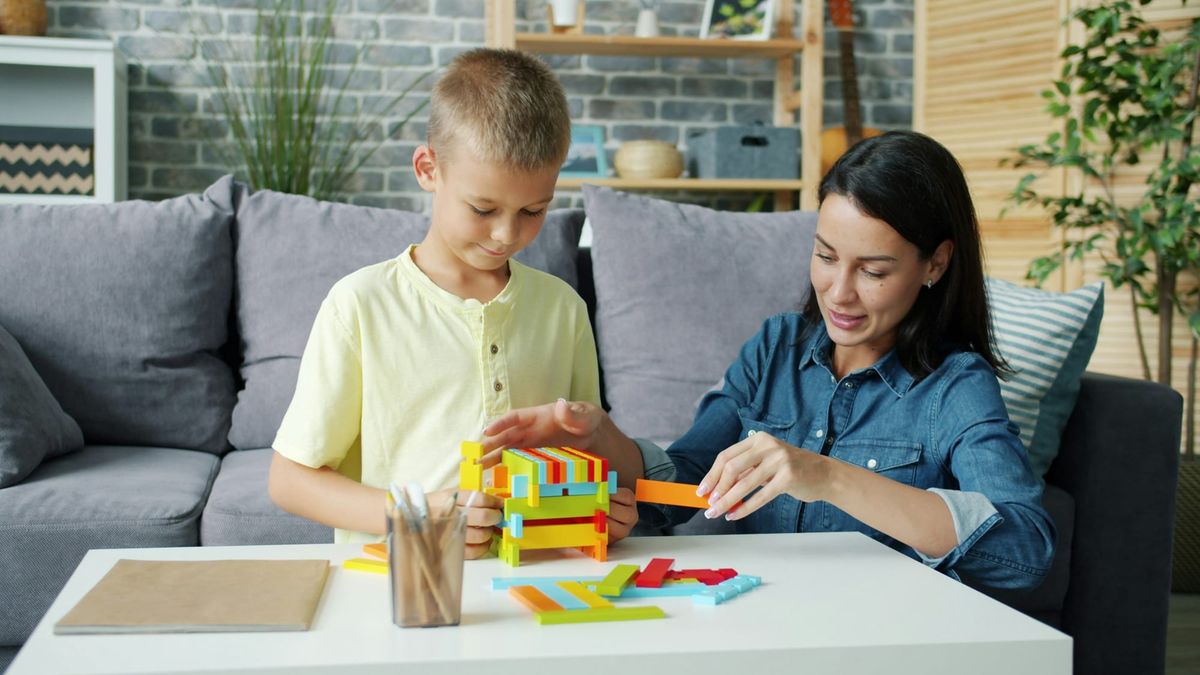
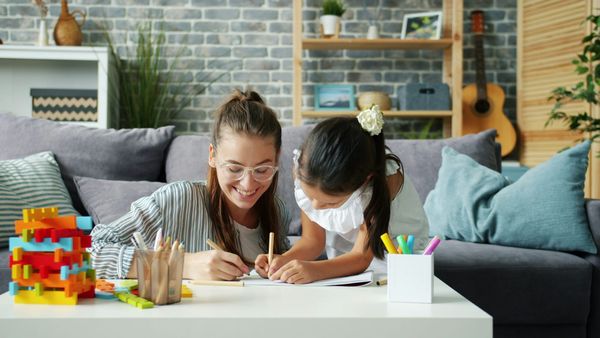
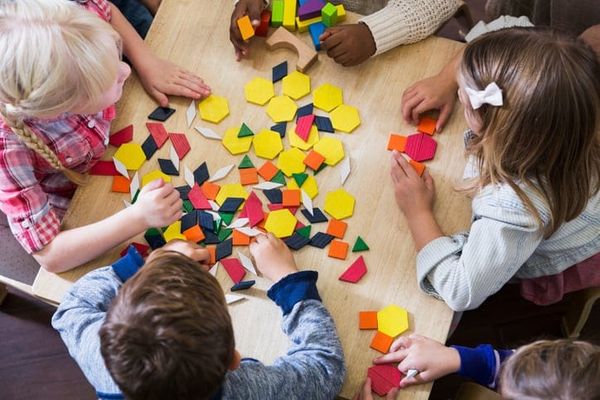
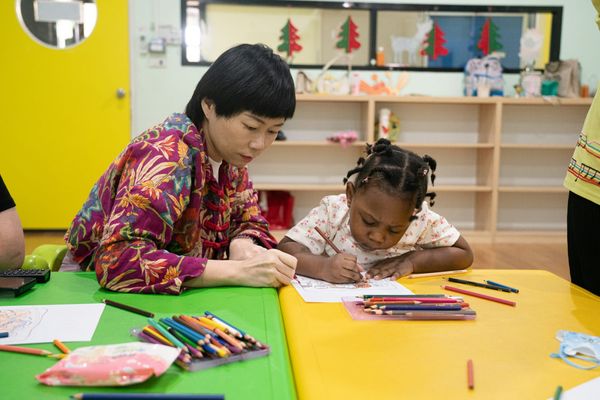
Children who struggle to hold a crayon, take turns, or stay focused during a task often benefit from structured support that targets those exact challenges. Occupational therapy group activities for kids address fine motor skills, sensory processing, social development, and self-regulation through play-based experiences that feel natural rather than clinical. Occupational therapists, teachers, and parents use these approaches within early childhood development frameworks to help young learners build foundational skills at their own pace.
Having the right materials on hand makes a meaningful difference in how consistently these activities can be delivered. Ready-to-use worksheets and coloring pages reduce preparation time while keeping children engaged and on task. Educators and caregivers can Download 75000+ Free Customized Worksheets from My Coloring Pages to find sensory-friendly, skill-building resources suited for both individual and group settings.
Table of Contents
- Does Occupational Group Therapy Work for Kids?
- How Does Group Therapy Work for Kids
- Challenges of Group Therapy for Kids
- How to Engage Kids in Occupational Group Therapy in 25 Ways
- 55 Occupational Therapy Group Activities for Kids
- How These Activities Solve Common Occupational Group Therapy Problems
- The 5/5 Occupational Therapy Solution Bridge
- Turn One OT Goal Into Something Kids Can Practice With Less Help
Summary
- Group occupational therapy is most effective when the group itself functions as the therapeutic instrument, not just a setting for therapy. Research synthesized from 185 studies by the AOTA's pediatric practice guideline explicitly supports group service models and peer-mediated approaches for building functional participation. When designed correctly, the group creates peer modeling, natural friction, and reduced adult dependency that individual sessions cannot replicate.
- The evidence behind group OT formats is stronger than many parents expect. A controlled handwriting readiness study found that children receiving multisensory instruction in small groups of approximately five children per adult outperformed comparison children significantly, with effect sizes of d = 1.05 for prewriting and d = 0.86 for overall readiness. A separate ADHD-focused intervention using ten 90-minute group sessions targeting real functional tasks produced measurable improvements in organizational skills, social skills, and psychosocial functioning as rated by both parents and teachers.
- Passive participation is one of the most common and costly problems in group therapy for children. Only 20% of children with mental health conditions receive care from a specialized mental health provider, meaning the group setting is often the primary clinical contact a family has. When that contact produces an observer rather than an active participant, whether a quiet child who never applies the strategies or a dominant child whose peers copy rather than learn, the opportunity cost is significant.
- Prompt dependency is a measurable sign that therapy is not transferring. Two children can complete the same activity: one needs twelve prompts, and the other needs three. A finished product shows activity, but reduced prompting over time shows progress. Self-monitoring skills, where a child checks their own work before waiting for therapist feedback, are among the most transferable outcomes a group session can build.
- Real-world transfer is the actual measure of whether group therapy is working. Skills practiced in a structured session have to be deliberately tested outside the room, reported back, adjusted, and retested. Approximately 1 in 6 children aged 3 to 17 years have one or more developmental disabilities, and for many of these children, skill acquisition requires more repetitions across more contexts than a neurotypical peer, which means the transfer loop has to be built into session design intentionally rather than assumed.
- Interest-specific materials close the gap between a child knowing a strategy and actually caring enough to use it. A child practicing fine motor skills will engage more deliberately when the task connects to dinosaurs, space missions, or a favorite character than when handed a generic worksheet with no personal relevance. My Coloring Pages addresses this by offering 75000 free customized worksheets that therapists, parents, and teachers can match to a child's specific interests or therapeutic themes without requiring any design preparation.
Does Occupational Group Therapy Work for Kids?
Group occupational therapy works for kids, often because other children are in the room. The AOTA's pediatric practice guideline, synthesizing evidence from 185 studies, supports group service models and peer-mediated approaches for promoting participation across meaningful daily occupations.
"The AOTA's pediatric practice guideline — synthesizing evidence from 185 studies — explicitly supports group service models and peer-mediated approaches for promoting participation across meaningful daily occupations." — American Occupational Therapy Association
💡 Tip: When evaluating therapy options for your child, ask providers whether their group model is backed by peer-reviewed evidence. The AOTA's 185-study synthesis sets a strong benchmark for effective group OT.
🔑 Takeaway: Group OT isn't a compromise on quality—it's a clinically supported format where the peer dynamic itself becomes a core therapeutic tool, driving gains in daily participation and functional skills.

Why does the group setting make such a difference?
Occupational therapy has always focused on helping a child get better at doing activities that matter: writing at a classroom desk, organizing a backpack, joining a game, following a routine with others. A one-on-one session can teach a strategy effectively. A well-designed group tests whether that strategy works when the world gets noisy, unpredictable, and social—the conditions of everyday life.
What do the studies actually show about group OT outcomes?
One controlled study of an occupational therapy-based handwriting readiness program found that children receiving multisensory instruction in small groups of about five children per adult outperformed comparison children, with effect sizes of d = 1.05 for prewriting and d = 0.86 for overall readiness. A separate ADHD-focused intervention used ten 90-minute group sessions targeting functional tasks, including organizing backpacks and planning a group activity, and produced measurable improvements in organizational skills, social skills, and psychosocial functioning as rated by both parents and teachers.
How can therapists tailor group activities to each child's individual goal?
Most therapists working in group settings face the challenge of keeping materials relevant to each child's individual goal. A child working on bilateral hand coordination and a child working on task initiation can share the same cooking activity, but they need different prompts, visual supports, and feedback. The child anxious about medical visits needs a different image than the child building fine motor control through a favorite dinosaur theme. My Coloring Pages gives therapists, parents, and teachers access to over 75,000 customizable printable pages, so they can tailor activities to each child's goals and interests without requiring design skills or prep time.
What makes the group itself the therapeutic tool?
The failure point in weak group OT is almost always the same: the activity is shared, but the clinical reasoning is not individualized. Four children doing identical tasks toward identical goals is not group occupational therapy—it is a group activity with an OT present. The stronger model keeps the occupation shared and the targets distinct, so each child practices something specific while the group creates natural friction, peer modeling, and reduced adult dependency that make the practice meaningful.
Peer modeling carries different weight than hearing a therapist explain the same strategy repeatedly. When a child watches another child their age successfully read a visual checklist before starting a task, that observation lands differently.
When is group OT not the right format for a child?
Group OT is not the right format for every child or every goal. Some children need intensive one-on-one assessment before group participation is appropriate, and some goals require individualized feedback that a group setting cannot provide. The format should serve the goal, not the other way around.
How Does Group Therapy Work for Kids
Group therapy sessions for kids are organized therapeutic environments where peer interactions serve as the main tool, not just a social backdrop.
"Group psychotherapy works as well as individual psychotherapy in improving symptoms, making it a real clinical tool rather than a compromise." — StatPearls - Group Therapy (NCBI Bookshelf)
🎯 Key Point: Group therapy is not a watered-down alternative — it is a clinically validated approach that delivers equivalent outcomes to individual psychotherapy for children.
💡 Tip: When evaluating therapy options for your child, treat group therapy as a first-line option, not a fallback — the peer-driven environment can unlock progress that one-on-one settings sometimes cannot.

What the structure actually looks like
A trained therapist plans activities before the session starts to bring out the exact skill the group is working on. Loma Linda University Health News reports that group therapy sessions typically involve 6 to 12 participants: large enough to create peer dynamics that individual sessions cannot replicate, yet small enough to keep everyone safe. Children are grouped by difficulty and developmental level, not by age alone, because a child managing anxiety needs a different therapeutic structure than one practicing impulse control.
How does a live group moment become the actual therapy?
Activities are designed to create frustration, negotiation, turn-taking, and loss within a safe space. When a child who struggles with emotional regulation gets upset at a peer during a task, that moment becomes therapeutic. The therapist intervenes while the emotion unfolds, coaches the child toward a different response, and lets the group witness the repair. This cycle—trigger to coached response to immediate feedback—closes the gap between knowing a coping strategy and using it when things get difficult.
How can custom materials support skill-building beyond the session?
Most parents rely on generic worksheets and feelings charts to build emotional skills at home. The problem is that generic worksheets don't account for what a particular child cares about. Platforms like My Coloring Pages let parents, teachers, and therapists create custom printable coloring pages built around a child's specific interests or therapeutic themes. A coloring page showing a rocket pilot using deep breathing before launch resonates more with the right child than any one-size-fits-all feelings chart.
Why peer feedback changes things
Group therapy creates real-time social consequences that individual sessions cannot. When a therapist tells a child that interrupting makes it hard for others to speak, the child can file it away as adult feedback. When a peer says, quietly and honestly, that they stopped sharing their idea because they kept getting talked over, that lands differently. The child sees the direct effect of their behavior on someone their own age—not a lecture, but a lived consequence. That specificity is what makes group-based skill practice transfer to the playground, the classroom, and the lunch table, not just the therapy room.
How does skill practice in group sessions carry over to real life?
Good group therapy creates an intentional loop: skills practiced in session must transfer to real-world contexts. A child who can ask for a turn calmly during group activity still needs to try that in the hallway at school, notice what happened, and bring the experience back. Between-session practice is assigned and tied to the exact skill the group worked on that week. Progress is measured not by whether the child enjoyed the session, but by whether anxiety symptoms are shifting, whether conflict is easier to manage, and whether the child can communicate something they previously avoided entirely.
That gap between a successful session and real-world change is where things get harder than most people expect.
Related Reading
- Group Activities for Kids
- Group Therapy Activities for Kids
- Group Activities for Kids With Autism
- Cognitive Development In Early Childhood
- Early Childhood Development
Challenges of Group Therapy for Kids
Group therapy works best when every child actively takes part — not just shows up. A child can complete eight sessions, learn every coping phrase, and leave with almost no real practice. Showing up and actually participating are not the same thing.
"A child can complete eight sessions, learn every coping phrase, and leave with almost no real growth — because passive attendance is not the same as active engagement." — Core Challenge of Pediatric Group Therapy
⚠️ Warning: Don't confuse session completion with therapeutic progress. A child who attends every session but remains disengaged gains little to no lasting benefit.
💡 Tip: Therapists should track active participation markers — such as verbal contributions, role-play engagement, and peer interaction — not just attendance records.

Why do quiet and dominant children undermine group participation?
The quiet child exemplifies this problem. While confident peers answer questions and volunteer for role-plays, the reserved child watches without practicing the skills themselves. According to Emora Health's Pediatric Mental Health Statistics, only 20% of children with mental health conditions receive care from a specialized mental health provider, making the group setting often their primary clinical contact. When that contact creates a passive observer rather than an active participant, the opportunity cost is substantial.
The dominant child creates a mirror problem: one highly verbal child can shift the entire group dynamic, answering before others process questions and modeling coping strategies so thoroughly that quieter children copy rather than discover. Copying is not learning. When that child is absent, followers lack their script. The goal is to build independent emotional regulation, not peer-dependent performance.
How does comparison between children quietly derail therapeutic progress?
Comparison quietly derails progress. A child hears a peer describe something more intense and concludes their own difficulty is too minor to mention, or watches someone manage a trigger smoothly and decides something is wrong with them specifically. The group produces shame instead of relief. Without careful therapist facilitation, the shared experience becomes a ranking exercise rather than a collaborative one.
When does a group activity stop being therapy and become entertainment?
A fun activity becomes therapeutic when it targets a specific skill. When parents ask what skill their child is building and receive no clear answer, the session has drifted from treatment into engagement for its own sake. Therapists find that matching activity content to the child's emotional target works best. A child working on anxiety around medical procedures benefits far more from a coloring activity showing a doctor's visit than from a generic mandala, because specificity creates the emotional activation needed for therapeutic work. Platforms like My Coloring Pages give therapists and caregivers access to over 100,000 customizable printable designs, making it straightforward to generate pages built around a child's exact therapeutic theme.
Why do skills learned in group therapy fail to transfer to real life?
The transfer problem underlies it all. A child can ask nicely for a turn in a structured group and completely fall apart when someone grabs their pencil at school. The therapy environment is predictable and safe by design; real life is not. Skills practiced in group must be deliberately tested outside the room, brought back, adjusted, and retested. Without that loop, children become skilled at performing therapy rather than managing the situations therapy was meant to prepare them for.
The most painful outcome is a child who attends faithfully, sees little change in what matters most, and quietly decides professional help cannot reach them. That erosion of belief is harder to treat than the original difficulty. If the challenge is this layered, what does genuine engagement in group therapy look like in practice?
How to Engage Kids in Occupational Group Therapy in 25 Ways
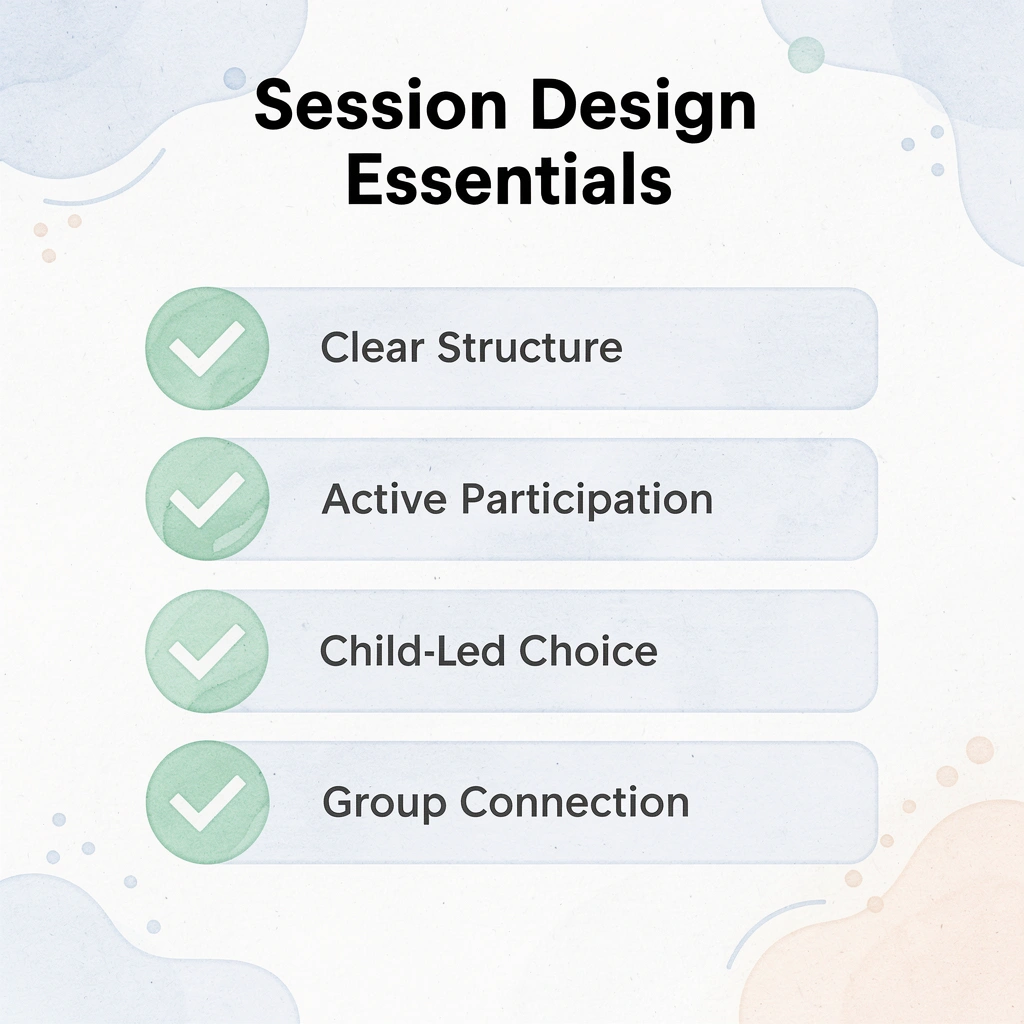
Real engagement in group occupational therapy is a choice about how to design something. When a session is built the right way, children do not need to be convinced to take part because the structure itself draws them in. This foundation of effective group therapy creates an environment where participation feels natural, not forced, and where every activity serves a purpose.
💡 Tip: The most engaging group therapy sessions are designed before the first child walks in — intentional session structure is everything.
"When a session is built the right way, children do not need to be convinced to take part because the structure itself draws them in." — Core Principle of Effective Group OT Design
According to a cluster-randomized controlled trial published in BMC Psychology, symptoms of anxiety and depression affect up to 1 in 5 children. These children are dealing with real difficulty in a setting where there is limited time, making activities that do not have a meaningful connection ineffective. This is why purposeful activity design is essential — every minute of a group occupational therapy session must work harder to reach children who are already emotionally stretched.
⚠️ Warning: Activities without meaningful connection to a child's real challenges are not just ineffective — they can disengage the very children who need support most.
🎯 Key Point: With 1 in 5 children experiencing anxiety or depression, group occupational therapy must be designed with intentional structure and meaningful activity choices to drive real engagement and outcomes.
1. Start With the Functional Goal, Not the Activity
The first question in any group session should be, "What job are we trying to make easier?" not "What are we making today?" A child who loses track of school materials needs a group activity that makes organization necessary, not one that merely appears helpful.
A shared project where each child gathers supplies using a checklist, prepares a workspace, and cleans up afterward transforms the group task into practice for the real job. Slime does not do that. A checklist does.
2. Give Each Child an Individual Target Inside the Shared Task
Four children can complete the same cooking activity while working on entirely different things: one practices following a visual sequence, another works on bilateral hand use, and a third focuses on staying involved when another child changes the plan.
Make each child's target specific enough to be measurable. "Today you are practising checking your picture list before asking me what comes next" is a target. "Do your best" is not. When the child knows what success looks like, the session has direction.
3. Assign Roles the Group Actually Needs
The failure point in most group tasks is passive participation. One child takes over, another waits, and the therapist spends the session repeatedly prompting everyone. The fix is structure, not encouragement.
Assign roles the group cannot function without. During a classroom organization task, one child collects materials, one reads the checklist, one organizes the workspace, and one does the final check. The test is simple: would the task become harder if this child did not contribute? If no, the role is too passive.
4. Use Visual Steps to Reduce Verbal Dependence
When a therapist spends a session saying "now get the paper, now find the scissors, now cut here," the child learns to wait for the next instruction rather than sequence independently. Visual supports—picture checklists, numbered steps, and written sequences—shift this dynamic by moving the redirect from "here's your next step" to "check your plan." This transfers the child's dependence from the therapist's voice to an external strategy they can carry into classrooms, kitchens, and morning routines.
5. Choose Activities With a Clear Beginning, Middle, and End
Open-ended tasks create cognitive overhead that competes with the therapeutic goal. When a child spends effort figuring out what to do, they have less capacity to practice the skill they came to work on.
A predictable structure—gather materials, build, test, fix, clean up—reduces overhead. The child can focus on the occupational therapy target because the session's shape is already known. Predictability is not boring; for many children, it enables learning.
6. Use Activities Children Recognize From Real Life
Therapy skills remain confined to therapy rooms when activities lack real-world counterparts. Packing a backpack, preparing a snack, organizing a desk, opening containers, and following classroom routines have direct equivalents outside therapy. The transfer is obvious because the occupation is identical, practiced in a safer setting.
This is stronger than hoping an isolated fine-motor exercise translates into buttoning a shirt on a rushed school morning. The closer the therapy activity mirrors the actual occupation, the shorter the distance the skill must travel.
7. Let the Group Create Controlled Distractions
A child who writes neatly in a quiet room with a therapist beside them may struggle in a classroom with twenty other children, movement, noise, and competing demands. The group setting can introduce that complexity in a managed way.
The therapist can observe whether the child uses their checklist while other children talk or returns to a task after waiting for someone else. The group becomes a bridge between isolated skill performance and real-world performance.
8. Grade the Activity Before Removing It
When an activity becomes too difficult, change one part of it instead of replacing the whole thing. You can reduce the number of steps, use larger materials, add a visual model, shorten the writing task, or give one prompt instead of three.
The goal is "too hard, modify, child succeeds with support" rather than "too hard, adult takes over." Finishing an adjusted task teaches children what they can do—a different lesson than watching an adult complete it for them.
9. Use the Smallest Useful Prompt
A child cannot open the container. The fastest response is to open it for them. The most helpful response is to wait, then gesture, point to a strategy, give a short verbal cue, demonstrate, and only provide physical assistance if nothing else works.
The principle is to give enough help for the child to continue, not enough to remove the problem entirely. That distinction is where "I can do it with my therapist" gradually becomes "I can do more of it myself." Prompt ladders preserve the child's opportunity to experience their own competence.
10. Make Peer Strategies Visible Without Creating Comparison
When one child remembers to check the picture schedule before starting, say the strategy out loud: "Look what Sara did—she checked what she needed first." This makes the approach visible and understandable to every other child in the group.
The difference matters: focus on the strategy, not the child. "Sara can do it without help" is comparison. "Sara checked the picture before asking" is instruction. One discourages. The other teaches.
11. Build Communication Into the Task Structure
Social participation doesn't require a separate lesson. When one child holds instructions while another holds materials, communication becomes functional and necessary, not forced. This mirrors how communication works outside therapy.
12. Offer Choices Within the Therapeutic Target
"Do you want to practice handwriting?" is a question where "no" ends the intervention. "Do you want to write a menu or a birthday card?" is a question where both answers serve the same goal. The therapist protects the therapeutic target while the child gains meaningful control over how they reach it.
Children who feel ownership over their session invest more effort in it. Choice is not a concession; it's a design feature that improves engagement without turning therapy into an exercise in avoiding difficulty.
13. Connect the Activity to the Child's Interests
Repetitive therapeutic practice loses momentum without clear motivation. A child who loves dinosaurs will write more carefully labeling a dinosaur museum than completing a generic handwriting worksheet. A child fascinated by space will organize more deliberately packing an astronaut's mission bag.
Why does matching interests to therapy tasks make such a difference?
The therapeutic skill stays the same; only the motivation to use it grows stronger. Most therapists understand this in theory, but fewer build it into every session as standard practice. This happens partly because creating materials that match a person's interests requires time.
How can therapists quickly create interest-specific materials for each child?
Generic worksheets from shared folders are fast to grab but don't give a child a specific reason to care. Platforms like My Coloring Pages offer over 100,000 custom printable pages where therapists can create themed content around a child's exact interests in minutes, without design skills. A dinosaur, space, or superhero coloring page can serve as a fine-motor warm-up, visual prompt, or self-regulation tool that connects to the child in front of you.
14. Build in Manageable Problem-Solving
Not every activity should go smoothly. When a child's structure falls, ask what happened and what they could change. Let the group suggest options and the child choose one.
This sequence—notice problem, plan, test, adjust—is functional executive-skills practice built into an activity. It mirrors the thinking process children need when something goes wrong in a classroom or at home, making it more transferable than any worksheet.
15. Let Another Child Change the Plan
During a shared building activity, one child announces they want to move a piece. That moment represents the occupational challenge. Flexibility, communication, and adapting to someone else's action are skills that deteriorate in real environments because they cannot be practiced alone.
The therapist's role is not to prevent the disruption but to support the child through it. "You had one plan and they have another. What could you do next?" That question transforms an inconvenience into a rehearsal.
16. Integrate Sensory Supports Into the Occupation Itself
A child who becomes too dysregulated to participate loses access to the session's helpful content. The solution is adding the right supports: movement before sitting work, a quieter workspace, less visual clutter, and planned breaks so the child can return to the occupation, not a separate sensory activity that consumes the remaining time.
The test is always the same: Did this support help the child participate better in the targeted occupation? If the sensory activity happened but the functional task never started again, the session did not achieve its goal, regardless of how calm the child appeared.
17. Repeat the Target Across Different Contexts
According to the CDC via The OT Toolbox, about 1 in 6 children aged 3 to 17 years have one or more developmental disabilities. Many need more practice than typical peers, and that practice must feel different, or children lose interest.
Handwriting can happen through labeling a picture, writing a menu, keeping score in a game, creating a scavenger hunt clue, and writing a short message. The skill stays the same while the activity changes, supporting practice without repetition—something most session plans overlook.
18. Add a Self-Check Before Therapist Feedback
Before correcting a missed step, ask the child to check their list. Before commenting on handwriting, ask which letter they think is hardest to read. Before organizing the desk, ask whether it matches the picture. The sequence becomes: perform, inspect own work, identify the problem, adjust.
Self-monitoring is the skill that travels outside therapy; waiting for the therapist to identify what went wrong does not. Building the self-check into every session forms that habit.
19. Rotate Roles to Prevent Comfortable Avoidance
A child who always stirs during cooking group may do so because organizing is harder—the activity feels familiar, and the child avoids the therapeutic challenge. Rotating roles ("today you are checking the recipe steps") keeps the activity familiar while changing what the child practices.
Comfort and avoidance can look identical from the outside. Role rotation reveals the difference.
20. Measure Independence, Not Just Completion
Two children both finish the craft. One needed twelve prompts; the other needed three. A completed project doesn't indicate whether therapy is working. The number of prompts, quality of independent initiation, ability to self-correct, and task completion speed reveal much more.
Track changes in prompt level over time and whether the child initiates more steps independently across sessions. A finished product demonstrates activity. Reduced prompting indicates progress.
21. End Each Session With a Real-Life Transfer Question
After the activity, ask where else the child needs this skill. If they practiced organizing, ask when they could use the checklist at school. If they practiced fasteners, ask which clothes at home they could try this with. If they practiced planning, ask what other task has several steps like this one. This connection between therapy and real life doesn't form automatically; it forms when someone asks the question.
22. Give One Specific Between-Session Practice Goal
"Practice at home" is not an instruction. "Before school, use your three-step picture checklist to pack your bag twice this week" is. Specific goals give parents something they can see and support, and give therapists something concrete to follow up on at the next session. The more precise the between-session goal, the more useful the next session becomes.
23. Let Children Explain Their Own Strategy
After finishing the activity, ask what helped them remember, what they did when stuck, and what made it easier. A child who says "I looked at the pictures" has identified a strategy they can recognise and use again. A child who says "you told me" has identified that they depend on someone else. The goal is to help children move from the second answer toward the first.
24. Ask Whether the Group Format Is Actually Earning Its Place
After choosing an activity, ask why it needs to happen in a group. Does it provide peer modeling, shared materials, turn-taking, or communication opportunities that one-on-one cannot replicate? Those are genuine clinical reasons.
If the group adds nothing useful to the child's individual goal, a different format may serve them better. The group is a tool, not a default.
Why does skill transfer outside the session matter most?
The most important data point in occupational group therapy is not what happens during the session. It is what the teacher notices on Tuesday, what the parent reports on Wednesday morning, and whether the child reaches for their checklist without prompting.
How do you build a feedback loop that actually catches real-world progress?
Build that feedback loop on purpose. Ask parents and teachers specific questions about specific skills. When the answer is yes, the session design is working. When the answer is consistently no, something in the design needs to change before the child quietly concludes that professional help cannot reach them.
The harder question is how to help a child carry what they practiced in that session into moments that matter.
Related Reading
- Indoor Group Activities for Kids
- How Do Children Learn
- Early Childhood Learning
55 Occupational Therapy Group Activities for Kids
1. Backpack Packing Challenge
Targets
- Organization
- Sequencing
- Independence
Give children a visual packing list and school materials.
Each child must:
- Check the list
- Find items
- Pack them
- Self-check
This Tackles
This tackles the child who constantly asks:
“What do I need next?”
It replaces repeated adult reminders with a reusable organizational strategy.
2. My Coloring Pages Plan-and-Create Activity
Targets
- Fine-motor work
- Visual planning
- Task initiation
- Communication
- Shared participation
Give the group a learning or functional theme such as:
- Getting ready for school
- A playground
- A bedroom organization scene
- Animals
- A community setting
Each child contributes one element.
Use My Coloring Pages to turn the shared idea into a printable starting outline.
Then move offline.
Children can:
- Color
- Add labels
- Draw missing objects
- Cut elements
- Explain what belongs where
For example, with a morning-routine page:
- One child adds clothes
- One identifies hygiene items
- One numbers the routine
- One checks what is missing
The bridge becomes:
Blank-page/setup difficulty → visual scaffold → child manipulates and organizes information → group discusses sequence → child practices planning rather than waiting for an adult to create the task.
My Coloring Pages supplies the starting structure.
The child still does the occupational work.
3. Buttoning Relay
Targets
- Dressing skills
- Bilateral coordination
Give children dressing boards, shirts, or fabric strips with buttons.
Each child completes one section before passing it on.
This allows repeated fastener practice without turning it into repetitive practice of the same shirt.
4. Zipper Station
Targets
- Dressing independence
- Hand coordination
Set up:
- Jackets
- Bags
- Pencil cases
- Pouches
Use different types of zippers.
Children rotate through stations and practice:
- Align
- Hold
- Pull
- Check
The goal is greater independence with real objects they encounter outside OT.
5. Shoe-Tying Partner Practice
Targets
- Sequencing
- Self-care
Use visual shoe-tying steps.
Partners take turns:
- Performing one step
- Checking the visual
- Identifying the next step
This shifts the child from adult verbal direction toward:
Visual strategy → self-completion
6. Lunchbox Opening Challenge
Targets
- School independence
- Hand strength
Use:
- Containers
- Bottles
- Wrappers
- Bags
- Lunchboxes
Children practice opening and closing them.
Instead of the therapist immediately helping, encourage:
“Try one strategy first.”
The direct functional goal is needing less adult help at lunchtime.
7. Snack Preparation Group
Targets
- Sequencing
- Bilateral coordination
- Organization
- Daily living
Make a simple no-cook snack.
Assign roles:
- Ingredient finder
- Measurer
- Mixer
- Sequence checker
The task practices several everyday skills inside one meaningful occupation.
8. Table-Setting Challenge
Targets
- Visual organization
- Household routines
Give children a picture of a correctly set table.
They use it to arrange:
- Plate
- Cup
- Spoon
- Napkin
- Other items
Then remove the model and let them try again.
9. Laundry Sorting Game
Targets
- Classification
- Daily living
Give clean clothes to sort by:
- Type
- Person
- Color
- Storage location
Older children can fold and organize them afterward.
This skill directly supports home independence.
10. Sock-Matching Race Without Competition
Targets
- Visual discrimination
- Bilateral hand skills
Give the team mixed socks.
The goal is:
“How many pairs can the GROUP match correctly?”
This practices matching while reducing unnecessary child-to-child comparison.
11. Fold-and-Stack Station
Targets
- Bilateral coordination
- Household independence
Use:
- Washcloths
- Towels
- Shirts
- Simple clothing
Children follow a visual folding model, then stack finished items.
12. Pencil-Case Organization Challenge
Targets
- School organization
Give children an intentionally messy pencil case.
Ask:
“What should stay? What is missing? Where should each item go?”
Then create a simple checklist they can reuse.
13. Desk Reset Challenge
Targets
- Organization
- Planning
- Task completion
Create a messy workspace.
Children have to:
- Remove rubbish
- Sort materials
- Put supplies away
- Prepare the desk for the next activity
This targets a functional school routine rather than abstract organization.
14. Visual Schedule Race Against Yourself
Targets
- Following routines independently
Children follow a picture sequence for a task.
Record how many adult prompts are needed.
Repeat later and compare with their own previous performance, not other children.
The outcome becomes:
“I needed two prompts instead of six.”
15. Get-Ready-for-School Role-Play
Targets
- Morning routines
- Sequencing
Use pretend materials:
- Clothes
- Backpack
- Lunchbox
- Toothbrush
- Shoes
Children organize them into the correct order.
Then explain:
“What would happen if this step were forgotten?”
16. Fine-Motor Treasure Hunt
Targets
- Pincer grasp
- Hand control
Hide small objects in:
- Putty
- Containers
- Clips
- Textured materials
Children use:
- Tongs
- Tweezers
- Fingers
to retrieve specific items.
Connect the skill to functional hand use rather than treating hand strengthening as the endpoint.
17. Clothespin Sorting
Targets
- Hand strength
- Visual matching
Children clip colored clothespins onto matching cards.
Progress by adding:
- Numbers
- Letters
- Categories
18. Tweezer Transfer Challenge
Targets
- Precision
- Graded force
Move small safe objects between containers using tweezers.
Add real-purpose challenges such as:
“Prepare five pretend toppings for each plate.”
19. Bead Pattern Team
Targets
- Fine-motor control
- Visual sequencing
- Attention
Give each child one section of a bead pattern.
The finished string requires everyone's section to match the shared rule.
20. Cut-and-Build Puzzle
Targets
- Scissor skills
- Visual construction
Children cut simple shapes, then combine them into:
- A house
- An animal
- A vehicle
- A scene
The activity links cutting to creating something functional and recognizable.
21. Tear-and-Paste Collage
Targets
- Bilateral hand use
- Graded force
Children tear paper into specific sizes and use the pieces to complete a shared picture.
22. Sticker Path Challenge
Targets
- Precision
- Visual-motor control
- Sustained attention
Children place stickers along:
- Lines
- Curves
- Letters
- Shapes
Progress toward smaller targets as appropriate.
23. Hole-Punch Pattern Cards
Targets
- Hand strength
- Bilateral coordination
Children follow a visual pattern using a hole punch.
Then lace through the holes for an additional motor-planning challenge.
24. Lacing Cards
Targets
- Bilateral coordination
- Visual sequencing
Give each child a lacing card and a simple visual sequence.
Children gradually move from therapist demonstration to independent completion.
25. Origami Follow-the-Steps Group
Targets
- Motor planning
- Sequencing
- Visual attention
Use simple folds.
Children follow:
- Visual model
- Perform step
- Check
- Continue
The goal is not perfect origami.
The goal is not perfect origami.
26. Handwriting Menu
Targets
- Functional handwriting
Instead of copying random sentences, children create:
- A restaurant menu
- Shopping list
- Birthday card
- Classroom sign
This connects handwriting to an actual purpose.
27. Postcard Writing Group
Targets
- Handwriting
- Spacing
- Idea organization
Children write a short postcard.
Use visual prompts:
- Who
- What happened
- Closing
This provides a meaningful reason to write.
28. Label-the-Room Activity
Targets
- Handwriting
- Functional literacy
Children create labels for:
- Shelves
- Boxes
- Art supplies
- Classroom areas
Now handwriting improves the environment they actually use.
29. Write-and-Find Treasure Clues
Targets
- Handwriting
- Sequencing
- Communication
Each child writes one simple clue for another child.
The writing must be readable enough for someone else to use.
That makes legibility functional.
30. Grocery List Challenge
Targets
- Writing
- Planning
- Executive function
Give a pretend meal.
Children decide what ingredients are needed and create a list before “shopping.”
31. Obstacle-Course Planning
Targets
- Motor planning
- Sequencing
Instead of the therapist designing the whole course, children choose:
- One movement station each
Then the group decides the order.
They practice:
Plan → perform → notice problem → adjust
32. Animal Walk Circuit
Targets
- Body awareness
- Coordination
- Motor planning
Use movements such as:
- Bear walk
- Crab walk
- Frog jumps
- Slow crawling
When appropriate to the child's goals.
Give the circuit a clear beginning and end rather than using movement without a functional plan.
33. Follow-the-Movement Sequence
Targets
- Motor memory
- Sequencing
Create a series:
Clap → jump → turn → touch floor
Children watch, repeat, and later create sequences for peers.
34. Mirror Movement Partners
Targets
- Body awareness
- Motor planning
- Visual attention
One child moves slowly.
The other mirrors.
Then switch roles.
This creates both:
- Motor practice
- Attention to another person's movement
35. Balloon Keep-Up Team
Targets
- Coordination
- Timing
- Shared attention
The group tries to keep a balloon from touching the floor.
Add the rule:
No child can touch it twice in a row.
Now the activity requires awareness of peers, not just motor performance.
36. Beanbag Target Stations
Targets
- Motor planning
- Graded force
Set targets at different distances.
Children predict:
“How hard should I throw?”
Then adjust after each attempt.
37. Balance-and-Carry Challenge
Targets
- Balance
- Coordination
- Functional carrying
Children carry a lightweight object through a simple pathway.
Progress by changing:
- Distance
- Obstacle placement
- Object size
according to individual goals.
38. Build-the-Route Motor Challenge
Targets
- Planning
- Gross-motor sequencing
Children design a short route using:
- Cones
- Hoops
- Mats
- Floor markers
Then another child follows their sequence.
39. Cooperative Parachute Activities
Targets
- Bilateral coordination
- Timing
- Teamwork
Children need to lift, lower, or move an object together.
The activity only works when movements are coordinated.
40. Freeze-and-Plan Game
Targets
- Impulse control
- Motor planning
Children move while music plays or a signal is given.
When it stops, they freeze and wait for the next instruction.
Add:
“Think before moving.”
The focus should be on purposeful movement and planning rather than treating stillness itself as the therapy goal.
41. Build-a-Bridge Challenge
Targets
- Planning
- Fine motor
- Flexibility
- Collaborative problem-solving
Give:
- Blocks
- Cups
- Paper
- Craft sticks
The bridge must hold a toy.
When it collapses, do not fix it.
Ask:
“What could you change?”
This directly targets the child who expects adults to solve every problem.
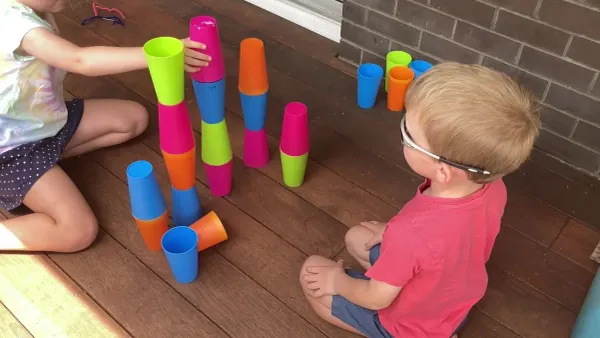
42. Cup-Stack Strategy Challenge
Targets
- Planning
- Motor control
Give children a visual target tower.
They must decide:
- Which cups first
- Where the base goes
- How to correct instability
43. LEGO Copy-and-Create
Targets
- Visual perception
- Sequencing
- Construction
First copy a small model.
Then change one part.
This progression supports:
Follow model → understand structure → independently modify
44. Group Marble Run
Targets
- Planning
- Cause and effect
- Flexible problem-solving
Each child builds one section.
All sections must connect.
When the marble stops, ask:
“Where did the system stop working?”
The focus becomes problem analysis rather than blame.
45. Mystery Construction Bag
Targets
- Tactile processing
- Planning
- Creativity
Children receive a small set of materials and a goal:
“Build something that can hold this object.”
They first feel or inspect materials, then create a plan.
46. Cooperative Puzzle With Roles
Targets
- Visual-perceptual skills
- Shared task participation
Roles might include:
- Edge finder
- Color sorter
- Piece matcher
- Final checker
This prevents one skilled child from completing the entire puzzle.
47. Visual Scavenger Hunt
Targets
- Scanning
- Visual attention
- Mobility
- Organization
Use picture or written clues.
Children locate items, mark them off, and return materials to the correct place afterward.
48. “What Changed?” Room Game
Targets
- Visual attention
- Memory
Children observe a setup.
One child changes something.
The group identifies the change.
Progress from obvious to subtle differences.
49. Memory Tray Challenge
Targets
- Visual memory
- Strategy use
Show several objects.
Cover them.
Instead of only testing recall, ask:
“What strategy helped you remember?”
Children might discover:
- Grouping
- Naming
- Visualizing
That turns the activity into strategy learning.
50. Sensory-Support Planning Activity
Targets
- Self-awareness
- Self-advocacy
Provide examples of supports such as:
- Quiet space
- Movement break
- Headphones where appropriate
- Visual instructions
- Reduced clutter
Ask:
“Which helps you work better during this activity?”
The occupational goal becomes:
Recognize need → choose support → return to task
Not a sensory activity for its own sake.
51. Calm-and-Return Challenge
Targets
- Regulation
- Re-engagement
Teach an appropriate regulation strategy.
Then make the important part returning to the meaningful task afterward.
The sequence becomes:
Overwhelmed → regulate → return → continue
That is more functional than ending the activity as soon as regulation support is needed.
52. Choice-and-Complete Station
Targets
- Initiation
- Task persistence
Offer two activities that target the same skill.
For example:
“Would you rather write a shopping list or a party invitation?”
The child chooses, but still completes the therapeutic target.
This gives control without removing the challenge.
53. Peer Strategy Swap
Targets
- Metacognition
- Independent strategy use
Each child shares one strategy that helps them with a task.
Examples:
- “I check the picture.”
- “I put everything in order first.”
- “I count the steps.”
Then another child tests the strategy.
The focus stays on:
- Learning useful methods
rather than:
- Comparing which child is better
54. Teach-Back Functional Skills
Targets
- Understanding
- Sequencing
- Independence
After completing an activity, each child teaches one step to someone else.
For example:
“Show the group how you checked your backpack.”
Teaching requires the child to organize the strategy rather than simply follow prompts.
55. Real-Life Independence Challenge
Targets
- Transfer beyond therapy
Choose one group activity and finish with:
“Where will you use this outside OT?”
Examples:
- Backpack organization → school morning
- Buttoning → getting dressed
- Writing list → home chore
- Visual schedule → homework routine
- Asking for help → classroom
Then set one small practice goal.
For example:
“Pack your school bag using the checklist twice before the next session.”
At the next group, review:
- What worked?
- Where did you get stuck?
- What support did you still need?
This completes the full OT cycle:
Practice → transfer → review → adapt → retry
How These Activities Solve Common Occupational Group Therapy Problems
Choose activities based on the child's functional barrier, not because they simply look therapeutic.
- Child waits for the therapist to tell them every step: Use visual schedules, checklists, recipe sequences, and self-check activities.
- Child struggles with dressing: Practice buttons, zippers, shoe tying, and clothing routines using real functional materials.
- Child has fine-motor difficulties: Use cutting, lacing, tweezers, clothespins, folding, and craft tasks connected to meaningful outcomes.
- Handwriting practice feels pointless: Write menus, clues, labels, lists, postcards, and other functional text.
- Child struggles to organize school materials: Use backpack packing, pencil-case organization, desk resets, and grocery-style planning tasks.
- Child cannot plan multi-step movement: Use obstacle courses, movement sequences, construction tasks, and route planning.
- Child becomes stuck when the first strategy fails: Use bridge building, marble runs, construction problems, and “try another way” tasks.
- One child takes over the group: Assign necessary roles and rotate them.
- Child is physically present but does little: Choose tasks where every contribution is necessary to completion.
- Therapist support becomes constant prompting: Use the smallest useful prompt, visual systems, peer models, and self-checks.
- Peer modeling turns into comparison: Discuss the strategy being used rather than which child performs better.
- Sensory regulation takes over the session: Use sensory supports to help the child return to the meaningful occupation.
- Open-ended creative tasks create setup difficulty: Use My Coloring Pages as a predictable starting scaffold while keeping planning, fine-motor work, communication, and decision-making with the child.
- Child succeeds in therapy but not elsewhere: Practice realistic occupations and always finish with a transfer step.
- Parents see completed projects but cannot tell whether independence improved: Track prompts, assistance, initiation, self-checking, and functional carryover.
The 5/5 Occupational Therapy Solution Bridge
The Weaker Pattern
- Therapist chooses activity
- Children complete it
- Adult provides repeated prompts
- Finished product looks successful
- Same everyday difficulty continues
The Stronger Pattern
- Identify real-life occupational difficulty
- Choose a group activity that recreates part of that difficulty
- Give the child a meaningful and accessible role
- Child attempts the task
- Difficulty becomes visible
- Therapist introduces the smallest useful strategy or support
- Child retries
- Support decreases
- Child self-checks
- Skill is practiced outside therapy
- Greater independence becomes measurable
That is what makes these occupational therapy group activities more than crafts, games, or exercises performed in an OT room.
The Key Question
The strongest question after any activity is:
“What can this child now do with less help that matters somewhere outside therapy?”
Because the most important occupational therapy outcome is not:
“They completed today's activity.”
It is:
“An everyday activity that used to require someone beside them is becoming something they can increasingly manage themselves.”
Turn One OT Goal Into Something Kids Can Practice With Less Help
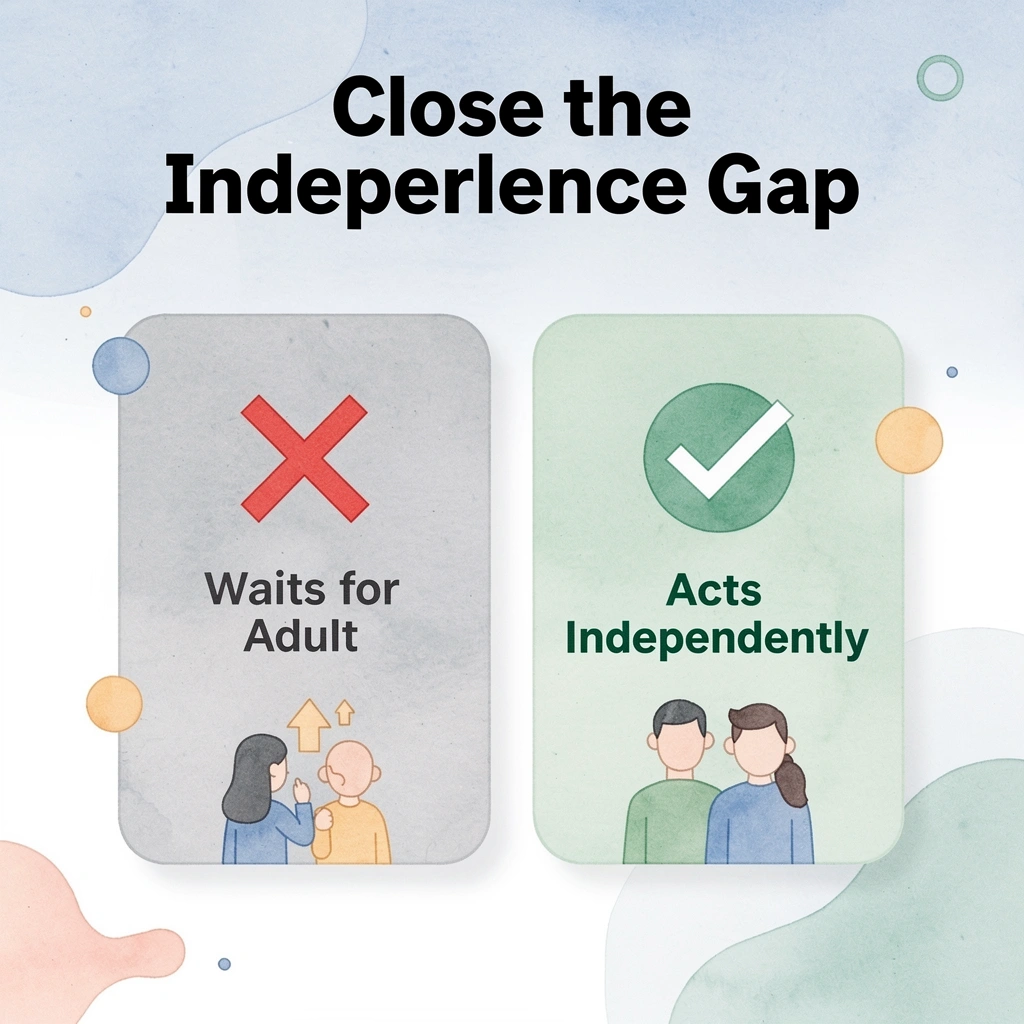
Start with one functional gap, not a theme. When you identify the exact moment a child waits for an adult instead of acting independently, you have your session anchor. Build everything around closing that gap, and the activity design becomes obvious: no guesswork, no generic planning.
"When you identify the exact moment a child waits for an adult instead of acting, you have your session anchor — and the activity design becomes obvious."
💡 Tip: Resist targeting broad themes like "self-care" or "attention." The more specific the functional gap — the precise hesitation point — the more targeted and effective your session will be.
🎯 Key Point: One clearly defined gap is more powerful than three loosely connected goals. Narrow your focus to the single moment of dependence you want to eliminate.
If you need a visual scaffold, My Coloring Pages lets any therapist, teacher, or parent generate a customized printable in minutes. With over 75,000 free worksheets, our platform helps you match the visual to a specific routine, interest, or skill sequence—rather than handing a child something generic. That specificity is what makes the scaffold worth using.
✅ Best Practice: Use My Coloring Pages to generate a printable that mirrors the real-world context of the skill — the closer the visual matches the actual routine, the faster the transfer from supported to independent performance.
Related Reading
- Strategies For Child Development