40+ Cooperative Group Activities for Kids
Group activities for kids that build teamwork — My Coloring Pages shares 40+ cooperative games children actually enjoy.

Group activities for kids do more than fill time — they shape how children learn to share, solve problems, and connect with others, which sits at the heart of early childhood development. Parents, teachers, and caregivers looking for fresh ideas will find that the right activity can build real skills while keeping every child genuinely engaged. Team games, collaborative art projects, and hands-on learning exercises all work across classrooms, playgrounds, and living rooms alike.
Finding an activity that holds every child's attention and still supports learning can feel like a challenge, especially when group sizes and age ranges vary. The right resources make that process far easier. For ready-to-use options that can be tailored to any theme or group, download 75,000+ Free Customized Worksheets.
Table of Contents
- Impact of Group Interactions on Early Child Development
- Importance of Group Activities for Kids
- What Happens When Kids Don't Interact in Groups
- How to Engage Kids in Group Activities in 15 Ways
- 40+ Cooperative Group Activities for Kids
- Why These Cooperative Activities Work
- Turn One Group Activity Into Something Every Child Has to Contribute To
Summary
- Group activities do more than keep children occupied. They create the specific cognitive conditions where children have to explain their thinking, hear competing ideas, and decide whether their original reasoning holds up. A meta-analysis covering 71 studies and 7,103 children and adolescents found a positive effect of peer interaction on learning, with a Hedges' g of 0.40, meaning the benefit was consistent and measurable across different contexts, not just a social bonus layered on top of learning.
- The quality of early group experiences carries more developmental weight than most people recognize. Research from Sunray ABA indicates that 90% of brain development occurs before age 5, which means the group settings children encounter in those early years are not supplementary to development. They are part of the architecture being built. A child explaining a creative decision to a peer or defending a story ending they prefer is doing active cognitive work, not socializing.
- Children who miss regular group interaction develop specific, predictable gaps rather than a general social deficit. Without low-pressure peer settings, children often stop expecting their ideas to land in a room, and that pattern can harden into a habit of staying quiet and deferring. A 60 Minutes video drawing over 23,000 views and 5,500 reactions showed that experts are seeing more social anxiety in children who simply lack practice initiating and navigating peer interaction, and the effects show up clearly in school group settings.
- One quieter but more significant development in early childhood is the shift from needing adult approval to trusting peer feedback. When a peer asks, "But why did you do it that way?" a child has to think in a way that adult praise or correction rarely demands. Children with limited peer group experience also tend to misread normal group dynamics, interpreting a group choosing a different plan as personal rejection rather than as a simple decision, a distinction that only develops through repeated, low-stakes practice.
- Effective group activities share a structural feature that most generic activity guides overlook: every child must have a reason to contribute that the group actually needs. When one child can carry the activity alone while others observe, the activity looks collaborative but functions as a solo performance with an audience. Strategies like giving each child a unique piece of information, rotating meaningful roles, and requiring groups to reach consensus on open-ended problems all address specific failure modes rather than hoping proximity produces collaboration.
- Reflection on process rather than product is consistently one of the most underused facilitation tools. Asking children whose idea changed the plan, when they disagreed, and how they resolved it makes invisible group skills visible, helping children notice how they worked together rather than only whether the final result looked finished. A polished group product can hide the fact that one child did all the work while others watched.
- My Coloring Pages's Download 75000+ Free Customized Worksheets addresses the preparation friction that often takes more facilitator time than the activity itself by generating personalized, themed coloring pages and worksheets in seconds, so the focus stays on whether every child contributed something the group genuinely needed.
Impact of Group Interactions on Early Child Development
Group activities for kids do much more than just help them make friends. When children work, create, and solve problems with other kids, their thinking changes in profound ways. They reason more deeply, and they grow in ways that go way beyond just the social skills that most people think about.
"When children engage in collaborative group activities, they develop critical thinking, emotional intelligence, and problem-solving abilities that cannot be replicated through solo learning alone." — Early Childhood Development Research
💡 Tip: Prioritize group-based learning experiences early — the cognitive and social benefits compound over time, shaping how children think and collaborate for years to come.
🔑 Takeaway: Group interactions don't just build friendships — they fundamentally rewire how children reason, creating deeper, more lasting developmental growth across emotional, cognitive, and social dimensions.
Development Area | Solo Activities | Group Activities |
|---|---|---|
Critical Thinking | Limited perspective | Expanded through peer input |
Social Skills | Minimal practice | Actively reinforced |
Problem-Solving | Single approach | Multiple strategies explored |
Emotional Growth | Self-focused | Empathy and collaboration built |

Why do group activities for kids matter so early in development?
According to Sunray ABA's research on early social interaction, 90% of brain development happens before age 5, making early group experiences critical. When a child explains why they picked a particular color for a habitat drawing or argues for a different story ending, the brain builds architecture. The group is not a distraction from learning; it is the learning environment.
What makes group activities for kids actually collaborative rather than performative?
The failure point in most group settings is not the children, but the structure. When one confident child makes every decision while others watch, the activity appears collaborative but functions as a solo performance with an audience. Effective group work requires that every child has a reason to think, contribute, and be heard. This means designing activities so no single child can carry them alone: cooperative craft projects, team puzzles, shared storytelling, or science challenges where each child holds different information.
How can facilitators find the right materials for kids' group activities?
Most facilitators prepare by searching for generic printable activity sheets, risking disengagement when themes lack relevance or worksheets don't match the group's age range. Our My Coloring Pages platform eliminates this friction by letting teachers, daycare providers, and parents generate custom, themed materials in seconds without design skills, keeping focus on what children do together.
Does collaboration actually change what children think about?
The research says yes, and the mechanism matters. When children are placed in a structured group and asked to reach a shared conclusion, they must defend their thinking, hear competing ideas, and decide whether their original reasoning holds up. A meta-analysis covering 71 studies and 7,103 children and adolescents found a positive effect of peer interaction on learning, with a Hedges' g of 0.40: a consistent benefit across contexts. This cognitive outcome comes from the presence of other minds, not merely a socialization bonus.
The child who explains something to a peer stress-tests their own understanding in real time, noticing gaps they would never encounter on a solo worksheet. Well-designed group activities are irreplaceable not as substitutes for independent work, but as the intellectual friction that independent work cannot generate alone. But here is what the research points to that most activity guides never mention.
Importance of Group Activities for Kids
Group activities put a child's thinking in direct contact with another person's thinking. That friction is the core mechanism through which durable social and cognitive skills get built. When a child has to say their idea out loud, defend it, adjust it, or abandon it in favor of something better, they are doing work that no worksheet or independent project can replicate.
"The collision of ideas between children is not a distraction from learning — it is the learning. Social friction builds the cognitive muscles that solo tasks simply cannot reach."
💡 Tip: Look for group activities that require children to explain their reasoning out loud — the act of verbalizing a thought is one of the most powerful cognitive skill-builders available.
🔑 Takeaway: The real value of group work isn't just collaboration — it's the mental effort of defending, refining, and sometimes discarding an idea entirely. That process builds critical thinking no individual task can match.
Skill Developed | Group Activity | Solo Activity |
|---|---|---|
Verbal reasoning | ✅ Strong | ❌ Limited |
Idea defense & debate | ✅ Strong | ❌ None |
Perspective-taking | ✅ Strong | ❌ Minimal |
Independent focus | ⚠️ Moderate | ✅ Strong |
Cognitive adaptability | ✅ Strong | ⚠️ Moderate |

What children actually practice when they collaborate
Children who regularly participate in structured group activities develop stronger self-control. They learn to manage frustration when someone takes too long, handle rejection of their ideas, and listen when they'd rather talk. According to the YMCA of Greensboro, group activities provide repeated, low-stakes opportunities to build these interpersonal skills, with benefits extending to how children handle conflict, teamwork, and communication in daily life.
How does speaking in small groups build confidence over time?
Speaking in front of a full class feels daunting to many children; a small group feels more manageable. This smaller size creates a middle step: share with one friend, then contribute to three, then eventually speak in a larger setting. Confidence builds through repeated experiences of speaking, being heard, and managing responses.
How can the right materials make group activities easier to run?
Finding group activities that fit a group's age range, theme, and attention span takes time, and generic materials often produce generic engagement. Platforms like My Coloring Pages remove that friction: teachers, daycare providers, and camp counselors can generate custom, themed coloring pages in seconds, giving every child something personally relevant to bring into a shared creative activity without design skill required.
When the group teaches what adults cannot
A child learns something fundamentally different from peer feedback than from adult correction. When an adult says "good job," a child files it away. When a peer says, "But why did you do it that way?" the child must think. Group activities—cooperative games, shared storytelling, team puzzles, collaborative art projects—create conditions where children repeatedly encounter peer challenge. They learn to explain their reasoning, discover that being wrong in front of a friend is survivable, and that adjusting your idea is not the same as losing.
Why does peer judgment matter more than adult approval?
The shift from needing adult approval to trusting peer judgment is one of the more significant developments in early childhood. It happens through practice inside real group dynamics, not through instruction about how group dynamics work. But what happens to children who rarely get that practice? The answer is more specific and consequential than most people expect.
Related Reading
- Early Childhood Development
- Cognitive Development In Early Childhood
What Happens When Kids Don't Interact in Groups
Children who miss regular group interaction develop specific social gaps that show up in classrooms, on playgrounds, and in friendships — and these gaps get worse over time.
"Children who lack consistent group interaction face compounding social deficits that affect their ability to connect, collaborate, and communicate well into adolescence." — Child Development Research
⚠️ Warning: Social gaps caused by limited group interaction don't simply resolve on their own — without intentional intervention, they deepen and become harder to address as children grow older.
🎯 Key Point: The three core environments where social gaps become most visible are classrooms, playgrounds, and friendships—making early recognition and group engagement critical for healthy development.
Environment | Social Gap That Appears |
|---|---|
Classroom | Difficulty with collaboration and turn-taking |
Playground | Struggles with joining groups and reading social cues |
Friendships | Challenges with trust-building and emotional reciprocity |

When good ideas stay silent
The child has the answer. They know it. But someone else speaks first, and the moment passes. Without enough low-pressure group settings, that pattern becomes a habit: have an idea, hesitate, stay silent, let someone else decide. Their thinking never makes it into the room, and over time, they stop expecting it to. Group settings, whether a collaborative art project or a shared storytelling circle, are where children learn their voice matters—not because an adult confirmed it, but because a peer responded.
What happens when children always rely on adults to resolve conflict?
Two children want the same color marker. Neither knows how to negotiate, so they call for a teacher. That moment, repeated dozens of times, shapes how a child understands conflict. According to a 60 Minutes Facebook video that received over 23,000 views, experts report increased social anxiety in children who cannot start conversations or navigate peer interaction. Children who ask adults to mediate group situations lack the practice needed for compromise—a problem evident in school group projects.
How can group activities for kids reduce the need for adult mediation?
Most facilitators solve every disagreement, which removes the struggle children need to learn negotiation. Platforms like My Coloring Pages offer a practical alternative: when each child has a personalized coloring page tied to their interests, the activity reduces conflict over materials and creates space for creative collaboration that builds peer skills rather than adult-managed compliance.
How limited group experience distorts perception
The 60 Minutes video garnered 5,500 reactions, confirming that parents and teachers recognise this pattern. Children with limited peer group experience misread normal group behavior as personal rejection: when the group chooses a different plan, the child hears "We don't want you," or when someone plays with another child, the child thinks "Nobody likes me." These misreads are predictable—they result from insufficient practice distinguishing disagreement from rejection, a distinction that develops only through repeated, low-stakes group experience.
What happens when the pattern goes unaddressed?
The longer this goes unaddressed, the more a child's social identity hardens around avoidance. "Group work is awkward" becomes "I'm bad with people," and once that belief takes hold, it drives behavior that worsens the original problem. Less interaction means less practice, more discomfort, more avoidance. The cycle doesn't break itself. But knowing what goes wrong is only half the picture. The more useful question is what works.
How to Engage Kids in Group Activities in 15 Ways
Getting children involved in group activities means setting up situations where every child has a real reason to take part — and the group needs what each person thinks to move forward.
"When every child feels their contribution is essential, group participation transforms from a passive exercise into an active, meaningful experience that builds confidence and collaboration skills." — Child Development Research
Engagement Strategy | What It Achieves | Best For |
|---|---|---|
Role Assignment | Gives every child ownership | Ages 5–12 |
Shared Goals | Creates group accountability | Ages 7–14 |
Open-Ended Tasks | Encourages diverse thinking | All ages |
Turn-Based Input | Ensures every voice is heard | Ages 4–10 |
💡 Tip: The most effective group activities are designed so that no single child can complete the task alone — this makes every participant's contribution critical to the group's success.
🎯 Key Point: True engagement isn't about keeping kids busy — it's about creating genuine interdependence, where each child knows the group cannot move forward without their unique input.

1. Start With Small Groups Before Expecting Whole-Group Participation
A child who stays silent in a group of ten will often speak easily with one partner or two others. The order matters: think alone, tell a partner, discuss in a group of three, then optionally share with the larger group. This gives quieter children a safer path to form ideas privately, voice them once, gain confidence, and share with more people. The goal isn't to turn quiet children into loud ones, but to ensure "I'm quiet" never becomes "my ideas never get heard."
2. Give Every Child a Meaningful Role
Avoid roles that seem meaningful, but only one child does the thinking while others fill space. Instead, use roles like idea starter, question asker, builder, checker, and explainer, then rotate them. Test each role: could this child disappear and the activity continue unchanged? If yes, strengthen that role.
3. Give Everyone Thinking Time Before Group Discussion
The fastest processor answers first, and everyone else follows. Ask the question, then pause before calling on anyone. Tell children to draw their idea, write it, choose an object, or think quietly before sharing. This shift changes the dynamic from "fastest child answers, everyone follows" to "everyone arrives with something, ideas get compared." Participation stops being a reward for quick processing.
4. Use a Shared Create-and-Explain Activity
Give the group a shared creative challenge where no single child controls the outcome. For example, ask them to invent an animal that could survive on another planet, with each child contributing one decision: where it lives, what it eats, how it moves, and one survival feature. The final result contains something from each of them.
Platforms like Download 75000+ Free Customized Worksheets generate printable outlines in seconds, eliminating setup friction so groups can focus on collaboration. Our customizable coloring pages let children dive straight into the creative process without waiting for manual design work. Once the page is ready, children choose details, color different sections, add features, and explain why each addition belongs.
5. Give the Group a Problem That Actually Requires More Than One Person
Avoid activities where children complete separate tasks and combine results. Instead, give them something where each person holds information others need. "Each person has one clue, and you need all the clues to solve the mystery" forces interdependence: Child A needs Child B, Child B needs Child C. The group becomes a system where different contributions produce a shared result, rather than four individuals sitting together.
6. Make Listening Part of the Task
Kids often wait for their turn to speak instead of paying attention to what others are saying. Before a child shares their own idea, ask them to repeat what someone else suggested or add to it. A simple rule like "before sharing your idea, say one thing you heard from someone else" transforms listening from passive to purposeful. The child can't simply wait for their moment; they must listen, understand, and respond, making group communication truly two-way.
7. Give Groups Problems With More Than One Good Answer
When there's only one correct answer, a different idea feels wrong. Open-ended challenges fix that. "How could we protect an egg from a fall?" or "What are three ways this story could end?" creates space where multiple solutions are expected, not merely tolerated. When children disagree, ask, "Could both ideas work?" or "How could we test them?" This reframes disagreement as intellectually useful rather than socially threatening.
8. Teach a Simple Disagreement Script
Kids often lack the words to disagree constructively, so conflicts escalate, or they seek adult intervention. Teach them specific phrases: "I have another idea," "can you explain why?" "what if we try both?" "can we combine them?" "let's vote after everyone explains." Encourage kids to use these phrases before asking an adult for help. The process becomes: disagreement, communicate, compare, solve—instead of disagreement, "Teacher!"
9. Make Consensus Part of Some Activities
Sometimes the group must submit one shared answer. "You have five minutes to agree on the three most important things you'd take to a deserted island" forces every child to explain, persuade, listen, and sometimes change their mind. The important learning is the experience of making a decision when everybody wants something different, not which three objects they choose.
10. Stop Adult Rescue From Happening Too Quickly
When a group gets stuck and immediately looks to an adult for the answer, child-to-child problem-solving stops developing. Instead of deciding for them, ask, "how could your group work that out?" If they need support, offer options: "could you test both ideas, combine them, vote, or take turns?" Provide a decision-making tool, not the decision itself—this builds real independence over time.
11. Structure Turn-Taking for Children Who Struggle to Enter the Conversation
One child talks constantly while another never finds a gap to speak. Simple structures fix this without singling anyone out: a talking object (only the person holding it speaks), round-robin contributions, or one-minute partner turns create space to speak and require listening. According to the Prodigy Game Blog, structured turn-taking improves communication and problem-solving skills, builds classroom community, and ensures every child participates. Over time, children need less artificial structure, but initially it gives every child practice being heard.
12. Let Children Learn From a Peer Without Turning It Into Comparison
When one child solves something first, avoid framing it as evidence of superiority. "See how easily they did it" teaches other children that someone else's success measures their inadequacy. Instead, ask the child who succeeded to share what they noticed, then let another child try. This shifts the message from "someone else's success proves I'm worse" to "someone else's success is useful information I can borrow."
13. Use Activities Where Success Depends on Different Strengths
If every group task rewards fast reading, quick math, or confident speaking, the same children lead every time. That pattern hardens quickly, and children who don't fit that profile stop trying to contribute. Choose activities that combine different strengths: someone to imagine, someone to build, someone to remember instructions, someone to organize materials, and someone to explain the result. Children then experience "I'm useful here too" and learn that competence doesn't always look the same.
14. Reflect on the Group Process, Not Just the Final Product
A polished poster can hide that one child did all the work while others watched. After the activity, ask whose idea changed the plan, when they disagreed, how they solved it, whether everyone contributed, and what they'd do differently next time, not just whether they finished. According to LinkedIn educator Gavin McCormack, focusing on how students completed a task rather than what they produced is one of the most underused ways to increase classroom engagement. Making invisible group skills visible helps children notice how they worked together, not whether the tower stood.
15. End With an Individual Check
Group success can hide whether individual children understood or participated. After working together, ask each child to do something independently: tell you one thing their group discovered, draw their own version, or explain what strategy they would use alone.
Why does returning to individual thinking strengthen group activities for kids?
This sequence—think alone, work together, learn from others, return to thinking alone—means group work strengthens independence rather than replacing it.
How do these strategies shift children from busy to genuinely engaged?
The strategies above don't work in isolation. Each addresses a specific problem, shifting the approach from "put children together and hope" to "design conditions where every child must think, speak, listen, and contribute in ways the group needs." That's the difference between children who are busy and children who are truly engaged.
40+ Cooperative Group Activities for Kids
1. Create One Shared World With My Coloring Pages
This tackles: quiet children disappearing, one child controlling the idea, and kids struggling to combine different perspectives.
Give the group one challenge:
“Create a world that includes something from every person.”
Each child contributes one element.
For example
- Child 1: Where the world is located
- Child 2: Who lives there
- Child 3: One unusual building
- Child 4: A problem the characters face
Combine the ideas into a prompt and use My Coloring Pages to create a printable starting outline.
Then move offline.
Children can
- Color different sections
- Add new details
- Change parts together
- Explain how everyone's idea appears in the final picture
The cooperative cycle becomes:
Each child contributes → ideas combine → My Coloring Pages removes setup friction → group makes shared decisions → children modify and explain together
The tool creates the starting visual.
The children create the collaboration.
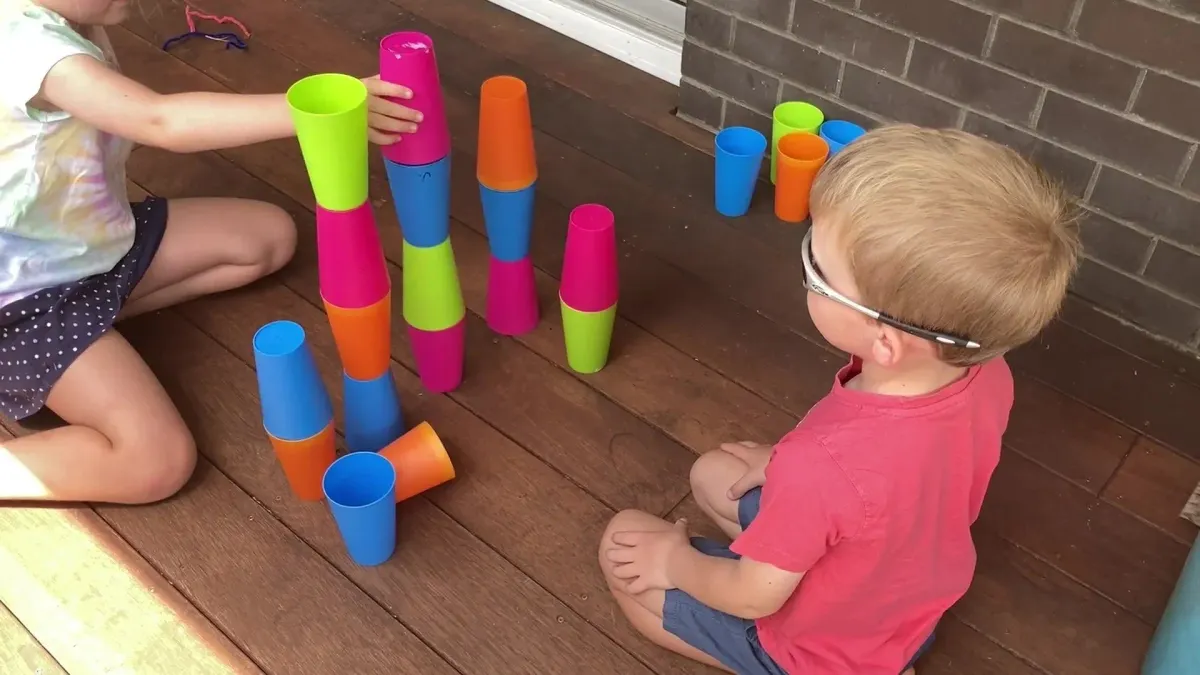
2. Build the Tallest Team Tower
This tackles: children working beside rather than with one another.
Give each child access to only one type of building material.
For example
- One has cups
- One has cardboard
- One has tape
- One has blocks
They cannot succeed unless they share resources and plans.
If the tower collapses, ask:
“What should your team change?”
Now failure becomes:
Group problem → discussion → new strategy → retry
3. Complete a Group Puzzle With Distributed Pieces
This tackles: one child doing the entire task.
Give each child only some of the puzzle pieces.
They must communicate:
“I have a blue edge.”
“Who has the piece that connects here?”
The task requires
- Observation
- Communication
- Sharing
- Joint problem-solving
Nobody can complete it alone.
4. Solve a Mystery With One Clue Per Child
This tackles: passive participants.
Give every child one unique clue.
No child may hand over their clue silently.
They must explain it to the group.
The group then combines all clues to solve
- Who
- What
- Where
- Why
The structure makes every contribution necessary.
5. Create a Story One Sentence at a Time
This tackles: children ignoring other people's ideas.
One child begins:
“One morning, a dragon appeared at school…”
Each child adds one sentence.
Every new sentence must make sense with what came before.
Children must:
Listen → remember → adapt → contribute
They cannot simply tell the story they personally wanted.
6. Design a Bridge Together
This tackles: disagreement turning into adult rescue.
Give children
- Paper
- Cups
- Tape
- Cardboard
- Sticks
Challenge them:
“Build a bridge that can hold this toy.”
Require each child to suggest one design idea before building begins.
If they disagree, ask them to
- Test both ideas
- Combine them
- Explain why one might work better
7. Draw One Picture Without Speaking
This tackles: children relying entirely on verbal dominance.
Give a group one large sheet.
Children must create a shared scene without speaking for the first few minutes.
They need to
- Observe
- Interpret
- Adapt
- Leave space for other people's contributions
Afterward, discuss:
“How did you know what everyone else was trying to make?”
8. Play Cooperative Treasure Hunt
This tackles: poor listening and weak shared attention.
Give different clues to different children.
One clue might reveal
- Location
Another
- Color
Another
- Number
They can only find the treasure when they combine the information.
9. Build a Marble Run as a Team
This tackles: one failed plan becoming blame.
Each child builds one section.
Then connect them.
If the marble stops, the question becomes:
“Where is our system failing?”
Rather than:
“Whose fault is it?”
Children must improve the shared system together.
10. Make a Human Obstacle Course
This tackles: children struggling to coordinate plans.
Children design different parts of an obstacle course.
One creates
- Jumping section
Another
- Balancing section
Another
- Crawling section
Then they decide the order together and test whether the whole course works.
11. Protect the Egg Challenge
This tackles: children treating another solution as wrong.
Groups receive materials and must protect an egg or another fragile object from a small drop.
Before building, every child must suggest one protection idea.
The team decides what to
- Keep
- Combine
- Test
There is no single correct design.
12. Create a Group Board Game
This tackles: children being good at following rules but weak at creating and negotiating them.
The group must decide
- Goal
- Rules
- Board design
- Challenges
- How someone wins
Different opinions are inevitable.
That is part of the activity.
They then play the game and revise rules that do not work.
13. Build a Home for a Toy Animal
This tackles: group work becoming simple task division with no shared thinking.
Give one toy animal.
Ask:
“What does this animal need in its home?”
Children first discuss
- Food
- Shelter
- Space
- Temperature
- Safety
Then build one shared habitat.
Each choice needs a reason.
14. Complete a Cooperative Drawing Relay
This tackles: children becoming attached only to their own idea.
Every child starts a drawing.
After one minute, pass it to the next person.
That child must add, not erase.
Continue until every drawing has passed through the whole group.
The lesson:
“Something can begin as my idea and become our creation.”
15. Play “Yes, And…” Storytelling
This tackles: rejecting other people's contributions.
One child says:
“We found a secret door.”
The next must begin:
“Yes, and…”
Before adding their idea.
Children cannot respond:
“No, that's stupid.”
They must build on what exists.
This practices
- Acceptance
- Adaptation
- Creative flexibility
16. Sort Without Talking First
This tackles: children immediately following the loudest voice.
Give the group mixed objects.
Challenge them:
“Sort these somehow without talking for one minute.”
Afterward, allow discussion.
Compare
- What patterns they noticed
- What confused them
- How communication changed the task
17. Complete a Group Memory Tray
This tackles: children relying on one person's memory.
Show the group a tray of objects.
Hide it.
Each child remembers as many items as possible.
Then combine memories.
The group will often remember more collectively than any one child did alone.
That demonstrates:
“Other people can know something useful that I missed.”
18. Plan a Pretend Trip Together
This tackles: difficulty compromising and prioritizing.
Give a scenario:
“You have one day to visit three places.”
Children choose from several options.
Each must explain one choice.
Then the group agrees on one itinerary.
They practice
- Persuasion
- Priorities
- Compromise
- Shared decision-making
19. Create a Restaurant
This tackles: children struggling with roles and responsibility.
Children decide who will
- Take orders
- Cook pretend food
- Manage money
- Serve customers
- Organize supplies
Then rotate.
The activity combines
- Communication
- Maths
- Memory
- Cooperation
- Role flexibility
20. Run a Group Shop
This tackles: one child always getting the preferred role.
Set up a pretend shop.
Rotate
- Shopkeeper
- Customer
- Stock manager
- Cashier
Children learn that group success depends on several different responsibilities.
21. Solve “Desert Island” Together
This tackles: compromise and feeling like a loser.
Give ten possible items.
The group may only take five.
Each child chooses independently first.
Then they must agree on one final list.
The point is not the survival answer.
It is the negotiation:
Argue → listen → prioritize → compromise
22. Build a Cardboard City
This tackles: individual creations never needing to connect.
Each child designs one building.
Then the group must connect everything into one city with:
- Roads
- Parks
- Services
- Shared spaces
Now individual ideas must fit a shared system.
23. Make a Chain Reaction
This tackles: children not understanding interdependence. Each child builds one section of a domino or simple cause-and-effect chain. The final result works only if every section connects.
If one part fails:
Everyone investigates instead of blaming.
24. Create a Group Comic
This tackles: poor listening and weak narrative coordination.
Assign each child one panel.
Before drawing, the group agrees on
- Characters
- Problem
- Ending
Each panel must connect logically to the previous one.
Children cannot create four unrelated stories.
25. Design a New Animal Together
This tackles: different ideas immediately becoming conflict.
Each child decides one feature
- Habitat
- Body covering
- Food
- Movement
- Defense
Then the group combines them.
Ask:
“Do all these features make sense together?”
If not, they must negotiate changes.
26. Try a Team Scavenger Hunt
This tackles: dominant children doing everything quickly.
Give each child responsibility for finding a different category:
- Something round
- Something beginning with B
- Something soft
- Something smaller than a hand
The group finishes only when every member completes their contribution.
27. Cross the “River” Without Touching the Floor
This tackles: weak planning and frustration with peers.
Give a limited number of mats or sheets of paper.
The entire group must reach the other side without touching the floor.
Children need to
- Plan positions
- Wait
- Help others
- Revise when someone gets stuck
28. Make a Group Pattern
This tackles: poor attention to others' contributions.
Give each child different colored or shaped objects.
The group has to create a repeating pattern using everyone's materials.
Each child must understand the existing rule before adding to it.
29. Cook or Prepare a Simple Snack Together
This tackles: weak shared responsibility.
Give age-appropriate roles
- Count ingredients
- Mix
- Arrange
- Measure
- Serve
The final result depends on everyone's part.
Children experience:
“If I forget my step, the group notices.”
30. Build a Blanket Fort Together
This tackles: children struggling when plans need changing.
They must decide
- Location
- Structure
- Entrances
- Supports
- Inside layout
When something collapses, ask:
“What should we change?”
The activity naturally produces negotiation and problem-solving.
31. Make a Team Collage With One Rule
This tackles: children contributing without considering the shared goal.
Give a theme:
“Create one underwater world.”
Each child can add anything, but it must fit the shared theme.
Creativity happens within a cooperative constraint.
32. Play Cooperative Charades
This tackles: competition becoming the only reason to participate.
Instead of teams trying to defeat one another, the entire group has a shared target:
“Can we correctly guess 15 words together?”
Now the children succeed collectively.
33. Solve a Giant Maze Together
This tackles: children following the first suggestion without evaluating it.
Use a large printed or floor maze.
Different children suggest each next move.
Before moving, another child has to say:
“Why do you think that way is better?”
The group must reason together.
34. Build Something Using Only Verbal Instructions
This tackles: unclear communication.
One child sees a simple model.
The others cannot.
They must describe how to build it without showing the model.
The builders can ask questions.
Then compare the result.
Children immediately experience why:
“Put it there”
is not always clear enough.
35. Draw From a Partner's Description
This tackles: weak listening and vague explanations.
One child describes an image without showing it.
Another draws.
Then compare.
Ask:
“Which instructions were easiest to understand?”
The activity develops both speaking and active listening.
36. Make a Team Decision With No Voting
This tackles: children using majority rule instead of genuine discussion.
Give a simple decision:
“Choose the best name for your team.”
But prohibit immediate voting.
They must reach agreement through discussion.
Now children have to
- Listen
- Persuade
- Adjust
- Compromise
37. Create a Group Dance or Movement Sequence
This tackles: one child deciding everything creatively.
Every child contributes one movement.
The group has to remember and perform the entire sequence in order.
This combines
- Memory
- Movement
- Contribution
- Coordination
38. Complete a “Save the Toy” Challenge
This tackles: children needing adults to invent the solution.
Create a problem:
“The toy is trapped on the other side of the room. You cannot walk across the marked area.”
Provide random materials.
Children must invent a group solution.
Adults only give hints if the group becomes genuinely stuck.
39. Teach Each Other Something
This tackles: negative comparison and children assuming only adults can teach.
Each child teaches the group one small skill they know
- A drawing trick
- A clap pattern
- A word in another language
- A paper fold
- A simple game
Now every child gets experience being:
Learner and contributor
This reframes:
“They're better than me.”
Into:
“Everyone knows something I can learn.”
40. Complete a Group “What Went Wrong?” Challenge
This tackles: blame after failure.
Give children a deliberately flawed construction, sequence, story, or simple problem.
Say:
“Something here doesn't work. Find the problem together.”
Require the group to agree on
- What went wrong
- How to fix it
Keep the focus on the problem, not the person.
41. Finish With a Group Reflection Circle
This tackles: completing activities without developing awareness of how the group worked.
After any cooperative activity, ask every child one question:
- “Whose idea helped you?”
- “What did your group disagree about?”
- “How did you solve it?”
- “What did you contribute?”
- “What would you change next time?”
This is not just an extra conversation.
It helps children notice
- How they listened
- How they contributed
- How the group reached its result
That makes cooperation something they can intentionally improve.
Why These Cooperative Activities Work
These activities directly tackle common group-interaction problems.
- Quiet children disappear: Distributed clues, assigned contributions, story rounds, and reflection make every child visible.
- One child takes over: Roles, restricted materials, and individual contributions prevent one person from controlling everything.
- Children work beside each other rather than together: Puzzles, treasure hunts, chain reactions, and shared construction require interdependence.
- Nobody listens: Verbal-building games, partner drawing, storytelling, and listening rules make understanding another person necessary.
- Different ideas immediately create conflict: Open-ended design activities show that several approaches can work.
- Compromise feels like losing: Desert-island decisions, trip planning, and no-vote decisions require shared agreement.
- Every disagreement needs an adult: Bridge building, design challenges, and shared decisions give children problems they can negotiate themselves.
- Other children's strengths create comparison: Peer teaching shows that another child's skill can become something to learn from.
- Group failure becomes blame: Marble runs, chain reactions, and “What Went Wrong?” challenges make failure a shared problem to investigate.
- Kids struggle to combine ideas creatively: My Coloring Pages creates one shared visual from individual contributions while leaving the children responsible for the decisions that follow.
- Group success hides individual understanding: Reflection and individual explanations make every child's learning visible.
That creates the stronger cooperative cycle:
Each child thinks → each contributes something → children listen → different ideas appear → the group encounters a problem or disagreement → children explain and negotiate → they create or solve together → each child reflects on what they contributed and learned
That is what makes an activity genuinely cooperative.
The goal is not:
“Forty-one ways to keep a group of kids busy.”
It is:
“Forty-one opportunities for children to practise what happens when their own idea is only one part of the solution.”
Because a successful group activity should leave every child able to say:
“I contributed something, but I also needed something from somebody else.”
Related Reading
- How Do Children Learn
- Early Childhood Learning
Turn One Group Activity Into Something Every Child Has to Contribute To
Pick one group problem you keep noticing — one child taking over, another staying quiet, or the group turning to an adult to resolve what they should handle themselves. Choose a single activity where success is genuinely impossible unless every child adds something the group actually needs.
"Success is genuinely impossible unless every child adds something the group actually needs — that's the design principle that changes everything." — Facilitation Best Practice
💡 Tip: Start by identifying your single biggest group dynamic problem — whether it's one child dominating, a quiet child disengaging, or the group over-relying on adults — and design your activity as the direct solution to that specific issue.
Common Group Problem | What It Looks Like | Activity Design Fix |
|---|---|---|
One child taking over | Others go silent or defer | Assign unique roles only that child can fill |
One child staying quiet | Minimal or no contribution | Make their input a required unlock for progress |
Over-reliance on adults | Group stalls without guidance | Build in peer-resolution checkpoints only |
⚠️ Warning: If your activity can succeed with even one child disengaged, the structure isn't tight enough — every role must be essential, not optional.
If you want an easy starting point, Download 75,000+ Free Customized Worksheets through My Coloring Pages. Most facilitators spend more time hunting for materials than running the activity itself. Our platform generates personalized, on-demand coloring pages in seconds, so preparation disappears and you can focus on what matters: whether every child said something, listened to someone, adjusted an idea, or contributed something the group needed.
🎯 Key Point: The measure of a successful group activity isn't completion — it's whether every child contributed something essential, was heard, and helped the group move forward.
✅ Best Practice: Use ready-made, customizable materials to eliminate prep time entirely, so your full attention stays on observing group dynamics — tracking who speaks, who listens, and who still needs a structured reason to engage.
Related Reading
- Strategies For Child Development