25 Tips on How To Foster Creativity in Preschoolers
Learn how to foster creativity in preschoolers with 25 proven tips from My Coloring Pages. Simple activities that spark imagination today.

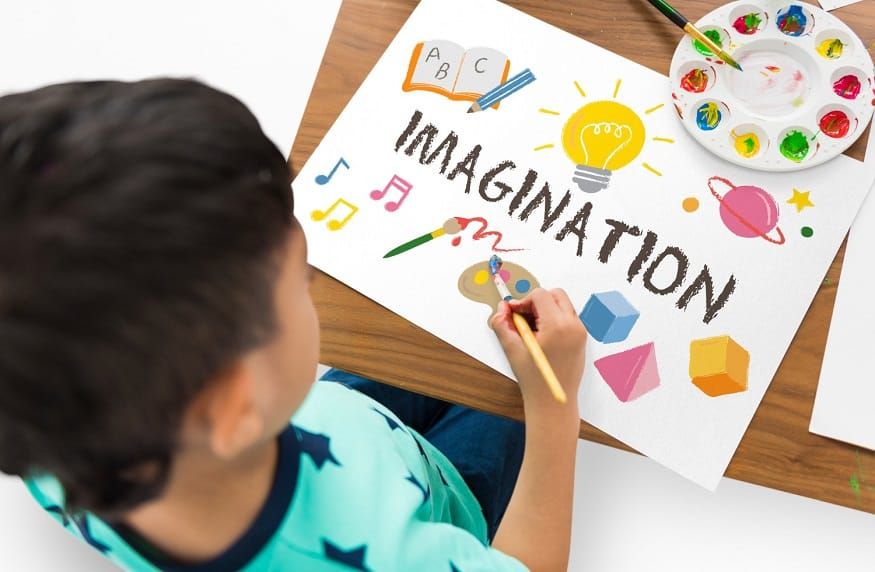
Every parent and teacher recognizes that moment when a child stares blankly at a page, stuck and uninspired. Understanding how to foster creativity isn't just about keeping kids busy—it's about unlocking their imagination and helping them express ideas in ways that feel natural and exciting. Practical approaches to nurturing creative thinking can transform these moments of frustration into opportunities for genuine engagement and artistic exploration.
Children need the freedom to explore artistic expression while developing problem-solving skills and original thinking. Themed activities for quiet time or encouraging self-expression through art become much easier with ready-to-use materials that support creative growth. Parents and educators can access thousands of printable resources designed to spark imagination and provide immediate creative outlets through My Coloring Pages.
Summary
- Preschool creativity develops most effectively between ages two and six, before functional fixedness limits flexible thinking. Research examining 4.4-year-olds found that creativity already operates across verbal, motor, and figural domains at this stage, but children begin to lose novel problem-solving approaches by ages 6 or 7. This neurologically sensitive window means that delayed creative prioritization doesn't just postpone development; it also misses the period when neural pathways form most readily.
- Creative play directly strengthens executive function systems that children use for attention regulation, impulse control, and cognitive flexibility. When preschoolers build imaginary structures, negotiate pretend-play roles, and adapt when scenarios change, they exercise the same brain circuits required for academic learning and emotional regulation. Activities like block construction and dramatic storytelling aren't separate from cognitive development; they actively build the mental systems that enable focused learning.
- Creativity decline happens faster than most parents expect, dropping from 98% of five-year-olds testing as highly creative to just 30% by age ten. This collapse accelerates during childhood rather than gradually fading over decades, primarily because environments that prioritize memorization and mistake avoidance teach children to suppress imaginative thinking. The shift from experimentation to compliance-seeking typically occurs years earlier than parents notice.
- Open-ended materials generate stronger creative development than single-purpose toys because children must invent possibilities themselves rather than follow predetermined play patterns. Blocks, cardboard boxes, loose parts, and clay require children to ask "what else could this be?" instead of "what am I supposed to do with this?" This mental habit of generating multiple uses for objects transfers directly to flexible problem-solving across all learning domains.
- Construction play improves problem-solving skills by up to 60% according to research on creative activities, because building requires children to visualize structures, test stability, and revise designs when attempts fail. The iterative process teaches that failure provides information rather than judgment, developing resilience alongside spatial reasoning as children adjust approaches and try again.
- My Coloring Pages addresses the material access barrier by offering 74,037+ free printable designs that children can customize and explore immediately, removing the friction of searching for age-appropriate creative resources while supporting open-ended artistic thinking through unlimited experimentation options.
Importance of Fostering Creativity in Preschoolers
Creativity in preschool builds executive function systems that children use for everything else: focusing during lessons, managing frustration, solving unfamiliar problems, and adapting when plans change. Imaginative play, storytelling, and open-ended exploration are among the most neurologically productive work a four-year-old can do.
🎯 Key Point: Creative activities directly strengthen the same brain networks that children will rely on for academic success, emotional regulation, and problem-solving throughout their lives.
"Imaginative play and open-ended exploration represent some of the most neurologically productive work a young child can engage in for developing executive function skills." — Early Childhood Development Research
💡 Tip: When preschoolers engage in creative activities, they're not just having fun—they're building the foundational cognitive skills that will support learning, focus, and adaptability in every future academic and social situation.
The Brain's Most Receptive Window
The preschool years are critical for developing creativity in the brain. Research published in Children examining preschoolers with an average age of 4.4 years found that creativity is already multidimensional at this stage, manifesting through verbal, motor, and figural thinking. Creativity begins developing around age two, and by ages six or seven, children exhibit "functional fixedness," becoming less able to use objects and ideas in new ways. Waiting until elementary school to focus on creative thinking means missing the window when brain pathways are most flexible.
Why Executive Function Matters More Than You Think
Executive functions (working memory, impulse control, attention regulation, cognitive flexibility) are the systems children use to focus, manage emotions, solve problems, and adapt to new situations. They distinguish a child who can sit through a story, follow multi-step instructions, and recover from disappointment from one who becomes upset when routines change. Creativity-heavy activities like pretend play, block building, and dramatic role-play engage these executive-function systems directly. When a child builds an imaginary spaceship from cushions, negotiates roles with playmates, and adjusts direction when the "mission" changes, they exercise the same brain circuits needed for academic learning. Creativity strengthens the brain systems that enable learning.
The Hidden Cost of "Academic Preparation"
Many parents worry that time spent on creative activities will make them fall behind in school. Yet overly strict preschool environments can reduce adaptive thinking. Children taught only memorization and single-answer tasks often become afraid to explore, scared of making mistakes, and unwilling to try new things.
They become dependent on being told what to do and feel anxious when faced with open-ended challenges. Today's education and jobs increasingly reward innovation, flexible thinking, teamwork, and adaptive problem-solving. These skills develop during preschool, when children learn whether exploration feels safe or risky.
How can parents easily access creative materials for daily activities?
Parents seeking to foster creativity in their children often struggle to find age-appropriate materials that spark imagination without requiring extensive preparation.
My Coloring Pages offers over 74,037 free printable designs that kids can customize immediately. The collection gives families instant access to materials that encourage self-expression and open-ended artistic thinking, making it simple to incorporate creative activities into daily routines.
Creativity Operates Across Domains, Not Just Art
The misconception that creativity matters only for future artists overlooks how broadly creativity functions in early childhood. Modern research defines creativity as the generation of ideas, the adaptation to new information, the solving of unfamiliar problems, and the thinking flexibly across situations.
Preschool creativity operates across verbal, motor, and figural domains through storytelling, movement games, construction play, and role-play, not drawing or painting alone. This supports scientific reasoning, entrepreneurial thinking, leadership, emotional intelligence, and adaptive learning. When a child invents a game, negotiates playground rules, or figures out how to stack blocks without toppling, they practice creative problem-solving that transfers to every area of development.
What happens when we delay the development of creativity?
But what happens when we ignore these early years and assume creativity can wait until later?
Related Reading
- What Is Creativity
- Best Toys For Developing Creativity
- How To Foster Creativity
- How To Encourage Creativity In Kids
- Creativity Quotes
- Best Books To Inspire Creativity In Kids
- Best Toys For Promoting Creativity
What Happens When You Neglect Creativity in Early Years
When creativity gets pushed aside during the preschool years, children actively unlearn it rather than pause development. The decline happens faster than parents expect, with consequences extending far beyond art class. Children who lose access to creative exploration often develop rigid thinking patterns, fear of mistakes, and dependence on external validation that persists into adolescence and adulthood.
🎯 Key Point: The loss of creativity isn't just a temporary setback—it's an active process where children systematically lose their natural creative abilities when these skills aren't nurtured and practiced regularly.
"Children who lose access to creative exploration often develop rigid thinking patterns, fear of mistakes, and dependence on external validation that persists into adolescence and adulthood." — Child Development Research
⚠️ Warning: The window for creative development is narrower than many realize. Once rigid thinking patterns take hold, they become increasingly difficult to reverse without intentional intervention and sustained creative practice.
The Creativity Collapse Starts Shockingly Early
According to Forbes, 98% of children test as highly creative at age 5, but only 2% maintain that level by age 25. The decline occurs during childhood: 30% by age 10 and 12% by age 15. Environments emphasizing memorization, conformity, and error avoidance teach children to suppress their natural creative thinking patterns.
Parents often misunderstand this change. The child who built elaborate block cities now asks for step-by-step instructions. The one who invented stories during car rides now needs constant entertainment. These are signs of learned suppression, not maturation.
Fear Replaces Experimentation
When creativity gets ignored, children stop taking intellectual risks. They shift from experimenting and asking unusual questions to focusing on avoiding mistakes and pleasing adults. Over time, perfectionism sets in, along with fear of failure, hesitation to participate, and anxiety around tasks without clear right answers.
Rigid school systems built around standardization leave little room for imagination or discovery. Children learn that safe answers get rewarded while unusual thinking creates uncertainty. This fear gets taught quietly and consistently, every time exploration is replaced with evaluation.
Problem-Solving Flexibility Weakens Without Creative Practice
Creative play teaches flexible thinking, decision-making, emotional regulation, and adaptive reasoning. When pretend play, storytelling, building, and experimenting become less common in a child's daily life, the child relies too much on step-by-step guidance. They struggle when problems lack a single correct answer or when they must improvise rather than follow instructions.
Why does neglecting creativity affect future adaptability?
Modern economies need people who can adapt and solve problems creatively, not memorize information. If we don't help children develop creativity during the preschool years, it affects their ability to adapt later. Children might excel on worksheets but struggle with unclear situations or unfamiliar challenges. They may succeed at schoolwork yet falter when thinking independently, perform well at repetition, but flounder when asked to innovate.
How can digital tools support ongoing creative practice?
Platforms like My Coloring Pages enable kids to be creative by generating custom coloring designs that match their interests. Rather than limiting kids to pre-made designs, our AI-powered generator offers unlimited opportunities to bring their own ideas to life and print them immediately, keeping creative exploration accessible and always available.
Children Stop Trusting Their Own Ideas
When adults constantly correct, take over, or prioritize perfection, children internalize a painful message: their ideas aren't good enough. A Forbes article describes a student who became excited about building a website for a class project, only to have an adult complete it for her. Her excitement visibly disappeared. That moment captures what happens repeatedly when children's creative efforts get redirected, corrected, or finished by someone else.
How does this impact children's creative confidence over time?
Over time, this wears away self-expression, confidence, independence, and intrinsic motivation. The child who once eagerly started projects now waits to be told what to do. The one who shared wild ideas now stays quiet unless they are certain their answer is correct. That hesitation didn't develop because the child lacks ability; it developed because they learned their original thinking matters less than getting it right.
But there's something more concerning than losing creative confidence: what happens when children stop creating altogether and shift entirely to passive consumption?
25 Tips on How To Foster Creativity in Preschoolers
Helping preschoolers be creative requires careful choices about materials, time, and how adults react to their ideas. The strategies below create spaces where trying new things feels safe, boredom sparks new ideas, and children learn that original thoughts matter more than perfect execution.
🎯 Key Point: The foundation of creativity in preschoolers starts with creating an environment that values exploration over perfection. When children feel safe to experiment, they're more likely to develop innovative thinking and problem-solving skills.
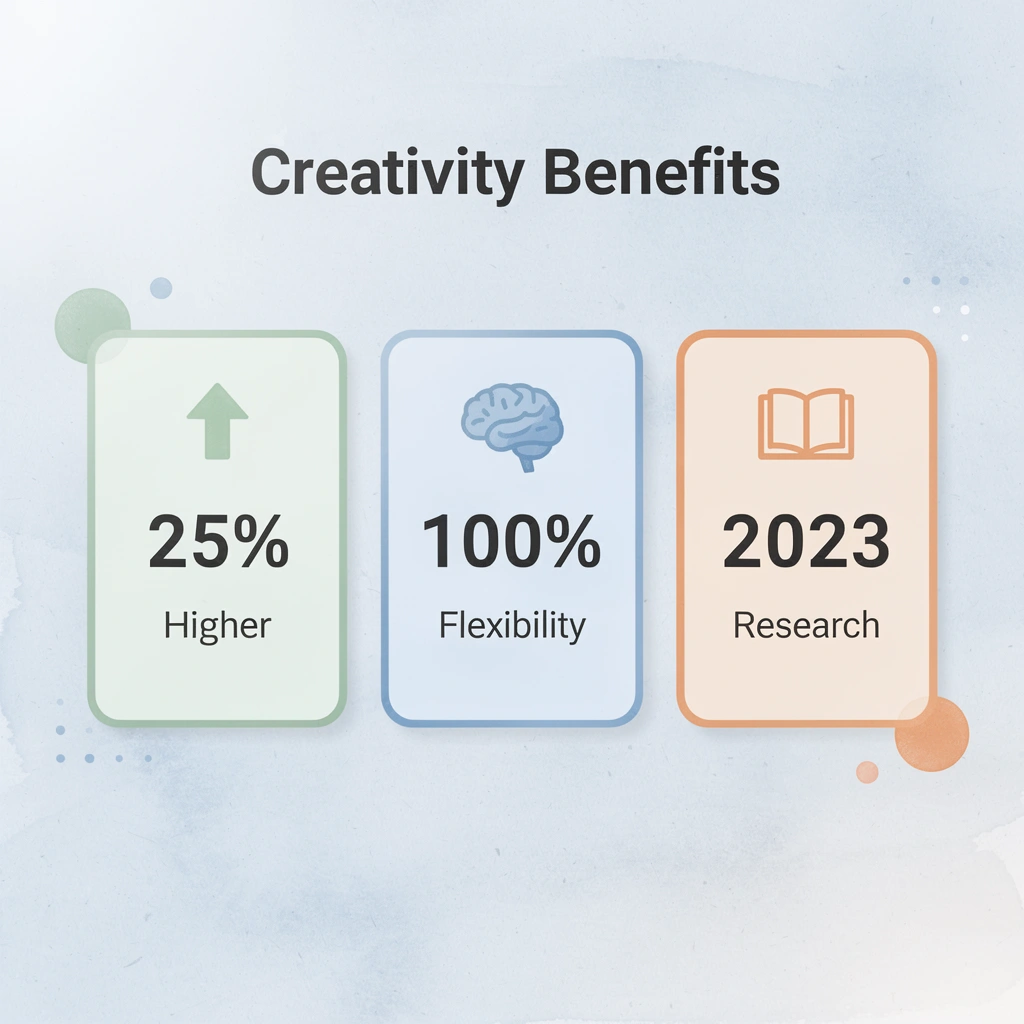
"Children who engage in creative activities show 25% higher levels of cognitive flexibility and emotional resilience compared to those in more structured environments." — Early Childhood Development Research, 2023
💡 Tip: Remember that fostering creativity is not about providing endless entertainment, but rather about giving children the freedom, time, and encouragement they need to discover their own unique ways of thinking and creating.
1. Give Children Open-Ended Toys Instead of Single-Purpose Toys
Toys with only one correct outcome teach kids to follow rules rather than be creative. A toy kitchen that only makes preset sounds or a puzzle with only one solution limits what kids can invent. According to JollyHeap's guide on fostering creativity, open-ended materials encourage experimentation because children must invent possibilities themselves.
What makes open-ended toys so powerful for creative development?
Blocks, magnetic tiles, cardboard boxes, scarves, loose parts, and clay become whatever a child's imagination needs them to be. A cardboard box can transform into a spaceship, grocery store, castle, or robot all in one afternoon.
This is an advanced thinking practice that helps children develop divergent thinking, flexibility, and problem-solving skills independently.
How does this shift in thinking benefit children long-term?
When children create their own rules and uses for materials, they develop the mental habit of asking "what else could this be?" instead of "what am I supposed to do with this?" This shift becomes the foundation for creative problem-solving later in life.
2. Let Children Get Bored Sometimes
Many parents destroy creativity by eliminating boredom. Handing a child a screen or structured activity when they complain of having nothing to do stops the mental process that leads to imagination. Boredom creates the space for children to invent their own entertainment.
How does constant entertainment affect creative development?
When children are constantly given screens, instructions, or adult-planned entertainment, their brains stop practicing self-directed play. They become consumers of others' ideas rather than creators of their own. Children who sometimes hear "go invent something to do" develop stronger independent creativity because they build the mental strength to generate ideas from nothing.
Why is boredom essential for imagination?
Boredom can feel uncomfortable, but it's where imagination starts. Creativity comes from quiet times when children must think of what to do next, not from constant entertainment.
3. Encourage Pretend Play Daily
Pretend play is one of the strongest activities for building creativity during preschool years. When children turn a stick into a magic wand or transform the living room into a jungle, they practice symbolic thinking—the ability to make one thing represent another.
According to Mulberry Learning's research on imaginative play, imaginative role-play helps children experiment with ideas, express emotions, and build communication skills. Restaurant play, doctor scenarios, superhero missions, and puppet storytelling strengthen cognitive flexibility and develop language skills through narrative structure, dialogue, and abstract concepts.
What materials do children need for creative pretend play?
Pretend play doesn't need to cost much. A few props, uninterrupted time, and permission to make noise give children everything they need to build entire worlds.
4. Stop Correcting Every Creative Mistake
One of the biggest creativity killers is overcorrection. Children quickly become afraid to experiment if adults constantly say "that's not how you draw it," "use the right color," or "that's wrong." When a child colors a purple sun, correcting it sends a clear message: your imagination is less important than accuracy.
How can you respond to creative choices instead?
If you ask, "tell me about your picture," instead of correcting it, you keep imagination alive. The child might explain that it's a sunset on a different planet, that purple is their favorite color, or that they wanted to see what purple looked like in that space. All of those are valid creative choices.
What happens when children lose creative freedom
When adults correct children excessively, kids stop trusting their own ideas and begin waiting for approval before acting. Creativity requires freedom to try things that might not work, but constant judgment of right and wrong eliminates that freedom.
5. Focus on the Process, Not Just the Final Result
Many children stop enjoying creativity because adults praise only perfect drawings, neat crafts, or successful outcomes. When praise focuses solely on results, children learn that creativity means impressing others rather than exploring ideas. They begin hiding work they perceive as imperfect or refusing activities where they might not excel immediately.
How does praising effort and imagination change creative motivation?
Praise effort, imagination, experimentation, and persistence instead. "You worked hard on that idea" or "I like how many different things you tried," helps children connect creativity with exploration rather than approval. This shifts their internal motivation from seeking external validation to enjoying the process of discovery.
When children believe the goal is producing something impressive, they avoid creative risks. When they believe the goal is to try new approaches, they experiment freely.
6. Allow Messy Play
Creativity often requires mess. Finger painting, sand, water play, slime, mud kitchens, and shaving cream art provide sensory experiences that teach children how materials behave and respond to manipulation. These activities support sensory integration, experimentation, and confidence in exploration.
Why does preventing mess limit creative development?
Parents who constantly clean up messes unintentionally stifle creativity. The child who isn't allowed to mix paint colors or squish clay between their fingers misses chances to discover what happens when materials combine or change form. Those discoveries build understanding of cause and effect, texture, transformation, and possibility.
What are simple ways to encourage messy play?
Messy play doesn't require expensive materials. A bin of water with cups and sponges, a pile of leaves to sort and arrange, or sidewalk chalk after rain, all provide rich creative experiences. The mess is temporary; the learning stays.
7. Ask Open-Ended Questions
Instead of asking "what colour is this?" or "what animal is that?", ask "what do you think would happen if we mixed these colours?" or "can you make up a story about this character?" Open-ended questions prompt children to generate ideas rather than recall answers, helping them practice the flexible thinking that creativity requires.
How do reflective questions develop creative thinking?
"Why did you choose that?" asks children to explain their thinking and understand their choices. "How else could we build this?" teaches that many different answers can solve the same problem. Children who answer open-ended questions develop stronger speaking skills and creativity, learning to share their ideas and understand how they generate creative solutions.
8. Give Children Time to Finish Their Ideas
Creativity diminishes when adults rush children. Preschoolers need uninterrupted time to build, imagine, try new things, and revise their ideas. A child building a block structure might spend thirty minutes trying different approaches, knocking parts down, and rebuilding. This iterative process is where learning happens.
Why does rushing harm creative development?
When you interrupt children for schedules, corrections, or transitions, you break their imaginative flow. They learn that their ideas aren't worth protecting, or they stop starting projects they won't finish. Sustained creative focus develops through practice, which requires protected time.
What should parents do to protect creative time?
Sometimes the most valuable thing a parent can do is not interrupt. Let the child finish their thought, complete their drawing, or reach a natural stopping point in play before moving to the next activity.
9. Read Stories Interactively
Ask children to predict endings, invent characters, or change story outcomes. "What if the dragon was friendly?" transforms reading from passive information consumption into collaborative storytelling. Children practice thinking critically about narratives, exercising imagination, and developing flexible reasoning as they reshape story elements.
This approach teaches children that stories are made, not set in stone: characters make choices, plots can go in different directions, and they can imagine other possibilities. These skills carry over to their own storytelling and creative writing.
Interactive reading builds creative talking skills as children generate ideas aloud, explain their thinking, and add to stories to create something new.
10. Encourage Building and Construction Play
Building activities help children develop spatial reasoning, experimentation, and creative problem-solving. LEGO, magnetic tiles, cardboard engineering, and pillow forts require children to visualize three-dimensional structures, test stability, and revise designs when initial attempts fail. According to research on creative play and problem-solving, creative play can improve problem-solving skills by up to 60%.
How does building play teach independent problem-solving?
Building activities teach children to develop solutions independently rather than follow set instructions. A child building a bridge from blocks learns about balance, weight distribution, and structural strength through experimentation—lessons that endure because they discover them through trial and error, not adult explanation.
Why is the revision process valuable for creativity?
The revision process in building play is particularly valuable. When a tower falls, children adjust their approach and try again, learning that failure is information rather than judgment while developing resilience alongside creativity.
11. Limit Over-Scheduled Routines
Children who have no free time struggle to initiate creative play independently. When constantly moving between classes, tutoring, and structured activities, they have fewer opportunities to use their imagination freely. This prevents them from learning how to direct themselves during unstructured time.
Why does creativity need mental space to flourish?
Creativity requires mental space to explore and develop ideas. A child with organized activities every afternoon may learn specific skills, but misses the chance to create their own projects and pursue curiosity, which is essential to creative thinking.
How can unstructured time teach creative problem-solving?
Unstructured time feels uncomfortable to parents who equate productivity with constant activity. Yet the quiet afternoon where a child invents a game using household objects often teaches more about creative problem-solving than any structured class.
12. Introduce Music and Movement
Creative movement strengthens self-expression, coordination, and emotional exploration. Dance improvisation, rhythm-making, freeze dance, and songwriting give children wordless ways to express ideas and emotions. Movement-based creativity engages different brain regions than verbal or visual creativity, building well-rounded creative capacity.
Children who struggle with traditional art activities often thrive with movement-based creativity. Multiple creative outlets ensure every child finds ways to express their imagination.
13. Let Children Solve Small Problems Themselves
When adults fix every problem immediately, children miss chances to think creatively. A child whose shoe won't tie, whose toy is stuck, or whose block tower keeps falling needs time to try different solutions before receiving help. Asking "what else could you try?" or "can you think of another way?" helps children build resilience, learn to experiment, and develop flexible thinking.
How do you balance support with independence?
This doesn't mean leaving children frustrated to tears; it means pausing before jumping in and coaching them through the thinking process rather than providing immediate answers. Children who regularly solve small problems develop confidence in their ability to figure things out.
Why does problem-solving practice build creativity?
The habit of trying multiple approaches before giving up is a core creative skill, developed through practice with low-stakes problems where failure is safe, and experimentation is encouraged.
14. Create a Creativity-Friendly Environment
Kids create more when materials are easy to see and reach. Paper within reach, dress-up bins at child height, art shelves with clearly organized supplies, and loose craft materials signal that creativity is welcome anytime. Accessible materials remove barriers between a child's idea and their ability to act on it, turning spontaneous ideas into immediate action.
The environment doesn't need to be expensive or elaborate. A low shelf with paper, crayons, scissors, tape, and recycled materials provides everything kids need to start building their ideas.
15. Avoid Rewarding Only Correct Answers
Kids become less creative when they think there is only one right answer. Classrooms and homes that prioritize speed and accuracy over exploration teach children to find the answer adults want rather than generate multiple possibilities.
How can you encourage multiple possibilities instead?
Encourage multiple possibilities instead. "Can you think of three ways to build this?" or "What are different ways this story could end?" teaches children that diverse thinking is valuable. They practice generating options, weighing the merits and drawbacks of each, and recognizing that many solutions might work.
This approach builds cognitive flexibility: children learn to hold multiple ideas in mind simultaneously and compare their merit rather than accepting the first adequate answer.
16. Encourage Nature Exploration
Nature is unpredictable and full of sights, sounds, and textures, sparking children's curiosity. Collecting leaves, watching bugs, sorting rocks, and creating stories about clouds encourage kids to discover patterns, make comparisons, and develop their own explanations.
Nature provides children with abundant materials for creative play. A stick becomes a wand, sword, fishing pole, or drawing tool. Pinecones transform into characters in invented games. Puddles serve as laboratories for testing what floats and sinks. The textures, sounds, smells, and visual complexity of outdoor environments engage children differently than indoor play, offering raw material for imaginative thinking.
17. Model Creativity Yourself
Kids copy what adults do. If parents draw, invent, build, and try new things, they teach that creativity matters. The parent who tries a new recipe, sketches in a notebook, or builds something in the garage demonstrates that creativity continues into adulthood.
What does effective creative modeling look like?
Modeling creativity requires only the willingness to try things, make mistakes, and enjoy the process. When children see adults experimenting without worrying about perfect outcomes, they learn that creativity is about exploration, not performance.
How can you verbalize your creative process?
Talk about your creative process out loud. Saying "I'm going to try mixing these colors and see what happens" or "this didn't work the way I planned, so I'm going to try a different approach" teaches children what creative thinking sounds and feels like.
18. Allow Children to Take Creative Risks
Kids need permission to try unusual ideas, experiment, and fail safely. If every mistake gets criticized, they stop taking imaginative risks and retreat to safe, predictable choices.
What do creative risks look like in practice?
Creative risks might include building something impossible, mixing materials in unexpected ways, or trying new techniques. These experiments often fail, but failures teach more than successes: children learn what doesn't work, adjust their approach, and develop resilience.
How can parents create psychological safety for experimentation?
Parents who celebrate interesting failures as much as successes create psychological safety for creative risk-taking. Responses like "That didn't work, but it was a cool idea" or "I like that you tried something new" reinforce that experimentation has value.
19. Encourage Storytelling
Ask children to invent characters, create adventures, narrate drawings, or tell bedtime stories. Storytelling strengthens imagination, sequencing, emotional expression, and verbal creativity as children organize ideas into narratives, develop characters with motivations, and build plots with clear structure.
Why is oral storytelling important for young children?
Storytelling doesn't require writing skills. Preschoolers tell detailed stories through speech long before they can write them. Recording these stories or having children draw pictures of them preserves their creative work and demonstrates that their ideas matter.
Children who tell stories develop stronger language skills and a better understanding of narrative structure, which helps them comprehend books and write their own stories.
20. Rotate Toys Instead of Overloading Children
Too many toys overwhelm children and reduce imaginative play. When kids have constant access to everything, they play superficially with many things instead of engaging deeply with a few. Rotating materials keeps things feeling fresh, deepens engagement, and encourages creative use of objects.
How does toy rotation create fresh engagement?
A child who hasn't seen their blocks in two weeks approaches them with fresh interest, inventing new uses and building different structures. Rotation creates the psychological experience of newness without requiring constant purchases.
Why do constraints boost creative thinking?
This approach teaches children to work within limits. Limited options increase creativity because children must invent new possibilities from available materials rather than constantly seeking new stimulation.
21. Celebrate Curiosity More Than Performance
When children ask unusual questions—"Why is the sky blue?" or "What if dogs could talk?"—treat them as opportunities to model creative thinking. Curiosity drives creativity, and children whose questions are valued ask more of them.
How do strange questions build cognitive skills?
Even strange questions help children practice making guesses, exploring ideas, and thinking abstractly. A child wondering what would happen if everything were made of jelly is experimenting with counterfactual reasoning, a sophisticated thinking skill. Engaging with these questions rather than dismissing them as silly validates the thinking process behind them.
What response encourages continued wondering?
Parents who respond with genuine interest rather than quick answers teach children that wondering is valuable. "That's an interesting question. What do you think?" invites children to develop their own theories and reasoning.
22. Reduce Fear of Failure
Kids become more creative when they feel emotionally safe. Harsh criticism, pressure to be perfect, and embarrassment about mistakes reduce creative risk-taking. When kids believe mistakes are shameful, they stop trying things that might not work perfectly the first time.
How can you reframe failure as learning?
Think of failure as information. "That didn't work the way you expected. What did you learn?" or "lots of ideas don't work on the first try" demonstrates that repeated attempts are a normal part of creativity. Children learn that failure is a natural part of experimenting, not a judgment of their worth.
What do creative adults have in common?
The most creative adults learned early that failure is temporary and informative through childhood experiences where mistakes were treated as learning opportunities rather than sources of shame.
23. Encourage Collaborative Creativity
Group creativity teaches preschoolers to share ideas, negotiate, and think flexibly. Group murals, pretend-play teams, and collaborative building projects require children to contribute ideas, listen to others, and combine different perspectives into shared creations. These experiences strengthen both creativity and social development.
Collaborative projects demonstrate that creativity improves when multiple perspectives converge: one child's idea sparks another's, leading to outcomes neither would have created on their own. This understanding proves valuable throughout life, as most creative work happens in teams.
The negotiation required in collaborative creativity builds communication skills as children practice explaining ideas, understanding others' perspectives, and finding compromises that honor multiple visions.
24. Introduce Simple "What If?" Thinking Games
"What if?" questions help you think in different ways. "What if animals could talk?" "What if houses could fly?" "What if the floor turned into lava?" These exercises strengthen your imagination, encourage flexible thinking, and spark new ideas without requiring materials or preparation.
These games can happen anywhere: in the car, during meals, or before bed. Asking "what if?" becomes a tool for examining problems from multiple angles and strengthens problem-solving, planning, and creative thinking across all areas of life.
25. Protect Creativity From Constant Evaluation
One of the most important things parents can do is stop turning every activity into competition, grading, or performance measurement. Children create best when they feel safe, curious, and free to experiment. When every drawing gets judged, every story gets corrected, and every project gets compared to others, creativity becomes a source of performance anxiety.
The best support for creativity is giving children permission to explore without worrying about whether they are good at it. The child who builds elaborate structures from recycled materials needs time, materials, and freedom to follow their ideas, not evaluation or display.
How do abundant materials support creative freedom?
Many parents find that children prefer blank paper because it removes expectations. Websites like My Coloring Pages eliminate cost barriers by offering unlimited custom designs that children can modify and experiment with freely. This replaces the pressure of "not wasting" expensive books with permission to try, revise, and start over as often as creativity requires. When materials feel abundant rather than precious, children experiment more boldly.
But what happens when you give children this freedom, time, and permission to create?
Related Reading
- Do Schools Kill Creativity
- How To Improve Your Creativity
- Examples Of Creativity
- Ai And Creativity
- Ai Creativity
- Creativity Training
11 Activities for Fostering Creativity in Preschoolers
Helping children be creative means giving them chances to explore, make choices, and express themselves. The best activities are open-ended (no single "correct" answer), engage more than one sense, and let children make real choices. When these elements align, children stop following directions and start developing their own solutions.
🎯 Key Point: Open-ended activities with no single correct answer are the foundation of creative development in preschoolers.

"Creative activities that engage multiple senses and offer real choices transform children from passive followers into active problem-solvers." — Early Childhood Development Research
💡 Tip: Look for activities that combine sensory exploration, decision-making opportunities, and self-expression to maximize creative growth in young learners.
1. Customized Worksheets as Creative Prompts
Activity sheets spark creativity when they serve as starting points rather than completion tasks. Children can use printed designs as inspiration for stories, add original backgrounds, or incorporate pages into larger craft projects. A coloring page of an animal becomes a puppet when glued to a popsicle stick or part of a collage when cut up and rearranged. Platforms like My Coloring Pages support this by offering unlimited custom designs that children can modify freely, replacing scarcity with abundance that encourages experimentation.
What mindset shift transforms passive activities into creative exploration?
Shifting from "colour this correctly" to "what could you create with this?" transforms passive activity into active creation. When children see printed materials as raw ingredients rather than finished products, they practice asking "what else could this become?"—a question that drives innovation.
2. Expression Through Art
Art activities transform abstract feelings into visible forms. When a four-year-old mixes red and yellow paint to discover it makes orange, she experiences cause and effect, makes predictions, tests ideas, and adjusts her approach based on results. Offer a variety of materials—watercolors, finger paints, chalk, charcoal, and clay—rather than crayons and paper alone. The more diverse sensory materials you provide, the more brain pathways are activated during creation.
Why should you remove the model to copy?
Take away the example to copy. When children see a teacher's example flower and try to copy it, they practice following rules, not being creative. Instead, put materials on the table with a simple invitation: "What happens when you mix these?" or "Show me something that makes you happy." Children who create without templates make bolder choices and develop stronger personal standards for when their work feels finished.
3. Building Blocks for Imaginative Construction
Blocks teach spatial reasoning through physical trial and error. A falling tower teaches balance and weight distribution more effectively than explanation. Children building cities learn to plan, revise, negotiate shared space, and problem-solve when structures fail. Repetition strengthens mental flexibility: building the same bridge five times, each iteration different, develops the ability to approach problems from multiple angles.
Collaboration emerges naturally during block play. Adjacent builders notice each other, compare approaches, borrow ideas, and sometimes merge projects. This organic teamwork teaches communication and compromise without adult direction. Solo builders and group participants develop different creative capacities.
4. Crafting with Purpose and Freedom
Crafting transforms ordinary materials into something new, teaching children that value comes from imagination, not price tags. A toilet paper roll becomes a telescope or tunnel for toy cars; cardboard boxes turn into robots or spaceships. According to Mental Health Center Kids, collage-making, nature crafts, and recycled material projects develop fine motor skills while encouraging resourcefulness and environmental awareness.
How do you balance structure with creative freedom?
Craft projects work best when they balance structure and freedom. Younger preschoolers benefit from pre-cut shapes but can choose the arrangement and colors. Older children can use scissors and independently plan multi-step projects. Provide enough support for success while allowing children to develop their own ideas.
5. Free Play for Self-Directed Discovery
Unstructured play time remains the most undervalued tool for creativity. When children direct their own activity, they practice executive function skills that structured activities cannot teach: initiating action without prompts, sustaining attention on self-chosen tasks, and adapting when plans change.
A child building a blanket fort works with physics (will this hold?), architecture (how do I create an entrance?), and imagination (what happens inside this space?) simultaneously.
How should adults support children during free play?
The adult's role during free play is to stay strategically inactive. Resist the urge to suggest, correct, or improve. When a child struggles, wait.
The frustration of a collapsing fort teaches persistence. The boredom between activities teaches self-initiation. These small skills accumulate into the habit of creating rather than consuming.
6. Outdoor Exploration and Natural Materials
Nature offers endless creative play without purchase or preparation. Sticks become wands, swords, fishing poles, or building materials. Leaves transform into pretend food, art supplies, or study objects. Mud provides tactile experiences that indoor play typically cannot.
The unpredictability of outdoor environments forces children to adapt, improvise, and work with what's available rather than what's ideal.
Why does outdoor play remove creative constraints?
Playing outside removes the "don't make a mess" rule that stops creativity indoors. Children who dig, splash, climb, and spread materials around without correction learn that exploration often looks messy before becoming purposeful.
This permission to make a mess builds tolerance for the messy middle stage of creative work.
7. Movement as Creative Expression
Physical activities like gymnastics, dance, and yoga teach children that creativity extends beyond art tables. When a child invents a new way to move across a balance beam or creates an original yoga pose sequence, she's using the same imaginative ability she applies with paintbrushes. Movement activities develop body awareness and spatial intelligence that strengthen other creative areas: the child who understands how her body moves through space approaches block building and drawing with stronger spatial reasoning.
What makes structured movement classes most effective?
Structured movement classes work best when they include time for improvisation. A gymnastics session that ends with "show me your own move" or a yoga class that invites children to "be an animal we haven't tried" extends the creative benefit beyond learning skills.
8. Music and Multilingual Learning
Music helps your brain recognize patterns, express feelings, and remember things simultaneously. Children who learn songs in another language through programs combining music with movement and storytelling develop creative thinking skills that transfer to other tasks. The rhythm and repetition of songs make language learning enjoyable rather than feeling like schoolwork, while music time allows children to be loud, silly, or dramatic.
Why does improvisation matter more than performance quality?
Making up music as you go matters more than playing it perfectly. Giving children rhythm instruments and asking them to "add your own sound" to songs they know teaches that music is something everyone can join in on, not something adults do alone. The four-year-old shaking a tambourine at the wrong time learns that what she does matters, which builds creativity in other areas of her life.
9. Hands-On Science Experiments
Science activities satisfy the preschool drive to ask "what happens if?" Mixing baking soda and vinegar, planting seeds and watching them grow, or freezing water and observing it melt all provide immediate feedback that teaches cause and effect.
The best science activities for creativity are those where the outcome isn't predetermined. Instead of following a slime recipe, provide ingredients and let children experiment with ratios. Some batches will fail—that's the point.
Why do failed experiments teach more than successful ones?
Failed experiments teach more than successful ones because they require you to change your hypothesis. The child whose volcano doesn't erupt asks why, adjusts her approach, and tries again.
This repeating process mirrors how creative work happens: try, assess, adjust, repeat.
10. Storytelling and Dramatic Play
Storytelling develops narrative thinking: the ability to organize events into clear sequences with cause-and-effect. When children act out stories, they practice perspective-taking by becoming different characters and collaborating with peers to create shared narratives. A group of preschoolers deciding "you be the doctor and I'll be sick" work together to create a plot, assign roles, and improvise dialogue.
Why do simple props enhance symbolic thinking?
The props matter less than the permission to pretend. A stick becomes a magic wand, a scarf becomes a cape, a cardboard box becomes a spaceship. Children who regularly engage in dramatic play develop stronger symbolic thinking, the cognitive skill underlying reading, maths, and abstract reasoning.
When a child holds a block and sees a phone, she practices the same mental flexibility required to recognise the letter "A" and hear its sound.
11. Sensory Play and Mindful Movement
Sensory activities use touch, sight, sound, and sometimes smell or taste to create rich exploratory experiences. Water tables, sandboxes, play-dough, and sensory bins filled with rice or beans invite open-ended manipulation that calms while engaging.
Children pouring, scooping, burying, and molding develop fine motor skills and spatial awareness while entering the focused, present state that creativity requires.
How does mindful movement support creative thinking?
Pairing sensory play with gentle yoga or mindfulness activities teaches children to notice their internal states. A child who learns to recognize when she feels calm, excited, or frustrated develops the self-awareness to choose activities that match or shift her mood.
This emotional intelligence supports creativity by helping children identify when they're in the right state for focused work versus exploratory play.
14 Affordable Resources for Fostering Creativity in Preschoolers
Creativity doesn't require expensive toys or special equipment. The best creative resources cost little or nothing because they encourage children to invent rather than follow instructions. What matters is whether the material can be used in multiple ways, encourages experimentation, and lets children control outcomes.

💡 Tip: The most effective creative materials are open-ended items that can be transformed into anything a child imagines.
"The best creative resources cost little or nothing because they make children invent instead of follow instructions." — Early Childhood Development Research
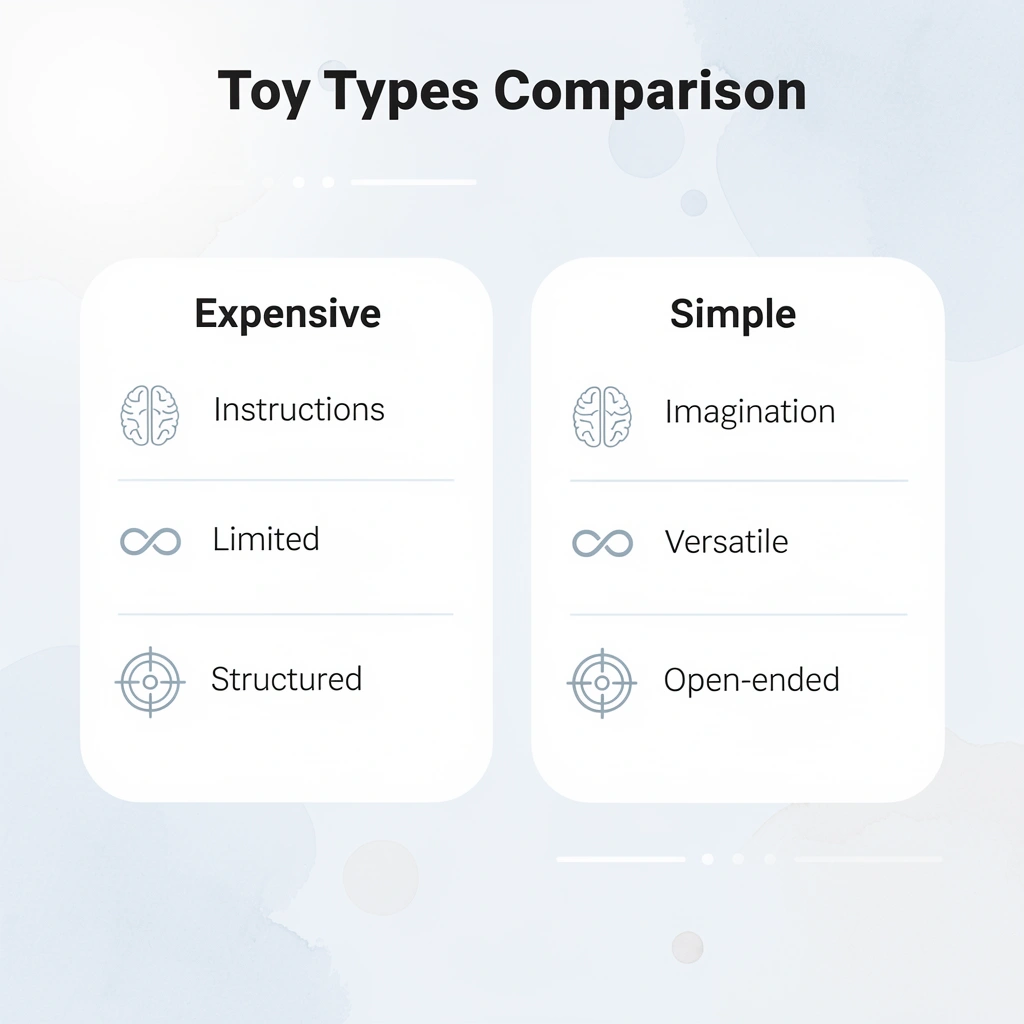
The resources below turn everyday items into creativity engines, removing barriers between imagination and expression.
🎯 Key Point: Simple, versatile materials often spark more creativity than structured, expensive toys because they require children to use their imagination to define the possibilities.

1. Printable Coloring & Activity Sheets
Coloring sheets build creativity when used as storytelling prompts rather than accuracy exercises. A house outline becomes "Who lives here? What happens at night?" An animal shape asks, "What colours exist in your imagination, not just nature?"
Platforms like My Coloring Pages offer thousands of free printable designs that serve as starting points rather than finished templates. The collection lets you generate custom pages that match a child's current interests (dinosaurs, castles, underwater scenes) without buying multiple coloring books that get abandoned after 3 pages. These sheets serve as conversation starters and imaginative exercises, not busy work.
2. Construction Paper Packs
A $5 pack of mixed-color construction paper offers more creative possibilities than most $50 toy sets. Children use these blank sheets for collages, folding experiments, story scenes, and paper puppets. The creative power comes from the blankness itself: no instruction manual, no correct assembly, no model to copy.
When a child stares at colored paper and asks, "What should I make?", that moment of uncertainty is when creativity begins. They must generate ideas from nothing, which strengthens the mental muscle that structured toys bypass.
3. Washable Crayons & Markers
Basic drawing tools support creativity by fostering symbolic thinking. When a child draws how today feels, they transform internal experience into visual form, building the abstract thinking required for reading, maths, and metaphor.
Use these tools for free drawing, story illustration, where children decide what moments matter, and emotion drawing that validates feelings as worthy of visual representation. The goal is expression without judgment, not artistic skill.
4. Cardboard Boxes & Packaging Waste
Cardboard boxes transform into houses, cars, robots, shops, spaceships, or whatever a child imagines. This teaches that things lack fixed identities and purpose emerges through play.
A box that's a spaceship today becomes a puppet theater tomorrow. Children learn that change is possible and materials await imagination to give them meaning. This flexibility extends to problem-solving: if objects can have multiple identities, so can solutions.
5. Playdough (Homemade or Store-Bought)
Moldable material that holds shape temporarily but never permanently lets children experiment without commitment. They build, smash, and rebuild. A snake becomes a bowl becomes a pretend birthday cake. The impermanence removes performance pressure.
Playdough builds fine motor creativity through pinching, rolling, flattening, and combining. Children invent techniques adults never demonstrate, discovering through their hands what works and what collapses. Homemade versions cost pennies (flour, salt, water, and food coloring) and work just as well as store-bought options.
6. Storybooks from Local Libraries
Free library access provides unlimited stories to read. After finishing a story, ask "what happens next?" or "what if the character made a different choice?" Children learn that stories aren't fixed and can continue beyond the final page.
Some children redesign characters ("what if the bear was tiny?"), create alternate endings, or mix characters from different books into new adventures. This teaches that creativity means playing with existing ideas rather than inventing from scratch.
7. Stickers, Scrap Paper, and Collage Materials
Classroom basics like stickers and paper scraps become storytelling tools when children arrange them into scenes. A tree sticker, a house sticker, and the sun create a story; add a car, and the narrative shifts. Children learn composition (what goes where and why) and decision-making (which elements matter most).
Collage work teaches that creativity often means combining existing pieces in new ways rather than creating everything from nothing, a skill that mirrors most adult creative work.
8. Nature Objects (Leaves, Stones, Twigs)
Outdoor materials cost nothing and connect creativity with observation. A smooth stone becomes a dragon egg in pretend play, requiring the child to see potential beyond the immediate. Leaves arranged by size or color teach pattern-making. Twigs become building materials for miniature structures.
Natural objects change over time: leaves dry and curl, flowers wilt. This impermanence teaches that creative materials are not permanent, reducing perfectionism since arrangements were always temporary.
9. Simple Loose Parts (Buttons, Bottle Caps, Yarn)
Items with no set purpose force children to invent meaning. Buttons become pretend coins, game pieces, or decorative elements in collages. Bottle caps stack into towers, sort by color, or transform into wheels for cardboard cars.
The creative power of loose parts comes from their refusal to tell children what to do. With no instructions or single purpose, children must repeatedly ask "what could this be?" building the mental habit of seeing possibility in ordinary objects.
10. Paper Plates, Cups, and Recycled Materials
Household items ready for recycling can become masks, puppets, and imaginative characters. A paper plate with eye holes cut out changes how a child sees themselves. Two cups and a string become a telephone. An empty yogurt container becomes a drum.
This resource teaches transformational thinking: the ability to see one object as another. That cognitive flexibility directly supports creative problem-solving in every area.
11. Water & Sand Play
Low cost, high engagement. Water and sand invite experimentation because they respond immediately to how children manipulate them without breaking. Children pour, measure, build, and watch structures collapse, learning cause and effect through direct sensory experience. The formlessness of these materials eliminates the "right way" to play: there's no instruction manual for sand, no correct method for pouring water between containers. Children invent their own experiments, building scientific thinking through play.
12. Music & Household Objects
Pots become drums, spoons become rhythm sticks, and voices create made-up songs. Musical creativity requires only permission to make sound and see what happens.
This builds auditory creativity and emotional expression. A child banging out frustration on a pot learns that feelings transform into sound. Rhythm play teaches pattern recognition and variation, core elements of both music and maths.
13. Printable Prompt-Based Worksheets
Prompt-based sheets provide structure while allowing creative freedom, unlike school worksheets that have only one correct answer. "Draw your dream animal" provides a starting point without prescribing what to draw. "Finish this scene" shows half a picture and asks children to complete it however they want.
These prompts help children overcome blank-page paralysis. The partial structure reduces anxiety while letting the child make all-important choices.
14. Paint (Even Small Budget Sets)
Basic watercolors let children experiment without strict rules. They discover that blue and yellow make green, that excess water creates puddles, and that layering colors produces new shades. This hands-on process teaches through doing rather than instruction.
What painting activities build creative thinking?
Use paint for emotion painting (what does anger look like?), abstract art (no recognizable objects required), and color-mixing exploration. The goal isn't gallery-worthy art but learning that experimentation reveals unpredictable discoveries.
How does material introduction affect creative development?
Most parents think creativity requires constantly buying new things, but these 14 resources prove otherwise. The real creative fuel is possibility, not newness, and openness, not complexity. When materials don't prescribe their use, children must decide how to use them, and that decision-making builds creative ability more powerfully than any expensive toy designed by adults who've already done all the imagining.
How you introduce materials determines whether children see creative possibilities or another activity to complete.
Turn “Random Coloring Time” Into Real Creativity Practice (Without Extra Effort)
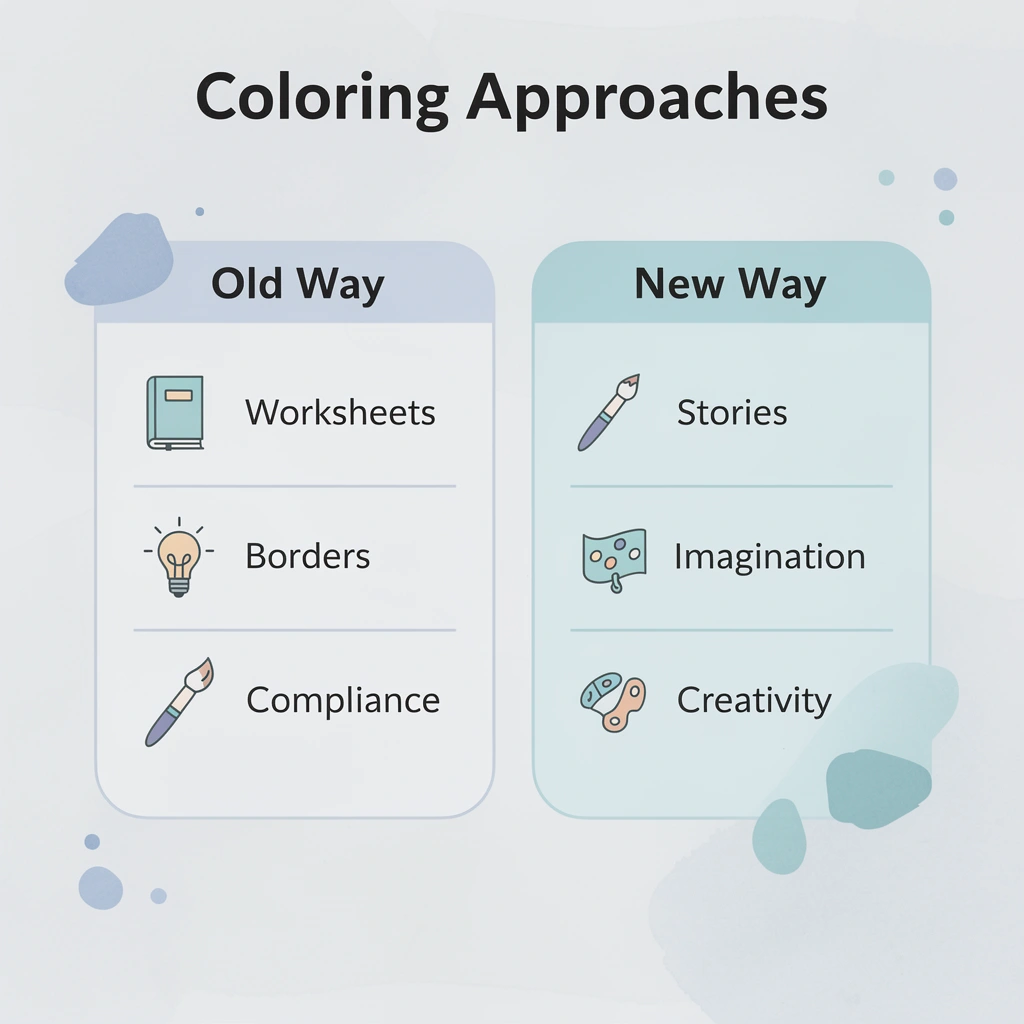
The difference between busy work and creative practice comes down to what you ask after the child finishes. Ask "Did you stay in the lines?" and you've turned it into a compliance test. Ask "What's happening in your picture?" and you've opened the door to storytelling, decision-making, and imaginative thinking. That shift costs nothing but transforms what the child practices during those ten minutes.
💡 Tip: The question you ask determines whether coloring becomes a creative practice or mindless busy work.

Most parents treat coloring pages like worksheets because that's how they experienced them growing up. This method stops delivering value as complexity grows: you end up with half-finished pages that teach nothing except how to follow borders. Our platform at My Coloring Pages lets you generate custom printables based on what your child cares about (dinosaurs, trucks, fairy houses, specific animals), turning generic busy work into personalized imagination prompts that invite narrative thinking instead of passive filling.
"Personalized content engages children 3x longer than generic materials, leading to deeper creative development and sustained interest." — Child Development Research, 2023
Start with one sheet today. Go to My Coloring Pages, type in whatever your child mentioned this week (the bug they saw outside, the character from their favorite book, the vehicle they pointed at), download, and print it. When they finish, don't evaluate the coloring—ask them to tell you the story of what's happening in the picture. Who lives there? What are they doing next? Why did you choose those colors? That conversation is where creativity gets built. You're training them to see every image as a starting point for invention, not a template to replicate. Do this once a day for two weeks, and you'll notice they start narrating without prompting, which means they've internalized the habit of asking "what could this become?" instead of "did I do it right?"
🎯 Key Point: Daily practice for two weeks transforms how children approach all creative activities, not just coloring.
Related Reading
- Is Creativity A Skill
- Creativity Toys For Toddlers
- Human Creativity
- Types Of Creativity
- Ai Vs Human Creativity