Engaging Homeschool Art Curriculum Options in 2026
Discover top homeschool art curriculum options for 2026 with My Coloring Pages. Expert reviews, age-appropriate programs, and creative learning solutions.

Many homeschooling parents struggle with creating a cohesive homeschool art curriculum from scattered Pinterest boards, half-used workbooks, and random online tutorials. Teaching art at home shouldn't require hours of hunting for quality materials or constant uncertainty about skill progression. Building a structured, creative art program that fits your schedule while maintaining educational value becomes much easier with the right resources and approach.
Access to quality, customized materials can transform your art lessons from chaotic to organized. Whether covering color theory, studying famous artists, or creating seasonal projects, having reliable printable resources eliminates last-minute scrambling and generic activities that don't match your students' interests. Download 729,800+ Free coloring pages to build a comprehensive art program tailored to your homeschool needs.
Summary
- Students who study the arts for four years in high school score 91 points higher on the SAT than students who study the arts for only half a year or less, according to College Board research. This gap exists because formal art education builds cognitive systems such as visual-spatial reasoning, pattern recognition, and focused attention that transfer directly to problem-solving across all academic disciplines. The difference isn't about innate talent; it's about the mental architecture that structured instruction develops over time.
- Art instruction strengthens fine motor control that directly affects academic independence. When children practice cutting precise shapes, controlling paintbrush pressure, and manipulating small objects, they build the hand muscles and finger dexterity required for legible handwriting and accurate worksheet completion. These physical capabilities determine whether a seven-year-old can write a full paragraph without hand fatigue or whether a twelve-year-old can execute detailed diagrams without motor control slowing their pace.
- Research shows that 95% of students who study the arts score higher on standardized tests. This correlation exists because art education strengthens the underlying cognitive architecture that supports all academic performance: sustained attention, visual processing, pattern recognition, and the executive function skills that govern planning and task completion. Families who treat art as supplemental miss the chance to build these foundational systems during the years when neural plasticity is most efficient for skill acquisition.
- Digital art tools accelerate learning by providing immediate feedback loops that traditional media can't match. A seven-year-old can experiment with hundreds of color combinations in seconds, undo mistakes without starting over, and layer images in ways that would require advanced physical skills with physical materials. These platforms lower technical barriers to creative expression, allowing children to focus on composition and visual storytelling without being constrained by the physical limitations of paint or pencils.
- The right art curriculum isn't the one with the best reviews; it's the one you'll actually use consistently week after week without constant frustration about format or pacing. Research on skill acquisition shows that consistency matters more than premium tools, especially for developing learners. A child who practices drawing techniques twice weekly with basic pencils builds more competence than one who does elaborate mixed-media projects monthly because the supplies take weeks to acquire.
- Skills fade without reinforcement between formal lessons, and most homeschool families discover this gap only after months of instruction produce minimal visible progress. My Coloring Pages addresses this by generating custom practice pages on demand, letting children immediately reinforce techniques like shading through focused repetition, turning abstract instruction into muscle memory.
Importance of Teaching Art in Homeschool
How does structured art instruction build cognitive skills?
When students receive structured art instruction, they build thinking systems that transfer across subjects. According to research from the College Board, students who study the arts for four years in high school score 91 points higher on the SAT than those who study the arts for half a year or less. This difference reflects gains in visual-spatial reasoning, pattern recognition, and focused attention: skills that directly support problem-solving across all subjects.
Why shouldn't art be treated as optional in homeschool?
Many homeschool families treat art as optional, a break from "real" subjects. But learning to mix colors deliberately, plan a composition, or revise a sketch trains executive function—the mental toolkit controlling planning, self-regulation, and task completion across all academic areas.
How does art build cognitive architecture in children?
Visual arts activities like drawing, sculpting, and design activate multisensory neural pathways integrating motor planning, memory, sensory feedback, and creative problem-solving. When a seven-year-old traces a shape, cuts along a curved line, or shades a circle to make it look three-dimensional, they build hand-eye coordination, pencil control, and fine motor strength that make handwriting legible and worksheet completion less exhausting. These physical skills matter especially in early elementary years when educational independence depends on a child's ability to physically execute what their mind understands.
What role does visual-spatial reasoning play in academic success?
Art instruction strengthens visual-spatial reasoning—the ability to mentally manipulate objects and understand spatial relationships. This skill appears in geometry when students picture rotations and reflections, in reading when they create mental images from text, and in science when they interpret diagrams or visualize molecular structures. Art teaches children to notice patterns, predict sequences, and retain complex visual information in working memory, the same cognitive tools required for higher-level maths, analytical reading, and scientific thinking.
How does random art differ from structured learning?
Random crafts might feel productive, but they don't build skills the way a planned curriculum does. A child who colors occasionally develops different abilities than one who learns color theory, practices shading techniques, and completes projects requiring revision and refinement. Learning technique, understanding concepts, and growing step-by-step require planned teaching. The difference isn't talent; it's building discipline, observation skills, and confidence through regular practice.
What emotional benefits does structured art provide?
When art is treated as filler, families miss out on the emotional-regulation benefits that structured creative work provides. Art gives children a concrete way to process frustration, experiment with identity, and express feelings they lack words for. This outlet becomes especially valuable in homeschool environments, where children spend significant time working independently and need healthy ways to manage the emotional complexity of learning.
Benefits of Teaching Art in Homeschool
How does art education develop problem-solving skills?
Art instruction builds divergent thinking: the ability to generate multiple solutions to open-ended problems. When children experiment with different brush techniques to create texture or show depth on a flat surface, they practice the mental flexibility needed for essay writing, generating scientific hypotheses, and solving mathematical problems. Art trains minds to approach challenges from multiple angles rather than search for a single correct answer.
What research shows about art's impact on academic performance?
According to research highlighted by Teach Them Diligently, 95% of students who study the arts score higher on standardized tests. Art education strengthens the brain systems supporting all academic performance: sustained attention, visual processing, pattern recognition, and executive function skills that control planning and task completion. Families who treat art as supplemental miss the chance to build these foundational systems during the years when the brain is most able to change and grow.
How does art provide tangible evidence of student growth?
Art provides immediate, clear proof of growth that most school subjects don't. A child who finishes a detailed drawing, builds a clay sculpture, or completes a watercolor painting holds physical proof of their hard work and improvement. This concrete validation builds self-efficacy in ways that finishing a math worksheet or spelling test rarely does. This matters especially for homeschool students who may lack outside validation from classroom display boards, art shows, or peer recognition.
Why does progressive skill-building matter more than creative freedom?
Confidence comes from being good at something, and being good at something requires building skills step by step. When children learn the right way to do things, receive helpful feedback, and see their abilities improve through deliberate practice, they develop trust in their ability to master new challenges across all areas of learning.
How does fine motor development affect academic performance?
Fine motor development directly affects a child's ability to complete schoolwork independently. Cutting precise shapes, controlling paintbrush pressure, and manipulating small objects strengthen the hand muscles, finger dexterity, and hand-eye coordination needed for legible handwriting, accurate worksheet completion, and tool use in science experiments. These abilities determine whether a seven-year-old can write a full paragraph without hand fatigue, whether a nine-year-old can complete timed assessments without motor-control limitations that slow their pace, and whether a twelve-year-old can execute detailed diagrams or technical drawings.
Why do children struggle with assignments despite understanding concepts?
As schoolwork becomes more demanding, weak fine motor control creates frustration and resistance. Children understand ideas but struggle to physically execute the work, making assignments take twice as long and draining motivation. Structured art activities—drawing exercises, sculpting projects, and detailed coloring work—provide the repeated practice needed to build motor stamina and control, transforming physical execution from an obstacle into an automatic skill.
How does art help children express emotions they can't verbalize?
Art gives children a way to express feelings they cannot yet put into words. An eight-year-old might lack the words for disappointment, worry about performance, or the conflicting desire for independence, yet can convey these emotions through color choices, composition, and the energy invested in mark-making. This emotional outlet becomes especially important in homeschool settings, where children spend considerable time working independently and need healthy ways to process their feelings as they learn.
How does creating art build academic resilience?
Making art requires focus over time, acceptance of imperfection, and willingness to revise work that doesn't match your initial vision—the same skills needed to solve complex maths problems, refine essay drafts, and persevere through difficult material. When children practice these skills through low-stakes art projects, they build emotional strength that helps them persist in school. But knowing that art is important and making it happen in your homeschool day are two different challenges.
Related Reading
- Homeschool History Curriculum
- Easy Peasy Homeschool
- Homeschool Curriculum
- Homeschool Math Curriculum
- Online Homeschool Curriculum
- Homeschool Resources
- Online Homeschool Programs
- Christian Homeschool Curriculum
- Homeschool Planner
- Homeschool Schedule
- Kindergarten Homeschool Curriculum
- Best Homeschool Programs
- Free Homeschool Curriculum
- Homeschool Schedule
- Best Homeschool Curriculum
- Accredited Homeschool Programs
- How To Homeschool
- Time For Learning Homeschool
- K12 Homeschool
How to Encourage and Nurture Creativity in Homeschool
Making art a regular part of your homeschool week takes specific strategies. These strategies transform creative work from an occasional activity into something that helps your child develop. Successful families treat art instruction like math or reading: as something that must happen, with dedicated time, skills that improve over time, and ways to measure growth. This shift from "nice to have" to "essential" changes what children learn to create.
💡 Tip: Schedule art time at the same time each week to build consistency and make creativity a non-negotiable part of your child's education.
⚠️ Warning: Don't treat art as a "filler activity" for when other subjects are done—this undermines its importance and reduces your child's creative development.
"Children who receive regular art instruction show 25% higher creative problem-solving abilities compared to those with sporadic exposure." — Arts Education Research Institute, 2023

How does art integration enhance learning across subjects?
History lessons become easier to remember when students paint Civil War scenes or design World War I propaganda posters. Literature becomes more engaging when children illustrate key moments from novels or create character portraits that capture personality through color and composition. Science concepts stick when students sketch plant cells, diagram weather systems, or build three-dimensional models of geological formations.
These cross-curricular art projects engage multiple memory systems simultaneously, creating stronger neural connections than verbal instruction alone. When a child draws the water cycle instead of reading about it, they process information through visual-spatial reasoning, motor planning, and creative problem-solving, building understanding that extends beyond the test.
What challenges do families face with integrated art projects?
The real challenge is finding time for creation as school pressure mounts and schedules tighten. Most families plan interdisciplinary projects but abandon them when maths takes longer than expected or reading assignments pile up. Art becomes something to do when everything else is finished, which means it rarely happens.
Why do open-ended creative challenges build artistic confidence?
Structured art instruction builds technique, but open-ended projects build creative confidence. Give a ten-year-old a blank sketchbook and ask them to design their ideal treehouse, invent a new animal species, or illustrate a dream they remember. These assignments have no single correct answer, no rubric measuring accuracy, and no model to copy. Children must generate ideas from their own vision rather than outside instruction, practicing the kind of thinking that defines creative problem-solving across all areas. The discomfort of facing a blank page, uncertainty about where to start, and the need to make decisions without clear guidance build creative independence.
How do unstructured assignments overcome traditional education limitations?
Many homeschool parents worry that unstructured assignments will frustrate children who want clear directions. This concern reflects how traditional education prioritizes following rules over creativity. Students learn to follow instructions exactly, copy examples accurately, and produce work matching predetermined standards. Those skills matter for certain tasks, but they don't build the ability to generate original ideas, accept ambiguity, or persist through creative challenges without external validation. Open-ended art projects create safe spaces to practice these harder skills, where mistakes don't affect grades or academic progress.
How do digital tools expand creative possibilities for young artists?
Digital art tools give children access to techniques that would be hard or impossible with physical materials. A seven-year-old can try hundreds of color combinations in seconds, undo mistakes without restarting, and layer images in ways that would require advanced physical skills with traditional media. Platforms for digital illustration, photo editing, and graphic design enable children to focus on composition, color theory, and visual storytelling. The immediate feedback digital tools provide supports learning in ways traditional media cannot match.
Why is digital art as valuable as traditional media?
Many people think digital art is not as real as physical art. However, research comparing homeschoolers to public school students identifies three types of creativity: artistic, scientific, and performance-based. Digital tools support all three simultaneously. A child creating custom coloring pages on My Coloring Pages practices artistic composition while learning how AI reads prompts and generates images. This blend of creative expression and technology skills matters more for future success than mastering traditional techniques like watercolor.
Choose a Curriculum That Matches Your Teaching Style
Some families thrive with detailed lesson plans that list materials, demonstrate techniques step-by-step, and provide clear success criteria for each project. Others need flexibility to follow children's interests, adjust pacing based on engagement, and swap activities when motivation drops. The right art curriculum is one you'll use consistently, week after week, without frustration about format, pacing, or instructional approach. A mediocre curriculum you follow beats an excellent curriculum you abandon after three weeks. The harder part is making it work when life gets complicated, and priorities shift.
How to Choose the Right Homeschool Art Curriculum
Match curriculum to your child's actual developmental needs, not what worked for others. A nine-year-old who thrives on independent exploration needs a different structure than a six-year-old still building pencil grip strength. A five-star curriculum might teach brilliant color theory but assume fine motor skills your child hasn't developed yet, creating frustration unrelated to artistic ability. Aligning instruction with where your child is eliminates the most common source of art curriculum abandonment.

🎯 Key Point: The best curriculum is the one that matches your child's current developmental stage, not the one with the highest ratings or most advanced content.
"Developmental appropriateness is the foundation of successful homeschool art education - when instruction aligns with a child's motor skills and cognitive readiness, engagement increases dramatically." — Educational Development Research, 2023
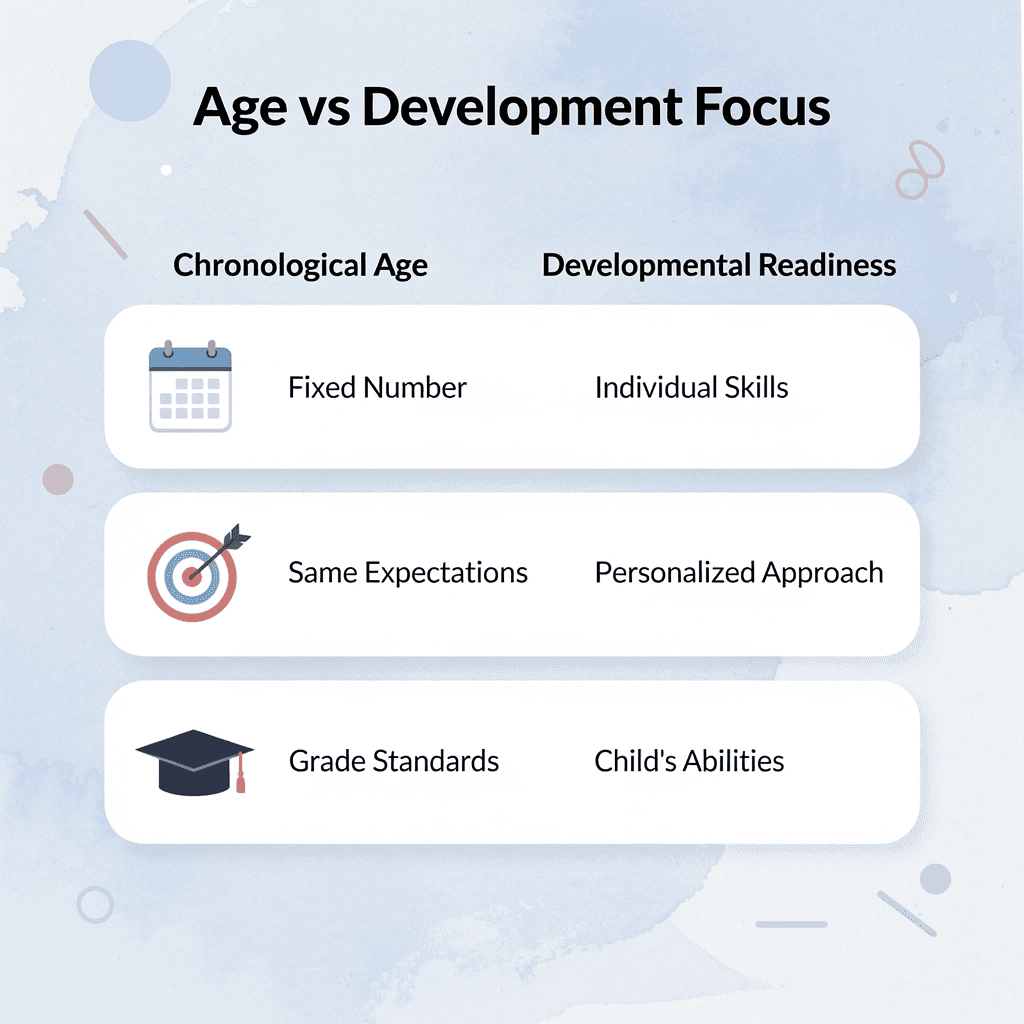
⚠️ Warning: Don't fall into the trap of choosing a curriculum based on your child's chronological age alone. A 7-year-old with advanced fine motor skills might excel with detailed drawing exercises, while another 7-year-old might need large-format projects that build hand strength first.
How do you match instruction format to your child's learning temperament?
Some children need step-by-step demonstrations that break complex techniques into manageable sequences. Others produce their best work when given a concept and creative freedom to explore it. A structured learner watching open-ended video tutorials might freeze, uncertain where to start, while a creative explorer following detailed sequential lessons might complete the work mechanically without engaging the divergent thinking that makes art personally meaningful.
What mistakes do families make when choosing art curriculum?
The mistake most families make is choosing a curriculum based on teaching philosophy rather than how their child responds to learning. If your eight-year-old asks "What should I draw?" every time you hand them blank paper, they need more help and structure before handling creative freedom. Conversely, forcing a naturally experimental child through rigid lesson sequences often builds resistance instead of competence.
How do hidden costs affect your homeschool art budget?
A $200 curriculum that requires $50 monthly in specialty supplies and 45 minutes of prep per lesson costs far more than the price tag suggests. Families overlook their own time, the stress of sourcing materials, and setup work that prevents "quick art sessions" during busy weeks. A simpler program using supplies you already have and requiring minimal prep works better because you'll use it regularly, rather than postponing lessons until you can purchase specific paper weights or brushes.
Why does consistency matter more than premium supplies?
Research on skill acquisition shows consistency matters more than premium tools, especially for developing learners. A child practicing drawing twice weekly with basic pencils builds more skill than one doing fancy mixed-media projects monthly because acquiring supplies takes weeks. Platforms like My Coloring Pages remove the supply barrier entirely, letting families create custom practice pages immediately without shopping trips or material costs, enabling daily creative work even during tight budget months.
What does deliberate skill progression look like in an art curriculum?
A strong art curriculum shows clear progression: basic shapes leading to complex forms, simple color mixing advancing to sophisticated palette work, guided compositions evolving into independent design. You should see measurable improvement in specific technical areas from month one to month six, not merely more elaborate projects. Without this developmental arc, children stay busy but don't develop foundational skills that create artistic confidence.
Why is depth more important than variety in art education?
Many programs confuse offering diverse activities with teaching real skills. They might offer pottery one week, watercolor the next, and printmaking after that. While this exposes children to different materials, they don't develop proficiency in any of them. Children need to practice the same core techniques repeatedly before exploring different materials becomes meaningful. Without that practice, they learn only surface-level knowledge about tools they'll never master.
Assess Whether It Matches Your Teaching Capacity
The best curriculum means nothing if it assumes prior knowledge you lack. Some programs expect parents to demonstrate techniques, provide real-time feedback on composition, or explain artistic concepts with confidence. Others offer video instruction that removes the teaching burden entirely, letting parents facilitate rather than instruct. The mismatch between what a program expects and your actual comfort level determines whether you'll maintain consistency or gradually abandon lessons. But even a perfectly matched curriculum fails without one element most families overlook until they need it.
Engaging Homeschool Art Curriculum Options in 2026
The best art curriculum addresses the gap between your child's current level and your six-month goal. A kindergartner struggling with scissors needs different instruction than a fourth grader ready for perspective drawing. A program that ignores this developmental reality creates frustration, regardless of how brilliant its teaching methods are.
🎯 Key Point: Age-appropriate progression is more important than fancy art supplies or complex techniques when choosing your homeschool art curriculum.
"Developmental appropriateness in art education ensures that children build confidence while mastering foundational skills before advancing to complex techniques." — National Art Education Association
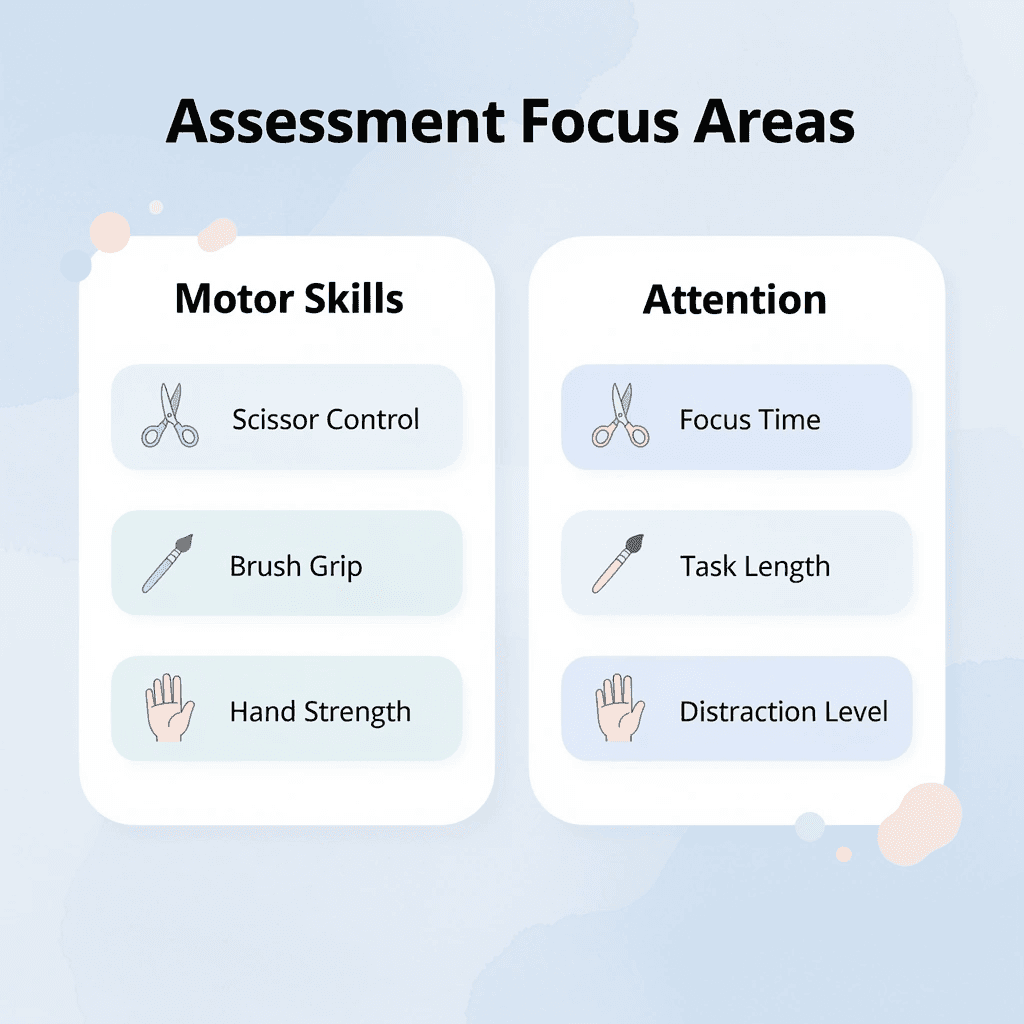
💡 Tip: Start by assessing your child's fine motor skills and attention span before selecting any art program - these two factors will determine which curriculum level provides the optimal challenge without causing overwhelm.
Artistic Pursuits
This program builds technical skill through deliberate progression across drawing, painting, sculpture, and art history. Each level guides students from basic techniques to complex compositions, teaching them to observe carefully, plan deliberately, and revise work until it matches their vision. The structure gives parents clear direction without requiring artistic expertise.
How can families overcome the supply preparation challenge?
The challenge lies in preparing supplies. Lessons require specific materials before teaching begins, and collecting them consumes time that busy weeks rarely afford. Families succeed with Artistic Pursuits when they order supplies in bulk monthly and treat material preparation as part of the teaching work rather than an afterthought.
Meet the Masters
This curriculum centers on art appreciation, teaching children to study famous artists and copy their techniques through guided projects. Scripted lessons remove guesswork for uncertain parents, while worksheets reinforce both art history knowledge and practical skills. Multiple grade levels can work through different complexity tiers of the same artist study, making it practical for families with several children.
What are the potential drawbacks of this approach?
The cost adds up quickly when buying materials for multimedia projects for multiple children. More importantly, focusing early on copying established styles can slow down the development of a personal artistic voice. Children learn to carry out someone else's vision well before practicing their own. This builds a technical foundation but does not develop creative confidence as effectively.
Master Books Art Curriculum
Christian homeschool families favor this program because it combines faith-based instruction with drawing fundamentals and nature study. The straightforward structure requires minimal parent preparation, and the gradual progression builds confidence in children who are anxious about rigorous technical instruction. The low cost makes it accessible for budget-conscious families seeking organized art education.
The tradeoff comes in technical depth. Students develop basic skills and creative enjoyment, but may need extra instruction for advanced artistic skills later. This curriculum prioritizes making art available to everyone over teaching every technique in detail, making it ideal for families seeking art as regular enrichment rather than serious skill development.
Chalk Pastel and You ARE an ARTiST!
Video-based instruction lets children follow demonstrations while parents provide support rather than direct instruction. Thematic projects connect with history and science topics, creating cross-subject connections that strengthen content learning through visual creation. Reluctant artists often engage more readily with video guidance than with written instructions. The medium specialization means children develop strong pastel skills but limited exposure to other artistic techniques. According to Brighter Day Press's 28-week Charlotte Mason-inspired guide, focused study in one medium builds depth; families wanting broader artistic exposure need to supplement with additional resources.
Deep Space Sparkle
Elementary students thrive in this program because it offers a diverse range of projects and emphasizes color theory. Hands-on creation makes art concepts tangible and memorable rather than abstract. Teachers appreciate the extensive project library, which allows them to match activities to student interests or seasonal themes without extensive planning.
What are the limitations of project-based art curricula?
The familiar approach treats varied projects as complete art education. Without step-by-step skill building, however, children finish interesting activities without learning the basic techniques needed for long-term artistic skill. Platforms like My Coloring Pages complement project-based learning by providing instant practice pages that strengthen specific skills between major projects, turning scattered creative activities into purposeful skill-building without adding supply costs or preparation time.
According to Brighter Day Press's planning for 180 days of schooling per year, consistent daily practice builds lasting skills more effectively than large weekly projects. Most families select a curriculum based on descriptions, then struggle to maintain it when life disrupts their plans.
Related Reading
- Homeschool Room
- Homeschool Report Card Template
- Homeschool Room Ideas
- Homeschool Vs Public School
- Language Arts Homeschool Curriculum
- Homeschool Preschool
- Texas Homeschool Requirements
- How To Homeschool Your Kids
- How To Homeschool In Texas
- Homeschool Coop
- Pre K Homeschool Curriculum
- Florida Homeschool Requirements
- 1st Grade Homeschool Curriculum
- Colorado Homeschool Laws
- Georgia Homeschool Laws
- 6th Grade Homeschool Curriculum
Download 729,800+ Free Worksheets for Homeschool Art Curriculum
Skills fade without practice. Adding structured practice worksheets after each art lesson converts one-time exposure into lasting retention. This provides the repetition children need to lock in techniques before progressing.
🎯 Key Point: Transform abstract art instruction into lasting muscle memory through targeted worksheet practice that reinforces each lesson immediately.
Platforms like My Coloring Pages generate custom practice pages on demand without supply runs or subscription fees. Our platform helps children who have learned shading practise immediately on guided worksheets tailored to that specific skill. This converts abstract instruction into muscle memory through focused repetition.
"Structured practice worksheets after each art lesson turn one-time exposure into something children actually remember through focused repetition."
💡 Tip: Generate practice worksheets immediately after introducing new techniques while the concepts are still fresh in your child's mind for maximum retention.
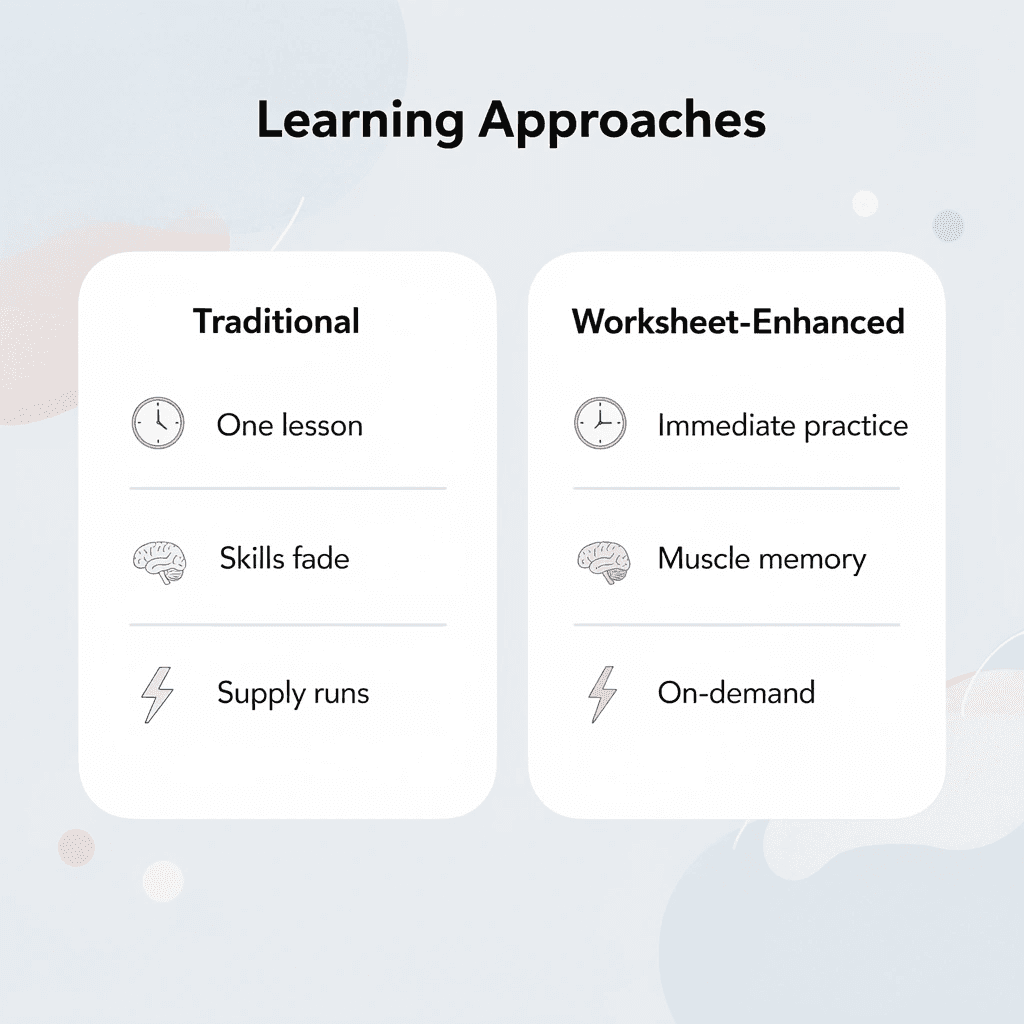
Traditional Approach | Worksheet-Enhanced Learning |
|---|---|
One-time lesson exposure | Immediate practice reinforcement |
Skills fade quickly | Muscle memory development |
Supply runs required | On-demand generation |
Generic practice | Skill-specific worksheets |
Related Reading
- Michigan Homeschool Laws
- Accredited Homeschool Curriculum
- Georgia Homeschool Requirements
- 4th Grade Homeschool Curriculum
- 3rd Grade Homeschool Curriculum
- 2nd Grade Homeschool Curriculum
- Science Homeschool Curriculum
- Alabama Homeschool Laws
- Illinois Homeschool Laws
- How To Homeschool In California
- Homeschool Reading Curriculum
- North Carolina Homeschool Laws
- Homeschool Art Curriculum
- California Homeschool Laws