
California Homeschool Laws in 2026: Detailed Guide
California homeschool laws 2026 complete guide by My Coloring Pages. Requirements, regulations, and step-by-step compliance tips for parents.


Parents considering homeschooling in California face numerous legal requirements that can seem complex at first glance. California homeschool laws require families to choose among several options, including establishing a private school at home, enrolling in an independent study program, or working with a public charter school. Understanding these pathways helps families make informed decisions about their educational approach. Each option comes with specific documentation and compliance requirements that parents must follow.
Beyond meeting legal requirements, successful homeschooling depends on having quality educational materials that engage children across different subjects and grade levels. Creating worksheets, activities, and visual learning tools requires significant time and effort from busy parents. Fortunately, families can access comprehensive educational resources to support their teaching goals and download 729,800+ free coloring pages, customizable for any subject or lesson plan.
Summary
- California homeschool families operate under four distinct legal pathways, with approximately 175,000 students participating in homeschool settings according to the Legislative Analyst's Office. The Private School Affidavit route remains the most popular option because it offers maximum curriculum control, requires no teaching credentials, and involves minimal state oversight beyond filing annual paperwork and maintaining basic attendance records. Families choosing this pathway must file between October 1st and October 15th each year, but afterward, they control curriculum choices, scheduling, and teaching methods without home inspections or mandatory standardized testing.
- The common belief that California heavily restricts homeschooling stems from outdated controversies and confusing legal language rather than current law. The state does not approve or review curriculum, does not require parents to hold teaching licenses, and does not mandate portfolio reviews or quarterly evaluations that burden homeschoolers in other states. The actual compliance challenge involves understanding procedural requirements for your chosen pathway, not navigating restrictive regulations that limit educational freedom.
- Homeschooled students often score 15 to 30 percentile points above public school students on standardized academic achievement tests, according to the National Home Education Research Institute. This performance gap suggests that structured homeschool programs can produce strong academic outcomes when families maintain consistent participation and follow their chosen program's attendance requirements. The key factor separating successful homeschooling from academic struggle is typically the match between a child's learning style and the program's instructional cadence, not the quality of curriculum materials alone.
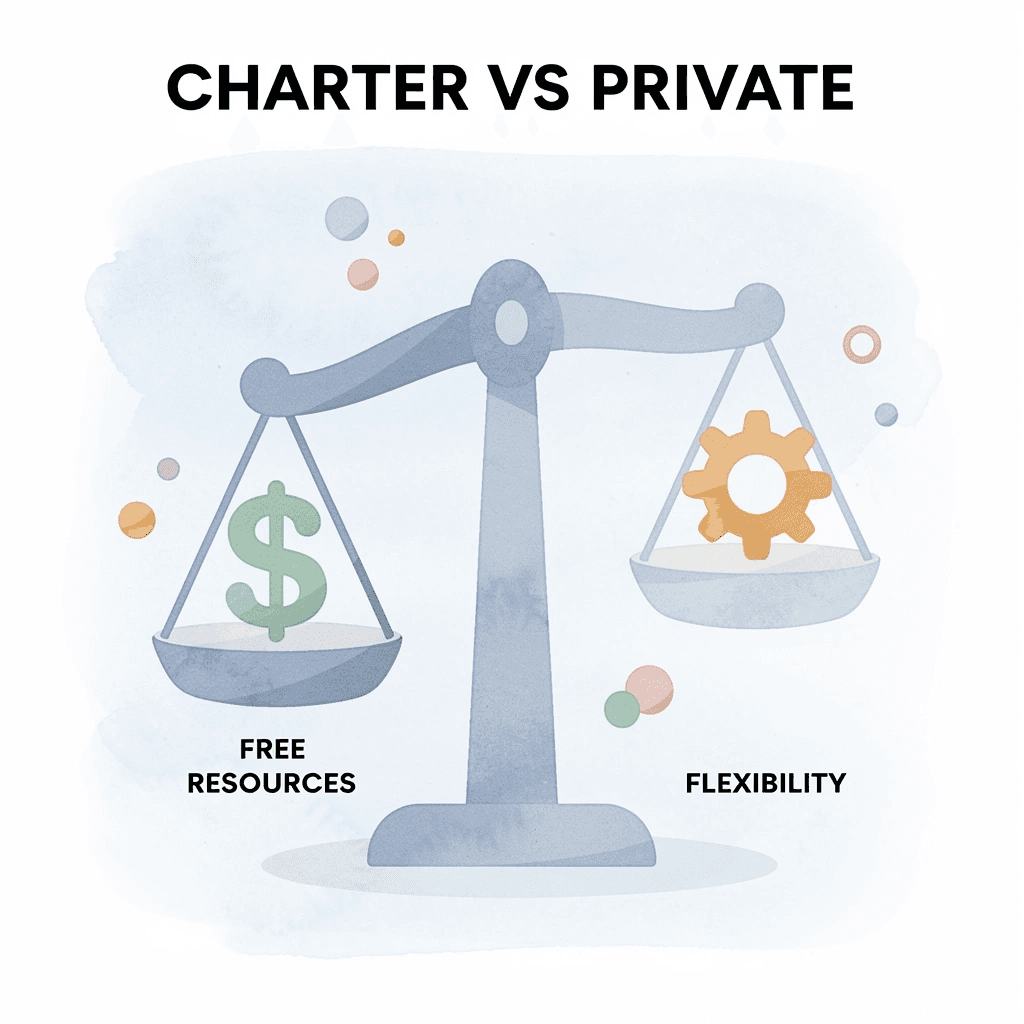
- Charter homeschool programs provide free curriculum and teacher support, but impose strict attendance requirements and limit instructional flexibility compared to Private School Affidavit homeschooling. The trade-off between autonomy and administrative burden is significant because full curriculum control means full planning responsibility, while structured charter programs remove planning load but restrict what you can teach and how you can teach it. Most homeschool failures happen not from academic inadequacy, but from choosing accountability models that families cannot maintain long-term.
- California requires instruction in English, mathematics, science, social studies, visual and performing arts, health, and physical education, but the state does not dictate which textbooks you use or which grade-level standards you follow. This flexibility separates legal compliance from educational methodology, allowing families to design learning entirely around their child's developmental readiness and interests. The documentation requirement involves maintaining attendance logs showing at least 175 instructional days per year and keeping basic records of subjects covered, not submitting detailed portfolios or passing state assessments.
- Recent ballot initiatives have proposed providing $17,000 in state funding for elementary and secondary students who attend private schools or are educated at home, reflecting ongoing policy debates about resource allocation according to the Legislative Analyst's Office. While these funding proposals remain under consideration, homeschooling families already building custom lesson plans find that Download 729,800+ Free coloring pages addresses the daily reinforcement gap by generating themed coloring pages on demand for any subject, turning abstract concepts into hands-on activities without the prep work of hunting through generic worksheets that rarely match specific teaching objectives.
Is Homeschooling Legal in California?
Homeschooling is legal in California through several recognized pathways. The most common is filing a Private School Affidavit (PSA), which allows you to operate a home-based private school without teaching credentials, state-approved curriculum, or home inspections. California permits home education through private school provisions in Education Code Sections 33190 and 48222.
🎯 Key Point: California's Private School Affidavit pathway offers maximum flexibility for homeschooling families, requiring no government oversight of your curriculum choices or teaching methods.
"California permits home education through private school provisions, making it one of the most flexible homeschooling states in the nation." — California Education Code
⚠️ Warning: While California offers great freedom for homeschoolers, you must still comply with basic requirements like filing your PSA annually and maintaining attendance records to ensure legal compliance.
Why the confusion persists
Many people believe homeschooling is illegal or strictly controlled in California, preventing thousands of families from attempting it. Parents worry they need teaching credentials, that the state controls curriculum decisions, or that compliance requires navigating confusing government rules. This concern stems from pre-2008 legal disputes and unclear statutory language referring to "private school exemptions" rather than "homeschool" directly. When families conflate rules for public charter programs with requirements for independent homeschooling, they become anxious about compliance obligations that don't actually apply.
Four legal pathways you can choose
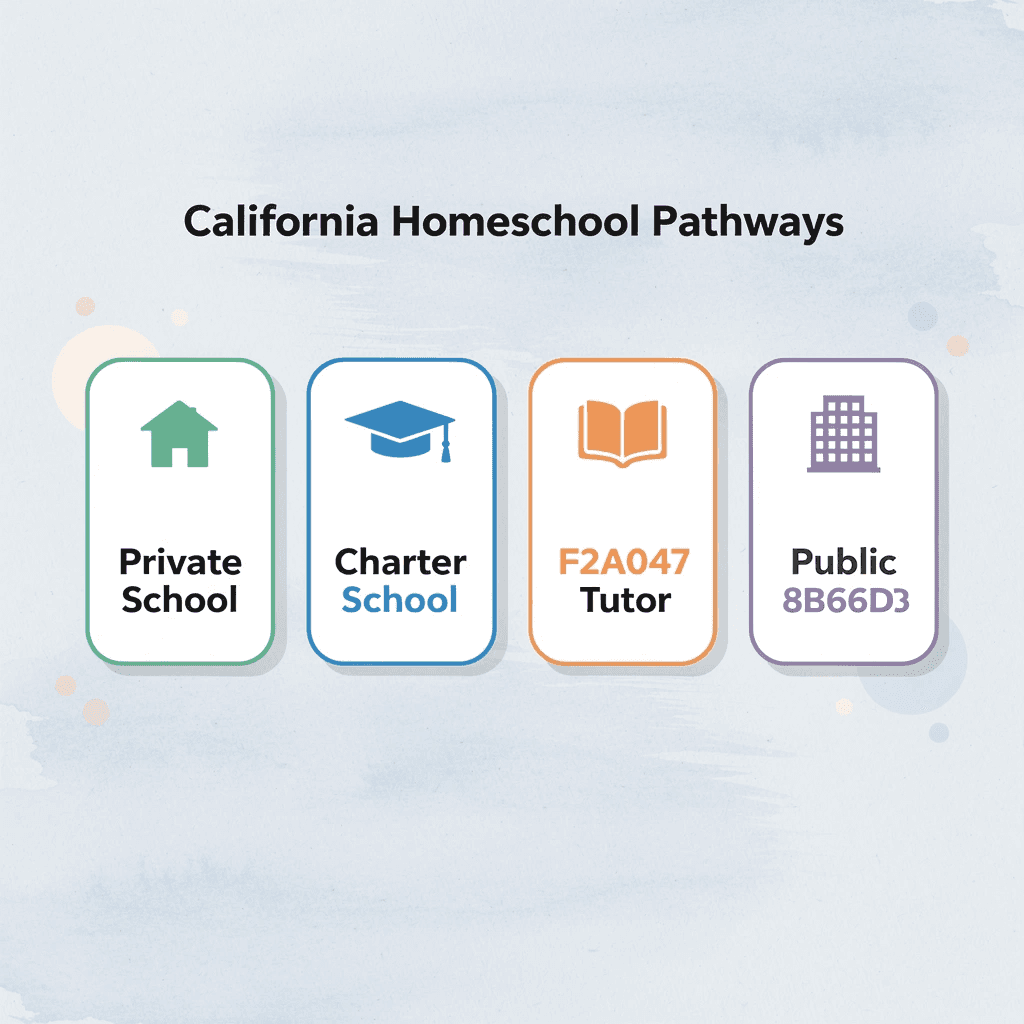
California offers four compliant options: filing a Private School Affidavit to establish your home as a private school, enrolling in a public charter or independent study program, joining a private school satellite program (umbrella school), or hiring a credentialed private tutor. Each pathway has different reporting requirements and levels of control. The PSA route offers the most independence: you control curriculum, scheduling, and teaching methods while filing only annual paperwork and maintaining attendance records.
What California doesn't require
California does not mandate standardized testing, curriculum approval, home inspections, or teaching licenses for PSA homeschoolers. You must teach the required subjects (English, math, social sciences, science, visual and performing arts, health, and physical education), but you choose how and what materials to use. This approach is simpler than states requiring portfolio reviews, mandatory assessments, or quarterly evaluations.
How can parents save time on educational resources?
Parents can save prep time using customizable educational resources. Platforms like My Coloring Pages let homeschooling families create themed coloring pages for subjects ranging from science concepts to historical events, turning lesson reinforcement into creative expression without searching through generic worksheets.
The real issue is compliance, not legality
Hundreds of thousands of California students participate in homeschooling, making it one of the largest homeschool populations in the United States. The challenge lies not in whether homeschooling is allowed but in whether families understand the required steps for their chosen pathway. Failing to file your PSA by October 15th, not keeping attendance records, or not understanding which oversight model you're using creates truancy concerns, not because homeschooling is prohibited, but because you haven't followed the administrative steps that make it legal. Understanding which pathway fits your family situation requires navigating unfamiliar details most parents have never encountered.
California Homeschool Laws
California's four legal pathways create different compliance obligations, freedom levels, and state oversight. The Private School Affidavit route gives you the most control over what your child learns, but you need to do paperwork and keep records every year. Public charter programs and independent study options give you structure and resources, but they require regular check-ins, work submission requirements, and less teaching flexibility. Understanding these differences helps you avoid mixing requirements from different pathways and creating unnecessary compliance problems.
🔑 Key Takeaway: Each of California's four pathways offers a different balance between educational freedom and state oversight - choose based on your family's specific needs for flexibility versus structure.
"California's four legal pathways create different compliance obligations, freedom levels, and state oversight for homeschooling families." — California Department of Education
Pathway | Freedom Level | Oversight | Requirements |
|---|---|---|---|
Private School Affidavit | Highest | Minimal | Annual paperwork, record keeping |
Public Charter Programs | Moderate | Regular | Check-ins, work submission |
Independent Study | Moderate | Regular | Structured curriculum, progress reports |
Private Tutoring | High | Low | Credentialed teacher, records |
⚠️ Warning: Mixing requirements from different pathways can create unnecessary compliance problems and potential legal issues - stick to one pathway's rules consistently.

Private School Affidavit: The Independent Route
Filing a PSA turns your home into a legally recognized private school under California Education Code Sections 33190 and 48222. You must submit the affidavit between 1 October and 15 October each year to the California Department of Education, listing your school name, address, and number of enrolled students.
According to the Legislative Analyst's Office, approximately 175,000 students in California participate in homeschool settings, making it one of the most popular educational alternatives in the state. Once filed, you operate with nearly complete instructional freedom, choosing your own curriculum, schedule, and teaching methodology.
What are the PSA requirements and record-keeping obligations?
The state requires instruction in English, mathematics, social sciences, science, visual and performing arts, health, and physical education, but doesn't specify which textbooks to use, which grade-level standards to follow, or the number of hours per subject. You must keep attendance records showing at least 175 instructional days per year and document which courses you taught, but California doesn't require portfolios, standardized tests, or home inspections. This pathway works best for families who want control over their education choices and feel confident planning their own schooling.
Public School Independent Study Programs
Enrolling in a district-run independent study program keeps your child registered as a public school student while learning at home. The school provides or approves the curriculum, assigns a supervising teacher for regular check-ins, and tracks progress through work submission or assessments. You follow the district's instructional calendar, complete required assignments, and participate in periodic evaluations to verify grade-level mastery. Some families appreciate the structure and accountability, while others find the oversight restrictive compared to PSA homeschooling.
Charter School Homeschool Programs
California charter schools often offer homeschool-style enrollment, in which parents receive funding for educational materials, curriculum resources, and support from credentialed teachers. Your child remains enrolled in the charter, which tracks attendance, reviews work samples or portfolios, and may require standardized testing depending on the school's policies.
The Legislative Analyst's Office notes that recent ballot initiatives have proposed providing $17,000 in state funding for elementary and secondary students attending private schools or educated at home. Charter programs balance independence with accountability, offering more curricular freedom than traditional public schools but less autonomy than filing your own PSA.
How can parents create custom educational materials efficiently?
Families creating custom lesson plans often struggle to find materials that align with specific learning goals. Our My Coloring Pages tool lets homeschooling parents create themed coloring pages for any subject, from photosynthesis diagrams to historical timelines. This transforms abstract concepts into hands-on activities without the prep work of hunting through outdated resources.
What procedural steps ensure legal compliance?
Choosing a pathway gets you halfway to compliance. Understanding the procedural steps that keep you legally protected requires knowing what to file, when to file it, and what records prove you're meeting California's educational standards.
Related Reading
- Homeschool History Curriculum
- Easy Peasy Homeschool
- Homeschool Curriculum
- Homeschool Math Curriculum
- Online Homeschool Curriculum
- Homeschool Resources
- Online Homeschool Programs
- Christian Homeschool Curriculum
- Homeschool Planner
- Homeschool Schedule
- Kindergarten Homeschool Curriculum
- Best Homeschool Programs
- Free Homeschool Curriculum
- Homeschool Schedule
- Best Homeschool Curriculum
- Accredited Homeschool Programs
- How To Homeschool
- Time For Learning Homeschool
- K12 Homeschool
How to Homeschool Legally in California
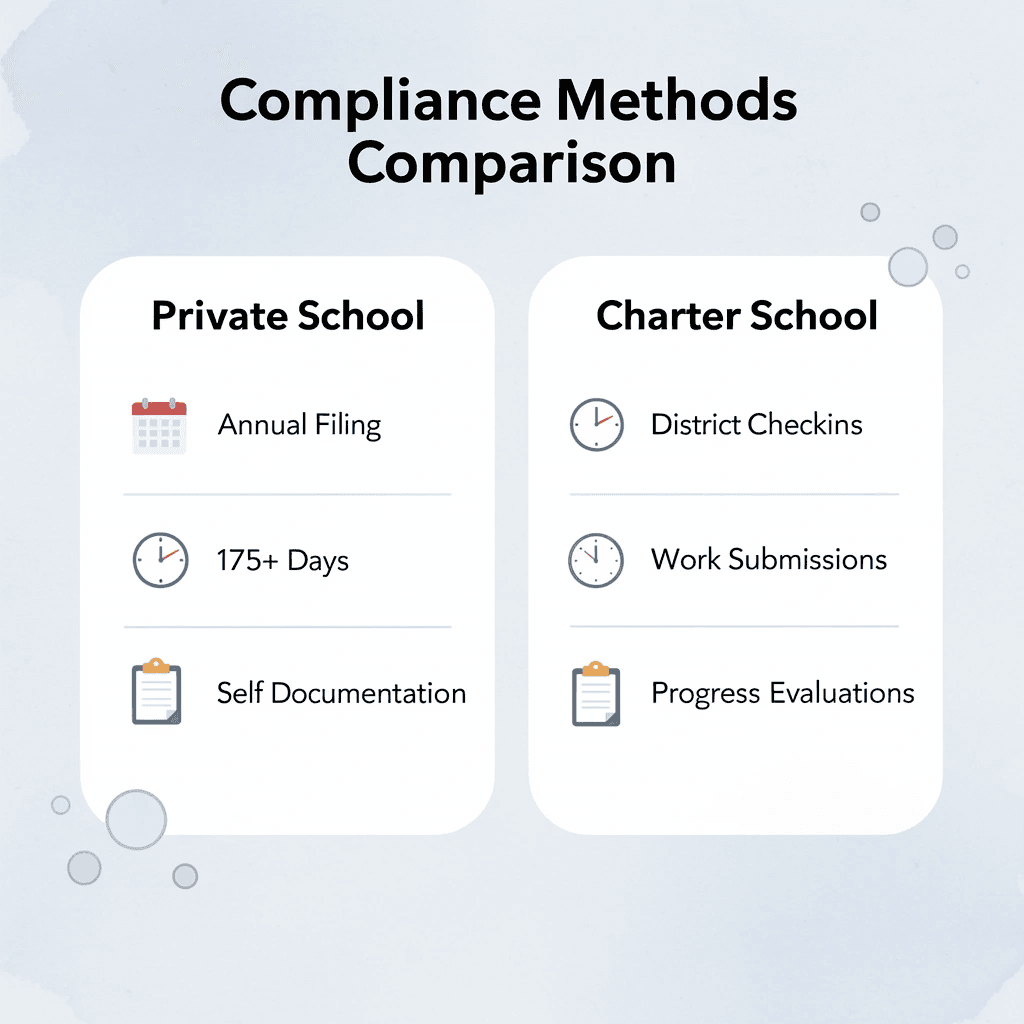
Staying legally compliant in California requires following procedural steps tied to your chosen pathway. Private School Affidavit filers must submit annual paperwork during the October filing window, teach required core subjects, maintain attendance records showing at least 175 instructional days per year, and document courses taught. Charter and independent study families follow district-specific requirements, including regular teacher check-ins, work submission schedules, and progress evaluations. The legal framework is straightforward but unforgiving when steps are skipped or compliance lacks documentation.
Compliance Method | Key Requirements | Documentation Needed |
|---|---|---|
Private School Affidavit | Annual filing, core subjects, 175+ days | Attendance records, course documentation |
Charter School | District check-ins, work submissions | Progress evaluations, assignment records |
Independent Study | Regular meetings, curriculum approval | Teacher assessments, learning plans |
🎯 Key Point: The October filing window for Private School Affidavits is non-negotiable – missing this deadline can jeopardize your legal homeschool status for the entire academic year.
"California's homeschool legal framework is straightforward but unforgiving when steps are skipped or compliance is assumed without proper documentation." — California Department of Education Guidelines
⚠️ Warning: Never assume compliance without written documentation – California authorities require proof of attendance, course records, and instructional time during any legal review or audit process.

Choose Your Legal Pathway Before Anything Else
Before you think about curriculum, schedules, or teaching methods, establish which legal structure you're operating under. California recognizes four compliant options: filing a Private School Affidavit to run your home as a private school, enrolling in a public charter homeschool program, joining a private school satellite program, or using a public school independent study arrangement. Most independent homeschoolers choose the PSA route because it offers the most freedom without requiring teaching credentials, curriculum approval, or home inspections. The critical mistake occurs when families begin teaching without first formalizing a pathway, creating a gap between their intent to homeschool and their legal status that can trigger truancy concerns.
File Your Private School Affidavit Correctly and On Time
File your PSA with the California Department of Education between October 1st and October 15th each year. The form requests your school name, address, number of enrolled students, and grade levels taught, but not curriculum or teaching qualifications. Once filed, your home becomes legally recognized as a private school under California Education Code Sections 33190 and 48222. Keep confirmation records of your submission to prove compliance if questions arise. Families starting mid-year can file an updated affidavit, but missing the October window leaves your arrangement legally unrecognized until the next filing period.
Teach Required Core Subjects With Full Curriculum Freedom
California requires students to learn English, mathematics, science, social studies, visual and performing arts, health, and physical education. The state neither approves nor restricts schools' curricular choices, mandates specific textbooks, nor requires grade-level standards or pacing guides.
How much freedom do homeschool families have in the curriculum?
You design learning entirely around your child's needs, interests, and developmental readiness, covering required subjects while choosing how to teach them, which materials to use, and how much time to spend on each topic. Many homeschooling parents struggle to find materials matching specific learning goals without extensive searching. Platforms like My Coloring Pages let families create themed coloring pages for any subject—from science diagrams to historical events—turning lesson practice into creative expression that fits their curriculum.
Maintain Simple but Consistent Academic Records
California doesn't require PSA homeschoolers to submit portfolios, pass standardized tests, or allow home inspections, but you must keep basic documentation proving educational intent. Maintain attendance logs showing at least 175 instructional days per year, samples of student work, a list of subjects covered, and references to curriculum materials. These records support legal compliance, academic tracking, and transitions to traditional school. A simple spreadsheet tracking dates, subjects, and activities provides sufficient evidence that instruction is consistent and covers the required content areas.
What are California's compulsory education age requirements?
California requires children ages 6–18 to participate in a recognized educational pathway: public school, charter school, private school (including homeschool under PSA), or credentialed private tutoring. Failing to enroll a school-age child in one of these structures can trigger truancy investigations. Compliance is procedural: once you've filed your PSA or enrolled in a charter program, your child is legally accounted for within California's compulsory education framework, and truancy concerns disappear as long as you maintain required documentation and reporting.
How do you choose the right homeschool pathway?
Picking a pathway works only if the structure fits your family's teaching style, your child's learning needs, and your comfort level with overseeing their education.
How to Choose the Right Homeschool Program in California
How you file legally determines what program choices you have. PSA filers can choose materials without limits, giving you complete curriculum freedom. Charter families can choose from approved vendor lists or submit curriculum proposals for teacher review, creating more structured yet flexible options. Private school satellite programs provide guidance without full administrative control over your choices. Your filing pathway establishes the boundaries for program selection, making this the most critical first decision.
🎯 Key Point: Your legal filing status directly impacts curriculum freedom—PSA filing offers unlimited choices while charter enrollment provides curated options with approval processes.
"Your filing pathway creates the boundaries within which program selection happens, making this the most critical first decision for California homeschoolers." — California Homeschool Guide
⚠️ Warning: Don't choose a program before understanding your filing status; you might fall in love with materials unavailable through your chosen legal pathway.
Start with learning style, not curriculum catalogs
Watch how your child responds to structure before committing to a program model. Some students thrive with predictable sequences and clear endpoints; others struggle when external pacing controls their day. A mismatch between a child's learning rhythm and a program's instructional pace creates friction that curriculum quality cannot fix.
Charter programs require scheduled lessons, regular teacher check-ins, and assignment deadlines that mirror traditional school timelines. PSA homeschooling lets you adapt daily schedules to energy levels, interest cycles, and developmental readiness without external accountability. If your child learns best through extended project immersion rather than segmented subject blocks, rigid program structures will work against their natural learning process, regardless of material quality.
Balance curriculum control against administrative burden
Full instructional freedom comes with full responsibility for planning. PSA families choose every resource, design every lesson sequence, and solve every curricular gap independently. That autonomy matters when you want religious content, alternative teaching methods like Montessori or classical education, or unschooling approaches that follow student interest rather than scope-and-sequence charts. Charter programs remove planning load by providing structured curriculum paths, but they restrict what you can teach and how you can teach it. Most charter schools prohibit religious materials, require secular alternatives in science and history, and expect alignment with the California Common Core State Standards. Greater independence demands more work; greater support allows less flexibility.
How can you streamline the planning of a custom curriculum?
Parents who build custom lesson plans often spend many hours searching for materials that align with their learning objectives. Platforms like My Coloring Pages let homeschooling families create themed coloring pages for any subject. These pages can display geometric patterns that reinforce math concepts or historical scenes that support social studies units, turning abstract ideas into hands-on activities that align with your curriculum rather than forcing your curriculum to accommodate pre-made resources.
Consider what happens when your child transitions
Your program choice shapes academic records that follow your child beyond homeschooling. Charter programs provide standardized transcripts, course descriptions, and grade reports formatted for college admissions or traditional school re-entry. PSA families create their own documentation, which works for many universities but requires more explanation and sometimes portfolio evidence when transitioning to public high school or applying to competitive colleges. Charter programs simplify documentation of a-g requirements for UC or CSU schools. PSA independence gives you more narrative control over how learning gets presented and evaluated, benefiting private university applications or continued homeschooling through graduation.
Match accountability levels to your capacity for consistency
Charter programs require regular teacher meetings, assignment submissions, and progress documentation that create outside accountability but inflexible deadlines. PSA homeschooling relies entirely on self-directed discipline, with no oversight or consequences for skipping days, abandoning the curriculum mid-year, or neglecting record-keeping.
What causes most homeschool failures in accountability choice?
Most homeschool failures stem from families choosing accountability models they cannot sustain over the long term. If external structure keeps you consistent, charter oversight helps. If deadlines create stress that compromises teaching quality, PSA autonomy prevents compliance anxiety from undermining your educational decisions. Understanding which specific options exist in California and how they work in practice determines whether you can choose a program that fits your needs.
Related Reading
- Homeschool Room
- Homeschool Report Card Template
- Homeschool Room Ideas
- Homeschool Vs Public School
- Language Arts Homeschool Curriculum
- Homeschool Preschool
- Texas Homeschool Requirements
- How To Homeschool Your Kids
- How To Homeschool In Texas
- Homeschool Coop
- Pre K Homeschool Curriculum
- Florida Homeschool Requirements
- 1st Grade Homeschool Curriculum
- Colorado Homeschool Laws
- Georgia Homeschool Laws
- 6th Grade Homeschool Curriculum
Legal Homeschool Programs in California in 2026
California recognizes ten major homeschool programs operating under state law. Some function as public charter schools offering free curriculum and teacher oversight, while others operate as private online academies charging tuition for accredited coursework and diplomas. Hybrid models combine parent-directed learning with institutional support. Your choice determines schedule flexibility, transcript validity, and other critical factors.

🎯 Key Point: Understanding the legal framework is essential before choosing your homeschool program. Charter schools offer free resources but require more state oversight, while private academies offer greater flexibility but come at a higher cost.
⚠️ Warning: Not all homeschool programs provide legally recognized diplomas. Always verify that your chosen program meets California's graduation requirements and offers proper transcript services for college admissions.
1. K12 California Online School (Stride K12)
This tuition-free public charter school provides a structured, school-at-home experience with certified teachers, live online classes, and a full K-12 curriculum aligned to California standards. Parents appreciate the built-in grading systems and clear academic expectations, though the model requires fixed schedules and substantial screen time. According to the National Home Education Research Institute, homeschooled students often score 15 to 30 percentile points above public school students on standardized academic achievement tests. Choose this option if you want public school rigor delivered remotely without planning the curriculum yourself.
2. Connections Academy
Connections Academy is a public charter school option that pairs families with certified teachers and academic advisors. The program includes scheduled lessons and tracks attendance, mirroring traditional school structure more closely than independent homeschooling. This creates accountability but limits flexibility. Parents managing children with complex ADHD or behavioral challenges may struggle when rigid schedules conflict with their child's optimal learning times. This option works if you value teacher support and can maintain consistent participation in a semi-structured environment.
3. Acellus Academy and Power Homeschool
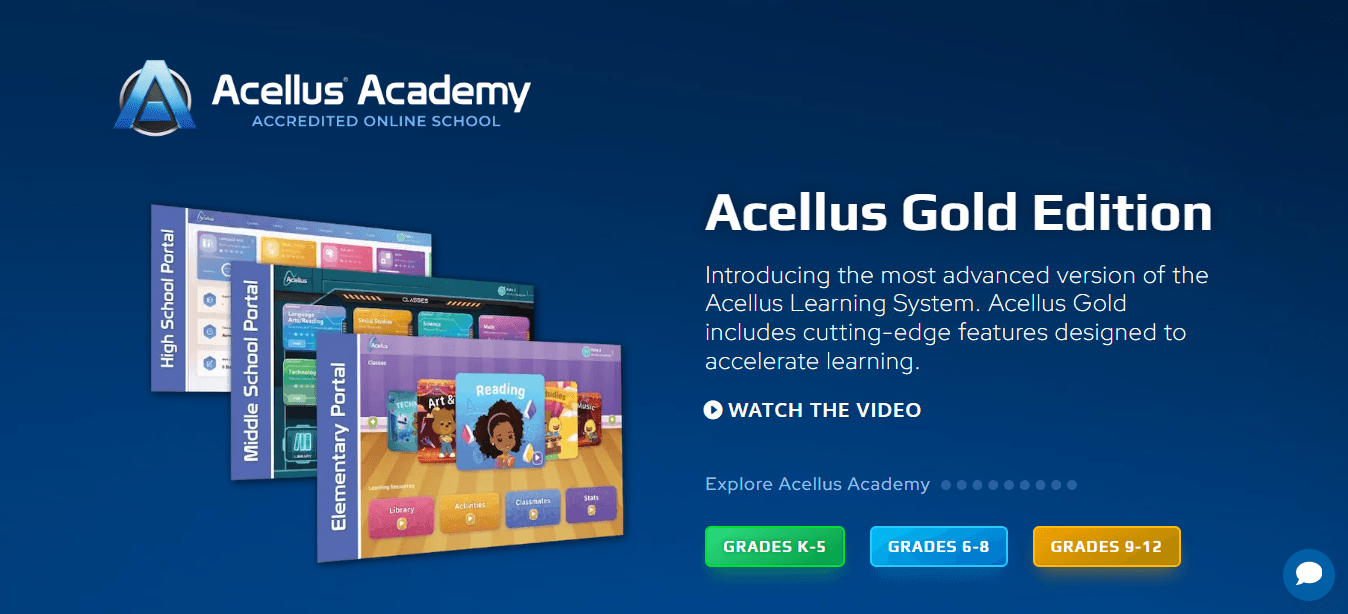
These self-paced, video-based platforms let students move through an accredited curriculum without live teacher interaction or fixed schedules. Acellus uses adaptive learning technology that identifies knowledge gaps and adjusts instruction accordingly, while Power Homeschool offers the same content at a lower price point without teacher support. Both require strong parental involvement to monitor progress since there's no outside accountability, and suit independent learners who thrive with minimal oversight.
4. Laurel Springs School and Oak Meadow
Laurel Springs targets college-prep students with self-paced courses, AP options, and strong transcript preparation for competitive admissions. Oak Meadow emphasizes creative, project-based learning with minimal screen time and Waldorf-inspired pedagogy. Your choice depends on whether college admissions requirements or an alternative educational philosophy drives your selection.
Homeschooling parents who create custom lesson plans often struggle to find materials that align with specific learning objectives without relying on generic worksheets. Platforms like My Coloring Pages let families generate themed coloring pages on demand for any subject, from fraction visualization to historical timelines, turning abstract concepts into hands-on activities that adapt to their curriculum.
5. Charter Programs and Budget Considerations
CalOPS and similar tuition-free charter schools provide a full curriculum, certified teachers, and grading systems at no cost, but they impose strict attendance requirements and limit instructional flexibility compared to PSA homeschooling. Time4Learning and Miacademy offer affordable subscription-based learning for elementary and middle school students through animated lessons and gamified progression. The cost difference matters less than whether the program's accountability model aligns with your capacity for consistency and your child's learning style.
6. iLEAD Charter Schools
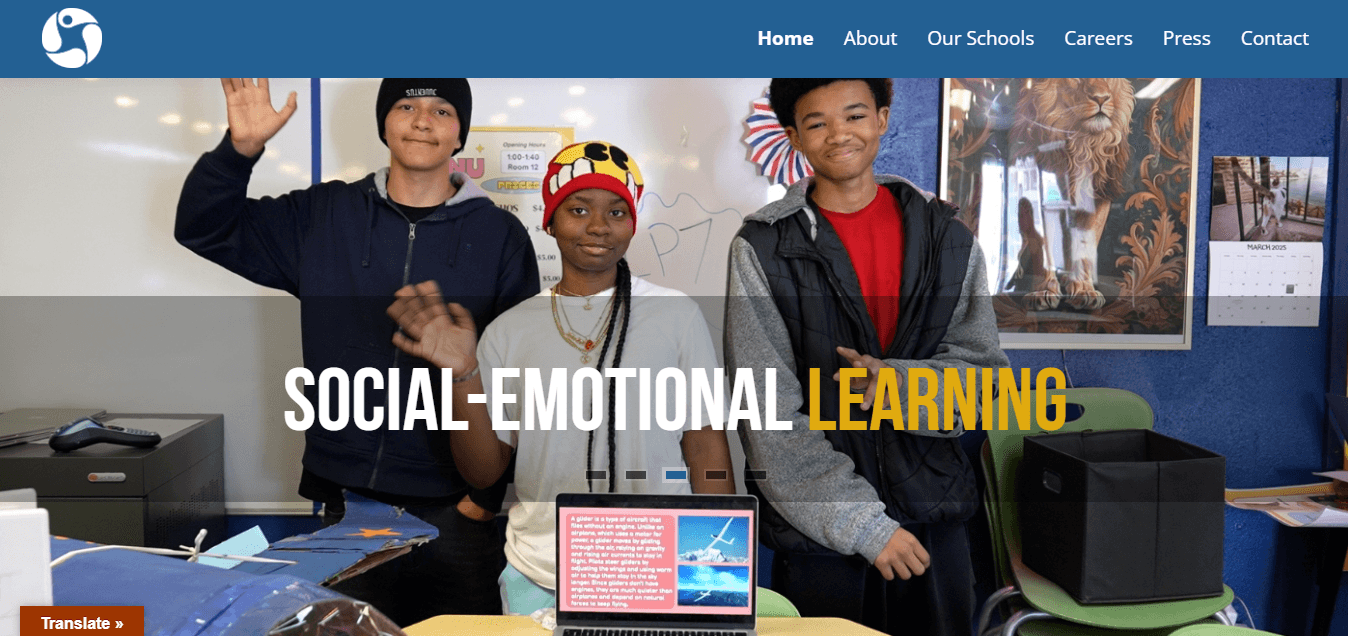
iLEAD offers a hybrid homeschool model that blends independent learning with project-based instruction and optional on-campus workshops. Families receive support from credentialed facilitators while maintaining flexibility in daily schedules. The program emphasizes real-world learning, encouraging students to work on interdisciplinary projects rather than traditional worksheets. This approach benefits creative learners but may feel unstructured for parents who prefer strict academic benchmarks. Choose iLEAD if you want a balance between guidance and flexibility without fully committing to a rigid curriculum.
7. Sky Mountain Charter School
Sky Mountain is a popular choice for families pursuing independent study under a charter framework. It provides educational funds that parents can use for approved vendors, curriculum, and enrichment programs. Students meet regularly with an assigned teacher to review progress, but most instruction is parent-led. This model provides significant control over the direction of learning while still maintaining compliance with California homeschool laws. It works best for organized families who want customization without sacrificing access to public funding.
8. California Virtual Academies (CAVA)
CAVA operates as a Stride K12-affiliated public charter program offering structured online learning with certified teachers and state-approved curriculum. Students attend scheduled classes, complete assignments online, and participate in assessments similar to traditional schools. While this ensures academic accountability and recognized transcripts, it limits flexibility and increases screen dependency. This option suits families seeking a familiar school structure delivered remotely with full institutional support.
9. Bridgeway Academy
Bridgeway Academy is a private, accredited homeschool provider offering flexible curriculum plans combined with optional teacher support and grading services. Parents can choose fully customized learning paths or follow structured programs aligned with college-prep standards. The flexibility is a major advantage, but tuition costs and the need for active parent involvement should be considered. This program fits families who want accreditation without giving up control over pacing and teaching style.
10. Time4Learning and Miacademy
These subscription-based platforms provide self-paced, interactive lessons designed primarily for elementary and middle school students. Time4Learning focuses on core subjects with automated grading, while Miacademy adds gamified elements and social features to keep students engaged. Neither program stands alone as a full legal homeschool solution, so parents must pair them with a Private School Affidavit (PSA) or charter enrollment to meet California requirements. They work best as supplemental tools or as the primary curriculum for families comfortable with managing compliance independently. Understanding which programs exist helps only if you know how to access the resources that make homeschooling sustainable beyond curriculum subscriptions and program fees.
Download 729,800+ Free Worksheets for Homeschooling in California
Curriculum subscriptions deliver lessons effectively, yet students struggle to retain foundational skills because learning requires structured repetition between instruction blocks. Adding targeted worksheets transforms how quickly concepts move from short-term recognition to long-term mastery without changing your program or adding hours to your teaching day.
🎯 Key Point: The gap between curriculum delivery and skill retention can be bridged through strategic worksheet integration, requiring minimal time investment.
"The difference between passive curriculum completion and active skill retention often comes down to consistent, low-pressure practice immediately after new concepts are introduced."
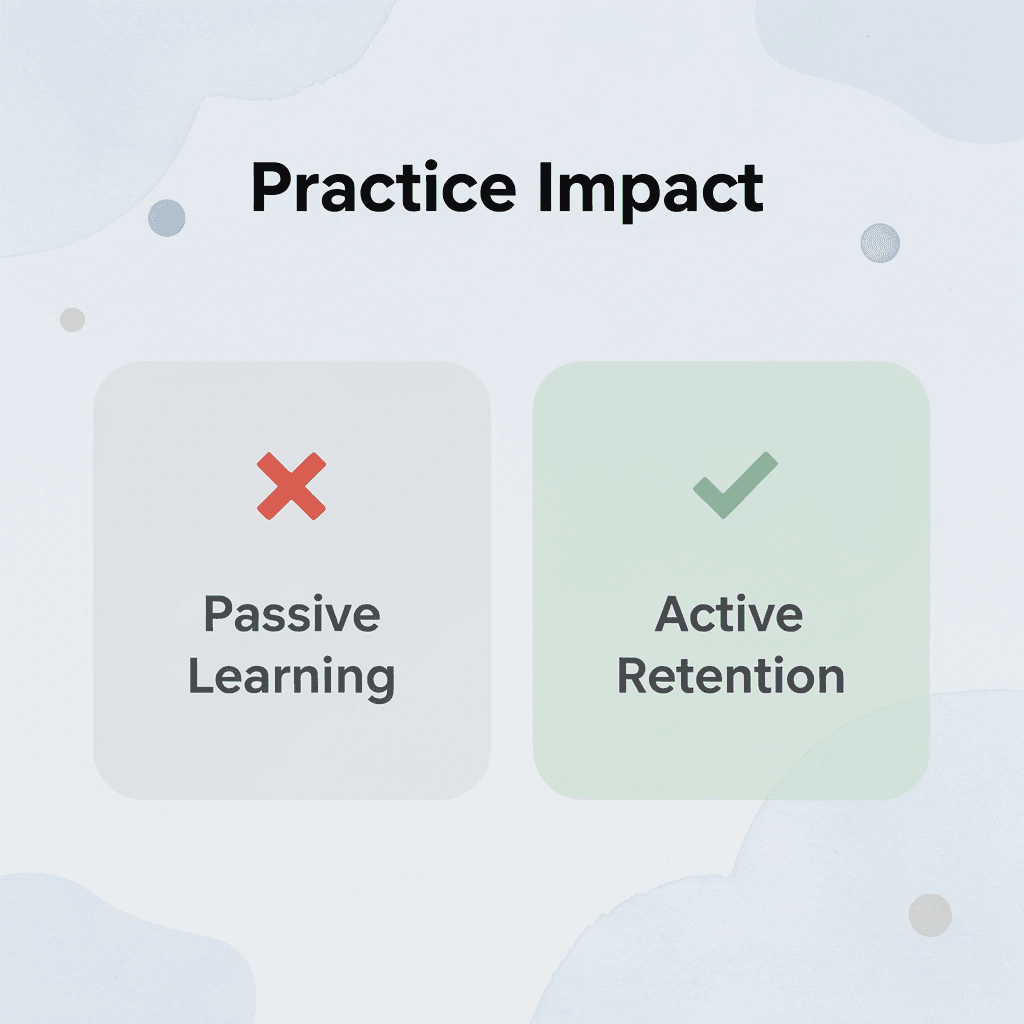
Families find that platforms like My Coloring Pages provide on-demand worksheet generation across every subject area, creating custom practice materials that match specific lesson objectives rather than hunting through generic resources. The difference between passive curriculum completion and active skill retention often comes down to consistent, low-pressure practice immediately after new concepts are introduced.
⚠️ Warning: Generic worksheets often don't align with your curriculum's specific learning sequence, creating confusion rather than reinforcement.
Related Reading
- Michigan Homeschool Laws
- Accredited Homeschool Curriculum
- Georgia Homeschool Requirements
- 4th Grade Homeschool Curriculum
- 3rd Grade Homeschool Curriculum
- 2nd Grade Homeschool Curriculum
- Science Homeschool Curriculum
- Alabama Homeschool Laws
- Illinois Homeschool Laws
- How To Homeschool In California
- Homeschool Reading Curriculum
- North Carolina Homeschool Laws
- Homeschool Art Curriculum
- California Homeschool Laws