What is Creativity and Why Is It Important for Preschoolers
What is creativity? Discover why creative development matters for preschoolers and get proven strategies from My Coloring Pages to nurture it.

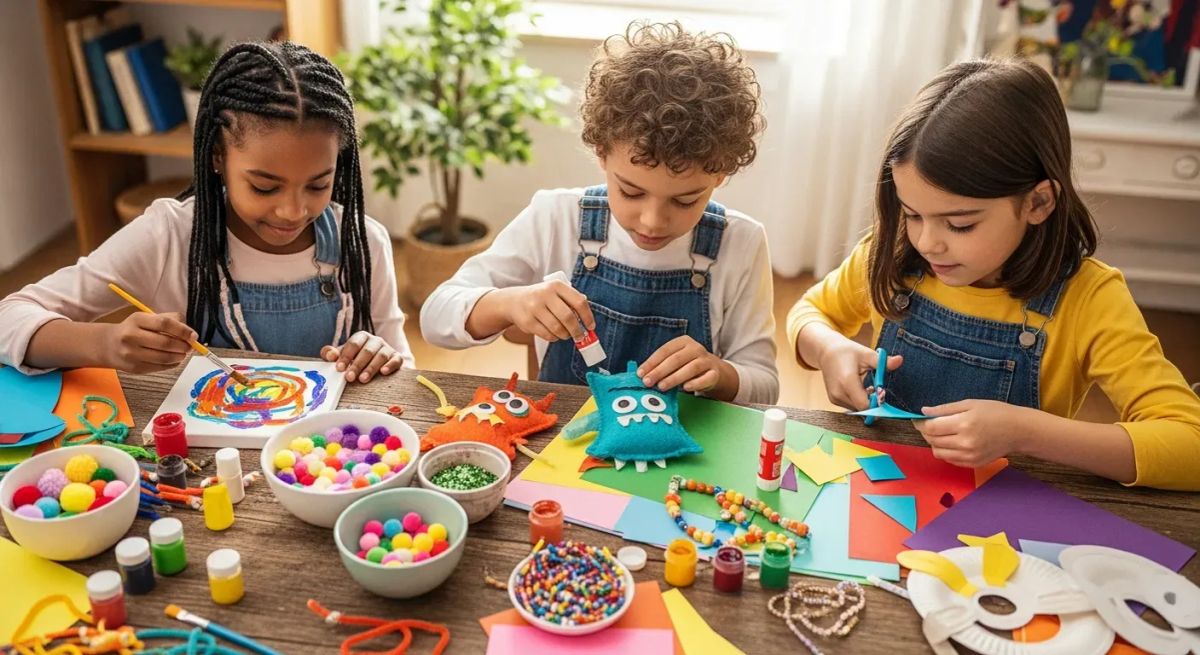
Creativity emerges when someone transforms a cardboard box into a spaceship or discovers an unexpected solution to a challenging problem. This essential human capacity extends far beyond artistic pursuits, appearing in everyday moments through the questions people ask and the connections they forge between seemingly unrelated ideas. Understanding what creativity actually is provides the foundation for learning how to foster creativity in ourselves and others.
Developing creative thinking requires accessible tools and engaging activities that transform abstract concepts into hands-on experiences. Coloring pages offer one powerful approach, providing structured yet flexible frameworks that encourage imagination while building creative confidence across all age groups. My Coloring Pages delivers thousands of free resources designed to spark original thinking and support creative development through enjoyable, practical activities.
Summary
- Preschool brains develop 90% of their neural architecture by age 5, making early childhood the most neurologically sensitive period for establishing pathways for creative thinking. Research from Creative Learning NJ shows that when children engage in pretend play, open-ended problem-solving, and imaginative storytelling during these years, they're exercising executive function systems such as working memory, cognitive flexibility, and attention control that later support academic focus, emotional regulation, and adaptive problem-solving. The window closes faster than most parents realize, as functional fixedness typically sets in around ages 6-7.
- Creative confidence collapses sharply between kindergarten and age 10, with 98% of kindergarteners testing as highly creative but only 2% maintaining that level by age 25, according to Forbes analysis. This decline doesn't happen gradually over decades. It accelerates precisely when environments shift from play-based exploration to standardized instruction that prioritizes memorization, conformity, and error-free performance over experimentation. Children don't outgrow creativity; they learn to suppress it when adults treat originality as risky and correctness as paramount, internalizing the lesson that their ideas need approval before they're worth pursuing.
- Creativity-focused activities aren't separate from cognitive development; they actively build the brain systems needed for learning itself. Longitudinal studies show that preschoolers engaged in dramatic role-play, block-building, and movement games develop stronger conflict inhibition and executive functioning by age 4.5 because these activities require holding multiple ideas simultaneously, shifting between perspectives, and generating novel solutions. Systematic reviews reveal that the most effective preschool interventions commonly include mediated play, movement, mindfulness, and cognitively challenging activities, all of which are strongly tied to creative engagement rather than academic drills.
- Open-ended materials outperform single-purpose toys for building creative capacity because they force children to invent uses, rules, and outcomes rather than follow predetermined instructions. When a child transforms a cardboard box into a spaceship, then a grocery store, then a robot, they're practicing divergent thinking and learning that objects can serve multiple purposes depending on context and intention. This cognitive flexibility, developed through hundreds of small choices during unstructured play, transfers directly to problem-solving in unfamiliar situations where improvisation matters more than memorization.
- Overcorrection kills creative experimentation faster than any other parental behavior. When adults constantly correct creative mistakes like purple suns or unusual story logic, children learn that exploration carries social risk and start asking "Is this right?" before attempting anything new. Research on psychological safety shows that fear reduces experimentation because the brain prioritizes avoiding mistakes over exploring possibilities, shifting motivation from internal curiosity to performance anxiety that persists long after preschool ends.
- MyColoringPages addresses this by offering download 74,703+ free coloring pages that serve as starting points for storytelling, character invention, and narrative construction rather than just completion exercises, turning what looks like structured activity into open-ended imagination practice where children control the story, not just the crayon strokes.
What is Creativity and Why Is It Important for Preschoolers
Creativity in preschoolers is the brain's capacity to come up with new ideas, adjust to new information, solve novel problems, and think in flexible ways across different situations. It shows up in various areas—like when a child builds an imaginary spaceship from couch cushions, invents new rules for tag, or explains why clouds move. According to research published in Thinking Skills and Creativity, creativity starts developing around age 2, and the preschool years are one of the most important times for the developing brain before kids start thinking about things in fixed ways around ages 6-7.
🎯 Key Point: The preschool window between ages 2-6 represents a critical period when children's minds are most open to creative thinking before conventional patterns set in.
"Creativity starts developing around age 2, and the preschool years are one of the most important times for the brain before kids start thinking about things in fixed ways around ages 6-7." — Thinking Skills and Creativity Research
💡 Example: Creative expression in preschoolers can range from building imaginary structures with everyday objects to inventing new games or creating unique explanations for how the world works.
Why these years matter more than most realize
The preschool brain develops rapidly. Research from Creative Learning NJ shows that 90% of a child's brain develops by age 5, building neural pathways that support divergent thinking. Pretend play, open-ended problem solving, and imaginative storytelling exercise executive function systems: working memory, inhibition, attention control, and cognitive flexibility. These systems help children focus during lessons, manage emotions during conflicts, and adjust when plans change.
The hidden cost of treating creativity as optional
Many parents worry their children will fall behind in school if creative activities receive more time than worksheets and early reading. This concern pushes schools and families to cut imaginative play, exploratory activities, and open-ended art in favor of structured academic preparation. Children under constant pressure to find correct answers and complete rigid tasks become afraid to explore, fearful of mistakes, and unwilling to try new ways of thinking. By the time they enter group learning environments or face tasks requiring innovation, this manifests as reliance on outside instruction and anxiety with open-ended problems.
How does creative engagement build essential brain systems for learning?
Activities like dramatic role-play, block-building, and movement games require children to juggle multiple ideas, shift perspectives, and generate solutions. This builds the brain systems essential for learning. Long-term studies tracking preschool children found that supportive, attention-maintaining interaction patterns predict stronger conflict inhibition and executive functioning at age 4.5. Systematic reviews show that the most effective preschool programs include mediated play, movement, mindfulness, and cognitively challenging activities, all of which are strongly tied to creative engagement.
How can families access creative learning without specialized training?
Platforms like My Coloring Pages remove traditional barriers by offering over 74,703 free coloring pages that transform abstract concepts into hands-on activities. Children can describe ideas, upload photos, or build storybooks, making creativity accessible on-demand rather than an elite artistic skill. Families need no specialized training or expensive materials to provide rich developmental experiences.
What happens when rigid environments take over
School systems that reward memorization, repetition, and rule-following create a mismatch with modern economies that demand innovation, flexible thinking, and adaptive problem-solving. Children trained only in single-answer thinking struggle with scientific reasoning, entrepreneurship, leadership, and emotional intelligence. These abilities develop during preschool, when children naturally explore, experiment, and generate ideas without fear of judgment. Suppress that exploration, and you risk raising thinkers who excel at following instructions but freeze when facing uncertainty or novelty.
But neglecting creativity limits more than future career options.
What Happens When You Neglect Creativity in Early Years
Neglecting creativity damages more than future innovation potential. It reshapes how children think about themselves, handle uncertainty, and trust their own minds, rippling through emotional development, academic resilience, and social confidence in ways most parents never trace back to those early years when exploration quietly disappeared.
🎯 Key Point: The effects of creativity neglect extend far beyond artistic ability—they fundamentally alter a child's self-perception and problem-solving confidence for years to come.
"When children lose their natural creative instincts in early years, the impact on emotional development and academic resilience creates lasting patterns that shape their entire educational journey."
⚠️ Warning: Many parents focus on immediate academic gains while missing the long-term consequences of suppressing creative exploration during these critical developmental windows.
Creative Confidence Collapses Faster Than Most Parents Realize
According to Forbes, 98% of children test as highly creative in kindergarten, but only 2% retain that level by age 25. The largest drop occurs between ages five and ten, when the environment shifts from play-based learning to standardized instruction. Children don't lose creativity; they learn to suppress it when adults prioritize memorization, rule-following, and perfection over experimentation.
How do children learn to suppress their creative instincts?
A child who once built elaborate imaginary worlds from cardboard boxes now asks for step-by-step instructions before attempting anything. When environments treat originality as risky and correctness as paramount, children internalize a painful lesson: their ideas are not worth pursuing until they receive adult approval.
Fear of Mistakes Replaces Willingness to Experiment
Children who lose creative outlets stop taking intellectual risks. Rather than asking unusual questions or suggesting unconventional solutions, they focus on giving safe answers that won't invite correction.
A preschooler who once painted freely begins asking, "Is this right?" before every brushstroke. That question reveals a child learning that exploration carries social risk.
Why do rigid systems accelerate creative fear?
Strict systems built around testing and standardization amplify this fear. When classrooms leave little room for imagination or discovery, children begin to view originality as dangerous rather than possible.
Many children develop perfectionism, anxiety about open-ended tasks, and reluctance to participate when there's no clear correct answer. Parents describe this shift: "My child used to love drawing and building. Now they want instructions and get upset if something doesn't look perfect."
Problem-Solving Flexibility Weakens Without Creative Practice
Creative play helps children practice flexible thinking, decision-making, and adaptive reasoning when facing uncertainty through pretend play, storytelling, and open-ended building. When these experiences diminish, children become overly dependent on outside guidance and fixed procedures. They follow directions well but freeze when faced with unfamiliar problems that require improvisation.
Modern economies increasingly reward adaptability and creative problem-solving over memorization. Children raised in highly structured environments may perform well on worksheets and standardized assessments but struggle when confronted with ambiguity, novelty, or situations requiring independent judgment. This isn't an academic weakness; it's cognitive fragility born of a practice of compliance rather than invention.
Passive Consumption Replaces Active Imagination
Too much screen time worsens the problem with creativity. When children consume entertainment rather than making things or trying new ideas, their brains become attuned to passive information reception rather than to active creation. Parents notice this later when children struggle to entertain themselves, complain of boredom despite abundant toys, or require constant external stimulation. The ability to explore independently weakens from disuse, like any other skill.
How can screen time become creation time?
Platforms like My Coloring Pages transform screen time into creation time. Instead of passively consuming content, children describe ideas, upload photos, or design custom pages that reflect their imagination. This shift from consumption to creation rebuilds the habit of active invention, giving children practice translating abstract ideas into tangible output without requiring adult assistance or artistic skill.
Why do parents unintentionally suppress creativity?
Most parents inadvertently stifle creativity by focusing on early academics, constantly correcting mistakes, and filling every moment with structured activities. Research shows that creativity declines sharply when exploration is replaced by constant evaluation, imagination by rigid instruction, and curiosity is treated as a distraction. Once children believe being correct matters more than being curious, many stop exploring long before adulthood.
Preventing that decline doesn't require abandoning structure or academic preparation.
Related Reading
- How To Foster Creativity
- Creativity Quotes
- Best Books To Inspire Creativity In Kids
- How To Encourage Creativity In Kids
- Best Toys For Promoting Creativity
- What Is Creativity
- Best Toys For Developing Creativity
25 Tips on How To Foster Creativity in Preschoolers
Helping preschoolers be creative means making careful choices about what materials they use, where they learn, and how adults interact with them. The goal isn't to teach children how to be creative—they already are. The goal is to protect that natural ability from worry about doing things the right way, strict teaching, and the notion that only certain answers are correct.
🎯 Key Point: Creativity in preschoolers flourishes when we focus on preserving their innate abilities rather than forcing structured learning approaches.

"Children are naturally creative beings. Our role is not to teach creativity, but to create environments where their natural creativity can thrive without the constraints of adult expectations." — Early Childhood Development Research, 2023
💡 Best Practice: Remember that fostering creativity is about removing barriers and providing the right conditions, not about teaching specific techniques or expecting predetermined outcomes.
1. Give Children Open-Ended Toys Instead of Single-Purpose Toys
Toys that tell children exactly how to use them teach kids to follow instructions rather than invent ideas. Open-ended materials like blocks, magnetic tiles, cardboard boxes, scarves, and clay encourage children to create their own uses, rules, and outcomes.
When a child turns a cardboard box into a spaceship, then a grocery store, then a robot, they're practicing divergent thinking and learning that objects can serve different purposes depending on context and intent. This is advanced cognitive flexibility—the same skill adults use when solving new problems or adapting strategies on a project.
2. Let Children Get Bored Sometimes
Parents often fill every moment with screens, scheduled activities, or entertainment. When children never experience boredom, their brains stop practicing self-generated play.
Boredom creates conditions for imagination to emerge. According to research highlighted in Positive Psychology's creativity frameworks, creative thinking increases when people have space for spontaneous idea generation rather than constant outside stimulation. Children who hear "Go invent something to do" develop stronger independent creativity because they learn to generate their own mental content rather than waiting for external input.
3. Encourage Pretend Play Daily
Pretend play strengthens symbolic thinking—the ability to use one thing to represent another. When a child pretends a banana is a telephone or acts out being a doctor, they build thinking skills needed for metaphor, abstraction, and hypothetical reasoning. According to Mulberry Learning's research on early childhood development, imaginative role-play helps children experiment with ideas, express emotions, and develop communication skills.
Restaurant play, superhero missions, puppet storytelling, and doctor scenarios all require children to hold imagined worlds in their minds while coordinating actions, language, and social rules. This is cognitive flexibility training.
4. Stop Correcting Every Creative Mistake
Overcorrection kills creativity. When adults constantly say "That's not how you draw it" or "Use the right color," children learn that experimentation carries social risk and start asking "Is this right?" before trying anything new.
A purple sun might trigger the urge to correct for accuracy, but accuracy and creativity serve different purposes. According to research in Positive Psychology on psychological safety, fear reduces experimentation because the brain prioritizes avoiding mistakes over exploring possibilities. Asking "Tell me about your picture" instead of correcting keeps imagination alive.
5. Focus on the Process, Not Just the Final Result
Many children stop enjoying creativity because adults praise only perfect drawings, neat crafts, or successful outcomes. When praise focuses solely on results, children learn that the value of creative work depends on external approval, shifting motivation from internal curiosity to performance anxiety.
Praising effort, imagination, experimentation, and persistence teaches children that creativity is about exploration, not perfection. "You worked hard on that idea" or "I like how many different things you tried" reinforces the behaviors that drive creative thinking rather than occasional successful products.
6. Allow Messy Play
Sensory and exploratory play fosters creativity by allowing children to touch, experiment with, and manipulate various materials. According to Tappy Toes Nursery's early learning research, activities like finger painting, sand play, water exploration, slime, mud kitchens, and shaving cream art develop sensory skills and build confidence in trying new things.
Messy play removes the worry about "doing it right." With no correct way to squish clay or pour water between containers, children can focus on cause and effect, texture, how things change, and discovery without worrying about meeting adult expectations.
7. Ask Open-Ended Questions
Questions like "What color is this?" ask children to recall previously learned answers. Open-ended questions like "What do you think would happen if...?" or "Can you make up a story about this?" require children to generate new ideas.
This change from remembering to creating teaches children that their ideas matter, that multiple answers can be right, and that thinking itself is a creative act.
8. Give Children Time to Finish Their Ideas
Creativity requires uninterrupted time. Constant activity switches break imaginative flow. According to Mulberry Learning's developmental research, creativity grows when children explore at their own pace, revising and deepening ideas without interruption.
A child building a block tower might spend twenty minutes testing different setups, knocking it down, and rebuilding. That's experimentation, hypothesis testing, and persistence, not wasted time. Interrupting teaches children that completion matters more than exploration.
9. Read Stories Interactively
Interactive reading builds narrative thinking. Instead of passively turning pages, ask children to predict endings, invent characters, or change outcomes. "What if the dragon was friendly?" or "How else could the story end?" transform reading from consumption to co-creation.
This teaches children that stories are flexible, that narrative choices shape meaning, and that they can imagine alternatives—skills that transfer directly to problem-solving, where generating multiple solutions matters more than finding one "correct" answer.
10. Encourage Building and Construction Play
Building activities help children develop spatial reasoning, experimentation, and creative problem-solving. LEGO, magnetic tiles, cardboard engineering, and pillow forts require children to hold a mental image of their creation while testing whether their physical construction matches that vision.
According to JollyHeap's research on play-based learning, building activities encourage children to invent solutions independently rather than follow fixed instructions. When a tower falls, children learn to analyze why it fell, adjust their approach, and try again: engineering thinking at its most fundamental level.
11. Limit Over-Scheduled Routines
Children with no free time struggle to initiate creative play independently. Constant movement between classes, tutoring, and structured activities leaves little room for self-directed imagination. The brain needs mental space to wander, experiment, and invent.
Creativity needs margin: empty time that may look unproductive to adults but gives children's brains essential cognitive rest. Without that space, children learn to wait for instructions rather than generate their own ideas.
12. Introduce Music and Movement
Creative movement strengthens self-expression, coordination, and emotional exploration. Dance improvisation, rhythm-making, freeze dance, and songwriting allow children to communicate beyond words through their bodies and voices. According to Positive Psychology's research on creative systems, creativity connects deeply to emotional and expressive capacities. When children invent a dance or compose a song, they learn that ideas can take multiple forms and expression doesn't require verbal precision.
13. Let Children Solve Small Problems Themselves
When adults fix every problem immediately, children miss opportunities to think creatively and learn to wait for rescue rather than try different solutions.
Instead of helping right away when a child struggles, ask "What else could you try?" or "Can you think of another way?" This builds resilience, experimentation, and flexible thinking by teaching children that problems often have multiple solutions and that persistence matters more than immediate success.
14. Create a Creativity-Friendly Environment
Kids create more when materials are easy to see and reach. Paper within reach, dress-up bins at child height, art shelves with clear containers, and loose craft materials signal that creative activity is welcome anytime, not just during scheduled craft time. When kids must ask permission to access materials or wait for an adult to set things up, spontaneous creative impulses fade. Accessibility communicates that their ideas matter enough to be supported immediately.
15. Avoid Rewarding Only "Correct" Answers
Kids become less creative when they think there is only one right answer to every question. Encouraging multiple possibilities teaches them that problems can be approached from different angles and that diverse solutions are valid.
How can you encourage divergent thinking in children?
Questions like "Can you think of three ways to build this?" or "What are different ways this story could end?" help children practice divergent thinking. They learn that generating options is valuable, that initial ideas need not be final, and that multiple possibilities often lead to better solutions.
What barriers prevent children from exploring creatively?
The best creative support means removing barriers that make exploration feel risky. Many preschoolers want to create and invent; what stops them are environments that punish mistakes, reward only correct answers, or treat creativity as performance rather than process.
Tools like Download 74,703+ free coloring pages from My Coloring Pages provide instant access to creative materials, enabling children to start creating the moment inspiration strikes.
16. Encourage Nature Exploration
Nature sparks children's curiosity through its unpredictability and sensory richness. Collecting leaves, watching bugs, sorting rocks, and inventing cloud stories help children learn about patterns, textures, and discoveries unavailable indoors.
Exploring outdoors helps children observe, use their imagination, and think independently by allowing them to discover things on their own. Watching an ant carry food or noticing how shadows move during the day builds attention span and pattern recognition: both essential skills for scientific thinking.
17. Model Creativity Yourself
Children copy what adults do more than they listen to instructions. If parents draw, invent, build, and experiment, children learn that creativity is important. If adults focus only on getting things done, making things perfect, and finding the right answers, children adopt that mindset too.
Showing creativity doesn't require artistic skill: only trying new things where children can see. Attempting a new recipe, rearranging furniture, sketching while thinking, or composing silly songs demonstrate that adults value creative exploration. Children observe what adults do more than what they say.
18. Allow Children to Take Creative Risks
Kids need permission to try unusual ideas, experiment, and fail safely. Creativity grows through trial and error: every successful invention, story, or solution comes from dozens of failed attempts.
If every mistake gets criticized or corrected immediately, children stop taking imaginative risks and choose safe, predictable options instead. Creating psychological safety around creative failure teaches children that experimentation has inherent value, regardless of outcome.
19. Encourage Storytelling
When you ask children to make up characters, create adventures, describe drawings, or tell bedtime stories, you strengthen their imagination, sequencing, emotional expression, and verbal creativity. Storytelling requires holding multiple ideas in mind while building cause-and-effect relationships.
Prompts like "What happened next?" or "Why did the character do that?" build narrative logic. Children learn that stories need structure, actions have consequences, and characters need motivations: the same reasoning skills required for understanding history, predicting outcomes, and explaining complex events.
20. Rotate Toys Instead of Overloading Children
Too many toys overwhelm attention and reduce imaginative engagement. When children face dozens of options simultaneously, they play superficially with each rather than deeply with any. Rotating materials increases novelty, deepens engagement, and encourages creative use of objects.
A child who sees the same blocks every day might ignore them. Rediscovering blocks after a two-week rotation often sparks fresh interest, prompting new uses and combinations. Novelty reactivates curiosity.
21. Celebrate Curiosity More Than Performance
When children ask unusual questions, dismissing them quickly teaches that curiosity matters less than speed. "Why is the sky blue?" or "What if cars could fly?" are opportunities to practice making guesses and testing ideas, not interruptions.
Responding with genuine interest rather than quick dismissal teaches children that wonder has value, that questions don't always need immediate answers, and that thinking is worth protecting.
22. Reduce Fear of Failure
Kids become more creative when they feel emotionally safe. Harsh criticism, pressure to be perfect, and embarrassment about mistakes reduce creative risk-taking. According to research in Positive Psychology on creative environments, creativity declines when fear and evaluation pressure dominate.
Creating safety means keeping learning separate from judgment. "That didn't work, what could you try next?" teaches persistence, while "That's wrong, do it again correctly" teaches avoidance.
23. Encourage Collaborative Creativity
Group creativity teaches preschoolers to share ideas, negotiate, and think flexibly. Group murals, pretend-play teams, and collaborative building projects require children to communicate ideas, listen to others, and combine different perspectives into shared outcomes. Children learn that working together produces results no individual could create alone, that compromise doesn't diminish their contributions, and that others' ideas enhance rather than threaten their own.
24. Introduce Simple "What If?" Thinking Games
"What if?" questions train divergent thinking by removing real-world constraints. "What if animals could talk?" or "What if houses could fly?" encourage children to imagine possibilities beyond what currently exists, strengthening imagination, flexibility, and idea generation. Children learn that thinking isn't limited by current reality and that mental experimentation is valid play.
25. Protect Creativity From Constant Evaluation
Stop turning every activity into a competition, a grading system, or a performance measurement. According to Forbes' analysis of classroom creativity, excessive standardization and constant evaluation suppress natural imaginative thinking.
Children create best when they feel safe, curious, and free to experiment. Creativity isn't a talent some children have, and others lack; it's a capacity all children possess, but only some environments protect.
Knowing these principles differs from consistently applying them, especially when daily routines feel chaotic and time is scarce.
Related Reading
- Do Schools Kill Creativity
- How To Improve Your Creativity
- Examples Of Creativity
- Ai And Creativity
- Ai Creativity
- Creativity Training
11 Activities for Fostering Creativity in Preschoolers
Creativity grows when children try new things, make choices, and share their ideas in their own way. The best activities have no single right answer; instead, they let children decide what happens. Here are eleven ways to help creative thinking flourish. Each focuses on a different aspect of how young minds learn and create.
🎯 Key Point: The most effective creativity activities are open-ended, allowing children to explore without predetermined outcomes. This approach builds confidence and encourages independent thinking.

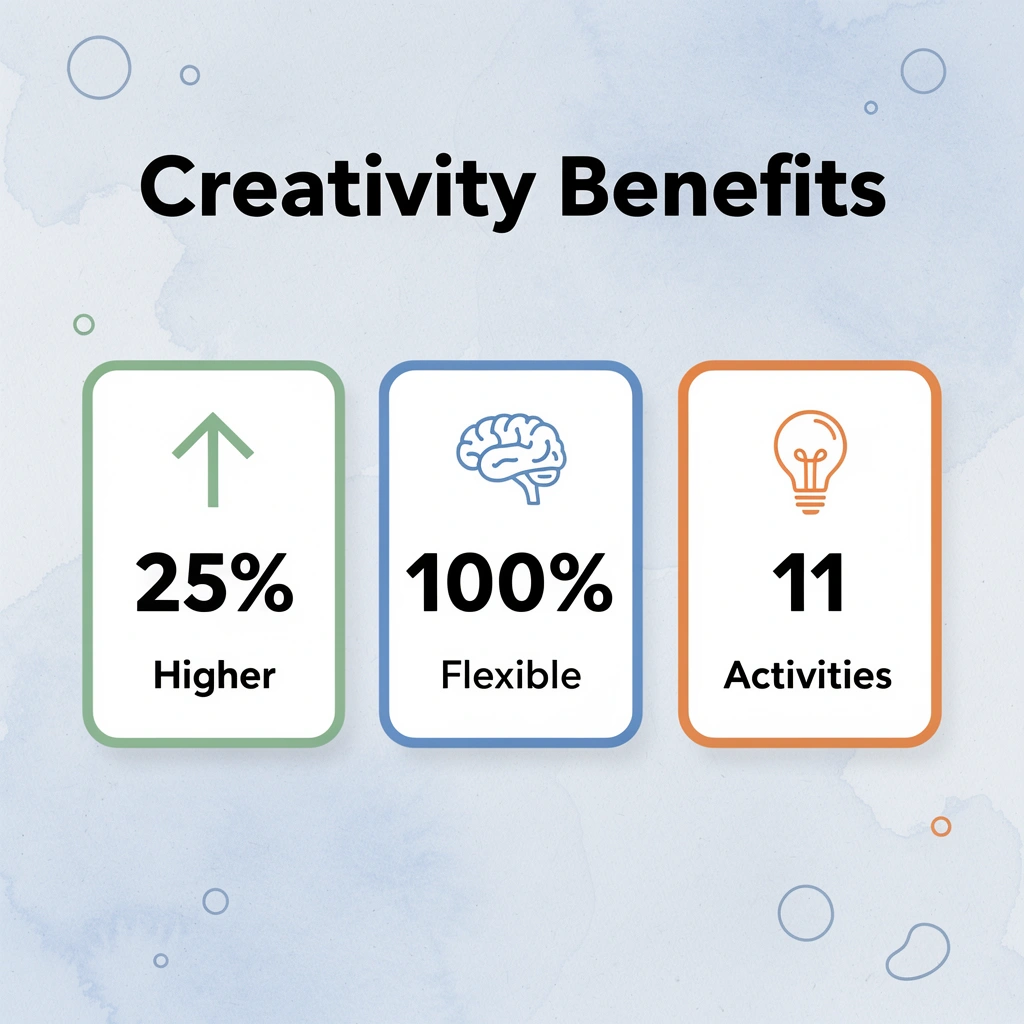
"Children who engage in open-ended creative activities show 25% higher problem-solving abilities and demonstrate improved cognitive flexibility compared to those following structured, outcome-based tasks." — Early Childhood Development Research, 2023
💡 Tip: When introducing creative activities, resist the urge to show children the 'right' way to do things. Instead, provide basic materials and let their natural curiosity guide the experience. This builds intrinsic motivation and develops critical thinking skills.
1. Art Materials Without Instructions
Providing paints, crayons, markers, and clay without templates or step-by-step guides creates immediate creative possibilities. When a child faces blank paper and a palette of colors, they must decide what matters, what to try first, and what happens when blue meets yellow. These choices build creative confidence.
The materials themselves matter less than the freedom to use them wrong. A child who paints the sky green or uses clay to build something unrecognizable is practicing divergent thinking and learning that their vision has value, even when it diverges from external expectations.
2. Building Blocks and Construction Materials
Blocks change the way children think about space through hands-on play. A tower becomes an experiment in balance; a castle requires planning, adjustment, failure, and iteration. Children face real limits—gravity, limited pieces, structural integrity—and solve problems their imagination creates.
Mental Health Center Kids identifies building activities as important tools for creativity because they require children to envision something that doesn't exist yet, then navigate the gap between vision and reality, where creative problem-solving lives. Collaboration often emerges naturally as children negotiate shared building projects, combining social creativity with spatial thinking.
3. Crafting With Everyday Materials
Turning ordinary objects into something new teaches resourcefulness. Cardboard tubes become telescopes, paper plates turn into masks, and leaves and twigs are arranged into collages. Children learn that value comes from imagination, not from purchasing single-purpose items.
Crafting fine motor skills while allowing individual expression. Following the steps to create a handprint animal leaves room for color choices, embellishments, and personal touches, making each creation unique.
4. Unstructured Free Play Time
Free play gives children time to do what they want without adults dictating outcomes. When children build blanket forts, make up games with their own rules, or create stories with found objects, they practice making choices, solving problems, and sustaining interest in their activities.
Many parents feel caught between wanting their children to be creative and managing limited evening time for meals, baths, and bedtime routines. Free play doesn't add to that busy schedule; it replaces forced homework and provides children with genuine learning.
5. Outdoor Exploration and Nature Play
Natural environments give children endless ideas for creative play. A stick becomes a wand, a digging tool, or a bridge across a puddle. Rocks transform into treasures, building materials, or characters in imagined stories. The uneven, unpredictable terrain of outdoor spaces forces children to adapt and innovate in ways that manufactured playgrounds cannot.
Outdoor play removes the pressure to keep things clean or organized. Creativity flourishes when children can make messes, get dirty, and experiment without worrying about breaking or ruining something.
6. Movement and Physical Expression
Gymnastics, dance, and physical challenges teach children that creativity extends beyond the visual arts. Learning to move their bodies in new ways, balance in unexpected positions, or coordinate movements with others requires creative problem-solving. Physical expression builds body awareness and confidence that supports all creative efforts.
When children discover they can express ideas through movement, they add another language to their creative vocabulary. Most find some form of physical expression that feels natural, even if drawing or building does not.
7. Mindful Movement and Sensory Play
Yoga and sensory activities help children connect physical sensation with mental focus. Exploring different textures, sounds, and movements builds sensory vocabulary that enriches creative work. A child who has felt smooth stones versus rough bark, warm water versus cold, and gentle movement versus energetic jumping has richer sensory material to draw from when imagining or creating.
Sensory play regulates emotional states, creating the calm focus that supports sustained creative effort. Sensory activities teach children to switch between the excitement and patience that creativity requires.
8. Music, Language, and Cultural Expression
Music brings together pattern recognition, emotional expression, and physical coordination. Learning songs in different languages builds phonetic awareness and cultural understanding. When children move to music, create rhythms, or invent songs, they practice creative composition in real time.
Storytelling through music makes language learning feel like play. Children absorb vocabulary, sentence structure, and cultural context as they express themselves through sound and movement.
9. Hands-On Science Experiments
Simple experiments like mixing baking soda and vinegar, combining colors, or planting seeds make abstract ideas concrete. Children see cause and effect unfold immediately and learn that their actions produce observable results.
Science experiments show that failure is information. When a volcano doesn't erupt as expected, or a plant fails to grow, children learn to ask why, adjust their approach, and try again. This problem-solving mindset transfers directly to creative work.
10. Storytelling and Dramatic Play
Acting out stories, dressing up, and role-playing let children safely explore different identities and scenarios. When a child pretends to be a firefighter, a parent, or a superhero, they practice understanding other people's perspectives and feelings while experimenting with who they might become.
Dramatic play builds narrative thinking by helping children learn story structure naturally as they create beginnings, conflicts, and resolutions in their play, supporting both creative expression and comprehension across all learning.
11. Open-Ended Creative Prompts
Rather than treating printable activities as "stay inside the lines" exercises, use them as starting points for invention. A coloring page becomes a story prompt: Who is this character? Where are they going? What happens next? Finished pages transform into props for pretend play, collage pieces, or backgrounds for invented scenes.
What makes custom designs effective for creative development?
Platforms like My Coloring Pages make it easy to create custom designs matching your child's current interests, whether dinosaurs, space exploration, or imaginary creatures. The real creative work happens when children add their own ideas, invent situations, or use the pages in unexpected ways.
Creativity grows when children have permission to make choices, take risks, and follow their curiosity without constant correction. Every activity creates space for children to think for themselves.
14 Affordable Resources for Fostering Creativity in Preschoolers
Creativity doesn't require expensive materials or specialized equipment. The most powerful resources for fostering creative thinking in preschoolers cost little or nothing because what matters is whether the material allows children to make choices, experiment, and invent meaning. A cardboard box outperforms a $50 electronic toy because the box can become anything the child imagines, whereas the toy only does what its manufacturer programmed it to do.

💡 Tip: Look for materials that have no predetermined outcome - the more ways a child can use something, the better it supports creative development.
"Open-ended materials that allow children to make choices and experiment are significantly more effective at fostering creativity than structured toys with predetermined functions." — Early Childhood Development Research, 2023

The resources below work because they're open-ended enough that children must decide what they become. That decision-making process, repeated hundreds of times during play, builds the neural pathways that support creative thinking throughout life.
🎯 Key Point: The best creative resources require children to bring their own imagination and problem-solving skills to the activity - turning passive play into active creation.
1. Printable Coloring and Activity Sheets
Coloring sheets become powerful when you treat them as starting points rather than finished products. A simple house outline becomes a storytelling prompt: "Who lives here? What happens inside?" Abandon the idea of "correct colors" and let children decide whether the sky should be purple or the grass orange.
Extend these sheets by having children draw their own background, add invented characters, or create what happens next. The original page provides enough structure to prevent overwhelm, while extensions require genuine creative choices. My Coloring Pages offers thousands of free printable designs that transform simple coloring into imagination exercises where children control the narrative.
2. Construction Paper Packs
Blank paper forces children to create from nothing, strengthening imagination in ways pre-printed worksheets cannot. Bulk construction paper packs ($3–$10) provide months of material without the anxiety of scarcity. When children know supplies are abundant, they experiment freely because mistakes don't feel wasteful.
The same pack supports collages, folding experiments, story scenes, and puppet shows. A child might tear paper into shapes for an abstract collage on Monday, fold it into animals on Tuesday, and cut characters for a puppet show on Wednesday. Each activity uses identical materials but develops different thinking skills: spatial reasoning during folding and narrative construction during puppet play.
3. Washable Crayons and Markers
Basic drawing tools support creativity by fostering symbolic thinking and emotional expression. When a four-year-old draws a circle with stick legs and calls it "my dog," they practice using symbols to represent ideas—the same skill underlying writing, mathematics, and abstract reasoning.
How does the washable feature impact creative freedom?
The "washable" feature removes adult worry about mess, which directly impacts how freely children create. Use these tools for free drawing, story illustration paired with verbal narratives, or emotion drawing where children show "how today feels" through color and shape. The goal is the child's ability to express internal experiences through visual representation, not recognizable pictures.
4. Cardboard Boxes and Packaging Waste
This free resource from household waste teaches children that objects can have multiple identities, a core creativity skill. A cereal box becomes a spaceship, then a house, then a robot costume. This mental flexibility to see potential rather than fixed purpose transfers directly to problem-solving in other contexts.
Why does the transformation process matter more than results?
The change process matters more than the final product. When children transform a box, they make dozens of small creative choices: which side becomes the front, where windows go, whether it needs a door, and how to make it stand up. These choices constitute real creative practice because the material's openness demands invention.
5. Playdough (Homemade or Store-Bought)
Playdough is low-cost and reusable. It builds fine motor skills and encourages sensory exploration through immediate tactile feedback: children feel how pressure, rolling, squeezing, and shaping affect their creations. Unlike drawing, playdough allows for constant revision—a snake becomes a bowl, becomes pretend food, becomes abstract shapes, all within minutes.
Use it to invent shapes, make pretend food that supports dramatic play, or create story characters that children narrate while building. The hands-on experience engages different thinking pathways than visual or verbal creativity, helping children who struggle with drawing or storytelling find alternative creative outlets.
6. Playdough (Homemade or Store-Bought)
Free access to thousands of books transforms reading time into creativity practice when you extend stories beyond their printed endings. Ask children what happens next, how the story might end differently, or what the main character does tomorrow. These extensions require children to understand the story's logic, know why characters act as they do, and create new ideas that fit the author's world.
What makes character redesign so effective for creativity?
Character redesign works especially well with familiar stories. What if the three bears were penguins instead? What if Little Red Riding Hood visited her grandfather? These changes teach children that stories follow patterns they can change and mix together: the same skill that underpins all creative writing. Libraries provide an unlimited supply of raw material for this practice at no cost.
7. Stickers, Scrap Paper, and Collage Materials
Cheap classroom staples encourage decision-making and visual composition skills. Collage work requires children to consider spatial relationships, color combinations, and narrative coherence simultaneously. Unlike coloring within lines, collage has no predetermined "correct" arrangement, forcing children to develop their own aesthetic judgment.
Working with found materials enhances creativity by imposing constraints. When children can only use available stickers and scraps, they must invent solutions rather than execute predetermined plans. This constraint-based creativity mirrors real-world problem-solving more accurately than unlimited options.
8. Storybooks from Local Libraries
Free outdoor resources connect creativity with observation. When children collect leaves for art projects, they notice differences in shape, color, texture, and size. This observational skill feeds creative thinking because children cannot recombine or reimagine elements they haven't first learned to see clearly.
Why do natural materials work well for storytelling?
Natural materials work well for storytelling prompts. A smooth stone becomes a dragon egg in one child's story, a magic coin in another's, a sleeping turtle in a third's. The object's ambiguity invites interpretation rather than dictating it. Pattern-making with natural objects teaches mathematical creativity, as children experiment with symmetry, repetition, and variation using materials that never quite match perfectly.
9. Simple Loose Parts (Buttons, Bottle Caps, Yarn)
Items without fixed instructions become powerful tools for creativity. Children invent a purpose for objects with no predetermined use: buttons become money for pretend play, mosaic tiles become story characters, or objects become whatever the imagination conjures.
Variety in loose parts collections provides raw material for sorting and combining, both of which are essential creative skills. Children sort buttons by color, then size, then number of holes, inventing their own systems. They combine bottle caps with yarn to build structures, discovering through experimentation which configurations stay standing. This self-directed discovery builds creative confidence that adult-led activities cannot replicate.
10. Paper Plates, Cups, and Recycled Materials
Low-cost household items encourage transformational thinking: seeing one object as something else entirely. A paper plate can become a mask, a sun, a steering wheel, or a turtle shell depending on how the child reimagines it. This mental flexibility, practiced repeatedly with simple materials, transfers to more abstract creative challenges later.
Making puppets from cups and plates requires children to solve concrete creative problems: how to attach parts, make something stand up, and add features that communicate identity. The problem-solving process matters more than the finished puppet.
11. Water and Sand Play
Low cost and high engagement make these materials ideal for experimental, sensory-based creativity. Water and sand respond predictably to manipulation, letting children test ideas about pouring, building, and shaping. A child who pours water between containers of different sizes learns about volume through creative experimentation rather than formal instruction.
The temporary nature of water and sand creations removes performance pressure. Sandcastles wash away, water sculptures evaporate, and nothing needs to be saved or displayed. This impermanence encourages risk-taking because failure costs nothing. Children attempt ambitious structures they might avoid with permanent materials, building creative confidence through low-stakes experimentation.
12. Music and Household Objects
Pots become drums, spoons become rhythm sticks, and voices create made-up songs. Making music builds the ability to recognize sound patterns and express feelings through sound. Some children who struggle with drawing or building excel at inventing rhythms, melodies, or sound effects for their imaginary play.
Every household contains objects that make interesting sounds when tapped, shaken, or scraped. Children who experiment with creating rhythms and songs develop the same creative skills as those with expensive music lessons: pattern recognition, variation, repetition, and emotional communication through non-verbal means.
13. Printable Prompt-Based Worksheets
Prompt-based worksheets provide structure while allowing children to be creative. "Draw your dream animal" gives a clear task without dictating appearance. "Finish this scene" offers a starting point that requires children to complete it. "What happens next?" combines pictures and storytelling in a single activity.
These work because they balance freedom with structure, avoiding both blank-page paralysis and rigid step-by-step instructions. Children who feel stuck benefit from a starting point, while those who resist coloring books appreciate the ability to create their own answers. The prompts nurture creativity without constraining it.
14. Paint (Even Small Budget Sets)
Basic watercolors teach experimentation without rules. Emotion painting—choosing colors based on feelings rather than objects—helps children understand that creative choices communicate internal states. Abstract art removes the pressure to make pictures "look right," focusing energy on color relationships, brushwork, and composition.
How does color mixing build creative thinking?
Color mixing exploration turns painting into scientific creativity. Children discover that blue and yellow make green, then experiment with ratios to create different shades. They learn through direct experience that some combinations create mud while others create vibrant hues. This experimental approach to materials builds a creative mindset that transfers across domains.
Why does having resources matter for creativity?
Having abundant resources doesn't help if you don't know how to use them to build creative thinking rather than pass the time.
Turn "Random Coloring Time" Into Real Creativity Practice (Without Extra Effort)
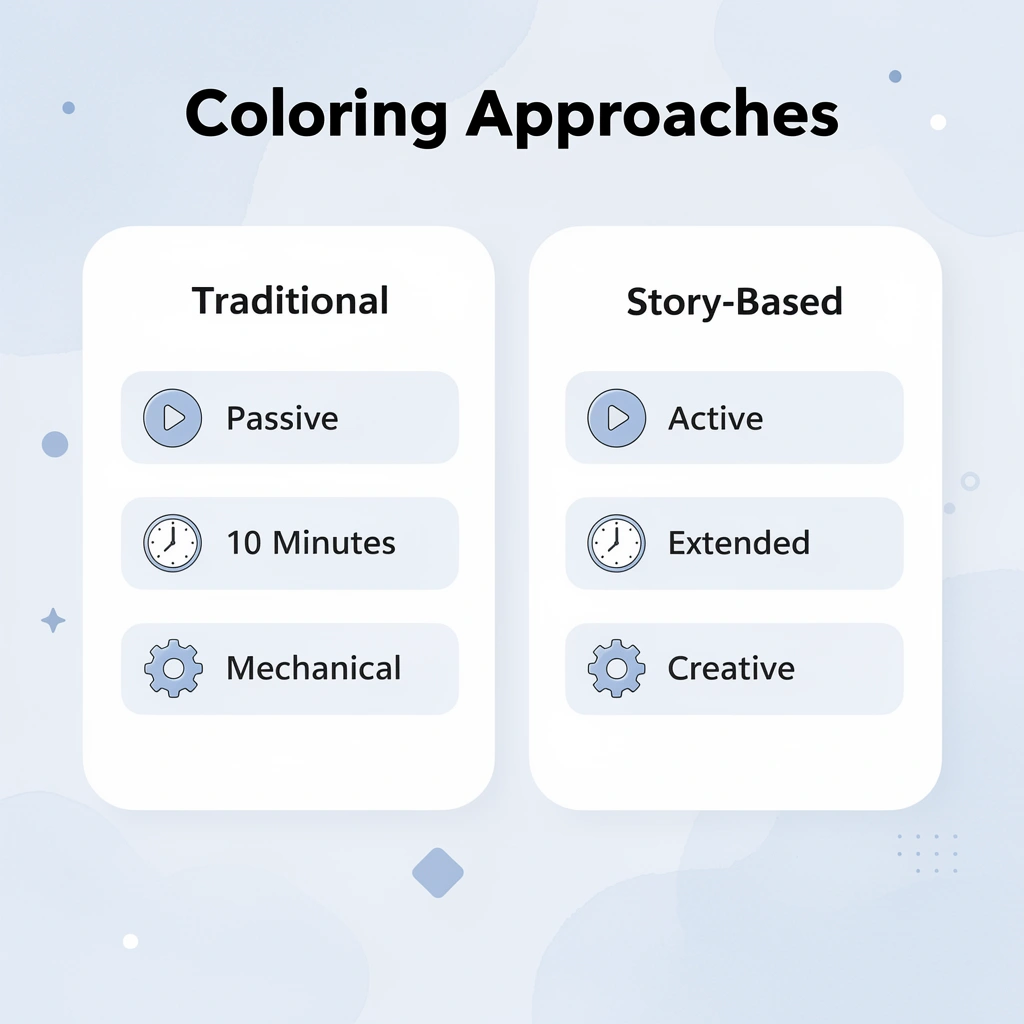
The shift from passive activity to creative practice happens through a single question. When your child finishes coloring, ask them to tell you what's happening in the picture. That simple prompt transforms a filled-in worksheet into a narrative exercise where they invent characters, motivations, and storylines. You're redirecting attention from the mechanics of coloring to the imaginative work that matters.

💡 Tip: Frame coloring as story creation instead of completion to transform 15 minutes of quiet time into meaningful creative practice.
Most parents hand over coloring sheets for quiet time or screen replacement. But those sheets sit unused after ten minutes because the novelty fades. When you frame the activity as story creation instead of completion, the same fifteen-minute window builds verbal fluency, decision-making, and the ability to construct meaning from visual prompts. The coloring becomes scaffolding for imagination rather than the end goal.
"Creative activities that combine structure with open-ended exploration show 40% higher engagement rates compared to purely directive tasks." — Child Development Research, 2023
This works because you're replacing two blockers: the rigid "correct answer" mentality that kills experimentation and the passive consumption that prevents self-generated ideas. A coloring page used as a storytelling prompt lies between total freedom, which can overwhelm some children, and strict instruction, which can shut down creative thinking. The image provides enough structure to spark ideas without dictating outcomes.
Platforms like MyColoringPages let you download sheets matched to your child's interests, whether construction vehicles, mythical creatures, or underwater scenes. Rather than generic designs that hold attention briefly, you can print a fresh prompt daily based on their evolving interests. This specificity provides richer material for storytelling.
🎯 Key Point: Interest-specific coloring pages provide better narrative material than generic designs, leading to more detailed and engaging story creation.
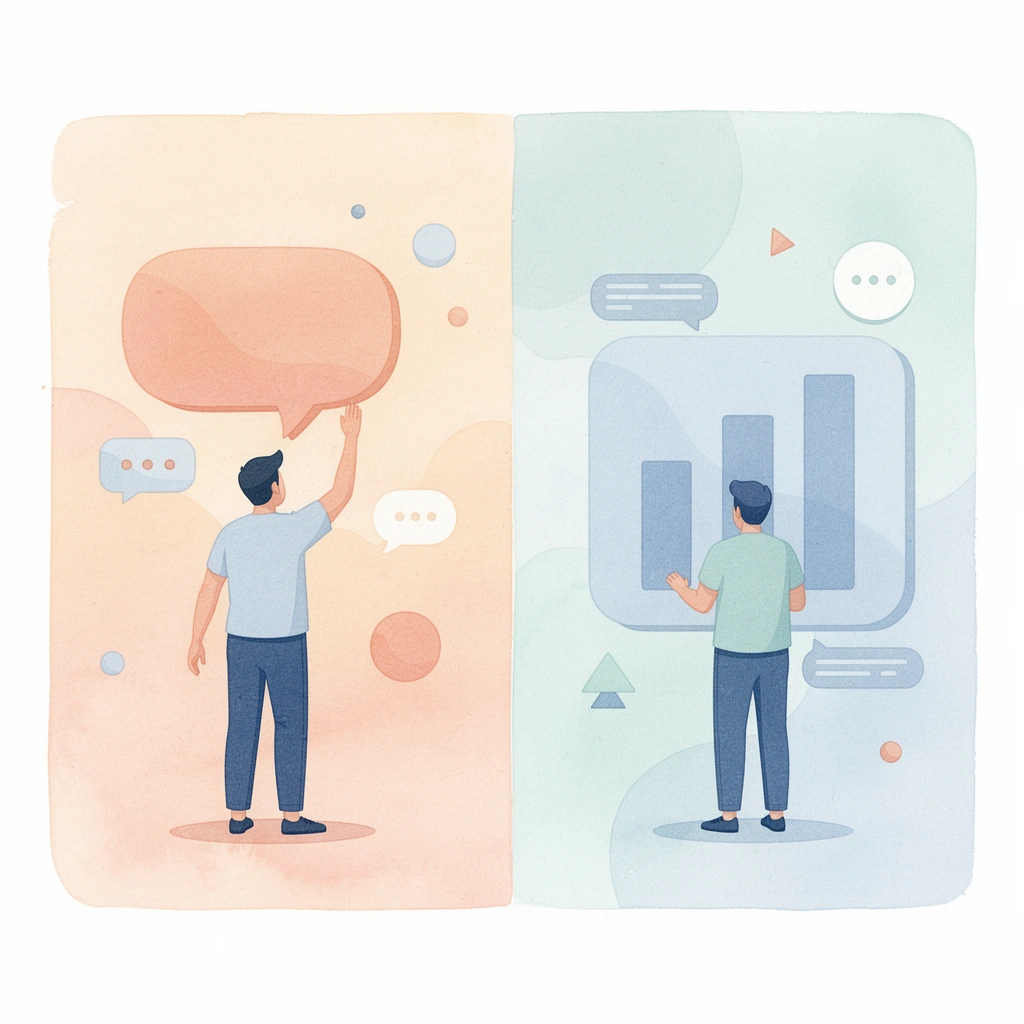
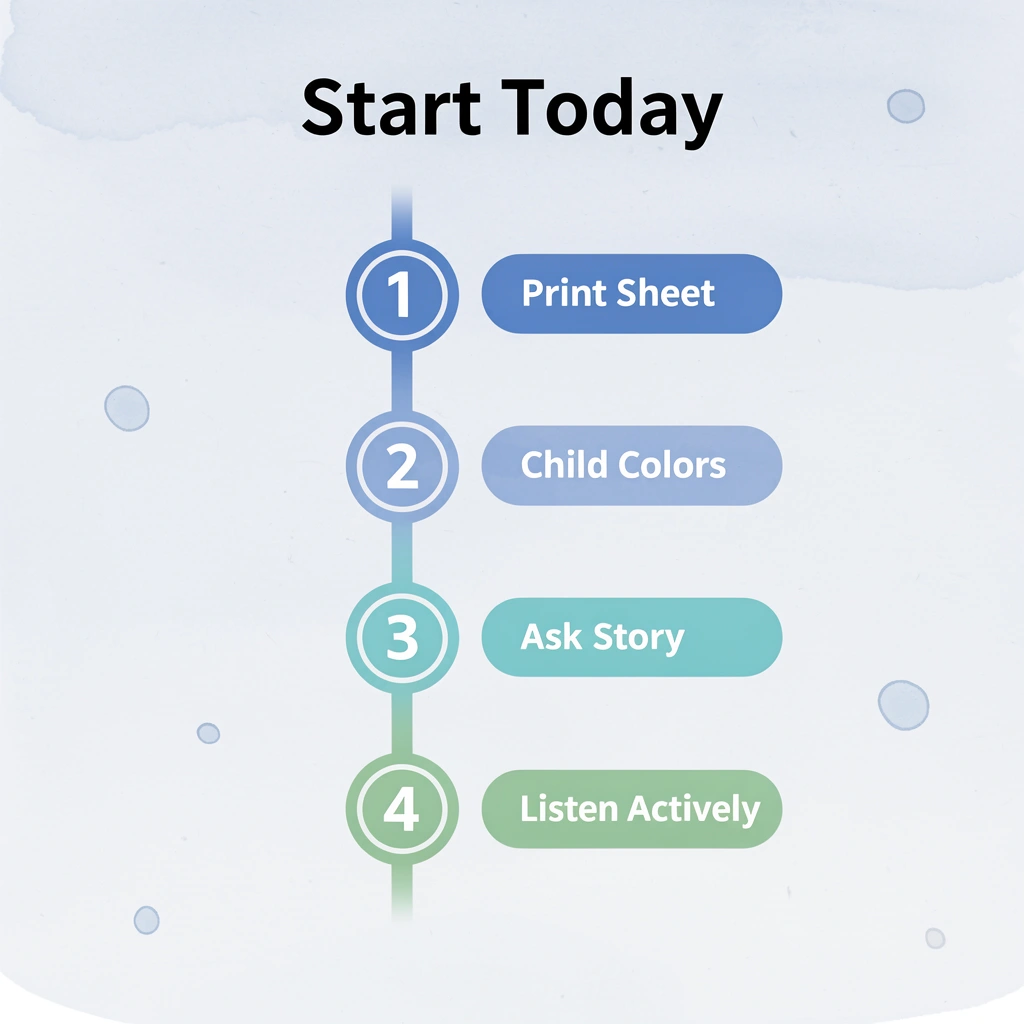
Start with one sheet today. Print it, hand it over, and when they finish, ask what the character is doing, where they're going, or what happens next. Listen without correcting their logic or narrative choices. That listening signals their invented ideas hold real value.
The practice costs nothing beyond paper and fifteen minutes. It directly replaces low-value screen time with an activity that strengthens verbal creativity, narrative construction, and independent decision-making: skills that transfer across every domain they'll encounter later. You're using time you already set aside and making it count toward building creative capacity.
Related Reading
- Is Creativity A Skill
- Creativity Toys For Toddlers
- AI vs Human Creativity
- Human Creativity
- Types Of Creativity