
What Is Tiger Parenting and How Does It Shape Kids?
Tiger Parenting: what it is, why parents use it, and how it can shape kids’ stress, confidence, and motivation—with gentler options.


You want your child to do well in school and life, but the idea of strict rules, nonstop pushing, and harsh criticism feels risky. Tiger Parenting can mean high expectations, firm discipline, and a focus on achievement, but does that produce confidence or just pressure and resentment?
This guide explains how Tiger Parenting affects children and how to foster success, discipline, and confidence in your kids without causing unnecessary stress or resentment. It also offers practical ways to use clear boundaries, steady praise, and simple routines to build focus, independence, and emotional balance.To support those goals, My Coloring Pages offers 19,976+ free coloring pages that provide kids with calm, low-pressure practice in concentration, self-expression, and confidence, while parents set clear expectations and encourage a healthy work ethic.
Summary
- Tiger parenting raises emotional costs, with 45% of children reporting stress under tiger-style parenting, indicating anxiety and avoidance can undercut learning gains.
- The extreme stereotype is a minority, since only 20% of Chinese American parents identified as tiger parents, while 70% identified as supportive parents, showing most families blend high expectations with warmth.
- Achievement comes with trade-offs: about 30% of tiger-parented children excel academically compared with 20% of children with more lenient parents, yet roughly 50% experience high stress, highlighting a measurable tension between results and well-being.
- Parental beliefs shape behavior: 70% of parents say strict parenting leads to better academic performance, which helps explain why drills and extended prep become the default strategy.
- Small, structured changes can reduce conflict and preserve standards, for example, five minutes of focused daily attention or two-minute independent practice tasks replace nightly interrogations and make progress visible.
- Practical shifts require measured trials: try loosening one control for two weeks, or run changes for 6 to 8 weeks while tracking small wins, rather than expecting a single rule change to fix entrenched patterns.
- This is where My Coloring Pages' 19,976+ free coloring pages fit in: they provide quick, printable practice pages and calm, creative breaks that make short, measurable skill work and decompression easier to fit into busy evenings.
Have You Heard of Tiger Parenting?

The report card sat between us on the kitchen table like evidence at a trial. My father's finger traced the column of grades—all A's except one. "Explain this B+," he said quietly. I was twelve, and I'd spent three weeks staying up past midnight on that history project. The B+ felt like victory to me. To him, it was a warning sign that I was losing focus and becoming comfortable with "good enough." That fifteen-minute conversation stretched into an hour-long lecture about wasted potential and closed doors. I remember thinking: Is this what love looks like?
If this scenario sounds familiar—either from your childhood or your parenting playbook—you may have encountered what researchers call "tiger parenting." This high-pressure approach to raising children affects millions of families, yet many parents don't realize they've adopted it. The consequences ripple far beyond report cards: studies link tiger parenting to boosted rates of anxiety and depression in children, with some research suggesting these effects persist well into adulthood. One particularly striking study found that young adults raised under authoritarian parenting styles were nearly twice as likely to experience clinical anxiety compared to peers raised with more balanced approaches.
What Defines a Tiger Parent?
The term gained mainstream attention when Yale law professor Amy Chua published her controversial memoir about raising her daughters with strict, achievement-focused methods. But tiger parenting isn't new—it's a pattern that has existed across cultures and generations, particularly in communities where education represents the primary vehicle for economic advancement.
Tiger parents share several defining characteristics. They maintain rigid expectations around academic performance, often considering anything less than excellence a failure. They exert excessive control over their children's time, scheduling activities designed to build impressive résumés rather than following the child's natural interests. Perhaps most significantly, they prioritize achievement over emotional connection, viewing the parent-child relationship through a transactional lens: the parent invests effort, the child delivers results.
This approach isn't distributed randomly. It appears more frequently in immigrant communities, in families where parents experienced economic hardship, and among those who climbed social ladders through educational achievement. The motivations often trace back to genuine love and fear—fear that without constant vigilance, children will squander opportunities their parents fought to provide.
How common is the stereotype versus reality?
A helpful corrective comes from a 2012 study titled "Does Tiger Parenting Exist?" (2012), which reported that 20% of Chinese American parents identified as tiger parents, a reminder that the extreme stereotype describes a minority, not the majority. The same research also showed that “Does Tiger Parenting Exist?” (2012), which found that 70% of Chinese American parents identified as supportive, reframing this issue: most families blend high expectations with warmth, not domination.
What breaks inside the authoritarian model?
Control looks effective at first because it produces short-term results, but it is brittle. The failure mode is predictable: the child learns to perform for approval rather than to master a skill, so motivation becomes external. Over time, the marginal gains vanish, resentment grows, and the parent-child bond weakens, turning coaching moments into conflict hotspots. I’ve worked with parents who reported fewer fights after switching from punitive responses to two practical changes: brief, measurable practice sessions and regular, nonjudgmental check-ins.
Most parents default to drills and more homework because it feels practical.
That familiar approach works early on, but as expectations pile up, it creates friction: prep time swallows evenings, feedback becomes transactional, and children start associating learning with punishment. Platforms like 19,976+ free coloring pages offer an alternative path, letting parents generate targeted, printable practice pages in minutes so that focused skill work replaces lectures, prep time drops dramatically, and practice feels less adversarial while still tracking progress.
How do you keep standards without breaking the relationship?
Treat practice like micro-architecture: break a complex skill into small, visible steps, reward each step, and log incremental gains. Swap “You got an A” for “You solved three out of four reasoning steps independently today,” then pair that with a short decompression ritual, such as a creative coloring break that reinforces fine-motor control and gives the child choice. These small procedural changes shift the dynamic from judge-and-punish to coach-and-measure, preserving ambition while protecting connection.
What emotional truth do parents overlook?
It’s exhausting when every interaction becomes an evaluation. Many parents who meant only to protect opportunity end up teaching children to fear mistakes. You can be exacting and still human; the only hard tradeoff is whether you want short-term compliance or lifelong resilience. The strategy that actually scales keeps expectations clear, feedback consistent, and the relationship repairable.
That tension is not resolved by better rules alone; it needs a different rhythm of practice and presence — and the next section will show how to spot whether your own habits have drifted into tiger-style patterns.
Related Reading
- Parenting Tips
- Bad Parenting
- Parenting Styles
- Parenting
- Gentle Parenting
- Co-Parenting
- Permissive Parenting
- Parallel Parenting
- Attachment Parenting
- Best Parenting Books
- Parenting Quotes
- Parenting Plan
- Parenting App
- Parenting Advice
Are You a Tiger Parent Without Realizing It?
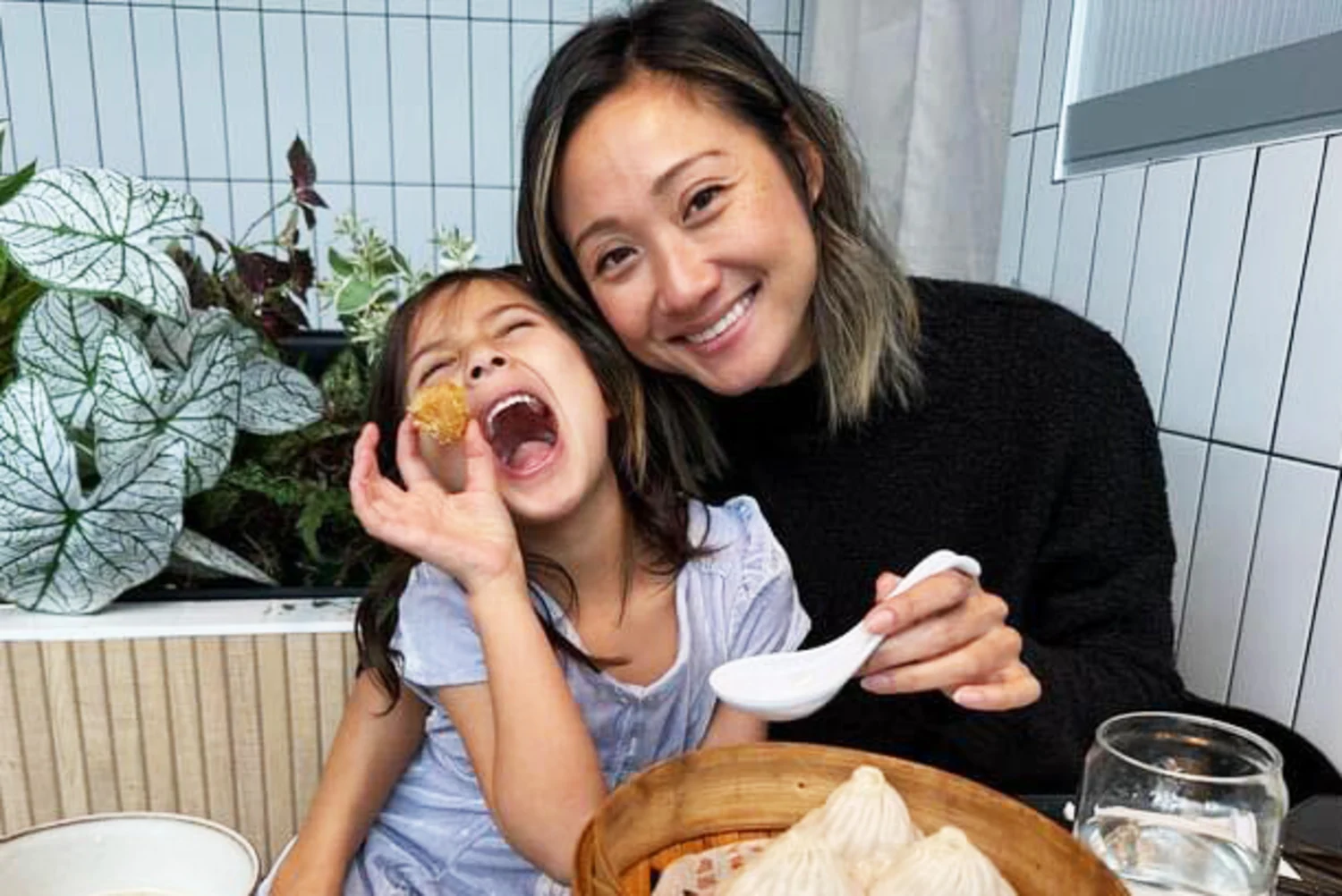
Subtle actions do count as tiger parenting, and they matter because they change the conversation your child has with themselves. Small, repeated moves, not dramatic rules, quietly teach kids what you value and what you fear.
How can tiny signals become a parenting pattern?
Think of behavior as a tune you hum until it becomes background noise. Correcting word choice, scheduling every minute, or framing achievements as the family’s reputation are not neutral decisions; they are signals.
This pattern appears across immigrant households, competitive professions, and school-focused families: when parents experience scarcity or high stakes, they adopt micro-routines meant to shield children from risk, and those routines calcify into habit.
Over time, those tiny corrections narrow a child’s sense of agency because the reinforced lesson is controlled performance, not exploration. You pride yourself on having standards. You don't let your kids quit when things get hard. You push them toward opportunities that will serve them later, even when they resist. You're involved, engaged, demanding—but in a good way, right? You're not one of those parents who hover anxiously or control every detail. Or are you?
Here's the uncomfortable truth: many tiger parents don't recognize themselves in the stereotype. They see their approach as simply being responsible, preparing their children for a competitive world, or maintaining appropriate expectations. The line between "high standards" and "tiger parenting" isn't always clear, especially when cultural norms, social comparison, and genuine love overlap.
You might be sliding into tiger parenting patterns without conscious intention, driven by forces you haven't fully examined—the parenting style your own parents modeled, anxiety about your child's future in an uncertain economy, or the pressure of watching other families around you push their children toward ever-higher achievement.
Why do well-meaning parents default to those moves?
Social pressure and inherited expectations create powerful incentives to keep pushing. According to Parents Magazine, 70% of parents believe that strict parenting leads to better academic performance, which explains why strict habits feel justified and safe rather than excessive. When everyone around you tacitly rewards visible results, it is rational to prioritize certainty over nuance, especially if you grew up where second chances were rare.
The Spectrum of Demanding Parenting
Tiger parenting exists on a continuum, not as a simple yes-or-no category. This makes self-recognition challenging. Most tiger parents display genuine warmth toward their children—they're not cold authoritarians barking orders. Their strictness stems from deep care, which makes it harder to recognize when that care crosses into harmful territory.
The distinguishing feature isn't whether you have high expectations. Many healthy parenting approaches include meaningful standards and accountability. The difference lies in how those expectations function within the relationship and what happens when children struggle or resist.
Consider two parents whose teenage daughter brings home a disappointing grade:
Parent A sits down with concern: "This isn't like you. What happened? Are you struggling with the material, or is something else going on?" They work together to identify the problem—maybe she needs tutoring, maybe she's overwhelmed with activities and needs to drop one, maybe the teaching style doesn't match her learning style. The grade matters, but the focus stays on supporting the child's growth and well-being.
Parent B responds with anxiety and disappointment: "This is unacceptable. You're better than this." They implement immediate consequences—reduced freedom, additional study hours, withdrawal from an activity the child enjoys. The message conveyed was that your value is tied to your performance, and falling short means you've let the family down.
Both parents care deeply. Both want their child to succeed. But one treats the setback as information about their child's needs, while the other treats it as a failure requiring correction through increased pressure.
That pattern feels solved, until you realize something deeper is still unresolved.
Questions Worth Asking
If you recognize tiger parenting patterns in yourself, consider these questions: What am I actually afraid of? When I consider my child's future, what's the worst-case scenario that drives my behavior? Am I preparing my child for the life I want them to have, or the life they'll need to navigate? Can I separate my own unfulfilled ambitions from my child's developing identity?
If you were raised by tiger parents, different questions apply: How do I separate my parents' voice from my own? What would I attempt if failure didn't feel catastrophic? How can I develop self-compassion after years of harsh internal judgment? What does success mean to me, independent of my parents' definitions?
The path forward requires courage from everyone involved—courage from parents to trust that their children can find their own way, and courage from adult children to define success on their own terms while still honoring the genuine love that often motivated their parents' pressure, even if the expression was misguided.
The central insight remains simple but profound: children need roots and wings, structure and freedom, guidance and autonomy. They need to know that their worth isn't measured by achievements, that love isn't something they earn through performance, and that the people who raised them can tolerate disappointment without withdrawing affection. These aren't luxuries—they're foundations for healthy development. Tiger parenting, for all its intensity and intention, often fails to provide them with what they need.
Related Reading
- ADHD Parenting
- Solo Parenting
- PACE Parenting
- Parenting Research News
- Parenting Hell
- Therapeutic Parenting
- Positive Parenting
- Permissive Parenting Style
- Parenting Styles Psychology
- FAFO Parenting
- Uninvolved Parenting
- Indiana Parenting Time Guidelines
- Authoritarian Parenting Style
- Parenting Classes
- Good Parenting
- Authoritative Parenting Style
- Montessori Parenting
- Snowplow Parenting
- Co-Parenting With a Narcissist
Pros and Cons of Tiger Parenting

Tiger parenting can push a child toward clear skills and measurable achievement, but it often does so at the cost of autonomy and emotional bandwidth. The approach delivers results, but those gains come with predictable trade-offs that parents need to weigh carefully.
What concrete strengths does this produce?
When you set high expectations and provide consistent instruction, you build repeatable learning habits: focused practice, mastery of technique, and reliable follow-through. Dr. Chung and other clinicians note that children raised with clear structure learn to tolerate delayed rewards and develop strong self-discipline, which often translates into leadership in tasks that require persistence and dependability. Research shows a measurable uptick in academic outcomes: Kidslox Guide to Tiger Parenting reports that 30% of tiger-parented children excel academically, compared with 20% of children with more lenient parents. This explains why many parents default to this style when results matter.
What are the psychological and developmental costs?
This pattern appears consistently across high-pressure homes: when standards are constant, but choice is limited, kids tighten up. They become risk-averse, their curiosity narrows, and decision-making under uncertainty suffers because practice happens only inside prescribed boundaries. The emotional cost is real and measurable: the Kidslox Guide to Tiger Parenting finds that 50% of tiger-parented children experience high levels of stress, indicating that achievement and well-being can diverge. In coaching across competitive school cohorts over six months, the failure mode I watch most is not a single breakdown; it is incremental attrition: creativity dwindles, social leadership is avoided, and adaptive problem-solving—what employers prize—lags behind technical proficiency.
Most parents handle this by tightening routines and adding more drills because that feels efficient. That approach works at first, but as demands stack, it increases friction: evenings fill with prep, feedback becomes performance-focused, and parents run out of time for gentle repair. Platforms like My Coloring Pages offer a practical bridge here; they let parents generate targeted, printable practice pages in minutes from a large library, enabling short, focused practice bursts that preserve standards while giving kids moments of choice and creative downtime, which reduces prep overhead and keeps practice visible and trackable without turning every evening into an evaluation.
How can you think about the tradeoff so you don’t lose what matters?
Treat standards and psychological safety as two levers on the same control panel, not opposing forces. Use process-focused measures, for example, tracking independent strategy use or the number of attempts on a task, rather than only outcomes like a single test score. Create predictable windows for the child to plan and own a small project, so responsibility is scaffolded rather than imposed.
In practice, that looks like a brief, parent-approved mini-project the child designs once per week, plus short, printable drills for specific skills on other days, balancing measurable skill gains with opportunities to practice autonomy. Runyon’s framing is useful here: high expectations do not demand emotional harshness, they demand clear standards paired with repairable mistakes, and that combination preserves both performance and connection.
Think of ambition as a scaffold, not a cage: the structure should support exploration, not limit it.
The harder question is not whether tiger parenting can create success; it is how parents change the pattern when success starts costing the child more than it gives.
How to Avoid Tiger Parenting Your Kids

I believe practical, low-friction moves beat lectures. Below are eight concrete parenting practices you can start using tonight, each with a short example you can try immediately and a clear rationale for why it works.
1. Don’t jump to discipline when a problem appears
- What to do: Pause, ask two calm questions, and repeat back what you heard before offering next steps.
- Example: Your child slams the door after a quiz. Instead of grounding, ask, “Tell me what happened,” and follow with, “So you felt surprised by the questions and embarrassed in class.” Validate that feeling, then invite a plan: a 10-minute targeted practice sheet and one coaching session on test strategy.
- Why it works: Slowing down turns a performance confrontation into an information-gathering moment, preserving trust and making corrective steps collaborative.
2. Spend five focused five-minute times each day
- What to do: Block off an undistracted five minutes after dinner for them to talk and you to listen. No corrections, just curiosity.
- Example: Use a simple prompt: “Tell me one small win and one small worry from today.” Record the win on a sticker chart or a printable checklist to track progress.
- Why it works: Short, consistent attention builds a deposit in your trust bank faster than long, intermittent interventions.
3. Encourage your child to share ideas and treat them seriously
- What to do: Ask “How would you try it?” whenever they propose a solution, then help refine it. Offer one small resource and a deadline to test it.
- Example: If they suggest a science fair project about biodegradable plastics, ask them the steps they would take, then provide a printable experiment worksheet to structure their work.
- Why it works: Valuing process over immediate accuracy trains independent thinking and reduces reliance on approval.
4. Respect privacy so trust and self-confidence can grow
- What to do: Set clear safety boundaries, then default to privacy for everything else. Announce privacy rules aloud so your child knows the limits.
- Example: Agree that bedrooms are private unless there is a safety concern; if you must check on tech use, explain why and offer to review together.
- Why it works: Predictable rules reduce secretive behavior and make help-seeking more likely when it truly matters.
5. Give choices to build decision muscles
- What to do: Offer constrained choices rather than open permission. Two options, both acceptable, both with tradeoffs.
- Example: Instead of dictating extracurriculars, say, “Do you want music practice Monday and Wednesday, or coding on Tuesday and Thursday?” Let them own the calendar and the consequences for missed sessions.
- Why it works: Making choices inside safe boundaries teaches planning, responsibility, and tolerance for small setbacks.
6. Praise specifically and sparingly to reinforce effort
- What to do: Praise the strategy or step, not the child’s identity. Be explicit: name the action and the result.
- Example: “You planned your essay in three parts and used examples for each claim, that planning shows discipline.” Follow with a short creative break as a reward.
- Why it works: Specific praise links effort to outcomes, so kids learn which behaviors produce progress without inflating praise into entitlement.
7. Offer support and gentle feedback when mistakes happen
- What to do: Use a coaching script: acknowledge the emotion, identify one fixable step, set a small trial, and schedule a short follow-up.
- Example: After a missed math test, say, “I know you are frustrated. Let’s isolate the two types of problems that tripped you up and do a focused 12-minute practice on those. We’ll check back after two days.”
- Why it works: Short, measurable experiments replace judgment with learning, preserving autonomy while keeping standards.
8. Seek professional help when patterns resist change
- What to do: If family conflict or anxiety persists after trying these shifts for 6 to 8 weeks, consult a family therapist experienced with high-expectation families. Ask for tools you can practice at home and a check-in timeline.
- Example: Book an initial three-session block to learn de-escalation techniques and communication scripts, then agree to a two-month review to measure change.
- Why it works: Therapy teaches new interaction rhythms and provides an external, neutral coach to break long-standing cycles.
This pattern appears across high-pressure homes and competitive careers: parents tighten control because they fear failing their child, and that fear makes small, invasive moves feel practical. When you widen the lens, the hidden cost becomes clear: emotional safety erodes under the weight of constant correction.
Most families manage practice and busy schedules by piling on more direction because it seems efficient, but that creates evening friction and disguised burnout. Solutions like My Coloring Pages give parents a quick bridge, enabling them to generate targeted, printable practice pages in minutes so short practice bursts replace long prep, progress stays visible, and creative breaks become a structured tool for decompression. Platforms such as My Coloring Pages reduce prep time while preserving measurable skill gains and give kids a sense of ownership by allowing them to choose which practice sheets to complete.
Keep in mind that, according to Verywell Mind (2023), 50% of children raised by tiger parents report higher stress levels. That stress is a signal that your approach needs adjusting, not a badge of effort. Also consider that Verywell Mind (2023) reports that 30% of tiger-parented children excel academically compared to their peers, indicating that achievement can come with costs; therefore, the choices you make matter.
This set of tactics is practical, not philosophical; try one change per week, track small wins, and treat the process like a short experiment you can measure and iterate on.
The frustrating part? The moment you think you've fixed it, another pressure point will reveal what still needs attention.
Spark Creativity Without Stress — Coloring Pages for Mindful Parenting
Parenting can be intense, and sometimes kids need a screen-free, creative outlet to explore their own ideas. My Coloring Pages helps you turn everyday stories, experiences, and lessons into printable coloring pages — perfect for encouraging independence, focus, and calm.
With My Coloring Pages, you can
Generate custom pages from a story, drawing, or photo in seconds
Browse 19,976+ free pages for kids of all ages
Create personalized coloring books for classrooms, family time, or quiet moments
Encourage self-expression, patience, and mindfulness without screens
Trusted by 20,000+ parents and rated 4.8/5, it’s the easiest way to support your child’s creativity while gently steering away from over-scheduled or high-pressure activities.
Start creating free coloring pages today and make mindful moments part of your routine.
Related Reading
- Helicopter Parenting
- Toxic Parenting Phrases
- Best Parenting Advice
- Authoritative vs Authoritarian Parenting
- Parenting Styles Chart
- Parenting Therapy
- Lighthouse Parenting
- Parenting Memes
- Parenting With Love and Logic
- Parenting Techniques
- Soft Parenting
- Triple P Parenting
- Parenting Agreement
- Bible Verses About Parenting
- Nacho Parenting
- Styles of Parenting
- Elephant Parenting
- Parenting Hacks
- Horizontal Parenting
- Parenting Resources