100 Cheap Creative Hobbies for Adults in 2026
Cheap creative hobbies don't have to cost a fortune. My Coloring Pages shares 100 fun ideas to spark your creativity on a budget.


Creative hobbies don't have to drain a budget to be rewarding. Cheap creative hobbies like sketching, paper crafts, and hand lettering require little more than basic supplies and a willingness to start. The options available today are far wider than most people expect, and building a consistent creative practice is more accessible than ever.
Printable resources have made it especially easy to get started without spending much. Free coloring pages, worksheets, and templates give beginners and experienced artists alike a structured way to practice at home. Anyone looking for a reliable place to begin can explore a library of over 74,000 free printable designs at My Coloring Pages.
Table of Contents
- Are Creative Hobbies Important for Adults?
- The Hidden Cost of Ignoring Hobbies as an Adult
- How to Make Time for Hobbies as an Adult in 8 Ways
- How to Choose a Cheap Hobby for Adults in 8 Steps
- 100 Cheap Creative Hobbies for Adults in 2026
- Want to Be Creative Without Spending a Fortune? Start With the Lowest-Cost Hobby on This List.
Summary
- Creative hobbies are not just enjoyable pastimes. They are backed by measurable psychological and physiological benefits. A meta-analysis published in Psychological Bulletin reviewed 332 effect sizes and found that 70.09% of adults who engaged in creativity-enhancing activities outperformed control groups on creativity measures. That is a reliable, repeatable pattern, not an outlier finding.
- The mood benefits of creative activity appear the day after engagement, not just during it. A 13-day diary study tracking 658 adults found that participants reported greater well-being and more positive emotions on the day following creative activity. Critically, the research confirmed that creativity predicted improved mood rather than happier people simply choosing to be more creative, meaning the activity itself drives the outcome.
- Stress reduction from creative engagement is biological, not just psychological. A Drexel University study measuring cortisol levels in 39 adults before and after a 45-minute art session found a statistically significant reduction in the body's primary stress hormone. Importantly, the results held regardless of whether participants had any prior artistic experience, which removes the skill barrier as an excuse entirely.
- The time adults need for creative hobbies is already built into most schedules. According to the Bureau of Labor Statistics' American Time Use Survey, adults spend an average of 5 hours per day on leisure activities. The issue is not a shortage of hours but that those hours default to passive consumption rather than intentional creative engagement.
- Choosing the wrong hobby for the wrong reasons is one of the most common reasons adults abandon creative pursuits quickly. Adults who match their hobby to their temperament, whether they prefer quiet, solitary activities or tactile, structured ones, are far more likely to sustain the habit beyond the first month. Starting with low-cost or free options before investing in supplies also dramatically reduces early dropout rates.
- My Coloring Pages addresses the two most common entry barriers, skill and expense, by offering 74,389+ free coloring pages that anyone can download and print without a subscription or prior artistic experience.
Are Creative Hobbies Important for Adults?
Adults are not too old to start a creative hobby. The science is clear: creativity does not belong only to the young or naturally gifted.
"Creativity is not a fixed trait: it is a skill that can be developed at any age through consistent practice and intentional exploration." — Neuroscience Research Consensus
🎯 Key Point: It is never too late to pick up a creative hobby. Your brain remains capable of growth and the development of new skills well into adulthood.
💡 Tip: Start small. Even 15–30 minutes of a creative activity daily delivers measurable mental and emotional benefits over time.
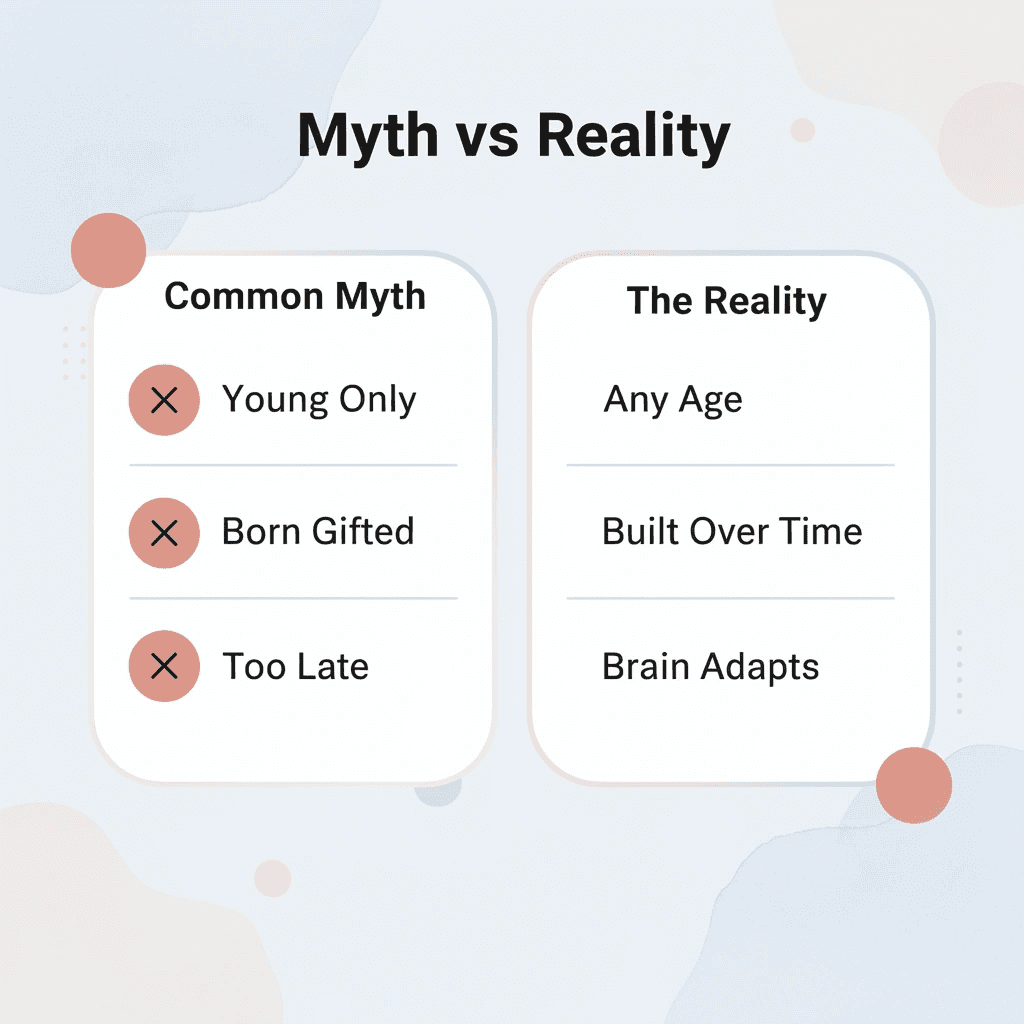
Common Myth | The Reality |
|---|---|
Creativity is only for the young | Adults can develop creative skills at any age |
You need to be naturally gifted | Creative ability is built, not born |
It's too late to start | The brain retains neuroplasticity throughout life |
What the research actually shows
A meta-analysis published in Psychological Bulletin (September 2024) reviewed 332 effect sizes from adult creativity studies and found that creativity training produced a consistent, medium-positive effect across participants. Researchers estimated that 70.09% of adults who engaged in creativity-enhancing activities outperformed control groups on creativity measures, demonstrating a reliable, repeatable pattern showing that creativity responds to practice at any age.
The emotional payoff is equally real. A 13-day diary study of 658 adults found that on days when participants engaged in more creative activity than usual, they experienced measurably greater well-being the following day. Creativity predicted improved mood, not the reverse. You need not feel inspired first.
Does prior experience affect the benefits of creative hobbies?
According to UCLA Health, people with hobbies are 30% less likely to suffer from depression, low mood, and stress. A Drexel University study measured cortisol levels in 39 adults before and after a 45-minute art session and found a statistically significant reduction in the stress hormone, regardless of artistic experience. Most adults who avoid creative hobbies believe prior experience is a prerequisite for benefit. That assumption is the barrier, not biology. Our My Coloring Pages platform removes that barrier: no artistic skill required, no expensive supplies, no subscriptions. The entry cost is near zero.
Do the mental health benefits of creative hobbies grow over time?
The American Psychiatric Association's Healthy Minds Monthly Poll found that 46% of Americans use creative activities to manage stress and anxiety. A study of 279 adults aged 40 to 84 showed that creative hobbies correlate with better mental health in middle and older age, suggesting these benefits strengthen rather than diminish over time.
The Hidden Cost of Ignoring Hobbies as an Adult
Ignoring creative hobbies removes critically important biological, psychological, and cognitive processes that your brain and body need to function well — and the cost of that neglect is far greater than most adults realize.
"Creative hobbies aren't a luxury — they're a biological necessity for a well-functioning brain and body." — Wellness Research Consensus
🚨 Warning: When you consistently deprive yourself of creative outlets, you aren't just missing out on fun — you're actively undermining essential mental and physical health processes your body depends on.
💡 Key Insight: The three core systems most affected by hobby neglect are deeply interconnected:
System | What Gets Disrupted | Real-World Impact |
|---|---|---|
Biological | Stress hormone regulation | Increased anxiety, poor sleep |
Psychological | Emotional processing & identity | Burnout, loss of self |
Cognitive | Neural plasticity & creativity | Reduced problem-solving ability |
🎯 Key Takeaway: Creative hobbies aren't a passive indulgence — they are an active, non-negotiable investment in your brain health, emotional resilience, and cognitive performance.
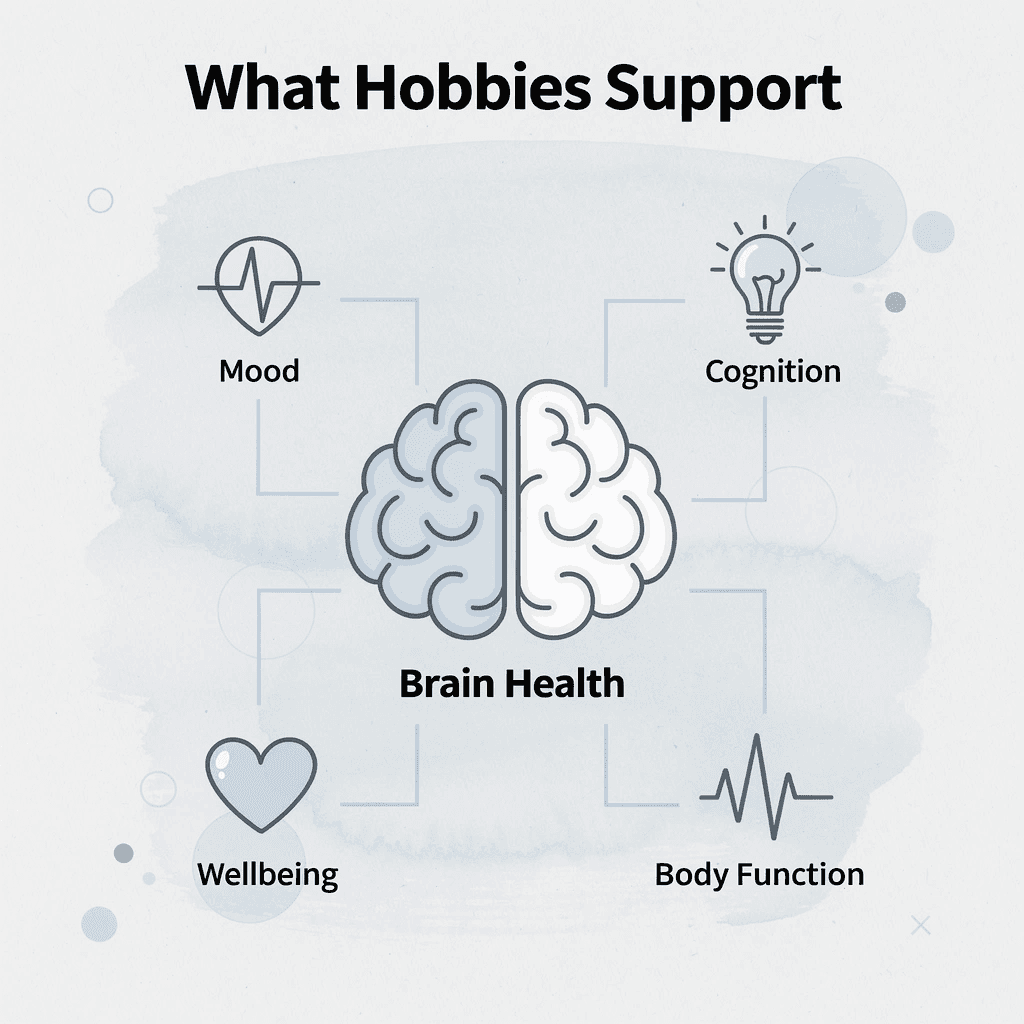
🔑 Remember: Treating hobbies as optional extras is one of the most costly mistakes an adult can make for their long-term wellbeing.
1. You May Struggle to Recover From Daily Stress
Passive downtime feels like rest, but it rarely delivers it. Scrolling a feed or watching another episode keeps your nervous system engaged without processing stress. Research published in the Journal of Occupational and Organizational Psychology found that employees who regularly engaged in creative activities outside work experienced greater psychological recovery, including increased relaxation, a sense of mastery, and greater control over their free time. These recovery experiences translated directly into better performance the following day. Active creation does something passive consumption cannot: it closes the loop.
2. Your Stress Levels May Stay Higher Than They Need To
The cost of skipping creativity extends beyond your mind to your body's chemistry. A study from Drexel University measured stress hormone levels in 39 adults before and after a 45-minute art-making session and found a statistically significant reduction in the body's primary stress hormone, regardless of artistic background. Without regular creative activities, these stress-reducing biological responses don't get triggered, leaving your body in a higher baseline state of tension.
3. You May Miss Out on a Better Mood and Greater Life Satisfaction
A 13-day diary study involving 658 adults found that participants reported greater flourishing and more positive emotions the day after engaging in creative activities. Critically, the research confirmed that creativity predicted improved well-being rather than happier people simply choosing to be more creative: the activity itself does the work. Adults who describe years without creative hobbies often report a persistent sense of emptiness and difficulty finding genuine joy, not from a character flaw, but from the absence of something never replaced.
Most people default to whatever is easiest: streaming, social media, video games. The hidden cost surfaces slowly, in flattened moods, persistent stress, and weeks that feel indistinguishable. For adults seeking low-cost creative hobbies that deliver psychological recovery, accessible options like downloading 74,389+ free coloring pages remove the two biggest barriers: skill and expense.
4. Your Brain Gets Fewer Opportunities to Stay Mentally Flexible
Cognitive flexibility—the ability to shift thinking when situations change—weakens without practice. Creative hobbies like drawing, writing, or crafting challenge the brain to generate new ideas and repeatedly solve problems, maintaining that flexibility. According to a 2024 meta-analysis published in Psychological Bulletin, creativity training across 332 effect sizes produced moderate improvements in creative performance, with 70.09% of participants outperforming control groups. Neglecting affordable creative pursuits amounts to slow withdrawal from a cognitive account you'll eventually need.
5. You May Feel Less Engaged Outside of Work
Without low-cost hobbies or ways to express yourself, adult routines get squeezed around work, chores, and screens, leaving little room for personal accomplishment or growth. According to a 2023 study published in Nature Medicine, adults aged 65 and older who engaged in hobbies showed higher levels of happiness, fewer depressive symptoms, and better self-reported health compared to those without hobbies across 16 countries. Creative engagement is not a reward you earn after everything else is handled; it is part of how you stay functional enough to handle everything else. The harder question is why so many adults cannot seem to make room for creative hobbies, knowing all of this.
Related Reading
- Creative Hobbies For Adults
- Creative Hobbies
- Creative Hobbies For Women
- Creative Hobbies For Men
How to Make Time for Hobbies as an Adult in 8 Ways
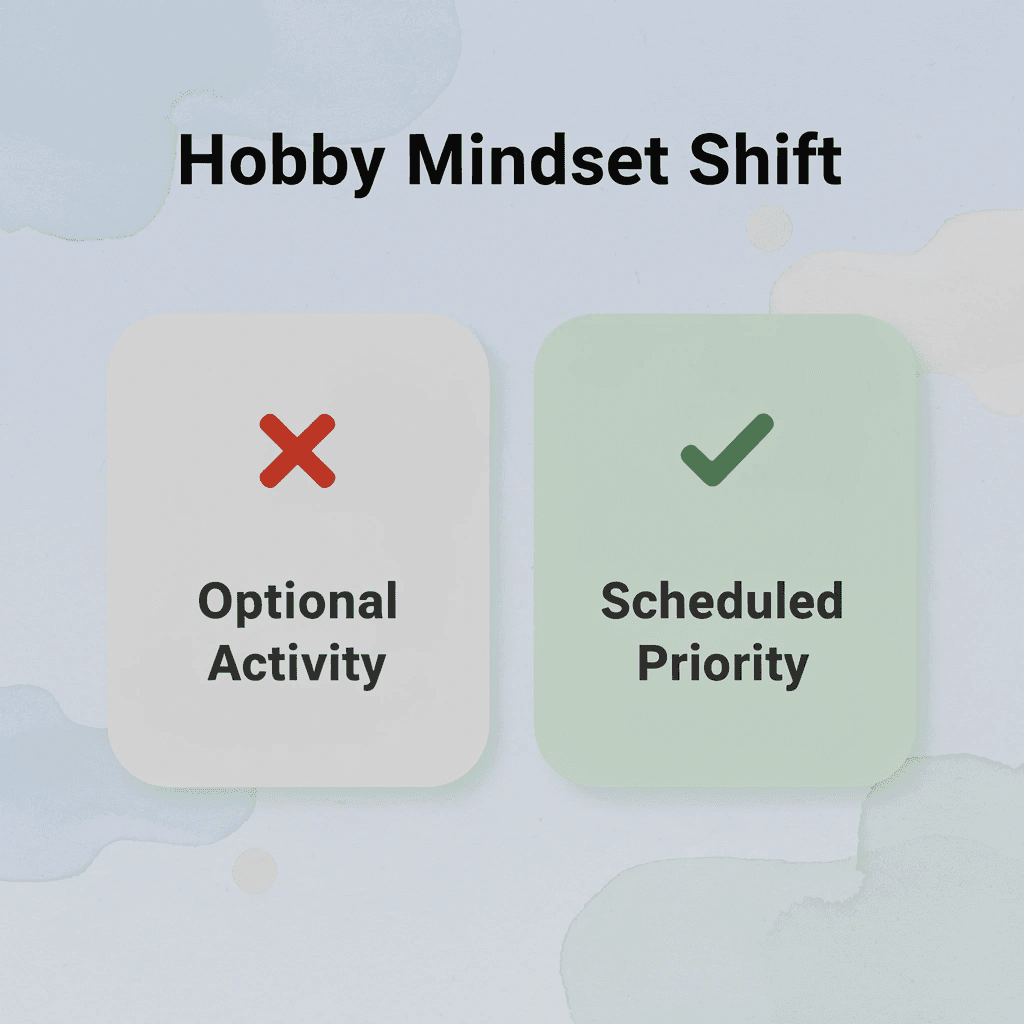
Scheduling creative time is structural, not optional. Adults who treat hobbies as optional find them disappear — not from laziness, but because optional activities lose to urgent ones. The fix is architecture, not motivation.
"Adults who treat hobbies as optional find them disappear — not from laziness, but because optional activities always lose to urgent ones." — Core Insight
Approach | Result |
|---|---|
Treat hobbies as optional | They disappear under urgent demands |
Treat hobbies as scheduled time | They survive and become consistent habits |
Rely on motivation alone | Inconsistent, unreliable follow-through |
Build structural architecture | Long-term hobby sustainability |
💡 Tip: Block hobby time on your calendar exactly like a meeting — because your creative life deserves the same commitment as your work obligations.
🔑 Takeaway: The real problem isn't a lack of time — it's a lack of structure. When you stop treating hobbies as optional extras and start treating them as non-negotiable appointments, they finally have a fighting chance to survive your busy schedule.
Why doesn't free time just appear on its own?
Free time does not arrive. You build it. Block 20 to 30 minutes on your calendar as you would a meeting, and protect that slot with equal seriousness. When hobby time has a specific place in your day, it stops competing with everything else and becomes part of your rhythm.
Where do those missing hours actually go?
According to the Bureau of Labor Statistics' American Time Use Survey, adults spend an average of 5 hours per day on leisure activities. The problem is rarely a shortage of hours; those hours typically go to passive consumption, scrolling, streaming, and drifting rather than anything intentional. Scheduling redirects what is already there.
Start Smaller Than Feels Worthwhile
The failure point is usually the assumption that creative sessions need to be long to count. Fifteen minutes of sketching, a few rows of knitting, half a chapter read—these are the real thing, not warm-ups. Consistency across small sessions builds more durable habits than occasional long ones. Perfectionism disguised as preparation keeps more people from starting than any shortage of time. You don't need the full afternoon. You need to begin.
Replace Screen Time, Not Sleep Time
The familiar approach when schedules feel packed is to sleep less or skip meals. A more honest look reveals that time is already spent on low-return activities, particularly the 20 to 40 minutes of social media scrolling that bookend most evenings. Swap one scroll session for a creative activity, and the math changes immediately. Color while the TV runs? Sketch before bed instead of refreshing your phone? Journal during lunch instead of watching short videos? Small redirects compound faster than most expect.
Why does keeping supplies visible make it easier to start?
The harder it is to start, the less likely you are to start. Hobby supplies stored in closets or packed into storage bins create invisible friction that builds avoidance. A coloring book on the coffee table, a journal on the nightstand, a crochet basket beside the sofa—these are behavioral cues. When your materials are in sight, your brain registers them as available rather than theoretical. That environmental shift outperforms most motivational strategies.
How do you keep the activity fresh without repeated purchases?
Most adults buy physical coloring books once and quickly exhaust the designs, which can stop the habit before it gains momentum. Platforms like My Coloring Pages solve that problem by providing access to over 100,000 downloadable coloring pages you can print whenever needed, keeping the activity fresh without store trips or repeated purchases.
Attach the Habit to Something You Already Do
New habits stick when they borrow momentum from existing ones. Color while drinking your morning coffee. Journal after brushing your teeth. Sketch after dinner. Knit while listening to a podcast. The existing habit acts as a trigger, and the creative activity rides along until it becomes its own anchor. This removes the decision cost of starting, which is often the highest cost.
Let Yourself Be a Beginner
Adults abandon creative hobbies faster than children because of misplaced expectations: skills should develop quickly, early results should look polished, and struggling through the learning curve signals a lack of talent. None of that is true. Every person who makes beautiful things made awkward things first. Calligraphy, watercolor, photography, pottery: all start with attempts that don't match the vision. Releasing the pressure to perform immediately is what makes a hobby something you'll stick with.
Choose What You Actually Want to Do
The best budget-friendly hobby is one you look forward to, not one that looks impressive or comes recommended by others. If you love calm, low-effort creative activities, adult coloring pages, puzzles, or simple journaling fit naturally. If you prefer tactile problem-solving, woodworking or hand lettering might hold your attention longer. If portability matters, watercolor or beading travels well. Matching the hobby to your personality and lifestyle removes one of the biggest reasons people stop: when the activity feels like a reward rather than a chore, making time for it becomes considerably less complicated.
Reframe What the Time Is Actually Doing
Adults often feel guilty about spending time on personal enjoyment, as if creative activity must be earned after obligations are met. Research published in the Journal of Occupational and Organizational Psychology links creative hobbies to better recovery from work demands and stronger next-day performance. Time spent coloring, sketching, or crafting is not time taken from productivity—it enables it. Treating your hobby as self-indulgence keeps it perpetually last on the list. Reframe it as maintenance—the same category as sleep, movement, and food—and the guilt loses its grip. The harder question is which hobby is worth protecting in the first place.
Related Reading
- Creative Hobbies To Try
- Creative Hobbies For Seniors
- Fun Creative Hobbies
- Creative Hobbies That Improve Mental Clarity
How to Choose a Cheap Hobby for Adults in 8 Steps
Choosing the right creative hobby starts with understanding what you need, not what looks appealing. Ask "why do I want one?" rather than "what hobby should I try?" — this critical shift in thinking filters out most of the noise before you spend a single dollar.
💡 Tip: Before browsing hobby lists, write down 3 specific reasons you want a new hobby — stress relief, socializing, creativity, or skill-building. Your why will instantly eliminate 80% of options that don't fit.
"The best hobby isn't the most popular one — it's the one aligned with your actual needs, budget, and lifestyle." — Hobby & Wellness Research
Question to Ask Yourself | Why It Matters |
|---|---|
Why do I want a hobby? | Filters out misaligned options immediately |
How much time can I commit? | Prevents burnout and abandoned hobbies |
What's my realistic budget? | Keeps costs manageable and sustainable |
Do I prefer solo or social? | Matches a hobby to your personality type |
🎯 Key Point: The most common mistake adults make is choosing a hobby based on aesthetics or trends rather than personal fit — always start with your why first.

Step | Action | Goal |
|---|---|---|
Step 1 | Ask why you want a hobby | Clarify your core need |
Step 2 | Set a realistic budget | Avoid overspending upfront |
Step 3 | Assess time availability | Find a sustainable commitment |
Step 4 | Research startup costs | Compare cheap vs. expensive options |
Step 5 | Try before you invest | Test with free or low-cost trials |
Step 6 | Check community access | Find local or online support groups |
Step 7 | Evaluate long-term costs | Ensure it stays affordable over time |
Step 8 | Commit and adjust | Refine based on real experience |
⚠️ Warning: Skipping Step 1 (your why) makes every other step harder — you'll waste time and money chasing hobbies that look good on paper but feel hollow in practice.
1. Start with your reason, not the trend
Adults who skip this step pick hobbies based on what's popular, not what fits their lives. Someone unwinding after a high-pressure workday has different needs than someone seeking social connection or skill-building. Knowing your "why" first transforms a list of 51 options (such as those cataloged by Sometimes Homemade for adult relaxation and personal growth) into a shorter, more personal shortlist.
How does your goal narrow down the right hobby for you?
If your goal is stress relief, try slower, hands-on activities like coloring, knitting, embroidery, or pottery. For self-expression, painting, creative writing, or photography allows you to put something of yourself into the work. For mental challenge, music composition or coding projects engage you differently from a quiet evening with a sketchbook. Your goal defines the category, and the category narrows your choice.
2. Choose something different from your daily work
The same pattern shows up across creative communities: adults in structured, analytical jobs often burn out on hobbies that feel like a second job. A software developer who spends eight hours coding and then practices digital art isn't getting a break; they're getting more of the same mental mode. Research supports this idea. Engaging in activities from unrelated domains exposes your brain to new ways of thinking, a process researchers call cross-domain transfer. Doing something different from your work improves the quality of your thinking when you return to it.
3. Match the hobby to your personality, not your aspirations
You see someone's beautifully finished watercolor on social media and think, "I want that." But you want the result, not the process. If you dislike sitting still, watercolor will frustrate you within a week.
How do you find a hobby that actually fits who you are?
Ask yourself honest questions before you commit. Do you prefer working alone or with others? Do you like following set steps or making decisions as you go? Do you enjoy detail-focused work or broad, creative strokes? Someone who thrives with quiet evenings will find journaling or embroidery far more sustainable than improv comedy. Matching the activity to your personality separates a lasting hobby from a guilt-inducing pile of unused supplies.
4. Start before you spend
The financial barrier to creative hobbies is smaller than it seems. Sketching requires a pencil and paper. Journaling costs the price of a notebook. Phone photography costs nothing beyond what you already carry. Origami starts with a single sheet of paper. Testing your genuine interest with low-cost or free options helps protect you from overspending before you know whether the hobby is a good fit.
Most adults who abandon hobbies early have overinvested upfront—buying the full kit, premium supplies, and beginner courses before discovering the activity didn't suit them. Starting cheap keeps stakes low and protects enthusiasm. SoFi Learn lists 30 fun and inexpensive hobbies for adults, with a common thread: low barriers to entry enable experimentation without regret.
How does the same logic apply to digital creative hobbies?
The same logic applies to digital creative hobbies. Most adults assume that personalized coloring means repeatedly buying printed books or searching for designs that match their preferences. Platforms like My Coloring Pages change that model entirely, offering 100,000+ downloadable coloring pages and an AI generator that creates custom designs in seconds for less than the ongoing cost of physical coloring books. For families, on-demand creative access pays for itself quickly.
5. Talent is not a prerequisite
The fear of not being good enough stops more adults from starting than any other obstacle. Creative hobbies deliver real benefits without requiring talent. A Drexel University study found that adults experienced a measurable reduction in cortisol after 45 minutes of art-making, regardless of prior artistic experience. Beginners received the same physiological relief as experienced artists. You do not need to be skilled to benefit. The process itself is the point, not the quality of the output.
6. Treat it as an experiment, not a commitment
Adults often feel pressure to find the "right" hobby on the first try, as though changing course later means they failed. It does not. Finding a creative outlet that fits is a process of elimination. Spend one or two weeks trying something before deciding whether it suits you. If it does not feel right, move on without guilt. Two weeks gives you enough time to move past initial awkwardness without locking yourself into something unhelpful.
7. Pay attention to how it makes you feel
The best creative hobby is not the one you excel at, but the one that leaves you feeling curious afterward, not tired. The emotional signal is your most reliable indicator. Watch for specific signs: you lose track of time, think about your next session, and feel quiet pride in your progress without pressure to perform. When these signals appear consistently, you've found something worth protecting in your schedule.
8. Choose what fits your actual life
A hobby requiring two hours of uninterrupted setup and cleanup won't survive a busy week. If your schedule is fragmented, choose activities that start and stop easily: adult coloring, journaling, crochet, or quick sketching. These fit into life's gaps rather than demanding life reorganize around them. If your weekends open up more space, longer projects like pottery, sewing, or woodworking become realistic. The activity needs to fit your current life, not an idealized version.
100 Cheap Creative Hobbies for Adults in 2026
1. Adult Coloring Pages (My Coloring Pages)
Adult coloring is one of the most affordable creative hobbies because all you need is a printable coloring page and a set of colored pencils, markers, or crayons. Unlike painting or pottery, there's no learning curve, expensive equipment, or dedicated workspace required. Simply choose a design that matches your mood and spend a few minutes bringing it to life with color. This hobby is ideal for adults who want to relax after work, reduce screen time, or enjoy a creative activity without feeling pressured to produce a perfect result. Since you can finish a page in as little as 10–20 minutes, it's also one of the easiest hobbies to fit into a busy schedule.
Estimated cost: Free–$15
2. Mandala Coloring
Mandala coloring focuses on circular, repeating patterns that encourage slow, intentional coloring. The symmetrical designs naturally guide your attention from one section to the next, making it easier to stay present instead of thinking about your growing to-do list. Because every mandala is different, you can experiment with color combinations and shading techniques without worrying about artistic skill. It's a relaxing hobby that's perfect for unwinding during lunch breaks, in the evenings, or on weekends.
Estimated cost: Free–$10
3. Pencil Sketching
Sketching is one of the most accessible art hobbies because you only need a pencil, eraser, and sketchbook to get started. You can draw everyday objects, landscapes, pets, people, or even quick doodles while practicing observation and creativity. As your confidence grows, you can explore shading, perspective, and different drawing styles, but beginners can enjoy sketching immediately without investing in expensive supplies.
Estimated cost: $5–15
4. Charcoal Drawing
Charcoal drawing creates rich shadows and dramatic contrasts that are difficult to achieve with regular pencils. It's an expressive medium that encourages experimentation because blending, smudging, and layering are all part of the creative process. Since charcoal sticks and drawing paper are inexpensive, it's an affordable way to explore fine art while developing your observation skills.
Estimated cost: $10–20
5. Ink Drawing
Ink drawing uses pens instead of pencils to create bold illustrations, detailed line art, or intricate patterns. Because ink is permanent, it encourages you to embrace imperfections and focus on creative expression rather than constantly erasing mistakes. You can start with a simple fineliner and ordinary sketchbook, making it a budget-friendly hobby that's easy to practice almost anywhere.
Estimated cost: $5–15
6. Doodling
Doodling is one of the easiest ways to be creative because it requires no planning or artistic experience. Whether you're drawing abstract shapes, flowers, faces, or funny characters, doodling encourages your imagination to wander while keeping your hands busy. Many adults enjoy doodling during coffee breaks or while listening to podcasts because it's relaxing and doesn't require intense concentration.
Estimated cost: Free–$5
7. Zentangle Art
Zentangle is a structured drawing method that combines simple, repetitive patterns into beautiful designs. Instead of worrying about creating realistic artwork, you focus on drawing one pattern at a time, making the process feel calm and approachable. Because there are endless pattern combinations, every piece is unique, and even beginners can create impressive-looking artwork after just a few practice sessions.
Estimated cost: Free–$10
8. Watercolor Painting
Watercolor painting is a wonderful hobby for adults who enjoy experimenting with color and creating soft, expressive artwork. You can paint flowers, landscapes, abstract designs, greeting cards, or travel journals using a beginner watercolor set. Although professional supplies can be expensive, beginner kits are very affordable and contain everything you need to start learning basic techniques at home.
Estimated cost: $15–25
9. Acrylic Painting
Acrylic paints are versatile, fast-drying, and beginner-friendly. You can paint on canvas, wood, paper, or even rocks, making this hobby incredibly flexible. Unlike watercolors, acrylic paint produces vibrant colors and lets you easily paint over mistakes, making it perfect for adults who enjoy experimenting without worrying about perfection.
Estimated cost: $15–30
10. Gouache Painting
Gouache combines the smooth blending of watercolor with the bold opacity of acrylic paint. Because you can reactivate dried paint with water, it's forgiving for beginners while offering plenty of opportunities to explore different artistic styles. Whether you're painting illustrations, landscapes, or decorative artwork, gouache encourages creativity without requiring expensive materials.
Estimated cost: $15–30
11. Oil Pastel Art
Oil pastels are a fun, beginner-friendly medium that lets you create bold, colorful artwork without needing paintbrushes or water. You can blend colors with your fingers or simple tools to create smooth gradients, textured landscapes, or abstract art. Unlike paints, oil pastels require almost no setup or cleanup, making them ideal for adults who want a creative hobby they can start in minutes. They're also portable, so you can take them on trips or use them during a quiet evening at home.
Estimated cost: $10–20
12. Soft Pastel Drawing
Soft pastels produce vibrant colors and a velvety texture that's perfect for creating portraits, flowers, sunsets, and landscapes. Because they blend easily, they're forgiving for beginners and encourage experimentation rather than perfection. Working with soft pastels also teaches color theory and shading while allowing you to create impressive artwork without investing in expensive painting supplies.
Estimated cost: $10–25
13. Finger Painting
Finger painting isn't just for children—many adults enjoy it because it removes the pressure of using brushes and encourages playful creativity. Using your hands to spread, blend, and layer paint creates a tactile experience that feels very different from traditional painting. It's especially enjoyable for anyone who wants to reconnect with creativity without worrying about technique or artistic rules.
Estimated cost: $10–20
14. Mini Canvas Painting
Mini canvas painting lets you create small works of art in one sitting. Instead of committing to a large painting, you can experiment with tiny landscapes, flowers, abstract designs, or inspirational quotes on canvases that fit in the palm of your hand. Small projects feel less intimidating, making this a great hobby for busy adults who only have 20–30 minutes to spare.
Estimated cost: $10–20
15. Paint-by-Numbers
Paint-by-numbers transforms a blank canvas into a finished painting by assigning a specific color to each numbered section. It's an excellent hobby for adults who enjoy painting but don't feel confident creating artwork from scratch. Since the design is already planned, you can focus on the relaxing process of painting rather than worrying about composition or color choices.
Estimated cost: $10–30
16. Creative Journaling
Creative journaling combines writing with doodles, sketches, stickers, photos, colored pens, and decorative layouts. There are no rules—you can record your thoughts, document memories, or simply experiment with different artistic styles. It's a wonderful hobby for adults who enjoy self-expression and want a creative outlet that's both personal and flexible.
Estimated cost: $5–15
17. Bullet Journaling
Bullet journaling turns planning into a creative activity. Instead of using a standard planner, you design your own calendars, habit trackers, goal pages, reading logs, and weekly spreads using pens, markers, and simple illustrations. Because you customize every page, bullet journaling is both practical and artistic, helping you stay organized while enjoying a creative hobby.
Estimated cost: $10–20
18. Gratitude Journaling
Gratitude journaling involves writing down things you appreciate each day, but you can also make it creative by adding colorful headings, illustrations, pressed flowers, or inspirational quotes. This hobby encourages you to slow down, reflect on positive experiences, and create a journal you'll enjoy looking back on over time.
Estimated cost: Free–$10
19. Morning Pages
Morning Pages is a simple writing practice where you fill three pages with whatever comes to mind immediately after waking up. The goal isn't to write perfectly—it's to clear your mind by putting your thoughts on paper before the day begins. Many adults find that this practice helps reduce mental clutter while sparking new ideas and creative inspiration.
Estimated cost: Free–$10
20. Poetry Writing
Poetry allows you to express emotions, observations, and experiences using carefully chosen words. Whether you write haikus, free verse, or rhyming poems, it's a creative hobby that encourages reflection and imagination. You don't need to publish your work or follow strict rules—simply writing for yourself can be both relaxing and rewarding.
Estimated cost: Free
21. Short Story Writing
If you've ever imagined different endings to movies or invented characters in your head, short story writing could be the perfect hobby. You can write mysteries, romance, fantasy, science fiction, or slice-of-life stories in just a few pages. Short stories are ideal for beginners because they require less time than writing a novel while still giving you the satisfaction of completing a full creative project.
Estimated cost: Free
22. Novel Writing
Writing a novel is a long-term creative hobby that allows you to build imaginary worlds, develop memorable characters, and tell stories that are entirely your own. Although it takes time, working on a few hundred words each day gradually turns ideas into a finished manuscript. All you really need is a notebook or a computer, making it one of the most affordable hobbies with endless creative possibilities.
Estimated cost: Free
23. Blogging
Blogging combines writing, photography, design, and storytelling into one rewarding hobby. You can start a blog about travel, books, recipes, crafts, gardening, or any topic you're passionate about. Many people begin blogging simply as a creative outlet, and if they enjoy it enough, it can eventually grow into a portfolio or side income.
Estimated cost: Free–$20/month (if you choose to purchase hosting)
24. Letter Writing
In a world of instant messages, handwritten letters feel thoughtful and meaningful. You can write to friends, family members, pen pals, or even your future self while decorating your pages with illustrations, stickers, or calligraphy. It's an inexpensive hobby that encourages creativity while strengthening personal connections.
Estimated cost: $5–10
25. Flash Fiction
Flash fiction challenges you to tell a complete story using very few words—sometimes as little as 100 or 500 words. Because every sentence matters, it's an enjoyable exercise in creativity and storytelling without requiring the commitment of writing an entire novel. It's also perfect for busy adults who enjoy writing but only have short periods of free time.
Estimated cost: Free
26. Songwriting
Songwriting combines storytelling, emotion, and music into one creative hobby. Whether you write heartfelt ballads, catchy pop lyrics, or funny songs for yourself, it's a rewarding way to express your thoughts and experiences. Even if you don't play an instrument, you can write lyrics first and explore melodies later. The only supplies you need are a notebook or a notes app, making songwriting one of the most affordable creative hobbies for adults.
Estimated cost: Free
27. Screenwriting
If you enjoy movies, TV shows, or YouTube videos, screenwriting lets you create your own scripts complete with dialogue, scenes, and characters. Unlike novel writing, screenwriting focuses on visual storytelling, making it a great choice for people who enjoy imagining stories as if they were watching them on screen. You can start with free screenplay software or simply use a word processor while learning the basics.
Estimated cost: Free
28. Comic Writing
Comic writing combines storytelling with visual planning. Even if you don't consider yourself an artist, you can create comics using simple stick figures, digital templates, or collaborate with illustrators later. Planning characters, dialogue, and story panels is an enjoyable way to exercise your imagination while creating something entertaining.
Estimated cost: Free–$10
29. Prompt Writing
Prompt writing involves creating imaginative prompts for stories, artwork, role-playing games, or even AI art and writing tools. It's a surprisingly creative hobby because you're constantly thinking of unique scenarios, characters, and settings that inspire other creative projects. This hobby is perfect if you love brainstorming ideas but don't always want to develop them into full stories.
Estimated cost: Free
30. Travel Journaling
Travel journaling helps you preserve memories from vacations, weekend trips, or even local adventures. Instead of simply writing what happened, you can include sketches, photographs, tickets, maps, pressed flowers, and handwritten reflections to create a personalized keepsake. Even if you don't travel often, documenting visits to nearby parks, museums, or cafés can make everyday experiences feel more meaningful.
Estimated cost: $5–15
31. Crochet
Crochet uses a single hook and yarn to create blankets, scarves, stuffed animals, home décor, and clothing. It's one of the easiest fiber arts to learn because beginners only need to master a few basic stitches before starting simple projects. Yarn is inexpensive, and you can often complete small projects while watching TV, listening to podcasts, or relaxing after work.
Estimated cost: $10–20
32. Knitting
Knitting transforms yarn into cozy scarves, sweaters, hats, socks, and blankets using two knitting needles. Although it takes some practice, many adults find the repetitive stitching relaxing and satisfying as they watch their projects slowly take shape. Once you own a pair of knitting needles, your main ongoing expense is yarn, making this an affordable hobby you can enjoy for years.
Estimated cost: $10–25
33. Embroidery
Embroidery uses colorful thread to decorate fabric with flowers, animals, patterns, quotes, or personalized designs. Whether you're customizing clothing or creating artwork to frame, every stitch contributes to a beautiful finished piece. Starter embroidery kits are inexpensive and usually include everything you need, making it one of the most accessible crafts for beginners.
Estimated cost: $10–20
34. Cross Stitch
Cross-stitch is a beginner-friendly needlecraft where X-shaped stitches gradually create a detailed picture using a printed pattern. Since you simply follow the chart one stitch at a time, it's easy to learn even if you've never tried embroidery before. Many adults enjoy cross-stitch because it offers a clear sense of progress and yields beautiful handmade artwork.
Estimated cost: $10–20
35. Punch Needle
Punch needle embroidery creates soft, textured designs by pushing loops of yarn through fabric with a special hollow needle. It's quicker than traditional embroidery and lets you create rugs, cushions, wall hangings, and decorative artwork with a unique three-dimensional look. Although you'll need a punch needle tool, beginner kits are widely available at reasonable prices.
Estimated cost: $15–25
36. Visible Mending
Visible mending turns worn or damaged clothing into something unique by repairing holes with colorful stitching, patches, embroidery, or decorative fabric. Instead of hiding repairs, you celebrate them as part of the garment's story. This hobby is creative, practical, environmentally friendly, and can save money by extending the life of your favorite clothes.
Estimated cost: $5–15
37. Macramé
Macramé uses simple knots to create plant hangers, wall art, keychains, coasters, and home décor. Since the designs are built through repetitive knotting rather than sewing, it's easy for beginners to pick up after learning just a few basic techniques. A single roll of cotton cord can be used for several projects, making macramé surprisingly affordable.
Estimated cost: $10–20
38. Weaving
Weaving involves interlacing yarn or fabric strips to create decorative wall hangings, placemats, coasters, or small tapestries. You can start with a small handheld loom or even make your own from cardboard, keeping startup costs low. Experimenting with different colors and textures makes every project unique while helping you develop patience and creativity.
Estimated cost: $10–20
39. Sewing
Sewing is both a practical skill and a creative hobby. You can make tote bags, cushion covers, simple clothing, reusable shopping bags, or personalized gifts while learning techniques that become more valuable over time. If you don't own a sewing machine, you can begin with hand sewing using inexpensive needles, thread, and fabric scraps.
Estimated cost: $10–30
40. Quilting
Quilting combines sewing, fabric selection, and design into one rewarding hobby. Small quilting projects like table runners, placemats, or baby quilts are perfect for beginners and don't require a huge investment in materials. Using leftover fabric pieces or old clothing also makes quilting an excellent upcycling hobby that keeps costs low while reducing waste.
Estimated cost: $15–30
41. Origami
Origami is the Japanese art of folding paper into animals, flowers, geometric shapes, and decorative designs without using scissors or glue. It transforms an ordinary sheet of paper into something beautiful through a series of precise folds, making it a satisfying hobby for adults who enjoy following step-by-step instructions. You don't need expensive craft supplies to get started—printer paper or colored origami paper is enough. As your skills improve, you can challenge yourself with increasingly intricate designs that make thoughtful gifts or home decorations.
Estimated cost: Free–$10
42. Paper Quilling
Paper quilling involves rolling, shaping, and gluing thin strips of paper to create decorative artwork, greeting cards, wall art, and jewelry. The delicate swirls and patterns may look complicated, but beginners can quickly learn the basic techniques with a simple starter kit. Because the supplies are inexpensive and last for many projects, paper quilling is a budget-friendly hobby that rewards patience and attention to detail.
Estimated cost: $10–15
43. Scrapbooking
Scrapbooking is a creative way to preserve memories using photographs, decorative paper, stickers, handwritten notes, tickets, postcards, and other keepsakes. Each page becomes a personalized story that captures meaningful moments in your life. You can keep costs low by using recycled materials, old magazines, wrapping paper, or printed photos instead of buying expensive embellishments.
Estimated cost: $10–20
44. Junk Journaling
Junk journaling turns everyday items that would normally be thrown away into creative works of art. Old envelopes, receipts, magazine clippings, packaging, fabric scraps, maps, and gift wrap can all become part of beautifully layered journal pages. Since most of the materials are recycled, this hobby is both eco-friendly and extremely affordable while encouraging creativity through experimentation.
Estimated cost: Free–$10
45. Card Making
Making handmade greeting cards allows you to create personalized birthday cards, holiday greetings, thank-you notes, and invitations that are far more meaningful than store-bought alternatives. You can decorate them with watercolor, stamps, calligraphy, pressed flowers, or simple paper cutouts. Even basic cardstock, colored paper, and markers are enough to create beautiful designs, making this a low-cost hobby with practical uses year-round.
Estimated cost: $5–15
46. Paper Flower Making
Paper flower making uses tissue paper, crepe paper, or cardstock to create realistic roses, peonies, daisies, and countless other blooms that never wilt. These flowers can be used as home décor, wedding decorations, gifts, or photo props. Although some advanced projects require specialty paper, beginners can create beautiful flowers with inexpensive craft paper and a little patience.
Estimated cost: $10–20
47. Envelope Art
Envelope art transforms ordinary mail into miniature works of art through illustrations, watercolor, calligraphy, decorative borders, or collage. Whether you're sending letters to friends or simply practicing for fun, decorating envelopes gives you a small canvas to experiment with creative ideas. It's an enjoyable hobby that requires little more than pens, markers, or paints you may already own.
Estimated cost: Free–$10
48. Collage Making
Collage is one of the easiest creative hobbies because there are no rules. Simply cut images, words, textures, and colors from old magazines, newspapers, brochures, or printed photos, then arrange them into artwork that reflects your interests or emotions. Every collage is unique, making it a fantastic hobby for adults who enjoy experimenting without worrying about drawing or painting skills.
Estimated cost: Free–$10
49. Vision Board Creation
A vision board is a visual representation of your goals, dreams, and inspirations. By collecting meaningful quotes, photographs, magazine clippings, and illustrations, you create a collage that reminds you of what you're working toward. Beyond goal setting, the creative process of choosing images, arranging layouts, and designing your board makes this an enjoyable artistic activity in its own right.
Estimated cost: Free–$15
50. Handmade Bookmarks
Handmade bookmarks are quick, practical projects that let you experiment with drawing, painting, calligraphy, watercolor, pressed flowers, tassels, laminating, or paper crafts. They're also excellent personalized gifts for book lovers. Because bookmarks are small, you can finish several in one sitting without spending much money on materials.
Estimated cost: $5–10
51. Candle Making
Candle making combines creativity with simple chemistry as you experiment with different waxes, fragrances, colors, dried flowers, and containers. Whether you prefer relaxing lavender candles or festive seasonal scents, you can customize every project to match your style. Although you'll need a basic starter kit, the cost per candle drops significantly once you start making multiple batches, making this hobby both enjoyable and practical.
Estimated cost: $20–30
52. Soap Making
Soap making allows you to create customized soaps using different scents, colors, botanical ingredients, and molds. Melt-and-pour soap kits are especially beginner-friendly because they don't require handling lye, making them a safe introduction to the craft. Homemade soaps also make thoughtful gifts while costing much less than many artisan soaps sold in stores.
Estimated cost: $20–30
53. Bath Bomb Making
If you enjoy self-care, bath bomb making is a fun hobby that lets you create colorful, scented bath products with ingredients such as baking soda, citric acid, essential oils, and dried flowers. You can experiment with different shapes, colors, and fragrances to make each batch unique. Most ingredients are inexpensive, and the process produces dozens of bath bombs, keeping the cost per project surprisingly low.
Estimated cost: $15–25
54. Lip Balm Making
Lip balm making is a simple DIY hobby that involves melting natural ingredients such as beeswax, shea butter, and oils to create moisturizing balms. You can customize flavors, scents, and packaging while learning a useful skill that saves money over time. It's also an excellent hobby for making personalized gifts for friends and family.
Estimated cost: $15–25
55. Jewelry Making
Jewelry making lets you design necklaces, bracelets, earrings, keychains, and charms using beads, wire, resin, or polymer clay. You can start with inexpensive bead kits and gradually explore more advanced techniques as your confidence grows. Creating your own accessories is often much cheaper than buying handmade jewelry, and every piece reflects your personal style.
Estimated cost: $10–25
56. Resin Crafts
Resin crafting lets you create glossy coasters, bookmarks, jewelry, keychains, trays, and decorative artwork by pouring epoxy resin into molds. You can personalize every project with dried flowers, glitter, pigments, photographs, shells, or metallic flakes to create one-of-a-kind pieces. Although resin has a higher upfront cost than some hobbies, a single beginner kit can make dozens of projects, making the cost per item quite affordable over time. Just be sure to work in a well-ventilated area and follow the manufacturer's safety instructions.
Estimated cost: $20–35
57. Air-Dry Clay Sculpting
Air-dry clay lets you sculpt bowls, planters, jewelry dishes, ornaments, candle holders, and decorative figurines without needing a pottery kiln. Once your creation has dried naturally, you can paint and seal it for a polished finish. Because the clay hardens on its own, it's one of the easiest ways to enjoy sculpting at home without investing in expensive equipment.
Estimated cost: $10–20
58. Polymer Clay Miniatures
Polymer clay is ideal for making miniature food, tiny animals, earrings, keychains, magnets, and dollhouse accessories. The clay stays soft while you work and hardens in a standard home oven, making it beginner-friendly and easy to use. Its versatility means one pack of clay can be transformed into dozens of small projects, making it an affordable hobby that rewards patience and attention to detail.
Estimated cost: $10–20
59. Bead Crafts
Bead crafts include everything from friendship bracelets and necklaces to keychains, bookmarks, and decorative ornaments. With thousands of bead colors, shapes, and materials available, you can create projects that range from simple to highly detailed. Starter bead kits are inexpensive and often contain enough supplies for multiple projects, making this a great hobby for adults who enjoy repetitive, hands-on creativity.
Estimated cost: $10–20
60. Friendship Bracelet Making
Friendship bracelets aren't just for teenagers. Adults enjoy making them as personalized gifts, travel souvenirs, or colorful accessories using embroidery floss, beads, or cords. Learning different knotting patterns keeps the hobby interesting while allowing you to gradually improve your skills. Because embroidery thread costs very little, it's one of the most affordable creative hobbies you can start.
Estimated cost: $5–15
61. Smartphone Photography
You don't need a professional camera to enjoy photography. Modern smartphones have impressive cameras that let you capture landscapes, architecture, pets, food, street scenes, or everyday moments with high quality. Learning composition, lighting, and storytelling through your phone encourages you to see familiar places from a fresh perspective—all without buying expensive camera equipment.
Estimated cost: Free
62. Nature Photography
Nature photography encourages you to slow down and appreciate the beauty around you, whether it's flowers in your garden, birds in a local park, dramatic clouds, or changing autumn leaves. It combines creativity with time outdoors, making it a refreshing escape from daily routines. Even a smartphone is more than capable of producing beautiful nature photographs when paired with good lighting and thoughtful composition.
Estimated cost: Free
63. Street Photography
Street photography captures everyday life as it unfolds in public spaces. Busy markets, quiet neighborhoods, cafés, public transportation, and city architecture all provide opportunities to document interesting moments and tell visual stories. This hobby sharpens your observational skills and encourages you to notice details most people walk past.
Estimated cost: Free
64. Food Photography
If you enjoy cooking, baking, or trying new cafés, food photography combines creativity with everyday life. Experimenting with natural lighting, colorful ingredients, and different camera angles helps transform ordinary meals into eye-catching photographs. This hobby is especially rewarding because you can practice every day using meals you're already preparing.
Estimated cost: Free
65. Macro Photography
Macro photography focuses on tiny details that are often invisible at first glance, such as flower petals, insects, raindrops, leaves, fabrics, or jewelry. Looking closely at everyday objects encourages curiosity and helps you appreciate details you might normally overlook. Clip-on macro lenses for smartphones are inexpensive, making this an affordable way to explore a completely different style of photography.
Estimated cost: $10–20
66. Photo Editing
Photo editing transforms ordinary images into polished works of art by adjusting lighting, colors, contrast, sharpness, and composition. Free apps like Snapseed, Lightroom Mobile, or Canva allow beginners to experiment without purchasing expensive software. Editing teaches you to think creatively about visual storytelling while improving every photograph you take.
Estimated cost: Free–$10/month (optional premium apps)
67. Graphic Design
Graphic design combines creativity with communication. You can design posters, social media graphics, invitations, logos, book covers, or digital artwork using beginner-friendly tools like Canva or more advanced software as your skills grow. Many adults enjoy graphic design because it has practical applications for personal projects, freelance work, or even starting a small business.
Estimated cost: Free–$15/month
68. Digital Illustration
Digital illustration lets you draw, paint, and design artwork on a tablet or computer without worrying about wasting paper or paint. Features like layers and unlimited undo buttons make it especially beginner-friendly. If you already own a tablet, you can start with free drawing apps and gradually explore more advanced techniques as your confidence grows.
Estimated cost: Free–$20 (if you already own a device)
69. Canva Designing
Canva is one of the easiest platforms for adults who want to create social media posts, greeting cards, planners, posters, presentations, invitations, or printable artwork without needing to learn professional design software. Its drag-and-drop interface makes it accessible for beginners while offering enough creative freedom to produce beautiful designs for personal or professional use.
Estimated cost: Free (optional Canva Pro subscription)
70. Sticker Designing
Sticker designing allows you to create custom stickers for planners, journals, laptops, water bottles, or small businesses. You can draw your own illustrations or use digital design software to create fun characters, motivational quotes, or decorative elements. If you enjoy illustration or graphic design, creating stickers is a rewarding hobby that can even grow into a side hustle if you decide to sell your designs online.
Estimated cost: Free–$20
71. Learn the Guitar
Learning the guitar is a rewarding creative hobby that combines music, rhythm, and self-expression. Whether you dream of playing your favorite songs around a campfire or writing your own music, even practicing for 15–20 minutes a day can lead to steady progress. If buying a new guitar isn't in your budget, consider borrowing one from a friend or purchasing a second-hand instrument. Free lessons on YouTube also make it easier than ever to learn without paying for classes.
Estimated cost: Free–$50 (if buying a used beginner guitar)
72. Learn the Ukulele
The ukulele is often recommended as one of the easiest instruments for beginners because it has only four strings and simple chord shapes. Many popular songs can be played using just a few basic chords, making it possible to start making music almost immediately. Its compact size and affordable price also make it perfect for adults who want an instrument that's easy to carry and store.
Estimated cost: $30–50
73. Learn the Keyboard
Learning the keyboard introduces you to melody, rhythm, and basic music theory while giving you the freedom to play everything from classical pieces to modern pop songs. Many beginner keyboards include built-in lessons and hundreds of instrument sounds to experiment with. If purchasing a keyboard isn't an option, several free piano apps and online virtual keyboards allow you to practice the basics before investing in an instrument.
Estimated cost: Free–$60 (used beginner keyboard)
74. Singing
Your voice is an instrument you already own, making singing one of the most affordable creative hobbies available. Whether you sing your favorite songs, join a local choir, or practice vocal exercises at home, singing is an enjoyable way to express yourself creatively. Free karaoke videos, lyric videos, and vocal tutorials online make it easy to improve without paying for lessons.
Estimated cost: Free
75. Music Production
Music production lets you create original songs by combining beats, melodies, vocals, and sound effects using a computer or tablet. Many beginner-friendly programs, such as GarageBand or BandLab, offer free versions that let you experiment without buying expensive equipment. As your skills improve, you can explore different genres or even collaborate with other musicians online.
Estimated cost: Free–$20
76. Beat Making
If you're interested in hip-hop, EDM, lo-fi, or pop music, beatmaking is a creative hobby focused on crafting rhythms and instrumental tracks. You can experiment with drum patterns, bass lines, samples, and melodies using free music software. It's a fun way to combine creativity with technology, and you don't need to know how to play an instrument to get started.
Estimated cost: Free
77. Podcasting
Podcasting gives you the opportunity to share stories, interview interesting people, discuss hobbies, or explore topics you're passionate about. Even if you never publish your episodes, recording and editing audio is a creative skill that's enjoyable to learn. Many beginners start with their smartphone's microphone and free editing software before investing in better equipment.
Estimated cost: Free–$30
78. DJ Mixing
DJ mixing involves blending songs together, creating smooth transitions, and building playlists that keep listeners engaged. Free DJ apps and software allow beginners to practice mixing music without buying professional equipment. As you improve, you can experiment with mashups, effects, and live performances for friends or family.
Estimated cost: Free–$30
79. Sound Recording
Sound recording encourages you to capture interesting sounds from everyday life, such as rainfall, birdsong, busy cafés, trains, or ocean waves. These recordings can be used in videos, music projects, podcasts, or simply enjoyed as a creative collection. All you need to begin is your smartphone's voice recorder, making this one of the most affordable hobbies for creative adults.
Estimated cost: Free
80. Jingle Writing
Jingle writing combines catchy melodies with memorable lyrics to create short songs for imaginary brands, local businesses, or just for fun. It's a unique way to practice songwriting because it challenges you to communicate a message in only a few seconds. Whether you write serious jingles or humorous ones, it's an enjoyable exercise in creativity that requires little more than a notebook and your imagination.
Estimated cost: Free
81. Gardening
Gardening is both practical and creative because it allows you to design flower beds, arrange plants, grow herbs, or cultivate your own vegetables. Choosing plant combinations, planning layouts, and watching your garden evolve throughout the seasons make every project feel rewarding. You don't need a large backyard to get started—windowsills, balconies, and small containers are perfect for beginner gardeners.
Estimated cost: $10–30
82. Indoor Plant Styling
Indoor plant styling combines gardening with interior design. Instead of simply collecting houseplants, you arrange them creatively using decorative pots, shelves, plant stands, and hanging baskets to enhance your living space. You can begin with affordable, low-maintenance plants such as pothos, spider plants, or snake plants and gradually expand your collection.
Estimated cost: $10–30
83. Terrarium Making
Terrariums are miniature indoor gardens created inside glass containers. By combining small plants, moss, stones, and decorative elements, you can build beautiful self-contained landscapes that require very little maintenance. Most materials can be found at garden centers or repurposed from items you already have at home, such as glass jars or old fish bowls.
Estimated cost: $15–30
84. Floral Arranging
Floral arranging involves designing bouquets, centerpieces, or decorative displays using fresh or dried flowers. Learning how to combine different colors, textures, and flower shapes allows you to create arrangements that brighten your home or make thoughtful gifts. You can keep costs low by using seasonal flowers, greenery from your garden, or even wildflowers where it's legal and environmentally appropriate to collect them.
Estimated cost: $10–25
85. Pressed Flower Art
Pressed flower art preserves the beauty of flowers and leaves by flattening and drying them before arranging them into bookmarks, greeting cards, framed artwork, journals, or phone cases. It's an excellent hobby for nature lovers who enjoy collecting beautiful plants during walks or hikes. Since flowers can often be gathered from your own garden, this hobby requires very little investment.
Estimated cost: Free–$15
86. Rock Painting
Rock painting transforms ordinary stones into colorful works of art using acrylic paints, paint pens, or permanent markers. You can create inspirational quotes, animals, mandalas, flowers, or seasonal designs to display at home, give as gifts, or hide in local community rock-painting groups (where permitted). One of the best things about this hobby is that the main material—rocks—is often free. A walk through your garden or a visit to a craft store is usually all it takes to find the perfect canvas.
Estimated cost: $5–15
87. Nature Sketching
Nature sketching combines drawing with spending time outdoors. Instead of relying on photographs, you observe trees, flowers, birds, insects, or landscapes and capture them in your sketchbook. The goal isn't to create perfect artwork but to slow down and notice details that often go overlooked. A simple pencil and notebook are enough to begin, making this one of the most affordable hobbies for adults who enjoy both art and nature.
Estimated cost: $5–15
88. Bonsai Growing
Bonsai is the art of growing and shaping miniature trees through careful pruning, wiring, and long-term care. Although it requires patience, many adults enjoy the gradual process of nurturing a tree over months and years, expressing their creativity through its shape and style. You can start with an inexpensive young tree or a beginner bonsai kit before investing in specialized tools.
Estimated cost: $20–40
89. Fairy Garden Creation
Fairy gardens are miniature landscapes filled with tiny houses, pathways, plants, and decorative accessories. You can create them in flower pots, wooden boxes, or even old containers, designing a whimsical scene that reflects your imagination. Many decorations can be handmade from twigs, pebbles, pinecones, and recycled materials, making this hobby surprisingly affordable.
Estimated cost: $10–25
90. DIY Home Décor
DIY home décor lets you personalize your living space by creating wall art, decorative signs, painted picture frames, upcycled furniture, candle holders, and seasonal decorations. Instead of buying expensive décor, you can design pieces that perfectly match your style. This hobby is also a great way to repurpose old household items that might otherwise be thrown away.
Estimated cost: $10–25
91. LEGO Building
LEGO isn't just for kids. Adult LEGO sets feature architecture, botanical collections, famous landmarks, and intricate vehicles that provide hours of creative entertainment. Building these sets challenges your problem-solving skills while giving you a relaxing, screen-free activity. If premium sets aren't in your budget, you can buy second-hand bricks or smaller sets to enjoy the same creative experience for less.
Estimated cost: $20–40
92. Model Building
Model building involves assembling detailed replicas of airplanes, ships, cars, trains, or famous landmarks using plastic, wood, or cardboard kits. Each project requires patience, precision, and attention to detail, making it a satisfying hobby for adults who enjoy working with their hands. Beginners can start with simple snap-together models before moving on to more advanced kits that require painting and glue.
Estimated cost: $15–35
93. Wood Burning (Pyrography)
Pyrography uses a heated pen to burn decorative patterns, lettering, or illustrations onto wood, leather, or cork. From personalized cutting boards to wall art and coasters, the possibilities are nearly endless. Although you'll need a wood-burning tool to begin, it's a one-time investment that can be used for countless creative projects.
Estimated cost: $20–35
94. Beginner Woodworking
Woodworking allows you to build practical and decorative items such as shelves, birdhouses, planters, serving trays, or picture frames. Small beginner projects teach measuring, cutting, sanding, and assembling without requiring a fully equipped workshop. Many home improvement stores sell inexpensive scrap wood, making it possible to learn the basics without spending much money.
Estimated cost: $20–40
95. Mosaic Art
Mosaic art involves arranging small pieces of colored glass, ceramic tiles, stones, or recycled materials into decorative patterns or pictures. You can decorate flower pots, tabletops, mirrors, stepping stones, or wall art with unique designs. Broken dishes, leftover tiles, and recycled materials can often be reused, making mosaic art both creative and budget-friendly.
Estimated cost: $10–25
96. Puzzle Making
Instead of simply solving puzzles, try creating your own crossword puzzles, word searches, logic games, escape room challenges, or jigsaw puzzle artwork. Designing puzzles requires imagination and problem-solving, while giving friends and family something fun to complete. Free online puzzle generators make it easy to start without purchasing special software.
Estimated cost: Free
97. Miniature House Building
Miniature house building combines architecture, crafting, painting, and interior decorating into one incredibly rewarding hobby. You can build tiny cafés, bookstores, greenhouses, or cottages using kits or your own recycled materials. Because every room contains tiny furniture and decorations, the finished project becomes a detailed work of art you'll be proud to display.
Estimated cost: $20–40
98. Kite Making
Building your own kite allows you to experiment with lightweight materials, colorful patterns, and creative designs before taking it outside for a test flight. Decorating the kite is just as enjoyable as flying it, making this a fun hobby for adults and families alike. Basic kites can be made using paper, bamboo sticks, string, and glue, keeping costs very low.
Estimated cost: $5–15
99. Upcycling Old Furniture
Instead of throwing away worn furniture, transform it into something completely new using paint, wallpaper, new hardware, or creative finishes. An old chair can become a statement piece, while a forgotten dresser can be refreshed with bold colors or modern designs. Upcycling is an excellent hobby because it combines creativity with sustainability while often costing much less than buying new furniture.
Estimated cost: $15–30
100. DIY Home Organization Projects
Creative organization projects turn ordinary storage into something functional and attractive. You can decorate storage boxes, label pantry jars, build drawer dividers, create pegboards, or customize baskets to better fit your home. Rather than purchasing expensive organizers, you'll use creativity to design storage solutions that reflect your personal style while making your living space more organized and enjoyable.
Estimated cost: $10–20
Want to Be Creative Without Spending a Fortune? Start With the Lowest-Cost Hobby on This List.
Getting started with a creative hobby costs much less than most people think. The real barrier is not money: it is the belief that creativity requires an expensive setup. That belief keeps more people from trying than any actual budget constraint ever could.
"The barrier to creativity is not financial — it's the false belief that you need an expensive setup to get started."
💡 Tip: If you've been putting off a creative hobby because of cost, you may be solving the wrong problem. The mindset barrier exceeds the money barrier.
⚠️ Warning: Don't let the myth of expensive creative setups stop you before you begin. Most hobbies have a zero-cost entry point waiting to be discovered.
If you already own a printer and a basic set of colored pencils or markers, you have everything you need to start today. My Coloring Pages offers 74,389+ free coloring pages you can download and print at home, covering styles and themes for adults, kids, and everyone in between. There's no subscription, no art supply haul, and no commitment to a hobby you're not sure you'll enjoy.
What You Need | Cost |
|---|---|
Printer (if you own one) | $0 |
Basic colored pencils or markers | $0 (if you have them) |
Coloring pages from My Coloring Pages | $0 — 74,389+ free |
Total to get started | $0 |
🎯 Key Point: With 74,389+ free coloring pages available to download instantly, the only thing standing between you and a new creative hobby is hitting print.
Related Reading
- Easy Creative Hobbies
- Creative Hobbies To Try At Home
- Cheap Creative Hobbies