120 Fun Creative Hobbies for Adults That Require Less Time
Creative hobbies for adults don't need hours. My Coloring Pages shares 120 fun ideas you can start today with minimal time.

Creative hobbies for adults offer more than a way to fill free time. They build focus, reduce stress, and develop skills that carry over into everyday life. The challenge is knowing where to start, especially when the options range from drawing and painting to paper crafts and mixed media.
The right resources make a real difference in how quickly someone moves from curious to confident. Having quality materials on hand removes one of the biggest barriers to getting started. Anyone ready to dive in can download 74,389+ free coloring pages covering styles and themes suited to every skill level.
Table of Contents
- Are Creative Hobbies Important for Adults?
- The Hidden Cost of Ignoring Creativity as an Adult
- How to Make Time for Hobbies as an Adult in 8 Ways
- How to Choose a Creative Hobby for Adults in 8 Steps
- 120 Fun Creative Hobbies for Adults That Require Less Time
- Still Think You Don't Have Time for a Creative Hobby? Start With Just 10 Minutes.
Summary
- Creative hobbies offer measurable psychological benefits that go well beyond simple relaxation. A 13-day diary study of 658 adults found that on days with higher-than-usual creative activity, participants reported greater flourishing and more positive emotions the following day, with creativity predicting well-being rather than the reverse. Starting is what generates the feeling, not the other way around.
- The stress reduction benefits of creative activity apply regardless of skill level or prior experience. A Drexel University study measured cortisol levels in 39 adults before and after a 45-minute art-making session and found a statistically significant reduction (t = 4.54, p less than 0.001). Beginners and experienced artists benefited equally, which removes one of the most common reasons adults delay starting a creative practice.
- Creativity is a trainable capacity, not a fixed personality trait. A 2024 meta-analysis published in Psychological Bulletin reviewed 332 effect sizes and found that creativity training produced a meaningful positive effect with an overall Hedges' g of 0.53, with roughly 70% of trained participants outperforming the average untrained person. Choosing not to practice creative thinking over time is a choice to let that capacity quietly erode.
- Adults who neglect creative hobbies often carry a quiet guilt about it, framing the absence of a creative outlet as a personal failing rather than a predictable response to an overloaded life. According to UCLA Health, engaging in leisure activities is associated with a 30% lower risk of depression, reframing creative hobbies as protective behaviors rather than optional indulgences.
- Time is less of a barrier than most adults assume. According to the Bureau of Labor Statistics' American Time Use Survey, adults spend an average of 5 hours per day on leisure activities. The real obstacle is friction, where the first step feels too large, supplies feel too expensive, and the commitment feels too open-ended. Small redirections, swapping 20 minutes of scrolling for a creative activity three or four times per week, add up to hours of genuine engagement by month's end.
- Matching a hobby to your actual temperament matters more than choosing whatever is trending. Adults who select activities based on someone else's recommendation or social media exposure abandon them within weeks at a predictable rate, while those who choose based on genuine personal interest and schedule fit are far more likely to sustain the habit. The right creative hobby is the one you look forward to, not the one that looks good to others.
- My Coloring Pages addresses the friction barrier directly by offering 74,389+ free coloring pages that can be downloaded and used immediately, with no supplies to purchase, no skill required, and no ongoing commitment.
Are Creative Hobbies Important for Adults?
Adults don't lose their creative ability as they get older. Creativity is a skill you can learn and improve, not something only kids have. The benefits of being creative continue well into your seventies and beyond, making it one of the most valuable long-term investments you can make in yourself.
"Creativity is not a talent reserved for the young — it is a lifelong capacity that grows richer with experience, perspective, and practice." — Creativity Research Journal
🎯 Key Point: Your brain doesn't stop being creative as you age. Life circumstances do the blocking, not your biology.
💡 Tip: Treat creative hobbies as a skill-building practice, not a luxury. The earlier you reclaim them, the greater the compounding benefits over time.
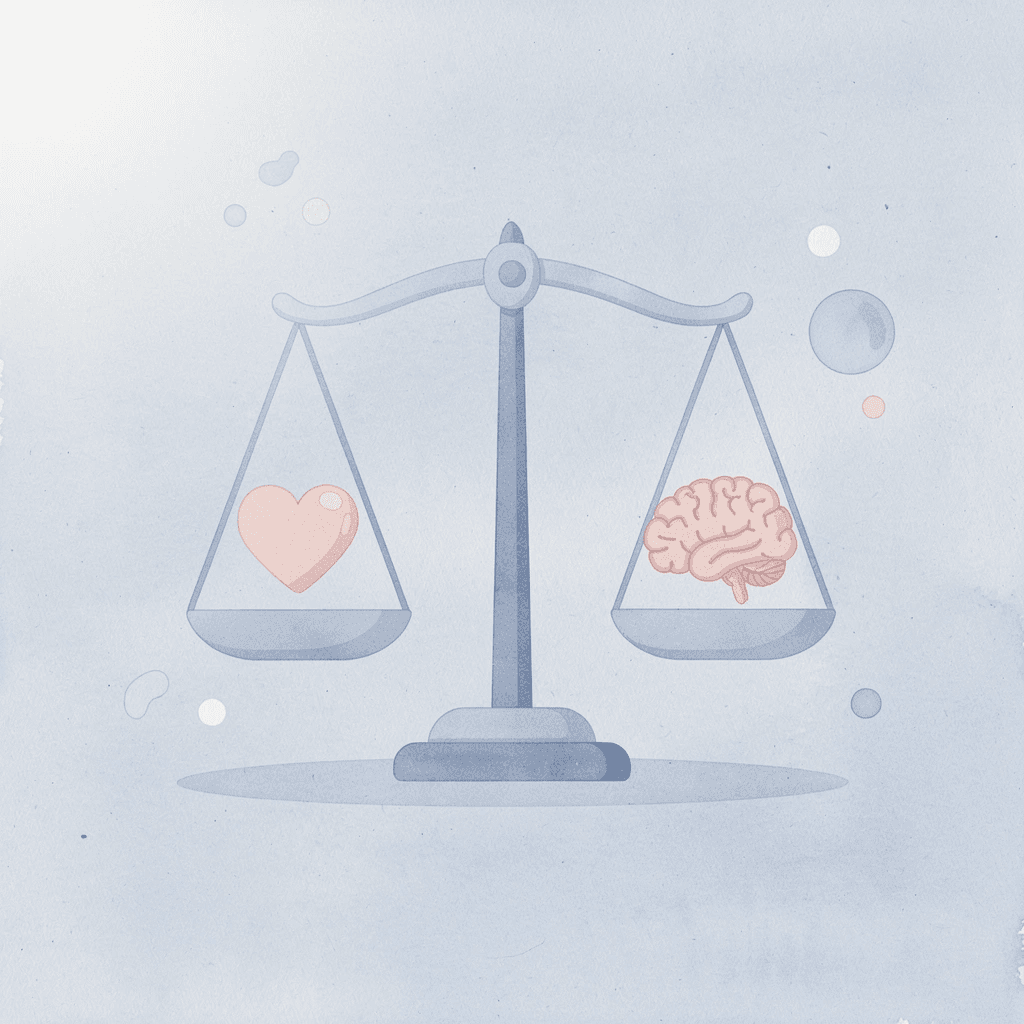
The idea that you've "missed your chance" comes from your life situation, not from how your brain actually works. Work, family responsibilities, and money problems take up your time, pushing creative hobbies into the "nice to have" category — when they deserve to be in the "essential" one. Many adults feel quite guilty about not having time for this, seeing it as their own fault rather than a normal result of having too much to do. That way of thinking deserves to be questioned.
Real Barrier | What We Tell Ourselves |
|---|---|
Work demands | "I'm just not creative anymore" |
Family responsibilities | "I missed my window" |
Financial pressure | "It's selfish to spend time on hobbies" |
Mental exhaustion | "I don't have the talent" |
⚠️ Warning: Mistaking external life pressure for a personal creative failure is one of the most common — and most damaging — beliefs adults carry. It's not a talent problem. It's a time and priority problem.
What the research actually shows
A study published in Psychological Bulletin (September 2024) examined 332 findings from adult creativity research and found that creativity training had a positive effect, with an overall Hedges' g of 0.53. About 70% of adults who engaged in creativity-boosting activities scored higher on creativity tests than the average person in a control group. A 13-day diary study of 658 adults found that on days when participants engaged in more creative activity than usual, they reported greater flourishing and positive emotions the next day, with creativity predicting well-being rather than the reverse. You don't need to feel inspired before you start. Starting creates the feeling.
Does prior experience change how much you benefit?
A Drexel University study asked 39 adults to spend 45 minutes making art and measured cortisol levels before and after. Participants showed a statistically significant reduction in stress hormones (t = 4.54, p < 0.001). Prior artistic experience made no difference to the outcome: beginners and experienced artists benefited equally. The brain doesn't check your resume before it starts recovering. Most adults searching for a creative hobby default to scanning generic image libraries or sifting through stock art that doesn't match their vision. Tools like My Coloring Pages eliminate that friction by letting you describe an idea or upload a photo and receive a personalized, print-ready page in seconds, with no artistic background required.
Is it ever too late to start a creative hobby?
According to UCLA Health, enjoying activities is connected to a 30% lower risk of depression. A study of 279 adults aged 40 to 84 found that creative hobbies were positively linked to mental well-being throughout middle and older adulthood, regardless of when they began. There is no expiration date on starting.
The Hidden Cost of Ignoring Creativity as an Adult
Neglecting creativity doesn't announce itself. It builds up quietly as constant tiredness, emotional flatness, or a feeling that your days are busy but not satisfying. The cost is real, and most people don't recognize it until the damage is done.
"The slow erosion of creative expression in adulthood is one of the most overlooked contributors to burnout, emotional numbness, and a persistent sense of unfulfillment." — Psychology & Creativity Research
🚨 Warning: Ignoring your creative needs doesn't make them disappear; it transforms them into chronic stress, emotional flatness, and a nagging sense that something essential is missing from your life.
💡 Tip: If your days feel relentlessly busy yet deeply unsatisfying, that's not a productivity problem—it's a creativity deficit signaling that your inner life needs attention.
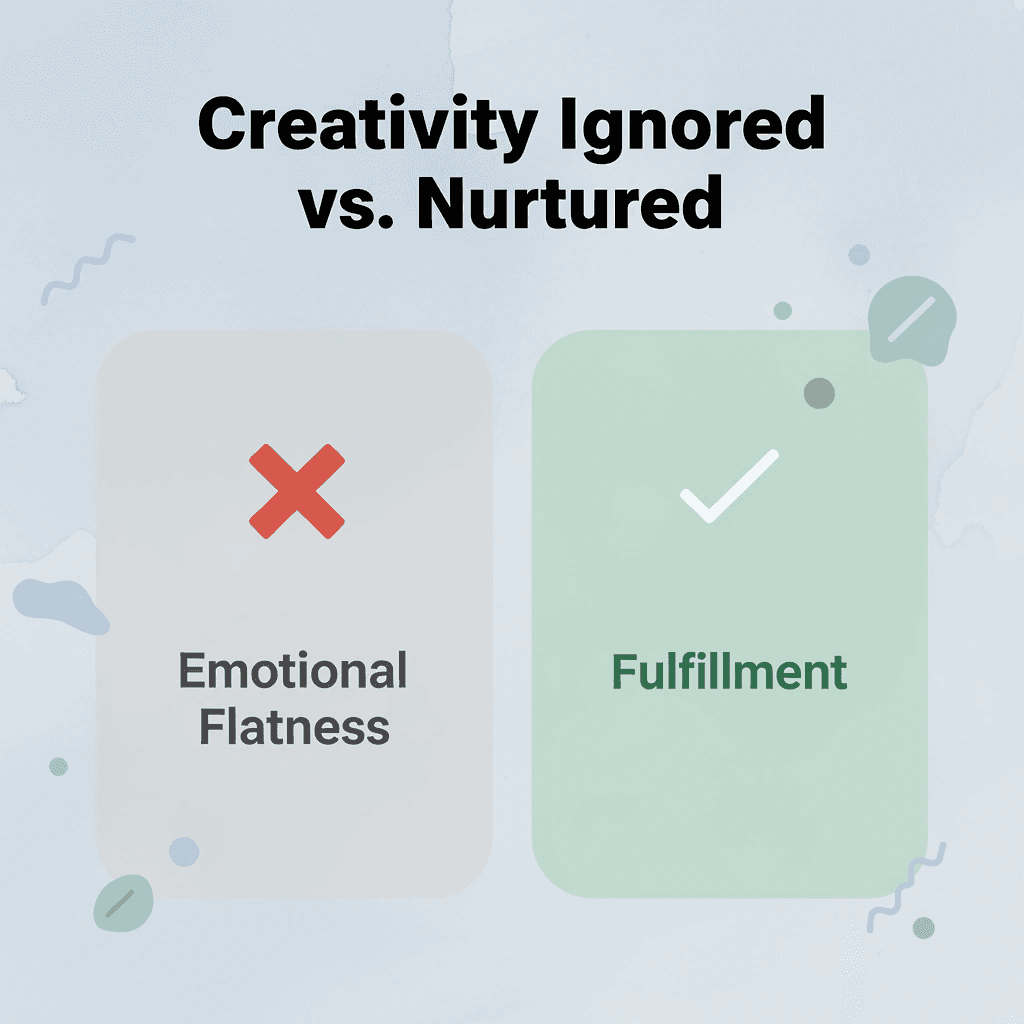
1. Stress Recovery Becomes Harder Than It Should Be
Most adults default to scrolling or streaming after a long day. It feels like rest, but passive consumption and active creation differ fundamentally: your nervous system knows the difference. Research published in the Journal of Occupational and Organizational Psychology found that employees who regularly engaged in creative activities outside work experienced measurably better psychological recovery, including stronger feelings of relaxation, mastery, and personal control over their free time. These gains translated into better performance on the following workday. Scrolling fills time. Creating restores you.
2. Your Cortisol Stays Elevated Longer Than Necessary
Stress hormones don't reset without a trigger. Creative activity is one of the easiest to access. Researchers at Drexel University measured cortisol levels in 39 adults before and after a 45-minute art-making session. The reduction was statistically significant regardless of prior artistic experience or skill level. Showing up and making something was enough. If creative time never makes it into your schedule, you're leaving one of the simplest stress-reduction tools unused.
3. Your Mood Pays the Price the Next Morning
Creative activity changes how you feel the next day, not just in the moment. A 13-day diary study of 658 adults found that participants reported greater positive emotion and stronger flourishing on days following creative engagement. Importantly, creativity predicted improved well-being, not the reverse: happier people weren't simply creating more. Creating made people happier. That distinction removes the excuse of waiting until you feel motivated before you begin.
4. Cognitive Flexibility Quietly Erodes
Your brain strengthens and changes based on what you ask it to do. Creative hobbies like drawing, writing, building, and designing exercise cognitive flexibility, the mental skill that lets you shift your thinking when circumstances change.
What does research say about training creativity in adults?
A 2024 meta-analysis in Psychological Bulletin examined 332 effect sizes and found that creativity training improved creative performance. Approximately 70% of trained participants outperformed untrained controls. Creativity is a learnable skill that atrophies without practice.
What happens when adults stop engaging in creative habits?
Many adults who don't have creative habits struggle to think flexibly when they're under pressure, come up with new solutions, or change their approach when their normal routines fall apart. This isn't something you're born with—it's a skill that gets weaker over the years of not using your creativity.
5. Personal Fulfillment Gets Harder to Find Outside Work
Without a creative outlet, adult life tends to compress into a narrow loop: obligations, screens, sleep, repeat. The damage accumulates over time.
What does research say about creativity and fulfillment in adults?
A study of 279 adults aged 40 to 84 found that participation in creative hobbies was positively connected to mental well-being and personal fulfillment across middle and older adulthood, regardless of when people started. This challenges the assumption that fulfillment is fixed; it's something you build, and creative hobbies are among the most consistent ways to do so.
Why do most adults settle for creative outlets that don't fit them?
Adults seeking creative outlets often settle for generic stock coloring books that are unrelated to their interests, leading to low engagement. Platforms like My Coloring Pages let adults describe an idea, upload a photo, or build custom coloring books around meaningful themes, transforming a passive purchase into an active, personalized creative practice. According to the Adobe State of Create Study, only 25% of people feel they are living up to their creative potential. Most adults aren't blocked by lack of talent; they're blocked by lack of access to a creative practice that feels authentically theirs.
If the benefits are clear, why does making time for creative hobbies still feel impossible?
The harder question most adults quietly avoid: if the benefits are this clear, why does finding time for creative hobbies still feel nearly impossible?
Related Reading
- Creative Hobbies For Adults
- Creative Hobbies
- Creative Hobbies For Women
- Creative Hobbies For Men
How to Make Time for Hobbies as an Adult in 8 Ways
Scheduling creative time is a deliberate choice by people who understand that unprotected time disappears. Without intentional planning, your hobby time vanishes entirely, absorbed by obligations, screens, and passive scrolling.
💡 Tip: Treat your hobby time like a non-negotiable meeting: block it on your calendar, name it, and protect it from interruptions.

"Adults spend an average of 5 hours per day on leisure activities — the question is whether creative hobbies are competing for that time, or losing to whatever fills the space by default." — Bureau of Labor Statistics, American Time Use Survey
According to the Bureau of Labor Statistics' American Time Use Survey, adults spend an average of 5 hours per day on leisure activities. The hours exist — the question is whether creative hobbies are competing for them or losing to whatever fills the space by default. The problem is rarely a lack of time — it's a lack of intentional allocation.
🎯 Key Point: You already have leisure time in your day. The real challenge is redirecting even a fraction of those 5 daily hours away from passive consumption and toward meaningful creative pursuits.
Time Use Category | Daily Average | Hobby Potential |
|---|---|---|
Total leisure time | 5 hours/day | High |
TV & screen time | The majority of leisure | Reclaimable |
Scheduled hobby time | Varies by individual | Needs protection |
⚠️ Warning: If you rely on leftover time for hobbies, you will always lose. Default activities — scrolling, streaming, browsing — will fill every unguarded gap.
1. Stop Waiting for Free Time to Appear
Free time doesn't come on its own; it gets consumed by chores, notifications, and leftover work. Treat your hobby like an important meeting: block 20 to 30 minutes on your calendar and protect it with the same seriousness you'd give a doctor's appointment. When something has a scheduled place in your day, it stops being optional.
2. Start Smaller Than Feels Worthwhile
A widespread pattern among adults who never start a hobby is the belief that short sessions don't count. They do. Reading a few pages, coloring one design, knitting a few rows, or practicing guitar for 15 minutes builds real momentum over weeks. The habit forms first; the depth comes later. Consistency beats intensity every time.
3. Redirect Screen Time Rather Than Finding New Hours
The failure point isn't a missing hour. It's the 20 minutes after dinner that quietly becomes scrolling. Swapping that window for a creative activity, even three or four times a week, adds up to hours of genuine engagement by month's end. Small redirections prove more sustainable than dramatic schedule overhauls. Ask yourself: could you sketch instead of scroll before bed? Could you color while the TV runs in the background? These aren't sacrifices; they're substitutions.
4. Keep Supplies Where You Can See Them
Hobby supplies stored in closets or attics create invisible friction that builds over time. A coloring book on the coffee table, a journal on the nightstand, a crochet basket beside the sofa: visibility works as a low-pressure invitation. Many adults find that the setup barrier alone prevents the habit from forming.
Why does choosing your own content help you stay with it longer?
Most adults reach for generic, pre-packaged coloring books for convenience. A page you didn't choose rarely holds your attention beyond the first sitting. Platforms like My Coloring Pages let you create a custom page from a description, photo, or theme in seconds, so your creative session begins with something that feels personal. That shift from passive to chosen changes how long you stay engaged.
5. Attach Your Hobby to Something You Already Do
New habits stick when they borrow structure from existing ones. Color during your morning coffee. Journal after brushing your teeth at night. Sketch after dinner. Knit while listening to a podcast. The existing routine acts as a trigger, eliminating the need to remember or decide. This approach works because it doesn't require finding new time; it reshapes time you're already spending.
6. Give Yourself Permission to Be a Beginner
Adults quit hobbies early because they expect to be good at something before they've had enough practice. Creativity isn't about performing well. Whether you're learning calligraphy, watercolor, or photography, the early work feels awkward. Every skilled person was once genuinely bad at it. Focus on enjoying the process, not on making something impressive. That shift alone keeps more people engaged than any technique tip.
7. Choose Based on What You Actually Enjoy
Choosing a hobby because it's trending or recommended is a reliable way to abandon it within two weeks. The best creative hobby is one you look forward to, not one that impresses others. If you love calm, focused activity, adult coloring or puzzles fit naturally. If you enjoy problem-solving, woodworking or photography will sustain your interest longer. The more a hobby aligns with your personality, the less effort it takes to sustain.
8. Reframe Hobbies as Recovery, Not Reward
A common misconception is that creative time is something you earn after everything else is done. Research published in the Journal of Occupational and Organizational Psychology found that creative activity helps you recover from work demands and improves next-day performance. Hobbies aren't a break from your responsibilities; they're part of what makes you capable of meeting them. Guilt around personal creative time rests on a false premise. The return on that 20 minutes is measurable, not merely felt. The harder challenge, which most people skip entirely, is figuring out which creative hobby is worth protecting that time for.
How to Choose a Creative Hobby for Adults in 8 Steps
Start with one honest question: why do you want a creative hobby? This filters out noise and prevents you from choosing something merely because it looked appealing on someone else's Instagram feed.
"The best creative hobby is the one aligned with your motivation — not someone else's highlight reel." — Creative Wellness Research
🎯 Key Point: Your 'why' is the single most important filter when choosing a creative hobby — it separates lasting passion from fleeting impulse.
💡 Tip: Before browsing hobby ideas, write down your core motivation — whether it's stress relief, self-expression, social connection, or skill-building. This one step will save you hours of second-guessing.
Motivation Type | What It Means | Hobby Direction |
|---|---|---|
Stress Relief | You need calm and flow | Painting, knitting, journaling |
Self-Expression | You need a creative outlet | Writing, illustration, music |
Social Connection | You want community | Pottery class, improv, choir |
Skill-Building | You want measurable growth | Photography, coding art, ceramics |

1. Start With Your "Why"
Your motivation shapes everything. Someone seeking relaxation after a stressful workday needs something fundamentally different from someone building a practical skill or finding social connection. Relaxation pulls toward coloring, knitting, or pottery. Self-expression points toward painting, photography, or creative writing. Skill-building leads to calligraphy, woodworking, or graphic design. Social connection calls for improv classes, choir, or group pottery workshops. Get clear on your goal first, and the options narrow themselves.
2. Choose Something That Contrasts With Your Work
Adults often pick hobbies too similar to their jobs, then wonder why they don't feel relieved. If your work involves screen time and information analysis, choose hands-on activities like pottery, baking, or gardening to give your brain a different experience. Research on cross-domain transfer shows that creative work in an unrelated field sharpens your thinking when you return to your main work. This happens because you create new neural pathways rather than repeatedly using the same ones.
3. Match the Hobby to Your Personality
Not every creative activity suits every person, and forcing a mismatch is a reliable way to quit within two weeks. If you prefer quiet solo time, activities like embroidery, journaling, or adult coloring fit naturally. If you're energized by other people, group-based options like dance classes or improv theatre will keep you coming back. If you love detailed, methodical work, cross-stitch or hand lettering rewards that instinct. The right hobby feels like permission, not discipline.
4. Start With Low-Cost Options First
Spending a hundred dollars on supplies before you've spent a single hour with a hobby invites guilt, not creativity. Many rewarding creative hobbies cost almost nothing to begin: sketching with a basic pencil, journaling in a cheap notebook, origami with printer paper, phone photography, or digital drawing apps you already have. Spend time first, money later, once you know it's worth keeping.
How does personalization remove the friction that kills creative habits?
Most adults who start with pre-packaged coloring books find the activity relaxing but eventually limiting, since the subject matter was someone else's idea. Platforms like My Coloring Pages offer an alternative: describe an idea, upload a photo, or build a custom scene, and a printable page is ready in seconds from a library of over 100,000 options. That personalization removes the "this isn't mine" friction that often causes people to abandon the habit.
5. Drop the Talent Requirement
The belief that you need to be naturally artistic before starting a creative hobby is one of the most stubborn misconceptions adults carry. A study in Art Therapy found that 39 adults aged 18 to 59 experienced a significant reduction in cortisol after 45 minutes of art-making, regardless of prior experience. Beginners received the same stress-reduction benefit as trained artists. The process matters more than the output.
6. Try Before You Commit
Give a new hobby two weeks, not two months. That's enough time to feel whether it creates curiosity or obligation. If it feels like a chore by day ten, that's useful information. Finding the right creative outlet is a process of elimination, and there's no penalty for moving on. The only mistake is treating an early exit as evidence that you're not creative.
7. Use Your Emotional Response as the Real Metric
The best creative hobby isn't the one you're most skilled at. It's the one that makes you lose track of time, feel quietly proud of little progress, and look forward to the next session. According to Zen Craftworks, 45% of adults report not having enough time for hobbies, so the activity you choose must earn its place in your schedule. If you're not looking forward to it, you won't make time for it. Pay attention to how you feel during the activity, not just after. Some hobbies feel satisfying when you're done but tedious while you're doing them; others pull you in right away. That second kind is worth protecting.
8. Fit the Hobby to Your Actual Schedule
A hobby requiring two uninterrupted hours works only if you have two uninterrupted hours available—most adults don't have this most days. Activities like coloring, journaling, crochet, or digital illustration fit into 15-minute chunks with minimal setup, making them easier to maintain than hobbies requiring lengthy cleanup. If you have a longer weekend, pottery or woodworking can fill that space. The right hobby fits your life as it is now, not as you wish it were.
Signs You've Found the Right One
You know a hobby is worth keeping when you stop watching the clock during it, think about it during the day, or feel something good even when results aren't perfect. These signals matter more than skill level, cost, or appearance. A creative hobby only needs to be meaningful enough that you want to return to it.
Once you determine what you're looking for, the next question becomes which specific activities deserve your limited time.
120 Fun Creative Hobbies for Adults That Require Less Time
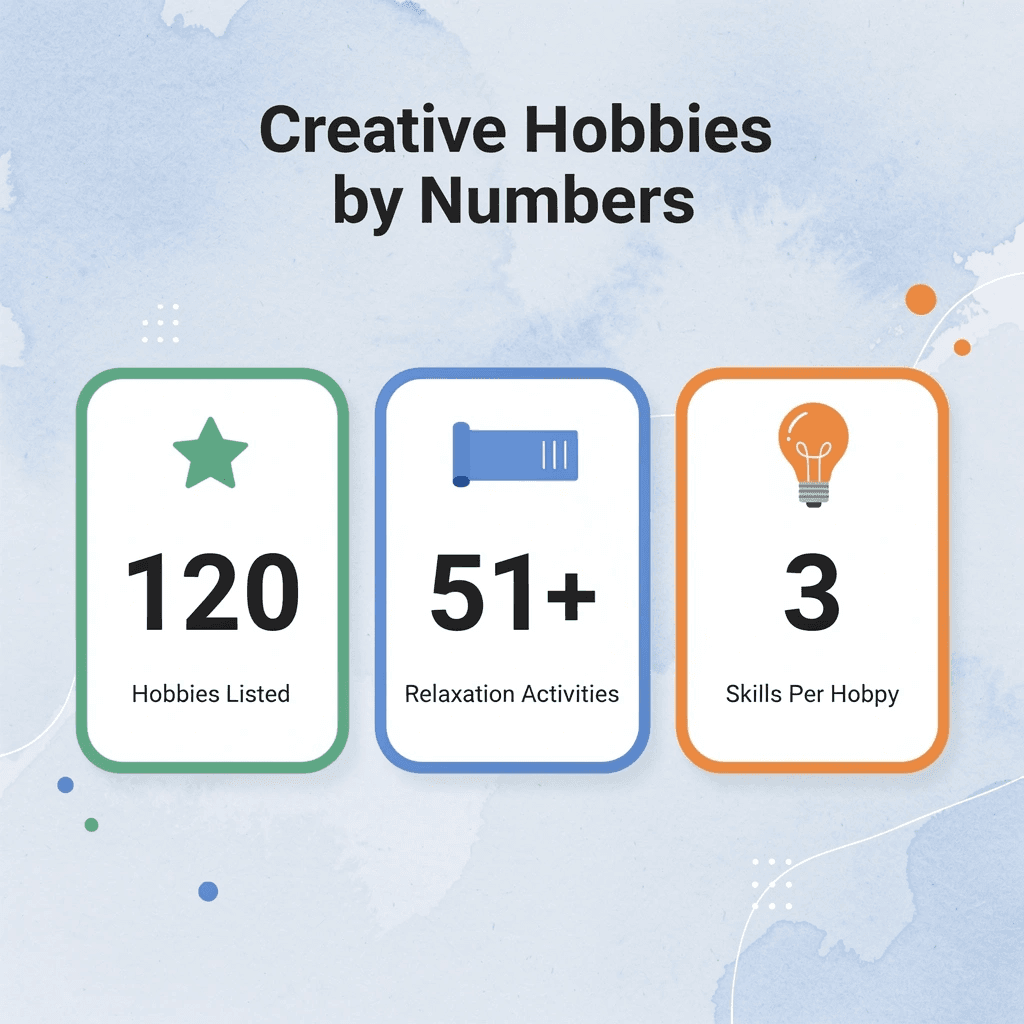
Creative hobbies cover a wider range than most people think. Sometimes, Homemade lists 51 activities for relaxation and personal growth. The real question isn't whether options exist: it's which ones fit your life.
"The real question isn't whether creative options exist — it's which ones fit your life, your schedule, and your energy." — Editorial Insight
💡 Tip: Don't feel pressured to commit to a single hobby. Scanning a broad list first helps you find what genuinely excites you.
🎯 Key Point: With 120 creative hobbies on this list, you'll find options that require less time but deliver maximum enjoyment and growth.
What follows is a numbered list of 120 creative hobbies, organized for quick scanning. Each entry includes what the activity involves, what it develops, and why adults come back to it. Read it like a menu, not a syllabus.
What Each Entry Covers | Why It Matters |
|---|---|
What the activity involves | Set clear expectations before you commit |
What it develops | Shows the real skill or benefit gained |
Why do adults return to it | Reveals long-term enjoyment and value |
✅ Best Practice: Use this list as a starting point for exploration — bookmark 3 to 5 hobbies that catch your eye and try at least one within the next week.
Drawing and Visual Art
1. Adult Coloring
Adult coloring requires no artistic background, making it one of the lowest-barrier creative hobbies available. Coloring intricate mandalas, animals, or detailed landscapes reduces stress, sharpens focus, and delivers finished work. Our My Coloring Pages platform lets you generate custom printable pages by describing any theme or scene, keeping the activity fresh rather than repetitive.
2. Watercolor Painting
Watercolor uses soft, flowing pigments that reward patience and loose technique over rigid precision. You can paint landscapes, botanicals, or abstract washes with a basic set of paints and brushes. The medium teaches you to observe light and color in ways that enhance everyday perception.
3. Acrylic Painting
Acrylic paint dries fast, works on almost any surface, and forgives mistakes better than oil. Adults who enjoy bold color and textured brushwork often find acrylic the most satisfying entry point into visual art, producing pieces that serve as genuine home décor rather than practice exercises.
4. Sketching
A pencil and a notebook are all you need. Sketching trains your eye to notice proportion, shadow, and detail in objects you would normally overlook. It's one of the few creative hobbies you can practice during a lunch break or commute.
5. Digital Illustration
Digital illustration uses tablets and drawing apps to create portraits, fantasy art, logos, or comics. Because every mistake can be undone, beginners find the format less intimidating than working on paper. The range of styles, from pixel art to painterly realism, is enormous.
6. Doodling
Doodling is making marks on paper without planning ahead. Filling notebook margins with patterns, creatures, or abstract shapes keeps your creativity active without requiring dedicated studio time.
7. Zentangle Drawing
Zentangle uses structured, repetitive patterns to build intricate artwork one small section at a time. The slow, focused method appeals to adults seeking meditative creativity without requiring drawing talent. Finished pieces consistently surprise with their complexity.
8. Mandala Design
Designing mandalas combines geometry and freehand creativity into circular compositions built outward from a central point. The process demands concentration, making it an effective mental reset after demanding work.
9. Fashion Illustration
Fashion illustration lets you sketch clothing ideas, accessories, and runway designs without needing to make actual clothes. It suits adults who think visually about style, color, and proportion. Over time, your sketchbook becomes a personal collection of your design work.
10. Nature Journaling
Nature journaling combines sketching, watercolor, and written observation outdoors. You record birds, insects, weather patterns, and plant life in a personal journal, creating a detailed record of your local environment. The hobby sharpens both artistic and scientific observation skills.
Lettering and Written Arts
11. Calligraphy
Calligraphy transforms letters into elegant artwork using special pens and ink. Learning different writing styles, from copperplate to italic, improves hand control while producing beautiful invitations, cards, and framed quotes.
12. Hand Lettering
Unlike formal calligraphy, hand lettering focuses on drawing decorative letters rather than writing them in a single fluid stroke. You can experiment with modern brush fonts, colorful markers, and creative layouts to design quotes, planners, or personalized gifts with a gentler learning curve.
13. Creative Journaling
Creative journaling mixes writing with visual art through doodles, stickers, mixed media, and colorful layouts. Rather than recording daily events in plain text, you create pages that reflect your emotional state, current interests, and personal experiences.
14. Bullet Journaling
Bullet journaling helps you organize your life using decorative lettering, habit trackers, themed spreads, and custom illustrations. Adults who struggle with standard planners often find that designing their own layouts increases their likelihood of using them consistently.
15. Creative Writing
Creative writing turns imagination, memory, and observation into stories, poems, or fictional worlds. The practice strengthens your thinking, communication, and how you process experience. The blank page becomes less intimidating once you accept that the first draft is raw material.
16. Short Story Writing
Short stories let you experiment with different genres, voices, and narrative structures without committing to a full novel. Completing a story builds creative confidence faster than most other forms of writing.
17. Poetry Writing
Poetry distills meaning into carefully chosen words, making it one of the most challenging and rewarding forms of creative writing. From haiku to free verse, diverse styles offer entry points for every writer. When poets work within formal constraints, they often produce the most surprising and creative results.
18. Novel Writing
Writing a novel is a long-term creative commitment that rewards patience, planning, and revision. Many adults find building characters and worlds from scratch to be one of the most immersive creative experiences available.
19. Screenwriting
Screenwriting teaches you to tell stories through pictures, using action and dialogue rather than internal character thoughts. If you watch films or television and analyze them, you already understand how stories are constructed. Turning that skill into a formatted script opens a different creative approach.
20. Blogging
Blogging combines writing with the discipline of publishing regularly for an audience. Consistent blogging builds a body of work that improves your writing and sharpens your thinking over time. The feedback loop of a real audience accelerates growth in ways that private journaling cannot.
21. Memoir Writing
Memoir writing focuses on specific moments from your own life rather than documenting everything in chronological order. The creative challenge lies in finding what is universal in what is personal: turning your specific experiences into stories that resonate with readers who lived nothing like you.
22. Songwriting
Songwriting combines the emotional honesty of poetry with the structured framework of music. Without formal instrumental training, you can write lyrics and melodies that express feelings words alone cannot capture.
23. Comic Creation
Comics combine illustration with sequential storytelling in a format that rewards both visual and narrative creativity. The medium demands efficient communication, as every panel must earn its space.
24. Graphic Novel Illustration
Graphic novels are extended comic books that tell complex stories with detailed worlds and character development. Adults who enjoy both drawing and writing often find that creating graphic novels lets them combine their skills.
Paper and Book Arts
25. Origami
Origami transforms flat paper into three-dimensional sculptures through folding sequences ranging from beginner-friendly to complex. The hobby builds spatial reasoning, patience, and fine motor precision using only paper. The gap between a simple crane and an advanced modular design represents years of satisfying progress.
26. Paper Quilling
Paper quilling rolls thin strips of paper into coils and shapes that combine into decorative patterns for cards, wall art, and jewelry. The technique is calming once you develop a rhythm, and finished pieces look far more detailed than the process suggests.
27. Bookbinding
Bookbinding lets you create handmade notebooks, journals, and sketchbooks using decorative paper, fabric covers, and stitching techniques. Every bound book is both a functional object and a craft piece made from raw materials. Many bookbinders describe their first finished journal as the moment they understood what handcraft feels like.
28. Handmade Card Making
Making greeting cards combines drawing, lettering, stamping, watercolor, and paper crafts into a single project with a clear, meaningful purpose. A handmade card demonstrates effort and care that store-bought cards cannot match, and recipients typically keep it long after discarding a commercial card.
29. Scrapbooking
Scrapbooking preserves photographs and memories using decorative paper, stickers, handwritten notes, and embellishments arranged into personalized layouts. Each page becomes a small piece of visual storytelling that captures not just what happened, but how it felt. The creative decisions of color, composition, and text make it artistic rather than archival.
30. Printmaking
Printmaking uses carved or etched surfaces to transfer ink onto paper or fabric, creating multiple copies of an original design. Techniques like linocut and block printing produce bold, graphic results with a handmade quality that digital printing cannot replicate.
31. Linocut Printing
Linocut is the easiest printmaking technique for beginners. It uses linoleum blocks that carve easily and transfer cleanly onto paper or fabric. The bold, graphic aesthetic suits posters, cards, and framed artwork. A simple two-color design teaches more about composition than most drawing exercises.
Fiber and Textile Arts
32. Knitting
Knitting transforms yarn into scarves, sweaters, blankets, and hats using two needles and repeating stitches. The repetitive motion has a measurable calming effect, and finished objects are practical enough to use or give away. Many adults find knitting a creative hobby they can pursue while watching television or listening to podcasts.
A pattern among crafters is the tension between the process and the collection of materials. Some find their supply collection growing faster than their actual making, shifting the hobby from creative practice to consumer behavior. The most satisfying crafters work through what they have before buying more, keeping focus on making rather than owning.
33. Crocheting
Crocheting uses a single hook to build fabric from yarn, making blankets, toys, clothing, bags, and home décor. It's faster than knitting for large projects and easier to carry around. The range of textures and structures you can create with basic stitches is surprising.
34. Embroidery
Embroidery uses coloured thread to decorate fabric with patterns, plants, portraits, or personalized text. Whether you're adding decoration to a denim jacket or creating a framed hoop piece, the work combines patience with visual design to produce wearable or displayable results. The entry cost is low, and the skill ceiling is unlimited.
35. Cross Stitch
Cross-stitch builds detailed images from X-shaped stitches following a printed grid, making it one of the easiest needlecrafts to start with. The grid format eliminates freehand design concerns while giving you full control over color and composition. Finished pieces range from simple to museum-quality, depending on your skill level.
36. Sewing
Sewing lets you make clothing, home textiles, accessories, and costumes with customization that store-bought products cannot match. Beyond practical usefulness, sewing develops spatial thinking, precision, and understanding of how fabric behaves. The first garment you make that fits correctly is a memorable creative milestone.
37. Quilting
Quilting stitches fabric pieces together into blankets, wall hangings, or decorative textiles, using patterns ranging from traditional to modern. Each quilt records design decisions made over weeks or months, giving finished pieces a depth that mass-produced textiles lack. Many quilters describe it as the most personally expressive of all textile arts.
38. Weaving
Weaving on a loom creates scarves, tapestries, table runners, and wall hangings by interlacing horizontal and vertical threads. Mixing yarn weights, textures, and colors gives every project a distinct look. The rhythm of the loom is calming, much like knitting or crocheting.
39. Tapestry Making
Tapestry weaving focuses on creating decorative wall art using intricate color patterns and pictorial designs. The technique requires more planning than general weaving since the image is built row by row from the bottom up. Finished tapestries possess visual richness that makes them compelling as both art objects and interior design elements.
40. Basket Weaving
Basket weaving uses natural or synthetic fibers to create useful and decorative containers by interlacing and coiling them together. The repeated weaving process is calming, and finished baskets serve as both functional and decorative objects. Working with natural materials like reed or rush provides a sensory experience that synthetic crafts lack.
Clay and Ceramics
41. Pottery
Pottery shapes clay into bowls, mugs, vases, and sculptures using hand-building or wheel-throwing techniques. The hands-on nature and need for complete focus make it an excellent creative activity for clearing your mind. Combining the making of something useful with an artistic process makes pottery unusually satisfying.
42. Ceramic painting
Ceramic painting lets you decorate pre-made mugs, plates, ornaments, and figurines with your own designs, skipping the clay-shaping step. The finished pieces are functional objects you can use daily or give as personalized gifts. Many adults find ceramic painting the most accessible entry point to ceramics before attempting pottery.
Jewelry and Wearable Crafts
43. Jewelry Making
Making jewelry lets you design earrings, bracelets, necklaces, and rings using beads, wire, gemstones, resin, or metal. The small scale means you can complete a piece in a single session, making it satisfying for adults with limited creative time. Every piece becomes something you'll wear or someone will treasure.
44. Tie-Dye
Tie-dye uses folding, twisting, and dyeing to create one-of-a-kind patterns on fabric. The process produces results impossible to replicate exactly, making every project feel original.
45. Fabric Painting
Fabric painting personalizes tote bags, T-shirts, pillowcases, and shoes using special paints and brushes. Since the canvas is something you already own and use, it eliminates the "where will I put this?" problem that prevents many adults from starting craft projects.
46. Clothing Upcycling
Clothing upcycling transforms old or thrifted garments through painting, embroidering, patching, dyeing, or sewing them into pieces with a new look. The sustainability aspect adds meaning beyond the creative work itself. Adults who upcycle regularly report that it changes how they shop and what they value in clothing.
Wood and Material Crafts
47. Wood Burning (Pyrography)
Wood burning uses a heated tool to draw detailed artwork directly onto wooden surfaces. You can personalize cutting boards, signs, coasters, and ornaments with illustrations, quotes, or intricate patterns that offer a warmth and permanence paint or ink cannot match. The technique requires focus and a steady hand, both of which improve with practice.
48. Wood Carving
Wood carving transforms raw blocks of wood into sculptures, utensils, and decorative objects using special chisels and gouges. The material's resistance makes every finished piece feel earned. Carving develops patience and problem-solving skills, as the wood grain constantly presents new challenges.
49. Leather Crafting
Leather crafting produces wallets, belts, journals, and bags through cutting, stitching, stamping, and dyeing. Handmade leather goods develop a patina over years of use, growing more beautiful with age. This durability gives leather crafting a permanence that most other craft hobbies lack.
50. Macramé
Macramé uses decorative knotting to create plant hangers, wall art, bags, and keychains from rope or cord. The technique requires only your hands and a mounting rod, keeping startup costs low. Its return in modern interior design means finished pieces fit naturally into current home styles.
51. Mosaic Art
Mosaic art arranges pieces of glass, ceramic, stone, or tile into colorful images and patterns on surfaces like tabletops, garden decorations, and mirrors. Selecting, cutting, and placing each piece engages the mind like puzzle-solving rather than traditional art-making. The finished surfaces have texture and light interaction that flat painting cannot replicate.
52. Stained Glass Art
Stained glass combines coloured glass pieces into decorative panels, ornaments, and hanging artwork using copper foil or lead came techniques. Learning this traditional craft produces objects that interact with natural light in spectacular ways. The technical precision required makes it one of the more challenging material crafts, which is why the results feel significant.
53. Whittling
Whittling is the craft of carving shapes, figures, or useful objects from a piece of wood using a small knife. It is a traditional woodworking skill that ranges from simple beginner projects to detailed artistic creations.
Candle, Soap, and Resin Crafts
54. Candle Making
Making candles combines fragrance design with visual creativity through wax colors, decorative containers, dried botanicals, and custom molds. Choosing and blending scents adds a sensory dimension that purely visual crafts lack. Handmade candles are among the most consistently well-received gifts across all demographics.
55. Soap Making
Making soap lets you create custom bars using colors, fragrances, botanical ingredients, and decorative patterns. The chemistry of saponification adds satisfying logic to the creative process: understanding why ingredients behave as they do makes you a better soap maker over time. The finished bars are practical objects with genuine artisanal quality.
56. Resin Art
Resin art mixes pigments, glitter, dried flowers, and other materials into epoxy resin to create coasters, trays, jewelry, and decorative pieces with a glass-like finish. The unpredictability of how resin flows and cures means every piece develops in unexpected ways, making the process engaging. The glossy finish elevates even simple designs to a professional appearance.
Photography and Visual Media
57. Photography
Photography trains your eye to see light, composition, and color in scenes you'd otherwise overlook. Whether using a smartphone or a dedicated camera, the creative decisions involved—framing, timing, exposure—develop visual intelligence that improves every other art form you practice. The archive of images you build over the years becomes a record of how your eye evolved.
58. Smartphone Photography
Modern smartphones capture photos that rival those of dedicated cameras in most lighting conditions, removing the cost barrier that once prevented people from pursuing serious photography. Learning portrait work, street photography, food styling, and macro photography teaches you that great photography depends on how you see things, not on expensive equipment. Editing apps offer far more creative options than most people realize.
59. Stop-Motion Filmmaking
Stop-motion filmmaking captures incremental movements of physical objects—toys, clay figures, paper cutouts, or everyday items—to create animated videos. The painstaking process produces a handmade quality that CGI animation cannot replicate, making it one of the most rewarding creative hobbies for those with patience.
60. Filmmaking
Filmmaking brings together writing, directing, shooting, and editing into a single creative skill that draws on almost every other art form. Short films made on a smartphone can succeed if the story and editing are strong. The technical skill required grows alongside the project's creative ambition and reward.
61. Video Editing
Video editing transforms raw footage into emotionally resonant stories through transitions, music, pacing, and color grading. Learning editing software opens creative opportunities to produce travel videos, document family memories, create social media content, and make short films. This skill applies across diverse project types in ways that most single-medium hobbies cannot match.
62. Podcast Production
Podcasting combines storytelling, interviewing, audio editing, and creative communication into one medium that rewards consistency and genuine curiosity. Whether you're discussing history, books, creative hobbies, or personal experiences, producing regular episodes builds communication skills faster than most formats. Audience feedback develops your abilities in ways that private creative practice cannot.
Music and Performance
63. Music Production
Music production lets you create original songs, beats, and instrumentals using digital audio software without formal musical training. Experimenting with different melodies, rhythms, and sound designs makes it one of the most technically and creatively challenging hobbies on this list. The gap between your first rough beat and something shareable is smaller than you might expect.
64. Playing the Piano
The piano brings together melody, harmony, and rhythm in a single instrument, providing students with one of the most complete music educations available. The physical coordination required—both hands performing different tasks simultaneously—develops neural connections that enhance other cognitive abilities. Adults who learn piano regularly report improvements in memory and concentration.
65. Learning the Guitar
Guitar is one of the most portable creative hobbies on this list. Acoustic, electric, and classical styles each offer different creative directions, and basic chord knowledge enables you to play hundreds of songs within the first few months. Playing with others around a campfire or at gatherings adds relational richness that solo hobbies don't provide.
66. Playing the Ukulele
The ukulele's small size and simple four-string chord shapes make it the fastest instrument for beginners to sound good. Adults seeking musical satisfaction without a long technical runway find the ukulele most immediately rewarding. Its cheerful tone makes practice sessions feel lighter.
67. Learning the Violin
The violin requires more patience initially because making a clean sound demands exact bow technique. This difficulty makes progress feel meaningful. Adults who pursue violin lessons consistently describe it as one of the most emotionally expressive creative hobbies they've pursued.
68. Singing
Singing requires no equipment or dedicated space. Joining a choir, taking vocal lessons, or practicing at home develops breath control, pitch awareness, and emotional expression. Group singing adds a sense of community that solo creative hobbies rarely provide.
69. Song Cover Recording
Recording your own versions of existing songs combines singing, music arrangement, and audio editing into a single project with a clear reference point. Learning how a song is built teaches you more about music theory than most formal lessons. Keeping recordings over time creates a personal archive that tracks your improvement.
70. DJing
DJing involves mixing songs, creating playlists, and experimenting with transitions and effects in real time. It rewards musical knowledge, technical curiosity, and an instinct for how energy builds and releases. The performance dimension—playing for an actual audience—adds a social feedback loop that most solo creative hobbies lack.
71. Songwriting
Songwriting is the creative process of composing original songs by writing lyrics, creating melodies, and often developing the musical structure, harmony, and rhythm to express ideas, stories, or emotions.
Movement and Performance Arts
72. Creative Dance
Creative dance encourages self-expression through movement without formal choreography or technical training. Whether you prefer freestyle, lyrical, or interpretive styles, the practice combines physical activity with artistic expression in ways that gym-based exercise doesn't. This creative dimension makes it more sustainable than a movement focused solely on fitness.
73. Choreography
Creating original dance routines challenges you to match movement with music while telling a story or expressing emotion through physical sequence. The process develops musical sensitivity, spatial awareness, and wordless communication.
74. Acting
Acting develops empathy by requiring you to understand perspectives and emotional states beyond your own. Community theatre, improv classes, and short film projects provide structured environments for this exploration. The confidence gained from performing transfers into professional and social contexts is consistently underestimated.
75. Improvisation (Improv)
Improv creates scenes and dialogue without a script, forcing creative thinking under time pressure in ways no other performance art replicates. It builds quick thinking, active listening, and comfort with failure: skills that transfer directly to professional communication. Many adults report that improv changes how they handle unexpected situations at work.
76. Voice Acting
Voice acting brings animated characters, audiobook narrators, game personalities, and commercial scripts to life using only your voice. Experimenting with different accents, emotional tones, and character movements presents unique challenges. Hearing your own voice in a recording becomes an invaluable creative tool.
77. Magic and Illusion
Learning magic combines performance, psychology, storytelling, and hand skills into one discipline. Mastering a sleight-of-hand technique teaches you more about attention, misdirection, and timing than almost any other hobby, while performing it smoothly demands precision. Audience reaction provides immediate, clear creative feedback.
Digital and Technology-Based Creativity
78. Digital Graphic Design
Graphic design creates logos, posters, social media graphics, and branding materials using increasingly accessible design software. Learning layout, typography, and color theory strengthens your understanding of visual communication. These skills also create freelance opportunities for adults seeking income from their creative work.
79. Typography Design
Typography focuses on letterform design, text layouts, and logotypes. Adults interested in branding, publishing, or visual communication find that studying type design transforms how they read everything from book covers to street signs.
80. Sticker Design
Making original stickers for planners, laptops, water bottles, and journals combines illustration with graphic design in an easily shareable format that generates income. Many sticker designers report that this format taught them more about the limits of illustration than formal drawing exercises did.
81. Surface Pattern Design
Surface pattern designers create repeating artwork for fabrics, wallpaper, stationery, and home decor. The technical challenge of making patterns tile seamlessly adds a puzzle-solving dimension to illustration. Adults who enjoy both drawing and design often find surface pattern work the most commercially viable application of those combined skills.
82. Pixel Art
Pixel art uses small coloured squares to build retro-style digital illustrations inspired by classic video game aesthetics. The grid constraint forces creative decisions about colour and form, producing a distinctive visual style. Adults who grew up with early gaming often find pixel art the most personally meaningful entry point to digital illustration.
83. Animation
Animation brings drawings or digital characters to life through sequential movement. Beginners can start with simple frame-by-frame GIFs before progressing to 2D or 3D projects. The gap between the conceptual understanding of animation and the production of convincing movement is where most creative learning occurs.
84. AI Art Creation
AI art tools let adults create unique digital images from text descriptions, opening creative experimentation to people who have never drawn. The most interesting work combines AI-generated concepts with human editing, painting, or collage to produce genuinely original results.
85. 3D Printing Design
Designing objects for 3D printing combines spatial creativity with technical problem-solving. You can create custom organizers, miniatures, home décor, prototypes, or sculptural artwork that transforms from a digital file to a physical object in hours. The feedback loop between design and physical result accelerates learning in ways purely digital work cannot match.
86. Laser Engraving Projects
Laser engraving personalizes wood, leather, acrylic, glass, and metal with custom artwork, names, and decorative patterns with precision that hand tools cannot match. The combination of digital design and physical material produces results that feel both high-tech and handmade. Adults who enjoy technology and craft often find laser engraving the most satisfying way to combine those interests.
Nature and Garden Creativity
87. Floral Arranging
Floral arranging teaches you to combine flowers, greenery, color, and texture into compositions that work with the natural form of each stem. Because fresh flowers don't last long, the hobby focuses on the present moment. Working with dried flowers offers more creative options and produces arrangements that last indefinitely.
88. Pressed Flower Art
Pressed flower art preserves plant samples for bookmarks, greeting cards, framed artwork, and resin pieces. The collection process of finding, pressing, and drying samples is as fun and creative as arranging the final piece. Every pressed flower records a specific place and time of year.
89. Terrarium Design
Terrariums are tiny indoor ecosystems built in glass containers, featuring plants, moss, stones, and decorative elements. Designing one requires considering size, proportion, and plant compatibility. The finished piece is a living creative object that evolves over time.
90. Creative Gardening
Gardening becomes creative when you approach it as a design discipline, planning flower beds, themed plots, herb displays, and decorative containers with intentionality. The long feedback loop of seasons rather than hours develops patience that most creative hobbies don't require. Watching a design you conceived on paper come to life over a growing season offers distinctive creative satisfaction.
91. Bonsai Cultivation
Growing bonsai trees combines gardening knowledge with sculptural vision. Shaping a miniature tree through careful pruning and wiring over the years produces a living artwork that reflects your accumulated aesthetic decisions. The patience required makes the practice meaningful.
92. Fairy Garden Making
Fairy gardens combine miniature houses, plants, figurines, pathways, and tiny decorations into imaginative landscapes that blend gardening with storytelling and design. The small-scale rewards attention to detail in ways full-size garden design doesn't. Adults who enjoy world-building through other creative hobbies often find fairy garden making a satisfying physical equivalent.
Miniature and Model Arts
93. Miniature House Building
Building dollhouses or miniature rooms involves designing tiny furniture, lighting, architectural details, and decorative elements at a scale requiring extraordinary precision. Adults who pursue miniature building consistently describe it as their most absorbing creative hobby.
94. Miniature Painting
Miniature painting involves carefully painting small figurines for tabletop games, fantasy collections, or display purposes. The scale demands brush control and color mixing skills that transfer directly to larger-scale painting. The community is large, technically sophisticated, and welcoming to beginners.
95. Model Building
Putting together and customizing airplane, car, ship, or building model kits combines engineering accuracy with creative painting and detailing. Many hobbyists research historical accuracy and add handmade details that make each model unique, resulting in finished pieces worthy of display as artwork.
96. LEGO MOC Building
LEGO MOC (My Own Creation) building designs are original structures, vehicles, and landscapes built from imagination rather than instruction manuals. Working within a specific brick system produces creative solutions that purely open-ended building tools don't demand.
97. Creative LEGO Architecture
Designing original cities, castles, landmarks, or futuristic structures using LEGO bricks applies architectural and urban design thinking to a medium that enables instant iteration. Building, taking apart, and rebuilding without incurring material costs encourage experimentation that physical architecture doesn't permit.
Food and Culinary Creativity
98. Cake Decorating
Cake decorating combines baking with visual art through piped frosting, fondant sculpting, edible painting, and textured finishes. Because cakes spoil quickly, the creative process feels more immediate and focused. Learning to pipe a clean rosette or create a smooth fondant surface requires patient practice, like any craft skill.
99. Cookie Decorating
Decorating cookies with royal icing develops precision, color mixing, and design planning in a low-stakes format that encourages experimentation. Seasonal designs and personalized gifts add a natural social dimension. The technical challenge of flooding and detail work proves more demanding than finished examples online suggest.
100. Bread Art
Bread art uses decorative scoring, braided dough, and creative shaping to transform functional baking into visual expression. Scoring patterns on a sourdough loaf expand in the oven in ways that are partly predictable and partly surprising, teaching bakers something new about how dough behaves under heat with each bake.
101. Chocolate Making
Making chocolate by hand creates truffles, bonbons, and filled bars. This work requires keeping chocolate at exact temperatures. It's one of the more challenging cooking hobbies because it demands careful attention to detail, but the result is high-quality candy that makes excellent gifts. Learning how chocolate works helps you become a better baker overall.
102. Latte Art
Latte art pours steamed milk into espresso to create hearts, tulips, rosettas, and complex free-pour designs. The technique requires understanding milk texture and pour angle simultaneously, which demands practice. Coffee enthusiasts who pursue latte art report that it deepens their appreciation for the chemistry and craft behind every cup.
103. Mixology
Mixology is the art of crafting mocktails and cocktails with unusual ingredients, homemade syrups, and careful presentation. Experimenting with flavor combinations and glassware transforms each drink into a creative project with immediate sensory feedback. Sharing self-designed drinks provides a social reward that most solo creative hobbies lack.
104. Food Styling
Food styling arranges meals to look visually appealing for photography, social media, or personal satisfaction. It combines cooking, color theory, and compositional thinking using materials you're already preparing. Developing a food styling instinct transforms how you plate everyday meals.
105. Recipe Development
Creating original recipes requires understanding flavor balance, cooking chemistry, and how ingredients work together—knowledge that following recipes never demands. The creative process involves guessing, testing, and refining in cycles similar to those in other design work. A recipe you created yourself carries personal authorship that borrowed recipes cannot achieve.
Home and Decorative Arts
106. Decorative Painting
Decorative painting transforms everyday items—flower pots, wooden signs, trays, ornaments, and household objects—into personal statements through artistic designs. Projects finish in a single session, suiting busy adults. Over time, decorated objects create a living space that reflects your creative style.
107. Seasonal Crafting
Making handmade decorations for holidays and special occasions provides a rotating set of themes and deadlines throughout the year. From Christmas ornaments to Halloween displays and spring wreaths, seasonal projects offer built-in motivation that open-ended hobbies lack. The time-bound nature also makes it easier to finish projects rather than leaving them perpetually in progress.
108. Home Décor DIY
DIY home decor projects personalize your living space through handmade wall art, custom shelving, planters, mirrors, and decorative accessories. Each project solves a specific aesthetic problem while building new craft skills, resulting in a home that reflects your accumulated creative decisions.
109. Furniture Flipping
Furniture flipping combines restoration with artistic design by sanding, painting, staining, and refinishing thrifted pieces. The before-and-after transformation offers visually satisfying results in DIY craft. Adults who pursue furniture flipping often develop a genuine eye for design that influences their aesthetic decisions.
110. Wallpaper Design
Designing seamless repeating patterns for wallpaper or digital print-on-demand surfaces combines illustration with technical pattern-making skills. Modern digital tools enable artists to transform original artwork into printable surface designs. Creating a pattern that tiles without visible seams teaches visual rhythm more effectively than most other design exercises.
111. Glass Painting
Glass painting transforms plain jars, vases, bottles, and windows into colorful decorative objects using transparent paints and leading outlines. Light passing through painted glass creates a glow that opaque painting cannot match. A simple geometric design on a mason jar offers an accessible entry point that demonstrates why this medium is so satisfying.
112. Rock Painting
Rock painting transforms ordinary stones into tiny canvases for inspirational quotes, animal portraits, mandalas, or seasonal artwork. Finished rocks can decorate your home, serve as gifts, or be left in public spaces as small acts of creative generosity. The low cost and ease of access make it one of the most accessible creative hobbies.
Mixed and Conceptual Creativity
113. Mixed Media Art
Mixed media art combines paint, paper, fabric, photographs, calligraphy, stamps, dried flowers, and textured materials into one piece. With no rules governing what can be combined, it encourages experimentation in ways that single-medium art forms don't. Adults who have tried several creative hobbies often find mixed media the most personally expressive format because it draws on everything they've already learned.
114. Vision Board Creation
Vision boards combine magazine cutouts, photographs, quotes, drawings, and decorative materials to visually represent goals and aspirations. The creative process of selecting and arranging images clarifies more effectively than written goal-setting exercises, and the finished board serves as personalized artwork you can revisit throughout the year.
115. Mood Board Design
Mood boards organize colors, textures, typography, and visual inspiration for creative projects. Assembling a mood board sharpens your creative direction before committing materials to a project, whether planning home décor, fashion, branding, or a painting series. The skill of selecting and arranging elements—rather than creating them—is a distinct creative ability that most hobbyists undervalue.
116. Vision Sketching
Vision sketching combines drawing with intentional goal-setting by illustrating future dreams, travel destinations, or personal aspirations. Drawing what you want to experience makes it more concrete and emotionally real than writing it in a list.
117. Interior Styling
Interior styling redesigns your living space through deliberate choices about colour palettes, furniture arrangement, lighting, and decorative accessories. Working within an existing space and budget produces more interesting solutions than unlimited resources would. Developing an eye for how spaces feel is a transferable design skill that extends beyond home décor.
118. Puzzle Design
Making original crosswords, logic puzzles, escape-room challenges, or treasure hunts requires both creative and analytical thinking. Designing a puzzle that's fun to solve demands understanding how another person's mind will approach the problem—a sophisticated creative skill. The finished puzzle creates an experience rather than a physical artifact.
119. Personalized Gift Crafting
Making personalized gifts like memory boxes, decorated mugs, photo frames, or handmade ornaments combines different craft skills into projects with a clear, meaningful purpose. The creative challenge lies in matching the gift to the specific person rather than creating something generically beautiful.
120. Creative DIY Workshops
Joining creative workshops, whether in person or online, lets you explore multiple hobbies before committing to one. From pottery and painting to candle making and embroidery, workshops provide expert guidance and connect you to creative communities that sustain the habit long after. Apartment Therapy identifies 26 hobbies as cheap and fun activities to do at home, and workshops are often the fastest way to discover which options fit your creative temperament. The list above covers 120 distinct creative directions. Some will feel immediately right. Others will feel irrelevant. That gap between instinctive interest and indifference is useful data. But knowing what you want to try and actually starting are two completely different problems.
Related Reading
- Creative Hobbies That Improve Mental Clarity
- Creative Hobbies For Seniors
- Fun Creative Hobbies
- Creative Hobbies To Try
Still Think You Don't Have Time for a Creative Hobby? Start With Just 10 Minutes.
The gap between wanting to try something creative and actually starting is usually a friction problem, not a time problem. The first step feels too big, supplies seem expensive, and the commitment feels open-ended: these are the real barriers keeping most people stuck before they begin.
"The hardest part of any creative habit isn't the doing — it's eliminating the friction that stands between you and starting." — Behavioral Design Research
💡 Tip: If you've told yourself "I don't have time for a creative hobby," ask instead: what's stopping you from starting in the next 10 minutes?
My Coloring Pages removes that friction entirely. Browse 74,389+ free coloring pages, download one, and you have a creative hobby running in under 10 minutes — no supplies to buy, no skill required, no weekly commitment. It's a low-pressure entry point into the personalized, self-directed creative practice this guide has been building toward.
Barrier | Traditional Hobby | My Coloring Pages |
|---|---|---|
Cost | Expensive supplies needed | Free — no purchases required |
Skill Required | Often a steep learning curve | Zero skills needed to start |
Time to Begin | Hours of research & prep | Under 10 minutes |
Commitment Level | Weekly classes or schedules | Fully self-directed |
Content Variety | Limited by what you buy | 74,389+ pages to choose from |
🎯 Key Point: A creative habit doesn't need to be expensive, complicated, or time-consuming — it needs to be easy enough to start today.
✅ Best Practice: Treat your first session as an experiment, not a commitment. Download one page, set a 10-minute timer, and let the habit build naturally from there.
Related Reading
- Creative Hobbies To Try At Home
- Cheap Creative Hobbies
- Easy Creative Hobbies