25 Creative Hobbies for Seniors to Improve Brain & Body Health
Creative hobbies for seniors boost brain and body health. My Coloring Pages shares 25 proven activities to keep you sharp and active.

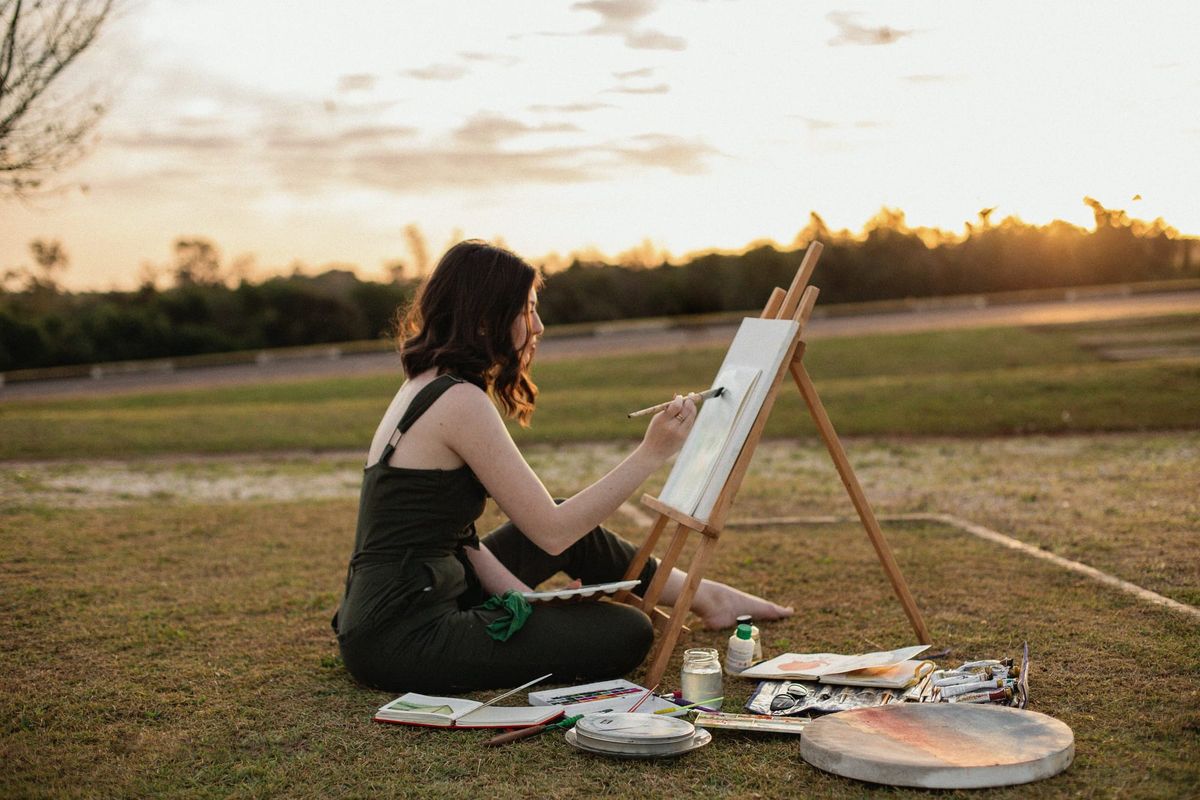
Retirement brings an abundance of free time, and filling it meaningfully makes a real difference in mood, mental sharpness, and overall wellbeing. Creative hobbies for seniors offer exactly that kind of purpose, whether the interest is painting, drawing, knitting, or quiet hands-on crafts. The right creative outlet does not require prior experience or expensive supplies to be worthwhile.
Coloring is one of the most accessible starting points, combining focus, relaxation, and self-expression in a single activity. It suits a wide range of skill levels and requires very little setup, making it easy to pick up at any pace. Anyone looking to explore this further can download 74,389+ free coloring pages from My Coloring Pages, a free resource stocked with printable designs across dozens of themes and styles.
Table of Contents
- Should Seniors Have Hobbies?
- Importance of Creative Hobbies for Seniors
- How to Encourage Seniors to Take Up Hobbies in 12 Steps
- How to Choose a Creative Hobby for a Senior in 11 Ways
- 25 Creative Hobbies for Seniors to Improve Brain & Body Health
- Your Brain Doesn't Stop Needing Creativity After Retirement, It Needs It Even More
Summary
- Creative hobbies carry measurable health consequences for seniors, not just lifestyle benefits. A study published in the Journal of Global Health found that engagement in hobbies was associated with a 21% lower risk of all-cause mortality among adults aged 50 and older, drawing on data from participants across 19 countries. That finding held across different income levels, health conditions, and cultural contexts, which makes it difficult to dismiss as circumstantial.
- The cognitive case for creative activity is stronger than most people realize. Research shows that painting, knitting, drawing, and even structured coloring activate memory, attention, planning, spatial reasoning, and decision-making simultaneously during a single focused session. Engaging in as few as three hobbies has been linked to a lower risk of disability in older adults, which reframes creative activity as something that directly supports functional independence, not just mental stimulation.
- Social isolation is one of the most underestimated health risks seniors face after retirement, and creative hobbies address it in a way that passive screen time cannot. Group art classes, community workshops, and shared craft sessions create consistent social contact built around shared interests. That combination of creative engagement and human connection addresses two separate health concerns at once, which is why hobbies with a social dimension tend to outlast solitary ones.
- The physical benefits of creative hobbies extend beyond the obvious. Fine motor skills, hand-eye coordination, and dexterity all require regular use to remain reliable, and activities like pottery, embroidery, detailed coloring, and calligraphy maintain these abilities without feeling like rehabilitation. Regular physical and mentally engaging activity has been linked to a reduction in dementia risk by up to 30%, according to research cited by senior living communities that track cognitive health outcomes.
- The first session of any new hobby carries disproportionate weight in determining whether someone continues. A frustrating or overwhelming start often closes the door permanently, while a simple, achievable experience creates the emotional memory that brings someone back. Research on habit formation consistently shows that lowering the activation cost through visible cues, familiar themes, and manageable time commitments predicts long-term creative consistency more reliably than motivation alone.
- Personalization is what separates a creative hobby that lasts from one that gets abandoned after a few sessions. Generic options that feel designed for someone else quietly drain motivation, while activities connected to personal identity, whether that is architecture, nature, travel, or family history, sustain engagement long enough to become genuine habits. My Coloring Pages addresses this directly by offering 74,389+ free coloring pages across hundreds of themes, giving seniors the specificity needed to make creative time feel personally chosen rather than randomly assigned.
Should Seniors Have Hobbies?
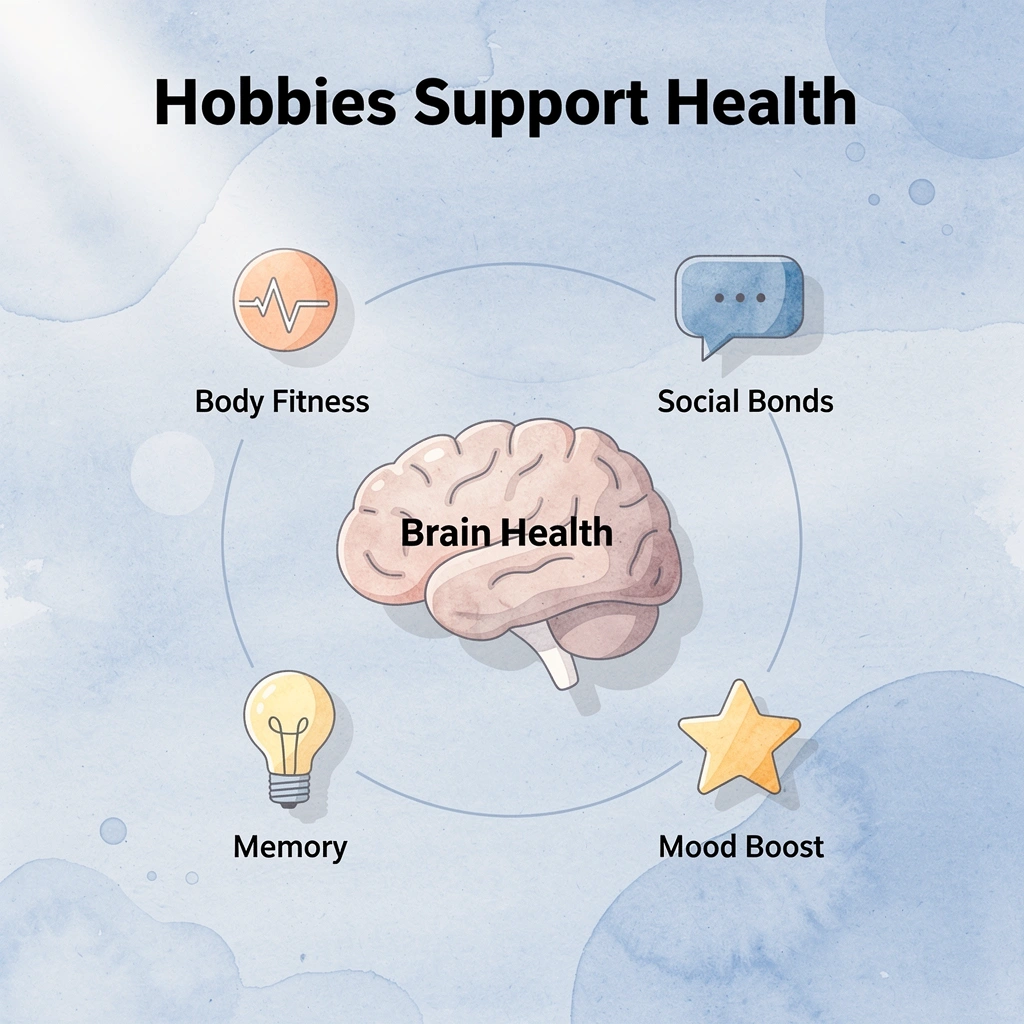
Creative hobbies are a health strategy, backed by the same careful study we apply to exercise, nutrition, and sleep. The evidence is broad, international, and consistent across decades of research, not a fringe finding or assumption.
"Creative hobbies are backed by evidence that is broad, international, and consistent across decades of research, placing them alongside exercise and nutrition as legitimate health strategies." — PMC, National Institutes of Health
🎯 Key Point: Hobbies are evidence-based health interventions supported by the same rigorous research standards applied to diet and physical activity.

According to the Journal of Global Health, hobby engagement was connected with a 21% lower risk of all-cause mortality among people aged 50 years and older across participants in 19 countries. A 21% reduction in mortality risk — connected to something as accessible as picking up a creative activity and sticking with it.
💡 Tip: You don't need an expensive or complicated hobby — the research shows that any sustained creative engagement can deliver meaningful longevity benefits.
🔑 Takeaway: A 21% reduction in mortality risk is a remarkable number. For context, that's the kind of impact researchers typically associate with major lifestyle interventions — making hobby engagement one of the most underrated tools available to seniors today.
What does the research actually show about creative hobbies for seniors?
Large-scale systematic reviews show that regular creative activities—painting, knitting, music, photography, creative writing, and structured coloring—correlate with fewer depressive symptoms, stronger cognitive function, less loneliness, and higher life satisfaction. These connections held true even when researchers controlled for income, health status, and social circumstances.
Why does personal relevance matter for lasting engagement?
Most seniors face a problem: generic options that feel like they were designed for someone else. A pharmacy coloring book doesn't match a retired architect wanting detailed cathedral facades, or a former traveler wanting to color a bridge they once crossed in Prague. Platforms like My Coloring Pages, which offer 74,389+ free downloadable designs across hundreds of themes, address this directly by matching personal interests with meaningful creative activities—what transforms a one-time experiment into a lasting habit.
Why cognitive engagement matters more than people think
Creative activities challenge the brain across multiple systems simultaneously. Memory, attention, planning, spatial reasoning, and decision-making all activate during a focused art session. The Healthy reports that engaging in as few as three hobbies could lower your risk of disability in older age, helping maintain the functional independence that defines quality of life in later years.
What makes intrinsic motivation so powerful for the aging brain?
Retirement gives many people their first real chance in decades to pursue something they care about, without deadlines, performance reviews, or external pressure. This self-motivated creative work is what the brain and body need most.
When you combine that motivation with genuine challenge—work that is absorbing but not too hard—the benefits emerge.
Related Reading
- Creative Hobbies For Women
- Creative Hobbies
- Creative Hobbies For Adults
- Creative Hobbies For Men
Importance of Creative Hobbies for Seniors
Retirement gives you unstructured time that belongs completely to you. Research shows that how you use it has serious consequences for your mental health, cognitive longevity, and overall well-being.
"How seniors choose to fill their unstructured time has serious, measurable consequences for their health and happiness." — PMC Research, NIH
🎯 Key Point: Unstructured time in retirement is not automatically restorative; it's a double-edged opportunity requiring intentional choices.
🔑 Takeaway: How you spend your free hours in retirement can be the single most important factor in determining your mental sharpness, emotional resilience, and quality of life in your later years.
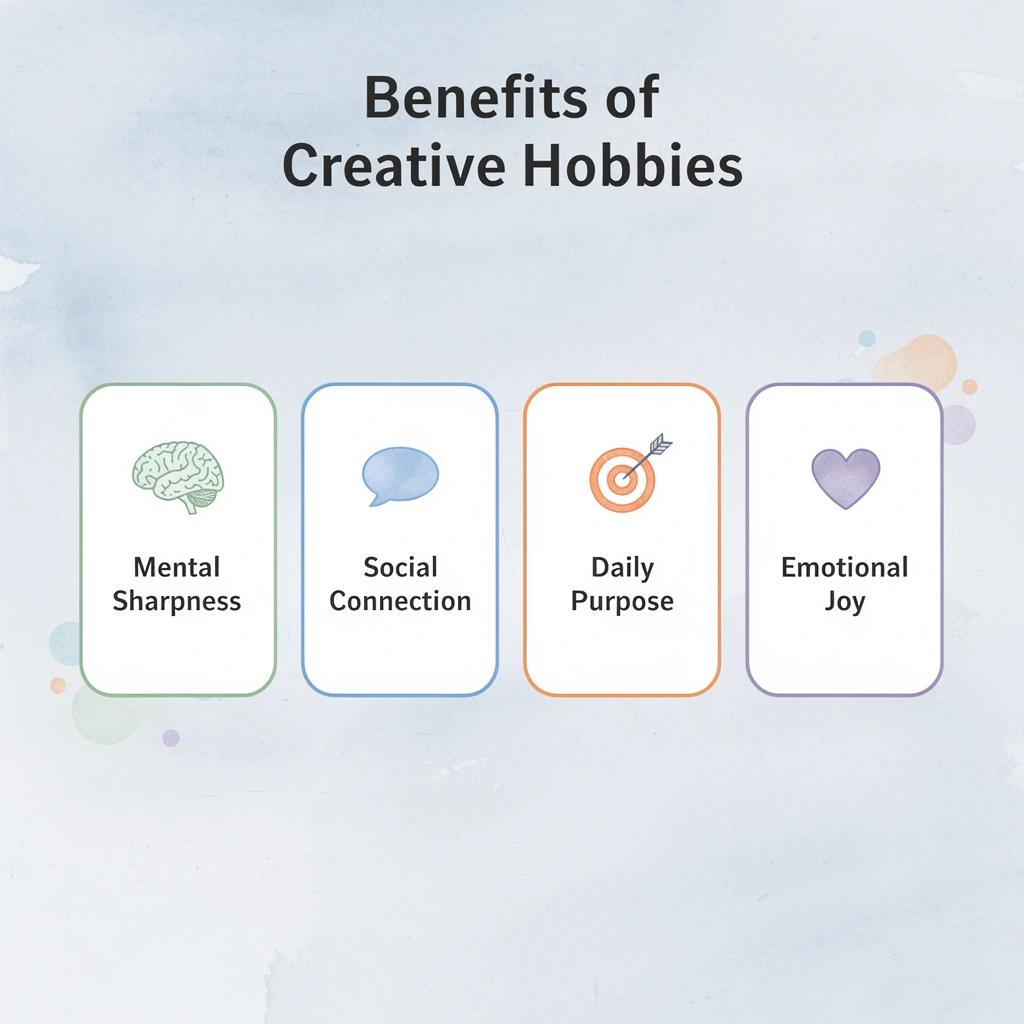
What happens when the structures that shaped your days disappear?
Many seniors spend 30 to 40 years inside structures built by careers and family responsibilities. When those structures fall apart, days can quietly lose their shape. Creative hobbies—painting, photography, creative writing, music, knitting, or woodworking—replace that lost structure with self-chosen goals. That shift from obligation to genuine interest is the difference between getting through your days and living in them.
How does creative engagement protect the brain over time?
Your brain responds to this difference in measurable ways. Creative activities exercise memory, planning, concentration, and decision-making: the thinking skills that deteriorate fastest without regular use. An inactive mind declines. Learning a craft or artistic skill keeps your thinking sharp, your attention focused, and your sense of self strong.
Why is loneliness a health problem, not just a feeling?
Social isolation is one of the most underestimated risks seniors face after retirement. The daily rhythm of workplace interaction disappears, family schedules grow busier, and mobility changes quietly shrink the social world. Many older adults describe this not exactly as sadness, but as a gradual fading of connection. Creative hobbies create natural entry points into community: classes, workshops, local groups, and shared projects that connect you with people who share your interests. That kind of belonging is not a side benefit—it is a core outcome.
How does creating something combat the pull of passive screen time?
Most retirees spend considerable time on screens because it requires minimal effort. Watching content rarely provides a sense of accomplishment, whereas creating something does. Our My Coloring Pages library offers over 100,000 downloadable, printable coloring pages, including detailed architectural designs such as cathedrals and bridges, which users highlight as ideal for retirees seeking genuine complexity without technical barriers. The platform requires zero artistic skill, removing the most common excuse seniors cite for avoiding creative engagement.
How do creative hobbies support physical independence in seniors?
Physical independence requires fine motor skills, hand-eye coordination, and dexterity, all of which are maintained through regular use. Creative hobbies like pottery, woodworking, detailed coloring, or photography naturally preserve these abilities. According to a 2025 study published in the Journal of Global Health, engagement in hobbies was associated with a lower risk of all-cause mortality among people aged 50 and older across 19 countries. Staying creatively active is a survival strategy.
Why is retirement the ideal time to start learning something new?
Retirement gives you the first real chance to grow on your own terms. Learning a new art skill, trying out a craft, or building a creative routine gives older adults fresh goals and energy. The idea that learning slows down as you age is false—believing it actually causes the slowdown. The real question is not whether to start, but how to keep it going.
How to Encourage Seniors to Take Up Hobbies in 12 Steps
Encouraging a senior to take up a creative hobby works best when it starts with curiosity rather than prescription. The steps below build trust, reduce friction, and make creativity feel worth pursuing.
"Seniors who engage in creative hobbies report significantly higher levels of emotional well-being, social connection, and cognitive vitality than those who remain inactive." — National Institute on Aging
💡 Tip: The most effective first step is always asking — not assuming. A genuine conversation about past interests unlocks far more engagement than any pre-planned activity ever could.
🎯 Key Point: Creativity in seniors isn't about skill — it's about joy, connection, and purpose. When you reduce pressure and increase choice, hobbies become a natural and lasting part of daily life.
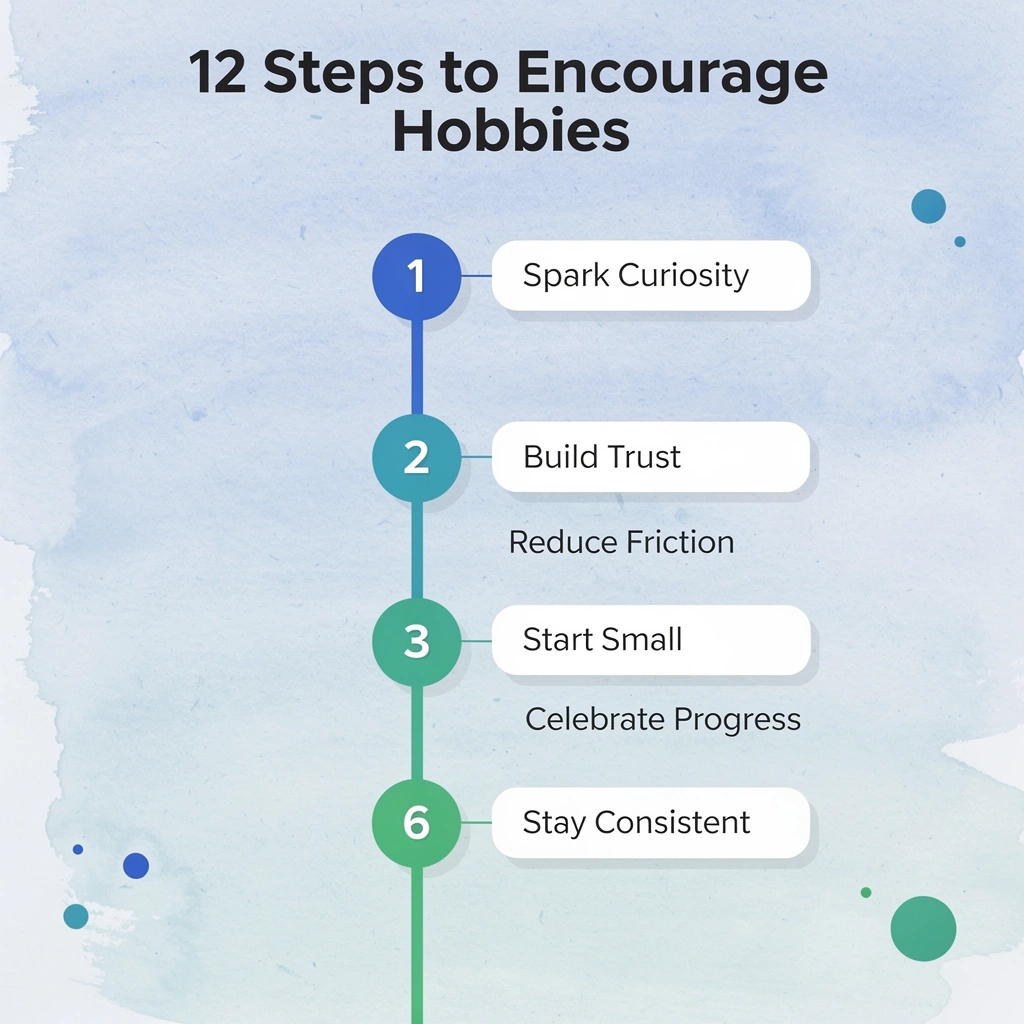
1. Start with Their Story, Not Your Suggestions
The biggest mistake families make is choosing hobbies they think seniors will enjoy. A well-meaning push toward watercolor painting lands flat if the person spent thirty years sewing costumes for the local theatre. Start by asking: What did you love before life got crowded? Is there something you've always meant to learn? What hobby did you quietly set aside when the kids arrived?
Those answers are your map. Someone who once tended a garden may find botanical sketching deeply satisfying. A former seamstress might light up holding an embroidery hoop again. People are far more motivated when an activity connects to their personal identity rather than when it feels like an assigned task. Ask first. Suggest second.
2. Explain the Real Benefits, Not Just the Pastime
Telling someone that a hobby will "keep them busy" is dismissal. Seniors deserve to understand what is at stake. According to HomeWell Care Services, learning new hobbies can reduce seniors' risk of dementia by up to 50%, transforming creative activity from mere entertainment into a critical health intervention.
When someone understands that picking up a sketchbook or coloured pencils actively supports their mental sharpness, mood, and independence, the decision to try becomes purposeful rather than optional. This reframing changes how many people participate more than any specific activity could.
3. Begin Smaller Than You Think Is Necessary
One of the fastest ways to discourage a senior is to suggest an ambitious project on day one. "Let's paint a landscape" sounds exciting until the blank canvas, unfamiliar brushes, and pressure to produce something beautiful converge. The confidence collapses before the first stroke.
Start with a single coloring page, ten minutes of knitting, or sketching one flower from a photograph. These are not lesser versions of a real hobby—they are the actual entry point where confidence builds. Small wins compound, and manageable goals outlast ambitious ones, especially when someone is rebuilding a creative identity set aside decades ago.
4. Build in a Social Dimension
Across sustainable senior hobbies, people stay because of the relationships formed, not the activity itself. A knitting group, community art workshop, or weekly coloring session with a grandchild transforms a solitary activity into something relational.
Isolation is a documented health concern for older adults. Creative hobbies with a social component address two problems at once: they provide engagement and combat loneliness. Inviting a senior to a group activity gives them somewhere to belong, not something to do.
5. Remove Barriers Before They Become Excuses
Older adults who seem unwilling are often overwhelmed by transportation, cost, physical limitations, complicated supply lists, or fear of looking foolish. These obstacles rarely get named aloud; older adults typically decline rather than voice them.
Ask directly: What would make this easier? Then solve for the specific answer. Choose affordable, home-friendly hobbies that work within physical constraints. The less intimidating the starting point, the more likely the first session is to happen.
6. Celebrate Effort, Not Outcome
Most creative worry in adults, including seniors, stems from fear of imperfection, a learned response that can be unlearned through specific encouragement. "I love the colors you chose" lands differently than "Good job." One is praise; the other is proof that someone actually looked.
Focus on persistence, color choices, and the fact that they showed up and tried, not on evaluating finished work as a submission. Positive reinforcement rewires the internal story a person tells about their own creative capability, keeping them coming back.
7. Find an Activity Partner
Accountability is a powerful motivator. When a senior knows someone else is showing up, "maybe later" loses its grip. The partner need not be a professional instructor or particularly skilled—a spouse, neighbor, or grandchild creates a shared rhythm that transforms the hobby from an afterthought into an appointment.
Social commitment often outweighs personal intention. When creative time becomes something two people anticipate together, it becomes a shared ritual, and rituals are harder to abandon.
8. Make Supplies Visible and Ready
If starting a hobby requires finding supplies, locating tools, making a store run, and clearing space, it will be postponed indefinitely. Friction is the enemy of consistency. The solution is environmental design, not willpower.
Why does reducing friction make creative habits easier to keep?
Put coloring pages on the coffee table. Keep knitting beside the favorite chair. Leave a sketchbook open on the desk. When supplies are visible and accessible, the decision to create requires minimal effort. The lower the activation cost, the higher the frequency.
How can digital resources remove the barrier of store trips?
A practical option that removes friction: our platform at My Coloring Pages offers a library of over 74,000 downloadable, printable coloring pages accessible from home and printable in minutes. Pages can be matched to specific interests—botanical illustration, architectural detail, or personal preferences—without store trips or designs that don't fit your needs.
9. Encourage Exploration Without Expectation
Not every hobby will be the right fit; that's the process, not failure. The goal is to build a relationship with creative exploration itself, where trying something new feels interesting rather than risky.
Encourage seniors to try several activities without pressure to commit. Watercolor one week, collage the next, a simple craft project after that. The right hobby reveals itself through repetition and curiosity, not a single moment of passion.
10. Connect the Hobby to a Larger Purpose
Creative hobbies become more motivating when they produce something meaningful for others. Knitting blankets for a local shelter, painting a portrait as a birthday gift, assembling a photo album for grandchildren, or writing family stories in a handmade journal—these are contributions, not mere activities.
Why does creating for others sustain motivation longer than personal enjoyment?
The sense of purpose that comes from creating for others keeps people engaged longer than personal enjoyment alone. When a senior can point to a finished piece and say, "I made that for someone I love," the creative act carries a meaning no solo project can match. Purpose is a stronger motivator than novelty.
11. Respect Their Pace Without Backing Away
Some seniors embrace a new hobby within the first session; others need weeks of gentle, repeated invitations. Both responses are normal. The mistake is interpreting hesitation as permanent refusal and stopping invitations.
Patience here is active: a form of respect that communicates "I see you, I am not going anywhere, and this will still be here when you are ready." That consistency builds trust in ways enthusiasm alone cannot, and trust is what eventually opens the door.
12. Design the First Session to Win
Your first experience with any new hobby is important. A frustrating first session can close the door permanently, while a simple, rewarding one creates the emotional memory that brings someone back. This is about doing things in the right order, not lowering standards.
Choose something relaxing and achievable: a single coloring page with a design the senior finds beautiful, or a short craft with a visible result. The goal is for the person to think "I did that" rather than "I am not good at this." That internal verdict, formed in the first thirty minutes, shapes everything that follows.
How to Choose a Creative Hobby for a Senior in 11 Ways
Finding the right creative hobby for a senior means listening to what they already like, to their daily routines, and to what their body can do — these things point directly toward activities that will work well.
"The best creative hobby for a senior isn't the most popular one — it's the one that fits their life, their physical abilities, and their personal passions." — Senior Wellness Insight
💡 Tip: Start by observing the senior's existing interests and energy levels before suggesting any specific activity — the right fit will feel natural, not forced.
🎯 Key Point: The three pillars of choosing the right hobby — what they love, what fits their schedule, and what their body allows — must all align for the activity to truly stick.
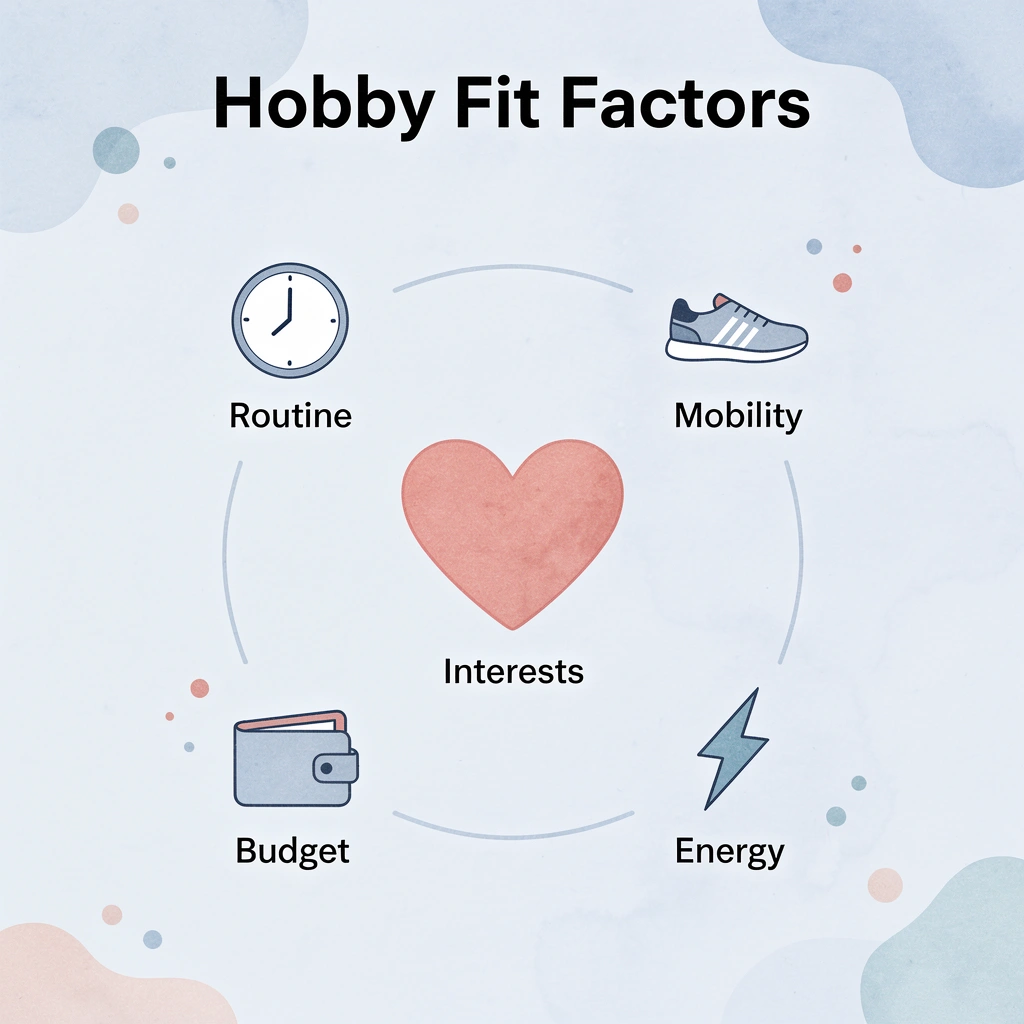
1. Start With What Already Feels Familiar
The easiest hobby to sustain is one that connects to something you already love. Ask yourself: What did you do for fun before work took over? What activities make time disappear? Someone who spent decades tending a garden may find botanical illustration deeply satisfying, while a former teacher might be drawn toward creative writing or journaling. Familiar emotional territory makes it easier to start.
2. Match the Hobby to Real Physical Realities
A hobby should feel like an invitation, not a test. Consider movement, vision, hand strength, and energy honestly. If standing for long periods is uncomfortable, activities like coloring, knitting, or digital photo editing work well at a table or in a chair. If hand control is limited, adaptive tools and larger materials make crafts such as weaving or collage more accessible. The goal is a creative challenge that energizes, not one that reminds someone of what they can no longer do.
3. Decide What You Actually Want to Get Out of It
Different creative hobbies offer different rewards. Someone seeking stress relief needs a different activity than someone wanting to build something with grandchildren or create something lasting. Asking "What do I most want to feel at the end of a session?" helps you decide faster than browsing options. According to Sometimes Homemade, there are 51 distinct activities designed for adult relaxation and personal growth, meaning the range is wide enough to match almost any personal goal.
4. Think in Sessions, Not Projects
Many satisfying creative activities for seniors work well in 15- to 30-minute windows, fitting naturally around energy changes and appointments. The key is choosing something that can be paused and resumed without losing momentum: coloring, sketching, and crochet all share this quality.
Why does personal choice matter for staying motivated?
Most coloring books offer fixed designs with no room for personal preference. A senior who loves architecture gets the same floral patterns as everyone else, which can drain motivation after a few sessions. Our My Coloring Pages library offers over 100,000 downloadable designs across detailed themes, including architectural subjects like cathedrals and bridges, so every session feels personally chosen.
5. Choose Something That Keeps Growing
The most rewarding hobbies don't have a finish line. Watercolor painting, embroidery, woodworking, and creative writing all have layers of technique that take years to explore, meaning the hobby continues to challenge the brain long after the basics feel comfortable. This ongoing learning separates a hobby that lasts a decade from one abandoned after a month.
6. Experiment Before Committing
Many seniors choose a hobby too quickly, then feel obligated to stick with the wrong one. Try three or four different activities over a few weeks before selecting a favorite. Retirees often discover genuine passion for something they never considered during their working years, simply because they finally have time to explore without pressure.
7. Build In the Social Dimension
Creative hobbies become more sustainable when they connect people to others. Local classes, community workshops, crafting groups, and intergenerational projects with grandchildren add accountability and warmth that solo practice cannot match. A hobby that delivers human connection is harder to abandon.
8. Keep the Starting Supplies Simple
Complicated equipment stops people before they begin. Choose hobbies requiring only a few affordable, easy-to-find materials: coloring, sketching, journaling, and crochet all demand minimal upfront investment. This removes the financial hesitation that often prevents seniors from trying something new and makes it easier to shift direction if the activity isn't the right fit.
9. Release the Idea of Talent
Many seniors hesitate at the starting line because they believe creative hobbies belong to naturally artistic people. This belief is unfounded. Creative hobbies offer relaxation, self-expression, and the quiet satisfaction of making something with your hands. The only measure of success is whether you want to return tomorrow.
10. Connect the Hobby to a Larger Purpose
The most meaningful creative activities extend beyond personal enjoyment into contribution. Creating handmade gifts, preserving family memories through scrapbooking or photo books, decorating a shared living space, or volunteering craft skills for a community project give the hobby lasting purpose. Purpose transforms a pleasant pastime into something a person actively protects time for.
11. Design It Into the Routine
The best hobby fits naturally into an existing schedule rather than requiring a complete overhaul. Setting aside 20 to 30 minutes three or four times a week builds a genuine creative practice over time. When an activity slots naturally into the shape of a day, it stops feeling like an addition and becomes a natural part of who you are.
The right hobby doesn't just fill time; it changes how a senior sees the rest of their day.
25 Creative Hobbies for Seniors to Improve Brain & Body Health
WelbeHealth has identified 25 creative hobbies that specifically support brain and body health for older adults. These activities challenge the brain, engage the body, and deliver meaningful returns—with a wider range than most people expect.
"Engaging in creative hobbies is one of the most powerful ways older adults can protect both cognitive function and physical wellbeing well into their later years." — WelbeHealth
🎯 Key Point: 25 distinct hobbies have been identified to support senior brain and body health—covering far more ground than the usual suggestions of puzzles or walking.
💡 Tip: Don't limit yourself to one activity. Combining hobbies that challenge both the mind and body delivers the greatest overall health benefits for older adults.
1. Adult Coloring
Adult coloring requires focused attention, which reduces stress hormones and stops anxious thought patterns. It also strengthens fine motor control and hand-eye coordination without requiring artistic training or causing physical strain.
The advantage is that it's easy to access—no setup, experience, or expensive materials needed. Platforms like My Coloring Pages offer personalization that generic coloring books cannot: a senior who loves architecture can print detailed cathedral or bridge designs; someone else can generate a custom page from a personal photograph.
2. Watercolor Painting
Watercolor painting develops planning, color choices, and spatial understanding simultaneously. Because watercolor is forgiving and mistakes blend naturally into the work, it rarely causes the frustration that discourages beginners from continuing.
3. Creative Writing
Writing short stories, personal memoirs, or daily journals exercises memory, language, imagination, and emotional processing simultaneously. Research links expressive writing to improved emotional well-being in older adults, particularly when it helps them articulate their sense of purpose and understand their long-term experiences.
Creative writing preserves legacy. Seniors who write memoirs create records with real meaning for future generations while keeping their minds sharp. This dual function—cognitive and legacy-building—makes creative writing powerful.
4. Knitting
Knitting pairs repetitive hand movement with sustained concentration, improving fine motor coordination and mental focus. Studies link regular knitting to reduced stress and improved mood, while completing a finished project—a scarf, blanket, or pair of gloves—delivers concrete accomplishment that supports emotional health in ways passive entertainment cannot match.
5. Crocheting
Crocheting requires following patterns, which demands constant attention and planning. This mental effort, combined with the physical skill of guiding yarn through stitches, makes it more mentally engaging than it appears. The finished products—handmade gifts or home items—carry emotional meaning that store-bought items lack.
6. Gardening
Gardening combines creative design with light physical activity. Planning flower beds or containers requires problem-solving and spatial thinking, while digging, watering, and tending improve flexibility, balance, and mobility. Time outdoors provides natural light and sensory engagement that support mental well-being.
7. Floral Arranging
Creating flower arrangements requires quick decisions about color, proportion, and composition. The activity demands precise hand coordination while remaining gentle on the body. Many seniors find the finished arrangements deeply satisfying, whether displayed at home or given as gifts.
8. Photography
Photography keeps seniors physically active in parks, neighborhoods, and gardens while sharpening their observation and decision-making skills. Framing a good image requires attention, patience, and creative judgment, transforming routine outings into purposeful activities.
9. Bird Sketching
Bird sketching combines nature observation with drawing, requiring careful attention to posture, feather detail, and movement. It rewards patience, builds artistic skill, and encourages outdoor mindfulness, benefiting mental and physical health.
10. Pottery
Working with clay engages all your senses while requiring focus, planning, and fine motor control. The physical resistance of clay strengthens hand muscles and improves finger dexterity. Pottery is unique in balancing cognitive and physical demands equally.
11. Calligraphy
Calligraphy improves precision, hand control, and concentration through deliberate practice of decorative letterforms. It has practical applications in handwritten cards, journal covers, and personalized gifts.
12. Playing the Piano
Playing piano activates more brain regions simultaneously than almost any other single activity, engaging memory, coordination, rhythm, and sensory processing. Regular practice improves finger dexterity and hand independence, making it one of the most complete brain-body activities available to seniors regardless of prior musical experience.
13. Singing
Singing exercises breathing muscles while training memory through lyric and melody recall. Group singing adds social connection, which research links to better emotional health in older adults.
14. Dancing
Creative dance challenges both your body and mind. You must remember choreography, respond to rhythm, and coordinate movement. These activities improve balance, flexibility, and cardiovascular health while engaging your brain. Physical and mental benefits are inseparable.
15. Wood Burning (Pyrography)
Wood burning builds patience, focus, and precision by requiring steady hands and sustained concentration to guide a heated tool across wood. The finished pieces carry emotional weight through their permanence and personalization.
16. Puzzle Design
Seniors can design puzzles rather than solve them. Creating crosswords, word searches, or logic games exercises creativity, language, planning, and problem-solving while producing something others can use and enjoy.
17. Scrapbooking
Scrapbooking combines storytelling, design, and memory recall by organizing photographs, writing captions, and arranging layouts. These activities stimulate long-term memory while creating a tangible record of meaningful experiences. A completed scrapbook becomes a legacy future generations can hold and return to.
18. Jewelry Making
Making bracelets, necklaces, or earrings strengthens finger skills and hand-eye coordination while fostering creativity through color choices and pattern design. The finished pieces hold emotional value that far exceeds the cost of materials.
19. Embroidery
Embroidery combines repetitive stitching with creative design choices. Following a pattern builds attention and memory, while guiding a thread through fabric improves fine motor control. Completing an embroidered piece builds confidence and reinforces a sense of purpose.
20. Woodworking
Woodworking requires practical problem-solving skills: measuring, planning, cutting, and assembling pieces. It builds upper-body strength and coordination while producing durable furniture or decorative items. Unlike many hobbies, woodworking yields tangible, lasting creations you can use or display.
21. Digital Art
Using a tablet to draw helps older adults learn modern creative tools while building cognitive flexibility. Learning new software challenges the brain in ways that familiar activities don't. The ability to undo and edit freely reduces frustration, making digital art a forgiving entry point into visual creativity.
22. Creative Cooking
Creating new recipes combines creativity and practical skills. When you plan meals, experiment with ingredients, and present your dishes, you exercise memory, organization, and fine motor skills while supporting healthier eating habits.
23. Origami
Origami strengthens finger flexibility, spatial reasoning, and concentration by transforming a flat sheet of paper into a three-dimensional form. Following folding sequences challenges memory and sequential thinking. It's low-cost, portable, and calming, making it one of the most accessible creative hobbies for seniors with limited mobility or budget.
Origami becomes meditative for many seniors over time. Repetition of familiar folds builds muscle memory that quiets mental noise, while new, complex designs keep the brain engaged. This balance between comfort and challenge sustains long-term creative practice.
24. DIY Home Décor
Making handmade wreaths, painted signs, or decorative centerpieces lets you express yourself artistically while getting light physical activity. Measuring, assembling, and decorating items improve coordination while making your living space feel more personal. Creative control over choosing materials, colors, and designs makes the activity expressive.
25. Memoir Writing
Writing personal life stories improves long-term memory, language skills, and emotional reflection. According to Brandermill Woods, mentally engaging activities can reduce dementia risk by up to 30%. Writing about your life preserves family history, shares gained wisdom, and creates a lasting legacy.
What happens when seniors start writing their stories?
Many older adults who start writing their life stories find that one story opens up many more memories. Writing becomes a way of understanding a whole life, not merely recording events.
The brain doesn't treat these activities as hobbies; it treats them as proof that it remains important and useful, and that distinction matters more than most people recognise.
Related Reading
- Creative Hobbies To Try
- Creative Hobbies for Women
- Fun Creative Hobbies
- Creative Hobbies That Improve Mental Clarity
Your Brain Doesn't Stop Needing Creativity After Retirement, It Needs It Even More
Your brain's need for creative stimulation doesn't stop when you retire—it intensifies. When you remove your daily work structure, building creative habits on purpose becomes essential. Getting started requires no talent, money, or clear schedule, only the intention to begin.
"Retirement removes the built-in cognitive demands of work, making purposeful creative engagement not a luxury but a necessity for a healthy, active brain."
💡 Tip: You don't need to wait for the perfect moment or the right supplies. Starting small and starting now separates good intentions from real, lasting habits.
🎯 Key Point: Creative habits built after retirement aren't just enjoyable—they're essential for maintaining cognitive health, emotional wellbeing, and daily structure.
If you're ready to make creativity a regular part of your week, My Coloring Pages offers 74,389+ free printable coloring pages across hundreds of themes — from architectural designs to nature scenes — all fully customizable to your pace and interests. No skill required, no setup beyond a printer and pencils — exactly the low-barrier entry that turns good intentions into consistent habits.
✅ Best Practice: Treat your coloring sessions as a scheduled appointment with yourself — even 15–20 minutes a few times a week is enough to build a meaningful creative routine.
⚠️ Warning: Don't let perfectionism be the barrier. The goal isn't a flawless finished product — it's the consistent, calming act of creating that delivers the real benefit.
Related Reading
- Easy Creative Hobbies
- Creative Hobbies To Try At Home
- Cheap Creative Hobbies