120 Creativity Quotes to Understand Its Importance
Discover 120 powerful creativity quotes from My Coloring Pages to spark innovation, overcome blocks, and unlock your creative potential today.

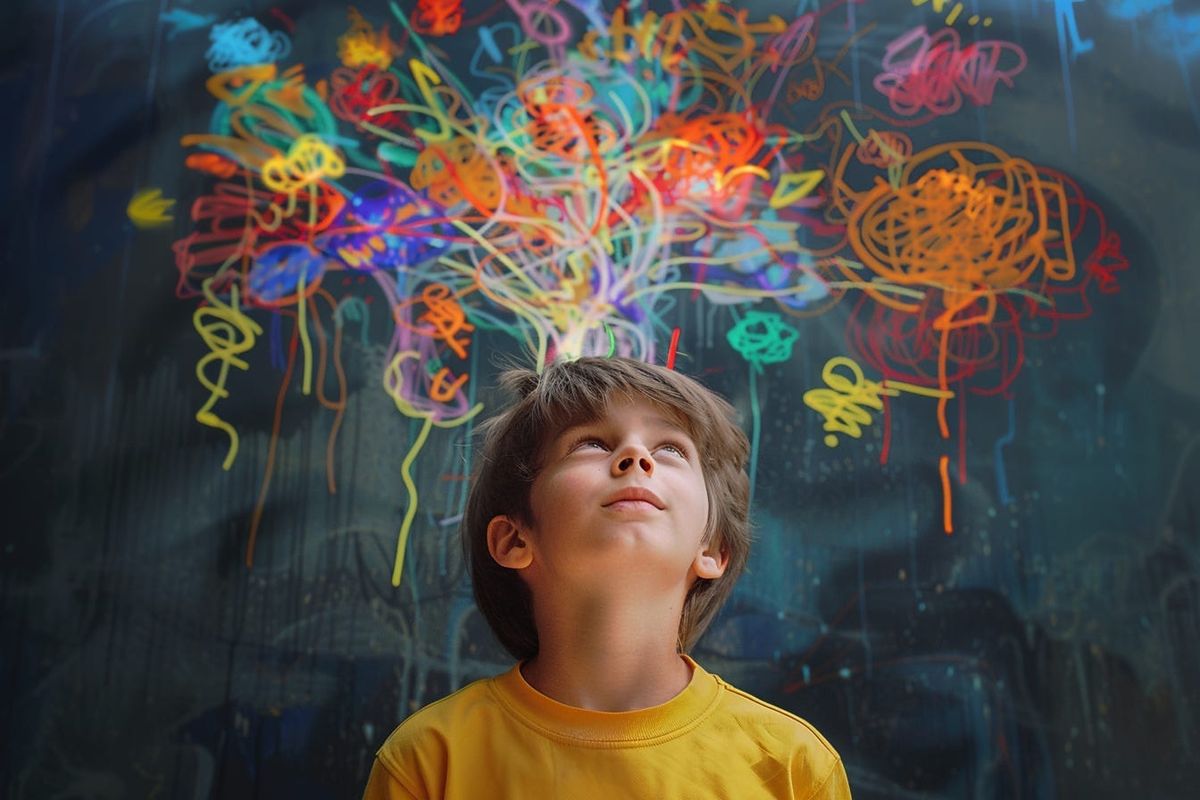
Staring at a blank page while waiting for inspiration wastes precious creative time. Understanding how to foster creativity requires building the right environment, adopting specific practices, and surrounding yourself with words that spark imagination. Powerful creativity quotes serve as daily reminders and mental triggers, helping creators develop materials that genuinely inspire both themselves and their audiences. The key lies in combining motivational wisdom with actionable creative principles.
Turning inspiration into tangible results becomes easier with the right resources. Ready-made foundations eliminate the struggle of starting from scratch, allowing creators to focus on customization and personal touches rather than basic structure. My Coloring Pages provides access to thousands of free coloring pages that can be downloaded and adapted, transforming abstract creative concepts into practical tools for immediate use.
Summary
- Children's creativity peaks at 98% in early preschool years but drops to just 30% by age ten, according to George Land's long-term study tracking 1,600 children using NASA-designed assessments. This dramatic decline isn't a natural development. It results from environments that reward conformity and correctness over exploration, systematically training divergent thinking out of children during the exact years when their brains are most plastic and receptive to creative development.
- Executive function systems matter more than early academics for long-term success. Research following 273 preschool children found that selective attention significantly predicted later working memory and response inhibition, even after controlling for socioeconomic status and verbal ability. Creative activities like pretend play, building, and open-ended problem-solving strengthen the very cognitive systems that determine whether children can focus, regulate emotions, and adapt to unfamiliar situations throughout their lives.
- Brain development creates an urgent timeline that most parents underestimate. The National Association for the Education of Young Children reports that 90% of brain development occurs before age five, and functional fixedness (reduced flexibility in using objects and ideas in novel ways) begins appearing between ages six and seven. The window for building divergent thinking isn't infinite, making preschool years the critical period when creative environments have the most lasting neurological impact.
- Screen exposure during school hours alone averages one to four hours for 55% of American students, replacing the open-ended play and self-directed exploration that builds creative capacity. When children consume entertainment constantly instead of creating it, their brains practice passive reception rather than active invention. This shift shows up as difficulty entertaining themselves without devices, avoidance of imaginative play, and a need for constant external stimulation because they've lost practice generating their own engagement.
- Psychological safety determines whether children continue experimenting with creative ideas. Research shows that environments that reduce fear and evaluation pressure foster creative thinking, while those that emphasize correctness shut it down. When adults correct every creative mistake (like a purple sun) or praise only polished results, children learn that imagination matters less than accuracy, gradually training them to seek approval rather than exploring possibilities.
- MyColoringPages addresses the barrier between inspiration and action by letting families download 74,703+ free coloring pages customized to any interest the instant the idea strikes, removing the friction that often stops creative work before it starts.
Importance of Creativity for Preschoolers
Being creative during preschool years is the foundation for how children will think, change, and solve problems throughout their lives. Creative activities during ages two through seven build the executive function systems that enable all future learning, despite concerns that creative activities divert time from academic preparation.
🎯 Key Point: Creative play during preschool isn't just fun—it's the foundation for all cognitive development and future academic success.
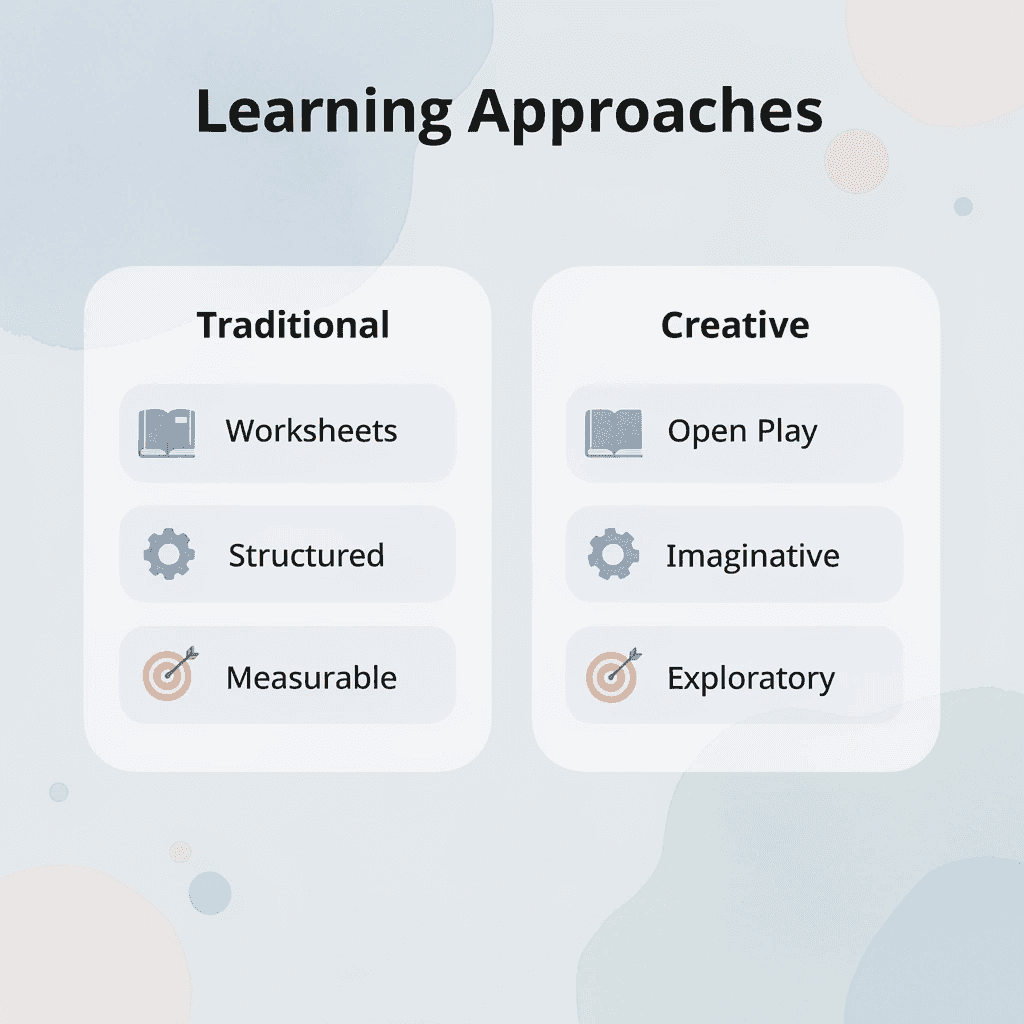
Parents feel pressure to focus on early reading, math worksheets, and structured teaching, while schools respond by reducing open-ended play in favor of measurable academic goals. Yet brain science shows that preschool creativity isn't separate from cognitive development. It is cognitive development, expressed through the way children learn and play.
"Creative activities during the preschool years actively build the executive function systems that make all future learning possible." — Harvard Center on the Developing Child
💡 Tip: Instead of viewing creative time as separate from learning, recognize that imaginative play is how preschoolers develop the cognitive skills they'll need for academic success.
The neurological window closes faster than you think
According to the National Association for the Education of Young Children, 90% of brain development happens before age five. Creativity begins around age two, and by ages six or seven, children develop functional fixedness, becoming less flexible in using objects and ideas in new ways. The window for building divergent thinking is limited. Research tracking 83 preschoolers found creativity already works across verbal, motor, and figural domains by age four. If you suppress exploration during this period, you risk raising children who become rigid thinkers later, unable to adapt when problems don't have a single correct answer.
Executive function determines academic success more than early academics do
Activities that build creativity strengthen executive function, which includes working memory, inhibition, attention control, and cognitive flexibility. These skills help children focus, manage emotions, solve new problems, and adapt to different situations. A long-term study of 273 preschool children aged 2.5 to 3 found that selective attention was a strong predictor of later working memory and response inhibition, even when controlling for socioeconomic status, age, gender, and verbal ability.
How do creative activities build executive function skills?
Pretend play, imaginative storytelling, open-ended problem solving, building, and dramatic role-play all require these executive function systems. When a child builds a block tower that keeps falling and redesigns the base to make it stable, they practice cognitive flexibility, test ideas, and learn to change strategies when initial approaches fail—the same mental processes needed for reading comprehension, mathematical reasoning, and collaborative learning.
What do effective preschool programs have in common?
Systematic reviews analyzing 85 preschool intervention studies found that the most effective programs shared common elements: guided play, movement, mindfulness, and activities that challenged thinking skills. Interventions that improved children's cognitive development didn't rely on drilling letters and numbers; they built the foundational systems that enable learning itself.
Why do parents undervalue creativity despite recognizing its importance?
According to a Crayola study conducted by Talker Research, 86% of parents say creativity is important for their child's development, yet many treat it as extra rather than necessary. Creativity matters more than traditional academics during these early years when brain architecture is still forming. Understanding why creativity matters is only half the answer. The harder question is what happens when we ignore it.
What Happens When You Neglect Creativity in Early Years
The damage starts quietly. Children who once built elaborate imaginary worlds begin asking for step-by-step instructions instead. They stop taking risks with their ideas, not because they've lost the ability, but because they've learned that originality feels dangerous. Research analyzed by Kyung Hee Kim, published in the Creativity Research Journal, shows that American children's creativity began to decrease starting in 1990, with declines continuing year after year until at least 2021.
"American children's creativity began to decrease starting in 1990, with declines continuing year after year until at least 2021." — Kyung Hee Kim, Creativity Research Journal
⚠️ Warning: When children consistently ask for step-by-step instructions instead of exploring their own solutions, their creative confidence is already being undermined.
🎯 Key Point: The shift from risk-taking to instruction-seeking represents a fundamental change in how children approach problem-solving and creative challenges.

What does research reveal about creativity decline?
George Land conducted a long-term study of creativity using an assessment designed by NASA. When tested at ages three to five, 98% of 1,600 children scored at genius-level creativity. By age ten, that figure dropped to 30%. By age fifteen, only 12% remained at that level. When he tested 280,000 adults, 2% retained their creative ability. Children naturally think in imaginative ways, but environments that reward memorization, rule-following, and fear of mistakes over exploration train this imaginative thinking out of them.
How do parents witness this creative shift?
Parents witness this change firsthand. A child who once invented elaborate games now refuses to play without detailed explanations of the rules. Another stops drawing because their pictures "don't look right." These behaviors reflect a world that prioritizes correctness over experimentation. When adults take over projects, steer creative ideas toward predetermined results, or praise only finished work that looks perfect, children learn that their ideas aren't good enough.
How does passive consumption impact creative development?
Today's children are exposed to screens more than ever before and are developing strong creative habits. According to Forbes' education analysis, 55% of American students spend between 1 and 4 hours on screens during the school day alone. Creativity grows most powerfully during open-ended play, self-directed exploration, and productive boredom that pushes imagination into action. When children consume entertainment constantly instead of creating it, their brains practice passive reception more than active invention.
Why do children lose their ability to self-entertain?
Kids struggle to entertain themselves without devices, opting for structured activities with clear endpoints over imaginative play. They've lost the ability to generate their own engagement and require constant stimulation. The brain builds what it practices. If that's mostly receiving rather than generating, that's the capacity that strengthens.
What happens when children become too focused on academic performance?
Some children excel with worksheets, follow instructions precisely, and retain information easily, appearing to thrive in strict environments. Parents and teachers celebrate these successes but miss the weak thinking skills developing beneath the surface. These children often get scared when they face problems without a single right answer, situations that require improvisation, or tasks that demand independent thinking. They've become skilled at following others' plans but struggle to create their own. Education systems that function like factories, focusing on memorizing facts and achieving uniform test scores rather than imagination and discovery, produce students who appear successful on paper but lack the flexible thinking skills modern jobs and life require.
How do well-meaning parents accidentally suppress creativity?
Creativity declines when exploration is replaced by constant evaluation, imagination by strict instruction, and curiosity by distraction rather than development. Most parents don't intentionally hold back creativity. It happens through good intentions: wanting children to stay ahead, prioritizing academics early, correcting mistakes constantly, and filling every moment with structured productivity. Once children begin believing that being correct matters more than being curious, many stop exploring long before they reach adulthood. So how do you reverse this trajectory before the window closes?
Related Reading
- How To Foster Creativity
- What Is Creativity
- Best Books To Inspire Creativity In Kids
- Best Toys For Promoting Creativity
- Best Toys For Developing Creativity
- How To Encourage Creativity In Kids
- Creativity Quotes
25 Tips on How To Foster Creativity in Preschoolers
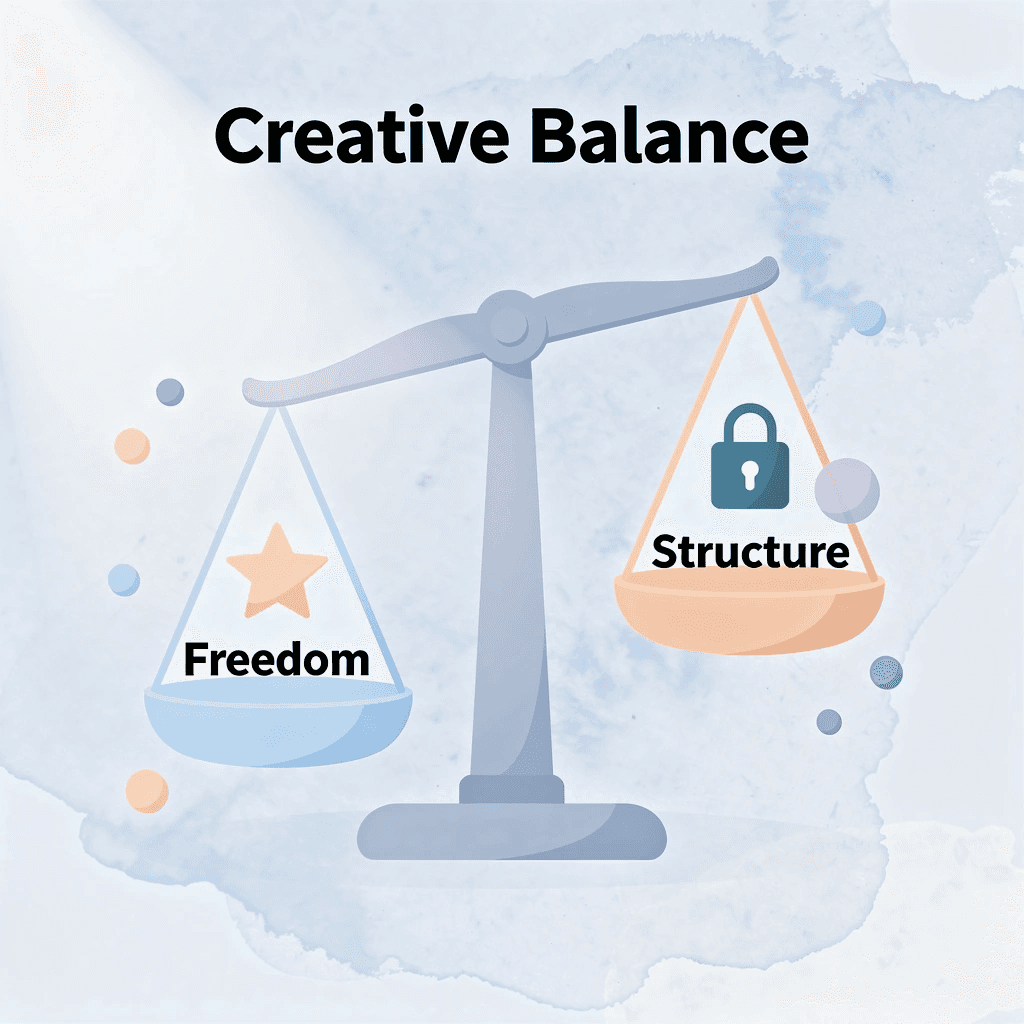
Creativity doesn't need to be taught; it needs to be protected. The most effective strategies aren't about adding activities, but about changing how you respond to creative impulses that are already happening. When you create space for exploration instead of directing every moment, you give children permission to think flexibly, experiment boldly, and trust their own imaginative instincts.
🎯 Key Point: The goal isn't to manufacture creativity through structured activities, but to nurture the natural creative spark that exists in every preschooler by providing freedom to explore and time to wonder.

"Children are naturally creative. The challenge is not to teach creativity, but to preserve and encourage the creative spirit that already exists within them." — Early Childhood Development Research, 2023
⚠️ Warning: Over-directing creative activities can actually stifle imagination. Instead of telling children what to create or how to play, focus on providing rich materials and unstructured time for authentic creative expression to emerge.
1. Give Children Open-Ended Toys Instead of Single-Purpose Toys
Toys with set outcomes teach children to follow instructions rather than generate new ideas. A robot that transforms in one specific way shows a child how someone else solved a design problem. Blocks, fabric scraps, cardboard tubes, and magnetic tiles encourage children to invent their own solutions because no manual dictates what's correct.
How does open-ended play strengthen creative thinking?
When a child transforms a cardboard box into a spaceship, grocery store, and robot costume, they're practicing divergent thinking. Each transformation requires imagining new uses, inventing new rules, and solving novel problems. This flexible thinking strengthens the brain pathways that creative thinking relies on throughout life.
What materials work best for fostering creativity?
The best materials are ones adults find boring: clay, scarves, and loose parts like buttons, stones, shells, and wooden pieces. These become whatever a child's imagination needs them to be.
2. Let Children Get Bored Sometimes
Boredom is uncomfortable for parents who have learned that good parenting means keeping children constantly busy. But removing unstructured time also removes the condition that creates self-generated play. Creativity emerges from the space between activities when a child's brain seeks something interesting to think about.
How do children develop independent creativity through boredom?
Kids initially resist "go invent something to do" because they're accustomed to entertainment being provided. Once they overcome the discomfort, they build forts, create games with their own rules, or tell elaborate stories. These self-directed activities develop creativity in ways that adult-planned projects cannot.
Why is self-generated creativity important for adult creative work?
Being creative as an adult means generating ideas independently. If children only create when given materials, instructions, and encouragement, they never learn self-motivation. This matters because creative work is challenging, and inner drive sustains effort through difficulty.
3. Encourage Pretend Play Daily
Pretend play is one of the most mentally challenging activities preschoolers do. When a child pretends a block is a phone, they practice symbolic thinking—the ability to let one thing stand for another. When they act out a restaurant scenario, they try out social roles, practice language patterns, and build narrative structure.
How does role-playing build abstract thinking skills?
A child who spends twenty minutes pretending to be a doctor tests ideas about how doctor visits work, practices empathy by imagining how patients feel, and builds communication skills through made-up conversations. Each pretend scenario strengthens their ability to think abstractly, shift perspectives, and create coherent stories.
Why is pretend play important for emotional development?
Pretend play gives children a safe space to work through emotions they lack words for. The child who makes stuffed animals argue is working through conflict. The one who builds elaborate rescue missions explores themes of safety and heroism. These imaginative rehearsals build emotional intelligence alongside creative ability.
4. Stop Correcting Every Creative Mistake
The fastest way to kill creativity is to respond to every experiment with correction. When a child colors a purple sun, and you say, "The sun is yellow," you're teaching them that imagination matters less than accuracy. When they build a tower that doesn't match your mental image, and you redirect them toward the "right" way, you're training them to seek approval instead of exploring possibilities.
How does psychological safety impact creative thinking
Psychological safety—the feeling that it's safe to take risks without judgment—determines whether children will keep experimenting. According to research highlighted by Positive Psychology, environments that reduce fear and evaluation pressure allow creative thinking to flourish, whereas those that emphasize correctness shut it down.
What responses encourage creative exploration
The better response is curiosity. "Tell me about your picture" invites the child to explain their thinking, while "What made you choose purple for the sun?" validates their decision-making process and signals that their ideas matter.
5. Focus on the Process, Not Just the Final Result
Kids notice what you focus on. If you only praise finished work, they learn that creativity is valuable only when others approve of it. If you praise effort, trying new things, and persistence, they learn that the thinking process itself matters.
What specific language encourages creative exploration?
"You worked hard figuring out how to balance those blocks" shows that you noticed their problem-solving. "I noticed you tried three different ways before you found one that worked" validates persistence. "You used many different colors in interesting combinations," celebrates exploration. These responses teach children that creativity is about discovering ideas, not producing something that looks good.
How does process-focused praise build creative resilience?
A child who thinks creativity means impressing adults stops creating when work gets challenging. A child who thinks creativity means exploring interesting problems keeps going because the process itself feels rewarding.
6. Allow Messy Play
Sensory exploration—touching, squishing, pouring, and manipulating materials—builds the experiential foundation for abstract thinking. When children play with sand, water, mud, finger paint, or slime, they learn about texture, viscosity, cause and effect, and physical properties through direct experience.
How does messy play remove performance pressure?
Messy play removes the pressure of "making something." There's no correct way to squish playdough or pour water between containers. Children experiment freely without a finished product to judge, encouraging open-ended exploration that strengthens creative confidence.
Why do adults resist messy play activities?
Adults usually avoid messy play because of cleanup concerns, not because it harms children. Messy play supports brain development by enhancing sensory integration, experimentation, and spatial reasoning. These benefits justify the extra time spent cleaning surfaces.
7. Ask Open-Ended Questions
Questions with one correct answer train children to recall information; questions with multiple possible answers train them to generate ideas. "What coloor is this?" tests memory, while "What do you think would happen if we mixed these colors?" invites hypothesis and experimentation.
What types of cognitive work do different questions require?
Open-ended questions require different cognitive work: "Why did you choose that?" demands reflection on their own thinking, "Can you make up a story about this drawing?" asks them to create narrative connections, and "What else could we try?" pushes them to consider alternatives.
How do open-ended questions model curiosity as a value?
These questions show that curiosity matters. When adults ask genuine questions without knowing the answers, children learn that wondering about things matters more than always being right.
8. Give Children Time to Finish Their Ideas
Creativity requires sustained attention. Interrupting children for transitions, corrections, or schedule demands breaks the imaginative flow that deep creative work requires. Research from Mulberry Learning emphasizes that creativity thrives when children have freedom to explore at their own pace without constant adult interruption. The child building an elaborate block structure needs uninterrupted time to test ideas, revise plans, and solve emerging problems. The one creating an imaginary world needs space to develop the narrative without interruption.
How does protecting creative time build thinking skills?
When children focus for long periods, they develop creative abilities and task-management skills. Rushing them teaches that speed matters more than careful thinking. Protecting time for creativity teaches that some kinds of thinking deserve unhurried attention.
9. Read Stories Interactively
Reading for fun entertains you, but participatory reading builds creative thinking. Stopping mid-story to ask "what do you think will happen next?" prompts children to predict and imagine. "How else could this story end?" teaches them that stories are flexible structures that can be reimagined. These activities transform reading from passive information consumption into creative production. "What if the dragon was friendly instead of scary?" invites emotional rewriting. "Can you invent a new character who could help solve this problem?" develops understanding of how stories are constructed and why characters behave as they do.
What long-term skills does story reimagining develop?
Kids who regularly reimagine stories develop stronger narrative thinking: the ability to build coherent sequences of events with cause and effect. This skill transfers directly to creative writing, problem-solving, and scenario planning.
10. Encourage Building and Construction Play
Construction activities—blocks, magnetic tiles, cardboard, and pillow forts—develop spatial reasoning and creative problem-solving. Building a tall tower teaches balance and structural engineering; when it falls, children learn from failure and revise their approach. Building play teaches that problems rarely have one correct solution. There are dozens of ways to construct a stable bridge or design a functional fort. Each attempt requires imagining a possibility, testing it, observing results, and adjusting—a process that mirrors creative work across every field.
Why should you avoid showing children the right way to build?
Don't show children the "right" way to do things. When they solve building problems independently, they feel more confident in their ability to solve problems. When adults quickly demonstrate the correct method, children learn to wait for instructions rather than try things on their own.
11. Limit Over-Scheduled Routines
Kids whose every hour is planned rarely learn to play creatively on their own. Constant movement between classes, tutoring, and activities leaves no room for self-directed imagination. Creativity needs space to grow. A child with an occasional free afternoon learns to make their own fun: building things, inventing games, creating art, or making up pretend stories. These self-directed activities build creative independence in ways that adult-planned enrichment cannot. Unstructured time feels wasteful to parents trained to maximize every moment. Yet the thinking skills that emerge from boredom, self-motivation, and creative problem-solving matter more than most structured activities teach.
12. Introduce Music and Movement
Creative movement strengthens self-expression through a channel different from verbal or visual creativity. When children dance freely, invent rhythms, or compose songs, they explore how their bodies and voices communicate ideas and emotions.
What creative skills do dance and music activities develop?
Dance improvisation teaches children that there's no wrong way to respond creatively. Freeze dance builds impulse control alongside creative expression, while making up silly songs develops verbal creativity and narrative thinking in a playful, low-pressure format. According to Positive Psychology's research on creativity, creative capacity connects deeply to emotional and expressive systems. Music and movement access these emotional channels, strengthening creative expression.
13. Let Children Solve Small Problems Themselves
When adults immediately fix every problem, children lose chances to practice creative problem-solving. The child who can't reach a toy learns more from figuring out how to climb safely than from having an adult hand it to them. The one whose block tower keeps falling learns more from testing different foundations than from watching you build it correctly.
What questions help guide without solving?
Strategic questions work better: "What else could you try?" pushes them to consider alternatives. "Can you think of another way?" validates that multiple solutions exist. "What do you think would happen if you moved this piece?" guides without solving.
How do small problems build creative confidence?
These small problem-solving moments build creative confidence. Children learn that when something doesn't work, they should experiment until they discover what does.
14. Create a Creativity-Friendly Environment
Kids create more when materials are easy to see and reach. Art supplies hidden in closets signal that creating requires adult permission and supervision. Paper, crayons, and scissors within reach show that creative ideas can happen whenever inspiration strikes. The same idea applies to dress-up bins, building materials, and craft supplies. When everything is put away, creativity requires extra steps, permission, and setup time: obstacles that often stop the first impulse.
Why should families embrace creative mess and chaos?
A creativity-friendly environment accepts some mess and chaos. Families that keep every surface perfectly clean implicitly teach children that tidiness matters more than exploration, while those that tolerate creative disorder teach that some kinds of thinking are worth the cleanup.
15. Avoid Rewarding Only "Correct" Answers
Kids become less creative when they think every question has only one right answer. They learn to stop taking chances with their ideas because being wrong feels worse than being boring.
How can you celebrate multiple possibilities instead
The answer is to celebrate many different possibilities. "Can you think of three different ways to solve this?" teaches that variety matters. "What are other ways this story could end?" shows that thinking differently is acceptable. "I hadn't thought of that, tell me more." Rewards new ideas even when the answer isn't technically correct.
Why does this approach matter for adult creativity
This matters because adult creativity requires proposing ideas that might be wrong. If children learn that correctness matters more than being interesting, they will struggle later with the bold thinking innovation requires.
16. Encourage Nature Exploration
Nature provides unpredictable, sensory-rich experiences that structured indoor environments cannot match. When children explore outside, they encounter constantly changing variables: weather, insects, plants, textures, and sounds. This unpredictability stimulates curiosity and observation in ways controlled environments do not.
How do outdoor activities strengthen different aspects of creative thinking?
Collecting leaves, watching bugs, sorting rocks, and making up stories about cloud shapes strengthen different aspects of creative thinking. The child who wonders why some leaves are smooth and others rough practices scientific observation. The child who imagines animals under a log builds narrative thinking. The child who sorts stones by color, size, and texture experiments with categorization and pattern recognition.
What makes outdoor exploration less pressured than indoor activities?
Outdoor exploration removes the pressure to perform that comes with indoor activities. There's no correct way to look at a pinecone or watch ants. Children can observe, wonder, and imagine without worrying whether they're doing it right.
17. Model Creativity Yourself
Kids learn more from what you do than what you say. If you draw, build, experiment, and work on creative projects, children absorb that creativity is valuable and normal. If you focus only on getting things done and on obtaining correct answers, children learn that creative pursuits are unimportant.
What simple creative actions can parents take?
You don't need to be skilled. The parent who doodles while talking on the phone demonstrates that creative expression matters. The one who adapts a recipe to suit their taste shows creative experimentation. The one who builds blanket forts or invents silly songs conveys that playfulness has value.
How does modeling creativity impact children long-term?
Kids who see adults create regularly learn that creativity isn't something you stop doing when you grow up; it's a way of thinking that remains valuable throughout life.
18. Allow Children to Take Creative Risks
Creativity grows when people try new things and learn from mistakes. This requires a safe environment where failure carries no penalty. When mistakes are criticized, children stop taking creative risks. When unusual ideas are dismissed, children learn to stick with conventional thinking.
How do creative experiments strengthen children's willingness to innovate?
A child who paints the sky green, builds a tower in an unusual way, or invents impossible story scenarios is testing limits and exploring what's possible. These experiments may not produce beautiful results, but they make the child more willing to attempt things that might not work.
Why does safe failure matter for developing creative resilience?
Safe failure matters because adult creativity requires proposing ideas that might be rejected, testing approaches that might fail, and persisting through iterations. Children who learn that failure is punished never develop the resilience to sustain the creative demands of work.
19. Encourage Storytelling
Storytelling strengthens many creative skills. When children create characters, they practice understanding different perspectives and imagining emotions. When they devise adventures, they build narrative skills and grasp cause-and-effect relationships. When they describe drawings or explain pretend play, they translate visual and physical ideas into words.
What makes simple stories effective for creativity?
The stories don't need to be complicated. The preschooler announcing "this is a story about a dog who flies to the moon and eats cheese" practices beginning, middle, and end structure. One who creates elaborate backstories for action figures develops character motivation and plot.
How can bedtime become a storytelling opportunity?
Bedtime offers a natural opportunity to ask your child to make up a story instead of always reading published ones. "Tell me a story about a bear who lost something important" provides enough structure to start without dictating where the narrative goes.
20. Rotate Toys Instead of Overloading Children
Too many choices can make it harder for kids to be creative. When children have too many options, they jump from toy to toy without exploring any in depth. Rotating materials—putting some away and bringing others out at different times—gives kids new things to play with without overwhelming them. Rotation helps children use familiar objects in new ways. Blocks ignored last month become interesting again after a few weeks away, and art supplies feel fresh upon their return. This approach teaches children to work within limits, an important creative skill. Professional creators rarely have unlimited resources; they develop interesting ideas despite boundaries. Children who create with limited materials develop the same creative thinking.
21. Rotate Toys Instead of Overloading Children
When children ask unusual questions, your response shapes whether they'll keep wondering. "Why do clouds float?" deserves more than a quick factual answer. "That's an interesting question. What do you think?" invites them to guess. "Let's figure it out together" shows that wondering is valuable.
Why do even strange questions help develop creativity?
Even strange questions like "What if trees could walk?" or "Why can't we breathe underwater like fish?" help children practice making guesses about what might happen and thinking about abstract ideas. Dismissing these as silly teaches children not to wonder. Engaging with them teaches that imagination matters. Curiosity drives all creative work. The child who learns early that questions are more valuable than answers develops the intellectual restlessness that sustained creativity requires.
22. Celebrate Curiosity More Than Performance
Children become more creative when they feel emotionally safe. Harsh criticism, pressure to be perfect, and embarrassment about mistakes increase fear and shut down experimentation. According to Positive Psychology, creativity declines when fear and evaluation pressure dominate the learning environment.
How can you separate the child from their output?
This doesn't mean abandoning all standards. It means separating the child from what they create. "This drawing didn't turn out how you wanted" differs from "you're bad at drawing." "That tower fell down; what could we try differently?" differs from "you built it wrong."
What happens when children view failure as information?
A child who fears failure tends to stick with safe, normal approaches. A child who sees failure as information experiments boldly because mistakes become data rather than judgment.
23. Encourage Collaborative Creativity
Working on creative projects together teaches children skills that working alone doesn't. When multiple children build together, they practice talking through ideas, compromising on approaches, and combining different perspectives into shared outcomes. Most adult innovation happens through collaboration, making these social dimensions of creativity essential.
Group murals, pretend play teams, and collaborative building projects teach that creativity can be collective. These experiences expose children to creative approaches different from their own: the symmetrical builder sees asymmetry, the linear storyteller encounters someone who jumps between scenes. This exposure expands their sense of creative possibility.
24. Introduce Simple "What If?" Thinking Games
"What if?" questions help children think creatively and playfully without pressure. "What if animals could talk, what would your dog say?" encourages them to imagine how other beings perceive the world. "What if houses could fly, where would yours go?" blends fantasy with their interests and spatial reasoning.
How do these exercises strengthen cognitive flexibility?
These exercises strengthen the thinking skills required for creative thinking. Children learn to pause what is real, imagine different possibilities, and build logical situations within made-up limits: the same mental moves required for adult innovation.
What makes these questions most effective?
The questions work best when they are truly open-ended. There is no correct answer to "what if the floor turned into lava?" Every response is valid, thereby removing performance pressure and encouraging wild speculation.
25. Protect Creativity From Constant Evaluation
Stop turning every activity into a competition, a grading system, or a performance measurement. When children create, they need space to experiment without worrying about whether they're "good" at it. The child who draws for fun develops different creative habits than the child who draws to win contests or earn praise. Research from Forbes analyzing classroom creativity found that excessive standardization and constant evaluation suppress natural imaginative thinking. When every output gets judged, children optimize for evaluation rather than exploration, choosing safe approaches that guarantee approval over risky ideas that might fail.
What makes imperfect creations more valuable than polished work?
The messy painting, the lopsided sculpture, the story that doesn't quite make sense—these imperfect creations often reveal more genuine creative thinking than polished work designed to impress adults. For families looking to support creative exploration without pressure, tools like My Coloring Pages offer a simple starting point. Parents can generate custom coloring pages instantly based on their child's interests, whether dinosaurs, space stations, or imaginary creatures. Since the pages can be customized to match any interest and printed immediately, children can explore visual creativity without expensive art supplies or structured lessons. Fostering creativity isn't about techniques or activities. It's about what you're willing to stop doing, and that's where things get uncomfortable.
120 Creativity Quotes to Understand Its Importance
The voices that have shaped how we think about creativity share a common thread: they understood that making things isn't reserved for a chosen few. These quotes show that creativity can grow, is available to everyone, and is fundamentally human. They challenge the myth that inspiration strikes randomly, showing instead that it comes from action, courage, and willingness to work even when uncertain of the outcome.

🎯 Key Point: Creativity isn't a rare gift—it's a learnable skill that develops through consistent practice and bold experimentation.
"Creativity is not reserved for the chosen few, but emerges from action, courage, and the willingness to work through uncertainty." — Creative Leaders, 2024
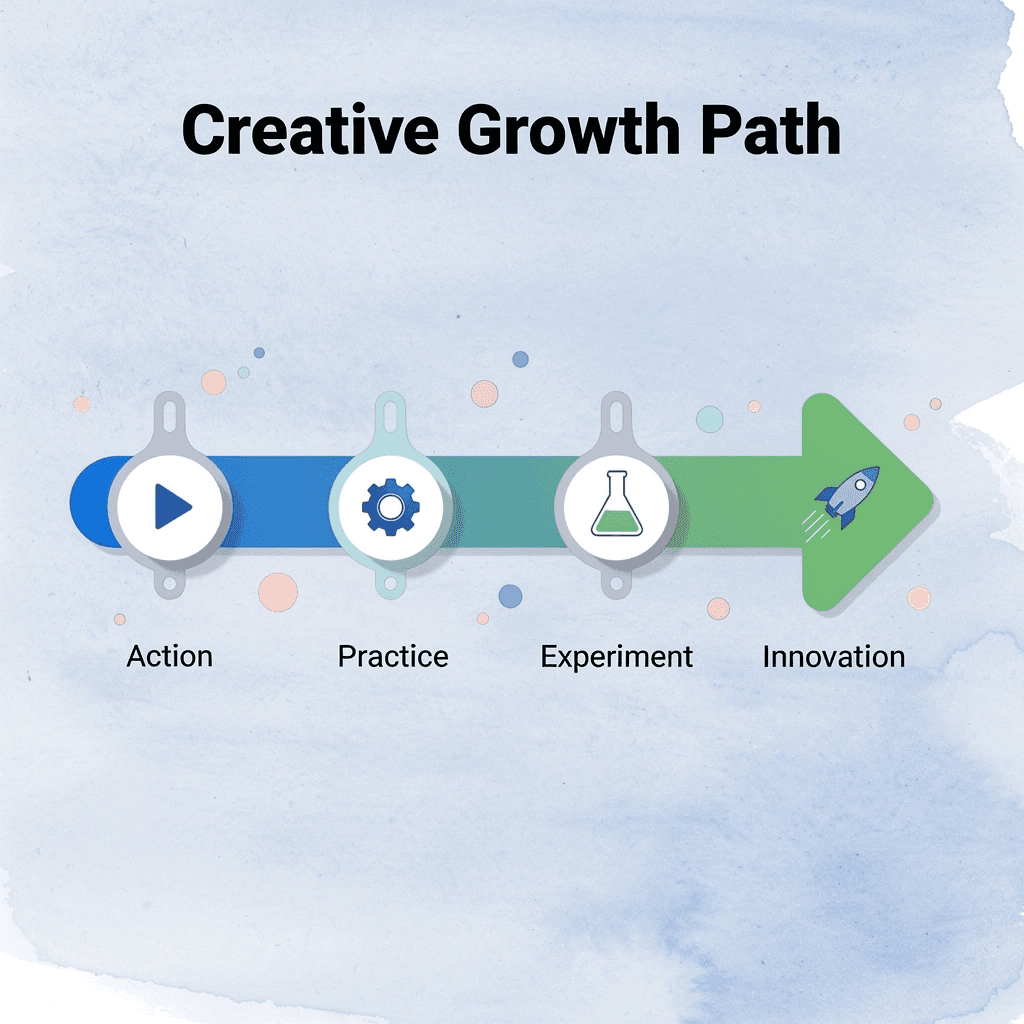
💡 Tip: When you feel stuck creatively, remember that the greatest innovators started by simply taking action, not waiting for the perfect moment of inspiration.
Courage precedes creation
1. "Bringing something new into the world requires bravery." (Henri Matisse)
2. "Every young person begins with artistic instinct." (Pablo Picasso)
3. "Creative energy spreads when you share it." (Albert Einstein)
4. "Making art clears away the residue of ordinary life." (Pablo Picasso)
5. "The creative capacity grows with use, never diminishes." (Maya Angelou)
The pattern here matters. Courage appears first because fear stops more creative work than lack of skill ever will. When someone tells you they're "not creative," what they usually mean is they're afraid of producing something imperfect. The quotes above reframe creativity as a practice that builds on itself rather than a finite resource that depletes.
6. "Inspiration arrives for those already engaged in the work." (Pablo Picasso)
7. "What we imagine becomes what we experience." (Richard Wagner)
8. "To make something is to experience life more fully." (Albert Camus)
9. "Art reveals more than surface appearance." (Edgar Degas)
10. "Great creative work extends beyond what nature provides." (Marc Chagall)
Breaking free from conventional thinking
11. "The greatest obstacle to creativity is conventional wisdom." (Pablo Picasso)
12. "Engaging in creative practice nourishes your inner self." (Kurt Vonnegut)
13. "Art represents liberation from constraint." (Wassily Kandinsky)
14. "Originality means building intelligently on what exists." (Voltaire)
15. "Your unique perspective matters to the world." (Steven Pressfield)
Research on creative development shows that functional fixedness, the inability to see new uses for familiar objects, emerges around age six or seven. These quotes push back against that narrowing. They suggest that creativity isn't about inventing from nothing but about seeing connections others miss and having the courage to act on those observations.
16. "Creativity happens when intelligence plays." (Albert Einstein)
17. "Art helps us discover who we are." (Thomas Merton)
18. "Imagine possibilities that don't yet exist." (George Bernard Shaw)
19. "Creativity emerges from tension and opposition." (Donatella Versace)
20. "Transform what's unfamiliar into something known." (Georgia O'Keeffe)
The relationship between action and inspiration
21. "Visual art expresses what words cannot capture." (Leonardo da Vinci)
22. "Art describes a process, not an object." (Elbert Hubbard)
23. "Building your own world demands bravery." (Georgia O'Keeffe)
24. "The creative person operates without boundaries." (Paul Strand)
25. "Art and life are inseparable." (Ai Weiwei)
The misconception that inspiration precedes work has probably killed more creative projects than any other belief. These quotes flip that sequence. They position action as the prerequisite for inspiration, not the result of it. You don't wait to feel creative. You start working, and the creative state follows.
26. "Passion releases creative capacity." (Yo-Yo Ma)
27. "Everyone who creates began as a beginner." (Ralph Waldo Emerson)
28. "A productive artist generates more ideas than available time." (Martin Kippenberger)
29. "Authentic art must communicate love." (Marc Chagall)
30. "Color brings both delight and struggle." (Claude Monet)
Creativity as documentation and discovery
31. "Visual art keeps a record of experience." (Pablo Picasso)
32. "Art reconnects you with your soul." (Stella Adler)
33. "Creativity functions like magic." (Edward Albee)
34. "Don't overthink, simply make." (Ray Bradbury)
35. "An artist's work transcends traditional success metrics." (Charles Horton Cooley)
When a preschooler draws the same character forty times in a week, they're not being repetitive. They're documenting an obsession, working through an idea until they fully understand it. These quotes validate that process. They suggest that creative work serves purposes beyond producing finished pieces, that the act of making itself generates insight and growth.
36. "Art's purpose is revealing what matters." (Aristotle)
37. "Art intensifies mystery rather than solving it." (Francis Bacon)
38. "Master the fundamentals, then break them intentionally." (Pablo Picasso)
39. "Silence creates space for creative thought." (Relax7.com)
40. "Ideas outlast physical existence." (John F. Kennedy)
Fear as the enemy of creative expression
41. "Fear destroys creative capacity." (Joseph Chilton Pearce)
42. "The more you create, the more you're able to create." (Maya Angelou)
43. "Art disguises truth in beautiful forms." (Pablo Picasso)
44. "The hand executes what the heart envisions." (Ralph Waldo Emerson)
45. "Nature awakens imaginative thinking." (Edvard Munch)
Creative communities often become toxic when criticism outweighs celebration. When someone posts their work and receives harsh judgment instead of constructive feedback, they're less likely to create again. These quotes emphasize that creativity requires psychological safety, the freedom to experiment without fear of ridicule or dismissal.
46. "Creating art illuminates self-understanding." (John Olsen)
47. "Make things despite imperfection." (Salvador Dalí)
48. "Art preserves human experience like honey stores sweetness." (Theodore Dreiser)
49. "Creativity breaks through mundane existence." (Bill Moyers)
50. "Creativity follows genuine enthusiasm." (Earl Nightingale)
Imagination without limits
51. "Imagination operates beyond boundaries." (Jean-Jacques Rousseau)
52. "Art results from collaboration between artist and medium." (André Gide)
53. "Mistakes can become opportunities." (Bob Ross)
54. "The artist serves as a channel for expression." (Piet Mondrian)
55. "Create the reality you want to inhabit." (Frida Kahlo)
The traditional approach to teaching art, with its emphasis on realism and technical perfection, often discourages children who can't yet control a pencil with precision. These quotes suggest a different standard. They value imagination and emotional truth over technical execution, creating space for people at all skill levels to engage meaningfully with creative work.
56. "Creativity means connecting disparate concepts." (Steve Jobs)
57. "Ideas originate in imaginative thinking." (George Bernard Shaw)
58. "Live with creative intention." (Sonia Gernes)
59. "The artist affirms life through their work." (Henry Moore)
60. "Art provides escape from tedium." (Vincent van Gogh)
Beauty, emotion, and personal vision
61. "Beauty exists everywhere if you look." (Andy Warhol)
62. "Visualize your aspirations through art." (Vincent van Gogh)
63. "Art demands genuine emotion." (Paul Cézanne)
64. "Embrace unconventional perspectives." (Bertrand Russell)
65. "Creative play holds profound importance." (Sonia Gernes)
When adults dismiss children's artwork as "just scribbles," they miss the point entirely. Those marks represent genuine emotional expression and cognitive development. These quotes validate that every creative act, regardless of technical sophistication, carries meaning and value. They position art as a fundamental human need rather than a luxury for the talented.
66. "Art expresses inward significance." (Aristotle)
67. "Master yourself before mastering your craft." (Leonardo da Vinci)
68. "The soul expresses itself through creative work." (Henry Ward Beecher)
69. "Creation requires quiet contemplation." (Relax7.com)
70. "Reality constrains, imagination liberates." (Jean-Jacques Rousseau)
Truth, feeling, and authentic expression
71. "Artists make truth visible." (Paul Klee)
72. "Appreciate people with artistic attention." (Vincent van Gogh)
73. "Art develops from genuine feeling." (Paul Cézanne)
74. "Creativity means accepting the risk of mistakes." (Scott Adams)
75. "Dedication leads to mastery." (Michelangelo)
The pressure to follow trends and appeal to wide audiences limits creative freedom more than the lack of resources ever could. These quotes emphasize authenticity over popularity. They suggest that the most meaningful work comes from personal truth rather than calculated attempts to please everyone.
76. "Create from emotional truth." (Marc Chagall)
77. "Art never reaches true completion." (Leonardo da Vinci)
78. "Inspiration favors active work." (Jack London)
79. "Creativity thrives in simplicity." (Charles Mingus)
80. "Every unconventional idea begins as eccentric." (Bertrand Russell)
Building mastery through daily practice
81. "Construct your masterpiece through daily effort." (John Wooden)
82. "Art makes the invisible visible." (Paul Klee)
83. "Creation begins with desire." (Nikos Kazantzakis)
84. "Make things with wholehearted commitment." (Vincent van Gogh)
85. "Ideas transcend temporal existence." (John F. Kennedy)
Platforms like MyColoringPages remove the barrier between inspiration and action. Instead of waiting for the right supplies or the perfect moment, you can generate a custom coloring page matching any interest the instant the idea strikes. That immediacy matters because creativity builds on momentum, and anything that reduces friction between thought and execution increases the likelihood that creative work actually happens.
86. "Artists dream in distinctive ways." (Oscar Wilde)
87. "The soul requires artistic nourishment." (Stella Adler)
88. "Art allows personal expression." (Berthe Morisot)
89. "Create without fear." (Joseph Chilton Pearce)
90. "A creator builds new realities." (Amelia Atwater-Rhodes)
Limitless potential and continuous growth
91. "Art operates without boundaries." (Paul Strand)
92. "Creativity demands courage." (Henri Matisse)
93. "Dream beyond current reality." (George Bernard Shaw)
94. "Artists experience emotions intensely." (Vincent van Gogh)
95. "Creation emerges from silence." (Relax7.com)
The exhaustion people feel when creative communities focus on tearing down rather than building up shows in how they describe their experiences. When appreciation replaces constant criticism, creativity flourishes. These quotes emphasize celebration over judgment, suggesting that the most productive creative environments focus energy on what works rather than what doesn't.
96. "Art preserves humanity's essence." (Thomas Merton)
97. "Visualize what language cannot express." (Edward Hopper)
98. "The creative process requires playfulness." (Sonia Gernes)
99. "Creativity transforms the world." (Andy Warhol)
100. "The artist pursues mystery." (Francis Bacon)
Imagination as the starting point
101. "Imagination initiates creation." (George Bernard Shaw)
102. "Art communicates emotional truth." (Paul Cézanne)
103. "Your vision holds significance." (Neil Gaiman)
104. "Create beyond fear's reach." (Joseph Chilton Pearce)
105. "The heart imagines before the hand creates." (Ralph Waldo Emerson)
The belief that creativity requires special talent or expensive materials keeps too many people from starting. These quotes dismantle that barrier. They position creativity as accessible to anyone willing to begin, regardless of their current skill level or available resources.
106. "Every significant work begins small." (Vincent van Gogh)
107. "Artists reshape reality." (Oscar Wilde)
108. "Art develops through consistent practice." (Kurt Vonnegut)
109. "Creativity feeds on curiosity." (Albert Einstein)
110. "Visual art reveals inner truth." (Henry Ward Beecher)
Discovery, transformation, and living fully
111. "Creation means discovering what already exists within." (Auguste Rodin)
112. "Artists live with full expression." (Émile Zola)
113. "Art provides escape from ordinary existence." (Twyla Tharp)
114. "Creativity expands through use." (Maya Angelou)
115. "The creative mind questions everything." (Bertrand Russell)
When children stop creating because their work "doesn't look right," they've internalized a narrow definition of success. These quotes offer a broader standard. They value the process over the product, the courage to try over the perfection of the result.
116. "Create using all your faculties." (Michelangelo)
117. "Art emerges naturally from wonder." (Robert Henri)
118. "The artist transforms chaos into meaning." (Piet Mondrian)
119. "Creativity represents endless possibility." (Steve Jobs)
120. "Art originates in imagination." (Claude Monet)
These voices span centuries and disciplines, yet they agree: creativity isn't reserved for the naturally talented. It grows through practice, requires courage more than skill, and strengthens with use. Everyone begins with creative capacity; the main obstacle is the belief that we're not creative enough to start. But knowing creativity matters and fostering it in daily life are two different challenges.
Related Reading
- Do Schools Kill Creativity
- How To Improve Your Creativity
- Examples Of Creativity
- Ai And Creativity
- Ai Creativity
- Creativity Training
11 Activities for Fostering Creativity in Preschoolers
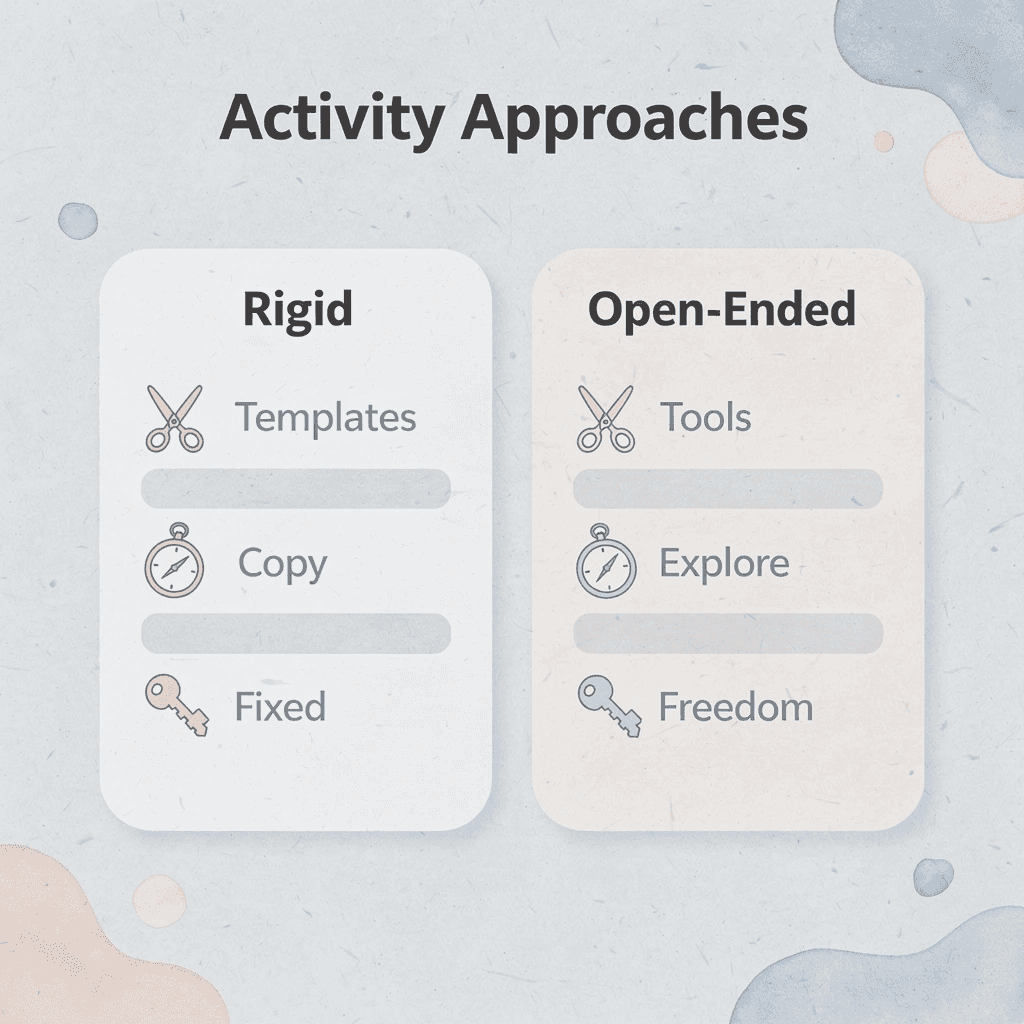
Creativity grows when you do things. The best activities provide structure without prescribing the end result. They give children tools and permission to explore instead of templates to copy. What matters most isn't how fancy the materials are but how much freedom children have to make them their own.
🎯 Key Point: The most effective creativity activities provide open-ended structure rather than rigid instructions, allowing children to explore freely while having the tools they need to succeed.

"Creative activities should offer guidance without dictating outcomes, giving children the freedom to explore while providing the structure they need to feel confident."
💡 Tip: Focus on providing quality materials and clear boundaries rather than expensive supplies - children's imagination is the most important ingredient for fostering creativity.
1. Art Materials Without Instructions
Paints, crayons, markers, and clay become creative engines when children use them without predetermined goals. A four-year-old who spends twenty minutes layering purple over yellow to discover green learns more about creative thinking than one who perfectly colors a pre-drawn butterfly. The value lies in experimenting with color mixing, texture exploration, and spatial relationships; the mess is evidence of exploration, not failure.
Why does open-ended art build confidence?
This open-ended approach builds confidence in decision-making. Every choice about which color comes next or how thick to spread the paint reinforces that their ideas have value. Children who regularly work with art materials without adult direction develop stronger problem-solving skills because they learn to trust their instincts rather than wait for validation.
2. Building and Construction Play
Blocks, magnetic tiles, and loose building materials teach spatial reasoning while encouraging imaginative scenarios. A tower becomes a castle, then a rocket ship, then a hospital within the same play session. This flexibility mirrors how creative adults approach problems: seeing multiple possibilities within the same constraints. Collaboration during building activities adds another layer. Children negotiate roles, share materials, and adapt their visions when structures collapse or ideas conflict. These social negotiations require generating solutions that satisfy multiple perspectives simultaneously.
3. Crafting With Everyday Materials
Turning cardboard tubes into binoculars or handprints into animals teaches children that creativity isn't about expensive supplies—it's about seeing what you can do with everyday objects. According to Mental Health Center Kids, craft activities help children practice fine motor skills while following basic instructions, allowing them to express themselves in their own way. The limitation of working with simple materials enhances creativity. When children lack access to "right" supplies, they find alternative approaches, and this ability to work with available resources becomes the foundation for creative problem-solving in adulthood.
4. Unstructured Free Play
Free play with little direction may be the most powerful creative activity. When children build forts from couch cushions, create detailed pretend scenarios, or invent games with their own rules, they practice every aspect of creative thinking: generating ideas, testing them, adapting when something fails, and persisting through difficulty. Parents often worry when children spend many hours in care settings, leaving little time in the evening for unstructured experiences. The concern is valid. Creativity needs space to breathe, and a schedule packed with structured activities from morning until bedtime leaves no room for the boredom that sparks self-generated ideas.
5. Outdoor Exploration
Nature provides endless creative ideas without adult direction. Collecting leaves becomes a sorting activity, then a collage project, then currency in a made-up economy. Climbing structures challenge children to find new routes and test physical limits. The sensory richness of outdoor environments—textures, temperatures, sounds, and smells—stimulates creative connections that sterile indoor spaces cannot replicate. Outdoor play removes artificial constraints. There's no "right way" to interact with a pile of sticks or dirt. Children who regularly spend time outside develop comfort with open-ended exploration that transfers to other creative domains.
6. Movement and Body Awareness
Gymnastics, dance, and yoga teach children that creativity extends beyond the visual arts. Learning to control their bodies in space—holding a balance pose or executing a forward roll—builds executive function skills that support all forms of creative thinking. Movement activities require planning, adjustment, and persistence in the face of difficulty. These physical practices help children understand their own capabilities and limits, building the self-knowledge crucial for creative confidence. Children who know what their bodies can do approach new challenges with curiosity rather than fear.
7. Music and Rhythm Exploration
Songs, instruments, and rhythmic movement introduce pattern recognition and variation, core elements of creative thinking. Learning songs in different languages or creating original verses develops flexibility in self-expression. Music engages multiple senses—hearing, movement, and visual elements—strengthening brain pathways connected to creative problem-solving. Musical repetition teaches that mastery comes through practice, and variation emerges from deep familiarity with basic patterns. A child who changes a song's lyrics understands creative adaptation at a fundamental level.
8. Science Experiments and Discovery
Mixing baking soda and vinegar, planting seeds, or exploring color combinations through water and food coloring teach cause and effect while encouraging hypothesis testing. These activities frame creativity as investigation, helping children ask "what if" and discover answers, building comfort with experimentation and unexpected results. The immediate feedback of science activities accelerates learning and builds children's confidence in their ability to influence outcomes.
9. Storytelling and Dramatic Play
Creating stories through storytelling and dramatic play develops language skills while allowing children to explore their emotions. Through pretend play, children work through experiences and fears by trying different roles and navigating social situations in safe environments. Dramatic play can be used in many different ways: the same dress-up clothes can serve hospital scenarios one day and space exploration the next. This reuse of materials teaches creative repurposing, a skill that benefits children well beyond preschool years.
10. Sensory Play Experiences
Activities involving different textures, temperatures, and materials—such as water tables, sand, playdough, and sensory bins—help build neural connections in children's brains. These activities allow children to explore independently and discover how things work through hands-on experience. These activities are especially helpful for children who learn best by moving and touching, offering alternative pathways to developmental goals for those who don't learn about creativity through seeing or hearing.
11. Customized Activity Sheets as Creative Prompts
Traditional coloring pages can foster creativity when used as starting points for storytelling, background invention, or unusual color choices. A printed dinosaur becomes a prompt: where does it live, what does it eat, what adventure is it starting?
What makes printable activities accessible for all families?
Families with limited money or time can use printable activities to foster children's creativity affordably. Websites like My Coloring Pages offer thousands of free designs customizable to match your child's interests. Think of these activities as ways to spark imagination rather than exercises requiring perfection. Encourage children to add their own elements, create stories, or turn finished pages into props for pretend play.
How does changing perspective transform creative engagement?
Shifting from "colour this correctly" to "what story does this tell you" changes how children engage. Creativity isn't about materials but the permission to transform them into something unexpected.
Creativity Quotes Mean Nothing If Creativity Isn’t Practiced Daily
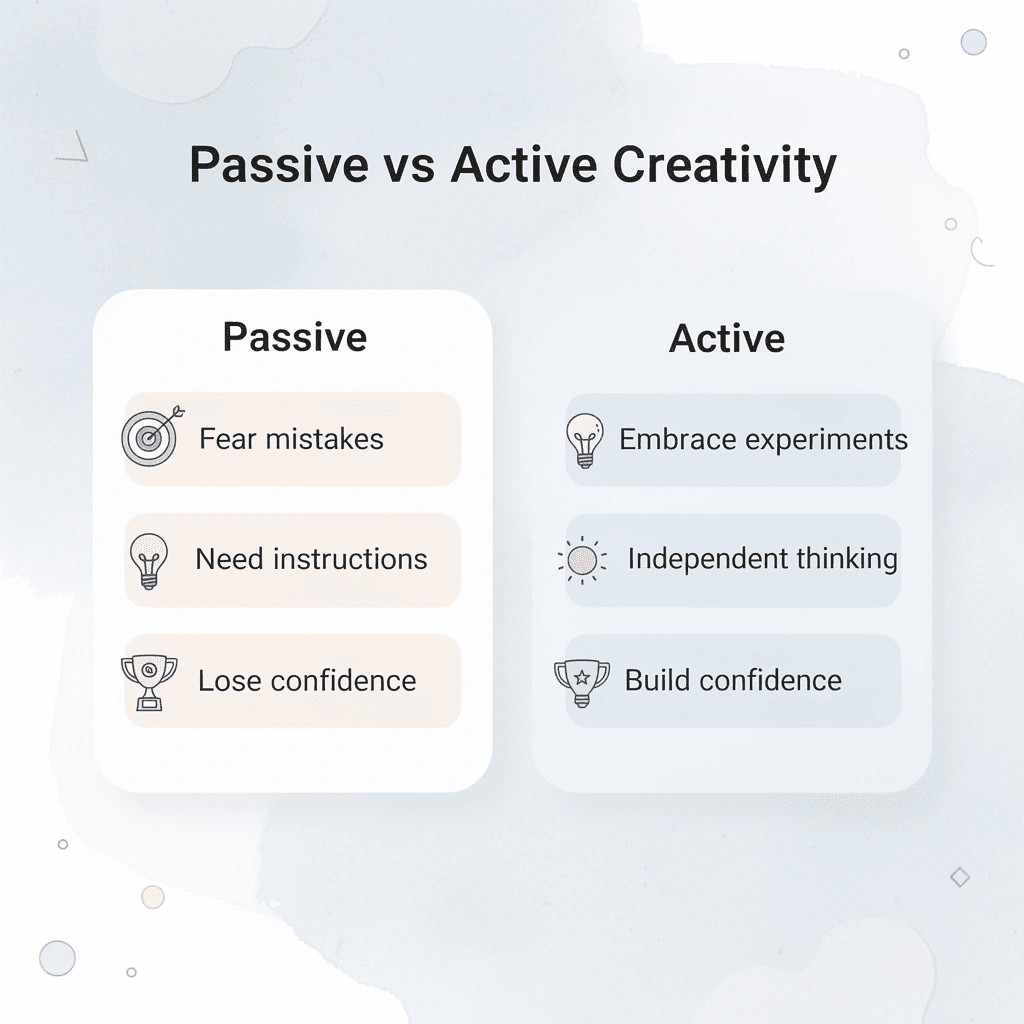
Creativity shapes confidence, curiosity, independent thinking, emotional expression, and problem-solving ability. Without daily practice, children gradually fear mistakes, stop experimenting, depend on instructions constantly, and lose confidence in their own ideas. Inspirational quotes about creativity mean nothing without actual habits children practice regularly.

🎯 Key Point: Replace passive routines with open-ended creative sessions that build real creative confidence through hands-on practice.
Replace passive routines with open-ended creative sessions. Download a customized worksheet from My Coloring Pages based on your child's interests—animals, fantasy scenes, or storytelling prompts—and use it instead of screen time or rigid "correct answer" tasks. Instead of treating coloring as "stay inside the lines," encourage your child to invent stories, change colors freely, add characters, create backgrounds, or explain what's happening in the picture.
"Creativity grows through repeated use, not just inspiration." — The foundation of lasting creative development
This reinforces imagination, flexibility of thought, curiosity, and self-expression. Choose one printable worksheet, download it instantly, and turn the next 15 minutes into a creativity-building activity. Creativity grows through repeated use, not just inspiration.
💡 Tip: Transform any coloring session into a creativity workout by asking "What if?" questions that encourage your child to think beyond the original design.
Related Reading
- Is Creativity A Skill
- Creativity Toys For Toddlers
- Human Creativity
- Types Of Creativity
- Ai Vs Human Creativity