15 Tips on How To Encourage Creativity In Kids at Home
How To Encourage Creativity In Kids with 15 proven tips from My Coloring Pages. Transform your home into a creative haven today.

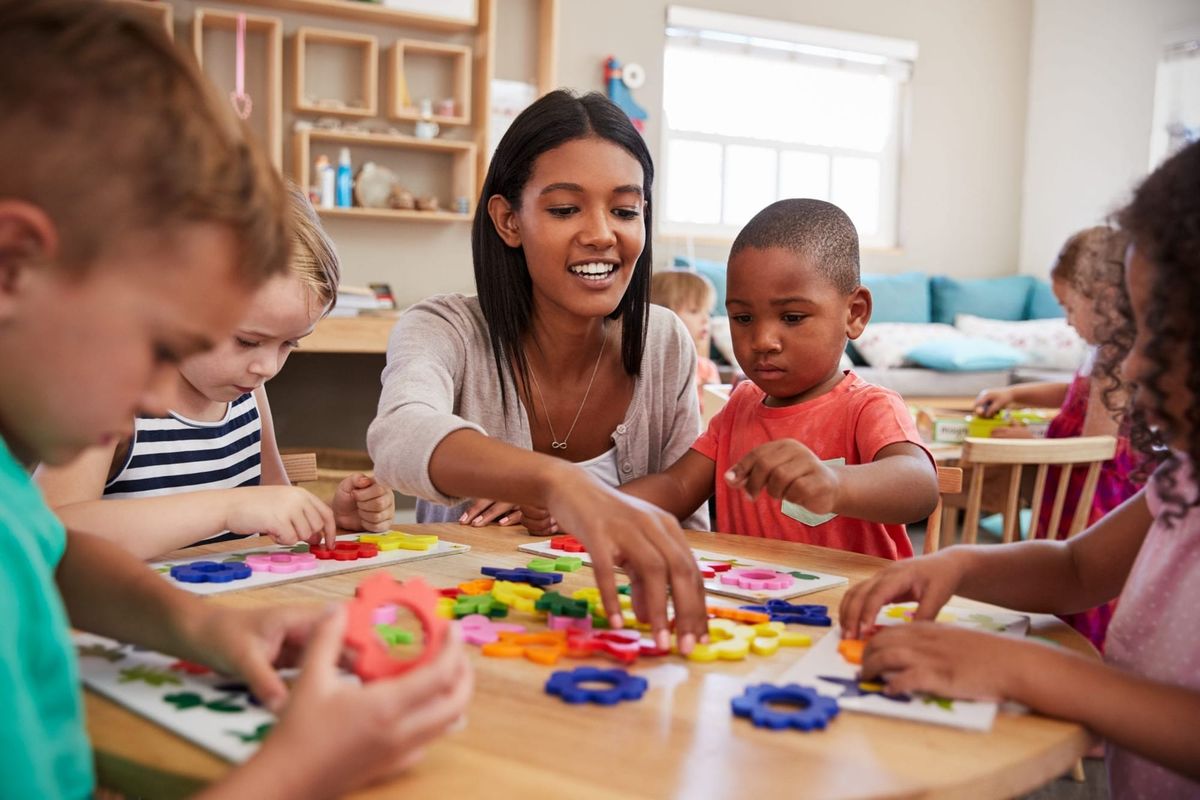
Every parent watches their child stack blocks in an unexpected way or turn a cardboard box into a spaceship and wonders how to keep that spark alive. Learning how to encourage creativity in kids doesn't require turning your home into an art studio or buying expensive toys. Simple everyday activities and accessible resources can nurture imagination while building essential problem-solving skills. The key lies in providing children with opportunities to experiment, explore, and express themselves without fear of making mistakes.
Children thrive when given freedom to experiment with colors, patterns, and artistic expression while receiving gentle encouragement from parents. Whether a child loves dinosaurs, space exploration, or abstract designs, having access to materials that match their interests helps develop visual thinking and creative confidence. Parents looking for convenient ways to support their child's artistic development can download 75,890+ free coloring pages, offering endless opportunities for creative exploration.
Table of Contents
- Importance of Creativity for Kids
- Consequences of Neglecting Creativity in Kids
- 15 Tips on How To Encourage Creativity In Kids at Home
- Affordable Supplies for Creative Activities for Kids
- 10 Activities for Encouraging Creativity in Kids
- Turn "I Don't Know What to Draw" Into Confident Creativity With Guided Starting Points
Summary
- Children who scored at genius levels for creative thinking at age five dropped to average by ten, then below average by fifteen, according to research by Kyung Hee Kim in Creativity Research Journal. The decline wasn't caused by reduced intelligence but by environments that consistently rewarded conformity over curiosity. This pattern has continued year after year since 1990, with declines sharpest in creative elaboration, originality, emotional expressiveness, and imaginative thinking.
- By age five, approximately 90% of brain development has already occurred, creating a narrow window when imagination and flexible thinking either take root or get bypassed. The Harvard Center on the Developing Child explains that repeated creative experiences during these years strengthen neural pathways connected to learning and adaptability. Children who miss this period become more dependent on rigid instruction and increasingly afraid of making mistakes as academic pressure builds.
- The Torrance Tests of Creative Thinking followed participants for decades and found that childhood creativity scores predicted future creative achievement and innovation more reliably than IQ scores alone. High grades don't automatically build adaptability or independent thinking. Creativity develops the ability to generate ideas and solve unfamiliar problems, which is the difference between a child who can recite facts and one who can apply them in situations no one prepared them for.
- Unstructured play time correlates with stronger problem-solving abilities and self-directed learning patterns according to child development research from the University of East Anglia (2019). Children with packed schedules become dependent on external direction and wait to be told what to do next. Children with open time learn to trust their own ideas and initiate projects independently, a difference that compounds over the years.
- Research consistently shows that pretend play improves imagination, emotional understanding, communication, and adaptive thinking in children. Role-playing activities require constant improvisation as children invent dialogue, solve imaginary problems, negotiate roles, and adapt when scenarios change unexpectedly. This low-stakes environment lets them experiment with power dynamics, responsibility, and consequences while building the cognitive flexibility needed for creative problem-solving.
- MyColoringPages supports this creative development by letting parents generate custom coloring pages instantly based on specific interests, whether dinosaurs, space exploration, or underwater scenes, giving children structured starting points that remove blank-page paralysis while preserving the freedom to invent stories, choose unexpected colors, and add original elements.
Importance of Creativity for Kids
Creativity is a thinking skill that grows through practice during critical years of neural development. When parents treat creative activities as optional and prioritize worksheets and test prep instead, they limit the skills that better predict long-term success than memorization. Research published in the Children journal confirms that creativity is closely linked to well-being, social adjustment, and personal development in children and adolescents.
"Creativity is closely linked to well-being, social adjustment, and personal development in children and adolescents." — Children Journal Research
🎯 Key Point: Creative activities during critical developmental years build essential thinking skills that outperform traditional memorization methods for long-term academic success.
🔑 Takeaway: Parents who prioritize creativity over test preparation invest in skills that predict better outcomes across well-being, social development, and academic achievement.
The Early Window Closes Faster Than You Think
By age five, approximately 90% of brain development has occurred. During this time, imagination, flexible thinking, and comfort with trying new things either flourish or stagnate. The Harvard Center on the Developing Child explains that repeated creative activities strengthen neural pathways connected to learning, adaptability, and higher-order thinking. If children miss this period, they become more dependent on strict instruction, less comfortable with trial and error, and increasingly afraid of mistakes.
What Predicts Real-World Achievement
The Torrance Tests of Creative Thinking followed participants for many years and found that childhood creativity scores predicted future creative achievement and innovation more reliably than IQ scores alone. Creativity develops the ability to generate ideas, solve novel problems, and think beyond memorized answers: the difference between reciting facts and applying them to unprepared situations.
What does research reveal about declining creativity scores?
Using data from approximately 300,000 Torrance Test scores, researcher Kyung Hee Kim found significant declines in creativity scores among American children since the 1990s, with the sharpest drops in creative elaboration, originality, emotional expressiveness, and imaginative thinking. Children today perform well on standardized performance assessments but struggle to generate ideas, take creative risks, and think imaginatively—a consequence of overly structured routines that prioritize rule-following over curiosity.
How can parents support creativity without artistic skills?
Many parents believe they lack the art skills to support their child's creative development, or resort to basic coloring books that don't match their child's interests. Platforms like My Coloring Pages generate custom coloring pages instantly based on what your child enjoys: dinosaurs, space exploration, and underwater creatures. This keeps creative activities engaging rather than treating them as another task that children resist.
When Play Becomes the Problem
The American Academy of Pediatrics emphasizes that imaginative play is how young children develop executive functioning, language skills, memory, self-regulation, and social abilities. Drawing, pretend play, storytelling, and creative experimentation help children develop flexible thinking patterns that memorization alone cannot. When parents minimize play in favor of productivity, they teach children that exploration is less valuable than following instructions—the opposite of building the adaptability employers rank among the most critical future workforce skills. But when creativity gets neglected early, the consequences extend beyond childhood.
Consequences of Neglecting Creativity in Kids
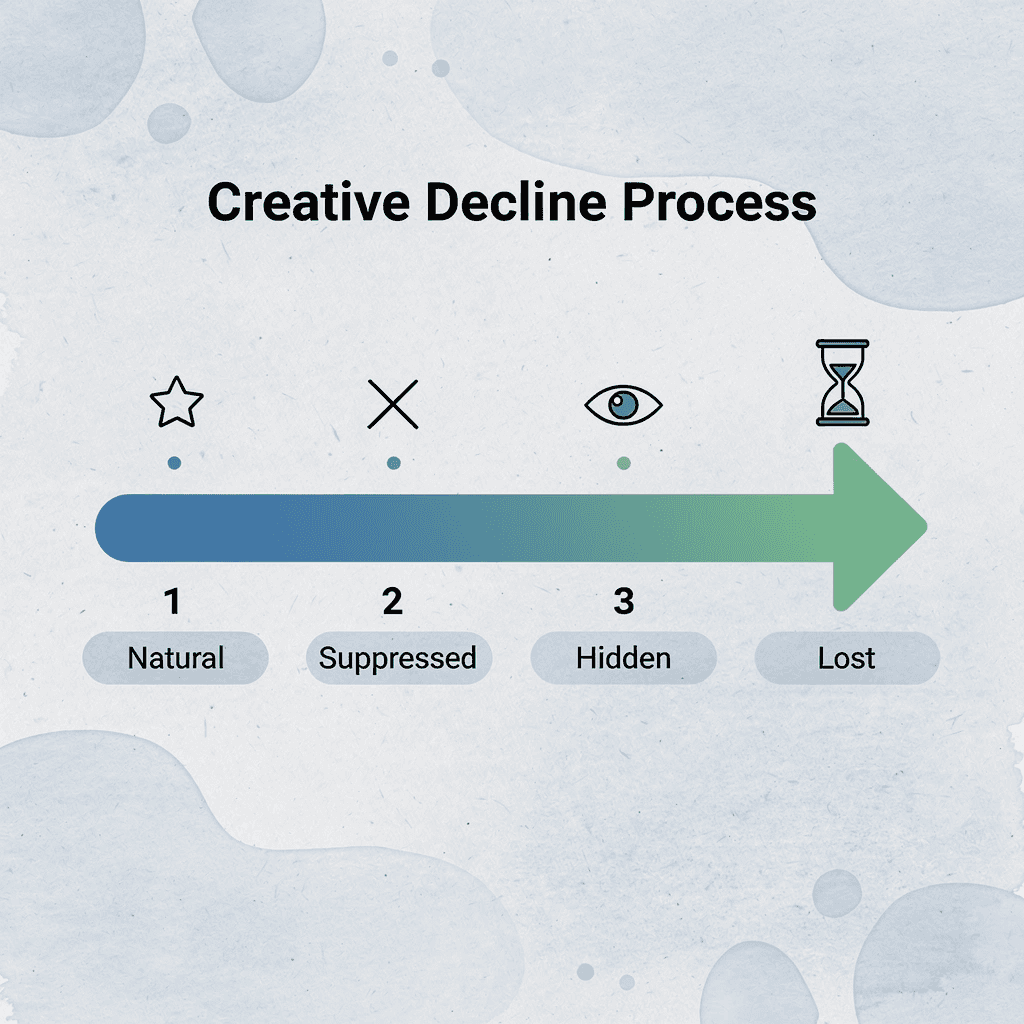
The creative capacity that children have at age five doesn't disappear—adults train it out of them. When the places where children spend time reward following the rules over asking questions, children learn to hide their imagination. This change happens faster than most parents expect, and fixing it requires deliberate work that most families don't recognize they need.
🎯 Key Point: The creative decline in children isn't natural development—it's a learned response to environments that prioritize conformity over curiosity.

"Children's creative capacity doesn't disappear naturally—it gets systematically trained out through environments that reward rule-following over questioning." — Educational Research, 2023
⚠️ Warning: Once creative thinking is suppressed, rebuilding it requires intentional effort and consistent practice—something many families discover too late in their child's development.
Why does creative confidence collapse earlier than parents think?
Research by Kyung Hee Kim, published in the Creativity Research Journal, shows American children's creativity declined from 1990 through at least 2021. Children scoring at genius levels for creative thinking at age five dropped to average by ten, then below average by fifteen. Parents often mistake this collapse for maturation, when it reflects learned caution.
What happens when creativity gets neglected in children?
When creativity gets neglected, children stop generating unusual solutions because adults have consistently steered them toward conventional answers. They begin associating originality with risk, prioritizing mistake avoidance over experimentation. This doesn't stem from diminished intelligence—it stems from awareness of what gets rewarded, and imagination rarely features in environments built around standardized outcomes.
How does fear replace children's natural experimentation
Kids raised in strict systems learn that safe answers keep them out of trouble while creative risks get them corrected. Over time, this creates perfectionism rather than excellence. They develop anxiety around open-ended tasks because there's no clear path to the "right" answer adults expect. Parents notice this when children who once built elaborate block towers or invented complex pretend games suddenly refuse to start projects without step-by-step directions. The shift isn't about losing interest; it's about losing trust in the value of their ideas.
What are the long-term emotional costs of stifling creativity
This emotional cost extends beyond childhood. When children learn their original thoughts aren't good enough, they stop sharing them. Initiative disappears. Curiosity becomes something they do when required rather than something they pursue independently. One parent watched their child's excitement disappear after an adult finished a website project the child had started, "correctly," but erasing the child's ownership completely. That moment taught the child that their ideas needed to be fixed before they mattered.
How does limited imagination affect problem-solving abilities?
Creative play trains adaptive thinking. When children engage in pretend play, storytelling, or unstructured building, they practice making decisions without predetermined outcomes. They experiment with cause and effect, manage emotions when plans fail, and develop flexibility by navigating scenarios that shift based on their choices. When these experiences shrink, children become dependent on external guidance for every decision. They follow instructions well but panic when faced with ambiguity or problems that require invented solutions.
What role do creative platforms play in developing independence?
Platforms like My Coloring Pages recognize this gap by letting children direct their own creative process. Instead of choosing from generic designs, kids describe what they want to create and watch their ideas come to life immediately. That shift from passive selection to active invention reinforces that their imagination produces real results.
Why does academic success sometimes mask creativity problems?
The most dangerous outcome looks successful at first. Children perform well on worksheets, memorize effectively, and follow procedures without disruption. But they struggle when situations require independent thinking, innovation, or tolerance for uncertainty. They've been trained to execute, not invent. Modern economies increasingly require adaptability and creative problem-solving over rote execution. Neglecting creativity in early years builds cognitive fragility that persists long after report cards stop mattering. Most parents never intended this; they were trying to help their children succeed in systems that measure the wrong things.
Related Reading
- How To Foster Creativity
- What Is Creativity
- Best Books To Inspire Creativity In Kids
- Best Toys For Promoting Creativity
- Best Toys For Developing Creativity
- How To Encourage Creativity In Kids
- Creativity Quotes
15 Tips on How To Encourage Creativity In Kids at Home
Creativity needs space, permission, and materials that invite experimentation rather than dictate outcomes. The strategies below protect what imagination needs: freedom from constant evaluation, access to a variety of tools, and time to explore without adults directing every step.
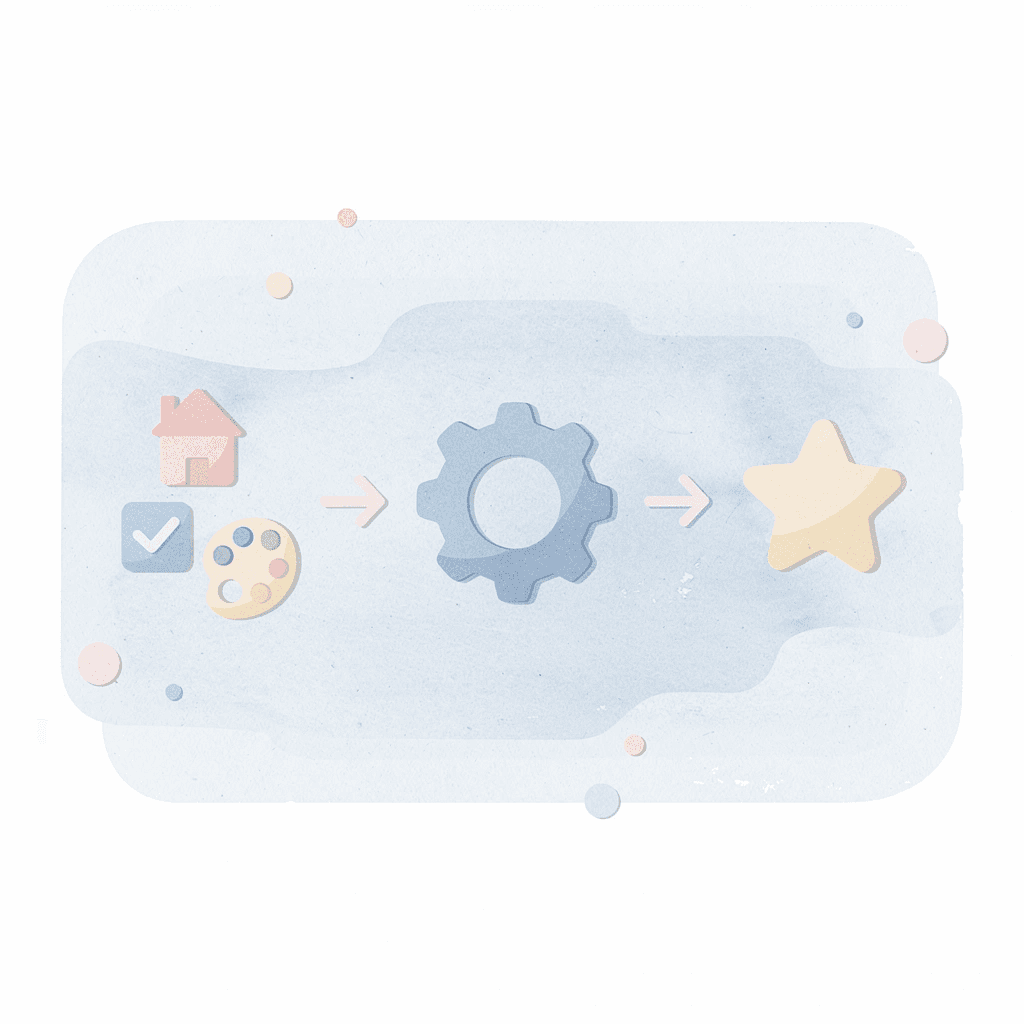
🎯 Key Point: The foundation of childhood creativity lies in providing unstructured time and open-ended materials that allow children to explore without predetermined outcomes or adult interference.
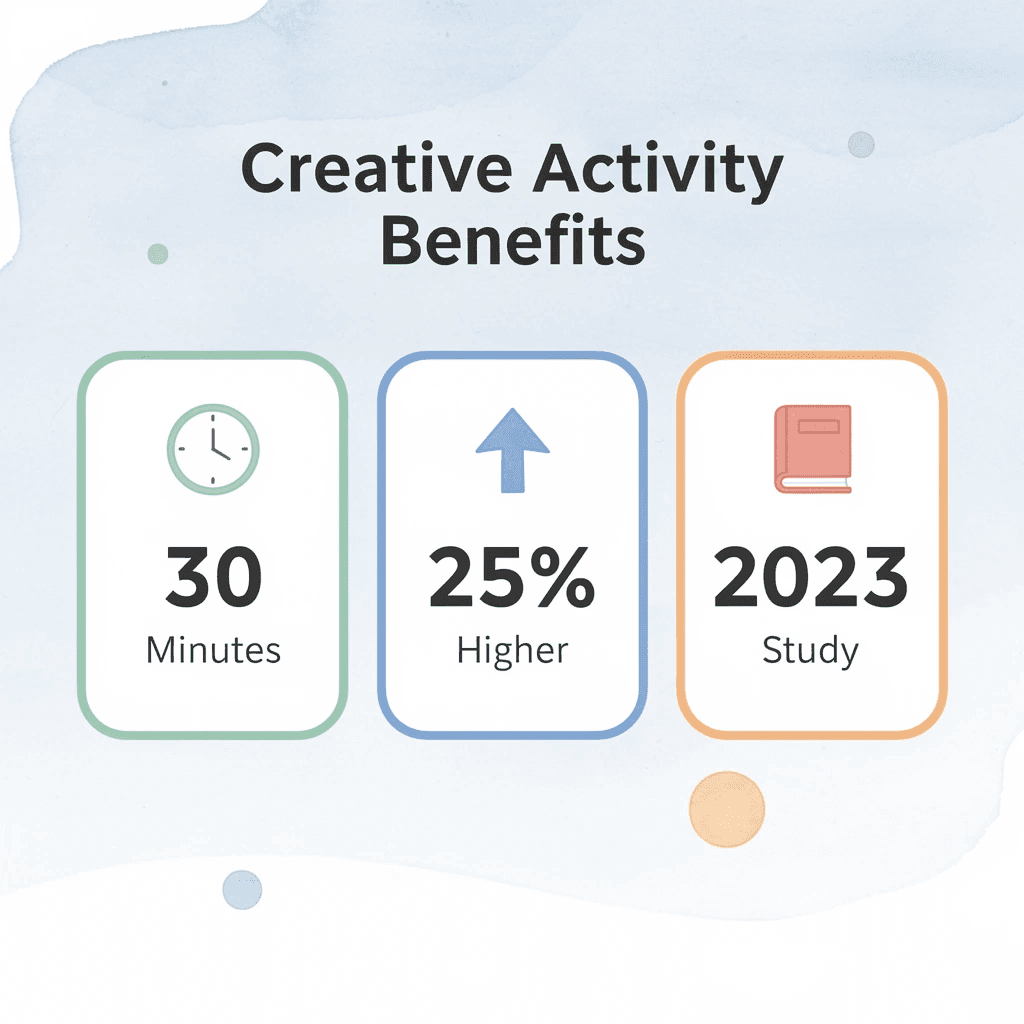
"Children who engage in creative activities for just 30 minutes daily show 25% higher problem-solving abilities and improved emotional regulation compared to peers with structured-only activities." — American Academy of Pediatrics, 2023
💡 Tip: Create a designated creative space in your home where children can leave unfinished projects, make messes, and return to their work whenever inspiration strikes - this ongoing access is crucial for sustained creative development.
1. Create a Dedicated Space Where Mess Is Expected
Kids become more creative when they have a space that shows "you can try new things here." Even a small area filled with art supplies, building blocks, fabric scraps, recycled cardboard, and markers signals to children that creative exploration is normal. The key isn't size or cost: it's accessibility. When materials are locked away in cabinets, spontaneity dies. When they're visible and within reach, children grab them during moments of curiosity rather than waiting for adults to organize activities.
Why does accessibility matter for creative impulses?
Creative ideas come and go quickly. A child who wants to build a cardboard spaceship at 3 p.m. may lose interest by 7 p.m. when you finally open the supply closet. Friction kills momentum. Remove it.
2. Leave Unstructured Time in the Schedule
Overscheduling kills creativity. When every hour is filled with tutoring, screens, or planned activities, children never experience the productive discomfort of boredom, where imagination starts.
What does research say about unstructured play time?
According to research from the University of East Anglia (2019) on child development, unstructured play time strengthens problem-solving abilities and self-directed learning. Children who experience regular boredom learn to generate their own entertainment, inventing games, stories, and projects without adult prompts.
How does scheduling affect children's independence?
Kids with packed schedules become dependent on external direction and wait to be told what to do next. Kids with open time learn to trust their own ideas and initiate activities independently. The difference compounds over the years.
3. Prioritize Open-Ended Play Over Activities With Correct Answers
Creative thinking grows when activities allow multiple possible outcomes. LEGO building without instructions, pretend restaurants where rules shift mid-game, and cardboard-box inventions that become spaceships or submarines depending on the story all teach children that problems can have many valid solutions, not just one predetermined answer. When every activity has a correct result, children learn to guess what adults want rather than explore what they wonder about. One produces compliance; the other produces inventors.
4. Ask Speculative Questions Instead of Factual Ones
Questions like "What color is this?" train recall. Questions like "What if animals could talk?" or "How would you redesign your school?" train imagination. Speculative questions require children to construct possibilities rather than retrieve information, practicing divergent thinking: the ability to generate multiple ideas from a single prompt. Most parents default to factual questions because they feel educational. Imagination needs different fuel: "what if" rather than "what is."
5. Let Mistakes Happen Without Immediate Correction
Children stop trying new things when they're afraid of making mistakes. If every drawing gets fixed, every craft project gets redesigned by adult hands, and every story gets corrected for logic, kids learn that their ideas need approval before they're valid. That's the opposite of creative confidence. Instead of correcting, ask, "Tell me about your idea." Let the purple sun and the flying elephant exist without editorial commentary. When children feel safe making unusual choices, they develop the strength to try unconventional solutions in contexts that matter.
6. Introduce Varied Materials That Invite Different Thinking
Creativity grows when children work with materials that behave differently. Clay responds to pressure. Chalk smudges. Beads need threading. Kinetic sand holds shape temporarily. Fabric drapes. Each material teaches different lessons about what is possible and what has limits. Changing materials keeps exploration interesting. A child who draws only with crayons develops a single set of problem-solving approaches. A child who also sculpts clay, builds with recycled cardboard, and arranges found objects develops cognitive flexibility, learning that different challenges require different methods.
7. Read Stories, Then Reimagine the Endings
Storytelling strengthens narrative thinking and imagination. Reading followed by questions like "What would you change?" or "Can you invent a new ending?" transforms passive consumption into active creation. Children practice constructing alternative scenarios, considering character motivations, and building logical consequences from different choices. Stories provide structure without rigidity: the beginning and middle are fixed, but the ending becomes a creative playground. Children feel safer experimenting within partial constraints than facing completely blank canvases.
8. Encourage Role-Playing and Pretend Scenarios
Pretend play builds creativity powerfully. Doctor games, shopkeeper exchanges, superhero missions, and puppet shows require children to adopt different perspectives, create dialogue, solve imaginary problems, and negotiate rules with peers. Research shows that role-playing improves imagination, emotional understanding, social skills, and flexible thinking. Simplicity matters most. Blankets become forts, cardboard boxes become storefronts, and a scarf with a wooden spoon transforms a child into a pirate captain. The prop matters less than permission to fully inhabit the role.
9. Spend More Time Outdoors
Natural environments spark children's curiosity in ways that structured indoor spaces do not. Outside, children invent games with sticks, rocks, leaves, and mud; observe patterns in clouds and insects; and build structures that collapse and get rebuilt. Nature offers endless variation without instruction manuals. According to research from the University of Illinois (2020) in environmental psychology, outdoor play reduces overstimulation and increases attention span. Children who spend regular time in natural settings demonstrate stronger creative problem-solving and more complex imaginative play than peers who primarily engage in indoor, screen-based recreation.
10. Rotate Toys Instead of Overloading Them
Too many visible toys reduce imaginative engagement. When children face overwhelming options, they skim surfaces rather than diving deep. Rotating toys creates artificial novelty: a block set that disappeared for three weeks feels fresh when it reappears, prompting new uses and narratives. Constraint breeds creativity. Fewer options force improvisation. A child with thirty toys plays predictably with each; a child with five invents new purposes when boredom hits. Open-ended toys work best: blocks, magnetic tiles, dolls, art materials, costumes, and building kits—items that become whatever the story requires.
11. Respond to Creative Work With Curiosity, Not Judgment
Kids become less creative when constantly evaluated. "That doesn't look right" teaches them to doubt their instincts, while "How did you make this?" or "What inspired you?" shows their process matters. This shift from judgment to curiosity fundamentally changes how children approach creative risk. Displaying kids' creations and discussing them positively signals that their work has value, not because it's perfect, but because it's theirs. This builds confidence to keep creating even when results don't match their intentions.
12. Replace Passive Screen Time With Active Creation
Watching screens too much reduces chances for imaginative play and independent problem-solving. Being strategic about screen time matters: an hour watching videos could become an hour building, drawing, storytelling, crafting, or making music. The difference is cognitive. Passive viewing trains pattern recognition and emotional response; active creation trains problem-solving and self-direction. Most households skew heavily toward consumption. Adjusting that ratio changes what children practice daily.
13. Involve Children Creatively in Real-Life Tasks
Creativity isn't limited to art. Cooking, decorating, organizing, gardening, and DIY projects all require creative problem-solving. Questions like "How should we arrange this room?" or "What ingredients could we add?" invite practical imagination. These experiences teach children that creativity solves real problems. A child who redesigns a garden layout learns spatial reasoning. A child who experiments with recipe changes learns cause and effect. Practical creativity builds confidence that ideas have real consequences.
14. Incorporate Music, Movement, and Physical Expression
Music and movement activities help children express feelings, understand rhythm, improve coordination, and use their imagination. Making up songs together, creating dance challenges, building instruments at home, or adding music to stories develops creativity. Not every child thinks in pictures. Offering different creative channels—sound, movement, and physical expression—ensures every child finds a natural outlet.
15. Use Coloring as Creative Exploration, Not Just Busy Work
Coloring builds creativity when children make unusual color choices, invent stories about characters, add original drawings, or create backgrounds. The difference between "stay inside the lines" and "what would happen if this dragon lived underwater?" is the difference between following rules and using imagination.
How can personalized coloring pages spark creativity?
Websites like My Coloring Pages offer thousands of printable designs that children can personalize rather than simply copy. When a child requests a coloring page featuring something they love—perhaps a specific dinosaur or an imagined fantasy world—they're already being creative before picking up a crayon. This starting point demonstrates that their ideas guide the activity, not the other way around.
Why does structure actually help creative confidence grow?
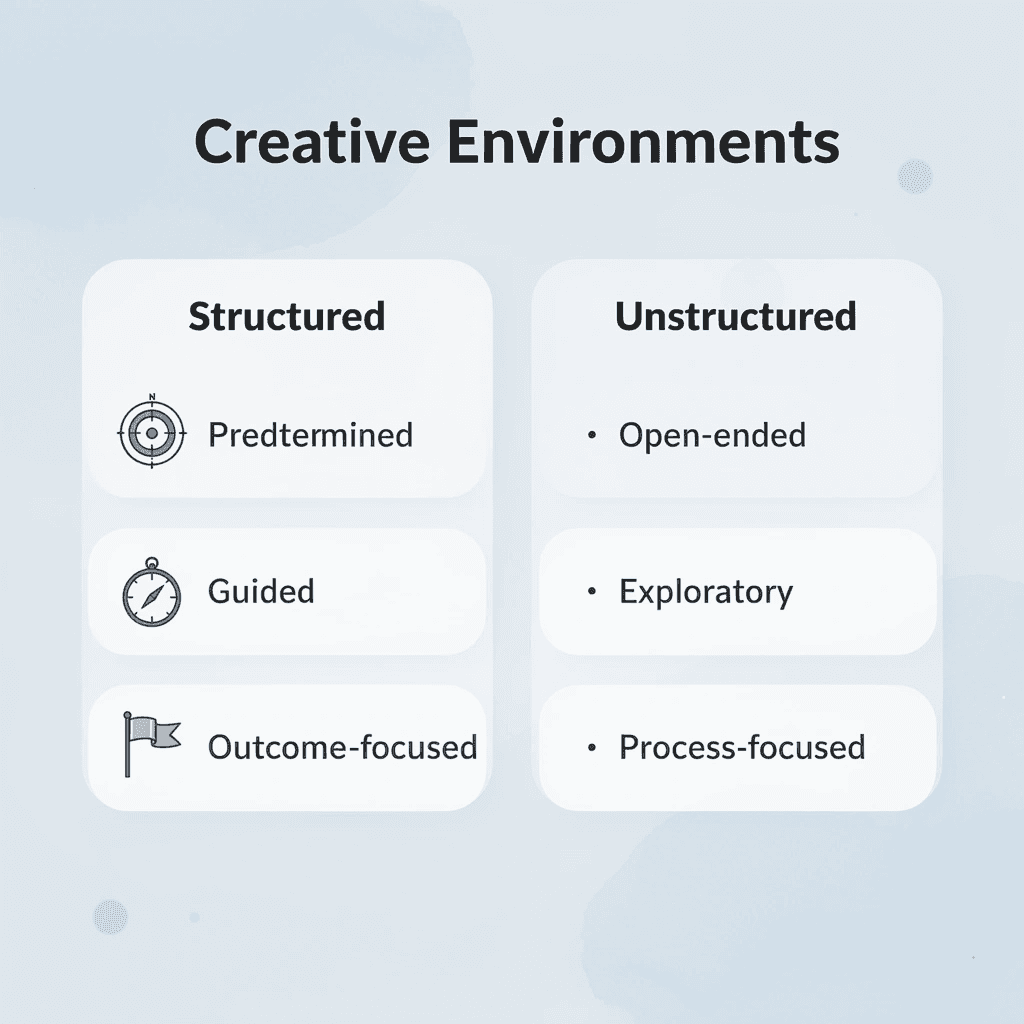
Many children feel safer expressing creativity through guided starting points before moving into independent work. A detailed coloring page provides structure without dictating outcomes. The child chooses colors, adds elements, invents narratives, and makes the image their own. This balance between structure and freedom is where creative confidence grows. But here's what almost no one considers when gathering supplies: the real cost isn't the materials themselves.
Related Reading
- Do Schools Kill Creativity
- How To Improve Your Creativity
- Examples Of Creativity
- Ai And Creativity
- Ai Creativity
- Creativity Training
Affordable Supplies for Creative Activities for Kids
According to Kids Creation Stations, parents spend an average of $150 per child on art supplies each summer, though most of that money goes toward items that sit unused or create clutter. The true cost isn't the materials themselves—it's the mental load of deciding what to buy, where to store it, and whether you're choosing the right things.
🎯 Key Point: The biggest expense is the wasted money on unused materials and the stress of making purchasing decisions.
"Parents spend an average of $150 per child on art supplies each summer, but most of that money goes toward items that sit unused or create clutter." — Kids Creation Stations
🔑 Takeaway: Focus on versatile, multi-use supplies rather than specialized items to maximize your investment and minimize waste.

1. Crayons
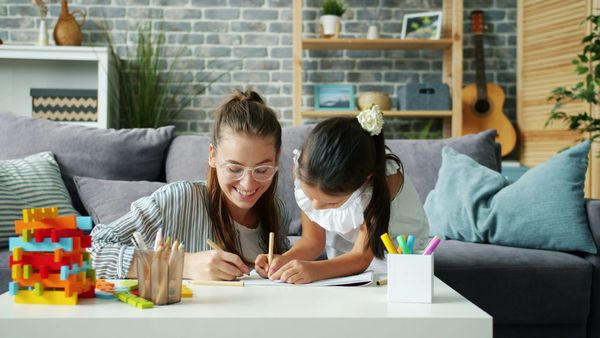
Chunky crayons remove performance pressure. A child gripping a thick crayon doesn't worry about perfect lines or realistic colors, so they experiment with pressure, layering, and unexpected combinations. This confidence translates into storytelling, color exploration, and fine motor development. The ergonomic grip lets preschoolers focus on ideas rather than hand coordination.
2. Washable Markers
Washable markers remove psychological barriers to bold creativity. When children know marks wipe away, they draw fearlessly and experiment with color without hesitation. Parents become less anxious about mess, allowing more frequent access to materials that build creative habits and imaginative drawing skills.
3. Coloring Pages
Printable coloring pages solve the blank-paper problem by giving kids structure without limiting their creativity. A character outline provides enough guidance to get started, and then children can create backstories, choose unexpected colors, add environmental details, or redesign the character entirely. Platforms like My Coloring Pages let parents print pages repeatedly based on the child's current interests—dinosaurs, space exploration, underwater scenes—without having to purchase new activity books.
4. Construction Paper and Glue Sticks
Construction paper costs almost nothing and works well for collages, folded crafts, handmade cards, puppet-making, and storytelling scenes. Different colors help children experiment with visuals in ways that white paper cannot. Glue sticks pair naturally with construction paper because they cost less and create less mess than liquid glue, making mixed-media projects easier to manage for regular home creativity sessions.
5. Recycled Household Materials
Cardboard boxes, toilet paper rolls, egg cartons, bottle caps, and packaging materials teach problem-solving in ways brand-new craft supplies cannot. A child transforming a cereal box into a robot or an egg carton into a caterpillar learns to see possibilities in everyday objects. This shift from consumer to inventor matters more than the finished project. Recycled materials also remove cost barriers, enabling daily creative sessions for any family budget.
6. Washable Paints and Sidewalk Chalk
Washable paints unlock creative thinking through color mixing, texture exploration, and emotional expression. Finger painting especially helps younger children by combining motor development with imaginative experimentation without requiring brush control. Sidewalk chalk extends that freedom to large-scale outdoor creativity, encouraging children to draw obstacle courses, invent games, create giant murals, and practice visual storytelling. The expansive canvas encourages freer experimentation than small worksheets or confined indoor spaces. But the most overlooked supplies aren't art materials at all.
10 Activities for Encouraging Creativity in Kids
The most overlooked supplies are time, permission, and prompts that spark direction without dictating outcomes. Children need invitations to think differently, combined with the freedom to follow their curiosity wherever it leads. The activities below build neural pathways that transform wondering into making, questions into experiments, and ideas into tangible creations.

🎯 Key Point: The foundation of creativity isn't found in expensive art supplies or structured lessons—it's built on unstructured time and the permission to explore without predetermined outcomes.
"Creativity requires the courage to let go of certainties and embrace the unknown possibilities that emerge when children are given time and freedom to explore." — Educational Psychology Research
💡 Tip: Create dedicated creative time where children can pursue their interests without interruption. Even 15-20 minutes of unguided exploration can spark breakthrough moments and build creative confidence.
1. Story Creation Games
Storytelling transforms abstract thinking into a narrative structure. When children create characters, build plot twists, or imagine "what if" scenarios, they practice flexible thinking as they solve complex creative problems. Start with open prompts like "What if gravity stopped working?" or "What if your pet could talk for one day?" Then step back and let children control the direction, introduce complications, and resolve conflicts themselves.
What skills do children develop through storytelling
21K School Kenya notes that storytelling enhances flexible thinking by encouraging children to generate original ideas rather than memorize answers. Children who practice making up stories regularly develop stronger language skills, better emotional expression, and improved problem-solving abilities. This occurs because they make creative choices about causation, consequences, and possibilities.
How can you extend story creation activities?
You can extend this activity by recording stories, creating story dice with images, or building collaborative tales where each person adds one sentence. The goal isn't about writing perfectly; it's about teaching children that their imagination has value and that ideas grow through trying new things.
2. DIY Arts and Crafts
Arts and crafts work because they require children to transform ordinary materials into something new. Paper becomes a mask. Cardboard becomes a castle. Bottle caps become game pieces. This transformation strengthens problem-solving and creative confidence. Simple activities include paper collages, cardboard constructions, mask-making, puppet crafts, and recycled-material projects. Limits foster creativity: when children work with available materials rather than perfect supplies, they learn resourcefulness and discover possibilities in what exists. Avoid telling children exactly what to do at every step. Provide materials and a loose theme, then let them figure out construction, design, and decoration. Mistakes become part of their creative education.
3. Coloring and Creative Drawing
Coloring becomes about creativity when you change how you think about it. Instead of staying inside the lines, encourage children to invent characters, create backgrounds, mix unusual color combinations, or continue unfinished drawings. The page becomes a starting point, not a rulebook.
How does personalized coloring remove creative barriers?
Platforms like My Coloring Pages let parents create custom coloring pages matching their children's interests in seconds. Kids can color dinosaurs, play soccer, or explore candy planets as astronauts. This personalization eliminates the "I don't like any of these" objection that stifles creativity. When children color subjects they care about, the activity transforms from filling in colors to storytelling.
What questions transform coloring into narrative thinking?
Ask questions while children color: "What's happening in this scene?" or "What happens next?" This transforms coloring into a form of storytelling and fosters imaginative thinking. The goal isn't neat work; it's using pictures to unlock imagination.
4. Pretend Play and Role-Playing
Pretend play is one of the strongest creativity-building activities because it requires constant improvisation. Children must invent dialogue, solve imaginary problems, negotiate roles, and adapt when scenarios change unexpectedly. Whether playing doctor, chef, astronaut, teacher, superhero, or shopkeeper, they practice flexible thinking in real time. Research in child development consistently shows that pretend play improves imagination, emotional understanding, communication, and adaptive thinking. Children learn to see situations from multiple perspectives and experiment with power dynamics, responsibility, and consequence in low-stakes environments.
How can simple props spark the biggest creative breakthroughs?
A cardboard box becomes a spaceship. A blanket becomes a superhero cape. The change happens entirely in their minds, where creativity lives. Don't over-structure pretend play with fancy costumes or expensive playsets. Children need enough props to spark their imagination, then space to build the rest on their own.
5. Music and Dance Sessions
Music-based creativity helps children express feelings they lack words for. When they invent songs, create dance challenges, build homemade instruments, or combine music with storytelling, they experiment with rhythm, emotion, and physical expression simultaneously.
How can you create engaging music and movement activities?
Try activities like inventing silly songs about daily routines, creating dance moves that tell stories, or making instruments from household items (rice shakers, rubber band guitars, pot drums). Creative movement improves confidence, coordination, and emotional expression by showing children their bodies can communicate ideas as powerfully as words.
Why should you focus on exploration over performance?
Remove performance pressure. This isn't about talent or correctness, but discovering that sound and movement are creative tools they already have.
6. Building and Construction Challenges
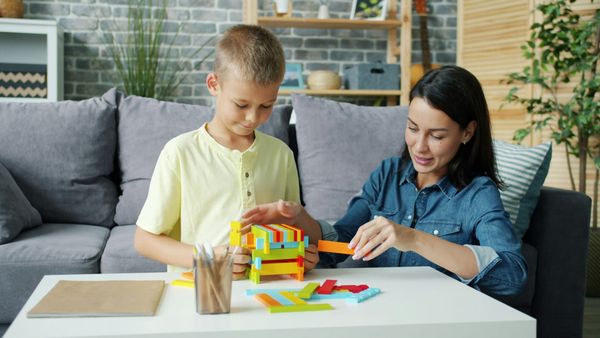
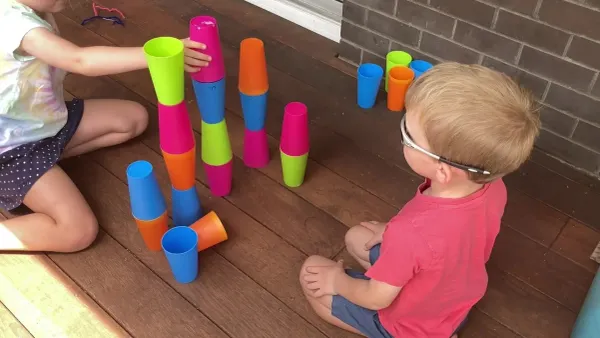
Activities with blocks, LEGO, magnetic tiles, cardboard, or recycled materials help children think creatively about engineering. They visualize three-dimensional structures, test stability, identify what fails, and iterate on designs, building imagination alongside logical thinking. Challenge children with questions like "Can you build the tallest tower using only ten blocks?" or "Can you create a bridge strong enough for toy cars?" Limits encourage creative problem-solving and teach children that restrictions are fundamental to design. Let structures fall apart. When things collapse, children learn more about engineering and persistence than they do from success, building comfort with experimentation over perfection.
7. Nature-Based Creativity Activities
Outdoor creativity activities encourage curiosity because natural environments provide unpredictable textures, colors, and materials. Children interact with elements they cannot control, which fosters adaptive thinking.
Which outdoor activities spark the most creative thinking?
Try leaf art, rock painting, stick structures, scavenger hunts, or nature storytelling. Ask children to build fairy houses from twigs, create mandalas from found objects, or invent stories about why certain rocks or leaves look the way they do. Nature-based activities reduce screen time and teach children that creativity requires no manufactured supplies.
Why does unpredictability boost creative development?
The unpredictability matters. Indoor activities often have clear right answers; nature doesn't. A stick can be a wand, a building material, a drawing tool, or a character in a story. That openness makes outdoor creativity powerful.
8. Puppet Shows and Mini Theaters
Making puppets and putting on shows combines storytelling, artistic design, communication, and imaginative thinking. Children write dialogue, design visuals, and perform, exercising multiple creative skills simultaneously. Simple materials work well: socks become puppets, paper bags become masks, a doorway becomes a stage. The creative value comes from inventing characters, building conflict, solving story problems, and presenting ideas to an audience. This teaches children that creativity is communication, not private imagination. Encourage children to perform for family or record shows. The audience element adds motivation and teaches that creative work has purpose beyond personal entertainment.
9. Invent-a-Game Challenges
Ask children to invent their own board games, playground games, card games, or obstacle courses. This encourages rule creation, experimentation, and independent thinking as they create systems rather than follow instructions. Provide basic materials (paper, markers, dice, cards) and a challenge: "Invent a game about exploring space" or "Create a game where everyone works together instead of competing." Children must design rules, test gameplay, troubleshoot problems, and refine based on results, mirroring real-world creative processes in product design, engineering, and entrepreneurship. The creative education happens during design, not during perfect execution.
10. Creative Cooking Activities
Cooking becomes creative when children decorate food, invent recipes, design shapes, or choose ingredients. Try funny-face sandwiches, fruit art, colorful cupcakes, or homemade pizza designs. Creative cooking combines imagination, sensory learning, and problem-solving. Let children make decisions about toppings, colors, arrangements, and flavors. Ask questions like "What would make this look like a monster?" or "Can you design a pizza that tells a story?" This transforms cooking from following recipes into creative experimentation.
How does creative cooking turn everyday activities into learning opportunities?
Kids learn that everyday activities become creative opportunities when framed as "interesting" rather than "correct." Messiness is part of the process. Creativity in the kitchen teaches that experimentation sometimes fails, and that's okay as long as you learn something.
What happens when children experience creative blocks?
Knowing which activities build creativity is only half the equation. The harder part is what happens when children freeze, stare at blank pages, and insist they don't know what to make.
Turn "I Don't Know What to Draw" Into Confident Creativity With Guided Starting Points
When your child stares at a blank sheet of paper and says, "I don't know what to draw," they're overwhelmed by too many choices. A clear starting point removes that paralysis while preserving freedom to explore. Structured prompts outperform blank pages for most children, especially when building confidence.

🎯 Key Point: Transform coloring pages into creative storytelling anchors that eliminate the blank page problem while preserving artistic freedom.
Pick two or three themed coloring pages (characters in action, scenes with empty backgrounds, story-based illustrations) and use them as creative anchors. Print them, then ask questions that shift the activity from coloring to storytelling: "What's happening in this picture? What happened before this moment? Can you change how it ends?" The image provides direction, but your child controls the narrative, color choices, and additions they draw around the edges.
"Structured prompts work better than blank pages for most children, especially when building confidence." — Child Development Research, 2023
Problem | Solution | Result |
|---|---|---|
Blank page overwhelm | Themed starting images | Clear direction |
Fear of doing it wrong | Pre-existing foundation | Reduced anxiety |
Creative block | Guided questions | Story development |
This method solves both major barriers at once. It eliminates the freeze from too much blank space and removes the fear of doing it wrong because there's already something on the page to respond to. Your child isn't starting from nothing—they're building on a foundation that makes the next creative decision easier.
💡 Tip: Generate custom coloring pages that match your child's current obsessions for maximum engagement and personal connection.
Parents often assume customization requires design skills or expensive software. My Coloring Pages lets you generate themed pages on demand based on exactly what your child cares about this week (dinosaurs, space explorers, underwater cities). You type a few words describing the scene, and our platform creates printable pages that match their current interests. That responsiveness keeps engagement high because the starting point feels personal rather than generic.
⚠️ Warning: Don't overthink the setup—one simple question about the scene is enough to spark creativity without overwhelming your child.
Choose one page that connects to something your child already talks about (a favorite animal, a place they're curious about, a character type they love). Print it, set it on the table with markers or crayons, and ask one open question about what's happening in the scene. Then step back. If they start adding details, inventing backstories, or asking for another page tomorrow, you've found the right balance between guidance and freedom.

Related Reading
- Is Creativity A Skill
- Creativity Toys For Toddlers
- Ai Vs Human Creativity
- Human Creativity
- Types Of Creativity