12 Types of Creativity and How to Encourage It in Children
Types of creativity can show up in many ways. Learn 12 forms of creativity in children and get simple ideas to encourage creative thinking every day.

Creativity shows up in more ways than one: artistic expression, problem solving, innovative thinking, scientific discovery, and even everyday decision making all call on different creative abilities. If you have ever wondered how to foster creativity in yourself or others, understanding the different types of creativity is a solid place to start, and this article breaks that down clearly so you can put the ideas to real use.
My Coloring Pages makes that process even easier with access to over 75,000 free customized worksheets and coloring pages built to spark imaginative thinking across all creative styles. Whether you want to encourage divergent thinking in kids, support expressive arts, or simply get customized worksheets and coloring pages for creativity that match a specific need, the tools are ready and waiting for you.
Table of Contents
- Is Creativity a Talent
- Importance of Creativity for Children
- What Happens When You Don't Encourage Creativity in Children
- 12 Types of Creativity You Must Encourage in Children
- How to Encourage Creativity in Children in 15 Ways
- Turn “I Don’t Know What to Make” Into “I Have an Idea”
Summary
- Creativity is not a single fixed trait but a multi-domain capacity that shows up differently across people and contexts. The Kaufman Domains of Creativity Scale identifies five distinct creative domains, including everyday problem-solving, scholarly thinking, performance, mechanical and scientific creativity, and artistic expression.
- Children begin life with remarkable creative capacity, but structured environments steadily erode it. Research cited by the Child Creativity Lab found that creativity scores among children have fallen by more than 30% since 1990 based on the Torrance Tests of Creative Thinking, tracking closely with the expansion of standardized testing and outcome-driven learning.
- Creative thinking often erodes gradually through small, repeated signals, not single dramatic events. When children hear "that's wrong" often enough in response to imaginative choices, such as a purple dog or a floating house, they stop experimenting and start waiting for adult approval before they try.
- Creative confidence measurably affects how children approach challenges. A Talker Research study conducted in partnership with Crayola found that 9 in 10 children say they love being creative, and a separate Crayola Children's Creativity Study found that 8 in 10 children say being creative helps them solve problems. Children already sense the connection between making things and building capability.
- Creative thinking is increasingly recognized as a foundational skill for adult life, not just childhood development. The World Economic Forum's 2025 Future of Jobs Report ranks creative thinking among the top individual skills employers will need, sitting alongside analytical thinking as the number one priority.
Download 75000+ free customized worksheets that address the common sticking point where children have creative ideas but freeze at the blank page, letting a child describe what they want and turning that description into a ready-to-print starting point that keeps every creative decision in the child's hands.
Is Creativity a Talent
Creativity is not a talent you are born with or without. It is a capacity that shows up differently depending on the person, the context, and the domain, and research consistently supports that view. The Kaufman Domains of Creativity Scale identifies five distinct creative domains:
- Everyday problem-solving
- Scholarly thinking
- Performance
- Mechanical and scientific creativity
- Artistic expression
A large psychometric study drawing on data from 22,013 participants found that multi-factor models of creativity fit the data far better than treating it as a single unified trait. That finding alone should retire the idea that someone who struggles to draw is simply not creative. They may be exceptionally creative in ways that never show up on a canvas.
Why the Art Equals Creativity Assumption is So Persistent
The failure point is visibility.
- A painting hangs on a wall.
- A song plays on repeat.
- A novel sits on a shelf.
But the person who quietly redesigns a broken workflow, improvises a solution from three mismatched parts, or explains a hard concept in a way that finally clicks for someone leaves no artifact behind. Their creative thinking is just as real, just as effortful, and just as valuable. The availability heuristic does real damage here: because artistic output is easy to point to, we treat it as the standard, and everything else disappears from the frame.
Creativity Goes Beyond Art
Most people who believe they are not creative have simply been measuring themselves against the wrong domain. The better question is never "am I creative?" It is "where does my creativity actually show up?" According to the World Economic Forum 2025 Future of Jobs Report, creative thinking ranks among the top individual skills for the future, sitting alongside analytical thinking as the number one skill employers will need. That is not a niche artistic credential. That is a broad human capacity, expressed across dozens of contexts, from technical problem-solving to interpersonal communication to scientific inquiry.
Creativity Also Develops in Stages, Not Fixed States
James Kaufman and Ronald Beghetto's Four-C Model adds another layer that most people miss. Creativity exists on a developmental spectrum:
- From mini-c (personally meaningful discovery, like finding your own way to remember something difficult)
- To little-c (everyday creative acts like cooking without a recipe or decorating a space)
- To Pro-c (professional-level creative expertise)
- To Big-C (historically significant innovation)
A beginner comparing their mini-c output to someone operating at Pro-c is like learning three guitar chords and concluding they have no musical ability because they do not sound like a session musician. The comparison is not just unfair; it is the wrong unit of measurement entirely. My Coloring Pages exist because creative expression doesn't require technical training to be real. When someone describes what they want and a personalized coloring page appears, ready to print, that is creative thinking made tangible without gatekeeping.
Creative Skills for the Future
LinkedIn data reported by COMPAS projects that 70% of today's job skills will be different by 2030, which means the people who learn to locate and develop their specific creative strengths now are building something that compounds. The "I'm not creative" label is not a personality trait. It is a habit of comparison that stops people from testing a belief that was probably wrong from the start.
Importance of Creativity for Children
Children arrive in the world as natural experimenters. They do not wait for permission to imagine. But somewhere between the first structured classroom and the first red mark on a test paper, something shifts. According to the Child Creativity Lab's research on the creativity crisis, creativity scores among children have fallen by more than 30% since 1990 based on the Torrance Tests of Creative Thinking. That is not a coincidence. It tracks almost exactly with the expansion of standardized testing and outcome-driven learning environments that reward recall over exploration.
Creativity as Emotional Expression
The loss matters because creativity is not decoration. It is the mechanism through which children first make sense of their inner world. A child who cannot yet say "I feel left out" may draw a picture where one figure stands far from the others. A child processing a difficult day may invent a story where the character faces the same situation and wins. Creative play gives children a working language for emotional experience before formal vocabulary catches up. Adults who dismiss that scribbled page or elaborate pretend game often miss the communication happening right in front of them.
What Creative Play is Actually Building
The developmental work inside creative activities runs deeper than most people expect. When two children play shop, they negotiate roles, listen to each other, decide what happens next, and recover when the plan changes. That is turn-taking, empathy, and flexible thinking, all compressed into thirty minutes of pretend. The same child who builds a block tower, watches it fall, and tries a wider base is practicing the core loop of every creative problem-solver: hypothesis, test, adjust. These are not soft skills. They are foundational ones.
Building Independent Creative Thinking
Most parents and educators want children to develop genuine decision-making ability, not just the skill of following instructions well. The challenge is that heavily structured environments, where nearly every task has a predetermined correct outcome, quietly crowd out the moments where a child gets to ask "what do I want to make?" Open-ended creative activities, whether drawing without a template, building without a diagram, or telling a story without a script, are where that independent thinking actually gets practiced.
Platforms like My Coloring Pages give parents and educators a practical way to offer that open-ended space. With a library of over 100,000 customizable printable coloring pages and an AI generator that requires no technical skill, children can describe what they want to create and see it appear, putting the creative decision back in their hands rather than defaulting to a fixed worksheet with one acceptable result.
Why Confidence Built Through Making Lasts Differently
A child who gets the right answer feels good in that moment. A child who looks at something they built, drew, or invented and thinks "I made that" feels something structurally different. That second experience does not depend on being the fastest or the most accurate. It belongs entirely to them. A Talker Research study conducted in partnership with Crayola found that 9 in 10 children say they love being creative, which tells you the appetite is there. The question is whether the environments children spend most of their time in are actually feeding it or slowly training it out of them.
Imaginative play also does something that academic drill rarely does:
- It lets children practice thinking beyond their immediate reality.
- A cardboard box becomes a spaceship.
- A teddy bear becomes a patient.
These are not escapes from learning. They are the earliest form of abstract reasoning, the ability to hold an idea that does not yet exist and work with it as if it does. That capacity, to envision something before it is real, sits at the foundation of every creative domain, from engineering to storytelling to scientific discovery.
Related Reading
• Best Toys For Developing Creativity
• Best Toys For Promoting Creativity
• How To Encourage Creativity In Kids
• How To Foster Creativity
• Creativity Quotes
• Best Books To Inspire Creativity In Kids
• What Is Creativity
What Happens When You Don't Encourage Creativity in Children
Suppressing that imaginative capacity doesn't happen in a single dramatic moment. It happens gradually, through repeated small signals that tell a child creativity is risky, that wrong answers are dangerous, and that the safest move is to wait for someone else to decide. According to Tax Research UK's analysis of Ken Robinson's research, 98% of children aged 3 to 5 score at genius level for divergent thinking, dropping to 32% by age 10 and just 10% by age 15. That isn't a talent gap. That's a pattern of learned caution. Children don't lose creative capacity because they grow up. They lose it because the environments around them stop rewarding exploration and start rewarding correctness.
When "Wrong" Becomes the Lesson
A child draws a purple dog. You see imagination. But if they hear "dogs aren't purple" often enough, they learn something more damaging than color facts. They learn that creativity has a correct answer, and their job is to guess what adults want before they try. The shift is subtle at first.
- "What color should I use?" replaces confident experimentation.
- "Is this right?" replaces curiosity.
Eventually, the blank page stops feeling like possibility and starts feeling like a test they haven't studied for. That's when children stop creating and start waiting.
Learning Through Trial and Error
The same pattern surfaces across every form of creative expression, whether it's building, storytelling, music, or problem-solving. When a block tower keeps falling and an adult immediately steps in to fix it, the child gets a standing tower but loses the iterative reasoning process that made the struggle worthwhile. Watching someone else's solution is not the same as inventing your own. One builds competence. The other builds dependence.
Giving Children Creative Control
Most parents handle creative activities by choosing the project, setting the steps, and showing the expected result, because that feels productive and keeps things moving. The hidden cost is that children get fewer chances to practice generative thinking, the kind that asks "what could this become?" rather than "what does this need to look like?" Tools like My Coloring Pages take a different approach, giving children a starting point they can personalize and direct, so creative decision-making stays with the child rather than defaulting to the adult or the instruction sheet.
The Identity Problem Is the Real Danger
The Child Creativity Lab's research on the creativity crisis found that children's creativity scores have been declining since 1990, with the steepest drop occurring between kindergarten and sixth grade. That window is exactly when children form their first identity conclusions about what they are and aren't good at.
- A child who receives consistent signals that their creative output is wrong, inferior, or in need of correction doesn't just stop drawing or building. They absorb a label: "I'm not creative." And once that label sticks, it shapes which experiences they reach for and which ones they quietly avoid for years afterward. Creativity isn't one thing. It shows up through humor, spatial reasoning, narrative invention, mechanical experimentation, and scientific curiosity.
- A child who decides too early that they don't have it may walk away from an enormous range of human experience based on a conclusion formed before they ever had enough practice to discover what they were actually capable of. And that's where the real cost becomes visible, not in what children stop making, but in what they stop believing is possible for them.
12 Types of Creativity You Must Encourage in Children

Children already know creativity belongs to them. The problem isn't that children lack creative drive. The problem is that adults tend to recognize only one or two types of creativity, and then design their support around those narrow categories. A child who doesn't gravitate toward drawing or painting can easily fall through the cracks of that limited framework, not because they aren't creative, but because nobody named what they were doing as creativity.
1. Artistic Creativity
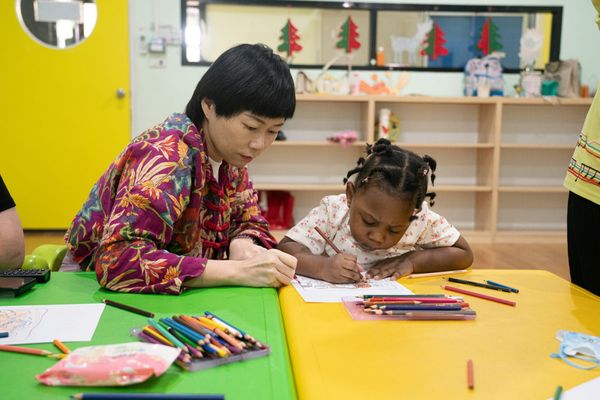
Artistic creativity is the type most adults picture first, and it genuinely matters, but not for the reasons people assume. The value isn't in the finished drawing. It's in the hundreds of micro-decisions a child makes while creating it: which color, what shape, whether to add or remove, what to change. That decision-making process builds visual thinking, self-direction, and tolerance for ambiguity.
The real mistake happens when every art activity comes with an expected outcome. When a child is handed a template and told to color inside the lines, the creative thinking disappears. Give a child a blank page and no instructions, and you give them something more valuable: the experience of making choices without a safety net.
2. Imaginative Creativity
Imaginative creativity is what happens when a child turns a cardboard box into a spaceship or decides a spoon is a microphone. It looks like play. It is play. But underneath it, a child is practicing the single most important cognitive skill in any creative domain: the ability to mentally construct something that doesn't exist yet.
Every inventor, writer, scientist, and entrepreneur starts with that same move. They imagine a different version of what's in front of them. When adults rush to make a child's imaginary world "realistic," they interrupt that process at exactly the wrong moment.
3. Storytelling and Linguistic Creativity
Some children think primarily through language. They invent characters, build plots, make jokes with surprising structure, or retell familiar stories with entirely new endings. This is linguistic creativity, and it does something that other creative forms don't: it forces a child to organize their thinking into a sequence that another person can follow.
That's a sophisticated skill. Vocabulary, narrative logic, perspective-taking, and emotional reasoning all get exercised inside a single story about a dinosaur who goes grocery shopping. Instead of correcting the story, ask "Then what happened?" and let the child build the world further.
4. Problem-Solving Creativity
The most transferable form of creative thinking isn't artistic at all. It's the ability to look at a problem and generate more than one possible response. A child whose block tower keeps collapsing faces a genuine design challenge. They can quit, ask for help, or try a different approach. That third option, the one where they modify, experiment, and rebuild, is problem-solving creativity in its purest form.
Being creative helps them solve problems. Children already sense this connection intuitively. The adult's role is to resist fixing things too quickly, because the frustration before the breakthrough is often where the real thinking happens.
5. Scientific Creativity
Science is usually taught as a body of facts to memorize. But scientific thinking is actually a creative process. A child who asks "What happens if I mix these?" or "Why does that float but this sinks?" is forming hypotheses, designing informal experiments, and revising their mental models based on results. That's the scientific method, running on pure curiosity.
The shift that unlocks this is simple. Instead of answering every question immediately, try asking "What do you think will happen?" Now the child has to commit to a prediction before seeing the result, which is exactly how scientific reasoning develops.
6. Building and Mechanical Creativity
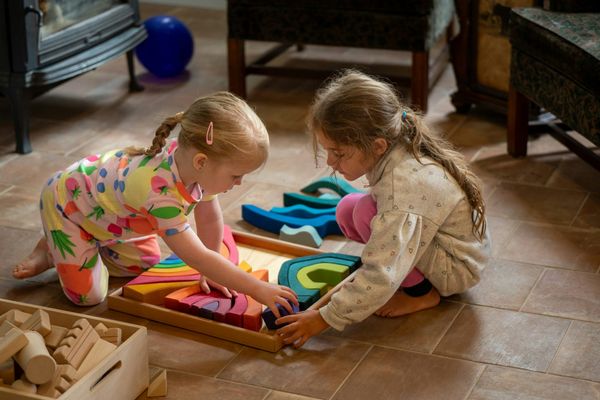
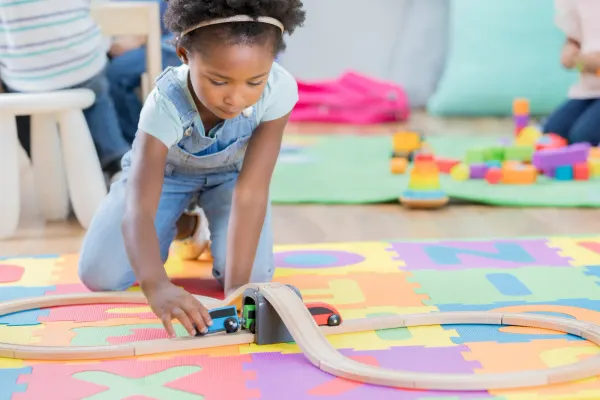
Building creativity shows up in children who would rather construct something than draw it. LEGO, cardboard, blocks, recycled materials, fort architecture built from couch cushions and determination: these activities require a child to think simultaneously about shape, balance, structure, and function. That's spatial reasoning combined with iterative design.
The cycle of build, fail, modify, and rebuild is one of the most honest creative processes a child can experience. It teaches that a failed attempt isn't a final judgment. It's information. The cardboard invention that looks ridiculous from the outside may represent more sophisticated thinking than a polished drawing that followed a template.
7. Social Creativity
Most creativity frameworks focus on what a child makes. Social creativity focuses on how a child navigates relationships with others. When three children want to play three different games and one of them suggests combining all three into something new, that's creative thinking applied to a social problem. It requires flexibility, empathy, and the ability to hold multiple perspectives at once.
This type of creativity often goes completely unrecognized because it doesn't produce an object. But the ability to find a solution that works for multiple people matters in every relationship, team, and workplace a child will eventually enter.
8. Dramatic and Pretend-Play Creativity
Role-play gives children a low-stakes environment to inhabit perspectives that aren't their own. When a child pretends to be a doctor, a shopkeeper, or an astronaut, they have to imagine what that person would say, how they would act, and what they would care about. That's perspective-taking, and it builds the foundation for empathy.
The equipment required is almost nothing. A cardboard box and enough imagination consistently outperform an expensive toy that does the thinking for the child. Pretend play also builds storytelling, negotiation, and communication skills at the same time, making it one of the most developmentally efficient creative activities available.
9. Musical Creativity
Musical creativity doesn't require formal lessons or an expensive instrument. A child banging a rhythm on a kitchen pot, inventing new lyrics to a familiar song, or making up a melody while playing engages pattern, timing, repetition, and emotional expression. Music gives children immediate feedback: they make a sound and hear the result instantly. The goal doesn't have to be technical accuracy. Sometimes the most valuable musical question an adult can ask a child is simply "What sound can you make?" That single question shifts the frame from reproduction to invention, which is where creative thinking actually lives.
10. Movement and Physical Creativity
Some children think with their entire bodies. Movement creativity includes inventing dances, designing obstacle courses, making up new playground rules, or acting out stories through physical motion. These activities require decisions about space, sequence, timing, and coordination, which are genuinely creative choices even though they don't produce a tangible object.
Energetic children are often redirected toward stillness when what they actually need is a creative outlet that matches how they process the world. Asking a child to invent their own movement sequence, rather than copy the correct one, gives them ownership over a creative process that fits their natural mode of thinking.
11. Everyday Practical Creativity
The easiest type of creativity to overlook is also one of the most useful. Everyday practical creativity appears when a child uses a shoebox to organize their desk, finds a second use for something about to be thrown away, or invents a better system for storing their art supplies. It's creativity applied to ordinary problems, and it doesn't require any special materials or designated creative time.
This is where the "made by parents, for parents" philosophy behind My Coloring Pages becomes relevant. Most parents aren't looking for a formal art curriculum. They're looking for something a child can actually use on a Tuesday afternoon with no setup and no frustration. Platforms that let a child describe what they want and immediately see it become a printable page remove the barrier between a creative impulse and a creative act, which is exactly what practical creativity needs.
12. Collaborative Creativity
Solo creativity is one thing. Collaborative creativity introduces a constraint that changes everything: your idea isn't the only idea in the room. When children build something together, write a group story, or invent a game as a team, they have to explain their thinking, listen to alternatives, compromise, and sometimes abandon a plan they were attached to. That process teaches children something that individual creative work can't: the best outcome is often something neither person would have made alone. Collaborative creativity builds communication, flexibility, and the ability to hold your own ideas loosely enough to improve them with someone else's input.
How to Encourage Creativity in Children in 15 Ways
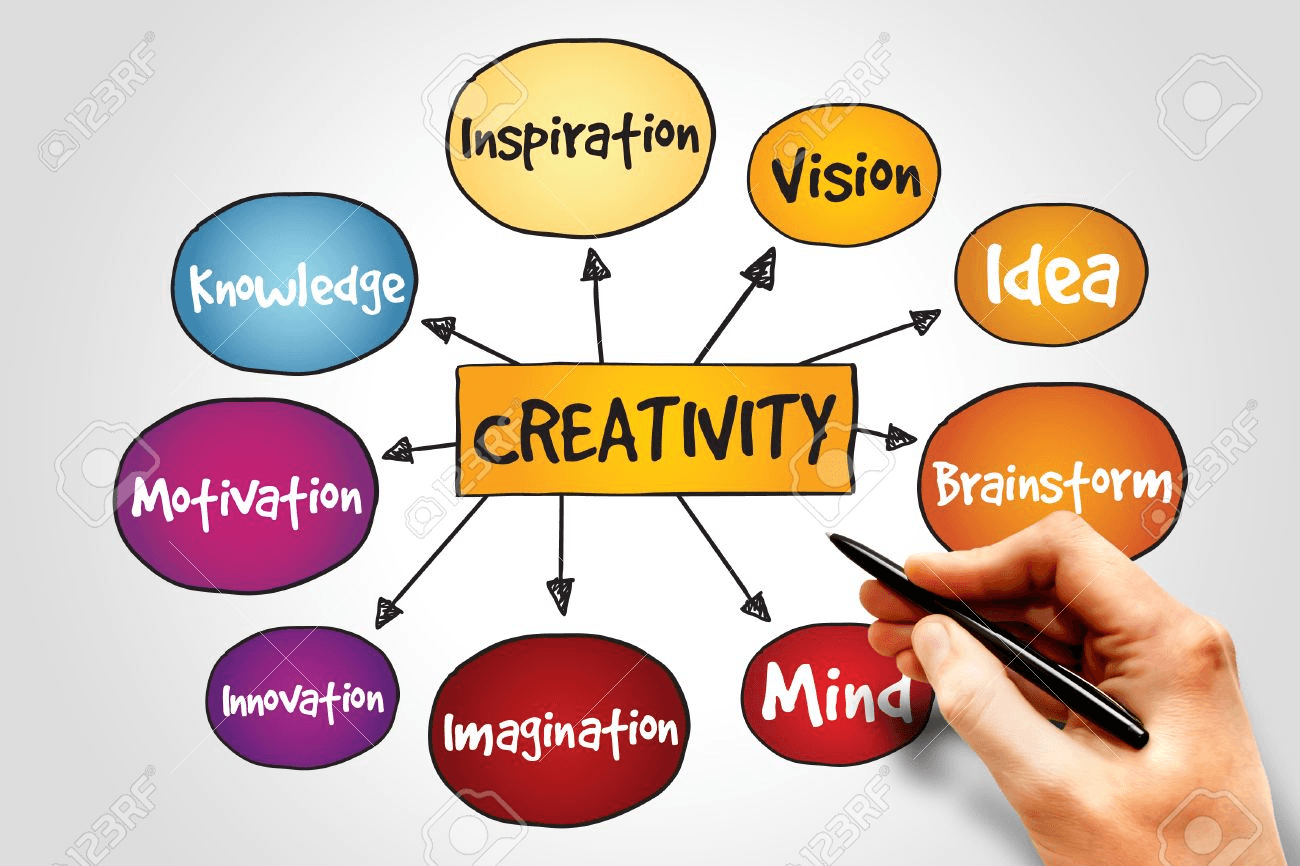
Encouraging creativity in children is less about grand gestures and more about the small, daily choices that either open doors or quietly close them. The harder part isn't knowing what types of creativity exist. It's knowing how to protect it before it disappears.
1. Praise the Process, Not the Product
When a child hears "that's beautiful" every time they finish something, they start optimizing for beauty instead of curiosity. The praise feels kind, but it trains them to ask the wrong question: "Is mine good enough?" instead of "What did I discover while making it?" Try noticing the effort instead: "You kept changing it until you liked it" or "Tell me how you came up with that." That single shift moves the reward from the result to the thinking behind it, which is where creative growth actually lives.
2. Ask Questions Before Giving Answers
The failure point is usually when an adult jumps in with a solution before the child has a chance to generate one. When a child asks "What should I draw?" and you answer immediately, you've solved a problem they were perfectly capable of solving themselves. Ask instead: "What would be fun to draw?" or "What could you make that doesn't exist in real life?" Over time, that practice builds something more durable than any single drawing: the habit of trusting their own ideas.
3. Choose Activities With No Single Correct Outcome
Some activities are useful precisely because they have no right answer.
- Free drawing
- Collage
- Clay
- Storytelling
- Pretend play
Open-ended building all share one quality: every child produces something different. The critical difference between showing a finished example and saying "make yours like this" versus handing over materials and asking "what could you make?" is the difference between teaching reproduction and teaching invention. One produces compliance. The other produces thinking.
4. Let Struggle Do Its Work
When a cardboard tower collapses for the third time, the instinct is to fix it. Resist that.
Ask: "Why do you think it's falling?" or "What could make the base stronger?"
The failed tower isn't an interruption to the learning process. It is the learning process. The child is moving through idea, attempt, failure, adjustment, and new attempt, which is the same sequence that solves harder problems later in life when no adult is standing nearby with the answer.
5. Give Children a Starting Point They Can Make Their Own
Some children love a blank page. Others freeze the moment they're handed one and told "draw anything you want." That blank-page paralysis is real, and it stops creative momentum before it starts. A structured starting point can act as a bridge, giving children enough scaffolding to begin without removing the creative decisions that matter.
Removing Barriers to Creativity
That's where tools like My Coloring Pages shift the dynamic in a practical way. Instead of choosing a generic worksheet, a child describes an idea "a cat flying through space wearing a crown," and that idea becomes a custom, printable starting point in seconds. The child still owns the concept, still chooses colors, details, and style, and still completes something that came from their imagination. The outline removes the technical barrier of "I can't draw this" without removing the creative ownership of "this was my idea."
6. Build Decision-Making Through Small Choices
According to EZPlay Toys, 15 distinct approaches exist for boosting creative thinking in children, and giving children agency over small decisions consistently appears among the most effective. Even minor choices build creative independence:
- "What color do you think it should be?" instead of "Color the flower pink."
- "Would you rather paint, build, or make a collage?" instead of choosing for them.
Creative confidence develops through dozens of these small moments, not through one big breakthrough.
7. Don't Correct Imagination for Being Unrealistic
A blue sun. A six-legged dog. A house floating in clouds. These aren't errors. They're invitations. When a child draws something impossible, asking "What can that six-legged dog do that other dogs can't?" turns an unusual idea into the beginning of another idea. Plenty of situations will require factual accuracy. Creative play sometimes needs a different question entirely: "What if?"
8. Limit Comparison Between Children
Comparison is one of the fastest ways to turn creativity into performance. "Look how neatly your sister colored hers" doesn't motivate. It teaches children to judge their own work by comparing it to someone else's, which is exactly the kind of habit that undermines creative thinking. Discuss each child's work on its own terms: "You chose a lot of bright colors" or "Tell me about this character." Each piece deserves to be seen as its own thing, not as a ranking.
9. Let Some Work Stay Private
Not every drawing needs an audience. Not every story needs to be performed for visitors. Occasionally asking "Do you want to show anyone, or would you rather keep it for yourself?" gives children ownership over their own creative output. It also teaches something worth protecting: something can be worth making even when nobody applauds it. That lesson guards intrinsic creative motivation from becoming entirely dependent on external validation.
10. Let Boredom Breathe
The cardboard box becomes a restaurant. The cushions become a fortress. Three random toys suddenly have an elaborate political conflict. None of that happens if you fill every quiet moment with ready-made entertainment. Boredom is the space where children are forced to ask, "What could I make happen?" Give them access to simple materials, paper, pencils, blocks, old boxes, and then allow a little empty time. The initial "there's nothing to do" is often ten minutes away from something genuinely inventive.
11. Make Creative Materials Easy to Reach
If opening a tablet requires one tap but drawing requires asking an adult to find the markers stored in a cupboard, the tablet wins every time. Reduce friction. Keep a small creativity box within reach:
- Paper
- Colored pencils
- Crayons
- Child-safe scissors
- Glue
- Scrap cardboard
- Printable coloring pages
The causal chain is simple. When creative materials are hidden away, they require adult involvement, so children choose easier entertainment. When creative materials are visible and accessible, children can start independently, creating more opportunities for spontaneous creativity.
12. Expose Children to Many Forms of Creativity
American Heritage School identifies 11 distinct ways to foster creativity at home, and a consistent thread across them is variety.
- A child who dislikes painting might spend two hours designing an elaborate fort.
- A child who avoids drawing might build intricate stories through pretend play.
Artistic, building, storytelling, performance, scientific, practical, and social creativity all count. The goal is to help each child discover where their creativity naturally comes alive, not to funnel every child toward the same expression.
13. Encourage Children to Change the Rules
Give children something familiar and ask them to alter it.
- Can you invent a different ending to this story?
- Can you make a new rule for this game?
- Can you build a house that looks nothing like a normal house?
These prompts deliberately move children from "How is this normally done?" toward "How else could it be done?" That shift is one of the simplest ways to practice flexible thinking, which is the cognitive habit underneath every form of creative problem-solving.
14. Allow Mess Within Reason
Creativity is often inconvenient.
- Paint gets mixed.
- Paper scraps appear everywhere.
- The block tower occupies half the floor.
If every experiment gets stopped because "don't make a mess," children learn that exploring isn't worth the trouble. Create controlled freedom instead: "You can paint at this table" and "When we're finished, we'll clean it together." The lesson becomes that experimenting is allowed, and taking responsibility afterward is part of it.
15. Model Being a Beginner
Draw with your children. If your dinosaur looks terrible, say so: "That looks nothing like what I imagined. I'm going to try again." Adults who constantly say "I can't draw" or "I'm terrible at this" teach children that avoiding unfamiliar skills is the normal response. Showing them another option, "I'm not very good at this yet, but this is fun," models something more powerful than any instruction: that imperfect attempts are how skill eventually develops. The question underneath all fifteen of these approaches is the same one worth asking before you step into any child's creative moment: are you helping them create, or are you taking over the creating?
Related Reading
• AI Creativity
• How To Improve Your Creativity
• Creativity Training
• Examples Of Creativity
• AI and Creativity
• Do Schools Kill Creativity
Turn “I Don’t Know What to Make” Into “I Have an Idea”
What stops most children before they even begin isn't lack of imagination. It's the weight of a blank page with no entry point. When the starting line feels invisible, even the most naturally inventive child defaults to "I don't know" because generating an idea from nothing is genuinely hard, even for adults.
If your child's creative thinking keeps stalling at the starting gate, the fix isn't more prompting from you. It's lowering the barrier to entry while keeping every creative decision theirs. With My Coloring Pages, your child names the idea, a dinosaur birthday party, their dog as an astronaut, a castle made of candy, and that idea becomes a ready-to-print outline in seconds. The creative expression starts the moment the page lands in front of them, not before. You can also browse 75,000+ free pages when they simply want something ready to go. The goal is to protect the child who still believes they have something worth making.
Related Reading
• Human Creativity
• AI vs Human Creativity
• Is Creativity A Skill
• Creativity Toys For Toddlers
• Types Of Creativity