15 Fun and Engaging Kids Learning Activities
Make kids' learning fun with 15 hands-on activities from My Coloring Pages that keep children engaged and eager to explore.

When a child loses interest mid-lesson, the problem is rarely the subject itself. It is usually the material. Learning sticks when resources match a child's pace, curiosity, and skill level, rather than forcing a one-size-fits-all approach. Customized worksheets and coloring pages give parents and teachers a practical way to close that gap.
My Coloring Pages offers a library covering early literacy, math practice, and creative activities designed to keep children engaged without turning learning into a chore. Each resource adapts to what a child needs at any stage. To get started, Download 75000+ Free Customized Worksheets.
Summary
- Play is one of the most well-documented drivers of early cognitive development, yet it is frequently treated as optional. Research from Purdue Global indicates that 75% of early-years learning happens through play, meaning reductions in play time carry real developmental costs, not just missed fun.
- Guided play consistently outperforms direct instruction for specific early skills. A 2022 meta-analysis covering 3,893 children found that guided play produced better outcomes than direct instruction for early math skills, shape knowledge, and task switching. When children have agency within a purposefully designed activity, they test and internalize concepts rather than simply receive them.
- Free play time has declined sharply over recent decades, and the consequences are measurable. Research from the Minnesota Children's Museum shows children today play an average of 8 hours less per week than children did in the 1980s, while the American Academy of Pediatrics reports that unstructured play time has dropped by 25% over the past 20 years. This reduction is linked to lower self-regulation, reduced frustration tolerance, and weaker school readiness.
- Children who spend most of their time in directed activities develop strong instruction-following skills but get less practice generating ideas, negotiating with peers, or self-directing through ambiguity. That gap becomes visible in group settings, creative tasks, and any situation where the next step is not pre-specified, which describes most of adult life.
- Creative confidence and curiosity function more like habits than fixed traits. When children are consistently asked to seek adult approval before committing to a creative choice, they practice reading adult expectations rather than developing internal creative direction. That shift has lasting effects on how children approach open-ended problems as they get older.
- One in three children in the U.S. is not getting enough play, according to research from the Harvard Graduate School of Education, which means many children miss consistent practice in self-directed thinking during the developmental window when that practice matters most. My Coloring Pages' Download 75000+ Free Customized Worksheets addresses this by giving parents and teachers a flexible, screen-free resource that matches any learning theme or child interest, offering a hands-on creative entry point without replacing the child's decision-making.
Can Kids Learn From Play?
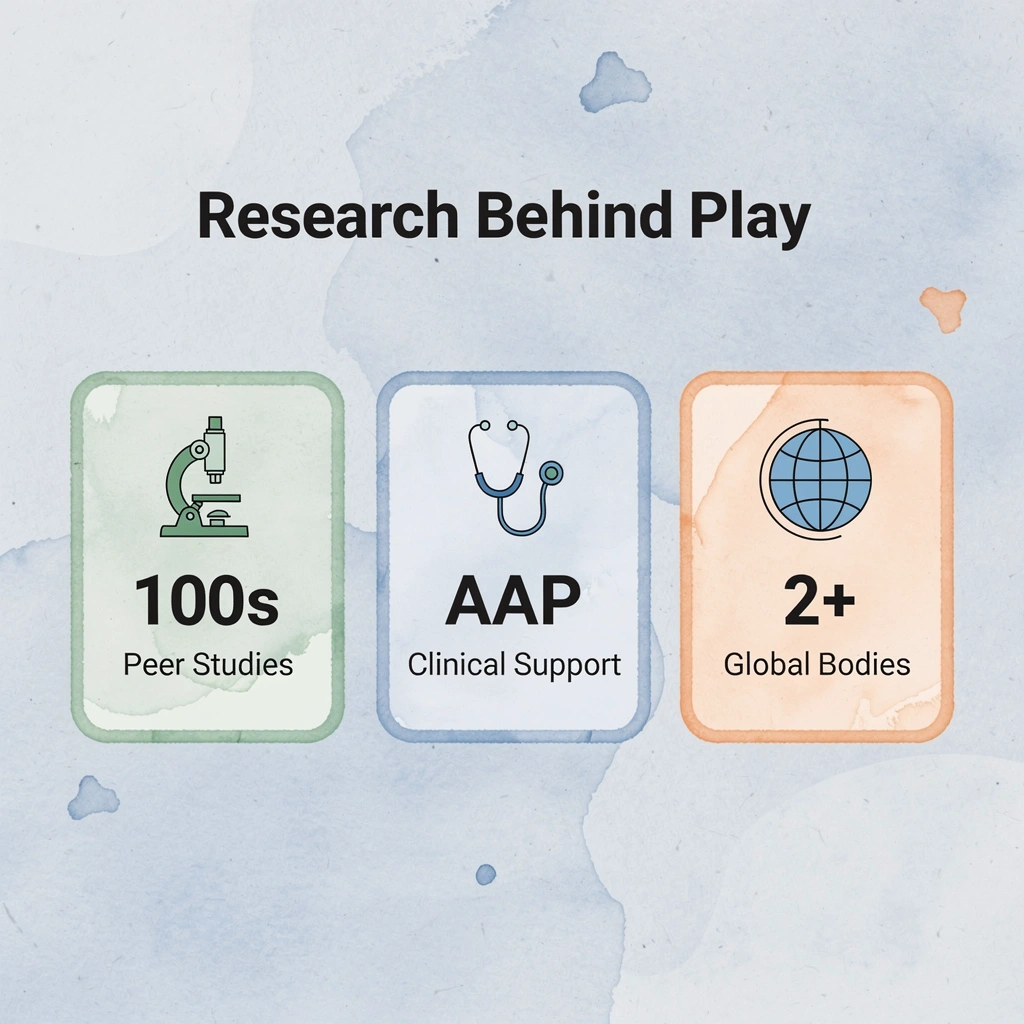
Children learn through play. The evidence comes from hundreds of peer-reviewed studies, clinical reports from the American Academy of Pediatrics, and global reviews from UNESCO and UNICEF: play is not a break from learning, but one of the primary ways children build the cognitive and social-emotional skills that formal education depends on.
"Play is not a break from learning — it is the learning. Hundreds of peer-reviewed studies, alongside clinical guidance from the American Academy of Pediatrics and global reviews by UNESCO and UNICEF, confirm that play is a primary driver of cognitive and social-emotional development." — Converging body of research
🎯 Key Point: Play is not downtime — it is one of the most evidence-backed learning mechanisms available to children, endorsed by the world's leading health and education bodies.
💡 Tip: When designing learning environments for children, treat play-based activities as core curriculum, not optional extras — the research from UNESCO, UNICEF, and the American Academy of Pediatrics makes this a best practice, not a preference.
Why does play get mistaken for wasted time?
A child filling in a worksheet looks productive. A child building a collapsing tower, arguing about game rules, or coloring an imaginary creature looks like wasted time. This visual gap creates a false hierarchy where parents and educators favor activities that look educational over activities that are educational.
How much of early learning actually happens through play?
According to Purdue Global's research on play-based learning, 75% of early-years learning happens through play. Reducing play to make room for structured instruction carries real developmental costs.
Why guided play outperforms direct instruction for specific skills
The key difference lies in knowing when to use free play, guided play, and direct instruction. A 2022 study of 3,893 children found that guided play produced better outcomes than direct instruction for early math skills, shape knowledge, and task switching. When a child has a choice within a purposefully designed activity, something different happens in their brain: they test information, adjust it, and make it their own rather than passively receiving it.
Why do parents still reach for worksheets over play?
Most parents use worksheets because they are easy to measure and familiar. What you cannot see is the planning, negotiation, and self-control happening inside a 20-minute imaginative game. Our Download 75,000+ Free Customized Worksheets from My Coloring Pages bridges that gap: a themed coloring page offers creative freedom while connecting learning to a specific concept, making it visible to parents and purposeful enough to count.
How does play build the self-regulation behind academic success?
Research published in the Journal of Applied Developmental Psychology by Miller et al. found that time spent in play predicts early reading and math skills by improving self-regulation. Play teaches the attention control and behavioral flexibility children need to work through difficult problems, handle frustration, and persist. These are not soft skills: they are the foundation of every academic skill that follows.
Importance of Play for Kids Learning
That foundation, shaped long before a child opens a textbook, rests on something most adults undervalue: unstructured, self-directed play. This isn't a minor detail. It is the bedrock of early childhood development, and its absence has measurable consequences for learning, behavior, and school readiness.
"Unstructured, self-directed play is not a luxury — it is the foundation that shapes a child's capacity to learn long before they ever enter a classroom."
🎯 Key Point: Self-directed play isn't downtime—it's active brain-building. Children develop critical cognitive skills through play that structured instruction alone can't replicate.

According to Miller et al., published in the Journal of Applied Developmental Psychology, children's playtime has declined significantly in recent decades, and this drop has directly hurt early self-control — one of the most important predictors of school readiness. This tells us something essential: we must not treat play as something extra, something kids earn only after they finish their "real" work.
💡 Tip: Protect unstructured play time in your child's daily routine — it is not wasted time; it is an investment in their academic future.
🔑 Takeaway: The research is clear — reducing playtime doesn't give children more time to learn. It removes the very conditions that make deep, lasting learning possible.
What play actually develops
Play is where children practice the thinking skills that school learning requires. When a child builds something that might fall over, changes game rules while playing, or talks a friend into taking a different role in a made-up story, they practice decision-making, flexible thinking, and communication. These same skills determine whether a child can work through a difficult maths problem long enough to solve it or gives up when the answer isn't clear.
Which cognitive muscles does each type of play train?
Physical play helps children understand their bodies and control their actions. Pretend play develops language skills and empathy. Creative play encourages original thinking rather than passive consumption. Each type of play exercises different brain regions without screens or structured classes. Parents and teachers who recognize this value see play not as downtime but as essential to how children learn.
What happens when kids never get to do something with a concept?
Most families use worksheets and apps to help kids learn, which feels purposeful and direct. The problem emerges when that method doesn't let a child do something with what they're learning: touch it, test it, or make it their own. Tools like My Coloring Pages fill that gap by offering screen-free, hands-on activities customized to any learning theme—whether exploring ocean life, practicing letter recognition, or working through a seasonal unit—turning a concept from something a child hears into something they create.
Why creativity and curiosity are skills, not traits
Curiosity is a habit that either strengthens or fades. Children who play in open-ended ways regularly ask "what if" questions because play rewards that thinking. A fallen block tower becomes an engineering problem; a cardboard box becomes whatever the child needs it to be. This cognitive flexibility—the willingness to see alternatives—is what researchers call creative problem-solving.
Most people never consider the cost when flexibility cannot grow.
Related Reading
- Best Learning Games For Kids
- What Are Fun Learning Activities For Kids?
- How To Help Kids With Learning Difficulties
11 Things That Happen When We Neglect Play for Kids
Neglecting play rarely announces itself. No alarm, no report card comment, no moment when a parent thinks, "TodayNeglecting play rarely announces itself. No alarm sounds, and no report card comment marks the day a child loses something vital; it simply happens quietly. was the day my child lost something important." It happens quietly, across hundreds of ordinary days where everything looks fine because the child is busy, learning, and engaged. The cost shows up later, in subtler, harder-to-trace places.
"Play deprivation doesn't announce itself — it accumulates silently across ordinary days, surfacing only when the damage is already done." — Child & Family Blog
🚨 Warning: A child who looks busy and productive may still be critically play-deprived — engagement in structured activities is not a substitute for free, unstructured play.
💡 Key Insight: The real cost of neglecting play doesn't show up on a report card. It surfaces later — in emotional regulation, creativity, social skills, and resilience — long after the window to act has quietly closed.
1. When "I'm Bored" Becomes a Request, Not a Starting Point
A child who once heard boredom as an internal prompt to build something now hears it as a complaint to be outsourced. According to Community Playthings, children's free play time has declined by more than 12 hours per week over the past few decades. This means millions of children get fewer chances to practice the critical mental loop: nothing is happening, so I will make something happen. When adults consistently fill that gap, children stop practicing the shift from restless to resourceful.
Constant, ready-made stimulation trains children to expect stimulation from outside themselves. The question shifts from "what can I create?" to "what is available to consume?" These are not the same mental skill.
2. The Hidden Dependency That Looks Like Obedience
The pattern that concerns educators most is not the child who refuses to engage, but the child who engages perfectly when someone else designs the activity. Ask them to follow a worksheet, join a structured lesson, or complete a task with clear steps, and they perform well. Ask them to decide what to make, how to start, or what the rules should be, and they freeze.
Why does too much direction leave children unprepared for open situations?
Kids who spend most of their time in directed activities become skilled at following instructions but get less practice creating them. Adult life does not come pre-scripted. The ability to self-direct—to assess an open situation and decide what matters—is built during the unstructured time that gets quietly scheduled away.
3. Small Failures, Big Consequences
Play is where children meet failure at low cost. The block tower falls. The drawing looks wrong. Nobody grades it, nobody records it. The child simply decides what to try next. That repetition—hundreds of small recoveries from small setbacks—builds frustration tolerance. Without it, difficulty feels like a verdict rather than a phase.
Why does stepping in too soon make difficulty feel like an emergency?
When adults consistently step in before a child sits with discomfort, they confirm the child's fear: that difficulty is an emergency requiring rescue. Children with enough unstructured play learn through experience that not knowing what to do next is temporary. That belief becomes harder to build as a child gets older and the stakes rise.
4. The Difference Between Following Rules and Inventing Solutions
Worksheets ask for the correct answer. Play asks for any answer that works. These are fundamentally different thinking demands, and children need practice with both. A child who only works in environments with predetermined right answers may perform well on assessments while losing confidence in unclear situations.
The gap shows up clearly in group settings. When children disagree during free play, they negotiate, explain reasoning, read reactions, and find workable compromises. None of that is taught explicitly; it's rehearsed through the friction of playing together. Remove most peer play, and you remove those rehearsal opportunities. Adults must then teach explicitly what children previously learned by doing.
5. When imagination shifts from creating to consuming
Most parents today give their children access to an abundance of finished creative work: stories, characters, worlds, games, and videos all made by someone else. The problem is the ratio. A child who spends most free time inside someone else's imagination gets fewer moments where their own imagination must do the hard work.
What happens when children get less practice filling in the blanks?
A stick becomes a sword because the child decides it does. A cardboard box becomes a spaceship because no one has told them it cannot. These acts of transformation require the child to supply the missing story—that is the developmental work. When nearly every activity arrives pre-built, children get less practice filling in blanks, which is precisely what creative problem-solving in school and work requires.
How can structured tools give children something to interpret rather than just consume?
Parents often reach for structured activities during this gap. Tools like My Coloring Pages let parents and teachers create custom pages matched to a child's interests—ocean creatures, space, or seasonal themes. A blank page tied to genuine curiosity gives children something to interpret and respond to, rather than a finished product to consume.
6. The Approval Loop in Creative Work
Give a child a blank page and crayons. Watch what happens before they draw a single line. Many will ask what they should draw, what color to use, and whether it looks right. That sequence reveals something important: creativity has become a performance activity, evaluated by adult standards rather than driven by internal curiosity.
Genuine creative development requires tolerating imperfection, strangeness, and divergence. A child who checks with adults before committing to an idea is not developing creative confidence but rather skill at reading what adults want. These are not equivalent, and one transfers into adult life far more usefully than the other.
7. Conflict avoidance that costs more later
Kids arguing over a toy is tiring, and adults usually want to fix it fast. But playing together creates small disagreements that help kids practice negotiation, understanding others' perspectives, and making amends—such as deciding who goes first, who gets which role, or what to do when someone changes the rules mid-play.
What happens when adults keep stepping in to resolve conflict?
When adults consistently skip that process, children miss hundreds of chances to practice a skill that becomes more important as they get older. The child who never worked things out with other kids during play will not suddenly develop that skill in a middle school group project. The gap becomes visible when the stakes are no longer small.
8. Scheduled Lives and the Anxiety of Empty Time
The painful irony of heavily scheduled childhoods is that they can produce children who are anxious in unstructured time. Every hour fills with something purposeful: school, homework, lessons, sports, activities, screen time, sleep. An open Saturday afternoon then feels like a problem to solve rather than freedom.
What skill gets lost when open time is always filled in?
That reaction is not laziness or ingratitude. It shows what happens when a child learns through repeated experience that fun time comes preplanned and provided by someone else. The skill of self-directed leisure—knowing what you want to do when nobody has arranged something for you—is built during the open time that gets filled with good intentions.
9. The Reward Dependency That Grows Quietly
Many children's activities now provide immediate feedback: points, animations, levels, sounds, and prizes. This trains them differently than open-ended play, which rarely offers rewards. You can spend an hour building something that collapses, invent a game simply because it interests you, or draw without an audience.
Minnesota Children's Museum reports that kids today play an average of 8 hours less per week than children did in the 1980s. This means fewer hours of reward-free engagement, making activities requiring patience, sustained effort, and self-directed motivation harder to manage. Children accustomed to external rewards find it uncomfortable to persist at something without immediate feedback.
10. Staying Bad at Something Long Enough to Get Good
Nobody becomes good at something without going through a stage of being noticeably bad. Play puts children in that stage constantly and without consequence. The puzzle doesn't fit. The ball misses. The drawing looks nothing like what they intended. And then they try again, not because someone told them to, but because they want to.
When adults consistently simplify, demonstrate, or complete the difficult part, they pull the child out of that developmental stage before it does its work. The child learns that difficulty signals a need to stop and wait for help, rather than to adjust and continue. That belief follows children into classrooms, creative projects, and eventually into every area of life where competence requires tolerating a beginner phase.
11. The Ownership Question Nobody Asks
A child's day is typically organized from start to finish: wake up, school, homework, lessons, activity, dinner, screen time, sleep. Play may be the only part where a child decides what to do and how to do it.
What happens when children never choose for themselves?
When unstructured time disappears, children lose practice answering a critical question: what interests me when nobody has planned something for me? That question doesn't get easier with age—it gets harder, because the habit of self-direction is built early or not at all.
Why is giving that time back more interesting than it sounds?
Once you understand what you're losing, the question of how to give it back becomes far more interesting than most people expect.
Related Reading
- How To Make Learning Fun For Kids
- Best Online Learning Platforms For Kids
- Free Learning Websites For Kids
How to Use Play for Kids Learning in 12 Ways
Play is one of the most efficient learning environments for children, but only when adults know when to step in and when to step back. These twelve approaches aren't a curriculum—they're deliberate decisions about how to make room for the kind of deep, creative thinking no worksheet can copy.
"Play is the highest form of research — children learn best when exploration is self-directed, joyful, and purposeful." — Child Development Research
💡 Tip: Think of these 12 approaches as a flexible toolkit, not a rigid checklist. The goal is to create conditions where children can think, experiment, and grow naturally.
🎯 Key Point: The real power of play-based learning lies in the adult's ability to balance guidance with freedom — stepping in just enough to spark curiosity, then stepping back to let it flourish.
1. Protect Time for Play Before the Day Runs Out
The schedule is the first policy. According to the American Academy of Pediatrics, unstructured play time has decreased by 25% over the past 20 years. School runs long, homework follows, activities fill the gap, and play becomes whatever remains—often nothing. Teacher Jessica Arrow solved this by building choice time directly into the school day, treating it as a scheduled priority rather than an earned reward.
Apply this principle at home. Create a protected window where nothing needs to be completed, graded, or approved. This structural shift communicates that play isn't just what happens when nothing important is happening.
2. Give Choices, Not Directions
When a child says "I'm bored," resist the urge to immediately suggest an activity. Instead, offer a range of choices: blocks, art supplies, books, dress-up materials. Let the child pick. That act of choosing is itself a thinking skill, one that weakens when adults always decide first.
The goal is to shift from "adult provides idea, child follows" toward "adult provides possibilities, child chooses, child develops idea." Over time, offer fewer starting suggestions. The child who once needed a menu of options begins generating their own.
3. Stock the Space With Open-Ended Materials
The critical difference is not how many toys a child has, but whether those toys require the child to supply something. A cardboard box demands imagination. A single-function electronic toy demands only a button press.
Blocks, natural objects, art supplies, fabric scraps, and sensory materials share one quality: they can become more than one thing. A child who asks "what could I do with this?" practices thinking that transfers directly into early reading, mathematical reasoning, and creative problem-solving.
4. Don't Fix It the Moment Something Goes Wrong
The tower falls. The pieces won't fit together. Before you help, ask: "What else could you try?" That question returns the problem to the child, where real learning happens.
The order matters: problem, attempt, failure, reflection, new strategy, try again. When adults fix every problem immediately, children miss the most useful part of the experience. Low frustration tolerance is not innate—it is a learned response to always being helped.
5. Connect Academic Skills to What Children Actually Want to Make
After a class read "Miss Maple's Seeds," a teacher noticed her students were curious about how books were made. Rather than assigning a response worksheet, she channeled that curiosity into the activity itself. Children made their own books, and writing, speaking, listening, and early maths emerged naturally within something they genuinely wanted to complete.
This pattern repeats across subjects. Learning numbers? Open a pretend shop. Learning letters? Make signs for an imaginary restaurant. The academic concept becomes a tool the child uses, not a task to perform.
6. Use Questions to Extend Play Without Taking It Over
There is a clear difference between guiding play and controlling it. Telling a child where to put the hospital in their block city is control. Asking "how will people get from this building to that one?" is guidance. One stops thinking. The other opens it.
The child still owns the answer. Ownership makes play educationally strong because children who generate solutions rather than follow instructions practice flexible thinking that supports early childhood development across language, spatial reasoning, and social cognition.
7. Let Their Interests Tell You What to Teach Next
A child who repeatedly builds bridges is telling you something about what captures their attention. Follow it into balance, measurement, shapes, or engineering concepts, and you have a child already motivated before the lesson begins.
The more useful question isn't how to make children interested in a topic, but what they are already interested in and what learning can happen through it. Watching what children choose during free play reveals more about their current understanding than any subsequent quiz.
8. Allow Creative Choices That Seem "Wrong"
The sun is green. The bird has four legs. The house has no door. Unless factual accuracy is the point of the activity, these are not errors—they are deliberate choices.
When adults correct every unexpected creative choice, children learn to play for approval rather than discovery. Ask, "Tell me about it," instead of redirecting. The green sun might belong to another planet; the house might have a secret entrance. That non-judgmental response protects the child's willingness to take creative risks, which disappears when play becomes another test of adult expectations.
9. Let Children Work Through Small Disagreements
Group play creates conflict: someone wants to be the doctor, someone took the wrong block, two children want the same role. These moments aren't interruptions; they are the activity. Children practice negotiation, compromise, and conflict resolution through these low-stakes disputes, rather than absorbing them passively.
Before stepping in as judge, ask: "You both want the same thing. What could you do?" Children must generate possibilities themselves, which is harder than accepting an adult's ruling and considerably more useful.
10. Use Screens as a Starting Point, Not a Destination
Technology doesn't have to be excluded from play-based learning. The key question is what happens after the screen goes off. Watching a volcano video then building one from baking soda and cardboard differs significantly from watching two volcano videos.
The goal is shifting from "consume, consume, consume" to "discover, think, make, play." This reframes screens as one tool within a larger creative process rather than a final destination, directing the child's attention outward instead of deeper into the feed.
11. Observe Instead of Quiz
Most parents and educators automatically ask children, "What did you learn?" or "How many shapes are there?" after play. Children quickly recognize this pattern, and the game becomes another lesson in disguise.
What does watching children play actually reveal?
Watching what a child does during free time reveals far more than talking to them afterward. Which materials do they return to? What problems do they create? Where do they struggle, and how do they respond? This observational information proves more useful and preserves the child's experience of free play.
How can parents keep up with a child's shifting interests?
Many parents struggle to find flexible materials that match their child's current interests. When a child shifts from ocean life to dinosaurs week to week, keeping up with themed, screen-free resources demands effort. My Coloring Pages solves this directly: our library of 100,000+ custom printable coloring pages lets parents and teachers create pages that match any learning theme, giving children a hands-on, creative way to explore whatever has caught their attention without visiting a craft store.
12. Gradually Return the Play to the Child
Start with setup: put out blocks, toy animals, and cardboard with a prompt like "I wonder what you could build for these animals." This scaffold guides without prescribing the outcome. Over time, make materials easy to access and offer less direction. Eventually, the child decides what to use, what to make, what the rules are, and when they're finished.
Why does self-directed thinking matter for kids learning?
The goal is a child who moves from wondering to choosing to trying to struggling to adapting to creating without needing someone else to manage each step. Research from the Harvard Graduate School of Education shows 1 in 3 children in the U.S. aren't getting enough play, so many miss consistent practice at self-directed thinking.
What does a balance that actually works look like?
Children still need direct teaching, reading together, skill practice, and adult support. The important thing is to leave enough open space for children to discover the next step themselves: something adults cannot do for them.
How should adults support without replacing the learner?
Give students the environment they need, introduce what's possible, ask questions that help them think, and help when they're stuck. But don't automatically give them the idea, answer, solution, or final result. The moment you do, you stop supporting a learner and start replacing them.
What happens when the child pushes back against structure?
The harder question, one most frameworks stop short of answering, is what happens when the child pushes back against even the gentlest structure you offer.
15 Fun and Engaging Kids Learning Activities
1. Create Personalized Coloring Pages With My Coloring Pages
Best for: Creativity, Decision-Making, Storytelling, Fine-Motor Practice, and Children Who Freeze at a Blank Page
Some children want to create but immediately say:
“I don't know what to draw.”
Giving them another finished coloring book solves the blank-page problem, but it can also mean the adult or publisher is still choosing the entire idea.
My Coloring Pages creates a useful middle ground.
Instead of choosing the picture for your child, ask:
“What would YOU like to color?”
Maybe they say:
A dinosaur having a birthday, our cat as an astronaut, a princess riding a dragon, or a castle under the ocean.
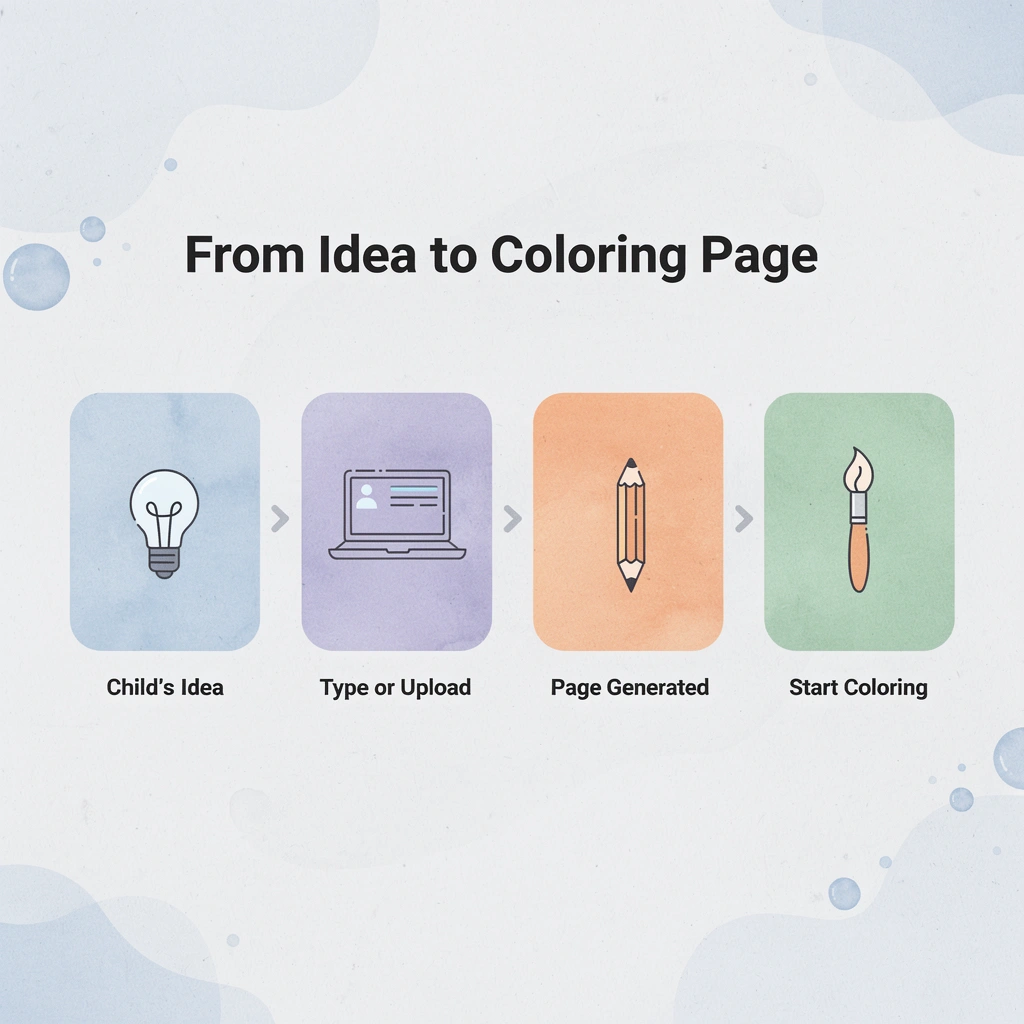
You can describe their idea or upload a picture to My Coloring Pages and turn it into a printable coloring page. There are also 75,000+ free coloring pages to browse when they want an easier starting point.
The Important Learning Sequence
Child invents idea → My Coloring Pages creates the starting outline → print it → child chooses colors, patterns, background, extra characters, and details.
That directly addresses several problems from the neglect-of-play section.
“Tell me what to draw” → the child supplies the idea.
Blank-page anxiety → the outline lowers the technical drawing barrier.
Passive screen use → technology becomes a short creation step before the activity moves offline.
“Is this right?” → there is no single correct way to color or customize the page.
Adult dependence → the parent facilitates the tool but does not make the creative decisions.
Extend the Learning Further
You can extend the learning further by asking:
“Where does this character live?”
“What happened five minutes before this picture?”
“What else could you add?”
Now coloring becomes creative play + storytelling + independent decision-making, rather than simply filling predefined spaces.
2. Build the Tallest Tower That Can Survive a “Storm”
Best for: Problem-Solving, Persistence, Spatial Reasoning, and Frustration Tolerance
Give your child blocks, cups, cardboard, or other safe building materials.
Their challenge:
“Build the tallest tower you can.”
Then create a gentle “storm” by blowing toward it, waving cardboard nearby, or lightly shaking the surface.
If it falls, don't rebuild it for them.
Ask:
“What could make the bottom stronger?”
The important part isn't the tallest tower. It's the cycle:
Build → fail → inspect → change → rebuild.
That directly counters the habit of:
“It didn't work. You do it.”
Children learn that failure can provide information rather than signal that the activity is over.
3. Open a Pretend Shop
Best for: Maths, Communication, Decision-Making, and Social Play
Gather toys, snacks, craft items, or household objects and give them pretend prices.
Your child becomes the shopkeeper, customer, cashier, or product designer.
They can make signs, count products, create prices, add simple totals, give pretend change, write shopping lists, and decide how the shop should look.
Instead of giving children ten isolated addition questions, you give the numbers a purpose.
They need maths because:
“My customer wants three apples.”
It also tackles adult dependence because the child controls the imaginary world rather than simply completing instructions inside yours.
4. Give Them a Cardboard Box and Don't Tell Them What It Is
Best for: Imagination and Independent Play
This may be one of the simplest activities in the list.
Put down one box, tape, crayons, and safe craft materials.
Then ask:
“What could this become?”
Do not immediately suggest a rocket.
Let them struggle with the question.
It could become a car, café, castle, animal house, submarine, robot, stage, or something you cannot identify at all.
This directly counters the problem of children becoming accustomed to entertainment arriving already designed and finished.
The box does almost nothing.
The child has to supply the world.
5. Go on a Backyard or Park “Detective Mission”
Best for: Observation, Science, Curiosity, and Turning Boredom Into Exploration
Give children missions such as:
Find three different leaf shapes.
Find something rough, something smooth, and something soft.
Spot evidence that an animal has been here.
Find five different colors in nature.
Then ask what they notice.
Instead of:
“Here's a fact about nature.”
You create:
Notice → question → investigate → explain.
It is especially useful for children whose boredom immediately turns into:
“Can I have the tablet?”
Because it teaches them that an ordinary environment can become interesting when they start looking for something.
6. Build a Bridge for a Toy
Best for: Engineering Thinking, Experimentation, and Persistence
Choose a toy animal, car, or figure.
Create a pretend river using paper or cushions.
Then provide materials such as paper, blocks, cardboard, straws, craft sticks, tape, or cups.
The challenge:
“Can you get your toy across without touching the river?”
Don't show them the bridge first.
Let them design it.
If it collapses, ask:
“What happened?”
“What could you change?”
This directly gives children the kind of open-ended problem they get less practice with when every activity has one predetermined solution.
7. Invent a Completely New Animal
Best for: Imagination, Writing, Science Connections, and Reducing Fear of Being “Wrong”
Ask children to invent an animal that has never existed.
They decide what it looks like, what it eats, where it lives, how it moves, what protects it, what sound it makes, and what unusual ability it has.
Older children can write an “animal fact file.”
Younger children can draw or explain it.
The most important rule:
It does not have to be realistic.
A six-legged flying whale that lives underground is allowed.
This directly counters:
“Is mine right?”
Because the activity is intentionally designed so that there cannot be one correct answer.
8. Make Up a Story One Sentence at a Time
Best for: Language, Listening, Memory, Flexibility, and Social Creativity
Start:
“One morning, a tiny dragon appeared in our kitchen…”
Your child adds the next sentence.
Then you add one.
Keep alternating.
The fun comes from adapting to whatever the other person introduces.
You thought the dragon would fly away?
Your child says:
“But then it opened the refrigerator and started talking.”
Now your original plan has to change.
That quietly practices:
Listening → remembering → adapting → generating a new idea.
It also prevents adults from controlling the whole story.
9. Let Them Design Their Own Board Game
Best for: Logic, Rule-Making, Creativity, Maths, and Understanding Fairness
Give children paper, markers, dice, counters, and cardboard.
Ask them to invent the goal, board, rules, how someone wins, and what happens when players land on certain spaces.
Then play it.
Something important will probably happen:
The rules won't work.
Maybe the game never ends.
Maybe one player always wins.
Maybe a rule is unfair.
Excellent.
Instead of correcting everything beforehand, let the child discover:
“This part doesn't work.”
Then revise it together.
They learn that creating something often means testing and improving, not producing the perfect version immediately.
10. Create a Treasure Hunt for Someone Else
Best for: Planning, Perspective-Taking, Writing, and Sequencing
Children usually enjoy completing treasure hunts.
But designing one requires much more thinking.
Ask your child to create clues for you, a sibling, or a friend.
Now they must consider:
“Will the other person understand this clue?”
“Is it too easy?”
“What clue should come next?”
“Where can I safely hide the object?”
This moves them from consumer to creator.
Instead of simply following someone else's game, they have to design an experience for another person.
11. Give Them a “Fix This Problem” Challenge
Best for: Everyday Problem-Solving and Independence
Use small, safe household problems.
For example:
“These pencils keep rolling off the desk. Can you make something that holds them?”
“Our toys keep getting mixed together. Can you invent a way to organize them?”
“This stuffed animal needs somewhere to sleep. What can we build?”
Provide materials but avoid supplying the design.
This makes creativity practical.
The child experiences:
Problem exists → I can create something that improves it.
That is very different from always waiting for an adult to solve everyday problems.
12. Do a No-Rules Art Challenge
Best for: Creative Confidence and Reducing Perfectionism
Put out art supplies and give one rule:
There is no correct finished picture.
Try prompts such as:
Draw music.
Paint what happiness would look like as a place.
Create the weirdest monster possible.
Draw a house nobody on Earth could live in.
Avoid responding with:
“Why didn't you make the sky blue?”
Instead ask:
“Tell me about this part.”
This is especially useful for children who repeatedly ask:
“Does this look good?”
The goal is to move their attention from adult approval toward their own creative decisions.
13. Cook Something and Let the Child Make Decisions
Best for: Maths, Sequencing, Sensory Learning, Responsibility, and Practical Independence
Cooking naturally combines measuring, counting, following sequences, observing changes, and solving mistakes.
But don't turn the child into someone who only follows your recipe.
Give age-appropriate choices.
Ask:
“Which fruit should we add?”
“How should we decorate it?”
“How many pieces do we need if four people are eating?”
“What could we use instead if we're missing this ingredient?”
That preserves structure while still requiring decisions.
It follows the same principle as guided play:
Adult creates safe boundaries → child still gets meaningful control.
14. Let Them Invent the Rules for an Outdoor Game
Best for: Physical Activity, Negotiation, Creativity, and Social Problem-Solving
Give them a ball, chalk, cones, hoops, or simply an open space.
Then ask:
“Can you invent a new game?”
If several children participate, they need to agree on the goal, rules, boundaries, turns, scoring, and what counts as cheating.
Disagreements will probably happen.
That is part of the activity.
Instead of adults determining every rule, children practice:
Negotiating → disagreeing → compromising → revising rules → continuing to play.
This directly addresses the social-skills opportunities children lose when adults solve every minor conflict for them.
15. Have a “Boredom Box” the Child Helps Create
Best for: Children Who Constantly Need Adults or Screens to Supply Entertainment
This activity tackles one of the biggest problems from the neglect section directly:
“I'm bored. What can I do?”
Sit down once and have your child help fill a box with small activity cards.
Ideas could include:
Build something taller than your knee.
Invent a superhero.
Make a paper airplane and improve it.
Draw a treasure map.
Create a dance.
Build a home for a toy animal.
Write a ridiculous three-sentence story.
Make something using only five pieces of paper.
But here's the important part:
Your child should help invent the prompts.
Otherwise you've simply created another adult-directed activity list.
Then when boredom arrives:
“I'm bored” → choose or invent a prompt → start independently.
Instead of:
“I'm bored” → parent supplies entertainment → child waits for parent next time.
Over time, encourage them to ignore the box completely and invent something on their own.
The box is scaffolding, not the final destination.
Why These Activities Work
These 15 activities were not chosen simply because children might enjoy them.
Together, they directly reverse the patterns that can develop when children get too little open-ended play.
How the Activities Address Common Challenges
When Children Constantly Say “Tell Me What to Do”
My Coloring Pages, cardboard-box play, invented animals, and no-rules art require them to make creative decisions.
When Boredom Automatically Becomes Screen Time
Detective missions and the boredom box give them low-friction ways to generate their own entertainment.
When They Quit When Something Goes Wrong
Tower building and bridge challenges deliberately include failure, redesign, and another attempt.
When They Always Want the “Right” Answer
Storytelling, invented animals, art, and personalized coloring give them activities where multiple outcomes can work.
When Adults Solve Every Social Problem
Pretend shops, collaborative stories, board games, and invented outdoor games create opportunities to negotiate and compromise.
When They Mainly Consume Other People's Entertainment
Treasure hunts, board games, stories, coloring concepts, and imaginary worlds put the child in the role of creator.
When They Learn Facts but Rarely Apply Them
Pretend shops, cooking, building, and nature exploration turn maths, language, science, and reasoning into something they actually have to use.
The Learning Cycle You Want
The learning cycle you want is not:
Adult explains → child completes → adult checks.
It is:
Child becomes curious → makes a choice → tries something → encounters a problem → thinks → adjusts → creates something of their own.
That's why these activities matter.
The goal isn't simply to keep kids busy for 30 minutes.
It's to give them 30 minutes in which somebody else isn't supplying every idea, answer, rule, and next step.
Turn “What Should I Do?” Into an Activity They Help Create
When a child keeps asking what to do next, ask what they wish existed, what creature they have never seen before, or what would happen if their favorite animal ran a restaurant. That shift moves them from waiting for instruction to generating ideas, which is where real cognitive development begins.
"The shift from receiving instruction to generating ideas is where real cognitive development begins, and it starts with one unexpected question."
💡 Tip: Instead of suggesting an activity, ask a strange, open-ended question such as 'What creature has never existed before?' or 'What if your pet ran a school?' These prompts unlock original thinking faster than any structured task.
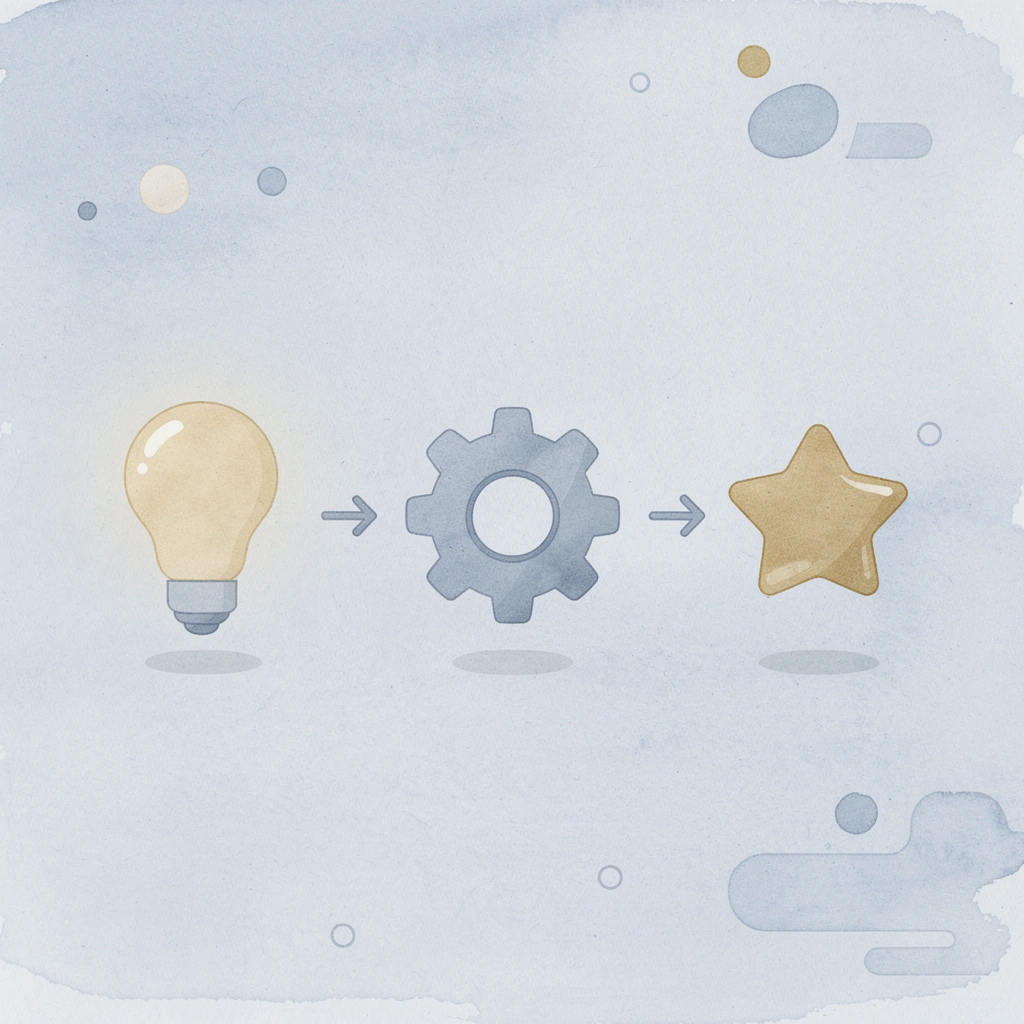
Download 75,000+ Free Customized Worksheets through My Coloring Pages, where a child's idea — typed or uploaded — becomes a printable coloring page in seconds. Our tool removes the hardest starting barrier without making the creative decisions for them.
Color choices, added characters, background details, and the story behind the image all belong to the child. One page becomes creative play, storytelling, decision-making, and fine-motor practice — all combined into a single activity.
✅ Best Practice: Let the child dictate the idea themselves — even a strange or silly one. The more specific and original their prompt, the more ownership they feel over the finished page.
Ask your child for one strange, specific, completely original idea, turn it into a printable page, hand them the colors, and step back. What they build from that starting point will surprise you.
🎯 Key Point: The goal isn't a perfect drawing—it's the creative confidence that comes from seeing their own idea become something real. That moment of ownership is what makes the activity stick.
Related Reading
- Ai Learning App Kids
- Abc Learning For Kids