
K12 Homeschool Full Review and Guide
K12 homeschool programs reviewed: curriculum options, costs, and enrollment process. My Coloring Pages breaks down everything parents need to know.

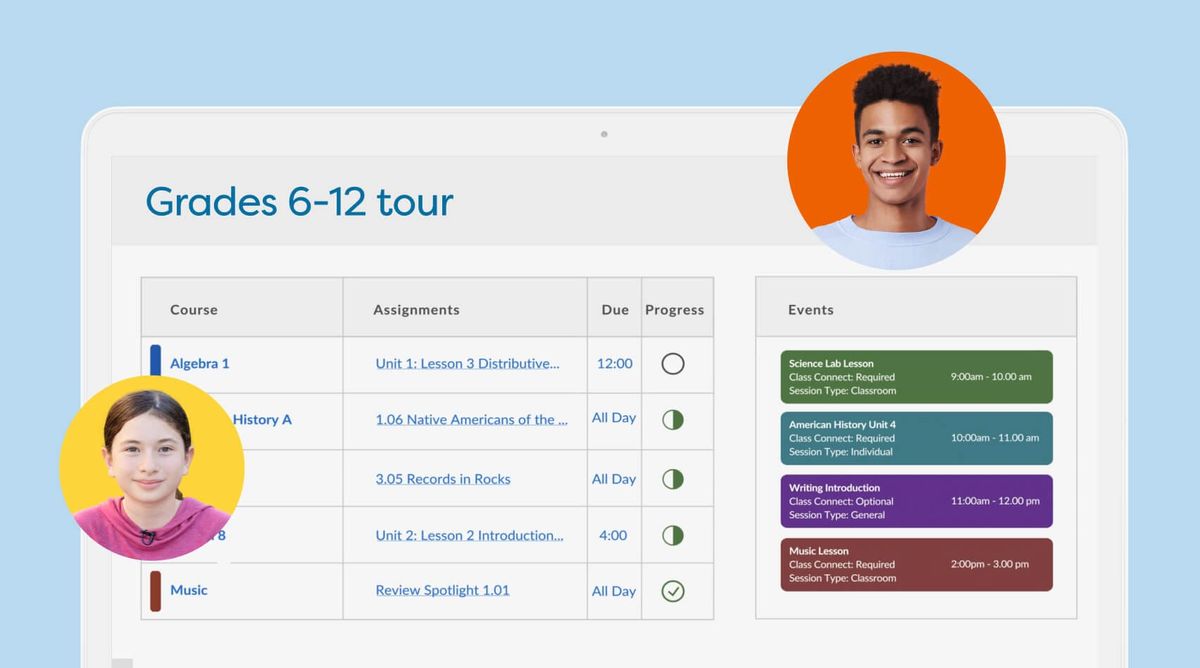
Generic worksheets and one-size-fits-all materials often fall short when teaching children with different learning styles and grade levels. K12 homeschool families face the unique challenge of creating personalized educational content that matches each child's interests, abilities, and developmental stage. The key lies in developing customized learning materials that engage students while supporting specific curriculum goals.
Creating these personalized resources becomes much easier with the right tools and materials. Parents can supplement their lesson plans across all subjects by incorporating visual and hands-on activities that reinforce learning concepts. To enhance your homeschool curriculum with engaging, adaptable materials, download 55,689+ free coloring pages that support various subjects and skill levels.
Summary
Key Takeaways
- K12 online programs employ state-certified teachers who adhere to the same academic standards as traditional public schools, relieving parents of the burden of curriculum design and subject expertise. According to the Pew Research Center, 3.4% of K-12 students were homeschooled during the 2022-23 academic year, reflecting growing interest in structured alternatives that provide institutional oversight while maintaining home-based flexibility.
- Research from Brighterly indicates that the average homeschooler scores between 65% and 75%, placing most students in the average-to-above-average range compared to traditional school populations. This performance data challenges assumptions that home-based learning produces inferior results, particularly when students benefit from professional curriculum design and certified teacher instruction rather than parent-led approaches.
- Accredited K-12 programs must meet the same regional accreditation standards that govern traditional schools, ensuring that transcripts carry weight with colleges and employers. This external verification protects families from quality drift that can occur in unregulated homeschooling, where no one confirms that students are actually mastering grade-level content beyond parent-assigned grades.
- The learning coach role requires organizational consistency and daily availability, but not subject-matter expertise, since certified teachers handle instruction. This division of responsibility works when parents can supervise during school hours, but creates barriers for working families without flexible schedules or access to childcare, limiting who can realistically choose online schooling regardless of educational quality.
- Pew Research Center data shows that 83% of parents worry about safety, drugs, and negative peer pressure in traditional school environments, yet online learning introduces different emotional challenges through isolation and reduced spontaneous social interaction. Modern K12 programs address this through virtual clubs, collaborative projects, and partnerships with local organizations, though extracurricular participation still requires family transportation and time commitments.
- Implementation quality determines outcomes more than program design, as even an excellent curriculum fails when students lack dedicated learning spaces, reliable internet access, or consistent adult support during instruction. Young children, especially, need active supervision to navigate technology and maintain focus, meaning that comprehensive provisioning of materials and teacher expertise translates to learning only when families implement the daily structure these programs require.
- My Coloring Pages addresses the screen fatigue and abstract concept retention challenges of digital-only learning by offering 55,689+ free coloring pages that transform curriculum topics into tactile reinforcement activities, providing the multisensory practice young learners need without requiring parents to source expensive educational materials or possess artistic skills.
Table of Contents
- Are K12 Homeschool Programs Good?
- Key Features of K12 Homeschool Programs
- How to Enroll in K12 Homeschool Programs
- How Can Parents Support Learning With K12 Homeschool Programs: 9 Essential Tips
- 10 Online Worksheets to Support K12 Homeschool Learning
- Make K12 Learning Stick: Reinforce Online Lessons with Worksheets
Are K12 Homeschool Programs Good?
Accredited K12 online programs provide students with structured, high-quality education that mirrors traditional schooling while offering greater flexibility and personalized pacing. They employ state-certified teachers, follow standardized curricula aligned with academic benchmarks, and demonstrate measurable learning results through regular assessments. Confusion arises when these formal online schools are conflated with unstructured, parent-led homeschooling lacking institutional oversight.

🎯 Key Point: Accredited K12 programs operate with the same educational standards and teacher qualifications as traditional schools, making them a legitimate alternative rather than experimental homeschooling.
"State-certified teachers and standardized curricula ensure that accredited online programs maintain the same academic rigor as brick-and-mortar schools." — Department of Education Standards

⚠️ Warning: Don't confuse accredited online schools with informal homeschooling approaches - they offer completely different levels of structure, accountability, and educational oversight.
How do K12 online programs differ from traditional homeschooling?
K12 online programs differ from traditional homeschooling in important ways. State-certified teachers design and teach classes in accordance with the same academic standards that public schools must follow. Students receive assignments with clear due dates, attend live virtual classes, and take standardized tests that measure their progress against grade-level benchmarks.
What support do families receive through public school districts?
Many families access these programs through public school districts that offer tuition-free online options, including laptops, curriculum materials, and technical support. According to the Pew Research Center, 3.4% of K-12 students in the United States were homeschooled during the 2022-23 school year, reflecting growing interest in alternatives to traditional classroom settings.
How does institutional structure address homeschooling challenges?
The accountability built into these systems addresses homeschooling's biggest weakness: inconsistency. When curriculum development, grading, and instruction depend on one parent, quality varies with that parent's subject knowledge, available time, and teaching ability. K12 programs provide institutional structure while preserving flexibility.
How do homeschool test scores compare to those of traditional schools?
Performance data challenge the idea that home learning produces worse results. Research from Brighterly shows that homeschoolers score between 65% and 75% on average, placing most students in the average-to-above-average range compared to those in traditional schools.
Why does curriculum design matter more than parent expertise?
How many things change matters more than the average. Students in accredited K–12 programs benefit from professional curriculum design that orders concepts logically, builds skills progressively, and aligns with college entrance requirements. Parents need not know algebra or chemistry; certified teachers handle instruction directly.
How does flexible pacing improve student outcomes?
Traditional schools struggle with one-size-fits-all pacing that leaves some students bored and others confused. K12 online programs allow students to move faster through subjects they grasp quickly while spending more time on difficult concepts without feeling left behind.
What causes confusion about K12 homeschool programs?
Most confusion stems from conflating unstructured homeschooling with formal online programs. Stories about isolated children or missed friendships typically describe parent-led approaches lacking institutional support. Structured K12 programs offer built-in peer interaction, group projects, and extracurricular opportunities that these narratives overlook.
Why do negative stories spread faster than positive results?
Negative stories spread faster than positive facts. One student's struggle with self-motivation becomes a cautionary tale, while hundreds of students thriving with flexible schedules go unnoticed. Failure cases often reflect poor implementation, insufficient parent involvement, or mismatched learning approaches, not flaws in the model itself.
How do modern K12 programs address social interaction concerns?
Critics worry that children learning online will lack peer interaction and spend excessive time on screens. Modern K12 programs address this through virtual clubs, group projects, field trips, and partnerships with local organizations. Students participate in sports leagues, music programs, and community service that develop social skills beyond the virtual classroom.
How does unstructured homeschooling compare to K12 online schools?
Unstructured homeschooling places significant responsibility on parents to research standards, select materials, plan lessons, and assess student learning across multiple subjects and grade levels. It works well for families with education, knowledge, time, and organizational skills, but fails when parents lack subject knowledge, struggle with consistency, or underestimate the complexity of teaching advanced concepts.
What advantages do K12 online schools offer parents?
K12 online schools fundamentally restructure this arrangement. Certified teachers design and teach lessons following planned courses that meet state requirements. Parents transition from teacher to learning coach, helping students stay organized, resolving technical issues, and communicating with teachers about student progress. This division of responsibilities allows each person to focus on their strengths rather than expecting parents to master subjects ranging from reading basics to trigonometry.
How does built-in accountability prevent learning gaps?
Built-in accountability through regular assessments, progress reports, and teacher feedback prevents students from falling through the cracks. When a student struggles, certified teachers intervene with targeted support rather than parents frantically searching for teaching strategies. The system catches problems early, rather than discovering gaps years later, when remediation becomes exponentially harder.
How does structure enable rather than restrict homeschooling families?
Families choose K12 programs for reasons beyond traditional education quality. A student with chronic health issues can keep up with schoolwork without classroom exposure to illness. A talented athlete can train intensively without sacrificing education. A military family can maintain stability through relocations. The structure enables these situations rather than forcing families into impossible choices.
What flexibility advantages do K12 homeschool programs offer?
Flexibility extends to daily scheduling in ways traditional schools cannot. Students complete coursework during peak focus hours, whether early morning or late evening, and families take vacations during off-peak times while continuing lessons from anywhere with internet access. This autonomy teaches self-regulation skills essential for college and career settings.
How can hands-on activities enhance digital K12 instruction?
For younger learners, hands-on activities strengthen retention and engagement during screen breaks. When teaching shapes, colors, or letter recognition, physical materials create tactile experiences that complement digital instruction. Platforms like My Coloring Pages provide printable resources that transform abstract concepts into interactive activities, helping parents reinforce lessons through coloring exercises aligned with curriculum goals.
Why does program quality matter less than home execution?
Program quality matters less than how well it works at home. Even the best-designed K12 curriculum fails when students lack a dedicated learning space, reliable internet access, or adult support during the school day. Young children especially need someone present to help them use technology, answer questions, and stay focused during lessons. This requirement creates barriers for working parents without flexible schedules or access to childcare during school hours.
What technical skills do families need for success?
Using technology becomes necessary to succeed in ways that traditional school doesn't require. Students must troubleshoot video-conference issues, navigate learning management systems, submit assignments online, and manage multiple platforms simultaneously. Families often grow frustrated initially because they expect the transition from traditional classrooms to occur smoothly.
How much self-motivation do students really need?
The self-motivation required exceeds what most elementary and middle school students naturally possess. Without classmates nearby or a teacher present to help them focus, students must build their own discipline to complete their tasks. Some thrive with this independence; others fall behind despite having access to excellent instructional materials and teacher support.
What do critics say online learning lacks?
Critics focus on what online learning lacks: spontaneous hallway conversations, collaborative group work, hands-on lab experiments, and immediate teacher feedback. Students miss the energy of a busy classroom, the mentorship of coaches and club advisors, and the social interaction during lunch and recess.
What unique advantages do K12 programs provide?
K12 programs give students what traditional schools cannot: the chance to learn at their own pace, flexible schedules that accommodate families, reduced bullying and peer pressure, more one-on-one time with teachers during virtual office hours, and no wasted time on classroom management and transitions.
How do these trade-offs benefit different students?
The trade-offs favor different students depending on their needs, learning styles, and family circumstances. An introverted student overwhelmed by large classrooms may thrive in the quieter environment of online learning. A student who grasps concepts quickly can progress through the material more quickly without waiting for classmates. These are legitimate preferences K12 programs accommodate effectively, not deficiencies to overcome.
How does accreditation ensure quality standards?
Accredited K12 programs must meet the same standards as public schools for curriculum rigor, teacher qualifications, and student outcomes. This oversight prevents quality drift that occurs in unregulated homeschooling, where no one verifies that students are learning grade-level content. Transcripts from accredited programs carry weight with colleges and employers because they represent verified achievement, not self-assigned parental grades.
Why do standardized tests matter for student progress?
Standardized testing provides objective benchmarks showing whether students master material or merely complete assignments. When test scores reveal concerns, teachers can adjust instruction, recommend interventions, or suggest support before small gaps become major deficiencies. Smaller virtual class sizes often allow more personalized attention than traditional schools.
What oversight protects families from poor-quality programs?
Regional accreditation agencies regularly review K12 programs, examining curriculum alignment, teacher credentials, student performance data, and operational compliance. Schools that fail to meet standards lose accreditation, protecting families from low-quality providers. This quality control system doesn't exist for independent homeschooling, where parents bear full responsibility for their children's education without outside verification.
What credentials do K12 program teachers hold?
K12 program teachers hold the same credentials as traditional public school teachers: they've completed education degrees, passed subject-matter exams, and maintained professional development to keep their licenses current. This ensures students receive instruction from educators trained in teaching methods and content knowledge.
How does virtual format expand access to specialized teachers?
The virtual format allows schools to hire specialized teachers regardless of location. A rural district's K12 program can employ a physics teacher with a doctorate or a native Spanish instructor, expanding access to expertise that small traditional schools struggle to provide.
What are the benefits of smaller teacher-student ratios online?
Online classes often have fewer students per teacher than traditional classrooms, enabling teachers to provide more personalized feedback. Teachers write detailed comments that students can review multiple times, rather than offering verbal feedback once. This written feedback helps students identify exactly what they need to improve.
When the Model Breaks Down
K12 programs don't work well for students who need peer interaction to stay motivated. Extroverts who gain energy from group work and collaborative projects struggle with independent study and often lose interest despite quality curriculum and teacher support.
What technical barriers affect online learning success?
Families without reliable internet access face constant technical barriers that disrupt learning: buffering videos, dropped connections during live classes, and the inability to download materials, all of which create frustration unrelated to educational quality. The digital divide prevents some students from benefiting from online programs regardless of their academic potential.
How do work schedules impact K12 homeschool supervision?
Parents who work full-time outside the home often cannot supervise younger students during school hours. Arranging childcare for school supervision adds costs that eliminate the financial advantages of tuition-free public K–12 programs, limiting who can realistically choose online schooling. Understanding how these programs function reveals capabilities most people never consider when weighing their options.
Key Features of K12 Homeschool Programs
K12 homeschool programs work through six connected features that balance strict state standards with personalized flexibility, meeting both regulatory requirements and individual family needs.

🎯 Key Point: The six core features include structured curriculum, flexible scheduling, certified teachers, progress tracking, standardized assessments, and family support systems that work together to create a comprehensive educational experience.
"K12 programs successfully combine the rigor of traditional schooling with the flexibility that modern families need." — National Home Education Research Institute, 2023
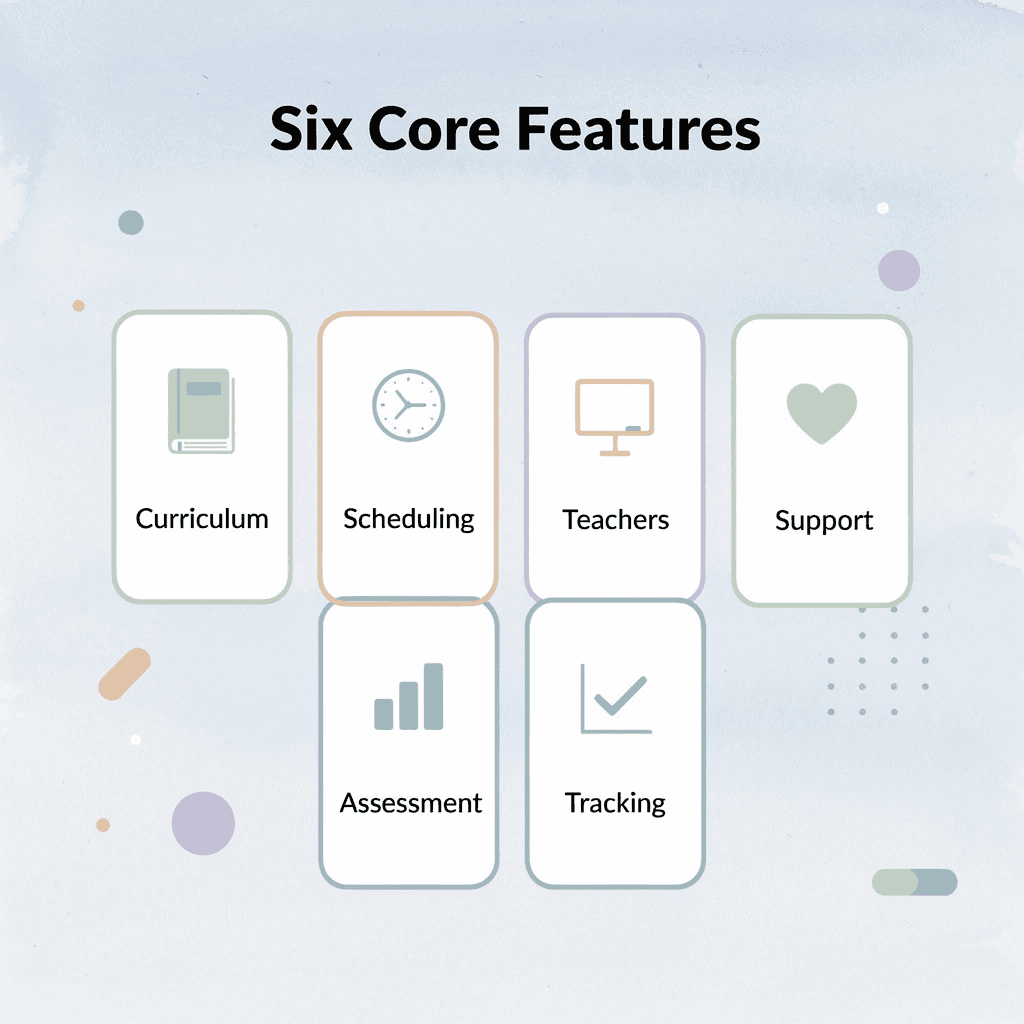
Core Feature | Primary Benefit | Family Impact |
|---|---|---|
Structured Curriculum | Standards alignment | Confidence in quality |
Flexible Scheduling | Personalized pacing | Better work-life balance |
Certified Teachers | Professional support | Reduced parent stress |
Progress Tracking | Real-time insights | Clear academic visibility |
Standardized Assessments | Measurable outcomes | Documented achievement |
Family Support | Ongoing guidance | Sustained success |
💡 Tip: These interconnected features work best when families actively engage with all six components rather than focusing on just curriculum delivery or scheduling flexibility alone.
How do K12 programs ensure academic quality?
K12 programs meet the same academic benchmarks as public schools. Math sequences progress from foundational arithmetic through algebra and geometry. Science courses cover physical, life, and earth sciences with age-appropriate depth. Language arts builds reading comprehension, writing skills, and literary analysis systematically across grade levels. Social studies integrates history, geography, civics, and cultural studies in accordance with state frameworks.
Do colleges recognize K12 homeschool transcripts?
Colleges and employers recognize transcripts from accredited programs as legitimate credentials. A student completing algebra through a K12 program earns the same credit as one in a traditional classroom. Accreditation agencies verify that curriculum scope, sequence, and assessment meet established standards, protecting families from programs that promise more than they deliver.
What advantages do structured online programs offer?
According to MGT, their 50-year track record in educational consulting shows that structured online programs match traditional schools while offering flexibility that regular schools cannot provide. External verification confirms the curriculum meets grade-level standards, so parents can trust their child is learning appropriate content.
How do certified teachers support K12 homeschool students?
State-certified teachers design lessons, deliver live virtual instruction, grade assignments, and provide feedback on student work. They hold office hours for questions, conduct one-on-one conferences about progress, and adjust teaching methods when students struggle with specific concepts. This relieves parents of the burden of teaching subjects like calculus, chemistry, or composition.
What role do parents play as learning coaches?
Parents serve as learning coaches rather than teachers. They help students log in to websites, troubleshoot technical issues, maintain daily schedules, and communicate with teachers about concerns. A parent can support their child's physics education without understanding Newton's laws because a certified teacher handles the instruction.
How does dividing responsibilities benefit everyone involved?
Each party brings distinct strengths to the partnership. Teachers provide training in pedagogy and subject expertise. Parents offer daily structure, motivation, and accountability. Students receive professional instruction while maintaining the family connection and personalized attention that characterizes home-based learning.
How does flexible pacing benefit student learning?
Students progress through schoolwork at a pace that matches their understanding rather than following rigid timelines. A child who learns multiplication quickly can advance to division without waiting for classmates to catch up. Another student needing extra time to master fractions can work through the concepts thoroughly before moving forward. This prevents both boredom and frustration from one-size-fits-all pacing.
How is structure maintained with varied pacing?
The structure remains constant regardless of pace. Students cannot skip foundational concepts or avoid difficult material. The curriculum sequence ensures that students master prerequisite skills before advancing to more advanced topics. Teachers monitor progress through regular assessments, identifying when students need additional support or enrichment.
How do specialized learning plans work within frameworks?
Special learning plans systematically support students with diverse needs. Students with learning differences receive support aligned with their IEPs. Gifted students access advanced materials beyond their grade level. English language learners receive focused support to develop language skills while learning grade-level content. These accommodations are integrated into the regular curriculum, eliminating the need for parents to create separate educational paths.
How does hybrid learning combine digital and physical materials?
Lessons combine interactive online content with hands-on offline activities. Students watch instructional videos, complete digital exercises, and participate in virtual discussions, then work with physical materials: science kits for experiments, art supplies for creative projects, and physical books for screen-free reading. This approach transforms abstract ideas into tangible learning experiences. Young children benefit from handling objects and experiencing concepts through multiple senses. A lesson about geometric shapes becomes more memorable when students build three-dimensional models rather than viewing diagrams on screens.
What materials do K12 programs provide to families?
K12 programs send physical materials directly to families, eliminating the need for parents to source supplies independently. Curriculum designers identify concepts that require hands-on practice and provide appropriate materials, enabling parents to follow educators' recommendations rather than guessing which activities might help. Physical activities build neural pathways in ways that screen time alone cannot. Platforms like My Coloring Pages provide printable resources that transform curriculum ideas into engaging coloring activities, reinforcing lessons through fine motor skill development. A child learning about ecosystems can color detailed habitat scenes, making abstract ideas visually concrete and personally meaningful.
What resources are included with enrollment?
Families receive pre-configured laptops or tablets, along with curriculum materials, textbooks, workbooks, and supplies, shipped directly to their homes. Enrollment includes access to learning platforms with scheduling tools, messaging systems, grade books, and resource libraries for communicating with teachers.
How does comprehensive provisioning remove financial barriers?
This complete system removes the money problems that make traditional homeschooling costly. Parents need not buy textbooks separately, pay for multiple online programs, or search for compatible materials. A family's ability to provide their children with a quality education no longer depends on their school supply budget.
How do progress tracking tools help parents monitor student performance?
Progress tracking tools enable parents and students to monitor assignment completion rates, assessment scores, areas of strength, and concepts requiring additional practice. This transparency supports early intervention when students struggle, preventing problems from widening into larger gaps.
What extracurricular activities are available in online programs?
Students join virtual clubs matching their interests, from coding and robotics to creative writing and debate. Social activities help students make friends through group projects, online gaming sessions, and collaborative challenges. Field trips organized by the program bring students together to learn by doing at museums, nature centers, and cultural sites.
How do these activities address socialization concerns?
These opportunities directly address socialization concerns in homeschooling. Students build friendships with peers who share similar interests, develop teamwork skills through collaborative projects, and experience healthy competition in academic contests. Social development becomes intentional rather than incidental.
Can students join traditional activities while homeschooling?
Some programs work with local organizations to offer sports leagues, music instruction, and community service projects, allowing students to join regular extracurricular activities while maintaining the flexible school schedule that attracted their families to online learning.
What implementation challenges do families face with online programs?
These six features work well on paper but require consistent execution at home. A complete curriculum means nothing if students don't log in daily. Teacher support fails without family communication about struggles. Flexible pacing becomes procrastination without parental oversight. Physical materials sit unused due to the lack of scheduled offline activities. Resources go untapped when families don't explore platform capabilities. Program quality exceeds what most parents could create independently, but implementation depends on families. Students need dedicated learning spaces free from distractions, reliable internet connections, and adults available during school hours to answer questions, troubleshoot problems, and maintain motivation.
Why do younger students need more supervision?
Young children need active learning coaches who sit nearby during lessons, help navigate technology, and provide immediate encouragement. This supervision requirement imposes childcare constraints that limit who can choose online schooling, even when educational quality surpasses that of traditional alternatives.
Related Reading
- Homeschool
- Easy Peasy Homeschool
- Homeschool Curriculum
- Homeschool Math Curriculum
- Online Homeschool Curriculum
- Homeschool Resources
- Online Homeschool Programs
- Christian Homeschool Curriculum
- Homeschool Planner
- Homeschool Schedule
- Kindergarten Homeschool Curriculum
- Homeschool History Curriculum
- Best Homeschool Programs
- Free Homeschool Curriculum
- Homeschool Schedule
- Best Homeschool Curriculum
- Accredited Homeschool Programs
- How To Homeschool
- Time For Learning Homeschool
- K12 Homeschool
How to Enroll in K12 Homeschool Programs
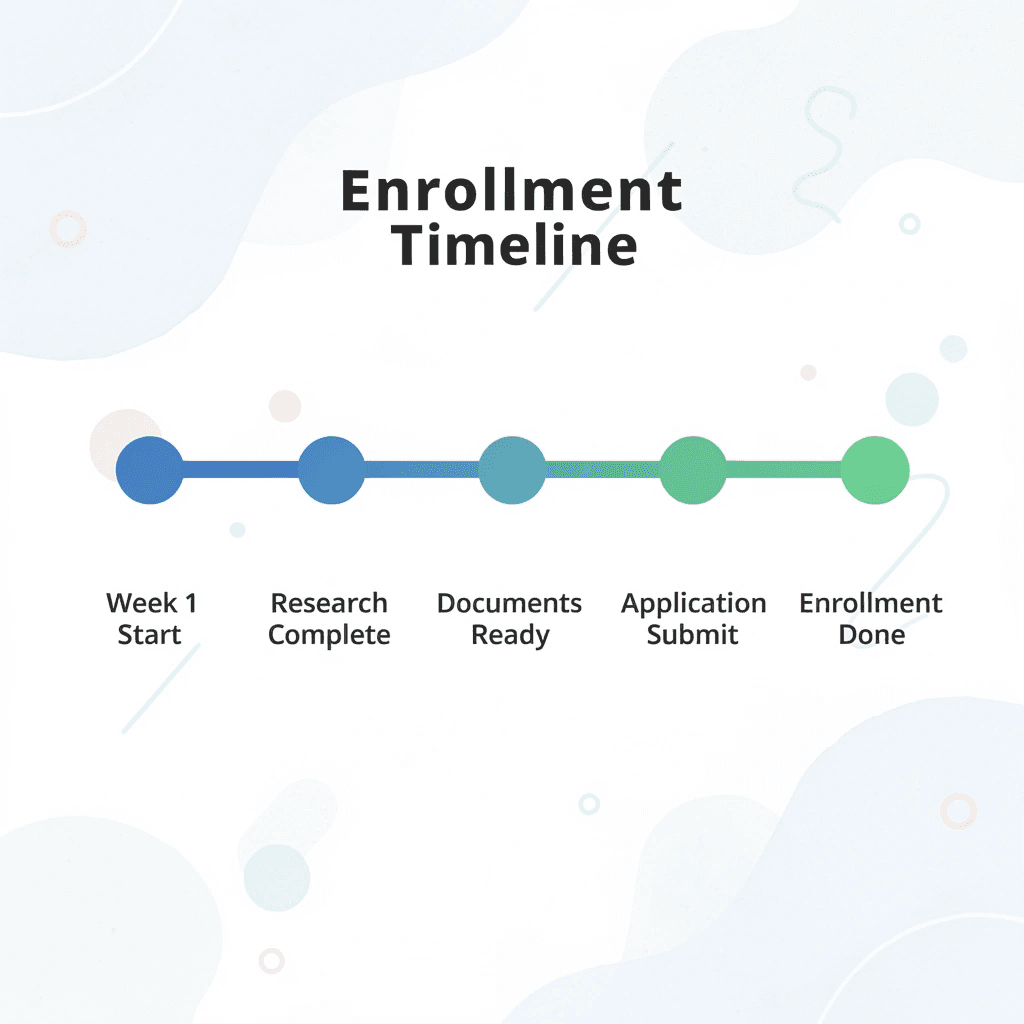
Enrollment involves four phases: researching program types, gathering required documentation, submitting applications before deadlines, and understanding cost structures. Families typically complete this in two to four weeks with upfront preparation. Public K12 programs follow traditional public school enrollment patterns, while private academies require additional interview steps.
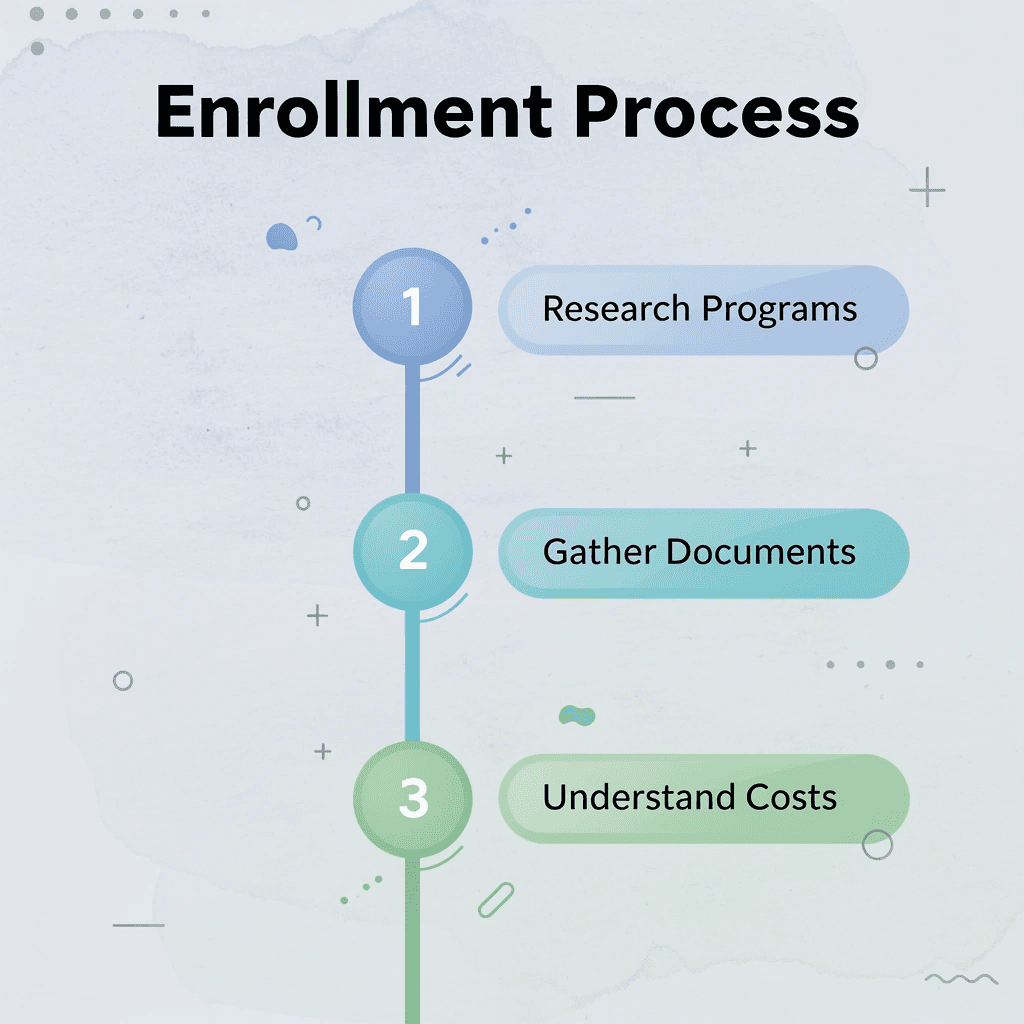
🎯 Key Point: Successful enrollment depends on early preparation and understanding the specific requirements for your chosen program type.
"Most families complete the K12 homeschool enrollment process in two to four weeks with proper upfront preparation." — National Center for Biotechnology Information, 2024

Enrollment Phase | Timeline | Key Requirements |
|---|---|---|
Research Programs | Week 1 | Compare public vs private options |
Gather Documentation | Week 1-2 | Transcripts, immunization records, proof of residency |
Submit Applications | Week 2-3 | Meet enrollment deadlines, complete online forms |
Finalize Enrollment | Week 3-4 | Interview process (private), payment setup |
⚠️ Warning: Private academies often have stricter application deadlines and may require additional interviews or assessment tests that can extend the enrollment timeline.
What are the main types of K12 homeschool programs?
Public K12 programs are free because the state funds them, and they follow the same rules and standards as regular public schools. They provide students with laptops, course materials, and technology support at no cost. However, you must live in the school district or state, and popular programs often have waiting lists. Private K–12 schools charge tuition but offer families more choices. They create specialized programs for STEM, arts, and advanced learners. Some private schools don't require residency in a specific area and offer tuition scaled to family income.
How do you evaluate curriculum quality and accreditation?
The quality of the curriculum matters more than the price. Compare how programs teach concepts across grade levels, verify teachers' qualifications, and confirm accreditation from recognized regional agencies. A free program with weak curriculum design will yield worse results than a paid program with strong content. According to Pew Research Center data from the 2022-23 academic year, 3.4% of K-12 students were homeschooled, reflecting families' careful choices about education that suit their needs.
What documents prove your child's age and identity?
Birth certificates or government-issued identification prove your child's age and help place them in the right grade. Schools verify this information to ensure students are in grades matching their age and learning level. Keep your original documents accessible, as some programs require notarised copies rather than scanned versions sent online.
How do you verify residency for program enrollment?
To verify that you live in an area where you can use public programs, you typically need to show documents like utility bills, lease agreements, or property tax statements that prove your current address. Different states and districts require different documents: some accept recent bank statements or government letters, while others require multiple types of proof from different sources. Start checking what you need early because obtaining these documents takes longer than most families expect, especially when you've recently moved, and your current address doesn't match your ID card or vehicle registration.
Why are academic records important for placement decisions?
School records help placement teams understand your child's learning history. Transcripts show completed classes, grades, and any special support received. Report cards document teacher observations about your child's learning style, social interactions, and areas needing support. Ask each school for records if your child attended multiple schools, as gaps in documentation can delay enrollment processing.
What technology requirements should you check before applying?
Most programs list the minimum internet speed, operating system versions, and hardware requirements. Check your setup against these specifications before applying. Some programs loan equipment to families lacking the right technology, though availability varies, and waiting for devices can delay your start date.
Submit Applications Within Enrollment Windows
Online application forms collect basic information about your child, family, and reasons for choosing online education. Answer honestly because this information helps schools determine whether their program suits your child's needs. Misrepresenting circumstances creates problems later when reality diverges from expectations set during enrollment.
How do interviews help determine program fit?
Private academies often include interviews to assess students' motivation, family commitment, and alignment with the program's philosophy. These conversations help both the school and the family determine the fit. A program emphasizing independent learning may struggle with students requiring constant supervision, while families seeking religious education won't thrive in secular settings. Interviews uncover such mismatches before enrollment rather than months into the school year.
What do placement assessments reveal about student needs?
Placement assessments measure current skill levels in core subjects, identifying strengths to build on and gaps requiring support. They inform instructional planning so teachers can personalize learning paths from day one. A student performing two grade levels ahead in reading but struggling with maths fundamentals needs different support than one showing consistent skills across subjects. Assessment data prevents both boredom and frustration by matching instruction to actual ability.
Why do application deadlines matter so much?
Application deadlines are more important than families might think. Popular programs fill their available spots quickly, especially in elementary grades, where demand exceeds capacity. Missing a deadline by a few days could mean waiting a full year for the next enrollment opportunity. Apply early during the enrollment window to avoid losing your spot.
Understand Complete Cost Structure Before Enrolling
Free public programs remove the highest cost that homeschooling families face. State funding covers lesson creation, teacher salaries, technology, and teaching materials. Families receive everything needed to complete their schoolwork without purchasing textbooks, paying for online services, or sourcing supplies independently.
How much do private academy programs cost?
Private academy tuition varies based on school offerings and funding sources. Basic programs charge $2,000 to $5,000 per year with standard curricula and certified teachers. Premium academies offering specialized tracks or smaller class sizes cost $8,000 to $15,000 per year. Elite programs exceed $20,000 annually and position themselves as college preparatory alternatives to traditional independent schools.
What hidden costs should families expect after enrollment?
Hidden costs emerge after enrolment. Internet service upgrades to meet bandwidth requirements add monthly charges. Printer ink and paper for physical submissions accumulate over time. Extracurricular activities, field trips, and lab materials for advanced science courses often carry separate fees. Budget for these expenses rather than assuming tuition covers everything.
How can financial aid make programs more affordable?
Financial aid makes private programs affordable for families unable to pay full tuition. Need-based scholarships reduce costs by 25% to 75%, depending on household income and available program funding. Merit scholarships reward academic achievement, artistic talent, or leadership potential. Payment plans spread tuition across monthly installments, and some programs offer sibling discounts. Inquire about all available options, as schools don't always advertise all financial assistance programs prominently.
When younger learners need hands-on practice to understand abstract concepts taught through screens, physical activities strengthen learning without requiring expensive educational materials. Platforms like My Coloring Pages provide printable resources that transform curriculum topics into engaging coloring exercises, helping parents supplement digital instruction with tactile learning experiences that develop fine motor skills while reinforcing academic content. A child studying habitats can color detailed ecosystem scenes, making textbook concepts visually concrete and personally meaningful.
Why does accreditation status matter for K12 homeschool programs?
Regional accreditation agencies verify that programs meet standards for curriculum rigor, teacher qualifications, and student outcomes. Transcripts from accredited programs carry weight with colleges and employers because they demonstrate verified achievement rather than grades parents assign. Schools without proper accreditation might teach well, but you must prove that quality to outside groups rather than having it validated through official credentials.
How does state approval differ from accreditation?
State approval differs from accreditation but remains important for public programs. States determine which online schools can operate within their borders and receive public funding. Programs without state approval operate in areas with unclear regulations and minimal oversight or accountability.
What do professional association memberships indicate?
Professional association memberships demonstrate commitment to quality standards beyond minimum legal requirements. Organizations like the National Association of Private Schools or the Distance Education Accrediting Commission require member schools to show continuous improvement, maintain qualified staff, and undergo regular reviews. Membership demonstrates a willingness to meet external benchmarks rather than operate without peer evaluation.
How should you verify accreditation claims?
Check accreditation status on agency websites rather than trusting the school's claims alone. Confirm state approval through the education department databases. Research any professional associations mentioned to understand their standards and program review processes. This careful research ensures credentials earned will be recognized when applying to colleges, transferring schools, or entering the workforce. Enrollment is the beginning; what happens after that first login determines whether online learning becomes transformative or frustrating.
How Can Parents Support Learning With K12 Homeschool Programs? 9 Essential Tips
Your role changes from teacher to learning architect. You create the conditions where education happens rather than teaching it yourself: building systems, removing obstacles, and maintaining consistency while certified teachers handle subject expertise. This fundamental difference determines whether online learning becomes sustainable or collapses under unrealistic expectations.
🎯 Key Point: Success in K12 homeschool programs depends on understanding you're the facilitator, not the instructor. Your job is to create the optimal learning environment while letting professional educators deliver the curriculum.
"Parents who embrace the learning architect role see 40% better student engagement compared to those who try to replace certified teachers." — National Home Education Research Institute, 2023
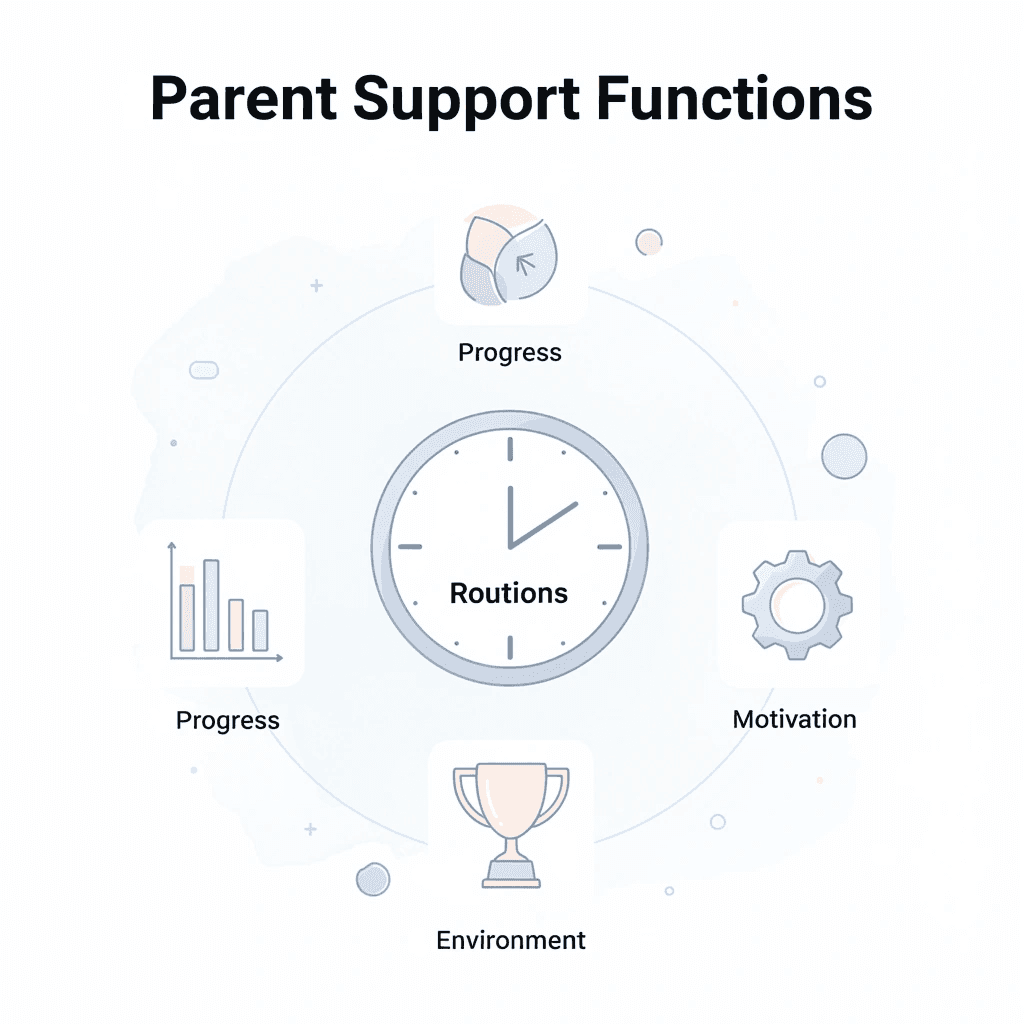
💡 Pro Tip: Focus your energy on establishing routines, monitoring progress, and maintaining motivation—these are the critical support functions that make online education work effectively for your family.
1. Set Up a Dedicated Learning Space
Your physical environment shapes how well your brain can think and learn. A messy kitchen table with siblings nearby, a television playing, and household activity breaks your focus every few minutes. Each distraction forces your brain to work harder to refocus on schoolwork.
Why does your child need a quiet learning area?
The learning area needs quiet separation from household traffic. Younger students, especially, require isolation during live classes so tutors can maintain their attention without competing with background noise or interruptions. According to the Pew Research Center, 72% of parents want to spend more time with their children, but that time together needs to be limited during instructional hours. Devices like phones, tablets, and gaming systems not used for schoolwork should be kept in another room. Visible entertainment options create constant temptation that weakens focus.
How important is reliable internet connectivity?
Internet connectivity determines whether live classes function smoothly or become exercises in frustration. Test your connection speed against program requirements before the school year starts. Buffering videos and dropped connections during teacher explanations create understanding gaps that compound over time.
Where should parents position themselves during lessons?
Younger children need an adult to watch them from a reasonable distance. Sitting next to a seven-year-old during class often leads parents to answer the tutor's questions, finish assignments the child should attempt independently, or interrupt with corrections. Position yourself where you can monitor behavior and address technical problems without becoming part of the lesson.
2. Establish a Routine and Stick to It
Online education requires discipline built on doing things the same way every day, not sporadic effort. Children thrive when they know what comes next, when changes occur at consistent times, and when rules remain stable from day to day. Make a schedule that shows fixed class times, regular breaks, set homework periods, and exercise time. A student who does maths at 9:00 AM every weekday develops automatic readiness. This eliminates the arguing and friction that occurs when start times vary daily.
How do strategic breaks improve learning outcomes?
Break periods help your brain avoid fatigue when you look at screens for extended periods. Taking a ten-minute movement break after forty-five minutes of focused work restores your attention. Students return to lessons with renewed concentration rather than struggling through diminishing focus. Plan physical activity before tackling difficult subjects. Exercise improves cognitive function, regulates mood, and provides active children with the sensory input needed to sit still during subsequent lessons.
3. Support, Don't Teach
When a tutor asks your child a question, and you see them struggling, every parental instinct screams to help. Stepping in with hints, leading questions, or answers teaches your child to wait for rescue rather than work through difficulty independently.
How should parents position themselves during tutoring sessions?
Stay nearby for the first few classes with younger students to watch how they interact with the tutor and address any technical problems. Once your child and tutor are comfortable with each other and the technology is functioning properly, step back. Your child and their teacher need space to build a strong relationship, establish a comfortable pace, and develop their own communication style without your presence.
Why does parental intervention during lessons backfire?
Parents who sit beside children during classes often jump in to help with subjects they feel confident in. A parent skilled at maths sees their child approaching a problem incorrectly and intervenes with the right method before the tutor can guide them to discover it themselves. This undermines the child's learning and signals to the tutor that the student understands concepts they don't grasp independently. Your job centers on encouraging students when frustration builds, reminding them to ask questions rather than give up silently, and ensuring appropriate behavior during instruction. You're creating conditions for your child to attend successfully.
4. Monitor Progress Regularly
Most online platforms provide parents with dashboards showing attendance, assignment completion, quiz scores, and teacher feedback. Check these at least monthly, or more frequently if your child struggles with self-management or shows signs of school-related stress. This transparency surpasses traditional schools, where progress remains hidden until report cards reveal problems that began weeks earlier.
What patterns should you look for in academic performance?
Look at patterns instead of single assignments. One low quiz score might mean your child had a bad day or didn't understand the directions. But if assignments keep coming in incomplete, that signals bigger problems: motivation issues, time management struggles, or trouble understanding the material that needs addressing. Tutor feedback provides information that numbers alone cannot convey. Comments about class participation, question quality, and effort reveal how your child is learning beyond grades. A student earning Bs while asking insightful questions is on a different trajectory than one earning As without sustained effort.
When should you request teacher meetings for academic support?
Ask to meet with teachers or academic consultants when you notice recurring problems. Early intervention when a student first struggles with fractions prevents larger gaps later, when they reach algebra without foundational number skills.
5. Communicate with Teachers and the School
Open communication prevents misunderstandings and ensures everyone shares the same goals. Most virtual schools encourage parents to stay in touch through regular office hours, email, and scheduled conferences. They function as partners in your child's education, not distant authorities.
When should you arrange meetings with teachers?
Set up meetings when you notice patterns requiring a teacher's help. Your child might skip maths but finish other work happily, or talk frequently in class but struggle with writing. These patterns reveal specific problems that teachers can address by adjusting their teaching methods, providing additional support, or modifying expectations for different learning styles.
What feedback helps schools optimize learning conditions?
Share feedback about what works and what doesn't. If your child thrives in small group classes but struggles in larger sessions, that information helps schools improve learning conditions. If morning classes help your child focus better than afternoons, scheduling changes may be possible.
How can you access additional support materials?
Ask for reports, updates, or resources when you need them. Most programs provide more support materials than advertised. Teachers often have extra worksheets, practice problems, or alternative explanations for difficult concepts; you need to ask rather than assume what you received is all that's available.
6. Mindful of Emotional Support
According to the Pew Research Center, 83% of parents worry about safety, drugs, and peer pressure in traditional schools. Online learning, however, presents different emotional challenges. Working alone for hours can create loneliness that good grades don't address. Students need connection with others, support during difficult moments, and emotional safety to take risks with their learning.
How should you communicate about learning challenges?
Talk positively about school even when your child struggles. The tone you set shapes how they think about learning. Framing challenges as temporary obstacles rather than evidence of inadequacy maintains motivation through difficult periods. Avoid emotional conflicts right before or during classes. Students need clear minds to absorb new information, and starting a lesson while upset about a morning argument wastes instructional time.
What's the best approach to handling discipline issues?
When discipline issues arise during class, address them privately with the student after the lesson ends. Correcting a student in front of the whole class embarrasses them and interrupts instruction. A calm conversation afterward preserves the student's dignity while ensuring they follow the rules.
How can you prevent social isolation in homeschooling?
Encourage social interaction through extracurricular activities, group classes, and online school clubs. Academic achievement matters, but so do friendships, teamwork, and healthy peer relationships. These connections prevent the isolation that can breed resentment toward online learning. Most parents reinforce learning through generic worksheets disconnected from curriculum content. As concepts become abstract, children lose engagement with identical-looking practice materials. Platforms like My Coloring Pages generate custom coloring pages aligned with specific lessons, such as ecosystem diagrams, geometric patterns, and historical scenes. Personalization maintains engagement while coloring develops fine motor skills and provides screen-free reinforcement of taught concepts.
7. Reward Progress, But Don't Overdo It
Celebrate achievements that demonstrate real effort or improvement, not routine task completion. A student who learns multiplication after weeks of hard work deserves recognition; one who completes routine assignments at a normal skill level simply meets expectations. Small rewards work better than big ones. Verbal praise mentioning specific accomplishments means more than generic "good job" comments. Noting that your child kept trying through a difficult problem set or asked thoughtful questions shows that you pay attention to their learning process.
Should you reward effort or grades in homeschool education?
Focus on effort and consistency rather than grades alone. A student who studies thoroughly but earns a B demonstrates more valuable habits than one who earns an A through natural ability without studying. The first builds a work ethic for challenging material; the second develops fragility that crumbles when talent alone proves insufficient. Too many rewards create the expectation that every small milestone deserves a prize, reducing intrinsic motivation as students work for rewards rather than for learning itself. The goal is to build people who find satisfaction in mastery and growth.
8. Utilize the Benefits of Online Learning
Online schooling eliminates the commute time that traditional students spend on buses or in cars. A student saving ninety minutes daily on transportation gains over seven hours weekly for sleep, exercise, creative pursuits, or family activities. Online platforms let parents view progress anytime rather than waiting for scheduled conferences or report cards. This visibility enables early intervention when problems emerge, rather than discovering struggles weeks later.
What health and academic benefits does online learning provide?
Students with chronic health conditions can keep up with schoolwork without exposure to classroom illnesses. A child with asthma avoids missing weeks of learning during flu season, and one recovering from surgery can attend classes from bed instead of falling behind. Personalized pacing lets students move quickly through subjects they understand while spending extra time on difficult concepts without self-consciousness. This benefits both gifted students who find regular pacing tedious and struggling learners who need additional time without embarrassment.
How can you customize your child's online learning experience?
Tell your child's teachers about how your child learns best before school starts. Let them know if your child is a visual learner who needs pictures and diagrams, a kinesthetic learner who needs hands-on activities, or an auditory learner who learns through talking and listening. This helps teachers adapt their teaching style to suit your child from day one.
9. Balance Screen-Based Learning with Hands-On Worksheets
Spending excessive time on screens reduces children's attention span and limits the hands-on learning experiences young children need to develop skills. After an online phonics lesson, ideas remain abstract until children physically trace letters, move word cards, or complete writing exercises that anchor learning through muscle memory. Add worksheets to digital lessons to reinforce ideas through active practice. A student who has learned counting can complete number tracing worksheets that build fine motor skills while strengthening number recognition. One way to study ecosystems is to work with habitat diagrams that make abstract ideas visually concrete.
How does physical practice create stronger learning pathways?
The physical act of writing, coloring, or manipulating materials creates neural pathways that screen-based learning alone doesn't establish. Young children, especially, need multisensory experiences that engage their hands, eyes, and cognitive processing simultaneously. Interactive materials prevent attention fatigue from extended screen time by switching between different types of activities, which restores focus and provides the sensory variety active learners need to stay engaged while giving their eyes rest. Knowing what to practice matters as much as the practice itself; targeted resources make the difference.
10 Online Worksheets to Support K12 Homeschool Learning
Online worksheets help fill the practice gap left open by digital curricula. Targeted worksheets extend learning time, provide screen-free alternatives, and strengthen retention through active practice that makes abstract ideas concrete.
🎯 Key Point: Worksheets bridge the gap between digital learning and hands-on practice, giving students tangible ways to reinforce key concepts outside of screen time.

"Hands-on practice through worksheets can improve retention rates by helping students apply abstract concepts in concrete ways." — Educational Research Review
💡 Tip: Look for worksheets that offer immediate feedback and progressive difficulty levels to maximize learning effectiveness and keep students engaged throughout their practice sessions.

1. My Coloring Pages

Young children learn best when they can see, touch, and move things with their hands. My Coloring Pages offers coloring worksheets for Pre-K through Grade 2 that build fine motor skills while practicing basic letters and numbers. Use this resource after online lessons to help your child practice without additional screen time. The 10 to 15-minute activities provide a break between digital lessons, allowing their eyes to rest while maintaining learning momentum. Tracing letters after a phonics lesson or coloring number patterns after counting practice helps their brain and hands retain what they learned in ways screens alone cannot.
2. Education.com
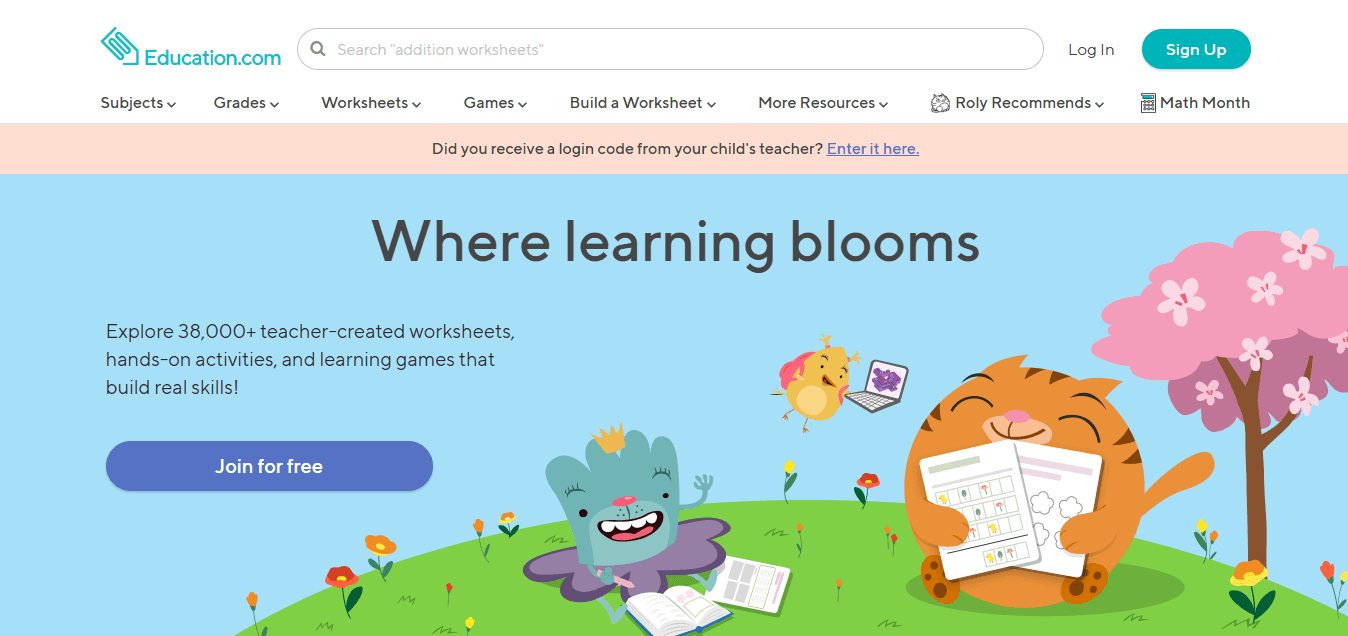
Education.com offers organized, curriculum-aligned worksheets for Pre-K through Grade 5, with over 30,000 materials across math, reading, and science. The platform includes guided practice activities and assessments that track skill development. This resource works best for daily structured reinforcement after K12 lessons. When your child completes an online unit on fractions, Education.com provides matching practice sheets that solidify the concept through repetition. Materials follow standard scope and sequence, making it simple to find worksheets aligned with what your child just learned.
3. 123 Homeschool 4 Me
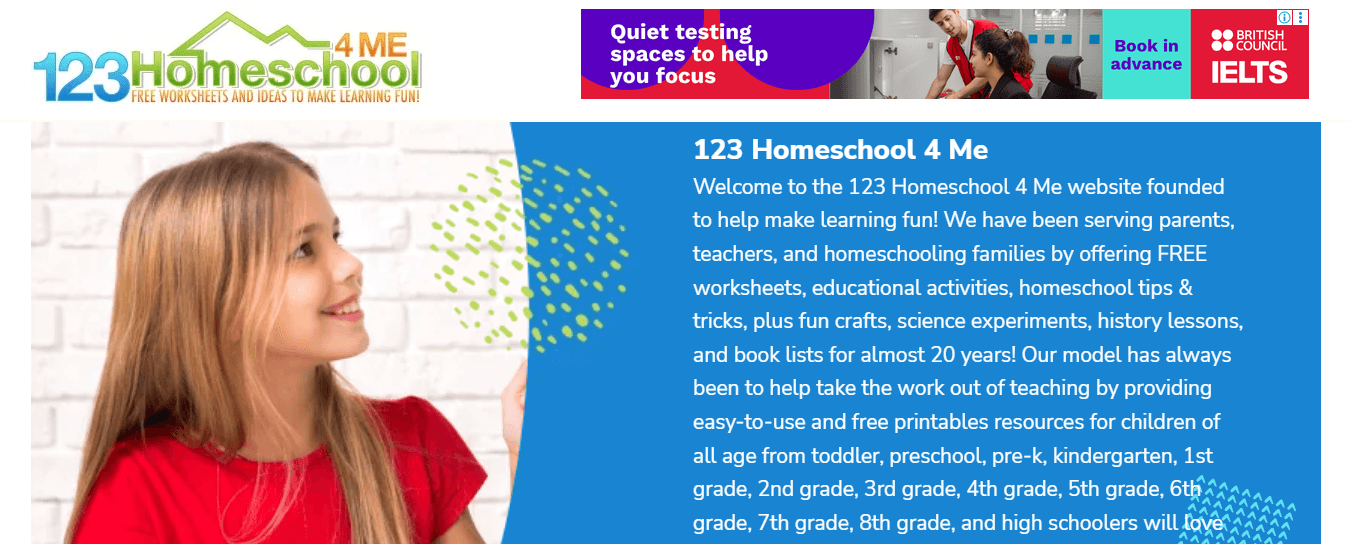
With over 1,000,000 free worksheets organized by grade level and theme, 123 Homeschool 4 Me supports activity-based homeschooling through a themed approach that lets you build entire weeks around topics like ocean life, space exploration, or historical periods. You can download coordinated materials that approach learning from multiple angles. A week studying weather might include science worksheets on cloud formation, maths problems using temperature data, and reading comprehension passages about meteorology.
4. Homeschool.com Printables

Homeschool.com Printables is an all-in-one hub covering math, reading, science, and planning tools, with instructional worksheets and resources to help you organize your homeschool system. Use this when building a customized curriculum instead of following a pre-packaged program. The academic materials and organizational tools let you design learning sequences that match your child's needs while maintaining records for state reporting requirements.
5. Homeschool of 1
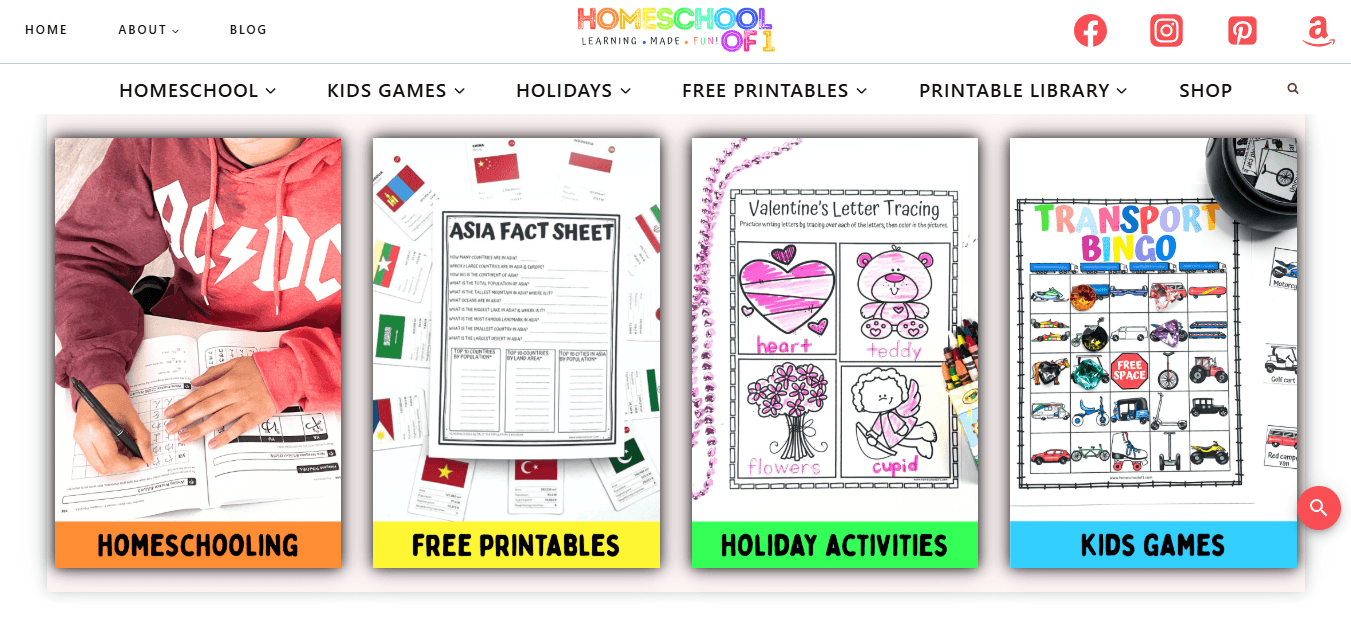
This collection of 500+ printable worksheets offers holiday-themed activities, science experiments, literacy practice, and creative projects that keep learning fresh and engaging. Seasonal worksheets break up the monotony of long online lessons. A child tired of standard maths drills may approach the same concepts with more enthusiasm when presented through Halloween-themed word problems or winter holiday puzzles.
6. ABC Teach
ABC Teach offers 5,000+ worksheets covering handwriting, maths basics, and reading comprehension, organized by skill level to reinforce core subjects. The platform provides classroom-quality materials for structured daily learning. Teachers designed these worksheets following standard instructional sequences, ensuring concepts build logically. The handwriting focus is helpful for young students as they develop letter formation and spacing skills.
7. Teacher Pay Teachers
Real educators create thousands of free and paid worksheets available through Teacher Pay Teachers. The quality surpasses generic printables because teachers design materials based on actual student needs they've observed during instruction. Target specific skill gaps using this platform. When your child struggles with a particular concept—such as regrouping in subtraction or identifying main ideas in reading passages—search Teacher Pay Teachers for materials addressing that challenge. Teachers often share the strategies they use with struggling students, providing support that generic worksheets lack.
8. K5 Learning
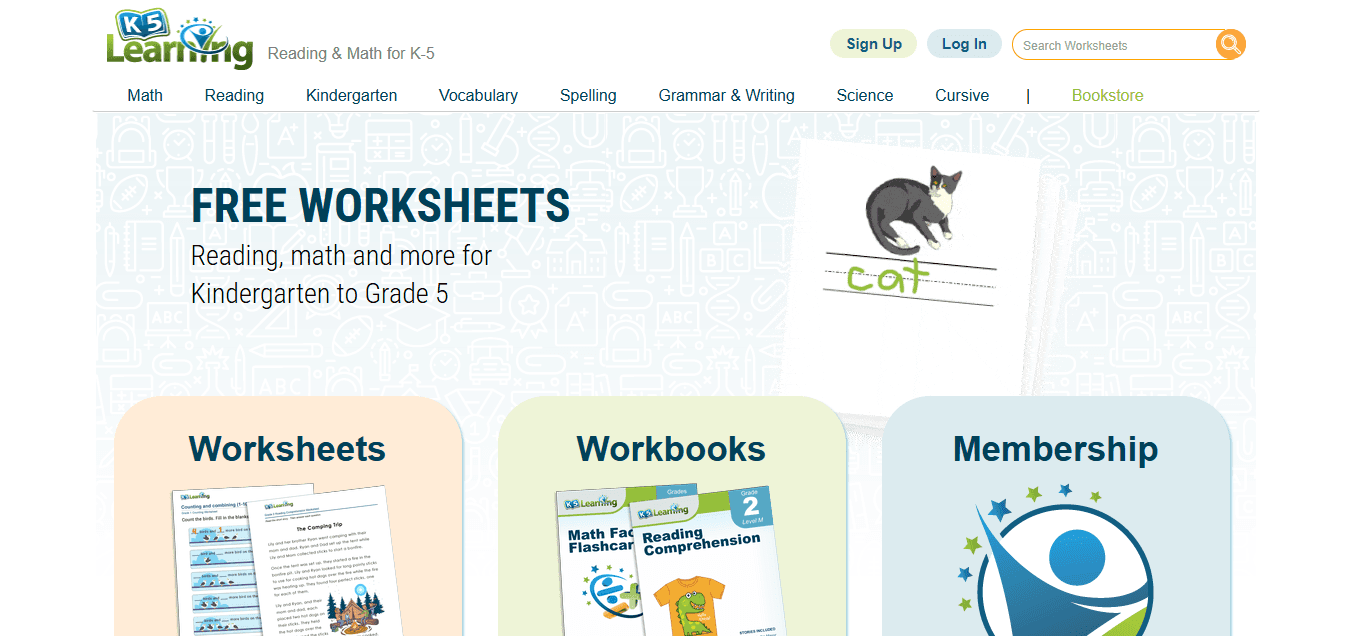
K5 Learning uses skill-based progression in maths and reading for grades K through 5. The organized sequence ensures that students learn foundational skills before advancing to more advanced concepts, preventing gaps that can cause problems later. The platform identifies prerequisite skills for each new concept, clarifying what students must know before progressing. This prevents the frustration that occurs when online curricula assume mastery of skills students never fully learned.
9. Super Teacher Worksheets
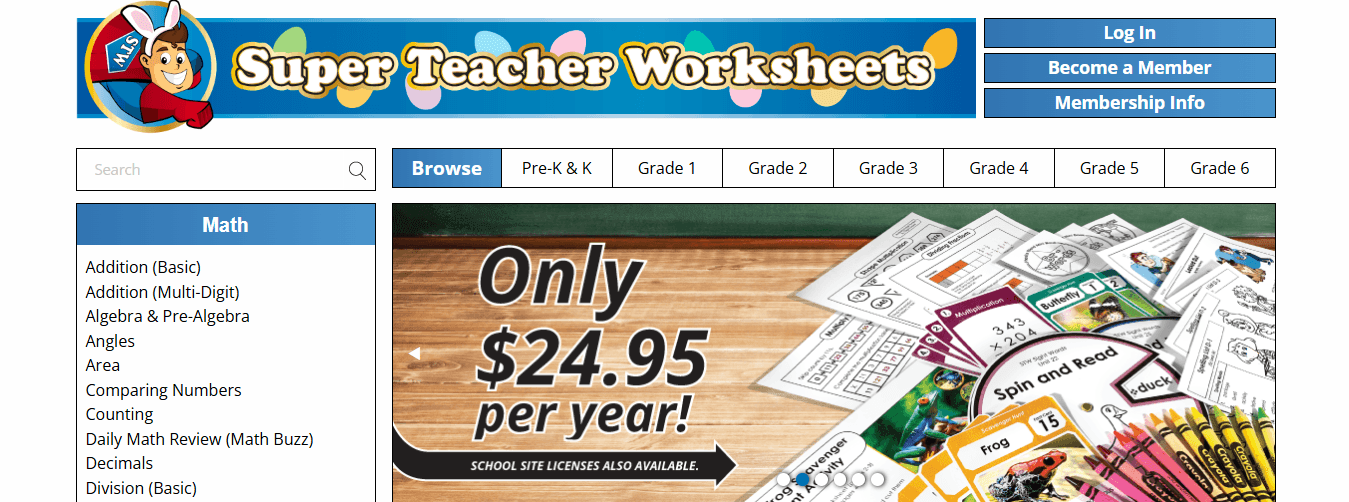
Super Teacher Worksheets focuses on mastery through a variety of practice formats: worksheets, puzzles, and hands-on activities that reinforce concepts through multiple exposures. Use this after lessons when students need repetition to solidify understanding. A child who understands the concept of multiplication but struggles with automaticity benefits from varied formats that build speed and accuracy without feeling repetitive.
10. Worksheet Fun
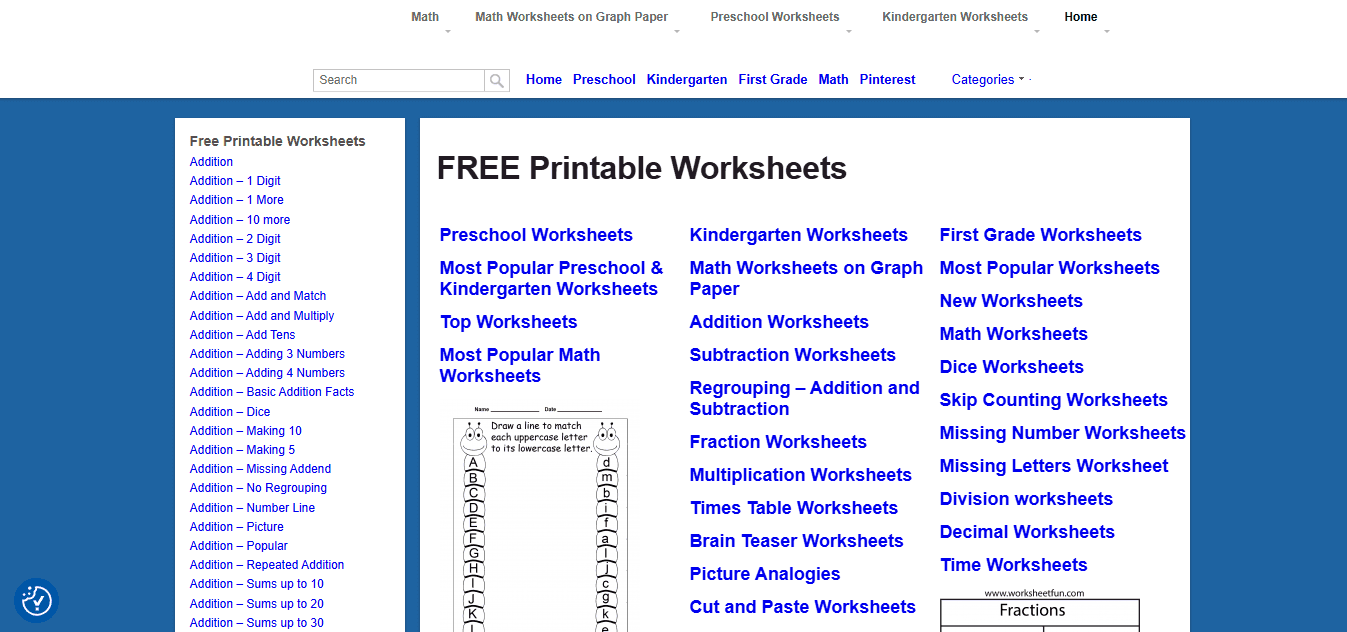
Simple, quick practice sheets focusing on basic maths, tracing, and early skills make Worksheet Fun a convenient choice for busy days. Materials print instantly with minimal setup. Keep this resource available for daily quick practice during transitions or schedule disruptions. A five-minute tracing exercise or maths drill maintains learning continuity when full lessons aren't possible, preventing overwhelm while keeping academic skills active.
How do worksheets most effectively reinforce digital instruction?
Worksheets work best when used immediately after online lessons. Your brain strengthens its learning pathways through practice soon after initial exposure. Practicing Monday's lesson that same day builds on what you've learned rather than starting over days later.
What challenges do parents face in finding aligned worksheets?
Most parents struggle to find worksheets that match their online curriculum's specific scope and sequence. Generic materials covering "third grade math" may address topics your child won't encounter for months while missing concepts they learned yesterday, creating learning gaps.
How can custom materials solve alignment problems?
Platforms like My Coloring Pages address this alignment problem by creating custom coloring pages that align with specific lesson topics. After an online science lesson about rainforest ecosystems, you can generate detailed habitat scenes for your child to color. This transforms abstract concepts into visual, hands-on experiences that directly reinforce what they learned.
How can you prepare materials effectively for homeschool integration?
Print worksheets the night before and organize materials by subject and day. This prevents mid-lesson scrambles when your child finishes their online work early and needs something productive to do. Having materials ready converts downtime into learning opportunities instead of screen time.
When should you schedule worksheet time for optimal learning?
Plan worksheet time when your child has the most energy. Some students focus best right after online lessons when ideas are fresh. Others need movement breaks first. Try different times rather than assuming one schedule works for every student.
How does variety in worksheet types maintain student engagement?
Switch between different types of worksheets to keep students engaged. Three days of math drills, followed by themed activities and hands-on projects, help prevent monotony. Variety maintains motivation while providing the repetition needed for concept mastery. But worksheets only work when they reinforce the right concepts at the right time, which requires understanding how practice connects to retention.
Related Reading
- Homeschool Room
- Homeschool Report Card Template
- How To Homeschool Your Kids
- Homeschool Coop
- Georgia Homeschool Laws
- Colorado Homeschool Laws
- How To Homeschool In Texas
- Texas Homeschool Requirements
- Language Arts Homeschool Curriculum
- Abeka Homeschool Curriculum
- Homeschool Room Ideas
- Florida Homeschool Requirements
- Homeschool Vs Public School
- 6th Grade Homeschool Curriculum
- Homeschool Preschool
- Kentucky Homeschool Laws
- Pre K Homeschool Curriculum
- 1st Grade Homeschool Curriculum
Make K12 Learning Stick Reinforce Online Lessons with Worksheets
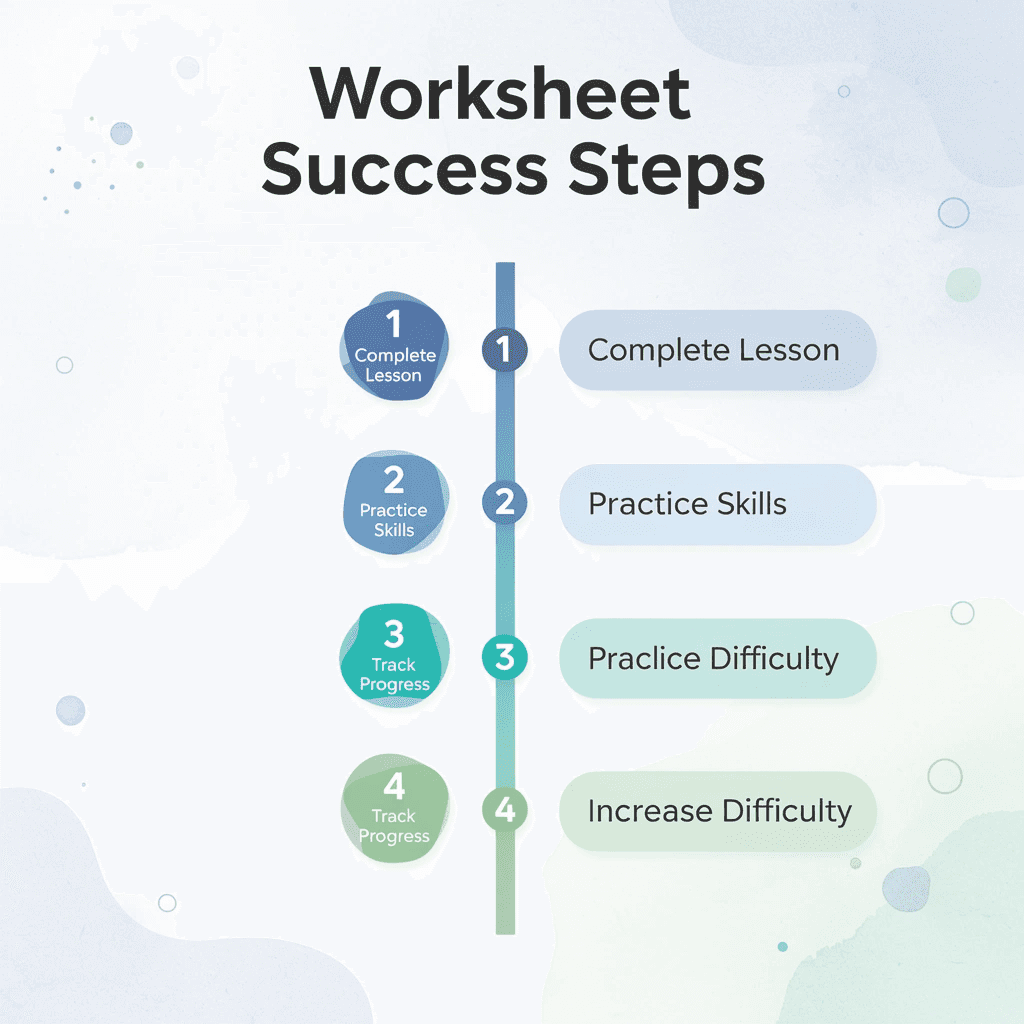
K12 online programs provide structure and curriculum, but screens alone create gaps in understanding and reduce engagement, particularly for younger learners. Many children complete lessons without sufficiently practicing key skills, affecting reading fluency, number sense, and handwriting. Incorporate worksheets by dedicating 10 to 15 minutes after each online lesson to hands-on reinforcement: tracing letters after phonics or counting exercises after maths.
💡 Tip: The 10-15 minute rule creates a perfect bridge between digital learning and physical practice, helping cement concepts before moving on.
Change worksheets to maintain interest and slowly increase difficulty as your child progresses. Track completion and milestones in your planner to monitor skill growth. Pairing K12 lessons with structured worksheet practice transforms online learning into active, engaging, and measurable work that ensures mastery.
"With over 55,689 free coloring pages available, parents can transform curriculum topics into hands-on activities that make practice feel like creative exploration rather than work." — My Coloring Pages, 2024
🎯 Key Point: With over 55,689 free coloring pages available at My Coloring Pages, you can download materials that turn curriculum topics into hands-on activities your child will want to complete, making practice feel like creative exploration rather than work.

Related Reading
- Illinois Homeschool Laws
- Homeschool Reading Curriculum
- How To Homeschool In California
- California Homeschool Laws
- 4th Grade Homeschool Curriculum
- Homeschool Art Curriculum
- Alabama Homeschool Laws
- Michigan Homeschool Laws
- Science Homeschool Curriculum
- 2nd Grade Homeschool Curriculum
- North Carolina Homeschool Laws
- Accredited Homeschool Curriculum
- 5th Grade Homeschool Curriculum
- Georgia Homeschool Requirements
- 3rd Grade Homeschool Curriculum