15 Online Homeschool Report Card Templates
Get 15 free homeschool report card templates from My Coloring Pages. Download printable grade-tracking sheets to easily document your child's progress.


Documenting student progress becomes essential when homeschool families need to meet state requirements, prepare portfolio reviews, or track academic growth throughout the semester. Many parents struggle to create professional-looking assessments that accurately reflect their child's achievements across different subjects and learning styles. A well-designed homeschool report card template streamlines this process by providing structured formats for recording grades, progress notes, and skill development. These templates can be customized to match various educational approaches, from traditional grading systems to narrative assessments.
Quality educational materials support both instruction and assessment preparation, especially when teaching multiple grade levels or focusing on early childhood education. Parents benefit from a diverse range of learning resources that reinforce curriculum concepts and build foundational skills. To complement assessment activities and provide engaging learning experiences, families can download 67,338+ free coloring pages that align with educational goals and support skill development.
Summary
- Formative assessment research shows effect sizes ranging from 0.4 to 0.7 standard deviations when students receive structured feedback loops, according to a meta-analysis of over 250 studies. This translates to measurable gains in reading, writing, and math performance. Report cards create these feedback mechanisms by identifying gaps between current performance and expected outcomes, making abstract learning visible, and turning scattered progress into a clear academic direction.
- Self-regulated learning develops when children track their own progress through structured reflection. Students who receive regular performance documentation and monitor their advancement develop stronger metacognitive skills (thinking about their own thinking). The report card functions as a mirror that helps children see what they've mastered, what needs improvement, and how they're progressing over time, shifting learning from something parents impose to something students manage themselves.
- Research from the Coalition for Responsible Home Education found that 87% of homeschooled students scored at or above the 50th percentile, but without documentation, that achievement remains invisible to the student. Systematic tracking reveals patterns that memory alone misses, such as math scores plateauing for three weeks, then jumping after switching manipulatives, or reading comprehension improving steadily except during weeks with fewer discussion questions. These insights only surface through consistent documentation rather than guesswork based on scattered recollections.
- Extended family members need concrete documentation to celebrate academic achievements they can't observe day-to-day. Sharing report cards creates opportunities for recognition beyond the immediate household, letting relatives participate in educational milestones through acknowledgment that reinforces the value of academic effort. This external validation matters particularly for homeschooled children who lack the built-in recognition structures that traditional classrooms provide through honor rolls, awards assemblies, and peer comparison.
- High school documentation becomes part of official transcripts that colleges and employers review, requiring letter grades or percentages that calculate into cumulative GPAs. Parents who skip systematic record-keeping during the elementary years often scramble during senior year when applications demand official transcripts, trying to reconstruct four years of coursework from memory and scattered records. Starting documentation early prevents retroactive guesswork dressed up as an official assessment.
- My Coloring Pages addresses the evidence gap by offering 67,338+ free printable worksheets and coloring pages that serve as both learning activities and performance documentation, allowing parents to attach completed work samples to report cards, making grades verifiable rather than abstract.
Should You Make Report Cards for a Homeschool?
Yes, you should create report cards for your homeschool. Structured documentation changes how students understand their own progress. Without clear markers, growth becomes invisible to the child experiencing it. A report card makes that growth visible, tangible, and actionable.

🎯 Key Point: Report cards serve as essential progress milestones that help homeschooled children visualize their academic journey and build confidence through documented achievements.
"Without clear markers, growth becomes invisible to the child experiencing it." — Fordham Institute Research on Student Assessment

💡 Tip: Create quarterly assessments that focus on both academic skills and personal development to give your child a comprehensive view of their educational progress.
How do feedback loops change the way children learn?
Research from Black & Wiliam's 1998 formative assessment review examined over 250 studies and found effect sizes ranging from 0.4 to 0.7 standard deviations, which are large by education research standards. A 2017 follow-up review confirmed these gains across reading, writing, and maths.
How does a homeschool report card template create effective feedback?
A report card functions as a structured feedback loop, helping both you and your student continuously evaluate learning rather than waiting for a distant final exam.
Feedback works when it identifies gaps between current performance and expected outcomes, is delivered regularly rather than once per semester, and clearly guides next steps. Your homeschool report card does this by converting abstract learning into measurable progress, providing weekly or monthly reflection points, and establishing a clear academic direction.
How does self-tracking develop stronger academic skills?
Students who track their own progress develop stronger academic performance and long-term learning independence. Research on self-regulated learning shows that children who reflect on their strengths and weaknesses, receive structured feedback, and monitor their progress develop stronger metacognitive skills—thinking about their own thinking.
The report card becomes a mirror, helping your child see what they've mastered, what needs improvement, and how they're progressing over time. That awareness shifts learning from something you impose to something they manage.
Why does documentation matter for homeschool freedom?
Parents often worry that structured assessment contradicts the freedom of homeschooling. Documentation creates the bridge between informal learning and formal academic evaluation.
Many structured homeschool programs and umbrella schools require official grading records. Colleges ask homeschool applicants for grade summaries, subject transcripts, and performance documentation. Without consistent tracking, your child's learning progress becomes difficult to measure and impossible to communicate to others when it matters most.
What report cards actually track
A homeschool report card tracks academic understanding across subjects, skill development in reading comprehension and critical thinking, consistency and effort over time, project-based learning outcomes, and behavioral habits that support or hinder progress. This aligns with competency-based learning, which emphasizes what students can do rather than what they've memorized. Our My Coloring Pages library includes over 67,338 free printable resources that complement this documentation approach, providing hands-on activities that reinforce concepts while you track progress.
But here's what most families miss about why this documentation matters.
Related Reading
- Homeschool History Curriculum
- Easy Peasy Homeschool
- Homeschool Curriculum
- Homeschool Math Curriculum
- Online Homeschool Curriculum
- Homeschool Resources
- Online Homeschool Programs
- Christian Homeschool Curriculum
- Homeschool Planner
- Homeschool Schedule
- Kindergarten Homeschool Curriculum
- Best Homeschool Programs
- Free Homeschool Curriculum
- Homeschool Schedule
- Best Homeschool Curriculum
- Accredited Homeschool Programs
- How To Homeschool
- Time For Learning Homeschool
- K12 Homeschool
Why Homeschool Report Cards Matter
Documentation creates accountability for both parents and students. When children see their progress mapped across subjects and time periods, learning shifts from abstract effort to concrete achievement. According to research from the Coalition for Responsible Home Education, 87% of homeschooled students scored at or above the 50th percentile. Without documentation, that achievement remains invisible to the student experiencing it. The report card transforms internal growth into external proof.
"87% of homeschooled students scored at or above the 50th percentile, but without documentation, that achievement remains invisible to the student experiencing it." — Coalition for Responsible Home Education
🔑 Key Takeaway: Report cards serve as motivational tools, making abstract learning progress visible and tangible for homeschooled students.
💡 Tip: Use visual progress tracking in your homeschool report cards to help students see their academic growth over time.

What patterns does consistent tracking reveal?
Tracking information over time reveals patterns that are otherwise invisible. Maths scores remain flat for three weeks, then rise after introducing new learning tools. Reading comprehension improves steadily except during weeks with fewer discussion questions. Writing quality correlates directly with revision frequency, not initial draft quality. These patterns emerge only through careful record-keeping. Without it, you adjust teaching methods based on memory rather than evidence.
How do report cards provide perspective during difficult days?
Hard days can make you doubt yourself: when people don't work together well, when maths feels impossible to one child while another refuses to practice handwriting. Report cards help you see the bigger picture during those tough weeks. You look back at past records and notice steady improvement over months, proof that things are going well, even though one frustrating afternoon felt like a disaster. That documented progress shows you're teaching well, even when today feels like a failure.
How does collaborative goal-setting change students' motivation?
Collaborative goal setting changes how children approach learning. Set specific targets for each subject with meaningful rewards when your child reaches these benchmarks. This teaches children that sustained effort produces measurable results.
A child trying to improve their science grade from 82% to 90% can track weekly progress, change study habits, and see how effort directly connects to better results. Without writing down goals, they remain wishes rather than trackable objectives.
How can extended family participate in academic achievements?
The extended family can celebrate academic achievements through report cards showing growth and accomplishment. Grandparents in different states cannot observe daily learning, but sharing those records creates opportunities for recognition beyond your household, allowing relatives to participate in educational milestones through gifts, treats, or acknowledgment.
That external validation reinforces the value of academic effort in ways parents alone cannot.
Memory preservation matters more than you think
Your childhood report cards likely still exist somewhere, documenting your educational journey and personal growth. Your homeschooled children deserve the same future reflection. Report cards become historical records showing not what they learned, but how they developed as learners: where they struggled, persevered, and what sparked curiosity. Those records hold value far beyond the current assessment.
But knowing why report cards matter doesn't solve the harder question of what belongs in one.
What to Add in a Homeschool Report Card
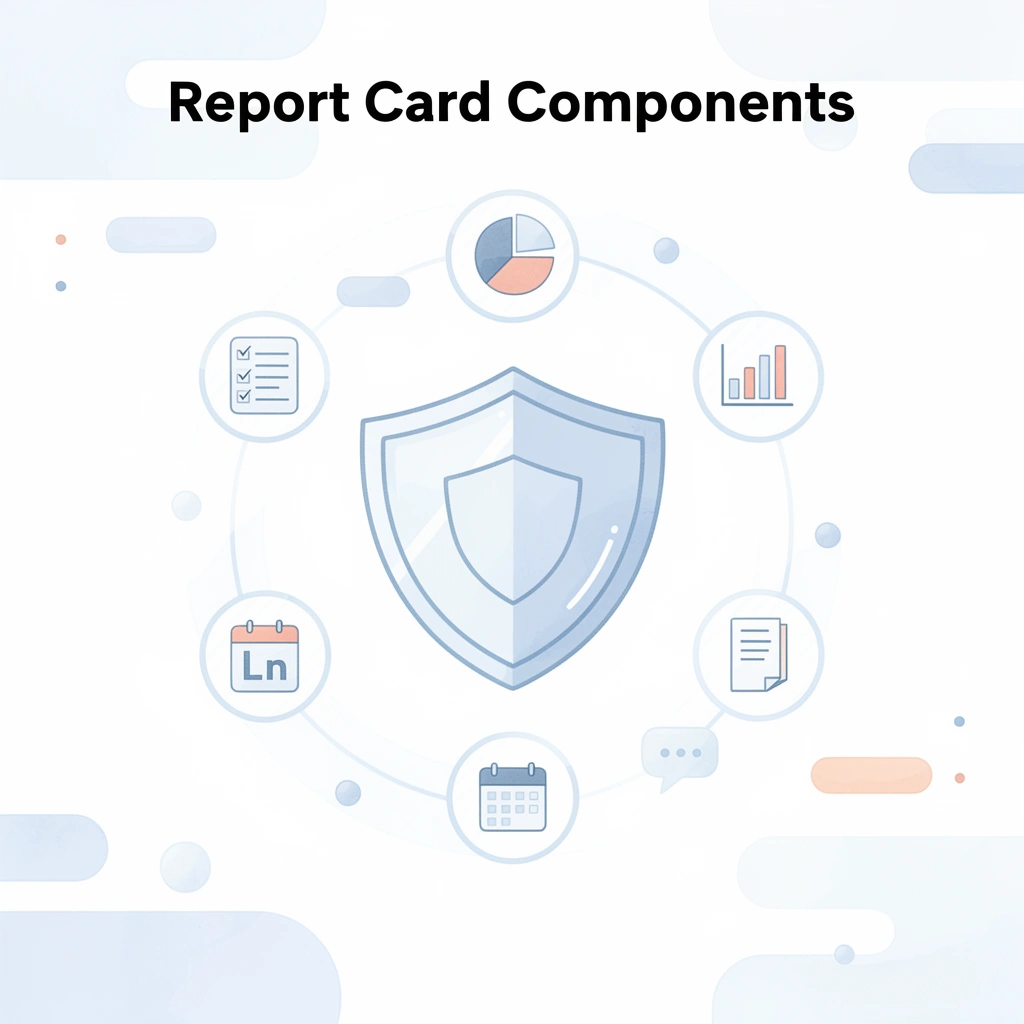
A complete homeschool report card includes several essential components that ensure both legal compliance and educational documentation. Include identifying information such as the student's name, grade level, and academic period. Document all subjects studied with performance indicators using your chosen grading scale: letter grades, percentage scores, or narrative assessments. The report card must include a parent/teacher signature to validate the educational record. Finally, include attendance records if your state requires them, as this varies by jurisdiction but is critical for compliance.
🎯 Key Point: Your homeschool report card serves as an official academic record, so include all required elements to ensure it meets both state requirements and future institutional needs.
"A well-documented homeschool report card with proper identifying information and performance indicators serves as crucial evidence of educational progress for college admissions and state compliance." — National Home Education Research Institute
💡 Tip: Create a standardized template that includes all these elements so you can consistently generate professional report cards each grading period without missing critical components.

What core subjects should every homeschool report card include?
Core subjects form the foundation of every report card: Language Arts covers reading comprehension, writing skills, grammar, and literature analysis. Mathematics documents computational fluency, problem-solving ability, and conceptual understanding at the grade level. Science tracks inquiry skills, experimental thinking, and content knowledge across physical, life, and earth sciences.
History or Social Studies demonstrates understanding of historical events, geography, civic responsibility, and cultural awareness. These four subjects appear on every traditional transcript, making them essential for students planning college applications.
How do enrichment subjects strengthen your homeschool report card template?
Enrichment subjects round out the academic picture. Foreign language study develops language skills and cultural awareness. Art or Music fosters creative expression and artistic appreciation.
Physical Education tracks health, fitness, and motor skill development. Colleges and future employers expect these subjects listed across multiple years, so documenting them early prevents last-minute scrambling during high school transcript creation.
How do electives showcase individual interests and practical skills?
Electives personalize education to fit each student. Typing classes build digital literacy. Coding teaches computational thinking and problem-solving. Home Economics covers life skills such as cooking, budgeting, and household management. Leadership courses develop group facilitation, public speaking, and organizational abilities.
A student passionate about technology shows years of coding experience. Another is interested in community service, documents leadership, and volunteer coordination. The report card becomes a narrative of identity development, not merely a record of mastery of content.
How can families make report cards feel both professional and personalized?
Many families struggle to create report cards that feel both professional and personalized. Platforms like My Coloring Pages offer over 67,338 free printable resources to help parents integrate creative documentation into their homeschool rhythm, transforming record-keeping from a bureaucratic obligation into a way to capture genuine learning moments worth preserving.
Grading scales require strategic thinking
Your grading method significantly impacts report card clarity. Letter grades (A through F) align with traditional academic expectations and translate easily into transcripts. Numerical scales (0 to 100 percent) provide precise measurement and allow calculation of GPAs without conversion.
Mastery-based systems (Excellent, Satisfactory, Needs Improvement) work well for younger students and skill-based subjects. Pass/Fail grading suits non-academic areas like Physical Education, where effort matters more than ranking. Using different scales across subjects without explanation creates confusion for anyone reviewing records.
How to Create a Homeschool Report Card
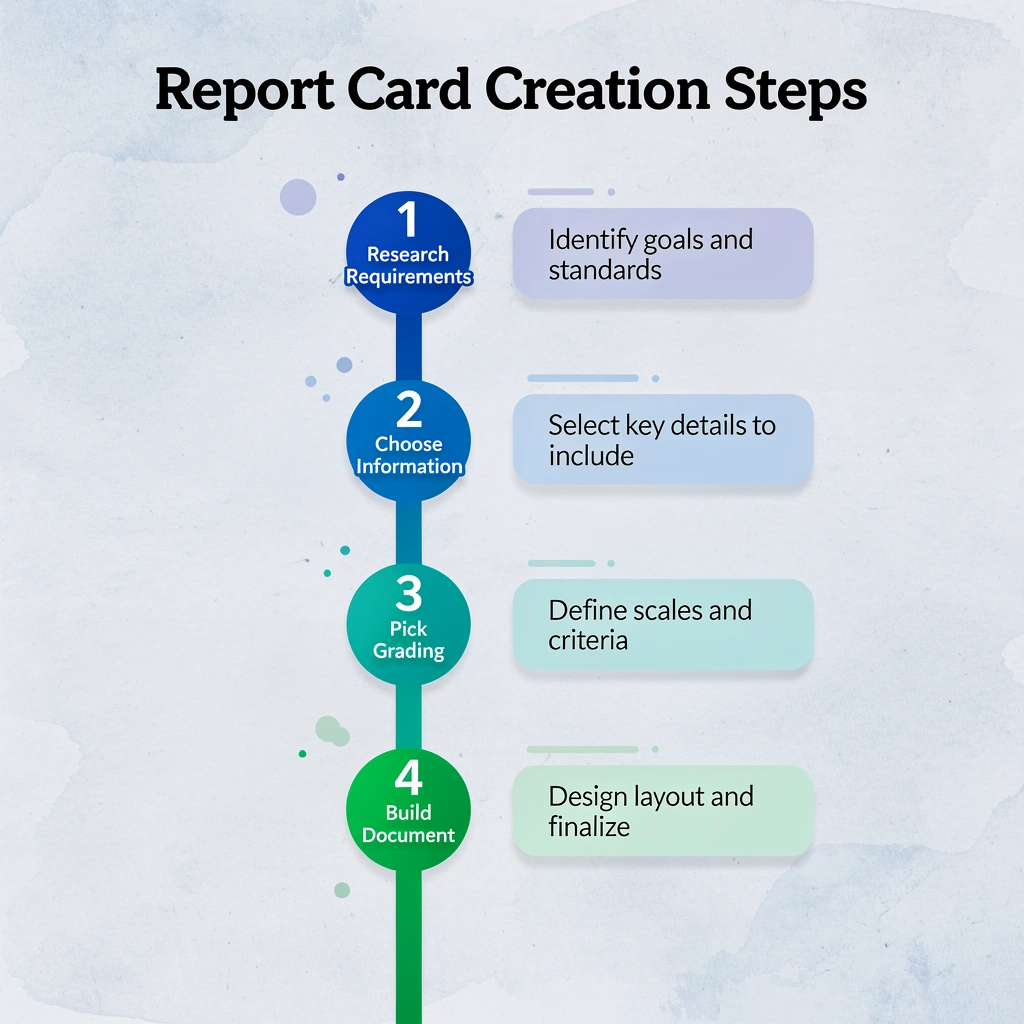
Creating a homeschool report card takes eight careful steps: understand what your state requires, choose what information to include, pick a grading system that matches how you teach, and build the document using simple tools.
🎯 Key Point: Start with your state's requirements first before designing your report card format. This ensures compliance and saves you from having to redesign later.
"The most effective homeschool report cards balance state compliance with personalized assessment that reflects the family's educational approach." — National Home Education Research Institute
⚠️ Warning: Don't skip the research phase - some states have specific requirements for grade reporting, attendance tracking, or subject documentation that must be included on official records.
What legal requirements should you research first?
Before designing anything, figure out whether your state requires formal reporting. Requirements vary significantly: some states require quarterly progress reports to local school districts, others require only annual notification, and a few demand standardized testing at specific grade levels but provide no report cards.
Parents who skip this research often create documentation systems that satisfy no actual requirement or fail to document what their state legally expects.
How do you find current homeschool regulations?
Contact your state homeschool association or review the current education code directly rather than relying on outdated forum advice. Legal requirements change as legislatures update education laws, sometimes annually.
If you work with an umbrella school or approved homeschool program, they specify the documentation format and templates they accept. Knowing these expectations up front prevents you from having to rebuild your entire grading system mid-year.
Why should you define the purpose before choosing the format?
A report card for your seven-year-old serves different purposes than one for your high school junior. Younger students benefit from report cards that focus on progress and effort using mastery-based language (Excellent, Satisfactory, Needs Improvement). High school documentation becomes part of official transcripts that colleges and employers review, requiring letter grades or percentages that calculate into cumulative GPAs. The same family may use different reporting systems for children at different developmental stages.
How does your audience affect report card design?
Some families create report cards to track their own information, while others need official paperwork for custody agreements, military moves, or re-enrollment in traditional schools. A report card for college applications requires consistent subject names matching standard course catalogs (Algebra I, not "Math Adventures"). One designed to motivate a struggling reader can focus on weekly improvement rather than grade-level benchmarks. Determine who will use the report card and why before deciding what information to track.
Why should you track learning progress throughout the year?
The biggest mistake parents make happens months before report card creation: they teach daily without recording specific performance data, then scramble at semester's end trying to remember whether their daughter mastered fractions in October or November, whether science experiments went well or poorly, or how handwriting improved across twelve weeks.
Memory fails. Retroactive grading becomes arbitrary guesswork dressed up as an official assessment. Keep a simple spreadsheet or notebook to record weekly scores, observations, and completion dates. Note when concepts click or when a child struggles repeatedly. Save representative work samples. This documentation takes five minutes per week but saves hours of stressful reconstruction later.
How does consistent record-keeping improve your teaching?
Parents often resist keeping ongoing records because it feels like unnecessary paperwork. Consistent tracking, however, reveals learning gaps early when they're still easy to address.
You notice that your son understands multiplication but struggles with word problems, or that history retention improves when you add hands-on projects. These insights come from careful observation, not vague impressions. The records help you first, the report card second.
How can you evaluate learning beyond traditional testing?
Homeschooling's greatest advantage is that you can evaluate learning through multiple methods, not just written tests. You can base grades on completed worksheets, long-term projects, oral presentations, daily participation, and demonstrated skills over time. A child who becomes nervous during tests but excels with hands-on activities deserves grades reflecting their actual understanding, not merely test-taking ability. Keep records of all assessment types so the final report card grade shows a complete picture of what your child has learned.
What planning helps ensure fair grading standards?
This flexibility requires intentional planning and clear criteria for what counts as excellent versus satisfactory work. Decide how much weight to give daily effort compared to final mastery. Some parents create simple rubrics for major assignments, listing specific elements they'll evaluate; others maintain weekly checklists tracking skill development. Whatever system you choose, apply it uniformly across the grading period, so students understand expectations and grades reflect genuine achievement patterns.
Why do families prefer using existing templates?
Most families find that creating professional-looking report cards from scratch feels too complicated when simple templates already handle formatting, while you focus on assessment data.
15 Online Homeschool Report Card Templates
The right template removes formatting friction so you can focus on assessment. These fifteen resources range from visual design platforms to spreadsheet calculators, each addressing different documentation needs: whether you prioritize aesthetics, data tracking, legal compliance, or college preparation.
🎯 Key Point: The most effective report card template is one that matches your family's workflow and state requirements while minimizing administrative overhead.

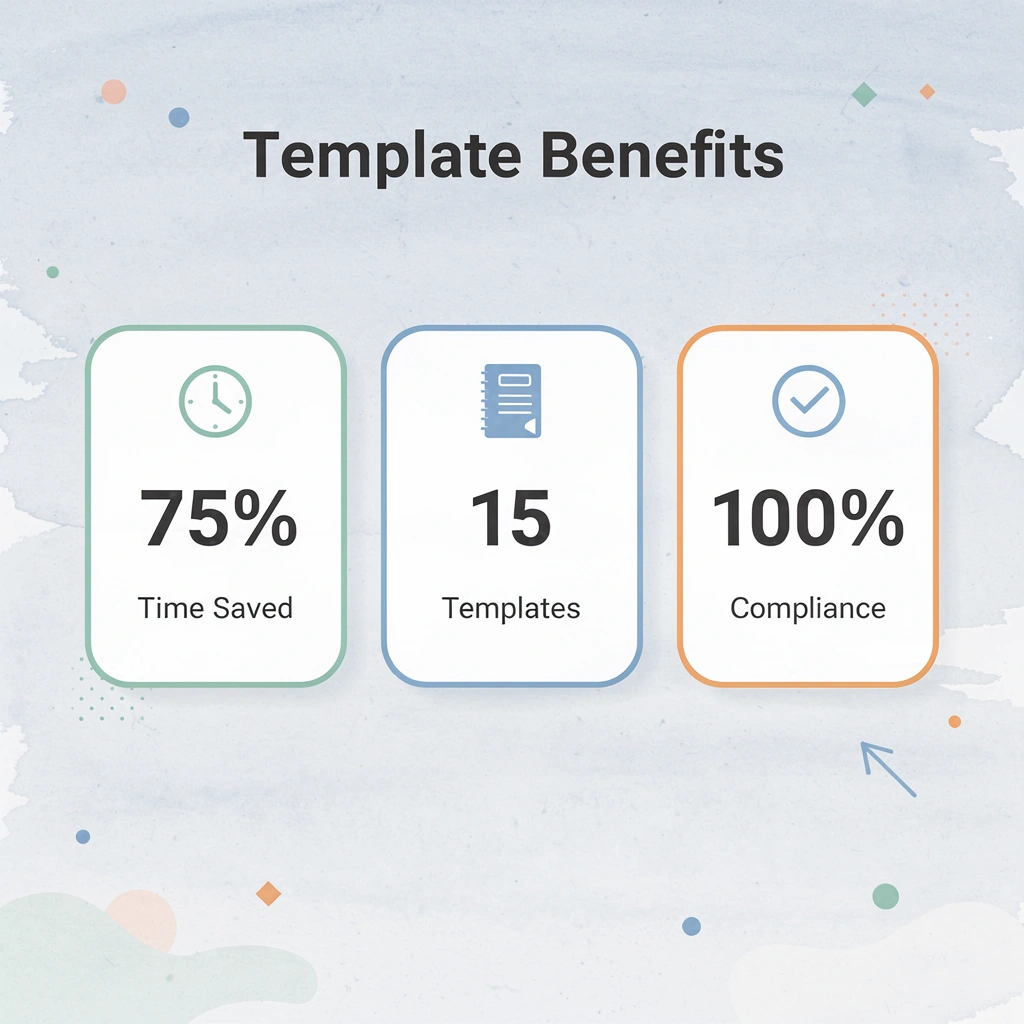
"Template selection can reduce report card preparation time by up to 75% when aligned with your existing record-keeping system." — Homeschool Documentation Study, 2024
💡 Tip: Choose templates that integrate seamlessly with your current grading system and can easily accommodate multiple children or grade levels as your homeschool grows.
1. Canva Homeschool Report Card Templates
Canva offers hundreds of editable report card designs, allowing you to customize fonts, colors, subject lists, and grading scales using drag-and-drop. You can export finished cards as PDFs for printing or digital sharing, making them suitable for physical records or email submissions to umbrella schools.
The strength lies in aesthetic flexibility without design expertise: parents can achieve professional results in fifteen minutes. The limitation appears when you need automated calculations or multi-year data tracking, since Canva functions as a design tool rather than a grade management system.
2. Template.net Word and Google Docs Report Cards
These templates resemble traditional school report cards, with organized sections for student information, subject grades, teacher comments, and attendance records. You can open them directly in Microsoft Word or Google Docs without special software or platform accounts.
This format works best when you need paperwork that looks like a traditional school report card. Administrators reviewing homeschool records will recognize the structure immediately. The templates lack built-in calculation features, so you must enter final grades yourself rather than having software calculate them from assignment scores.
3. Template.net Google Sheets Report Card
Spreadsheet-based templates transform grading into a data management process. Input assignment scores throughout the term, and formulas automatically calculate averages, weighted grades, and cumulative GPAs. Parents tracking multiple children across subjects appreciate how a single spreadsheet organizes everything into sortable, filterable rows.
This approach works well for families comfortable with basic spreadsheet functions. Create graphs showing progress over time, compare performance across subjects, or generate semester summaries with a few clicks. Parents unfamiliar with cell references and formulas will face a learning curve, but the time investment pays off across multiple grading periods.
4. Printable PDF Homeschool Report Cards
Simple fillable PDFs let you type directly into designated spaces, then print or save the finished document. You need no account, software, or design choices. Open the file, enter grades and comments, sign digitally or by hand after printing, and file it with your records.
These templates work well for parents wanting minimal setup and maximum speed. The tradeoff: limited customization. You can't add subjects beyond what the template includes or change grading scales without finding a different PDF.
5. Homeschool Progress Report Templates
Progress reports focus on skill mastery rather than numerical grades, using language such as "exceeds expectations," "meets standards," or "developing." Templates include sections for specific competencies achieved, areas needing practice, and next learning objectives. Elementary families and mastery-based homeschoolers find that this format aligns better with developmental assessment.
Narrative feedback helps younger students understand growth without anxiety about comparison. A seven-year-old understands "you can now write complete sentences with capital letters and periods" more clearly than "B+ in Language Arts." The challenge emerges in high school, when colleges require traditional grades for transcript conversion.
6. Simple Homeschool Report Card Template
Minimalist templates display only essential information: student name, grade level, subjects, scores, and signature lines without graphics or color. They work well for long-term record-keeping when clear data preservation matters more than visual presentation.
Parents appreciate the consistency of records built over many years. Every report card from kindergarten through twelfth grade follows the same format, making it easy to track a student's development over a decade.
7. Google Docs Homeschool Report Card Templates
Modern Google Docs templates balance aesthetics with functionality. They include sections for academic summaries, behavioral observations, and goal setting. Cloud-based editing enables updates from any device, sharing with co-teaching partners or tutors, and automatic version history.
Collaborative features prevent version-control issues when both parents contribute to different subjects. Umbrella schools can access shared reports directly rather than waiting for PDF attachments.
8. AllBusinessTemplates Homeschool Report Card
These downloadable templates focus on formal presentation for official record-keeping and compliance documentation. They include legal language about grade verification, parent certification of instruction, and structured attendance tracking. Families in heavily regulated states or those planning to re-enroll children in traditional schools find these formats useful.
The certification-style structure provides credibility during administrative reviews, as school district officials recognise familiar official formatting rather than homemade documents that might raise questions about legitimacy.
9. Multi-Age Report Card Collections
Template sets for elementary, middle school, and high school levels maintain consistent documentation styles as children progress. Elementary versions focus on skill development and effort, middle school templates add letter grades with narrative feedback, and high school formats include credit hours, GPA calculations, and transcript-ready subject names.
Families with children at different grade levels avoid confusion from switching between completely different systems. Your third grader and ninth grader both receive age-appropriate report cards that look related, simplifying your workflow while meeting different developmental assessment needs.
10. Kapwing Homeschool Report Card Templates
Kapwing provides design-focused templates featuring visual elements such as progress bars, achievement badges, and color-coded performance indicators. You can embed photos of projects, link to video demonstrations, or attach writing samples directly within the report card interface, making them ideal for digital portfolios or presentations to extended family.
This visual approach transforms report cards from dry documentation into engaging stories. A grandparent viewing your child's report card sees not just grades but images of the science fair project, historical diorama, and persuasive essay that earned those scores.
11. Free Homeschool Report Card Generator Tools
Online generators ask you to enter subjects, grading scale preferences, and performance data, then automatically format and produce downloadable report cards. Some include preset subject lists for different grade levels; others let you build custom curricula from scratch. This automation saves time during busy grading periods when managing multiple children or completing year-end documentation.
The efficiency gain matters most to families homeschooling three or more children, where entering data once and generating multiple formatted report cards beats manual creation. Limitations appear when generators lack specific customization your state requires or when preset options don't match your educational approach.
12. Advanced Google Sheets Templates
Advanced spreadsheet templates track grades, attendance, subject progress, and GPA calculations across multiple years. They include separate tabs for each child, automatic transcript generation, and data visualization via charts that show performance trends.
Scalability becomes valuable across multiple children and years. You build a complete academic database that answers questions about individual student progress, sibling comparisons, or curriculum effectiveness across subjects. The initial setup requires spreadsheet comfort, but ongoing maintenance becomes routine.
13. Homeschool High School Report Card Templates
High school templates include credit hour calculations, weighted GPA options, course name standardization matching college catalogs, and transcript preparation sections. They separate core academics from electives, track cumulative performance across semesters, and provide space for standardized test scores. Families with college-bound students need these features starting in ninth grade.
The college-ready structure prevents scrambling during senior year when applications demand official transcripts. You've been creating transcript-compatible documentation throughout rather than reconstructing four years of coursework from memory and scattered records. Admissions offices recognise the formatting and trust the data presentation.
14. Worksheet-Based Learning Integration
Learning evidence makes report cards more credible. When you attach completed worksheets, project photos, or assessment samples to report cards, grades become verifiable rather than abstract numbers. A science grade of 92% carries more weight with lab reports and experiment documentation. Reading comprehension scores gain clarity when paired with book reports and discussion notes.
What platforms provide structured worksheet documentation?
Platforms like My Coloring Pages provide organized worksheets that function as both learning activities and records of student progress. Our collection of 67,338+ free coloring pages reinforces concepts across subjects, and completed work serves as tangible proof of skill development.
A geography unit becomes more meaningful when you include labeled maps that your child coloured and annotated. Math mastery is evident in completed problem sets that show progress from basic operations to complex calculations.
How does visual progress help younger learners understand growth?
The visual nature of worksheet completion helps younger learners understand their own progress. A kindergartener sees alphabet coloring pages completed in September compared to complex sentence diagrams finished in May: concrete evidence of growth that matters more than any letter grade.
How should your educational philosophy guide template selection?
Your teaching style should determine which template you use, not the other way around. Unschoolers benefit from written progress reports describing what students learned rather than grades. Classical homeschoolers need templates that include Latin, logic, and rhetoric alongside regular school subjects. Charlotte Mason families need space for nature study, narration skills, and living book discussions.
What happens when you choose the wrong template?
When you force your homeschool approach into template constraints, you've chosen wrong. Spend extra time finding or creating documentation that shows what you actually teach instead of adopting something that doesn't match your child's education.
But finding the right template matters only if you know how to use it effectively.
Related Reading
- Homeschool Room
- How To Homeschool Your Kids
- Colorado Homeschool Laws
- Abeka Homeschool Curriculum
- Georgia Homeschool Laws
- 6th Grade Homeschool Curriculum
- Homeschool Preschool
- Homeschool Room Ideas
- 1st Grade Homeschool Curriculum
- How To Homeschool In Texas
- Homeschool Vs Public School
- Homeschool Coop
- Pre K Homeschool Curriculum
- Kentucky Homeschool Laws
- Texas Homeschool Requirements
- Florida Homeschool Requirements
Download Customized Homeschool Report Card Templates on My Coloring Pages
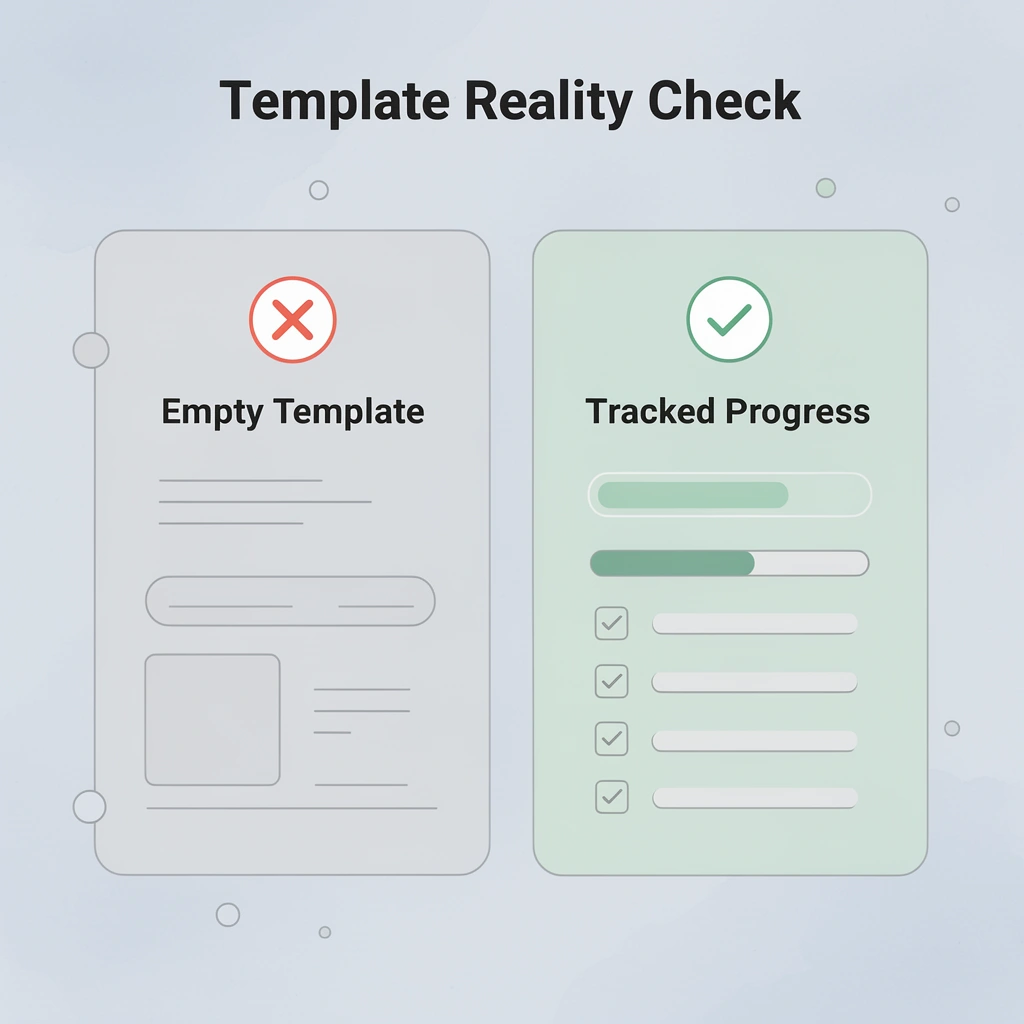
The biggest mistake is treating the report card as a one-time task instead of the endpoint of continuous tracking. You download a beautiful template, feel accomplished, then discover three months later you have no grades to enter because you never recorded anything. The template sits empty while you scramble to reconstruct learning from memory, turning documentation into fiction. Choose one format that serves your actual goal: Google Docs or a printable PDF for quick tracking with younger students, or Google Sheets for high school transcripts with GPA calculations across multiple years, since it updates continuously rather than forcing end-of-term panic.
🎯 Key Point: The report card template is only as good as the ongoing tracking system that feeds into it.

"The template sits empty while you scramble to reconstruct learning from memory, turning documentation into fiction."
⚠️ Warning: Don't let a beautiful template become a three-month procrastination trap that forces you to recreate grades from memory.
Turn learning activities into report card evidence
Stop thinking of report cards as separate from teaching. Every worksheet, project, or quiz becomes grading input when you save it systematically. Create a simple folder system (physical or digital) for completed work reviewed and filed immediately. Label folders by subject and month. When report card time arrives, pull representative samples that show mastery progression rather than guessing whether your daughter understood fractions in October or December. Small weekly updates create accurate results; end-of-term summaries create stress and approximation.
Document learning visually for younger students
Younger children understand progress better through concrete examples than abstract grades. Showing them alphabet worksheets from September next to sentence diagrams from April makes growth visible in ways a letter grade cannot. Resources like My Coloring Pages provide structured activities that serve as both learning reinforcement and documentation evidence. You download subject-specific worksheets that children complete, then file them as tangible proof of the connection between report card grades and actual skill development. A geography unit gains credibility when paired with labeled maps that your child coloured and annotated. Math mastery is evident in completed problem sets, demonstrating progression from basic operations to complex calculations.
Your report card transforms from a stressful obligation into a simple reflection when you build evidence collection into your teaching rhythm. The template becomes a container for learning you've already documented, not a reminder of an assessment you forgot to do. This approach makes homeschooling more structured without feeling bureaucratic and easier to manage, because grading flows naturally from teaching rather than interrupting it.
Related Reading
- 5th Grade Homeschool Curriculum
- How To Homeschool In California
- Georgia Homeschool Requirements
- Alabama Homeschool Laws
- 2nd Grade Homeschool Curriculum
- Homeschool Reading Curriculum
- California Homeschool Laws
- 4th Grade Homeschool Curriculum
- North Carolina Homeschool Laws
- Homeschool Art Curriculum
- Accredited Homeschool Curriculum
- 3rd Grade Homeschool Curriculum
- Illinois Homeschool Laws
- Michigan Homeschool Laws
- Science Homeschool Curriculum